
Small and Decentralized Systems for Wastewater Treatment and Reuse
Kara L. Nelson
INTRODUCTION
It is estimated that the wastewater generated by almost half of the population of the United States is treated by small or decentralized systems. Decentralized management of wastewater, which has been defined as the collection, treatment, and reuse of wastewater at or near the point of generation (Crites et al., 1998), currently serves almost one-quarter of the population. Most of this wastewater is treated at the household, although small systems that serve clusters or housing developments are becoming more common. Another quarter of the population lives in urban areas with less than 50,000 inhabitants. The wastewater generated by this population is usually collected and treated in small, centralized treatment plants.
The goal of this paper is to review the technologies that are used for the collection and treatment of wastewater from individual households and small communities, highlighting the important differences from the technologies that are used to treat larger flows. First, the significance and current status of small and decentralized treatment systems in the United States is presented. Next, implications for the reuse of wastewater at this scale are discussed. Then, the technologies and approaches for the collection of wastewater are presented. Finally, the technologies used for wastewater treatment are reviewed. Throughout the paper, recent advancements in technologies are highlighted.
SIGNIFICANCE AND STATUS IN THE UNITED STATES
Wastewater generated by the population living in rural areas is typically collected, treated, and disposed or reused at the household level using onsite facilities. In the United States, 26 million homes (23 percent of total households),
businesses, and recreational facilities rely on onsite wastewater systems, which serve approximately 60 million people (USEPA, 2002) (Table 1). About one-third of new homes rely on onsite systems. The fraction of the population served by onsite systems varies widely throughout the country, with the highest fraction, 55 percent, served in Vermont, and the lowest fraction, 10 percent, served in California. It is now recognized that the fraction of the population served by onsite systems in the United States is not likely to decrease (it has not changed significantly in the past three decades), because providing centralized collection and treatment for these dispersed populations is not economically feasible.
Unfortunately, many onsite wastewater systems are failing, due to inappropriate siting, design, or maintenance (USEPA, 2002). Failing onsite systems are recognized as sources of both groundwater and surface water contamination, posing a risk to public health (due to the presence of pathogens and nitrate) and the ecological health of lakes, rivers, and estuaries (due to nutrients that cause eutrophication). The regulation of onsite systems is currently undergoing important changes, and stricter and more uniform design and performance standards are expected in the future. Many existing systems will likely be required to upgrade.
The systems that are used for the onsite treatment and disposal of wastewater in the United States typically require substantial land area. As a result, communities with a higher population density tend to have centralized collection systems that transport the wastewater to a centralized treatment plant. However, there is no specific total population, or population density, at which it is necessary to provide a sewer system. Some communities that have historically relied on onsite treatment are now installing sewer systems. For example, Chico, California, with a population of 64,000, is beginning the installation of a sewer system that will collect the wastewater for about two-thirds of its population (the rest will continue to use onsite systems), with the aim to reduce nitrate contamination of groundwater.
TABLE 1 Total U.S. Population, Population Served by Onsite Wastewater Treatment, and Population Living in Small Communities
|
Type of Wastewater Management |
Population (millions) |
Percent of Total |
|
2001 U.S. population |
285 |
|
|
Onsite (individual household) |
|
|
|
Population served |
60 |
23 |
|
(No. of households) |
(26) |
(23) |
|
Small communities |
|
|
|
<10,000 |
29 |
10 |
|
<50,000 |
74 |
26 |
|
<100,000 |
100 |
35 |
Wastewater from most urban areas is collected and treated in centralized plants. About 10 percent of the U.S. population lives in cities with less than 10,000 inhabitants (Table 1). Another 15 percent lives in cities with between 10,000 and 50,000 inhabitants, and another 10 percent in cities with between 50,000 and 100,000 inhabitants (Table 1). The definition of what constitutes a small city (as compared to a large city) is not so important, but it is important to recognize that there are wastewater collection systems and treatment technologies available for treating small flows that are not feasible for large flows. The technologies used for small flows are highlighted in this paper.
Increasingly, decentralized wastewater management is being considered as an alternative or complement to large, centralized collection and treatment systems. Decentralized wastewater management is considered for meeting the needs of new developments within, or at the edge of, large cities (even though they already have a centralized facility). For example, the majority of new development in cities occurs at the outer edge, and as cities grow larger and larger it becomes less feasible to connect these new developments with the existing sewer network. Decentralized collection and treatment systems are becoming a more common approach for suburban housing developments.
REUSE
Small and decentralized wastewater treatment presents unique opportunities for reuse. The important characteristic that distinguishes this type of wastewater management from larger systems is that there is a much greater potential for the treated wastewater to be generated closer to the potential reuse sites. With currently available technology, the capability exists to produce wastewater at the quality that is appropriate for the specific type of reuse, ranging from irrigation of low-value crops to toilet flushing.
For onsite systems, the most common type of reuse is landscape irrigation. Given that the average person in the United States uses 170 liters/d (45 gal/d) of water outside the home, principally for irrigation, there is a large opportunity to replace the use of potable water with reclaimed wastewater for irrigation. Even if irrigation is not incorporated, it is worth recognizing that the common practice of disposing wastewater to the soil results in groundwater recharge; in some regions, such volumes may be an important part of the hydrological cycle. In-home reuse is also possible, and high quality effluent can be produced from either a part of or the entire wastewater stream.
Decentralized wastewater management, if viewed as an alternative to larger, centralized systems, presents perhaps the greatest opportunity for wastewater reclamation and reuse. For example, landscape irrigation of public areas, industrial reuse, or reuse in buildings creates a distributed demand for wastewater. If the production of reclaimed wastewater can be coordinated with the demand, facilities can be constructed close to the site of demand. This arrangement has
the potential to achieve large savings in transport of both the untreated and treated wastewater. Furthermore, by treating the wastewater in smaller quantities, the necessary level of treatment can be coordinated with the reuse application. Another opportunity is for the entity reusing the wastewater to invest directly in the construction and operation of the treatment facilities. This type of arrangement is attractive to many industries or users that face difficulty finding a new or secure water source.
In small communities, often located in agricultural regions, there is a large potential for reusing wastewater for agricultural irrigation. Ironically, much of the wastewater currently generated by small communities is currently disposed of on land (spray irrigation, infiltration basins, or overland flow), but no crop is harvested. As water becomes scarcer in many regions of the country, it is likely that land disposal will be converted to planned reuse.
TECHNOLOGIES FOR WASTEWATER COLLECTION
Technologies for wastewater collection are considered in this section. First, greywater separation is discussed as an alternative management scheme for individual households. Second, alternatives to conventional sewerage are discussed that are applicable to small communities or for transporting wastewater to decentralized treatment plants.
Onsite Systems: Separate Greywater Management
The primary component of onsite wastewater collection is usually a septic tank; all of the residual water generated within the house is collected in the septic tank, which provides flow equalization as well as initial treatment. Septic tank designs, as well as alternatives for treatment and disposal are discussed in a later section. In terms of collection, however, alternative management is possible if greywater and fecal waste are managed separately. This type of management is attractive when the soil disposal of wastewater is prohibited or when there is interest in reusing the greywater, and potentially the treated fecal material, onsite. Nevertheless, some local regulations either prohibit or have ambiguous regulations for some types of greywater disposal and separate management of fecal waste.
The definition of greywater varies; typically, it is defined as the residual water produced that does not contain feces, e.g., the water from sinks, showers, dishwashers, or laundry facilities. However, local definitions may differ because of the implications for regulations. In California, for example, greywater does not include the water from toilets, kitchen sinks, dishwashers, or the laundry of diapers (Leverenz et al., 2002).
Because greywater is a low strength wastewater, with much lower concentrations of biochemical oxygen demand (BOD), nutrients, and pathogens com-
pared to combined wastewater, it does not require as much treatment before disposal or reuse. Subsurface disposal of greywater may be possible without any treatment. However, some types of distribution systems may require particle removal to prevent clogging of small orifices. Separate collection and disposal of greywater is particularly attractive if it can be reused for landscape irrigation.
Another potential advantage of separate greywater collection is that the volumes of wastewater that require treatment or disposal may be substantially lower if fecal waste is collected by a process that does not require water. In the United States, the volume of water used to flush a toilet ranges from 1.6 gallons (6 liters) for a low-flow variety to 7 gal (26 L) for a conventional design. Up to 20 percent of a household’s water may be used for toilet flushing. Thus, by not using water, the volume of wastewater is reduced, and alternatives are available for management and treatment of the fecal waste. The two main options are composting toilets and incinerating toilets. Both of these types of technologies produce a final product (compost or ash) that can be disposed as solid waste or used as a soil amendment. Many types of systems are available commercially (del Porto and Steinfeld, 1999).
Small and Decentralized Systems: Alternative Sewerage
Several alternatives to conventional gravity sewerage have been developed that may offer substantial advantages for small and decentralized communities. The most common types of alternative sewers in the United States are small diameter, pressurized, or vacuum sewers (USEPA, 1991). Of the three types of alternative sewerage used in the United States, small diameter gravity sewers (SDGS) and pressurized sewers are the most common; hundreds of these types of systems have been built, serving communities that range in size from as few as 50 households, to more than 20,000 (USEPA, 1991). A further type of alternative low cost sewerage has been developed outside of the United States, and has mostly been applied in regions where conventional sewerage is cost-prohibitive, such as Brazil, Colombia, Pakistan, India, Ghana, Zambia, and Nigeria (Mara, 1996).
All of these alternatives employ lower cost materials, typically polyvinyl chloride (PVC), because smaller diameter pipes can be used. In addition, lower slopes can be used, such that the pipes can be installed at shallower depths than conventional gravity sewers. Thus, substantial savings may be realized due to lower costs of construction (materials, excavation, and manholes). Whether alternative sewerage can be provided for lower cost than conventional gravity sewerage depends on many factors, however. For low-density developments, alternative sewerage is advantageous because the excavation and material costs are lower on a per-foot basis. In some areas, excavation to great depths for the installation of conventional sewerage is undesirable, for example if bedrock is present or if there is a high groundwater table. Finally, alternative sewerage may
be lower cost if the wastewater treatment plant is located at a similar or higher elevation than the households. Any of the alternatives may provide complete sewerage for a community or may be used in combination with conventional gravity sewers, as appropriate. The main characteristics unique to each of the alternative sewer designs are briefly reviewed below.
With small diameter gravity sewers (SDGS), the wastewater from each household is treated in a septic tank before discharge to the main collector. In the septic tank, large, dense solids are removed by sedimentation. After this initial processing, the wastewater can be transported in a small diameter pipe with minimal chance for clogging, and with a lower slope because a minimum velocity does not need to be provided to prevent solids from settling out during transport. In addition, SDGS have some flexibility to follow the natural topography as long as the net downward gradient is sufficient. As with conventional gravity sewers, pump stations can be installed if the treatment plant is not located sufficiently below grade.
In a pressurized sewer system, each household has a pump and discharges wastewater to the collection system under pressure. Similar to SDGS, the wastewater also receives some processing at the household. The two options are a septic tank equipped with a septic tank effluent pump (STEP), or a grinder pump (GP), which does not require a septic tank. In addition to the advantages of the SDGS, a pressurized sewer has the additional advantage that wastewater can be transported to higher elevations, and that the pipes can follow the natural topography.
In a vacuum sewer system, the wastewater from each household is transported to an interceptor tank by gravity. Periodically, wastewater is discharged via a valve to a collector main under negative pressure, which is supplied by either one or more centralized vacuum stations. Vacuum systems have similar advantages as pressurized systems when compared to conventional gravity sewers. However, there are obvious differences in terms of system components. Some vacuum systems also have another important difference, which is the separate collection of black water (from toilets) and greywater. With this configuration, the toilets can operate under vacuum pressure, and substantial water savings can be realized because smaller water volumes are needed for flushing.
TECHNOLOGIES FOR WASTEWATER TREATMENT
For small communities and individual households, a broad range of technologies is available for treating wastewater. At one end of the spectrum are technologies that use gravity flow, have few or no moving parts, and rely on natural processes to achieve most of the treatment. These technologies tend to be lower cost, have few or no energy requirements, and require less operation and maintenance. However, they are also more dependent on climatic and environmental conditions for treatment, so the degree of treatment achieved is more
variable. At the other end of the spectrum are highly mechanized technologies that use pumps to distribute the wastewater, and use mechanical equipment to provide mixing, aeration, filtration, or other augmentation. Significant advancements have occurred throughout this spectrum of technologies. In the following sections, the technologies used for onsite and small systems are reviewed as well as recent advances in technology.
Onsite Wastewater Treatment
The most common configuration for onsite wastewater treatment facilities has two components: a septic tank (ST) and a soil absorption system (SAS). Conventional ST-SAS systems in the United States are passive and operate entirely by gravity flow with no energy requirements. The purpose of the septic tank is to remove large particles by sedimentation. Two-chamber septic tanks are usually required to prevent hydraulic short circuiting. The mass of the solids that accumulates in the tank is reduced over time by anaerobic degradation. However, periodic removal of this sludge is required. Private contractors typically provide servicing of septic tanks using vacuum trucks.
One of the greatest causes of contamination from onsite systems is leaking septic tanks. It is estimated that only four to six percent of existing septic tanks in the United States are watertight. A leaky septic tank may discharge wastewater directly to the soil. Alternatively, a leaky septic tank may receive water from the soil, causing hydraulic overloading. Watertight septic tanks are now commonly available and may be manufactured from concrete, plastic, or fiberglass.
The effluent from the septic tank is discharged to the soil absorption system (SAS). The goal of the SAS is to distribute the wastewater to the soil, where it percolates through the unsaturated soil layer to the groundwater. During percolation, the wastewater undergoes further treatment by natural processes, principally adsorption to soil particles and biodegradation. A conventional SAS consists of two inch perforated pipe laid at the bottom of two foot deep, gravel-lined trenches. The discharge of wastewater throughout the SAS is usually uneven, due to the limitations of gravity flow, clogging of the orifices, and uneven settling of the SAS components.
A properly designed ST-SAS system should achieve sufficient treatment of the wastewater to prevent unacceptable contamination of the groundwater that ultimately receives the wastewater. Unfortunately, there is widespread recognition that many existing onsite wastewater treatment systems do not meet this criterion, as evidenced by the presence of fecal indicator bacteria or nitrate, or both, in groundwater wells and surface waters under the influence of groundwater. By some estimates, from 10 to 20 percent of the systems are failing, although the percentage that cause groundwater contamination may be even higher (USEPA, 2002).
In many areas of the United States, the soil type and groundwater hydrology are not amenable to a conventional SAS. In some cases, adequate disposal can be achieved by providing additional treatment of the wastewater before it is discharged to the SAS. In other cases, soil discharge is completely prohibited, and complete treatment of the wastewater must be achieved prior to surface discharge. As population pressure increases in many areas of the United States, the availability of building sites with conditions adequate for conventional ST-SAS treatment is diminishing. Thus, there is demand for treatment processes that can be used at the household level, either to augment a ST-SAS or to replace it.
Many advancements have been made that can dramatically improve the performance of existing or planned ST-SAS systems. In terms of the septic tank, the advancements include watertight tanks and ST effluent filters and pumps. The effluent filters prevent the discharge of solids that may clog the SAS or subsequent treatment processes. The effluent filter pump enables discharge to a pressurized SAS (that may be located above grade) or to another type of treatment process. Pressurized SAS can dramatically improve the distribution of wastewater to the soil, overcoming the limitations of gravity systems. Another improvement in the performance of SAS is the recognition that the upper layers of the soil have the greatest potential for treatment, as they contain a higher concentration of organic matter and higher population of soil organisms. Thus, many regions now allow the SAS to be located closer to the soil surface or even to be installed above the soil surface, provided that no direct contact with wastewater occurs.
An alternative to direct discharge of the ST effluent to the SAS is to provide additional treatment. Intermittent filters have long been used to treat ST effluent. Typical filter media are granular, such as sand or fine gravel. However, synthetic media, such as textiles sheets or open cell foam, have been demonstrated to improve performance over granular media. With all intermittent filters, improved performance has been observed at a higher dosing frequency (a smaller volume of water is applied per dose as the dosing frequency increases) for an equal surface loading rate. Wastewater may also be recirculated several times through the filter to improve performance.
An alternative to a ST-SAS is to purchase a self-contained treatment unit, often called a package plant. Over 200 types of package plants are available commercially in the United States (Leverenz et al., 2002). Most package plants employ some type of biological treatment, which may be based on aerobic, anaerobic, or anoxic conditions and use attached or suspended organisms. Other processes incorporated into package plants may include membrane filtration and disinfection by chlorine, ultraviolet light (UV), or ozone. Some package plants can produce an extremely high quality effluent and have been specifically designed for reuse.
Small and Decentralized Systems: Wastewater Treatment
Many of the same technologies that are used for treating the wastewater for large flows are also used for small communities in the United States. For example, extended aeration, oxidation ditches, and sequencing batch reactors are commonly used in small communities; all are aerobic, suspended growth biological processes and are similar to the activated sludge process. Aerobic, attached growth processes can also be used, such as the trickling filter-solids contact process. Recently, an anaerobic biological process, the upflow anaerobic sludge blanket (UASB), has been developed for treating low wastewater flows. Although this process is gaining popularity in many parts of the world, there has been little experience in the United States. A technology that has the potential for widespread application in small communities is the membrane bioreactor (MBR). This process is discussed in detail in the chapter on Large Scale Systems, and will not be reviewed here.
In contrast to the processes that are similar to those that are used for large flows, a broad group of treatment technologies that is commonly used for small communities is natural systems. In natural systems, wastewater constituents are removed or transformed by natural processes at natural rates. Thus, most natural systems for wastewater treatment require substantial land area, which often makes them infeasible for large populations. The main types of natural treatment systems can be divided into soil-based and aquatic-based processes (WEF, 2001). Soil-based natural treatment systems are as follows:
-
subsurface (soil absorption system, or leachfield),
-
slow rate, surface (irrigation),
-
rapid infiltration (groundwater recharge), and
-
overland flow.
Aquatic-based natural treatment systems are as follows:
-
wastewater stabilization ponds,
-
wetlands (surface, subsurface, and vertical flow), and
-
floating aquatic plants (e.g., duckweed or hyacinth).
The main advantages of natural treatment systems are that they use less energy, require less operation and maintenance, and have lower construction and operation costs than more mechanized systems. The main disadvantages are that there is more variability in the effluent quality because the treatment depends on climatic factors, and that large land areas are required.
A complete description of each of these types of systems is beyond the scope of this paper. However, to illustrate some of the main characteristics of natural systems as well as the importance of these systems in the United States,
wastewater stabilization ponds are highlighted in the following section. More information on each of these types of natural treatment systems can be found in WEF (2001) and Crites and Tchobanoglous (1998).
Wastewater Stabilization Ponds
Wastewater stabilization ponds (WSPs) are also called oxidation ponds or lagoons. A typical system consists of several constructed ponds operating in series; larger systems often have two or more series of ponds operating in parallel. Treatment of the wastewater occurs as constituents are removed by sedimentation or transformed by biological and chemical processes. The main biological processes are driven by bacteria and algae. Aerobic and facultative bacteria grow in the water column and consume organic matter (BOD) and nutrients. These bacteria also consume oxygen if it is present; thus, depending on the loading rate in the pond, either anaerobic or aerobic conditions will be created. Ponds that have an aerobic layer overlying an anaerobic layer are called facultative. Algae, which are present except in anaerobic ponds, also consume nutrients and play an important role in the production of oxygen that is subsequently used by the bacteria. Due to the use of CO2, algal growth may cause the pH to rise when photosynthetic rates are high during the day, which contributes to the inactivation of pathogenic bacteria and viruses. In the bottom of the ponds, a sludge layer forms due to the sedimentation of influent suspended solids as well as the settling of algal and bacterial cells that grow in the pond. Periodic removal of the sludge may be necessary depending on the loading rates and the degree of stabilization that occurs within the sludge layer.
Depending on the configuration, pond systems are capable of achieving the equivalent of primary, secondary, or tertiary treatment. Anaerobic, facultative, or mechanically aerated ponds are used for combined primary and secondary treatment, whereas aerobic maturation ponds (with or without mixing) are used for tertiary treatment. Alternative configurations are also possible. For example, advanced, integrated wastewater pond systems (AIWPS) incorporate a deep fermentation pit into the first pond, and the configuration of the second pond is like a racetrack with mechanical mixing.
In general, the more ponds in series, the higher level of treatment. Ponds are frequently used for polishing wastewater effluent from other primary or secondary treatment processes. Pond systems are particularly effective at removing and inactivating pathogens compared to other treatment processes. Due to their long detention times, which may range from several weeks to several months, helminth eggs (such as Ascaris) and protozoan cysts (such as Giardia and Cryptosporidium) are efficiently removed by sedimentation. Bacteria and viruses are also removed by sedimentation if they are attached to particles. In addition, they are inactivated in the water column by a combination of sunlight-dependent mechanisms.
The main advantages of WSPs are as follows:
-
provide excellent pathogen removal or inactivation,
-
produce effluent well-suited to irrigation (no disinfection necessary),
-
have low construction, operation, and maintenance costs,
-
can be gravity fed with no moving parts, and
-
require minimal technical training and skills to operate and maintain low sludge production.
The main disadvantages are as follows:
-
require large land area,
-
depend on climate (temperature, wind, solar irradiation) for performance and, therefore, effluent quality is highly variable,
-
produce effluent that may contain high concentration of algae, and
-
may discharge pathogens if the pond system is poorly designed or operated.
Pond systems continue to be used and constructed in the United States. As stated earlier, in 1983 it was estimated that there were over 7,000 pond systems in operation in the country (USEPA, 1983). More recent data have been compiled from California (California State Water Resources Control Board Database, 2000). Over 400 ponds currently exist in California, with the most popular types being aerated and facultative (oxidation) ponds (Figure 1). Most ponds are fairly
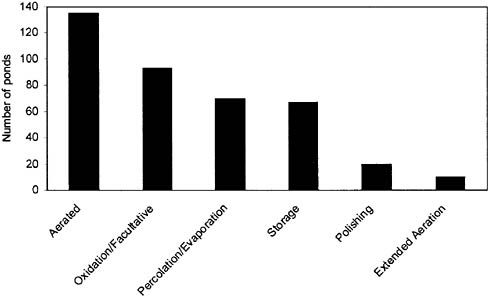
FIGURE 1 Number of ponds of each type in California.
small, with surface area less than 10 acres; however, there are approximately 80 systems with surface areas between 10 and 100 acres, and 13 systems with an area greater than 100 acres (Figure 2). The peak construction period of pond systems was in the 1970s; however, construction has continued steadily, with more than 60 systems constructed during the 1990s (Figure 3).
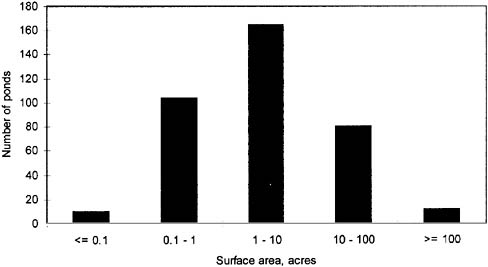
FIGURE 2 Number of ponds in California with the indicated surface area.
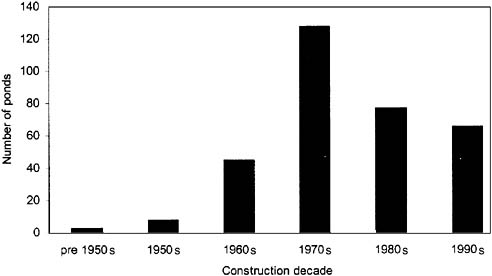
FIGURE 3 Number of ponds constructed each decade in California.
REFERENCES
California State Water Resources Control Board. Groundwater Resources Information Database. Sacramento, California 2000. available at HtmlResAnchor http://geotracker.swrcb.ca.gov/.
Crites, R., and G. Tchobanoglous. 1998. Small and Decentralized Wastewater Management Systems. Boston: McGraw-Hill.
del Porto, D., and C. Steinfeld. 1999. The Composting Toilet System Book. Concord, Massachusetts: Center for Ecological Pollution Prevention.
Leverenz, H., G. Tchobanoglous, and J.L. Darby. 2002. Review of technologies for the onsite treatment of wastewater in California. Report No. 02-2, Center for Environmental and Water Resources Engineering, Department of Civil and Environmental Engineering, University of California, Davis.
Mara, D., ed. 1996. Low-Cost Sewerage. Chichester, England: John Wiley & Sons.
USEPA. 1983. Design Manual. Municipal Wastewater Stabilization Ponds. EPA-62511-831015. Washington, DC.
USEPA. 1991. Alternative Wastewater Collection Systems. EPA162511- 911024. Washington, DC.
USEPA. 2002. Onsite Wastewater Treatment Systems Manual. EPA116251R- 001008, Washington, DC.
WEF. 2001. Natural Systems for Wastewater Treatment, 2nd Edition. Prepared by Task Force on Natural Systems, Sherwood C. Reed, chairman. Alexandria, VA.


