
7
RESEARCH ORGANIZATION: CREATING AN ENVIRONMENT TO ACCELERATE PROGRESS
What we need to do is create organizational structures that allow us to mine what is an incredibly rich field of basic science discovery.
—Oswald Steward1
Although much progress has been made in understanding the basic mechanisms of neuronal injury and repair, the field is grappling with how to translate these discoveries into effective therapeutic interventions. As the field is currently configured, it cannot quickly capitalize on research leads because there are few centers for collaborative translational research on spinal cord injuries.
Progress in spinal cord injury research will require adequate research funding; well-trained and innovative investigators with career development opportunities; translational efforts that move preclinical findings to clinical trials with humans, insofar as it is safe and appropriate; and an environment that promotes and encourages interdisciplinary collaboration. There are currently efforts by foundations and other nonprofit organizations, health care systems, state and federal governments, academic institutions, and others to fund and conduct spinal cord injury research. The pressing issue is how best to improve the current organization of basic and clinical research—the research infrastructure—to nurture and accelerate progress. This chapter examines the current status of the infrastructure supporting
spinal cord injury research and presents the committee’s recommendations for the next steps needed to accelerate progress.
WHO IS CURRENTLY FUNDING AND SUPPORTING SPINAL CORD INJURY RESEARCH?
Neuroscience research into the basic mechanisms of nerve conduction, plasticity, and regeneration has enormous implications for many neurological disorders and disease entities (e.g., multiple sclerosis, Alzheimer’s disease, amyotrophic lateral sclerosis [ALS], and Parkinson’s disease), including spinal cord injuries. For example, what is learned about remyelination in research on multiple sclerosis is likely to be of benefit in examining nerve conduction in individuals with spinal cord injuries. Therefore, it is difficult to draw distinct boundaries for funding or to define the precise parameters for research exclusively on spinal cord injuries.
One of the challenges in examining research infrastructure issues is the lack of quantitative measures targeted to a specific field of research, in this case, spinal cord injuries. Most often, the measures highlight the bigger picture and can provide broader sets of statistics (such as the number of Ph.D. candidates in neuroscience), but the data on the specific infrastructure for spinal cord injury research (such as the number of doctoral candidates who pursue research careers focused on spinal cord injuries) are not available.
The following discussion provides a brief overview of the current funding and support for spinal cord injury research. Researchers and research centers often receive funding from multiple sources; and research centers leverage federal, state, and private sector funding to make the best use of the resources.
Federal Funding
National Institutes of Health
As the major federal funder of biomedical research in the United States, the National Institutes of Health (NIH) supports extensive preclinical and clinical research, training opportunities, and collaborative ventures that are relevant to spinal cord injury research. In fiscal year (FY) 2003, $89.2 million in NIH funding was designated for spinal cord injury research; the funding estimate for FY 2005 is $93 million. This funding level is comparable to that for research on multiple sclerosis ($99.2 million in 2003 and an estimated $102.8 million in 2005) and epilepsy ($94.3 million in 2003 and an estimated $99.5 million in 2005) (Personal communication, A. Howard, NIH, August 4, 2004). NIH funding for research on Parkinson’s disease in FY 2005 is estimated to be $240 million, and research on
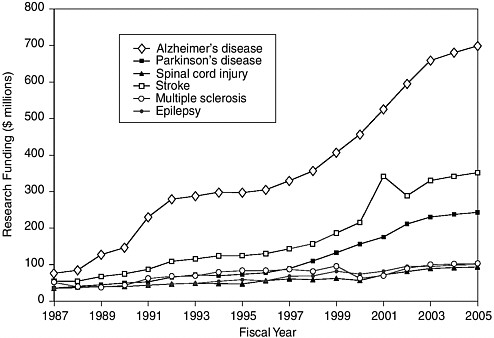
FIGURE 7-1 NIH research funding for specific diseases and conditions, 1987 to 2005.
NOTE: Funding levels are in actual, not constant, dollars. Funding for 2004 and 2005 are estimates. The data point for stroke in 2001 reflects, in part, an additional $70 million distributed by NINDS.
SOURCE: NIH, 2004c; Personal communication, A. Howard, NIH, August 3, 2004.
Alzheimer’s disease is estimated to be funded for approximately $700 million (NIH, 2004c; Personal communication, A. Howard, NIH, August 4, 2004). The levels of NIH funding for spinal cord injury research have shown steady but modest increases since 1987 (Figure 7-1). Data from the Computer Retrieval of Information on Scientific Projects (CRISP) database2 indicate that the number of NIH investigator-initiated research
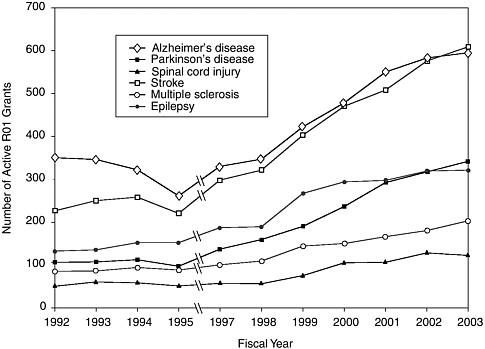
FIGURE 7-2 NIH support for research projects (R01 grants), 1992 to 2003.
NOTE: The 1996 data from the CRISP database were not used to compile this figure, as NINDS and CRISP staff indicated that the significant decreases in R01 grants reported in the 1996 CRISP database are not accurate.
SOURCE: CRISP database: http://www.crisp.cit.nih.gov (accessed November 10, 2004).
projects (R01 grants) focused on spinal cord injuries showed a modest increase over the 10-year period, 1992 to 2003 (Figure 7-2). R01 grants are the major mechanism used to fund basic biomedical research. Although the data on funding for spinal cord injury research indicate that the funding is steady, additional resources have not been forthcoming, including funding for the research infrastructure needed to accelerate research progress. NIH sponsors a number of fellowships that provide additional education and training to predoctoral and postdoctoral students. In 2002, NIH awarded nearly 2,700 fellowships in all fields of research, with more than 60 percent given to individuals who had completed their doctoral training (NIH, 2003). Additionally, NIH supports predoctoral fellowships, which provide funds to doctoral students who will be performing dissertation research and training (NIH, 2000). From 2001 to 2003, NIH awarded 11 predoctoral fellowships specifically related to spinal cord injury research. This compares with
17 predoctoral fellowships for multiple sclerosis research. From 2001 to 2003, NIH awarded 13 postdoctoral fellowships in spinal cord injury research, an increase of 5 such awards from 1998 to 2000; this compares with 9 postdoctoral fellowships in multiple sclerosis, 30 in Parkinson’s disease, and 64 in Alzheimer’s disease awarded to individuals from 2001 to 2003. These fellowships provide a means of attracting new investigators to the field and, as noted later in this chapter, offer an opportunity for furthering the field of spinal cord injury research. However, the current number of fellowships is inadequate to expand and build the research base needed for progress in spinal cord injury research.
National Institute of Neurological Disorders and Stroke. The majority of NIH-supported spinal cord injury research is funded by the National Institute of Neurological Disorders and Stroke (NINDS), which was created in 1950 to further research and treatment for more than 200 different neurological diseases. The extensive research portfolio of NINDS includes considerable support for preclinical neurological research that has relevance for multiple neurological conditions in key research areas, including neural circuits, neural degeneration, neurogenetics, repair and plasticity, and neural prostheses. NINDS supports an extensive extramural research program in spinal cord injuries and should continue to devote resources to both extramural and intramural research programs to build on these efforts.
In FY 2003, the NINDS budget for spinal cord injury research was approximately $60 million. Of this amount, $42.6 million was for single-and multiple-investigator research projects (e.g., R01, R21, R03, and P01 grants) (see glossary for description); $2.8 million for P50 research centers; and $14.3 million for other funding mechanisms, including training, intramural research, contracts, and small-business grants (Personal communication, NINDS Budget Office, November 10, 2004). A recent NINDS announcement of note established contracts for Facilities of Research Excellence in Spinal Cord Injury (FOR-SCI). These contracts, first funded in 2002, have been used to create a course in spinal cord injury research methods, provide resources for established researchers and postdoctoral trainees to work together in studying animal models of spinal cord injuries, support a series of replication studies of promising therapeutic strategies by using models of acute and chronic injuries, and enable the development of new functional outcome evaluations (NINDS, 2002).
NINDS has also sponsored a number of relevant workshops on spinal cord injury research, including the Role of the Immune System in Spinal Cord Injury (April 5-6, 2000) (NINDS, 2004b), Functional and Dysfunctional Spinal Circuitry: Role for Rehabilitation and Neural Prostheses (June 14-15, 2000) (NINDS, 2004a), and Translating Promising Strategies for Spinal Cord Injury Therapy (February 3-4, 2003) (NINDS, 2003).
Several different NIH grant mechanisms are used to fund the infrastructure for research involving multiple investigators in research centers. The primary mechanisms are the P30 Center Core Grants, which fund shared resources and facilities, and the P01 and P50 Program Project and Specialized Center Grants, which fund multidisciplinary research. NINDS funds four ongoing P30 Center Core Grants that provide support to laboratories studying spinal cord injuries. These centers conduct research into a range of neurological disorders, including spinal cord injuries; and as mentioned in Chapter 3, the Ohio State University program also has an extensive training program in spinal cord injury research methods and techniques. NINDS also currently funds two P50 Center Grants for research (at Yale University and Medical College of Pennsylvania Hahnemann University) that focus on strategies for the repair of spinal cord injuries and the restoration of function.3
National Center for Medical Rehabilitation Research. The National Center for Medical Rehabilitation Research (NCMRR), housed within the National Institute of Child Health and Human Development, funds research on spinal cord injuries that is related to medical rehabilitation. NCMRR was established in 1990 to improve the health and quality of life for individuals living with physical disabilities. NCMRR’s research portfolio focuses on improving functional mobility, developing adaptive technologies, understanding the body’s responses to impairments, and improving the tools used to assess improvements in functional outcomes. From 1990 to 2000, NCMRR provide funding of $20.4 million for research and training related to spinal cord injuries (NICHD, 2004). Recently, NCMRR established four regional rehabilitation research networks to facilitate collaborations through multidisciplinary and multicenter research. The recent recognition of the benefits of maintaining the nervous system (activity-dependent plasticity) for functional improvement provides a greater priority for collaborative efforts between basic research, including that funded by NINDS, and rehabilitative research, including research funded by NCMRR.
Centers for Disease Control and Prevention
The Centers for Disease Control and Prevention’s (CDC’s) National Center for Injury Prevention and Control provided funding and technical
support for spinal cord injury surveillance efforts in four to seven states from 2000 to 2004; however, this program is no longer funded. CDC continues to provide technical support through its Guidelines for the Surveillance of Central Nervous System Injury. Relevant extramural research funded by CDC focuses on preventing the secondary conditions of spinal cord injuries, including research on chronic pain prevention and on long-term renal function (National Center for Injury Prevention and Control, 2001).
U.S. Department of Veterans Affairs
The U.S. Department of Veterans Affairs (VA) provides health care and rehabilitation services to approximately 15,000 veterans with spinal cord injuries and specialty care to 9,000 of these veterans (VA, 2002). The care is provided through the VA’s 23 spinal cord injury centers, with additional support clinics and primary care teams (Hammond, 2002). The VA system also provides care for newly injured active-duty personnel through an agreement with the U.S. Department of Defense.
The spinal cord injury research funded by VA focuses primarily on rehabilitation and engineering approaches, but also includes some basic research on the restoration of nerve function. In FY 2000, VA provided $9.7 million in funding for 84 research projects on spinal cord injuries; additionally, VA researchers conducted another 95 related projects with $7.7 million in grants from other sources (VA, 2002). Four of the VA’s research centers focus on spinal cord injuries. The Center for Functional Recovery in Chronic Spinal Cord Injury in Miami examines spasticity, pain management, and functional recovery. Its research endeavors are enhanced by its affiliation with the Miami Project to Cure Paralysis. The Center for Functional Restoration in Multiple Sclerosis and Spinal Cord Injury in West Haven, Connecticut, examines molecular and cellular approaches to protecting and repairing the injured spinal cord. The Center for Medical Consequences of Spinal Cord Injury at the Bronx VA Medical Center, Bronx, New York, examines a range of treatment approaches. The Functional Electrical Stimulation Center of Excellence in Cleveland, Ohio, focuses on research in neural plasticity and neuroprotheses, with much of this activity focused on spinal cord injuries. In addition to research grants, VA funds training efforts, including career development and fellowship grants.
U.S. Department of Education, National Institute on Disability and Rehabilitation Research
Created in 1978, the National Institute on Disability and Rehabilitation Research (NIDRR) works to conduct rehabilitative research in several
areas relevant to spinal cord injuries, including rehabilitative technology, health and function, and independent living and community integration (NIDRR, 2004). From 2000 to 2004, NIDRR provided funding of approximately $12 million annually for research on rehabilitation from spinal cord injuries (Personal communication, R. Melia, NIDRR, November 10, 2004). NIDRR uses a variety of funding mechanisms, including individual grants, fellowships, and centers of excellence.
The Model Spinal Cord Injury Care Systems, which are funded and administered by NIDRR, were designed in the 1970s to develop a comprehensive integrated system of care for individuals with spinal cord injuries (Tulsky, 2002). Sixteen centers throughout the country are currently designated model systems. This program focuses on providing a multidisciplinary system of rehabilitation services and on collaborative approaches to rehabilitation research (DeVivo, 2002). The level of funding designated for the Model Systems has varied widely over the past 30 years, with current funding being at fairly minimal levels. In the past 5 years, each of the 16 centers has received an average of $340,000 (Personal communication, R. Brannon, NIDRR, January 26, 2005). For FY 2005, an additional $2 million has been designated to develop a multicenter clinical trials network.
Each of the centers contributes data on patient demographics, treatment, and costs of care as well as follow-up data to the National Spinal Cord Injury Model Systems Database, which is run by the National Spinal Cord Injury Statistical Center at the University of Alabama in Birmingham. The Model Systems centers have conducted a number of clinical trials, including studies examining treatments for urinary tract infections and pain therapies. Studies examining the effects of body weight support and treadmill training are under way (Tate and Forchheimer, 2002). Although this program offers the potential to coordinate multicenter trials, it has been minimally funded in recent years. Increased funding is urged to bolster this program and to use its resources to conduct multicenter clinical trials. Furthermore, collaborative efforts between the “care” and “cure” communities and resources are critically important for the development of therapeutic interventions for spinal cord injuries (see Chapter 6).
State Funding
Spinal cord injury research is also supported by funds provided by individual states. Currently, 14 states have enacted legislation to provide funds totaling more than $27 million for spinal cord injury research (see Chapter 8 and Appendix H). Many of the states that fund spinal cord injury research do so through surcharges on fines for traffic violations. For example, New York State collects approximately $8 million each year from a
surcharge of $5 for traffic violations,4 whereas New Jersey adds a $1 surcharge to any motor vehicle or traffic violation to provide an estimated $3.5 million per year for research and prevention efforts (Personal communication, C. Traynor, New Jersey Commission on Spinal Cord Research, January 28, 2005).
Some state programs, such as those in Florida, Indiana, and Kentucky, provide funding to specific universities to conduct research on spinal cord injuries. Several states have developed or have contributed to funding extensive research centers in the state, including the Miami Project to Cure Paralysis and the Kentucky Spinal Cord Injury Research Center (see Chapter 8). Other states diversify their funding, as in the case of South Carolina, which supports young investigator grants, career development awards, and clinician-scientist recruitment awards, and Maryland, which supports fellowships and research at private and public facilities. Chapter 8 provides greater detail on these programs.
Nonprofit Organizations
A number of foundations and other nonprofit organizations explicitly support spinal cord injury research or fund training opportunities and collaborative conferences. Private funds have the advantage of being able to be quickly targeted to specific research efforts and generally have more flexibility than government funding in terms of the types of research and the resources that can be funded.
For example, the Minnesota-based Spinal Cord Society has distributed more than $10 million to spinal cord injury research efforts since 1979 (Spinal Cord Society, 2004); the Wisconsin-based Bryon Riesch Paralysis Foundation, established in 2001, has provided more than $400,000 to spinal cord injury research, with particular emphases on remyelination, axon regeneration, and drug therapies (Bryon Riesch Paralysis Foundation, 2002, 2004); and the Paralysis Project of America, established in 1987, provides research support to postdoctoral fellows and senior investigators investigating the pathophysiology of spinal cord injuries and the development of treatments for spinal cord injuries (Paralysis Project of America, 2004). Many other foundations, including the Buoniconti Fund to Cure Paralysis and the Geoffrey Lance Foundation for Spinal Cord Injury Research and Support, also actively support spinal cord injury research. The American Spinal Injury Association works to promote standards of excel-
lence in health care for individuals with spinal cord injuries and provides seed grant funds to researchers through its G. Heiner Sell Research and Education Fund and Erica Nader Award.
A number of organizations are also active in education and prevention efforts. These include the Think First National Injury Prevention Foundation, founded by the American Association of Neurological Surgeons and the Congress of Neurological Surgeons. This program is dedicated to injury prevention policy and public education efforts. The next section highlights the efforts of a few nonprofit organizations dedicated to furthering spinal cord injury research.
American Paraplegia Society
Established in 1954, the American Paraplegia Society (APS) uses several mechanisms to disseminate research findings to clinicians and basic scientists. For example, since 1994, APS has provided seed grants to relatively new investigators who use the funds to develop preliminary data to secure future funding (APS, 2004c). APS, which “fosters a multi-specialty approach to prevention, clinical care, basic science, and technology research in the management of [spinal cord injuries]” (APS, 2004b), holds annual conferences to foster communication between clinicians and researchers, provides awards for practitioners who have made significant contributions in the spinal cord injury field, and publishes the Journal of Spinal Cord Medicine (APS, 2004a).
Christopher Reeve Paralysis Foundation
The American Paralysis Association, established in 1982, merged with the Christopher Reeve Foundation to form the Christopher Reeve Paralysis Foundation (CRPF) in 1999 to support groundbreaking research in spinal cord injuries. Since the organization’s founding 22 years ago, it has distributed more than $40 million in research grants (CRPF, 2003) in the form of individual research grants, center grants, and quality-of-life grants (CRPF, 2004b). Since 1997, CRPF has funded 260 individual research grants and has provided a total of nearly $20 million in research funding (CRPF, 2004a). CRPF established the Research Consortium on Spinal Cord Injury in 1995 to bring together international experts to develop and discuss research priorities and interlaboratory studies. CRPF is active in advocating for spinal cord injury research, hosting meetings to increase research collaborations, and improving patient knowledge and awareness of research resources.
Paralyzed Veterans of America
Congressionally mandated in 1946, the Paralyzed Veterans of America (PVA) was established to provide a range of services to veterans who sustained spinal cord injuries or dysfunction. PVA represents 38,000 veterans and advocates on behalf of veterans, develops clinical practice guidelines, and funds research (PVA, 2003). In 1975, PVA created the PVA Spinal Cord Research Foundation to fund research to improve treatment and care for those who have sustained spinal cord injuries. The Foundation funds 1-or 2-year basic and clinical research grants, research on assistive device development, fellowships, and conferences and symposia (PVA, 2004). In addition to funding research, PVA also established the Consortium for Spinal Cord Medicine in 1995. The Consortium, which is composed of 20 international health professional organizations that focus on spinal cord injuries, develops evidence-based clinical practice guidelines for health care professionals and consumer guides.
United Spinal Association
The recently expanded mission of the United Spinal Association involves outreach, research, and advocacy for veterans and other individuals with spinal cord and related injuries. Begun in 1947 as the Eastern Paralyzed Veterans Association, the organization became the United Spinal Association in January 2004. The Research and Education Department of the United Spinal Association works to promote research partnerships and facilitate the dissemination of research findings. The association funds clinical fellowships at several universities and VA hospitals and has worked to establish three professional associations, the American Paraplegia Society, the American Association of Spinal Cord Injury Psychologists and Social Workers, and the American Association of Spinal Cord Injury Nurses, each of which has a program that provides seed grants for research.
International Efforts
Many international efforts are focused on research on spinal cord injuries and collaborative initiatives. A few of these are described below.
The International Campaign for Cures of Spinal Cord Injury Paralysis (ICCP) consists of eight affiliates5 that distributed more than $23 million
for 150 basic and clinical research projects in 2001 (Adams and Cavanagh, 2004). ICCP supports funding for new investigators; hosts forums to bring together researchers from many countries; develops clinical trial guidelines; and seeks to enhance various neurotrauma initiatives at the local, state, federal, and international levels (Adams and Cavanagh, 2004; ICCP, 2004b). For example, it offers the Outstanding Young Investigator Award, which provides $10,000 for novice postdoctoral investigators seeking monies to travel to other laboratories and learn techniques and procedures for spinal cord injuries (ICCP, 2004a). ICCP recently conducted a workshop focused on the translation of relevant research on spinal cord injuries to clinical trials (Steeves et al., 2004).
International Collaboration on Repair Discoveries (ICORD) is a recently initiated interdisciplinary research effort in Vancouver, British Columbia, Canada, with the mission of facilitating and accelerating collaborative research on promoting functional recovery and improving quality of life after a spinal cord injury (ICORD, 2004). Bringing together ICORD’s 45 principal investigators and approximately 300 researchers and staff members in one research center is the goal of a current building construction effort. This effort, primarily funded by foundations, works in partnership with the Rick Hansen Institute, the University of British Columbia, and the Vancouver Coastal Health Authority.
The International Spinal Research Trust (ISRT), based in the United Kingdom, funds basic and clinical research on spinal cord injuries as well as Nathalie Rose Barr Ph.D. Studentships, which support doctoral students through 3- to 4-year fellowships. ISRT has developed a strategic and targeted approach to its research funding (Harper et al., 1996; Ramer et al., 2000).
NEXT STEPS IN ACCELERATING PROGRESS
Given the multiple and varied sources of funding and support for spinal cord injury research and the numerous potential therapeutic approaches and interventions at various stages of the research process (Chapters 4 and 5), the challenge is to develop a coordinated, collaborative, and focused approach to translational research with a strong research infrastructure. An extensive effort is needed to bolster basic research efforts, catalyze collaborative research efforts, and attract the breadth of talented researchers who will be able to move this field of research forward to achieve the therapeutic solutions needed by the community of individuals with spinal cord injuries.
Bolstering Basic Research
Clinical advances in treatments for spinal cord injuries and other nervous system disorders depend on the quality and extent of fundamental
knowledge on neuronal injury and repair. Basic research on the plasticity of the injured nervous system has implications for multiple diseases and outcomes (e.g., central nervous system development, brain trauma, ALS, multiple sclerosis, Parkinson’s disease, and spinal cord injuries) and builds the knowledge base on which therapeutic interventions can be developed. One important element of accelerating progress in treating spinal cord injuries will be sustaining research advances in the basic mechanisms of the biological processes that inhibit, promote, sustain, and target the growth of axons and neurons. A fully funded and active research program on neuronal injury and repair not only stands to benefit the thousands of people with spinal cord injuries but also will likely shed new light on other related disorders facing millions of Americans.
Neuronal injury and repair is an issue that is of interest to a number of NIH institutes, including NINDS, the National Institute on Aging, the National Institute of Mental Health, the National Institute of Dental and Craniofacial Research, and the National Institute of Child Health and Human Development. The recently announced NIH Blueprint for Neuroscience Research has the potential to facilitate trans-NIH initiatives and increase research collaborations (NIH, 2004a). This initiative will include a focus on neurodegeneration and on the plasticity of the nervous system, both of which are of critical importance in spinal cord injury research. The active involvement of all relevant institutes and support from institute management are critical to ensuring the sustainability of such an initiative.
Enhancing Research Collaborations
Although a number of funding sources are interested in spinal cord injury research, no concerted national effort is in place to push toward the cures that are needed for spinal cord injuries. What is needed is a strengthened research infrastructure that will feature the development of research centers of excellence focused on spinal cord injuries and a structured network to facilitate and ensure collaborative multidisciplinary approaches.
Research centers of excellence are needed to establish and enhance research on spinal cord injuries. These centers should foster collaborations between basic and clinical researchers and promote the interdisciplinary research that is needed to explore the translation of effective laboratory therapies into the clinical setting. The research network is needed to integrate the efforts of the broad array of researchers (investigators both at centers of excellence and from other institutions) who study issues involved in neuronal injury and repair and other relevant avenues of therapeutic intervention for spinal cord injury.
Establishing Research Centers of Excellence
The committee urges a strong commitment by the federal government to designate and support Spinal Cord Injury Research Centers of Excellence. These centers would provide the interdisciplinary research environment that is needed to accelerate the development of future advances in treating spinal cord injuries. The centers would bring together and support investigators from multiple fields, including, but not limited to, neuroscience, cellular and molecular biology, systems biology, immunology, engineering, bioengineering, biostatistics, epidemiology, and clinical medicine.
This would involve both the establishment of new centers and the designation of several current spinal cord injury research programs as centers of excellence. Several multidisciplinary spinal cord injury research programs already exist, including the Miami Project to Cure Paralysis, the Kentucky Spinal Cord Injury Research Center, the Reeve-Irvine Research Center, and NIH-funded research centers (discussed earlier in this chapter and in Chapter 8).
Comprehensive research centers of excellence would offer expansive laboratory facilities; focused interactions between preclinical researchers, clinical researchers, and patients; and central sites for clinical trial design. This investment would likely draw new senior-level researchers into spinal cord injury research and would heighten the interest of young investigators in devoting their research interests to spinal cord injury treatment.
These centers should be supported with the infrastructure needed to promote and enhance the institutional development of spinal cord injury research and treatment capabilities. This includes core research laboratory equipment, tools, and facilities; an emphasis on training programs; strong basic and clinical research components; and a structured plan for research priorities. For example, the 38 comprehensive cancer centers funded primarily by the National Cancer Institute incorporate a requirement for the centers to perform basic research, clinical research, cancer prevention and control activities, and population-based research (NCI, 2004a,b). The centers should also have the capacity to facilitate clinical trials; educate the community; screen and counsel individuals with spinal cord injuries; and educate health professionals about state-of-the-art diagnostic, preventive, and treatment techniques. The centers can serve as a resource for individuals with spinal cord injuries by facilitating patient input to researchers and by maintaining a clinical registry to allow for prompt dissemination of information regarding conferences, upcoming clinical trials, and research findings.
The centers of excellence should be developed regionally to facilitate the development of clinical trial networks. It is important that the centers interface not only with state research programs and nonprofit organiza-
tions but also with the VA spinal cord injury centers and the Model Spinal Cord Injury Care System clinics and patient care centers to broaden the potential research base for clinical trials. A national effort to prioritize translational research on spinal cord injuries would expand the capacity to explore and develop therapeutic approaches.
Although it is difficult for the committee to recommend precisely the number of centers of excellence that should be established, the committee believes that creating and sustaining two to three new centers and designating three to four of the existing programs as Spinal Cord Injury Research Centers of Excellence will allow the accelerated progress needed to explore all potential therapeutic pathways. Additionally, the committee urges the NIH Clinical Center to play an active role in translational spinal cord injury research, as it offers extensive expertise and resources. The centers of excellence should serve as the cornerstone of a National Spinal Cord Injury Research Network designed to coordinate and support spinal cord injury research efforts.
Developing a National Spinal Cord Injury Research Network
Key to accelerating progress in the treatment of spinal cord injuries is the development of a coordinated, focused, and centralized network that connects individual investigators, research programs, and research centers; facilitates collaborative and replicative projects; encompasses relevant research from diverse fields; and builds on the unique strengths of each research effort to move toward effective therapies. A research network is of particular importance in spinal cord injury research because of the need for interdisciplinary research and an organized and systematic approach to examining potential combination therapies. The Spinal Cord Injury Research Centers of Excellence discussed above would spearhead this dedicated focus on translational research and would promote collaborations among all sites conducting research relevant to spinal cord injuries. Although online technologies greatly enhance the nearly instantaneous sharing of ideas across the nation and globally, the research network envisioned by the committee would involve not only a strong virtual component but also a structured plan for periodic and regular meetings and workshops to set priorities and strengthen interactions.
The process of developing a national research network for spinal cord injury research can draw on the experiences of several such networks that already exist. The Robert Packard Center for ALS Research is an example of a focused research network that takes a strong collaborative approach. Although the center is physically based at Johns Hopkins University in Baltimore, Maryland, more than 40 percent of the investigators are from other institutions. Self-described as an aggressive approach to developing
successful effective therapies for ALS (Johns Hopkins University, 2004), the focus is on translational research with an emphasis on both basic and clinical research. The researchers meet each month to discuss promising research approaches and evaluate each other’s progress. This interaction is a structural part of the center, as each researcher’s contract specifies that principal investigators and postdoctoral staff based at Johns Hopkins University will attend 9 of the 12 monthly meetings and that outside researchers will attend 4 of the 12 meetings. Researchers are also expected to attend the annual retreat and minisymposium. Several foundations fund the center, with additional support from private donors, federal research grants, and industry.
A coordinated approach to spinal cord injury research is being implemented in Canada through the Rick Hansen Spinal Cord Injury Network (RH SCI Network). Begun in 2003, the RH SCI Network is establishing two subnetworks—the Spinal Cord Injury Translational Research Network and the Spinal Cord Injury Service Network—to integrate the spinal cord injury community across Canada (Rick Hansen Man in Motion Foundation, 2004). The Spinal Cord Injury Translational Research Network connects researchers and facilitates research collaborations. One of the initial efforts is a pilot program aimed at developing a national registry with data on outcome measures for Canadians with spinal cord injuries. The Spinal Cord Injury Service Network connects patients, researchers, and health care professionals. The Canadian government has invested $15 million in the network over 7 years, and private-sector sources also provide funding (Rick Hansen Man in Motion Foundation, 2004).
The committee envisions a sustained network for spinal cord injury research in the United States that would facilitate translational research and the implementation of multicenter clinical trials. Because of the rapid pace with which research on neuronal injury and repair and other aspects of spinal cord injury research is moving forward, it is critical that researchers have access to the most up-to-date research tools and that they be given opportunities to share information and build on new research findings. Further, it will be important for the network to draw on international expertise and for extensive collaborations to be developed with researchers in the Canadian network and across the globe.
The National Spinal Cord Injury Research Network envisioned by the committee should begin its work by convening a consensus conference to prioritize and promote the pre-clinical and translational efforts needed to bring experimental therapies to the clinic; this includes treatments to improve functional deficits and reduce pain and spasticity as well as those focused on neuronal injury and repair. The conference should explore incentives to encourage the pre-clinical studies that are needed to move initial promising discoveries to the point of a clinical trial. Leaders of the spinal
cord injury research community, including basic researchers, neurologists, neurosurgeons, physiatrists, radiologists, urologists, pain researchers, emergency physicians, and clinical trial specialists, should develop a set of research and funding priorities that encourage focused, coordinated, and collaborative research projects and that recognize the funding opportunities provided by the states and private foundations, in addition to the federal government. This initial meeting would be followed by regular (perhaps quarterly) meetings of researchers to communicate progress, discuss next steps, prioritize research strategies, and facilitate multicenter clinical trials and other collaborative efforts. The research network would be structured so that the active involvement of the participants and substantive interactions between basic and clinical researchers are expected as part of their participation.
In summary the National Spinal Cord Injury Research Network should:
-
convene an initial consensus conference to identify research and funding priorities and continue on a periodic basis to convene researchers and clinicians to update progress, prioritize research strategies, facilitate multicenter clinical trials, and engage in other collaborative efforts;
-
facilitate research on the range of outcomes and complications (including sensory, motor, bowel, bladder, autonomic, and sexual function and pain) that individuals with spinal cord injuries face;
-
enhance career development opportunities for young researchers by providing transitional support and other career-path opportunities, including participation in laboratory-based spinal cord injury training courses;
-
create and support virtual networking centers to facilitate the sharing of resources online and enhance collaborations with researchers not working in research centers and foster international collaborations;
-
convene annual or semiannual colloquia that particularly focus on research outside the traditional areas of spinal cord injury research to examine the approaches being used to address other complex health problems and to address the utility of that research to the treatment of spinal cord injuries; and
-
develop standardized protocols for patient registry systems so that registries can be coordinated and used to assist in identifying candidates for clinical trials and provide information on upcoming clinical trials to individuals with spinal cord injuries.
Efforts to develop a Spinal Cord Injury Research Network are consistent with many of the goals of the NIH Roadmap (NIH, 2004b), including an emphasis on translational research that results in clinically useful therapies and a need for multidisciplinary efforts to be used to address this complex medical condition.
Expansion of Training and Career Opportunities
An integral part of accelerating progress in research on spinal cord injuries is an emphasis on training and career opportunities to attract and retain top-notch spinal cord injury researchers. There are few measures of the number of graduate students and postdoctoral researchers who are interested in focusing on spinal cord injury research. What is known is that the number of doctoral theses focused on spinal cord injuries has increased in recent years, from 54 from 1990 to 1992 to 83 from 1999 to 2001, as indicated by a search of the Dissertations Abstracts database (see Appendix A for details on search strategy). The number of predoctoral fellowships for research focused on spinal cord injuries awarded by NIH has increased in the past 10 years but is less than the numbers awarded for other neurological conditions. For example, from 2001 to 2003, 11 predoctoral NIH fellowships (F30 and F31 awards) were awarded for work on spinal cord injuries, according to the CRISP database, whereas 15 were awarded for epilepsy, 17 were awarded for multiple sclerosis, 26 were awarded for stroke, 32 were awarded for Parkinson’s disease, and 38 were awarded for Alzheimer’s disease. The trends for postdoctoral fellowships are similar. The number of fellowships for research on spinal cord injuries is modest and is insufficient to take maximum advantage of the opportunities for furthering research on spinal cord injuries and attracting new investigators to the field.
Enhancing career opportunities for researchers at all points in their careers is vital to accelerating progress in spinal cord injury research. The committee believes that strengthening the research infrastructure through the development of new comprehensive research centers will be the impetus needed to attract and retain midcareer and senior-level researchers. At these centers they will have the opportunity to fully engage in their own research initiatives, in addition to having the resources to develop and nurture trainees and sustain a full research effort.
The committee believes that additional steps need to be taken to attract graduate students, medical students, and postdoctoral researchers to spinal cord injury research. Raising the awareness of research opportunities in this field is a critical step in attracting graduate and medical students to the field, and efforts such as the development of a training module that describes the unique biology of the spinal cord could be an important mode for ensuring that the information reaches students. In addition to increasing the fellowship opportunities offered by NIH, the committee also encourages the development of privately funded competitive graduate fellowships in spinal cord injury research. Competitive fellowships attract top students to the field, raise the profile of spinal cord injury research, and become
sought-after mechanisms for engaging talented young investigators in a specific research focus.
RECOMMENDATIONS
Recommendation 7.1: Bolster and Coordinate Research on Neuronal Injury and Repair
The National Institutes of Health should increase the funding for mechanisms that encourage research coordination in neuronal injury and repair and should actively develop and support cross-institute and cross-disciplinary working groups, as outlined in the NIH Blueprint for Neuroscience Research.
Recommendation 7.2: Establish Spinal Cord Injury Research Centers of Excellence
The National Institutes of Health should designate and support five to seven Spinal Cord Injury Research Centers of Excellence with adequate resources to sustain multidisciplinary basic, translational, and clinical research on spinal cord injuries. This would involve establishing two to three new Centers of Excellence and designating three to four current spinal cord injury research programs as Centers of Excellence.
Recommendation 7.3: Establish a National Spinal Cord Injury Research Network
The National Institutes of Health should be appropriately funded to establish a National Spinal Cord Injury Research Network that would coordinate and support the work of an expanded cadre of researchers.
Recommendation 7.4: Increase Training and Career Development Opportunities
Resources should be designated to strengthen education programs for pre- and postdoctoral training in spinal cord injury research.
-
The National Institutes of Health Office of Science Education and the National Institute of Neurological Disorders and Stroke should enhance training and develop a training module on the functional complexity of the spinal cord for neuroscience Ph.D. and medical students.
-
The National Institutes of Health, state programs, and other research organizations should increase funding for training and career development opportunities for graduate and postdoctoral researchers interested in spinal cord injury research, including individual graduate student and postdoctoral fellowships, transitional fellowships for postdoctoral researchers, and competitive fellowships sponsored by private-sector funders with links to ongoing research centers and networks.
REFERENCES
Adams M, Cavanagh JF. 2004. International Campaign for Cures of Spinal Cord Injury Paralysis (ICCP): Another step forward for spinal cord injury research. Spinal Cord 42(5): 273-280.
APS (American Paraplegia Society). 2004a. American Paraplegia Society. [Online]. Available: http://www.apssci.org/pages.php?catid=1&pageid=1 [accessed August 30, 2004].
APS. 2004b. American Paraplegia Society 50th Annual Conference Program. [Online]. Available: http://www.apssci.org/documents/DownLoad/2004APSProgram.pdf [accessed August 30, 2004].
APS. 2004c. Seed Grant Program Guidelines. [Online]. [accessed August 30, 2004]. Available: http://www.apssci.org/pages.php?catid=32&pageid=19
Bryon Riesch Paralysis Foundation. 2002. Bryon Riesch Paralysis Foundation—Instructions for Research Grant Applications. [Online]. Available: http://www.brpf.org/Grant%20Instructions.doc [accessed August 30, 2004].
Bryon Riesch Paralysis Foundation. 2004. Bryon Riesch Paralysis Foundation. [Online]. Available: http://www.brpf.org/index.htm [accessed August 30, 2004].
CRPF (Christopher Reeve Paralysis Foundation). 2003. Research—Introduction. [Online]. Available: http://www.christopherreeve.org/Research/ResearchList.cfm?c=61 [accessed August 11, 2004].
CRPF. 2004a. Research Grant History. [Online]. Available: http://www.christopherreeve.org/Research/ResearchList.cfm?c=26 [accessed August 11, 2004].
CRPF. 2004b. Individual Grant Application. [Online]. Available: http://www.guidelinespacket-igam and meeting121504.pdf [accessed August 11, 2004].
DeVivo MJ. 2002. Model spinal cord systems of care. In: Lin V, Cardenas DD, Cutter NC, Frost FS, Hammond MC, Lindblom LB, Perkash I, Waters R, eds. Spinal Cord Medicine: Principles and Practice. New York: Demos Medical Publishing. Pp. 955-958.
Hammond MC. 2002. VA spinal cord injury system of care. In: Lin V, Cardenas DD, Cutter NC, Frost FS, Hammond MC, Lindblom LB, Perkash I, Waters R, eds. Spinal Cord Medicine: Principles and Practice. New York: Demos Medical Publishing. Pp. 959-960.
Harper GP, Banyard PJ, Sharpe PC. 1996. The International Spinal Research Trust’s strategic approach to the development of treatments for the repair of spinal cord injury. Spinal Cord 34(8): 449-459.
ICCP (International Campaign for Cures of Spinal Cord Injury Paralysis). 2004a. ICCP Outstanding Young Investigator Award. [Online]. Available: http://www.campaignforcure.org/Young%20Investigator%20Award.htm [accessed August 30, 2004].
ICCP. 2004b. Research Grants Funded by ICCP Member Organisations. [Online]. Available: http://www.campaignforcure.org/funding.htm [accessed August 30, 2004].
ICORD (International Collaboration On Repair Discoveries). 2004. About ICORD. [Online]. Available: http://www.icord.org/about.html [accessed November 21, 2004].
Johns Hopkins University. 2004. The Robert Packard Center for ALS Research at Johns Hopkins. [Online]. Available: http://www.alscenter.org/ [accessed November 11, 2004].
National Center for Injury Prevention and Control. 2001. Injury Fact Book, 2001-2002. Atlanta: Centers for Disease Control and Prevention.
NCI (National Cancer Institute). 2004a. Description of the Cancer Centers Program. [Online]. Available: http://www3.cancer.gov/cancercenters/description.html [accessed November 11, 2004].
NCI. 2004b. NCI-Designated Cancer Centers (P30). [Online]. Available: http://www3.cancer.gov/cancercenters/centerslist.html [accessed November 11, 2004].
NICHD (National Institute of Child Health and Human Development). 2004. NCMRR Research Priorities. [Online]. Available: http://www.nichd.nih.gov/publications/pubs/counncmrr/sub4.htm [accessed October 4, 2004].
NIDRR (National Institute on Disability and Rehabilitation Research). 2004. NIDRR’s Core Areas of Research. [Online]. Available: http://www.ed.gov/rschstat/research/pubs/corearea.html [accessed August 28, 2004].
NIH (National Institutes of Health). 2000. National Research Service Award for Individual Predoctoral Fellows. [Online]. Available: http://grants1.nih.gov/grants/guide/pa-files/PA-00-125.html [accessed June 21, 2004].
NIH. 2003. Trends in Training and Fellowships—Fiscal Years 1976-2002. [Online]. Available: http://grants.nih.gov/training/data/tf_trends/index.htm [accessed June 25, 2004].
NIH. 2004a. NIH Blueprint for Neuroscience Research. [Online]. Available: http://neuroscienceblueprint.nih.gov [accessed December 22, 2004].
NIH. 2004b. Overview of the NIH Roadmap. [Online]. Available: http://nihroadmap.nih.gov/overview.asp [accessed January 7, 2005].
NIH. 2004c. Estimates of Funding for Various Diseases, Conditions, Research Areas. [Online]. Available: http://www.nih.gov/news/fundingresearchareas.htm [accessed September 3, 2004].
NINDS (National Institute of Neurological Disorders and Stroke). 2002. Facilities of Research in Spinal Cord Injury. [Online]. Available: http://grants2.nih.gov/grants/guide/notice-files/NOT-NS-02-011.html [accessed October 4, 2004].
NINDS. 2003. Translating Promising Strategies for Spinal Cord Injury Therapy February 3-4, 2003, Bethesda, Maryland. [Online]. Available: http://www.ninds.nih.gov/news_and_events/proceedings/sci_translation_workshop.htm?format=printable [accessed August 9, 2004].
NINDS. 2004a. Functional and Dysfunctional Spinal Circuitry: Role for Rehabilitation and Neural Prostheses. [Online]. Available: http://www.ninds.nih.gov/news_and_events/proceedings/spinalcircuitrywkshp_pr.htm [accessed November 11, 2004].
NINDS. 2004b. Role of the Immune System in Spinal Cord Injury. [Online]. Available: http://www.ninds.nih.gov/news_and_events/proceedings/immunesciwkshp_pr.htm [accessed November 11, 2004].
Paralysis Project of America. 2004. Paralysis Project of America Spinal Cord Injury, Rehabilitation and Neuroplasticity Research—Request for Applications. [Online]. Available: http://www.paralysisproject.org/PPA_Grant_Guidelines_2004.pdf [accessed August 30, 2004].
PVA (Paralyzed Veterans of America). 2003. Paralyzed Veterans of America 2003 Annual Report. Washington, DC: Paralyzed Veterans of America.
PVA. 2004. Paralyzed Veterans of America’s Spinal Cord Research Foundation Policies and Procedures, FY2005. [Online]. Available: http://www.pva.org/res/pdf/res_policy_05.PDF [accessed August 9, 2004].
Ramer MS, Harper GP, Bradbury EJ. 2000. Progress in spinal cord research: A refined strategy for the International Spinal Research Trust. Spinal Cord 38(8): 449-472.
Rick Hansen Man in Motion Foundation. 2004. Rick Hansen Spinal Cord Injury Network Executive Summary Year One Report May, 2004. [Online]. Available: http://www.rickhansen.com/SCINetwork/Documents/RH%20SCI%20Network%20Year%20One%20Exec%20Summary.pdf [accessed November 11, 2004].
Spinal Cord Society. 2004. Spinal Cord Society Research Support. [Online]. Available: http://members.aol.com/scsweb/private/support.htm [accessed August 30, 2004].
Steeves J, Fawcett J, Tuszynski M. 2004. Report of International Clinical Trials Workshop on Spinal Cord Injury February 20-21, 2004, Vancouver, Canada. Spinal Cord 42: 591-597.
Tate DG, Forchheimer M. 2002. Contributions from the Model Systems Programs to spinal cord injury research. Journal of Spinal Cord Medicine 25(4): 316-330.
Tulsky DS. 2002. The impacts of the Model SCI System: Historical perspective. Journal of Spinal Cord Medicine 25(4): 310-315.
VA (U.S. Department of Veterans Affairs). 2002. Fact Sheet: VA and Spinal Cord Injury. [Online]. Available: http://www1.va.gov/opa/fact/spinalcfs.html [accessed November 11, 2004].


