
6
Facilities, Equipment, and Safety
|
Key Points
|
In this chapter we discuss the challenges of providing appropriate physical space for laboratory experiences, including attention to equipment and supplies. In the first section we discuss the considerations regarding learning and teaching that must inform the design of laboratory space. We consider the complexities of budgeting for laboratory facilities, including options when resources are scarce. In the second section, we review disparities in the
distribution of laboratory facilities, equipment, and supplies. In the final section we discuss laboratory safety, including attention to liability, standards of care for student safety, and current patterns of safety enforcement.
PROVIDING FACILITIES, EQUIPMENT, AND SUPPLIES
In response to growing enrollments and the deterioration of an older generation of buildings, school districts across the nation are involved in a wave of construction and renovation. A comprehensive survey conducted by the General Accounting Office in 1996 revealed that many existing school buildings were in need of reconstruction or renovation. At that time, one-third of schools across the nation needed either extensive renovation or reconstruction, while another third had at least one major structural flaw, such as a leaky roof, an outdated electrical system, or dysfunctional plumbing (U.S. General Accounting Office, 1996).
On average, public elementary and secondary schools across the nation are devoting an increasing share of their budgets—from 10 percent in 1989-1990 to 14 percent in 2002-2002—to capital investments (National Center for Education Statistics, 2004b). Trend data from an annual mail and telephone survey of school district chief business officers indicate that planned and completed school construction spending nearly doubled over the past decade, increasing from $10.7 billion in 1994 to $28.6 billion in 2003 (Agron, 2003). About 61 percent of these expenditures was for new construction, and 39 percent was for additions or renovations to existing buildings. Another recent survey found that spending on school construction projects to be completed in 2003 totaled $19.7 billion, with 64 percent of the total dedicated to new construction, 21 percent for additions to existing buildings, and 14 percent for renovations of existing structures (Abramson, 2004). Respondents to the second survey indicated that 41 percent of expenditures for projects to be completed in 2003 were for high schools.1 They indicated that 100 percent of new high schools and 92 percent of new middle schools would include science laboratories (Abramson, 2004). Laboratory facilities were included as part of additions to existing schools much less frequently (in about 18 percent of high school projects and 8 percent of middle school projects).
Laboratory Design and Student Learning
Specialized space for carrying out laboratory experiences can be incorporated into the initial design of a school or added or enhanced through
reconstruction and renovation. For new construction, reconstruction, or renovation, a critical consideration in creating space for laboratory experiences is how the design can best support science learning and teaching.
Over the past decade, there has been little research examining the relationship between physical laboratory spaces and student learning. The few studies available suggest that laboratory facilities influence teaching and student learning in poorly understood ways. As part of a comprehensive evaluation of Australia’s science education curriculum, the government surveyed teachers about laboratory facilities and students’ perceptions of their learning environments. The results suggested that active forms of learning were associated with better science facilities (Ainley, 1978, 1990). U.S. studies conducted in the late 1960s and early 1970s found that inquiry teaching methods were more frequent in spaces with combined classroom and laboratory facilities, compared with teaching in spaces where the classroom and laboratory are separate (Englehardt, 1968).
One researcher in Israel considered the history of the transformation of chemistry laboratories (in Europe, the United States, and elsewhere) from fixed benches with rows of reagent bottles to more open, flexible layouts that allowed better communication and collaboration between teachers and students (Arzi, 1998). She concluded, on the basis of this history and other research, that not only are science teachers influenced by space design, but they also influence those designs (Arzi, 1998). More recently, Henderson, Fisher, and Fraser found a significant positive correlation between students’ perceptions of the material environment and students’ attitude toward both laboratory experiences and science class (Henderson, Fisher, and Fraser, 2000). Students’ perceptions of the material environment were determined using the Science Laboratory Environment Inventory (see Chapter 3).
A case study of one high school illustrates how the availability and quality of laboratory facilities may influence the availability and quality of effective teachers. When parents in this poor inner-city school found that one reason the school could not recruit a science teacher was a lack of laboratories, they organized to demand improvements from school district administrators. They won a $5 million rehabilitation program that included new science laboratories (Henderson and Mapp, 2002, pp. 58, 128).
Because of the expense of constructing or renovating laboratory space, the design should be future-oriented, supporting a vision of the science program over a decade or more. The first step in designing laboratory space is to develop such a long-term vision for the school science curriculum. The school science supervisor, along with curriculum coordinators, other science teachers, administrators, and state and local experts, often play important roles in developing this vision (Biehle, Motz, and West, 1999).
While the design of particular facilities will vary depending on the local science curriculum, available resources, and building codes, all school labo-
ratory facilities should provide space for shared teacher planning, space for preparation of investigations, and secure storage for laboratory supplies as well as space for student activities and teacher demonstrations. In addition, past studies (Novak, 1972; Shepherd, 1974) and current laboratory design experts (Lidsky, 2004) agree that laboratory designs should emphasize flexible use of space and furnishings to support integration of laboratory experiences with other forms of science instruction.
Combined laboratory-classrooms can support effective laboratory experiences by providing movable benches and chairs, movable walls, peripheral or central location of facilities, wireless Internet connections and trolleys for computers, fume hoods, or other equipment. These flexible furnishings allow students to move seamlessly from carrying out laboratory activities on the benches to small-group or whole-class discussions that help them make meaning from their activities. Integrated laboratory-classrooms that provide space for long-term student projects or cumulative portfolios support the full range of laboratory experiences, allowing students to experience more of the activities of real scientists. Forward-looking laboratory designs maximize use of natural sunlight and provide easy access to outdoor science facilities. See Figures 6-1 and 6-2 for examples of laboratory-classrooms with flexible designs.
Designing school laboratory spaces to accommodate multiple science disciplines could provide both educational and practical benefits. First, because undergraduate science education, like science itself, is becoming more interdisciplinary, a National Research Council committee has recommended making undergraduate laboratory courses as interdisciplinary as possible (National Research Council, 2003). High school laboratory facilities that could accommodate interdisciplinary investigations would help prepare students for such undergraduate laboratory courses. Second, high school students enroll in a wide variety of science courses (National Center for Education Statistics, 2004).2 It may be more cost-effective to provide this variety with a few laboratory classrooms that can accommodate multiple disciplines than by constructing discipline-specific laboratory classrooms that remain unused at times.
The committee was unable to locate any systematic national data on the extent to which current high school science laboratory spaces incorporate any of the aspects of flexibility described above. No systematic information was available on the extent to which high school science classrooms may be
designed to allow for easy movement from laboratory work to group discussions or lectures and/or to accommodate multiple science disciplines. For example, almost no information was available on the fraction of high schools that include combined laboratory-classroom space instead of separate laboratory rooms. In 1999, two teachers’ associations—the National Science Teachers Association and the International Technology Education Association—mailed a survey to their members and received about 2,000 responses (LabPlan, 2004). Among the 900 National Science Teachers Association members who responded, over three-fourths indicated they taught in combined laboratory-classrooms. Among the 1,200 responding International Technol-
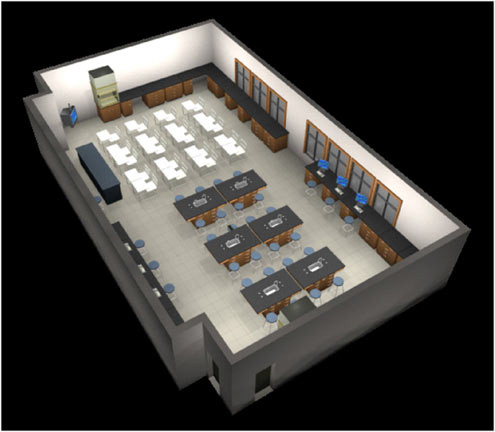
FIGURE 6-1 Laboratory classroom set up for group laboratory work and teacher demonstration or mini-lecture.
SOURCE: Lidsky (2004).
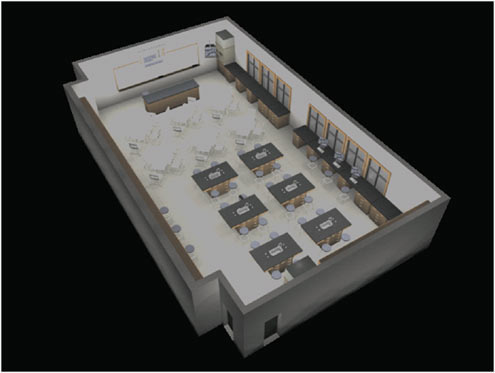
FIGURE 6-2 Laboratory classroom set up for small-group investigations at central benches and individual activities at side benches.
SOURCE: Lidsky (2004).
ogy Education Association members, who taught drafting, technology education, and manufacturing courses, just under half taught in a combined laboratory-classroom and one-quarter taught in a combined laboratory–production classroom (LabPlan, 2004).
Budgeting for Laboratory Facilities, Equipment, and Supplies
Because laboratories require space for student activities, shared teacher planning, teacher demonstrations, student discussions, and safe storage of chemicals, along with specialized furnishings (e.g., sinks, benches) and utilities (e.g., water, gas), they are more expensive to build and maintain than other types of school space. One recent guide to school science facilities indicates that “laboratory space is approximately twice as expensive to build
and equip as classroom space.” (Biehle et al., 1999, p. 56). According to one architect specializing in educational science laboratories, in 2004, the costs of laboratory space in New England ranged from $180 per square foot for general science and physics to $250 per square foot for chemistry and biology (Lidsky, 2004). At $250 per square foot, these laboratory costs are about 1.7 times more expensive than the costs of new high school space in New England, estimated at $148 per square foot in a recent survey (Abramson, 2004).
Daniel Gohl, principal of McKinley Technical High School in Washington, DC, pointed out that laboratories are effectively financed through two different budgets (Gohl, 2004). Although funds to plan, design, and build a new laboratory facility come from the school or district’s capital budget, the supplies and equipment needed to use the laboratory space come out of the operating budget. In some cases, there may be enough capital budget to build a laboratory, but no funds are set aside in the operating budget to provide the equipment and supplies to use the laboratory over subsequent years. Gohl observed:
It is not uncommon in jurisdictions throughout the country to find people who invest a tremendous amount of money in high tech [high-voltage alternating current] systems, great science labs, and then underfund them historically once they are built. It may be that there is no equipment, or it may be that they buy the equipment once and they don’t buy the disposable materials every year in order to use them. There is no consensus as to how one budgets those resources into the foreseeable future.
A study in New York City supports Gohl’s observations regarding budgeting for operational costs of labs (Schenk and Meeks, 1999). The New York State Regents exam has exerted pressure for high schools throughout the state, including those in New York City, to increase the number of laboratory courses offered. In New York City, 16 of the 18 schools surveyed increased the number of science classes requiring laboratory experiments between 1993-1994 and 1996-1997. In nine of the schools, the laboratory load at least doubled. The average increase in laboratory load between 1993-1994 and 1996-1997 was 90 percent.
Changes in the budget for laboratory materials and supplies were not commensurate with these increases in laboratory loads. For example, in one high school, although the number of laboratory sections tripled from 25 to 75, the school received only $300 more for materials and supplies. In the same time period, 7 of the 18 schools studied experienced a cut in their science budgets, and 5 of these schools simultaneously experienced increases in their laboratory load. For the nine schools that experienced an increase in their science budget, the budget increased 34 percent while the corresponding increase in laboratory load was 288 percent.
Designing Laboratory Experiences and Facilities when Resources are Scarce
When limited funds prevent schools from designing and constructing laboratory facilities in the school, there are alternative ways to provide students with effective laboratory experiences. Schools and teachers can arrange field trips with the help of local groups, such as the Audubon Naturalist Society, the local science museum, and the state department of natural resources.
Schools in rural areas may be able to obtain one of a growing number of mobile school laboratories (see Box 6-1). Laboratories on wheels can provide facilities, equipment, and trained teachers to rural students, and many of these laboratories also provide teacher professional development. However, because these projects typically rely on a variety of funding sources, including grants, they are not always sustainable. For example, Virginia Polytechnic University’s Mobile Chemistry Laboratory, which relied on a combination of federal, corporate, private, and university funding, announced that operations would cease in early May of 2004 due to lack of funds. However, the National Science Foundation provided temporary funding to sustain the program through the 2004-2005 school year (Virginia Polytechnic Institute, 2004). In contrast, the Juniata College Science in Motion Program in Pennsylvania, initially funded by the National Science Foundation, has been sustained with state funding since 1997 (Mulfinger, 2004).
A few school districts and cities have found economies of scale by centralizing laboratory facilities in one location (this can be either an alternative to having laboratory facilities in every school or a supplement). For example, the Howard Hughes Medical Institute has supported new biotechnology laboratory facilities at Sterling High School in Loudoun County, Virginia, and a magnet program. Students across the county will use the laboratories at Sterling every other day, attending their home high schools for other courses and extracurricular activities (Helderman, 2004). In Tel Aviv, Israel, a centralized science facility performs a similar role, serving students from several schools with laboratory facilities and expert science laboratory teachers (Arzi, 1998). Students in Tel Aviv attend their home schools for other subjects and the science center for science. The Tel Aviv center has proven particularly effective in building teachers’ knowledge and expertise for laboratory teaching, by providing a place for ongoing teacher collaboration, reflection, and improvement of instruction (see Figure 6-3).
|
BOX 6-1 Laboratories on Wheels California: Teachers + Occidental = Partnership in Science (TOPS) Available at: http://www.lalc.k12.ca.us/catalog/providers/172.html. Colorado: Colorado State University Mobile Investigations Available at: http://www.hhmi.org/news/csugia.html. Delaware: Science Van Project—Science In Motion Illinois: Chicago State University Chemistry Van Available at: http://members.tripod.com/~tyff/Outreach/chemvan.html. University of Illinois at Urbana-Champaign Physics Van Available at: http://van.hep.uiuc.edu/. Northern Illinois University Frontier Physics Available at: http://www.physics.niu.edu/~frontier/. Indiana: Purdue University Instrument Van Project Available at: http://www.chem.purdue.edu/cmobile/Chemobile%20%home%20page.htm. New York: Marist College: Science on the Move Available at: http://library.marist.edu/SOTM. Pennsylvania: Science in Motion Available at: http://www.science-in-motion.org/. North Carolina: Science House Satellite Offices Available at: http://www.science-house.org/info/satellite.html. South Dakota: Science on the Move Available at: http://www.camse.org/scienceonthemove/what_is_sotm.html. West Virginia: Science on Wheels Available at: http://www.marshall.edu/coe/toyota/. |
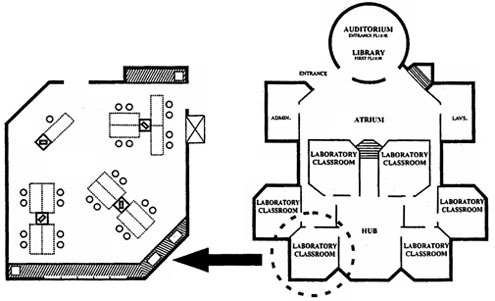
FIGURE 6-3 Schematic illustration of a laboratory-classroom and floor plan at HEMDA-Centre for Science Education in Tel Aviv, Israel.
SOURCE: Arzi (1998). Reprinted with permission.
DISPARITIES IN FACILITIES, EQUIPMENT, AND SUPPLIES
Disparities in Laboratory Facilities
Although well-designed flexible laboratory spaces can support effective laboratory experiences, access to such space is not available to all schools and students. Among science department heads surveyed in 2000, 21 percent indicated that facilities posed a serious problem for science instruction in their school (Smith, Banilower, McMahon, and Weiss, 2002). This represented an increase from 1993, when about 18 percent of heads of science departments indicated that facilities posed a serious problem.
In 1994, the U.S. General Accounting Office (GAO) surveyed a nationally representative sample of 10,000 schools in 5,000 school districts. This was the same sample used by the National Center for Education Statistics Schools and Staffing Survey administered by the Census Bureau. GAO mailed surveys to facilities directors and administrators in the school districts in which the sampled schools were located and received a 78 percent response.
TABLE 6-1 Percentage of Schools Reporting Inadequate Facilities by Proportion of Minority Students
|
|
Percentage of Total |
|||
|
Minority enrollment |
50.5 or more |
20.5-50.4 |
5.5-20.4 |
less than 5.5 |
|
Schools reporting inadequate facilities |
49 |
43 |
39 |
39 |
|
SOURCE: U.S. General Accounting Office (1996, pp. 49-50). |
||||
Survey results were statistically adjusted to produce representative estimates at the national and state levels (U.S. General Accounting Office, 1996, p. 32). One survey question asked, “How well do this school’s on-site buildings meet the functional requirements of the activities below?—very well, moderately well, somewhat well, not well at all.” The list of activities included laboratory science. A total of 15 percent of respondents who were asked about high schools indicated that their laboratory facilities met functional requirements “not well at all.” Specifically, they indicated that their facilities did not meet the following functional requirements for laboratory science: demonstration stations, student laboratory stations, safety equipment, and appropriate storage for chemicals and other supplies.
In its analysis of survey responses and school and student characteristics, GAO included responses about both elementary and secondary school buildings. The survey identified three trends. First, inadequate laboratory facilities varied by community type. The highest percentage of ill-equipped schools was in central cities, followed by urban fringes or large towns, and the smallest percentage of ill-equipped schools was in rural areas or small towns. Second, inadequate laboratory facilities varied by proportion of minority students, with less adequate laboratory facilities in schools with higher concentrations of minorities (see Table 6-1). Third, inadequate laboratories were associated with the proportion of students approved for free or reduced-price lunch, with less adequate facilities in schools with higher concentrations of students eligible for reduced-price meals (see Table 6-2).
More recent data regarding the adequacy of science facilities are available from a survey of school principals in New Jersey conducted in 2003 by Mark Schneider. Due to its focus on a single state, less careful design, and lower response rate, the results of this survey are less conclusive than the earlier GAO survey. In fall 2003, 1,300 principals who were members of the New Jersey Principals and Supervisors Association were sent surveys by email and fax. The response rate was about 20 percent. An analysis of the sample of respondents found that principals in New Jersey’s poorest districts
TABLE 6-2 Percentage of Schools Reporting Inadequate Facilities by Proportion of Students Eligible for Free or Reduced-Price Lunch
|
|
Percentage of Total |
|||
|
Students eligible for free or reduced-price lunch |
70 or more |
40-70 |
20-40 |
Less than 20 |
|
Schools reporting inadequate facilities |
50.3 |
49 |
38 |
20 |
|
SOURCE: U.S. General Accounting Office (1996, pp. 49-50). |
||||
were underrepresented in the sample (Schneider, 2004). In this survey, principals were not given any guidance to judge the adequacy of their laboratory facilities. The survey question asked whether specialized science facilities were “very adequate,” “somewhat adequate,” or “less than adequate” (p. 5). Despite these weaknesses, the survey responses are discussed here, as they are among the very few data available on the adequacy of laboratory facilities.
In response to this survey, principals in the poorest schools were more likely to find the facilities for science to be inadequate than principals in average or high-income schools. Specifically, around 30 percent of principals in poor schools indicated their science facilities were inadequate compared with less than 10 percent of principals in average or high-income schools (Schneider, 2004).
Surveys in three large cities with large concentrations of poor and minority students also reveal inadequate laboratory facilities and equipment. A survey conducted in New York City in the mid-1990s found that the few available laboratory rooms were in constant use, with teachers rotating in and out of classrooms. With no time to clean up broken glass or spills, student safety was compromised (Schenk and Meeks, 1999). In response to phone and mail surveys conducted in 2002, almost 60 percent of science teachers in Chicago and Washington, DC, reported either that their science laboratory facilities were somewhat inadequate or very inadequate to meet curriculum standards or that they had no science laboratory facilities at all (Schneider, 2002).
Disparities in Laboratory Equipment
Equipment necessary to safely conduct a variety of laboratory experiments is not available in all classrooms. In the 2000 survey of science education, high school teachers were asked about equipment used in their science classes. They responded that they frequently used electricity (in over 90
percent of classes), running water (over 90 percent of classes), gas for burners (in 72 percent of classes), and hoods or air hoses to remove dangerous fumes (in 56 percent of classes) (Smith et al., 2002). On average, teachers indicated that less than 10 percent of their science classes lacked needed access to electric outlets, running water, and gas for burners. However, teachers indicated that a larger share of science classes (26 percent in 1993 and 11 percent in 2000) would have benefited from hoods or air hoses that were unavailable.
A follow-up analysis of this national survey data revealed disparities in the availability of laboratory equipment and supplies. Teachers in schools with the highest concentrations of non-Asian minority students were more likely than teachers in other schools to indicate that fume hoods or air hoses were needed but not available (Banilower, Green, and Smith, 2004). Teachers in rural schools reported spending far less on equipment than teachers in urban or suburban areas, and equipment spending also varied by poverty and the ethnic composition of schools. The median of equipment spending was $4 per pupil per year among schools in the lowest poverty quartile, compared with $2 per pupil per year among schools in the highest poverty quartile (Banilower et al., 2004, p. 33). Equipment spending was also lower in schools with higher concentrations of non-Asian minorities. The median amount spent per pupil per year was $3 in schools with the lowest concentration of minorities and only $1 in schools with the highest concentration. For a typical high school of about 1,100 students, the median of annual spending on equipment was $3,126 in the lowest poverty schools and $1,935 in the highest poverty schools. Similarly, annual spending was $2,476 in schools with the fewest minorities and $1,928 in schools with the highest concentrations of minorities (Banilower et al., 2004, p. 32; see Table 6-3).
Disparities in Supplies
A study of high school biology in Israel found that “easy access to laboratory materials, living organisms, and chemicals has been influential in promoting laboratory work” (Tamir, 1976, cited in Lazarowitz and Tamir, 1994, p. 111). As in the case of laboratory facilities and equipment, such easy access is not equally distributed to all high schools and all high school students.
Nationally, the median of yearly expenditures per pupil for consumable science supplies was $3 in 2000, or $3,444 for a typical high school of about 1,100 students. However, the national average masks disparities in spending between rural schools, which have median science supply expenditures of only $994, and urban and rural schools, which have annual supply expenditures of $2,957 and $2,905, respectively (Banilower et al., 2004). In terms of annual spending on science supplies per pupil, schools with the lowest concentrations of poor students spent twice as much ($6) as the highest
TABLE 6-3 Spending on Laboratory Equipment (Median Amount Spent in 2000 by a Typical High School of 1,100 Students)
|
Demographic Category |
Median Amount ($) |
Standard Error |
|
Overall |
2,538 |
(253) |
|
School location |
||
|
Urban |
2,957 |
(464) |
|
Rural |
994 |
(292) |
|
Suburban |
2,905 |
(506) |
|
School poverty |
||
|
1st quartile (lowest poverty) |
3,126 |
(380) |
|
2nd quartile |
1,842 |
(335) |
|
3rd quartile |
2,758 |
(1,039) |
|
4th quartile |
1,928 |
(445) |
|
Non-Asian minority percentage |
||
|
1st quartile (lowest percentage) |
2,476 |
(383) |
|
2nd quartile |
2,372 |
(526) |
|
3rd quartile |
2,926 |
(812) |
|
4th quartile (highest percentage) |
1,928 |
(445) |
|
SOURCE: Banilower, Green, and Smith (2004). |
||
poverty schools ($3) on consumable supplies for science instruction. Annual spending per pupil was $5 in schools with the fewest non-Asian minorities and $3 in schools with the highest concentration of non-Asian minorities.
An earlier survey in New York City revealed that one South Bronx high school had no facilities designed specifically for laboratory investigations. This survey indicated that the average annual expenditure per pupil for laboratory supplies was merely $2.02 (range from $.93 to $3.31), well below the $16.79 per student per year spent by a suburban district on Long Island (Schenck and Meeks, 1999).
Lack of adequate supplies and access to those supplies can have severe effects on teaching and learning. A science teacher at an urban high school in a poor neighborhood of Washington, DC, told the committee that he teaches laboratories only every two weeks because of the challenge of obtaining and assembling supplies. The science supervisor of a rural school district in southwestern Virginia, speaking to the committee, described the challenge of teaching laboratory classes off a cart of equipment and supplies and teaching ecology in the school library.
Lack of available, accessible laboratory equipment and supplies forces some teachers to purchase these items out of their own pockets. In response to a 2000 survey, high school teachers indicated they spent an average of $55 per year of their own money for science classes (Smith et al., 2002, p.
62). A national survey by a trade association found that teachers spent an average of $589 of their own money on supplies in 2001, up from $448 in 1999 (Trejos, 2003). Recognizing this problem, in March 2002 President Bush signed into law an economic stimulus package that included an annual $250 deduction for teachers’ personal expenditures on classroom supplies. In fall 2004, this tax deduction was extended for two years.
LABORATORY SAFETY
Questions about laboratory safety were not part of the committee’s charge, yet safety issues emerged as a critical concern over the course of the study. This section provides a brief review of safety issues. Science teachers and schools have clear legal liability for the safety of students engaged in laboratory activities, and local, state, and federal regulations, codes, and policies provide clear specifications for ensuring student safety. The limited evidence available suggests that some U.S. high schools are not ready to provide safe laboratory activities.
Liability for Student Safety
As defined by U.S. courts today, “negligence” is conduct that falls below a standard of care established by law or profession to protect others from an unreasonable risk of harm, or the failure to exercise due care to protect others from an unreasonable risk of harm. Science teachers and their supervisors have three basic duties. Failure to perform any of these could result in a legal finding that a teacher or a school administrator (or both) is liable for damages and a judgment and award against that teacher or school administrator (Council of Chief State Science Supervisors, no date, p. 2):
-
The duty of instruction. Teachers must instruct students prior to any laboratory activity, providing accurate, appropriate information about foreseeable dangers; identifying and clarifying any specific risks; explaining proper procedures/techniques; and describing appropriate behavior in the lab. These instructions must follow professional and district guidelines.
-
The duty of supervision. This includes not tolerating misbehavior, providing greater supervision in more dangerous situations, providing greater supervision to younger students and those with special needs, and never leaving students unattended.
-
The duty of maintenance. This requires that the teacher never use defective equipment, file written reports for maintenance or correction of hazardous conditions or defective equipment, establish regular inspections of safety equipment and procedures, and follow all guidelines for handling and disposing of chemicals.
Standards of Care for Student Safety
The courts have established that negligence may occur if teachers or school administrators’ conduct falls below a standard of care established by law or profession. Standards of care are established not only by law and regulation but are also incorporated in building codes and guidelines established by voluntary associations.
In the event of student accident or injury, courts may consider whether the size of the laboratory facility and the number of students using the facility met standards of care. State laws and regulations governing class size are based on occupancy standards established by the Building Officials and Code Administrators International, Inc., and the National Fire Protection Association, Inc. (Roy, 1999). Both of these sets of standards call for 50 square feet of space per person in school laboratories or workshops. The National Science Teachers Association (NSTA) calls for a minimum of 45 square feet per student for a standalone laboratory and 60 square feet per student for a combination laboratory-classroom (Biehle et al., 1999, p. 55). This translates into at least 1,250 square feet for a laboratory and 1,440 square feet for a combined laboratory classroom. The NSTA recommends a maximum class size of 24 students in high school laboratory science classes.
The U.S. Occupational Safety and Health Administration (OSHA) establishes standards of care to protect the health and safety of all employees, including teachers and other school employees. One of the most important OSHA standards of care for school laboratories is the Laboratory Standard (29 CFR 1910.1450). This standard requires school science teachers to create and maintain a chemical hygiene plan (CHP). In most schools, a science teacher or teachers develop the CHP, which outlines policies, procedures, and responsibilities to increase student, teacher, and staff awareness of potentially harmful chemicals. The CHP requires proper labeling of all chemicals, using a Material Safety Data Sheet, which outlines important safety information, and safe storage. These data sheets must be made available to school employees and must be kept in a safe but easily accessible location. The National Institute for Occupational Safety and Health provides guides for proper separation of incompatible chemical families. Other OSHA standards governing laboratory safety include CFR, Part 29, 1910 (General Workplace Standards), 1910 Subpart Z (Exposure Standards), 1910.133 (Eyewear Standards), and 1910.1450 (Occupational Exposure to Hazardous Chemicals in Laboratories).
The U.S. Environmental Protection Agency (EPA) administers several laws and regulations affecting safety in high school science laboratories. These include (1) the Resource Conservation and Recovery Act, (2) the Emergency Planning and Right-to-Know laws and regulations, and (3) the Toxic Sub-
stances Control Act. To carry out provisions of the Resource Conservation and Recovery Act, EPA issues regulations and guidelines governing safe storage of laboratory chemicals, equipment, and supplies. Title III of this act governs emergency planning and right-to-know (about potentially hazardous chemicals), and Title IV governs chemical disposal. In implementing the Toxic Substances Control Act, EPA issues regulations and guidelines to protect indoor air quality. EPA provides a checklist for teachers to assess and improve indoor air quality, including items related specifically to school science laboratories (http://www.epa.gov/iaq/schools/tfs/teacher.html).
In addition to these federal regulations and guidelines, the American National Standards Institute (ANSI) has established voluntary standards for laboratory safety that include:
-
ANSI Z358.1—guidelines for establishing the correct design, installation, use, and performance of emergency safety equipment.
-
ANSI Z87—guidelines for protective equipment at easily accessible locations.
To help teachers and schools meet the growing body of standards of care, several organizations, ranging from the Council of Chief State Science Supervisors (no date) to Flinn Scientific, have created safety checklists. Many are readily accessible on the Internet (see Box 6-2). One company has developed comprehensive state-level guides available on CD-ROM, incorporating state regulations and guidelines, as well as federal and professional requirements (Jakel, Inc., 2005).
Current Patterns in Implementing Safety Policies
Although states, school districts, and professional associations make some efforts to alert schools and teachers about safety policies and practices, some evidence suggests that schools tend to react to accidents rather than taking positive action to avoid them. The costs of adequate safety are large. For example, between 2000 and 2003, the Chicago Public Schools spent $570,000 to conduct chemical sweeps in schools, at a cost of approximately $2,600 per school. When the Chicago science supervisor proposed a more serious and sustained investment in safety—including $3.3 million for initial equipment, teacher training, and policies for laboratory safety, followed by an annual investment of $1 million to continue inventories of chemicals, train teacher and supervisors, and employ safety specialists, the budget proposal was turned down (see Table 6-4).
While preventive safety measures are expensive, the costs of accidents and injuries may be even larger. Press reports indicate that some school and district officials do not make safety improvements until an accident occurs.
|
BOX 6-2 There are many sources of general safety checklists and action plans for teachers and school administrators concerned about laboratory safety. They include Council of Chief State Science Supervisors (http://www.csss.enc.org/safety.htm) National Science Teachers Association (http://www.nsta.org/positionstatementandpsid=32) National Science Education Leadership Association (http://www.nsela.org/safesci17.htm) Flinn Scientific (a vendor of laboratory equipment and supplies) (http://www.flinnsci.com/Sections/Safety/generalSafety/stepsProve.asp) Laboratory Safety Institute |
For example, in 2000, eight chemistry students in a Battle Creek, Michigan, school were severely burned when a teacher poured methanol into metal chloride salt. A ball of fire flashed across the teacher’s desk and engulfed students sitting across from him. The teacher did not use a fume hood, because the one in his classroom forced observers to peer over his shoulder, preventing all students from watching. Following the accident, the district completed a previously planned renovation, providing every laboratory with a new fume hood that offers a better view of demonstrations (Hoff, 2003).
More recently, three students were burned at Federal Way High School near Seattle, Washington, when the teacher did a similar demonstration without a shield. A school spokeswoman commented, “None of our classrooms are set up that way” (Hagey, 2004). Since the accident, a state inspector from the state Department of Labor and Industries found five serious hazards in violation of state regulations, including: (1) emergency showers were not tested annually and emergency eyewashes were not tested weekly; (2) a district-wide chemical hygiene plan had not been implemented; (3) fume hoods were not tested to determine if they met national standards; (4) several bottles of acids and bases were stored on the floor of a fume hood, obstructing air flow and creating the risk of inhaling dangerous fumes; and (5) air sampling for formaldehyde exposure had not been carried out in biology labs (Maynard, 2004).
TABLE 6-4 Estimated Costs of Improving Laboratory Safety in Chicago Public Schools, 2004
|
Recommendation |
Initial Cost |
Annual Cost |
|
|
1. |
Identify and codify laboratory safety procedures. |
$20,000 |
$2,500 |
|
2. |
Establish clear accountability systems for the maintenance and management of chemical hygiene at local schools. |
$100,000 |
$100,000 |
|
3. |
Establish a science safety manager position. |
$80,000 |
$80,000 |
|
4. |
Identify one chemical hygiene specialist in each school. |
$325,000 |
$325,000 |
|
5. |
Conduct priority removal of potentially hazardous chemicals that may remain in schools. |
$400,000 |
$0 |
|
6. |
Deploy a system-wide web-based inventory system to collect and maintain an inventory of chemicals at each school. |
$100,000 |
$50,000 |
|
7. |
Inventory existing chemical supply in schools as part of ongoing chemical hygiene plan. Remove hazardous chemicals from school science laboratories. |
$265,000 |
$265,000 |
|
8. |
Provide baseline safety materials for all classrooms in which science laboratory investigations are taking place. |
$1,800,000 |
$0 |
|
9. |
Roll out a four-tiered training plan focusing on laboratory safety. |
$250,000 |
$250,000 |
|
10. |
Provide a set of “introduction to laboratory safety” lesson plans to be used by science teachers. |
$10,000 |
$8,000 |
|
Total |
$3,300,000 |
$1,000,000 |
|
|
SOURCE: Chicago Public Schools, Office of Math and Science. |
|||
Frequency of Accidents and Injuries
The weak and limited data available suggest that accidents are not uncommon in high school science laboratories. One study of injury claims related to school science in Iowa found that the number of claims rose from 674 in 1990-1993 to 1,002 in 1993-1996, and the cost to insurance companies rose from $1.68 to $2.3 million. The authors found that the number of law-suits grew from 96 to 245, and awards in these suits grew from $566,305 to $1.2 million (Gerlovich et al., 2002).
Among teachers responding to a survey conducted in Texas in October 2000, 36 percent reported a total of 460 minor laboratory accidents during the 2000-2001 school year (Fuller et al., 2001, p. 9), and 13 percent reported a total of 85 major accidents requiring medical attention over the previous five years (Fuller et al., 2001, p. 10).
The lack of publicly available data on laboratory accidents and injuries may be due in part to the fact that many legal cases are settled before trial. As a result, there are few articles discussing legal precedents and findings in cases related to laboratory science (Standler, 1999).
Lack of Systemic Safety Enforcement
Over the past 10 years, several states have conducted surveys of laboratory safety in conjunction with teacher safety education workshops. States that have conducted surveys and workshops include Iowa (Gerlovich et al., 1998), Nebraska (Gerlovich and Woodland, 2000), North Carolina (Stallings, Gerlovich, and Parsa, no date), Wisconsin (Gerlovich, Whitsett, Lee, and Parsa, 2001), South Carolina (Sinclair, Gerlovich, and Parsa, 2003), and Alabama (Gerlovich, Adams, Davis, and Parsa, 2003). The results of these state surveys must be interpreted with caution, because responses were obtained from only small, self-selected samples of teachers, who may not be representative of the population of teachers more generally. For example, in Iowa, 617 surveys were mailed to participants who had agreed to attend safety training workshops, and 383 surveys were received at these workshops (Gerlovich et al., 2002). Surveys reflected the situation of at least one building in each of Iowa’s area educational agencies, but it is not possible to determine whether the situation in other schools in those areas is the same or different.
Among the small group of teachers responding to the Iowa survey, nearly 70 percent worked in laboratories that were over 20 years old, making it less likely that they were in compliance with recent building codes. Less than 22 percent of the laboratories and 7 percent of the combined laboratory-classrooms included in this small sample complied with the NSTA standards calling for 45 square feet per student for laboratories and 60 square feet per student for combined laboratory-classrooms (Gerlovich et al., 2002). Most of the facilities included in the surveys had such basic safety features as ground fault interrupters on electrical outlets, ABC triclass fire extinguishers, and ANSI-approved eye protective equipment, but nearly 27 percent did not have a functioning eyewash station. About 37 percent of the teachers reported never receiving science safety training, and over 17 percent said they had received safety training more than 10 years earlier. Nearly 60 percent required students to sign safety contracts indicating they understood and agreed to follow safety procedures, and nearly 70 percent stored chemicals safely, based
on chemical compatibility, rather than alphabetically. Further analysis of the survey data indicated that newer facilities (10 years old or less) generally had more square footage of floor space and were more likely to have two or more exits, compared with older facilities. The analysis also found that teachers who had received safety training within 10 years more frequently stored chemicals based on chemical compatibility than did teachers who had not been trained or had been trained more than 10 years previously.
Researchers in Texas distributed a safety survey to science teachers attending a conference in October 2000 and to teachers participating in 12 laboratory safety professional development sessions across the state (Fuller et al., 2001, p. 7). They received 590 responses. As in the Iowa study, the facilities in which most respondents taught were smaller than the size recommended by NSTA. Specifically, 94 percent of those who taught in laboratories indicated that these facilities were less than 1,200 square feet, indicating they did not meet the Texas recommendation of 50 square feet per student. Among respondents who worked in combined laboratory-classrooms, 70 percent reported room sizes of less than 1,000 feet, indicating that the rooms did not meet the requirement in Texas law of 50 square feet per student (Fuller et al., 2001, pp. 16-17). Many respondents also indicated that their schools did not follow standards of care regarding the availability and use of safety equipment, proper storage of chemicals, ventilation systems, and classroom communication (Fuller et al., 2001, p. 19). The Texas Hazard Communications Act requires all science teachers new to a school to participate in professional development activities focused on laboratory safety, but only 33 percent of respondents indicated that they had done so during the 2000-2001 school year.
Perhaps the most significant finding from the Texas survey was the positive and direct relationship between the number of students in a science class and the number of accidents. As student enrollments increased, so did the number of minor accidents. The authors recommended that school districts provide science laboratories of appropriate size (50 square feet per student) with appropriate storage space (15 square feet per student) and ventilation. They also recommended compliance with the recommended ratio of 25 students to 1 high school teacher (Fuller et al., 2001, p. 19).
Other data indicate that large class sizes may pose a threat to safety in school laboratories. Average science class sizes in California, 30.1 students per teacher in the 2003-2004 school year (California Department of Education, 2005), exceed the NSTA standard of 24 students per teacher in science classes conducting hands-on or inquiry activities. It may be extremely difficult for teachers in classes of 30 students to perform the “duty of supervision” and maintain safety during laboratory experiences. An earlier survey of Florida teachers published in 1988 indicated that they viewed the size of more than 55 percent of their classes to be “potentially unsafe” for labora-
tory work. The average class size viewed as “unsafe” was 31 students compared with an average class size of 23 students in the 45 percent of classes considered “safe” (Horton, 1988).
The data above suggest that schools and teachers need better training in safety. Although ad hoc workshops on laboratory safety can provide information that helps teachers and administrators enforce legal requirements for maintaining student safety, more sustained professional development may be required to create lasting changes in school safety, just as sustained professional development supports changes in teaching practices.
SUMMARY
Integrated laboratory-classrooms with flexible equipment and furnishing are ideal for supporting teaching and learning with laboratory experiences that are integrated into the flow of instruction. However, some schools are far from this ideal.
Direct observation and manipulation of many aspects of the material world require adequate laboratory facilities, including space for teacher demonstrations, student laboratory activities, student discussion, and safe storage space for supplies. Schools with higher concentrations of non-Asian minorities and schools with higher concentrations of poor students are less likely to have adequate laboratory facilities than other schools. In addition to lacking such adequate spaces for laboratory activities, schools with higher concentrations of poor or minority students and rural schools often have lower budgets for laboratory equipment and supplies than other schools. These disparities in facilities and supplies may contribute to the problem that students in schools with high concentrations of non-Asian minority students spend less time in laboratory instruction than students in other schools.
Laboratory safety is an area of growing concern in high school science, yet few systematic data are available on the current safety of facilities, equipment, and practices. School administrators and science teachers, who bear important responsibility for student safety, appear to receive little systematic safety training.
REFERENCES
Abramson, P. (2004, February). 9th annual school construction report: School planning and management. Available at: http://www.peterli.com/global/pdfs/SPMConstruction2004.pdf [accessed Sept. 2004].
Agron, J. (2003, May). Growth spurt: Even as school districts and colleges continue to cut spending budgets, spending on construction booms. American School and University Magazine. Available at: http://www.asumag.com/mag/405asu21.pdf [accessed Sept. 2004].
Ainley, J. (1978). An evaluation of the Australian science facilities program and its effect on science education in Australian schools. Unpublished Ph.D. thesis, University of Melbourne.
Ainley, J. (1990). School laboratory work: Some issues of policy. In E. Hegarty-Hazel (Ed.), The student laboratory and the science curriculum (pp. 223-241). London, England: Routledge.
Arzi, H.J. (1998). Enhancing science education through laboratory environments: More than walls, benches and widgets. In B.J. Fraser and K.G. Tobin (Eds.), International handbook of science education (pp. 595-608). London, England: Kluwer Academic.
Banilower, E.R., Green, S., and Smith, P.S. (2004). Analysis of data of the 2000 National Survey of Science and Mathematics Education for the Committee on High School Science Laboratories: Role and Vision (September). Chapel Hill, NC: Horizon Research.
Biehle, J., Motz, L., and West, S. (1999). NSTA guide to school science facilities. Arlington, VA: National Science Teachers Association.
California Commission on Teacher Credentialing. (2004). Science teacher preparation in California: Standards of quality and effectiveness for subject matter programs. A Handbook for teacher educators and program reviewers. Sacramento: Author.
California Department of Education. (2005). Ed-data: Profiles and reports. Available at: http://www.ed-data.k12.ca.us/Navigation/fsTwoPanel.asp?bottom=%2Fprofile%2Easp%3Flevel%3D05%26reportNumber%3D16 [accessed Jan. 2005].
Council of Chief State Science Supervisors. (No date). Science and safety: Making the connection. Washington, DC: Author. Available at: http://csss.enc.org/safety.htm [accessed June 2005].
Englehardt, D.F. (1968). Aspects of spatial influence on science teaching methods. Unpublished Ed.D. thesis, Harvard University, School of Education.
Fuller, E.J., Picucci, A.C., Collins, J.W., and Swann, P. (2001). An analysis of laboratory safety in Texas. Austin: Charles A. Dana Center of the University of Texas at Austin.
Gerlovich, J.A., Adams, S., Davis, B., and Parsa, R. (2003). Alabama science safety: A 2001 status report. ASTA News, 25(1). Montgomery: Alabama State Teachers’ Association.
Gerlovich, J.A., Parsa, R., Frana, B., Drew, V., and Stiner, T. (2002). Science safety status in Iowa schools. Journal of the Iowa Academy of Science 109(3, 4), 61-65.
Gerlovich, J.A., Whitsett, J., Lee, S., and Parsa, R. (2001). Surveying safety: How researchers addressed safety in science classrooms in Wisconsin. Science Teacher, 68(4), 31-35.
Gerlovich, J.A., Wilson, E., and Parsa, R. (1998). Safety issues and Iowa science teachers. Journal of the Iowa Academy of Sciences, 105(4), 152-157.
Gerlovich, J.A., and Woodland, J. (2000). Nebraska Secondary Science Teacher Safety Project: A 2000 status report. Nebraska Science Teacher, 1(1), 4-11.
Gohl, D. (2004). Panel discussion of finances and resources. Presentation to the Committee on High School Science Laboratories: Role and Vision, June 3-4, National Research Council, Washington, DC. Available at: http://www7.nationalacademies.org/bose/June_3-4_2004_High_School_Labs_Meeting_Agenda.html [accessed June 2005].
Hagey, J. (2004, January 31). Four hurt in lab explosion. News Tribune (Tacoma, WA).
Helderman, R. (2004, March 25). Institute plans VA biotech magnet school. Washington Post.
Henderson, A.T., and Mapp, K.L. (2002). A new wave of evidence: The impact of school, family, and community connections on student achievement. Austin: Southwest Educational Development Laboratory. Available at: http://www.sedl.org/connections/research-syntheses.html [accessed June 2005].
Henderson, D., Fisher, D.L., and Fraser, B.J. (2000). Interpersonal behaviour, laboratory learning environments, and student outcomes in senior biology classes. Journal of Research in Science Teaching, 37, 26-43.
Hoff, D.J. (2003). Science-lab safety upgraded after mishaps. Education Week, 22(33), 1, 20-21.
Horton, P. (1988). Class size and lab safety in Florida. Florida Science Teachers Magazine, spring.
Jakel, Inc. (2005). The total science safety system. Available at: http://showcase.netins.net/web/jakel/examples/examples.html [accessed June 2005].
LabPlan. (2004). Introduction. Available at: http://www.labplan.net/index.htm [accessed Oct. 2003].
Lazarowitz, R., and Tamir, P. (1994). Research on using laboratory instruction in science. In D. Gabel (Ed.), Handbook of research on science teaching and learning (pp. 94-128). New York: Macmillan.
Lidsky, A. (2004). How financial and resource issues constrain or enable laboratory activities. Presentation to the Committee on High School Science Laboratories: Role and Vision, June 3-4, National Research Council, Washington, DC. Available at: http://www7.nationalacademies.org/bose/June_3-4_2004_High_School_Labs_Meeting_Agenda.html [accessed June 2005].
Maynard, S. (2004, April 16). Hazards found in FWay schools science labs. News Tribune. Available at: http://www.labsafety.org/news/hazards_found_in_fway_schools_sc.htm [accessed June 2005].
Mulfinger, L. (2004). What is good science education, and whose job is it to support it? In D. Haase and S. Schulze (Eds.), Proceedings of the Conference on K-12 Outreach from University Science Departments. Raleigh: Science House, North Carolina State University.
National Center for Education Statistics. (2004a). Contexts of elementary and secondary education: Trends in science and mathematics course taking. Available at: http://nces.ed.gov/pubs2002/2002025_4.pdf [accessed Oct. 2005].
National Center for Education Statistics. (2004b). The condition of education 2004. Societal support for learning. Available at: http://www.nces.ed.gov/programs/coe/list/i6.asp [accessed July 2005].
National Research Council. (2003). Bio 2010: Transforming undergraduate education for future research biologists. Committee on Undergraduate Biology Education to Prepare Research Scientists for the 21st Century. Board on Life Sciences, Division on Earth and Life Studies. Washington, DC: The National Academies Press.
Novak, J.D. (1972). Facilities for secondary school science teaching: Evolving patterns in facilities and programs. Arlington, VA: National Science Teachers Association.
Roy, K. (1999). For safety sake: One class size does not fit all! Safe Science Series. Raleigh, NC: National Science Education Leadership Association. Available at: http://www.nsela.org/safesci7.htm [accessed June 2005].
Schenck, S., and Meeks, D. (1999). Math and science programs: Making them count. (ED 439-006.) New York: Office of the Comptroller, City of New York.
Schneider, M. (2002). Public school facilities and teaching: Washington, DC and Chicago. Paper commissioned by the 21st Century School Fund. Washington, DC: 21st Century School Fund. Available at: http://www.21csf.org/csf-home/publications.asp [Feb. 2005].
Schneider, M. (2004). The educational adequacy of New Jersey public school facilities: Results from a survey of principals. Newark: Education Law Center. Available at: http://www.edlawcenter.org/ELCPublic/elcnews_040510_jointpressrelease.htm [accessed May 2005].
Sheperd, R. (Ed.) (1974). Facilities for learning science [Special issue on the buildings and other facilities for the learning of science in Australian schools]. Australian Science Teachers Journal, 20(3), 4-76.
Sinclair, L., Gerlovich, J., and Parsa, R.A. (2003). South Carolina Statewide Science Safety Project. Journal of the South Carolina Academy of Science, 1(1), 19-27.
Smith, P.S., Banilower, E.R., McMahon, K.C., and Weiss, I.R. (2002). The National Survey of Science and Mathematics Education: Trends from 1977 to 2000. Chapel Hill, NC: Horizon Research. Available at: http://www.horizon-research.com/reports/2002/2000survey/trends.php [accessed May 2005].
Stallings, C., Gerlovich, J., and Parsa, R. (No date). Science safety: A status report on North Carolina schools. Raleigh: North Carolina Public Schools, Department of Public Instruction.
Standler, R. (1999). Injuries in school/collage laboratories in the USA. Available at: http://www.rbs2.com/labinj.htm [Oct. 2004].
Tamir, P. (1976). The role of the laboratory in science teaching. (Technical Report No. 10.) Iowa City: University of Iowa Science Education Center.
Trejos, N. (2003, August 25). Classroom’s costly lessons: Cuts force teachers to forage for supplies. Washington Post, B1.
U.S. General Accounting Office. (1996). School facilities: America’s schools not designed or equipped for the 21st century. (GAO-HEHS-95-95.) Washington, DC: Author. Available at: http://archive.gao.gov/t2pbat1/153956.pdf [accessed Oct. 2004].
Virginia Polytechnic Institute. (2004). Chemistry outreach program. Blacksburg, VA: Author. Available at: http://www.chem.vt.edu/chem-dept/mcl/index.html [accessed June 2005].


