

5
Realms of Integration: Family, Education, Work, and Health
This chapter examines four aspects of the Hispanic experience—family and living arrangements; schools and education; employment and economic well-being; and health status and access to care. These attributes not only portray current terms of belonging, but also highlight risks and opportunities that will ultimately define the future of the U.S. Hispanic population. A focus on features that set Hispanics apart from other groups—notably language use, youthfulness, and large shares of unskilled immigrants—helps assess whether the identified risks are likely to be enduring.
FAMILY AND LIVING ARRANGEMENTS1
Hispanic families are often extolled as a source of strength and cohesion that derives from their “familism”—a strong commitment to family life that values collective goals over individual well-being. Indicators of familism that differentiate Hispanics from whites include early childbearing and higher average fertility levels, large family households that often extend beyond nuclear members, and a greater overall tendency to live with kin rather than with unrelated individuals or alone. As a source of support for relatives in the extended network of kin relationships, familism can help mitigate economic and social risks in the face of adversity. These sentiments were echoed across the generational spectrum in focus groups conducted for the panel:
Sometimes families here, white families, are not as united as Hispanic families are. We’re always famous for having aunts and uncles and relatives. Americans, it’s just mom and dad and kids. (Mexican immigrant, Raleigh)
***
Typically, we have close families. Family is a really big part of our culture. (third-generation Hispanic, Houston)
At the same time, consistent with their varied immigration histories and social conditions, Hispanic families are highly diverse. Specific aspects of family behavior, such as intermarriage patterns, cohesion among relatives, and the content of social exchanges, differ by nationality and generation. Mexican Americans are considered particularly familistic, possibly because the large numbers of immigrants among them bring cultural traditions into sharper relief.
Most observers agree that the positive aspects of familism are worth keeping, yet there is no consensus on what can be preserved in the face of the rapid Americanization of second-generation youth. Whether ideals of collective support and other positive features of familism will endure and what forms family structure among Hispanics will take in the future are open questions with far-reaching implications for the evolution of group identity and social well-being.
If Hispanics follow the paths of other immigrant groups, their familism would appear to be in jeopardy as they acculturate, experience socioeconomic mobility, and adopt U.S. norms, which includes many behaviors that tend to erode kinship patterns and traditional family behavior. The rise in divorce and nonmarital childbearing among Hispanics, evident in the growth of mother-only families, signals what some scholars term “family decline.”2 In 1980, fathers were absent in 12 percent of white families, 38 percent of both Dominican and Puerto Rican families, and 40 percent of black families. By 2000, approximately 14 percent of white families had a single female head, compared with about 20 percent of Mexican and Cuban families, 25 percent of Central and South American families, 36 percent of Dominican and Puerto Rican families, and 45 percent of black families.3 Because mother-only families are significantly more likely to be poor, this trend signals new vulnerabilities for the growing numbers of youths reared by single parents.
Generational transitions also dilute familism, although apparently not uniformly among Hispanic subgroups. For example, among Mexicans and
Puerto Ricans born in the United States, the percentage of married-couple households is smaller and the percentage of female-headed households larger than among first-generation immigrants. Compared with the immigrant generation, U.S.-born Mexican Americans exhibit higher divorce rates. Only 56 percent of third-generation Mexican children (those who have American-born parents) live with both parents, compared with about 73 percent of children with Mexican-born parents. Another sign of dwindling familism is the shrinking size of extended families, which often results in reduced safety nets for related individuals.4
Rising nonmarital childbearing is another sign of eroding Hispanic familism. Between 1980 and 2000, the percentage of births to unmarried women more than doubled for whites (134 percent), Mexicans (101 percent), and Cubans (173 percent), and increased by more than half for Central and South Americans (64 percent) and other Hispanics (97 percent). Out-of-wedlock childbearing among Puerto Ricans rose more slowly because, as with blacks, their share of nonmarital births was already high in 1980. By 2000, the percentage of births to unmarried Hispanic mothers was between that of whites (22 percent) and blacks (69 percent). The rate for Cubans was closer to that for whites at 27 percent, and the Puerto Rican rate was closer to that for blacks, at 59 percent. At 44 percent, the out-of-wedlock birth rate for Central and South Americans lay between the extremes.
Finally, the cultural mergers produced by rising rates of intermarriage—between Hispanics and non-Hispanics and among Hispanic nationalities—can diminish or redefine the content of familism. As a measure of social distance between groups, an indicator of assimilation, and a force that shapes racial and ethnic boundaries, intermarriage can either redefine or erode Hispanic familism over generations. For all Hispanics, the tendency to marry, cohabit, and procreate with members of their own ethnic group declines across generations, though notable differences exist across groups. Mexican Americans not only are considered to be more familistic than other Hispanics, but also, given their large numbers, are far more likely to be paired with a member of the same ethnic group in marriage, cohabitation, or parenthood than are Puerto Ricans, Cubans, Central/South Americans, or other Hispanics.5 One possible explanation for this is that high levels of immigration, buttressed by residential segregation, help preserve Mexican familism in the face of erosion from other sources.
Whether traditional Hispanic familistic orientations will persist beyond the third generation, whether they will take the same forms, and whether
they will serve similar protective functions is unknown. Trends in marriage, cohabitation, and parenthood offer provocative insights. Hispanics are more likely to partner with another Hispanic in marriage than in cohabitation and nonmarital parenthood. Although generally less common, relationships with white partners frequently involve marriage. U.S.-born Hispanics are more likely than Hispanic immigrants to have a white, or other non-Hispanic, spouse.6 Unions among partners of different Hispanic origins or between Hispanics and blacks are more likely to involve cohabitation and unmarried childbearing. Hispanic-black unions quite frequently produce children out of wedlock.
Hispanics’ interethnic unions foreshadow changing ethnic boundaries through childbearing. In particular, children of mixed unions face complex identity issues: Will they retain a mixed identity, adopt the ethnic (or racial) identity of one parent, or perhaps opt for a panethnic identity? Unions between Hispanic women and white partners can facilitate assimilation into mainstream white society, because these mixed marriages are more common among the better educated. Whether and how Hispanics’ ethnic mixing will redraw racial and ethnic boundaries in the United States is uncertain because the prevalence of intermarriage depends on even greater uncertainties, such as the effect of geographic dispersal on the incidence of mixed unions, future levels of immigration, and the way persons of mixed ancestry self-identify ethnically.7 Because of their sheer numbers and relatively high residential concentration, Mexican Americans are likely to retain a relatively distinct ethnic identity, although generational transitions will blur boundaries though unions with whites. Smaller in size, other Hispanic subgroups are less likely to sustain discrete identities over time because of their higher levels of ethnic mixing with other Hispanic groups and with blacks, which creates greater ambiguity about the place of their offspring in the evolving racial spectrum. How settlement patterns recontour marriage markets will also decide the viability of Hispanicity as a panethnic identity.
SCHOOLS AND EDUCATION8
The United States houses some of the most outstanding universities in the world, which coexist with countless highly dysfunctional primary and secondary schools. Thousands of young Hispanics must pursue inter- and intragenerational social mobility predominantly via segregated inner-city schools that feature dropout rates well above the national average. The vastly unequal opportunities for academic achievement they confront in the lower
grades contribute to widening disparities at higher levels of the education system.
Although most demographic groups have experienced significant increases in educational attainment since the 1960s, Hispanics are distinguished by their historically low levels of completed schooling, currently completing less formal schooling than any other demographic group.9 In the context of the rising demand for skills in today’s economy, this liability is cause for concern.
In 2000 working-age Hispanics averaged nearly 3 years less of formal schooling than U.S.-born whites and blacks. Moreover, there are large disparities in educational attainment among Hispanic groups, mainly between the native- and foreign-born. On average, foreign-born Hispanics of working age complete 2.5 years less of formal schooling than their U.S.-born compatriots, with negligible differences between men and women. As Figure 5-1 shows, the educational standing of foreign-born Hispanics has eroded since 1980 compared with both whites and blacks. By contrast,
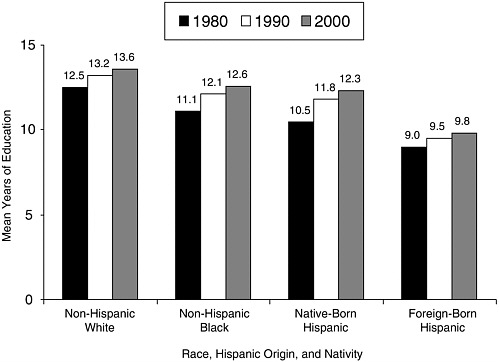
FIGURE 5-1 Mean years of education by race/ethnicity and nativity, 1980-2000.
NOTE: For ages 25 to 64.
SOURCE: U.S. Bureau of the Census (2000b), Integrated Public Use Microdata Series (IPUMS) 1 percent samples for 1980-2000.
U.S.-born Hispanics have closed the school attainment gap with whites by more than half a year—from 2 to 1.3 years over the same period.
Educational disparities between foreign- and native-born Hispanics play out as inequities among national-origin groups of working age because of the changing volume and composition of immigration in recent decades (see Chapter 2). Not only do foreign-born Mexicans feature the lowest educational levels of any Hispanic subgroup, but the gap in completed schooling between the foreign and native born is larger for Mexicans than for Hispanics of other nationalities—rising from 3 years in 1980 to 4.4 years in 2000—owing to substantial educational advances among the U.S.-born rather than declining attainment of recent immigrants (see Figure 5-2). For other Hispanics, the birthplace gap in education rose more modestly during the same period—from 1 to 1.6 years—while for Puerto Ricans it was reduced by half. Cubans are distinguished from other Hispanic ethnicities because their average education level exceeds that of other subgroups, because foreign-born Cubans average more schooling than native-born Hispanics, and because the educational attainment of U.S.-born Cubans equals (in the case of men) or surpasses (in the case of women) that of white men and women.10
If the schooling deficits of foreign-born Hispanics are imported from Latin America, the disparities among the native-born are produced in the United States. Scholastic disadvantages result from a myriad of social and family circumstances—mainly low parental education levels—and are compounded by schools that fail to deliver quality education.11 Fortunately, educational disadvantages can be prevented for Hispanic youths that have not yet begun their school careers and reversed for those already enrolled.
Early Beginnings
Hispanic students’ educational disadvantages begin in the early grades for two main reasons—their delayed entry into formal school settings and their limited opportunities to acquire preliteracy skills. Parents of Hispanic preschoolers are less likely than black, white, or Asian parents to be fluent in English and, because many have poor educational levels themselves, to have the resources necessary to promote their children’s prescholastic literacy. This is highly significant because reading to preschool children fosters their language acquisition, enhances their early reading performance and social development, and may promote their future academic success.
Participation in home literacy activities such as telling stories or visit-
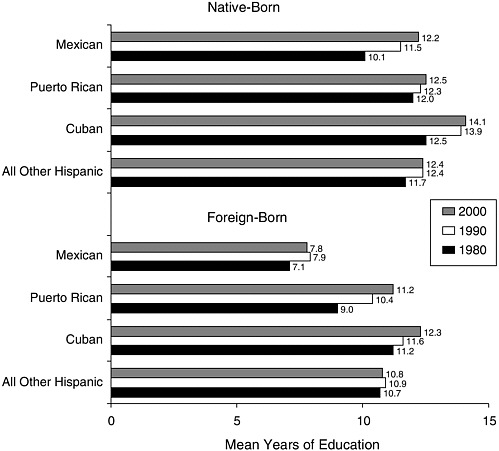
FIGURE 5-2 Mean years of education of Hispanics by ethnicity.
NOTE: For ages 25 to 64.
SOURCE: U.S. Bureau of the Census (2000b), Integrated Public Use Microdata Series (IPUMS) 1 percent samples for 1980-2000.
ing libraries is especially low for children reared in Spanish-dominant homes. In 1999, children of Spanish monolinguals were only half as likely as white children to participate in such activities; if both parents were fluent in English, the gap was just 15 percentage points. The lack of exposure to preschool literacy activities, particularly among children from Spanish-dominant households, often creates literacy disadvantages in the early grades. A 1999 study by the U.S. Department of Education showed that Hispanic kindergarten students trailed their Asian and other non-Hispanic classmates in both reading and math skills.12 Only Native American students had lower preschool reading literacy rates than Hispanics whose parents spoke little English (although Hispanic children exhibited lower math skills).
Household language partly reflects social class divisions and recent immigrant status—two attributes that influence children’s exposure to literacy activities before kindergarten. Yet differences in school readiness between Hispanic youth reared in Spanish-dominant homes and English-dominant homes are not an indictment of Spanish-language use per se. Moreover, programs such as Head Start appear to raise Hispanic children’s low average preschool literacy rates. Yet quality preschool programs often are either unavailable where the neediest children live or too costly for family budgets. Thus disadvantaged Hispanic children are left to make their way in the public schools, increasing their vulnerability to failure in the years ahead.
Primary and Middle Years
The academic achievement gap evident when Hispanics first enter school continues through the primary grades. During the first two years, teachers’ perceptions of their Hispanic students’ academic abilities often skew scholastic assessments, regardless of the children’s actual aptitude. Results of the Early Childhood Longitudinal Study revealed that kindergarten teachers systematically rated Hispanic students below white students when first enrolled. As Hispanic children performed above their teachers’ initial expectations, the gap between test-based abilities and teacher assessments decreased by half to two-thirds during kindergarten and was eliminated by the end of the first grade. Such teacher biases are compounded by a shortage of staff who understand Hispanic children’s cultural backgrounds. Nationally, Hispanic students constitute approximately 15 percent of elementary school students—and nearly 20 percent of all school-age students—yet only 4 percent of public school teachers are Hispanic.13
Although Hispanic elementary school children have made steady progress in reading and math, greater gains by other groups have sustained or in some cases widened Hispanic achievement gaps. A 20-year comparison of test scores reported in the National Assessment of Educational Progress shows that Hispanic students continue to lag behind whites in their scholastic achievement throughout middle and high school.14 Evident for all Hispanic subgroups, these gaps are decidedly largest for Mexican Americans, the fastest-growing segment of the elementary school population. Carried into future grades, accumulating deficits in literacy and math competencies inhibit the learning of other academic subjects.
Middle school Hispanic students often encounter two circumstances
that limit their chances for scholastic success: large, urban schools, generally considered suboptimal for learning in the middle grades,15 and weak ties with their teachers.16 Weak relations with teachers diminish students’ motivation to pursue academic work, and in turn lower teachers’ expectations in a self-perpetuating cycle of academic disengagement and underachievement. That students who become disengaged from school during the middle years cannot well appreciate the practical relevance of what is being taught in the classroom bodes ill for their academic performance in high school and dampens their aspirations for college.
Secondary School and Beyond
Even under optimal circumstances, the transition from middle to high school is a taxing experience for most students. This passage is especially difficult for Hispanic and black adolescents destined for oversized, resource-poor urban high schools staffed with many inexperienced or uncertified teachers.17 Moreover, students whose parents lack a high school education are most in need of early guidance in course planning and preparation for college. Such guidance is in short supply in the schools these students attend. Given their parents’ limited experience with the U.S. educational system and the blind trust many Hispanic parents are willing to place in teachers’ authority, Hispanic eighth graders are more likely than any other demographic group to express uncertainty about the classes they will take in high school.18 Mexican immigrant parents are especially likely to defer to teachers and administrators, rarely questioning their decisions.
High school experiences are vital in shaping students’ educational expectations and occupational aspirations. Yet a recent study found that, compared with 25 percent of blacks, 31 percent of whites, and 37 percent of Asian Americans, only 23 percent of Hispanic eighth graders planned to enroll in a college preparatory curriculum.19 These findings underscore the urgency of effective counseling on course selection in secondary school, particularly for students whose parents may be unfamiliar with the complexities of the U.S. educational system.
Despite modest improvements in recent years, rates of school failure among Hispanics remain unacceptably high. Even counting only those who actually attended U.S. high schools, the share of Hispanic high school students 16 to 19 years old who failed to graduate fell only marginally during the 1990s, from 22 to 21 percent.20 The numbers involved are sobering because the school-age population in the United States has been
growing rapidly as the children of baby boomers and recent immigrants make their way through the education system. That dropout rates for whites and blacks fell even more than for Hispanics—from 10 to 8 percent and from 14 to 12 percent, respectively—widened racial and ethnic disparities in secondary school success. Nor is the General Equivalency Diploma (GED) a viable route for Hispanics to close their high school achievement gap. In 1998, 7.9 percent of white 18- to 29-year-olds achieved high school equivalence by passing the GED test, as compared with 7 percent of Hispanics.21 Moreover, those with exam-certified high school equivalency fare no better in the labor market than high school dropouts.22
Although foreign-born Hispanic youths ages 16 to 19 are significantly more likely than those who are native born to leave high school without a diploma—34 versus 14 percent in 2000—being foreign born is not the main factor explaining their failure to graduate. Many are recent arrivals who were already behind in school before arriving in the U.S.23 Once here, they are likely to attend urban schools—such as those in Los Angeles, Chicago, and New York—that serve large numbers of low-income minority students and for which low graduation rates are typical. Fully 40 percent of Hispanic students attend high schools that graduate less than 60 percent of entering freshmen.24
Popular allegations that Hispanics value education less than do other groups are contradicted by evidence that large numbers of Hispanic high school students aspire to attend college. A study conducted by Public Agenda, a New York-based nonprofit public opinion research organization, found that 65 percent of Hispanic parents, compared with 47 percent of black and 33 percent of white parents, believed a college education is the single most important factor for economic success.25 Yet Hispanics trail all other groups in their ambitions to pursue 4-year college degrees because of their disadvantaged beginnings, limited home educational resources, concentration in scholastically weak high schools, and lack of concrete information about how to prepare for college.26
Compared with whites and blacks, more second-generation Hispanic youths are the first in their family to attend college. But college prospects are limited for many because they fail to take courses or exams required for college entrance—another consequence of their poor guidance counseling during high school. Compared with other subjects, achievement in mathematics is the strongest predictor of college enrollment. That Hispanic students are about 20 percent less likely than whites to complete advanced
mathematics, as well as less likely than both whites and blacks to take advanced science courses, compromises their post–high school educational options.27
Hispanic high school graduates are also less likely than whites, Asians, and blacks to take college entrance examinations or apply to college.28 Spanish-language use per se does not explain this gap because bilingual Hispanics are more likely than whites to complete Advanced Placement courses and to take College Board exams. And parents who are proficient in both English and Spanish often can advance their children’s educational prospects by bridging cultural and language divides.29
Despite the above obstacles, college enrollment among Hispanics has been on the rise. There is evidence that Hispanic high school graduates are more likely than white or black students to enroll in some form of college, but Hispanics also are significantly less likely to obtain a 4-year degree because they are more likely to enroll in 2-year colleges, to attend college only part-time, or to work while enrolled full-time.30 This is especially true for Mexicans. In 2000, Hispanics were 11 percent of high school graduates.31 They accounted for only 7 percent of students enrolled in 4-year institutions, but 14 percent of enrollees in 2-year colleges. Differences in college attendance between native- and foreign-born Hispanics contribute somewhat to these outcomes, but they are not the driving force.
Major reasons why Hispanics are more likely than whites to enroll in 2-year rather than 4-year colleges are poor academic preparation, weak counseling, and cost. Hispanics from Spanish-speaking families (for whom the risks of dropping out of high school are higher) are nearly as likely as blacks to attend 4-year colleges if they receive adequate academic preparation.32 Like many students who begin their college careers at community colleges, Hispanics intend to transfer to 4-year institutions, but they are less successful than other groups in making the transition.33 Furthermore, enrollment in a 4-year institution does not guarantee a degree. Compared with other high-achieving youths who enroll in 4-year institutions, Hispanics are less likely to receive baccalaureate degrees, unless they are among the select few who attend a highly selective college.34
ECONOMIC WELL-BEING
As in so many other ways, Hispanics are highly diverse with respect to economic well-being. On the one hand, lacking the protections afforded by legal status, millions of undocumented Hispanics fill low-wage jobs; many
make ends meet by holding multiple jobs and pooling incomes from several household members. On the other hand, rising rates of home ownership attest that both established immigrants and native-born citizens are increasingly joining the ranks of the middle class.35 This section reviews two aspects of economic well-being—employment and earnings, and household income—among Hispanics, as well as their experience of the extremes of poverty and wealth.
Employment and Earnings36
Hispanics’ success in the U.S. labor market depends on their propensity to work, their skills, the kinds of jobs they secure, and, because many U.S. employers discount human capital acquired abroad, where they were born (see Figure 5-3).37 On average, Hispanic men’s employment rate (87 percent) is somewhat lower than that for U.S.-born whites (92 percent), but well above that for U.S.-born blacks (77 percent).38 Also among men, the average employment rate for both Cubans and Mexicans (both foreign-and U.S.-born) is similar to that for whites, but that for Puerto Rican men is appreciably lower, while that for island-born Puerto Ricans is similar to that for U.S.-born blacks.39
Birthplace differences in employment rates are much larger for Hispanic women than men. Overall, some 61 percent of immigrant Hispanic women were employed in 2000, compared with 76 percent of their U.S.-born counterparts. With just over one in two employed, Mexican immigrants have the lowest employment rate of all women, but the rate for island-born Puerto Ricans is only slightly higher at 61 percent. Average employment rates for U.S.-born Mexicans and Puerto Ricans are close to those for blacks (78 percent) and whites (80 percent), while Cubans have the highest rate of all, at 83 percent.
Owing to differences in educational attainment and language skills between native- and foreign-born Hispanics, the types of jobs they hold vary more on this dimension than by nationality. Foreign-born Hispanic men work disproportionately in agriculture (11 percent) and construction (18 percent), while foreign-born Hispanic women are overrepresented in manufacturing (19 percent)—mainly in production of nondurable goods.40 Consistent with their education and English-language skills, Hispanic men and women born abroad are underrepresented in managerial/professional and technical/sales occupations, and overrepresented in service and operator/laborer occupations.
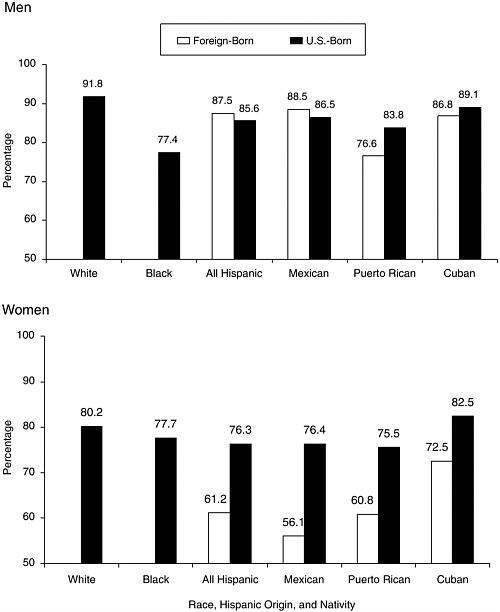
FIGURE 5-3 Employment rates for white, black, and Hispanic men and women ages 25-59 by nativity.
SOURCE: U.S. Bureau of the Census (2000b), 5 percent samples Integrated Public Use Microdata Series (IPUMS).
Hispanics’ lower levels of education and English proficiency largely explain their lower employment rates compared with whites.41 The 6 percentage point employment gap between native-born Mexican and white men would narrow to a mere 2 percentage points if their education and language skills were similar. With education and English proficiency levels
comparable to those of whites, the employment rates of foreign-born Mexican immigrants also would be similar.42 Foreign-born Mexican women provide an even more dramatic example, as their average employment deficit of 25 percentage points would shrink to just 3 with education and English proficiency levels comparable to those of white women. Puerto Ricans and Dominicans are an exception to this pattern because sizable employment gaps persist for them even with human capital endowments comparable to those of whites.43
On average, native-born Hispanic men earned 31 percent and foreign-born Hispanic men 59 percent less than whites in 1999. With similar human capital endowments, those earnings gaps would shrink to 13 and 5 percent, respectively. By comparison, and despite their higher average education levels and better command of English relative to Hispanics, black men suffer a 44 percent earnings penalty. Foreign-born Hispanic women earn about half as much as white women on average, but this disparity, too, would shrink given comparable educational attainment and English fluency.
Hispanics’ average earnings also differ by national origin. Native-born Cubans enjoy relatively high earnings: U.S.-born Cuban men earn as much as white men, and native-born Cuban women earn 20 percent more than white women. By contrast, both Mexicans and Puerto Ricans—especially those born abroad—exhibit large gaps compared with whites. But if Mexican and Puerto Rican women born abroad—whose average earnings trail those of white women by 63 and 28 percent, respectively—were as fluent in English and as well educated as white women, their earnings gaps would virtually disappear.44 Legal status also affects wages, with legal immigrants earning substantially more than those who are undocumented, and wage inequality, as discussed below.45
Thus unlike black men, for whom continuing discrimination in the labor market creates and augments earnings disparities, Hispanics could dramatically reduce their earnings gap with whites by closing the education gap and becoming proficient in English.46 This does not mean that Hispanics do not experience discrimination in the labor market. There is some evidence of differences in treatment at initial contact and interview and in outcomes based on accent and phenotype.47
To understand the origins of earnings differentials and accurately portray Hispanic socioeconomic progress over time, one must consider changes in the birthplace composition of the Hispanic workforce. Since 1980, high rates of immigration have changed the human capital profile of Hispanic workers and widened their earnings disparities with whites. For
example, the foreign-born share among Mexican men aged 25 to 59 surged from 37 percent in 1980 to 51 percent in 1990 and 63 percent in 2000. Among Hispanics, Mexicans are the largest ethnic group, average the lowest levels of human capital, and include a sizable share of undocumented workers.48 With average educational attainment levels of 12 years for the native born and less than 9 years for the foreign born, Mexicans have faced particularly bleak labor market prospects since 1980, as the wage premiums for high skills grew and income inequality widened.
Looking back six decades, in 1940 Mexican men earned just over half (56 percent) of white men’s wages. That figure rose to nearly 70 percent in the postwar decade, a period of vigorous economic growth when strong unions protected the wages of laborers. Although the Mexican-white earnings gap remained unchanged during the next two decades, by 1990 Mexican men’s wages had deteriorated to 45 percent of those of white men, and this gap persisted through the following decade.49 By contrast, earnings of black men rose between 1990 and 2000, from 50 to 56 percent of white male earnings. Larger human capital gaps since 1980, especially among the foreign born, are responsible for the stagnation of Hispanic earnings through 2000, especially as the premium placed on work-related skills has continued to rise.50
Previous waves of predominantly unskilled immigrants, such as the Irish and Italians, enjoyed substantial intergenerational progress that ultimately enabled their descendants to join the middle class. For most, though, this process required two or three generations to accomplish; moreover, the skill endowments of the immigrant generation were instrumental in the labor market success of their children and grandchildren.51 Generational comparisons are particularly instructive for envisioning possible economic destinies for Hispanics. But because Hispanic immigrants are so diverse with respect to their length of U.S. residence, and because native-born Hispanics represent multiple generations, comparisons by birthplace are too coarse to portray true intergenerational progress. Snapshots of the Hispanic population taken over time can only approximate such progress, but nonetheless provide rough measures of the direction and pace of change.
Substantial educational gains realized by the U.S.-born offspring of Hispanic immigrants have narrowed the white-Hispanic earnings gap across generations, with the most sizable convergence occurring between the first and second generations. A smaller wage convergence occurs between the second and third generations, which mirrors the apparent stagnation of Hispanics’ educational progress relative to whites. For example, for the
1998-2000 period, the earnings gap between Mexican and white men dropped from 66 percent for immigrants to 38 percent for the second generation and 31 percent for the third and subsequent generations combined. Second-generation Mexicans even reaped higher earnings than native-born black men with higher levels of education. Earnings deficits for Puerto Rican men were 46 percent for the first generation, 30 percent for the second generation, and 16 percent for later generations. Reflecting their higher-class origins at arrival, Cuban immigrants’ 31 percent initial deficit disappeared by the second generation.52
The apparent slowdown in Hispanic socioeconomic progress after the second generation may be more imagined than real because it is impossible to match immigrant parents and grandparents of the first generation with their descendants in later generations.53 In fact, substantial educational and earnings gains are evident when second-generation Hispanics are compared with their third-generation descendants 25 years later. For example, one study showed that not only are schooling gaps smaller in the second compared with the first generation, but they are always lower in the third generation.54
Educational gains of younger third-generation relative to older second-generation Hispanics are an encouraging sign of intergenerational progress, but they yield conservative estimates of mobility for two reasons. First, the pace of intergenerational progress may be more rapid than available data can accurately portray because of the uncertain volume, pace, and composition of immigrant flows. Decennial censuses can only approximate this highly dynamic process, which for Hispanics is further complicated by the presence of a large and growing undocumented population, whose integration prospects are highly uncertain. Second, selective opting out of Hispanic ethnicity by third and higher generations would lead to underestimation of intergenerational progress. If the most successful Hispanics are less likely to identify themselves or their children as Hispanic—either because they are more likely to marry non-Hispanics or for other reasons—available estimates of earnings gains achieved between the second and third generations are conservative. Studies focused on documenting the prevalence of such opting out of Hispanic identity are relatively recent, and consensus on this issue has not yet been established.55
Recent evidence for Mexicans supports the idea that the most economically assimilated Hispanics—predominantly those from the third and higher generations—may be less likely to self-identify as Hispanic.56 U.S.-born Mexican Americans who marry non-Mexicans are substantially
more educated, on average, than Mexican Americans who marry within their ethnic group (either U.S. or foreign born), as their higher employment levels and earnings attest. Moreover, the children of intermarried Mexican Americans are much less likely to self-identify as Mexican than are the children of two Mexican parents. This implies that children of Mexican-origin parents with low education, employment, and earnings may be more likely to self-identify as Mexican than the offspring of intermarriage, which would bias downward assessments of Mexican Americans’ intergenerational progress beyond the second generation. The magnitude of such biases, however, has yet to be systematically assessed.57
Given these uncertainties, conclusions about intergenerational changes in the labor market experience of Hispanics remain tentative at best. The evidence is clear as to improvement in educational attainment and earnings growth between first- and second-generation Hispanics, both absolutely and relative to whites. But the evidence regarding progress between the second and third generations, and especially beyond the third, is less clear, because educational gains between the second and third generations are not matched by commensurate progress in earnings, particularly among younger Mexicans.58 Less debatable is that deficiencies in education and language skills will remain a formidable obstacle to the labor market success of Hispanics, especially for immigrants, and will continue to hamper their economic progress—perhaps even more so in the years ahead than in the past—because of the higher premium placed on skills and because blue-collar jobs that traditionally served as gateways to the middle class have all but vanished. Whether the growing second generation makes sufficient progress in closing these two key obstacles to economic mobility will be decisive in the long-term positioning of the Hispanic population.
Household Income
For obvious reasons, the gaps in employment and earnings experienced by Hispanics are reflected in disparities in household income. On average, incomes of white households are larger than those of Hispanic households, just how much larger depending on the birthplace and ethnicity of the Hispanic householder. Again mirroring employment and earnings disparities, U.S.-born Hispanic householders of all national origins garner higher incomes than blacks, although this pattern does not hold for households headed by immigrants. In 1999, the median income of Hispanic households was just about 70 percent that of whites and about 10 percent higher
than that of blacks.59 At the top of the Hispanic household income ladder are South Americans and Cubans who were either born or raised in the United States.60 Ranking lowest on median household income, as with most other measures of economic well-being, are Puerto Ricans and Dominicans, followed by Mexicans (see Figure 5-4).
As noted, an obvious explanation for the low household incomes of immigrants, and particularly Mexicans, Dominicans, and Central Americans, is their low earnings. In addition, per capita household income depends on household size. Thus, for example, despite having higher average incomes compared with blacks, second-generation Mexicans, Puerto Ricans, and Dominicans have slightly lower median per capita incomes because of their larger households. Central Americans fare somewhat better than Mexicans because of both their higher earnings capacity and smaller average households.
Additionally, Hispanics experienced a deterioration in economic well-being over time relative to whites, whose incomes have risen more when times were good and fallen less during recessions.61 The median household income of Hispanics averaged 74 percent of that of whites during the early
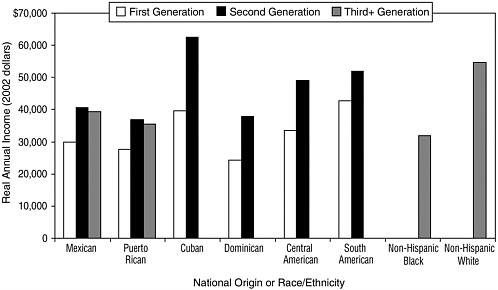
FIGURE 5-4 Median total household income by Hispanic national origin or race/ethnicity and generation.
NOTES: Includes only households whose head is under age 65. Results for Hispanics are shown only for cells with at least 90 observations.
SOURCE: Pooled March CPS files, 1998-2002.
1970s, but eroded following the 1973 oil crisis-induced recession. On the heels of another economic downturn in the early 1980s, the Hispanic-white income ratio deteriorated further, falling below 70 percent in 1985-1988 and again in 1992-1998, reaching its nadir in 1995 at 61 percent.62 Although white-Hispanic median household incomes converged during the brisk economic growth of the late 1990s, there are signs that the relative income position of Hispanics is eroding yet again.63 Median incomes of black households were consistently lower than those of Hispanics throughout the period, but over time their income position improved relative to both whites and Hispanics. In 1972, the median black household income was 77 percent that of whites, compared with 90 percent in 2003.64 Because these comparisons do not separate out native- and foreign-born householders, it is difficult to distinguish changes related to increased numbers of low-skill immigrants from those related to business cycle variations. Yet the Survey of Income and Program Participation, one of very few surveys that record annual variation in income, poverty, and wealth, indicates a convergence of wealth between native- and foreign-born Hispanics between 1996 and 2001.65
Hispanics compensate for low household income through two strategies: income pooling based on extended living arrangements and reliance on public benefits (see Figure 5-5). Relative to both whites and blacks, Hispanic households are more likely to include relatives outside the nuclear family, and extended members’ average contributions to household income are higher. Extended living arrangements are most common among immigrant generations but decline thereafter. Mexicans, Central Americans, and Dominicans of the immigrant generation are especially reliant on extended-household members for income pooling, whereas Hispanics with U.S.-born parents largely resemble blacks in their tendency to rely on other relatives for support.
To what extent complex households reflect Hispanic cultural values (familism) versus economic need is unclear. Clearly, however, reliance on this multiple-source income pooling declines over time as the rising prosperity of second and higher generations reduces the need for such compensatory income strategies.
Among Hispanic subgroups, Dominicans and Puerto Ricans under age 65 rely most heavily on public assistance, the second key source of income supplementation. In the case of Puerto Ricans, this largely reflects their high share of single female heads of household; the scarcity of jobs and relatively generous benefit programs in the northeast where many
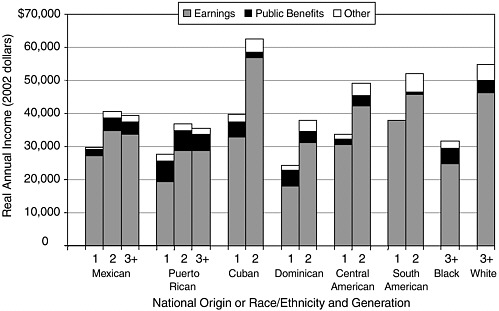
FIGURE 5-5 Sources of median total household income by Hispanic national origin or race/ethnicity and generation.
NOTES: Includes only households whose head is under age 65. Means are simple averages across households, using household weights. Households with zero or negative total income or containing persons with negative income from any source are excluded. Results for Hispanics are shown only for cells with at least 90 observations.
SOURCE: Pooled March CPS files, 1998-2002.
Puerto Ricans live; and the fact that as U.S. citizens, Puerto Ricans (unlike new immigrants) are eligible for public benefit programs. Although second-generation Puerto Ricans rely less than the first generation on income from public benefits, even those born on the mainland depend more on this source of household income compared with other Hispanic subgroups—indeed, at rates more similar to those of blacks. Puerto Ricans’ high rates of welfare participation reflect their elevated poverty rates.
Poverty and Wealth Among Hispanics
Trends in median household income conceal the poverty of those at the low end and the prosperity of those at the high end of the income ladder. Indeed, poverty rates dramatize the consequences of poor employment and earnings capacities more effectively than does median household income. Although poverty rates declined during the 1990s—by 3 and 4
percentage points for Hispanics and blacks, respectively—Hispanic poverty held fast at more than 2.5 times the rate among whites.66 In 1999, more than one in five Hispanics lived below the official poverty line ($16,895 for a family of four or a meager $12 per day per person).67 Broken out by birthplace, declines in poverty were smallest for Puerto Ricans and greatest for Dominicans, who witnessed the largest drop in absolute poverty during the 1990s.68 Central American immigrants were less likely to be poor than were Mexicans, Puerto Ricans, and Dominicans of the same generation, but their poverty rates were higher than those of South Americans.69
The similar overall poverty rates for first-generation Mexicans, Dominicans, and Puerto Ricans have different sources. As the least-educated group, Mexicans have the lowest overall earning capacity, a liability that persists beyond the second generation. Predominantly recent immigrants with limited skills, Dominicans are, like Puerto Ricans, further handicapped by a high incidence of female-headed households. Having only one potential earner exacerbates the effects of women’s low average earnings in depressing household income. Combined, these conditions produce income shortfalls that are only minimally compensated by benefit programs.70
Poverty is especially pernicious for children because it is associated with many deleterious outcomes, such as low scholastic achievement, adolescent parenting, substance abuse, and violence.71 In 1999, more than one in four Hispanics under the age of 18 were poor, compared with nearly one in ten whites. Child poverty rates among Dominicans and Puerto Ricans—35 and 33 percent, respectively—were comparable to those of blacks. Cuban and South American youths experienced the lowest rates of poverty, between 16 and 17 percent. Child poverty rates of Mexicans and Central Americans approached the Hispanic population average—28 and 24 percent, respectively—which is well above the 17 percent overall U.S. poverty rate for those under 18.72 Elevated Hispanic child poverty rates are particularly disturbing because the relatively young age structure of the population implies large and growing numbers of the youthful poor, and because poverty magnifies the challenges of assimilation and integration for the burgeoning second generation.
Poverty levels are also elevated among elderly Hispanics. The elderly are only a small proportion of the Hispanic population today, but their numbers will grow rapidly in the future. Today’s elderly provide a glimpse of how current Hispanic workers are likely to fare at advanced ages, depending on whether the present Social Security and Medicare safety nets remain
intact. Overall, about one in five elderly Hispanics was poor in 1999, compared with fewer than one in ten whites and one in four blacks. The poverty risk for Hispanic elderly varies according to national origin, reflecting incomes and types of jobs held at younger ages, as well as length of time in the U.S. labor market. Mirroring child poverty differentials, elderly poverty rates are highest for Puerto Ricans and Dominicans—24 and 29 percent, respectively—and lowest for South Americans, at 16 percent.73 Poverty rates for other groups are close to the elderly Hispanic population average of 20 percent.
Because Hispanics tend to work for employers that do not offer pensions, elderly Hispanic householders rely more on other sources of income than do either blacks or whites. Moreover, except for Puerto Ricans and Cubans, foreign-born Hispanics rely less on Social Security than do whites and blacks because they are less likely to qualify for the benefits even if they work beyond the required 40 quarters. Until recently, the sectors in which many elderly Hispanics worked, such as agriculture and household service, were not covered by Social Security, which accounts for 42 percent of household income for elderly Central and South American immigrants, but close to 60 percent for blacks and island-born Puerto Ricans.74
Elderly immigrants who have not completed the required 10 years in covered jobs to qualify for Social Security benefits or whose benefits are low because of a lifetime of low-wage work often qualify for Supplemental Security Income (SSI), which offers less generous benefits than those provided by Social Security.75 Elderly foreign-born Hispanics (with the exception of South Americans) derive a larger share of their income from SSI than do blacks, signaling their greater vulnerability to poverty, especially during inflationary periods. By qualifying for Social Security at higher rates, U.S.-born elderly Hispanics mitigate this risk to some extent and face better economic prospects relative to blacks.
Less well documented than trends and disparities in Hispanic poverty are changes at the high end of the income distribution—namely wealth. Net worth is a pertinent indicator of economic well-being because it represents assets that can be tapped in times of financial distress. Recent estimates of Hispanic wealth range from 3 to 9 percent of white median wealth.76 Home equity constitutes the largest component of Hispanic household wealth, about 50 to 60 percent of net worth during the 1996-2002 period.77 Less easily converted to cash than other assets in the event of financial crisis, home equity is the source of last resort to offset fluctuations in household income. The reversal of nearly two decades of wage stagnation in the
late 1990s also allowed Hispanics to participate in the stock market, albeit to a much lesser extent than whites.78
Not only is home equity the largest component of household wealth, but it is also a key marker of middle-class status. Home ownership provides access to myriad social amenities that influence overall well-being, including school quality, neighborhood safety, recreation facilities, and access to health care organizations (see below).79 Although Hispanic home ownership rates rose from 33 to 44 percent between 1983 and 2001, they have been relatively stagnant since the mid-1990s, even as the rates for white householders have climbed.80 Consequently, the Hispanic-white ownership ratio, which rose from 48 to 64 percent from the mid-1980s to the mid-1990s, eroded to 60 percent by 2001.81
Whether the geographic dispersal of Hispanics from areas with higher to those with lower housing costs will reverse this trend remains unclear. Census data for the largest 100 metro areas indicate that both native- and foreign-born Hispanics participated in rising rates of home ownership during the 1990s owing to favorable interest rates, rising incomes, and the pace of housing construction relative to employment growth.82 For the foreign born, however, ownership rates increased in the traditional settlement hubs while declining in the new destinations. Because the dispersal of Hispanics to new destinations is a relatively recent phenomenon that involves many recently arrived, low-skill immigrants (see Chapter 4), it is conceivable that their lower average home ownership rates will improve over time as they acculturate in their new locales.83
HEALTH STATUS AND ACCESS TO CARE
Like other forms of human capital, health status—both physical and psychological—is an asset that requires investments for improvement and maintenance.84 In addition to nutritious food, regular exercise, and a toxin-free environment, health status depends on a variety of circumstances—some unique to Hispanics and others shared with populations of similar socioeconomic status, some linked to behavior that compromises or promotes health, and others associated with access to care.
Health Status and Behaviors85
Like other indicators of integration, Hispanic health status differs according to subgroup, immigrant generation, English proficiency, and
degree of acculturation. Puerto Ricans are less healthy, on average, than other Hispanic subgroups, while Mexicans, Central Americans, and South Americans often compare favorably with whites on several health indicators, despite their low average socioeconomic status. For example, the age-adjusted mortality of Hispanics is lower than that of blacks or whites; the exception is Puerto Ricans, whose mortality rates are higher than those of other Hispanic subgroups (see Figure 5-6). Dubbed the Hispanic “epidemiological paradox” or “immigrant health paradox” by researchers, the lower mortality rates of Hispanics relative to those of whites with more favorable socioeconomic status have puzzled social and health scientists since the 1980s. Precise findings differ, but most studies show that foreign-born Mexicans, Central Americans, and South Americans are most likely to experience this advantage. One factor that contributes to their lower mortality is that healthier people are more likely to migrate than the sickly,
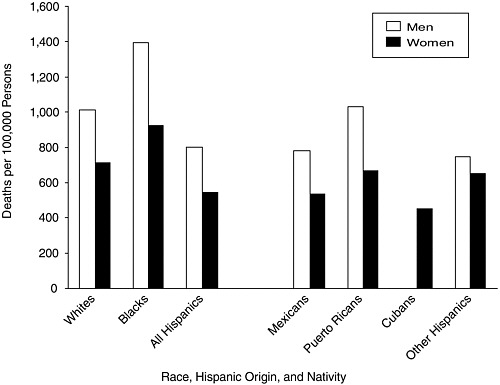
FIGURE 5-6 Age-adjusted mortality for whites, blacks, and Hispanics by sex, 2001.
SOURCE: Arias et al. (2003).
but it is not a sufficient explanation. Why mortality rates are comparable for U.S.-born Hispanics and whites, however, remains a puzzle.
Hispanics also experience favorable birth outcomes in terms of birthweight and infant mortality, another case in which they fare much better than would be expected given their socioeconomic status. In 2001, Hispanics’ infant mortality rate of 5.4 per 1,000 live births compared favorably with those of 5.7 for whites and 13.5 for blacks. Cubans (4.2), Central and South Americans (5.0), and Mexicans (5.2) all had lower infant mortality rates than whites, while Puerto Ricans (8.5) fared better than blacks but worse than whites.86
Experts often invoke protective cultural and social behaviors of immigrants to explain their advantage in birth outcomes relative to their U.S.-born counterparts. However, since second-generation Hispanic women also have relatively favorable birth outcomes compared with white women of comparable socioeconomic status, cultural explanations do not suffice. Other assets in the Hispanic health ledger include a lower incidence of several major cancers and relatively low rates of activity limitation (e.g., climbing stairs, getting dressed) compared with whites, along with mental health profiles that resemble those of whites. In 2000, for example, the age-adjusted death rate from cancer was 134.9 per 100,000 for Hispanics, compared with 200.6 per 100,000 for whites. Hispanics also smoke less than whites; the exception is Puerto Ricans, who smoke at similar rates.87
Hispanics also experience several health liabilities, diabetes and hypertension being by far the most severe. The rising prevalence of Hispanic adults considered overweight or obese likely contributes to higher rates of both conditions, as well as to cardiovascular disease. Although the U.S. epidemic of overweight and obese adults affects all racial and ethnic groups, it is particularly severe for Hispanics. Among Mexicans, 29 percent of men and 40 percent of women are considered obese, compared with 27 percent and 30 percent, respectively, of white men and women.88
Trends in overweight among Hispanic youths are particularly worrisome. Hispanic children and adolescents—Mexican and Puerto Rican girls in particular—are much more likely than whites to be overweight. Girls of Mexican origin are nearly twice as likely as white girls to be overweight, while Mexican-origin boys are more than twice as likely as white boys to be overweight. Even more troubling, rates of overweight have risen faster for Hispanic than for white youths (see Figure 5-7). Over the last quarter century or so, the prevalence of overweight preadolescent (ages 6-11) Mexican youths doubled—rising from 13 to 27 percent for boys and from 10 to
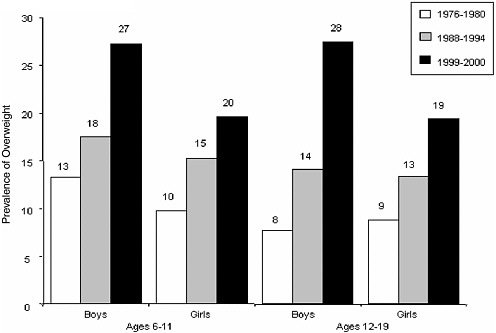
FIGURE 5-7 Time trends in overweight among children and adolescents of Mexican origin, 1976-1980 to 1999-2000.
SOURCE: National Center for Health Statistics (2003) (see Escarce et al., 2006).
20 percent for girls. The rate of adolescents (ages 12-19) considered overweight more than trebled for both boys (from 8 to 28 percent) and doubled for girls (from 9 to 19 percent) over the same period.89
Those who claim that acculturation contributes to the rise in Hispanic overweight and obesity point to immigrants’ diets, which are richer in fruits and vegetables and lower in fats compared with those of native-born youths, who are more prone to consume high-fat processed and fast foods. Generational differences in diet are mirrored in the prevalence of overweight adolescents, as about one in four first-generation adolescent Hispanics is at risk of being overweight, compared with about one in three second- and third-generation youths.90
Several other differences in the health circumstances of Hispanic youths are worth noting. With the exception of Puerto Ricans, Hispanic youths have low rates of asthma, the major chronic disease of childhood. This health asset is offset by their worse oral health compared with their white peers. Hispanic youths also register higher blood lead levels than white children, which places them at greater risk for the adverse effects of lead poisoning on cognitive development.91
Hispanic adolescents engage in many health-compromising behaviors, such as use of alcohol and illicit drugs and early sex, at rates comparable to those of white teens, although their tobacco use is lower. Cuban-origin youths have the highest levels of tobacco, alcohol, and drug use, followed by those of Mexican and Puerto Rican origin. By comparison, youths from other Hispanic subgroups have low rates of drug use—probably because larger shares of these subgroups are first-generation immigrants, which means they are less acculturated. In general, acculturated youths engage in such health-compromising behaviors more often than the less acculturated. Hispanic young people also experience poor mental health, exhibiting the highest prevalence of depression of any ethnic group. Although Hispanic adolescent girls are as likely as white adolescents to consider suicide, they are twice as likely to attempt it. Their suicide completion rate, however, is lower than that of other ethnic groups.
The significance of these and other health-compromising behaviors among adolescents transcends their own physical well-being. In 2003, Hispanics had the highest teen birthrate, with 82.2 births per 1,000 adolescent females ages 15-19. In comparison, the birthrate for teens of all backgrounds was 41.7, while that for white teens was 27.5 and for black teens was 64.8.92 Such statistics bode ill for the educational prospects of Hispanic adolescents, who are more likely than either blacks or whites to withdraw from school if they become mothers.93 Indeed, all health conditions and behaviors that affect scholastic performance—including not only adolescent childbearing, but also drug and alcohol use and exposure to lead and other environmental contaminants—are especially worrisome because of the life-long consequences of educational underachievement discussed above.
Access to Quality Care
Hispanics face a variety of financial and nonfinancial obstacles to obtaining appropriate health care. Low rates of insurance coverage are perhaps most notable, but limited access to providers, language barriers, and uneven quality of care exacerbate inequities in health outcomes between Hispanics and whites and between native- and foreign-born Hispanics.
The lack of insurance coverage is greater among foreign-born compared with U.S.-born Hispanics, Spanish compared with English speakers, recent compared with earlier immigrants, and noncitizens compared with citizens. Undocumented immigrants are least likely to be insured; one estimate of their uninsured rates ranges between 68 and 84 percent.94 Owing
to their large shares of recent immigrants, Mexicans and Central and South Americans have the highest uninsured rates. Puerto Ricans and Cubans have the highest insurance rates, with sources of coverage differing between the two groups. Puerto Rican children and working-age adults are much more likely than their Cuban counterparts to obtain health coverage through public insurance programs such as Medicaid and the State Children’s Health Insurance Program (SCHIP), but they are less likely to obtain it through an employer (see Figures 5-8a and 5-8b). For Hispanic seniors, eligibility for the Medicare program keeps insurance coverage rates relatively high.
Compared with whites, Hispanics have lower access to employer-provided health insurance because they are more likely than whites to work in small firms, in seasonal occupations, and in part-time jobs.95 Limited eligibility for public insurance programs, such as Medicaid and SCHIP, further accentuates Hispanics’ low coverage rates (with the exception of Puerto Ricans). Many Hispanics—especially Mexicans and Cubans—live in states with restrictive eligibility rules for Medicaid and SCHIP. The federal welfare reforms of 1996 placed further limitations on access to
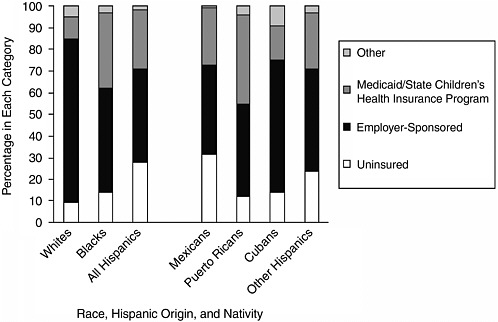
FIGURE 5-8a Health insurance coverage for white, black, and Hispanic children, 1997 to 2001.
SOURCE: 1997 to 2001 Medical Expenditure Panel Survey.
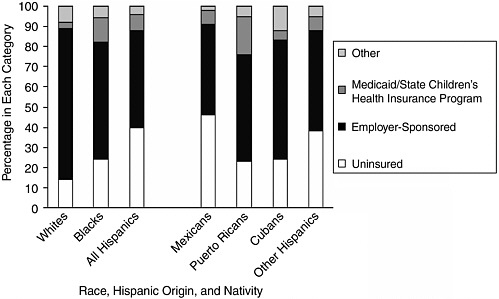
FIGURE 5-8b Health insurance coverage for white, black, and Hispanic working-age adults, 1997 to 2001.
SOURCE: 1997 to 2001 Medical Expenditure Panel Survey.
public health insurance programs for all recent legal immigrants.96 General confusion about how the new laws affected immigrants triggered declines in their overall utilization of public insurance programs.
Partly because of low rates of health insurance coverage, Hispanics are less likely than whites to have a usual source of care or regular health care provider, which in turn restricts their access to more specialized forms of care. The relatively low number of Hispanic physicians, especially in Hispanics’ new destinations, further hinders access to care because Hispanic physicians are more likely than their non-Hispanic counterparts to care for Hispanic patients. Given their large share of recent immigrants, Mexicans are less likely than Puerto Ricans or Cubans to have a usual source of care, as are Spanish speakers compared with English speakers. Furthermore, language barriers undermine quality health care, even among groups with similar demographic and socioeconomic characteristics, by hindering patient-provider communication; by reducing access to health information; and in the worst case, by decreasing the likelihood that sick patients will seek needed care.97
Hispanics’ low rates of insurance and reduced likelihood of having a
regular health care provider mean less preventive care, fewer ambulatory visits, and higher rates of emergency room use compared with whites, although Hispanics’ rates of inpatient care are equivalent to those of whites. The preventive services on which Hispanics trail whites include pneumococcal and influenza vaccinations for seniors; mammography, pap smears, and colon cancer screening; blood pressure and cholesterol measurements; and prenatal care for the general population. In 2001, just 75 percent of Mexican and 79 percent of Puerto Rican women received prenatal care in their first trimester, compared with 92 percent of Cuban and 89 percent of white women. Hispanic–white differences in childhood vaccination rates are trivial.98
Evidence on the quality of care received by Hispanics is inconclusive, partly because current assessments are based on populations that are not truly representative, such as low-income Medicaid recipients, and partly because results from satisfaction surveys are inconsistent. Nonetheless, Hispanics’ reported satisfaction with health care delivery reveals large differences, depending on the degree of English proficiency. In general, Hispanics who speak only Spanish report worse experiences with health care than either whites or Hispanics who speak English. Satisfied patients are more likely to seek care when needed, to comply with provider recommendations, and to remain enrolled in health plans and with specific providers. Paradoxically, and for reasons not fully understood, Spanish-speaking Hispanics rate their physicians and health plans higher than do English-proficient Hispanics, despite admitting to worse care experiences.
To reduce language barriers to health care, the Department of Health and Human Services issued a directive in August 2000 requiring all federally funded programs and providers to offer interpreter services at no cost.99 Yet only about half of Hispanic patients who need an interpreter receive one. In most cases, the interpreter is a staff person, relative, or friend rather than a trained medical interpreter; in such cases, reported satisfaction rates remain below those of whites.
CONCLUSION
Hispanic integration experiences are as diverse as the eclectic subgroups subsumed under the panethnic identity, but some general trends are discernible. Hispanic families converge in form and function with those of the white majority and rising intermarriage blurs the boundaries of nationality groups. The rise in divorce and nonmarital childbearing over time and
across generations signal family decline. The rise of mother-only families bodes ill for economic prospects of the swelling second generation.
There are clear signs of educational progress at all levels both over time and across generations. That other groups also have improved their educational standing has widened attainment gaps, particularly at the college level. Because the fastest-growing and best-paying jobs now require at least some postsecondary education, Hispanics stand to lose economic ground even as their educational attainment rises. Still, employment and earnings trends show clear evidence of economic assimilation, with the greatest gains between the first and second generation. If the most successful third-generation Hispanics “opt out” of Hispanic identity, as available data suggest, economic progress for the third and later generations may well be understated.
Trends in Hispanic home ownership and median household income signal a growing middle class, although the dollar growth of Hispanic household assets is small compared with that recorded by white households.100 Variation in financial status by immigrant and citizenship status, by age (favoring middle-aged over young householders) and especially by earnings capacity and educational attainment, largely explains the significant gap in economic well-being between Hispanics and whites. As long as this gap persists, however, Hispanics will remain more vulnerable to economic cycles because they have less of a cushion on which to draw during periods of financial distress.
Finally, recent health trends paint the picture of a Hispanic population burdened by the complications of obesity, diabetes, hypertension, and cardiovascular disease, which Americanization appears to worsen rather than improve. The deleterious effects of acculturation are especially evident among second-generation youths and in birth outcomes. Most striking is the high incidence of type 2 diabetes—usually a disease of adults—among young Hispanics and the increased prevalence of multiple risk factors for developing atherosclerosis among children of Mexican origin.101 These trends foreshadow much higher rates of diabetes and its complications in the future, as large cohorts of Hispanic youths become adults.
The growing number of uninsured Hispanics will place particular stress on the health care safety net—a loosely organized system for delivering care to the uninsured that includes nonprofit organizations, government agencies, and individual providers. By default, some of the responsibility for health care delivery will shift to states and local communities, many of which are already struggling to compensate for shortfalls created by declin-
ing federal funding. Experts in both the public and private sectors consider cultural competence—the ability of health systems to provide care to patients with diverse values, beliefs, and behaviors, including tailoring delivery to meet patients’ social, cultural, and linguistic needs—to be a crucial component of strategies to reduce disparities in care.102 Compliance with the federal directive to provide interpreter services at care facilities is especially warranted in new immigrant destinations.
NOTES
|
28 |
U.S. Department of Education, National Center for Education Statistics, 2003b. |
|
29 |
Kim and Schneider, 2004; Portes and Rumbaut, 2001. |
|
30 |
Fry, 2002, 2003. |
|
31 |
College Enrollment and Work Activity of Year 2000 High School Graduates. Available: ftp://ftp.bls.gov/pub/news.release/History/hsgec.04132001.news [accessed December 23, 2005]. |
|
32 |
Schneider et al., 2006. |
|
33 |
Velez, 1985. |
|
34 |
Alon and Tienda, 2005; Fry, 2004. |
|
35 |
Clark, 2003; Kochhar, 2004; Wolff, 2004. |
|
36 |
These findings are documented in greater detail in Duncan et al., 2006. |
|
37 |
Chiswick, 1978; Schoeni, 1997. |
|
38 |
The annual employment rate is defined as the percentage of individuals who worked at all during the calendar year preceding the census. Similar results are obtained using annual hours of work as a measure of labor supply. |
|
39 |
Dominican men also have relatively low employment rates, but nativity differentials for them are small. |
|
40 |
Duncan et al., 2006:Table 6-4. |
|
41 |
The estimated deficits are for persons ages 25 to 59 who worked during calendar year 1999, based on regressions by Duncan et al., 2006:Appendix Table A6-7. |
|
42 |
This is not the case for black men, however, as their 15 percentage point employment deficit would shrink to only 13 percentage points if their human capital endowments were comparable to those of whites. |
|
43 |
The employment gaps for Puerto Ricans and Dominicans may be due, in part, to their concentration in goods-producing industries in the northeast that have been hurt by deindustrialization, and in part to the fact that their employment patterns are more similar to those of blacks than to those of other Hispanic groups. See DeFreitas, 1991. |
|
44 |
In contrast to black men, black women’s modest earnings disadvantage relative to white women would disappear if they had comparable levels of human capital. |
|
45 |
Phillips and Massey, 2000; Rivera-Batiz, 1999. |
|
46 |
See Duncan et al., 2006. |
|
47 |
Specifically, there is some evidence that darker, more Indian-looking Mexican Americans are vulnerable to discrimination based on skin color. See Allen et al., 2000. |
|
48 |
Lowell and Fry, 2002. |
|
49 |
Smith, 2001. |
|
50 |
Duncan et al., 2006:Table 6-7. |
|
51 |
Borjas, 1994; Chiswick, 1977; Neidert and Farley, 1985; Perlmann and Waldinger, 1997. |
|
52 |
Duncan et al., 2006:Figure 5-8. |
|
53 |
Borjas, 1993; Smith, 2003. |
|
54 |
Smith, 2003, reports a 4.94-year mean education gap among all first-generation Mexicans (Table 3). This deficit fell to 2.95 years among second-generation Mexicans. |
|
55 |
Alba and Nee, 1997; Duncan and Trejo, 2005; Telles et al., 2002. |
|
56 |
Duncan and Trejo, 2005; Duncan et al., 2006; Reimers, 2006. |
|
57 |
Edmonston et al., 2002; Rutter and Tienda, 2005. |
|
58 |
Smith, 2003; see Duncan et al., 2006; Reimers, 2006. |
|
59 |
U.S. Census Bureau; Income 1999. Available: http://www.census.gov/hhes/www/income/income99/99tablea.html [accessed December 27, 2005]. |
|
60 |
Those who were born in the United States have income levels similar to those of whites. |
|
61 |
U.S. Bureau of the Census, 2004b. |
|
62 |
U.S. Bureau of the Census, 2004b. |
|
63 |
Wolff, 2004. |
|
64 |
The Hispanic-black median income differential exceeded 90 percent between 1995 and 1997, hovering around 94 to 98 percent. See Wolff, 2004:Tables 7 and 8. |
|
65 |
Kochhar, 2004. |
|
66 |
Saenz, 2004:Table 11. |
|
67 |
U.S. Bureau of the Census, 2000c. Poverty thresholds are not adjusted for cost-of-living differences. That large shares of Hispanics live in high-priced cities magnifies the welfare consequences of poverty-level incomes. |
|
68 |
Saenz, 2004. |
|
69 |
See Reimers, 2006:Table 7-2. |
|
70 |
See Reimers, 2006. |
|
71 |
McLanahan and Sandefur, 1994. |
|
72 |
U.S. Bureau of the Census, 2000a. |
|
73 |
U.S. Bureau of the Census, 2000a. |
|
74 |
Reimers, 2006. |
|
75 |
Social Security is an “earned” benefit that automatically increases with the cost of living, but SSI is a minimal, means-tested safety net for those elderly who have no other income. Unlike SSI, Social Security is not viewed as “welfare” by the general public. Persons who qualify for Social Security benefits by working most of their adult years in covered jobs, even at a low wage, receive more generous Social Security retirement benefits than persons forced to rely on SSI, the benefit rates of which are below the poverty line. |
|
76 |
Using the Federal Reserve Board’s Survey of Consumer Finances, Wolff, 2004, estimates Hispanic median net worth at 3 percent of the white median for 2001, but Kochhar, 2004, estimates the 2002 median gap at 9 percent—$8,000 versus $89,000—based on the Survey of Income and Program Participation. One source of the difference is that Wolff excludes equity in vehicles and other consumer durables from his estimate of wealth. However, both sets of estimates reveal similar trends, if not levels, for their overlapping period, namely mid-1990s to 2001-2002. |
|
77 |
Kochhar, 2004:Table 9. |
|
78 |
Wolff, 2004:26. Stock ownership is concentrated among households in the top quintile of the wealth distribution, accounting for 90 percent of all stock holdings. |
|
79 |
Clark, 2003. |
|
80 |
Wolff, 2004. |
|
81 |
This estimate is close to the .62 for 2000 reported by Fischer and Tienda, 2006, on the basis of census data for the largest 100 metro areas. |
|
82 |
Fischer and Tienda, 2006; Myers et al., 2005. |
|
83 |
See Kochhar, 2004. |
|
84 |
Grossman, 1972. |


