
2
Historical Background
The Coeur d’Alene region, named after the Indian tribe that originally inhabited the area, lies in northwestern Idaho, east of Spokane, Washington (Figure 2-1). The region remained relatively isolated and pristine until late 1883 when the Northern Pacific Railroad, in an effort to stimulate passengers to ride its newly opened branch looping north of Coeur d’Alene, published a brochure entitled “In the Gold Fields of the Coeur d’Alenes.” Two decades earlier, Captain John Mullan had spent 4 years opening up the valley by constructing a military wagon road “through swamps, over hundreds of ridges, and bridging many streams” from Fort Benton, Montana, to the shore of Lake Coeur d’Alene (Rabe and Flaherty 1974, p. 12). This route, however, was too difficult and the winters too severe for it to attract the railroads that were opening the West, and few settlers followed the track, which was becoming overgrown. However, A.J. Prichard’s discovery of gold in a creek feeding the North Fork of the Coeur d’Alene River in the fall of 1883, broadcast to the world by the Northern Pacific, drastically changed all that. Within a few months, an estimated 5,000 prospectors and others looking for a quick buck had streamed into the valley (Hart and Nelson 1984).
Until then, the few thousand residents of the area, most of whom were members of the Coeur d’Alene tribe living along the shore of Lake Coeur d’Alene, were able to enjoy the natural riches that this area provided. The river was described as “transparent as cut glass,” the mountains “clothed in evergreen forests” of white pine, grand fir, douglas fir, and spruce; the riparian areas thick “with the cottonwoods and silver beeches on both
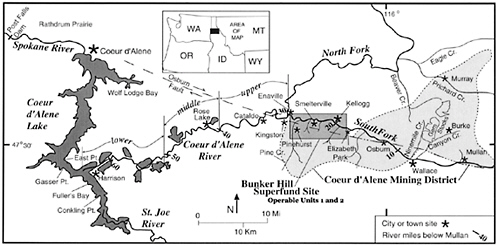
FIGURE 2-1 Location of Coeur d’Alene River basin. SOURCE: Adapted from Bookstrom et al. 2001.
banks almost forming an arch overhead” of the deep channel; and the stream “alive with trout and other fish” that “could be seen by the thousands in the clear water” (Rabe and Flaherty 1974). Deer, beaver, muskrat, otter, mink, wolves, weasels, mountain lions, badgers, wolverines, bear, and moose, along with numerous species of birds and vast schools of “salmon-trout,” were abundant. Father Nicholas Point, who ran the Coeur d’Alene Mission, claimed that “Perhaps nowhere else does so small an area contain such a variety [of wildlife]” and described the tribal members filling their canoes with fish in a couple of hours of fishing, and 100 braves returning from a hunt with 600 deer (Rabe and Flaherty 1974). Even at the beginning of the mining era, one prospector could boast of having caught 247 trout in one day’s fishing in Placer Creek, a tributary of the South Fork (Rabe and Flaherty 1974, p. 46).
The gold rush was relatively short lived, for much of the gold was buried under 25 feet of gravel or embedded in quartz seams in the bedrock. In either case, the gold was inaccessible to individual prospectors using hand labor and simple placer mining techniques, and many left. Those who stayed used more capital-intensive techniques and continued extracting gold from the North Fork basin for half a century (Hart and Nelson 1984).
THE EARLY YEARS
The gold, however, is not what made the Coeur d’Alene region one of the richest mining areas in the world. That resulted from the discovery of rich silver-lead-zinc–bearing ores along the tributaries and main stem of the
South Fork of the river. The first lead-silver mine in the district was the Tiger, discovered in May 1884 near what would become Burke, Idaho. By the end of 1885, 3,000 tons of ore had been extracted from this mine (Quivik 2004, p. 87). This discovery was followed within a few months by the discovery of many of the richest and most productive mines in the district, including the Morning, Gold Hunter, Poorman, Sullivan, and many others (Cook 1961). The biggest mine of all, the Bunker Hill (named after the Revolutionary War battle), was discovered by Noah Kellogg in the fall of 1885. By 1891, 26 of the 40 developed properties along the South Fork were productive (Rabe and Flaherty 1974). The silver that attracted the miners gave the South Fork the name “the Silver Valley,” but the ores were also rich in lead and zinc along with lesser amounts of other metals.
Getting the Metals Out
Placer mining, however, was not an option for extracting the metals along the South Fork. The ores were contained in veins that ran through the bedrock of the mountains through which the South Fork and its tributaries flowed. The miners had to tunnel into the mountains following the veins. This was arduous and dangerous work. The tunnels were formed by drilling or “jacking” holes into the rock by hand and then blasting out the rock. The tunnels would be cut under the veins with angled tunnels, called stopes, cut up into the vein. The ore blasted from the stopes would fall into carts placed in the tunnel below, where it could be hauled out of the mine. During the first couple of years, after being sorted by hand, the raw ore was hauled by pack train out of the valley for shipment to processing facilities.
Within a couple of years, however, the Bunker Hill and other mines were building mills to concentrate the ore, separating the metal-rich materials from those that were less valuable. The first concentrators, called jigs, used a process that involved crushing the ore in stamp mills until it was primarily the size of coarse sand. The crushed ore was mixed with water and run over a “jig-table” or through a “jig cell” that allowed the heavier particles, containing the higher concentration of metals, to collect in grooves cut across the bottom of the table while the lighter particles, containing less metal, were carried over the tail of the jig to become “jig tailings.”
The jigging process was relatively inefficient, recovering less than 75% of the metals (Bennett 1994). As a result, the jig tailings and slimes (the mud resulting from the water mixing with the finely powdered rock), which were often disposed of by being dumped into or adjacent to streams, contained relatively high percentages of lead and other metals. The rich ore recovered from the jig was shipped to out-of-state smelters to be converted into ingots of silver and lead. Construction of a narrow-gage railroad in Idaho between Kellogg and Cataldo in 1887 eased the shipping process, but
it still involved hauling ore from the mills in the region to a loading area in Kellogg. At Cataldo, the ore was loaded on steamships to be hauled to Coeur d’Alene where it was transferred to the Northern Pacific for transit to a smelter (in Montana or Washington). The narrow-gage railroad, which was associated with the Northern Pacific, was superseded by a standard-gage railroad built in 1888 by the Union Pacific that ran from Tekoa, Washington, up to Wallace (Hart and Nelson 1984). Two years later, the Northern Pacific built its line into the Coeur d’Alene Valley from Missoula, Montana, which traveled over a famous S-shaped bridge that was completed in 1890.
The process of developing underground mines, building ore processing facilities, and constructing railroads required large amounts of capital and organization, and was not one to be undertaken by individual prospectors. Eastern and western capital flooded into the region, generating a conflict between the miners and the mine owners that colored much of the region’s history through the early 1900s.
The Miners and Their Settlements
Because transportation was so difficult and the miners worked underground in 10-hour shifts, the miners initially tended to live as close to the mines as they could. Thousands of them lived in shacks and rooming houses crowded in communities such as Burke, Gem, Mace, Mullan, and Wardner jammed in the narrow valleys near the entrances to the mines (see Box 2-1). These mining towns, like mining towns throughout the West, contained many more saloons and bordellos than churches (see Magnuson 1968). Many of the early settlements were abandoned “when the ore ran out or the towns were bypassed by transportation” (Hart and Nelson 1984).
One town that stayed was Wallace. Wallace was located not at a mine mouth but on a cedar swamp near the conflux of Canyon Creek and the South Fork, on the banks of which were the sites of numerous mining operations. Colonel W.R. Wallace built a log cabin there in 1884 and set about building a town (which he initially called Placer Center) that, he predicted, would become the “center of one of the richest mining sections of this continent.” Indeed the town did prosper and become the commercial center for the upper basin. Colonel Wallace, however, was less fortunate. The scrip he used to acquire the land turned out to be worthless, and, one day in February 1889, all of his land was claimed by other residents. Although the town was well located for commercial purposes, it suffered from severe flooding and several fires during its first few decades.
Laboring in the mines was tough and dangerous and the mine workers soon demanded better pay and better working conditions. By 1891, they had secretly organized unions in all the major mines in the district. They
|
BOX 2-1 The Town of Burke, Idaho The canyon that held Burke is so deep that the sun could reach the town only for 3 hours a day in the winter. It is so narrow that the town’s only street had to carry wagons, two railroads, and Canyon Creek when it overflowed its banks. S.D. Lemeux pulled the awnings on his grocery back to allow the daily freight through on the Northern Pacific tracks that ran down the middle of the street and straight through the center of the Tiger Hotel. The four-story hotel, originally built as the boarding house for the Tiger-Poorman mines, had 150 rooms and a “beanery” that served 1,200 meals a day. It burned down in a grease fire in 1896 but was rebuilt. The railroad tracks were built through the hotel in 1906, when Harry Day of the Hercules mine convinced the Northern Pacific to construct a spur track up to his loading platform below Gorge Gulch. The hotel covered the canyon floor that the railroad had to be built on. The Federal Mining and Smelting Company, which owned the Tiger-Poorman and its hotel, agreed to Day’s request providing that “the portion of the hotel under which you pass is to be lined with sheet or corrugated iron as fire protection.” Source: Hart and Nelson 1984. |
petitioned for better health care, safer working conditions, and a daily wage of $3.50 (Hart and Nelson 1984, p. 50). The Bunker Hill Mine resisted and organized the mine owners into the Mine Owners Protective Association to fight the unions.1 The Coeur d’Alene mining wars, which continued over the next decade, involved armed fights, assassinations, lockouts, the dynamiting of mine properties, the imposition of martial law, the use of federal troops to suppress the “insurrection,” and the internment of hundreds of miners in squalid concentration camps. The miners were a tough lot (see Box 2-2) and their unions were at the peak of their power in early 1899. Within 6 months, however, the unions were broken and the federal troops required every miner to obtain a work permit before working again in the mines. They could obtain a permit only after “swearing to an anti-union pledge.” During the ensuing year, 2,000 miners worked under this system, only 130 of whom had previously worked in the Coeur d’Alene district and only 99 of whom had ever been a union member (Hart and Nelson 1984). These Coeur d’Alene mining wars form an important chapter in the history of American labor movements.
|
BOX 2-2 The Coeur d’Alene Miner Mining has always been hot, rough, dirty, wet, and often dangerous work. At the turn of the century, it was physically exhausting labor done in dark, narrow passageways with a short supply of air, a great deal of dust, and few exits to the surface. The conditions, and especially the dust, limited the number of productive working years of the miner in the mines and reduced his lifespan if he survived underground. The miners were paid between $3.00 and $3.50 a day, working thirteen ten-hour shifts every two weeks, with the shift starting when they arrived at the work place inside the mine and with a day off on alternate Sundays. The miners in the Coeur d’Alene region were a mixed bag of nationalities, representing the last remnants of the restless, independent men who roamed the frontier and the first generation of European immigrants searching for jobs in their new land. Only one-quarter of them were native-born Americans; the others were predominantly British, Italian, and Scandinavian. All foreign nationalities were represented except Orientals, who were banned from the district by the miners who feared the competition of their cheap labor. Regardless of background, all who worked as hard rock miners had the same 10-hour work day, day after day, with a Sunday off every other week. Their non-working life was not much more flexible. They woke at 5:30 AM to get dressed, eat breakfast, and have time to get to their stopes in the mines by 7:30 AM to begin work. After working ten hours, traveling back and forth to the portal and on to their jobs inside the mines for three or four hours, sleeping eight hours, and eating for another one or two hours, the miners had little or no time left for recreation, family, or community activities. Source: Hart and Nelson 1984. |
Environmental Impacts
When mining and mineral processing began in the Coeur d’Alene mining district, environmental protection was not a concern. The mine operators relied on the ability of the Coeur d’Alene system to get rid of mine wastes, most of which were dumped into the Coeur d’Alene River or its tributaries without restriction until well into the next century. Mills located on hillsides deposited their tailings in gullies so that gravity and surfacewater drainage could move them down to the floodplains while winds winnowed the fine-grained particles and spread them over adjacent slopes and flat areas. Tailings from mills located in the floodplains were dumped near the mills or directly into the South Fork of the Coeur d’Alene River (Long 1998).
The rapid growth of the mining industry was accompanied by extensive logging to provide timbers to support the roofs of the mining tunnels, to construct railroads, to provide fuel, and to build the towns and mill facilities that were springing up throughout the basin. The logging resulted in
deforestation that increased the rate of runoff from the hills, and this, combined with the large amount of tailings that clogged the channels, raised stream levels so that overbank flooding occurred each year and drove flood water to higher and higher levels (Box et al. 1999).
Major spring floods followed in 1893 and 1894. By 1903, tailings covered the broad floodplains at Woodland Park, Osburn, and Smelterville Flats. These deposits and the frequent floods caused a number of channel changes where the South Fork runs through the flats (Box et al. 1999) (see Figure 2-2).
By 1900, the results of dumping the waste tailings in the river were being observed in the agricultural areas in the lower basin. Residents complained that the tailings made the water and sediment toxic to livestock and vegetation. They called the animals poisoned by these materials “leaded horses, leaded cows, leaded dogs, leaded chickens, or leaded fish” (quoted by Casner 1991). One resident described in her diary how the “family cat would go into ‘fits’ after drinking ‘the bad water’” (Casner 1991). By 1900, mill tailings had reached Lake Coeur d’Alene and had affected as much as 25,000 acres along the South Fork and main stem of the Coeur d’Alene River (Long 1998).
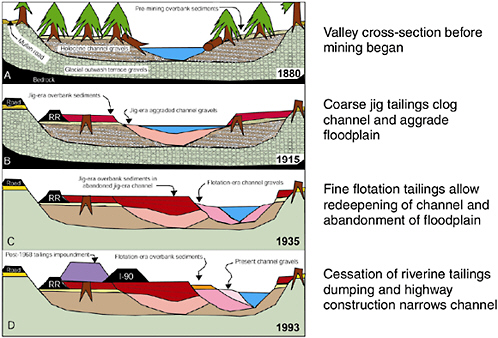
FIGURE 2-2 Changes in the channel of the Coeur d’Alene River at Cataldo Flats, 1880–1995. SOURCE: Box 2004.
Beginning in 1901, the mining companies installed pile and plank dams to reduce the amount of suspended load carried down the Coeur d’Alene River. Although the increasing complaints from downstream landowners were probably a major stimulus for this action, the mine owners also realized that the trapped tailings would contain substantial amounts of metal that might be reclaimed. The dams were located at Woodland Park on Canyon Creek and at Osburn and the Pinehurst Narrows on the South Fork of the Coeur d’Alene River. The Osburn dam created a reservoir that covered approximately 300 acres (Casner 1991).
In spite of these efforts, several downstream farmers filed court suits against the mining companies. The complainants claimed that mine wastes being deposited on their lands by the river were killing crops, hay, and other vegetation and that horses, and to a lesser extent cattle, dogs, and chicken, were being poisoned by residues deposited on grass and along the shore of the river after the floods. They also claimed that, when deposited on land, the material brought down by the river was made more toxic by reacting with air and that the resulting substance produced speedy death if ingested by horses (Ellis 1940). These were the first in a series of lawsuits what would become a protracted effort to get the mining companies to stop discharging mine wastes into the river system. The farmers’ problems undoubtedly were exacerbated by the damming of the Spokane River at Post Falls in 1906, which raised the level of Lake Coeur d’Alene, flooding the lower reaches of the Coeur d’Alene River and, as a result, increasing the rate of deposition and causing the river to flood over its banks and deposit tailings on the surrounding lands more frequently.
The Mine Owners Association (MOA) “successfully defended the preferential status of miners’ water rights in organized mining districts, claiming that the waste was harmless, and offered the economic importance of mining as a justification for their dumping policies” (Casner 1991). To avoid further court suits, the MOA began buying “pollution easements” on lands along the lower Coeur d’Alene River valley and “overflow easements” on the floodplains from Kellogg to Lake Coeur d’Alene (Grant 1952). These easements released “the mines from all past and future pollution claims” resulting from any possible damage to crops or domestic animals that mining operations might cause.
THE MIDDLE YEARS
During the first half of the 20th century, life in the Silver Valley settled down. Union problems dissipated, working conditions improved somewhat, and improved transportation allowed miners—and their families—to live in homes located in more stable communities on the flats. In 1910, a major
wildfire ripped through the region destroying forests and towns alike (Hart and Nelson 1984; Pyne 2002). However, because the economy was booming, most towns quickly rebuilt, often improving over the former layout, and there was apparently little impact on mining operations. The denuded hillsides likely did increase the severity of floods, but this was already a common problem in the basin. The population in the valley increased (Figure 2-3), although not as much as mining output (Figure 2-4). Much of the increased output resulted from improvements in mining and ore-processing technologies rather than from the employment of more workers.
Improvements in Technology
Advances in mining and ore-processing technologies introduced after the turn of the century allowed the Coeur d’Alene area mines to substantially increase their production of metals. A dry pneumatic drill, the Wiggle-Tail, had largely replaced hand jacking for drilling blasting holes. These machines increased the productivity of the miners but did not improve mining conditions. They were frequently termed “widow makers” because
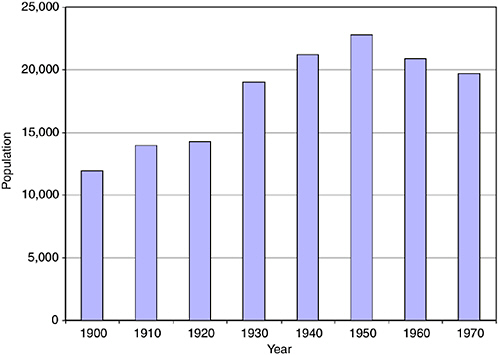
FIGURE 2-3 Population of Shoshone County, Idaho: 1900-1970. SOURCE: Forstall 1995.
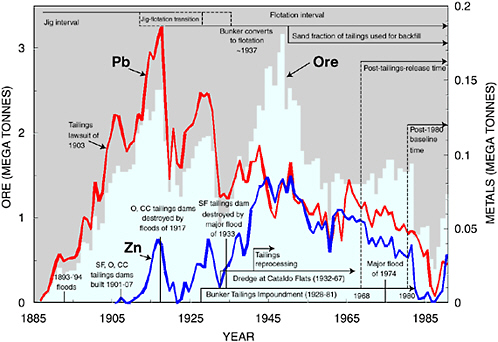
FIGURE 2-4 Annual production, Coeur d’Alene mining district, 1885-1990. (1 megatonne equals approximately 1.1 million tons.) SOURCE: Bookstrom et al. 2004; Box 2004.
in addition to creating large amounts of dust which could cause silicosis (a potentially fatal condition of the lungs), they had a tendency to loosen the rock in the tunnel and stope ceilings while in operation (Hart and Nelson 1984). In 1918, an improved pneumatic drill was introduced that was more stable and had a water line as well as a compressed air line (Hart and Nelson 1984). The water, forced through a hollow drill bit, cleaned out the blasting hole as it was being drilled and suppressed the dust. The larger supply of compressed air helped ventilate the workings. These new drills both increased productivity and improved safety and working conditions for the miners.
With this new equipment and better ventilation, the miners were able to tunnel farther and deeper. The massive Bunker Hill Mine, for instance, has about 150 miles of mining tunnels ranging from 3,600 feet above to about 1,600 feet below sea level (about 1 mile deep) (University of Idaho 2005).
Another major technological advance was the introduction of a new method of concentrating the ore. The Wilfley table (invented in 1903) adopted at some mills to supplement the jigs, increased recovery rates for lead and silver to more than 80% (Bennett 1994). An even more efficient
and selective “flotation” process, which could recover additional metals, was introduced to the Coeur d’Alene mines, and by 1930 ores were being concentrated by this method exclusively (Long 2001). This process involves grinding the ore very finely and blowing air through a mixture of this finely ground ore and water mixed with a frothing agent (usually pine oil or cresylic acid) and a collection agent. The froth attracted the sulfide-bound minerals and this metals-rich froth was collected for further processing (Bennett 1994). The process was much more efficient than the jig-tables in removing metals, reaching extraction efficiencies of around 85% by the 1930s and 95% by the late 1950s (Bookstrom et al. 2004). The more efficient recovery also made it economical to process lower-grade ores.
The tailings from the flotation process were quite different from the jig tailings. They contained much lower concentrations of metals but, being much finer, were more mobile. These frothing “slimes” could not be stockpiled and the river easily carried them over the plank dams. Consequently, they were transported for longer distances downstream (Long 1998, pp. 90-91). When left to dry on the floodplains by receding flood waters, they were also easily picked up and transported by winds.
Because ores of lower grade could be handled profitably by the flotation process, the amount of rock flour that was added to the mine runoff was significantly increased over that of the jig system, which relied on relatively high-grade ores. Besides the frothing and collection agents, the flotation process also used various other reagents such as sodium carbonate, copper sulfate, zinc sulfate, and potassium dichromate (Fahrenwald 1927).
Another change in ore processing in the valley involved the Bunker Hill Mine’s construction of a smelter in 1917. This smelter began with three blast furnaces, four roasters, a lead refinery, and a silver refinery. With a capacity of only 1,000 tons of ore per day, the facility produced mostly lead and silver from concentrates produced at the Bunker Hill Mill located about a mile to the east. The smelter continued to expand and by 1936 was the largest lead-producing facility in the world (Bennett 1982, p. 19).
Because the flotation process recovered zinc and other metals in addition to the silver and lead that were collected from the jig tables, facilities were also built to process these metals. An electrolytic zinc plant was constructed by Sullivan Mining Company at Government Gulch near Kellogg in 1928, and it was the first facility in the United States to produce zinc with 99.99% purity in commercial quantities (Murray 1982, p. 6). In 1943, a zinc fuming plant was added to facilitate the recovery of zinc from smelter slags. A cadmium plant was annexed to the smelter at the Bunker Hill Mine in 1945, and high-grade cadmium began to be recovered from smelter by-products.
All these advances allowed the valley to increase metal production substantially (see Figure 2-4). During their periods of production, the mines
processed an estimated 130 million metric tons2 of ore and produced about 7 million metric tons of lead, 3 million metric tons of zinc, and 30,000 metric tons of silver, approximately 17%, 6%, and 18% of the nation’s production of these metals, respectively (Long 1998). Ore production peaked around World War I at approximately 2.5 million metric tons per year and again peaked in 1948 at 3.2 million metric tons per year (see Figure 2-4) (Bookstrom et al. 2004, Figure 7a).
Waste Management
As production increased, the tailings became more of a problem. The Page and Bunker Hill Mines built the first tailings impoundments in 1904, but these were small and captured only the coarser materials (Casner 1991; Bennett 1994). The processing of lower-grade ores also resulted in substantially increased waste tailings.
The more efficient concentration technologies also supported the recovery of metal from some of the earlier wastes. The reprocessing of tailings began as early as 1905, and the tailings impoundments behind the dams at Canyon Creek and Pine Creek began to be reprocessed around 1919, although the presence of sewage, garbage, and other contaminants created problems (Long 2001, p. 89).
Although the tailings entrapped behind the plank dams were reprocessed, the dams were not maintained. Major floods in the spring of 1917 destroyed the Osburn and Canyon Creek dams, and the dam at Pinehurst was breached by floodwaters in 1933 (Long 1998, p. 8). Figure 2-5 shows the breached dam and substantial tailings behind it at Osborn in 1920. There was little reason to replace the dams after they were breached, because the impoundments were already full of sediment—they would not be effective in capturing the flotation tailings even if they had room. Also, they had not been successful in eliminating the court suits by farmers whose land was being contaminated downstream (Casner 1991). These cases continued up until 1930, although the mining companies were generally successful in defending their rights (Casner 1991).
During the 1920s, some mines began to use tailings ponds in an attempt to control the increasing waste problem. The flotation tailings were discharged into these ponds where they were allowed to settle before the water was discharged to the river. By 1923, wastes from selective flotation at Page Mill were being discharged into a tailings pond constructed within a swampy area on the western side of the Smelterville Flats known as Page pond (MFG 1992, pp. 1-26). Between 1926 and 1928, the Bunker Hill
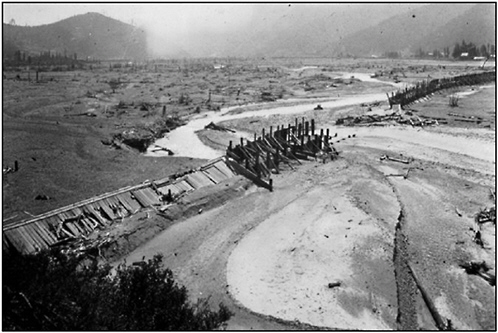
FIGURE 2-5 Tailings Dam at Osburn, Idaho, 1920. SOURCE: Richard 1921, as cited in Bennett 1994.
Company built a larger tailings pond west of Kellogg that expanded over the years to become the central impoundment area, which received most of the flotation wastes discharged since 1928 (Casner 1991; Long 1998).
In 1932, the MOA, in response to substantial concern being raised by residents in the city of Coeur d’Alene and other downstream areas, and to preclude possible government restrictions on the discharge of tailings into the river, constructed a suction dredge near Cataldo to remove tailings from the river (Grant 1952). At Cataldo, the river system converts from a high-to a low-gradient system, and solids settle out in this natural depositional area. The suction dredge pumped about 7,000 gallons of water a minute, excavating an estimated 500 tons of sediment per hour at 5% sediment load and ran approximately 22.5 hours per day from June through December. Over the life of the dredge, it removed an estimated 34.5 million U.S. tons of tailings, which were deposited in a tailings pond on Mission Flats (URS Greiner, Inc. and CH2M Hill 2001, p. 2-7). This pond ultimately covered an area of about 2,000 acres to a depth of 25-30 feet (Casner 1991). The dredge operated during the summers from 1932 to 1968 (Long 2001). Although it removed substantial amounts of tailings from the river, apparently no effort was made to determine how much it actually reduced the deposition of tailings on the lands downstream.
|
BOX 2-3 Remembrance of the 1930s “We never saw blue sky when I was there in the 1930s,” a former resident recalled a few years ago. “We never saw the sun. Right after we moved there, I put my baby daughter on the porch one morning. A neighbor came running over and said, ‘Don’t you know any better? You can’t put a new baby out on the porch in the morning! It’s real bad of a morning here!’ I remember another night my daughter had been very ill; we didn’t know what it was. She was just gasping for breath. The next morning, the clothing that had been hanging on the clothesline all night went to pieces as I got ready to iron it. We wore rayon in those days. It was the sulfur dioxide that had destroyed the fibers.” Source: Tate 1981. |
Tailings were not the only wastes of concern. As the mines were excavated into the mountains, groundwater migrating downward through permeable rock fissures was encountered. When groundwater enters the mine tunnels, chemical reactions can occur that greatly hasten the degradation of the sulfide minerals and result in acidic waters with high dissolved metals concentrations. Such waters are called “acid rock drainage.” The Bunker Hill Mine had the most serious problem.
The Bunker Hill smelter also emitted substantial amounts of sulfur dioxide and other air pollutants that were discharged directly to the atmosphere. Years later, valley residents still had vivid memories of this smoke (see Box 2-3). In an attempt to counter these problems, the Bunker Hill Company built a “solarium” with ultraviolet lights that workers and children living in the valley could use to obtain doses of substitute sunlight (Tate 1981).
The company also recognized that these pollutants were likely to cause environmental problems and responded in the same way that the mine owners had responded to the farmers. It bought “smoke easements” for the lands likely to be affected by its emissions. By 1940, these smoke easements covered more than 7,000 acres of private land (Casner 1991). The deposition of pollutants emitted from the smelter caused the death of trees in the area and contaminated the soil such that little vegetation could grow there. Even as late as the 1980s and 1990s, extensive efforts undertaken by the company and the government to replant seedlings to reestablish the forest and control erosion off these slopes were unsuccessful (Tate 1981; EPA 2000).
Increased Community Concern
Because the mining companies were, as discussed above, so successful in defending themselves against the farmers’ court suits, downstream resi-
dents began to seek redress through the political system. The residents of Coeur d’Alene City echoed their concerns as the flotation tailings began to reach the city in the mid-1920s (Casner 1991). In 1929 and 1930, John Coe, editor of the Coeur d’Alene Press, published a series of dramatic articles detailing the history and dimensions of the pollution problem. Casner (1991) indicated that John Coe and three politicians representing the lower-valley residents had toured the river and observed (and had become stuck in) the “yellow muck,” smelled the “stifling stench,” and saw “a picture of desolation … a veritable ‘Valley of Death’ … in a ‘Paradise Lost’ … created by the ‘sublime indifference of the octopus of heartless wealth’” (Casner 1991). The paper followed up on this series by lobbying for action by the state legislature and showing that Canadian mines were operating profitably even though that country prohibited the dumping of wastes into streams.
According to Casner (1991), the mining companies responded by sponsoring their own studies that identified little or no problem, stimulating articles in local newspapers that attacked the downstream politicians for threatening the existence of the mining industry and opposing any government action in testimony before the state legislature and Congress. Nevertheless, in March 1931, the state legislature established and provided emergency funding for a “Coeur d’Alene River and Lake Commission” to investigate the issue and report back to the legislature in 1933. The commission requested the assistance of federal experts, writing “Our river is gone, for the time at least, but we would really like to save our lake. Will you help?” (Casner 1991).
Although studies undertaken for the commission by the U.S. Bureau of Mines generally supported the position of the mine owners, other studies by the U.S. Biological Survey, Bureau of Fisheries, and the Public Health Service did not. Dr. M. M. Ellis of the Bureau of Fisheries authored one of the best known of these studies. He investigated the effects of mine wastes on fisheries and other aquatic organisms in the region in 1932. He found that
The polluted portion of the Coeur d’Alene River, that is the South Fork from a short distance above Wallace, Idaho to its junction with the North Fork above Cataldo, and the main Coeur d’Alene River from the junction of the forks to its mouth near Harrison, Idaho was found (July 1932) to be practically devoid of fish fauna, bottom fauna or plankton organisms…. Thompson Lake and Swan Lake, both rather heavily polluted by recent backwaters from Coeur d’Alene River were almost without plankton fauna. The plankton fauna of Coeur d’Alene Lake as a whole was rather sparse, and particularly poor at the south end. No plankton were taken off Harrison and at the mouth of Coeur d’Alene River; and very few as far up the lake as East Point. (Ellis 1940, p. 55)
By comparison, Ellis noted that the unpolluted small lakes nearby and the tributaries to the Coeur d’Alene River between Cataldo and Harrison supported normal fish populations and abundant plankton and aquatic vegetation. In experiments, he exposed some fish and plankton species to mine slimes, mine water, mill effluents, and Coeur d’Alene River samples and showed that they were lethally toxic to all the test organisms. Native fish in cages placed in the river died within 72 hours. Ellis concluded “There is but one solution for this pollution problem as far as fisheries are concerned, namely the exclusion of all mine wastes from the Coeur d’Alene River” (Ellis 1940). Before coming to this conclusion, he had also inspected and carried out experiments at the same Canadian mine that Coe had visited and found a healthy fish population there.
The Biological Survey evaluated several birds found dead and concluded that they died of metal poisoning attributed to pollution in the river and from the smelters (Casner 1991). The problem of swan mortality had been observed in 1924 with an account of 25 swans sickening and dying in the wetlands between Medimont and Harrison (Chupp and Dalke 1964).
John Kurtz Hoskins of the U.S. Public Health Service had 296 water samples from several locations in Lake Coeur d’Alene analyzed and found average lead concentrations ranging from 0.08 to 0.22 milligrams/liter (mg/L), with the concentration generally decreasing from the mouth of the Coeur d’Alene River to Coeur d’Alene City. One of the samples at Harrison had a lead content of 2.25 mg/L and another at Coeur d’Alene showed lead at 1.75 mg/L (Hoskins 1932, as cited in Casner 1991). He concluded that, under normal conditions, the lake water was practically saturated with lead in solution and pointed out that the concentrations were above the guideline for potable water on interstate carriers, which was 0.1 mg/L at that time. The mining industry aggressively challenged the Hoskins report with results of their own investigation which found lead at only 0.027 mg/L in water samples taken from the Coeur d’Alene City pumping station (O’Keefe and Ziegler 1930, as cited in Casner 1991).
Although the commission’s reports raised public awareness of the problems in the valley, the commission made only two recommendations. The first was to support the use of the dredge that the mines had already begun operating at Cataldo. The second was that a flume or pipeline be built down the length of the South Fork to carry the mining slimes to settling beds at Mission Flats.
In contrast to the frequent public statements by mine owners that their wastes created no significant public health or environmental problems, by 1930 the occupational hazards and public health risks in the production of lead and its compounds had been well known (Markowitz and Rosner 2002). The mine owners had substantial evidence that there were problems in Coeur d’Alene associated with mining. In addition to
the sickened and dying animals, the death rate among miners in Idaho averaged 2.47 per thousand per year between 1903 and 19083 (Hart and Nelson 1984). By 1920, Bunker Hill management realized that their smelter could be causing some health risks for its employees and initiated an unproven electrolytic treatment for removing the lead from their bodies (see Box 2-4 and Figure 2-6).
Nevertheless, the depression of the 1930s and then World War II diverted attention from possible public health and environmental concerns. During the 1940s, the Idaho Fish and Game Service and the U.S. Fish and Wildlife Service became sufficiently concerned about the death of migratory waterfowl feeding in the lower basin that they tried to use flares, gunshots, and boats to keep swans and geese away from the lethal feeding grounds, but they abandoned this effort because it was unsuccessful (Chupp and Dalke 1964).
The depression initially brought depressed metal prices, leading to the closure of many mines. However, they were saved by passage of the federal Silver Purchase Act in 1934, which guaranteed that the government would buy all the silver produced by American mines at twice the existing world price (Bennett 1994). This act encouraged every mine that could produce silver to reopen. Particularly fortunate was the Sunshine Mine, which had discovered a very rich silver bearing ore in 1931. The Sunshine became the most productive silver mine in the world and by itself produced more than one-third of all the silver produced in the Silver Valley (Bennett 1994).
The advent of World War II increased the demand for metals, particularly lead. But it also created a labor shortage, with many of the miners joining the armed services. In spite of efforts by the government and the mine owners to overcome these labor problems, production from the mines never reached the levels it had during World War I and actually decreased during the war years. Instead, the mines began to reclaim some of the old tailing and waste ore stockpiles. A reprocessing mill at the old Sweeney Mill processed some 1.2 million tons of tailings, producing 24 million pounds of lead and 8.4 million pounds of zinc, along with over half a million ounces of silver. Another built at Osburn Flats processed 4.4 million tons of jig tailings to produce 54 million pounds of lead, 77 million pounds of zinc, and 2.8 million ounces of silver (Bennett 1994). In total, 12 new mills were built to remine waste piles as well as stockpiles of tailings. Long (1998, p. 2) estimated that, in total, about 6 million metric tons (6.6 million tons) of tailings have been reclaimed from creeks and dumps for reprocessing. Of course, the reprocessing also produced tailings that again were discharged into the rivers, so the overall environmental benefit was limited.
|
BOX 2-4 The Clague Electrolytic Treatment The Bunker Hill management recognized that the smelting process posed a threat to the health of some of its workers. By 1920, the company had engaged in medical experiments to counteract the effects of lead poisoning. In 1921, mining historian T. A. Rickard wrote that the company made “beneficent use of electricity” by providing the “Clague electrolytic method for the treatment of lead poisoning.” As many as forty smelter workers at a time took the treatment—which consisted of placing the patients’ arms and legs in a salt-water solution and then passing a 110-volt current through their bodies—at the Wardner hospital. The process was intended to attract lead to the electrodes in the water. Source: Casner 1991. |
THE LATER YEARS
With the return of the miners from the war and the continued high metal prices resulting from the economic boom in the United States, combined with reduced competition from abroad, ore-processing facilities were expanded and metal production in the Coeur d’Alene region increased, reaching a peak in the mid-1960s (see Figure 2-4). The Bunker Hill Mining Company, for instance, increased its smelter capacity to 100,000 tons per
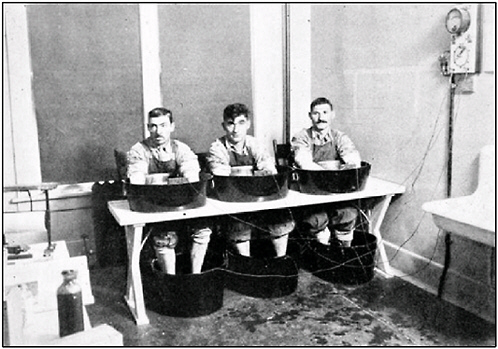
FIGURE 2-6 Workers taking the Clague electrolytic treatment in the 1920s. Photograph courtesy of Richard Magnuson, Wallace, ID.
day and added additional recovery units so that by 1972 it was recovering six different metals (Bennett 1982).
These were boom years for the valley. Another major project was the construction of Interstate 90 in the early 1960s, which was built on embankments and road beds constructed from tailings excavated from Cataldo Flats, the central impoundment area, and other locations.
But as the economy recovered, so did concerns about the public health and environmental contamination dangers resulting from mining. Not much had improved in the Silver Valley (Box 2-5). Congress passed two laws in 1948, the Water Pollution Control Act and the Mining Waste Pollution Control Act, which began to put pressure on the country’s mining industry. The large mines began to address some of their pollution problems. An acid plant was added to the zinc plant in 1954 to collect sulfur dioxide from stack gases and a second one was added in 1966 (MFG 1992, p. 1-22). Bunker Hill built a new smoke stack on its smelter in 1958 (Bennett 1982). In the late 1940s, some of the mines began separating the sand-sized fractions from the other tailings and returning the coarser materials to fill abandoned workings (Long 1998).
By 1968, in response to state and federal pressure, all the mill tailings were being disposed of in settling ponds rather than being discharged directly into the river4 (Rabe and Flaherty 1974). In that year, Bunker Hill also began diverting its contaminated adit drainage to the central impoundment area, although it was then allowed to flow into the river without treatment, and added an acid plant to the lead smelter. In 1969, Bunker Hill installed an improved “bag house” for controlling air emissions, and this along with several other improvements resulted in a 90% reduction in sulfur dioxide emissions (Bennett 1982, p. 21). The company also built a wastewater treatment plant to treat acid mine drainage in 1974.
Passage of the Clean Air Act in 1970 and the Federal Water Pollution Control Act in 1972 substantially increased the environmental pressures. But public attention was particularly aroused in September 1973 when the primary pollution-control device at the Bunker Hill smelter, the bag house, was partially destroyed in a fire. The new owners of the facility, Gulf Resources, decided that they would continue to operate the facility without this pollution control. This continued until August 1974.5 During this time
|
BOX 2-5 Living in the Valley “Pam Nichols, an amiable florist who’s spent most of her 33 years [in the Valley], remembers that when she was a child her blond hair would sometimes turn green because of all the sulfur in the air. Others recall that, for days on end, there would be blue skies and sunshine on the hills above town and haze so thick in Kellogg you had to drive with your lights on. The South Fork was as white as lye with industrial and municipal wastes. ‘Lead Creek,’ it was called, and children were warned to stay away from it. Dogs that drank out of puddles after a rain sometimes died. You couldn’t keep a lawn or raise a garden.” Source: Tate 1981. |
period, the smelters main stack emitted up to 160 tons per month of particulate emissions containing 50-70% lead compared to 10-20 tons per month prior to the fire (TerraGraphics 1990). Average monthly emissions at this time contained 73 tons of lead (ATSDR 2000), and ambient air concentrations of lead measured as high as 30 micrograms per cubic meter (μg/m3) (IDHW 1986).
After noting increasing levels of lead in ambient air in Kellogg, Idaho, the Idaho Department of Health and Welfare quickly initiated a public health investigation. This study (IDHW 1976) showed that in Smelterville, adjacent to the smelter, 99% of the children tested had blood lead levels (BLLs) greater than or equal to 40 μg per deciliter (dL) (the Centers for Disease Control and Prevention [CDC] BLL of concern in 1974). Overall, about 46% of the 919 children aged 1-9 years who were tested had BLLs greater than or equal to 40 μg/dL (IDHW 1976). Although these were some of the highest BLLs ever recorded, many of the basin residents remained unconcerned (see Box 2-6).
In responding to these increased pressures, Bunker Hill spent more than $21 million upgrading its wastewater treatment plant, installing hoods over its blast furnaces and scrubbers on the sintering plant, and building two tall smoke stacks (715 and 610 feet high) to further disperse its emissions and thereby decrease ambient air concentrations of lead and other contaminants in the valley (Bennett 1994). At the same time, metal prices began to fall, government price supports had disappeared, and Bunker Hill was facing increased competition from newer, more efficient smelters (Bennett 1994). As a result, the smelter was shut down in 1981 with a loss of 2,100 jobs—approximately three quarters of the total mining employment in the district at the time (Bennett 1994, 2004).
By 1983, when a second large human health study was conducted, the proportion of children living closest to the smelter site with BLLs of 30 μg/
|
BOX 2-6 “I Don’t Like People Poking at My Kids.” “There’s nothing wrong with my kids,” one mother told a journalist in the early 1980s. She, her husband, and their two children lived in a small, tidy house on the main street of Smelterville—a community with some of the highest concentrations of lead found in the Kellogg area. Her children, ages nine and 13, both had lead levels higher than 70 micrograms when tested during the CDC survey. She refused to have them participate in any of the numerous follow-up surveys and declined several offers to have them tested for neurologic or psychologic abnormalities. “I don’t see any need for it,” she says. “I don’t like all these people poking at my kids, sticking their noses in where they don’t belong.” She pauses. “I don’t know. Maybe there is more wrong than I realize, but I don’t think so.” Many other residents agreed. Although the company had bought and demolished all the residences within one-half a mile of the smelter, the citizens of Smelterville protested the proposed closing of the Silver King Elementary School which was also located within this area, even though monitors at the school showed lead levels in the atmosphere 10 times higher than the ambient air standard. There wasn’t enough evidence showing the high lead levels would harm their children they argued, and when the question was put to a vote, 996 of the 1,127 ballots cast were in favor of keeping the school open. Source: Tate 1981. |
dL or greater declined from 99% in 1974 to 19% (IDHW 1986, Table 81). Since this time, the area around the former smelter has seen declining BLLs, and by 2003 only 2% of children had BLLs greater than 10 μg/dL.
SUPERFUND
The final blow to the district’s mining industry was passage of the Superfund legislation (more formally entitled the Comprehensive Environmental Response, Compensation, and Liability Act) in 1980. Although much of the impetus for the law came from a desire to clean up industrial hazardous waste sites in the East, the Bunker Hill Mining and Metallurgical Complex was quickly (1983) placed on the National Priorities List for cleanup.
The site, commonly referred to as the box, encompasses a rectangle, 3 miles wide and 7 miles long, running from the vicinity of Kellogg on its eastern end to Pinehurst on its western end. This was the area most seriously affected by airborne pollution from the Bunker Hill smelter (Long 2001). The U.S. Environmental Protection Agency (EPA) did not begin cleanup actions until 1986 when they instigated a “fast-track” cleanup targeting public areas, such as parks and playgrounds. In 1991, a record of decision (ROD) covering the populated portions of the area (designated as
operable unit [OU] 1) was issued; in 1992, an ROD was produced covering the nonpopulated areas (designated as OU-2).6
During the same time period, the state of Idaho sued the existing mining companies for $50 million in damages in a natural resources damage (NRD) lawsuit. This suit was settled for $4.5 million, which went into a trust fund to finance cleanup efforts (Long 1998). In 1991, the Coeur d’Alene tribe filed another NRD lawsuit against eight mining companies. One company, the Coeur d’Alene Mines Corporation, settled with the tribe. In 1996, the United States joined the Coeur d’Alene tribe in this suit. At the time of writing, this case is ongoing.
EPA officials said that they intended to address the environmental problems that existed outside of the box using programs other than Superfund. However, they found their other tools to be inadequate, and, in 1998, the agency announced that it was initiating the Superfund process for contaminated areas within the 1,500 square mile Coeur d’Alene River basin reaching from Montana to Spokane, Washington—one of the largest Superfund designations in the country—to be designated as OU-3 of the Bunker Hill Superfund site (Villa 2003).
The economic conditions and environmental pressures that had forced the closure of Bunker Hill, the largest facility in the valley, affected many other mines as well. During the 1980s, the population of the valley’s communities fell by a quarter, incomes tumbled, and poverty rates soared. New owners attempted to reopen Bunker Hill but declared bankruptcy in 1991 (Bennett 1994). A few mines remained in operation, but the Silver Valley would never be the same again.
During its history, the Silver Valley could claim a number of achievements (Bennett 2004). It was the largest and richest silver-producing region in the world, producing more than 1 billion ounces, with the Sunshine Mine being the richest silver mine ever developed. Bunker Hill was the largest lead and zinc mine in the United States, but was only 1 of 18 mines in the district that produced more than a million tons. As indicated above, the valley accounted for 18% of all the silver that has been produced by U.S. mines, 17% of all the lead and 6% of all the zinc (Long 1998). More than 100 mines have operated in the district, including some of the deepest and largest in the country. The total value of the metals produced by valley mines exceeded $26 billion in 1997 dollars (Long 1998). But the legacy of this history is also immense—environmental problems spread over hundreds of square miles creating one of the largest and most expensive cleanup challenges in the nation, a challenge that is likely to take longer to overcome than it did to create.
REFERENCES
ATSDR (Agency for Toxic Substances and Disease Registry). 2000. Coeur d’Alene River Basin Environmental Health Assessment. Agency for Toxic Substances and Disease Registry, U.S. Department of Health and Human Services, Atlanta, GA.
Bell, F.C., and M.L. Miller. 2002. Age-adjusted central death rates by sex, under age 65, age 65 and over and calendar year. Table 1 in Life Tables for the United States Social Security Area, 1900-2100. Actuarial Study No. 116. Baltimore: Social Security Administration, Office of the Chief Actuary [online]. Available: http://www.ssa.gov/OACT/NOTES/as116/as116_Tbl_1.html [accessed March 21, 2005].
Bennett, E.H. 1994. A History of the Bunker Hill Superfund Site, Kellogg, Idaho. Prepared for the Pacific Northwest Metals Conference, April 9, 1994, Spokane, WA.
Bennett, E.H. 2004. Brief Overview of the History, Geology, and Mining of the Coeur d’Alene Basin. Presentation at the First Meeting on Superfund Site Assessment and Remediation in the Coeur d’Alene River Basin, January 22, 2004, Washington, DC.
Bennett, P. 1982. The smelter. Pp. 19-21 in The Idaho Miner. Moscow, ID: College of Mines and Earth Resources, University of Idaho.
Bookstrom, A.A., S.E. Box, J.K. Campbell, K.I. Foster, and B.L. Jackson. 2001. Lead-Rich Sediments, Coeur d’Alene River Valley, Idaho: Area, Volume, Tonnage, and Lead Content. Open-File Report 01-140. Menlo Park, CA: U.S. Department of the Interior, U.S. Geological Survey [online]. Available: http://geopubs.wr.usgs.gov/open-file/of01-140/ [accessed Nov. 29, 2004]
Bookstrom, A.A., S.E. Box, R.S. Fousek, J.C. Wallis., H.Z. Kayser, and B.L. Jackson. 2004. Baseline and Historical Depositional Rates and Lead Concentrations, Floodplain Sediments: Lower Coeur d’Alene River, Idaho. U.S. Geological Survey Open-File Report 2004-1211. U.S. Department of the Interior, U.S. Geological Survey, Spokane, WA [online]. Available: http://pubs.usgs.gov/of/2004/1211/ [accessed June 23, 2005].
Box, S.E. 2004. Metal-enriched Sediment in the Coeur d’Alene River Basin. Presentation at the Third Meeting on Superfund Site Assessment and Remediation in the Coeur d’Alene River Basin, June 17, 2004, Coeur d’Alene, ID.
Box, S.E., A.A. Bookstrom, and W.N. Kelley. 1999. Surficial Geology of the Valley of the South Fork of the Coeur d’Alene River, Idaho, Draft Version, U.S. Geological Survey, Spokane, WA. October 4, 1999. (Document ID 1110378 in Bunker Hill Basin-Wide Remedial Administrative Record, Data CD8. U.S. Environmental Protection Agency, Region 10, September 2002.)
Casner, N.A. 1991. Toxic river: Politics and Coeur d’Alene mining pollution in the 1930s. Idaho Yesterdays 1991(Fall):3-19.
Chupp, N.R., and P.D. Dalke. 1964. Waterfowl mortality in the Coeur d’Alene river valley, Idaho. J. Wildl. Manage. 28:692-702.
Cook, E.F. 1961. Coeur d’Alene highlights. Pp. 14-16 in Guidebook to the Geology of the Coeur d’Alene Mining District, R.R. Reid, ed. Bulletin No. 16. Moscow, ID: Idaho Bureau of Mines and Geology. April 1961.
Ellis, M.M. 1940. Pollution of the Coeur d’Alene River and Adjacent Waters by Mine Wastes. U.S. Bureau of Fisheries Special Scientific Report No. 1. Washington, DC: U.S. GPO. 139 pp.
EPA (U.S. Environmental Protection Agency). 2000. First Five-Year Review of the Non-Populated Area Operable Unit, Bunker Hill Mining and Metallurgical Complex, Shoshone County, Idaho [online]. Available: http://www.epa.gov/r10earth/offices/oec/First%205-Year%20Review%20Non-Pop.pdf [accessed Nov. 29, 2004].
Fahrenwald, A.W. 1927. Flotation practice in Coeur d’Alene District, Idaho. Min. Congr. J. (Sept.):699-704.
Forstall, R.L. 1995. Population of Counties by Decennial Census: 1900 to 1990, April 20, 1995. Population Division, U.S. Bureau of the Census, Washington, DC [online]. Available: http://www.census.gov/population/cencounts/00-90doc.txt [accessed Nov. 29, 2004].
Grant, L.A. 1952. A history of the Cataldo dredge. Pp. 101-110 in the Fourth Annual Pacific Northwest Industrial Waste Conference Proceedings. Pullman, WA: Washington State College.
Hart, P., and I. Nelson. 1984. Mining Town. Seattle, WA: University of Washington Press.
Hoskins, J.K. 1932. Report of the lead content of the waters of the Coeur d’Alene River and Coeur d’Alene Lake in Idaho. Pp. 15-19 in Historical Files “South Fork of the Coeur d’Alene River” Water Quality Bureau, Idaho Department of Health and Welfare (as cited in Casner 1991).
IDHW (Idaho Department of Health and Welfare). 1976. Shoshone Lead Health Project. Work Summary. Health Care No. ENV 11. Boise, ID: Idaho Department of Health and Welfare, Division of Health. January 1976. 187 pp.
IDHW (Idaho Department of Health and Welfare). 1986. Kellogg Revisited—1983. Childhood Blood Lead and Environmental Status Report. Panhandle District Health Department, Idaho Department of Health and Welfare, Center for Environmental Health, Centers for Disease Control, U.S. Environmental Protection Agency. July 1986.
Long, K.R. 1998. Production and Disposal of Mill Tailings in the Coeur d’Alene Mining Region, Shoshone County, Idaho: Preliminary Estimates. U.S. Geological Survey Open File Report 98-595. Tucson, AZ: U.S. Department of the Interior, U.S. Geological Survey. 14 pp.
Long, K.R. 2001. Tailings under the bridge: Causes and consequences of river disposal of tailings, Coeur d’Alene mining region, 1886-1968. Min. Hist. J. 8:83-101.
Magnuson, R.G. 1968. Coeur d’Alene Diary: The First Ten Years of Hardrock Mining in North Idaho, 1st Ed. Portland, OR: Metropolitan Press. 319 pp.
Markowitz, G.E., and D. Rosner. 2002. Deceit and Denial: The Deadly Politics of Industrial Pollution. Berkeley, CA: University of California Press.
MFG (McCulley, Frick, and Gilman, Inc). 1992. Bunker Hill Superfund Site Remedial Investigation Report, Vol. 1. Prepared for Gulf Resources and Chemical Corporation/Pintlar Corporation, by McCulley, Frick, and Gilman, Inc., Boulder, CO. May 1, 1992.
Murray, S. 1982. The Bunker Hill in retrospect. Pp. 4-7 in The Idaho Miner. Moscow, ID: College of Mines and Earth Resources, University of Idaho.
O’Keefe, E.C., and W.L. Ziegler. 1930. Condensed Report of Investigation on Pollution of Coeur d’Alene River and Lake Coeur d’Alene, June 11 to September 10, 1930. Historical Files “South Fork of the Coeur d’Alene River” Water Quality Bureau, Idaho Department of Health and Welfare (as cited in Casner 1991).
Pyne, S.J. 2002. Year of the Fires: The Story of the Great Fires of 1910. New York, NY: Penguin.
Quivik, F.L. 2004. Of tailings, Superfund litigation, and historians as experts: U.S. v. Asarco, et al. (the Bunker Hill case in Idaho). Publ. Historian 26(1):81-104.
Rabe, F.W., and D.C. Flaherty. 1974. The River of Green and Gold: A Pristine Wilderness Dramatically Affected by Man’s Discovery of Gold. Natural Resources Series No. 4. Moscow, ID: Idaho Research Foundation, Inc. 93 pp.
Tate, C. 1981. American dilemma of jobs, health in an Idaho town. Smithsonian 12 (September): 82.
TerraGraphics. 1990. Risk Assessment Data Evaluation Report (RADER) for the Populated Areas of the Bunker Hill Superfund Site. Prepared by TerraGraphics Environmental Engineering, Inc., Moscow, ID, for U.S. Environmental Protection Agency, Region 10, Seattle, WA. October 18, 1990.
University of Idaho. 2005. Manuscript Group 367. Bunker Hill Mining Company Records, 1887-1984 [online]. Available: http://www.lib.uidaho.edu/special-collections/Manuscripts/mg367.htm [accessed Jan. 5, 2005].
URS Greiner, Inc., and CH2M Hill. 2001. Final (Revision 2) Remedial Investigation Report, Remedial Investigation Report for the Coeur d’Alene Basin Remedial Investigation/ Feasibility Study, Vol. 4. Part 4. CSM Unit 3, Lower Coeur d’Alene River. URSG DCN 4162500.6659.05a. Prepared for U.S. Environmental Protection Agency, Region 10, Seattle, WA, by URS Greiner, Inc., Seattle, WA, and CH2M Hill, Bellevue, WA. September 2001.
Villa, C.J. 2003. Superfund vs. Megasites: The Coeur d’Alene river basin story. Columbia J. Environ. Law 28(2):255-324.


