
7
Integrating Autonomy in Network-Centric Operations
Previous chapters in this report focused on unmanned aerial, surface, undersea, and ground vehicles and on the operational requirements associated with them. This chapter discusses areas such as the command, control, communications, intelligence, surveillance, and reconnaissance (C3ISR) that are critical for integrating unmanned aerial vehicles (UAVs) into network-centric operations. Many knowledgeable observers, including this committee, believe that communications-capacity limitations, interoperability problems, and imagery-processing and -exploitation issues head the list of impediments to a more rapid introduction and utilization of UAV systems by the military in general and the Navy in particular. Although this chapter is focused on C3ISR for UAVs, Chapters 5 and 6 contain some discussion of command and control (C2) for unmanned undersea vehicles (UUVs), unmanned surface vehicles (USVs), and unmanned ground vehicles (UGVs); sensors; and communications.
UNMANNED AERIAL VEHICLE COMMAND AND CONTROL
Current Systems
Command an|d control of UAVs is currently accomplished using proprietary systems developed by their manufacturers. For example, the Predator C2 system (Figure 7.1) incorporates hardware and software for manually making the aircraft take off and land. The aircraft can automatically fly between planned waypoints, or it can be flown manually. Aiming the imaging payload is done manually, as is designating a target with the laser designator. The Predator ground component
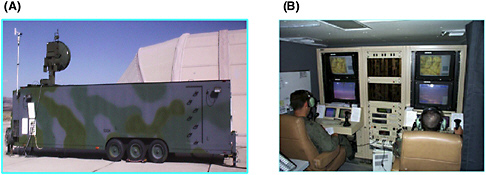
FIGURE 7.1 (A) Predator ground station. (B) Operator stations. SOURCE: Maj David Gibson, USAF, Director of Surveillance and Reconnaissance, Headquarters, U.S. Air Force, “Predator in Support of the Global War on Terrorism,” presentation to the committee, February 25, 2003.
normally fills one militarized semitrailer (Figure 7.1A), although more austere ground systems are available.
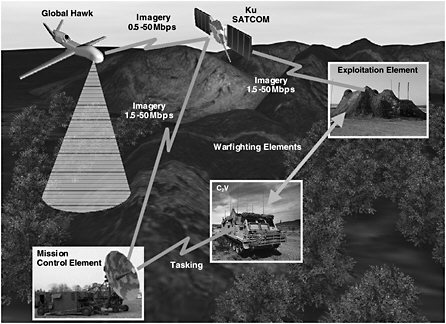
The Global Hawk provides a hands-off, fire-and-forget mode of operation by preplanning and scheduling not only routes but locations to be imaged. With one keystroke the Global Hawk will taxi to the runway, take off, perform its mission, and return and land accurately without further human intervention. The “pilot’s” main responsibility is receiving and returning messages from air traffic control and monitoring telemetered aircraft status data. The control segment for takeoff and landing, the launch-and-recovery element (LRE), is built into a short, enclosed semitrailer, and the mission-monitoring component, the mission control element (MCE), is built into a militarized semitrailer.
The Dragon Eye, as a human-portable system, has its command-and-control system integrated onto a laptop computer (Figure 7.2).
Tactical Control System
As indicated above, current UAV command-and-control systems are proprietary to the UAV manufacturer, and they lack interoperability in the sense that it is not possible to control one UAV using the C2 system of another. To address this problem, the Navy has been developing the Tactical Control System (TCS) in order to provide a single product for the control of UAVs from the different manufacturers. TCS has an open architecture that includes software generic to all UAVs, and it provides the capability to integrate software peculiar to a particular UAV.
Although TCS has been adopted as the standard Navy product for UAV command and control, and it has been influential in the ongoing development of
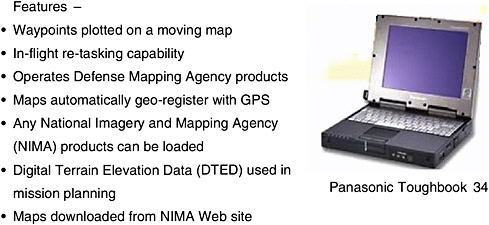
FIGURE 7.2 Dragon Eye command and control. SOURCE: Col Barry Ford, USMC, Chief of Staff, Marine Corps Warfighting Laboratory, “Autonomous Vehicles in Support of Marine Corps Operations,” presentation to the committee, December 9, 2002.
standards for UAV interoperability (e.g., STANAG 4586 (Standard Interface of the Unmanned Control System (UCS) for NATO UAV Interoperability)), it has in practice not been widely adopted by UAV manufacturers and other Services. This is partly due to organizational issues and lack of incentives, but there are practical issues as well. Since a ground control station is required in the development and testing of a UAV, it is a natural by-product of this process. Thus, TCS has to play “catch up” (by developing or integrating software peculiar to the UAV) with the ground station already developed by the UAV manufacturer after the UAV development process is complete.
This may be a sign of relative immaturity for UAV programs—or a sign that the Department of Defense (DOD) and the Department of the Navy have not yet coordinated development requirements. In any event, there is room for progress here.
Mission Command and Control for Uninhabited Combat Air Vehicles
With the exception of the MQ-1 Predator with the Hellfire missile, current UAVs have had intelligence, surveillance, and reconnaissance (ISR) missions, not combat missions. The development of the uninhabited combat air vehicle (UCAV) will dramatically change this situation. Figure 2.2 in Chapter 2 depicts a concept of operations (CONOPS) for a UCAV suppression of enemy air defense (SEAD) mission. Three UCAVS are cooperating to detect air defense radars using time difference of arrival (TDOA) and frequency difference of arrival (FDOA) techniques. Then two pairs of UCAVs, cued by the TDOA- and FDOA-derived estimates of target location, cooperate to destroy these radars. One UCAV
of each pair uses its synthetic aperture radar (SAR) to geolocate the target based on the cue it has been provided, while the second UCAV delivers a weapon based on the target position data provided by the first UCAV. The first UCAV then uses its SAR to perform battle damage assessment to see if restrike is necessary. Note that tight coordination and timing of actions by the different air vehicles is required, thereby imposing stressing requirements on C2. The presence of manned as well as unmanned air vehicles in the air space will only increase the difficulty of satisfying these requirements.
To efficiently and effectively perform its mission, the UCAV system will require an advanced command-and-control system. Indeed, the Defense Advanced Research Projects Agency (DARPA) and the Services have established research and development (R&D) programs to develop the needed mission control technology.
Conclusions Concerning Unmanned Aerial Vehicle Command and Control
The Navy needs to evolve the Tactical Control System from a focus on providing a single-product solution for UAV command and control to a program providing the technological basis and proof of concept for Navy leadership in an effort defining standards and protocols for UAV control. The long-term objective would be to permit a UAV of any Service and manufacturer to be controlled using a ground station of any other Service and manufacturer. This effort could be conducted in coordination with the ongoing efforts of the Office of the Secretary of Defense.
To cope with the increasing complexity of UAV missions as exemplified by the Joint Unmanned Combat Air System (J-UCAS) and to take full advantage of the potential for reduced numbers of personnel required, the Navy needs an aggressive research program in intelligent autonomy. This research program may be focused on the development of automation aids to allow tightly coordinated control of multiple UAVs by a single operator, including automated real-time mission planning and replanning. This effort could be conducted in coordination with the efforts of DARPA and the Air Force.
UNMANNED AERIAL VEHICLE COMMUNICATIONS
Current Communications Systems
Unmanned aerial vehicle communications systems are used to uplink (from ground segment to vehicle) C2 data and to downlink (from vehicle to ground segment) C2 and sensor data. Although C2 data are of relatively low rate (typically in the range of a few hundred kilobits per second [kbps]), sensor data dissemination requirements are much higher and stress available link capacities.
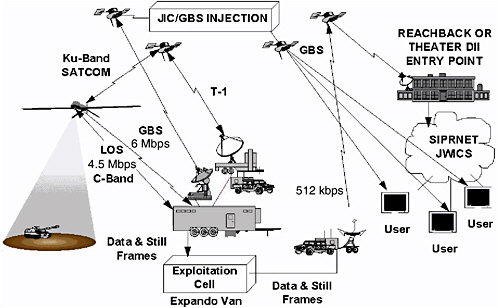
FIGURE 7.3 Predator communications architecture. NOTE: A list of acronyms is presented in Appendix D. SOURCE: Maj Scott Hatfield, USAF, USAF Command, Control, Intelligence, Surveillance, and Reconnaissance Center, “Predator Support to NATO Operations,” briefing to Unmanned Aerial Vehicle Conference, September 21-23, 1999.
Particular dissemination throughput requirements are a function of sensor type, ground track resolution, data compression, and any onboard processing. Figures 7.3, 7.4, and 7.5 illustrate the communications architectures for the Predator and Global Hawk UAVs. These architectures rely both on line-of-sight (LOS) communications and on military and commercial SATCOM (satellite communications) over-the-horizon (OTH) communications. Like UAV C2 systems, UAV communications systems are primarily proprietary systems that hinder interoperability. An exception is the common data link (CDL), used for downlink of Global Hawk sensor data and uplink of sensor control messages.
Common Data Link
In 1991, the DOD designated the common data link as the standard data link for imagery and signals intelligence. Thus, CDL is a key data link that enables sensor control and sensor exploitation for UAVs and manned ISR assets. In particular, CDL is used for the Global Hawk. The CDL uplink is secure, and jam-resistant with a rate of 200 kbps. The downlink operates at three rates: 10.71 megabits per second (Mbps), 137 Mbps, and 274 Mbps. Only the lowest downlink rate, 10.71 Mbps, is secure, however. The line-of-sight range is 200 km.

CDL terminals operate in either the X or Ku band. The Navy has deployed a version of CDL, referred to as the common high-bandwidth data link (CHBDL), on its carriers.
There are a number of variants of CDL, including the tactical common data link (TCDL). TCDL terminals are smaller and cost less than other CDL terminals. Currently supported data rates are 1.5 to 10.71 Mbps at a 200 km range. In the future, TCDL is intended to support higher CDL rates as well. Navy platforms using TCDL include the Fire Scout, the multimission helicopter, the P3-AIP (Orion airplane, Antisurface Warfare Improvement Program), the aircraft carriers (CVs), the P3 Special Operations, and the S3B Surveillance System Upgrade model. Navy platforms planning to use TCDL include the Pioneer Improvement Program, the Broad Area Maritime Surveillance (BAMS) program, the multimission maritime aircraft, and the EP-3E. Thus, TCDL is an important data link for Navy ISR platforms in general and for UAVs (Fire Scout, Pioneer, and BAMS) in particular.
TCDL is intended as a standard to which multiple vendors can build interoperable hardware. While the committee strongly endorses such a standards-based approach in general and TCDL in particular, it was concerned to learn that the TCDL implementations of the various vendors are not truly interoperable. The problem is that there are four different TCDL implementations: Legacy TCDL, Packet Mux TCDL, Ethernet/Generic Framing Protocol, and the Asynchronous Transfer Mode/Cell Transfer Frame Format. As a result, no two CDL manufacturers had demonstrated interoperability of their equipment as of the date of the demonstration.1
Satellite Communications
Satellite communications are used for OTH relaying of UAV command-and-control data and sensor data dissemination. There are four segments to military satellite communications (MILSATCOM): ultrahigh frequency (UHF), superhigh frequency (SHF), extremely high frequency (EHF), and commercial services.
The UHF segment is a demand assignment multiaccess system with 48 kbps throughput. This segment supports mobile terminals and is used to provide connectivity to the warfighter. The UHF segment does not currently play any role in UAV communications.
The medium-data-rate SHF segment supports rates from 128 kbps to 1.544 Mbps and provides worldwide secure voice and high-data-rate communications between the United States and its network of military installations and other
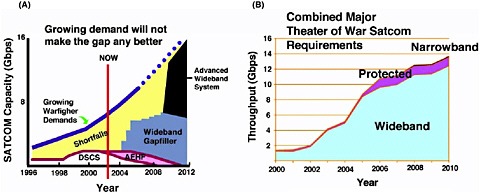
FIGURE 7.6 Projected military satellite communications (SATCOM) needs exceed capacity: (A) SATCOM capacity and warfighter demands, 1996-2012; (B) combined major theater of war satellite communications requirements, 2000-2010. NOTE: A list of acronyms is provided in Appendix D. SOURCE: Office of the Secretary of Defense. 2002. Unmanned Aerial Vehicles Roadmap 2002-2027, Department of Defense, Washington, D.C., December, p. 104.
government agencies. The high-data-rate SHF segment supports 1.544 to 24 Mbps throughput. The Global Broadcast System (GBS) is implemented on the SHF segment. GBS provides global coverage with one-way broadcast of information, including imagery, maps, weather information, and other data. GBS can be used to transmit near-real-time video from the Predator and other sources.
The EHF segment supports both low-data-rate 2.4 kbps and medium-data-rate 4.8 kbps to 1.544 Mbps throughput. It is a worldwide, secure, jam-resistant communications system for U.S. civilian and military leaders for command and control of military forces.
The current MILSATCOM architecture will be upgraded with additional capabilities later in this decade, provided by systems such as Wideband Gapfiller and advanced EHF (AEHF). However, as shown in Figure 7.6, even with these additional capabilities a capacity shortfall may exist. Commercial services are required to fill some of this shortfall. As the use of UAVs increases, the shortfall may have a significant impact on the availability of sensor information on demand.
In November 1993, the DOD released a report promoting the use of commercial SATCOM systems in all of the Services.2 The goal was to augment military SATCOM to meet the total predicted communications throughput requirements. Commercial SATCOM systems operate in the C, Ku, and Ka bands. Examples include Iridium, Panamsat, Orion, Intelligence Satellite (INTELSAT), and International Maritime Satellite (INMARSAT).
The Navy has been the sole Service to lease commercial SATCOM on a broad, Service-wide basis, under its Challenge Athena program (currently known as the Commercial Wideband Satellite Program (CWSP)). Satellite capacity leased under the CWSP is used to provide high-throughput (2.044 Mbps) connectivity to deployed naval forces. It is used for the dissemination of imagery, including imagery provided by UAVs.
Network-Centric Operations
The DOD and the Services are engaged in a series of initiatives aimed at eliminating communications bandwidth as a constraint, thereby providing the communications capabilities required to implement network-centric operations. When these initiatives come to full fruition, they will greatly facilitate command and control of UAVs and the dissemination of their data.
Global Information Grid
The Global Information Grid (GIG) is the vision of the Office of the Secretary of Defense (Networks and Information Integration) (OSD(NII)) for a single, secure-packet-based communications infrastructure providing seamless, end-to-end connectivity for all DOD platforms and facilities (Figure 7.7). The GIG is based on commercial technology (i.e., the commercial Internet Protocol (IP) is the fundamental transport mechanism). The GIG-Bandwidth Expansion (GIG-BE) program,3 to be completed in FY04, will provide an optical, IP, terrestrial-based communications backbone to mitigate constraints in terrestrial bandwidth. This program will facilitate the collaborative exploitation and sharing of UAV data for cases in which the UAV has connectivity to one of the nodes interconnected by the GIG-BE.
Transformational Communications System
The Transformational Communications Office (TCO), jointly led by the Air Force and the Communications Directorate of the National Reconnaissance Office (NRO), was established in September 2002. The mission of this office is “to assure that we have communications compatibility across the DOD, the intelligence community, and NASA.”4 The goal is to create a new National Space
|
3 |
For additional information, see the Web site <http://www.disa.mil/pao/fs/gigbe2.html>. Last accessed on April 1, 2004. |
|
4 |
Peter Teets, Undersecretary of the Air Force. 2002. “Special Briefing on the Opening of the Transformational Communications Office,” Washington, D.C., September 3. |

FIGURE 7.7 Global Information Grid concept. NOTE: A list of acronyms is provided in Appendix D. SOURCE: Michael S. Frankel, Deputy Assistant Secretary of Defense for Command, Control, Communications, Intelligence, Surveillance, and Reconnaissance (C3ISR), Space, and Information Technology, “Implementing the Global Information Grid (GIG): A Foundation for 2010 Net Centric Warfare,” presentation to the committee, February 24, 2003.
Program architecture that ties together space-based and ground-based networks and that meet the military’s growing need for bandwidth.
The Transformational Communications Architecture (TCA) is a subset of the GIG concept. TCA integrates mobile/tactical users and global intelligence services via IP. The physical-layer transport technologies are both radio frequency (RF) (EHF, X, Ku, and Ka band) and optical. Laser communications are envisioned for the high-rate users (e.g., sensor readout), while RF is for the tactical users. In particular, a laser communications terminal has been funded for the Global Hawk that would allow insertion of Global Hawk ISR data into the very high bandwidth, space-based network. A conceptual system architecture is shown in Figure 7.8.
The Transformational Communications System, the space component of the TCA, will have an initial operating capability (IOC) in FY09 and a final operational capability (FOC) in FY13. Thus, there is a significant gap in time between the upgrading of the terrestrial and space components of the GIG.
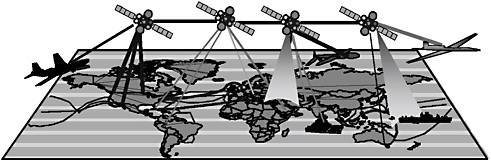
FIGURE 7.8 Transformational Communications Architecture. SOURCE: Michael S. Frankel, Deputy Assistant Secretary of Defense for Command, Control, Communications, Intelligence, Surveillance, and Reconnaissance (C3ISR), Space, and Information Technology, “Implementing the Global Information Grid (GIG): A Foundation for 2010 Net Centric Warfare,” presentation to the committee, February 24, 2003.
FORCEnet
FORCEnet is the vision of the Chief of Naval Operations (CNO) for enabling network-centric operations for the Navy. According to the CNO’s Strategic Studies Group, FORCEnet is the “operational construct and architectural framework for naval warfare in the information age, integrating warriors, sensors, command and control, platforms, and weapons into a networked, distributed combat force.”5 While broader in concept than just communications networks, it includes “dynamic, multi-path and survivable networks” as one of the capabilities to be provided. Network-centric operations and FORCEnet have been studied in greater detail in past and ongoing studies of the Naval Studies Board.6,7
While the committee applauds this vision, it is concerned that FORCEnet does not appear to have been translated into a concrete plan with adequate funding and the management structure necessary to realize the vision. Such a plan would need to provide for close coordination with OSD programs such as GIG-BE and Transformational Communications System, as well as Service-level programs such as the Air Force’s Command and Control Constellation program.
Conclusions Concerning Unmanned Aerial Vehicle Communications
A plan for FORCEnet implementation with adequate funding and a management structure with the authority to implement the plan is needed. This plan can ensure the interoperability of naval systems and assure that the Navy’s communications needs are addressed within the emerging context of the GIG. To ensure the interoperability of UAV data links, the Navy can work with OSD(NII) and the Services to establish a rigorous testing regime so that the CDL implementations of alternative vendors are interoperable. To have adequate bandwidth to ensure optimal, network-centric use of UAV sensor data, the Navy can make the necessary investments to connect to the Transformational Communications System when it becomes available. For the period prior to the IOC of this system, the Navy could continue utilizing commercial SATCOM, as it has successfully demonstrated with the Challenge Athena program.
Satellite communications can play a valuable role, but it is important to realize that the tremendous distance to geosynchronous satellites greatly reduces, typically by a factor of a million, the available bandwidth for a fixed antenna size and radiated power, when compared to point-to-point communications between UAVs and surface units. This is the reason that the Global Hawk and the Predator have such large, bulbous noses, containing ~1 m dishes to talk to the distant satellites with transmitters that use a major fraction of the available onboard auxiliary power.
By way of contrast, using only 20 cm (8 in.) antennas, a network of point-to-point UAVs and surface units can exchange a thousand times as much data with only 1/40th as much power. The need to limit the antenna footprint on ships, UAVs, and other units may make a theaterwide autonomous vehicle (AV) communications network that does not involve SATCOM very attractive. The role of AVs in expanding the bandwidth and capability of the command, control, communications, and computers (C4) network for theater operations may be as important as their role in intelligence, surveillance, reconnaissance, and targeting (ISR&T).
INTELLIGENCE, SURVEILLANCE, AND RECONNAISSANCE AND UNMANNED AERIAL VEHICLES
Current Capabilities and Issues
Operation Iraqi Freedom is the first war in which the long-standing goal of dominant situation awareness approached reality. Coalition ISR was ubiquitous, and the RQ-1 Predator, MQ-1 Predator with Hellfire, and RQ-4 Global Hawk were major contributors (Box 7.1). In addition, the Marines employed the Pioneer and Dragon Eye UAVs. Although there were many problems associated
|
BOX 7.1
SOURCE: Lt Gen T. Michael Moseley, USAF, Commander, Central Air Forces. 2003. Operation Iraqi Freedom—By the Numbers, Shaw Air Force Base, S.C., April 30. |
with the prototype nature of Dragon Eye, overall it was highly regarded, and the Marines were happy to have it as a tool for intelligence gathering.
There is much room for improvement in ISR capabilities, particularly for the Navy and the Marine Corps. Important issues include the following:
-
Identification of targets on the move,
-
Detection of targets in foliage,
-
Detection of targets in urban clutter,
-
Detection and characterization of buried targets, and
-
Detection and identification of nuclear, biological, and chemical (NBC) weapons materials.
Improvements in sensor packages for UAVs will help address some of these issues. For example, the Global Hawk Radar Technology Improvement Program (RTIP) radar will have increased accuracy and a higher update rate as well as high-resolution moving target indicator and moving target imaging modes that will help identify targets on the move. DARPA has developed a foliage-penetrating radar that is a potential sensor for the Global Hawk. Imaging laser detection and ranging (LADAR) under development by DARPA and the Services can help in areas with foliage and in urban areas. Multispectral imaging and hyperspectral imaging sensors are of potential utility for detecting targets in clutter, detecting and characterizing buried facilities, and detecting and identifying NBC materials.
Close-in Unmanned Aerial Vehicle ISR
Today, ISR systems gather information sensed at long standoff ranges, providing products such as images of the battlefield, communications intercepts, emitter geolocation and range, azimuth, and Doppler measurements of air and ground vehicle positions. This information provides a vital picture of the battlefield, but it does not provide the complete picture, particularly for difficult sensing situations including those cited above. To close the surveillance gap, a spectrum of short-range sensors will have to be developed and fielded to provide close-in measurements of hidden forces under trees and in underground facilities or to sense the presence of NBC agents. These very hard sensing problems can only be solved with high confidence by using short-range sensors, and the advances in unmanned autonomous systems are an enabling element of a whole new field of ISR. These new sensors will require low-burden means of access that can be provided for by micro air vehicles that fly to a point and “perch and sense” the environment from short or medium range, thereby solving the sensitivity and ambiguity problems associated with long ranges. Other unmanned systems that deploy unattended autonomous ground sensors will play a critical role in fulfilling the mission called Intelligent Preparation of the Battlefield.
For example, one application of particular interest is DARPA’s program to provide under-the-trees surveillance by flying a small, vertical-takeoff-and-landing (VTOL) UAV under the tree canopy to search out enemy systems. These UAVs could use an array of imagery and short-range sensors, such as chemical-exhaust-sniffing sensors, magnetic sensors, and heat sensors. One can envision large numbers of these UAVs spanning out and searching out targets, geolocating them, and then popping up above the tree canopy to report back and call in remote fires.
Exploitation of Intelligence, Surveillance, and Reconnaissance Data
The ISR capabilities of current and planned UAVs, in conjunction with those of manned aircraft and satellites, hold the prospect of inundating analysts with more data than they can handle. For example, Figure 7.9 depicts the radar imagery and ground moving target indicator (GMTI) coverage that can be provided by the Global Hawk.
Anecdotal evidence provided to the committee indicates that the problem of saturating analysts with ISR data is not just a future concern, but a current reality. During its workup for Operation Iraqi Freedom, the USS Truman received imagery via the Global Broadcast System (GBS) at a rate of 4 Mbps. After 4 days, the Truman shut off the input data owing to the inability of its limited complement of analysts to keep up with the flow.
There are at least two possible approaches to keeping up with the increasing flow of ISR data:
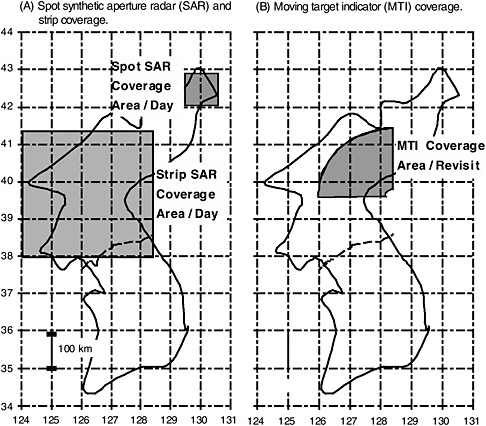
FIGURE 7.9 Global Hawk radar provides massive amounts of intelligence, surveillance, and reconnaissance data. NOTE: SAR, synthetic aperture radar; MTI, moving target indicator. SOURCE: Department of Defense.
-
Increase the number of imagery and intelligence analysts analyzing the data, and
-
Increase the productivity of the analysts or provide some screenings of the data fed.
Continually increasing the number of analysts is an expensive approach that is unlikely to be successful in the long run, given the proliferation of ISR data sources. However, one cost-effective, short-term approach is network-centric or reach-back operations, in which analysts onboard different ships and at different shore locations remotely collaborate to analyze ISR data. This approach will require sufficient communications bandwidth. Under this approach, enabled by modern communications and networking capabilities (see the preceding major section, “Unmanned Aerial Vehicle Communications”), the Navy’s entire popu-
lation of analysts could, in principle, be focused on a particular operation or operations. The committee understands that the Navy is evolving in this direction with the deployment of a Fleet Imagery Support Team at a location in the continental United States. The committee strongly endorses this development and urges its logical progression to a full implementation of joint, network-centric ISR exploitation and targeting. In developing this requirement, information push to users could be exploited to the maximum extent to permit parallel exploitation and time-critical targeting using ISR data.
Although network-centric operations can increase the effective number of analysts available to support a given operation, increasing levels of automation will be necessary in the long run to increase the productivity of these analysts. Also, an integrated approach is needed for onboard processing, reach-back operations, SATCOM capability, Transformational Communications System, and antennas. There has been a major investment by DARPA, ONR, and the R&D components of the other Services and the intelligence agencies in such technologies as the following:
-
Image registration,
-
Target detection,
-
Automatic feature extraction,
-
Change detection,
-
Video object recognition and tracking,
-
Automated target cueing,
-
Automatic target recognition,
-
Automatic battle damage assessment,
-
GMTI tracking, and
-
Multisensor fusion.
The problems being addressed are important and truly difficult, so a sustained, long-term R&D investment in these and related technologies is necessary. However, the committee believes that technologies for automated exploitation of ISR data are sufficiently mature to provide useful support to analysts and to benefit from real-world feedback. It therefore concludes that the Navy can more aggressively pursue the operational insertion of these technologies.
Conclusions Concerning Intelligence, Surveillance, and Reconnaissance and Unmanned Aerial Vehicles
Working with the DOD and the other Services, the Navy needs to develop a robust, joint, network-centric environment for exploitation and time-critical targeting using UAV and other ISR data. This environment needs to permit real-time collaboration by geographically dispersed analysts to maximize their utiliza-
tion. To minimize time delays, a “task, post, process, use” (TPPU) approach in which data are pushed in parallel to users with a time-critical need and to intelligence analysts can be used in preference to a “task, process, exploit, disseminate” (TPED) approach in which users only obtain critical data after exploitation. To facilitate implementation of this environment, the Navy can actively participate in DOD activities developing standard data formats for ISR products to permit networked exploitation in a vendor-neutral environment.
The Navy needs a strong research effort focused on the development of automated tools for image registration, target detection, feature extraction, change detection, video object recognition and tracking, target recognition, automatic damage assessment, GMTI tracking, multisensor fusion, and other technologies for the exploitation of ISR data. As tools mature, the Navy can aggressively seek to insert them into operational systems, making sure that researchers are involved in these efforts to obtain real-world feedback.
INTEROPERABILITY ISSUES FOR AUTONOMOUS VEHICLES
In the context of emerging 21st-century battlespace operations, systems are interoperable if users can easily and confidently make them work together in reasonable combinations that have never been tried before. With enough application-specific interface boxes, one can make almost anything interact (to some limited extent) with anything else. From an operational perspective, interoperability problems show up when warfighters try to do something innovative, reasonable, and useful, and it does not work (for whatever reason). If the Navy is to take maximum advantage of autonomous vehicles to support its future operations, there will be many such vehicles of many types, and they will need to work together effectively, preferably in any reasonable ad hoc combination. Human attention is already a scarce and precious resource in military operations; interoperable systems reduce the human attention required to accomplish a mission, while systems that interoperate poorly increase it. Hence, a goal for autonomous vehicles will be that they can interoperate—not only communicating data that they collect but, eventually, coordinating objectives and tasks. Highly autonomous systems must be able to interoperate with each other as well as with their human supervisors. These goals are still distant, but they provide an important reference for current activities.
Systems may fail to interoperate today at many technical levels: they may be unable to interconnect physically because they use different connectors or different frequencies, they may be unable to exchange information because they use different modulation formats, or they may be unable to communicate effectively because they speak different languages at any one of several levels of communication protocols. Perhaps the greatest success of Internet technology is the agreement on one single, intermediate-level protocol suite—known as Transmission
Control Protocol/Internet Protocol (TCP/IP)—that has facilitated the end-to-end interoperability, from a communications networking perspective, of a wide variety of devices that feature different physical interconnection formats and different communication protocols at many levels. However, the ability to transport IP packets successfully, end-to-end through a network, is only one factor in achieving end-to-end application viability. Furthermore, even the end-to-end interoperability of heterogeneous networks that employ IP and the interoperability of computers that employ TCP on an end-to-end basis could be jeopardized by the employment of some proposed mechanisms within networks to manage quality of service provided by communications networks.
This section develops and describes the committee’s conclusions in the area of creating interoperable systems of AVs. One major area of concern is the interoperability of communications and control systems. During Operation Iraqi Freedom, a wide variety of communications equipment in use led to information overload (when information was received over too many different networks) and at the same time to a need to hop-scotch among different, noninteroperable systems at moments when either of the communicating parties had different subsets of equipment available or some systems could communicate successfully and others could not. These problems reportedly caused tactical imagery provided by Dragon Eye to be rendered useless to headquarters in several cases because of its late delivery.
AV control-system interoperability and the need to establish common architectures for the control of AV systems were recognized as an issue by the committee. Control systems will, appropriately, evolve separately for vehicles designed for different environments; yet a continuing oversight and, to some extent, coordination of these architectures is perhaps the only way to prevent future interoperability problems among them.
A second major area of concern for interoperability is that of trust. This term is used to incorporate concerns about the integrity, availability, and confidentiality of data and control signals passed between AVs and to humans, perhaps from many different nations in a coalition operation. A particularly critical control signal, and one that will require human-in-the-loop trust for the foreseeable future, is the authorization to release weapons. To achieve interoperability, from the perspective of warfighters who use network-based applications (e.g., AVs), one must demonstrate that the same level of trust that has been determined (by design and testing) to exist when “standard” combinations of systems are used together will also be present when systems are used together in ad hoc combinations by these warfighters. There is a big difference (both from the point of view of design principles, and from the point of view of usefulness to warfighters) between systems that have been determined to be trustworthy in certain combinations and systems that have been designed and proven to be trustworthy in ad hoc combinations.
In addition, the committee is concerned with the trustworthiness of AV systems themselves as they increasingly operate in the same spaces where manned systems are operating. It is highly likely that some form of certification will be required for these systems. The Predator system has bypassed these concerns, successfully using commercial airports in several countries, but only by having a human pilot operating the aircraft from the ground. This level of human-intensive control seems an unlikely long-term path for UAV development. UAV developers are addressing this problem, working among themselves and with the Federal Aviation Administration to agree on viable approaches, but there is much to be done. It is worth noting that a principal disincentive today for the deployment of more highly automated, and almost certainly more effective accident-avoidance systems in the context of commercial and private automobiles, is concern about how such systems may affect vendor liability. These concerns are likely to be manifest in all AV domains eventually, and only when such systems can be in some way certified to be trustworthy will they gain widespread use.
Communications Issues as Constraining Factors on Interoperability
A system that interoperates with another successfully at the protocol and even the human-interface level may fail if it imposes an unacceptable resource burden on whatever it is interoperating with. UAVs conducting persistent ISR may manifest this problem, since today’s sensors can generate data at a substantial rate; future hyperspectral sensors will only increase this rate. The committee understands that some officers have been unwilling to accept downlinks from such UAVs because they could saturate the bandwidth available to the ship. Adequate satellite communications, either military or commercial, are needed to meet this challenge. The Navy is learning how to structure its communications environment so that ships can retrieve needed imagery quickly and effectively from shore-based archives that receive the data from UAVs and other sources.
Other potential bandwidth bottlenecks that may affect UAV interoperability include the umbilical link (if any) between the UAV and suitable relay points, either for transferring data from the UAV or for relaying sensor and control information. As the number of UAVs increases, communications may also be limited by the aggregate capacity of shared relay nodes or of shared, high-capacity wireless backbone trunks, both terrestrial and satellite. To address these issues, UAV systems engineering must integrate network capacity planning with ISR platform planning throughout the DOD. Interoperability is achieved only through effective systems engineering that takes both the human and automated aspects of the system into account.
Today’s networks lack adequate network-management technologies and methodologies to support the effective use of a shared battlespace network by a diverse set of applications, including plaintext messaging, real-time control, imagery transport, and others. These applications exhibit diverse requirements for
latency, bandwidth, and priorities. This network-management problem is shared by the commercial cellular industry, which is in the process of upgrading its networks to support applications such as e-mail, Web access, audio, and video streaming on a common cellular platform that also supports telephones. The commercial cellular industry has at stake tens of billions of dollars of investments in spectrum acquisition and hundreds of billions of dollars in market capitalization, and it is investing heavily in the development of solutions for managing the efficiency of utilization of its networks while providing the right kinds of heterogeneous qualities of service that its customers may demand (and be willing to pay for). Since the cellular industry does not know how customers will actually use these emerging “third-generation” cellular networks and what different types of services they will demand (and be willing to pay for), it faces essentially the same set of network-management challenges as the Navy and the rest of DOD faces. Thus, commercial industry is a source of network-management technologies and methodologies that can be used by the DOD as they emerge.
Trust as a Constraining Factor on Interoperability
Because it has proven exceedingly difficult to ensure that a piece of computing equipment can successfully separate users cleared at some level from information classified above that level, we live in a world of military systems that are significantly replicated and segregated by security level. The introduction of AVs into this world (e.g., whether a sensor is carried by a U-2 or a Global Hawk) may not seem to raise new issues, since the sensors onboard the U-2 are already controlled from the ground and the integrity and confidentiality of the data transmitted are cryptographically protected. However, prototype AVs are often developed without protection of their control signals, simply because they are prototypes. If these prototypes are pressed into field service, these links will be vulnerable. In the information-assurance world, the concept of establishing a “trusted path” to the computers that control the AV should be adhered to. The inability to establish a trusted path between systems exchanging sensitive information can prevent their interoperation.
The ability of UAVs to collect very large volumes of data during a long mission, combined with limits on downlink bandwidth and even on human capacity to analyze images, may lead to designs in which flying image archives are queried by diverse groups of users. These users may even be members of coalitions with different interests and clearances. This scenario would, in effect, require an autonomous, multilevel image archive, capable of authenticating users. Further, if the UAV carrying the archive were shot down, the data in the archive would need to be protected against enemy exploitation.
UAVs must be recognized as software-intensive systems. As such, particularly as their utility increases, they may be seen by opponents as potential targets of cyberattacks. Even in the area of real-time control, there is a great financial
incentive today to embrace commercial off-the-shelf software. If the software is proprietary, it may be difficult to ensure that its production has not been compromised. Even if the source code is available, ensuring that the software is free of security-relevant flaws has proven an extremely challenging task. Again, prototype UAVs may be developed without taking these issues into account, but pressing such prototypes into service when they are seen to provide a valuable function means accepting a level of risk that the fielded prototype could be subverted, which may again limit their interoperability.
Conclusions Concerning Interoperability Issues
Interoperability is not something that the Navy can achieve unilaterally; it must be achieved working in partnership with the DOD and the other Services. In the near term, the Navy needs to carry out the following:
-
Adopt and adapt emerging, commercial “third-generation” wireless network-management technologies and methodologies for managing quality of service in a mixed-application wireless networking environment;
-
Integrate network capacity planning with ISR platform planning;
-
Ensure that UAV designs anticipate requirements to support payloads that may operate at a variety of security levels; and
-
Ensure that the integrity and authenticity of UAV control signals are protected against cyberattacks, including attacks targeted at software development processes.
Over the longer term, the Navy needs to do the following:
-
Create an interoperability policy that has teeth (funding control) and that takes into account the need to modify business and contractual relationships with suppliers in order to make interoperability feasible from a business perspective, and
-
In development of interoperability polices, include the consideration of issues of establishing trusted paths to UAVs (e.g., for vehicle control and for weapons-release authorization).
UNMANNED SPACE SYSTEMS
In 1957, the Soviet Union launched Sputnik, a small, unmanned space vehicle (or satellite), which circled Earth emitting a simple radio beacon signal. That signal was heard around the world, setting off the race to conquer space. President Dwight Eisenhower, recognizing both the promise and threat that space systems posed for the United States, created a new defense agency, the Advanced Research Projects Agency (ARPA), whose sole mission was to prevent techno-
logical surprise. The first directive given the new agency by President Eisenhower was to initiate space R&D programs for both unmanned and manned space systems that would enable the United States to catch up with and surpass the Soviet Union in the exploitation and use of space. In the first year, ARPA created and focused development efforts in communications satellites with the Army, navigation satellites with the Navy, and reconnaissance satellites with the Air Force and the Central Intelligence Agency. Today the United States benefits from intelligence, surveillance, reconnaissance, navigation, and communications functions all based on unmanned space vehicles or satellites. These unmanned space systems—all descendants of these early unmanned space systems—have not only lived up to their initial promise, but far exceed the wildest dreams of their visionary creators.
The U.S. military continues to expand the use of space systems for tactical military purposes. This was clearly evident in Operation Iraqi Freedom, during which the U.S. military’s use and dependence on spaceborne systems affected every operation and did so in a nearly transparent fashion. When asked about the importance of space systems to him, one soldier was quoted as saying, “I do not need any space systems. All I need is my M-16 and my Pluger” (the Army’s GPS receiver unit for dismounted soldiers).
The Navy’s use of unmanned space systems in Operation Iraqi Freedom ranged from GPS navigation of ships, aircraft, and Marines; to fleet and over-the-horizon satellite communications; to the exploitation of national ISR capabilities supporting reconnaissance, targeting, and bomb damage assessment. Over 25 percent of U.S. air-delivered munitions relied on GPS for guidance.
Today, space systems are limited by the ISR coverage and responsiveness they provide to the tactical users. Although there was a large use of space ISR in Operation Iraqi Freedom, there is still much room for improvement. The brownout conditions caused by sandstorms highlighted the importance of all-weather sensors, since optical sensors were blinded by the sandstorms. U.S. warfighters found that the Joint Surveillance Target Attack Radar System (JSTARS) ground moving targeting radar sensors were able to keep operating and provided key indications of Iraqi fedayeen troop movements under the supposed cover of the sandstorm. This constant vigilance enabled by all-weather radar sensors enabled U.S. troops to engage the enemy while still moving during the brownout, thus delivering a decisive and tremendously debilitating blow. Other examples of the importance of real-time surveillance and imagery were evident throughout the Iraqi theater. Being able to provide this kind of timely awareness of adversaries throughout a theater will be key to any future battles in which the size and scale of the country is not so constrained.
Future conflicts might also see the increased use of systems designed to counter imagery, navigation, or other space assets. Iraq also displayed systematic use of activity scheduling, which was not always successful in the movement of banned equipment around the country before the war began. This weakness in
U.S. space systems is due to the predictability of the orbits of the nation’s satellites and constrained by the limited amount of fuel onboard, such that maneuvering a satellite to reduce predictability is not an option.
Autonomy in Space
Future space systems concepts are being developed by DARPA and the National Aeronautics and Space Administration (NASA) to provide unmanned routine access to satellites for refueling, repair, and systems upgrade. This post-launch access will allow the refueling of satellites so that they can be maneuvered, upgraded, or repaired. Such new capabilities will enhance the utility and reduce the life-cycle cost of U.S. space systems. For example, it may be possible to cut the costs for unmanned space operations through the use of an on-orbit, unmanned servicing infrastructure to extend useful satellite life. Presently, satellites are deorbited, and all hardware onboard is destroyed at the end of useful life. Expensive items such as optics, motors, and various subsystems are discarded, and the high cost of launching a replacement spacecraft is incurred. The replenishment of “commodities” such as fuel and the replacement of some spacecraft components while on orbit may provide significant life-cycle cost savings and enable spacecraft to be upgraded rather than hurtling toward obsolescence immediately after their use. These commodities would be delivered to orbit via low-cost, mass-produced launchers in order to realize very low cost to orbit; robotic space “tugs” would deliver the commodities to operational spacecraft. The ability to refuel spacecraft also provides a tremendous new capability for military spacecraft and enables them to turn vulnerability into strength by reversing their vulnerability and predictability. One can envision future Navy systems that are able to optimize orbits to provide tactical surprise or optimize coverage for a particular theater on a continuing basis.
Space-Based Radar
Another program that could hold great benefits for Navy and Marine Corp systems is the Space Based Radar program.8 This transformational Air Force/National Reconnaissance Office program is designed to achieve theaterwide persistent situational awareness by a combination of ground movement surveillance via GMTI radar and reconnaissance imagery via SAR. The system as envisioned would consist of a constellation of radar satellites, which would provide constant worldwide coverage of multiple theaters of interest around the globe.
|
8 |
For additional information, see the Web site <http://www.losangeles.af.mil/smc/pa/fact_sheets/sbr.htm>. Last accessed on April 1, 2004. |
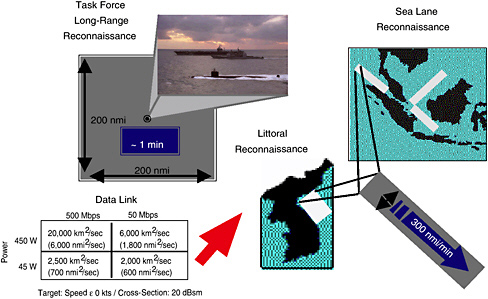
FIGURE 7.10 Space-based radar could provide a powerful capability for maritime surveillance. SOURCE: David Whelan, Discoverer II Program, Defense Advanced Research Projects Agency, 1999.
This space-based radar (SBR) is currently being designed with ground surveillance in mind, but its potential for ocean surveillance is equally promising (Figure 7.10). A system designed to track ground vehicles at slow speeds in various terrain environments could also be designed to measure small to medium-sized vehicles. Continuous low-power radar modes could allow a system, designed for limited radar operation time per orbit on smaller ground targets, to operate searching and tracking of larger ocean vessels in a continuous fashion during the systems nominal downtime. This way, the system could collect broad-area surveillance data while traversing open oceans, with little impact on its land surveillance functions and missions. Likewise, considerable Navy experience and expertise with radar sea clutter modes could enhance the SBR system’s performance in littoral environments. Such missions can typically be integrated into a system design early in a program with reasonable impacts on overall system design, but if they are not integrated in the program’s early phases, it can be difficult and expensive to attempt integration later.
Early involvement by Navy and Marine Corps personnel in the Air Force/ NRO program could present a tremendous opportunity for the Navy to get its truly global surveillance needs and future requirements integrated into the SBR system.
Conclusions Concerning Unmanned Space Systems
To enhance its capabilities for Broad Area Maritime Surveillance (BAMS), the Navy could negotiate a Memorandum of Agreement with the Air Force to integrate ocean surveillance modes into the Space Based Radar program. The Navy could develop and exercise connectivity and systems to exploit SBR surveillance data and to plan and control SBR maritime surveillance missions, and it could work with unified combatant commanders to develop plans and procedures for obtaining access to SBR resources when required.
CONCLUSIONS AND RECOMMENDATIONS
FORCEnet
It is necessary for the Navy to develop an adequately funded FORCEnet implementation plan and management structure in order to coordinate with the Office of the Secretary of Defense (OSD) and other Services with respect to requirements and interoperability; to support the Office of the Secretary of Defense (Networks and Information Integration) (OSD(NII)) in its Transformational Communications efforts, including providing the necessary connectivity to the Global Information Grid-Bandwidth Expansion (GIG-BE) and Transformational Communications System; and to conduct the necessary systems engineering, assign requirements to Navy platforms, and provide funding for satisfying these requirements.
Exploiting Unmanned Aerial Vehicle-Derived Intelligence, Surveillance, and Reconnaissance Imagery
The committee finds that to facilitate the exploitation of unmanned aerial vehicle data, it is necessary to develop a robust, joint, network-centric TPED/ TPPU environment, employing standard data formats for ISR products to permit networked exploitation. Research needs to be focused on the development of automated tools for tracking, fusion, automatic target recognition, and sensor management. Emerging tools need to be deployed in a spiral development approach so as to benefit from available capabilities and to provide feedback to researchers.
In addition, the current challenges in the exploitation of autonomous vehicle ISR information, coupled with the expected future explosion in ISR information generation by autonomous vehicles, require the development of a new approach to mitigate ISR analyst saturation. Today’s command, control, communications, computers, intelligence, surveillance, and reconnaissance (C4ISR) systems and the autonomous vehicle control systems that they task are loosely coupled. Furthermore, a tight vertical integration of autonomy capability, between the com-
mand-and-control system and the autonomous vehicles they will task and control, is needed for future autonomous vehicle development. This will enable more effective, survivable, and affordable autonomous vehicles that can respond with agility to rapidly changing conditions in order to enable capabilities, such as the following:
-
Route deconfliction with other vehicles operating in the same space,
-
Exploitation and prosecution of targets of opportunity,
-
Reduction in the number of “friendly fire” incidents,
-
Real-time, command-level retasking to higher-priority objectives, and
-
Rapid response to system failures that impact mission objectives.
Control and Interoperability of Unmanned Aerial Vehicles
An interoperability policy with “teeth” (funding control) is required that takes into account the need to modify business or contractual relationships with suppliers in order to make interoperability feasible from a business perspective. In the development of interoperability policies, the consideration of issues of establishing trusted paths to unmanned aerial vehicles (e.g., for vehicle control and for weapons-release authorization) is needed.
It is necessary to support ongoing DOD efforts to define standards and protocols for UAV control—in particular, the UAV Planning Task Force and the UAV Interoperability Integrated Product Team. To cope with the increasing complexity of UAV missions and to take full advantage of the potential for reduced manning, an aggressive research program in intelligent autonomy is required. This effort can be conducted in coordination with the efforts of the Defense Advanced Research Projects Agency and the Air Force.
The committee finds that the achievement of the Naval Services’ future vision requires the standardization of interfaces, protocols, and the development of common architectures for autonomous vehicle communications and control.
Space
The Department of the Navy needs to expand its initial interaction and involvement in the Space Based Radar program. To enhance its capabilities for Broad Area Maritime Surveillance (BAMS), the Navy needs to negotiate a Memorandum of Agreement with the Air Force to integrate ocean surveillance modes into the space-based radar (SBR). The Navy could develop and exercise connectivity and systems to exploit SBR surveillance data and to plan and control SBR maritime surveillance missions, and it could work with unified combatant commanders to develop plans and procedures for obtaining access to SBR resources when required.
Recommendations Concerning Network-Centric Operations
Recommendation: The Assistant Secretary of the Navy for Research, Development, and Acquisition (ASN(RD&A)) should formulate and execute a comprehensive plan to eliminate or significantly mitigate deficiencies in command, control, communications, computers, intelligence, surveillance, and reconnaissance systems equipment and infrastructure, including communications bandwidth, that now limit the use of modern intelligence, surveillance, and reconnaissance (ISR) systems for autonomous vehicles. Specifically:
Develop an Adequately Funded FORCEnet Implementation Plan. The Chief of Naval Operations (CNO) and the Commandant of the Marine Corps (CMC) should coordinate an adequately funded FORCEnet implementation plan and management structure to interact with the Office of the Secretary of Defense and other Services on the requirements and interoperability necessary to support network-centric operations.
Facilitate Exploitation of Unmanned Aerial Vehicle Data. The CNO and the CMC should take measures to facilitate the exploitation of unmanned aerial vehicle (UAV) data by developing a robust, joint, network-centric “task, process, exploit, disseminate/task, post, process, use” (TPED/TPPU) environment, utilizing standard data formats for ISR products to permit distributed exploitation. Automatic target recognition-like techniques should be explored so as to more rapidly screen large volumes of electro-optical/infrared and synthetic aperture radar imagery generated by ISR UAV systems such as the Global Hawk. The Naval Network Warfare Command and the Space and Naval Warfare Systems Command should implement an organizational structure and a systems development approach that promotes a tighter vertical integration of command-and-control systems (e.g., C4ISR) with the autonomous vehicle control systems that they task.
Define Standards and Protocols for Unmanned Aerial Vehicle Control. The ASN(RD&A) should continue to support ongoing Department of Defense efforts to define standards and protocols for unmanned aerial vehicle control, in coordination with the efforts of the Defense Advanced Research Projects Agency and the Air Force.
Expand Involvement in the Space Based Radar Program. The Department of the Navy should expand its initial interaction and involvement in the Space Based Radar program to determine if that program is in the best interest of the Navy in terms of satisfying the Navy’s ocean surveillance requirements. Communications connectivity and analysis systems necessary to exploit space-based radar (SBR)
surveillance data and to plan and control SBR maritime surveillance missions should be given particular consideration. The CNO should direct liaison with both the Joint Staff (in particular, J6—Joint Staff experts on command, control, communications, and computers) and the unified combatant commanders in order to develop plans and procedures for obtaining access to SBR resources if required.


