9
An Agenda for Change
Summary
Much is known about ways to improve the quality of health care for mental and substance-use conditions. Nonetheless, as discussed throughout this report, gaps remain in our knowledge—for example, with regard to providing care in some clinical situations and for some populations, as well as ensuring that the treatments produced by research are actually received by and effective for the people who need them. In particular, as discussed in Chapter 4, research that has identified the efficacy of specific treatments under rigorously controlled conditions has been accompanied by almost no research identifying how to make these same treatments effective when delivered in usual settings of care and in the presence of common confounding problems, such as comorbid conditions and social stressors, and when administered by service providers without specialized education in the therapy. In addition, there are many gaps in knowledge about effective treatment, especially for children and adolescents. Also noted in Chapter 4 is the paucity of information about the most effective ways of ensuring the consistent application of research findings in routine clinical practice. To fill these knowledge gaps, the committee recommends the formulation of a coordinated research agenda for quality improvement in M/SU health care, along with the use of more-diverse research approaches.
Implementing these research recommendations, as well as undertaking the multiple actions recommended in previous chapters, will require concerted efforts on the part of participants at every
level of the health care system—clinicians; health care organizations; health plans and payers; regulators, lawmakers, and other policy makers; accrediting organizations; educational institutions; and all those who shape the environment in which care is delivered. The preceding chapters present recommendations for all these parties organized according to the problems addressed. This chapter concludes by presenting those recommendations separately for each party. From this latter perspective, the recommendations form an agenda that can be pursued at each level of the health care system to improve the quality of M/SU health care.
KNOWLEDGE GAPS IN TREATMENT, CARE DELIVERY, AND QUALITY IMPROVEMENT
Previous chapters of this report have identified gaps in our knowledge about how best to treat certain mental and/or substance-use (M/SU) problems and illnesses; how best to treat these conditions when the patient’s and treating provider’s resources and environments do not match those of the researchers developing the treatment; and how to ensure that evidence-based practices identified through research are applied uniformly to all those patients for whom they are appropriate. Filling these knowledge gaps will require that the finite available research dollars be used strategically and coordinated across funders. Also necessary will be a thoughtful approach to the more rapid generation of valid and reliable evidence of practical use to treating clinicians in their usual settings of care.
Gaps in Treatment Knowledge
The numerous gaps in our knowledge about how to treat M/SU problems and illnesses encompass effective treatments, effective delivery of known treatments, and ways to improve care quality. A few examples of each of these knowledge gaps are discussed below.
Gaps in Knowledge About Effective Treatments
Treatment of multiple conditions Despite the high degree of comorbidity of mental and substance-use conditions, as described in Chapter 5, and the great strides made in understanding the relationship between co-occurring mental and substance-use problems and illnesses, little is known about the etiology and temporal ordering of these comorbidities (SAMHSA, undated). There also is a substantial lack of knowledge about effective treatment for individuals with certain complex comorbidities, such as schizophrenia and concurrent mood disorders (Kessler, 2004) and comorbid general health conditions (Kane et al., 2003).
Optimal pharmacotherapy for psychosis Unanswered questions include which antipsychotic medication should be the first line of therapy, what constitutes a sufficient period of time to determine whether a new medication is effective, how to handle poor response to the initial prescribed medication (Kane et al., 2003), and how the dosing of combination antipsychotics should be managed in the presence of increased symptoms or side effects. Moreover, multiple antipsychotic medications are used in the absence of evidence on their combined efficacy (Miller and Craig, 2002).
Medication treatments for certain substance dependencies No medications have yet shown effectiveness in the treatment of amphetamine or marijuana dependence.
The prevention and treatment of posttraumatic stress disorder (PTSD) Although PTSD has been recognized for centuries as a frequent consequence among those engaged in warfare (often under different names, such as “shell shock”), high rates of trauma and its adverse mental health sequelae also are experienced by significant portions of the general population—for example, as a result of childhood neglect and abuse; rape and other physical assaults or acts of personal violence; life-threatening or other serious accidents; and mass trauma affecting populations, such as through acts of terrorism, war, and natural disasters (Mueser et al., 2002; National Center for Post Traumatic Stress Disorder, 2005). Some types of psychotherapy (i.e., trauma-focused cognitive behavioral/exposure therapy for individuals and groups, and stress management) have been found to be effective in treating PTSD (Bisson and Andrew, 2005), as have some medications (Stein et al., 2005). Nonetheless, gaps remain in our knowledge of how to prevent PTSD from developing after trauma, what the risk factors are for PTSD (Rose et al., 2005; Work Group on ASD and PTSD, 2004), and how to treat the condition once it develops. With respect to treatment, for example, more knowledge is needed about what drugs and drug classes are most effective; which patients will respond best to medication (Stein et al., 2005); how best to combine pharmacotherapy and psychotherapy; and how to relieve some specific symptoms, such as insomnia or nightmares, by themselves and in the presence of other symptoms requiring medication (Work Group on ASD and PTSD, 2004). Moreover, although cognitive and behavioral therapies have demonstrated efficacy in treating victims of sexual assault, interpersonal violence, and industrial or vehicular accidents, their effectiveness in treating PTSD in combat veterans and victims of mass violence requires further study (Work Group on ASD and PTSD, 2004).
Therapies for high-prevalence childhood conditions While there has been an impressive increase in the number and quality of studies of effective
therapies for children, major gaps remain in our knowledge in this area. For example, despite the increasing use of psychotropic medications, little is known about the effect of multiple medications on children’s outcomes or about the efficacy of different therapies for severe conditions (e.g., bipolar disorder, childhood depression) (Kane et al., 2003). Insufficient evidence exists to guide follow-up and long-term management of attention deficit hyperactivity disorder (ADHD), despite its being considered a chronic condition (Stein, 2002). There also is very limited knowledge about treatments for co-occurring conditions in childhood.
Therapies for other population subgroups There is little evidence on the effectiveness of treatment modalities for certain subgroups of patients, such as racial and ethnic minorities, as well as the frail elderly (Borson et al., 2001).
Relative effectiveness of different treatments (alone and in combination) More than 550 psychotherapies are currently in use for children and adolescents, but little helpful information exists for clinicians or consumers on their comparative effectiveness (Kazdin, 2004). As in other areas of health care, the Food and Drug Administration’s drug approval rules offer little incentive for head-to-head clinical trials (Pincus, 2003), and there is a lack of substantial capital investment in the development and testing of psychosocial approaches. Moreover, our knowledge about the optimal use of combination treatments (e.g., medications and psychotherapies) is limited.
Prevention studies Large gaps remain in our knowledge about how to prevent M/SU illnesses.
Gaps in Knowledge About Effective Care Delivery
In addition to the above gaps in our knowledge of effective treatments, there is a profound lack of knowledge on the effective delivery of treatments already known to be efficacious. Chapter 4 describes the efficacy–effectiveness gap that exists in M/SU health care. That discussion demonstrates that there has been more research on the efficacy of specific treatments than on how to make these treatments effective when delivered in usual settings of care (Essock et al., 2003; Kazdin, 2004). Other chapters of this report identify gaps in our knowledge about additional health care delivery issues that affect the ability to make effective use of what is already known, as well as the ability to meet the quality aims and apply the rules for care set forth in the Quality Chasm report (IOM, 2001) (see Chapter 2).
Providing patient-centered care Knowledge is lacking about what factors contribute to patient recovery; how to prevent discrimination in health
care and related social programs; how best to support patients’ decision-making abilities; and how best to implement illness self-management programs for individuals with M/SU conditions (see Chapter 3).
Preventing unintentional discrimination by health care providers Research is needed on practitioner attitudes toward patient-centered care, how to nurture supportive attitudes in professional training, and how language and wording used to describe M/SU illnesses may contribute to stigmatizing attitudes (see Chapter 3).
Potential modification of certain public policies Research is needed to evaluate the effectiveness of polices such as those that restrict access to student loans and impose a potential lifetime ban on food stamps and Temporary Assistance for Needy Families (TANF) benefits as a result of drug convictions, in particular their effect on patient recovery and subsequent drug use (see Chapter 3).
Coercion into treatment Research is needed on how determinations of competence and dangerousness are made, and on how best to minimize the use of coercion and use it most effectively when it is unavoidable. In mental health care, “little hard information exists on the pervasiveness of the various forms of mandated treatment for people with mental disorders, how leverage is imposed, or what the measurable outcomes of using leverage actually are” (Monahan et al., 2003:37). With respect to the use of coercion in substance-use treatment, research is likewise needed to determine the effects, both positive and negative, of various mechanisms of coercion, of drug courts, and of the use of treatment conditions in probation and parole. Empirical data will not answer questions about the legitimacy of these approaches, but to the extent that their consequences are known, such data can inform normative discussions. Data may also be useful in identifying means of avoiding involuntary interventions, whether by improving services that can be accessed voluntarily or working collaboratively with patients to identify acceptable alternative interventions (see Chapter 3).
Understanding decisional capacity among people with substance-use illnesses The available data on decisional capacity among persons suffering from substance-use illnesses are meager; however, recent years have seen a move to reverse that trend. There is a need for research using standardized instruments, such as the Mac-CAT-T, that take into account the possible effects of associated physical and mental (e.g., depression, delirium) illnesses and involve repeat assessments during periods of sobriety. A careful evaluation of decisional capacity to consent to treatment is warranted in these patients.
Demonstrations of illness self-management programs Demonstrations of programs for illness self-management for individuals with M/SU illnesses are needed (see Chapter 3).
Gaps in Knowledge About How to Improve Quality
As discussed in Chapter 4, many published reports on successful quality improvement initiatives clearly show that it is possible for organizations to improve the quality of their health care (Shojania and Grimshaw, 2005). Yet little evidence exists about the most effective ways to ensure the consistent application of research findings in routine clinical practice (Shojania et al., 2004). Still less evidence exists about how to do so across the diverse clinicians, organizations, and systems delivering M/SU health care.
Shortcomings in Public Policy
Gaps in knowledge about treatment, the effectiveness of care delivery, and mechanisms and processes for improving quality all lead to shortcomings in public policy for the management of M/SU care. These shortcomings are reflected throughout this report and need to be redressed. Thus research to fill the knowledge gaps described above must result in an agenda that supports and informs policy.
Improved treatment models that support patient-centered care by involving patients in treatment choices (see Chapter 3) will necessitate changes in the structure and delivery of M/SU care. Purchasing decisions that are based on established and common outcomes, guided by market incentives, and driven by quality measures (see Chapters 4 and 8) will also serve as leverage for the needed changes. The structure of public policy will be impacted as well by efforts to address the M/SU workforce issues discussed in Chapter 7.
Thus while the committee recommends a coordinated research agenda and a diversity of research approaches (see below), a central theme must also be the impact on public policy. In addition, research must continually address the shortcomings in public policy noted above and inform the purchasing, management, and delivery of systems of care. This need is applicable at all levels, including patients and families, microsystems of care, health care organizations, and the larger health care environment (Berwick, 2002).
STRATEGIES FOR FILLING KNOWLEDGE GAPS
The committee concludes that a coordinated and broadened program of research is needed to fill the gaps in knowledge and inform public policy
with regard to M/SU health care. Many public and private funders of research on M/SU health care have their own research portfolios and priority-setting processes. Unless these efforts are coordinated, important knowledge gaps and policy shortcomings may persist. A similar problem was addressed by the National Institutes of Health (NIH) when the incoming director convened a series of meetings in 2002 to chart a roadmap for medical research in the 21st century. The purpose was to identify major opportunities and gaps in biomedical research that no single institute at NIH could tackle by itself, but that required coordinated action by multiple institutes to best improve the progress of medical research. The resulting roadmap for research provides a framework of the priorities NIH as a whole must address to optimize its entire research portfolio and sets forth a vision for a more efficient and productive system of medical research (NIH, undated). A similar process cutting across health services and translational research conducted by the multiple public and private funders of M/SU research efforts could also be beneficial.
Concern has been raised that much of the research on M/SU that is funded, while methodologically pure, may be minimally relevant to those who shape much of M/SU health care delivery (Feldman, 1999). Funded research is at risk of continuing to generate more and more knowledge about efficacious treatments, but failing to examine implementation strategies for facilitating the delivery of these treatments to patients. While practical clinical trials have been encouraged in some of the NIH institutes, they often have focused on a limited set of conditions, rather than addressing the broader issues of quality improvement for a range of M/SU conditions. As a result, public policy practices, reimbursement arrangements, and other environmental factors that influence how care is delivered are not aligned so as to promote the delivery of effective care.
Thus in addition to clinical research, translational research and demonstration projects and activities are needed, for example, to:
-
Synthesize, develop, and demonstrate effective clinical practices for use in usual settings of care delivery on the basis of known efficacious treatments identified through clinical trials.
-
Explore and develop processes for providing M/SU expertise in general health specialist settings (e.g., cancer, cardiac, geriatric centers) to address general health and M/SU comorbidities.
-
Demonstrate and evaluate processes and procedures for providing appropriately coordinated and comprehensive care involving M/SU health care specialists; general health care specialists; patients and family members; and representatives of related social, educational, criminal justice, and other systems.
-
Test effective and reliable processes for disseminating to the broader health care field findings on practice guidelines, processes, and procedures that result from translational research activities.
-
Inform public policy; continually examine the overall impact of research findings on the purchasing, management, and delivery of care; and monitor fidelity with the findings of this report and the principles of the Quality Chasm report.
The committee believes the timely and efficient production of the evidence needed to address such a broad range of issues will require a research agenda that makes appropriate use of experimental, quasi-experimental, and observational approaches.
Research Designs
As discussed in Chapter 4, while well-designed, randomized controlled trials are recognized as the gold standard for generating sound clinical evidence, the sheer number of possible pharmacological and nonpharmacological treatments for many M/SU illnesses makes relying solely on such trials to identify evidence-based care infeasible (Essock et al., 2003). Moreover, some features of mental health care make the use of such trials methodologically problematic (Tanenbaum, 2003). For these reasons, behavioral and social science research has often used quasi-experimental as well as qualitative research designs (National Academy of Sciences, undated); indeed, some assert that quasi-experimental studies often are more useful in generating practical information about how to provide effective mental health interventions in some clinical areas (Essock et al., 2003). Consistent with this point of view, the U.S. Preventive Services Task Force notes that a well-designed cohort study may be more compelling than a poorly designed or weakly powered randomized controlled trial (Harris et al., 2001). Observational studies also have been identified as a valid source of evidence useful in determining aspects of better quality of care (West et al., 2002). However, others note the comparative weakness of these study designs in controlling for bias and other sources of error and exclude them from systematic reviews of evidence for the determination of evidence-based practices. Many researchers and methodologists already are considering strategies for addressing these difficult issues (Wolff, 2000).
As this study was under way, the National Research Council had established a planning committee to oversee the development of a broad, multiyear effort—the Standards of Evidence–Strategic Planning Initiative—to identify critical issues affecting the quality and utility of research in the behavioral and social sciences and education (National Academy of Sci-
ences, undated). The committee believes such discussions are critical to strengthening the appropriate use of all of the above types of research in building the evidence base on effective treatments for M/SU illnesses. However, the committee also believes that the methodologically sound use of these different research designs can produce empirical evidence useful for guiding initiatives to improve the delivery of M/SU care. The committee notes that care will continue to be delivered even in the absence of empirical evidence on the best (or better) ways of doing so; until further funding is made available for more rigorous (and more expensive) research designs, quasi-experimental and observational studies in usual settings of care can help inform improvements in care and its delivery.
Consistent with these conclusions, the committee makes the following recommendations.
Recommendation 9-1. The secretary of DHHS should provide leadership, strategic development support, and additional funding for research and demonstrations aimed at improving the quality of M/SU health care. This initiative should coordinate the existing quality improvement research efforts of the National Institute of Mental Health, National Institute on Drug Abuse, National Institute on Alcohol Abuse and Alcoholism, Department of Veterans Affairs, Substance Abuse and Mental Health Services Administration, Agency for Healthcare Research and Quality, and Centers for Medicare and Medicaid Services, and it should develop and fund cross-agency efforts in necessary new research. To that end, the initiative should address the full range of research needed to reduce gaps in knowledge at the clinical, services, systems, and policy levels and should establish links to and encourage expanded efforts by foundations, states, and other nonfederal organizations.
Recommendation 9-2. Federal and state agencies and private foundations should create health services research strategies and innovative approaches that address treatment effectiveness and quality improvement in usual settings of care delivery. To that end, they should develop new research and demonstration funding models that encourage local innovation, that include research designs in addition to randomized controlled trials, that are committed to partnerships between researchers and stakeholders, and that create a critical mass of interdisciplinary research partnerships involving usual settings of care. Stakeholders should include consumers/patients, parents or guardians of children, clinicians and clinical teams, organization managers, purchasers, and policy makers.
With respect to the above recommendation for the creation of research partnerships between researchers and stakeholders, the committee took note of some research–community partnerships already under way that can serve as models. Two such partnerships are described below.
Agency for Healthcare Research and Quality’s Integrated Delivery System Research Network
In 2000, the Agency for Healthcare Research and Quality (AHRQ) initiated the Integrated Delivery Systems Research Network (IDSRN) as a field-based research strategy to link the nation’s top researchers with some of the largest health care systems for the conduct of research on cutting-edge issues in health care on an accelerated timetable. IDSRN was developed to capitalize on the research capacity of and opportunities occurring within integrated delivery systems. The network creates, supports, and disseminates scientific evidence on what does and does not work in terms of data and measurement systems, organizational best practices related to care delivery, and diffusion of research results. It also provides a cadre of delivery-affiliated researchers and sites to test ways of adapting and applying existing knowledge. Each of the nine IDSRN partners has three unique attributes that make it particularly suited for time-sensitive research projects:
-
Data availability—IDSRN partners collect and maintain administrative, claims, encounter, and other data on large populations that are clinically, demographically, and geographically diverse.
-
Research expertise—IDSRN partners include some of the country’s leading health services researchers, with proficiency in quantitative and qualitative methodologies and expertise in emerging delivery system issues.
-
Management authority to implement a health care intervention—IDSRN partners have responsibility for managing delivery systems and are in a position to implement financial and organizational strategies with an evaluation component.
From 2000 through 2004, AHRQ’s commitment totaled nearly $20 million for 75 IDSRN projects (AHRQ, 2002). Although IDSRN is a model of a research network involving large, technologically rich health care organizations, it is instructive in considering how to develop a research network for M/SU health care. Many managed behavioral health care organizations have similar capacity with regard to data availability, research expertise, and management authority. Some already engage in partnerships with research organizations to address questions pertaining to such issues as utili-
zation, the parity of M/SU benefits, and the effects of integrated treatment of clinical care (Feldman, 1999).
Network for the Improvement of Addiction Treatment
The Network for the Improvement of Addiction Treatment, described in Chapter 4, is a university–treatment provider consortium that involves smaller and less technologically rich organizations. This model also could be replicated as a community laboratory for the conduct of translational research on M/SU care.
REVIEW OF ACTIONS NEEDED FOR QUALITY IMPROVEMENT AT ALL LEVELS OF THE HEALTH CARE SYSTEM
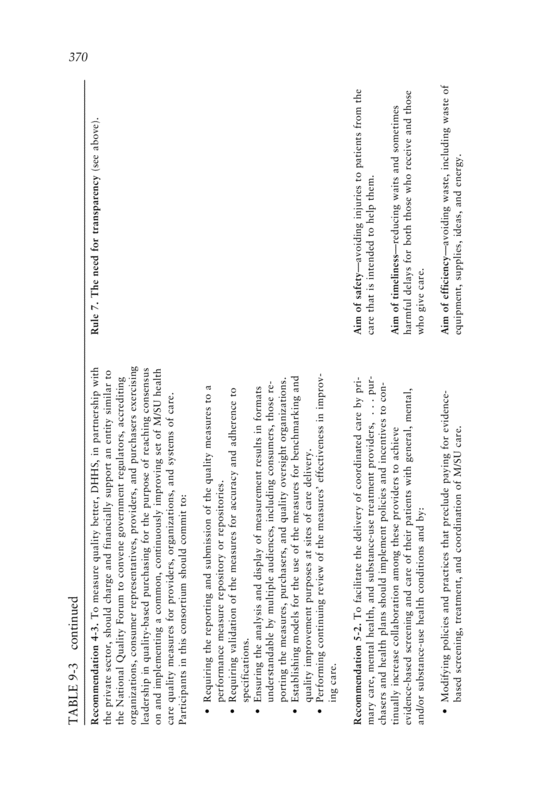
The committee’s recommendations call for action on the part of clinicians, health care organizations, purchasers, health plans, educational institutions, federal and state legislators and executive agencies, and many others. These recommendations are organized according to the entities charged with their implementation in Tables 9-1 through 9-8. Note that because many of the recommendations are relevant to multiple parties, they appear in more than one table. Also identified are the aims and rules from the Quality Chasm report supported by each recommendation.
TABLE 9-1 Recommendations for Clinicians
|
Action to Be Taken |
Relevant Quality Chasm Aims and Rules |
|
Overarching Recommendation 1. Health care for general, mental, and substance-use problems and illnesses must be delivered with an understanding of the inherent interactions between the mind/brain and the rest of the body. |
Rule 5. Evidence-based decision making—Patients should receive care based on the best available scientific knowledge. Care should not vary illogically from clinician to clinician or from place to place. Rule 8. Anticipation of needs—The health system should anticipate patient needs, rather than simply reacting to events. |
|
Overarching Recommendation 2. The aims, rules, and strategies for redesign set forth in Crossing the Quality Chasm should be applied throughout M/SU health care on a day-to-day operational basis, but tailored to reflect the characteristics that distinguish care for these problems and illnesses from general health care. |
All six aims and ten rules. |
|
Recommendation 3-1.a Clinicians providing M/SU treatment services should support the decision-making abilities, and preferences for treatment and recovery, of individuals with M/SU problems and illnesses by:
|
Aim of patient-centered care—Providing care that is respectful of and responsive to individual patient preferences, needs, and values and ensuring that patient values guide all clinical decisions. Rule 2. Customization based on patient needs and values—The system of care should be designed to meet the most common types of needs, but have the capability to respond to individual patient choices and preferences. |
|
Action to Be Taken |
Relevant Quality Chasm Aims and Rules |
|
Rule 3. The patient as the source of control—Patients should be given the necessary information and the opportunity to exercise the degree of control they choose over health care decisions that affect them. The health system should be able to accommodate differences in patient preferences and encourage shared decision making. |
|
Recommendation 3-2. Coercion should be avoided whenever possible. When coercion is legally authorized, patient-centered care is still applicable and should be undertaken by:
|
Aim of patient-centered care, and Rules 2 (customization based on patient needs and values) and 3 (the patient as the source of control) (see above). Rule 7. The need for transparency—The health care system should make available to patients and their families information that allows them to make informed decisions when selecting a health plan, hospital, or clinical practice, or choosing among alternative treatments. This should include information describing the system’s performance on safety, evidence-based practice, and patient satisfaction. |
|
Recommendation 4-2. Clinicians providing M/SU services should:
|
Aim of effectiveness—Providing services based on scientific knowledge to all who could benefit and refraining from providing services to those not likely to benefit (avoiding underuse and overuse, respectively). Also the other five aims (safety, patient-centeredness, timeliness, efficiency, and equity) and multiple rules. |
|
Recommendation 5-1. To make collaboration and coordination of patients’ M/SU health care services the norm, providers of the services should establish clinically effective linkages within their own organizations and between providers of mental health and substance-use treatment. The necessary communications and interactions should take place with the patient’s knowledge and consent and be fostered by:
|
Rule 4. Shared knowledge and the free flow of information—Patients should have unfettered access to their own medical information and to clinical knowledge. Clinicians and patients should communicate effectively and share information. Rule 8. Anticipation of needs (see above). Rule 10. Cooperation among clinicians—Clinicians and institutions should actively collaborate and communicate to ensure an appropriate exchange of information and coordination of care. |
|
Recommendation 5-2. To facilitate the delivery of coordinated care by primary care, mental health, and substance-use treatment providers:
|
Rules 4 (shared knowledge and the free flow of information) and 10 (cooperation among clinicians) (see above). |
|
Action to Be Taken |
Relevant Quality Chasm Aims and Rules |
|
Recommendation 5-3. To ensure the health of persons for whom they are responsible, M/SU providers should:
|
Rules 4 (shared knowledge and the free flow of information) and 10 (cooperation among clinicians) (see above). |
|
Recommendation 6-2. Public- and private-sector individuals, including organizational leaders in M/SU health care, should become involved in, and provide for staff involvement in, major national committees and initiatives working to set health care data and information technology standards to ensure that the unique needs of M/SU health care are designed into these initiatives at their earliest stages. |
Aim of efficiency—avoiding waste, including waste of equipment, supplies, ideas, and energy. |
|
aThe committee’s recommendations for quality improvement are numbered according to the chapter of the main text in which they appear. Thus, for example, recommendation 3-1 is the first recommendation in Chapter 3. |
|
TABLE 9-2 Recommendations for Organizations Providing M/SU Health Care
|
Overarching Recommendation 1. Health care for general, mental, and substance-use problems and illnesses must be delivered with an understanding of the inherent interactions between the mind/brain and the rest of the body. |
Rule 5. Evidence-based decision making—Patients should receive care based on the best available scientific knowledge. Care should not vary illogically from clinician to clinician or from place to place. Rule 8. Anticipation of needs—The health system should anticipate patient needs, rather than simply reacting to events. |
|
Overarching Recommendation 2. The aims, rules, and strategies for redesign set forth in Crossing the Quality Chasm should be applied throughout M/SU health care on a day-to-day operational basis, but tailored to reflect the characteristics that distinguish care for these problems and illnesses from general health care. |
All six aims and ten rules. |
|
Recommendation 3-1.a To promote patient-centered care, organizations providing M/SU treatment services should support the decision-making abilities and preferences for treatment and recovery of persons with M/SU problems and illnesses by:
|
Aim of patient-centered care—Providing care that is respectful of and responsive to individual patient preferences, needs, and values and ensuring that patient values guide all clinical decisions. Rule 2. Customization based on patient needs and values—The system of care should be designed to meet the most common types of needs, but have the capability to respond to individual patient choices and preferences. Rule 3. The patient as the source of control—Patients should be given the necessary information and the opportunity to exercise the degree of control they |
|
To ensure informed decision making, information on the availability and effectiveness of M/SU treatment options should be provided.
|
choose over health care decisions that affect them. The health system should be able to accommodate differences in patient preferences and encourage shared decision making. |
|
Recommendation 3-2. Coercion should be avoided whenever possible. When coercion is legally authorized, patient-centered care is still applicable and should be undertaken by:
|
|
|
Recommendation 4-2. Organizations providing M/SU services should:
|
Aim of effectiveness—Providing services based on scientific knowledge to all who could benefit and refraining from providing services to those not likely to benefit (avoiding underuse and overuse, respectively). Also the other five aims (safety, patient-centeredness, timeliness, efficiency, and equity) and multiple rules. |
|
Recommendation 5-1. To make collaboration and coordination of patients’ M/SU health care services the norm, providers of the services should establish clinically effective linkages within their own organizations and between providers of mental health and substance-use treatment. The necessary communications and interactions should take place with the patient’s knowledge and consent and be fostered by:
|
Rule 4. Shared knowledge and the free flow of information—Patients should have unfettered access to their own medical information and to clinical knowledge. Clinicians and patients should communicate effectively and share information. Rule 8. Anticipation of needs (see above). Rule 10. Cooperation among clinicians—Clinicians and institutions should actively collaborate and communicate to ensure an appropriate exchange of information and coordination of care. |
|
Recommendation 5-2. To facilitate the delivery of coordinated care by primary care, mental health, and substance-use treatment providers:
|
Rules 4 (shared knowledge and the free flow of information) and 10 (cooperation among clinicians) (see above). |
|
Recommendation 5-3. To ensure the health of persons for whom they are responsible, M/SU providers should:
Providers of services to high-risk populations—such as child welfare agencies, criminal and juvenile justice agencies, and long-term care facilities for older adults—should use valid, age-appropriate, and culturally appropriate techniques to screen all entrants into their systems to detect M/SU problems and illnesses. |
Rules 4 (shared knowledge and the free flow of information) and 10 (cooperation among clinicians) (see above). |
|
Recommendation 6-2. Public- and private-sector individuals, including organizational leaders in M/SU health care, should become involved in, and provide for staff involvement in, major national committees and initiatives working to set health care data and information technology standards to ensure that the unique needs of M/SU health care are designed into these initiatives at their earliest stages. |
Aim of efficiency—avoiding waste, including waste of equipment, supplies, ideas, and energy. |
|
aThe committee’s recommendations for quality improvement are numbered according to the chapter of the main text in which they appear. Thus, for example, recommendation 3-1 is the first recommendation in Chapter 3. |
|
TABLE 9-3 Recommendations for Health Plans and Purchasers of M/SU Health Care
|
Overarching Recommendation 1. Health care for general, mental, and substance-use problems and illnesses must be delivered with an understanding of the inherent interactions between the mind/brain and the rest of the body. |
Rule 5. Evidence-based decision making—Patients should receive care based on the best available scientific knowledge. Care should not vary illogically from clinician to clinician or from place to place. Rule 8. Anticipation of needs—The health system should anticipate patient needs, rather than simply reacting to events. |
|
Overarching Recommendation 2. The aims, rules, and strategies for redesign set forth in Crossing the Quality Chasm should be applied throughout M/SU health care on a day-to-day operational basis, but tailored to reflect the characteristics that distinguish care for these problems and illnesses from general health care. |
All six aims and ten rules. |
|
Recommendation 3-1. To promote patient-centered care, health plans and direct payers of M/SU treatment services should:
|
Rule 5. Evidence-based decision making (see above). Rule 7. The need for transparency—The health care system should make information available to patients and their families that allows them to make informed decisions when selecting a health plan, hospital, or clinical practice, or choosing among alternative treatments. This should include information describing the system’s performance on safety, evidence-based practice, and patient satisfaction. |
|
Recommendation 4-3. To measure quality better, DHHS, in partnership with the private sector, should charge and financially support an entity similar to the National Quality Forum to convene government regulators, accrediting organizations, consumer representatives, providers, and purchasers exercising leadership in quality-based purchasing for the purpose of reaching consensus on and implementing a common, continuously improving set of M/SU health care quality measures for providers, organizations, and systems of care. Participants in this consortium should commit to:
|
Rule 7. The need for transparency (see above). |
|
Recommendation 5-2. To facilitate the delivery of coordinated care by primary care, mental health, and substance-use treatment providers, … purchasers and health plans should implement policies and incentives to continually increase collaboration among these providers to achieve evidence-based screening and care of their patients with general, mental, and/or substance-use health conditions and by:
|
Aim of safety—avoiding injuries to patients from the care that is intended to help them. Aim of timeliness—reducing waits and sometimes harmful delays for both those who receive and those who give care. Aim of efficiency—avoiding waste, including waste of equipment, supplies, ideas, and energy. |
|
Rule 10. Cooperation among clinicians—Clinicians and institutions should actively collaborate and communicate to ensure an appropriate exchange of information and coordination of care. |
|
Recommendation 6-2. Public- and private-sector individuals, including organizational leaders in M/SU health care, should become involved in, and provide for staff involvement in, major national committees and initiatives working to set health care data and information technology standards to ensure that the unique needs of M/SU health care are designed into these initiatives at their earliest stages. |
Aim of efficiency—avoiding waste of equipment, supplies, ideas, and energy. |
|
Recommendation 6-3. National associations of purchasers—such as the National Association of State Mental Health Program Directors, the National Association of State Alcohol and Drug Abuse Directors, the National Association of State Medicaid Directors, the National Association of County Behavioral Health Directors, the American Managed Behavioral Healthcare Association, and the national Blue Cross and Blue Shield Association—should decrease the burden of variable reporting and billing requirements by standardizing requirements at the national, state, and local levels. |
Aim of efficiency (see above). |
|
Recommendation 6-4. Public- and private-sector purchasers of M/SU health care should encourage the widespread adoption of electronic health records, computer-based clinical decision-support systems, computerized provider order entry, and other forms of information technology for M/SU care by:
|
Aim of safety (see above). Aim of efficiency (see above). Rule 10. Cooperation among clinicians (see above). |
|
|
|
Recommendation 8-1. Health care purchasers that offer enrollees a choice of health plans should evaluate and select one or more available tools for use in reducing selection-related incentives to limit the coverage and quality of M/SU health care. Risk adjustment, payer “carve-outs,” risk-sharing or mixed-payment contracts, and benefit standardization across the health plans offered can partially address selection-related incentives. Congress and state legislatures should improve coverage by enacting a form of benefit standardization known as parity for coverage of M/SU treatment. |
All six aims (safety, effectiveness, patient-centeredness, timeliness, efficiency, and equity). |
|
Recommendation 8-2. State government procurement processes should be reoriented so that the greatest weight is given to the quality of care to be provided by vendors. |
|
|
Recommendation 8-3. Government and private purchasers should use M/SU health care quality measures (including measures of the coordination of health care for mental, substance-use, and general health conditions) in procurement and accountability processes. |
|
|
Recommendation 8-4. State and local governments should reduce the emphasis on the grant-based systems of financing that currently dominate public M/SU treatment systems and should increase the use of funding mechanisms that link some funds to measures of quality. |
|
TABLE 9-4 Recommendations for State Policy Makers
|
Overarching Recommendation 1. Health care for general, mental, and substance-use problems and illnesses must be delivered with an understanding of the inherent interactions between the mind/brain and the rest of the body. |
Rule 5. Evidence-based decision making—Patients should receive care based on the best available scientific knowledge. Care should not vary illogically from clinician to clinician or from place to place. Rule 8. Anticipation of needs—The health system should anticipate patient needs, rather than simply reacting to events. |
|
Recommendation 3-2. Coercion should be avoided whenever possible. When coercion is legally authorized, patient-centered care is still applicable and should be undertaken by:
|
Aim of patient-centered care—Providing care that is respectful of and responsive to individual patient preferences, needs, and values and ensuring that patient values guide all clinical decisions. Rule 2. Customization based on patient needs and values—The system of care should be designed to meet the most common types of needs, but have the capability to respond to individual patient choices and preferences. Rule 3. The patient as the source of control—Patients should be given the necessary information and the opportunity to exercise the degree of control they choose over health care decisions that affect them. The health system should be able to accommodate differences in patient preferences and encourage shared decision making. Rule 7. The need for transparency—The health care system should make information available to patients and their families that allows them to make informed |
|
|
decisions when selecting a health plan, hospital, or clinical practice, or choosing among alternative treatments. This should include information describing the system’s performance on safety, evidence-based practice, and patient satisfaction. |
|
Recommendation 5-2. To facilitate the delivery of coordinated care by primary care, mental health, and substance-use treatment providers, government agencies … should implement policies and incentives to continually increase collaboration among these providers to achieve evidence-based screening and care of their patients with general, mental, and/or substance-use health conditions.
|
Rule 4. Shared knowledge and the free flow of information—Patients should have unfettered access to their own medical information and to clinical knowledge. Clinicians and patients should communicate effectively and share information. |
|
Recommendation 5-4. … State governments should create … high-level, continuing linkage mechanisms … to improve collaboration and coordination across their mental, substance use, and general health care agencies, |
Aim of timeliness—reducing waits and sometimes harmful delays for both those who receive and those who give care. Aim of efficiency—avoiding waste, including waste of equipment, supplies, ideas, and energy. Rule 10. Cooperation among clinicians—Clinicians and institutions should actively collaborate and communicate to ensure an appropriate exchange of information and coordination of care. |
|
Recommendation 6-2. Public- and private-sector individuals, including organizational leaders in M/SU health care, should become involved in, and provide for staff involvement in, major national committees and initiatives working to set health care data and information technology standards to ensure that the unique needs of M/SU health care are designed into these initiatives at their earliest stages. |
Aim of efficiency—avoiding waste of equipment, supplies, ideas, and energy. |
|
Recommendation 6-4. … state governments, (and) public-sector … purchasers of M/SU health care … should encourage the widespread adoption of electronic health records, computer-based clinical decision-support systems, computerized provider order entry, and other forms of information technology for M/SU care by:
|
Aim of safety—avoiding injuries to patients from the care that is intended to help them. Aim of efficiency (see above). Rule 10. Cooperation among clinicians (see above). |
|
Recommendation 8-1. … state legislatures should improve coverage by enacting a form of benefit standardization known as parity for coverage of M/SU treatment. |
Aim of effectiveness—providing services based on scientific knowledge to all who could benefit and refraining from providing services to those not likely to benefit (avoiding underuse and overuse, respectively). |
|
Recommendation 8-2. State government procurement processes should be reoriented so that the greatest weight is given to the quality of care to be provided by vendors. |
All six aims (safety, effectiveness, patient-centeredness, timeliness, efficiency, and equity). |
|
Recommendation 8-3. Government … purchasers should use M/SU health care quality measures (including measures of the coordination of health care for mental, substance-use, and general health conditions) in procurement and accountability processes. |
|
|
Recommendation 8-4. State and local governments should reduce the emphasis on the grant-based systems of financing that currently dominate public M/SU treatment systems and should increase the use of funding mechanisms that link some funds to measures of quality. |
|
TABLE 9-5 Recommendations for Federal Policy Makers
|
Overarching Recommendation 1. Health care for general, mental, and substance-use problems and illnesses must be delivered with an understanding of the inherent interactions between the mind/brain and the rest of the body. |
Rule 5. Evidence-based decision making—Patients should receive care based on the best available scientific knowledge. Care should not vary illogically from clinician to clinician or from place to place. Rule 8. Anticipation of needs—The health system should anticipate patient needs, rather than simply reacting to events. |
|
Recommendation 4-1. To better build and disseminate the evidence base, the Department of Health and Human Services (DHHS) should strengthen, coordinate, and consolidate the synthesis and dissemination of evidence on effective M/SU treatments and services by the Substance Abuse and Mental Health Services Administration; the National Institute of Mental Health; the National Institute on Drug Abuse; the National Institute on Alcohol Abuse and Alcoholism; the National Institute of Child Health and Human Development; the Agency for Healthcare Research and Quality; the Department of Justice; the Department of Veterans Affairs; the Department of Defense; the Department of Education; the Centers for Disease Control and Prevention; the Centers for Medicare and Medicaid Services; the Administration for Children, Youth, and Families; states; professional associations; and other private-sector entities. |
Aim of effectiveness—providing services based on scientific knowledge to all who could benefit and refraining from providing services to those not likely to benefit (avoiding underuse and overuse, respectively). Rule 5. Evidence-based decision making (see above). |
|
To implement this recommendation, DHHS should charge or create one or more entities to:
|
|
|
|
|
Recommendation 4-3. To measure quality better, DHHS, in partnership with the private sector, should charge and financially support an entity similar to the National Quality Forum to convene government regulators, accrediting organizations, consumer representatives, providers, and purchasers exercising leadership in quality-based purchasing for the purpose of reaching consensus on and implementing a common, continuously improving set of M/SU health care quality measures for providers, organizations, and systems of care. Participants in this consortium should commit to:
|
Aim of effectiveness (see above). Rule 5. Evidence-based decision making (see above). Rule 7. The need for transparency—The health care system should make information available to patients and their families that allows them to make informed decisions when selecting a health plan, hospital, or clinical practice, or choosing among alternative treatments. This should include information describing the system’s performance on safety, evidence-based practice, and patient satisfaction. |
|
|
|
Recommendation 4-4. To increase quality improvement capacity, DHHS, in collaboration with other government agencies, states, philanthropic organizations, and professional associations, should create or charge one or more entities as national or regional resources to test, disseminate knowledge about, and provide technical assistance and leadership on quality improvement practices for M/SU health care in public- and private-sector settings. |
All six aims and ten rules. |
|
Recommendation 5-2. To facilitate the delivery of coordinated care by primary care, mental health, and substance-use treatment providers, government agencies, … should implement policies and incentives to continually increase collaboration among these providers to achieve evidence-based screening and care of their patients with general, mental, and/or substance-use health conditions. The following specific measures should be undertaken to carry out this recommendation:
|
Rule 10. Cooperation among clinicians—Clinicians and institutions should actively collaborate and communicate to ensure an appropriate exchange of information and coordination of care. |
|
|
|
Recommendation 5-4. To provide leadership in coordination, DHHS should create a high-level, continuing entity reporting directly to the secretary to improve collaboration and coordination across its mental, substance-use, and general health care agencies, including the Substance Abuse and Mental Health Services Administration; the Agency for Healthcare Research and Quality; the Centers for Disease Control and Prevention; and the Administration for Children, Youth, and Families. DHHS also should implement performance measures to monitor its progress toward achieving internal interagency collaboration and publicly report its performance on these measures annually. |
Rule 10. Cooperation among clinicians (see above). |
|
Recommendation 6-1. To realize the benefits of the emerging National Health Information Infrastructure (NHII) for consumers of M/SU health care services, the secretaries of DHHS and the Department of Veterans Affairs should charge the Office of the National Coordinator of Health Information Technology and the Substance Abuse and Mental Health Services Administration to jointly develop and implement a plan for ensuring that the various components of the emerging NHII—including data and privacy standards, electronic health records, and community and regional health networks—address M/SU health care as fully as general health care. As part of this strategy:
|
All six aims and ten rules. |
|
management related to M/SU health care. These recommendations should be provided to the appropriate standards-setting entities and initiatives working with the Office of the National Coordinator of Health Information Technology.
|
|
|
Recommendation 6-4. (The) Federal … government … should encourage the widespread adoption of electronic health records, computer-based clinical decision-support systems, computerized provider order entry, and other forms of information technology for M/SU care by:
|
All six aims and ten rules. |
|
|
|
Recommendation 7-1. To ensure sustained attention to the development of a stronger M/SU health care workforce, Congress should authorize and appropriate funds to create and maintain a Council on the Mental and Substance-Use Health Care Workforce as a public–private partnership. Recognizing that the quality of M/SU services is dependent upon a highly competent professional workforce, the council should develop and implement a comprehensive plan for strengthening the quality and capacity of the workforce to improve the quality of M/SU services substantially by:
|
All six aims and ten rules. |
|
|
|
Recommendation 7-3. The federal government should support the development of M/SU faculty leaders in health professions schools, such as schools of nursing and medicine, and in schools and programs that educate M/SU professionals, such as psychologists and social workers. The aim should be to narrow the gaps among what is known through research, what is taught, and what is done by those who provide M/SU services. |
|
|
Recommendation 9-1. The secretary of DHHS should provide leadership, strategic development support, and additional funding for research and demonstrations aimed at improving the quality of M/SU health care. This initiative should coordinate the existing quality improvement research efforts of the National Institute of Mental Health, National Institute on Drug Abuse, National Institute on Alcohol Abuse and Alcoholism, Department of Veterans Affairs, Substance Abuse and Mental Health Services Administration, Agency for Healthcare Research and Quality, and Centers for Medicare and Medicaid Services, and it should develop and fund cross-agency efforts in necessary new research. To that end, the initiative should address the full range of research needed to reduce gaps in knowledge at the clinical, services, systems, and policy levels and should establish links to and encourage expanded efforts by foundations, states, and other nonfederal organizations. |
All six aims and ten rules. |
TABLE 9-6 Recommendations for Accreditors of M/SU Health Care Organizations
|
Overarching Recommendation 1. Health care for general, mental, and substance-use problems and illnesses must be delivered with an understanding of the inherent interactions between the mind/brain and the rest of the body. |
Rule 5. Evidence-based decision making—Patients should receive care based on the best available scientific knowledge. Care should not vary illogically from clinician to clinician or from place to place. Rule 8. Anticipation of needs—The health system should anticipate patient needs, rather than simply reacting to events. |
|
Recommendation 3-1. Accrediting bodies should adopt accreditation standards that require the following practices by organizations providing M/SU treatment services:
|
Aim of patient-centered care—Providing care that is respectful of and responsive to individual patient preferences, needs, and values and ensuring that patient values guide all clinical decisions. Rule 2. Customization based on patient needs and values—The system of care should be designed to meet the most common types of needs, but have the capability to respond to individual patient choices and preferences. Rule 3. The patient as the source of control—Patients should be given the necessary information and the opportunity to exercise the degree of control they choose over health care decisions that affect them. The health system should be able to accommodate differences in patient preferences and encourage shared decision making. |
|
Recommendation 5-2. To facilitate the delivery of coordinated care by primary care, mental health, and substance use treatment providers; organizations that accredit mental, substance-use, or primary health care organizations should use accrediting practices that assess, for all providers, the use of evidence-based approaches to coordinating mental, substance-use, and primary health care. |
Rule 10. Cooperation among clinicians—Clinicians and institutions should actively collaborate and communicate to ensure an appropriate exchange of information and coordination of care. |
TABLE 9-7 Recommendations for Institutions of Higher Education
|
Overarching Recommendation 1. Health care for general, mental, and substance-use problems and illnesses must be delivered with an understanding of the inherent interactions between the mind/brain and the rest of the body. |
Rule 5. Evidence-based decision making—Patients should receive care based on the best available scientific knowledge. Care should not vary illogically from clinician to clinician or from place to place. Rule 8. Anticipation of needs—The health system should anticipate patient needs, rather than simply reacting to events. |
|
Recommendation 7-1. (Facilitating and assisting the work of the) … Council on the Mental and Substance Use Health Care Workforce as a public–private partnership… |
All six aims and ten rules. |
|
Recommendation 7-4. To facilitate the development and implementation of core competencies across all M/SU disciplines, institutions of higher education should place much greater emphasis on interdisciplinary didactic and experiential learning and should bring together faculty and trainees from their various education programs. |
All six aims and ten rules, but especially rule 10, Cooperation among clinicians—Clinicians and institutions should actively collaborate and communicate to ensure an appropriate exchange of information and coordination of care. |
TABLE 9-8 Recommendations for Funders of M/SU Health Care Research
|
Recommendation 4-4. To increase quality improvement capacity, DHHS, in collaboration with other government agencies, states, philanthropic organizations, and professional associations, should create or charge one or more entities as national or regional resources to test, disseminate knowledge about, and provide technical assistance and leadership on quality improvement practices for M/SU health care in public- and private-sector settings. |
All six aims and ten rules. |
|
Recommendation 4-5. Public and private sponsors of research on M/SU and general health care should include the following in their research funding priorities:
|
All six aims and ten rules. |
|
Recommendation 9-2. Federal and state agencies and private foundations should create health services research strategies and innovative approaches that address treatment effectiveness and quality improvement in usual settings of care delivery. To that end, they should develop new research and demonstration funding models that encourage local innovation, that include research designs in addition to randomized controlled trials, that are committed to partnerships between researchers and stakeholders, and that create a critical mass of interdisciplinary research partnerships involving usual settings of care. Stakeholders should include consumers/patients, parents or guardians of children, clinicians and clinical teams, organization managers, purchasers, and policy makers. |
All six aims and ten rules. |
REFERENCES
AHRQ (Agency for Healthcare Research and Quality). 2002. Integrated Delivery System Research Network (IDSRN): Field Partnerships to Conduct and Use Research. Fact Sheet. AHRQ Publication Number: 03-P002. Rockville, MD: AHRQ. [Online]. Available: http://www.ahrq.gov/research/idsrn.htm [accessed July 30, 2005].
Berwick DM. 2002. A user’s manual for the IOM’s “Quality Chasm” report. Health Affairs 21(3):80–90.
Bisson J, Andrew M. 2005. Psychological treatment of post-traumatic stress disorder (PTSD). The Cochrane Collaboration 3.
Borson S, Bartels SJ, Colenda CC, Gottlieb G. 2001. Geriatric mental health services research: Strategic plan for an aging population. American Journal of Geriatric Psychiatry 9(3): 191–204.
Essock SM, Drake RE, Frank RG, McGuire TG. 2003. Randomized controlled trials in evidence-based mental health care: Getting the right answer to the right question. Schizophrenia Bulletin 29(1):115–123.
Feldman S. 1999. Strangers in the night: Research and managed mental health care. Health Affairs 18(5):48–51.
Harris RP, Helfand M, Woolf SH, Lohr KN, Mulrow CD, Teutsch SM, Atkins D. 2001. Current methods of the U.S. Preventive Services Task Force: A review of the process. American Journal of Preventive Medicine 20(3S):21–35.
IOM (Institute of Medicine). 2001. Crossing the Quality Chasm: A New Health System for the 21st Century. Washington, DC: National Academy Press.
Kane JM, Leucht S, Carpenter D, Docherty JP. 2003. Optimizing pharmacologic treatment of psychotic disorders. Journal of Clinical Psychiatry 64(Supplement 12):5–19, quiz 1–100.
Kazdin AE. 2004. Evidence-based treatments: Challenges and priorities for practice and research. Child and Adolescent Psychiatric Clinics of North America 13(4):923–940.
Kessler RC. 2004. Impact of substance abuse on the diagnosis, course, and treatment of mood disorders: The epidemiology of dual diagnosis. Biological Psychiatry 56(10):730–737.
Miller AL, Craig CS. 2002. Combination antipsychotics: Pros, cons, and questions. Schizophrenia Bulletin 28(1):105–109.
Monahan J, Swartz M, Bonnie RJ. 2003. Mandated treatment in the community for people with mental disorders. Health Affairs 22(5):28–38.
Mueser KT, Rosenberg SD, Goodman LA, Trumbetta SL. 2002. Trauma, PTSD, and the course of severe mental illness: An interactive model. Schizophrenia Research 53(1–2): 123–143.
National Academy of Sciences. undated. Standards of Evidence: Strategic Planning Initiative. [Online]. Available: http://www7.nationalacademies.org/dbasse/Standards%20of%20Evidence%20Description.html [accessed March 2, 2005].
National Center for Post Traumatic Stress Disorder. 2005. What Is Posttraumatic Stress Disorder? [Online]. Available: http://www.ncptsd.va.gov/facts/general/fs_what_is_ptsd.html [accessed September 24, 2005].
NIH (National Institutes of Health). undated. Overview of the NIH Roadmap. [Online]. Available: http://nihroadmap.nih.gov/overview.asp [accessed July 30, 2005].
Pincus HA. 2003. Psychiatric diagnosis, drug development and ethics. BMJUSA 3:468–472. [Online]. Available: http://bmjjournals.com/cgi/content/full/bmjusa.03090002v1.
Raich PC, Plomer KD, Coyne, C.A. 2001. Literacy, comprehension, and informed consent in clinical research. Cancer Investigation 19:437–445.
Rose S, Bisson J, Churchill R, Wessely S. 2005. Psychological debriefing for preventing post traumatic stress disorder. The Cochrane Database of Systematic Reviews 2.(Date of most recent update: 28-February 2005. Date of most recent substantive update: 03-December-2001):[electronic].
SAMHSA (Substance Abuse and Mental Health Services Administration). undated. Report to Congress on the Prevention and Treatment of Co-Occurring Substance Abuse Disorders and Mental Disorders. [Online]. Available: http://www.samhsa.gov/reports/congress2002/CoOccurringRpt.pdf [accessed April 25, 2004].
Shojania KG, Grimshaw JM. 2005. Evidence-based quality improvement: The state of the science. Health Affairs 24(1):138–150.
Shojania KG, McDonald KM, Wachter RM, Owens DK. 2004. Closing the Quality Gap: A Critical Analysis of Quality Improvement Strategies, Volume 1—Series Overview and Methodology. AHRQ Publication Number: 04-0051-1. Rockville, MD: Agency for Healthcare Research and Quality.
Stein MT. 2002. The role of attention-deficit/hyperactivity disorder diagnostic and treatment guidelines in changing practices. Pediatric Annals 31(8):496–504.
Stein DJ, Zungu-Dirwayi N, van der Linden G, Seedat S. 2005. Pharnacotherapy for post traumatic stress disorder (PTSD). The Cochrane Collaboration 3. (Date of most recent update: 26-February-2005. date of most recent substantive update: 20-July-2000): [electronic—no page numbers].
Tanenbaum S. 2003. Evidence-based practice in mental health: Practical weaknesses meet political strengths. Journal of Evaluation in Clinical Practice 9(2):287–301.
West S, King V, Carey TS, Lohr K, McKoy N, Sutton S, Lux L. 2002. Systems to Rate the Strength of Scientific Evidence. AHRQ Publication No. 02-E016. Evidence Report/Technology Assessment No. 47. Rockville, MD: Agency for Healthcare Research and Quality.
Wolff N. 2000. Using randomized controlled trials to evaluate socially complex services: Problems, challenges, and recommendations. Journal of Mental Health Policy and Economics 3(2):97–109.
Work Group on ASD and PTSD. 2004. Practice Guideline for the Treatment of Patients with Acute Stress Disorder and Posttraumatic Stress Disorder. [Online]. Available: http://www.psych.org/psych_prac/treatg/pg/PTSD-PG-PartsA-B-CNew.pdf [accessed June 6, 2005].