
Appendix B
International Law, Infectious Diseases, and Globalization1
David P. Fidler2
Public health experts recognize that globalization creates challenges for infectious disease policy nationally and internationally. These challenges are many and diverse, but conceptually, they can be categorized as horizontal and vertical health challenges. Horizontal challenges constitute the public health problems that arise from increased cross-border microbial traffic caused by the increased speed and volume of international trade and travel. The global movement of populations and products forces countries to confront heightened threats from the cross-border transmission of pathogenic microbes. The horizontal challenges are, thus, policy challenges among many states.
Increased cross-border microbial traffic through globalization reveals weaknesses in domestic public health systems, such as inadequate surveillance capabilities. The vertical challenges represent the problems that countries face inside their territories, from the national to the local level. Responses to vertical challenges aim, therefore, to reform public health practices and policies within a state but not between states.
Experience with the effect of globalization on infectious disease control and prevention demonstrates that states cannot deal with the horizontal or vertical challenges adequately without cooperation. Unilateral state efforts against cross-border pathogen traffic can have only limited impact when
|
1 |
Portions of this appendix are based on Fidler (2001a). |
|
2 |
Professor of Law and Ira C. Batman Faculty Fellow, Indiana University School of Law, 211 South Indiana Avenue, Bloomington, IN 47405, dfidler@indiana.edu. |
the source of the problem is beyond the jurisdiction and sovereignty of the state affected. Similarly, many countries, especially developing countries, need assistance from other states and international organizations in order to improve domestic public health. Mechanisms to facilitate international cooperation, such as international law, are crucial to public health responses to the consequences of globalization for infectious disease prevention and control.
This appendix examines how international law relates to the horizontal and vertical challenges for infectious disease policy created by globalization. International law forms part of governance response to globalization, which is explored in the first section. The second section looks at the development of horizontal international legal regimes relating to infectious diseases that developed in the first century of international health diplomacy, 1851–1951. The last 50 years have, however, witnessed changes in how international law relates to the governance challenges globalization creates for infectious disease policy; these changes are analyzed in the third section. The final section examines how current arguments connecting infectious diseases with foreign policy and national security concerns of the great powers might affect the role of international law in global infectious disease policy.
GOVERNANCE RESPONSES TO THE CHALLENGES OF GLOBALIZATION
Vertical and Horizontal Strategies for Infectious Disease Control
The challenges globalization presents for infectious disease policy demand governance responses. For the horizontal challenges posed by cross-border microbial traffic, the governance response centers on building interstate cooperation to minimize disease exportation and importation (see Figure B-1). The vertical challenges of inadequate public health systems inside states require strategies that seek to reduce the infectious disease prevalence within states through improvement of domestic public health performance (see Figure B-2). The construction of vertical and horizontal strategies on infectious diseases constitutes the fundamental objective of public health governance in the era of globalization, but as detailed in the next subsection, governance responses to globalization challenges come in three primary forms that ultimately are interdependent.
Three Governance Frameworks
The state and its government constitute the key actor in public health governance for infectious diseases. Public health is a “public good,” the
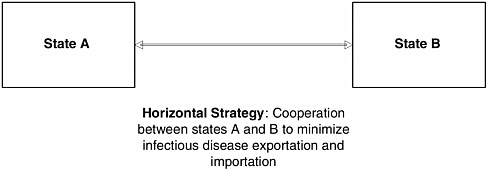
FIGURE B-1 Horizontal strategies for infectious disease control.
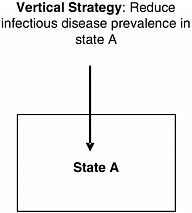
FIGURE B-2 Vertical strategies for infectious disease control.
production of which falls to the public sector because private actors lack sufficient incentives or resources to do what is necessary to protect population health (Gostin, 2001). When globalization pressures a state, its governance response can occur within three different governance categories: national, international, and global (see Figure B-3).
National governance represents the efforts a state takes within its own territory and under its own laws to respond to globalization-related problems. International governance means that states engage in international cooperation among themselves to confront globalization challenges. International governance often involves the creation of norms, rules, and institutions to facilitate interstate cooperation. The policies and duties created through international governance then inform national governance. Global governance involves not only states and international institutions but also nonstate actors, such as multinational corporations (MNCs) and international non-
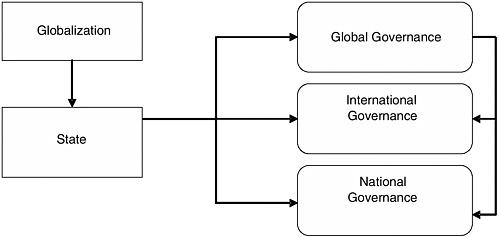
FIGURE B-3 Governance responses to globalization challenges.
governmental organizations (NGOs) (Dodgson et al., 2002). MNCs and NGOs shoulder governance roles because their participation and input become critical to the success of the overall endeavor. Global governance efforts affect the dynamics of both international and national governance.
International Law, Infectious Disease Strategies, and the Governance Frameworks
Crudely defined, international law constitutes the body of binding rules that govern the relations between sovereign states (Brownlie, 1998). Rules of international law apply to nonstate actors, as the body of international human rights law demonstrates, but the bulk of contemporary international law still regulates the intercourse between sovereign states. International law exhibits different functions within the contexts of both vertical and horizontal public health strategies on infectious diseases and the three governance frameworks. Table B-1 summarizes the various functions of international law in these two contexts.
The different strategic emphases in the three governance frameworks and the differing functions of international law exhibited in Table B-1 can be delineated through a historical overview of the development of governance on infectious diseases in response to globalization challenges. The next two sections provide this historical analysis.
TABLE B-1 Governance Frameworks, Public Health Strategies, and International Law on Infectious Diseases
|
Governance Framework |
Primary Strategic Emphasis |
Function of International Law |
Infectious Disease Example |
|
National Governance |
Vertical strategies |
None |
National quarantine practices, first half of nineteenth century |
|
International Governance |
Horizontal strategies |
Provides architecture for horizontal public health strategies |
International Health Regulations |
|
Global Governance |
Vertical strategies |
Provides norms that inform and guide vertical public health strategies |
Global Fund to Fight AIDS, Malaria, and Tuberculosis |
HORIZONTAL INTERNATIONAL REGIMES AND INFECTIOUS DISEASE CONTROL, 1851–1951
As Table B-1 indicates, before the mid-nineteenth century, states dealt with infectious disease problems solely through national governance. Each state adopted policies it thought best to deal with endogenous and exogenous disease threats without engaging in international cooperation. Processes of globalization—the increased volume and speed of international trade and travel—forced states to move from national to international governance in the mid-nineteenth century, and the 1851 International Sanitary Conference began the international governance endeavor on infectious diseases (Fidler, 2001b). As Table B-1 also indicates, international governance focuses primarily on horizontal strategies concerning the exportation and importation of infectious diseases. The first century of international health governance witnessed the creation of three primary horizontal international legal regimes relating to infectious diseases—the classical, organizational, and trade regimes.
The Classical Regime
The long line of international sanitary conventions adopted from the late nineteenth century until World War II (for a list of these treaties, see Fidler, 1999) and the International Sanitary Regulations (later renamed the International Health Regulations [IHRs] promulgated by the World Health
Organization (WHO) in 1951 constitute the classical regime. The IHRs’ stated purpose—“to ensure the maximum protection against the international spread of disease with minimum interference with world traffic” (WHO, 1983)—captures the classical regime’s objectives. The classical regime focuses solely on cross-border disease transmission by requiring (1) that states notify countries about cases or outbreaks of specified diseases in their territories and maintain adequate public health capabilities at points of disease exit and entry; and (2) that disease-prevention measures restricting or burdening international trade and travel be based on scientific evidence and public health principles.
The Organizational Regime
The second horizontal international legal regime is the organizational regime, which represents the various international health organizations (IHOs) created by states to deal with infectious diseases and other international public health problems. Today, WHO serves as the leading representative of the organizational regime. Although international law was central to the creation of IHOs, the treaties establishing them did not impose specific duties on states in terms of infectious disease control. States created IHOs to facilitate their horizontal cooperation on public health problems; but, in contrast with the classical regime, the organizational regime’s legal duties for infectious disease control have been shallow at best.
The Trade Regime
The third major horizontal international legal regime, created during 1851–1951, was the trade regime, best represented by the General Agreement on Tariffs and Trade (GATT), adopted in 1947. The trade regime seeks to liberalize trade between states and thus is a classic example of horizontal interstate cooperation. The trade regime recognizes, however, that states may restrict trade to protect human health (GATT, Article XX[b]). Trade-restricting health measures to keep unsafe food from entering a country’s market are, thus, legitimate if the state applying such measures follows the GATT disciplines on the issue. The trade regime represents, therefore, another horizontal international legal regime that contributes to international governance on infectious diseases.
GLOBALIZATION, INFECTIOUS DISEASES, AND CHANGES IN GOVERNANCE FRAMEWORKS AND STRATEGIES, 1951–2002
Globalization’s impact on infectious disease control and prevention did not end in 1951 but has been ongoing. Many experts believe that globali-
zation’s influence on infectious diseases has accelerated in the past 10–15 years, as the literature on the crisis of emerging and reemerging infectious diseases suggests. The last 51 years have, however, witnessed changes in governance frameworks, the strategic emphasis of governance efforts, and the role of international law in the infectious disease context.
Shift in Focus from Classical to Trade Regime
The past half-century has seen the importance of the classical regime diminish and the importance of the trade regime grow. This shift from the classical to the trade regime can be seen in the intersection of two watershed events in horizontal international governance on infectious diseases. First, in 1995, WHO officially recognized that the IHRs had failed to achieve maximum protection from the international spread of disease with minimum interference with world traffic (World Health Assembly, 1995). WHO launched an effort to revise the IHRs to update their provisions for the new globalization challenges. Second, the World Trade Organization (WTO) came into existence in 1995 and quickly became the central horizontal regime for international law on infectious diseases. Two new trade agreements in the WTO—the Agreement on Trade-Related Aspects of Intellectual Property Rights (TRIPS) and the Agreement on the Application of Sanitary and Phytosanitary Measures (SPS Agreement)—combined to make the WTO more important in global public health circles than the IHRs, confirming that a shift from the classical to the trade regime had occurred.
IHR Revision: Rejuvenation or Death of the Classical Regime?
The shift described in the previous subsection raises many questions about the ongoing IHRs revision process. WHO’s objective was to rejuvenate the IHRs to make the classical regime more robust and effective in the face of late twentieth century infectious disease threats. The IHR revision process may, however, be revealing the death of the classical regime.
The revised IHRs have the same objective as the existing IHRs: maximum protection against the international spread of disease with minimum interference with world traffic. To date, the revision process reveals a movement away from binding legal rules on disease notifications—one of the two fundamental legal pillars of the classical regime—to reliance on new global epidemiological information networks, represented by WHO’s Global Outbreak Alert and Response Network (GOARN). WHO argues that GOARN has proven successful in helping WHO identify, verify, and investigate hundreds of infectious disease outbreaks since 1998. WHO notes that the outbreaks most frequently handled through GOARN have involved cholera, meningitis, haemorrhagic fevers, viral encephalitis, and an-
thrax. WHO claims that GOARN operates “within the framework of the International Health Regulations” (Heymann, 2002).
The WHO claim that the IHRs support GOARN is not correct from an international legal perspective. First, GOARN collects epidemiological data from governmental as well as nongovernmental sources. The IHRs authorize WHO to deal only with epidemiological information provided by the governments of member states (International Health Regulations, Part II, Articles 2–13). WHO’s proposals to include in the revised IHRs the ability to collect data from nongovernmental sources demonstrate that the IHRs do not and cannot provide the legal foundation for GOARN’s incorporation of nongovernmental information (see Fidler, 1999). Second, the IHRs address only three diseases—cholera, yellow fever, and plague (International Health Regulations, Article 1 [defining “diseases subject to the Regulations” as meaning cholera, plague, and yellow fever]). WHO recognized this limited coverage as being one of the major reasons why it needed to revise the IHRs (see Fidler, 1999). WHO’s ability to deal, through GOARN, with meningitis, haemorrhagic fevers, viral encephalitis, anthrax, and other diseases not subject to the IHRs is not and cannot be supported by the IHRs.
WHO’s claim that GOARN operates within the framework of the IHRs (Heymann, 2002) is also troubling because it contradicts the message WHO has been sending since 1995 that the IHRs are inadequate in the face of new globalization challenges. If the IHRs authorize WHO, through GOARN, to deal with nongovernmental sources of information and with a much longer list of infectious diseases, why did WHO argue from 1995 on that the IHRs are inadequate because they (1) do not allow use of nongovernmental epidemiological information, and (2) are severely constrained by applying to only three diseases?
The contradictory messages from WHO about the IHRs’ relationship to GOARN is, to some extent, academic. What is more important is that GOARN operates on a large scale without the revised IHRs being in place. WHO notes that, between July 1998 and August 2001, it “verified 578 outbreaks of potential international importance in 132 countries, and investigated many hundreds more” (Heymann, 2002, p. 172). This fact suggests that WHO can pursue new approaches to global epidemiological surveillance based on new information technologies without the need for revised IHRs. This fact also suggests that revising the IHRs for purposes of global surveillance—the first raison d’etre of the classical regime—is not urgently required, or perhaps required at all.
The second objective of the IHRs is to achieve maximum protection against international disease spread with minimum interference with world traffic. WHO recognized in 1995—and much earlier for that matter (see, e.g., Delon, 1975; Dorelle, 1969; Roelsgaard, 1974)—that the IHRs had
failed to prevent WHO member states from imposing irrational and unnecessary trade-restricting health measures. To date, nothing in the IHR revision process suggests that WHO member states want to strengthen WHO’s hand against such irrational trade- and travel-restricting health measures. Today, the WTO provides the more important vehicle for states seeking to complain about irrational trade-restricting health measures because of the science-related and trade-related disciplines in the SPS Agreement. Thus, the second raison d’etre of the classical regime—discipline against irrational trade-restricting health measures—has migrated to the trade regime, at least for irrational health measures that restrict trade in goods.
Development of Vertical International Governance Regimes
In addition to the increased importance of the trade regime and the decreasing importance of the classical regime, the post–World War II period witnessed the development of new kinds of international governance regimes focused primarily on vertical strategies. Generally speaking, these three regimes seek to reform how a government interacts with its population health inside the state’s territory. This section briefly describes the fundamental aspects of these three vertical international governance regimes.
Soft-Law Regime
The soft-law regime represents norms, guidelines, best practices, and policies generated by IHOs for adoption by states in their respective territories. The norms, guidelines, practices, and policies are not legally binding on the member states of the IHOs, which is why international lawyers describe this dynamic as involving “soft” rather than “hard” law. WHO has, for example, generated many such “soft-law” norms. In fact, WHO has preferred using soft-law norms to the creation of binding international legal commitments. The horizontal organizational regime has, thus, proven more valuable for vertical public health strategies than for disciplining interstate public health relations.
Environmental Regime
The environmental regime encompasses the body of international environmental law that states and international organizations have created largely in the post–World War II era (Birnie and Boyle, 2001). Much of international environmental law attempts to create rules that reduce environmental threats to human health, so this body of international law connects to public health (Fidler, 2001c). International environmental treaties often contain rules that require states to reduce environmental degradation
within their territories and the cross-border transmission of environmentally harmful products and substances. International environmental law supports both horizontal and vertical strategies on environmental problems. International environmental law is, however, weakest in connection with vertical public health strategies against infectious diseases because this body of law does not address effectively local air and water pollution, which constitute the major environmental causes of infectious disease morbidity and mortality (Fidler, 2001c).
Human Rights Regime
International human rights law imposes obligations on governments in connection with their treatment of persons living in their territories (for the leading international human rights documents, see Brownlie, 1992). The focus of international human rights law, unlike that of international environmental law, is almost entirely vertical in orientation. Although international human rights law long incorporated public health issues, the emergence of the HIV/AIDS pandemic in the 1980s produced the first concerted effort to bring international human rights law to bear on public health policy and practices (Gostin and Lazzarini, 1997). Public health experts argued that international human rights law (1) protected persons living with HIV/AIDS from discrimination, and (2) imposed on governments obligations to respect, protect, and fulfill their citizens’ human right to health by, for example, making prevention, testing, and treatment programs universally available. Compliance with international human rights law constituted a vertical public health strategy that sought to contribute to reducing infectious disease morbidity and mortality within a state.
Development of Global Governance Mechanisms and the Access Regime
The third major change seen in the post–World War II period is the development of global governance mechanisms. As described earlier, global governance involves the participation of states; intergovernmental organizations; and nonstate actors, such as MNCs and NGOs. The significant and often formal involvement of nonstate actors distinguishes global from international governance. Nonstate actors have long been involved in national and international governance, but experts perceive that globalization has produced new forms of global governance in which the nonstate actors take on more important governance functions. In the infectious disease context, we can discern various global governance mechanisms converging into what may be called the access regime—a vertical global governance regime that seeks to increase access to essential drugs and medicines for people living in developing countries.
Global Governance Mechanisms
Public health experts increasingly focus policy initiatives and academic research on “global health governance,” with special emphasis on the growing roles of nonstate actors in the process of governance for public health (Dodgson et al., 2002, supra note 5). Perhaps the best example of this trend is the attention given to public–private partnerships, which have proliferated in the past decade in the context of global public health (Widdus, 2001). The role of nonstate actors in these global governance efforts ranges from formal to informal. The inclusion of NGO representatives on the governing body of the Global Fund to Fight AIDS, Malaria, and Tuberculosis (Global Fund) illustrates the formal incorporation of nonstate actors into a global governance mechanism (Global Fund, 2005).WHO’s utilization of epidemiological information from nongovernmental sources in GOARN represents an informal incorporation of nonstate actors into a global governance mechanism. The new global governance mechanisms share common strategic ground in seeking to provide global public goods that states (especially developing countries) can utilize within their territories to reduce infectious disease morbidity and mortality. In other words, the new global governance mechanisms support primarily vertical public health strategies.
The Access Regime as Vertical Global Governance
Many global governance initiatives converge on a particular vertical strategy—increasing within developing countries access to drugs, vaccines, and other medicines for infectious diseases. Numerous public–private partnerships, such as the Global Alliance for Vaccines and Immunization (GAVI), the Global Alliance on Tuberculosis (GATB), and the Medicines for Malaria Venture (MMV), focus on developing and delivering new or existing drugs and vaccines more widely and effectively in developing countries. The Global Fund seeks to increase access to antiretroviral therapy in developing countries. The global movement to increase access to essential medicines can be seen as the evolution of a new regime—the access regime—that has become the most prominent and controversial development in the use of international law for infectious disease control purposes. This section briefly describes this emerging vertical global governance regime.
The access regime arose from the clash between the most prominent horizontal international governance regime—the trade regime—and the most prominent vertical international governance regime—the human rights regime. At the core of this clash was the collision of the TRIPS-led movement for greater protection for patented pharmaceutical products with human-right-to-health–inspired efforts to increase access to essential medicines in developing countries. The TRIPS versus public health battle pro-
duced the November 2001 adoption of the Declaration on the TRIPS Agreement and Public Health (WTO, 2001). The Declaration clearly supports placing public health objectives, especially access to medicines, above the trade-related goal of increasing patent protection for pharmaceuticals, and thus experts see it as a victory for the human-right-to-health movement and for public health governance generally.
One of the interesting themes of the development of the access regime is that major protagonists in the conflict were nonstate actors—pharmaceutical MNCs and NGOs (e.g., Médecins sans Frontières [MSF]). Nonstate actors also play significant roles in other aspects of the access regime, particularly through the various public–private partnerships that seek to develop new drugs for infectious diseases (e.g., MMV, GATB) or improve access to existing drugs (e.g., GAVI, Green Light Committee on Second-line TB Drugs). Nonstate actors also have a formal governance role in the Global Fund—another indication that the access regime represents an important development in global governance in the infectious disease context.
More conceptually, governance efforts to improve access to drugs and vaccines for infectious diseases are found within each framework of governance. Table B-2 describes some of these efforts.
TABLE B-2 The Access Regime and Governance Frameworks
|
National Governance |
International Governance |
Global Governance |
|
NGO lawsuits filed in national court systems to force national governments to increase access to HIV/AIDS therapies under the precept of the human right to health (e.g., South African case of Treatment Action Campaign v. Minister of Health [December 2001]) |
Developing-country and WHO advocacy to strengthen the public health safeguards in TRIPS to ensure access to affordable drugs and medicines (e.g., Doha Declaration on the TRIPS Agreement and Public Health) |
NGO activism directed at MNCs, international organizations, and national governments (e.g., MSF’s global campaign opposing pharmaceutical MNCs’ lawsuit against South Africa) |
|
|
|
Involvement of MNCs and NGOs in drug-development public– private partnerships |
|
|
|
Formal governance roles for nonstate actors in new institutions (e.g., Global Fund) |
In essence, the access regime takes the human right to health, developed originally as a strategy of vertical international governance, into the realm of global governance through the leadership of nonstate actors. The access regime aims to develop not only governance frameworks at all levels conducive to improved access, but also new pharmaceutical products that governments, international organizations, and nonstate actors can deliver to people at the local level to reduce infectious disease morbidity and mortality.
The Access Regime and International Law
The development of the access regime indicates how international law’s function in global governance differs from its role in international governance. Norms found in international law, principally the human right to health, inspire global governance activities on access, but international law does not provide the architecture for those activities. The various public– private partnerships, such as the Global Fund, are not based in treaty law, which is a classical international legal contribution to international governance. The participation of states and international organizations in these global governance efforts is, thus, nonbinding and voluntary as a matter of international law. From an international legal perspective, the access regime utilizes international law in ways very different from how states and international organizations have used international law for public health purposes since the beginning of international health diplomacy in 1851. Whether the access regime’s use of international law signals a dramatic sea change in the relationship between international law and infectious disease prevention and control remains to be seen.
INFECTIOUS DISEASES AS FOREIGN POLICY AND NATIONAL SECURITY CONCERNS: GOOD FOR GOVERNANCE AND THE INTERNATIONAL RULE OF LAW?
The access regime represents one of the most prominent developments in infectious disease governance in the recent era of the globalization of public health. Another interesting development involves arguments that infectious diseases represent national security threats to the great powers and thus should be more important on their foreign policy agendas (see, e.g., Kassalow, 2001; Moodie and Taylor, 2000; NIC, 2000). In contrast to the movement toward vertical global governance seen in the access regime, these arguments seek to reconnect infectious disease control with national and international governance by reengaging the great powers in international public health. Should these arguments take hold, one might foresee reinvigorated national and international governance on infectious diseases to complement the developments in global governance.
Some caution is, however, advisable about arguments that infectious diseases represent national security and foreign policy threats. Historically, the great powers have not hesitated to bend, break, or abandon international law when they believed their national security was threatened. We can see this pattern in U.S. responses to the threat of biological weapons and bioterrorism. The United States has focused energy and new funding on homeland security against bioterrorism but has rejected multilateral efforts to strengthen international governance on the threat of biological weapons. Many see in these steps a rejuvenated U.S. unilateralism in an area in which public health plays a strategic role.
At the same time, the tepid and tardy responses of the great powers to the HIV/AIDS catastrophe in sub-Saharan Africa hardly serve as robust evidence that infectious disease problems in far-away countries have risen high on these nations’ national security and foreign policy agendas. The shift from binding commitments in international governance to nonbinding, voluntary participation in global governance efforts may suit the narrow public health interests of the great powers to the long-term detriment of strengthening national and international governance on infectious diseases.
CONCLUSION
The globalization of public health creates infectious disease challenges that force states to engage in international cooperation. Historically, international law has been an important mechanism for facilitating international public health cooperation. International law’s use in international infectious disease control connects to the governance challenges globalization presents in the public health context. This appendix has analyzed how states, international organizations, and nonstate actors have used international law for infectious disease control as part of the response to globalization challenges since the mid-nineteenth century.
The last 50 years, and the last decade particularly, have witnessed important shifts in how international law factors into infectious disease policy. Within the traditional realm of horizontal international regimes, attention has shifted from the classical to the trade regime. Attention has also shifted from horizontal international governance to vertical global governance. This latter shift finds the traditional function of international law in international governance overtaken by a context in which international law informs the creation of global governance endeavors that are not legally binding on any of the participants. As argued elsewhere (Fidler, 2001a, supra note 1), these new contexts mean that international law’s role in infectious disease control today has never been more important and uncertain.
REFERENCES
Birnie PW, Boyle AE. 2001. International Law and the Environment. Oxford, UK: Clarendon Press.
Brownlie I, ed. 1992. Basic Documents on Human Rights. 3rd Ed. Oxford, UK: Oxford University Press .
Brownlie I. 1998. Principles of Public International Law. 5th Ed. Oxford, UK: Oxford University Press.
Delon PJ. 1975. The International Health Regulations: A Practical Guide. Geneva, Switzerland: WHO.
Dodgson R, Lee K, Drager N. 2002 (February). Global Health Governance: A Conceptual Review. Key Issues in Global Health Governance Discussion Paper No. 1. Geneva: WHO Department for Health in Sustainable Development.
Dorelle P. 1969. Old plagues in the jet age. Chronicle of the World Health Organization 23(3):103–111.
Fidler DP. 1999. International Law and Infectious Diseases. Oxford, United Kingdom: Clarendon Press. Pp. 22–23.
Fidler DP. 2001a. International Law and Global Infectious Disease Control, Commission on Macroeconomics and Health Working Paper No. WG2:18. [Online]. Available: http://www3.who.int/whosis/cmh/cmh_papers/e/pdf/wg2_paper17.pdf [accessed April 18, 2002].
Fidler DP. 2001b. The globalization of public health: The first 100 years of international health diplomacy. Bulletin of the World Health Organization 79(9):842–849.
Fidler DP. 2001c. Challenges to humanity’s health: The contributions of international environmental law to national and global public health. Environmental Law Reporter News and Analysis 31(1):10048–10078.
Global Fund to Fight AIDS, Malaria, and Tuberculosis. NGOs and Civil Society. [Online]. Available: http://www.theglobalfund.org/en/partners/ngo/introduction/ [accessed September 12, 2005].
Gostin LO. 2001. Public Health Law: Power, Duty, Restraint. Berkeley, CA: University of California Press.
Gostin LO, Lazzarini Z. 1997. Human Rights and Public Health in the AIDS Pandemic. Oxford, United Kingdom: Oxford University Press.
Heymann DL. 2002. The microbial threat in fragile times: Balancing known and unknown risks. Bulletin of the World Health Organization 80(3):179.
Kassalow J. 2001. Why Health is Important to U.S. Foreign Policy. New York: Council on Foreign Relations and the CSIS International Security Program.
Moodie M, Taylor WJ. 2000.Contagion and Conflict, Health as a Global Security Challenge. Washington, DC: Chemical and Biological Arms Control Institute and the CSIS International Security Program.
NIC (National Intelligence Council). 2000. The Global Infectious Disease Threat and Its Implications for the United States. [Online]. Available: http://www.cia.gov/cia/publications/nie/report/nie99-17d.html [accessed March 27, 2002].
Roelsgaard E. 1974. Health regulations and international travel. Chronicle of the World Health Organization 28:265–268.
WHO (World Health Organization). 1983. International Health Regulations. 3rd Ed. Geneva, Switzerland: WHO.
Widdus R. 2001. Public-private partnerships for health: Their main targets, their diversity, and their future directions. Bulletin of the World Health Organization 79(8):713–720.
World Health Assembly. 1995 (May 12). Revision and Updating of the International Health Regulations. World Health Assembly Resolution 48.7. Geneva, Switzerland: WHO.
World Trade Organization (WTO). 2001 (Nov 14). Declaration on the TRIPS Agreement and Public Health. Ministerial Conference in Doha, Fourth Session, Nov 9-14, 2001. [Online]. Available: http://www.wto.org/english/thewto_e/minist_e/min01_e/mindecl_trips_e.htm [accessed September 13, 2005].


