
B
Prematurity at Birth: Determinants, Consequences, and Geographic Variation
Greg R. Alexander1
Throughout the latter half of the 20th century, infant mortality rates have continued to decline in the United States (1–6). The ongoing reduction in the risk of an infant death has largely been driven by improvements in birth weight- and gestational age-specific infant mortality rates stemming from advancements in intensive medical care services and technology (6–8). However, as the decline in infant mortality rates has tapered off in recent years and has reversed in some states, growing concerns about the direction of future trends in U.S. infant mortality rates have emerged (9). These concerns are heightened by the simultaneous increases in low birth weight and preterm birth rates that have been observed for over 2 decades in the United States and elsewhere (3, 8, 10–14). As it is unclear if yet another technological breakthrough in high-risk medical services will emerge to drive further reductions in infant death rates, the need to prevent premature births has been increasingly voiced and has become paramount (4, 15).
The importance of reducing the risk of low birth weight and preterm birth has long been recognized if for no other reason than that the health care costs associated with an extremely small or early birth are many times higher than those of infants of normal weight (16, 17). Lowering the risk of infant mortality through reductions in high-risk preterm births would likely be much more cost-effective than the current reliance on improving their
survival with high-risk intensive care services after they are born (17–19). Beyond the elevated health care costs of newborn premature infants, however, those born preterm have an appreciable risk of long-term neurological impairment and developmental delay (20–22). The ongoing medical and support service needs of these infants and their families add to the overall health care system cost burden over time and emphasize the continuing health and developmental problems that some preterm infants face. Finally, the high preterm birth rates in the United States have been identified as a major contributor to this nation’s relatively poor ranking in infant mortality among other developed countries (23). Although low birth weight has often received greater attention than preterm birth as the leading factor underlying poor pregnancy outcomes in the United States, it has been recognized that to successfully address these problems, the “key goal is prevention of preterm birth” (23).
Policy makers and the public need to be kept informed of the rapid developments in research and their implications for clinical practice and public programs and policies. Because of the continuing problem that premature birth poses in the United States and other countries, as well as the rapid and ongoing developments in research in this area, there has been a recognized need for periodic forums, reports, and public investigative committees that would increase knowledge and awareness of evolving strategies for the prevention of preterm birth. In 1985, the Institute of Medicine released the report of its Committee to Study the Prevention of Low Birth Weight (24). That report addressed the epidemiology of low birth weight and assessed preventive approaches for cost and effectiveness. That same year, Émile Papiernik, an international French innovator and leader in prematurity research, organized a conference in Evian, France, entitled Prevention of Preterm Birth: New Goals and New Practices in Prenatal Care. That conference focused on reducing the risk of preterm labor and delivery and offered participants an opportunity to disclose their latest research findings (25). A follow-up to the 1985 Evian conference was held in the United States in 1988. That conference, Advances in the Prevention of Low Birth Weight, was hosted by H. Berendes, S. Kessel, and S. Yaffe and focused on the results of clinical trials and community-based interventions aimed at reducing low birth weight (25). Yet another follow-up to those conferences, The International Conference on Preterm Birth: Etiology, Mechanisms and Prevention, was held in 1997 (26). That conference was also developed to provide an overview of studies in preterm birth research, a review of risk factors and potential etiologic pathways, and an assessment of the then current intervention and prevention strategies.
Other reports, conferences, and national efforts, including the current Prematurity Campaign of the National March of Dimes, have been developed over the last 2 decades to address the widely perceived problem of
increasing rates of low birth weight and preterm births in the United States (19). For the most part, the continued and still current consensus of all of these forums and their related reports is that the proposed interventions do not work (27–30). Although major advances have occurred in the area of preterm birth research and related perinatal and maternal-infant medical care, preterm birth rates have continued to climb. despite these developments and intervention efforts (10, 28). New social trends, including changes in the rate of multiple births, the use of assisted reproductive technology (ART), the increasing average maternal age, the proportion of married mothers, the early use of prenatal care, etc., have accompanied this increase in preterm birth rates (10). This complex array of social and medical care developments and the intractability of the present preterm birth trends necessitate the ongoing and heightened attention of health researchers, health care providers, public health practitioners, and policy makers. The impact on families is plainly too great (ranging from the risk of an infant death to long-term developmental delays and impairment), and the costs (both financial and emotional) are too high to ignore or simply accept.
DEFINITION AND MEASUREMENT OF PREMATURITY
Defining and Conceptualizing Preterm Birth
The definition of prematurity has evolved in the literature of the last century. Initially used to designate an infant born too early or too small, it was often defined by the use of either birth weight or gestational age (31). As birth weight is more reliably measured than gestational age, low birth weight (a birth weight of <2,500 grams) was the more obvious choice to delineate a premature birth. Nevertheless, being born too small is conceptually and, in some cases, etiologically distinct from being born too early. Low birth weight may result from an early birth but also from fetal growth restriction, i.e., being small for a given gestational age. As the etiologies of these distinct types of low birth weight deliveries are different, it became more widely accepted to separate prematurity into two categories, i.e., either low birth weight or preterm. By current convention, “preterm” now refers to an early delivery and is defined by gestational age. “Low birth weight” refers to the weight of the infant at delivery. Relatedly, fetal growth refers to the birth weight of the infant for a specific gestational age. Small-for-gestational age (SGA), usually defined as less than the 10th percentile of birth weight for gestational age, is a commonly used indicator of fetal growth restriction. As illustrated in Figure B-1, these indicators may overlap; i.e., a low birth weight infant may often be preterm and SGA. They are not interchangeable, however, as each has distinct etiologies and risk factors (32, 33). Among low birth weight infants, approximately two-thirds

FIGURE B-1 Comparison of preterm (<37 weeks of gestation), low birth weight (<2,500 grams), and SGA (less than the 10th percentile of birth weight). Source: 1985–1988 and 1995–2000 Birth Cohort Linked Birth/Infant death Data Set, CD-ROM Series 20, USDHHS, CDCP, NCHS; 1980–2000 Natality Data Set, CD-ROM Series 21, USDHHS, CDCP, NCHS.
are born preterm, whereas less than 20 percent of SGA age infants are born preterm.
Typically, preterm birth is defined as a delivery or birth at a gestational age less than 37 weeks. Other commonly used subcategories of preterm birth have been established and delineate moderately preterm (birth at 33 to 36 weeks of gestation), very preterm (birth at <33 weeks of gestation), and extremely preterm (birth at ≤28 weeks of gestation). Table B-1 provides recent data on all live births to U.S. resident mothers for various gestational age and preterm categories.
Preterm birth is an outcome defined by a single end point, i.e., being born before an established gestational age (37 weeks). Fundamentally, infants born preterm are assumed to have a certain added risk of death, disease, and disability compared with the risk for normal-term infants. However, although preterm births may be grouped together on the basis of having a higher risk of adverse outcomes, several distinct clinical categories of preterm delivery have been identified (34, 35). Preterm births have been classified into three separate subgroups according to clinical presentation:
-
Births occurring after spontaneous premature labor, related to premature contractions (50% of cases)
TABLE B-1 Gestational Ages of Live Births in the United States, 1995 to 2000
|
Gestational Age Category (Weeks of Gestation) |
Percentage of Births |
|
% Extremely Preterm (≤28) |
0.8 |
|
% Very Preterm (≤32) |
2.2 |
|
% Moderate Preterm (33-36) |
8.9 |
|
% Preterm (<37) |
11.2 |
|
% Preterm (37-41) |
81.9 |
|
% Postterm (42+) |
7.0 |
|
SOURCE: 1995–2000 Birth Cohort Linked Birth/Infant death Data Set, CD-ROM Series 20, USDHHS, CDCP, NCHS; 1980– 2000 Natality Data Set, CD-ROM Series 21, USDHHS, CDCP, NCHS. |
|
-
Spontaneous rupture of the membranes (roughly 30 percent of cases)
-
Indicated delivery of a premature infant for the benefit of either the infant or the mother (about 20 percent of cases) (36, 37)
Although preterm birth may be defined as a delivery before what is considered the normal length of gestation, preterm birth is recognized as stemming from several pathways (e.g., infections and fetal growth restriction) that may operate separately or that may interact with one another. In essence, preterm birth is not a single entity but is the result of one or more causal processes, each of which may result in a similar event: being born too soon.
Although the subclassification of preterm birth by clinical presentation is a step toward separating preterm deliveries into more homogeneous subgroups, there continues to be ongoing discussion regarding whether the widely used three-category classification truly defines separate preterm entities. The accurate classification of preterm birth subgroups is an important step toward establishing risk factors and ensuring that interventions are targeted at those who are truly at risk. To the extent that the components of an intervention are focused on a specific etiologic pathway for preterm birth but targeted broadly to all individuals at risk for preterm birth in general, the intervention may well appear to lack efficacy. Moreover, risk factors and predeterminants may differ by preterm subgroup, further hindering research in establishing separate and distinct categories of preterm birth. Some researchers suggest combining spontaneous premature labor (contractions) and spontaneous rupture of the membranes, and it has been noted that the risk factors for these categories are somewhat similar
(34). Because of these findings, which suggest that spontaneous rupture of membranes and spontaneous labor are the result of similar processes, there is an argument for combining these back together into one group. However, some researchers further suggest that there is more etiologic overlap between spontaneous and indicated preterm birth than was first suspected (34). For example, maternal hypertension and fetal intrauterine growth restriction are indications for preterm delivery and are also suspected to be risk factors for spontaneous preterm birth (34).
Notwithstanding the ongoing debates and developments about pathways, the value of identifying the distinct etiologic pathways that lead to preterm birth is evident. Limitations to the conceptualization of preterm birth and its various subtypes decidedly hinder the advancement of our understanding of the causes and prevention of preterm birth. The research results of the investigation of poorly defined preterm etiologic categories may prove misleading despite impressive statistical findings. The ongoing refinement of a better conceptualization of preterm birth and the articulation of its numerous etiologic pathways are essential for improving research on the prevention of preterm birth.
Measurement of Gestational Age
Over and above the classification of preterm etiologic subcategories, the basic determination of whether a delivery was “too soon” depends on the measurement of gestational age. An accurate estimate of gestational age is essential, not just for research on preterm birth but also for the management of the pregnancy and newborn infants (38, 39). Gestational age is a proxy for the extent of fetal development and the fetus’s readiness for birth. As an indicator of the maturity of a newborn, gestational age is closely associated with the newborn’s chances for survival and the likelihood that the infant will develop complications as a neonate. Moreover, knowledge of gestational age is necessary for interpreting the results of a preterm infant’s neurodevelopmental examination and for assessing the infant’s developmental progress.
Gestational age is used for a variety of statistical indicators that gauge the health status of populations and assess the need for interventions (39). Hence, the percentages of infants born preterm and very preterm may reflect the prevalence of a variety of population-specific perturbations, including infection, psychosocial and physical stresses, poor nutrition, and substance abuse. The percentages of infants born SGA, based on percentiles of birth weight for gestational age, are used to provide some indication of nutritional deficits during pregnancy. Lastly, gestational age is used in conjunction with the month that prenatal care began and the number of prenatal care visits to calculate indices of adequacy of prenatal care utiliza-
tion. These gestational age–based health status and health care utilization indices are useful on a population level to ensure that service needs are met, target services to at-risk populations, and evaluate the efficacies of those interventions.
Gestational age has typically been defined as the length of time from the date of the last normal menses to the date of birth (40, 41). This definition may overestimate the actual duration of pregnancy by approximately 2 weeks, which is the average interval from the beginning of the last menstrual cycle to the point of conception. The definition of gestational age, based on the last menstrual period (LMP), has several limitations (42–46). There is wide individual variability (i.e., ~7 to 25 days) in the interval between the onset of the LMP and the date of conception. Errors in correctly recalling the date of LMP may occur because of irregular menses and bleeding early in pregnancy. Approximately 20 percent of live birth certificates in the United States have been reported to have a missing or incomplete date of LMP, and greater proportions of missing or implausible dates of LMP have been reported for women of lower socioeconomic status, who by virtue of their higher rates of preterm delivery and the delivery of infants who are SGA often have the greatest medical need for an accurate estimate of gestational age.
The interval between the date of LMP and the date of birth has served as the “gold standard” for determining the gestational age of the infant and, as such, has been used in studies for validation of alternative gestational age estimation methods (47). Studies of the validity and reliability of alternative gestational age measures are needed to assess the degree to which the alternative measures consistently predict, agree with, or are correlated with the selected gold standard measure across the full range of gestational age values. These studies may further look for evidence of any systematic biases that might stem from examination procedures or study population characteristics. Because of the widely recognized limitations to the estimation of gestational age by LMP, a number of alternative prenatal and postnatal approaches to the determination of gestational age have been developed (47–49). Table B-2 provides a list of prenatal measures for estimating gestational age and further indicates the specific focus of the measures (39).
Obstetric measures of fetal heart tones, quickening, and uterine fundal growth have often been used to confirm gestational age on the basis of LMP but are limited because of wide individual variability, confounding variables (e.g., polyhydramnios), and the requirement of an early initiation of prenatal care (39). Many view early prenatal ultrasound (e.g., in the first trimester or early in the second trimester) as the new gold standard for validation of new gestational age measures, even though ultrasound methods were originally validated with LMP as the gold standard. Ultrasound estimates of gestational age are based on different measures of fetal size
TABLE B-2 Prenatal Methods for Determining Gestational Age
|
Method |
Focus of Measure |
|
Last menstrual perioda |
pregnancy duration |
|
Fetal heart tonesb |
physical and neurological maturity |
|
Quickeningb |
physical and neurological maturity |
|
Uterus at umbilicusb |
fetal size |
|
Uterine fundal heightb |
fetal size |
|
Presence of embryo sacc |
fetal size |
|
Crown-rump lengthd |
fetal size |
|
Head circumferenced |
fetal size |
|
Biparietal diameterd |
fetal size |
|
Femur lengthd |
fetal size |
|
Sacral length |
fetal size |
|
Foot length |
fetal size |
|
Jaw size |
fetal size |
|
Chest diameter |
fetal size |
|
Abdominal Circumferencee |
fetal size |
|
aTraditional measure of gestational age duration commonly used in population-based, public health studies that use vital records. bTypically monitored by obstetricians during prenatal care visits. cMore recently developed ultrasound measure for clinical use. dCommonly used ultrasound measures for estimation of gestational age. eMore typically used to assess adequacy of growth for gestational age. |
|
(e.g., crown-rump length; biparietal diameter; femur length; sacral length; foot length; jaw size; and abdominal, chest, and head circumference) and are the most accurate early in gestation. As the pregnancy progresses beyond the second trimester, there is more individual variation in normal fetal growth increases, and variations in fetal growth are decidedly influenced by individual and environmental factors, including uteroplacental insufficiency, maternal exposure to drugs or toxins, and congenital infections.
Although many pregnant women in the United States may receive an ultrasound, far fewer receive an ultrasound early enough to obtain the most reliable estimate of gestational age. Minority and impoverished women, who often face barriers to access to prenatal care services, may be less likely to obtain an early ultrasound. As such, ultrasound-based gestational age estimates may be less accurate for these groups. Furthermore, ultrasound is not universally available, particularly in less developed countries. Finally, the quality of the ultrasound equipment and the level of training of the ultrasound technicians may vary across sites of care, and the reference populations used to validate the various ultrasound measures may differ.
Because accurate prenatal estimates of gestational age are not universally available, postnatal assessments of gestational age have also been developed (39). Examining the physical and neurological characteristics of the
TABLE B-3 Postnatal Methods for Determining Gestational Age
|
Method |
Focus of Measure |
|
Birth weighta |
infant size |
|
Head circumference |
infant size |
|
Foot length |
infant size |
|
Crown-heel length |
infant size |
|
Dubowitzb |
physical and neurological maturity |
|
Ballardc |
physical and neurological maturity |
|
Revised Ballardd |
physical and neurological maturity |
|
Lens vesselsd |
physical maturity |
|
Cranial ultrasound |
physical and neurological maturity |
|
Nerve conduction velocities |
physical and neurological maturity |
|
aStill used as a gross indicator of gestational age, although limitations are widely known. Birth weight is more typically used to assess the adequacy of growth for gestational age and as a research method to impute missing gestational age values and to identify grossly inaccurate gestational age values bBecause of a preference for the Ballard measure, this measure may have limited use in the United States. cProbably the most commonly used means of estimating the gestational ages of newborns in the United States. dApplicable only to a limited range of gestational ages. |
|
newborn, Dubowitz and coworkers devised a scoring system to estimate gestational age (47). It was later revised and shortened by Ballard and colleagues (48, 49), and other postnatal methods of determining gestational age have also been developed. Concerns have been raised regarding the accuracy of these approaches, particularly for preterm and very preterm infants (43). Among these concerns is their ability to be universally applied to various subpopulations, including different racial groups (50). Table B-3 details the postnatal approaches to the determination of gestational age (39). The specific trait being measured by each gestational age estimation method, e.g., pregnancy duration, fetal size, or physical and neurological maturity, is also provided.
There are distinct conceptual differences among the alternative strategies for estimating gestational age, and these differences have implications for research on preterm birth and international comparisons of the percentages of infants born preterm. Gestational age based on LMP is a direct measure of the duration of the pregnancy and is thus a unit-of-time measure. Many of the prenatal measures of gestational age (uterine fundal height and ultrasound) and the newborn measures of gestational age (birth weight, length, head circumference, and foot length) are direct measures of fetal or infant size, and these use the extent of fetal growth as an indirect measure of the duration of gestation. The remaining postnatal measures (e.g., the
Dubowitz score, the Ballard score, lens vessels, nerve conduction velocities, and cranial size by ultrasound) evaluate different aspects of infant maturity by using physical or neurological milestones that are typically observed by a certain gestational age. All of the alternative measures of gestational age translate their findings to the same scale as gestational age from LMP (20 to 44 weeks of gestation), even though “weeks” is strictly a measure of duration of time. Although these measures are highly correlated, they are not the same. Their absolute agreement may vary across the range of gestational ages. To the extent that different populations use different gestational age estimates, either separately or in combination, direct comparisons of preterm birth rates are compromised.
Underpinning these indirect measures of the duration of gestational age are three assumptions: (a) that the extent of normal growth and maturation observed occurs in most infants at a similar point in time in each pregnancy, (b) that the normal rate of intrauterine growth and maturation is about the same, and (c) that readiness for birth is a direct function of time in utero. Although pregnancy duration, fetal size, and newborn physical and neurological maturation are clearly associated with one another and, furthermore, are associated with infant morbidity and mortality, it must be emphasized that all of these gestational age estimation measures are attempting to define operationally variations in the underlying biological conditions that correspond to an optimal point of readiness for birth. This relationship between the duration of pregnancy, the extent of fetal size, the degree of physical and neurological maturation, and the readiness for birth may well vary among populations and may be influenced by a variety of factors. As such, the validity of these gestational age measures, as indicators of readiness for birth, is based on a set of assumptions that have proven more tenuous as our medical technology has extended the limits of viability to the extremes of gestational age.
There is growing evidence in the literature that these alternative measures of gestational age do not correspond with one another to the extent once believed, even within the basic prenatal and postnatal categories. Some gestational age measures may tend to underestimate the gestational age and others may tend to overestimate it, and this may vary by gestational age (42, 43). Furthermore, some measures may not provide consistently valid estimates for specific subgroups (43). Herein lie the concerns for research on preterm birth. Studies that change their means of measuring gestational age during the course of the investigation may uncover trends in the rate or incidence of preterm birth that merely reflect the change in measurement approach. Such biased results may provide inaccurate assessments of the impacts of interventions. Other studies that use different gestational age measures more frequently for some population subgroups, or geographic areas than others may artificially inflate or deflate the preterm birth rates
for those comparison groups. This may lead to the inaccurate determination of cases of preterm birth and a biased establishment of risk characteristics and high-risk areas. As indicated earlier, this represents a major concern for international comparisons of preterm birth rates.
Epidemiological studies of preterm birth in large populations, which often use vital records, typically rely on LMP or, more recently, LMP and the clinical estimate as reported on the birth certificate to define gestational age. It is these studies that have typically established current national trends and international comparisons in preterm birth rates. Meanwhile, clinical studies may more typically have access to early ultrasound data, although the study populations selected may be less representative of the larger population at risk of preterm birth. These measurement issues hinder comparisons among study findings, limit the interpretation and generalizability of the results, and persist as an ever lurking potential bias to research on preterm birth.
TRENDS, VARIABILITY, AND RISK
Trends
During the last 2 decades of the 20th century, preterm birth rates in the United States exhibited a steady increase. As depicted in Figure B-2, an approximately 30 percent increase was observed for both the preterm birth and the very preterm birth rates between 1980 and 2000.
Furthermore, examination of the gestational age distribution during the latter part of this period reveals a slight decrease in mean gestational age from 39.2 weeks for 1985 to 1988 to 38.8 weeks for 1995 to 2000. Additionally, there is an overall shift in the distribution, resulting in a great proportion of preterm births and a decrease in postterm births (42-plus weeks of gestation). These patterns are illustrated in Figure B-3, which displays the gestational age distributions of live births to U.S. resident mothers, using data from the NCHS linked live birth infant death cohort files.
For the two time periods portrayed in Figure B-3, Table B-4 provides the proportion of births for the various preterm birth categories. Between 1985–1988 and 1995–2000, the proportion of preterm birth rose approximately 15 percent.
These increasing trends in preterm delivery have not been consistent among racial groups in the United States. Figure B-4 provides trends in the percentages of preterm and very preterm births for whites and African Americans on the basis of the reported race of the mother. Although a steady increase in these rates is evident for whites, this temporal pattern is not evident for African Americans. This divergence in trends in the rates of preterm delivery has been the subject of investigation (8, 51). Differential
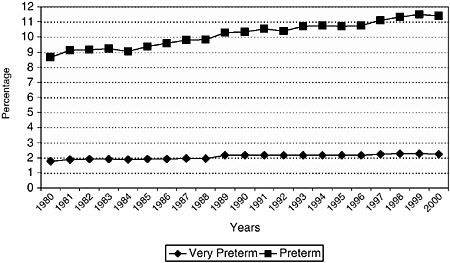
FIGURE B-2 Trends in maturity: percentages of deliveries to U.S. resident mothers by preterm birth category, 1980 to 2000. A change certificates. Source: 1985–1988 and 1995–2000 Birth Cohort Linked Birth/Infant death Data Set, CD-ROM Series 20, USDHHS, CDCP, NCHS; 1980–2000 Natality Data Set, CD-ROM Series in reporting of some variables occurred starting with 1989 birth 21, USDHHS, CDCP, NCHS.
NOTE: Change in reporting for some variables with 1989 certificate.
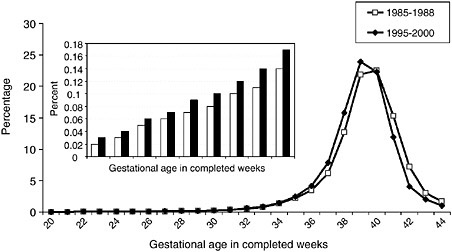
FIGURE B-3 Gestational age distributions,1985 to 1988 and 1995 to 2000. Source: 1985–1988 and 1995–2000 Birth Cohort Linked Birth/Infant death Data Set, CD-ROM Series 20, USDHHS, CDCP, NCHS; 1980–2000 Natality Data Set, CD-ROM Series 21, USDHHS, CDCP, NCHS.
TABLE B-4 Gestational Ages of Live Births in the United States, 1985– 1988 and 1995–2000
|
Gestational Age Categories |
Percentages of Births |
|
|
1985–1988 |
1995–2000 |
|
|
% Extremely Preterm (≤28 wks) |
0.66 |
0.82 |
|
% Very Preterm (≤2 wks) |
1.9 |
2.2 |
|
% Moderate Preterm (33–36 wks) |
7.7 |
8.9 |
|
%Preterm (<37 wks) |
9.7 |
11.2 |
|
%Preterm (37–41 wks) |
78.5 |
81.9 |
|
%Postterm (42+ wks) |
11.9 |
7.0 |
|
SOURCE: 1985–1988 and 1995–2000 Birth Cohort Linked Birth/Infant death Data Set, CD-ROM Series 20, USDHHS, CDCP, NCHS; 1980–2000 Natality Data Set, CD-ROM Series 21, USDHHS, CDCP, NCHS. |
||
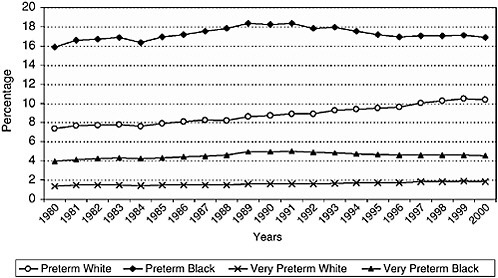
FIGURE B-4 Trends in maturity: percentages of preterm and very preterm births among whites and African Americans, 1980 to 2000. A change in reporting of some variables occurred starting with 1989 birth certificates. Source: 1985–1988 and 1995–2000 Birth Cohort Linked Birth/Infant death Data Set, CD-ROM Series 20, USDHHS, CDCP, NCHS; 1980–2000 Natality Data Set, CD-ROM Series 21, USDHHS, CDCP, NCHS.
NOTE: Change in reporting for some variables with 1989 certificate.
changes in the proportion of white multiple births and the proportions of births among older and unmarried mothers are potential contributors to these dissimilar trends in prematurity, as are changes in racial disparities in vital record reporting practices, e.g., more complete reporting of extremely preterm deliveries. Differentials in the measurement of gestational age among these groups may also be involved.
Geographic Variability
Considerable geographic variability in very preterm and preterm rates is evident in the U.S. As shown in Figures B-5a and B-5b, higher preterm and very preterm rates are evident in the southeastern states. While the racial composition of states may partly underlie the observed geographic pattern, other factors are likely to be involved. Recent investigations have established that prevailing national trends in preterm births are not applicable to each dtate and there is considerable state heterogeneity in both preterm rates and trends in preterm rates by racial groups, potentially reflecting reporting issues and other demographic, economic, social risk, and health care delivery and financing factors.
Sociodemographic Variability
Racial and ethnic variations in gestational age and preterm birth percentages have long been observed (3, 7, 9). Figure B-6 presents the percent gestational age distribution for whites, African Americans, Japanese, Asian Indian, and Samoan births, all to U.S. resident mothers. Although the mode is similar for each group, important differences are evident in the very preterm tail, with African Americans exhibiting the highest proportion of very preterm births (Figure B-7).
Geographic variations in preterm and very preterm birth rates are also observed within each major racial group (Figures B-8a to B-8d). For whites, higher percentages of preterm and very preterm births are seen from Texas through the Appalachian States. Higher percentages of very preterm births for African Americans are also noted for the mid-Atlantic states and the midwestern states of Illinois and Michigan.
Differences in gestational age distributions have been noted by maternal disease group. As depicted in Figure B-9, which displays data for the infants of white mothers only, the preterm tails of the gestational age distributions of births of hypertensive and diabetic mothers tend to be elevated, indicating higher proportions of infants born preterm. Gestational age information is also provided for the infants of white mothers who smoke. Although the impact of smoking appears to be modest, a higher percentage of very preterm births is still evident among women who smoke.
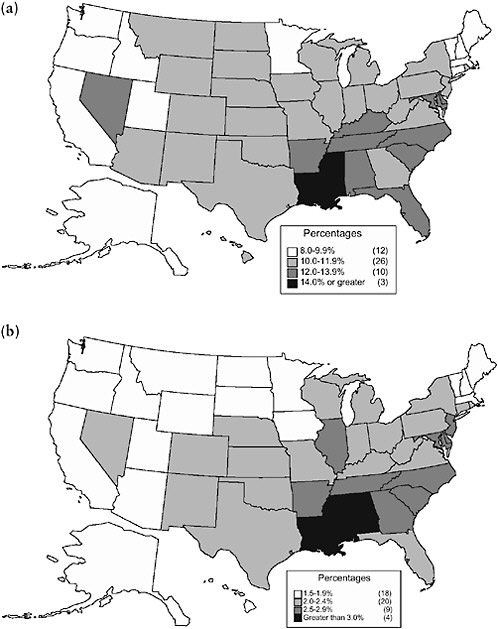
FIGURES B-5 Percentages of preterm (a) and very preterm (b) deliveries by state, 1995 to 2000. Values in parentheses are numbers of states. Source: 1995–2000 Birth Cohort Linked Birth/Infant death Data Set, CD-ROM Series 20, USDHHS, CDCP, NCHS; 1980–2000 Natality Data Set, CD-ROM Series 21, USDHHS, CDCP, NCHS.
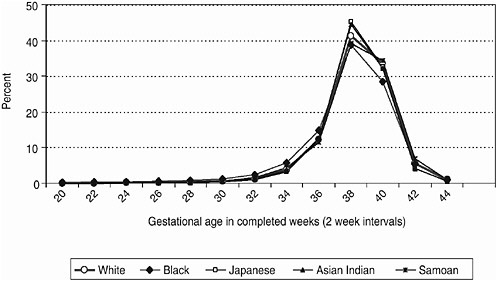
FIGURE B-7 Gestational age distribution of live births by race (20–32 weeks gestation), United States, 1999 and 2000. Source: 1995–2000 Birth Cohort Linked Birth/ Infant death Data Set, CD-ROM Series 20, USDHHS, CDCP, NCHS; 1980–2000 Natality Data Set, CD-ROM Series 21, USDHHS, CDCP, NCHS.
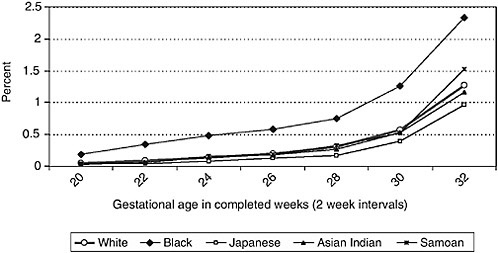
FIGURE B-6 Gestational age distribution of live births by race, United States, 1999 and 2000. Source: 1995–2000 Birth Cohort Linked Birth/Infant death Data Set, CD-ROM Series 20, USDHHS, CDCP, NCHS; 1980–2000 Natality Data Set, CD-ROM Series 21, USDHHS, CDCP, NCHS.
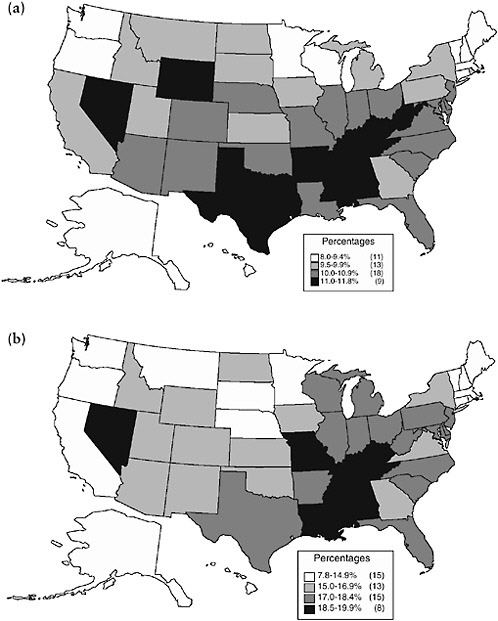
FIGURE B-8 Percentages of preterm and very preterm deliveries by race, 1995 to 2000: (a) preterm deliveries for whites; (b) preterm deliveries for African Americans; (c) very preterm deliveries for whites; (d) very preterm deliveries for African Americans. Values in parentheses are numbers of states. Source: 1995–2000 Birth Cohort Linked Birth/Infant death Data Set, CD-ROM Series 20, USDHHS, CDCP, NCHS; 1980–2000 Natality Data Set, CD-ROM Series 21, USDHHS, CDCP, NCHS.
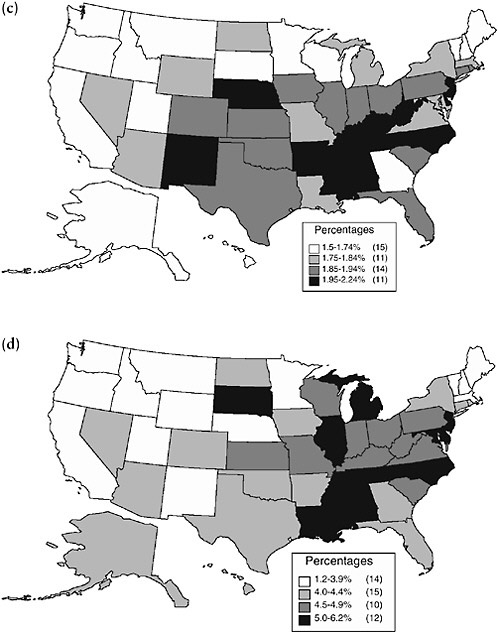
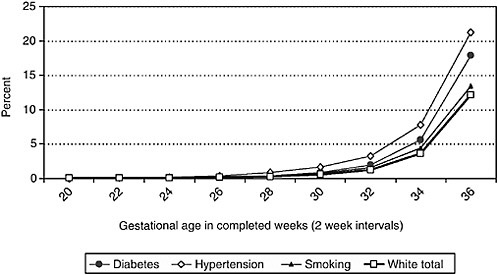
FIGURE B-9 Gestational age distribution of live births among white mothers by maternal disease group (diabetes, hypertension, and smoking), United States, 1999 and 2000. Source: 1995–2000 Birth Cohort Linked Birth/Infant death Data Set, CD-ROM Series 20, USDHHS, CDCP, NCHS; 1980–2000 Natality Data Set, CD-ROM Series 21, USDHHS, CDCP, NCHS.
Gestational ages vary markedly when multiple births are involved (52). The entire gestational age distribution for triplets and twins is shifted toward the preterm tail, and the average gestational age of these multiple births is 2 to 4 weeks shorter than that of singleton births (Figure B-10). The increasing trend in multiple births has been identified as a possible major contributor to the concurrent rise in preterm birth rates and has been related to changes in the use of ART (53).
Variations in gestational age by mode of delivery have also been noted (Figure B-11). Higher percentages of preterm and very preterm deliveries than term deliveries are found to be performed by cesarean section. Although trends in the use of cesarean section have varied over the last 2 decades, there has been a general increase in the use of cesarean section for the delivery of preterm and low birth weight infants (54).
A comparison of the very preterm tail of the gestational age distribution of extremely low-risk mothers (defined as women who are married and aged 20 to 34 years; have 13 or more years of education; are multiparous with average parity for age; and have adequate prenatal care utilization; vaginal delivery; and no reports of medical risk factors, tobacco use, or alcohol use during pregnancy) with all other mothers reveals marked differ-
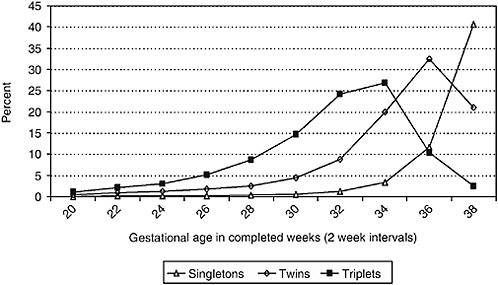
FIGURE B-10 Gestational age distribution of live births by multiple births, United States, 1996 to 2000. Source: 1995–2000 Birth Cohort Linked Birth/Infant death Data Set, CD-ROM Series 20, USDHHS, CDCP, NCHS; 1980–2000 Natality Data Set, CD-ROM Series 21, USDHHS, CDCP, NCHS.
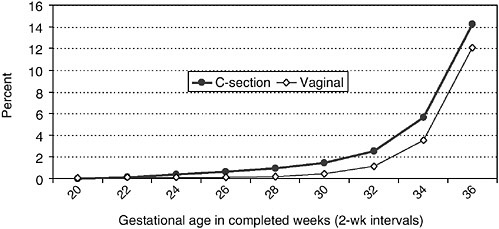
FIGURE B-11 Gestational age distribution of live births by mode of delivery, United States, 1999 and 2000 (C-section indicates delivery by cesarean section). Source: 1995–2000 Birth Cohort Linked Birth/Infant death Data Set, CD-ROM Series 20, USDHHS, CDCP, NCHS; 1980–2000 Natality Data Set, CD-ROM Series 21, USDHHS, CDCP, NCHS.
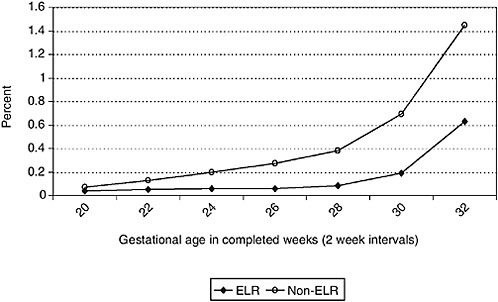
FIGURE B-12 Gestational age distribution of live births for extremely low-risk (ELR) mothers, United States, 1996 to 2000. Source: 1995–2000 Birth Cohort Linked Birth/Infant death Data Set, CD-ROM Series 20, USDHHS, CDCP, NCHS; 1980–2000 Natality Data Set, CD-ROM Series 21, USDHHS, CDCP, NCHS.
ences in the risk of preterm birth (Figure B-12). A nearly threefold difference in the very preterm birth rates is observed for these two groups.
Risk
The numerous efforts to prevent preterm birth have had little success (28–30, 55, 56). Moreover, there has been only modest success in accurately identifying women at risk for preterm birth, although quite a number of risk factors have been identified (24). Unfortunately, many of the better-established and more-predictive risk factors are either immutable in the current pregnancy or, because of our present state of knowledge, pose significant challenges for either prevention or effective intervention. These risk factors are detailed in Table B-5 and include those that predate the pregnancy, e.g., a previous low birth weight or preterm delivery, multiple second-trimester abortions, maternal stature and body mass, and a history of infertility. Placental abnormalities, cervical or uterine anomalies, and preeclampsia are additional medical risk factors for prematurity that cannot be readily prevented. Finally, intrauterine infection remains in this category as
TABLE B-5 Immutable Medical Risk Factors Associated with Preterm Birth
|
Previous low birth weight or preterm delivery Multiple 2nd trimester spontaneous abortion Prior first trimester induced abortion Familial and intergenerational factors History of infertility Nulliparity Placental abnormalities Cervical and uterine anomalies Gestational bleeding Intrauterine growth restriction In utero diethylstilbestrol exposure Multiple gestations Infant sex Short stature Low prepregnancy weight/low body mass index Urogenital infections Preeclampsia |
research on the efficacy of antibiotic therapy for the prevention of preterm delivery from these infections continues.
Demographic risks associated with preterm delivery include African American race, single marital status, low socioeconomic status, maternal age, and others (Table B-6). Although demographic factors cannot cause the premature expulsion of a fetus, these factors may antagonize some other risk factor(s).
Social, behavioral, stress, and maternal psychological factors have frequently been linked to pregnancy outcomes; and chronic stress has been related to low socioeconomic status (57–66). There have been difficulties in measuring the amount of stress caused by life events, but consistent associations between perceived stress and preterm birth have been reported.
TABLE B-6 Demographic Risk Factors Associated with Preterm Birth
|
Race/ethnicity Single Marital Status Low Socioeconomic status Seasonality of pregnancy and birth Maternal Age Employment-related physical activity Occupational exposures Environment exposures |
TABLE B-7 Possibly Mutable Risk Factors
|
Associated with Preterm Birth No or inadequate prenatal care usage Cigarette smoking Use of marijuana and other illicit drugs Cocaine use Alcohol consumption Caffeine intake Maternal weight gain Dietary intake Sexual activity during late pregnancy Leisure-time physical activities |
Chronic stressors may include financial insecurities, poor and crowded living conditions, unemployment, stressful working conditions, domestic violence, and unsatisfying marital relationships. Many of these risk factors are multifactorial and are deeply intertwined with social class, culture, race, and ethnicity. Continued research in the area of stress and its relationship to preterm birth is needed to determine the capacity for the prevention of preterm birth through the alleviation of stress. Essential to the development of successful interventions in this area is the elucidation of the biological pathways by which stressors influence preterm labor and the identification of biological markers that are more specific indicators of risk than the current measures of demographics and socioeconomic status.
Although it is often difficult to modify risk factors, a number of maternal behavioral risk factors for preterm delivery have been identified and are potentially mutable (Table B-7). Among those that can be targeted for the prevention of preterm birth include cigarette smoking, prenatal care utilization, and illicit drug use. Illicit drug use during pregnancy has been associated with a more than twofold increased risk of preterm premature rupture of membranes. However, the proportion of the pregnant population engaged in illicit drug use may be small, and to the extent that intervention efforts are effective in preventing drug use during pregnancy, the potentially attainable decrease in overall preterm birth rates from such interventions may be quite modest.
Table B-8 details risk factors for preterm birth by four time periods (1980 to 1984, 1985 to 1989, 1990 to 1994, and 1995 to 1999). The risk factors include the age of the mother, level of maternal education achieved, marital status, parity, maternal race, maternal nativity status, maternal complications of diabetes and hypertension, maternal smoking, and multiple births. For each risk factor, the table provides the percentage of births with the characteristic, the percentage of preterm births with the characteristic,
and the percentage of preterm births among all births with the characteristic. Odds ratios (ORs) are derived from a logistic regression by using preterm birth as the outcome variable. The attributable risk (AR) fraction is also indicated. The increasing role of multiple births in the increasing rates of preterm birth in the United States are evident from the data in Table B-8, with nearly 15 percent of preterm births being either twins or higher-order multiple births. The numbers of births to older mothers are also observed to be increasing, and the risk of a preterm birth is noted to rise with advancing maternal age (Table B-8 and Figure B-13). Nevertheless, the overall contribution of maternal age to preterm birth rates remains modest in comparison with the contributions of other maternal characteristics, e.g., multiple births and marital status.
Gestational Age–Specific Mortality
Although the rates of preterm birth have been increasing over the last 20 years, infant mortality rates in the United States have continued to decline (10). Despite the occurrence of more high-risk births, the improvement in infant mortality appears to be driven by advancements in survival. As portrayed in Figure B-14, improvements in gestational age–specific infant mortality are evident for each gestational age interval beyond 20 to 21 weeks of gestation between the periods 1985–1988 and 1995–2000. Figure B-15 indicates the percent decline in gestational age–specific mortality between the periods. For births at 24 weeks gestation and greater, a more than 30 percent reduction in mortality risk occurred between the time periods. An approximately 40 percent decrease in infant mortality or better was evident for births at 26 to 31 weeks of gestation. Even births in the range of 22 to 23 weeks of gestation experienced some improvement in survival.
Within each of the well-established gestational age categories (i.e., very preterm, moderately preterm, term, and postterm), infant mortality rates were markedly lower for the 1995–2000 time period (Table B-9).
Geographic variations in infant mortality rates for preterm and very preterm births are provided in Figures B-16 and B-17 for 1995 to 2000 U.S. resident births. Considerable variation in the mortality risk of these high risk infants is apparent. States along the southern Atlantic coast evinced markedly higher mortality rates and for very preterm infants, elevated rates were also observed for several midwestern industrial states. Myriad factors may underlie these variations in the survival of preterm and very preterm births. In addition to differences in rates that may be influenced by gestational age measurement and reporting issues, variations in population risk characteristics may also be involved. Lastly, attributes of the health care system, including availability, access, and quality, may further be associated with these geographic patterns in infant mortality risk.
TABLE B-8 Risk Factors for Preterm Birth
|
|
1980–1984 |
1985–1989 |
||||
|
|
% Total |
OR |
ARtotal |
% Total |
OR |
ARtotal |
|
|
% Among Preterm Births |
% Among Preterm Births |
||||
|
Factor |
% Preterm |
|
|
% Preterm |
|
|
|
Total % Preterm |
|
9.1 |
|
|
9.8 |
|
|
Age in teens |
5.3 |
1.3 |
3.9 |
4.6 |
1.20 |
3.2 |
|
|
8.7 |
(1.29–1.31)a |
7.6 |
(1.19–1.21) |
|
|
|
|
15.8 |
16.1 |
|
|||
|
Older age |
5.2 |
1.19 |
0.3 |
7.6 |
1.21 |
0.4 |
|
|
5.6 |
(1.18–1.20) |
7.9 |
(1.21–1.22) |
|
|
|
|
9.7 |
10.2 |
|
|||
|
High level of education |
34.3 |
0.84 |
–11.9 |
38.3 |
0.84 – |
13.0 |
|
|
27.4 |
(0.84–0.85) |
30.3 |
(0.83–0.84) |
|
|
|
|
7.0 |
7.8 |
|
|||
|
Low level of education |
19.6 |
1.26 |
8.9 |
18.4 |
1.21 |
7.8 |
|
|
26.1 |
(1.26–1.27) |
24.8 |
(1.21–1.22) |
|
|
|
|
12.4 |
13.2 |
|
|||
|
Unmarried |
19.3 |
1.42 |
14.8 |
24.0 |
1.43 |
16.8 |
|
|
30.7 |
(1.42–1.43) |
36.7 |
(1.42–1.43) |
|
|
|
|
15.0 |
15.0 |
|
|||
|
Primiparous |
42.3 |
1.10 |
0.3 |
41.3 |
1.08 |
–0.7 |
|
|
42.9 |
(1.10–1.11) |
40.9 |
(1.07–1.08) |
|
|
|
|
9.1 |
9.7 |
|
|||
|
High parity |
3.6 |
1.20 |
2.1 |
3.1 |
1.23 |
2.1 |
|
|
5.3 |
(1.19–1.22) |
5.2 |
(1.22–1.24) |
|
|
|
|
15.0 |
16.3 |
|
|||
|
African-American race |
15.6 |
1.91 |
14.8 |
15.8 |
1.94 |
15.0 |
|
|
27.9 |
(1.91–1.92) |
28.5 |
(1.93–1.95) |
|
|
|
|
16.5 |
17.6 |
|
|||
|
Foreign born |
9.9 |
1.03 |
0.22 |
13.1 |
1.01 |
–0.2 |
|
|
10.2 |
(1.02–1.04) |
12.9 |
(1.00–1.01) |
|
|
|
|
9.2 |
|
|
9.6 |
|
|
|
|
1990–1994 |
1995–1999 |
||||
|
|
% Total |
OR |
ARtotal |
% Total |
OR |
ARtotal |
|
|
% Among Preterm Births |
% Among Preterm Births |
||||
|
|
% Preterm |
|
|
% Preterm |
|
|
|
|
|
10.6 |
|
|
11.1 |
|
|
|
5.0 |
1.21 |
2.6 |
4.8 |
1.17 |
1.8 |
|
|
7.3 |
(1.19–1.23) |
|
6.5 |
(1.16–1.17) |
|
|
|
15.7 |
|
15.1 |
|
||
|
|
9.9 |
1.20 |
0.9 |
12.6 |
1.21 |
1.6 |
|
|
10.7 |
(1.19–1.22) |
|
14.0 |
(1.20–1.21) |
|
|
|
11.3 |
|
12.4 |
|
||
|
|
37.9 |
0.85 |
–12.1 |
45.1 |
0.87 |
–9.6 |
|
|
30.7 |
(0.84–0.85) |
|
39.9 |
(0.86–0.87) |
|
|
|
8.4 |
|
9.8 |
|
||
|
|
21.6 |
1.16 |
7.0 |
19.6 |
1.11 |
4.2 |
|
|
26.9 |
(1.15–1.17) |
|
22.8 |
(1.11–1.12) |
|
|
|
13.1 |
|
12.8 |
|
||
|
|
30.2 |
1.35 |
16.2 |
32.3 |
1.23 |
12.1 |
|
|
41.3 |
(1.34–1.36) |
|
40.5 |
(1.23–1.24) |
|
|
|
14.6 |
|
13.9 |
|
||
|
|
40.6 |
1.05 |
–1.8 |
40.7 |
1.07 |
–1.4 |
|
|
39.6 |
(1.04–1.06) |
|
39.8 |
(1.07–1.08) |
|
|
|
10.3 |
|
10.9 |
|
||
|
|
3.8 |
1.25 |
2.4 |
3.3 |
1.27 |
1.9 |
|
|
6.0 |
(1.23–1.27) |
|
5.1 |
(1.26–1.28) |
|
|
|
17.4 |
|
17.0 |
|
||
|
|
16.4 |
1.97 |
13.8 |
15.4 |
1.69 |
9.8 |
|
|
27.9 |
(1.95–1.98) |
|
23.6 |
(1.68–1.70) |
|
|
|
18.0 |
|
17.1 |
|
||
|
|
17.0 |
1.04 |
–1.2 |
19.3 |
0.99 |
–1.5 |
|
|
16.0 |
(1.03–1.05) |
|
17.9 |
(0.995–1.00) |
|
|
|
9.9 |
|
|
10.3 |
|
|
Figure B-18 depicts gestational age-specific infant mortality rates for births from 1995 to 2000 among white and African American U.S. resident mothers. At between 26 and 33 weeks of gestation, little difference in infant mortality is evident between the racial groups. This stands in contrast to reports from earlier time periods in the United States in which preterm African American infants were observed to have a survival advantage over white preterm infants (6, 8). At the limit of viability, African American infants continue to have a greater chance of survival. For infants born moderately preterm, term, and postterm, whites exhibit a lower infant mortality rate.
DISCUSSION
The information provided in this paper reveals an ongoing rise in the rate of preterm births in the United States and considerable geographic variation in rates across U.S. states. Furthermore, during this period of increasing preterm birth rates, the mortality risk associated with a preterm
|
|
1990–1994 |
1995–1999 |
||||
|
|
% Total |
OR |
ARtotal |
% Total |
OR |
ARtotal |
|
|
% Among Preterm Births |
% Among Preterm Births |
||||
|
|
% Preterm |
|
|
% Preterm |
|
|
|
|
2.5 |
9.88 |
9.9 |
2.9 |
13.14 |
12.3 |
|
|
12.1 |
(9.74–10.02) |
|
14.8 |
(13.06–13.21) |
|
|
|
51.6 |
|
57.1 |
|
||
|
|
3.4 |
1.84 |
2.9 |
4.3 |
2.27 |
4.7 |
|
|
6/3 |
(1.81–1.87) |
|
8.8 |
(2.26–2.29) |
|
|
|
19.2 |
|
22.5 |
|
||
|
|
2.4 |
1.28 |
0.7 |
2.6 |
1.37 |
1.1 |
|
|
3.0 |
(1.25–1.31) |
|
3.6 |
(1.36–1.38) |
|
|
|
13.2 |
|
15.4 |
|
||
|
|
12.4 |
1.25 |
3.2 |
10.7 |
1.26 |
2.6 |
|
|
15.2 |
(1.24–1.26) |
|
13.1 |
(1.25–1.26) |
|
|
|
12.9 |
|
|
13.6 |
|
|
birth declined. However, marked geographic variations in the rates of survival among infants born preterm were also noted. Finally, racial disparities in the rates of preterm birth continued to be a persistent feature of pregnancy outcome statistics in the United States. Of concern, these racial disparities are increasing (6).
Interpreting these trends and variations in preterm rates presents a difficult task. Over the years, many popular conjectures have emerged to explain these rising rates and have covered a wide range of possibilities, including changes in rates of substance use (e.g., epidemics in cocaine use), alterations in population demographics (e.g., growing numbers of older mothers), advances in medical technology (e.g., the greater use of ART, leading to more multiple births), and developments in medical practice (e.g., a greater willingness of obstetricians and maternal-fetal medicine specialists to intervene and deliver high-risk fetuses earlier in pregnancy because of earlier entry into prenatal care, leading to the earlier identification of high-risk conditions, coupled with the development and availability of therapies, including surfactant and steroids, and perinatal and neonatal care for high-
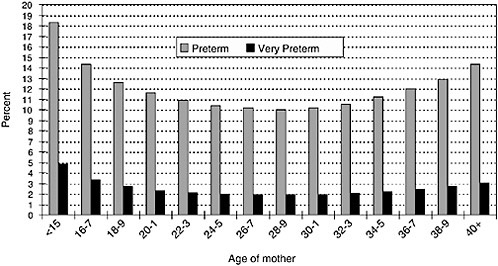
FIGURE B-13 Percentages of preterm and very preterm births by age of the mother, 1995 to 2000. Source: 1985–1988 and 1995–2000 Birth Cohort Linked Birth/ Infant Death Data Set, CD-ROM Series 20, USDHHS, CDCP, NCHS; 1980–2000 Natality Data Set, CD-ROM Series 21, USDHHS, CDCP, NCHS.
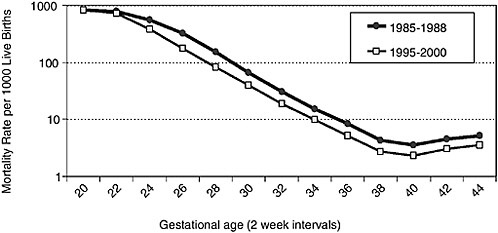
FIGURE B-14 Gestational age-specific infant mortality rates by time period, 1985– 1988 and 1995–2000. Source: 1985–1988 and 1995–2000 Birth Cohort Linked Birth/Infant Death Data Set, CD-ROM Series 20, USDHHS, CDCP, NCHS; 1980– 2000 Natality Data Set, CD-ROM Series 21, USDHHS, CDCP, NCHS.
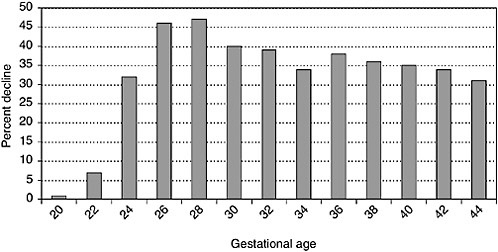
FIGURE B-15 Percent decline in gestational age-specific infant mortality rates between 1985–1988 and 1995–2000. Source: 1985–1988 and 1995–2000 Birth Cohort Linked Birth/Infant Death Data Set, CD-ROM Series 20, USDHHS, CDCP, NCHS; 1980–2000 Natality Data Set, CD-ROM Series 21, USDHHS, CDCP, NCHS.
TABLE B-9 Gestational Age Specific Infant Mortality 1985–1988 and 1995–2000
|
Gestatinal Age Categories (wk of Gestation) |
Infant Mortality Rate |
|
|
1985–1988 |
1995–2000 |
|
|
Very Preterm (<33 wks) |
198.9 |
151.3 |
|
Moderately Preterm (33–36 wks) |
14.0 |
8.8 |
|
Term (37–41 wks) |
4.2 |
2.7 |
|
Postterm (>41 wks) |
4.6 |
3.1 |
|
SOURCE: 1985–1988 and 1995–2000 Birth Cohort Linked Birth/Infant Death Data Set, CD-ROM Series 20, USDHHS, CDCP, NCHS; 1980–2000 Natality Data Set, CD-ROM Series 21, USDHHS, CDCP, NCHS. |
||
risk births) (10).Preterm birth prevention programs,which often involve social support and patient education,have also been proposed and implemented but have shown little success (28, 30).Lastly,more prenatal care has been touted as a solution,even though it has been argued that little is done in the typical prenatal practice that would prevent preterm birth (26).
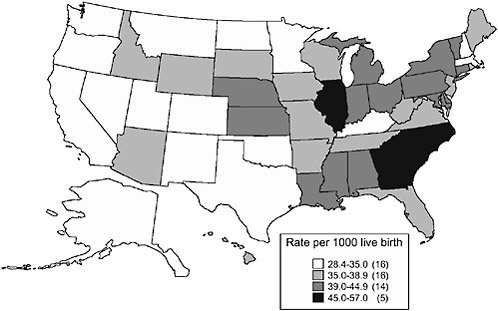
FIGURE B-16 Infant mortality rates among preterm deliveries, by state, 1995 to 2000. Source: 1995–2000 Birth Cohort Linked Birth/Infant death Data Set, CD-ROM Series 20, USDHHS, CDCP, NCHS; 1980–2000 Natality Data Set, CD-ROM Series 21, USDHHS, CDCP, NCHS
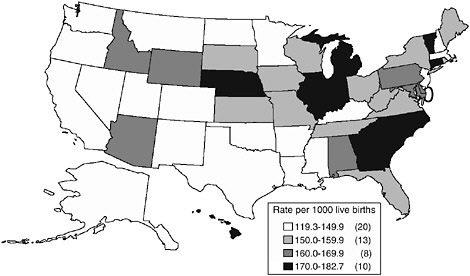
FIGURE B-17 Infant mortality rates among very preterm deliveries, by state, 1995 to 2000. Source: 1995–2000 Birth Cohort Linked Birth/Infant death Data Set, CD-ROM Series 20, USDHHS, CDCP, NCHS; 1980–2000 Natality Data Set, CD-ROM Series 21, USDHHS, CDCP, NCHS.
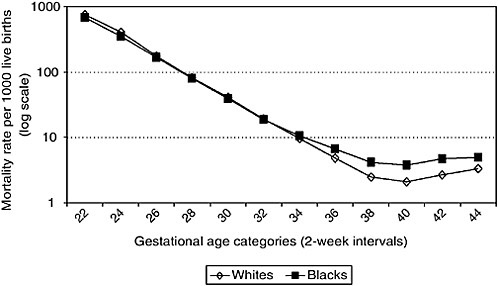
FIGURE B-18 Gestational age-specific infant mortality rates among U.S. resident African Americans and whites, by state, 1995 to 2000. Source: 1995–2000 Birth Cohort Linked Birth/Infant Death Data Set, CD-ROM Series 20, USDHHS, CDCP, NCHS; 1980–2000 Natality Data Set, CD-ROM Series 21, USDHHS, CDCP, NCHS.
Reporting Issues and Their Potential Impact
Most of the proposed “causes” of the trends and geographic variations in preterm birth rates are plausible and may operate individually or in combination. What is unclear is the extent to which each potential determinant is associated with observed variations in preterm birth rates and what other possible factors might also be involved. A typical approach for interpreting changes in preterm birth rates involves a systematic assessment of the likely precursors, starting with data reporting, regulations, procedures, processes, training, quality, completeness, etc. Variations and changes in gestational age measurement approaches and data reporting may substantially influence geographic and temporal comparisons of preterm birth rates. Before consideration of the potential roles of changes in maternal demographic and behavioral characteristics (including the age of the mother, substance use and abuse, and multiple births), social and physical environment factors (including violence, poverty, infections, stress, and environmental hazards), and health care service attributes and practices (involving availability, access, utilization, types, and the content and quality of services and programs), reporting considerations must be addressed.
Several specific reporting issues may affect trends and variations in preterm birth rates. These include changes or differences in:
-
the reporting of deliveries of infants weighing <500 grams as either a miscarriage, a fetal death, or a live birth;
-
the definition of fetal death involving birth weight and gestational age criteria;
-
the measurement of gestational age, e.g., by the use of LMP and clinical estimates; and
-
reporting regulations, procedures, processes, training, and quality at hospitals and by state and local jurisdictions.
Geographic Comparisons
Differences in preterm birth rates because of differences in data reporting, validity, accuracy, and completeness are difficult to separate from differences in the high-risk characteristics of the population and environment and the availability of health care and the accessibility and quality of the health care system. As the data included in this appendix have highlighted (Figures B-5a and B-5b, B-8a to B-8d, B-16, and B-17), considerable state variations in preterm birth rates and the survival of infants born preterm are evident. The extent to which population-related and health care system–related risk factors contribute to these variations can be assessed only with a solid understanding of each state’s definitions of a live birth, a fetal death, gestational age, and other reporting attributes. As data are typically collected within hospitals within states, state aggregations of information may obscure what might be significant reporting variations among and within hospitals. Hence, in the United States, where there is considerable similarity in vital statistics reporting regulations, data definitions, reporting procedures, and population characteristics, comparisons among states are still made tenuous by the influence of these myriad confounding factors.
The problem of data reporting is magnified at the international level, where substantial differences in the definitions of live births and fetal deaths exist stemming from variations in vital record reporting, laws, and procedures. Infant mortality and low birth weight rates for the United States have repeatedly been indicated to compare poorly with those for other industrialized nations (23, 67). From these data, it is logical to infer that U.S. preterm birth rates are also higher than those in many other countries of similar status, despite potentially higher investments to health care in the United States. The precise delineation of where the United States ranks in preterm delivery is still difficult, as the impacts of different national standards of practice related to the measurement of gestational age are often unclear. For example, it may not be known what measure is typically used
to estimate gestational age, e.g., ultrasound or LMP. Some nations may rely on periodic surveys rather than vital records to establish preterm birth rate trends. Hence, observations of marked differences in preterm birth rates between European countries and the United States are fraught with the potential for error. Although there may be an ongoing desire to determine the health care system policies and programs that underlie the preferable preterm birth rates of some nations, such assessments may be flawed and highly speculative if a careful review of potential reporting variations is first performed and then the influences of variations in population and environmental characteristics are taken into account. Often, the confounding effects of these many factors cannot be accurately established to sufficiently assess the contribution of any particular intervention. Currently, the twofold and greater differences in very preterm birth rates among U.S. states are largely unexplained. Establishing which factors underlie similar or greater international variations poses an even more daunting task.
The difficulty in making relatively unbiased comparisons in preterm birth rates among countries may underscore the paucity of published international reports (23). International comparisons of low birth weight rates have been made available (67). Nevertheless, such reports emphasize that interpreting international comparisons and trends must be made cautiously and typically tend to shy away from speculating on the range of determinants that may underlie the observed differences in rates. Recognizing the limitations of the available data, recent reports indicate that the U.S. low birth weight percentage is above the average for more developed countries (8 versus 7 percent) (67). However, many low birth weight infants are SGA and not preterm, and the proportion of term low birth weight infants could vary markedly by country. As such, the U.S. standing for low birth weight may not provide an unbiased estimate of its preterm birth rate ranking. Nevertheless, given nutritional levels in the United States, it is unlikely that the United States would fare better in a valid ranking of preterm rates. With a current preterm birth rate of approximately 12 percent, a level notably above the preterm birth rates (≤7 percent) reported for several European countries some years ago, it is a reasonable assumption that preterm birth is a serious problem in the United States that has persisted for some time (23).
Understanding the variation in preterm birth rates among states within the United States may be a logical first step that should be taken before an attempt is made to make more global contrasts. For both national and international comparisons, an assessment of the definitions of birth and fetal death and procedures for the reporting of births and fetal deaths are clear starting points. Although some discrepancies in definitions can be taken into account analytically, variations in laws that affect the reporting of preterm births and fetal deaths still remain a challenge. As such work progresses, several documented interventions that have been implemented
by other developed countries may well be worth considering simply on the basis of their humane approach to providing services to women and children (68). These include universal health care coverage for women and children and maternal work and parental leave policies.
Racial Disparities
The factors that underlie the growing racial disparities in infant mortality remain open to speculation (50). Clearly, there have been improvements in survival for both the white and the African American populations in the United States over the last few decades (69). The improvement in preterm infant survival probably reflects technological and practice developments in high-risk obstetric, perinatal, and neonatal care (70–76). In the obstetric area, antenatal corticosteroids and intrapartum antibiotics have been linked to reductions in neonatal morbidity and mortality. Advances in neonatal care include high-frequency ventilation, surfactant, and postnatal steroids. Regionalization of high-risk perinatal services facilitates appropriate access to these obstetric and neonatal intensive care services. Nevertheless, whites have experienced greater improvements in survival for both preterm and term infants, thereby closing the racial disparity found for preterm infants (in which African American infants have long had a survival advantage) and widening the disparity for more mature and postmature births (6). It has been postulated that the development and impact of several therapies, e.g., surfactant and steroids, may have differentially benefited preterm white infants, who may be relatively more immature and who are known to be at greater risk of mortality (7, 8, 72, 77).
State variations in the risk of mortality for preterm infants were observed in these data and are largely unexplained. Further investigation is needed to explore how the racial compositions of state populations may partly underlie these variations. With a decreasing racial disparity in the rates of survival of infants born preterm, racial variations in access to tertiary perinatal hospital care may be involved in these observed geographic patterns (78). Although limitations to health care access are typically a concern for more impoverished populations, in some parts of the country, African American women may be more likely than white women to deliver their infants in a tertiary-care center (79). Further investigation will be needed to establish the extent to which racial variations in access to high-risk obstetric and neonatal care exists, has changed over time, and may differ among the states. Although early access to prenatal care does not necessarily have a direct impact on preterm birth rates, early access may facilitate delivery in a risk-appropriate hospital. However, recent investigations of prenatal care use by race groups in the United States have revealed that racial disparities
in early, adequate, and intensive use of prenatal care were reduced during the 1990s (80, 81).
SUMMARY
The current levels of preterm delivery rates in the United States represent a significant health care concern. Preterm birth rates continue to rise, and best estimates suggest that they are elevated in relation to those in other industrialized nations (23). Major geographic and racial disparities in preterm birth rates continue to exist, and these variations offer potential opportunities to better understand the population-based risk factors for preterm birth and the impacts of preterm birth prevention programs and policies. Although progress in the delineation of the risk factors and etiologic pathways for preterm birth has been made, much still needs to be done before cost-effective and efficacious prevention strategies can be implemented at the population level. The general ineffectiveness of current interventions for the prevention of preterm delivery has changed little in the last decade. On the plus side, however, the chances for survival of infants born preterm continue to increase. So long as the medical and support services needed are available to assist these infants and their families, this represents a noteworthy achievement. However, concerns have been voiced that our willingness to support accessibility to these services and the availability of these services for these infants may lag behind our drive to improve survival (82).
REFERENCES
1. Centers for Disease Control and Prevention. Infant mortality and low birth weight among black and white infants—United States, 1980–2000. Morb Mortal Wkly Rep 2002; 51:589–592.
2. Carmichael SL, Iyasu S. Changes in the black-white infant mortality gap from 1983 to 1991 in the United States. Am J Prev Med 1998; 15(3):220–227.
3. Demissie K, Rhoads GG, Ananth CV, Alexander GR, Kramer MS, Kogan MD, Joseph KS. Trends in preterm birth and neonatal mortality among blacks and whites in the United States from 1989 to 1997. Am J Epidemiol 2001; 154:307–315.
4. Lee KS, Paneth N, Gartner LM, et al. Neonatal mortality: an analysis of the recent improvement in the United States. Am J Public Health 1980; 70(1):15–21.
5. Philip, AGS. Neonatal mortality rate: is further improvement possible? J Pediatr 1995; 126(3):427–432.
6. Alexander GR, Slay M, Bader D, Kogan M. The increasing racial disparity in infant mortality rates: composition and contributors to recent U.S. trends. In press.
7. Alexander GR, Tompkins ME, Allen MC, et al. Trends and racial differences in birth weight and related survival. Maternal Child Health J 1999; 3(1):71–79.
8. Allen MC, Alexander GR, Tompkins ME, et al. Racial differences in temporal changes in newborn viability and survival by gestational age. Paediatr Perinat Epidemiol 2000; 14:152–158.
9. Centers for Disease Control and Prevention. State Infant Mortality Initiative. Atlanta, GA: Centers for Disease Control and Prevention, 2006.
10. Alexander GR, Slay M. Prematurity at birth: trends, racial disparities, and epidemiology. Mental Retard Dev Dis Res Rev 2002; 8(4):215–220.
11. Centers for Disease Control and Prevention. Preterm singleton births—United States, 1989–1996. Morb Mortal Wkly Rep 1999; 48(9):185–189.
12. Joseph KS, Kramer MS, Marcoux S, et al. Determinants of preterm birth rates in Canada from 1981 through 1994. N Engl J Med 1998; 339:1434–1439.
13. Kramer MS. Preventing preterm birth: are we making progress? Prenatal Neonatal Med 1998; 3:10–12.
14. Sepkowitz S. Why infant very low birth weight rates have failed to decline in the United States vital statistics. Int J Epidemiol 1994; 23(2):321–326.
15. Paneth NS. Technology at birth. Am J Public Health 1990; 80:791–792.
16. Levit EM, Baker LS, Corman H, Shiono PH. The direct cost of low birth weight. Future Child 1995; 5(1):35–56.
17. Rogowski JA. The economics of preterm delivery. Prenatal Neonatal Med 1998; 3: 16–20.
18. Johnston RB, Williams MA, Hogue CJR, et al. Overview: new perspectives on the stubborn challenge of preterm birth. Paediatr Perinat Epidemiol 2001; 15(Suppl 2):3–6.
19. Mattison DR, Damus K, Fiore E, et al. Preterm delivery: a public health perspective. Paediatr Perinat Epidemiol 2001; 15(Suppl 2):7–17.
20. McCormick MC. The contribution of low birth weight to infant mortality and childhood morbidity. N Engl J Med 1985; 312:82–89.
21. Hack M, Taylor HG, Klein N, et al. School-age outcomes in children with birth weights under 750g. N Engl J Med 1994; 331:753–759.
22. Saigal S, Hoult LA, Streiner DL, et al. School difficulties at adolescence in a regional cohort of children who were extremely low birth weight. Pediatrics 2000; 105:325–331.
23. Paneth NS. The problem of low birth weight. Future Child 1995; 5(1):19–34.
24. Institute of Medicine. Preventing Low Birth Weight. Washington, DC: National Academy Press. 1985.
25. Berendes HW, Kessel S, Yaffe S. Advances in the Prevention of Low Birth Weight Proceedings of an International Symposium. Washington, DC: National Center for Education in Maternal and Child Health, 1991.
26. Alexander GR. Preterm birth: etiology, mechanisms, and prevention. Prenatal Neonatal Med 1998; 3(1):3–9.
27. Alexander GR, Howell E. Preventing preterm birth and increasing access to prenatal care: two important but distinct national goals. Am J Prev Med 1997; 13(4):290–291.
28. Alexander GR, Weiss J, Hulsey TC, et al. Preterm birth prevention: an evaluation of programs in the United States. Birth 1991; 18(3):160–169.
29. Goldenberg RL, Rouse DJ. Prevention of premature birth. N Engl J Med 1998; 339(5):313–320.
30. Goldenberg RL, Andrews WW. Intrauterine infection and why preterm prevention programs have failed. Editorial. Am J Public Health 1996; 86:781–783.
31. Silverman WA. Nomenclature for duration of gestation, birth weight and intrauterine growth. Pediatrics 1967; 39:935–939.
32. Kramer MS. Determinants of low birth weight: methodological assessment and meta-analysis. Bull W H O 1987; 65:663–737.
33. Kramer MS. Intrauterine growth and gestational duration determinants. Pediatrics 1987; 80(4):502–511.
34. Klebanoff MA. Conceptualizing categories of preterm birth. Prenatal Neonatal Med 1998; 3:13–15.
35. Klebanoff MA, Shiono PA. Top down, bottom up, and inside out: reflections on preterm birth. Paediatr Perinat Epidemiol 1995; 9:125–129.
36. Tucker JM, Goldenberg RL, Davis RO, et al. Etiologies of preterm birth in an indigent population: is prevention a logical explanation? Obstet Gynecol 1991; 77:343–347.
37. Guinn DA, Goldenberg RL, Hauth CJ, et al. Risk factors for the development of preterm premature rupture of the membranes after arrest of preterm labor. Am J Obstet Gynecol 1995; 173:310–315.
38. Allen MC, Amiel-Tison C, Alexander GR. Measurement of gestational age and maturity. Prenat Neonat Med 1998; 3(1):56–59.
39. Alexander GR, Allen MC. Conceptualization, measurement, and use of gestational age. I. Clinical and public health practice. J Perinatol 1996; 16(2):53–59.
40. Reid J. On the duration of pregnancy in the human female. Lancet 1850; ii:77–81.
41. Treloar AE, Behn BG, Cowan DW. Analysis of the gestational interval. Am J Obstet Gynecol 1967; 99:34–45.
42. Kramer MS, McLean FH, Boyd ME, Usher RH. The validity of gestational age estimation by menstrual dating in term, preterm, and postterm gestations. JAMA 1988; 260:3306– 3308.
43. Alexander GR, Tompkins ME, Hulsey TC, Petersen DJ, Mor JM. Discordance between LMP-based and clinically estimated gestational age: implications for research, programs and policy. Public Health Rep 1995; 110(4):395–402.
44. Alexander GR, Tompkins ME, Cornely DA. Gestational age reporting and preterm delivery. Public Health Rep 1990; 105(3):267–275.
45. David RJ. The quality and completeness of birthweight and gestational age data in computerized data files. Am J Public Health 1980; 70:964–973.
46. Gjessing HK, Skjaerven R, Wilcox AJ. Errors in gestational age: evidence of bleeding early in pregnancy. Am J Public Health 1999; 89:213–218.
47. Dubowitz LMS, Dubowitz V, Goldberg C. Clinical assessment of gestational age in the newborn infant. J Pediatr 1970; 77(1):1–10.
48. Ballard JL, Novak KK, Driver M. A simplified score for assessment of fetal maturation of newly born infants. J Pediatr 1979; 95(5 Pt 1):769–774.
49. Ballard PL. Scientific rationale for the use of antenatal glucocorticoids to promote fetal development. Pediatr Rev 2000; 1(5):E83–E90.
50. Papiernik É, Alexander GR. Discrepancy between gestational age and fetal maturity among ethnic groups. In: Chervenak F, ed. Fetus as a Patient. Carnforth, United Kingdom: Parthenon Publishing, 1999.
51. Centers for Disease Control and Prevention. State-specific changes in singleton preterm births among black and white women—United States, 1990 and 1997. Morb Mortal Wkly Rep 2000; 49:837–840.
52. Blondel B, Kogan, MD, Alexander GR, et al. The impact of the increasing number of multiple births on the rates of preterm birth and low birth weight: an international study. Am J Public Health 2002; 92:1323–1330.
53. Centers for Disease Control and Prevention. Contribution of assisted reproductive technology and ovulation-inducing drugs to triplet and higher-order multiple births. United States, 1980–1997. Morb Mortal Wkly Rep 2000; 49:535–539.
54. Centers for Disease Control and Prevention. Births: Final Data for 2003. National Vital Statistices Reports 54(2). Hyattsville, Maryland: National Center for Health Statistics.
55. Goldenberg RL. The prevention of low birth weight and its sequela. Prevent Med 1994; 23:627–631.
56. Copper RL, Goldenberg RL, Creasy RK, et al. A multicenter study of preterm birth weight and gestational age-specific neonatal mortality. Am J Obstet Gynecol 1993; 168(1):78–84.
57. Berkowitz GS, Lapinski RH. Relative and attributable risk estimates for preterm birth. Prenatal Neonatal Med 1998; 3:53–55.
58. Berkowitz GS, Papiernik E. Epidemiology of preterm birth. Epidemiol Rev 1993; 15:414– 443.
59. Copper RL, Goldenberg RL, Elder N, et al. The preterm prediction study: maternal stress is associated with spontaneous preterm birth at less than thirty-five weeks’ gestation. Am J Obstet Gynecol 1996; 175:1286–1292.
60. Holtzman C, Paneth N, Fisher R, et al. Rethinking the concept of risk factors for preterm delivery: antecedents, markers and mediators. Prenatal Neonatal Med 1998; 3:47–52.
61. Kogan MD, Alexander GR. Social and behavioral factors in preterm birth. Prenat Neonat Med 1998; 3:29–31.
62. Kramer MS, Goulet L, Lydon J, et al. Socio-economic disparities in preterm birth: causal pathways and mechanisms. Paediatr Perinat Epidemiol 2001; 15(Suppl 2):104–123.
63. McCauley J, Kern DE, Kolodner K, et al. The “battering syndrome”: prevalence and clinical characteristics of domestic violence in primary care internal medical practices. Ann Intern Med 1995; 123:737–746.
64. Muhajarine N, D’Arcy C. Physical abuse during pregnancy: prevalence and risk factors. Can Med Assoc J 1999; 160:1007–1011.
65. Nordentoft M, Lou HC, Hansen D, et al. Intrauterine growth retardation and premature delivery: the influence of maternal smoking and psychosocial factors. Am J Public Health 1996; 86:347–354.
66. Peacock JL, Bland M, Anderson HR. Preterm delivery: effects of socioeconomic factors, psychological stress, smoking, alcohol, and caffeine. Br Med J 1995; 311:531–536.
67. United Nations Children’s Fund and World Health Organization. Low Birthweight: Country, Regional and Global Estimates. New York: United Nations Children’s Fund, 2004.
68. DiRenzo GC, Moscioni P, Perazzi A, Papiernik E, Breart G, Saurel-Cubizolles MJ. Social policies in relation to employment and pregnancy in European countries. Prenat Neonat Med 1998; 3(1):147–156.
69. Allen MC, Donohue PK, Dusman AE. The limit of viability: neonatal outcomes of infants born at 22 to 25 weeks gestation. N Engl J Med 1993; 329:1597–1601.
70. Curley AE, Halliday HL. The present status of exogenous surfactant for the newborn. Early Hum Dev 2001; 61(2):67–83.
71. Eichenwald EC, Stark AR. High-frequency ventilation: current status. Pediatr Rev 1999; 20(12):e127–e133.
72. Hamvas A, Wise PH, Yang RK, et al. The influence of the wider use of surfactant therapy on neonatal mortality among blacks and whites. N Engl J Med 1996; 334:1635–1640.
73. Horbar JD, Lucey JF. Evaluation of neonatal intensive care technologies. Future Child 1995; 5(1):139–161.
74. Howell EM, Vert P. Neonatal intensive care and birth weight-specific perinatal mortality in Michigan and Lorraine. Pediatrics 1993; 91(2):464–470.
75. Schwartz RM, Luby AM, Scanlon JW, et al. Effects of surfactant on morbidity, mortality, and resource use in newborn infants weighing 500 to 1500 g. N Engl J Med 1994; 330(21):1476–1480.
76. Thorp JM, Hartmann KE, Berkman ND, et al. Antibiotic therapy for the treatment of preterm labor: a review of the evidence. Am J Obstet Gynecol 2002; 186:587–592.
77. Alexander GR, Kogan M, Bader D, et al. U.S. birth weight-gestational age-specific neonatal mortality: 1995–7 rates for whites, Hispanics and African-Americans. Pediatrics 2003; 111(1):e61–e66.
78. Langkamp DL, Foye HR, Roghmann KJ. Does limited access to NICU services account for higher neonatal mortality rates among blacks? Am J Perinatol 1990; 7(3):227–231.
79. Region IV Network for Data Management and Utilization. Consensus in Region IV: Women and Infant Health Indicators for Planning and Assessment. 2000.
80. Alexander, GR, Kogan MD, Nabukera S. Racial differences in prenatal care use in the United States: are the disparities decreasing? Am J Public Health 2002; 92(12):1970– 1975.
81. Kogan MD, Martin J, Alexander GR, et al. The changing pattern of prenatal care utilization in the U.S., 1981–1995: using different prenatal care indices. JAMA 1998; 279(20):1623–1628.
82. Alexander GR, Petersen DJ, Allen MC. Life on the edge: preterm births at the limit of viability—committed to their survival, are we equally committed to their prevention and long-term care? Medicolegal OB/Gyn Newsl 2000; 8(4):1, 18–21.


