
2
Trends and Patterns
Increasing the rate of organ donation is a complex challenge, not only because of the emotional aspects of the decision that individuals and their families face but also because of the organizational and clinical demands of recovery, allocation, and transplantation. This chapter describes the context in which efforts to increase the rates of organ donation must occur. It begins with an overview of the statistics on organ transplantation, including statistics on each type of solid organ that is transplanted—kidney, liver, lung, heart, pancreas, and intestine. The chapter then examines the literature on the determinants of organ donation from the perspectives of both individuals and families. More research is needed to better understand the concerns of individuals and families who are not currently inclined to donate.
Although this report focuses on organ donation, it is important to keep in mind the recipients of transplants and those awaiting transplantation. They are the beneficiaries and potential beneficiaries of organ donation and their health and well-being are the reasons it is so important to increase the rate of organ donation. This chapter provides just a brief overview of some of the issues related to allocation and transplantation of specific organs.
ORGAN DONATION STATISTICS AND TRENDS
The number of organ donors has increased each year since 1988, from 5,902 total donors in 1988 to 14,489 donors in 2005 (OPTN, 20061). The
|
1 |
Data are provided from the National Data Reports on the OPTN website (http://www.optn.org). The data used in this chapter are current as of March/April 2006; data on the website are continuously updated. Data are based on the calendar year, unless otherwise indicated in the text. |
annual increase in the number of donors over the prior year ranges from 26 additional donors (1988 to 1989) to 1,057 more donors (1999 to 2000) (OPTN, 2006). Furthermore, there has been a steady increase in the number of organs recovered (with an average of approximately 1,100 more organs recovered each year than in the previous year); 2,416 more organs were recovered in 2004 than in 2003,2 the largest recent increase (OPTN, 2006). However, the growth of the waiting list has been much more dramatic, with approximately 5,000 more candidates for transplantation each year than in the prior year (Table 2-1). The net result is a widening gap between the supply of transplantable organs and the number of patients on the waiting list—hence, the increasing need for donated organs (see Figure 1-1 in Chapter 1).
The U.S. waiting list for organ transplants, which listed 16,026 individuals in 1988, grew more than fivefold to greater than 90,000 candidates for transplantation in early 2006 (IOM, 1999; OPTN, 2006). The need for kidney transplants is the major driving force in the increase in the waiting list, with individuals waiting for a kidney transplant constituting approximately 72 percent of the transplant waiting list in March 2006 (Table 2-2; Figure 2-1). As discussed in Chapter 1, the waiting list is dynamic and changes throughout the year as new transplant candidates and registrations are added, individuals receiving a transplant are removed, and other changes are made. In 2005, 44,619 transplant candidates were added, and there were 48,922 new registrations (an individual candidate can be registered at multiple centers or for more than one organ) (OPTN, 2006).
Organ Donors
In 2005, there were 7,593 deceased donors and 6,896 living donors (OPTN, 2006). Although the first transplantation in 1954 involved a kidney from a living donor, most organ transplantations are the result of donations from deceased donors. Deceased donors provide multiple organs (for 2005, a simple calculation based on the number of transplanted organs and the number of deceased donors results in 3.06 transplanted organs per deceased donor); most living donors provide only one partial or complete organ. Of the 30,148 organs transplanted in 2005, 23,249 organs were from deceased donors and 6,899 were from living donors3 (OPTN, 2006). In 2001, the number of living donors exceeded that of deceased donors for the first time (Figure 2-2). Since then the increase in the numbers of dona-
TABLE 2-1 OPTN/UNOS Waiting List at the End of Year, 1995 to 2004
|
Year |
Number of Waiting List Candidates at the End of the Year |
Increase in Number from Previous Year |
|
1995 |
41,575 |
|
|
1996 |
47,423 |
5,848 |
|
1997 |
53,413 |
5,990 |
|
1998 |
59,908 |
6,495 |
|
1999 |
65,313 |
5,405 |
|
2000 |
71,694 |
6,381 |
|
2001 |
76,987 |
5,293 |
|
2002 |
78,627 |
1,640 |
|
2003 |
82,259 |
3,632 |
|
2004 |
86,378 |
4,119 |
|
SOURCE: HRSA and SRTR (2006). |
||
TABLE 2-2 OPTN/UNOS Waiting List, Transplant Candidates (March 24, 2006)
|
Organ |
Number on Waiting List |
|
All organs |
91,214 |
|
Kidney |
65,917 |
|
Liver |
17,249 |
|
Pancreas |
1,748 |
|
Kidney and pancreas |
2,505 |
|
Heart |
3,008 |
|
Lung |
3,092 |
|
Heart and lung |
149 |
|
Intestine |
191 |
|
SOURCE: OPTN (2006). |
|
tions from living donors (living donations) has leveled off, and in 2004 and 2005 there were slightly fewer living donors than deceased donors.
Since 1988, more than 390,000 organs have been transplanted, with approximately 80 percent of the transplanted organs coming from deceased donors (Table 2-3; OPTN, 2006). One concern is the number of organs that are recovered from deceased donors but not transplanted; it is estimated that each year 10 to 14 percent of the kidneys recovered are not transplanted4 (Delmonico et al., 2005). Adverse biopsy results account for
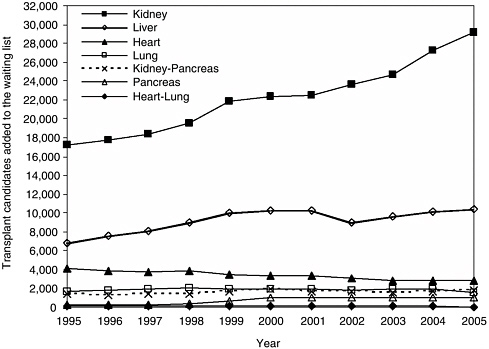
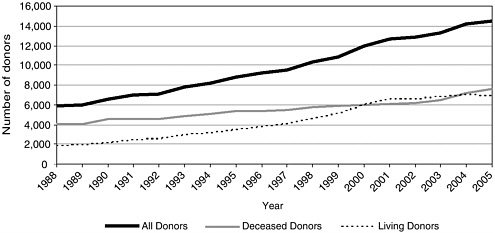
TABLE 2-3 Organ Donors, Transplants, and Waiting List
|
Donor Characteristic or Organ |
Total Number from 1988 to December 31, 2005 |
Number on Waiting List as of March 24, 2006a |
|
|
Donors |
Transplantsb |
||
|
Total |
176,640 |
364,545 |
91,214 |
|
Deceased |
98,926 |
287,047 |
|
|
Living |
77,714 |
77,498 |
|
|
Sex |
|
|
|
|
Male |
92,424 |
222,287 |
53,092 |
|
Female |
84,216 |
142,258 |
38,178 |
|
Race-ethnicity |
|
|
|
|
White |
129,940 |
247,882 |
45,008 |
|
Black |
21,625 |
62,340 |
25,050 |
|
Hispanic |
18,896 |
36,482 |
14,410 |
|
Unknown |
336 |
969 |
8 |
|
Asian |
3,465 |
11,353 |
5,092 |
|
American Indian or Alaska Native |
790 |
2,602 |
876 |
|
Pacific Islander |
800 |
1,119 |
534 |
|
Multiracial |
788 |
1,798 |
602 |
|
Age (years) |
|
|
|
|
< 1 |
1,658 |
4,514 |
86 |
|
1–5 |
3,737 |
7,529 |
503 |
|
6–10 |
2,818 |
4,797 |
423 |
|
11–17 |
10,475 |
11,747 |
1,015 |
|
18–34 |
57,418 |
65,136 |
10,070 |
|
35–49 |
60,034 |
121,235 |
26,467 |
|
50–64 |
33,192 |
125,298 |
40,257 |
|
65+ |
7,261 |
24,280 |
12,412 |
|
Unknown |
47 |
9 |
|
|
Organ |
|
|
|
|
Kidney |
165,417 |
217,029 |
65,917 |
|
Liver |
81,663 |
74,983 |
17,249 |
|
Pancreas |
25,277 |
4,776 |
1,748 |
|
Kidney and pancreas |
13,232 |
2,505 |
|
|
Heart |
40,543 |
38,715 |
3,008 |
|
Lung |
13,615 |
13,765 |
3,092 |
|
Heart and lung |
900 |
149 |
|
|
Intestine |
1,363 |
1,145 |
191 |
|
aThe total may be less than the sums of various categories due to individuals who are registered on the waiting list for more than one organ. bData are for number of organ transplantations. SOURCE: OPTN (2006). |
|||
the inability to use approximately 40 percent of the rejected kidneys, whereas clinical judgment decisions result in the inability to use an additional 25 percent (Delmonico et al., 2005). The utilization of other organs varies; hearts are the most highly utilized with only 1 percent not transplanted after recovery. About 4 percent of recovered livers were not transplanted, primarily because of biopsy results (Delmonico et al., 2005). In some situations, organs are recovered before the intended recipients are located. This occurs more often with kidneys and pancreata (because of the organ’s potential to withstand a longer time between recovery and transplantation); heart and lung transplantations generally occur at the time of recovery (Ojo et al., 2004). Further research is needed on the early identification of organs that are not eligible for transplantation. Improvements in the coordination of the recovery and transplant efforts are also needed.
Over the past 10 years, minority populations have donated organs at increased rates. In the past, donation by minority populations has been hindered by mistrust of the healthcare system, inequities in access to transplantation, and failure to request donation. Although donations by minority populations are steadily increasing, several of these matters remain unresolved and need further attention. The donation rates by minority populations are now in proportion to their population distribution in the U.S. census (Table 2-4). However, there is an increased need for trans-
TABLE 2-4 Organ Donation, Transplantation, and Waiting List by Ethnicity
|
Ethnicity |
Population Distribution (%)a |
Percentage of Total Donations, 2005b |
Percentage of Transplant Recipients, 2005c |
Waiting List Distribution (%) as of March 24, 2006 |
|
White |
75.1 |
68.9 |
63 |
49.3 |
|
African American |
12.3 |
14 |
18.5 |
27.4 |
|
Hispanic |
12.5 |
13.2 |
12 |
15.8 |
|
Asian |
3.6 |
2.6 |
4.0 |
5.5 |
|
American Indian/ Native Alaskan |
0.9 |
0.5 |
0.7 |
0.9 |
|
Pacific Islander |
0.1 |
0.1 |
0.4 |
0.5 |
|
Multiracial |
2.4 |
0.7 |
0.7 |
0.6 |
|
aU.S. Census Bureau data, 2001. The population distribution adds up to more than 100 percent because of the option in the 2000 census to select multiple categories to accurately describe one’s ethnicity. bIncludes deceased and living donors. c0.7 percent of transplant recipients are of unknown ethnicity. SOURCE: OPTN (2006); U.S. Census Bureau (2001). |
||||
plants, particularly kidney transplants, in minority populations because of the higher incidence rates of end-stage renal disease among the members of these populations (USRDS, 2005). In addition, there is still room for improvement in the rates of consent to organ donation among all ethnic groups.
Deceased Donors
The number of deceased donors increased over the 16 years from 1989 to 2005—from 4,010 in 1989 to 7,593 in 2005 (Figure 2-2). This reflects more successful efforts to obtain familial consent as well as efforts to focus on donation after circulatory determination of death and on extended-criteria donors (Howard, 2002).
In 2005, 18 percent of deceased donors were men between the ages of 18 and 34 years, and 14 percent were men between the ages of 35 and 49 years (OPTN, 2006). For 19.8 percent of the deceased donors in 2005, the circumstance of death was motor vehicle crashes; death from natural causes was the circumstance of death for approximately 30 percent of deceased donors and homicides accounted for 6 percent. In the past decade there have been slight decreases in the number of deceased donors for whom the circumstance of death was motor vehicle crashes—from a high of 26.3 percent in 1995 to a low of 19.8 percent in 2005 (OPTN, 2006). The primary mechanism of death among all donors was intracranial hemorrhage or stroke, accounting for 44.2 percent of deceased-donor deaths in 2005 (OPTN, 2006). The median age of deceased donors has increased in recent years, from 34 years in 1995 to 42 years in 2004 (SRTR, 2005).
Living Donors
In 2005, there were 6,895 organ transplants from living donors: 6,562 kidney transplants, 323 liver transplants, 7 intestine transplants, 1 pancreas transplant, 1 kidney/pancreas transplant, and 1 lung transplant (OPTN, 2006). The majority of living donors in 2005 were ages 35 to 49 years (n = 3,238) (Table 2-5; OPTN, 2006). As discussed in Chapter 9, there are a wide range of emotional and genetic relationships between living donors and the transplant recipients. In 2004, 781 of the living donors were parents of the recipient, 1,257 were offspring, 9 were identical twins, 1,849 were full siblings, 70 were half siblings, 550 were other relatives, 790 were spouses, 1,474 were unrelated, and 222 were of unknown relationship (HRSA and SRTR, 2006). Advances in immunosuppressive therapies have resulted in fewer barriers to the use of organs from living unrelated donors, who have become one of the fastest-growing categories of living donors, increasing from 4.7 percent of living donors in 1995 to 21.1 percent in
TABLE 2-5 Donor Characteristics, 2005
|
Characteristic |
Deceased Donors (%) |
Living Donors (%) |
|
Totala |
52.4 |
47.6 |
|
Sex |
|
|
|
Male |
58.3 |
40.9 |
|
Female |
41.7 |
59.1 |
|
Age (years) |
|
|
|
< 1 |
1.3 |
0 |
|
1–5 |
2.5 |
0 |
|
6–10 |
1.3 |
0 |
|
11–17 |
6.7 |
0 |
|
18–34 |
25.8 |
32.1 |
|
35–49 |
26.0 |
47.0 |
|
50–64 |
25.9 |
20.0 |
|
65+ |
10.3 |
0.9 |
|
Unknown |
0 |
0 |
|
aA total of 7,593 deceased donors and 6,896 living donors. SOURCE: OPTN (2006). |
||
2004 (HRSA and SRTR, 2006). Additional details on living donation are provided in Chapter 9.
Type of Organ
Unique issues and challenges accompany the transplantation of each of the six types (or combinations) of solid organs that are currently transplanted—kidney, liver, heart, lung, pancreas, and intestine. This section highlights a few of the statistics and features associated with the transplantation of each type of organ.
Kidneys
Kidneys are the primary organs transplanted in the United States (Table 2-6), with the 17,667 kidneys transplanted in 2005 comprising 58.6 percent of all organs transplanted that year (OPTN, 2006). The kidney was the first organ transplanted in the United States, and because it is a paired organ, it is the organ most often transplanted in living donations. In 2005, approximately 95 percent of the organs transplanted from living donations were kidneys, as were almost 50 percent of the organs transplanted from deceased donors (OPTN, 2006).
TABLE 2-6 U.S. Kidney Transplantation, July 1, 2004, to June 30, 2005
|
Donors |
|
|
Number of deceased-donor transplants |
9,739 |
|
Number of living-donor transplants |
6,673 |
|
Posttransplanta |
|
|
Adult graft survival (%) at 1 year posttransplantation |
91.69 |
|
Waiting List |
|
|
Number of individuals on the waiting list at the start |
58,195 |
|
Number of individuals on the waiting list at the end |
64,349 |
|
Number of new patient registrationsb |
28,985 |
|
Mortality rate while on the waiting list |
0.08 |
|
aJuly 1, 2002–December 31, 2004. bAn individual transplant candidate can have multiple registrations (either at more than one center or for multiple organs). SOURCE: SRTR (2006). |
|
End-stage renal disease (ESRD)—which is often a result of insulin-dependent diabetes mellitus, hypertension, glomerulonephritis, or cystic kidney—is treated by hemodialysis or a kidney transplant. Diabetes mellitus accounted for 44 percent of new cases of treated ESRD in 2002 (CDC, 2005). In 2003, more than 93,000 new ESRD patients started hemodialysis and nearly 300,000 patients continued on hemodialysis in the United States (USRDS, 2005). Kidney transplantation is generally the preferred treatment for patients with ESRD, as patients experience improved quality of life and longer long-term survival rates (Wolfe, 2005). Data from the U.S. Renal Data System indicate that Medicare expenditures on ESRD in 2003 totaled $14.8 billion for the provision of dialysis, and $0.08 billion for transplantation (USRDS, 2005). Recent trends reflect increased expenditures associated with dialysis and graft failure and decreased expenditures for patients who have recently received transplants and for patients with functioning grafts (USRDS, 2005).
Potential kidney transplant candidates constitute approximately 70 percent of the individuals on the entire Organ Procurement and Transplantation Network (OPTN)-United Network for Organ Sharing (UNOS) waiting list. In 2005, 29,177 candidates for a kidney transplant were added to the waiting list (OPTN, 2006). The net increase in the kidney transplant waiting list is approximately 3,000 to 4,000 individuals each year (Danovitch et al., 2005). It has been estimated that growth at this rate will result in 76,000 to 95,000 kidney transplant candidates by 2010 (Xue et al., 2001; Danovitch et al., 2005).
The average waiting time for a kidney transplant is becoming longer. In 2003, 43 percent of patients had been waiting for more than 2 years, whereas only 29 percent of patients had been waiting for more than 2 years in 1994 (Danovitch et al., 2005). In 2003, almost 11 percent had been waiting more than 5 years. Longer waiting times are particularly a problem for minority patients awaiting kidney transplantation (Table 2-7). For example, for African Americans added to the waiting list in 1999, the waiting time has been twice as long as that for white individuals (Danovitch et al., 2005). It is hoped that the changes in human leukocyte antigen (HLA) matching criteria made by UNOS (described below) will contribute to reduced waiting times.
Another concern is the number of retransplantations needed. In 2004, 7,969 individuals on the waiting list for a kidney transplant (17.4 percent of the waiting list) had received a previous kidney or kidney/pancreas transplant (HRSA and SRTR, 2006). There are a number of reasons for graft failure and the need for retransplantation, some of which cannot be prevented, while others such as noncompliance with immunosuppressive medications can be partially addressed through increased insurance coverage for these medications and improved patient education (IOM, 2000).
There is evidence of the benefit of preemptive kidney transplantation (before the patient begins dialysis) for some patients (Becker et al., 2006); however, only 13 percent of kidney recipients in 2003 received preemptive kidney transplants, and these were primarily through living-donor transplants (Danovitch et al., 2005).
The number of kidney transplants has increased since 1994, to a great extent because of increases in the numbers of living donations. In 2005, 39.8 percent of kidney transplants resulted from living donations, and
TABLE 2-7 Kidney Transplant Waiting List Registrations, 2001 to 2002
|
Ethnicity |
Number of Registrations Added to Waiting List |
Percentage Receiving Transplants After 1 Year on Waiting List |
Percentage Receiving Transplants After 2 Years on Waiting List |
|
White |
24,336 |
18.1 |
32.2 |
|
African American |
13,340 |
10.6 |
20.5 |
|
Hispanic |
6,546 |
11.1 |
22.6 |
|
Asian |
2,396 |
9.2 |
18.6 |
|
American Indian-Native Alaskan |
485 |
11.3 |
22.1 |
|
Pacific Islander |
340 |
7.2 |
18.9 |
|
SOURCE: OPTN (2006). |
|||
60.2 percent resulted from deceased donations (OPTN, 2006). Of the 6,562 living-donor kidney transplants in 2005, 62.1 percent were from biologically related donors, 11.8 percent were from a spouse, 22.7 percent were from unrelated donors or donors whose relationship to the recipient is unknown, and 3.4 percent were not reported (OPTN, 2006). In 2005, 59.2 percent of living kidney donors were women (OPTN, 2006).
Kidney transplant allocation has largely focused on HLA matching, which has been critical for ensuring transplant compatibility. A close match by HLA typing and time spent on the transplantation waiting list are the primary criteria used to allocate kidneys from deceased donors, with transplant candidates with no HLA mismatches given top priority (Roberts et al., 2004). Beginning in May 2003, allocation points were no longer assigned for HLA-B similarity (UNOS Policy 3.5.11.2), in the hope that this change would reduce disparities in the allocation of kidneys to African-American patients while having little adverse impact on graft survival (Roberts et al., 2004; Ting and Edwards, 2004; Danovitch et al., 2005). Another recent OPTN-UNOS policy change (Policy 3.5.12) specifies an allocation system for the donation of kidneys by the use of expanded criteria (Chapter 5). The expanded criteria include older age and greater latitude in the clinical test results used to allow the kidney to be transplanted.
In 2005, 314 children under 10 years of age received kidney transplants as did 576 adolescents 11 to 17 years of age (OPTN, 2006). Kidney transplantation is especially advantageous for children. Dialysis is often inadequate as a treatment for children with impaired renal function, as it can result in a deceleration of growth (McDonald and Craig, 2004; Milliner, 2004). Furthermore, for children dialysis is associated with a risk of death four times greater than that for renal transplantation (McDonald and Craig, 2004).
An area of concern for children undergoing renal transplantation is the use of corticosteroids following transplantation. The use of corticosteroids is associated with cardiovascular, endocrine, and bone disorders, as well as body disfiguration and growth retardation (Vidhun and Sarwal, 2005). Children who use corticosteroids have heights that are, on average, two standard deviations below the appropriate height for their age and sex (Vidhun and Sarwal, 2005). Immunosuppression protocols that do not use corticosteroids are under investigation at a number of treatment centers. It is hoped that improved immunosuppression protocols will eliminate many of the side-effects associated with corticosteroids and improve patient compliance. Young children have the best long-term graft survival of any age group of transplant recipients (Harmon et al., 2005). In contrast, adolescents have poorer long-term graft survival; noncompliance with treatment regimens among adolescents may contribute to this problem (Harmon et al., 2005).
Liver
The first successful liver transplant was performed in 1967 with a liver from a deceased donor. Living-donor liver transplantation, which involves the removal of a lobe or partial lobe of the liver, was developed for pediatric recipients and was first performed in 1989 (Curran, 2005).
There were 6,444 liver transplants in the United States in 2005, with the livers primarily coming from deceased donors (Table 2-8). During the past decade there has been an increase in the number of liver transplants from deceased donors (from 3,591 in 1994 to 6,121 in 2005), whereas the number of living-donor liver transplants has declined from a high of 519 in 2001 to 323 in 2005, in part as a result of a highly publicized death of a donor in New York City (OPTN, 2006). The initial impetus for many living donors between 1998 and 2003 may have been the desire to donate to patients with hepatocellular carcinoma with preserved hepatic function; these patients did not receive additional priority on the waiting list for deceased-liver transplantation and would have been excluded from receiving a transplant if they developed advanced or metastatic hepatocellular carcinoma (Hanto et al., 2005). Studies of the potential health risks of living donation of the partial lobe of the liver are ongoing (Curran, 2005).
Liver transplantation is indicated in cases of acute and chronic liver failure from multiple etiologies. Patients with acute liver failure or immediate posttransplantation graft failure have the highest priority for donor organs (Status 1). Chronic conditions contributing to the need for liver transplantation include hepatitis B, C, and D; alcoholic liver disease; cholestatic disease; metabolic liver disease; and hepatocellular carcinoma. There is concern that the increasing number of individuals with hepatitis C infec-
TABLE 2-8 U.S. Liver Transplantation, July 1, 2004, to June 30, 2005
|
Donors |
|
|
Number of deceased-donor transplants |
6,082 |
|
Number of living-donor transplants |
307 |
|
Posttransplanta |
|
|
Adult graft survival (%) at 1 year posttransplantation |
82.16 |
|
Waiting List |
|
|
Number of individuals on the waiting list at start |
17,239 |
|
Number of individuals on the waiting list at end |
17,661 |
|
Number of new patient registrations |
11,034 |
|
Died while on the waiting list without transplant within 1 year after listing (%) |
10.1 |
|
aJuly 1, 2002–December 31, 2004. SOURCE: SRTR (2006). |
|
tions will have a significant impact on the demand for liver transplantation in the next 20 years (Armstrong et al., 2000). As of March 24, 2006, 17,249 individuals were on the waiting list for liver transplantation (OPTN, 2006). The numbers of deaths among individuals on the liver transplantation waiting list decreased significantly in the past decade, from 225 deaths per 1,000 patient years in 1994 to 124 deaths in 2003 (Port et al., 2005).
The Model for End-Stage Liver Disease (MELD) system is used to determine priority for liver transplantation. This system uses the patient’s serum bilirubin concentration, serum creatinine concentration, and international normalized ratio to determine a MELD score (Freeman et al., 2004). Similarly, the Pediatric End-Stage Liver Disease (PELD) model is used for pediatric patients and additionally takes into account the child’s age at the time that he or she is placed on the waiting list, failure to grow (on the basis of the child’s sex, height, and weight), and serum albumin. The PELD model does not include serum creatinine. Recently, the waiting time has been deemphasized to ensure that the sicker patients receive transplants first (Hanto et al., 2005). Determining the optimal time for transplantation is an area of ongoing discussion, particularly in light of concerns that patients are often listed when the disease is too far along to permit optimal outcomes (Merion et al., 2005).
For recipients of livers from deceased donors, Hanto and colleagues (2005) found adjusted patient survival rates of 93 percent at 3 months, 88 percent at 1 year, 80 percent at 3 years, and 74 percent at 5 years. Similar survival rates were seen for recipients of livers from living donors.
Pediatric concerns about liver transplantation focus on growth. Before the transplantation, children with chronic liver disease may have malnutrition because of absorption problems and vitamin deficiencies (McDiarmid, 2001). After the transplantation, steroid use may inhibit growth. Furthermore, many children may require concerted clinical efforts to overcome poor nutritional status. After accounting for growth after the transplantation, the heights of children with a liver transplant have still been found to remain below the 5th percentile (McDiarmid, 2001).
Heart
Human heart transplantation was successfully accomplished for the first time in Cape Town, South Africa, in 1967. The conditions that contribute to the need for heart transplantation include cardiomyopathy, coronary artery disease, congenital heart disease, and valvular heart disease. In the majority of cases, cardiomyopathy or coronary artery disease is the primary diagnosis necessitating transplantation. For heart-lung transplantation, the diagnoses contributing to transplantation include congenital disease, emphysema-chronic obstructive pulmonary disease, cystic fibrosis,
idiopathic pulmonary fibrosis, and primary pulmonary hypertension (OPTN, 2006).
OPTN reports that as of March 24, 2006, the numbers of candidates for heart and heart-lung transplantations were 3,008 and 149, respectively (OPTN, 2006). Of those individuals, 772 heart transplant candidates and 58 heart-lung transplant candidates have been on the waiting list for 5 years or more (OPTN, 2006). Because heart transplants—unlike several other organ transplants—cannot benefit from living donation or split-organ donation, the supply of hearts for donation is more restricted.
General trends over the last decade reflect an increase in the amount of time that an individual requiring a transplant is on the heart waiting list but a decrease in the number of deaths while individuals await transplantation (Barr et al., 2005) (Table 2-9). A decline from 274 deaths per 1,000 patient years to 162 deaths per 1,000 patient years occurred between 1994 and 2003. This decline may be attributable to recent improvements in therapies for advanced heart failure (Barr et al., 2005).
The OPTN-SRTR 2005 Annual Report provides statistics for 1-year adjusted patient survival between 1994 and 2003 (Table 2-10).
These data demonstrate a trend toward improved 1-year survival for heart transplant recipients and grafts over the course of the decade. Unfortunately, heart-lung transplant recipients have not experienced similar improvements. Survival rates appear to be more favorable for heart-lung transplant recipients over the age of 35 years, perhaps because of the higher risk for younger recipients with congenital heart disease (Barr et al., 2005).
TABLE 2-9 U.S. Heart and Heart-Lung Transplantation, July 1, 2004, to June 30, 2005
|
|
Heart |
Heart-Lung |
|
Donors |
|
|
|
Number of deceased-donor transplants |
2,054 |
38 |
|
Posttransplanta |
|
|
|
Adult graft survival (%) at 1 year posttransplant |
86.74 |
57.63 |
|
Waiting List |
|
|
|
Number of individuals on the waiting list at start |
3,390 |
188 |
|
Number of individuals on the waiting list at end |
3,120 |
166 |
|
Number of new patient registrations |
2,837 |
63 |
|
Mortality |
13.0b |
0.13c |
|
aJanuary 1, 2002–June 30, 2004. bDied while on the waiting list without transplant within 1 year after listing (%). cMortality rate while on the waiting list. SOURCE: SRTR (2006). |
||
TABLE 2-10 One-Year Adjusted Patient Survival Rate (percent), 1994 to 2003
|
Organs |
1994 |
1995 |
1996 |
1997 |
1998 |
1999 |
2000 |
2001 |
2002 |
2003 |
|
Heart |
84.3 |
84.6 |
85.1 |
85.1 |
85.7 |
83.9 |
85.8 |
85.5 |
87.2 |
88.2 |
|
Heart-Lung |
66.3 |
79.3 |
62.7 |
58.8 |
56.4 |
55.5 |
62.6 |
74.0 |
60.5 |
58.3 |
|
SOURCE: HRSA and SRTR (2006). |
||||||||||
Policy 3.7 of OPTN describes the criteria for the allocation of thoracic organs (including hearts, heart-lung combinations, and single and double lungs). Heart allocation is determined by patient status and the geographic proximity of the donor hospital to the transplant center. Patients awaiting heart transplantation are classified according to medical urgency. If no suitable recipients are found within the local area, consideration is extended to others on the basis of their clinical status and a geographic sequence based on an established zone system.
In 2005, 313 heart transplants and 5 heart-lung transplants were performed for children under the age of 18 years (OPTN, 2006). A significant problem for children awaiting heart transplantation is allosensitization to HLA, which contributes to the mortality and morbidity of children on waiting lists and negatively affects the outcomes of the transplantation (Shaddy and Fuller, 2005). OPTN provides 5-year patient survival rates for children receiving heart transplants between 1995 and 2002. For adolescents aged 11 to 17 years, the 5-year survival rate is reported to be 69.4 percent. The rates are 75.5 percent for children aged 6 to 10 years, 72.6 for children aged 1 to 5 years, and 71.0 percent for children younger than 1 year of age (OPTN, 2006). Heart-lung transplants for children under the age of 10 years have much lower rates of success, with the 1-year patient survival rate reported to be less than 20 percent (Barr et al., 2005).
Lung
Approximately 1,000 lung transplants are performed each year, with only a few lung transplants being partial lobe transplants from living donors (Table 2-11). The first successful lung transplant was performed in 1963. In 2005, there were 1,408 lung transplants, with 1,407 deceased lung donors and 1 living lung donor (OPTN, 2006).
In 2003, emphysema, idiopathic pulmonary fibrosis, cystic fibrosis, alpha-1-antitrypsin deficiency, and primary pulmonary hypertension were the most common diagnoses contributing to the need for transplantation (Barr et al., 2005). Most lung transplant recipients are older, primarily 50
to 64 years of age. Recently, the OPTN established a new lung allocation process (UNOS Policy 3.7.6) with the goal of maximizing the survival benefit of lung transplantation by considering patients’ probable benefits from transplantation rather than their time on the waiting list.
Pancreas
Pancreas transplantation (Table 2-12) is performed to reestablish insulin secretion. This operation is most commonly performed in conjunction
TABLE 2-11 U.S. Lung Transplantation, July 1, 2004, to June 30, 2005
|
Donors |
|
|
Number of deceased-donor transplants |
1,272 |
|
Number of living-donor transplants |
7 |
|
Posttransplanta |
|
|
Adult/teen graft survival (%) at 1 year posttransplantation |
82.18 |
|
Waiting List |
|
|
Number of individuals on the waiting list at start |
3,864 |
|
Number of individuals on the waiting list at end |
3,538 |
|
Number of new patient registrations |
1,811 |
|
Mortality rate while on the waiting list |
0.13 |
|
aJanuary 1, 2002–June 30, 2004. SOURCE: SRTR (2006). |
|
TABLE 2-12 U.S. Pancreas Transplantation, July 1, 2004, to June 30, 2005
|
|
Pancreas |
Kidney-Pancreas |
|
Donors |
|
|
|
Number of deceased-donor transplants |
590 |
876 |
|
Posttransplanta |
|
|
|
Adult graft survival (%) at 1 year posttransplantation |
78.15 |
90.95 |
|
Waiting List |
|
|
|
Number of individuals on the waiting list at start |
1,451 |
2,426 |
|
Number of individuals on the waiting list at end |
1,541 |
2,496 |
|
Number of new patient registrations |
960 |
1,727 |
|
Mortality rate while on the waiting list |
0.04 |
0.10 |
|
aJuly 1, 2002–December 31, 2004. SOURCE: SRTR (2006). |
||
with kidney transplantation, although it can be performed in patients who have already had a kidney transplant or as a stand-alone procedure for those with glucose levels that are difficult to control. The first successful pancreas transplant occurred in 1966 with a pancreas from a deceased donor. Type I diabetes mellitus is the most common disease leading to pancreas transplantation. Research on the transplantation of the pancreatic islet cells that produce insulin is ongoing (Hering et al., 2005).
In 2005, there were 540 pancreas transplants and 903 joint pancreas and kidney transplants, the majority from deceased donors; only one pancreas transplant and one kidney-pancreas transplant from living donors were performed (OPTN, 2006).
Intestine
Transplantation of the intestine, which is usually performed as part of a multi-organ transplant, is a relatively rare procedure (Table 2-13). It is also a more recent procedure, with the first successful intestine transplant performed in 1987 and the first small intestine transplant performed in 1991 (UNOS, 2004). In 2005, there were 178 intestine transplantations. Most recipients are children; in 2005, 40 percent (71 transplants) of the recipients were 5 years of age or younger and 54 percent (96 transplants) were under the age of 17 years (OPTN, 2006). Short gut syndrome is the most common cause of intestine failure that results in the need for transplantation (Hanto et al., 2005). Few intestine transplantations are done with living donors; in 2005 there were 7 living-donor intestine transplants (OPTN, 2006). Since 2000 there has been an increase in liver-intestine-
TABLE 2-13 U.S. Intestine Transplantation, July 1, 2004, to June 30, 2005
|
Donors |
|
|
Number of deceased-donor transplants |
162 |
|
Transplants |
|
|
Adult graft survival (%) 1 year posttransplantationa |
78.50 |
|
Waiting List |
|
|
Number of individuals on the waiting list at start |
191 |
|
Number of individuals on the waiting list at end |
190 |
|
Number of new patient registrations |
256 |
|
Mortality rate while on the waiting list |
0.35 |
|
aJuly 1, 2002–December 31, 2004. SOURCE: SRTR (2006). |
|
pancreas transplants. In 2005, 109 of the transplants of the intestine occurred in conjunction with the transplantation of at least one other organ.
WHO DONATES? INDIVIDUAL AND FAMILY DECISIONS
Organ transplantation in the United States depends on voluntary donations. However, few large-scale studies have examined the correlates of individual and family decision making about organ donation. Researchers have primarily used cross-sectional methodologies, often with limited numbers of subjects. This section provides an overview of some of the patterns and factors found to be related to willingness of individuals to register as an organ donor or for families to consent to organ donation for a deceased relative. Much remains to be understood about factors influencing donation decisions.
Demographics
In 2005, approximately 60 percent of deceased organ donors were men and 40 percent were women; the reverse is true for living donors (OPTN, 2006). Over half of the deceased organ donors in 2005 (51.8 percent) were between 18 and 49 years of age, and 25.9 percent were between 50 and 64 years of age (Table 2-5; OPTN, 2006). Several cross-sectional studies have examined donation patterns by age, educational level, and gender.
Individual Decision Making
Individuals who register as an organ donor are generally younger and have higher levels of education than their counterparts, although this is only a broad pattern. A telephone survey of 385 households in the Baltimore, Maryland, metropolitan area found that individuals over 51 years of age were less willing to be considered a potential organ donor than younger individuals (Boulware et al., 2002a).
Education level has been found to be a strong predictor of attitudes toward both donation and a stated willingness to donate and sign a donor card. Preliminary results from a 2005 national survey5 indicate higher education levels and increased income levels among individuals who said that they had already decided to be an organ donor (by signing their driver’s
license or a donor card, or by registering with a donor registry). In the Baltimore survey study by Boulware and colleagues (2002a), individuals with lower education levels (high school education or less) were significantly less likely to state a willingness to donate their organs at death than those respondents with two or more years of college education. Other studies have had similar findings (Prottas and Batten, 1991; Lam and McCullough, 2000).
Preliminary data from the 2005 national survey indicate that 58 percent of women and 54.8 percent of men had designated a willingness to donate their organs and tissues through their driver’s license, a donor card, or a donor registry (Wells, 2005). Guadagnoli and colleagues (1999a) conducted telephone interviews about attitudes regarding organ donation and transplantation in 6,820 U.S. households and found that men were 50 percent more likely than women to be in a more committed stage to discuss organ donation with family members. However, other studies have not found sex to be a determinant of a willingness to donate (Boulware et al., 2002b; Haustein and Sellers, 2004).
Family Decision Making
Mixed results have also been found in studies of family decisions regarding organ donation. Interviews with 420 families of eligible donors conducted 2 to 3 months after the patient’s death found that the families of younger patients and male patients were more likely to consent to donation (Siminoff et al., 2001b). In that study, consent was also associated with deaths due to trauma (consent was given in 65.1 percent of the cases when the cause of death was trauma related but was given in only 30.4 percent of the cases when the death was from other causes). DeJong and colleagues (1998) conducted structured telephone interviews with 164 family members of eligible donors (102 who had consented to donation and 62 who refused) and found that consent for organ donation did not differ by the sex of the deceased family member but that the families of younger patients were more likely to provide consent.
The education level of the family members has not been a strong predictor of the responses of families asked to donate a patient’s organs. Some studies indicate that families with more years of formal education are more likely to agree to donation than families with less education (Burroughs et al., 1998; DeJong et al., 1998); however, that correlation has not been consistently found (Siminoff et al., 2001b). Because consent is generally affected by educational achievement only at the lowest levels, a lack of consent might reflect communication problems, particularly the communication of medical information in a manner that allows the donor or the donor’s family to have a clear understanding.
Ethnicity
The complex factors regarding organ donation decisions—including trust and distrust in the healthcare system—seem particularly salient for minority populations and populations that experience disparities in the amount or quality of health care that they receive. Although minority populations have a pressing need for transplantable organs, especially kidneys, there is some evidence that minority families have not been asked to donate as frequently when the patient is eligible (see below). Other factors associated with low rates of donation include concerns about the equity of the organ distribution system and a lack of information about the need for donor organs. The current statistics regarding deceased donation show marked increases in minority consent, particularly among African-American and Hispanic populations. As indicated earlier in this chapter, recent data show that most minority populations are donating organs and tissues at rates that are in proportion to their percentage of the U.S. population. It is difficult to make generalizations about any particular minority group because of the broad differences in the cultural norms, belief systems, and traditions within each group.
Individual Decision Making
Past studies have found that minority populations signed donor cards at lower rates, expressed less willingness to donate, and had lower consent rates overall; but recent statistics indicate a trend toward increased rates of consent to deceased organ donation. A random-digit-dialing telephone survey of 453 individuals in three cities in the early 1990s found that African Americans were more likely than white Americans to believe that healthcare professionals will not do as much to save their lives if they are designated organ donors and to characterize the organ distribution system as unfair (Siminoff and Saunders Sturm, 2000). Similarly, a study by Boulware and colleagues (2002a) found that African-American men and women trusted the healthcare system less than a comparable white population. In that study, spirituality and religion were key factors in the individual’s decision regarding donation. An earlier study also found that beliefs about institutional racism were a factor in donation decisions (Ohnuki-Tierney et al., 1994). Creecy and Wright (1990) found that knowing someone of similar ethnicity who had received a transplant was associated with a willingness to donate.
Although Hispanics and Latinos now comprise a significant portion of the U.S. population, far less research has examined their attitudes toward organ donation and their donor behavior. In a study by Alvaro and colleagues (2005), in which 1,203 Hispanic American individuals participated
in a random-digit-dialing telephone survey, the researchers found that those who indicated that they would be an organ donor were more likely to be female, to know someone else willing to be an organ donor, and to be less likely to agree that discussions of organ donation remind them of their own mortality.
Cheung and colleagues (1998) examined the cultural attitudes of Asian Americans regarding organ donation in a mail survey with 421 responses and compared them with those of their Caucasian counterparts. The Asian Americans in that study emphasized the importance of maintaining body integrity after death and displayed a lower level of trust of doctors in matters concerning organ donation. In another survey of 683 undergraduates, Asian-American students had higher rates of communication with family members about organ donation and were more likely to have communicated with their parents about funeral arrangements (Rubens, 1996).
Family Decision Making
Studies of familial decision making in hospitals have found that the process for requesting organ donation has not been consistent across different ethnicities. Several studies in the 1980s and 1990s found that white patients were more often identified as potential donors than African-American patients (Hartwig et al., 1993; Guadagnoli et al., 1999b); similar results have been noted for Hispanic patients (Pietz et al., 2004). However, these studies do not likely reflect the changes that occurred as a result of “required request” regulations (see Chapter 4).
Siminoff and colleagues (2003) conducted in-person interviews with 415 families of eligible donors and found that the reasons for consenting to donation were similar between white and African-American families. These reasons included altruism, knowledge that the patient had a donor card or would have wanted to donate, and gaining of meaning for the family from the death of a loved one. The reasons for decisions not to donate included the fact that the family was too exhausted, knowledge that the patient did not want to donate, religion, the family’s desire to avoid disfiguring the patient, poor communication, and poor timing of the request. Another reason, as mentioned above and discussed below, is a lack of trust in the healthcare system.
Spirituality
The role of religion, religiosity, and spirituality in decisions about organ donation is complex and is not yet fully understood. Most major religions actively support organ donation (Box 2-1); however individuals may have their own particular sets of values and beliefs. For example, some
|
BOX 2-1 Religion and Deceased Organ Donation Religion and culture both play fundamental roles in the decision of an individual or family to donate or withhold organs and tissues. Most major world religions support and encourage organ donation as an act of selflessness. Veatch (2000) provides a more in-depth discussion of the complex relationships between religious faith and organ donation. The following generalities are offered, with the acknowledgment that significant variations in views sometimes occur within religions. Christianity Protestant, Catholic, and Orthodox churches support organ donation and view it as expressing Christian values of selfless service to neighbors or strangers. Some denominations have active policies promoting donation while others see it as a matter of individual choice. Islam There is a strong belief in the principle of saving human lives and in seeking medical help for illness. Under these principles both the Shia and Sunni branches of Islam view organ donation as permissible provided the gift is freely given. Organ donation is generally supported in Arab countries; however, some Muslim scholars, particularly on the Indian subcontinent, have not been supportive of deceased organ donation. Judaism All major branches of Judaism (Orthodox, Conservative, and Reform) support organ donation not only as a mitzvah (or blessing) but as an obligation under the |
individuals express a belief that the body needs to be “whole” for life after death (Sanner, 1994; Rene et al., 1995); others are not aware that organ donation is supported by their religion (Nolan and Spanos, 1989). A multi-step study by Peters and colleagues (1996) included a telephone survey of people in Richmond, Virginia, followed by focus groups in five cities (Boston, Atlanta, Kansas City, Phoenix, and Seattle) to discuss organ donation. Nondonor focus group participants believed that it was important to go to the grave “whole,” with one’s organs intact. A survey of 158 individuals in Puerto Rico found that 12 percent believed that their body needed to be whole for resurrection after death (Rene et al., 1995).
Studies have yielded inconsistent results when examining correlations between spirituality and willingness to consent to donation. For example, a Baltimore-area survey by Boulware and colleagues (2002a) found that individuals who considered religion or spirituality to be important were less
|
Jewish duty to save life (P’kuach nefesh). There is controversy in the Orthodox branch about the criteria for death. Hinduism There are no religious prohibitions against donation, and the belief in continual rebirth or reincarnation does not appear to conflict with donation. Hindu mythology includes examples of using body parts for the benefit of other humans and society. Buddhism Although some analogues within Buddhist writings could support organ donation, there is some ambivalence about transplantation. In particular, the concepts regarding neurologic determination of death may seem to contradict the Buddhist view of the interconnectedness of life and death. Confucianism and Taoism Official declarations regarding organ donation have not been made in Confucianism and Taoism. Traditional Confucian views accept the inevitability of death, while Taoism supports more aggressive measures to prolong life. These traditions are also closely intertwined with traditional Chinese medicine, which emphasizes preserving the integrity of the body. SOURCES: Gillman (1999); Veatch (2000). |
inclined to be organ donors. In contrast, a focus group study in Atlanta found that many participants believed that their religious values were the basis of their attitudes of altruism and wanting to make a difference in someone else’s life (Jacob Arriola et al., 2005). Siminoff and colleagues (2001b) also found that families who believed their religion encourages donation were likely (82.5 percent) to consent to donation.
In a survey of African-American adults, the perception of religious and social norms supportive of organ donation was found to be predictive of a willingness for families to discuss organ donation (Morgan, 2004). On the other hand, in a survey of outpatients visiting a community physician’s office, religious affiliation or regular church attendance did not have an influence on willingness to donate (Haustein and Sellers, 2004).
In a survey of 120 Chinese Americans, Lam and McCullough (2000) found that many respondents were influenced by Confucian values and also
by Buddhist and Taoist beliefs that “associate an intact body with respect for ancestors or nature” (p. 449) but that they were still willing to consider deceased organ donation.
Rumsey and colleagues (2003) studied the individual organ donation-related decision making of 190 undergraduate students and found that religiosity predicted attitudes toward organ donation, regardless of the individual’s religious denomination or the frequency with which he or she attended religious services. As the different results of these various studies suggest, much remains to be learned about the role that religion and spirituality, in official and folk manifestations, play in organ donation decision making.
Family Discussions Regarding Organ Donation
Studies indicate that individuals who are willing to discuss donation with family members are more likely to have signed organ donor cards (Morgan and Miller, 2002; Morgan, 2004). The family’s knowledge of the wishes of the deceased regarding organ donation is one of the most important factors in the family’s decision of whether to donate (Sque and Payne, 1996; McNamara et al., 1999; Siminoff et al., 2001b; Siminoff and Lawrence, 2002; Sque et al., 2005). Major reasons for not consenting to donation are knowledge of the deceased’s wish not to donate and uncertainty about the deceased’s wishes (Jasper et al., 1991; Chapman et al., 1995; Rosel et al., 1999; Siminoff et al., 2001a; Frutos et al., 2002). Conversely, knowing that the patient had a donor card, having had an explicit discussion about donation with the patient, and believing that the patient would have wanted to donate, even apart from an explicit discussion, are strongly associated with familial consent to organ donation (Jasper et al., 1991; Tymstra et al., 1992; DeJong et al., 1998; Siminoff et al., 2001b).
In one study families who were knowledgeable about organ donation were found to be more likely to consent to donation, whereas families surprised by being asked about organ donation were less likely (Siminoff et al., 2001b). Similarly, individuals who feel informed about organ donation are more likely to be committed to organ donation (Nolan and Spanos, 1989).
There is little information on the extent to which families override the donation wishes of the deceased family member. Harris and colleagues (1991) conducted an experimental study using vignettes to examine how individuals weighed the wishes of the deceased and the wishes of the next of kin. The study found that in all cases in which the donor’s wishes were known, they were respected, even if the next of kin had different preferences than those of family members. Siminoff and colleagues (2001b) found in interviews with families of patients who were eligible to be donors
that 89.3 percent of families that knew that the patient had a donor card consented to donation. Some organ procurement organizations (OPOs) collect data on the number of times that families override the deceased family member’s wish to donate. For example, Intermountain Donor Services reported that of those eligible donors (deaths determined by neurologic criteria) who were on the donor registry for the years 2003 to 2005, only 3.5 percent were not donors because the family either provided new information that the deceased person did not want to donate or overrode the deceased person’s decision (personal communication, T. Schmidt, Intermountain Donor Services, March 2006). Other OPOs such as LifeNet (Virginia) report similar findings for 2003 to 2005 with between a 2 percent to 4 percent override experience (personal communication, K. Myer, LifeNet, March 2006); Gift of Life Donor Program (Pennsylvania) estimates an average of less than 1 percent of families have overridden a donor’s expressed consent in the past 10 years (personal communication, H. Nathan, Gift of Life Donor Program, March 2006).
In cases in which the wishes of the patient are not known, families generally attempt to use what they know about the values and attributes of the deceased, seeking to honor what they believe the patient would have wanted (Sque and Payne, 1996).
Quality of Health Care and Trust in the Healthcare System
For individual decision making, trust in the medical system is a concern. In a survey of 163 patients, Yuen and colleagues (1998) found that although the majority of respondents (>70 percent) trusted the healthcare system regarding organ donation, 32 percent of African Americans, 15 percent of Hispanics, and 7 percent of whites agreed with the statement “Doctors would not try as hard to save me if they knew I was an organ donor.” Other surveys have also found that potential donors are concerned about not receiving the necessary medical attention if they have agreed to be an organ donor (Nolan and Spanos, 1989; Minniefield et al., 2001; Minniefield and Muti, 2002). In 6,080 telephone interviews with white, African-American, and Hispanic respondents, a willingness to donate was correlated with agreeing with the statement that “Doctors do all they can to save a life before pursuing donation” (McNamara et al., 1999). Similarly, a distrust of the medical community was noted as a major concern about organ donation in focus group discussions (Peters et al., 1996).
For family decision making, studies have found that support by the healthcare staff, particularly by intensive care nurses, and the quality of health care were associated with consent decisions (DeJong et al., 1998; Sque et al., 2005). Siminoff and colleagues (2001b) found no association between consent rates and hospital characteristics or healthcare provider
characteristics (including age, sex, ethnicity, religion, or professional role); however, the healthcare provider’s ease in answering questions at the time of donation was positively associated with the decision to donate. In interviews with 350 parents about their potential willingness to donate their child’s organs, Walker and colleagues (1990) found that parents’ confidence in neurologic determination of death was a key factor in being willing to consent to donation.
Other factors have been found to potentially play some role in family decisions about donation. In one study, the presence of large numbers of family members at the donation discussion led to greater numbers of non-consents (Frutos et al., 2002). Families who felt pressured to donate were less likely to donate (Siminoff et al., 2001b); concerns about disfigurement of the body are also of concern to some families (Nolan and Spanos, 1989; McNamara et al., 1999).
Altruism, Cultural Norms, and Models of Willingness to Donate
Altruistic beliefs and values are one of the mainstays of the voluntary organ donation system. Altruism is the unselfish concern for the welfare of others, and in deceased organ donation this particularly applies to the goal of improving the life of (usually unknown) patients who are the potential recipients of the donated organs. Individuals and families often want to see something positive come out of tragedy, and the “gift of life” and “donate life” themes of organ donation efforts highlight the values of altruism. In most cultures there is a strong affirmation of organ donation as an expression of altruism. Interviews with families who have confronted a donation decision find that giving meaning to the death is a key factor in providing consent for organ donation (Sque et al., 2005). Similarly, discussions with individuals have noted altruistic motivations as central to a positive attitude toward deceased organ donation (Jacob Arriola et al., 2005). Little attention has been given to the consideration of reciprocity or moral obligation as a motivation for organ donation.
In considering the many factors in organ donation decisions, Radecki and Jaccard (1997) developed a theoretical framework for willingness-to-donate decisions that incorporates a set of five belief structures into the individual’s attitude toward becoming a donor: religious beliefs, cultural beliefs, knowledge beliefs, altruistic beliefs, and normative beliefs. The interactions of these beliefs, the roles played by each of the factors, and the extent to which they can be modified to encourage donation have been and continue to be areas of study (Horton and Horton, 1991; Sanner, 1994; Radecki and Jaccard, 1997; Farsides, 2000; Morgan and Miller, 2002; Morgan, 2004).
Cultural norms can result in different donation patterns. For example, in Japan, there have been few organ donations following neurologic determination of death; living donation and donation after circulatory determination of death occur more frequently (Nakata et al., 2001). Determination of death by neurologic criteria is not compatible with Japanese cultural values that include the wholeness of nature and of the human body. Furthermore, receiving a donation from strangers denotes for many Japanese people the need to repay the favor (Nakata et al., 2001).
Research to date on the determinants of organ donation has been hampered by small sample sizes, limited variations in sample findings by geographic area, and failures to disentangle socioeconomic status variables from cultural variables, such as ethnicity and religion. Efforts to improve the organ donation process and encourage individuals and family members to consent to donation will need to take into account the many variables involved in the decision making.
REFERENCES
Alvaro EM, Jones SP, Robles ASM, Siegel JT. 2005. Predictors of organ donation behavior among Hispanic Americans. Progress in Transplantation 15(2):149–156.
Armstrong GL, Alter MJ, McQuillan GM, Margolis HS. 2000. The past incidence of hepatitis C virus infection: Implications for the future burden of chronic liver disease in the United States. Hepatology 31(3):777–781.
Barr ML, Bourge RC, Orens JB, McCurry KR, Ring WS, Hulbert-Shearon TE, Merion RM. 2005. Thoracic organ transplantation in the United States, 1994–2003. American Journal of Transplantation 5(4):934–949.
Becker BN, Rush SH, Dykstra DM, Becker YT, Port FK. 2006. Preemptive transplantation for patients with diabetes-related kidney disease. Archives of Internal Medicine 166(1): 44–48.
Boulware LE, Ratner LE, Sosa JA, Cooper LA, LaVeist TA, Powe NR. 2002a. Determinants of willingness to donate living related and cadaveric organs: Identifying opportunities for intervention. Transplantation 73(10):1683–1691.
Boulware LE, Ratner LE, Cooper LA, Sosa JA, LaVeist TA, Powe NR. 2002b. Understanding disparities in donor behavior: Race and gender differences in willingness to donate blood and cadaveric organs. Medical Care 40(2):85–95.
Burroughs TE, Hong BA, Kappel DF, Freedman BK. 1998. The stability of family decisions to consent or refuse organ donation: Would you do it again? Psychosomatic Medicine 60(2):156–162.
CDC (Centers for Disease Control and Prevention). 2005. Incidence of end-stage renal disease among persons with diabetes—United States, 1990–2002. Morbidity and Mortality Weekly Report 54(43):1097–1100.
Chapman JR, Hibberd AD, McCosker C, Thompson JF, Ross W, Mahony J, Byth P, MacDonald GJ. 1995. Obtaining consent for organ donation in nine NSW metropolitan hospitals. Anaesthesia and Intensive Care 23(1):81–87.
Cheung AH, Alden DL, Wheeler MS. 1998. Cultural attitudes of Asian-Americans toward death adversely impact organ donation. Transplantation Proceedings 30(7):3609–3610.
Creecy RF, Wright R. 1990. Correlates of willingness to consider organ donation among blacks. Social Science & Medicine 31(11):1229–1132.
Curran C. 2005. Adult-to-adult living donor liver transplantation: History, current practice, and implications for the future. Progress in Transplantation 15(1):36–42.
Danovitch GM, Cohen DJ, Weir MR, Stock PG, Bennett WM, Christensen LL, Sung RS. 2005. Current status of kidney and pancreas transplantation in the United States, 1994–2003. American Journal of Transplantation 5(4):904–915.
DeJong W, Franz HG, Wolfe SM, Nathan H, Payne D, Reitsma W, Beasley C. 1998. Requesting organ donation: An interview study of donor and nondonor families. American Journal of Critical Care 7(1):13–23.
Delmonico FL, Sheehy E, Marks WH, Baliga P, McGowan JJ, Magee JC. 2005. Organ donation and utilization in the United States, 2004. American Journal of Transplantation 5(4 Pt 2):862–873.
Farsides T. 2000. Winning hearts and minds: Using psychology to promote voluntary organ donation. Health Care Analysis 8(2):101–121.
Freeman RB Jr, Wiesner RH, Roberts JP, McDiarmid S, Dykstra DM, Merion RM. 2004. Improving liver allocation: MELD and PELD. American Journal of Transplantation 4(Suppl 9):114–131.
Frutos MA, Ruiz P, Requena MV, Daga D. 2002. Family refusal in organ donation: Analysis of three patterns. Transplantation Proceedings 34(7):2513–2514.
Gillman J. 1999. Religious perspectives on organ donation. Critical Care Nursing Quarterly 22(3):19–29.
Guadagnoli E, Christiansen CL, DeJong W, McNamara P, Beasley C, Christiansen E, Evanisko M. 1999a. The public’s willingness to discuss their preference for organ donation with family members. Clinical Transplantation 13(4):342–348.
Guadagnoli E, McNamara P, Evanisko MJ, Beasley C, Callender CO, Poretsky A. 1999b. The influence of race on approaching families for organ donation and their decision to donate. American Journal of Public Health 89(2):244–247.
Hanto DW, Fishbein TM, Pinson CW, Olthoff KM, Shiffman ML, Punch JD, Goodrich NP. 2005. Liver and intestine transplantation: Summary analysis, 1994–2003. American Journal of Transplantation 5(4):916–933.
Harmon WE, McDonald RA, Reyes JD, Bridges ND, Sweet SC, Sommers CM, Guidinger MK. 2005. Pediatric transplantation, 1994–2003. American Journal of Transplantation 5(4):887–903.
Harris RJ, Jasper JD, Lee BC, Miller KE. 1991. Consenting to donate organs: Whose wishes carry the most weight? Journal of Applied Social Psychology 21(1):3–14.
Hartwig MS, Hall G, Hathaway D, Gaber AO. 1993. Effect of organ donor race on health team procurement efforts. Archives of Surgery 128(2):1331–1335.
Haustein SV, Sellers MT. 2004. Factors associated with (un)willingness to be an organ donor: Importance of public exposure and knowledge. Clinical Transplantation 18(2):193–200.
Hering BJ, Kandaswamy R, Ansite JD, Eckman PM, Nakano M, Sawada T, Matsumoto I, Ihm SH, Zhang HJ, Parkey J, Hunter DW, Sutherland DE. 2005. Single-donor, marginal-dose islet transplantation in patients with type 1 diabetes. Journal of the American Medical Association 293(7):830–835.
Horton RL, Horton PJ. 1991. A model of willingness to become a potential organ donor. Social Science and Medicine 33(9):1037–1051.
Howard DH. 2002. Why do transplant surgeons turn down organs? A model of the accept/ reject decision. Journal of Health Economics 21(6):931–1094.
HRSA (Health Resources and Services Administration) and SRTR (Scientific Registry of Transplant Recipients). 2006. 2005 Annual Report of the U.S. Organ Procurement and Transplantation Network and the Scientific Registry of Transplant Recipients: Transplant Data 1995–2004. [Online]. Available: http://www.optn.org/AR2005/default.htm [accessed March 3, 2006].
IOM (Institute of Medicine). 1999. Organ Procurement and Transplantation: Assessing Current Policies and the Potential Impact of the DHHS Final Rule. Washington, DC: National Academy Press.
IOM. 2000. Extending Medicare Coverage for Preventive and Other Services. Washington, DC: National Academy Press.
Jacob Arriola KR, Perryman JP, Doldren M. 2005. Moving beyond attitudinal barriers: Understanding African Americans’ support for organ and tissue donation. Journal of the National Medical Association 97(3):339–350.
Jasper JD, Harris RJ, Lee BC, Miller KE. 1991. Organ donation terminology: Are we communicating life or death? Health Psychology 10(1):34–41.
Lam WA, McCullough LB. 2000. Influence of religious and spiritual values on the willingness of Chinese-Americans to donate organs for transplantation. Clinical Transplantation 14(5):449–456.
McDiarmid S. 2001. Special considerations in pediatric liver transplantation. In: Norman DJ, Turka LA, eds. Primer on Transplantation, 2nd ed. Mt. Laurel, NJ: American Society of Transplantation. Pp. 600–609.
McDonald SP, Craig JC. 2004. Long-term survival of children with end-stage renal disease. New England Journal of Medicine 350(26):2654–2662.
McNamara P, Guadagnoli E, Evanisko MJ, Beasley C, Santiago-Delpin EA, Callender CO, Christiansen E. 1999. Correlates of support for organ donation among three ethnic groups. Clinical Transplantation 13(1):45–50.
Merion RM, Schaubel DE, Dykstra DM, Freeman RB, Port FK, Wolfe RA. 2005. The survival benefit of liver transplantation. American Journal of Transplantation 5(2): 307–313.
Milliner DS. 2004. Pediatric renal-replacement therapy—coming of age. New England Journal of Medicine 350(26):2637–2639.
Minniefield WJ, Muti P. 2002. Organ donation survey results of a Buffalo, New York, African-American community. Journal of the National Medical Association 94(11): 979–986.
Minniefield WJ, Yang J, Muti P. 2001. Differences in attitudes toward organ donation among African Americans and whites in the United States. Journal of the National Medical Association 93(10):372–379.
Morgan SE. 2004. The power of talk: African Americans’ communication with family members about organ donation and its impact on the willingness to donate organs. Journal of Social and Personal Relationships 21(1):112–124.
Morgan SE, Miller JK. 2002. Beyond the organ donor card: The effect of knowledge, attitudes, and values on willingness to communicate about organ donation to family members. Health Communication 14(1):121–134.
Nakata Y, Goto T, Morita S. 2001. Ethics of organ transplantation in Japan: An example of cultural transplantation in medicine. Current Opinion in Anaesthesiology 14:549–552.
Nolan BE, Spanos NP. 1989. Psychosocial variables associated with willingness to donate organs. Canadian Medical Association Journal 141(1):27–32.
Ohnuki-Tierney E, Angrosino MV, Becker C, Daar AS, Funabiki T, Lorber MI. 1994. Brain death and organ transplantation: Cultural bases of medical technology. Current Anthropology 35(3):233–254.
Ojo AO, Heinrichs D, Emond JC, McGowan JJ, Guidinger MK, Delmonico FL, Metzger RA. 2004. Organ donation and utilization in the USA. American Journal of Transplantation 4(Suppl 9):27–37.
OPTN (Organ Procurement and Transplantation Network). 2006. National Data Reports. [Online]. Available: http://www.optn.org/latestData/step2.asp? [accessed March 29, 2006].
Peters TG, Kittur DS, McGaw LJ, First MR, Nelson EW. 1996. Organ donors and nondonors: An American dilemma. Archives of Internal Medicine 156(21):2419–2424.
Pietz CA, Mayes T, Naclerio A, Taylor R. 2004. Pediatric organ transplantation and the Hispanic population: Approaching families and obtaining their consent. Transplantation Proceedings 36(5):1237–1240.
Port FK, Dykstra DM, Merion RM, Wolfe RA. 2005. Trends and results for organ donation and transplantation in the United States, 2004. American Journal of Transplantation 5(4):843–849.
Prottas JM, Batten HL. 1991. The willingness to give: The public and the supply of transplantable organs. Journal of Health Politics, Policy, and Law 16(1):121–134.
Radecki CM, Jaccard J. 1997. Psychological aspects of organ donation: A critical review and synthesis of individual and next-of-kin donation decisions. Health Psychology 16(2): 183–195.
Rene AA, Viera E, Jiles R, Daniels DE. 1995. Organ donation awareness: Knowledge, attitudes, and beliefs in a Puerto Rican population. Transplantation Proceedings 27(2):1893–1896.
Roberts JP, Wolfe RA, Bragg-Gresham JL, Rush SH, Wynn JJ, Distant DA, Ashby VB, Held PJ, Port FK. 2004. Effect of changing the priority for HLA matching on the rates and outcomes of kidney transplantation in minority groups. New England Journal of Medicine 350(6):545–551.
Rosel J, Frutos MA, Blanca MJ, Ruiz P. 1999. Discriminant variables between organ donors and nondonors: A post hoc investigation. Journal of Transplant Coordination 9(1): 50–53.
Rubens AJ. 1996. Racial and ethnic differences in students’ attitudes and behavior toward organ donation. Journal of the National Medical Association 88(7):417–421.
Rumsey S, Hurford DP, Cole AK. 2003. Influence of knowledge and religiousness on attitudes toward organ donation. Transplantation Proceedings 35(8):2845–2850.
Sanner M. 1994. Attitudes toward organ donation and transplantation. Social Science and Medicine 38(8):1141–1152.
Shaddy RE, Fuller TC. 2005. The sensitized pediatric heart transplant candidate: Causes, consequences, and treatment options. Pediatric Transplantation 9(2):208–214.
Siminoff LA, Lawrence RH. 2002. Knowing patients’ preferences about organ donation: Does it make a difference? Journal of Trauma 53(4):754–760.
Siminoff LA, Saunders Sturm CM. 2000. African-American reluctance to donate: Beliefs and attitudes about organ donation and implications for policy. Kennedy Institute of Ethics Journal 10(1):59–74.
Siminoff LA, Arnold RM, Hewlett J. 2001a. The process of organ donation and its effect on consent. Clinical Transplantation 15(1):39–47.
Siminoff LA, Gordon N, Hewlett J, Arnold RM. 2001b. Factors influencing families’ consent for donation of solid organs for transplantation. Journal of the American Medical Association 286(1):71–77.
Siminoff LA, Lawrence RH, Arnold RM. 2003. Comparison of black and white families’ experiences and perceptions regarding organ donation requests. Critical Care Medicine 31(1):146–151.
Sque M, Payne SA. 1996. Dissonant loss: The experiences of donor relatives. Social Science & Medicine 43(9):1359–1370.
Sque M, Long T, Payne S. 2005. Organ donation: Key factors influencing families’ decision-making. Transplantation Proceedings 37(2):543–546.
SRTR (Scientific Registry of Transplant Recipients). 2005. Median Age for Deceased Donors Recovered from 1995 to 2004. Analyses prepared by the SRTR. Ann Arbor, MI: Scientific Registry of Transplant Recipients.
SRTR. 2006. National Reports: National Totals by Organ. [Online]. Available: http://www.ustransplant.org/csr/current/nats.aspx [accessed March 24, 2006].
Ting A, Edwards LB. 2004. Human leukocyte antigen in the allocation of kidneys from cadaveric donors in the United States. Transplantation 77(4):610–614.
Tymstra TJ, Heyink W, Pruim J, Slooff MJ. 1992. Experience of bereaved relatives who granted or refused permission for organ donation. Family Practice 9(2):141–144.
UNOS (United Network for Organ Sharing). 2004. Timeline of Key Events in U.S. Transplantation and UNOS History. [Online]. Available: http://www.unos.org/inTheNews/factsheets.asp?fs=4 [accessed July 25, 2005].
U.S. Census Bureau. 2001. Census 2000 Briefs: Overview of Race and Hispanic Origin. [Online]. Available: http://www.census.gov/prod/2001pubs/c2kbr01-1.pdf [accessed March 29, 2006].
USRDS (U.S. Renal Data System). 2005. USRDS 2005 Annual Data Report. [Online]. Available: http://www.usrds.org/adr.htm [accessed January 7, 2006].
Veatch RM. 2000. Transplantation Ethics. Washington, DC: Georgetown University Press.
Vidhun JR, Sarwal MM. 2005. Corticosteroid avoidance in pediatric renal transplantation. Pediatric Nephrology 20(3):418–426.
Walker JA, McGrath PJ, MacDonald NE, Wells G, Petrusic W, Nolan BE. 1990. Parental attitudes toward pediatric organ donation: A survey. Canadian Medical Association Journal 142(12):1383–1387.
Wells JA. 2005 (June 20). National Survey of Organ Donation: 2005 Preliminary Results. Presentation at the Institute of Medicine Workshop on Increasing Rates of Organ Donation. Washington, DC. Institute of Medicine Committee on Increasing Rates of Organ Donation.
Wolfe R. 2005. The state of kidney transplantation in the United States. Seminars in Dialysis 18(6):453–455.
Xue JL, Ma JZ, Louis TL, Collins AJ. 2001. Forecast of the number of patients with end-stage renal disease in the United States to the year 2010. Journal of the American Society of Nephrology 12(12):2753–2758.
Yuen CC, Burton W, Chiraseveenuprapund P, Elmore E, Wong S, Ozuah P, Mulvihill M. 1998. Attitudes and beliefs about organ donation among different racial groups. Journal of the National Medical Association 90(1):13–18.


