
1
Introduction
This opening chapter is organized as follows: The charge and major tasks of the Committee on Disaster Research in the Social Sciences (DRSS) are summarized initially. An orienting definition of disasters (and hazards and risks as key related concepts) is then offered along with an explicit framework that addresses central conceptual and measurement issues in hazards and disaster research. An historical overview of social science research within the National Science Foundation’s (NSF’s) National Earthquake Hazards Reduction Program (NEHRP) is then presented, and this is followed by a summary of key issues that inform the committee’s charge and tasks. The introduction concludes with a brief characterization of the remaining chapters of the report.
DRSS is an ad hoc committee under the Division on Earth and Life Studies. The study project was initiated in February 2004 with funding from NSF. The charge to the committee for the 18-month study is stated in Box 1.1.
In carrying out its charge, the committee has drawn on the experience and expertise of 13 members of the hazards and disaster research community from the disciplines of psychology, geography, political science, sociology, economics, decision science, regional science and planning, public health, and emergency management. In preparing its report, the committee has drawn on the literature in the field as well as information and insight from two workshops that were held during the course of the study.
As noted in Figure 1.1, adapted from Tierney et al. (2001), components of hazards and disaster research have evolved historically with different
|
BOX 1.1 Statement of Task The objective of the study is to provide the National Science Foundation and other stakeholders with a detailed appraisal of the short- and long-term challenges facing the social science disaster research community and new and emerging opportunities for advancing knowledge in the field and its application for the benefit of society. The study should provide a basis for planning future social science and multidisciplinary research related to natural, technological, and willful disasters in response to challenges and opportunities presented by a changing nation and world. In order to put future projections into context, the study will initially examine the contributions and accomplishments of the social sciences in the field starting with the creation of the National Earthquake Hazards Reduction Program (NEHRP), the program that through NSF has provided much of the support for the social science effort to date. Attention will be given to the contributions of the social sciences to understanding the full range of natural, technological and human-induced disasters that social scientists have studied during the past 25 years since NEHRP was established. Overall the study will examine the following areas:
|
emphases, depending on the types of hazards and disasters studied and research topics related to them. Given the above charge and tasks of the committee, further integration of hazards and disaster research, as depicted by the overlapping circles and two-directional arrows in Figure 1.1, is a fundamental future requirement for the social sciences. Such integration
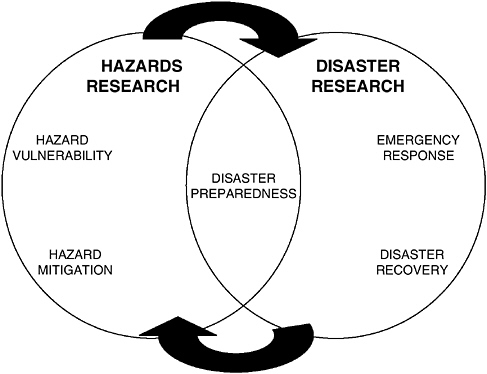
FIGURE 1.1 Core topics of hazards and disaster research.
within the social sciences also can provide the foundation for increased collaborative work by social scientists with natural scientists and engineers.
THE DISASTER CONSTRUCT
Disasters are non-routine events in societies or their larger subsystems (e.g., regions and communities) that involve conjunctions of physical conditions with social definitions of human harm and social disruption. (Kreps, 2001:3718)
This entry, from the latest edition of the International Encyclopedia of the Social and Behavioral Sciences, draws on the historically rich tradition of hazards and disaster studies within the social sciences, most notably since the post-World World II era (for earlier to more recent statements see Fritz, 1961; Barton, 1969; Dynes, 1970; White and Haas, 1975; Quarantelli and Dynes, 1977; Kreps, 1984; Burton et al., 1993; Kreps and Drabek, 1996; Kunreuther and Roth, 1998; Mileti, 1999b; Tierney et al., 2001;
Cutter, 2001; Montz et al., 2003a,b). So defined, disasters are both physical events and public policy issues with distinctive qualities. As further clarified in the above encyclopedia entry:
The phrase ”nonroutine events“ distinguishes disasters as unusual and dramatic happenings from everyday issues and concerns. The dual reference to “physical conditions” and social definitions means that each is individually necessary and both are collectively sufficient for disasters to occur in social time and space. The designation “societies or their larger subsystems” means that human harm and social disruption must have relevance for larger social systems…. Poverty, hunger, disease, and social conflict are chronic societal concerns. Economic depressions, famines, epidemics, and wars are disasters as defined above. Global warming and ozone depletion have become defined objectively and subjectively as environmental hazards or risks. The possible disastrous consequences of these hazards … remain matters of scientific and public debate…. (Kreps, 2001:3718)
While the term disaster is part of popular parlance, it also has important bureaucratic meaning (e.g., disaster declarations). Potential disasters are associated with hazards of various types and the risks (i.e., probabilities) of specific events occurring. Distinctions among these three terms are useful and important. As Cutter (2001:3) notes:
the distinction between hazard, risk, and disaster is important because it illustrates the diversity of perspectives on how we recognize and assess environmental threats (risks), what we do about them (hazards), and how we respond to them after they occur (disasters). The emphasis on hazard, risk, and disaster is also reflective of different disciplinary orientations of researchers and practitioners…. However, as the nature of hazards, risks, and disasters became more complex and intertwined and the field of hazards research and management more integrated, these distinctions became blurred as did the differentiation between origins as “natural,” “technological,” or “environmental.”
The blurred distinctions highlighted by Cutter, a geographer whose research focuses more heavily on the left-hand side of Figure 1.1, have contributed greatly to breaking down historical barriers between hazards and disaster research. This positive development has been affirmed by two sociologists (Tierney and Perry) and a social psychologist (Lindell), whose interests focus more heavily on the right-hand side of Figure 1.1 (Tierney et al., 2001:22):
… more comprehensive perspectives are needed that consider both disaster events and the broader structural and contextual factors that contribute to disaster victimization and loss. While the functionalist approach that characterized classical disaster research mainly addressed the fact of disaster, not the sources of disaster vulnerability, other work has sought to better
understand the societal processes that create vulnerability, how vulnerability is distributed unequally across societies, communities, and social groups, how vulnerability changes over time, and how and why these changes come about.
Definitions of core subject matter necessarily are matters of intellectual discussion and debate within any science. Studies of hazards and disasters are no different. During the past decade, for example, there have been two books (Quarantelli, 1998; Perry and Quarantelli, 2005) wherein authors from several social science fields have grappled with the question: What is a disaster? A diversity of perspectives on the meaning of disasters, hazards, and risks is to be expected (1) because the social sciences are not homogeneous disciplines either theoretically or empirically, and (2) because these constructs are of interest to scholars nationally and internationally. In reviewing this continuing dialogue about core subject matter, the committee agrees with Perry’s conclusions in both of the above volumes that there is more agreement than disagreement on the definitional fundamentals (Perry, 1998:197-217, 2005). With respect to its mission and tasks, the committee makes the following assumptions about disasters and the hazards to which they relate.
First, while all concepts in science are nominal, consensus about objects of inquiry is essential to developing and applying knowledge about them. Second, disasters have physical impacts and involve subjective definitions formulated by individuals and social entities. Third, disasters are disruptive of social systems at small to more inclusive levels and are intertwined with broader dynamics of change. Fourth, the characteristics of disasters themselves must be distinguished from their antecedents and consequences. Capturing these antecedents and consequences is part and parcel of constructing descriptive and explanatory models of hazards and disasters. Fifth, given the broad range of hazards and disasters that can be studied, developing typologies and taxonomies is an essential component of theory building. As discussed in this report, classification schemes have frequently been based on defining characteristics of disasters such as their length of forewarning; detectability; speed of onset; and magnitude, scope, and duration of impact. Such dimensions allow for comparisons of multiple disasters, thus bridging the gap among social scientists studying hazards that are natural, technological, or willful in origin. Sixth, research on hazards and disasters requires an appeal to the scientific logic of discovery and explanation, regardless of substantive topic and regardless of whether the research is discipline based, multidisciplinary, or interdisciplinary. Finally, before, when, and after they occur, disasters are physical and social catalysts of collective action.
This last observation merits a further comment. Some years ago an influential social science meta-theorist made the following point (Dubin,
1978:115-116) about the theoretical importance of social catalysts. As quoted below, his basic argument remains fundamental to the study of risks, hazards, and disasters:
There does not seem to be any theoretical reason why we may not think of social catalysts and use them in theoretical models…. For example, in the study of behavior of populations under conditions of disaster … disaster is the catalytic unit whose presence [actual or potential] is necessary for the interaction of psychological and social units that are studied by disaster [and hazard and risk] specialists. It makes no difference whether the event studied is a flood, an earthquake, an explosion, or whatnot.
The phrase “or whatnot” is important and resonates nicely with the inclusive range of natural, technological, and willful events that are under consideration by this committee. By intent and design, a multihazard approach has been adopted by the committee in responding to its mission and tasks.
The previously referenced encyclopedia entry derives from the above assumptions and serves as a starting point for the committee. The definition of disaster adopted by the committee will not, of course, end debates about the theoretical and practical implications of achieving clarity about the meaning of risks, hazards, and disasters (e.g., Dynes, 2004; Perry and Quarantelli, 2005). However, this definition does provide a heuristic tool for examining a broad range of environmental, technological, and willful events on their own terms and for comparing systemic adjustments to actual or potential events with societal responses to other social problems and public policy issues (Barton, 1989).
THRESHOLDS OF DISASTERS
Defining disasters raises fundamental questions about how they should be demarcated. Although thresholds of disasters have been debated, researchers, practitioners, and policy makers affirm clearly that such thresholds exist (see Wright and Rossi, 1981; Kreps and Drabek, 1996; Kreps, 1998). There is no argument about whether the three hurricanes on the United States Gulf Coast in 2005, the earthquake on the borders of Pakistan, India, and Afghanistan in 2005, the Indian Ocean tsunami in 2004, the September 11, 2001 terrorist attacks on New York and Washington, and a host of other natural, technological, and sociopolitical events that have occurred in the recent or more distinct past were disasters. Potential disasters, such as the current threat of an avian flu pandemic and other environmental hazards of various types, are just as important to consider as those that have actually occurred, and this is the essential preoccupation of what is now termed vulnerability science (Cutter, 2003a).
When assessing the actual or potential severity of human harm and
social disruption, the level of society that is being analyzed must be focused on—the entire society or subunits within it, such as communities, neighborhoods, and households (the relevant literature includes recent work by Cutter et al., 2003). Thus, natural disasters are relatively frequent at the societal level, and the absorptive capacities of large, technologically advanced societies are considerable. However, not all societies are large and technologically advanced (e.g., Bates and Peacock, 1993), and even when they are, disasters become less common and their impact ratios change as the unit of analysis moves from the societal to the regional, community, and household levels. Hazard vulnerability and mitigation, disaster preparedness, emergency response, and disaster recovery take on different meanings depending on which systemic level is being considered. The focus of the above encyclopedia entry is on the societal level and its major subsystems.
There are at least two key questions: What are the thresholds of actual or potential disasters, below which events do not score high enough to be included analytically and above which it is possible to distinguish smaller-from larger-scale events? How can these thresholds capture both physical conditions and social definitions of human harm and social disruption? The requirement is clear: To be useful the committee’s definition must drive more precise specification of disasters as objects of inquiry (Dynes, 1998).
The committee’s approach to specifying disasters empirically is as follows. Disaster metrics must capture the magnitude and scope of physical impact and social disruption at the community, regional, or societal level and the social significance attached to these effects on human populations. Physical impact and social disruption are tied to loss of life, injuries, structural and property damage, economic losses, and a variety of other measures of human harm. Social significance is a function of past experience with and future expectations of these effects. Comparatively speaking, for example, a 100-year flood potentially has much greater social significance than a 10-year flood. Oklahoma City and 9/11 are certainly benchmarks of social significance for terrorist attacks, Chernobyl for nuclear power plant accidents, Bhopal for toxic chemical releases, and numerous historical events cross-nationally serve the same purpose for wars, earthquakes, hurricanes, floods, droughts, famines, and other hazards.
The precise determination of physical impacts and social disruption is highly complex because disasters produce a host of primary, secondary, and indirect effects. As Tierney et al. (2001:6) note:
Direct effects include the deaths, injuries, and physical damage and destruction that are caused by the impact of the disaster agent itself. Research has recently begun to emphasize the importance of secondary disaster impacts, such as fires or hazardous materials releases that are triggered by earthquakes and environmental pollution resulting from flooding. These kinds
of occurrences can produce significant impacts and losses over and above those caused by the primary disaster agent…. A distinction can also be made between direct and secondary impacts and the indirect losses resulting from disasters. Those losses include “ripple effects” resulting from disruption in the flow of goods and services, unemployment, business interruption, and declines in levels of economic activity and productivity.
A key intervening factor in assessing primary, secondary, and indirect effects can be termed “information effects,” which are those resulting from revised expectations of losses in the future (Yezer, 2002). Information effects are of central importance to the social significance of disasters. Willful disasters such as the September 11, 2001 terrorist attacks have negative information effects, and indeed, that is what they are designed by terrorists to accomplish (see NRC, 2002a:267-313). However, all disasters have information effects, and these effects can lead positively to increased vulnerability assessment, hazard mitigation, and emergency preparedness as well as more efficient and effective emergency response and disaster recovery. Whether negative or positive, information effects are important catalysts for increasing or decreasing uncertainty about hazardous conditions before, during, and after disasters.
Despite the complexity of measuring primary, secondary, indirect, and information effects, disasters can be distinguished conceptually from non-disasters by keeping the following definitional points in mind (see Barton, 1989, in press; Dynes, 1998). First, disasters are a subset of societal problems, and the committee does not attempt in this report to equate them with all other forms of trouble in the world. Second, regardless of their origins, disasters are acute events that involve a conjunction of physical conditions and social definitions at systemic as opposed to individual levels. Third, historical circumstances are not disasters until they are defined as such. Although who is doing the defining (e.g., the general population, professional experts and practitioners, institutional elites, or the mass media) is an important research issue (Stallings, 1995), once made, social definitions of disasters are consequential (May, 1985; Birkland, 1997). The research problem then becomes one of comparing events in terms of levels of physical and social impact. These levels increase as the magnitude of the effects are evidenced at community, regional, societal, and cross-societal levels. This is why development of databases on hazards and disasters and maintaining central data repositories are so important to future social science research. Fourth, while no less complex to measure than physical impacts, social impacts are a function of the proportions of populations and organizations involved at various systemic levels, the duration of individual and organizational involvement, the uncertainty of impact conditions, and the probability of disaster recurrence. Finally, the social significance of disasters reflects the difference between physical impacts and social disruption on the one hand
and expectations about their severity on the other. Logically speaking, a fully anticipated event would not be defined as a disaster (Turner, 1978; Perrow, 1984; Clarke, 1989; Weick, 1993; Cutter, 2003b).
MAINSTREAM TOPICS OF HAZARDS AND DISASTER RESEARCH
Note that Figure 1.1 includes five topics of mainstream research within this field: hazard vulnerability, mitigation, disaster preparedness, emergency response, and disaster recovery.
Hazard vulnerability is the potential for physical harm and social disruption to societies and their larger subsystems associated with hazards and disasters. There are two general types of vulnerability. Physical vulnerability represents threats to physical structures and infrastructures, the natural environment, and related economic losses. Social vulnerability represents threats to the well-being of human populations (e.g., deaths, injuries, other medical impacts, disruptions of behavior and system functioning) and related economic losses. Social vulnerability also includes the relative potential for physical harm and social disruption to subpopulations of societies and their larger subsystems based on socioeconomic status, age, gender, race and ethnicity, family structure, residential location, and other demographic variables (for recent discussions of social vulnerability and its measurement see Cutter et al., 2003; Buckle, 2004).
Hazard mitigation includes interventions made in advance of disasters to prevent or reduce the potential for physical harm and social disruption. There are two major types of hazard mitigation. Structural mitigation involves designing, constructing, maintaining, and renovating physical structures and infrastructures to resist the physical forces of disaster impacts. Nonstructural mitigation involves efforts to decrease the exposure of human populations, physical structures, and infrastructures to hazardous conditions. Nonstructural mitigation approaches include enacting land-use measures that take into account potential disaster impacts; regulating development in high-hazard zones such as hillsides that are prone to landslides and coastal zones subject to storm surge; and even in some cases buying out and relocating communities or parts of communities, a measure that is now used for areas that have experienced repetitive flood losses.
Disaster preparedness includes actions taken in advance of disasters to deal with anticipated problems of emergency response and disaster recovery. These actions include the development of formal disaster plans; the training of first responders; the maintenance of standby human, material, and financial resources; and the establishment of public education and information
programs for individual citizens, households, firms, and public agencies. Of particular importance to disaster recovery preparedness, hazard insurance is designed to provide financial protection from economic losses caused by disaster events, the purchasing costs of which are based on actuarial risk.
Emergency response includes activities related to the issuance and dissemination of predictions and warnings; evacuation and other forms of protective action; mobilization and organization of emergency personnel, volunteers, and material resources; search and rescue; care of casualties and survivors; damage and needs assessment; damage control, restoration of essential public services; public information; and maintenance of political and legal systems.
Disaster recovery includes activities related to the reestablishment of pre-disaster social and economic routines (education, cultural activities, production, distribution, and consumption); the provision of financial assistance and other services (e.g., mental health care) to victim populations; replacement and repair of damaged and destroyed housing and business properties (sometimes a long-term process); and in some cases, determination of responsibility and legal liability for the event. The concept of recovery encompasses both objective measures, such as reconstruction and assistance efforts, and the subjective experiences of disaster victims and processes of psychological and social recovery.
The above core topics and their definitions apply generally to the broad range of hazards and disasters of interest to the committee. With respect to willful events such as terrorist attacks, particular attention is being given post-September 11, 2001 to vulnerability assessment (e.g., of societal energy, transportation, and information systems), disaster prevention (i.e., detection and interdiction), special requirements associated with nuclear, biological, and chemical agents, and the organizational requirements of developing multigovernmental preparedness and response systems (NRC, 2002b). These highlighted concerns are central to the five mainstream topics of hazards and disaster research depicted in Figure 1.1 and the conceptual model developed in this chapter. As highlighted throughout the report, social science knowledge about natural and technological hazards and disasters can and should be applied rigorously and systematically to willful events, which have been studied by social scientists funded through NEHRP, but less frequently so. While findings from social science research on natural and technological disasters are clearly relevant to willful events, it is clear that much more needs to be learned through comparisons across these different risks. For example, does the fact that willful incidents occur without warning—a trait they share with earthquakes—and are induced by human adversaries who can alter their strategies, tactics, and targets have a
different impact on mitigation, preparedness, and response when compared with natural and technological disasters?
The application of social science knowledge by hazards and disaster management practitioners is an important issue for the committee. The reorganization during the mid-1970s that led to the creation of the Federal Emergency Management Administration (FEMA) was based on the principle that federal mitigation, preparedness, emergency response, and recovery programs related to peacetime and wartime disasters should be integrated. A major rationale underlying this principle was that multigovernmental responses to more frequent peacetime disasters provide an essential experience base for dealing with lower-probability, albeit enormously important, wartime events. The integration principle has remained sound for decades, central to FEMA’s cross-hazards approach, and consistent with support for social science hazards and disaster research within NEHRP. The recent inclusion of FEMA in the new Department of Homeland Security (DHS) appears to be based on the same principle and rationale. This means that FEMA’s continuing and highly visible role in peacetime disasters serves as a potential resource for societal response to terrorist events. The extent to which that potential will be realized in the future is an empirical question.
Figure 1.1 is useful for highlighting substantive and overlapping foci of hazards and disaster research. Through overlapping circles and two-directional arrows the figure directs attention to essential interactions among these topics and the simultaneity of collective actions related to them. For example, vulnerability assessment informs mitigation and disaster preparedness activities. These relate to each other and, in turn, influence conditions of vulnerability. Insurance programs can further disaster mitigation as well as preparedness, and under certain circumstances, disaster recovery influences insurance policy and actuarial rates. Disaster preparedness affects emergency response and recovery, and the experience of disasters has important (short- and longer-term) consequences for the level of preparedness, the conditions of vulnerability, and mitigation adjustments, and so on. The interactions among these topics are numerous and varied, as are systemic adjustments related to them, which require analysis for both theoretical and practical reasons (Bankoff, 2004).
A CONCEPTUAL MODEL OF SOCIETAL RESPONSE TO DISASTER
Figure 1.2 adapted from Kreps (1985), Cutter (1996), Lindell and Prater (2003), has been constructed to represent a more refined conceptual model developed by the committee to complete its charge from the NSF. The mainstream research topics depicted in Figure 1.1 appropriately remain central to Figure 1.2, thus again capturing the primary research interests of hazards and disaster research. However, what is now represented, in effect,
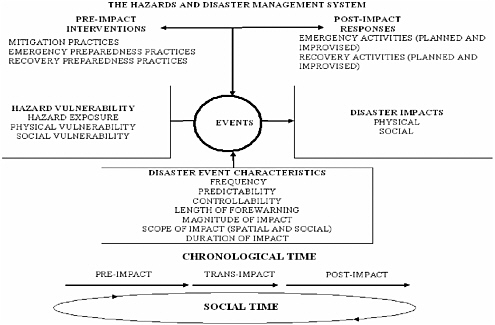
FIGURE 1.2 Societal response to disaster.
is a process model of societal response to disaster within which the physical and social impacts of catalytic events are a function of conditions of systemic vulnerability, disaster event characteristics, and what has been termed the hazards and disaster management system. As represented in Figure 1.2, specific disaster events (whether environmental, technological, or willful) are placed in the center circle as social catalysts of collective action before, when, and after they occur. Represented to the left, the events circle is the causal importance of antecedent conditions of hazard vulnerability (hazard exposure, physical vulnerability, social vulnerability). Represented below, the events circle is the causal role of key defining features of disasters (frequency, predictability, controllability, length of forewarning, and magnitude, scope, and duration of impact) that allow for comparisons of environmental, technological, and willful events of various types. Represented above, the events circle is the causal relevance of the hazards and disaster management system. That system is represented as the intersection of pre-impact interventions (disaster mitigation and preparedness practices) and post-impact responses (planned and improvised emergency and recovery activities).
Viewing Figure 1.2 in its totality, the hazards and disaster management
system interacts with hazard vulnerability and disaster event characteristics in determining levels of disaster impacts as outcomes of the model. The unity of hazards and disaster research that the committee considers essential is thereby revealed. The interactions among the five core topics of hazards and disaster research—introduced in Figure 1.1 and depicted more pointedly in Figure 1.2’s process model—are important on both theoretical and practical grounds. Both theoretically and empirically, hazard vulnerability, hazard mitigation, disaster preparedness, emergency response, and disaster recovery are mutually related. Indeed, they are components of a highly complex but comprehendible response structure. Practically, collective actions related to these constructs and their interactions increase or decrease the human harm and social disruption of disaster as the committee has defined that term. Thus, research on hazards and disasters has important implications for both basic science and public policy.
Chronological and Social Time
Both chronological time and social time are essential constructs in hazards and disaster research. As depicted in Figure 1.2, chronological time is linear, unidirectional, and readily calibrated using standard physical measurements. Chronological time allows for the partitioning of collective actions by time phases of disaster events (pre-impact, trans-impact, post-impact) and the examination of their interactions. In chronological time, pre-disaster vulnerability assessments influence hazard mitigation and disaster preparedness decisions under more routine, pre-impact circumstances. The trans-impact period constitutes the time immediately prior to and during an actual event when specific hazard mitigation and preparedness interventions are set in motion. Such planned interventions intersect with improvised emergency response and recovery activities during and after the event has occurred. Chronological time is also an essential tool for making comparisons between disasters in terms of such characteristics as frequency, predictability, length of forewarning, and duration of impact.
The scientific value of chronological time is unquestionable and taken for granted. Yet its value for analytical purposes is not unlimited; and thus, Figure 1.2 calls for a complementary treatment of social time. Social time is more complex than chronological time, but the concept is very useful for expressing the singularity of hazards and disaster research. The distinction between chronological and social time has heretofore rarely been mentioned by the hazard and disaster research community (see Forrest, 1993; Quarantelli, 1998:255-256), let alone seriously examined (for a notable exception, see Bankoff, 2004). The committee thinks that the distinction has scientific value and directly informs its work (Zerubavel, 1981, 1997, 2003).
Social time is nonlinear and multidirectional and may be experienced
differentially by individuals and social entities of various types. Within social time, the past may be reconstructed from the present. History itself has been variously reconstructed by individuals (citizens, professionals and practitioners, public officials, journalists, and scholars) and by what Zerubavel refers to as “mnemonic communities” (see Zerubavel, 2003, especially Chapters 1, 2, 4 and related literature referenced in that volume). Mnemonic communities are small to more inclusive social systems (families, ethnic groups, organizations, communities, and societies) whose memories of the past are collectively shared and often commemorated in various ways. The reconstruction of history is, indeed, a complex process. Long expanses of chronological time may be cut up and compressed into historical eras by mnemonic communities, and substantial “mental bridging” is required to maintain a sense of continuity across or even within these discrete periods. Particularly helpful in maintaining this sense of continuity are catalytic (watershed, benchmark) events such as the founding of new nations or religions, wars, the development of new technologies and inventions, and the creation of new modes of artistic expression (Zerubavel, 2003:12, 85-88, 97-100). Disasters, as defined above, provide important additional examples of catalytic events in social as well as chronological time.
Some catalytic events are only defined retrospectively. This is the case, for example, in what historically have been characterized in hazards and disaster research as “chronic” or “creeping” disasters (e.g., Fritz, 1961; Barton, 1969, 2005; Turner, 1978). For example, a 30-year drought-induced famine ultimately becomes defined as a multiple disaster. This disaster exists in social time only when changing historical conditions over decades have been collectively reconstructed to define them as acute. Yet how acute are these conditions? In chronological time, famines and droughts are physically characterized as slower-onset disasters with considerable forewarning in comparison to disasters such as earthquakes, tornadoes, hurricanes, and explosions of conventional, biological, or chemical weapons (Kreps, 1998:34). Chronological time is arguably central for comparative studies of the above disasters in terms of hazard vulnerability, hazard mitigation, and disaster preparedness. It is also a resource for taking preventive steps. In social time, however, the temporal uniqueness of droughts and famines is far less important. Once a disaster has been socially constructed, the “luxury” of time no longer exists. A previously unidentified disaster has now been located in social time and space. Chronological time and social time have become coterminous, as have collective actions related to hazard vulnerability, hazard mitigation, emergency preparedness, emergency response, and disaster recovery. Simultaneous activities are directed to meeting demands that are defined objectively and subjectively as acute in all of these areas.
It is also the case that in social time the present may be reconstructed
from the past. As opposed to the previous example in which certitude ultimately exists in both social and chronological time, here there is open-ended uncertainty about whether a set of historical conditions constitutes a disaster. A useful example is global climate change. In chronological time, global climate change draws primary attention to hazard vulnerability and mitigation activities to reduce its effects before they become disastrous. However within social time, equal attention is warranted to sustainability and perhaps survivability of the planet (i.e., to disaster response and recovery activities). Thus, whether global climate change is a potential or actual disaster is a non-issue from the standpoint of social science research. Just as with droughts, famines, earthquakes, tornadoes, explosions, and other hazards, the research interests of hazards and disaster researchers can and, in the committee’s opinion, must be seen as coterminous.
Finally, the future is inextricably linked to the present and past in social time. For example, decisions to build alternative types of physical structures and infrastructures in floodplains, in coastal zones, along fault lines, and in highly vulnerable urban areas are based on prior disaster experiences and future disaster expectations as both relate to assessments of hazard vulnerability. Moreover, decisions to make development investments necessarily involve decisions about disaster mitigation and preparedness measures, and these decisions are based on prior disaster experiences and future disaster expectations, including those related to emergency response and disaster recovery. Decisions about development, hazard mitigation, and emergency preparedness give rise to one of the most important economic issues in this field: Do increased levels of hazard mitigation and disaster preparedness increase risk taking by individuals and social systems? Thus, from an economic perspective, there is an implicit component of hazard exposure in Figure 1.2 that reflects decisions by individuals and social systems to locate in harms way.
The committee concludes that the past, present, and future of chronological time are interchangeable features of social time. In effect, chronological time compresses and expands within social time as individuals and social systems create, define, and adapt to environmental hazards, the risks associated with them, and the disasters that occur from them. The interests of those studying environmental hazards, risks, and disasters are coterminous, and equally important, and they must be captured within a common framework. Thus, the committee has had very specific objectives in mind for Figure 1.2: first, to further elaborate conceptual issues attending the above encyclopedia entry; second, to identify the common interests of hazard and disaster researchers; and third, to capture graphically both the interactions among central research topics in this field and their simultaneity. The individual and collective decisions and actions subsumed within these research topics demand the kind of causal framework depicted in Figure 1.2. So also
do the needs of policy makers, practitioners, and other stakeholders. This framework has been used by the committee to meet its charge and prepare this report.
SOCIAL SCIENCE AND THE EMERGENCE OF NEHRP
Created in 1977, the National Earthquake Hazards Reduction Program (NEHRP) was mandated to include the social sciences within a broader program of research in the earth sciences and engineering. This original mandate has been sustained in the latest NEHRP strategic plan (FEMA, 2003a). The inclusion of the social sciences in NEHRP was facilitated in the mid-1970s by the fact that hazards and disaster research had become an established, although relatively young, area of inquiry in the social sciences. It was therefore thought by champions of NEHRP in government and academia that the social sciences could contribute to the goals of the program.
Social science hazards and disaster research in North America is usually traced to Samuel Prince’s research on the 1917 Halifax, Nova Scotia, ship explosion, considered the first empirical social science disaster study in the region (Prince, 1920). Another important line of early work can be traced to studies of human adjustments to natural hazards under the direction of Gilbert White at the University of Chicago (began in the 1940s). A crucial growth period in the field occurred during the 1950s when multihazard and disaster research programs were established at the University of Chicago’s National Opinion Research Center, the University of Oklahoma, the University of Maryland, and the National Academy of Sciences. These programs were succeeded in the 1960s and 1970s by other multihazard and disaster research programs established at institutions such as the Ohio State University (where the Disaster Research Center was located from 1963 to 1985 before it moved to its present location at the University of Delaware), the University of Colorado (which became the home of the Natural Hazards Research and Applications Information Center in 1976), and Clark University (where the Center for Technology, Environment, and Development was established in 1978).
With respect to earthquake research, social scientists became a part of a multidisciplinary effort to understand major events that occurred during the 1960s and early 1970s. In fact, findings from studies of these events provided part of the rationale for the creation of NEHRP (Anderson, 1998). The first earthquake to receive serious attention during this period was the 1964 Alaska earthquake, which at the time was arguably the most studied seismic event in U.S. history (NRC, 1970). The second was the 1971 San Fernando earthquake, which clearly demonstrated the vulnerability of the nation to this hazard. These two disasters served as catalysts for the creation of a national program of earthquake research and application. The program’s
supporters included academics at institutions conducting earthquake research, officials at federal agencies such as the U.S. Geological Survey (USGS) and NSF, and a few members of Congress. Their goal was to use findings from studies of these events to convince federal decision makers and other stakeholders of the need for a national program (Hamilton, 2003).
Further support for inclusion of the social sciences in NEHRP was the timely publication in 1975 of two highly relevant reports stemming from studies led by social scientists. These reports appeared just a few years before the program was finally authorized by Congress, at the point when discussions were at a critical juncture. One of the reports was Earthquake Prediction and Public Policy (NRC, 1975), produced by an NRC panel led by sociologist Ralph Turner from the University of California Los Angeles (UCLA). This report provided an assessment of possible socioeconomic consequences of earthquake predictions. Its recommendations were considered very germane to the future NEHRP. One of its key arguments was that such a program would facilitate the development of earthquake prediction science and engineering, and that social scientists could play an important role by conducting complementary research and analyses related to the timely and effective issuance of earthquake predictions to the public. The other report, Assessment of Research on Natural Hazards (White and Haas, 1975), analyzed the state of the art of hazards and disaster research and offered recommendation on future research and application needs related to earthquakes and other hazards. The White and Haas report attracted the attention of the earthquake community not only because of its reference to earthquakes and other hazards, but also because of the authors’ advocacy of multidisciplinary research (Hamilton, 2003). The report also provided impetus for establishing the Natural Hazards Research and Applications Information Center at the University of Colorado at Boulder.
This emerging awareness of the relevance of the social sciences within the earthquake research community was reinforced by a highly influential 1976 report entitled Earthquake Prediction and Hazard Mitigation: Options for USGS and NSF Programs (NSF and Department of the Interior, 1976), more popularly known as the Newmark-Stever report after its two lead authors. Also important was a report published in 1978, one year after the establishment of NEHRP, entitled Earthquake Hazards Reduction: Issues for an Implementation Plan (Working Group on Earthquake Hazards Reduction, 1978). The Newmark-Stever report provided a research plan that included major social science research tasks under the rubric of “research for utilization.” This rubric was later reflected in the Earthquake Hazards Reduction Act that established NEHRP. J. Eugene Haas, a cofounder of the Disaster Research Center at Ohio State University, was an important contributor to the Newmark-Stever report. The Working Group on Earthquake Hazards Reduction was established by the Office of Science
and Technology Policy (OSTP) to prepare the second report. The working group reported to the prominent seismologist Frank Press, then director of OSTP and science advisor to President Jimmy Carter. The working group included two social scientists from federal agencies and representatives from the engineering and earth science communities. Its external advisory committee included two prominent social scientists, Charles Fritz of the National Research Council (NRC) and Ralph Turner from UCLA. The report of this working group addressed implementation issues that NEHRP and the nation faced, including those that could best be understood from a social science perspective (e.g., emergency preparedness, disaster warning, risk communication).
Participating agencies in NEHRP include USGS, NSF, the National Institute of Standards and Technology (NIST), and FEMA, with FEMA serving as lead agency during most of NEHRP’s existence. When NEHRP was established in 1977, NSF was already the focal point for federal government funding of social science hazards and disaster research, principally through what was later to become the Engineering Directorate. This social science element became a part of NSF’s continuing contribution to NEHRP, and funding is now provided through the directorate’s Division on Civil and Mechanical Systems (CMS). Over the years, this social science component has been variously named Societal Response to Natural Hazards, Earthquake Systems Integration, and more recently Infrastructure Management and Hazard Response. Some social science hazards and disaster research is also funded within programs of the Social, Behavioral, and Economic Sciences Directorate, including the Decision, Risk, and Management Sciences Program. As is the case with support received by other disciplines from NSF, most social science funding for earthquakes and other hazards goes to academic institutions. A relatively modest amount of funding has also been made available by FEMA and USGS to the social science research community under the auspices of NEHRP.
KEY ISSUES THAT ARE RELATED TO AND INFORM THE COMMITTEE’S CHARGE AND TASKS
Social Science, Disasters, and Public Policy. This report summarizes a body of social science research that informs and can influence public policy. A classic definition of public policy is the “things that government chooses to do or not to do” (Dye, 1992). This definition encompasses the idea that governments—and, more to the point, the people that work in government—make choices about what government should do (the policy goals) and what government does to achieve these goals (the policy tools). These decisions are in turn influenced by basic and applied scientific research.
Because the findings of this report inform and are influenced by the
political process and by political institutions, it summarizes past research and recommends future studies that have the potential to influence public policy. Most recently, after Hurricanes Katrina and Rita, policy makers have sought ideas to improve the nation’s preparedness for and response to natural and other types of disasters. Key ideas for addressing these problems are being developed by members of the research community described in this report. While the committee does not make specific policy recommendations, the research recommendations in this report can influence public policy in ways that can reduce vulnerability and promote hazard mitigation and preparedness. Further, the committee acknowledges the influence of public policy on social science research on hazards and disasters. For example, the Earthquake Hazards Reduction Act created the National Earthquake Hazards Reduction Program, which has supported a considerable amount of basic and applied social science research.
Research supported under NEHRP suggests that there is much variation in the nature of government policies intended to address natural hazards. Policies vary by level of government, by physical location, and by hazard. This report therefore summarizes past research and calls for additional research that could be useful to policy makers. At the same time, the policies adopted by government at all levels to mitigate, prepare for, and respond to disasters have inspired research about the nature and effectiveness of these policies. The ultimate translation of scientific knowledge into policy is subject to the usual economic, social, and political factors that can either further or impede policy changes in political systems.
Societal Change and Social Science Hazards and Disaster Research. Societies worldwide are undergoing significant changes that will require major adjustments on the part of social science hazards and disaster research in terms of what is studied and how. For example, as discussed in Chapter 2, the populations in the United States and elsewhere are undergoing significant change, affecting the vulnerability of various groups that social scientists study. The emergency management profession, seen by social scientists as a major user of the knowledge the field generates, has new responsibilities (including those brought on by the increased threat of terrorism) and new institutional arrangements to meet these responsibilities. Social scientists must address both of these changes within an inclusive framework of hazards and disaster research, as depicted in Figure 1.2. Moreover, technologies now available to the general public, (e.g., the Internet, cell phones, geographic information systems (GIS), remote sensing) and formal and informal groups and organizations using these technologies will influence all aspects of behavior and decision making related to hazards and disasters studied by social scientists (Cutter, 2001). Also, many of these same technologies are likely to have a profound impact on the way disaster researchers
carry out their investigations and disseminate their results, which already appears to be the case for the Internet and GIS.
Social Science Contributions Under NEHRP. In Congress’s definition of NEHRP’s roles, NSF is responsible for activities such as funding research, especially at universities, on problems that can be addressed by the disciplines of earthquake engineering and the earth and social sciences. Thus, as part of its NEHRP role, NSF has provided much of the external support for social science hazards and disaster research conducted by U.S. investigators during the past 25 years. This work has included studies carried out by researchers in disciplines represented by experienced specialists on the committee, and their expertise has been supplemented as necessary by workshop presentations from other experts. NSF support has been critical for enabling the social science research community to pursue a long term program of research on hazards and disasters, to train succeeding cohorts of graduate students, and to pursue new strategies to disseminate knowledge. Much of this research has focused on the United States; however, significant international work has also been carried out by U.S. investigators, often in collaboration with international colleagues.
The social and behavioral science research funded by NSF has included both individual investigator awards (i.e., projects involving a single researcher and perhaps one or more graduate students) and team awards with multiple investigators. Examples of the latter include projects that cut across social science disciplines as well as the even more challenging multidisciplinary research in which social scientists collaborate under the auspices of the three NSF-supported earthquake engineering research centers: the Multidisciplinary Center for Earthquake Engineering Research (MCEER), administered through the State University of New York at Buffalo (which succeeded the National Center for Earthquake Engineering Research); the Mid-America Earthquake Center, administered through the University of Illinois at Urbana-Champaign; and the Pacific Earthquake Engineering Research Center, administered through the University of California at Berkeley. Additionally, over the years social scientists have participated on multidisciplinary post-earthquake reconnaissance teams organized by the Earthquake Engineering Research Institute (EERI) as part of its Learning from Earthquakes program (also funded by NSF).
In the broadest terms, the research that social scientists have carried out during NEHRP’s 25-plus years has focused on activities related to pre-, trans-, and post-disaster time periods, as depicted in Figure 1.2. Appropriately enough, a large portion of this research has targeted earthquake hazards. However, over the years, NSF has been quite flexible about the type of social science research it was willing to fund under NEHRP. Thus, NSF has permitted social science researchers to study other types of hazards
and disasters as surrogates for earthquakes and has concurred with the importance of carrying out research projects that included other types of hazards for comparative purposes. This concurrence is important because most social scientists have a preference for engaging in cross-hazards research, rather than specializing in specific hazards as earthquake engineers, atmospheric scientists, and earth scientists tend to do. NSF’s flexibility has set the stage for significant leveraging of knowledge across hazards and disasters, making it more likely that a holistic knowledge base can be generated. Additionally, this more comprehensive approach is valuable to emergency managers, urban and regional planners, and other practitioners who face the reality of confronting multiple hazards.
A key task for this committee, then, is to document succinctly the key contributions that social scientists have made under NEHRP in developing knowledge of earthquakes and other hazards and disasters, and also advancing appropriate collaborative research activities subsumed by the research topics represented in Figure 1.2. Recent discussions have been suggestive, including a workshop (National Earthquake Hazards Reduction Program at Twenty-Five Years: Accomplishments and Challenges) held in Washington, D.C., on February 20, 2003. The workshop was organized by the National Academies’ Disasters Roundtable at the request of the four participating NEHRP agencies. At this workshop, it was argued by some participants that social science research supported through NEHRP has resulted in a greater understanding of the social and economic consequences of earthquakes, including the effects on regional and national economies, the economic impacts on individual firms, and the effects on individuals, families, and communities. It was also suggested that much has been learned about the way individuals, organizations, and government entities respond to earthquake threats and seismic events, about how to communicate risk more effectively, and about how to design and implement mitigation policies and programs. Finally, participants recognized that the social science research conducted under NEHRP is relevant across all of the various types of hazards and disasters studied. Clearly, much of what has been learned by social scientists through the study of earthquakes is applicable to other natural, technological, and human-induced disasters, and vice versa.
A similar theme was struck during another workshop (Contributions of Earthquake Engineering, Seismology, and Social Science, held in San Francisco on June 18-19, 2003) that was organized by EERI. Like their counterparts in earthquake engineering and earth science at the workshop, participating social scientists outlined what they considered to be some of the major contributions their disciplines have made that apply to earthquakes as well as other types of hazards. Among the contributions noted was the creation of a knowledge base on factors that facilitate and hinder mitigation and preparedness efforts. This knowledge base was seen as pro-
viding insights about the degrees of vulnerability that characterize various segments of society, specifying major principles of emergency preparedness and management, and documenting challenges and opportunities presented during disaster recovery. On the implementation side, it was noted that one of the major contributions of the social sciences during the past few decades has been increasing the availability of their research results to emergency managers and other practitioners, thereby contributing to the latter’s ability to better cope with today’s array of hazards. Various strategies have been employed, including the establishment of college- and university-based emergency management courses and programs at the undergraduate and graduate levels.
Finally, the First Assessment of Research on Natural Hazards conducted by Gilbert F. White and his collaborators at the University of Colorado at Boulder called attention to the relevance of the social sciences to a future NEHRP. A second assessment which was initiated in the 1990s under the leadership of Dennis Mileti (and also at the University of Colorado), resulted in a number of important publications, including the summary volume Disasters by Design: A Reassessment of Natural Hazards in the United States (Mileti 1999b). The Second Assessment produced four additional books, which focused, respectively, on hazard insurance (Kunreuther and Roth 1998); land-use planning for disaster reduction (Burby, 1998); disaster preparedness and response (Tierney, Lindell, and Perry, 2001); and the risks and vulnerabilities associated with different geographic locations in the United States (Cutter, 2001). The Second Assessment took a comprehensive look at advances in hazards and disaster research since the results of the First Assessment were published in 1975. The committee has drawn on these and other publications in documenting social science contributions to hazards and disaster research and, more importantly, in identifying gaps in and future opportunities for the development and application of knowledge.
It is important to determine, for example, gaps in knowledge about natural as opposed to technological and other types of hazards and disasters. Historically some social science researchers have shown a preference for studying one type over another, perhaps interacting primarily with likeminded researchers, thereby reducing opportunities for sharing research results and theoretical insights. As previously noted, however, many social scientists investigate a variety of hazards and disasters, including terrorist incidents. This tendency seems to be especially true of researchers affiliated with social science centers that have sustained programs of research, such as the Disaster Research Center at the University of Delaware, the Hazard Reduction and Recovery Center at Texas A&M University, the G.P. Marsh Institute at Clark University, and the Hazards Research Lab at the University of South Carolina. There also are some specific topics, such as risk perception and communication, about which specialists devote most of
their time to either natural or technological disasters, but tend to meet fairly frequently (e.g., the Society for Risk Analysis) and share insights in specialty journals (e.g., Risk Analysis). Building more and better networks among specialists in respective areas seems an important requirement for the future. For example, forums for social scientists studying hazards and disasters have become institutionalized to varying degrees in professional associations and meetings. One example is the Regional Science Association International (RSAI), an interdisciplinary association that brings together economists, geographers, sociologists, planners, and engineers, as well as some public officials. Sessions on disasters have been organized at RSAI’s annual North American meetings since the early 1990s and have helped build up interest, community, and an established literature on disaster research in the regional science community. Similar specialty groups have been established by the Association of American Geographers and the American Sociological Association.
Interdisciplinary Research: Challenges and Opportunities. Figure 1.2 provides the framework used in subsequent chapters to document what is known and not known about hazards and disasters and the opportunities for future research. While there is a compelling need for disciplinary research within the social sciences, physical sciences, and engineering, there is a similar need for collaborative research across disciplines. Simply put, hazards and disasters pose problems that require multidisciplinary and interdisciplinary solutions. The challenges are major and the opportunities to meet them merit careful consideration.
One of the key justifications for the creation of earthquake engineering research centers was that they would provide a platform for significant interdisciplinary research involving engineers, earth scientists, and social scientists. As noted, NSF currently supports three such centers, and all are expected to promote an integrated research program that includes the social sciences. In addition, over the years NSF has supported other interdisciplinary activities, and this type of research is receiving increasing emphasis. In 2003, the Engineering Directorate and the Social, Behavioral, and Economic Sciences Directorate launched a joint program to support collaborative engineering and social science research that include hazards and disasters. If successful, it is expected that NSF will make a long-term commitment to this program. The committee has therefore examined the experience with interdisciplinary research on hazards and disasters and identified the challenges faced both within the social sciences and between the social sciences and natural science and engineering fields.
Opportunities for Collaborative International Research. The United States is viewed as a world leader in the field of hazards and disaster research.
Because of their education, resources, and experience, disaster experts in this country are highly sought after by stakeholders looking for research partners. A significant amount of the international collaborative research on hazards and disasters funded by NSF has been related to earthquakes. U.S. collaboration with China and Japan has been particularly strong over the years and in the case of Japan has included at least modest social science participation. Because damaging earthquakes are rare in this country, U.S. investigators have generally been keen to undertake studies of events in foreign locales. These studies have often involved scientific collaboration with researchers in affected societies, as was the case following the 1985 Mexico; 1995 Kobe, Japan; 1999 Kocaeli, Turkey; 1999 Chi Chi, Taiwan; 2001 Gujarat, India; and 2003 Bam, Iran earthquakes.
Although earthquake hazards have been a favorite subject of U.S. researchers involved in collaborative international research, NSF has funded collaborative research on other types of hazards as well (e.g., research on Hurricane George and Hurricane Mitch, which struck the Caribbean and Latin America in 1998). During the course of its work, the committee has therefore developed ideas to facilitate opportunities for collaborative international research involving the social sciences.
Role of New Technologies and Methodologies for Enhancing Studies of Disasters Before, During, and After Their Occurrence. As represented in Figure 1.2, trans- and post-impact periods of disasters provide natural laboratories for observing how people actually cope with stressful events. As a result, post-disaster fieldwork has been a hallmark of hazards and disaster research since the origins of the field (Tierney, 2002). Indeed, post-disaster investigations are seen as so important to advancing knowledge that special institutional arrangements have been adopted and special funding has sometimes been made available (particularly for earthquake research) to enable social scientists and other researchers to enter the field to collect perishable data or conduct more systematic research.
NSF has a long history of providing support for post-disaster investigations. For many years, for example, NSF has provided support for EERI’s earthquake reconnaissance work, which involves the collection of perishable data from damaging earthquakes in the United States and abroad by multidisciplinary teams organized by the institute. Social scientists serve on EERI’s Learning from Earthquakes Committee and participate (although in a limited way) in EERI post-earthquake reconnaissance teams. EERI has also recently formed a social science committee to better integrate social scientists into its activities, especially those involving the collection of perishable data following earthquakes. NSF has also supported a more modest effort at the University of Colorado’s Natural Hazards Center, one that covers travel costs primarily for social science researchers to study a variety
of disasters. NSF also provides funding directly to researchers for post-disaster studies through its standard grants program, its Small Grants for Exploratory Research Program, and timely supplements to existing grants. In addition to post-earthquake studies, NSF has also used such mechanisms to fund post-disaster research on other natural disasters, including floods, tornadoes, tsunamis, and hurricanes. And after September 11, 2001, NSF funded a major portfolio of post-disaster studies in New York and Washington, D.C., on the terrorist attacks (Natural Hazards Research and Applications Information Center, 2003).
NSF and its other NEHRP partners have cooperated on post-earthquake investigations, including research carried out after the 1989 Loma Prieta and 1994 Northridge earthquakes. Recently, the Plan to Coordinate NEHRP Post-earthquake Investigations (Holzer et al., 2003) was released to promote greater coordination among agencies and to specify their expected research roles. The plan emphasizes that along with other relevant disciplines, the social sciences make important contributions to post-earthquake investigations in the United States and abroad.
A key issue is how to exploit state-of-the-art technologies and methods in maximizing the value of post-impact investigations. The 2003 NEHRP plan makes it clear that improved collection, management, and dissemination of perishable data are essential. For example, the NEHRP plan speaks to the need for searchable web-based data systems, but is not precise about how these systems should be constructed, the kinds of data that should be included in them, when these data should be collected and stored, and how the demands for information from multiple audiences will be met. Post-impact studies also provide a window for documenting what did or did not take place pre-disaster with respect to hazard vulnerability assessment, hazard mitigation, and disaster preparedness actions.
The use of state-of-the-art technologies and methodologies is no less important for pre-impact investigations of hazards and the risks association with them. While the interpretation of perishable data is different for hazards as opposed to disaster research, the technical issues of building and maintaining databases are equally nontrivial as are requirements for data sharing and providing user-friendly data presentation and dissemination techniques to multiple audiences. Thus, a wealth of innovative technologies and methodologies (e.g., advanced survey research techniques, geospatial and temporal tools and methods, various types of remote-sensing technologies, data integration and fusion techniques, automated scanning of documents collected in the field, automated compilation of data from standardized field protocols, parallel computing equipment and software, computer modeling and simulation, gaming experiments) are relevant to hazards as well as disaster research. Both research and guidance are needed in determining how best to exploit these and other tools as matters of research and
application. For want of a better phrase, “hazards and disasters informatics” is both a challenge and an opportunity for the future.
Dissemination of Social Science Findings on Hazards and Disasters. At the Disasters Roundtable workshop on NEHRP, some participants talked about an “implementation gap,” arguing that significantly more is known about solving hazard and disaster problems than is being applied. One expectation those in other disciplines have had of the social sciences is that the latter would contribute major insights about how to improve the implementation process. Essentially, the expectation is that the social sciences play a key role in evaluation research that can lead to the development of best practices on the dissemination of findings to policy makers, practitioners, and individual citizens. Social scientists have conducted some evaluation research on the dissemination of findings from hazards and disaster research (Yin and Moore, 1985; Yin and Andranovich, 1987). Additionally, the Natural Hazards Center is known for its leadership in furthering the application of social science research results through its information dissemination activities and other programs that link researchers and practitioners. There are at least some social science research groups that share their knowledge with practitioners through close and sustained relationships. Another sign of progress, sometimes involving collaboration between social scientists and other stakeholders such as FEMA, is the development of college courses and degree programs on hazards and disaster management. Currently there are several dozen such programs at colleges and universities in the country. Finally, a new initiative has been undertaken by the Natural Hazards Center and the University of Colorado at Denver, in partnership with FEMA’s Higher Education Program and with support from NSF, to advance such efforts by formulating a national model for emergency management college curricula. The committee therefore has ample foundations for developing evaluation research strategies in the field.
Meeting Future Hazards and Disaster Research Workforce Needs. The sustainability of social science research on hazards and disasters depends on its most vital resource, the next generation of researchers. The period of the 1960s and 1970s was arguably a high-water mark for the training of young scholars entering the field, first at such institutions as the University of Chicago and the Ohio State University and then at such institutions as Clark University and the University of Colorado. It was a period, for example, when the Disaster Research Center was created at the Ohio State University and the landmark First Assessment on Natural Hazards was carried out at the University of Colorado. Flush with outstanding faculty, innovative research activities, and funds, the above institutions produced their largest cohorts of Ph.D.s committed to careers in hazards and disaster
research. The resulting advancement of hazards and disaster research during the latter three decades of the twentieth century has been associated with the evolving careers of this 1960s-1970s cohort, complemented by the contributions of scholars whose involvement in the field has been more episodic than sustained. Simply put, however, formerly young scholars have now aged and need to be replaced.
The traditional way of developing future generations of researchers has been to identify promising students, enroll them in graduate programs, and involve them in meaningful ways in ongoing research activities. The hopeful result is an expanding pool of newly committed scholars, in this case hazards and disaster researchers. Some senior social scientists in the field now argue that this traditional approach is no longer adequate to meet workforce needs. In response to this argument, NSF funded the highly innovative Enabling Project in 1996 (administered through Texas A&M University) as an alternative way to increase the number of younger professionals entering the field. The project was designed to attract junior faculty from doctoral degree-granting universities who showed promise and expressed an interest in hazard, disaster, and risk research. Thirteen junior faculty members were selected competitively to participate as fellows in the two-year program. The fellows were assigned senior mentors, given an overview of the field, and provided the opportunity to sharpen their proposal writing skills, among other things. The project proved a success, with some of the fellows initiating promising hazards and disaster research activities with funding from NSF after their proposals had undergone the agency’s rigorous peer review process. As a result, a follow-up project was funded by NSF for a two-year period starting in 2003 (administered through the University of North Carolina at Chapel Hill). Several of the fellows who took part in the second “enabling” project have already received NSF awards.
Finally, as a result of a grant from NSF, the Natural Hazards Center and the Public Entity Research Institute collaborated on a dissertation fellowship program for young scholars from the social and behavioral sciences, engineering, and the physical sciences. This was a two-year pilot program to provide supplemental support for dissertation work on hazards and disasters as yet another way of bringing new researchers into the field. The intention was to evaluate the program at the end of the pilot period to determine if it would be continued.
Notwithstanding concerns about the size of the research workforce, the diversity of the field is also an issue. Women have made significant strides in hazards and disaster research in recent years, both in terms of their numbers and their success in assuming leadership roles. Unfortunately, there has been little progress in terms of the involvement of minorities in disaster research, including African Americans and Hispanics. This circumstance persists despite the fact that minorities have a higher representation
in the social and behavioral sciences than they do in many other research disciplines.
A VISION OF SOCIAL SCIENCE CONTRIBUTIONS TO KNOWLEDGE AND A SAFER WORLD
While NSF social science studies supported through NEHRP are summarized in some detail in the report that follows, the committee’s overall vision of future hazards and disaster research underlies the summary recommendations that have been developed. The committee envisions a future in which:
-
the origins, dynamics, and impacts of hazards and disasters become much more prominent in mainstream as well as specialty research interests throughout the social sciences;
-
traditional social science investigations of post-disaster responses become more integrated with no less essential studies of hazard vulnerability, hazard mitigation, disaster preparedness, and post-disaster recovery;
-
disciplinary studies of the five core topics of hazards and disaster research within the social sciences increasingly become complemented by interdisciplinary collaborations among social scientists themselves and between social scientists and their colleagues in the natural sciences and engineering;
-
there is continuing attention throughout the hazards and disaster research community on resolving interdisciplinary issues of data standardization, data management and archiving, and data sharing;
-
there is continuing attention throughout hazards and disaster research on the dissemination of research findings and assessments by social scientists of their impacts on hazards and disaster management practices at local, regional, and national levels;
-
each generation of hazards and disaster researchers makes every effort to recruit and train the next generation; and
-
the funding of hazards and disaster research by social scientists, natural scientists, and engineers is a cooperative effort involving the NSF, its partner agencies within NEHRP, the Department of Homeland Security, and other government stakeholders.
The committee feels that such recent disasters as Hurricanes Katrina and Rita significantly reinforces the relevance of its vision.
STRUCTURE OF THE REPORT
The above discussions follow directly from the earlier statement of tasks mutually agreed upon by the NSF and this NRC committee. The
chapters to follow are organized in terms of those tasks and are informed by the framework developed in this lead chapter.
Chapter 2 addresses environmental, technological, and willful disasters within a broader discussion of key demographic, technological, economic, social, and political changes in the United States and internationally. Chapters 3 and 4 document the social science knowledge base on the five mainstream topics of the field, as defined within Figure 1.1 and modeled in Figure 1.2. Both of these key chapters highlight social science contributions under NEHRP, thus meeting one major task associated with the committee’s charge. Chapter 3 focuses primarily on hazard vulnerability, disaster event characteristics, pre-impact interventions, and how they interact in determining disaster impacts from a cross-hazards perspective. Chapter 4 focuses primarily on post-impact responses and their interactions with pre-impact interventions, as both relate to the determination of disaster impacts from a cross-hazards perspective. Fortunately, the more recent Second Assessment (led by Mileti, 1999b) includes several published volumes that provide detailed summaries of knowledge. The committee’s intent is not to “reinvent the wheel” but rather to highlight major themes and findings and, in particular (as required by Figure 1.2), to document what is known and not known about their relationships. This approach allows the committee to identify major gaps in social science knowledge and opportunities to reduce them in the early decades of the twenty-first century.
Building on the foundation of the initial four chapters, subsequent chapters address the remaining tasks assigned to the committee. Chapter 5 considers both multidisciplinary and interdisciplinary studies within the social sciences and cross-disciplinary studies that link social science with natural science and engineering fields. Its aim is to document exemplars of successful collaborations and, in so doing, document various challenges that must be overcome in the future. Chapter 6 examines relationships between hazards and disasters and economic development from an international perspective, drawing on ideas of sustainability and resilience in framing development issues. Chapter 7 highlights the role of new technologies and methodologies for enhancing pre-, trans-, and post-disaster studies. Chapter 8 gives attention to practical problems of disseminating research findings and then develops a conceptual framework as the basis for framing future research questions on dissemination. Finally, Chapter 9 provides a summary of research workforce challenges and offers specific steps to solve them.
Committee recommendations and their rationales are offered in Chapters 3 through 9. A majority of the recommendations relate to the need for comparative studies of societal responses to natural, technological and willful hazards and disasters. No explicit priorities among the recom-
mendations have been set forth by the committee, primarily because traditional topics within, respectively, hazards and disaster research necessarily are interrelated. The committee also wishes to ensure that stakeholders have the flexibility to consider the broad range of research and application issues specified in its statement of task.


