
Factors in the Selection of R&D Sites
Respondents were asked two questions about each of a set of factors that might or might not have been relevant in selection of the site. First, respondents were asked whether they agreed or disagreed with a statement about a factor that might have led them to locate in the country. They were then asked how important or central the factor was in the deliberations on whether to locate in the country.
We want to know the factors that you considered in locating R&D in this country. First, we will ask if you agree or disagree with a statement about this location as it affects your firm. We use a 5-point scale where 5 indicates that you strongly agree and 1 indicates that you strongly disagree. 3 will indicate that you neither agree nor disagree. Second, we will ask how important or central the factor was in deliberations on whether to locate in this country. Use a scale of 1 to 5 where 5 is very important and 1 is not important at all.
The following statements were provided (Box 2). In parentheses after each statement is the shorthand notation for the factor.
This exercise was first carried out for sites outside the home country, then it was repeated for sites identified inside the home country, with the exception that factors 10–13 were not considered for home facilities. This was done because of the belief that these factors were less crucial for sites in the home country. In an effort to keep the survey short, they were deleted from the questions on sites at home.
|
BOX 2 Factors in Selection of Site
Note that each statement was worded so that agreement implies that the factor is favorable, from the standpoint of the firm, for the location. |
The data generated by this procedure allow a variety of comparisons regarding the factors that influence location. Factors can be compared for sites in the home country versus sites outside the home country. Sites outside the home country and in a developed economy can be compared to sites in a developing or emerging economy. Another stratification of interest is between the responses of U.S.-based firms versus those firms whose home country is in Western Europe. With the exception of a few factors, however, U.S. and Western European firms did not differ in their responses
regarding sites outside the home country. The data for U.S. and Western European firms are combined.
RESULTS FOR SITES OUTSIDE THE HOME COUNTRY: EMERGING ECONOMIES
Figure 7 presents the mean agree/disagree and importance responses for respondents identifying a recently established or planned site in an emerging economy. As shown in Table 1, 51 percent of these sites are in China or India. Factors are ordered by mean level of importance.
For the first five factors in Figure 7, respondents, on average, either disagree that the factor is correct for emerging economies or they are neutral with respect to agreement. In addition, these factors tend not to have been important or central in deliberations on the site selection.
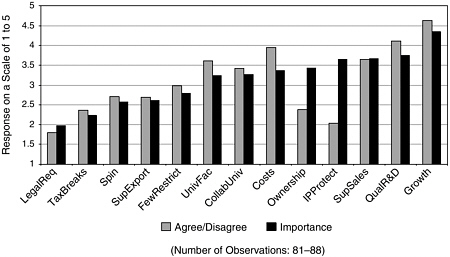
FIGURE 7 Factors in selecting a site in an emerging economy.
|
Statistical Tests of Importance for Figure 7(5-percent level) |
|||||
|
LegalReg=TaxBreaks |
|||||
|
|
Spin=SupExport |
||||
|
|
|
SupExport=FewRestrict |
|||
|
|
|
|
UnivFac=CollabUniv=Costs=Ownership |
||
|
|
|
|
|
Costs=Ownership=IPProtect=SupSales |
|
|
|
|
|
|
|
Ownership=IPProtect=Supsales=QualR&D |
The results for TaxBreaks are a bit surprising given the use of such breaks in the United States to attract manufacturing and service facilities. It is possible that the mean values mask the importance for some of the firms in the sample, but a closer look reveals that only 3 of 80 respondents (3.8 percent) either agreed or strongly agreed (i.e., a score of 4 or 5) that they had been offered tax breaks and/or direct government assistance and also noted the importance of TaxBreaks as either a 4 or 5. Thus, one can reasonably reject the argument that tax breaks and/or direct government assistance are luring firms to establish R&D facilities in developing or emerging economies.
The seven factors from UnivFac to QualR&D are generally equivalent in level of importance.1 Only the final factor, the growth potential of the country (Growth), is significantly different from all other factors. The story here is that the selection of an R&D site in an emerging economy is a complex process, with the growth potential of output markets standing out from the rest.
The results on costs net of tax breaks are particularly interesting. Although respondents agree that costs of R&D in emerging economices are low, the level of importance in the deliberations is statistically significantly lower (1-percent level). Thus, although low costs of R&D in developing countries (and, in particular, China and India) are often mentioned as driving firms in developed countries to conduct their R&D in developing countries, the picture that emerges here is somewhat different. Costs are lower, but they tend not to be as important or central in location decisions as are other factors. Note, in particular, that five of the factors are more important—and two are significantly higher—than are costs for locating in a developing or emerging economy.
The largest differences between levels of agreement and importance are for the two intellectual property factors. Respondents disagree that it is easy to negotiate ownership of intellectual property from research relationships, and they disagree that the quality of intellectual property protection is good.
However, these factors were important or central in their deliberations regarding the sites. It is interesting that respondents disagreed that ownership is easy and they disagreed that intellectual property protection is good and they did consider both factors, but they nonetheless placed a site in a developing country.
OUTSIDE HOME COUNTRY DESTINATIONS: DEVELOPED ECONOMIES
Figure 8 shows the results for factors behind the choice of sites outside the home country and in another developed economy. Eighty percent of these sites are either in the United States or in Western Europe. Factors are ordered by mean level of importance.
For the first six factors in Figure 8 (LegalReg to SupExport), respondents, on average, either disagree that the factor is correct for sites outside the home country and in developed economies or else are neutral with respect to agreement.
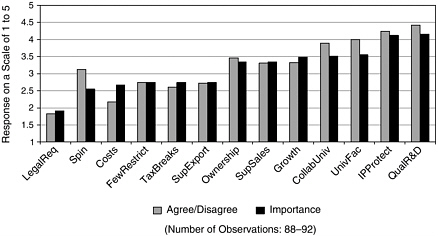
FIGURE 8 Factors in selecting a site outside the home country and in a developed economy.
|
Statistical Tests of Importance for Figure 8(5-percent level) |
|||
|
|
Spin=Costs=SupExport=TaxBreaks=FewRestrict |
||
|
|
|
SupSales=Ownership=Growth=CollabUniv=UnivFac |
|
|
|
|
|
IPProtect=QualR&D |
Earlier it was noted that both the average level of agreement and importance for TaxBreaks were low for sites in developing or emerging economies. As well, it was noted that only 3 of 80 respondents (3.8 percent) either agreed or strongly agreed that there were tax breaks and also noted the level of importance as either a 4 or 5. The averages here are also low. However, there is greater variability in respondent answers. Of 50 respondents, 12 (24 percent) gave both an agreement level of 4 or 5 and an importance level of 4 or 5. The results suggest that tax breaks are more prevalent in developed countries.
Note that respondents disagree that costs are low in developed countries, but, on average, costs are not important in their deliberations.
For the remaining factors, two stand out as being particularly important in firm deliberations about developed country sites: protection of intellectual property and quality of R&D personnel. These two are not statistically significantly different from each other, but they are significantly different from all other factors. Factors from supporting sales to university faculty with particular expertise are not significantly different. As was the case with emerging countries, site selection in developed countries is a complex process.
INSIDE THE HOME COUNTRY
Figure 9 shows results for factors for site selection inside the home country. Recall that we did not solicit responses for all 13 factors.
These results are very similar to those for developed countries that are not the home country. For sites inside the home country, the lack of restrictions (FewRestrict) is more important than for sites in other developed countries. This is particularly clear when we consider individual responses rather than average responses. For developed sites outside the home country, only 5 of 45 respondents (10.2 percent) either agreed or strongly agreed that there are few restrictions and also noted an importance of 4 or 5. However, for sites inside the home country, the corresponding statistic is 20 out of 89 (22.5 percent). For sites within the home country, the quality of R&D personnel and the protection of intellectual property are close in importance (4.5 versus 4.3), though the difference is statistically significant.
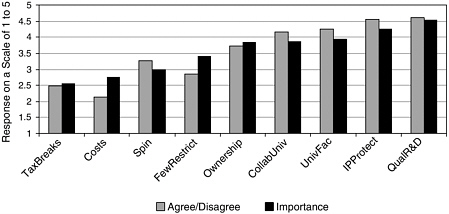
FIGURE 9 Factors in selecting a site inside the home country.
|
Statistical Tests of Importance for Figure 9(5-percent level) |
||||
|
|
TaxBreaks=Costs |
|||
|
|
|
Costs=Spin |
||
|
|
|
|
Ownership= CollabUniv= UnivFac |
|
|
|
|
|
|
IPProtect=QualR&D |
SUMMARY OF RESULTS
To summarize results on the factors that influence R&D location, the issue is not why firms locate at home or not, but why they locate in a developed economy versus an emerging economy. The results are striking and summarized in Table 3. The table combines the information on agreement and importance to show whether a factor on “net” can be viewed as an attraction to go to a site or as a detraction in choosing a site.
To interpret the table, note that an “Attractor” is defined as a factor with an average agreement score of more than 3 (recall that 4 and 5 are agree or strongly agree) and for which the average level of importance in the site deliberations is greater than 3 (recall that 4 and 5 are important and very important). A “Detractor” is a factor with an average agreement score that is less than 3 (hence, respondents do not agree with the factor statement) and for which the average level of importance is greater than 3. Thus, factors with average importance scores of less than 3 are not consid-
TABLE 3 Attractors/Detractors: Emerging versus Home and Other Developed
|
|
Attractors |
|
Emerging |
Output Markets |
|
|
Quality of R&D Personnel |
|
|
Costs = University Factors |
|
Home/Developed |
Quality of R&D Personnel = IP Protection |
|
|
University Factors |
|
|
Output Markets |
|
|
Detractors |
|
Emerging |
IP Factors |
|
Home/Developed |
No Detractors |
|
Output Markets are Growth & SupSales. University Factors are CollabUniv and UnivFac. IP Factors are IPProtect and Ownership. |
|
ered particularly relevant in selecting the site. Note that there are no detractors for developed sites. In particular, recall from Figures 8 and 9 that costs are high in developed sites, but, on average, costs are not considered an important part of the decision for developed economies.
The order by which factors are listed in the table reflects the relative order of importance by stage of development. In addition, natural combinations of factors have been made; for example, both growth potential and supporting sales are output market factors, so they have been combined.2 An “equal” sign signifies no difference in the factors.


