
3
The Status of Women and Underrepresented Minorities and Programs of Support
A clinical research career may pose special challenges for women and minorities. This chapter focuses on the status of women and minorities in academic research careers, from students to faculty. Some programs that provide support and guidance to advance women and minorities in research careers are highlighted.
WOMEN FACULTY
The recruitment, retention, and advancement of women in academic medicine are critical issues for the clinical research community.
Bumpy Career Paths
Data from the Association of American Medical Colleges (AAMC), which collects and publishes data on the status of women at all levels along the medical career path, indicates that although the numbers of women applying to, enrolling in, and matriculating from medical schools continue to rise, advancement along the faculty career path has been much slower than anticipated (AAMC, 2004b). Since the establishment of the Office of Research on Women’s Health at the National Institutes of Health (NIH), researchers have continually examined the progression of women in basic biomedical and clinical research careers (NIH, 1992, 1999; NRC, 2004). A workshop that focused on women in clinical research careers suggested
that the varying career paths, debt burdens, and need to balance family and career had differentially acute impacts on women (NRC, 2004).
Women constitute 29 percent of the faculty of basic science departments and 30 percent of the faculty of clinical departments (Barzansky and Etzel, 2002). The data indicate that women do not advance along the academic career path at the same rate as men (see Table 3-1) (AAMC, 2003).
In a landmark study conducted in 1999, female graduates of medical schools were found more likely than male graduates to pursue an academic career, but the numbers of women advancing to associate and full professor rank were lower than expected for both tenure and nontenure tracks (Nonnemaker, 2000). The study found that 25 percent fewer women than expected rose to the rank of associate professor and 43 percent fewer women than expected rose to the rank of full professor. The influx of women into academic health professions over the past three decades has not been accompanied by equality for male and female faculty in rank attainment, leadership roles, salaries, or treatment by colleagues and superiors. An examination of one academic institution indicated substantial gender differences in the rewards and opportunities offered to men and women. There were also significant gender disparities in salary (Wright et al., 2003). After adjusting for rank, track, degree, specialty, years in rank, and administrative positions, researchers found that the women in the institution earned 11 percent less than men. In general, however, the women were as productive as the men based on both publications and clinical revenues,
TABLE 3-1 Distribution of Full-Time U.S. Medical School Faculty by Sex and Rank, 2003
despite having less research space and less influence in their departments. Although the women aspired to leadership positions and felt they had leadership skills, few had been asked to lead. Also noted in the study, one-third of the women reported experiencing discrimination.
A study conducted in 2001 by Morahan et al. found that seven diverse medical schools that had a U.S. Department of Health and Human Services’ Office Center of Excellence in Women’s Health had documented large increases in the numbers of women in senior faculty ranks. The number of senior women faculty at one institution increased from 60 to 104 (58 percent) during 1994-1999, compared with an increase from 489 to 542 (11 percent) in the number of senior men faculty. The number of tenured women faculty went up from 51 to 77 (66 percent), compared with an increase from 454 to 475 (5 percent) in the number of men.
Nationally, however, women are still underrepresented in the senior faculty ranks and administrative positions in U.S. medical schools (Morahan et al., 2001). A cross-sectional survey of all salaried physicians in 126 academic departments of pediatrics in the United States revealed that the rank of associate professor or higher was achieved by significantly more men than women. Women in the lower ranks were not as productive academically and spent a lot more time in teaching and patient care than did men in those ranks (Kaplan et al., 1996).
A study that quantified the magnitude of difference in the career advancement of clinician-educator faculty versus research faculty revealed that even after adjusting for other factors, men were almost three times more likely to be at a higher rank in academic medicine than women (Thomas et al., 2004). A multi-institutional study found that women faculty had less institutional support (e.g., research funding, secretarial support) and low satisfaction with career progression (Carr et al., 1998). Compared with men in terms of leadership and national recognition, women faculty were assigned a lower value. In addition, women faculty had the poorest understanding of promotion criteria and the least amount of time available for scholarly activities (Buckley et al., 2000b).
Special Challenges for Women Faculty
Although a career in clinical research is challenging for anyone, women must deal with considerations that make their entry more challenging. A major difficulty is timing, because the years of most productive career build-
ing coincide with the childbearing years. Several studies have noted the difficulties that women face in academic settings, including the challenge of combining family responsibilities with academic success (NIH, 1998; Bickel, 2001; NRC, 2001; Yedidia and Bickel, 2001; Bickel et al., 2002; Guelich et al., 2002; Pendharkar, 2003; Wright et al., 2003).
Because women tend to carry more family responsibilities than men (Thomas et al., 2004), women are more likely to seek flexible job arrangements to accommodate their families. A survey of women faculty at one institution found a flexible work environment without negative consequences for women with young children to be the highest ranked need (McGuire et al., 2004). A study of institutional policies on tenure, promotions, and benefits for part-time faculty at U.S. medical schools demonstrated that women were more likely to choose part-time work to balance employment with family responsibilities, whereas men were more likely to choose part-time work as a way to balance competing professional options. The advantages of part-time status differed between men and women; women cited increased involvement with children, more time for family, balance in life or work, and additional time for personal pursuits or development, whereas men cited satisfaction from teaching and an ability to keep up with the developments in the field, greater involvement in academic pursuits, and increased income from participation in other pursuits (Socolar et al., 2000). Although the American College of Physicians recommended that all medical schools develop flexibility in tenure and promotion procedures in order to help faculty accommodate personal and family responsibilities while continuing academic work—and called specifically for part-time work for faculty (ACP, 1991)—the study found that the majority of medical schools do not have policies that foster tenure for part-time faculty, although many offer a variety of benefits and may allow for promotion.
A recent study by the Office on Women’s Health of the reentry of professionals into health professions found that, because of child care obligations, 90 percent of women physicians made career changes. Women were twice as likely as men to suspend their careers to yield to a spouse or a partner (Mark and Gupta, 2002).
In a recent survey of department chairs several respondents indicated that time constraints, coupled with the inflexibility of academic routines and promotion processes, were inhibitors of the advancement of women (Yedidia and Bickel, 2001).
WOMEN MEDICAL SCHOOL STUDENTS
The number of women enrolling in and matriculating from U.S. medical schools continues to grow. In 2003, for the first time, more women than men applied to medical school. Ninety-six percent of the increase in applicants in 2003 (over 1,100) was attributable to women. That same year women made up 50 percent of first-year medical students and 46 percent of medical graduates (AAMC, 2004b). The rate of growth of women students indicates that women will constitute the majority of students and graduates in the next decade.
Women medical students face some of the same issues, along a continuum, as women faculty and residents as well as some of the same concerns about debt burdens facing underrepresented minority students. These concerns include decisions about childbearing and family responsibilities and their longer career paths. Women’s interest in research (though not academic) careers has declined at a slightly higher rate than that of men (Bickel, 2004).
UNDERREPRESENTED MINORITY FACULTY
Blacks, Hispanics, American Indians, and Alaskan Natives remain underrepresented in science and academia, despite significant efforts in recent years to increase diversity in these fields (Crowley et al., 2004). The low number of minority medical school faculty members, especially at the tenured faculty level, reduces the pool of available candidates for physician clinical research investigators (NIH, 2002b). In 2002, 77.0 percent of U.S. medical school faculty members were white, 11.5 percent Asian, 3.8 percent Hispanic, 3.0 percent black, 4.6 percent other, and 0.1 percent American Indian (AAMC, 2002).
Distribution of Underrepresented Faculty
Only 4.2 percent of U.S. medical schools have underrepresented minorities in their faculty; indeed, faculty at six schools alone account for approximately 20 percent of underrepresented faculty in the United States. When these six schools are excluded, the underrepresented faculty at other U.S. medical schools drops to 3.5 percent (AAMC, 2002). Only at seven institutions do underrepresented minorities constitute more than 10 percent of the faculty. Overall, underrepresented minorities represent 4.5 per-
cent of the clinical faculty at all U.S. medical schools. Between 1980 and 2000 the number of underrepresented minority faculty increased 279 percent (see Figure 3-1). Most underrepresented faculty are in the assistant professor and instructor ranks (see Figure 3-2).
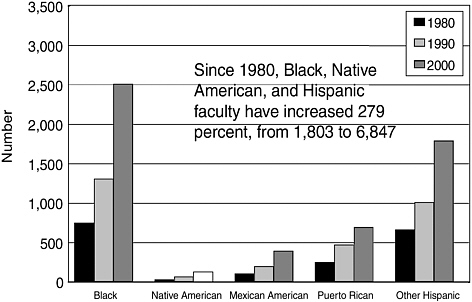
FIGURE 3-1 Black, American Indian, and Hispanic U.S. medical school faculty, 1980-2000.
SOURCE: AAMC Faculty Roster.
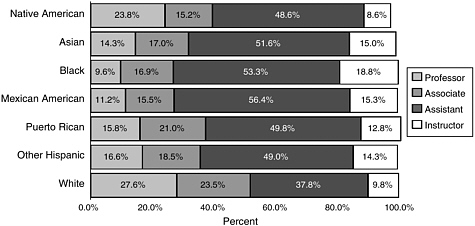
FIGURE 3-2 Medical school faculty by race and ethnicity, 2002.
SOURCE: AAMC Faculty Roster System, December 31, 2002.
Special Challenges for Minority Faculty
Underrepresented clinical research scientists face many of the same challenges confronting well-represented ones, including dealing with a lack of support from their institutions or departments, finding mentors who can alleviate the difficulties of entry into the established research infrastructure, and balancing professional interests with the realities of having to repay educational loans (Lee et al., 2001; NIH, 2002a). It is not unusual for underrepresented clinical research scientists to face institutional biases in support because of the lack of support systems—they are often the only, or among only a few, underrepresented minority members in an academic health center or research institution. Because of underrepresentation within departments and institutions, such minority faculty are often asked to represent the department or institution and to serve on multiple committees, creating an additional time burden.
Gartland et al. (2003) compared the satisfaction of black physicians and the satisfaction of white physicians with their medical schools, their medical careers, their professional and research activities, and achievements. They found that black physicians were more dissatisfied than white physicians with the social environment of medical school. The small number of underrepresented faculty reduces the likelihood that underrepresented senior faculty can mentor underrepresented junior faculty. The situation also affects the medical students. There is less likelihood of underrepresented students finding an underrepresented faculty member to serve as an advocate and provide survival strategies. For those underrepresented faculty who are on staff, serving as a role model should be added to their roles as advocates and providers of survival strategies.
UNDERREPRESENTED MINORITY STUDENTS IN MEDICAL SCHOOLS
Of the 17,592 students entering the 2002 U.S. medical school class 2,013 students identified themselves as underrepresented minorities. The acceptance rates for underrepresented minority students were slightly below those of Asians and whites, and distinct Hispanic groups had higher acceptance rates than “other Hispanic” groups (see Table 3-2). The overall number of minority medical school graduates has increased during the last 10 years, but the denominator has increased as well (see Figure 3-3). Thus, the proportion remains virtually unchanged.
TABLE 3-2 Hispanic Ethnicity and Non-Hispanic Race Medical School Applicants by Acceptance Status, 2002 and 2003
|
Applicants |
2002 |
|||
|
Applicants |
First-Time Applicants |
Acceptees |
||
|
Hispanic |
Mexican American |
738 |
539 |
379 |
|
Puerto Rican |
634 |
505 |
329 |
|
|
Cuban |
142 |
106 |
70 |
|
|
Other Hispanic |
804 |
551 |
351 |
|
|
Multiple Hispanic |
123 |
87 |
64 |
|
|
Subtotal |
2,441 |
1,788 |
1,193 |
|
|
Non-Hispanic |
Black |
2,611 |
1,790 |
1,178 |
|
Asian |
5,949 |
4,341 |
3,219 |
|
|
American Indian (including Alaskan Natives) |
112 |
80 |
56 |
|
|
Native Hawaiian, Other Pacific Islanders |
36 |
26 |
12 |
|
|
White |
19,454 |
14,553 |
10,649 |
|
|
Other |
526 |
367 |
225 |
|
|
Unknown |
282 |
261 |
190 |
|
|
Multiple race |
1,235 |
916 |
596 |
|
|
Subtotal |
30,205 |
22,334 |
16,125 |
|
|
Non-U.S. |
Foreign |
943 |
730 |
274 |
|
Unknown Citizenship |
36 |
35 |
1 |
|
|
Subtotal |
979 |
765 |
275 |
|
|
Total |
|
33,625 |
24,887 |
17,593 |
|
SOURCE: Data Warehouse, Applicant Matriculate File as of November 6, 2003, Association of American Medical Colleges. |
||||
Only about 250 more blacks received M.D. degrees in 2001 than in 1975. In 1971-1972 only 9 percent of medical students were black, American Indian, Hispanic, or Asian or Pacific Islander (Barzansky and Etzel, 2002). Unfortunately, the number of underrepresented graduates with an expressed interest in research careers is dwindling (NIH, 2002b).
Debt is a significant issue for all students, but it is a particularly daunting one for minority students. Black and Mexican American students
|
|
2003 |
|||
|
Matriculants |
Applicants |
First-Time Applicants |
Acceptees |
Matriculants |
|
355 |
773 |
576 |
361 |
336 |
|
312 |
522 |
403 |
291 |
280 |
|
64 |
154 |
112 |
78 |
70 |
|
336 |
878 |
607 |
353 |
345 |
|
63 |
156 |
115 |
61 |
58 |
|
1,130 |
2,483 |
1,813 |
1,144 |
1,089 |
|
1,125 |
2,740 |
1,905 |
1,123 |
1,060 |
|
3,030 |
6,152 |
4,566 |
3,196 |
3,065 |
|
49 |
85 |
61 |
38 |
35 |
|
12 |
23 |
15 |
6 |
5 |
|
9,972 |
20,231 |
15,466 |
10,749 |
10,122 |
|
214 |
599 |
450 |
223 |
206 |
|
184 |
188 |
170 |
132 |
121 |
|
562 |
1,328 |
961 |
667 |
626 |
|
15,148 |
31,346 |
23,594 |
16,134 |
15,240 |
|
209 |
957 |
753 |
261 |
209 |
|
1 |
0 |
0 |
0 |
0 |
|
210 |
957 |
753 |
261 |
209 |
|
16,488 |
34,786 |
26,160 |
17,539 |
16,538 |
have a higher level of education debt than do Asians and Puerto Ricans (AAMC, 2004a). Median indebtedness levels are slightly higher for black students and somewhat lower for Asians, Mexican Americans, and Puerto Ricans (AAMC, 2004a). The prospect of accumulating additional debt is off-putting, especially when the acquired debt is greater than the family income for a year.
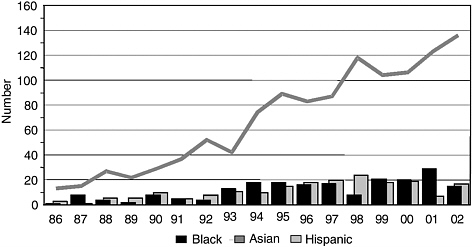
FIGURE 3-3 Black, Asian, and Hispanic M.D./Ph.D. graduates, 1986-2002.
SOURCE: Data Warehouse, Association of American Medical Colleges, 2002.
NIH PROGRAMS FOR CLINICAL RESEARCH AND MINORITY RESEARCHERS
The National Institutes of Health administer a variety of public programs that may be used to help develop minority clinical researchers. Some of these programs are directed toward developing clinical researchers generally regardless of race or ethnicity, though some grants may be administered through a minority-targeted component. Other programs are specifically targeted to the development of minority investigators, some of whom will become basic biomedical researchers and others will become clinical investigators.
Minority Research Training Programs
The NIH provides targeted programs designed to increase the participation of underrepresented minorities in biomedical, behavioral, and clinical research careers. These programs for undergraduates, graduate students, and postdoctoral fellows seek to increase the participation in these fields of individuals from historically underrepresented groups: African Americans, Hispanics, American Indians, and Pacific Islanders. While clinical training typically occurs at the graduate or postdoctoral level, undergraduate programs discussed below may train students who later choose a clinical re-
search career. Examples of minority-targeted programs are profiled in Appendix D.
The NIH supports undergraduate education for underrepresented minorities in the biomedical and behavioral sciences most directly through three programs offered by the National Institute of General Medical Sciences (NIGMS) and the National Institute of Mental Health (NIMH). The first of these is the Bridges to the Baccalaureate (R25) program, which focuses on the preparation of students in the biomedical or behavioral sciences at two-year institutions—community or tribal colleges—in order to prepare them for transfer to a four-year institution. The other two programs are the NIGMS Minority Access to Research Careers (MARC) Undergraduate Student Training in Academic Research Program (U*STAR) (T34) and the NIMH Career Opportunities in Research Education and Training (COR) (T34). These programs focus on students in their third and fourth years of undergraduate study. All three programs are administered through institutional awards to historically black colleges and universities, Hispanic-serving institutions, or tribal colleges or universities. The programs provide students with coursework, hands-on research experience, mentoring, career counseling, and financial support.
At the graduate and postdoctoral levels NIH provides a variety of individual and institutional awards. Two National Research Service Award (NRSA) fellowship programs are targeted to minorities through the F31 mechanism: the NRSA Predoctoral Fellowship for Minority Students and the MARC Predoctoral Fellowship Program. The latter is targeted at graduates of the U*STAR program. The F31 fellowship provides an annual stipend, tuition, and fee allowance as well as an annual institutional allowance that may be used for travel to scientific meetings and for laboratory and other training expenses. The NIMH Research Grants to Increase Diversity in the Mental Health Research Arena support minority students in mental-health-related fields working on their dissertations. NRSA Institutional Training Grants (T32) and Short-Term Institutional Training Grants (T35) targeted to minority-serving institutions also seek to increase the participation of underrepresented minorities. The National Heart, Lung, and Blood Institute, for example, has utilized the T32 and T35 mechanisms to encourage the development of minorities in cardiovascular, pulmonary, hematological, and sleep disorders research fields.
The National Academies completed an assessment of NIH’s minority research training programs in early 2005, and a more complete listing and description of NIH minority-targeted programs can be found in that report
(NRC, 2005b). That assessment noted that the number and percentage of minorities earning Ph.D.s in the biomedical sciences over the last decade have been relatively flat. Still, the assessment concluded that without the availability of minority-targeted programs—which provided important financial support, mentoring, coursework, and research experience—the numbers and percentages may well have declined.
Clinical Workforce Programs
NIH also administers training programs specifically designed to increase the clinical research workforce. These programs include the Institutional Research Training Grant (T32), the Short-Term Institutional Training Grants (T35), Mentored Clinical Science Development Award (K08), Mentored Clinical Science Development Program Award (K12), Mentored Patient-Oriented Research Career Development Award (K23), Midcareer Investigator Award (K24), and Clinical Research Curriculum Award (K30). Appendix E provides profiles of these programs.
Loan Repayment Programs
NIH has a variety of loan repayment programs (LRPs) to support the recruitment and retention of health professionals as clinical or pediatric investigators. Loan repayment programs have also recently been introduced to increase the clinical research workforce in general, and women and minorities have been strongly encouraged to apply. The LRPs allow repayment of up to $35,000 of the principal and interest of eligible educational loans of clinical or pediatric investigators for each year of research service, and the payment of 39 percent of the loan repayment amount per year toward federal tax liability prevention. The LRP is a contractual agreement, in which awardees agree to engage in clinical or pediatric research for a minimum of two years.
Examples of these repayment programs are the Health Disparities LRP, the Clinical Research LRP for Individuals from Disadvantaged Backgrounds, the Clinical Research LRP, the Pediatric Research LRP, and the Contraception and Infertility Research LRP. Three of these LRPs have seen an increase in applications (see Figure 3-4): the Clinical Research LRP had 1,150 applicants in FY 2003 compared with 487 in FY 2002; the Health Disparities LRP had 182 applicants in FY 2003 compared with 170in FY 2002; and the Pediatric Research LRP had 494 applicants in FY 2003 com-
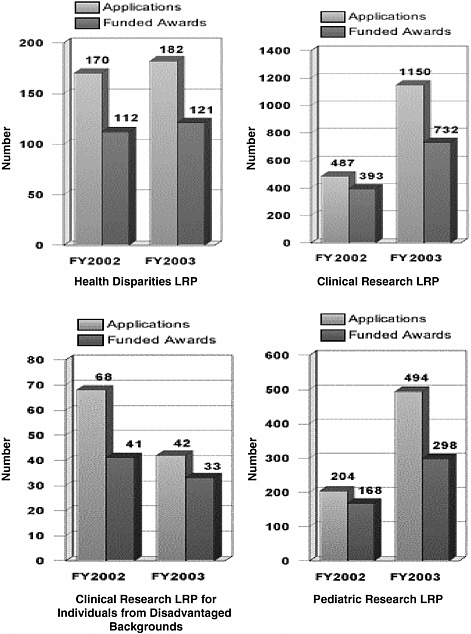
FIGURE 3-4 New applications and funded awards for four NIH loan repayment programs, FY 2002 and FY 2003.
SOURCE: National Institutes of Health, http://www.lrp.nih.gov.
TABLE 3-3 Distribution of Loan Repayment Program Applicants by Sex, FY 2003
|
Sex |
Number of Applications |
Number Funded |
Success Rate (%) |
|
Clinical Research LRP |
|||
|
Unknown |
33 |
18 |
55 |
|
Female |
519 |
347 |
67 |
|
Male |
541 |
362 |
67 |
|
Clinical Research LRP for Individuals from Disadvantaged Backgrounds |
|||
|
Unknown |
3 |
2 |
67 |
|
Female |
26 |
21 |
81 |
|
Male |
13 |
10 |
77 |
|
Health Disparities LRP |
|||
|
Unknown |
2 |
2 |
100 |
|
Female |
112 |
79 |
71 |
|
Male |
68 |
40 |
59 |
|
Pediatric Research LRP |
|||
|
Unknown |
15 |
5 |
33 |
|
Female |
246 |
148 |
60 |
|
Male |
219 |
146 |
67 |
|
SOURCE: David Conboy, associate director for policy and liaison activities, Office of Loan Repayment, National Institutes of Health. |
|||
pared with 204 in FY 2002. By contrast, the Clinical Research LRP for Individuals from Disadvantaged Backgrounds saw a decrease in applications—42 applicants in FY 2003 compared with 68 in FY 2002 (see Figure 3-4). In FY 2003, 1,883 total LRP applications were received, and 1,200 researchers received LRP contracts. In terms of gender, the Clinical Research LRP, the Clinical Research LRP for Individuals from Disadvantaged Backgrounds, and the Pediatric Research LRP all had equal or greater percentages of women funded compared with men (see Table 3-3). Total LRP contracts reached $63.3 million in FY 2003. These programs are a promising development in addressing the financial disincentives to clinical research careers.
Grant Supplements
Supplements to research grants1 were established by NIH to address the need to increase the number of underrepresented minority scientists participating in biomedical research and the health-related sciences.
Programs to Advance Women’s Research Careers
The NIH Office of Research on Women’s Health, along with a number of co-sponsors, offers Building Interdisciplinary Research Careers in Women’s Health (BIRCWH) Career Development Programs. These programs support the research career development of junior faculty members, known as Interdisciplinary Women’s Health Research (IWHR) Scholars, who have recently completed clinical training or postdoctoral fellowships and who are commencing basic, translational, behavioral, clinical, or health services research relevant to women’s health.
The programs aim to bridge advanced training with research independence, as well as to connect scientific disciplines or areas of interest, via the mentored research career development award (K12) mechanism. They will therefore increase the number and skills of investigators at awardee institutions through a mentored research and career development experience, leading to an independent interdisciplinary scientific career addressing women’s health.
DEPARTMENT OF VETERANS AFFAIRS PROGRAMS
The Office of Research and Development (ORD) at the Department of Veterans Affairs (VA) has one very broad initiative aimed at developing clinical researchers and one aimed at developing a cadre of investigators devoted to increasing knowledge of racial disparities in health and health care and other issues related to the quality of care or health services across racial boundaries.
Currently 13 VA Health Services Research and Development (HSR&D) Centers of Excellence (COE) and four resource centers are located throughout the United States. Each COE develops its own research agenda, is affili-
|
1 |
See http://grants.nih.gov/grants/guide/pa-files/PA-01-079.html. Date accessed November 19, 2004. |
ated with a VA medical center, and collaborates with local schools of public health and universities. COE research covers an array of important healthcare topics, such as quality of care, chronic diseases, primary care, mental health, substance abuse, pain management, and outcomes research. The four resource centers provide support and information to VA researchers and healthcare managers in the special areas of management research, data and information sources within and outside the VA, health economics and cost studies, and measurement of knowledge and instruments.2
Diversity-Building Research Training Program
The VA’s new Diversity-Building Research Training Program is aimed at proactively recruiting and retaining a diverse healthcare research team. Individuals and academic institutions that can present a unique perspective and supply important insight into relevant cultural factors that may account for health disparities among veterans and who can successfully report how their backgrounds and personal achievements can contribute to VA research are highly encouraged to apply for three new awards.3 The Mentoring Research Enhancement Coordinating Center Award advocates institutional collaboration between the VA and institutions of higher learning, including but not limited to historically black colleges and universities, Hispanic-serving institutions, and tribal colleges and universities that are committed to achieving diversity in the biomedical sciences and that deliver encouragement, support, and guidance to students from a myriad of backgrounds and with a myriad of personal achievements. The Mentored Supplemental Award (one-on-one training) is for applied training in research on VA-funded research projects. The Mentored Early Career Enhancement Award (one-on-one training) offers an encouraging career path for mentored research in the VA.
Training Opportunities: National Networks
The VA aims to generate national networks of training opportunities with its clinical research Centers of Excellence. It is concentrating first on core funding for methodologists who will ensure advancement in tools, methods, and measures for health services research, and toward that end it
|
2 |
See http://www.hsrd.research.va.gov. Date accessed November 19, 2004. |
|
3 |
Ibid. |
will provide $400,000 a year to support methodologists with Ph.D.’s. The Seattle Epidemiologic Research and Information Center, VA Employee Education System, and University of Washington are supporting the six distance-learning, cyber-session courses being conducted for VA researchers, clinicians, and administrators in medical centers through the VA Knowledge Network satellite system. The six classes are:
-
Developing scientific research proposals (grant writing);
-
Applied regression analysis;
-
Advanced issues in clinical trials using the Women’s Health Initiative as an example;
-
Cost and outcomes research;
-
Clinical trials; and
-
General biostatistics.
When these methodologist positions are completely filled, the VA will provide more resources and support for clinicians nationally so that they will help the VA to determine good research questions.
PRIVATE SOURCES OF FUNDING FOR CLINICAL INVESTIGATORS
Several foundations and voluntary health associations offer funding and training for clinical investigators. Notable examples include the Burroughs Wellcome Fund, Doris Duke Charitable Foundation, Howard Hughes Medical Institute, American Heart Association, American Diabetes Association, American Cancer Society, Juvenile Diabetes Research Foundation, and Robert Wood Johnson Foundation. An analysis of funding of clinical research by 11 private foundations identified a $259 million commitment from 1997 to 2001 for career development of clinical investigators, including training and research support (Nathan and Wilson, 2003). These foundations and others also offer specific programs for minority health professional education; examples are the Ford Foundation, W. K. Kellogg Foundation, and California Endowment.
Howard Hughes Medical Institute
With the support of the Howard Hughes Medical Institute-National Institutes of Health (HHMI-NIH) Medical Scholars Program, known as
the Cloister Program, selected students spend the year conducting research at NIH. In a second program, the HHMI Medical Fellows Program, students spend a full year doing research at their own or at another institution.4 Forty-two individuals are selected each year for the Cloister Program, and 60 students participate in the Medical Fellows Program. Two-thirds of the students entering these programs have completed their second year of medical school; the rest have completed their third year. HHMI provides a modest stipend (between $18,000 and $24,000) and pays for some of their supplies.
The goal of the HHMI Research Training Fellowships for Medical Students is to strengthen and expand the nation’s pool of medically trained researchers. The fellowships provide funds to support fellows and cover their research- and education-related expenses. Through annual competitions HHMI provides three types of medical student fellowships under this program: (1) support for an initial year of research training, (2) continued support for research training, and (3) continued support for completion of medical studies. In 2004 HHMI awarded up to 60 fellowships to medical and dental students who show the greatest promise for future achievement in biomedical research and who have demonstrated superior scholarship as undergraduates and during their initial medical or dental school training.
Eleven percent of individuals in the Cloister Program and the Medical Fellows Program are women and minorities. The HHMI programs, with one year of investment, compete with the other M.D.-Ph.D. programs around the country for promoting participation in research. Of the students from the 1985 and 1986 fellowship years who are still conducting research, virtually all are engaged in translational or clinical research.
Robert Wood Johnson Foundation
Within the Robert Wood Johnson Foundation (RWJF) Program are two programs for clinical researchers—the Clinical Scholars Program and the Generalist Physician Faculty Scholars.5 The Clinical Scholars Program
|
4 |
See http://www.hhmi.org/research/cloister and http://www.hhmi.org/grants/funding/comp_annc/2004_med_pa.pdf. Date accessed October 15, 2004. |
|
5 |
More information can be found on all three programs at http://www.rwjf.org/index.jsp, http://rwjcsp.stanford.edu/index.html, and http://www.gpscholar.uthscsa.edu/gpscholar/FacultyScholars/about.html. Date accessed November 22, 2004. |
is designed to augment clinical training by providing the new skills and perspectives necessary to achieving leadership positions both inside and outside academia in the twenty-first century. The program stresses training in the quantitative and qualitative sciences that underlie health services research and are important to improving health and medical care systems. In the program’s newest iteration there will be an additional emphasis on community-based research and leadership training. The RWJF’s Generalist Physician Faculty Scholars Program awards four-year career development grants to outstanding junior faculty at U.S. medical schools in family practice, general internal medicine, and general pediatrics. This program is intended to strengthen generalist physician faculty in the nation’s medical schools by improving their research capacity while maintaining their clinical and teaching competencies.
In 1972 the first activities of the newly established RWJF were scholarship and loan programs for women, minorities, and people interested in the medical professions from rural areas. RWJF engaged in the national medical fellowships and encouraged the University for Medicine and Dentistry of New Jersey (UMDNJ)6 to launch a summer enrichment program for minority students entering medical or dental school. Since then all these programs have grown significantly. Founded in 1962, the Robert Wood Johnson Medical School is one of eight schools of the UMDNJ.
In 2003 the RWJF and Kellogg Foundation, working with the Association of American Medical Colleges, formed the Health Professionals Partnership Initiative (HPPI).7 They created 26 partnerships, 5 in the area of public health, with the goal of leading and helping medical and professional schools to create an environment in which they work in partnership with communities and high schools to enable more students to go into the health professions.
The Minority Medical Faculty Development Program8 provides support for minority medical faculty who spend up to 70 percent of their time in research. Although this program initially focused on basic research,
|
6 |
See http://rwjms.umd.nj.edu. Date accessed October 14, 2004. |
|
7 |
See http://www.rwjf.org/publications/publicationsPdfs/health-prof-partnership.pdf. Date accessed October 27, 2004. |
|
8 |
See http://www.mmfdp.org/about.htm. Date accessed October 27, 2004. |
in the last decade RWJF has shifted toward clinical research. The Minority Medical Faculty Development Program seeks to increase the number of minority faculty who achieve senior rank in academic medicine and who will encourage and foster the development of succeeding classes of minority physicians. A key component of this program is mentorship, which is also one reason for its success. More than 100 fellows have completed all four years of the program. Of these, more than 80 percent are still in academic medicine.
FUTURE DIRECTIONS
To achieve a robust, diverse clinical research workforce, systemic change in approaches to education, training, and career development is needed in the culture of academic health centers. (See Summary in Box 3-1.) Diversity should be incentivized and institutionalized into the mission, operations, and reward structure of academic health centers. Review and evaluation of current strategies to recruit, retain, and advance women and minorities are needed to identify successes, which could then be disseminated and adopted more widely. Programs that have been shown to work could be expanded and established at other institutions. If a critical mass of women and underrepresented minorities can be achieved, diversity may become self-sustaining.
As our knowledge of human health increases, so do the number of research questions about human disease and treatment. Diversity of views can bring diversity of approaches to research problems, issues, and topics, which can contribute to the richness of our understanding.
|
BOX 3-1 Approaches to Increasing Diversity
U.S. Medical School Faculty, 2002
Challenges for Faculty
Resources for Minority Faculty Development
|
|
Minority Supplements
Future Directions
|


