
5
Industry
The Institute of Medicine’s (IOM’s) Health in the Balance report presented a set of comprehensive recommendations to guide industry’s collective actions to support childhood obesity prevention goals (IOM, 2005). The report recommended that industry prioritize obesity prevention in children and youth by “developing and promoting products, opportunities, and information that will encourage healthful eating behaviors and regular physical activity.” The report also recommended that “industry should develop and strictly adhere to marketing and advertising guidelines that minimize the risk of obesity in children and youth” (IOM, 2005, p. 166). The development of clear and useful nutrition labeling was a third area in which the report offered guidance to industry and the U.S. Food and Drug Administration (FDA) so that they may help parents and youth make informed purchases in the marketplace and select foods, beverages, and meal options that contribute to healthful diets (Box 5-1) (IOM, 2005).
After the release of the Health in the Balance report, another IOM committee released a related report, Food Marketing to Children and Youth: Threat or Opportunity?, which provides findings on the influence of marketing on children’s and adolescents’ food and beverage preferences, choices, purchase requests, dietary practices, and health-related outcomes (IOM, 2006). It also offers expanded recommendations for numerous industry stakeholders including food retailers, trade associations, entertainment companies, food and beverage companies, restaurants, and the media (Box 5-2).
This chapter explores the current and potential strategies that industry stakeholders use or could use to make progress toward meeting the recommendations made in those reports. The chapter provides examples of
|
BOX 5-1 Recommendations for Industry from the 2005 IOM report Preventing Childhood Obesity: Health in the Balance Industry should make obesity prevention in children and youth a priority by developing and promoting products, opportunities, and information that will encourage healthful eating behaviors and regular physical activity. To implement this recommendation:
Industry should develop and strictly adhere to marketing and advertising guidelines that minimize the risk of obesity in children and youth. To implement this recommendation:
Nutrition labeling should be clear and useful so that parents and youth can make informed product comparisons and decisions to achieve and maintain energy balance at a healthy weight. To implement this recommendation:
SOURCE: IOM (2005). |
|
BOX 5-2 Recommendations from the 2006 IOM Report Food Marketing to Children and Youth: Threat or Opportunity? Food and beverage companies should use their creativity, resources, and full range of marketing practices to promote and support more healthful diets for children and youth. To implement this recommendation, companies should:
Full serve restaurant chains, family restaurants, and quick serve restaurants should use their creativity, resources, and full range of marketing practices to promote healthful meals for children and youth. To implement this recommendation, restaurants should:
Food, beverage, restaurant, retail, and marketing industry trade associations should assume transforming leadership roles in harnessing industry creativity, resources, and marketing on behalf of healthful diets for children and youth. To implement this recommendation, trade associations should:
|
The food, beverage, restaurant, and marketing industries should work with government, scientific, public health, and consumer groups to establish and enforce the highest standards for the marketing of foods, beverages, and meals to children and youth. To implement this recommendation, the cooperative efforts should:
The media and entertainment industry should direct its extensive power to promote healthful foods and beverages for children and youth. To implement this recommendation, media and the entertainment industry should:
SOURCE: IOM (2006). |
current private-sector efforts that support obesity prevention, including the efforts of food and beverage manufacturers; full serve restaurants and quick serve restaurants (QSR);1 food retailers; trade associations; the media; corpo-
rate and private foundations; and the leisure, recreation, and sedentary entertainment industries. The strategies that industry uses to address childhood obesity prevention include product development and reformulation, product packaging, enhancing physical activity opportunities, advertising and marketing communications, public-private partnerships, employee wellness initiatives, and corporate social responsibility and public relations.2 The chapter discusses the challenges in assessing the progress made by the private sector and recommends next steps for strengthening evaluation efforts.
A substantial amount of the discussion in this chapter focuses on the food, beverage, and restaurant industries, with fewer examples from the physical activity, leisure, recreation, and sedentary entertainment industries. This imbalance in coverage is due in part to the attention that has been placed on the responses to the obesity epidemic by the food, beverage, and restaurant industries. It is also possible that the segments of industry whose efforts are directly or indirectly related to changing physical activity behaviors may not perceive themselves to be part of the obesity prevention discourse or they may not want to be a focus of attention for this issue. Although a number of corporations are actively engaged in increasing opportunities for physical activity, there is need for further involvement. The committee also benefited from the work of the prior IOM committee on food marketing but did not have a similar compendium of recent efforts related to physical activity. A comprehensive review of the efforts by the physical activity, leisure, recreation, and sedentary entertainment industries3 is needed, as there are many opportunities to increase and coordinate actions within and across this sector to promote physical activity among children and youth.
OPPORTUNITIES AND CHALLENGES
In December 2005, the committee held a symposium in Irvine, California that focused on the efforts by industry to engage in and contribute to childhood obesity prevention (Appendix H). This IOM symposium explored the challenges and opportunities that exist in forging alliances between the public health community and industry. Acknowledging the po-
|
2 |
A list of acronyms and a glossary of definitions are provided in Appendixes A and B. Box 5-3 provides the definitions of common marketing terms. |
|
3 |
Examples of active leisure and recreation industries include companies that promote sporting goods, fitness, gyms, and dance. Sedentary entertainment requires minimal physical activity. Examples of sedentary entertainment industries include companies that promote spectator sports, broadcast and cable television, videogames, DVDs, and movies (IOM, 2006; Sturm, 2004). |
tential tension among stakeholder groups, it is important to nurture and strengthen partnerships supporting obesity prevention efforts by
-
Conveying consistent, appealing, and specific messages to children, adolescents, and adults;
-
Ensuring transparency through the sharing of data between the public health community and industry;
-
Making long-term commitments to obesity prevention;
-
Ensuring company-wide commitments (large corporations in particular need to ensure that the entire organization and not just isolated sectors of the business is engaged in obesity prevention efforts);
-
Balancing the free market system with protecting children’s health. While public health advocates acknowledge the values and realities of the competitive marketplace and recognize that many companies are making positive changes, companies should accept responsibility for engaging in marketing practices that promote healthy lifestyles for children and youth;
-
Understanding the interactions between companies, marketing practices, and consumer demand;
-
Exploring potential avenues of impact. One area that has not been fully examined is the potential impact that business leaders can have in advocating for policy changes and initiatives that promote improvements in diet and increased levels of physical activity; and
-
Making a commitment to monitor and evaluate efforts.
UNDERSTANDING THE MARKETPLACE
Companies use a variety of integrated marketing strategies to influence consumer preferences, stimulate consumer demand for specific products, increase sales, and expand their market share. Integrated marketing is a planning process designed to ensure that all promotional activities of a company—including media advertising, direct mail, sales promotion, and public relations—produce a unified, customer-focused promotion message that is relevant to a customer and that is consistent over time. The allocation of companies’ marketing budgets differs on the basis of the nature and the size of the company. Food companies usually spend approximately 20 percent of their total marketing budgets for advertising, 25 percent for consumer promotion, and 55 percent for trade promotion (GMA Forum, 2005; IOM, 2006) (Box 5-3). The committee had no data with which it could assess how the leisure, recreation, and entertainment industries allocate their marketing budgets.
The U.S. Department of Agriculture (USDA), which tracks trends in
|
BOX 5-3 Industry Definitions Marketing A set of processes for creating, communicating, and delivering value to customers and for managing customer relationships in ways that benefit an organization and its stakeholders. Marketing encompasses a wide range of activities including conducting market research; analyzing the competition; positioning a new product; pricing products and services; and promoting products and services through advertising, consumer promotion, trade promotion, public relations, and sales. All of these activities are integral tools used by companies in the marketplace that can be potentially directed toward healthier products, diets, and lifestyles. Advertising Advertising represents the paid public presentation and promotion of ideas, goods, or services by a company or sponsor and is intended to bring a product to the attention of consumers through various media channels. It is often the most recognizable form of marketing. Consumer Promotion Consumer promotion is a marketing activity distinct from advertising. It is also referred to as “sales promotion” and represents companies’ promotional efforts that have an immediate impact on sales. Examples of consumer or sales promotion include coupons, discounts and sales, contests, point-of-purchase displays, rebates, gifts, incentives, and product placement. Trade Promotion Trade promotion is a type of marketing that targets intermediary industry stakeholders such as supermarkets, grocery stores, convenience stores, and other food retail outlets. Examples of trade promotion strategies include in-store displays, agreements with retailers to provide specific shelf space and product positioning, free merchandise, and sales contests to encourage food wholesalers or retailers to sell more of a specific company’s branded products or product lines. Public Relations Public relations are a company’s communications and relationships with various groups including customers, employees, suppliers, stockholders, government, and the public. Proprietary Data Proprietary data consist of information obtained from private companies or firms that hold the exclusive rights to distribute those data, which are often collected for specific commercial purposes intended for a targeted audience. They may be available to customers who can purchase the data, and are usually not widely available to the public due to the expense. SOURCES: AMA (2005); Boone and Kurtz (1998); IOM (2006). |
food and beverage marketplace expenditures, estimated that in 2005, total food and beverage sales in the United States were $1.023 trillion. The growth in food expenditures has been steady since 1967, with a growth of nearly 6.4 percent per year (ERS/USDA, 2006).4 Between 1987 and 2001 there was also considerable growth in the industries associated with leisure and recreation (e.g., sporting goods, spectator sports, and entertainment) (Sturm, 2004), but the committee was unable to find recent data that accurately quantified the total expenditures made by these industries.
In 2004, marketing expenditures for all products—including food, beverages, and other manufactured items—totaled $264 billion, which included $141 billion for advertising in measured media5 (Brown et al., 2005). The IOM Committee on Food Marketing and the Diets of Children and Youth found that corporations spent more than $10 billion in 2004 to advertise foods, beverages, and meals to children and youth, of which $5 billion of the total was for television advertising (IOM, 2006). The total advertising spending by companies in measured media for selected categories of products was used to approximate the amount spent by the food, beverage, and restaurant industries in 2004. An estimated $6.84 billion was spent on advertising in the food, beverage, and candy category and $4.42 billion was spent on advertising for restaurants and fast food, for a total of $11.26 billion. An additional $10.89 billion was spent on advertising for toys and games; sporting goods; media; and sedentary entertainment, including movies, DVDs, and music (Brown et al., 2005). Company data on how marketing budgets are allocated are often proprietary, however, and are thus not available to the public. Therefore, industry data that can be used to assess recent investments in healthful products are not widely available. As discussed later in the chapter, despite the high level of product innovation toward healthier choices that has been forecasted by industry analysts, most companies do not provide publicly accessible information on the investments that they make in research and development on healthier products (Lang et al., 2006). Furthermore, there is currently limited evidence that companies with product portfolios comprised largely of less healthful products are merging with or acquiring companies with healthier products (Insight Investment, 2006).
Branding is a goal of most companies and involves providing a name or symbol that legally identifies a company, a specific product, or a product line and that distinguishes it from other companies or similar products in the marketplace (Roberts, 2004). Branding has become a normalized part of life for American children and adolescents (Schor, 2004). The rate of brand loyalty is highest among adolescents, especially for carbonated soft drinks and QSRs. Brand loyalty may be related to the increased trend over the past 20–30 years in sweetened beverage consumption and the proportion of calories that children and youth receive from away-from-home foods, beverages, and meals, especially those purchased and consumed at full serve restaurants and QSRs. These products often contain higher amounts of fat and total calories than those products consumed at home (IOM, 2006).
After reviewing the available literature on branding and young consumers, the IOM Committee on Food Marketing to Children and Youth concluded that children are aware of particular food brands when they are as young as 2 to 3 years of age and that preschoolers demonstrate the ability to recognize particular brands when they are cued by spokes-characters and colorful packages. The committee also found that a majority of children’s food requests are for branded products.
Although the use of child-oriented licensed cartoon and other fictional or real-life spokescharacters to promote the consumption of low-nutrient and high-calorie food and beverage products has been a prevalent practice over the past several decades, the use of licensed characters to promote foods and beverages that contribute to healthful diets, particularly for preschoolers, is relatively recent (IOM, 2006). Preliminary evaluation and research results from the Sesame Workshop suggests that preschoolers may view fruits, vegetables, and other foods that contribute to a healthful diet more favorably if they are endorsed by familiar and appealing spokes-characters or mascots (Appendix H).
More recently, businesses, institutions, and communities are using branding to promote behavioral changes, often called lifestyle branding or behavioral branding. Such branding encourages individuals to associate a brand or a product line with a specific behavior, lifestyle, or social cause (Holt, 2004; IOM, 2006; Roberts, 2004; Tillotson, 2006a). Examples of initiatives that promote this type of branding are Active Living by Design (RWJF, 2006), Balanced Active Lifestyles (McDonald’s Corporation, 2006), Healthy Eating, Active Living (Kaiser Permanente, 2006), Health is Power! (PepsiCo, 2006a), Fruits and Veggies—More Matters!™ (PBH, 2006), the VERB™ campaign (Wong et al., 2004) (Chapter 4), and the American Legacy Foundation’s truth® campaign (Evans et al., 2005).
Given the growing concerns linking corporate marketing practices and the obesity epidemic among children, youth, and adults in the United States
(Dorfman et al., 2005; Freudenberg, 2005; Kreuter, 2005) and internationally (Lang et al., 2006; WHO, 2003, 2004; Yach et al., 2005), industry and individual companies should be involved in changing how they conduct business to address social and economic pressures and consumer demands. This is what marketers refer to as the “strategic inflection point” (Parks, 2002).
The Health in the Balance report emphasized that market forces may be influential in changing both consumer and industry behaviors. To lead healthier and more active lifestyles, young consumers and their parents will need to make positive changes in their own lives, including developing preferences for and selecting foods and beverages that contribute to healthful diets and regularly engaging in more active pursuits. All industries—the food, beverage, restaurant, recreation, entertainment, and leisure industries—should share responsibility for supporting consumer changes and childhood obesity prevention goals. These industries can be instrumental in changing social norms throughout the nation and internationally so that obesity will be acknowledged as an important and preventable health outcome and healthful eating and regular physical activity will be the accepted and encouraged standard (IOM, 2005). The childhood obesity epidemic needs to reach a “tipping point” (Gladwell, 2000), which is the point at which the collective changes made by industry, in concert with efforts in other sectors and by other stakeholders, will produce a large effect to make healthy behaviors and lifestyles the social norm.
It is important to recognize that corporations as employers have an interest in a healthy workforce with healthy families, and many employers are placing an increasing emphasis on obesity prevention and improved employee well-being. Corporate responsibility, health care costs, and lost productivity are key drivers in the development and promotion of employee wellness opportunities. Such employee benefits may include the provision of discounts for health club memberships or gyms at the workplace; offering foods and beverages that contribute to healthful diets in cafeterias, vending machines, and at meetings; and the promotion of walking breaks or physical activity during the work day.
Although this chapter primarily focuses on corporations as the producers and the deliverers of goods and services, corporations are also major consumers of health care and have an increasing interest in the outcomes and impact of obesity on their current and future workforces and their families.
EXAMPLES OF PROGRESS
Building consumer demand for regular physical activity and for foods and beverages that contribute to a healthful diet is an ongoing process that
is moving forward through the efforts of corporations that are willing to make changes to engage consumers in achieving healthy lifestyles. This will require the broad involvement of many sectors and stakeholders, including food, beverage, and restaurant companies; food retailers; trade associations; the leisure, recreation, and fitness industries; the entertainment industry; and the media (IOM, 2005, 2006).
Wansink and Huckabee (2005) have proposed three phases for the food and restaurant industries’ and trade associations’ response to the obesity epidemic. The first phase is to deny that they have a contributing role in the obesity epidemic by associating increasing obesity rates with the rising levels of physical inactivity and sedentary lifestyles. The second phase is to appeal to consumer sovereignty by emphasizing moderation and consumer choice in their food and beverage intake, promoting physical activity, and asserting the rights of customers to decide on the appropriate selections for their own or their families’ lifestyles. The third phase is to develop win-win strategies that are profitable and that therefore satisfy company shareholder needs while concurrently meeting consumers’ needs for healthful products, portion control, and other steps that can lead them toward healthy lifestyles. Wansink and Huckabee (2005) have suggested several different types of changes that food, beverage, and restaurant companies can consider making and pilot testing to offer products that are both healthful to consumers and profitable (Table 5-1).
Several groups have offered suggestions and guidelines to the food industry and restaurant sector to help them provide healthier food, beverage, and meal options. The American Heart Association’s 2006 Diet and Lifestyle Recommendations provide several tailored recommendations specifically for these industry sectors (Lichtenstein et al., 2006; Box 5-4). The Keystone Forum on Away-From-Home Foods, supported by the FDA, also provides detailed recommendations on how consumers can make more healthful choices and what restaurants and food retailers can do to cater to consumer choices (Keystone Center, 2006). The following sections highlight some examples of changes that are in progress, many of which need to be evaluated. The committee highlights promising practices and raises issues relevant to increasing corporate involvement in this issue.
Product and Meal Development and Reformulation
Many industry leaders are testing a variety of new product development strategies, such as incorporating more nutritious ingredients into products (e.g., whole grains) and expanding healthier meal options at full serve restaurants and QSRs (e.g., fruit, salads, and low-fat yogurt). Making small changes to existing products to improve their healthfulness and continuing
TABLE 5-1 Influences on Consumption to Promote Healthier Diets
|
Consumption Driver |
Implications for Marketers |
|
Convenience Increase convenience by modifying the package and portion size. |
|
|
Cost Change the product but not the price. |
|
|
Taste Change the recipe but retain good taste. |
|
|
Knowledge Provide understandable labels and nutrition information but be realistic. |
|
|
SOURCE: Adapted from Wansink and Huckabee (2005). Copyright ©2005 by the Regents of the University of California. Reprints from the California Management Review, Vol. 47, No. 4. By permission of The Regents. |
|
to change these products over time by making incremental and systematic changes may help consumers develop preferences for more healthful choices.
There is evidence, however, of a greater segmentation of demand both within and between consumers. Thus, the health trend is not uniform across the entire population. Many consumers seeking healthful diets will exchange certain foods for healthier choices; at the same time, however, they may seek indulgent and high-calorie treats (IRI, 2006) that may offset the
|
BOX 5-4 Suggestions for Restaurants and the Food Industry to Adopt the AHA 2006 Diet and Lifestyle Recommendations Restaurants
Food Industry
SOURCE: Adapted with permission from Lichtenstein et al. (2006). |
benefits of the healthier choices. The restaurant industry reports that two out of three consumers surveyed indicate that their favorite restaurant foods provide flavor and taste sensations that they cannot easily replicate at home (Cohn, 2006; NRA, 2006). Additionally, more consumer segments seek different types of benefits from products (e.g., their purchases are for natural, organic, low-fat, low-calorie, or calorie-free products) (Sloan, 2006; Tillotson, 2006b).
New product development, product reformulation, and packaging are all important components of the marketing process. Companies are continuously developing new products or meal options or reformulating existing products and brands to keep pace with changing consumer preferences, technological developments, and the activities of their competitors. In 2000, a typical large supermarket offered approximately 40,000 products from more than 16,000 food manufacturers (Harris, 2002). Many of these products were developed for children and youth, as reflected by the annual sales
of food and beverages to children and youth, which were more than $27 billion in 2002 (Packaged Facts, 2003).
An analysis conducted by the IOM Committee on Food Marketing and the Diets of Children and Youth assessed the trends in introduction of new products targeted to children and youth. The analysis used ProductScan®, an online global database that has tracked new consumer products and packaged goods introductions into the U.S. marketplace since 1980 (Marketing Intelligence Service, 2005), and examined 50 product categories and 16 beverage categories contained in the ProductScan® database (IOM, 2006; Williams, 2005). The analysis showed that for both food and beverage products, the overall trend lines increased upward from 1994 to 2004, indicating that the growth rate of introduction of both new food and new beverage products targeted to children and youth was greater than the growth rate for food and beverage products targeted to the general market. Overall, from 1994 to 2004, products high in total calories, sugar, or fat and low in nutrients dominated among the new foods and beverages targeted to children and youth (IOM, 2006). A decline in the numbers of both food and beverage products targeted to children and youth relative to those targeted to the general market occurred between 2003 and 2004. The decline may be attributed to recent scrutiny directed to the introduction of new products targeted to children and youth. It is uncertain whether the recent decline in new products targeted to children and youth is attributed to an overall decrease in the numbers of all new products introduced or whether it represents a selective reduction in the introduction of products in certain categories, such as those products deemed to be less healthful for children and youth (Williams, 2005).
Industry analysts recognize that there are many new product growth opportunities in the child- and youth-specific food and beverage market, especially for the categories of fresh produce, ready-to-eat meals, sauces and condiments, and fortified products (Business Insights, 2006; Sloan, 2006). Companies have begun to explore the development of new convenience foods and beverages (Blake, 2006; JPMorgan, 2006). The products that contribute to healthful diets of children and youth have been projected to be among the most active and profitable new product categories for industry from 2005 to 2009 (Business Insights, 2005). A recent industry analysis report suggests that 18 of the 24 fastest growing food categories globally are perceived to be healthier by consumers (Insight Investment, 2006).
There has also been a trend toward a decline in sales of high-calorie beverages and snacks. Analyses conducted for the beverage industry suggest that there has been a recent decrease in the volume of sales in the carbonated soft drink category (Beverage Digest, 2006). Morgan Stanley’s consumer marketing research forecasts that there will be an annual 1.5 percent
decline in carbonated soft drink sales volume in the United States over the next 5 years. The reasons for the projected decline are attributed to an increased concern about health and rising obesity rates that are influencing parents to monitor their own and their children’s carbonated soft drink intake (Wilbert, 2006). Marketing research also suggests that in 2005 the sales of high-calorie packaged snack foods, such as cookies and bakery items, decreased, whereas the sales of more nutrient-dense snacks, such as yogurt and food bars, increased (Packaged Facts, 2006). It is important to track these trends because the prevalence of snacking and the number of snacking occasions by children and youth have increased steadily over the past 25 years (IOM, 2006).
As emphasized in the Health in the Balance report, high energy-dense foods, such as potato chips and sweets, tend to be palatable but may not be satiating for consumers, calorie for calorie, thereby encouraging greater food consumption (IOM, 2005). The Dietary Guidelines for Americans 2005 encourages Americans to consume adequate nutrients within their calorie needs. More specifically, the Dietary Guidelines recommend that individuals consume a variety of nutrient-dense foods and beverages within and among the basic food groups while selecting foods and beverages that limit their intake of saturated fat, trans fat, cholesterol, added sugars, salt, and alcohol. There is presently no consensus or guidelines that define a healthful food or beverage. However, an analysis of cross-sectional, nationally representative dietary intake data have found that low energy-dense diets, which include a relatively large proportion of foods high in micronutrients and water and low in fat, such as fruits and vegetables, are associated with better dietary quality and lower total calorie intake when compared to high energy-dense diets (Ledikwe et al., 2006). Longitudinal data are needed to support this relationship.
Both diversity and quality are important components of children’s and adolescents’ intakes, and energy balance may be more difficult to achieve when diets are high in total calories and fat (Kennedy, 2004). The Dietary Guidelines for Americans 2005 introduced the concept of “discretionary calories,” which represents the amount of calories that remain in a person’s energy allowance after he or she has consumed sufficient nutrient-dense foods to meet his or her nutrient requirements each day. An individual’s energy allowance is the amount of calories needed for weight maintenance. Discretionary calories are usually between 100 and 300 calories/day and depend on a person’s physical activity level (DHHS and USDA, 2005). A major challenge for food manufacturers has been to develop low energy-dense but palatable food and beverage products that help consumers to achieve dietary diversity and diet quality and to use their discretionary calories wisely to achieve energy balance at a healthy weight.
The committee recognizes that among food and beverage manufactur-
ers and the restaurant sector, there are examples of those who have undertaken important changes that collectively can contribute to reversing the epidemic of childhood obesity. As discussed later in the chapter, it is important to identify specific criteria, key performance indicators, and outcome measures that the public health sector and industry can mutually agree upon, and to use that information to make evidence-based changes to improve the public’s health. Specific criteria upon which positive industry changes can be evaluated may include: changes in a company’s product portfolio and marketing resources to develop, package, and promote products that contribute to healthy lifestyles; reducing the portion sizes of food and beverage products; designing initiatives that easily convey information to consumers about food, beverage, and meal products that meet established nutrition criteria; the provision of information that promotes regular physical activity; and developing partnerships with government and nonprofit organizations to increase the number and quality of programs that promote healthful eating and active lifestyles for children, youth, and their families.
Product Reformulation and New Product Innovations
Subsequent to the release of the Health in the Balance report (IOM, 2005), many companies have made efforts to implement the recommendations pertaining to the development of product and packaging innovations that consider energy density, nutrient density, and standard serving sizes to help consumers make healthful choices. The committee also acknowledges that making a substantial change in their product portfolios toward healthier options is an evolving process that will require sufficient time and resources to conduct marketing research and market testing to determine the level of consumer demand and support for these products over the long term.
The Grocery Manufacturers Association’s (GMA) Health and Wellness Survey was conducted in 2004 and 2005 with 43 GMA member companies with total sales representing about half of the U.S. food and beverage industry sales. Forty-two of the companies reported introducing 4,496 new or reformulated products into the marketplace since 2002. These products were intended to improve consumer health. Based on information from 38 companies, 67 percent of the new or reformulated products had less saturated fat or trans fat content, 21 percent of these products had reduced calorie content, 20 percent of these products had reduced added sugar and carbohydrate contents, 12 percent of these products had increased vitamin or mineral content, and 8 percent of these products had reduced sodium content (Kretser, 2006).
Although it is still too early to comprehensively evaluate the rate and
extent of healthy new product innovations across the food and beverage industry, there are encouraging signs, with leading food and beverage companies (e.g., General Mills, PepsiCo/Quaker Oats, and Kraft Foods) responding with product innovations targeting healthier nutrition profiles. Many of these products are designed to help consumers meet the Dietary Guidelines for Americans 2005 and offer other benefits, such as increasing whole-grain consumption, encouraging low-fat dairy consumption, and reducing calorie consumption to help consumers balance their calorie intake with their energy expenditure (GMA, 2006). Increases in promotional spending by the larger produce brands (e.g., Dole, Chiquita, and Sunkist) are also apparent, and there has been a leveraging of both private-sector resources (e.g., public service announcements produced through in-kind media, food retailer, and other producer support or commodity board inkind support) and public-sector resources (e.g., USDA and National 5 a Day partner support) to create an awareness among consumers about the need to increase fruit and vegetable intake through a multisectoral national action plan (PBH, 2005a,c). Many of their activities are targeted to children and youth.
In an effort to overcome the taste barrier, which consumers often provide as a reason for their lower than recommended levels of vegetable consumption, companies such as General Mills’ Green Giant brand are packaging frozen vegetables with sauces that complement the vegetables and make their taste more desirable (General Mills, 2006a). As the parent company for Cascadian Farm®, General Mills is expanding efforts to provide organic fruits and vegetables to the mainstream marketplace by meeting the demand of a growing segment of consumers for organic and natural foods (General Mills, 2006a).
The senior-level management of PepsiCo has committed to the goal of having 50 percent of its revenues from new products come from its healthful branded product category. According to the company representative who made a presentation at the IOM symposium on industry, the rate of sales of these products is growing at approximately three times the rate for the rest of the company’s product portfolio. Kraft Foods has set similar goals for its business and is also seeing strong growth in demand for its healthier products in the marketplace. This demand may serve to drive competition further and may result in innovation within companies to reformulate existing products or to develop new products such that they can be tagged with the healthy icon or logo. The increased demand may also reaffirm the commitments by corporations to supply healthful products in the marketplace (Appendix H).
These examples highlight the type of leadership required to stimulate broader change within the food, beverage, and restaurant industries. If the largest global companies make these types of commitments and implement
them, smaller companies are more likely to follow. It may also influence the house brands or “value” brands of leading food retailers so that they emulate the changes made to the brands of the more recognized companies. This process could lead to a chain of events that has the potential to substantially shift the product portfolios of food, beverage, and restaurant companies and influence how companies, food retailers, and trade associations conduct business. However, these changes need to be evaluated to assess the extent of the changes that companies have made, the impact of these changes on consumers’ response and dietary behaviors, as well as business impact.
Food Retailers
The food retailer is an important stakeholder in childhood obesity prevention because it serves as the interface between manufacturers and consumers. Industry stakeholders and public health practitioners often overlook this untapped setting as a means of reaching young consumers with healthful products and health-promotion initiatives. Supermarkets, grocery stores, and other food retail outlets are venues for product selection, merchandising and product promotion, and consumer education. Opportunities exist to make the products selected in these settings more healthy. Such opportunities include identifying for children branded products that have healthier profiles; developing healthier private-label products for young consumers as well as the entire family; introducing portion-controlled, packaged foods and beverages; and increasing the convenience of purchasing fresh fruits and vegetables. A variety of in-store merchandising and promotion activities can bring healthier choices to the attention of consumers. These include shelf markers, package icons or logos, and special displays that can be used to flag healthier products for children, youth, and family meals. Cross-merchandising, premiums, product sampling, in-store promotional entertainment, and price promotions can also be used to highlight healthier options (Childs, 2006).
Expanding Consumer Demand for Healthful Products
A substantial barrier to this progressive shift in the food, beverage, and meal product landscape is the continuous need to build consumer demand for healthful products. The new products must have an appealing taste, look appealing, be convenient, and represent value to consumers compared with those of the products that they will replace. Although health is an important driver of the food industry, consumers are less willing to trade taste for health (Sloan, 2006). Taste is consistently identified as a key driver of consumption, followed by price, convenience, ease of preparation, and
freshness (Yankelovich, 2006). This process will require continued investment in improved technologies that can make healthier foods and beverages taste better, that can improve convenience (e.g., longer shelf life and reduced preparation time) and that can offer high value (e.g., low cost products with innovative packaging). This investment can emerge from consumer demand and the success of early versions of these products in the marketplace.
Many full serve restaurants and QSRs are expanding the availability of healthier items on their menus; establishing their own guidelines for advertising and marketing of food, beverages, and meals; and educating their customers by providing nutrition information and product labeling. For example, Burger King provides a nutrition guide online; Denny’s has the D-Zone Kids’ Menu; Pizza Hut has the Fit ‘N Delicious menu; and Chick-fil-A advertises The Trim Trio™, a combination meal with 330 calories, less than 4 grams of fat, and no trans fat (Cohn, 2006).
These efforts are now beginning to get some recognition through innovative awards programs that are being established to highlight restaurants that offer healthier choices. Arkansas Governor Mike Huckabee established an awards program for restaurants under his Healthy Arkansas initiative (2006). This program was developed to recognize restaurants that assist Arkansas residents to make healthy choices when they eat away from home. Three categories of awards (gold, silver, and bronze) are given to restaurants that meet specified standards established for food safety; provide healthier menu options, such as at least one fruit and vegetable without added sugar or fat, and nutrition information and education about the their meals; and have designated smoke-free areas. Restaurants may show Healthy Arkansas Restaurant logos to promote their receipt of the award. Currently, 138 restaurants across the state have applied for the designation as a Healthy Arkansas establishment. Among the QSRs that have received the designation are McDonald’s Corporation, Subway, and a variety of Yum! Brands chains including Burger King and Pizza Hut.
The restaurant sector’s previous attempts to change products and sell healthier menu items, such as McDonald’s Corporation’s McLean Deluxe burger and Taco Bell’s lower-fat Border Lights menu, launched in the 1990s, have received mixed results (Collins, 1995; Ramirez, 1991). The reasons for their low profitability are complex and not well documented. McLean Deluxe may have benefited from a more creative presentation and promotional effort while Border Lites may have had less appeal to their teenage customer base. The new menu introductions may have been too early for consumers to perceive them as necessary, as the obesity epidemic has only recently been raised to the level of broad public awareness.
Alternatively, these early attempts to sell healthier options may have been unprofitable because the main consumer benefit that was marketed
was health instead of taste or convenience. As Wansink and Huckabee (2005) suggest, most consumers generally equate healthful foods with compromised taste, especially since healthier choices are generally marketed as new and different, as well as healthier, which may raise consumer concern about how the new product will taste. If the product is more expensive than the alternative and often less healthy choice, it will not be appealing or affordable to a large segment of consumers.
Building and sustaining consumer demand for reformulated food and beverage products and restaurant meals is an important strategy for helping Americans to consume more healthful diets. Achieving this goal will require continued innovation around the composition and packaging of foods, beverages, and meals; improvements in the taste of healthier products; and making them convenient and affordable for consumers. Innovative approaches are needed to change consumers’ perceptions of the taste and desirability of healthier products. Similarly, it is important to highlight the changes in consumer expectations that are needed and the trend toward eating more of their meals outside of the home. As consumers’ incomes increase, they eat away from home more frequently and spend a greater proportion of their food dollar on meals consumed away from home (NRA, 2006). Making healthy choices at such meals also needs to be viewed as integral to healthful eating and not as a treat or a special occasion.
Product Packaging and Meal Presentation
Food and Beverage Companies
Package size, plate shape, restaurant ambiance, and lighting are environmental factors that can influence the volumes of food, beverages, and meals consumed. Small changes in these factors can be instrumental in reducing the overconsumption of foods (Wansink, 2004). According to the GMA Health and Wellness Survey, conducted with 42 GMA members, 50 percent had either changed or initiated a change in multiserving packaging, and 56 percent of 41 companies had created special package sizes for children and youth (GMA, 2006; Kretser, 2006). Specific packaging innovations have included changing single-serving milk from unresealable cartons to resealable plastic bottles that have up to a 3-month shelf-life; replacing aluminum cans that contain meals such as chili with shelf-stable, single-serving carton packaging or plastic cupped or bowled packages; and using portable and resealable pouches that can contain a variety of products including beverages, snacks, candy, cereals, meats, soups, and sauces (Fusaro, 2004).
In addition, other recent new packaging initiatives by Kraft Foods and PepsiCo have introduced 100-calorie packages of popular snack food brands.
The single-serving, calorie-controlled packages can potentially meet consumer demand for convenience, establish a new and acceptable portion size standard for consumers (Sloan, 2006), and assist consumers with limiting their consumption of snacks at a single eating occasion. However, evaluations of these initiatives are needed to demonstrate that consumers do not overcompensate by consuming more of the calorie-controlled packages or consuming more calorie-dense foods or beverages at other times of the day.
Restaurants
The Health in the Balance report recommended that full serve restaurants and QSRs expand their healthier food options and provide families with the calorie content and general nutrition information of their meals at the point of purchase (IOM, 2005). The restaurant industry estimates that the full serve restaurant and QSR sector will have provided approximately 70 billion meals or snacks to U.S. consumers in 2006 (NRA, 2006). More than 925,000 commercial restaurants are projected to generate an estimated $511 billion in annual sales in 2006, an increase from $42.8 billion in 1970. The restaurant industry’s share of American’s food dollar is approximately 47.5 percent (NRA, 2006) and is projected to increase to 53 percent by 2010 (Cohn, 2006).
In this report, the term fast food is used to describe the foods, beverages, and meals designed for ready availability, use, or consumption and that are sold at eating establishments for quick availability or takeout (Appendix B). This definition is similar to that provided by the North American Industry Classification System (NAICS), which defines fast food restaurants as the U.S. industry sector that “comprises establishments primarily engaged in providing food services where patrons generally order or select items and pay for them before eating. Food and drink may be consumed on the premises, taken out, or delivered to the customer’s location” (NAICS, 2002).
It has been suggested that researchers have no universally accepted definition of fast food, which may present methodological challenges for accurately describing the characteristics of the foods, beverages, and meals obtained at these establishments (Kapica et al., 2006). However, a robust evidence base from over the past 25 years is available and documents that a large proportion of foods, beverages, and meals purchased from fast food restaurants or QSRs tend to have larger portion sizes and are higher in total calories (from fat and added sugars) and energy density than foods, beverages, and meals prepared and consumed at home (IOM, 2005, 2006).
The percent of total calorie intake of children and adolescents ages 12 to 18 years obtained from foods purchased and consumed away from home increased from 26 to 40 percent between 1977–1978 and 1994–1996
(Nielsen et al., 2002b). Trends in the calorie intakes of children and adolescents ages 2–18 years by selected eating locations showed a substantial increase in away-from-home calories obtained from restaurants, especially QSRs, from 5 percent in 1977–1978 to 15 percent in 1994–1996 (Nielsen et al., 2002a). Data for more recent trends in young peoples’ calorie intake from foods and beverages obtained at restaurants are not available. A review of the available literature finds that nearly one-half of away-from-home calories obtained at full serve restaurants and QSRs were higher in fat content (IOM, 2006). Although healthier menu options are gaining attention, most QSRs continue to offer choices that are predominantly high in total calories, saturated fat, sugar, and salt. Many QSRs indicate that sustained consumer demand is inextricably related to a broader sustained societal effort focused on promoting healthier choices (IOM, 2006).
Restaurants are important venues for increasing fruit and vegetable consumption. A recent survey, combined with menu trend research, found that although 67 percent of consumers reported visiting a QSR at least once every 2 weeks, only 18 percent reported regularly consuming fruits or vegetables from such restaurants. Additionally, whereas 13 percent of all meals are eaten at or carried out from a commercial restaurant (including casual dining and QSRs), only 7 percent of total fruit and vegetable servings were consumed at restaurants. Many opportunities exist to use plate presentation, promote convenience, and use limited-time offers and incentives to promote produce consumption when consumers eat out at restaurants (PBH, 2005b).
The growing public concern about obesity presents certain marketing risks—such as increased costs associated with developing, reformulating, packaging, test marketing, and promoting food and beverage products, as well as uncertainty related to creating and sustaining consumer demand for these new products. However, the public’s interest and concern also present potentially profitable marketing opportunities not yet fully explored: food and beverage manufacturers can compete for and expand their market share for healthier food and beverage product categories, serve as role models for the industry by substantially shifting overall product portfolios toward healthier products, and engage in socially responsible corporate behaviors in the response to the childhood obesity epidemic. Despite the challenges of market forces and the marketplace, companies can make positive changes that expand consumers’ selection of healthier products, as well as to reduce the risks of government regulation or litigation (Mello et al., 2006).
Physical Activity Opportunities
The Health in the Balance report recommended that the leisure, entertainment, and recreation industries develop products and opportunities
. that promote regular physical activity and reduce sedentary behaviors (IOM, 2005). Although some efforts are under way to develop products that enhance opportunities for physical activity, additional investment in both the development and the promotion of products that support increased physical activity levels is needed.
Using home videogame systems is a sedentary activity that has been associated with a higher body mass index (BMI) level in children who spend more time engaging in such activities (Stettler et al., 2004; Vandewater et al., 2005). Recently, the videogame industry has used its creativity to increase children’s awareness about obesity. The annual Games for Health (2006), a conference produced by The Serious Games Initiative, convenes game manufacturers to focus on health-related issues. Such products as a fantastic voyage-style adventure called Escape from Obeez City have been developed in which children explore the impact of obesity on the human body (Big Red Frog, 2006; Brown, 2006). Another example is the videogame Squire’s Quest!, which is designed to allow children to earn their way to knighthood through such tasks as creating fruit- and vegetable-containing recipes. Two separate evaluations of this videogame found that children playing the game increased their fruit and vegetable consumption by one serving compared with the levels of fruit and vegetable consumption of children who did not play the game (Baranowski et al., 2003; Cullen et al., 2005).
Interactive videogames, also called physical gaming, are electronic games that use the players’ physical activity as input in playing the game. The media has paid special attention to physical games such as Dance Dance Revolution®, in which players use a floor pad to mimic dance moves shown on a screen. The most recent version of this videogame informs players about how many calories they burn in each dance session (Brown, 2006). Interactive videogames for the PlayStation2® computer entertainment system use the EyeToy™, a tiny camera that projects an image of th game player directly onto the screen. These methods of physical gaming, however, often require the purchase of an additional piece of equipment, such as a dance pad or a camera, which adds to the cost of the system, thereby limiting the potential audience. Nevertheless, innovative approaches to physical gaming are being developed and offer promising possibilities.
Some companies are beginning to produce branded physical activity equipment for children and youth. For example, McDonald’s Corporation has started a new multicategory licensing initiative called McKIDS™ that unifies its branded product line including toys, interactive videos, books, and DVDs to reflect active lifestyles (McDonald’s Corporation, 2003). The McKIDS™ line of products offers branded bikes, scooters, skateboards, outdoor play equipment, and interactive DVDs. There is a need for evaluations that assess how these products are promoted to children and youth
and whether use of the branded equipment promotes desirable behavioral and health outcomes.
Advertising and Marketing Communications
The media and entertainment industries have a tremendous reach into the lives of the American public. These industries have important opportunities and responsibilities to depict and promote healthful diets and physical activity among children and youth (IOM, 2006). Among the many challenges in addressing the reach and the influence of paid media and marketing communications in the lives of children and youth are the multiple venues and vehicles that can be used to deliver consistent messages that promote healthy lifestyles (IOM, 2006).
Advertising and Marketing Strategies, Venues, and Vehicles
Today’s paid media and marketing strategies, tactics, and messaging extend beyond traditional print and broadcast or cable television advertising, which is relatively easy to monitor and control, to newer forms of interactive media and marketing communications such as product placement across multiple media platforms, Internet marketing, and mobile or wireless telephone marketing. Two recent studies that examined Internet marketing designed by food and beverage companies for children and youth documented a range of techniques used to engage and immerse children in company brands. These techniques include advergames, brand identifiers, brand characters, brand benefit claims, customized Internet visits, viral marketing, cross-promotional paid media tie-ins, and on-demand access to television advertisements (Moore, 2006; Weber et al., 2006).
Companies advertise and market to children and youth through a variety of venues and use many strategies to develop brand awareness and brand loyalty at an early age. One company that made a presentation at the industry symposium, Kraft Foods, announced in 2005 that it would advertise to children ages 6 to 11 years only those food and beverage products meeting the company’s healthful criteria, during children’s broadcast television, radio programming, and in paid print media geared toward this age group. The company indicated that by the end of 2006, it will redesign its websites intended for viewing by children ages 6 to 11 years so that they feature only products that meet the Sensible Solution™ nutrition standards of their more healthful product line (Gorecki, 2006; Kraft Foods, 2005). However, these proposed guidelines will not apply to products promoted on television during prime-time programs viewed primarily by adults or coviewed by children and youth with their parents.
In accordance with this marketing trend, the entertainment media, particularly television programs and broadcast and cable television networks targeting children and youth, have begun to promote fruit and vegetable consumption and other healthful behaviors. They have also entered into partnerships that feature product cross-promotions, which market new products or products related to those already used by consumers. Certain media outlets use approaches that are based on the finding that children often view food as having physical characteristics as well as social constructs. Sesame Workshop, in partnership with the Produce for Better Health Foundation (PBH), uses its characters to model fun ways to move and play as well as ways to encourage snacks that support a healthful diet (PBH, 2005a). Additionally, PBH is also partnering with Wal-Mart, the nation’s largest retailer, to conduct a series of in-store marketing activities using Shrek, Charlie Brown, Spiderman®, Curious George®, and Peter Rabbit™ to promote fruit and vegetable consumption (Childs, 2006; PBH, 2005a). Evaluations of the partnerships, policies, and outcomes related to these interventions are needed.
The Cartoon Network has initiated a healthy lifestyles program called Get Animated that uses celebrity endorsements and partnerships to extend its outreach to children and families to encourage physical activity and making choices that contribute to a healthful diet. In conjunction with its cable television campaign, the network sponsors a nationwide tour of cartoon-based spokescharacters that involve children in various activities to show that fruits, vegetables, and physical activity can be fun and cool (Time Warner, 2006) (Appendix H).
Univision Communications is the leading Spanish-language media company in the United States. (The company’s television operations include the Univision Network, TeleFutura Network, Galavisión, and the Univision and TeleFutura Television Groups. Univision also owns and operates Univision Radio, Univision Music Group, and Univision Online.) The company’s multimedia obesity-related initiatives focus on promoting healthy lifestyles by educating and engaging the Hispanic and Latino communities and engaging individuals in these communities in ways to be healthy. By collaborating with health care organizations, community groups, and allied health professional societies and organizations, the network created several public service announcements, special programs, commercials, and news segments that it regularly features to promote health and nutrition among its primarily Spanish-speaking viewers (Univision Communications, 2003). It also partners with the National Institutes of Health (NIH) initiative We Can! to inform parents about ways to help them encourage their children to maintain a healthy weight (NHLBI, 2006) (Appendix D).
Some efforts are underway to use storylines and programming that promote healthy lifestyles. Media messages regarding healthy lifestyles are
facilitated by organizations such as Hollywood, Health, and Society, an organization based at the University of Southern California that focuses on linking television writers with health experts so that accurate health and nutrition information can be integrated into their television program scripts. This program was formed with support from the Centers for Disease Control and Prevention (CDC) and the NIH. The organization facilitated the incorporation of a storyline about diabetes into a popular television show on a major Hispanic network. An evaluation of the impact of this effort included tracking of the numbers of individuals who accessed diabetes information that was linked through the network’s website and promoted on the television show (Appendix H).
In 2004, the Ad Council, a private nonprofit organization that provides public service advertising, with support from the Robert Wood Johnson Foundation (RWJF), formed a public-private partnership, the Coalition for Healthy Children, to formulate research-based messages targeted to parents, children, and youth through the collective strength of the food, beverage, restaurant, and marketing industries; the media; nonprofit organizations; foundations; and government agencies. The coalition members work to provide consistent messages about physical activity, food choices, portion sizes, the balancing of food and physical activity, and parental role modeling across multiple media platforms. They also work to incorporate consistent messages into their internal communications programs as well as their advertising, packaging, websites, community-based programs, and marketing events (Ad Council, 2006b). In 2005, an evaluation of the coalition activities concluded that although consumer awareness is relatively high for healthy messages about diet and activities, the attitudes and behaviors of children and parents do not reflect this heightened awareness (Yankelovich, 2005). An evaluation is under way to assess how the effectiveness of the Ad Council’s obesity prevention messages compare with the effectiveness of other advertising and marketing messages of food and beverage companies within the advertising information environment (Berkeley Media Studies Group, 2005).
Spokescharacters are a particularly important marketing strategy used to reach young children. In 1963, the McDonald’s Corporation created Ronald McDonald as a spokescharacter who appealed to children, with the purpose of promoting the foods, beverages, and meals served and consumed at the QSR franchise (Enrico, 1999). In 2005, Ronald McDonald became the company’s spokesperson to advocate “balanced active lifestyles” (McDonald’s Corporation, 2005). His image was changed to emphasize physical activity and to introduce and promote some healthier options. Although a relatively recent development, publicly available information about the outcomes and impact of this change on children’s diets and physical activity behaviors would be useful.
In 2005, Nickelodeon—a company of Viacom International, which is a leading entertainment company for American children—announced that it would begin licensing several of its popular cartoon spokescharacters, including SpongeBob SquarePants® and Dora the Explorer®, to produce companies to promote fruit and vegetable consumption (Smalls, 2005). In 2006, Nickelodeon announced plans to license the use of images of these characters to promote the consumption of apples, pears, cherries, and soybeans (Horovitz, 2006). Other characters are being used to promote fruit consumption, including the Warner Brothers characters Bugs Bunny™ and Tweety™ Bird and the Sesame Workshop’s characters Elmo™ and Cookie Monster™ (Horovitz, 2006; Sunkist, 2005). Independent evaluations that assess these characters’ appeal and influence on children’s food preferences, product sales, and the levels of consumption of fruits and vegetables are needed.
Self-Regulatory Guidelines: Children’s Advertising Review Unit
The industry-supported, self-regulatory Children’s Advertising Review Unit (CARU) was formed in 1974 as an industry self-regulatory mechanism to promote responsible advertising and promotional messages for children and youth under 12 years of age. The purpose of industry self-regulation is to ensure that advertising messages directed to young children are truthful, accurate, and sensitive to this audience (CARU, 2003a,b). CARU works with food, beverage, restaurant, toy, and entertainment companies, as well as advertising and marketing agencies, to ensure that advertising messages directed at children younger than 12 years adhere to these guidelines (CARU, 2003a,b) (Box 5-5).
An assessment conducted by the National Advertising Review Council (NARC, 2004), which establishes policies and procedures for CARU, suggests that within its designated technical purview, the CARU guidelines have generally been effective in enforcing voluntary industrywide standards for traditional forms of advertising and that the number of advertisements that contain words and images that directly encourage children to consume excessive amounts of food has been reduced (IOM, 2006). Nevertheless, CARU reviews advertisements for accuracy and to reduce deceptive advertising, but it does not have the ability to monitor or regulate the nutrition information provided by commercials. Implicit in the NARC review findings is the limited scope of authority of CARU. The guidelines do not address issues related to the volume of food, beverage, and meal advertising targeted to children and youth; the broader marketing environment; or the many integrated marketing strategies that have increased to reach young people since CARU’s inception in 1974 (IOM, 2006).
|
BOX 5-5 Groups Relevant to Advertising and Marketing Practices Affecting Children and Youth National Advertising Review Council The National Advertising Review Council (NARC) was established to provide guidance and develop standards for truth and accuracy in national advertising through a voluntary self-regulation system. NARC sets the policies for the National Advertising Division, National Advertising Review Board, Children’s Advertising Review Unit, and the Electronic Retailing Self-Regulation Program. Children’s Advertising Review Unit The Children’s Advertising Review Unit (CARU) promotes responsible children’s advertising as part of a strategic alliance with the major advertising trade associations through NARC, including the American Association of Advertising Agencies, the American Advertising Federation, the Association of National Advertisers, and the Council of Better Business Bureaus. CARU is the children’s arm of the advertising industry’s self-regulation program and evaluates child-directed advertising and promotional material in all media to advance truthfulness, accuracy, and consistency with its Self-Regulatory Guidelines for Children’s Advertising and relevant laws. American Association of Advertising Agencies The American Association of Advertising Agencies (AAAA) is the national trade association representing the advertising agency business in the United States. Its membership produces approximately 80 percent of the total advertising volume placed by agencies nationwide. It provides to its members guidance on strengthening their advertising practices. American Advertising Federation The American Advertising Federation (AAF) is an industry trade association that works to protect and promote advertising practices through a nationally coordinated grassroots network of members that include advertisers, advertising agencies, media companies, local advertising clubs, and college chapters. |
Consumer advocacy groups have expressed growing concern about CARU’s ability to effectively monitor children’s food and beverage advertising, given the newer forms of marketing across multiple forms of media (e.g., broadcast and cable television; and print, electronic, and wireless media) that are often difficult to monitor and regulate. In response to this concern, the industry trade association, GMA, proposed a seven-point plan to strengthen CARU’s enforcement capacity to effectively self-regulate the industry. These suggestions also provided guidance on enhancing CARU’s visibility, resources, transparency, and public accessibility (GMA, 2005).
At the IOM industry symposium in Irvine, California, the director of NARC announced that in response to these requests, CARU had appointed
|
Association of National Advertisers The Association of National Advertisers (ANA) provides leadership to drive marketing communications, media and brand management excellence, and to promote and defend industry interests. Council of Better Business Bureaus The Council of Better Business Bureaus (CBBB) is the parent organization for the Better Business Bureau (BBB) system, which is supported by more than 300,000 local business members nationwide, and works to foster fair relationships between businesses and consumers. The CBBB and all local Better Business Bureaus are private, nonprofit organizations funded by membership dues and other support. American Marketing Association The American Marketing Association (AMA) is a professional association for individuals and organizations involved in the practice, teaching, and study of marketing worldwide. It serves to advance marketing competencies, practice, and leadership; to advocate for marketing efficacy and ethics; and as a resource for marketing information, education, and training. Ad Council The Ad Council is a private, nonprofit organization that mobilizes volunteer talent from the advertising and communications industries, the facilities of the media, and the resources of the business and nonprofit communities to deliver messages to the American public. The Ad Council produces, distributes, and promotes thousands of public service advertising campaigns annually in such areas as improving the quality of life for children, preventive health care, education, community well-being, environmental preservation, and strengthening families. SOURCES: AAAA (2006); AAF (2006); Ad Council (2006a); AMA (2006); ANA (2006); CARU (2003a,b); CBBB (2005). |
a new director of communications, added two child nutritionists to its advisory group, and established three task forces to examine the need for expanding the group’s purview (e.g., websites and interactive media, paid product placement in children’s programming, and the appropriate use of licensed characters in food and beverage promotion). It was also reported that CARU has built a closer relationship with the U.S. Department of Health and Human Services (DHHS) and the Federal Trade Commission (FTC) to strengthen the voluntary industry self-regulatory approach (Appendix H), which is acknowledged and encouraged by these federal government agencies (FTC and DHHS, 2006). Support by these federal agencies is essential to assist the industry with defining advertising and marketing
guidelines appropriate for each sector (e.g., foods, beverages, restaurants, leisure, and entertainment). CARU also reported that companies appear to be incorporating the CARU guidelines into their own advertising review systems and request that CARU conduct prescreening of their advertisements (CBBB, 2006).
The Health in the Balance report recommended that industry develop and strictly adhere to marketing and advertising guidelines that minimize the risk of obesity in children and youth (IOM, 2005). To reach this goal, the IOM committee recommended that DHHS convene a national conference to develop new guidelines for the advertising and marketing of foods, beverages, and sedentary entertainment directed toward children and youth, with attention given to product placement, promotion, and content. The IOM committee also recommended that industry implement the advertising and marketing guidelines, and that FTC be given the authority and resources to monitor compliance with these practices and guidelines (IOM, 2005).
The IOM report Food Marketing to Children and Youth: Threat or Opportunity? provides three additional recommendations related to advertising and marketing to children and youth (IOM, 2006). First, it recommends that industry work through CARU to revise, expand, apply, enforce, and evaluate explicit industry self-regulatory guidelines beyond traditional advertising to include evolving vehicles and venues for marketing communication (e.g., the Internet, advergames, and branded product placement across multiple media platforms). Second, the report recommends that industry ensure that licensed characters6 are used only for the promotion of foods and beverages that support healthful diets for children and youth. Third, it recommends that industry foster cooperation between CARU and FTC to evaluate and enforce the effectiveness of the expanded self-regulatory guidelines (IOM, 2006).
In July 2005, FTC and DHHS held a joint workshop, Marketing, Self-Regulation, and Childhood Obesity, that provided a forum for industry, academic, public health advocacy, and government stakeholders, as well as consumers, to examine the role of the private sector in addressing the rising childhood obesity rates. A summary of the workshop contains recommendations and next steps for industry stakeholders, including a request that industry strengthen self-regulatory measures to advertise responsibly to children through CARU. FTC and DHHS both indicated that these institu-
tions plan to closely monitor the progress made on the recommendations in the joint FTC and DHHS summary report (FTC and DHHS, 2006). Moreover, through Public Law 109-108, FTC has requested public comment and information on food industry marketing activities targeted to children and adolescents and expenditures for those activities. The public comments and information will be submitted in a report to Congress (FTC, 2006).
CBBB has recognized the need to consider changes in the self-regulatory advertising guidelines to respond appropriately to new marketing techniques and also to the knowledge about children’s cognitive abilities in understanding marketing messages (CBBB, 2006). Children younger than 7 to 8 years of age lack the cognitive skills to discern commercial from non-commercial content—that is, they are unable to attribute persuasive intent to advertising and other forms of marketing. Children usually develop these skills at about the age of 8 years; however, children as old as 11 years of age may not activate these cognitive defenses, especially with embedded forms of marketing, such as product placement in commercials and programs, unless they are explicitly cued to activate these skills (IOM, 2006).
In early 2006, CBBB announced plans to review the CARU guidelines for advertising to children. As part of the CARU review process, an industry working group that receives input from a diverse group of CARU advisers has been established. The industry working group is currently engaged in an ongoing process to consider whether and how the industry self-regulatory guidelines should be revised and has indicated that the scope of the review will be broad. After the review, the industry working group will make recommendations to the board of directors of NARC, CBBB, and the Electronic Retailing Self-Regulatory Program. Once the NARC board has given approval, the recommendations will be posted for public comment and the NARC board will consider implementing the recommendations (CBBB, 2006).
Information and Education
Information and education are necessary but not sufficient factors to promote behavioral changes in young consumers and their parents. The recommended items should be available, accessible, affordable, appealing, and sufficiently promoted to consumers. One of the approaches that has been adopted by food and beverage manufacturers to help consumers make healthier product choices is to highlight the existing products in their portfolios that meet certain nutrition standards that are based on recommendations by FDA, the IOM’s Dietary Reference Intakes, and the Dietary Guidelines for Americans 2005. Such nutrition standards include limits for the percentage of calories derived from fat, saturated fat, and trans fat; sugar, sodium, and
fiber content; the reduction of calories and fat compared with those of other brands; or food-based guidelines that support the 2005 Dietary Guidelines for Americans. One way to assist consumers in recognizing these products is to put a branded icon or logo on the front label of the product package to indicate that these items meet established nutrition criteria.
PepsiCo uses the SmartSpot™ logo to distinguish “good for you” and “better for you” products from their other portfolio products, and Kraft Foods uses the Sensible Solution™ logo to identify products whose nutrient contents meet specific nutrient criteria according to the guidelines of FDA and IOM. General Mills promotes 14 different Goodness Corner™ icons (e.g., “whole grain” symbol) that meet specific nutrient criteria according to FDA guidelines that define limits for calories, total fat, saturated fat, trans fat, cholesterol, added sugars, and sodium; identify products that are high in fiber, vitamins, and minerals; and meet the 2005 Dietary Guidelines for Americans food-based guidelines.
This type of product branding enables consumers to identify healthful products as determined and conveyed by the company that makes and promotes the products. The healthy logos or icons may serve to build brand awareness and brand loyalty among consumers by making it easier for them to identify healthier products. The icons have the potential to provide clear and positive messages, demonstrate the companies’ efforts toward expanding the healthier product portfolios, and providing healthful solutions to customers. Because the proprietary logos or icons that food companies have introduced to communicate the nutritional qualities of their branded products to consumers have not been evaluated, it is not yet known how consumers understand them. There may also be great variations in the consistency, accuracy, and effectiveness of these logos or icons (IOM, 2006). Furthermore, these icons may be useful for a company but do not broadly encourage the consumption of fruits and vegetables or allow comparison among brands (Appendix H).
As a means of addressing these concerns, in 2007, PBH—in partnership with the government and nonprofit organizations—plans to launch a new brand, The Fruits and Veggies—More Matters!™, and an icon that is intended to be easily recognized by consumers to promote the greater consumption of produce. The brand is designed to communicate the higher recommendations for produce put forward by the Dietary Guidelines for Americans 2005 (PBH, 2006).
As noted at the IOM industry symposium, a standard industrywide logo or icon may be more useful to consumers. All corporations could then use such a standard to designate products that meet agreed-upon nutrition and health standards. The present IOM committee encourages the pilot testing and formative evaluation of the feasibility of implementing an industrywide logo and icons that promote fruit and vegetable consumption.
Some leading food and beverage manufacturers are also providing consumers with educational information about healthful eating and active living. The GMA Health and Wellness survey found that 90 percent of its 42 members used multiple media channels (e.g., the product label, websites, brochures, and educational kits) to provide educational information. Approximately 25 member companies reported plans to use the USDA MyPyramid to promote healthy lifestyle messages (GMA, 2006). For example, General Mills provides on its cereal boxes information about the 2005 Dietary Guidelines for Americans and the website MyPyramid.gov as well as other resources to help consumers achieve a more healthful lifestyle (General Mills, 2005a,b). Evaluations that assess whether consumers apply the information to dietary changes are needed. Consumer and marketing research has demonstrated that although consumers say they are familiar with the food guidance system, fewer actually incorporate the guidance into their diets (IRI, 2006; Yankelovich, 2006). If current means of distributing information do not accomplish the desired changes in consumers’ behaviors, further research into behavior change methodologies is recommended.
Several companies have developed programs and tools to assist families and parents in planning healthy meals or engaging in regular physical activity (Chapter 8). For example, parents and a group of food companies and food retailers including Annie’s Homegrown, Applegate Farms, Horizon Organic, Newman’s Own, Newman’s Own Organics, and Whole Foods Market, initiated the Eat Smart, Grow StrongSM campaign in 2005. The campaign is focused on encouraging families to consume foods that contribute to a healthful diet and promoting healthy eating habits at home (Public Interest Media Group, 2005). The campaign’s interactive website offers parents a range of ideas for healthy recipes and includes games that teach children about healthy eating habits.
Food retailers also offer several opportunities for educating young consumers about nutritious product choices and physical activity. They can conduct educational tours for school groups and provide nutrition information for teachers and students, as well as providing print and Internet-based information and menu planning ideas for families (Childs, 2006). The International Food Information Council (IFIC) Foundation, the Food Marketing Institute (FMI), and USDA have collaborated on developing a consumer brochure, Your Personal Path to Health, which offers nutrition information based on MyPyramid, as well as on portion sizes; making healthful selections when eating out at restaurants; and budgeting discretionary calories for sweets, fats, and caloric beverages (IFIC Foundation et al., 2006). The brochures will be distributed throughout supermarkets and other food retail outlets. An evaluation of the effectiveness of the brochures in food retail settings would be useful.
Hannaford is a food retailer that has recently embarked on developing a weighted rating system called Guiding StarsSM, which was developed by analyzing the nutritional value of more than 27,000 food items sold in their grocery stores. The score determines whether an item receives one, two, three or no stars. The more positive nutritional attributes that a product has will give it a higher score. The system is designed to help consumers to make wise choices quickly while shopping (Hannaford Bros., 2005). An evaluation of consumers’ understanding and use of the system is needed.
The Health in the Balance report recommended that full serve and fast food restaurants or QSRs should expand their healthier options and provide calorie content and general nutrition information at the point of purchase (IOM, 2005). Additionally, the FDA’s Obesity Work Group has encouraged the restaurant industry to launch a nationwide voluntary point-of-sale nutrition information campaign for consumers (FDA, 2004) (Appendix D). Although the number of QSRs, full serve, and family style restaurants that provide nutrition information has increased over the past decade, the committee finds that more industrywide adoption is needed to make nutrition information more accessible at point of choice and relevant to consumers, including for children’s menu items.
One evaluation of 287 of the largest chain restaurants across the nation found that 54 percent provided some type of nutrition information to consumers. Of those that provided information, 86 percent offered it through a company website. However, 46 percent of restaurants did not provide any type of nutrition information (Wootan and Osborn, 2006). A second evaluation was conducted to assess the availability of nutrition information for menu items at 15 of the highest-ranking full serve restaurant chains by sales volume. Of the 10 restaurants that offered nutrition information on their standard menus, 9 restaurants provided information for only menu items with specific health claims, such as “heart healthy” or “low fat,” For selected items. Among 15 restaurants, only 4 provided a children’s section in the main menu, 9 restaurants provided a separate children’s menu, and only 1 restaurant provided nutrition information about the children’s menus (Harnack, 2006). Given the increased trend in eating meals away from home, it is important that major chain restaurants of all types provide consumers with information on healthful choices, especially for children (Harnack, 2006; Wootan and Osborn, 2006).
As the leading QSR in sales, McDonald’s Corporation began providing nutrition information on its food packaging in 2006. The new packaging displays nutrient content information through the use of easily understood icons—representing calories, protein, fat, carbohydrates, and sodium—and a bar chart format to convert scientific information into customer-oriented information about a product’s nutritional value and how it relates to daily nutrition recommendations. Independent evaluations of the consumer use
of restaurant nutrition labeling are needed to assess consumers’ behavior changes with respect to industry’s changes.
Recent actions by FDA are providing steps toward improving the availability of consumer nutrition information to assist with point-of-purchase choices (Chapter 4). In April 2005, FDA released two advance notices of proposed rule making to elicit stakeholder and public input on two recommendations of the FDA Obesity Working Group: to make calorie information more prominent on the Nutrition Facts label and to increase information about serving sizes on packaged foods (FDA, 2005b,c). In September 2005, FDA issued a final rule on the nutrient content claims definition of sodium levels for the term “healthy” (FDA, 2005a). The committee awaits further progress that FDA can make toward finalizing the rule making and exploring the use of evidence-based nutrient and health claims regarding the link between the nutrition properties or biological effects of foods and a reduced risk of obesity and related chronic diseases.
Public-Private Partnerships
Creating and maintaining public-private partnerships that support community-based health and wellness initiatives are essential components of childhood obesity prevention. Many of these partnerships involve corporate or private foundations, which are becoming important leaders in the response to childhood obesity. Private foundations, such as RWJF, sponsor significant national and regional initiatives and research. The Kansas Health Foundation, the Missouri Foundation for Health, Healthcare Georgia Foundation, and The California Endowment co-sponsored the regional symposia, while the Henry J. Kaiser Family Foundation, the Sunflower Foundation, the William J. Clinton Foundation, and the California Wellness Foundation participated in one or more of the symposia (Appendixes F to H). The community-based organizations attending the symposia reported that they seek funds from many sources to operate obesity prevention programs for children.
Leading food and beverage companies, such as PepsiCo, General Mills, and Kellogg, have established corporate foundations that are involved in partnerships focused on nutrition and physical activity. In 2005, General Mills reported that it contributed $78 million to communities across the United States, $20 million of which was awarded by the General Mills Foundation as grants for promoting child nutrition and fitness, social services, education, and arts and culture (General Mills, 2005b). Since 2002, the General Mills’ Champions for Healthy KidsSM grants program has invested more than $6 million in nutrition and fitness programs that have reached approximately 100,000 children and youth (primarily racial/ethnic minority populations) throughout the United States (General Mills, 2006a).
The goal of the grant program is to promote healthy eating choices and active lifestyles among children and adolescents. The populations served include preschoolers enrolled in the Head Start Program in Connecticut, low-income African-American teens in Chicago, Alaska Native children and youth participating in the community-based Camp Fire USA Alaska Council, and 21,000 elementary and middle-school children in North Carolina (General Mills, 2006a).
Many company and corporate foundations have initiatives to address health, physical activity, and obesity prevention issues, many of which focus on improving opportunities for healthy lifestyles in low income African-American and Hispanic/Latino communities. PepsiCo has partnered with America on the Move, a nonprofit organization that promotes the implementation of small lifestyle changes to increase physical activity and reduce calorie intake (America on the Move, 2006). General Mills has partnered with the Black Entertainment Television (BET) Foundation to launch A Healthy BET, which provides information and advice to African-American women on eating healthy and staying physically fit (General Mills, 2006b). Kraft Foods has a partnership with the National Latino Children’s Institute to promote Salsa Sabor y Salud (Food, Fun, and Fitness) (Kraft Foods, 2006). PepsiCo partners with the National Urban League, a leading advocacy group for African Americans and the National Council of La Raza, a leading advocacy group for Latinos (PepsiCo, 2006a). PepsiCo also provided an $11.6 million grant to support the YMCA to implement activities through the YMCA Activate America™ initiative across the nation (PepsiCo, 2006b). Other corporate foundations have formed partnerships with DHHS and the Boys and Girls Clubs of America to create initiatives that support young people in making informed decisions about their physical, mental, and social well-being (Appendix H).
Strong public-private partnerships need to involve multiple sectors—local businesses, local and state government, and industry—in order to leverage the strength needed to stimulate changes in the current childhood obesity epidemic. Partnerships are useful in that they provide a network of support, bring increased credibility to each partner, use limited resources for mutual benefit, and create networking advantages through diverse and shared communication channels (Chapter 6; Appendix H).
In 2005, Nickelodeon and the Alliance for a Healthier Generation (the latter of which is a joint initiative of the American Heart Association and the William J. Clinton Foundation) announced that it had entered into a public-private partnership to reach children and youth with the goal of promoting a healthy future generation (Alliance for a Healthier Generation, 2005). The collaboration launched the television program, Let’s Just Play® Go Healthy Challenge, which focuses on children’s real-life struggles to engage in healthy lifestyles over a 5-month period. Evaluation of the reach
and impact of this type of programming on young viewers’ eating patterns and physical activity behaviors is needed. Although Nickelodeon has publicly committed more than $28 million and 10 percent of its air time to messages that promote health and wellness (Alliance for a Healthier Generation, 2005), there is a need to independently evaluate the outcomes of this and similar commitments made by industry stakeholders.
A second initiative of the Alliance for a Healthier Generation is the Healthy Schools Program,7 which was established in 2005 with funding from RWJF. The purpose of this program is to foster healthful environments that support efforts to reduce obesity in school-aged children and youth (Alliance for a Healthier Generation, 2006c) (Chapter 7). In May 2006, the Alliance announced a new initiative, along with representatives from Cadbury Schweppes, The Coca-Cola Company, PepsiCo, and the American Beverage Association to establish new guidelines in schools that will limit portion sizes; prohibit the sale of sweetened beverages and high-calorie, low-nutrient foods; and offer calorie-controlled servings of beverages to children and adolescents in the school environment. This is the Alliance’s first industry agreement as part of the Healthy Schools Program and has the potential to affect 35 million students throughout the United States (Alliance for a Healthier Generation, 2006a,b) (Chapters 2, 7). The Alliance plans to conduct an in-depth and multistage evaluation is planned with quantifiable and measurable outcomes to assess the effectiveness of the changes resulting from this public-private partnership.
In 2006, Aetna and the Aetna Foundation announced that it will award up to $2.9 million through its Regional Community Health Grants Program. The program will fund efforts to ensure the healthy development of children from birth through elementary school, with an emphasis on obesity (and diabetes) as it relates to family and caregiver involvement; pediatric care; school-based implementation of the program; and integrated care delivery for obesity and diabetes and will provide links to ongoing preventive and sustainable care (Aetna, 2006).
Corporate Social Responsibility
Corporate social responsibility is commonly defined as the “obligation of a company to use its resources in ways to benefit society, taking into account the society at large and improving the welfare of society, independent of direct gains of the company” (Kok et al., 2001). Some of the specific
ways in which companies demonstrate their social responsibility are to provide health care insurance, to provide work site health promotion and wellness services for their employees and their employees’ family members, and to fund and support community activities and services (GMA, 2006; Kreuter, 2005; Snider et al., 2003). Work sites are also an important venue for reaching parents with messages and educational materials about childhood obesity prevention.
A number of corporations are actively involved in community initiatives related to obesity prevention and increasing the levels of physical activity among adults and young people, often through the public-private partnerships discussed above. Examples include NikeGO (sponsored by Nike, Inc.); Girls on the Run (2006) (sponsored by New Balance and Kellogg’s); PE4Life (2006) (sponsored by multiple companies including New Balance, Reebok, Russell Athletic, Dick’s Sporting Goods, and the National Sporting Goods Association, and several PepsiCo companies [Quaker, Gatorade, and Tropicana]); and America on the Move (including Latinos en Movimiento). These partnerships have multiple sponsors including the PepsiCo Corporate Fund and Cargill (America on the Move, 2006; National Council of La Raza, 2006). These are all examples of corporate-sponsored public-private partnerships that focus on increasing physical activity in adults and young people. Further efforts are needed to effectively engage the food, beverage, and restaurant industries in supporting community-based initiatives that focus on increasing access to healthful and affordable foods, such as the promotion of farmers’ markets and new food retail establishments in low-income communities.
Corporate social reporting, the public reporting of socially responsible activities and behaviors, has grown considerably in recent years. Public reporting of nonfinancial performance is driven by public relations, competition, greater attention to the role of companies in promoting health by the nonprofit sector, and the growing presence and influence of institutional investors (Lang et al., 2006). An analysis of 25 of the leading global food manufacturers, retailers, and restaurants was conducted to examine the companies’ corporate responsibility documents to explore their position on recommendations relevant to the World Health Organization’s (WHO’s) Global Strategy on Diet, Physical Activity, and Health (WHO, 2004). The analysis found that although 23 of the 25 companies had corporate social responsibility reports or statements of purpose and values related to nonfinancial company goals, only 11 of the companies made reference to health in their reports (e.g., Kraft Foods, PepsiCo, Kroger, McDonald’s Corporation, and Yum! Brands). Additionally, the meaning of “health” in the company reporting varied from being broad and vague to more specific and measurable (Lang et al., 2006). The researchers concluded that the companies can do much more to elevate diet, health, and physical activity to the
same priority as environmental and social justice issues and activities summarized in their corporate social responsibility reports.
APPLYING THE EVALUATION FRAMEWORK TO INDUSTRY
What Constitutes Progress for Industry?
To evaluate whether industry changes are shifting in a desirable direction to promote healthier diets and lifestyles, one must examine multiple types of available evidence to assess whether industry stakeholders are acting as collaborators and partners with other sectors and stakeholders in addressing childhood obesity prevention.
As described above, a systematic evaluation of the progress made by the leading 25 global food manufacturers, retailers, and restaurants in responding to the recommendations of the WHO’s Global Strategy on Diet, Physical Activity, and Health was conducted (Lang et al., 2006). U.S. food and beverage manufacturers evaluated were The Coca-Cola Company, Kraft Foods, Masterfoods/Mars, and PepsiCo; U.S. food retailers evaluated were Kroger and Wal-Mart; and the QSRs evaluated were McDonald’s Corporation, Burger King, and Yum! Brands. These companies are global marketplace leaders and have the ability to influence their entire sectors as role models for leadership and corporate social responsibility. The findings of the evaluation were based on the companies’ self-reporting systems, which had limitations because of the variable quality of the information that was publicly available. Additionally, independent assessments of the efforts by these companies are needed to enhance transparency and public accountability.
The categories of activities that were examined in the evaluation included the company’s business objectives and strategy; company operations; sales and market-share data; research and development and new product development; the company’s published policies and spending on advertising, marketing, promotion, and sponsorship; company’s position on corporate responsibility; the company’s position on diet, nutrition, physical activity, and commitment to changing product portfolios to increase the number and proportion of healthy products; the company’s position on product formulation and portion size, labeling, product nutrition information, and nutrition claims; stakeholder engagement; and whether the company promotes healthy lifestyles and physical activity internally and externally (Lang et al., 2006). The evaluation had four major conclusions. The food industry (e.g., manufacturers, retailers, and restaurants) should give higher priority to improve the profile of diet, physical activity, and health issues in corporate and sectoral business strategies; establish strategies, objectives, and indicators to internalize a health-promotion culture through-
out the company; enhance the company’s reporting systems to track and make available the company’s impact on diet, physical activity, and health; and strengthen existing self-regulatory advertising codes (Lang et al., 2006).
The International Business Leaders Forum and Insight Investment (2006) have released a proposed draft framework that describes potential components of a comprehensive response to preventing obesity and chronic diseases. These components include undertaking an assessment of health-related business benefits and risks, establishing business objectives in response to obesity and health issues, and developing a companywide strategy for reaching the objectives. Furthermore, the framework suggests that companies establish relevant governance mechanisms at the highest levels (e.g., shareholders and company boards) so that the need for responsibility and accountability to address consumer health issues and integrate healthy lifestyle principles and objectives into their annual corporate reporting process is transmitted through the company.
Both qualitative and quantitative indicators can be used to assess industry initiatives and effectiveness. Qualitative measures include changes in the food industry management structure, and establishing senior-level positions or divisions that oversee a company’s nutrition, health, and wellness activities. This serves as an indicator that health and obesity prevention are being given special attention and are an integral part of the business plan. Establishment of external advisory panels to advise the company about their products, marketing, and other activities is another indicator that a company is serious about the issue. Participating in and convening stakeholder dialogues addressing childhood obesity are also signals that a company is seeking to better understand the issue and is interested in taking action to address it.
Indicators of progress for food and beverage manufacturers include changes in product content (e.g., the development of new products or the reformulation of existing products) and packaging (e.g., the creation of calorie-controlled packages and containers) that support consumers’ efforts to reduce excess energy consumption. Increasing the numbers of packaged or restaurant food items that meet the Dietary Guidelines for Americans 2005, reducing the package sizes for products high in energy density and total calories, providing more prominent label information conveying the total calorie content of a typical serving, and providing nutrition information for restaurant foods, beverages, and meals are all important steps in childhood obesity prevention efforts. Changes in marketing and advertising practices are also essential so that children and youth are not the focus of efforts to promote foods and beverages of poor nutritional quality and high energy density.
Quantitative measures include the number of new healthful product introductions over a specified time period and the sales and market shares
of these new products. Additionally, the percentage of a company’s sales portfolio devoted to healthful foods and beverages could be a publicly accessible means to track progress. As discussed below, industry and marketing firms consider much of the quantitative and qualitative information to be proprietary. Therefore, innovative approaches that provide information to the public while preserving the privacy and sale of commercial data are needed.
Challenges to Accurate Measurement of Progress
Public and Proprietary Data Sources
Most commercial marketing research data are obtained by private companies, marketing research and public relations firms, or companies that are associated with the marketing industry. The data that are collected and analyzed are generally proprietary and not publicly available. These data are retained for internal use or are expensive to purchase, thereby preventing widespread access to the data by the public health community or general public. These data are needed to better understand how marketing influences young people’s behaviors, and to help assess the direct relationship between advertising and marketing activities and sales (IOM, 2006). The IOM report, Food Marketing to Children and Youth: Threat or Opportunity?, recommended that a means should be developed to make commercial marketing data available, if possible, as a publicly accessible resource (IOM, 2006). These data could help enhance understanding of the dynamics that shape the health and nutrition attitudes and the behaviors of children and youth at different ages and in different circumstances. They could also be used to inform a multifaceted social marketing program that would target parents, caregivers, and families to promote healthful diets and lifestyles for children and youth. Other groups have concurred with this recommendation to increase the public availability of commercial data. There is a particular need to improve the government’s access to data on consumer attitudes and behaviors. Expanding government’s access to syndicated commercial databases was a specific recommendation of the Keystone Forum on Away-From-Home Foods. Government agencies could establish in their annual budgets recurring line items for funds to ensure the continuous and timely access to commercial data sets (Keystone Center, 2006).
Supermarket scanner point-of-sale data are another useful form of marketing research data that are collected but which are difficult or expensive to access (NRC and IOM, 2004). Researchers could purchase these data from marketing and media companies, analyze them, and then publish the results of their analyses in peer-reviewed publications. The ACNielsen Fresh
Foods Homescan data uses a consumer panel that comprises 15,000 randomly selected households across the United States. Among these data are purchase data and demographic information for all households in the sample. The USDA Economic Research Center has used these data to obtain purchase information for random-weight, non-uniform product code (UPC)-coded food purchases such as fruit and vegetables, in addition to the standard fixed-weight UPC-coded products. A special feature of the Fresh Foods Homescan data is that the panelists record their food purchases from all retail outlets that sell food for home consumption, including grocery stores, drug stores, mass merchandisers, supercenters, and convenience stores. Information about where the purchase was made and whether it was made with a promotion, sale, or coupon is also tracked (Leibtag, 2005). These types of commercial data may be used for longitudinal epidemiological studies or for surveillance of national food- and nutrient-purchasing patterns within and between countries and segments of populations (Van Wave and Decker, 2003).
Tracking of Media Advertising and Marketing Promotion
Marketers pay to advertise and promote branded products through a variety of media channels, referred to as measured media and unmeasured media. The spending categories for measured media correspond to the categories that are tracked by media research companies such as Nielsen, TNS Media Intelligence/Competitive Media Reporting, and Forrester. Commonly tracked measured media includes television (e.g., network, spot, cable, syndicated, and Spanish-language networks), radio (e.g., network, national spot, and local radio), magazines (e.g., local and Sunday magazines), business publications, newspapers (e.g., local and national), outdoor advertising, telephone directory advertising, and the Internet. Spending on unmeasured media (including sales promotions, coupons, direct mail, catalogs, and special events) is not systematically tracked. Therefore, to be able to assess changes in spending on advertising and marketing for healthier food and beverage products consumed by children and youth, there must be a way to assess spending across all media categories (measured and unmeasured).
Applying the Evaluation Framework
This section illustrates how the evaluation framework described earlier in this report (Chapter 2) can be applied to two specific examples—industry’s collective efforts to develop and promote the consumption of low-calorie and high nutrient-density beverage products by children and youth and efforts by corporations to promote physical activity among chil-
dren and youth. Figures 5-1 and 5-2 provide examples of the types of resources and inputs and the types of strategies and actions that can be evaluated to determine if desirable short-term, intermediate, and long-term outcomes are being achieved.
Figure 5-1 focuses on key components in developing and promoting low-calorie and nutrient-dense beverage products for sale in the marketplace and settings where they are available to children and youth. The three key resources and inputs highlighted in the evaluation framework are the leadership and commitment by companies, retailers, and trade associations to develop consistent health promotion policies; the strategic planning of companies that reflect substantial investments and growth in healthier beverage product portfolios (e.g., low-calorie and calorie-free beverages, such as bottled water) over a specific time frame; and funding (evidence that companies are dedicating substantial resources to develop and promote affordable, calorie-free, or low-caloric and nutrient-dense beverage products in smaller serving sizes (e.g., 8- or 12-ounce servings for reduced-calorie beverages and larger portions for calorie-free beverages). To assess whether individual companies and the industry sector as a whole are moving toward the goal of developing and promoting low-calorie and nutrient-dense beverage products, companies and industry can be evaluated on the strategies and actions they employ, which can include:
-
Company development of programs and policies to reflect healthier beverage product portfolios and integrated marketing plans that emphasize low-calorie or noncalorie beverages.
-
Marketing and promotions that reflect responsible advertising and marketing guidelines—including advertising, public relations, promotion and pricing—particularly for children younger than 8 years of age, who do not understand the meaning of the persuasive intent of commercial messages. These guidelines are especially relevant to evolving forms of marketing vehicles and venues that are not systematically tracked, such as product placement across multiple forms of media, spokescharacter endorsement of products, Internet marketing, and mobile marketing.
-
Education through a variety of methods, including general educational materials, product labeling, proprietary icons or logos, and health claims to assist young consumers and their parents with making informed decisions about purchases at food retail outlets and restaurants.
-
Active collaborations with other sectors by individual companies or collectively by the industry sector. Collaboration may be assessed through company membership in trade associations, coalitions, and involvement in public-private partnerships that support obesity prevention and health promotion, particularly with an emphasis on consumption of healthier beverages by children and youth.
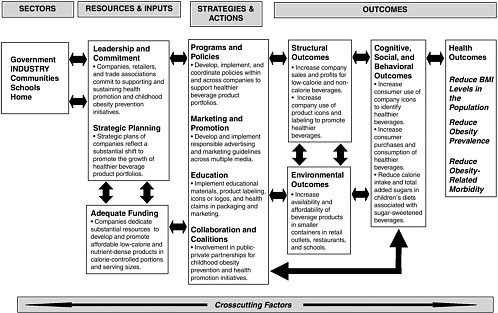
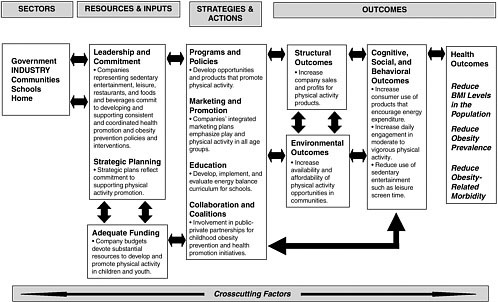
Selected outcomes are illustrated in Figure 5-1, including institutional outcomes (e.g., increased company sales and profits for low-calorie and nutrient-dense or noncalorie beverages) and environmental outcomes (e.g., the increased availability and affordability of beverage products in smaller containers in retail outlets, restaurants, and schools). A variety of behavioral outcomes could be assessed, including whether a company’s use of its branded icon or logo to highlight the healthier choices for consumers has increased and whether company-specific market research demonstrates an increase in consumer purchases and consumer consumption of low-calorie and nutrient-dense beverages. It will also be important to assess changes in calorie intake attributed to sugar-sweetened beverages and the impact on young peoples’ diets and body mass index (BMI) levels. These changes can contribute to desirable health outcomes: reduced mean population BMI levels, a reduced prevalence of obesity among children and youth, and reduced rates of obesity-related morbidity.
NEEDS AND NEXT STEPS IN ASSESSING PROGRESS
Promote Leadership and Collaboration
Evidence of leadership and sustained commitment to childhood obesity prevention by multiple corporations in the various relevant sectors of industry is vital to achieving progress in obesity prevention. It is also important that the relationship between industry and the public health community be collaborative and not adversarial. Bringing the skill sets, the strengths, and the resources of both the public health sector and industry, as well as other stakeholders, together to build and sustain collaborative childhood obesity prevention efforts will require leadership and commitment from all sectors. Progress is being made in achieving increased numbers of healthful product options and providing responsible marketing and media messages for children and youth. The transition to social norms that support healthy choices may take years or may occur more rapidly. Corporations can also show leadership in the organizational modeling of physical activity and fitness and nutrition practices and policies.
Develop, Sustain, and Support Evaluation and Evaluation Capacity
As corporations continue to develop initiatives and make changes aimed at improving the dietary quality of foods and beverages or increasing physical activity, independent evaluations of these efforts are needed. An important component of the evaluation is the tracking of key performance indicators to assess industry progress. Examples of indicators that could be used to evaluate all industry sectors include the number of new health promotion
programs or initiatives launched within a specific time frame; the rate of compliance with stated commitments, such as the implementation of calorie-controlled portions of product lines, enhanced labeling, or the provision of more nutrition information (e.g., on the basis of statistically relevant samples of products or the numbers of consumers reached); and the percentage of the corporate product portfolio that comprises healthful products (UNESDA, 2005).
Evaluations of healthier options at full serve restaurants and QSRs are challenging but are certainly needed, given that consumers are eating out more frequently. Glanz and colleagues (2005) propose four indicators that may be useful as a means of assessing the availability of healthier choices: healthy main dish options (e.g., low-fat, low-calorie, and healthy salads as main dishes); the availability of fruit (without added sugar or sauce); the availability of nonfried vegetables (and vegetables without high-fat sauces); and portion sizes (e.g., the availability of small portions and the absence of supersizing). Other data useful for the assessment of changes in the restaurant sector include the expansion of healthier menu options, visual assessments of how nutrition information is provided at restaurants, and interviews with restaurant staff (Glanz et al., 2005).
Food retailers could be evaluated on the basis of such outcomes as the nutritional contents of their packaged and processed foods, whether food retailers have made label information more accessible and understandable for consumers, the proportion of in-store promotions and shelf space devoted to healthful snack foods, reductions in the extent of display area for sweets and other foods that do not contribute to a healthful diet at the check-out counter, and increases in the amount of in-store information and advice about healthful eating made available to customers (Dibb, 2004).
Public-sector initiatives need to be explored at the federal, state, and local levels that would support industry efforts and may include public recognition, company awards for excellence, competitions, and performance-based tax breaks (IOM, 2006). The committee concludes that it is essential for government and nonprofit organizations to encourage and incentivize companies to support the evaluation of obesity prevention interventions. Government and nonprofits should acknowledge the companies that demonstrate leadership and strategic commitment and collaborate with the public health community on undertaking evaluations. Government agencies could also provide technical assistance to ensure the consistency of these efforts with evidence-based nutrition guidelines and assistance with the monitoring of compliance and the dissemination of the results. Similarly, industry trade associations, such as GMA, could work with government or nonprofit partners to develop or institutionalize formal guidelines, promising practices, competitions, incentives, or recognition programs that encourage its corporate members to develop and promote food and beverage products that
support a healthful diet and reward them for doing so (IOM, 2006). This approach has been taken with the National 5 a Day partnership. Analogous efforts are needed for the restaurant and food retailer sectors, as well as the entertainment, leisure, and recreation industries.
After reviewing the evidence, the committee concludes that adequate funds should be made available to support independent and periodic evaluations of industry’s progress toward making changes that support childhood obesity prevention goals. It is also important that resources be increased to support the evaluation capacity of industry, researchers, and other relevant stakeholders.
Enhance Surveillance, Monitoring, and Research
As discussed earlier in the chapter, efforts are under way to review the appropriateness and adequacy of the CARU guidelines for advertising to children. As part of the CARU review process, an industry working group has been established and is considering whether and how the industry self-regulatory guidelines should be revised. The committee supports assessment efforts of NARC, CBBB, CARU, and the companies that adhere to CARU guidelines as part of the review process. The committee also recommends an expeditious review.
Adequate funds are needed to support not only an internal review process but also independent and periodic evaluations of industry’s efforts to promote healthier lifestyles. After the recommendations have been developed, CARU and the companies will be evaluated on the basis of what they have publicly committed to and how quickly they put their public commitments into action. It is important for companies to develop their own guidelines, in addition to adhering to the CARU guidelines, because internal guidelines can facilitate the creation of an internal corporate culture that proactively protects children, whereas external guidelines may be perceived as being optional.
Given that the industry working group recommendations were not available for the committee’s review, the committee offers several areas in which revisions to the CARU guidelines would be beneficial and that deserve serious consideration. These recommendations build on the relevant recommendations in the IOM report, Food Marketing to Children and Youth: Threat or Opportunity (IOM, 2006), and are organized around specific themes relevant to marketing to children and youth and desirable evaluation outcomes (i.e., structural, institutional, and systemic outcomes) (Table 5-2). The committee recommends that Congress designate a responsible agency to conduct the periodic monitoring and evaluation of the self-regulatory guidelines of CARU. Such evaluations should include an assessment of CARU’s effectiveness, impact, and enforcement capacity. Fur-
TABLE 5-2 Areas Relevant to the CARU Guidelines Assessment and Review Process
|
Themes |
Evaluation Outcomes |
|
Children’s health |
CARU and adhering industry stakeholders (e.g., food, beverage, restaurant, toy, and entertainment companies, and advertising and marketing agencies) should broaden their involvement in matters of children’s health (e.g., through expanded board and advisory group membership and the establishment of health and wellness advisory boards and committees). |
|
Healthful eating and lifestyle messages |
CARU and adhering industry stakeholders should work closely with advertisers and public health professionals to develop strategies for the delivery of consistent healthy lifestyle messages by diverse companies (e.g., food, beverage, restaurant, leisure, and entertainment companies) and multiple forms of media (e.g., broadcast, cable, print, electronic, wireless media) to which children, youth, and their parents are exposed. |
|
Expansion of self-regulatory guidelines for newer forms of marketing |
CARU should expand its guidelines beyond those for the traditional broadcast and cable television media to address food, beverage, meal, and sedentary entertainment advertising and promotion to children and youth to include guidelines for newer forms of electronic media (e.g., videogames, interactive websites, advergames, mobile phones, and text messaging). Industry stakeholders (e.g., food, beverage, restaurant, toy, and entertainment companies, and advertising and marketing agencies) should develop within their own companies guidelines beyond those for the traditional broadcast and cable television to address food, beverage, meal, and sedentary entertainment advertising and promotion to children and youth to include guidelines for newer forms of electronic media. |
|
Predissemination review of advertisements and commercial content |
CARU should encourage and strengthen the voluntary predissemination review process of company advertisements before public dissemination through diverse communication channels. |
|
Product placement |
CARU should consider measures to monitor paid and in-kind product placement on children’s programming, including broadcast and cable television, children’s films, music, books, and mobile marketing, such as commercial content of cell phone advertising, to ensure that the products are consistent with healthy lifestyle messages. |
|
Use of third-party licensed characters |
CARU should ensure that third-party licensed characters (e.g., cartoon spokescharacters) are used to promote low-calorie and high-nutrient foods and beverages that support a healthful diet and healthy lifestyles. |
|
Collaboration with the federal government |
CARU and adhering industry stakeholders should work closely with and foster cooperation with FTC to monitor, evaluate, and enforce the effectiveness of the expanded self-regulatory guidelines. |
thermore, the committee also recommends that the government and academic institutions work with industry to review efficacy and effectiveness research and evaluations to determine the best methods for demonstrating measurable changes in behavioral outcomes. Finally, the committee encourages NARC and the industry working group to examine the self-regulatory guidelines for marketing to children that exist in other countries, including specific commitments that are being made to address the childhood obesity epidemic, to inform its assessment and review process (FIAB, 2005; Hawkes, 2004; IOM, 2006; WFA, 2006).
The committee also recommends that FDA be given the authority to evaluate the efforts undertaken by full serve restaurants and QSRs to expand healthier food, beverage, and meal options to consumers and evaluate the effectiveness of providing nutrition labeling and general nutrition information at the point of choice on consumers’ purchasing behaviors. CDC should evaluate the effectiveness of corporate-sponsored physical activity programs, energy balance education programs, and the use of branded physical activity equipment (e.g., physical videogaming) on children’s leisure-time preferences and physical activity behaviors.
The IOM report Food Marketing to Children and Youth: Threat or Opportunity? (IOM, 2006) recommended that the federal research capacity, supported by DHHS (e.g., National Institutes of Health, CDC, FDA), the USDA, the National Science Foundation, and FCC and FTC), should be expanded to study the ways in which marketing influences children’s and adolescents’ attitudes and behaviors. Of particular importance is research related to newer promotion techniques and venues: healthier foods, beverages, and portion sizes; product availability; the impact of television advertising on diet and diet-related health; diverse research methods that systematically control for alternative explanations; stronger measurement techniques; and methods with high relevance to detect changes that occur as part of daily life.
The present IOM committee concurs with this research recommendation. To support the recommendation, the committee suggests that the food retail sector, the restaurant sector, and relevant trade associations and companies collaborate with USDA and DHHS to provide data on pricing strategies, consumer food purchases, and consumption trends from proprietary retail scanner systems, household scanner panels, household consumption surveys, and marketing research. The collaborative work should examine the quality of the data, consider reducing the cost of the data to increase accessibility, and establish priorities for using the information to promote healthful diets and physical activity.
Corporate responsibility can be demonstrated by sharing marketing research findings, to the greatest extent possible, that will assist the public health sector to develop, implement, and evaluate more effective childhood
obesity prevention policies, programs, and interventions. Data sharing will need to balance many considerations including transparency, public accessibility, the demands of the competitive marketplace, and legal issues. In certain cases, it might be appropriate for the data to be released after a time lag to keep the public informed with relatively recent data. The committee recommends that the public and private sectors engage in a collaborative process that will assist relevant stakeholders in sharing proprietary data for the public good.
SUMMARY AND RECOMMENDATIONS
Changes in the development and promotion of products and services that contribute to healthy lifestyles are under way. However, much remains to be done. Most of the attention to date has focused on changes in the food and beverage industries. Indeed, changes in product formulations, packaging, labeling, and marketing are occurring as the result of corporate initiatives and government efforts, as well as through collaborations between industry and community partners. Independent evaluations of these changes are critical, as is the broader engagement of a wider array of relevant industries. In addition to the changes made by the food and beverage industries, innovative approaches to encouraging and promoting physical activity are being explored, however further efforts and creative advances are greatly needed in this area. Strengthening the alliances between the public health community and industry will bring the strengths of all groups to bear on preventing childhood obesity.
Recommendation 1: Government, industry, communities, schools, and families should demonstrate leadership and commitment by mobilizing the resources required to identify, implement, evaluate, and disseminate effective policies and interventions that support childhood obesity prevention goals.
Implementation Actions for Industry
Industry should use the full range of available resources and tools to create, support, and sustain consumer demand for products and opportunities that support healthy lifestyles including healthful diets and regular physical activity.
To accomplish this,
-
Industry should continue to support and market product innovations and reformulations that promote energy balance at a healthy weight for children and youth and that are compatible with obesity prevention goals.
-
Industry should support the review of the existing self-regulatory guidelines for advertising directed to children. It should also expand the guidelines to advertising vehicles beyond those used in traditional advertising to include evolving vehicles and venues for marketing communication and apply and enforce the guidelines for the traditional and expanded vehicles. Companies should consider developing their own advertising and marketing guidelines for children that are consistent with the industry-wide guidelines.
Recommendation 2: Policy makers, program planners, program implementers, and other interested stakeholders—within and across relevant sectors—should evaluate all childhood obesity prevention efforts, strengthen the evaluation capacity, and develop quality interventions take into account diverse perspectives, that use culturally relevant approaches, and that meet the needs of diverse populations and contexts.
Implementation Actions for Industry
Industry should partner with government, academic institutions, and other interested stakeholders to undertake evaluations to assess its progress in preventing childhood obesity and promoting healthy lifestyles.
To accomplish this,
-
Industry should evaluate its progress in developing and promoting affordable foods, beverages, and meals that support a healthful diet; physical activity products and opportunities; storylines and programming that promote healthy lifestyles; and advertising and marketing practices directed to children and youth.
-
Industry should provide resources and expertise to local businesses and community-based organizations to implement and evaluate initiatives that provide opportunities for consumers to engage in healthful eating and regular physical activity, especially for children and youth in racially and ethnically diverse groups and high-risk populations.
Recommendation 3: Government, industry, communities, and schools should expand or develop relevant surveillance and monitoring systems and, as applicable, should engage in research to examine the impact of childhood obesity prevention policies, interventions, and actions on relevant outcomes, paying particular attention to the unique needs of diverse groups and high-risk populations. Additionally, parents and
caregivers should monitor changes in their family’s food, beverage, and physical activity choices and their progress toward healthier lifestyles.
Implementation Actions for Industry
The U.S. Congress, in consultation with industry and other relevant stakeholders, should appropriate adequate funds to support independent and periodic evaluations of industry’s efforts to promote healthier lifestyles.
To accomplish this,
-
The FDA should be given the authority to evaluate full serve and quick serve restaurants’ expansion of healthier food, beverage, and meal options; the effectiveness of the restaurant sector in providing nutrition labeling and nutrition information at the point of choice; and the effect of this information on consumers’ purchasing behaviors.
-
The CDC should evaluate the effectiveness of corporate-sponsored physical activity programs, energy-balance education programs, and the use of branded physical activity equipment (e.g., physical videogames) on children’s leisure-time preferences and physical activity behaviors.
-
The U.S. Congress should designate a responsible agency to conduct the periodic monitoring and evaluation of the self-regulatory guidelines of CARU, which should include an assessment of CARU’s effectiveness, impact, and enforcement capacity.
-
The food retail sector, the restaurant sector, and relevant trade associations should collaborate with the USDA and DHHS to provide marketing data on pricing strategies, consumer food purchases, and consumption trends from proprietary retail scanner systems, household scanner panels, household consumption surveys, and marketing research. The collaborative work should examine the quality of the data, consider reducing the cost to make the data more accessible, and establish priorities for applying the information to promote healthful diets.
-
Industry should demonstrate corporate responsibility by sharing marketing research findings that may help public health professionals and community-based organizations develop and implement more effective childhood obesity prevention messages, policies, and programs.
Recommendation 4: Government, industry, communities, schools, and families should foster information-sharing activities and disseminate
evaluation and research findings through diverse communication channels and media to actively promote the use and scaling up of effective childhood obesity prevention policies and interventions.
Implementation Actions for Industry
Industry should collaborate with the public sector and other relevant stakeholders to develop a mechanism for sharing proprietary data and a sustainable funding strategy that can inform and support childhood obesity prevention interventions.
To accomplish this,
-
The private sector (e.g., industry and foundations) and the public sector (e.g., government and nonprofit organizations) should partner to develop a mechanism for the sharing proprietary data (e.g., product sales information, marketing research data, and the results of evaluations of industry-supported programs) that can inform research efforts and assist in developing a healthy lifestyles social marketing campaign. A long-term funding strategy should be established to sustain the campaign. Such a strategy should include a dedicated government appropriation and a dedicated set-aside from relevant industries.
-
Government and other interested stakeholders should develop incentives and rewards for industry stakeholders that collaborate on this endeavor.
REFERENCES
AAAA (American Association of Advertising Agencies). 2006. Inside the AAAA: About Us. [Online]. Available: http://www.aaaa.org/eweb/DynamicPage.aspx?Site=4A_new&WebKey=d94ac5ca-e68d-4587-be89-5a8e7ea82e39 [accessed August 1, 2006].
AAF (American Advertising Federation). 2006. About AAF. [Online]. Available: http://www.aaf.org/about/index.html [accessed July 24, 2006].
Ad Council. 2006a. About Ad Council. [Online]. Available: http://www.adcouncil.org/default.aspx?id=68 [accessed July 24, 2006].
Ad Council. 2006b. Coalition for Healthy Children: Combating Childhood Obesity. [Online]. Available: http://healthychildren.adcouncil.org/about.asp [accessed July 24, 2006].
Aetna. 2006. 2006 Regional Community Health Grants Program. [Online]. Available: http://fconline.fdncenter.org/pnd/10001192/aetna [accessed March 13, 2006].
Alliance for a Healthier Generation. 2005. Nickelodeon, Clinton Foundation and American Heart Association Announce Partnership to fight Childhood Obestiy [Online]. Available: http://www.healthiergeneration.org/docs/afhg_nr_lets_just_play_10-20-05.pdf/ [accessed August 3, 2006].
Alliance for a Healthier Generation. 2006a. Alliance for a Healthier Generation and Industry Leaders Set Healthy School Beverage Guidelines for U.S. Schools. [Online]. Available: http://www.healthiergeneration.org/docs/afhg_ nr_school_beverage_5-3-06.pdf [accessed May 8, 2006].
Alliance for a Healthier Generation. 2006b. School Beverage Guidelines. [Online]. Available: http://www.healthiergeneration.org/engine/renderpage.asp?pid=s017 [accessed July 31, 2006].
Alliance for a Healthier Generation. 2006c. What is the Health Schools Program? [Online]. Available: http://www.healthiergeneration.org/docs/afhg_sp_healthy_schools_qa.pdf [accessed August 3, 2006].
AMA (American Marketing Association). 2005. Marketing Definitions. [Online]. Available: http://www.marketingpower.com/content4620.php [accessed August 4, 2005].
AMA. 2006. Mission Statement. [Online]. Available: http://www.marketingpower.com/content424.php [accessed July 26, 2006].
America on the Move. 2006. America on the Move Sponsors. [Online]. Available: http://aom.americaonthemove.org/site/c.hiJRK0PFJpH/b.1311205/k.DED2/sponsors.htm [accessed July 19, 2006].
ANA (Association of National Advertisers). 2006. ANA Mission. [Online]. Available: http://www.ana.net/about/mission/mission.htm [accessed July 24, 2006].
Baranowski T, Baranowski J, Cullen KW, Marsh T, Islam N, Zakeri I, Honess-Morreale L, deMoor C. 2003. Squire’s Quest! Dietary outcome evaluation of a multimedia game. Am J Prev Med 24(1):52–61.
Berkeley Media Studies Group. 2005. The Advertising Story: A Study of the Context of the Ad Council/Coalition for Healthy Children’s Obesity Prevention Messages in TV and Web-Based Advertising. Berkeley, CA: Public Health Institute.
Beverage Digest. 2006. Special Issue: All-Channel Carbonated Soft Drink Performance in 2005. [Online]. Available: http://www.beverage-digest.com/pdf/top-10_2006.pdf [accessed July 11, 2006].
Big Red Frog. 2006. BodyMechanics: Putting a Little Superhero in All of Us. [Online]. Available: http://www.bodymechanics.com [accessed July 27, 2006].
Blake M. 2006. Innovation in Healthy Convenience Food and Drinks. Business Insights. Brief summary. [Online]. Available: http://www.globalbusinessinsights.com/report.asp?id=rbcg0149 [accessed July 13, 2006].
Boone LE, Kurtz DL. 1998. Contemporary Marketing Wired. 9th ed. Orlando, FL: The Dryden Press.
Brown D. 2006. Playing to win: Video games and the fight against obesity. J Am Diet Assoc 106(2)188–189.
Brown K, Endicott RC, MacDonald S, Schumann M, Macarthur G, Sierra J, Matheny L, Green A, Ryan M. 2005. 50th annual 100 leading national advertisers. Advertising Age June 27. Pp. 1–84. [Online]. Available: http://www.adage.com/images/random/lna2005.pdf [accessed June 17, 2006].
Business Insights. 2005. New Profit Opportunities in Health and Nutrition to 2009. Brochure. [Online]. Available: http://www.globalbusinessinsights.com/etwodir/mailings/rc445/rc445pdfs/rc445e-brochure.PDF [accessed March 10, 2006].
Business Insights. 2006. Innovative Trends in Kids’ Food and Drinks. Brochure. [Online]. Available: http://www.globalbusinessinsights.com/etwodir/mailings/rc608/rc608pdfs/rc608a-brochure.pdf [accessed March 13, 2006].
CARU (Children’s Advertising Review Unit). 2003a. Self-Regulatory Guidelines for Children’s Advertising. 7th ed. New York: Council of the Better Business Bureaus, Inc.
CARU. 2003b. About the Children’s Advertising Review Unit (CARU). [Online]. Available: http://www.caru.org/ [accessed November 10, 2005].
CBBB (Council of the Better Business Bureaus). 2005. About Us. [Online]. Available: http://www.narcpartners.org/about/index.asp [accessed July 24, 2006].
CBBB. 2006. CARU Launching Complete Review of Children’s Advertising Guidelines. February 6. [Online]. Available: http://www.caru.org/news/2006/caru.pdf [accessed June 15, 2006].
Childs NM. 2006 (January 24). Obesity—What Are We Doing About It? Informing the Consumer: The Retail Interface. Presentation at the Institute of Food Technologists Symposium, Washington, DC. [Online]. Available: http://www.ift.org/divisions/food_law/Slides_200601/CHILDS.pdf [accessed March 13, 2006].
Cohn SR. 2006 (January 24). Away From Home Dining. Presentation at the Institute of Food Technologists Symposium, Washington, DC. [Online]. Available: http://www.ift.org/divisions/food_law/Slides_200601/COHN.pdf [accessed March 13, 2006].
Collins G. 1995. From Taco Bell, a healthier option. The New York Times. February 9. [Online]. Available: http://query.nytimes.com/gst/fullpage.html?res=990CE7D81F3 FF93AA35751C0A963958260&sec=health&pagewanted=print [accessed July 24, 2006].
Cullen KW, Watson K, Baranowski T, Baranowski JH, Zakeri I. 2005. Squire’s Quest: Intervention changes occurred at lunch and snack meals. Appetite 45(2):148–151.
DHHS (U.S. Department of Health and Human Services) and USDA (U.S. Department of Agriculture). 2005. Dietary Guidelines for Americans 2005. [Online]. Available: http://www.healthierus.gov/dietaryguidelines [accessed December 29, 2005].
Dibb S. 2004. Rating Retailers for Health: How Supermarkets Can Affect Your Chances of a Healthy Diet. London, United Kingdom: National Consumer Council. [Online]. Available: http://www.ncc.org.uk/food/rating_retailers.pdf [accessed January 4, 2006].
Dorfman L, Wallack L, Woodruff K. 2005. More than a message: Framing public health advocacy to change corporate practices. Health Educ Behav 32(3):320–336.
Enrico D. 1999. Top 10 advertising icons. The Advertising Century: Special Issue. Advertising Age vol 43. [Online]. Available: http://www.adage.com/century/century.html [accessed July 12, 2006].
ERS, USDA (Economic Research Service, U.S. Department of Agriculture). 2006. Food CPI, Prices, and Expenditures. [Online]. Available: http://www.ers.usda.gov/Briefing/CPIFoodAndExpenditures/ [accessed June 18, 2006].
Evans WD, Price S, Blahut S. 2005. Evaluating the truth® brand. J Health Commun 10(2): 181–192.
FDA (U.S. Food and Drug Administration). 2004. Calories Count: Report of the Working Group on Obesity. [Online]. Available: http://www.cfsan.fda.gov/~dms/owg-toc.html [accessed May 17, 2006].
FDA. 2005a. Food labeling; nutrient content claims, definition of sodium levels for the term “healthy.” Final Rule. Fed Regist 70(188): 56828–56849.
FDA. 2005b. Food labeling; Prominence of calories. Fed Regist 70(63).
FDA. 2005c. Food labeling; nutrient content claims, definition of sodium levels for the term “healthy” Fed Regist 70(63).
FIAB (Federation of Food and Drink Industries). 2005. Code of Self-Regulation of the Advertising of Food Products Directed at Minors, Prevention of Obesity and Health. Spanish Ministry of Health and Consumer Affairs. [Online]. Available: http://www.aesa.msc.es/aesa/web/FileServer?file=PAOS_ING.pdf&language=en_US&download=yes [accessed June 22, 2006].
Freudenberg N. 2005. Public health advocacy to change corporate practices: Implications for health education practice and research. Health Educ Behav 32(3):298–319.
FTC (Federal Trade Commission). 2006. Request for information and comment: Food industry marketing practices to children and adolescents. Fed Regist 71(4):10535–10536. [Online]. Available: http://a257.g.akamaitech.net/7/257/2422/01jan20061800/edocket.access.gpo.gov/2006/06-1931.htm [accessed March 6, 2006].
FTC and DHHS. 2006. Perspectives on Marketing, Self-Regulation, and Childhood Obesity: A Report on a Joint Workshop of the Federal Trade Commission and the Department of Health & Human Services, April 2006. [Online]. Available: http://www.ftc.gov/os/2006/05PerspectivesOnMarketingSelfRegulation&ChildhoodObesityFTCandHHSReportonJointWorkshop.pdf [accessed May 3, 2006].
Fusaro D. 2004. Packages that are changing the face of food processing. Food Processing Magazine [Online]. Available: http://www.foodprocessing.com/articles/2004/68.html [accessed January 4, 2006].
Games for Health. 2006. Games for Health. [Online]. Available: http://www.gamesforhealth.org/index2.html [accessed July 27, 2006].
General Mills. 2005a. General Mills Announces Major Nutrition Education Initiative in Conjunction with New Food Guide Pyramid. News release. April 19. [Online]. Available: http://www.generalmills.com/corporate/health_wellnessin_the_news_detail.aspx?itemID=10561&catID=7586§ion=news [accessed May 16, 2006].
General Mills. 2005b. General Mills Community Action. 2005 Report. Minneapolis, MN: General Mills Foundation.
General Mills. 2006a. Champions for Healthy KidsSM. Minneapolis, MN: General Mills Foundation.
General Mills. 2006b. Nourishing Lives. Minneapolis, MN: General Mills Foundation.
Girls on the Run. 2006. Our Sponsors. [Online]. Available: http://www.girlsontherun.org/oursponsors.html [accessed July 28, 2006].
Gladwell M. 2000. The Tipping Point: How Little Things Can Make a Big Difference. Boston, MA: Back Bay Books.
Glanz K, Sallis JF, Saelens BE, Frank LD. 2005. Healthy nutrition environments: Concepts and measures. Am J Health Promot 19(5):330–303.
GMA (Grocery Manufacturers of America). 2005. GMA Statement Regarding Proposals to Strengthen Advertising Self-Regulation. News release. July 15. [Online]. Available: http://www.gmabrands.com/news/docs/NewsRelease.cfm?DocID=1542& [accessed January 5, 2006].
GMA. 2006. Industry Report on Health and Wellness. [Online]. Available: http://www.gmabrands.com/publications/docs/hwreport.pdf [accessed June 22, 2006].
GMA Forum. 2005. Cannondale Trade Promotion Study 2005. Saying No to the Status Quo. Second Quarter. Washington, DC. Pp. 72–84.
Gorecki S. 2006. Food Industry Uses Internet to Reach Kids. United Press International News Release. July 20. [Online]. Available: http://www.upi.com/ConsumerHealthDaily/view.php?StoryID=20060719-104259-5440r [accessed July 24, 2006].
Hannaford Bros. 2005. Guiding Stars.SM [Online]. Available: http://www.hannaford.com/Contents/Healthy_Living/Guiding_Stars/gs_how_guidingstars_works.shtml [accessed September 6, 2006].
Harnack L. 2006. Availability of nutrition information on menus at major chain table-service restaurants. J Am Diet Assoc 106(7):1012–1015.
Harris JM. 2002. Food manufacturing. In: Harris J, Kaufman P, Martinez S, Price C, eds. 2002. The U.S. Food Marketing System, 2002. Economic Research Service, U.S. Department of Agriculture. Agricultural Economic Report No. (AER811). Pp. 3–11. [Online]. Available: http://www.ers.usda.gov/publications/aer811/aer811.pdf [accessed June 21, 2006].
Hawkes C. 2004. Marketing Food to Children: The Global Regulatory Environment. Geneva, Switzerland: World Health Organization. [Online]. Available: http://whqlibdoc.who.int/publications/2004/9241591579.pdf [accessed June 21, 2006].
Healthy Arkansas. 2006. Healthy Restaurant Awards. [Online]. Available: http://www.arkansas.gov/ha/healthy_restaurant.html [accessed March 13, 2006].
Holt DB. 2004. How Brands Become Icons: The Principles of Cultural Branding. Boston, MA: Harvard Business School Press.
Horovitz B. 2006. Nickelodeon beefs up fruit partnership; some say SpongeBob, Dora plans aimed at public relations. USA Today July 19. [Online]. Available: http://www.usa today.com/money/industries/food/2006-07-18-nickelodeon-usat_x.htm [accessed July 20, 2006].
IBLF (International Business Leaders Forum) and Insight Investment. 2006. A Proposed Framework for the Corporate Response to Addressing Consumer Health and Obesity. London, United Kingdom: IBLF and Insight Investment.
IFIC (International Food Information Council) Foundation, FMI (Food Marketing Institute), USDA (U.S. Department of Agriculture). 2006. Your Personal Path to Health: Steps to a Healthier You! [Online]. Available: http://www.ific.org/publications/brochures/upload/MyPyramidBrochure.pdf [accessed July 24, 2006].
Insight Investment. 2006. Investor Responsibility Briefing. Obesity: How is the Food Industry Responding? London, UK. [Online]. Available: http://www.insightinvestment.com/Documents/responsibility/Articles/obesity.pdf [accessed July 29, 2006].
IOM (Institute of Medicine). 2005. Preventing Childhood Obesity: Health in the Balance. Washington, DC: The National Academies Press.
IOM. 2006. Food Marketing to Children and Youth: Threat or Opportunity? Washington, DC: The National Academies Press.
IRI (Information Resources, Inc.). 2006. Healthy eating trends: Innovative solutions to evolving consumer needs. Times & Trends Jan:1–19.
JPMorgan. 2006. Obesity: Re-Shaping the Food Industry. Global Equity Research. January 24.
Kaiser Permanente. 2006. Kaiser Permanente’s Comprehensive Approach to the Obesity Epidemic: Bringing Expertise and Resources to Bear at Every Level. [Online]. Available: http://www.calwic.org/docs/kaiserbroch_feb06.pdf [accessed June 20, 2006].
Kapica CM, Alexander D, Mink P, Butchko H. 2006. The definition of fast food in published studies. Experimental Biology Meeting, San Francisco, April 1–5. Experimental Biology 2006 Meeting Program. Abstract 139.9. P. 48.
Kennedy E. 2004. Dietary diversity, diet quality, and body weight regulation. Nutr Rev 62(7):S78–S81.
Keystone Center. 2006. Keystone Forum on Away-From-Home Foods: Opportunities for Preventing Weight Gain and Obesity. Washington, DC: The Keystone Center. [Online]. Available: http://www.keystone.org/spp/documents/Forum_Report_FINAL_5-30-06.pdf [accessed June 3, 2006].
Kok P, van der Wiele T, McKenna R, Brown A. 2001. A corporate social responsibility audit within a quality management framework. J Business Ethics 31(4):285–297.
Kraft Foods. 2005. Kraft Foods Announces Marketing Changes to Emphasize More Nutritious Products. January 12. [Online]. Available: http://www.kraft.com/newsroom/01122005.html [accessed July 24, 2006].
Kraft Foods. 2006. Contributions and Communities. [Online]. Available: http://www.kraft.com/responsibility/cc_salsa_sabor_salud.aspx [accessed July 19, 2006].
Kretser AJ. 2006 (January 24). The Packaged Food Industry. Presentation at the Institute of Food Technologists Symposium, Washington, DC. [Online]. Available: http://www.ift.org/divisions/food_law/Slides_200601/KRETSER.pdf [accessed February 20, 2006].
Kreuter MW. 2005. Commentary on public health advocacy to change corporate practices. Health Educ Behav 32(3):355–362.
Lang T, Rayner G, Kaelin E. 2006. The Food Industry, Diet, Physical Activity and Health: A Review of the Reported Commitments and Practice of 25 of the World’s Largest Food Companies. Centre for Food Policy, City University, London, United Kingdom.[Online]. Available: http://www.city.ac.uk/press/The%20Food%20Industry%20Diet%20Physical%20Activity%20and%20Health.pdf [accessed June 17, 2006].
Ledikwe JH, Blanck HM, Khan LK, Serdula MK, Seymour JD, Tohill BC, Rolls BJ. 2006. Low-energy-density diets are associated with high diet quality in adults in the United States. J Am Diet Assoc 106(8):1172–1180.
Leibtag ES. 2005. Where you shop matters: Store formats drive variation in retail food prices. Amber Waves 13–18. Economic Research Service, U.S. Department of Agriculture. [Online]. Available: http://www.ers.usda.gov/AmberWaves/November05/Features/WhereYouShop.htm [accessed June 21, 2006].
Lichtenstein AH, Appel LJ, Brands M, Carnethon M, Daniels S, Franklin B, Kris-Etherton P, Harris WS, Howard B, Karanja N, Lefevre M, Rudel L, Sacks F, Van Horn L, Winston M, Wylie-Rosett J. 2006. Diet and lifestyle recommendations revision 2006. A scientific statement from the American Heart Association Nutrition Committee. Circulation 114(1):82–96.
Marketing Intelligence Service. 2005. ProductScan®Online Database of New Products. [Online]. Available: http://www.productscan.com [accessed July 31, 2006].
McDonald’s Corporation. 2003. McDonald’s™ Introduces New McKIDS™ Multi-Category, Worldwide Licensing Program. News release. November 13. [Online]. Available: http://www.mcdonalds.com/corp/news/corppr/2003/cpr11132003.html [accessed January 4, 2006].
McDonald’s Corporation. 2005. Ronald McDonald®: Balanced, Active Lifestyles Ambassador. [Online]. Available: http://www.mcdepk.com/ronald/index.html [accessed July 12, 2006].
McDonald’s Corporation. 2006. Balanced, Active Lifestyles…its what I eat and what I do. [Online]. Available: http://www.rmhc.org/corp/values/balance.html [accessed June 19, 2006].
Mello MM, Studdert DM, Brennan TA. 2006. Obesity—The new frontier of public health law. N Engl J Med 354(24):2601–2610.
Moore ES. 2006. It’s Child’s Play: Advergaming and the Online Marketing of Food to Children. Menlo Park, CA: Kaiser Family Foundation. [Online]. Available: http://www.kff.org/entmedia/upload/7536.pdf [accessed July 24, 2006].
NAICS (North American Industry Classification System). 2002. NAICS Definitions: Limited-Service Restaurants. [Online]. Available: http://www.naics.com/censusfiles/ND722211.HTM [accessed April 6, 2006].
NARC (National Advertising Review Council). 2004. Guidance for Food Advertising Self-Regulation. New York, NY: NARC. [Online]. Available: http://www.narcpartners.org/NARC_White_Paper_6-1-04.pdf [accessed January 5, 2006].
National Council of La Raza. 2006. Latinos en Movimiento. [Online]. Available: http://www.nclr.org/section/america_on_the_move/ [accessed July 13, 2006].
NHLBI (National Heart, Lung, and Blood Institute). 2006. We Can! Media Partners. [Online]. Available: http://www.nhlbi.nih.gov/health/public/heart/obesity/wecan/news/partners.htm [accessed July 27, 2006].
Nielsen SJ, Siega-Riz AM, Popkin BM. 2002a. Trends in energy intake in U.S. between 1977 and 1996: Similar shifts seen across age groups. Obes Res 10(5):370–378.
Nielsen SJ, Siega-Riz AM, Popkin BM. 2002b. Trends in food locations and sources among adolescents and young adults. Prev Med 35(2):107–113.
NRA (National Restaurant Association). 2006. Restaurant Industry Fact Sheet. [Online]. Available: http://www.restaurant.org/pdfs/research/2006factsheet.pdf [accessed March 12, 2006].
NRC (National Research Council) and IOM. 2004. Children’s Health, The Nation’s Wealth. Washington, DC: The National Academies Press.
Packaged Facts. 2003. U.S. Market for Kids’ Foods and Beverages. 5th edition. Report summary. [Online]. Available: http://www.marketresearch.com/researchindex/849192.html#pagetop [accessed March 13, 2006].
Packaged Facts. 2006. Snack Food Trends in the U.S.: Sweet, Salty, and Healthy Kids Snacks. Brief Summary. [Online]. Available: http://www.packagedfacts.com/pub/1119533.html [accessed July 11, 2006].
Parks SC. 2002. The fractured ant hill: A new architecture for sustaining the future. J Am Diet Assoc 102(1):33–38.
PBH (Produce for Better Health Foundation). 2005a. 2004 Annual Report. Wilmington, DE: PBH. [Online]. Available: http://www.pbhfoundation.org/pdfs/pulse/success/financials/2005_annual_report.pdf [accessed June 21, 2006].
PBH. 2005b. Closing the Opportunity Gap: Offering More Fruits and Vegetables on the Nation’s Menu. Wilmington, DE: PBH. [Online]. Available: http://www.5aday.org/html/press/pressrelease.php?recordid=90 [accessed June 21, 2006].
PBH. 2005c. National Action Plan to Promote Health Through Increased Fruit and Vegetable Consumption. Wilmington, DE: PBH. [Online]. Available: http://www.5aday.org/commcenter/actionplan/pbh_nap_book041905.pdf [accessed June 21, 2006].
PBH. 2006. PBH Unveils New Brand…Fruits & Veggies—More Matters!™ Wilmington, DE: Produce for Better Health Foundation. [Online]. Available: http://www.pbhfoundation.org/pdfs/retail/aisle5/archive/JUNE2006_RND3.pdf [accessed July 6, 2006].
PE4Life. 2006. PE4Life Sponsors. [Online]. Available: http://pe4life.com/sponsors.php [accessed July 24, 2006].
PepsiCo. 2006a. Health and Wellness. [Online]. Available: http://www.pepsico.com/PEP_Citi-zenship/Contributions/HealthandWellness/index.cfm [accessed June 19, 2006].
PepsiCo. 2006b. PepsiCo Joins with America’s YMCAs to Help Americans Live Healthier Lives. [Online]. Available: http://www.ymca.net/about_the_ymca/press_release_20060308_pepsico.html [accessed June 19, 2006].
Public Interest Media Group. 2005. Eat Smart, Grow Strong. [Online]. Available: http://www.eatsmartgrowstrong.com/ [accessed May 9, 2006].
Ramirez A. 1991. Fast food lightens up but sales are often thin. The New York Times. March 19. [Online]. Available: http://query.nytimes.com/gst/fullpage.html?res=9D0CE7DD1430F93AA25750C0A967958260&sec=health&pagewanted=print [accessed July 23, 2006].
Roberts K. 2004. The Future Beyond Brands: Lovemarks. New York: PowerHouse Books.
RWJF (Robert Wood Johnson Foundation). 2006. Active Living by Design. [Online]. Available: http://www.activelivingbydesign.org/index.php?id=4 [accessed June 19, 2006].
Schor JB. 2004. Born to Buy: The Commercialized Child and the New Consumer Culture. New York, NY: Scribner.
Sloan AE. 2006. Top 10 functional food trends. Food Technology 60(4):23–40.
Smalls M. 2005 (July 14). Current Media Efforts to Foster Healthier Choices for Children. Presentation at the U.S. Department of Health and Human Services–Federal Trade Commission Workshop About Perspectives on Marketing, Self-Regulation, and Childhood Obesity, Washington DC. [Online]. Available: http://www.ftc.gov/bcp/workshops/foodmarketingtokids/index.htm [accessed May 29, 2006].
Snider J, Hill RP, Martin D. 2003. Corporate social responsibility in the 21st century: A view from the world’s most successful firms. J Business Ethics 48:175–187.
Stettler N, Signer TM, Suter PM. 2004. Electronic games and environmental factors associated with childhood obesity in Switzerland. Obes Res 12(6):896–903.
Sturm R. 2004. The economics of physical activity. Am J Prev Med 27(3S):126–135.
Sunkist. 2005. “C” Is for Citrus as Sunkist and Sesame Workshop Announce Healthy Habits for Life Partnership. [Online]. Available: http://www.sunkist.com/press/release.asp?id=72 [accessed November 18, 2005].
Tillotson J. 2006a. The mega-brands that rule our diet, part 2. Nutr Today 41(1):17–21.
Tillotson J. 2006b. Whole Foods Market: Redefining the supermarket experience. Nutr Today 41(2):67–69.
Time Warner. 2006. Cartoon Network to Expand GET ANIMATED Healthy Lifestyles Initiative Through Celebrity Endorsements and National Child Advocacy Group Partnerships. [Online]. Available: http://www.timewarner.com/corp/newsroom/pr/0,20812,1168816,00.html [accessed July 27, 2006].
UNESDA (Union of European Beverage Associations). 2005. Contribution by UNESDA and Its Corporate Members to the EU Platform for Action on Diet, Physical Activity and Health. [Online]. Available: http://www.unesda-cisda.org/linkdocs/commitments.pdf [accessed April 6, 2006].
Univision Communications. 2003. Univision to Broadcast Public Affairs Series About Health Issues as Part of “Salud es Vida … ¡Enterate!” Campaign. [Online]. Available: http://www.univision.net/corp/en/pr/Miami_11122003-1.html#null [accessed July 27, 2006].
Vandewater EA, Shim MS, Caplovitz AG. 2004. Linking obesity and activity level with children’s television and video game use. J Adolesc 27(1):71–85.
Van Wave TW, Decker M. 2003. Secondary analysis of a marketing research database reveals patterns in dairy product purchases over time. J Am Diet Assoc 103(4):445–453.
Wansink B. 2004. Environmental factors that increase the food intake and consumption volume of unknowing consumers. Annu Rev Nutr 24:455–479.
Wansink B, Huckabee H. 2005. De-marketing obesity. Calif Management Rev 47(4):6–18.
Weber K, Story M, Harnack L. 2006. Internet food marketing strategies aimed at children and adolescents: A content analysis of food and beverage brand websites. J Am Diet Assoc 106(9):1463–1466.
WFA (World Federation of Advertisers). 2006. Soft Drink Manufacturers Cease Advertising to Children. News release. January 25. [Online]. Available: http://www.wfanet.org/news/article_detail.asp?Lib_ID=1668 [accessed June 21, 2006].
WHO (World Health Organization). 2003. Diet, Nutrition and the Prevention of Chronic Diseases. Technical Report Series No. 916. Geneva, Switzerland: WHO. [Online]. Available: http://www.who.int/hpr/NPH/docs/who_fao_expert_report.pdf [accessed June 8, 2006].
WHO. 2004. Global Strategy on Diet, Physical Activity, and Health. Report No. WHA57.17. [Online]. Available: http://www.who.int/gb/ebwha/pdf_files/WHA57/A57_R17-en.pdf [accessed May 23, 2006].
Wilbert C. 2006. Teens back off sugary drinks. The Atlanta Journal-Constitution. June 22. News release. [Online]. Available: http://www.ajc.com/business/content/business/coke/stories/0621bizcoke.htmlcxntnid=amn062206e [accessed July 18, 2006].
Williams J. 2005. Product Proliferation Analysis for New Food and Beverage Products Targeted to Children 1994–2004. Working Paper. University of Texas at Austin.
Wong F, Huhman M, Heitzler C, Asbury L, Bretthauer-Mueller R, McCarthy S, Londe P. 2004. VERB™—A social marketing campaign to increase physical activity among youth. Prev Chron Dis [Online]. Available: http://www.cdc.gov/Pcd/issues/2004/jul/04_0043.htm [accessed July 23, 2006].
Wootan M, Osborn M. 2006. Availability of nutrition information from chain restaurants in the United States. Am J Prev Med 30(3):266–268.
Yach D, McKee M, Lopez AD, Novotny T. 2005. Improving diet and physical activity: 12 lessons from controlling tobacco smoking. Br Med J 330(7496):898–900.
Yankelovich. 2005. Ad Council Obesity Media Initiative Study. Chapel Hill, NC.
Yankelovich. 2006. Food for Life: An Attitudinal And Database Perspective On Food, Diet and Preventive Health Care. [Online]. Available: http://www.yankelovich.com/products/Food%20For%20Life%20Final%20Presentation%2003-27-06.pdf [accessed July 31, 2006].


