
2
Learning and Performance
CHAPTER HIGHLIGHTS
Do cognitive differences between the sexes influence their differential success in science and engineering? A large body of research has probed the existence and nature of cognitive sex differences. Attempts to marshal the findings to answer that question have been hampered by three features of the public discussion of women in science.
First, the discussion has drawn on research in a highly selective way, emphasizing a small number of measures that show sex differences and de-emphasizing both the overlap between men and women on the measures and the large number of measures by which sex differences are small or nonexistent.1 Second, most studies of sex differences in average abilities for mathematics and science focus on measures that were designed to predict academic success in high school or college mathematics or science, such as the quantitative portion of the Scholastic Aptitude Test (SAT-M). Because the academic success of girls now equals or exceeds that of boys at the high school and college levels, however, there is no
longer a gender gap for the studies to explain. Third, most studies of cognitive sex differences at the highest levels of mathematical and scientific ability also focus on measures that predict success in high school and college. These measures, however, have not proved to be predictive of success in later science careers.2 Thus, we cannot look to cognitive sex differences to explain the differential success of men and women scientists and engineers.
FINDINGS
2-1. A large body of research has probed the existence and nature of cognitive sex differences.
2-2. Most discussions of cognitive sex differences emphasize a small number of measures showing sex differences and de-emphasize the overlap between men and women on those measures as well as the large number of measures by which sex differences are small, nonexistent, or favor women.
2-3. Studies of brain structure and function, of hormonal modulation of performance, of human cognitive development, and of human evolution have not revealed significant biological differences between men and women in performing science and mathematics that can account for the lower representation of women in these fields.
2-4. The academic success of girls now equals or exceeds that of boys at the high school and college levels, rendering moot all discussions of the biological and social factors that once produced sex differences in achievement at these levels.
2-5. Measures of aptitude for high school and college science have not proved to be predictive of success in later science and engineering careers. Notably, it is not just the top SAT scorers who continue on to successful careers; of the college-educated professional workforce in mathematics, science, and engineering, fewer than one-third of the men had SAT-M scores above 650, the lower end of the threshold typically presumed to be required for success in these fields.
2-6. The differing social pressures and influences on boys and girls appear to have more influence than their underlying abilities on their motivations and preferences.
2-7. Activation of negative stereotypes can have a detrimental effect on women’s interest and performance in domains relevant to success in academic science and engineering.
2-8. The present situation of women in scientific and engineering professions clearly results from the interplay of many individual, institutional, social, and cultural factors. If systematic differences between male and female scientific and mathematical aptitude and ability do exist, it is clear that they cannot account for women’s underrepresentation in academic science and engineering.
RECOMMENDATION
2-1. Continued research is needed in elucidating the role of sex and gender in performance, including research on motivation, stereotype threat, and educational programs for improving performance in science and engineering fields.
RESEARCH APPROACHES
Researchers in a variety of disciplines and with a variety of perspectives—including neuroscience, cognitive psychology, evolutionary biology, and developmental and educational psychology—have sought to explore, measure, and explain whether boys and girls, and the men and women they become, differ from or resemble one another in various aptitudes, skills, behaviors, and decisions. Studies have examined such features as brain organization, hormonal influences on cognitive performance, genetics, and gender roles and socialization. In addition, researchers have performed meta-analyses of various bodies of research; this technique combines data from a number of studies to increase statistical power and give a clearer picture of results (Box 2-1).
|
Scientists are people of very dissimilar temperaments doing different things in very different ways. Among scientists are collectors, classifiers, and compulsive tidiers-up; many are detectives by temperament and many are explorers; some are artists and others artisans. There are poet-scientists and philosopher-scientists and even a few mystics. What sort of mind or temperament can all these people be supposed to have in common? Obligative scientists must be very rare, and most people who are in fact scientists could easily have been something else instead. —Peter Medewar, The Art of the Soluble (1967) |
|
FOCUS ON RESEARCH BOX 2-1 Meta-analysis Hundreds of studies examine gender differences in performance. Rather than conduct an additional study, one can synthesize the existing studies to find an overall outcome. Meta-analysis refers simply to the application of quantitative or statistical methods to combine evidence from numerous studies. Meta-analysis can tell us, when we aggregate over all the available studies, whether there really is a gender difference in mathematical ability. It can tell us the direction of the difference: do males score higher on average or do females? And it can also tell us the magnitude of any gender difference. The d statistic, or effect size, is used to measure the gender difference. To obtain d, the mean score of females is subtracted from the mean score of males in a particular study, and the result is divided by the pooled within-gender standard deviation. Essentially, d tells us how far apart the means for males and females are in standardized units. d can have positive or negative values. A positive value means that males score higher, and a negative value means that females score higher. To give a tangible example, the gender difference in throwing distance is + 1.98. In a meta-analysis, d is computed for each study, and then ds are averaged across all studies. Because meta-analysis aggregates over numerous studies, a meta-analysis typically represents the testing of tens of thousands, sometimes even millions of participants. Thus, the results should be far more reliable than those from any individual study. How do we know when a d, an effect size, is small or large? The statistician Jacob Cohen provided the guideline that a d of 0.20 is small, 0.50 is moderate, and 0.80 is large.a |
Average differences in ability or performance on various intellectual or cognitive tasks have appeared in many studies. That statistically significant differences among groups can be identified, however, does not indicate that they have practical consequences. A generation ago, boys tended to outperform girls in high school and college mathematics and science, and the findings of these studies were invoked to explain differential representation in math and science professions. Now this gender gap in school achievement has disappeared and the relevance of average sex differences as predictors of success in real-world academic science and engineering is debatable.
In cognitive studies comparing boys and men with girls and women, the overlap between the sexes is generally large—usually much larger than
the purported differences. Moreover, systematic sex differences do not exist in most cognitive functions.3 For the variables that do show statistically significant sex differences, some observers argue that small effect sizes indicate that the variable is not important for future success. Means drawn from comparing large groups may provide little insight into the abilities and choices of the relatively small number of people who pursue advanced studies in science or engineering and seek academic careers in those fields. Others argue, however, that small sex differences can accumulate over time and lead to substantial differences in career success (Box 6-1).4
That differences exist in abilities, skills, or brain organization does not indicate that they are immutable, nor that they are related to the underrepresentation of women in science and engineering. Biological, social, and psychological factors interact.5 Genetics and sex hormones are known to influence performance in a number of ways, but experience also influences brain function in both children and adults. Research over the past 25 years indicates that complex interactions, between biological and sociocultural influences, together with the purely personal happenstance of individual lives, explain the constellation of abilities that any particular person possesses.
COGNITION
A great deal of research has centered on comparing male and female cognitive abilities in domains presumed to be related to success in science and engineering. Broadly speaking, cognition refers to the mental processes that underlie information processing, including object perception, learning, memory, language acquisition, and problem solving.6 Research into sex differences in scientific and engineering ability has emphasized comparisons of mathematical, spatial, and verbal abilities.
Cognitive studies use a number of strategies. Some examine the performance of large numbers of people—from elementary school children through adult college students—on standardized pencil-and-paper tests such as the SAT or the National Assessment of Educational Progress (NAEP). Others use controlled laboratory experiments to measure performance on such tasks as solving mathematical problems, performing spatial rotations, or comprehending or reproducing linguistic passages. Some research probes
|
3 |
JS Hyde (2005). The gender similarities hypothesis. American Psychologist 60(6):581-592. |
|
4 |
R Rosenthal, RL Rosnow, and DB Rubin (2000). Contrasts and Effect Sizes in Behavioral Research: A Correlational Approach. Cambridge, UK: Cambridge University Press. |
|
5 |
DF Halpern and U Tan (2001). Stereotypes and steroids: Using a psychobiosocial model to understand cognitive sex differences. Brain and Cognition 45:392-414. |
|
6 |
MRW Dawson and DA Medler (1999). Dictionary of Cognitive Science, http://www.bcp.psych. ualberta.ca/~mike/Pearl_Street/Dictionary/contents/C/cognitive_psychology.html. |
the neurobiological correlates of cognition, using such techniques as functional magnetic resonance imaging while subjects carry out various mental tasks. Some compare levels of sex hormones with performance on a variety of tests. Meta-analyses combine the data from multiple studies to obtain increased statistical power.
|
Some researchers object to the study of sex differences because they fear that it promotes false stereotypes and prejudice. There is nothing inherently sexist in a list of cognitive sex differences; prejudice is not intrinsic in data, but can be seen in the way people misuse data to promote a particular viewpoint or agenda. Prejudice also exists in the absence of data. Research is the only way to separate myth from empirically supported findings. —Diane F Halpern, Professor of Psychology and Director of the Berger Institute for Work, Family, and Children, Claremont McKenna College (2006)7 |
Mathematical and Spatial Performance
Mathematics plays such a central role in science that the question of whether there are sex differences in mathematical aptitude or ability has been a major focus of research.8 Evidence shows that boys’ and girls’ aptitude is similar in early childhood, as are the developmental stages at which they integrate various components of mathematics ability.9 Girls do as well as if not better than boys in high school mathematics and science classes,10 and by 1998, girls were as likely as boys to take advanced mathematics and science classes.11
From 1990-2003, scores on the NAEP revealed no performance gap
|
7 |
DF Halpern (2006). Biopsychosocial contributions to cognitive performance. In: Biological, Social, and Organizational Contributions to Science and Engineering Success. Washington, DC: The National Academies Press. |
|
8 |
DF Halpern (2005). Sex, brains, hands: Gender differences in cognitive abilities. Limbic Nutrition, http://www.limibicnutrition.com/blog/archives/028860.html; S Pinker (2005). The science of gender and science: A debate. Edge: The Third Culture, http://www.edge.org/3rd_culture/debate05/debate05_index.html. |
|
9 |
ES Spelke (2005). Sex differences in intrinsic aptitude for mathematics and science? A critical review. American Psychologist 60(9):950-958. |
|
10 |
National Center for Education Statistics (2004). Trends in Educational Equity of Girls and Women: 2004 (NCES 2005-016). Washington, DC: US Department of Education; B Bridgeman and C Wendler (1991). Gender differences in predictors of college mathematics performance and in college mathematics course grades. Journal of Educational Psychology 83(2):275-284; Y Xie and KA Shauman (2003). Women in Science: Career Processes and |
between boys and girls among 4th, 8th, and 12th grade students.12 Scores on the SAT-M show a somewhat different picture, however, with the average score for boys consistently above that for girls.13 Because SAT-M scores underpredict the mathematics performance of college women relative to men,14 the relevance of the difference is not clear. Many studies suggest that differences in spatial ability may underlie differential mathematics performance. Some spatial tasks show sex differences favoring girls, others show differences favoring boys, and disagreement exists on the relevance and predictive power of each set of tasks.15 Sex differences favoring boys are concentrated in particular tasks, specifically those requiring visuospatial transformation and unconventional mathematical knowledge.16 Girls, in contrast, excel in mathematical tasks that involve language processing.17 Men appear to use spatial strategies more often than women, and such strategic choices may account for a male advantage among high
|
Outcomes. Cambridge, MA: Harvard University Press; AM Gallagher and JC Kaufman (2005). Gender Differences in Mathematics. New York: Cambridge University Press. |
|
11 |
National Science Board (2004). Science and Engineering Indicators, 2004 (NSB 04-01). Arlington, VA: National Science Foundation, Chapter 1. |
|
12 |
National Center for Education Statistics (2004), ibid. |
|
13 |
JS Hyde, E Fennema, and JS Lamon (1990). Gender differences in mathematics performance: A meta-analysis. Psychological Bulletin 107(2):139-155; MB Casey, RL Nuttall, E Pezaris, and CP Benbow (1995). The influence of spatial ability differences in mathematics college entrance scores across diverse samples. Developmental Psychology 31(4):697-705; LV Hedges and A Nowell (1995). Sex differences in mental test scores, variability, and numbers of high-scoring individuals. Science 269:41-45. |
|
14 |
Gallagher and Kaufman (2005), ibid. |
|
15 |
MB Casey, RL Nuttall, E Pezaris, and CP Benbow (1995), ibid; MB Casey, RL Nuttall, and E Pezaris (1997). Mediators of gender differences in mathematics college entrance test scores: A comparison of spatial skills with internalized beliefs and anxieties. Developmental Psychology 33(4):669-680; DC Geary, SJ Saults, F Liu, and MK Hoard (2000), ibid; MC Linn and AC Petersen (1985). Emergence and characterization of sex differences in spatial ability: A meta-analysis. Child Development 56:1479-1498; D Voyer, S Voyer, and MP Bryden (1995). Magnitude of sex differences in spatial abilities: A meta-analysis and consideration of critical variables. Psychological Bulletin 117(2):250-270. |
|
16 |
DF Halpern (2000). Sex Differences in Cognitive Abilities (3rd ed.). Mahway, NJ: Erlbaum; E Spelke (2005), ibid; A Gallagher, JY Levin, and C Cahalan (2002). Cognitive Patterns of Gender Differences on Mathematics Admissions Tests (GRE Board Professional Report No. 96-17P). Washington, DC: Educational Testing Service; DC Geary, SJ Saults, F Liu, and MK Hoard (2000). Sex differences in spatial cognition, computational fluency, and arithmetical reasoning. Journal of Experimental Child Psychology 77:337-353; Linn and Petersen (1985), ibid; Voyer, Voyer, and Bryden (1995), ibid; DC Geary (2001). Sex differences in spatial abilities among adults from the United States and China: Implications for evolutionary theory. Evolution and Cognition 7(2):172-177; DW Collins and D Kimura (1997). A large sex difference on a two-dimensional mental rotation task. Behavioral Neuroscience 111(4):845-849. |
|
17 |
A Gallagher, JY Levin, and C Cahalan (2002), ibid; Pinker (2005), ibid; Spelke (2005), ibid. |
performers on tests of mathematical reasoning.18 When all students are encouraged to use spatial strategies, the gender gap in performance narrows.19 If sex differences on speeded tests result from strategy choices rather than ability differences, the equal performance of men and women in college mathematics courses may be more significant than the small differences between their average scores on speeded tests such as the SAT-M.
One of the most robust cognitive sex differences concerns the ability to imagine an object at different orientations in space (the “mental rotation” task).20 Boys and men perform consistently faster and more accurately on this task, and some argue that this difference gives them an advantage in science, mathematics, and technology.21 Evidence indicates that the difference between men and women on this task may be largely due to stereotype threat (Box 2-4).22 Furthermore, mental rotation and similar measures of spatial ability have been found to be less effective than verbal skills in predicting achievement in mathematics and science.23 People with strong spatial skills are less likely than those with high verbal skills or high overall intelligence to have earned credentials at every academic level and more likely to work in blue-collar occupations that do not require advanced education.24
Another sex difference has to do with variability: there are more men at both the high and low ends of many cognitive performance distributions.25
Some argue that variability differences may be more important than average differences in accounting for the preponderance of men scientists; however, this is based on the assumption that only those in the extreme upper tail of the performance distribution go on to successful careers in science and engineering. Recent data bring this assumption into question: the differences in sex distribution at the tails is decreasing,26 and scientists and engineers may be drawn from a wider range of the distribution, not just the tails (Box 2-2).
Verbal and Written Performance
The data on verbal skills generally show women outperforming men. Although one early meta-analysis found the effect sizes too small to have practical meaning,27 a variety of tests done over several decades have found girls outscoring boys, on the average, in a number of tasks involving reading, writing, vocabulary, and spelling.28 In particular, girls and women perform better on tasks involving writing and comprehending complex prose; rapid access to and use of phonological, semantic, and episodic information in long term memory;29 and speech articulation and fine motor tasks.30 In 1988-1996, the US Department of Education reports that girls consistently and substantially outperformed boys in writing achievement at the 4th, 8th, and 11th grade levels.31 Researchers and the mass
media alike have called the sex difference in writing so large as to be “alarming” or a “crisis.”32 A more recent study shows consistent improvement among boys, and stresses that the predominant issues are race and class, not sex.33 The female advantage in writing may be one reason why girls get higher grades in school, on average. Any assessment that relies on writing provides an advantage to women and girls.
Researchers have asked whether cognitive differences have changed over the years, especially as gender roles and expectations in society have changed in recent decades. Meta-analyses and examinations of data from several national standardized tests have found the gap in mathematical performance narrowing34 while gaps in verbal performance, visuospatial rotation, and SAT-M scores have held steady.35 Perhaps more salient are international comparisons. Most countries participating in the Programme for International Student Assessment (PISA)36 showed significantly higher scores for girls than boys in reading literacy. Another international test found no sex difference among 8th-graders in science scores and a small but significant sex difference in mathematics favoring boys.37 Perhaps most interesting is that girls in Taiwan and Japan dramatically outscore US boys in mathematics—a finding that supports the idea that the cultural values attached to mathematics, in particular attitudes about the importance of ability as opposed to effort, can substantially affect performance.38
|
32 |
Hedges and Nowell (1995), ibid; P Tyre (2006). The trouble with boys. Newsweek 147(5):44-52 (January 30). |
|
33 |
Education Sector (2006). The Truth About Boys and Girls. Washington, DC: Education Sector. |
|
34 |
JS Hyde, E Fennema, and JS Lammon (1990), ibid; Feingold (1988), ibid; JR Campbell, CM Hombo, and J Mazzeo (2000), ibid. |
|
35 |
Feingold (1988), ibid; Hedges and Nowell (1995), ibid; Masters MS and Sanders B (1993). Is the gender difference in mental rotation disappearing? Behavior Genetics 23: 337-341. |
|
36 |
PISA is run by the Organisation for Economic Co-operation and Development. It performs a survey every 3 years of 15-year-olds in the principal industrialized countries to assess mathematics, science, and reading skills. See http://www.pisa.oecd.org/. |
|
37 |
National Center for Education Statistics (1997). The Third International Mathematics and Science Study. Washington, DC: US Department of Education. |
|
38 |
M Lummis and HW Stevenson (1990). Gender differences in beliefs and achievement: A cross-cultural study. Developmental Psychology 26(2):254-263. Note that researchers using those parts of the SAT-M that produced the largest differencies for US boys and firls, found no gender differences in performance among Chinese or Japanese students. JP Byrnes, H Li, and X Xhaoging (1997). Gender differences on the math subset of the scholastic aptitude test may be culture specific. Educational Studies in Mathematics 34:49-66. |
|
DEFINING THE ISSUES BOX 2-2 The Variability Hypothesis Mean differences between men and women in scores on mathematics and science achievement tests are not especially large, and mean scores have been converging. Many believe that these trends are largely irrelevant, however, because people who go on to research careers in science, mathematics, and engineering are not drawn from areas near the midpoint of science and mathematics abilities, or the fat part of the bell curve. Instead, the assumption is often made that those who end up in research careers in science, engineering, and mathematics (SEM) are drawn from the top 1-5% of the distribution in mathematics and science talent.a It is precisely at this extreme tail of science and mathematics abilities that sex differences are most evident. For example, in a study of close to 10,000 talented 12- and 14-year-olds who had taken the SAT, the male:female ratio was 2:1 for those with SAT-M scores of at least 500; it was about 12:1 for those with scores of at least 700.b Such findings are often viewed as part of a pattern of greater variability in ability and achievement among men than among women. As Steven Pinker has so succinctly stated, when it comes to male abilities and achievement there are “more prodigies, more idiots.”c The variability hypothesis has a great deal of face validity and appeal. College-educated SEM professionals make up only 2-3% of the US workforce, so shouldn’t they be those in the top 2-3% in science and mathematics abilities? Interestingly, the answer to that question, often assumed, has not been examined until recently. And the answer appears to be no. A recent economic analysis by Weinberger examined characteristics of the college-educated SEM workforce and found that fewer than one-third of the white males had SAT-M scores above 650, which is at the low end of the threshold for ability in mathematics typically presumed to be required for success in these fields.d In both samples of adolescents followed in the analysis, about one-fourth of the college-educated men and women in the SEM workforce had SAT-M scores below the 75th percentile, and more than half the men (and almost half the women) had scores below the 85th percentile— much closer to the fat part of the curve than anyone had imagined. Those findings cast serious doubt on the variability hypothesis as the cause for the large discrepancy between the numbers of men and women who go on to SEM careers. It should be noted that the Weinberger study included SEM workforce participants holding bachelors degrees and above, and did not address the subset of those who obtain SEM doctorates. A further argument against the variability hypothesis stems from its malleabil |
|
ity over time. Although the upper tail male:female ratio was about 12:1 in the 1970s, it has declined to 3:1 in more recent samples.e This difference obviously cannot be explained by biological factors and suggests that social and cultural changes in the education of men and women have influenced test scores. Further evidence against the hypothesis that men are biologically predisposed to achievement in mathematics at the highest levels comes from studies of stereotype threat (Box 2-4). Although women and men tend to perform equivalently well on less demanding mathematical material, women tend to underperform when given high-pressure tests with highly demanding problems. Research reveals that cultural factors mediate this drop in women’s performance. Because the conditions that favor stereotype threat are just those required for highest performance on the SAT, it is not surprising that among the highest scorers, SAT scores underpredict the academic performance of women relative to men. Even after controlling for mathematics test scores, less than half as many women as men were found to pursue SEM careers, both among a pool of all college graduatesf and among a large sample of mathematically gifted youth.g Most notably, among youth scoring in the top 1% of mathematics ability as adolescents, men were almost twice as likely as women to obtain degrees in the physical sciences and engineering. Lack of innate mathematics ability could not explain this difference. |
TABLE 2-1 The Magnitude (“d”) of Sex Differences in Mathematics Performance, by Age and Test Cognitive Level
Longitudinal Manifestation of Cognitive Differences
This broad assessment of the magnitude of sex differences is probably less useful than an analysis by both age and cognitive level. Meta-analyses show that sex differences in verbal performance do not change much with age.39 However, some aspects of mathematics performance show striking age dependence (Table 2-1). Elementary and middle school girls outperform boys by a small margin in computation; there is no sex difference in high school. For understanding of mathematical concepts, there is no sex difference at any age level. For problem solving there is no sex difference in elementary or middle school, but one favoring boys and men emerges in high school and the college years. Problem solving performance deserves attention because problem solving is essential to success in science and engineering occupations.
Hyde suggests that differences in problem solving may result from course choice, that is, the tendency of girls and boys to select optional advanced mathematics and science courses in high school.40 As described
in Chapter 3, differences in mathematics course taking has narrowed over the last decade, so that by 1998 girls were as likely as boys to have taken advanced mathematics courses. Girls also are as likely as boys to take advanced biology, but they are less likely to take advanced chemistry and physics classes.41 If problem solving is related to course choice, then it is possible that these differences have substantially narrowed during the last 15 years.
BIOLOGY
Four types of studies have been used to suggest a biological basis for the differing career outcomes of men and women: brain structure and function, hormonal influences on cognitive performance, psychological development in infancy, and evolutionary psychology.
Brain Structure and Function
The brains of human men and women show highly similar structure and organization at all points in development. Indeed, human brains are so similar that the explosively growing field of human functional brain imaging uses a single template to map the structures and functions of the brains of both sexes. Despite the overall similarity, however, a body of research has found sex differences in aspects of brain organization and the size and activity level during relevant tasks of different regions of the cerebral cortex.42 The onset, symptomology, and prevalence of psychiatric disorders show marked sex differences. Lateralization of language functions (e.g., the extent to which functions appear primarily in one side of the brain instead of being represented in both hemispheres) may or may not be correlated with sex.43 A relationship between handedness (preference for using the right or left hand) and cognitive abilities provides a useful avenue for
investigating neurological differences.44 In right-handed people and half of left-handers, the brain’s left hemisphere dominates in verbal tasks, and the right hemisphere dominates in nonlinguistic spatial tasks. The remaining left-handers show either the reverse pattern or equal representation of tasks between the hemispheres. Left-handed men are more likely to show mathematical talent but also to suffer from dyslexia, stuttering, and mental retardation. Left-handed women have been found to exceed men in spatial tasks.
Hormonal Influences on Cognitive Performance
Hormones have received considerable attention as a possible source of sex differences in cognition and behavior. The findings are complex because of failure to replicate numerous reported effects and because hormones can influence both cognitive abilities and their manifestation in performance. The influences can be either direct or indirect. Influences on the neural substrates of cognition are direct. The individual preferences that lead to culture-specific experiences that enhance particular abilities are indirect.45
The presumed masculinizing effect of androgens on spatial ability and personal preferences has attracted particular interest.46 Studies have cited androgen effects on brain development including a greater preference for male-typical toys, as well as superior spatial ability and lower interest in language tasks; these findings are based on research in girls affected by congenital adrenal hyperplasia, a condition resulting in overproduction of testosterone during fetal development.47 That the condition causes girls to have masculinized genitalia raises the possibility that differences in preference or behavior may have a societal component resulting from the belief, by the girls themselves or their parents, that they are more masculine or less
feminine than other girls. That might encourage them to act in less stereotypically feminine ways.48
Research into the relationship between variations in fetal hormones in normal children and later behaviors considered typical of one sex or the other has produced mixed results. The amount of eye contact that boys make with their parents, for example, appears to correlate negatively with measures of fetal testosterone, possibly suggesting a role of the hormone in social development.49 In addition, one study indicated that levels of fetal testosterone appear to be correlated positively with girls’ ability to do mental rotation tasks.50 Another study has found testosterone levels to be correlated negatively with counting and number facts. Levels of sex hormones are correlated with spatial ability in adults, some evidence shows. According to one study, testosterone strongly improved the ability of women, and impaired that of men, to do mental rotation, and estradiol impaired women’s mental rotation ability.51 Another study, however, found sex differences in spatial and verbal abilities but showed that different levels of testosterone, estradiol, or progesterone had no effect.52 Where impairments are found, their sources could be either cognitive or motivational and social. Motivational and social influences on cognitive test performance are discussed below.
Psychological Development in Infancy
The last 30 years have brought an explosion of research on the cognitive abilities of human infants. In the vast majority of studies, male and female infants have shown equal abilities to perceive and represent objects, space, and number.53 When sex differences in those abilities are found,
they tend to favor girls and to be transitory;54 such results are consistent with findings that girl infants develop somewhat more rapidly than boys across the board.
Some investigators have proposed that sex differences in mathematics and science abilities stem from innate predispositions to learn about different things, with infant boys more oriented to objects and infant girls to people.55 With the exception of one study whose methods have been criticized for inadequate controls,56 a large body of research fails to support that hypothesis, showing instead that infant girls and boys show equally strong interests in people and in objects.57 Along similar lines, some researchers cite children’s preferences for stereotypically masculine or feminine toys—trucks and blocks vs. dolls, for example—as evidence of innate biological differences in the preferences of the two sexes.58 Children do not begin to show such toy preferences until the age of 18 months, however, and such differences are inconsistent even later in development.59 Moreover, the basis of those sex differences has not been investigated. It is possible that features of the toys that are irrelevant to their representational significance, such as color, may account for the observed preferences. It is consistent with the latter interpretation that vervet monkeys have been reported to show the same sex differences in toy preferences as human children, even though monkeys fail to engage in the “cultural learning” that
leads human children to treat toys as representations of real objects.60 The existence of equivalent sex differences in the object preferences of male and female children and monkeys suggests that the preferences are not mediated by differences in cognitive interests or abilities.
Evolutionary Psychology
If biologically based differences in mathematics, science, or related abilities do separate the sexes, some scholars argue they probably have origins in human evolution.61 Such explanations are exceedingly difficult to evaluate, because humans’ paleolithic ancestors did not practice science or formal mathematics. Some investigators argue that humans and their ancestors were hunter-gatherers for countless generations and that natural selection would have favored men who had strong spatial skills useful in traveling long distances to locate game and then felling it with spears or arrows. Others argue that because both global and local spatial cues are important for navigation, women, whose food gathering required detailed geographic knowledge and possibly extensive travel, would also have needed to have good spatial ability to find and remember good food sources.62 Some call into question whether hunting and gathering were sex-typed activities.63 In addition to sex differences in cognition, some researchers argue that motivation has clear evolutionary links (Box 2-3).
In summary, studies of brain structure and function, of hormonal influences on cognitive performance, of psychological development in infancy, and of human evolution provide no clear evidence that men are biologically advantaged in learning and performing mathematics and science. That makes sense in light of the fact that most of the studies focus on average abilities and on structures and functions that are ingredients to success in
|
CONTROVERSIES BOX 2-3 The Evolution of Motivation The main evolutionary psychology argument focuses not on a cognitive difference but rather on a motivational one: men are said to be more competitive, and competitiveness is said to be good for science and engineering. The claim that men are more competitive is controversial: some researchers argue that women are just as competitive but express their competitiveness in different ways. And, it is far from clear that greater competitiveness makes for more effective science. A mistake that is often made in considering the aptitude of a minority group for a given discipline is to conclude, from the fact that the characteristics of the majority group predominate in the discipline, that the majority traits are required for success in the discipline. Examples of that error are easy to see when one looks to the past. In the 1930s to 1950s, there were no Jews in academic psychology. EG Boring, one of the fathers of experimental psychology, argued that Jews were unfit to be experimental psychologists because of the “defects of their race.” Specifically, he argued that all the successful psychologists had qualities of Christian temperance. Today, we would say that Christianity was a typical characteristic of the experimental psychologists of Boring’s day for social reasons, not because it gave a biological advantage for successful science. Similarly, today’s scientists and engineers have a whole array of typically male characteristics that may or may not enhance the quality of their science. |
high school and college mathematics and science. Because men and women do not differ in their average abilities and because they have now achieved equal academic success in science through the college level, there is no sex performance difference for the biological studies and theories to explain.
SOCIETY AND CULTURE
As members of a highly social species, humans do not exist solely as biological entities. We live within complex interpersonal networks and cultural frameworks that strongly mold our development, behavior, opportunities, and choices. The abilities that people exhibit and the skills that they possess therefore result not only from their biological endowment but also from the social and cultural influences that begin at the moment of their birth and continue to the end of their lives. Those influences and their results can vary markedly among cultures. In Iceland, for example, adolescent girls outscore boys in mathematical reasoning;64 in the United States,
a higher proportion of African American women than white women pursue degrees in science and engineering (Table 3-2).65
Socialization of Infants and Children
Societies have quite specific stereotypes about male and female characteristics and behaviors and generally begin applying them in earliest infancy. Evidence indicates that parents and others interpret baby boys’ and girls’ characteristics and behavior—even when they are identical—as reflecting qualities consistent with traditional gender roles.66 During childhood, many parents encourage sex differences in behavior and experience— and therefore possibly in neurobiology—by treating boys and girls differently, and also by estimating their abilities differently, again in line with gender stereotypes.67
Such treatment can powerfully affect children’s own concepts of gender and influence their view of their own talents, especially regarding gender stereotyped endeavors, such as social relations, sports, mathematics, and science, the last of which, according to one study, parents believe boys find easier and more interesting than do girls.68 However, another study found that children with less traditional views of gender roles expressed stronger interest in mathematics. According to a meta-analysis, the effect sizes of the influence of parents’ gender beliefs diminished after the mid-1980s, possibly indicating a decrease in gender stereotyping.69 Moreover, the equal
performance of boys and girls in high school and college mathematics suggests either that the gender stereotypes have waned or that they are not powerful enough to prevent girls’ academic success.
Education
Throughout the school years many parents respond differently to their sons and daughters as they study science and mathematics, generally engaging more with and showing more encouragement to the boys. Some data indicate that parents’ interest and engagement in these subjects predicts the grades that children earn later in school careers.70 Other studies, however, found more mixed effects.71 Still, negative gender stereotyping of abilities can do more than deprive people of encouragement to pursue a field or of the expectation that they can succeed. In addition to parents, teachers and their stereotypes also strongly influence children’s conceptions of what they can achieve.72
As children progress through school and begin to consider possible adult careers, studies have shown the ambitions of boys and girls begin to diverge. Girls tend to show more interest in languages, literature, music, and drama than equally bright boys, who are likelier to focus on physical science and mathematics and history.73 Other studies found little difference between college men’s and women’s attitudes toward mathematics, but a lower likelihood that women would have mathematics-related career goals.74 Many of the data showing those preferences date from the 1970s and 1980s, but more recent work finds the same tendencies among students in the 21st century. Neither the subjects that individuals studied nor their levels of mathematics achievement accounted for these differences inasmuch as girls not only took as many mathematics and science courses as boys, but earned better grades.75
In summary, the different social pressures on boys and girls appear to have more influence on their motivations and preferences than their underlying abilities. Some of that influence may stem from misconceptions of the nature of work in SEM, including the idea that it is suited to isolated, asocial people. Some of the influence may stem from mistaking the characteristics that are typical of current scientists, engineers, and mathematicians for characteristics that are necessary ingredients of success in SEM careers. Because most current scientists, engineers, and mathematicians are male, the typical characteristics of “success” more likely resemble those of male rather than of female students. This may deter some young women from viewing SEM careers as appropriate. To the extent that these forces account for the underlying sex difference in students’ expressed interests in SEM, they may wane as the numbers of women in graduate school and in postdoctoral and faculty positions continue to rise.
|
Minority students must be freed from lowered expectations that dampen drive and achievement as well as from exalted expectations of those few who earn advanced degrees. As is true for all populations, from a large pool the elite stars will emerge. The challenge to all of us, then, is to create an environment… in which the intellectual talents of all Americans can be developed and applied. There are no simple formulas or clever insights to do this—just hard, committed work and support. -Carlos Guiterrez, Professor of Chemistry, California State University, Los Angeles (2001)76 |
Social Effects on Women’s Cognitive Performance
If men and women have equal average capacity for science, why do they perform differently on some speeded tests of mathematical and scientific reasoning? In addition to sex differences in the use of spatial and linguistic problem solving strategies discussed above, research in social psychology provides evidence that women’s awareness of negative stereotypes of women in science can undermine their performance in high-stakes, speeded tests of scientific and mathematics aptitude. Stereotype threat re-
|
FOCUS ON RESEARCH BOX 2-4 Stereotype Threat In 1995, Claude Steele and Josh Aronson published an influential article in which they demonstrated a phenomenon they called stereotype threat.a Stereotype threat occurs when people feel that they might be judged in terms of a negative stereotype or that they might do something that might inadvertently confirm a stereotype of their group. When any of us find ourselves in a difficult performance situation, especially one that has time pressure involved, we might recognize that if we do poorly, others could think badly about our own individual abilities. But if you are a woman or minority-group student trying to excel in science or engineering, there is the added worry that poor performance could be taken as confirmation that group stereotypes are valid. Stereotype threat has been shown to apply to women performing a difficult mathematics test. Women tend to do more poorly than men, not on the average questions, but only on the high-level questions and only when their gender has been commented upon.b When stereotype threat is at work, fewer women will have high scores, and their scores will under-predict their achievement. A series of studies by Toni Schmader and colleagues suggests that women’s performance can be improved by acknowledging stereotype threat, as shown in Figure B2-4. In one condition, one group of men and women was given a set of word problems and told that it was a problem-solving exercise, with no mention of a test, mathematics, or ability. In this condition (“Problem Solving”), women’s performance on the test was not different from that of their male peers, regardless of whether differences in SAT were controlled for. In a second condition, a different group of men and women was given the same set of word problems and told that their task would yield a diagnostic measure of mathematics ability that would be used to compare men’s and women’s scores; in this condition (“Math Test”), there was a gender gap similar to that seen in SAT-M scores. In a third condition, a third group of men and women was told that the test they were taking—the same set of word problems as used in condition one and two—was a diagnostic measure of mathematics ability, and that their performance would be used to compare men’s and women’s scores. These are the same conditions that led to performance decrements in the second group. However, they were also informed about stereotype threat and reminded that if they were feeling anxious while taking the test, it might be a result of external stereotypes and not a |
fers to the “experience of being in a situation where one faces judgment based on societal stereotypes about one’s group” (Box 2-4).77 For example, women perform worse than men on difficult but not easy math tests if gender stereotypes are made salient or if they are told that the tests have sex differences in performance. But, when women are told that there are no sex
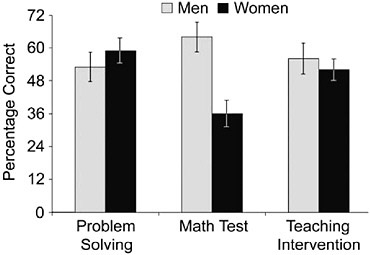 FIGURE B2-4 Teaching about stereotype threat inoculates against its effects. ADAPTED FROM: M Johns, T Schmader, and A Martens (2005). Knowing is half the battle: Teaching stereotype threat as a means of improving women’s math performance. Psychological Science 16:175-179. reflection of their ability to do well. Under those conditions (“Teaching Intervention”), women’s performance was significantly increased and not significantly different from that of their male peers.c |
differences in test performance78 or that tests are not diagnostic of ability79 they perform just as well as men. That effect has been replicated in highly selected and less-highly selected samples of women.80
Making sex salient can further degrade women’s performance on speeded tests of mathematics. For example, women’s mathematics performance decreases as the number of men present during testing increases.81 Schmader shows that linking sex to math performance has a negative effect on performance only for women who have a high level of gender identity and only if test performance is linked to sex.82 Additionally, women with stronger gender identities, including those who have selected mathematics-intensive majors, hold more negative attitudes toward mathematics and identify less with mathematics.83 Notably, Asian women performed better on a mathematics test when their Asian identity was made salient but worse when their female identity was made salient.84
Quinn and Spencer find that stereotype threat exerts its effects on women’s mathematics performance by diminishing their ability to formulate problem solving strategies.85 As evidence, women underperformed compared to men on mathematics word problems but not when the problems were converted to their numerical equivalents. An analysis of the problem-solving strategies of women in high and low stereotype threat conditions revealed that women in the high-threat condition formulated fewer problem-solving strategies than women in the low-threat condition. Moreover, women in the high-threat condition were less likely than men to be able to strategize.
Davies and colleagues found that television commercials that evoked gender stereotypes caused women to underperform compared with men.86 The effect was more pronounced in women for whom the commercials resulted in greater activation of the stereotype. It is important that exposure to gender stereotypic commercials also caused women to avoid answering mathematics questions in favor of verbal questions on a subsequent aptitude test. A control group of women exposed to gender-neutral commercials, like men, attempted to answer more mathematics than verbal questions.
The negative effect of stereotype threat on women is not limited to mathematics performance. Women exposed to gender stereotypic commercials expressed less interest in academic and vocational domains in which they risked being negatively stereotyped, such as mathematics and engineering; they expressed more interest in neutral domains, such as creative writing and linguistics. Kray and colleagues showed that women’s ability to negotiate was undermined by stereotype threat.87 When participants were told that a test was diagnostic of negotiating ability, men expected to perform better and made more extreme opening offers than women. When traits that are stereotypical of men were experimentally linked to effective negotiators and traits that are stereotypical of women were linked to ineffective negotiators, men performed better than women in negotiations. Taken together, the findings show that activation of negative stereotypes can have a detrimental effect on women’s interest and performance in domains relevant to success in academic science and engineering.
CONCLUSION
The present situation of women in scientific and engineering professions clearly results from the interplay of many individual, institutional, social, and cultural factors. Research shows that the measured cognitive and performance differences between men and women are small and in many cases nonexistent. There is no demonstrated connection between these small differences and performance or success in science and engineering professions. Furthermore, measurements of mathematics- and science-related skills are strongly affected by cultural factors, and the effects of these factors can be eliminated by appropriate mitigation strategies, such as those used to reduce the effects of stereotype threat.
Because sex differences in cognitive and neurological functions do not account for women’s underrepresentation in academic science and engineering, efforts to maximize the potential of the best scientists and engineers should focus on understanding and mitigating cultural biases and institutional structures that affect the participation of women. These issues and successful strategies to enhance the recruitment and retention of women in science and engineering are discussed in the following chapters.


