
10
Options for Acquiring New Polar Icebreaking Services
The previous chapter has identified U.S. polar icebreaking needs and gaps—that is, unmet needs in the short and long terms given the current, operational U.S. polar icebreaker fleet. In this chapter, the committee analyzes options for addressing these gaps (i.e., for meeting the nation’s current and future polar icebreaking needs). The acquisition of new polar icebreaker services—acceptably crewed and operated ships—could be accomplished through a number of acquisition options or a combination of these options. Ultimately, the choice of an acquisition strategy is dependent on the expected employment of the new polar icebreaking capability. There is a range of possible employment goals: at one end of the spectrum is purely Arctic and Antarctic scientific research support; the other end of the spectrum is having a true “national asset” capable of accomplishing the full range of U.S. Coast Guard mission requirements and protecting U.S. national interests.
As identified in the previous chapter, the main gaps are the following:
-
Ability to reliably perform the McMurdo break-in (reliable control);
-
U.S. Coast Guard missions in the Arctic; and
-
Assured access to ice-covered seas independent of ice conditions.
OPTIONS FOR MEETING GAPS IN U.S. POLAR ICEBREAKING CAPABILITIES
The committee evaluated a multiplicity of approaches to meeting the gaps in U.S. polar icebreaking capabilities. To structure its considerations, the committee considered three key dimensions: (1) ownership, (2) crewing, and (3) vessel procurement. Four options in each dimension, are
TABLE 10.1 Options for Addressing Gaps in U.S. Polar Icebreaking Capabilities
|
Dimension |
Options |
|||
|
Ownership |
Commercial charter |
Commercial long-term lease |
Foreign government |
U.S. government owned |
|
Crewing |
U.S. Coast Guard |
Military Sealift Command operated |
Commercially operated— U.S. flagged and crewed |
Commercially operated—foreign flagged and crewed New construction of polar icebreaker |
|
Vessel procurement |
SLEPa of an existing Polar class icebreaker |
Enhanced short-term (4 to 8 years) maintenance for a Polar class icebreaker for near-term service (e.g., POLAR SEA) |
Purchase and rebuild an existing icebreaker |
|
|
aService life extension program |
||||
summarized in Table 10.1. Combining one option from each dimension describes the acquisition and the operation of one ship. “Ownership” was found to be the dominant dimension, partly because it determines much about funding vehicles, crewing, and operation of the ships. First, the crewing and the procurement options are discussed. Later, ownership options are evaluated (related to a single ship) against each of the four identified gaps. Then (multiship) fleet constitution is considered.
Crewing options are heavily driven by the vessel’s ownership. For example, a foreign government-owned icebreaker crew would be selected and trained by the foreign government. A commercial operator would flag the ship and hire the crew. Commercial lease terms can require the ship to be U.S. flagged and the crew to be from the United States. Government-owned vessels can be crewed by either the U.S. Coast Guard or civilian mariners hired by the U.S. Military Sealift Command (MSC), and through different crewing schedules and modernized technologies, crew sizes may be reduced, thereby reducing costs. Alternative crew sizing options are discussed in detail later in this chapter. Briefly, a civilian crew may number much less than a U.S. Coast Guard crew; however, market conditions indicate that for each U.S. Coast Guard crewmember, the commercial operator (or MSC) would need to hire two mariners. Committee estimates show that total crewing costs are not appreciably different— no more than 10-15 percent in lifetime operational costs.
The scientific community has long and successful experience with civilian crews (i.e., on the PALMER and GOULD), including the advantages attendant on long-term retention of officers and crew with experience. The success of the U.S. Coast Guard Arctic marine science support with the HEALY demonstrates that this option—where crewmembers rotate more frequently—can be satisfactory as well.
In considering vessel procurement, ownership decisions admit or preclude some procurement options. The desired duration of vessel service life is another important influence. One option is a service life extension program (SLEP). As discussed in detail in Chapter 6, the life of the hull and basic structure of a ship is extended by replacing the mechanical, electrical, propulsion, waste, and other systems and likely rebuilding the spaces and, of course, reoutfitting them. The lifetime of the refitted (SLEP) ship will likely be less than that of a new ship. Incorporation of new technologies may be limited, and no new hull design is possible. The U.S. government could “SLEP” either the POLAR SEA or the POLAR STAR. A commercial company could buy an existing hull and do the same. There do not appear to be any Polar class icebreaker hulls on the market. It is also possible that a U.S. Polar class ship could be transferred to commercial ownership and then undergo a service life extension. Mariners on the committee advise, however, that a ship with life extension may be mission capable only about half as long as a newly constructed ship.
New construction—whether by the U.S. government or by a commercial company—is an option that would allow the incorporation of new technology. Chapter 6 discusses the many new, attractive, and high-performance technologies available, including the double-acting hull design.
The option of “enhanced short-term maintenance” is being exercised. In 2006, the POLAR SEA was in dry dock and interim maintenance was performed so that the ship would be mission capable for the short term (i.e., three to five years. It is the POLAR SEA that will do the 2007 McMurdo break-in, likely with assistance. This maintenance of the POLAR SEA is crucial to having polar icebreaker capability for the next several years while the nation takes action for the long term, should it choose to do so.
In the following material, the committee considers the ownership dimension with respect to each of the three identified gaps.
Assured Access to Ice-Covered Seas Independent of Ice Conditions
A basic tenet of national security, homeland security, and projection of U.S. power worldwide is assured access to all regions of the globe. In the polar regions this is manifested in a need to be able to place U.S. assets in all ice-covered waters. It is the judgment of the committee that this need can be only fulfilled partially by airborne, spaceborne, and submarine assets and that a physical surface presence is necessitated by geopolitics. The nation needs to maintain a national capability to break heavy multiyear ice in the polar regions.
The highest-priority need in the south is to support annual resupply of McMurdo Station, the hub and lifeline of U.S. operations in Antarctica. A corollary benefit could be the provision of scientific access to the ice-covered waters of Antarctica and the Southern Ocean if the ship is outfitted to support scientific research, but this is not a primary driver in justifying such capabilities. The committee reiterates that the solution could be a U.S. government ship or a long-term leased vessel, but the solution must be long term.
In the north, the need for access is multifaceted and spans many national interests including defense, economic development, scientific research, and environmental protection. The committee concluded that national interests in the north were inadequately met by the current icebreaker fleet and that the growing national interests in the north would increase the need for such capabilities in the foreseeable future. The committee also concluded that current U.S. Coast Guard activities were insufficient to achieve its missions in the Arctic and that this was due to insufficient funding for operations, rather than a lack of urgency. The U.S. Coast Guard has ceased regular patrols in the Arctic. The committee believes that changes in the Arctic necessitate reinstatement of these patrols. The current status of icebreaking assets, however, compromises the national ability to be responsive to these needs.
In addition to the basic requirement for access, in the next decade there may be a need to collect geophysical surveys and core data to support U.S. sovereignty and territorial claims in the Arctic Ocean under the United Nations Convention on the Law of the Sea (UNCLOS) and to refute the claims of other nations. In some cases, this may require ship access to the central Arctic Ocean. This need could be met by a U.S. commercially operated ship, and possibly by a foreign-owned ship, with appropriate contracts and monitoring in place, or by a U.S. government ship with suitable instrumentation. Many groundbreaking research issues in the north will require regular access to the central Arctic Ocean and the underlying sedimentary records of past climate and geological evolution.
For the purpose of science support alone, all four ownership options are acceptable. U.S. government ownership and operation provides the highest surety of U.S. access to Arctic waters. Commercial long-term lease of a U.S. icebreaker can also provide a degree of surety of access. However, the committee believes that commercial U.S. flag presence is significantly less than that provided by a government-owned ship.
The overarching need for assured access in support of U.S. national interests implies that the best form of official U.S. presence in the Arctic is uniformed military service, the U.S. Coast Guard. By this logic, U.S. government-owned and operated icebreaker capabilities are essential for supporting northern sovereignty and presence. Access to many parts of the Arctic requires significant polar icebreaking capabilities. To “ensure” access, a single vessel is inadequate since there would be no redundancy in capability and this raises the specter that a single ship in distress would have no U.S.-controlled alternatives for assistance. Also, there may be multiple, simultaneous demands for icebreaker presence in the Arctic.
Assets Necessary to Fulfill U.S. Coast Guard Missions in the Arctic
Options to address U.S. Coast Guard mission areas are limited. The ship must be government owned and operated to address sovereignty issues along with the full range of U.S. Coast Guard missions that would include law enforcement and national security interdiction operations. The most flexible option, as in other areas of national maritime interest, is that crews be trained and provided by the U.S. Coast Guard. A fully mission-capable trained Coast Guard crew is the preferred option to provide the most flexibility and to facilitate operations in remote areas. In theory, civilian mariner crews could be provided by the U.S. Military Sealift Command, with a U.S. Coast Guard detachment aboard in addition to the crew to address specific U.S. Coast Guard mission area requirements, although this operating model has never been implemented for multiple-mission operations. Vessel procurement could include a range of options: new construction, SLEP of an existing government-owned icebreaker, or SLEP of another existing polar icebreaker. As noted elsewhere in this report, new construction is most desirable from the perspective of both reliability and incorporating the newest and best available technology.
Assets to Reliably Perform the McMurdo Break-In (Reliable Control)
National presence is asserted mainly by the presence of U.S. citizens year-round in the three permanent stations. Today, U.S. presence in two of those stations relies substantially on an assured ability to break in to McMurdo Station on an annual basis. An icebreaker for the McMurdo resupply can be obtained commercially in several ways. The most likely commercial vehicles are (1) outright ownership (e.g., construct a new ship or purchase an existing ship outright); (2) long-term charters (e.g., leasing, possibly lease-build); (3) short-term charters (one month to several years); or (4) performance service contract (e.g., contract specifies the result of the charter with performance guarantees—break a path into McMurdo Station and escort the cargo vessels to the terminal). Charters can be bareboat (i.e., the charterer provides crew and all operating expenses), term charter (i.e., owner provides crewed ship for a specified period of time, and charterer pays for fuel and port costs directly), or spot charter (i.e., owner provides crewed vessel and fuel, and charterer pays an all-in fee for a specific defined service).
For the past couple of seasons the National Science Foundation (NSF) has used the commercial charter vehicle. The NSF chartered the Russian icebreaker KRASIN from the privately owned Far Eastern Shipping Company. However, when difficulties arose, NSF had military assets to call on—first the Navy diving and salvage team that sought to make emergency propeller blade repairs to the KRASIN, and then the U.S. Coast Guard cutter POLAR STAR, which by arrangement was standing by. At 36,000 horsepower the KRASIN is more powerful than the HEALY (30,000 horsepower), but significantly less powerful than the POLAR SEA and POLAR STAR (60,000 horsepower).
The Far Eastern Shipping Company (FESCO) has advised NSF that the KRASIN is not available for the 2007 resupply because she is on charter to an oil company for offshore Arctic oil development. Discussions with shipbrokers indicate that there are virtually no commercial icebreakers available for charter. The oil companies have been actively looking for icebreakers to support offshore Arctic oil projects. Other Russian icebreakers are used for North Pole tourist cruises and domestic icebreaking services.
Besides the U.S. icebreakers, only the Russians have icebreakers of greater than 30,000 horsepower. Large Russian nuclear icebreakers (75,000 horsepower) are actively used in the Arctic for navigation and commercial purposes. The Russian icebreakers are reported to have cooling system limitations that preclude them from crossing through the
warm tropic waters to reach the Antarctic. It is also problematic to introduce nuclear ships into pristine Antarctic waters.
In the case of a long-term commercial lease or charter, a private operator would build and own the icebreaker that is chartered long term to NSF for use in the McMurdo resupply. There are regulatory issues relating to long-term charters to a government agency (e.g., the 1984 Tax Act and other lease financing issues). Service contracts have been used to bypass the lease financing issues. For example, NSF has procured the use of the PALMER and the GOULD, privately owned ships, through a service contract with Raytheon, which charters the PALMER from her owner, Edison Chouest Offshore.
U.S. Antarctic marine research is at present supported primarily by the two United States Antarctic Program (USAP) Antarctic research vessels PALMER and GOULD, with some research carried out from UNOLS research vessels, international programs on foreign research vessels, and a small amount of ship-of-opportunity research carried out on U.S. Coast Guard icebreakers when used to support the break-in. However, there is a demand for both increased scientific capabilities (beyond those of the PALMER) and increased icebreaking capacity to support the scientific community. The need for increased icebreaking capability would likely be provided by the conceptual PALMER Replacement Vessel (PRV) with “polar” icebreaking capability; hence the PRV falls under the scope of the committee’s discussions.
There is a desire in the scientific community to conduct research in Antarctic waters that the PALMER cannot reach, due to icebreaking limitations of that ship. The current Polar class ships are not designed or equipped to conduct this research due to hull configurations that do not permit the mounting of some types of sensor systems. There has been community discussion of new construction of a PRV. It would have increased icebreaking capability, compared to the existing PALMER. If it was sufficiently capable, then the PRV could assist a heavier Polar class vessel in the break-in to McMurdo in years where heavy ice was in the sound.
The committee believes that a commercial long-term lease approach would most likely involve the construction of a new icebreaker, and unless there were other assured clients, the NSF would be billed at rates that would pay for construction, for the cost of capital, and for operations over the term of the lease. Long-term lease is a viable approach; however, the need for reliable control eliminates short-term charter as an option.
Another ownership option is to lease the icebreaker ship, or icebreaking service, from a foreign government on a long-term basis. A variant is to create a long-term partnership where part or all payment could be in trade (i.e., use of assets commanded by NSF). NSF is considering the use of the ODEN in the next McMurdo resupply operations. Operated by the Swedish Maritime Administration, the ODEN has a displacement of 11,000 to 13,000 tons and 24,500 horsepower. However, the McMurdo resupply must be done during late January-early February, which is the time of year that the Swedish- and Finnish-owned icebreakers are most needed in their home waters.
Japan, Germany, Netherlands, and Argentina each own single icebreakers that are used for polar research, offshore support, and/or Antarctic logistics. These vessels are all actively employed in their own national polar missions. It is not clear that any of these icebreakers are available for use in the McMurdo break-in, nor are they powerful enough to perform the break-in alone. It is possible that a new icebreaker could be constructed for a consortium of nations that could be used for the McMurdo resupply. For example, the European Union has been working on a plan to build an icebreaker, AURORA BOREALIS, for use by its member nations. It is also conceivable that the United States could enter into joint ownership with another government (e.g., Australia or any of numerous other countries). However, no other nations require a Polar class ship for their resupply, although they may wish to perform research in heavy ice conditions.
The last ownership option is a U.S. government-owned icebreaker. At present, the U.S. government owns and operates, through the U.S. Coast Guard, the current fleet of two operational polar icebreakers, the POLAR SEA and the HEALY. Building new polar icebreakers would address not just the McMurdo break-in mission, but all others.
Multimission Ships
The committee’s analysis considered needs, gaps, and options individually, but this is not sufficient. The United States has had a multimission fleet of icebreakers in the past and has gained greatly by fulfilling multiple missions on the same cruise, by deploying icebreaking ships in concert, by placing ships in complementary locations in certain situations, and by trading icebreaking services with other nations. The nation has also benefited from redundancy and backup in having a fleet of multiple ships. In a few years, the only remaining operational ship will be the HEALY. In national security situations and in dire safety situations, the nation needs to be able to call on residual capability.
When considering the acquisition of new icebreaking services or capabilities, the issue must be dealt with at a national level—at the level of a fleet, not one ship at a time. If the nation pays for military icebreakers and separately and independently for civilian agency-procured services, then the overall cost will likely be greater than if there is a coordinated approach. If icebreakers are owned and operated independently by different agencies, redundancy and backup options are likely foreclosed or at least reduced.
Potential Operational Profiles for Multimission Ships
Table 10.2 provides a general overview of how a renewed polar icebreaker fleet might be employed operationally in support of U.S. interests in both polar regions. Clearly,
TABLE 10.2 Nominal Operational Profiles for a Renewed Polar Icebreaker Fleet
|
Icebreaker |
Anticipated Tasking |
|
HEALY |
All seasons: Research support in the western Arctic (Bering, Chukchi, and Beaufort Seas); eastern Arctic (Baffin Bay, Greenland Sea, and contiguous waters); central Arctic Basin (multiship operations);participation in international expeditions and cruises; maintenance in homeport scheduled between missions |
|
New Icebreaker No. 1 |
March-June and September-December (shoulder seasons): Patrol presence in Bering, Chukchi, and Beaufort Seas for search and rescue, law enforcement, environmental protection and response, vessel assistance, science of opportunity, and maritime safety and security Other months: Arctic logistics, science, or other missions as needed; maintenance in homeport |
|
New Icebreaker No. 2 |
November-April: McMurdo break-in as primary or secondary icebreaker; Antarctic Treaty inspections and enforcement, logistics, and science support (e.g., dual ship operations with PALMER) May-October: Arctic logistics, science, or other missions as needed; maintenance in homeport |
|
PALMER and PRV |
All seasons: Research support in waters surrounding Antarctica; maintenance scheduled between missions |
it is impossible to forecast precisely how trends in the Arctic and Antarctic would require icebreaker support. However, the table shows how restoration of U.S. icebreaking capability might provide a flexible, active, and influential presence in both polar regions. The committee anticipates that the HEALY would be dedicated to research support in the Arctic and would undergo maintenance in its homeport between missions. Similarly, the PALMER or PRV would be dedicated to supporting scientific research in the Southern Ocean. The first new polar icebreaker could operate in the Arctic during the “shoulder seasons” between March and June and September and December. This ship could provide a patrol presence in the Bering, Chukchi, and Beaufort Seas, as well as support search and rescue, law enforcement, environmental protection and response, vessel assistance, science of opportunity, and maritime safety and security. In the other months, this ship could be used to support Arctic logistics, science, or other missions and undergo maintenance in its homeport as needed. The second new polar icebreaker could be tasked to support operations in the Antarctic from November to April. This ship may be used from November to April as the primary or secondary icebreaker in the McMurdo break-in, to support Antarctic Treaty inspections, and to provide logistics and science support alone or with the PALMER. From May to October the second icebreaker can be used to support Arctic logistics, science, or other missions as needed or can undergo maintenance in its homeport.
SHIP RENEWAL AND TRANSITION SCHEDULE
Today, the United States has inadequate icebreaking capability. In this section the committee discusses reconstituting a fleet. The committee assumes that two new polar ships will be built by the U.S. Coast Guard and delivered in 2014 and 2015. This is an ambitious schedule, but as a nation we are so late in recognizing the age and condition of the polar icebreaker fleet that we must act with speed and determination. The committee acknowledges that this transition may have to be sustained for a longer time and assumes that the HEALY will need a mid-life upgrade in about 12 years. It also assumes that NSF will extend the life of the existing PALMER or replace it. This would be an increase in icebreaking capability (for McMurdo resupply) only if the PRV were a Polar class icebreaker.
A key element of this schedule is to maintain one U.S. Coast Guard polar ship, the POLAR SEA, as the interim capability, with the POLAR STAR in layup (at the pier in Seattle) as an emergency backup if the POLAR SEA cannot be maintained as operational. The committee recognizes that it would take almost a year to bring the POLAR STAR back to operational status, even on an emergency upgrade schedule. U.S. icebreaking capability will not become adequate until the first new polar ship comes into service. This is a situation that the United States has created by previous inaction. The committee advises that it will be more effective to make arrangements with other nations or commercial firms to augment the shortfall in capability in the short term, rather than bring both existing Polar class ships to operational status. Emphasis should be to build new ships, rather than upgrade existing ships for short-term service.
There are two strategies available to keep the POLAR SEA operational through 2014 and in layup status to 2019 as an emergency backup to the new polar vessels and possibly the HEALY mid-life upgrade. Both strategies rely on the fact that POLAR SEA received significant maintenance and upgrade work at a cost of $30 million in 2006.
In one strategy, the POLAR SEA would be upgraded a second time in 2012 at a cost of approximately $40 million. POLAR SEA upgrades would include the following:
-
Maintenance and repair upgrades to the engine and propulsion systems
-
Upgrades to the black and gray water systems
-
Replacement of the cranes
-
Replacement or upgrades of boilers and evaporators
-
Replacement of the navigation and electronic systems
-
Upgrades to controllable pitch propeller systems and hydraulic control
-
Science laboratory upgrades (test laboratories, controlled environment laboratories, staging bays)
-
Habitation spaces and systems for crew and scientists
If the POLAR SEA is out of service for a full year before the first newly constructed ship is available, the U.S. Coast Guard and the NSF would have to provide some alternative plan for McMurdo break-in. Note that only the HEALY would be available for tasking in the Arctic during the POLAR SEA upgrade and before delivery of the first new polar U.S. Coast Guard ship.
The second strategy would place the POLAR SEA in an enhanced maintenance program, with annual upgrades designed to allow the ship to operate every year and not be taken out of service for an entire year (approximately 2012) for its second major upgrade. The U.S. Coast Guard would have to determine if this second strategy could be made to work. In particular, is there an annual maintenance program that incrementally makes the needed improvements to the ship’s operating systems without placing the ship in dry dock for an extended period? This option involves additional risks to vessel service and necessitates careful development of an enhanced maintenance and repair program. The POLAR SEA must be in service for operations throughout the construction of the two new polar vessels, the last of which is to be completed and commissioned in 2016. At that point, the POLAR SEA will be placed in emergency backup status, to be available in the event of a decision to execute a mid-life upgrade of the HEALY in 2018 and 2019. The POLAR SEA can then be decommissioned in 2020.
The POLAR STAR needs to be available as a backup throughout the construction of the two new polar vessels. The two new polar vessels could begin construction in 2010 and 2011 and be in service in 2014 and 2015. The POLAR STAR can only be decommissioned when both new polar vessels are in service—that is after 2015. If the POLAR SEA must be taken out of service, the POLAR STAR may have to be activated to augment the HEALY. The schedule is shown graphically in Figure 10.1.
OPTIONS FOR POLAR ICEBREAKER CREWING
Operation and Crewing of Current World Icebreakers
Polar icebreakers currently in service throughout the world reflect a variety of design criteria, ownership structures, and operating and crewing models. Although a more common factor in the mid-twentieth century, few modern icebreakers have been designed to military standards. Of ships currently in service, only the Canadian LOUIS ST. LAURENT and the POLAR STAR and POLAR SEA in the U.S. fleet, all designed in the 1960s, could be considered to meet military standards to some extent, and none of these were designed as combatant warships. Although the HEALY can accommodate some limited military capabilities such as communications, the ship was basically designed to commercial standards.
Most polar icebreaker fleets today are owned by governments and operated directly by government agencies. Examples include the Canadian icebreaker fleet, the German research icebreaker POLARSTERN, and the Japanese icebreaker SHIRASE. Those large icebreakers, ostensibly operated by commercial entities, are in most cases part of state-owned companies (e.g., Murmansk Shipping and FESCO in Russia) or are operated by private enterprises on exclusive long-term charter to government agencies (e.g., PALMER for the U.S. National Science Foundation). Renewed interest in oil and gas exploration in Arctic and sub-Arctic areas has resulted in a number of truly commercial icebreaking ships, such as the Dutch KIGORIA and chartered icebreakers supporting Sea of Okhotsk oil development.
Table 10.3 provides information concerning the ownership, operating model, and crewing of polar icebreaking vessels currently in service around the world.
Past and Current Crewing Models
As indicated in Table 10.3, icebreaker crewing models include civilian mariners employed in accordance with commercial standards, government service civilian employees, and military personnel. Logically, these crewing choices for the wide range of icebreakers around the world are based on the following:
-
Icebreaker missions and employment: extent, complexity, and area of operations; and
-
Specific ship characteristics: size, complexity, age, and level of technology used in shipboard systems.
A survey of icebreakers around the world indicates that ships employed in commercial activities (e.g., Netherlands vessels) or purely for research (AURORA AUSTRALIS, PALMER) tend to be crewed in accordance with commercial standards. Icebreakers with more extensive multimission roles, particularly those representing national interests in the polar regions, have crews comprising government employees or military personnel (Canada, United States, Argentina).
Most polar icebreakers operate almost exclusively in only one of the polar regions: AURORA AUSTRALIS, ALMIRANTE IRIZAR, SHIRASE, and PALMER are almost exclusively Antarctic ships (although PALMER has
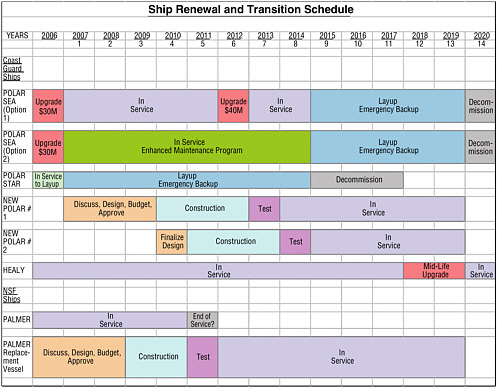
TABLE 10.3 International Polar Icebreaker Ownership, Operation, and Crewing
|
Country Icebreaker(s) |
Ownership Structure |
Operating Entity |
Crew |
Usage |
|
Canada |
Government |
Canadian Coast Guard |
Civilian government employees |
Logistics, escort, research, national presence |
|
Australia—AURORA AUSTRALIS |
Private—P&O Polar; part-year charter to government |
Private—P&O Polar; partial-year charter to government |
Civilian P&O employees |
Logistics, research |
|
Japan—SHIRASE |
Government |
Japanese Maritime Self Defense Force (MSDF) |
Military—MSDF (Navy) |
Research, logistics |
|
Russia |
Government |
Private—FESCO, Murmansk Shipping Co. |
Civilian—FESCO, Murmansk Shipping Co. |
Logistics, escort, tourism |
|
Sweden—ODEN |
Government |
Swedish Maritime Administration |
Civilian government employees |
Escort, research |
|
Finland |
Government |
Finnish Maritime Administration |
Civilian government employees |
Escort, oil and gas service |
|
Norway— SVALBARD |
Government |
Norwegian Navy/Coast Guard |
Military—Navy |
Patrol, national presence |
|
Argentina— ALMIRANTE IRIZAR |
Government |
Argentine Navy |
Military—Navy |
Logistics, research, national presence |
|
Germany— POLARSTERN |
Government |
Government—Alfred Wegener Institute |
Civilian |
Research, logistics |
|
Netherlands—SMIT SAKHALIN, SMIT SEBU |
Private |
Private—Smit Internationale NV |
Civilian—commercial |
Oil service |
|
U.S.—PALMER |
Private—Edison Chouest Offshore (ECO) |
Private—ECO; exclusive charter to U.S. Antarctic Program |
Civilian—ECO employees |
Research |
|
U.S.—POLAR STAR, POLAR SEA, HEALY |
Government |
U. S. Coast Guard |
Military—USCG |
Logistics, escort, research, national presence |
conducted one Arctic cruise). The Canadian, Russian, and Finnish fleets, and ODEN and SVALBARD, operate only in the Arctic, the exception being two Russian nonnuclear ice-breakers that conduct Antarctic tourist cruises and KRASIN’s logistics and escort deployments to McMurdo Sound in 2005 and 2006. The only icebreakers with regular operations in both polar regions are the U.S. polar fleet and POLARSTERN.
The other major basis for crewing—individual ship characteristics—also varies widely. In the United States, the modern icebreaker era began with World War II. Three generations of polar icebreaking ships have been developed in this country, beginning with the Wind class and GLACIER (1940s to 1954), the Polar class (early 1970s) and HEALY (2000). Each generation has been characterized by increases in ship size and complexity, increasingly sophisticated labor-saving technology, and steadily decreasing crew sizes. Less obviously, the operational effectiveness of individual ships has grown, permitting a substantial reduction in fleet size. U.S. polar icebreakers in service decreased from eight in the late 1960s to five once the polar class ships were fully operational.
The Wind class icebreakers and GLACIER featured crews of about 180 and 200, respectively, for postwar operations. Excluding training billets and marine science personnel, the far more capable Polar class vessels each have crews
TABLE 10.4 Comparison of Current Polar Icebreaker Crewing
|
Personnel |
Polars— USCG |
HEALY— USCG |
Polars— MSC Crewa |
N. B. PALMERb |
CCGS ST. LAURENT |
|
Deck—officers |
8 |
5 |
5 |
4 |
4c |
|
Deck—enlisted or unlicensed |
39d |
15d |
13 |
7 |
9e |
|
Engineering—officers |
5 |
3 |
9 |
4 |
5f |
|
Engineering—enlisted/unlicensed |
49d |
27d |
15 |
4 |
10 |
|
Communications, information technology |
6 |
2 |
1 |
|
|
|
Supply and administration |
10 |
7g |
1 |
|
3h |
|
Food servicei |
9 |
6 |
12 |
2 |
5j |
|
Medical |
1 |
2 |
1 |
|
1k |
|
Ice pilots |
|
|
2 |
|
1k |
|
Totals |
127 |
67 |
59 |
21m |
38-44n |
|
Marine science support |
5 |
4 |
6-12c |
|
|
|
Aviation personnelo |
5-14p |
5-8p |
TBD |
? |
2q |
|
Science berths (no science suppt) |
24 |
51 |
TBD |
27-33c |
35-40 |
|
Year in service |
1976-77 |
2000 |
1976-77 |
1992 |
1969 |
|
Mission scope |
Multiple |
Multiple |
Logistics |
Science |
Multiple |
|
Shaft horsepower |
60,000 |
30,000 |
60,000 |
12,700 |
30,000 |
|
Displacement |
13,500 |
17,500 |
13,500 |
|
|
|
Icebreaking |
6+ ft |
4.5+ ft |
6+ ft |
3 ft |
|
|
Helicopters |
2 hangared |
2 hangared |
2 hangared |
1 on deck |
2 hangared |
|
aAs briefed to USCG, February 2006; numbers reflect full operating staffing (FOS). bInformation provided by NSF, January 2006. c33 total science party berths are available, split between scientists and science support personnel appropriate to the particular cruise. dUnder U.S. Coast Guard staffing procedures, senior enlisted personnel perform civilian licensed officer deck and engineering functions, such as watchkeeping. eA Third Officer may be added based on program requirements bringing the complement to 5. fA Carpenter and/or Seaman may be added based on program requirements bringing the complement to 10 or 11. gIncludes shoreside supply personnel. hA Third Engineer may be added based on program requirements bringing the complement to 6. iAdditional galley staff (assistant cooks and stewards) may be required based on the number of scientific staff carried. jIncludes one logistics officer and two storekeepers kAn Assistant Cook and/or additional Steward may be added based on program requirements bringing the complement to 6 or 7. lMedical Officer carried for Arctic Operations only. mInformation from NSF indicates Palmer “typically sails with 21-25 people” in the operating crew. nEnvironment Canada Ice Observer carried to monitor, report and provide advice on ice conditions (not considered an ice pilot). oOne helicopter pilot and one helicopter engineer carried during operational periods. pReflects civilian aircraft at lower range; U.S. Coast Guard aircraft staffing at higher range. qComplement may increase, as detailed above, based on program requirements. |
|||||
of 127. HEALY, the most technologically sophisticated U.S. research vessel and a U.S. Coast Guard ship, is currently operated with a crew of 67 (again, excluding training billets and marine science techs). This trend in icebreaker crewing is also reflected by other U.S. Coast Guard ship acquisitions: the new high-endurance patrol cutter, larger and more capable with a crew of 108, will replace older vessels with crews of 167; and the new large Great Lakes icebreaker will service heavy aids to navigation in addition to winter icebreaking, with a crew of 54 versus 75 for her predecessor.
The trend in U.S. Coast Guard crewing clearly leans toward leveraging available technology, both to reduce crew sizes and to increase operational effectiveness. Recent practice in other maritime sectors—commercial and nonmilitary government vessels—mirrors this trend. Table 10.4 provides a crewing comparison of U.S. and Canadian polar icebreakers, including the preliminary results of an MSC feasibility study of civilian crewing for the Polar class icebreakers.1
The large crews on the Polar class ships result primarily from a complex, 1960s-era gas turbine and diesel electric engineering plant that requires a large number of man-hours under way for routine maintenance, repair, and monitoring. Although the engineering control and monitoring system was
updated with additional sensors and control features in the mid-1990s, the plant still requires significant human manipulation. The reliability of machinery and systems has decreased with age, more than offsetting any labor-saving benefits of the new control system. Navigation and ship control is also based largely on traditional manual methods; modern integrated bridge technology would require a major retrofit. The same issues apply to deck and aviation equipment and evolutions. The crews of the Polar class ships also reflect on-the-job training of entry-level personnel—a method that fits well with the need for ample amounts of relatively unskilled maintenance, navigation, deck, and emergency systems man-hours. Also, of course, larger crews increase the need for food service, cleaning, and administrative man-hours—all of which are suboptimized by obsolete storage and space configuration and manual support systems.
The HEALY design addressed and improved all of the Polar class issues discussed above. Most notable is a far simpler engineering plan: 5 diesel engines and 2 propulsion motors in lieu of 10 diesels, 3 gas turbines, 3 large reduction gears, and 3 motors aboard each Polar class ship. The engineering control and monitoring system reflects a generational leap in sensor and information technology. The maintenance philosophy was largely shifted from labor-intensive preventive procedures to condition-based monitoring, trend analysis, and real-time technical troubleshooting from ashore. Smoke, fire, and flooding sensors are numerous, centrally monitored, and backed by CO2 flooding and water sprinklers. An integrated bridge system permits safe navigation by two watchstanders, and major deck and aviation evolutions can be conducted with far fewer people. Improvements in storeroom and food-service spaces also save man-hours.
It should be noted that crewing of the POLAR SEA, POLAR STAR, and HEALY reflects training and readiness to prosecute the full range of U.S. Coast Guard missions. The Military Sealift Command study primarily addresses the McMurdo break-in.
Canadian icebreaker development began shortly after the World War II with the construction of LABRADOR, a Navy-manned icebreaker based loosely on the U.S. Wind class design. By 1965, all icebreaker operations were assumed by the Canadian Coast Guard, which uses civilian government employees to operate its vessels. Canadian icebreakers assist with shipping in the Great Lakes, St. Lawrence River, and Gulf of St. Lawrence in winter, and operate in the Canadian Arctic during the summer and fall to support research and facilitate the resupply of remote communities and bases. Although Canada has not armed its icebreakers, recent security concerns have elicited discussion that new armed icebreakers may be considered and that Canadian icebreakers might carry weapons and naval detachments (Auld, 2006). The largest Canadian icebreaker, LOUIS ST. LAURENT, entered service in 1969 but was lengthened, reengined, and substantially refurbished in 1993.
Crewing Alternatives for a New Icebreaker
Because crew composition and size flow naturally from the mission and characteristics of a particular ship design, it is difficult to develop crewing alternatives without detailed information about a new icebreaker. Evolving crewing standards and technology complicate the issue. However, a review of rough order-of-magnitude projections, based on conceptual characteristics of a prospective new icebreaker, can help illuminate the policy choices. Accordingly, civilian and Coast Guard crew projections for future new construction, or complete refurbishment of a Polar class hull, were developed.
This “nominal” new icebreaker would be able to operate independently in either or both polar regions; be capable of conducting the McMurdo resupply alone in all but the most adverse conditions; and be capable of operating in the high Arctic in summer and in lesser Arctic ice conditions in other seasons. The following assumptions were used as a basis for developing potential crewing models:
-
An operating profile of approximately 300 days per year, which includes days under way and working port calls;
-
Import maintenance, sustainment, and preparation activities of about 65 days per year, requiring full crew availability for maintenance, supervision of contract work, gear on-load and off-load, and other cruise preparations;
-
Current proven technology installed: engineering monitoring and control systems, integrated bridge system, centrally monitored smoke, fire, and flooding alarms, et cetera;
-
An integrated electric power plant for propulsion and hotel services; shaft horsepower between HEALY and POLAR STAR and POLAR SEA (30,000-60,000).
-
Design to incorporate labor-saving features extensively;
-
Sailing crew able to operate up to four months continuously and provide support to science parties, passengers, and other mission-related personnel numbering up to 60 people;
-
Ship capable of round-the-clock operations for most missions—maximum 12-hour workday while under way;
-
No major weapon systems installed, but capable of carrying small arms and machine guns; and
-
Crewmembers would be U.S. citizens.
Based on these assumptions, Table 10.5 provides a breakdown of prospective Coast Guard and civilian crewing models.
The Coast Guard crew is based on the personnel allowance for HEALY, projected to a new design that would incorporate features and “lessons learned” to provide additional crewing efficiencies. The detailed crewing proposal was reviewed for feasibility and critiqued by the commanding officer and other experienced officers currently serving on the HEALY, but has not been officially reviewed or approved by the U.S. Coast Guard.
TABLE 10.5 New Icebreaker Crewing Alternatives
|
|
U.S. Coast Guard |
Civilian |
|
|
|
Sail-away Crewa |
Total Crew |
Sail-away Crewb |
|
Deck—officers |
4-5 |
7 |
5 |
|
Deck—enlisted and unlicensed |
7-8b |
10 |
9 |
|
Engineering—officers |
2 |
3 |
6 |
|
Engineering—enlisted and unlicensed |
16-17b |
25 |
6 |
|
Communications, information technology |
2-3 |
4 |
1 |
|
Supply and administration |
2 |
3 |
|
|
Food service |
4 |
6 |
3 |
|
Medical |
1-2 |
2 |
1 |
|
Ice pilots |
|
|
|
|
Totals |
~40 |
60 |
31 |
|
Mission-related berths, passengers |
60 |
|
60 |
|
Total Berths |
100 |
|
91 |
|
aCrewmembers required for sailing; remainder of crew rotates aboard. bStandard underway manning. |
|||
The civilian crewing model is based on current commercial crewing standards, including the Delta Mariner class (highly automated with diesel Z-drive propulsion), PALMER (ice-capable Antarctic research vessel), and the MSC study for crewing the Polar class ships. The specific crew levels represent the consensus judgment of committee members with extensive experience in seagoing ships, maritime industry management, and polar icebreaking operations.
The proposed U.S. Coast Guard crew would be an independent command of 60 military members. On a rotating basis, 40 crewmembers would constitute the sailing crew while the remainder would be in homeport on leave, undergoing training, planning future deployments, and scheduling maintenance. This shoreside contingent would perform many administrative functions (e.g., parts ordering, inventory control, personnel actions, maintenance planning) that would relieve the sailing crew of significant nonoperational workload. It would provide augmented manpower for efficient in-port turnarounds. An extensive amount of crew training would be conducted during shore rotation periods, reducing the need to train under way. The concept would require five- to seven-year tour lengths for most personnel, but the ability to rotate people would ensure a balance of underway and in-port time that falls within current U.S. Coast Guard standards.
While under way, the U.S. Coast Guard crew would be capable of operating the ship and its installed winches, cranes, and boats, and supporting helicopters if carried onboard. U.S. Coast Guard marine science technicians would not be part of the permanent crew, but research could be supported with adequate science support personnel (similar to procedures used in UNOLS research vessels and PALMER). The crew would exercise the full range of U.S. Coast Guard legal authorities and respond in all U.S. Coast Guard mission areas; however, augmentation would be needed for intensive activities such as managing a major oil spill cleanup.
The civilian crew model could employ either government employees, as used by the Military Sealift Command for some naval auxiliaries and the National Oceanic and Atmospheric Administration for unlicensed shipboard personnel. Alternatively, contract mariners could be used. Government employee status would presumably afford more personnel selectivity, stability, and control over training, although these same objectives might be achieved by a long-term contract with an operating company. Clearly, however, polar icebreaking would require higher-level mariner skills, similar in concept to those needed for liquefied natural gas vessels, chemical tankers, and cable layers, and would require attention to personnel development and retention.
As with U.S. Coast Guard crewing, civilian mariners would be capable of operating the ship and its installed equipment, supporting helicopters, and conducting research with adequate support personnel. The civilian crew would lack the legal, regulatory, and use-of-force authorities of a U.S. Coast Guard-crewed vessel. With training, the icebreaker could perform basic search-and-rescue functions and assist other vessels beset or hindered by ice conditions, but it would lack the authority to order vessel movements or enforce safety and security zones. U.S. and foreign vessels could be monitored but not boarded to ascertain legitimacy or detained. Especially in Arctic operations, the civilian-crewed icebreaker would provide a significant level of capability but would constitute a less robust sovereign presence.
A possible enhancement to the civilian model would be the use of an onboard U.S. Coast Guard contingent to provide legal authorities and expertise. This alternative would be similar to U.S. Coast Guard law enforcement detachments
TABLE 10.6 New Icebreaker Crew Cost Comparison
|
|
U.S. Coast Guard Crewa |
Commercial Crewb |
|
Number of crew billets |
60 |
31 |
|
Cost per dayc |
$13,311 |
$14,314 |
|
Annual crew cost |
$4,859,000 |
$5,225,000 |
|
aCalculated using 2006 standard personnel costs (includes pay, allowances, transfer, medical, and personnel training costs), which are calculated annually for budget and management purposes. bCalculated using a representative 2006 industry standard personnel cost schedule. cAssumes crew present or available for duty 300 days per year under way and 65 days per year for in-port preparations and maintenance. |
||
(LEDETs) assigned to naval vessels for drug interdiction operations in the Caribbean and eastern Pacific Ocean. The use of LEDETs has been successful, but the concept is based on prosecuting a single highly focused mission, centrally coordinated with many other assets and intelligence sources. This focus allows the LEDETs to be trained intensively in single-mission skills, and these skills are complemented by the military expertise available in the naval unit. The LEDET model may be problematic to transfer to the role of an icebreaker operating independently in the Arctic, where the needed responses would likely arise unpredictably from a wide range of missions. It would be difficult to maintain a reasonably sized team of U.S. Coast Guard personnel, possessing the weapons qualifications and skills to conduct boardings, regulatory knowledge to make safety and security decisions, expertise in search-and-rescue planning and execution, and so forth.
Cost Comparison of Crewing Alternatives
Crew cost information is presented in Table 10.6. Total annual costs were calculated by multiplying the annual pay, allowance, medical, training and personnel support costs for each U.S. Coast Guard pay grade by the numbers in the prospective crew, and daily wage and benefit costs for each commercial grade level by the numbers in the commercial crew. Although the ship is assumed to operate 300 days per year, both U.S. Coast Guard and commercial crewmembers were assumed to be needed during in-port periods for deployment planning and preparations, maintenance and maintenance contract supervision, and training.
The numbers are inexact, of course, due to differing compensation systems, but they represent a rough comparison of the crew costs associated with differing crewing models. As Table 10.6 indicates, personnel costs for the U.S. Coast Guard and commercial models examined in this analysis are of the same magnitude.


