
2
The Restoration Plan in Context
This chapter sets the stage for the first of this committee’s biennial assessments of restoration progress in the South Florida ecosystem. It provides the background needed to understand the present state of actions undertaken to achieve restoration and the committee’s assessment of them. The chapter opens with a brief history of the South Florida ecosystem from the beginning of its environmental decline to the initiation of major restoration efforts in the early 1990s. The chapter then outlines the stated goals for the restoration, discusses the difficulties inherent in defining restoration goals, and identifies essential components of restoration. The Comprehensive Everglades Restoration Plan (CERP) is then described within the evolving context of other state and federal activities pertinent to the restoration. Because the South Florida environment also has continued to change, the chapter next summarizes changes in those aspects of the natural and human environment that have occurred in the past 10-15 years that now constrain the restoration, rendering it more difficult than initially thought.
THE SOUTH FLORIDA ECOSYSTEM’S ENVIRONMENTAL DECLINE
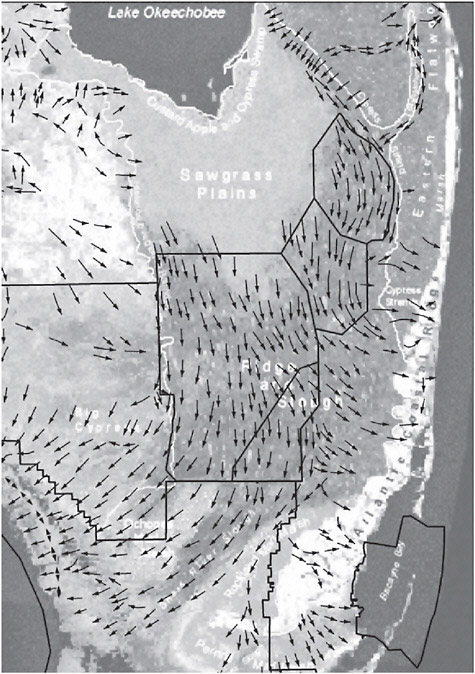
The South Florida ecosystem is a mosaic of wetlands, uplands, and coastal areas as well as developed areas that extends from the Kissimmee River basin to Florida Bay. Prior to drainage and development, the ecosystem was characterized by its large spatial extent, a diversity of habitats, and a hydrologic regime featuring dynamic (time-varying) storage of water and unconfined sheet flow over much of the ecosystem south of Lake Okeechobee (SSG, 1993). The single most distinctive hydrologic feature of the historical ecosystem was the uninterrupted slow flow of shallow water from the sawgrass plains south of Lake Okeechobee through a rich mosaic of different types of wetlands to the sea, mainly into the Gulf of Mexico (Figure 2-1).
Alteration of the natural system began on a small scale in the late 1800s, when more than 50,000 acres north and west of Lake Okeechobee were ditched, drained, cleared, and planted for agriculture (Trustees, 1881). Projects implemented between 1881 and 1894 decreased the amount of water naturally stored in the Kissimmee River watershed north of Lake Okeechobee. These projects included dredging and straightening portions of the Kissimmee River, constructing new channels in the headwaters of the Kissimmee River, and connecting Lake Okeechobee to the Caloosahatchee River. The first two projects likely increased peak flows in the Kissimmee River. The connection to the Caloosahatchee created an outlet from the lake to the Gulf of Mexico, greatly reducing natural storage within the system and the capacity of the system to maintain flows to the south during dry periods. Storage was further reduced by a second major drainage effort that occurred between 1905 and 1928 and included additional dredging of the Caloosahatchee River, establishment of a network of drainage canals within the area south of Lake Okeechobee, and construction of the St. Lucie Canal, which connected Lake Okeechobee to the Atlantic Ocean (NRC, 2005). In 1907 Governor Napoleon Bonaparte Broward created the Everglades Drainage District (Blake, 1980), and by the early 1930s, 440 miles of canals dissecting the Everglades watershed had been constructed (Lewis, 1948). Together these projects greatly enhanced the potential for desiccation of wetlands during droughts in the southern parts of the Everglades (NRC, 2005).
Changes in the physical landscape of the South Florida ecosystem accelerated when, after devastating hurricanes in 1926 and 1928, the state of Florida and the federal government joined forces in controlling flooding around Lake Okeechobee (Light and Dineen, 1994). The resulting flood-control structures gave farmers south of the lake the sense of security they needed to double sugar cane production between 1931 and 1941 (Clarke, 1977).
At least as early as the 1920s, private citizens were calling attention to the degradation of the Florida Everglades (Blake, 1980). However, by the time Marjory Stoneman Douglas’s classic book The Everglades: River of Grass was published in 1947 (the same year that Everglades National Park was dedicated), the South Florida ecosystem had already been altered extensively to accommodate population growth, development, and agriculture.
Major hurricanes and disastrous flooding again in 1947 and 1948 led the U.S. Army Corps of Engineers (USACE) to develop the comprehensive Central and Southern Florida Project for Flood Control and Other Purposes
(C&SF Project). The C&SF Project employed levees, water storage, channel improvements, and large-scale pumping to supplement the gravity drainage of the Everglades. It also created a 100-mile-perimeter levee to separate the Everglades ecosystem from urban development, effectively eliminating 100,000 acres of Everglades that had historically extended east of the levee to the coastal ridge (Light and Dineen, 1994; Lord, 1993). The project then partitioned the remaining northern sawgrass plain and wet prairie into conservation areas, separated by levees, designed primarily for water supply and flood control, with some provision for wildlife habitat and recreation. The Everglades Agricultural Area (EAA) was formed on approximately 700,000 acres of rich organic soils just south of Lake Okeechobee (see Figure 1-3), facilitated by deepening drainage canals within the area and completing construction of the levees, canals, and pump stations protecting the EAA.
These and other projects were undertaken primarily for flood control, to support agriculture, and to provide dry land for development, but they have had severe ecological consequences. With the C&SF Project in place, an estimated 1.9 million acre-feet of water per year (or 1.7 billion gallons per day) that would otherwise have been stored within the ecosystem are channeled out to sea. As a result, northern estuaries are less saline and southern estuaries and Florida Bay are more saline than they were historically (NRC, 2002b). Eastern portions of Everglades National Park are often too dry and prone to fire, whereas western portions of the park experience extended periods of high water, and water ponds in the Water Conservation Areas (WCAs) north of the park (Figure 2-2). The altered hydrologic system contributed to declines in populations of wading birds (Ogden, 1994), a 67 percent decline in the area of tree islands in the WCAs (Heisler et al., 2002; Sklar and Van der Valk, 2002a; Wetzel et al., 2005; Figure 2-2), and manifold changes in the ecosystem of Florida Bay (McIvor et al., 1994). Invasive exotic species occupy over 1.5 million acres of the Everglades watershed, cattail has replaced vast areas of native sawgrass (Rutchey and Vilchek, 1999; Sklar et al., 2004), and 68 plant and animal species in South Florida are listed as federally threatened or endangered, with many more included on state lists.1 Today, some distinctive Everglades habitats, such as custard apple forests and peripheral wet prairie, have disappeared altogether, while other habitats are severely reduced in area (Davis et al., 1994; Figure 2-3). Approximately 1 million acres are contaminated with mercury (McPherson
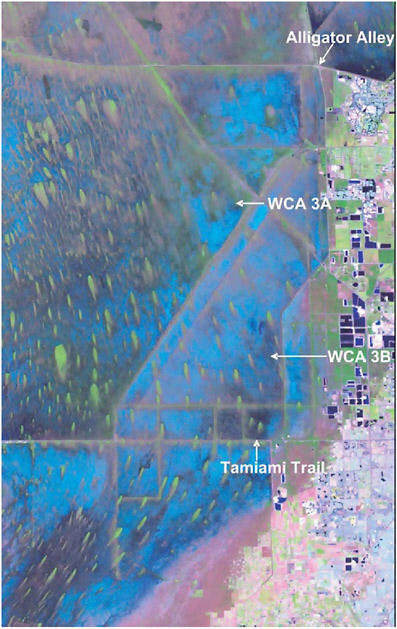
FIGURE 2-2 Tree island distribution in the WCAs and Everglades National Park.
NOTE: Green teardrops are tree islands. Alterations in the distribution of tree islands in WCA 3B and beneath Tamiami Trail have occurred due to flow redirection. Satellite image dated April 1, 1994.
SOURCE: Adapted from http://www.sfwmd.gov/org/ema/flamap/sections/section22.jpg.
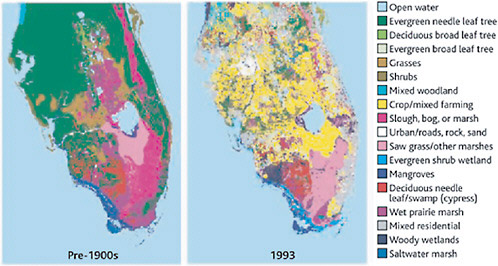
FIGURE 2-3 Vegetation classification in South Florida before 1900 and in the 1990s that shows the dramatic conversion of the region’s landscape during the twentieth century.
SOURCE: Reprinted, with permission, from Marshall et al. (2004). © 2004 American Meteorological Society.
and Halley, 1996). Phosphorus from agricultural runoff has impaired water quality in parts of the Everglades and has been particularly problematic in Lake Okeechobee.
Prompted by concerns about deteriorating conditions in Everglades National Park and other parts of the South Florida ecosystem, the public, as well as the federal and state governments, directed increasing attention to the adverse ecological effects of the flood-control and irrigation projects beginning in the 1970s (Kiker et al., 2001; Perry, 2004). By the late 1980s it was clear that various minor corrective measures undertaken to remedy the situation were insufficient. As a result, a powerful political consensus developed among federal agencies, state agencies and commissions, American Indian tribes, county governments, and conservation organizations that a large restoration effort was needed in the Everglades (Kiker et al., 2001). This recognition culminated in the CERP, which builds on other ongoing restoration activities of the state and federal government to create one of the most ambitious and extensive restoration efforts in the nation’s history.
SOUTH FLORIDA ECOSYSTEM RESTORATION GOALS
Several goals have been articulated for the restoration of the South Florida ecosystem, reflecting the various restoration programs. The South Florida Ecosystem Restoration Task Force (Task Force), an intergovernmental body established to facilitate coordination in the restoration effort, has three broad strategic goals: (1) “get the water right,” (2) “restore, preserve, and protect natural habitats and species,” and (3) “foster compatibility of the built and natural systems” (SFERTF, 2000a). These goals encompass, but are not limited to, the CERP. The Task Force works to coordinate and build consensus among the many non-CERP restoration initiatives that support these broad goals.
The goal of the CERP, as stated in the Water Resources Development Act (WRDA) of 2000, is “restoration, preservation, and protection of the South Florida Ecosystem while providing for other water-related needs of the region, including water supply and flood protection.” The Programmatic Regulations (33 CFR 385.3; see Box 2-1) that guide implementation of the CERP further clarify this goal by defining restoration as “the recovery and protection of the South Florida ecosystem so that it once again achieves and sustains the essential hydrological and biological characteristics that defined the undisturbed South Florida ecosystem.” These defining characteristics include a large areal extent of interconnected wetlands, extremely low concentrations of nutrients in freshwater wetlands, sheet flow, healthy and productive estuaries, resilient plant communities, and an abundance of native wetland animals (DOI and USACE, 2005). Although development has permanently reduced the areal extent of the Everglades ecosystem, the CERP hopes to recover many of the Everglades’ original characteristics and natural ecosystem processes. At the same time, the CERP is charged to maintain current levels of flood protection and provide for other water-related needs, including water supply, for a rapidly growing human population in South Florida (DOI and USACE, 2005).
Although the CERP contributes to each of the Task Force goals, it focuses primarily on restoring the hydrologic features of the undeveloped wetlands remaining in the South Florida ecosystem, on the assumption that improvements in ecological conditions will follow. Originally, “getting the water right” had four components—quality, quantity, timing, and distribution. However, the hydrologic properties of flow, encompassing the concepts of direction, velocity, and discharge, have recently been recognized as an important consideration that had previously been overlooked (NRC, 2003c; SCT, 2003). Numerous studies have supported the general approach to restoration of getting the water right (Davis and Ogden, 1994; NRC,
2005; SSG, 1993), although it is widely recognized that recovery of the native habitats and species in South Florida may require additional restoration efforts beyond getting the water right, such as controlling exotic species and reversing the decline in the spatial extent and compartmentalization of the natural landscape (SFERTF, 2000a; SSG, 1993). Nevertheless, the CERP goals are primarily hydrologic and are based on the Natural System Model (NSM; see Chapter 4) or its refinements, which simulate the frequency, duration, and spatial extent of water inundation without the levees, canals, dikes, and pumps in place. Because of questions concerning the ability of the NSM to provide reliable water-depth targets for the CERP, the next-generation revision of the NSM is in development (J. Obeysekera, South Florida Water Management District [SFWMD], personal communication, 2006; see Chapter 4 for more details). That revision could lead to a reevaluation of the specific restoration goals that are based on the current NSM.
Difficulties of Defining and Implementing Restoration Goals
The goal of ecosystem restoration can seldom be the exact recreation of some historical or pre-existing state because physical conditions, driving forces, and boundary conditions usually have changed and are not fully recoverable. Rather, restoration is better viewed as the process of assisting the recovery of a degraded or damaged ecosystem to the point when it contains sufficient biotic and abiotic resources to continue its functions without further assistance in the form of energy or other resources from humans (NRC, 1996; Society for Ecological Restoration International Science & Policy Working Group, 2004). Implicit in this understanding of ecosystem restoration is the recognition that natural systems are self-designing and dynamic and that it is, therefore, not possible to know in advance exactly what can or will be achieved. Thus, ecosystem restoration is an enterprise with scientific uncertainty that requires continual testing of assumptions and monitoring of progress.
From a practical perspective, however, restoration efforts require the definition of restoration goals as measurable metrics so that alternative plans can be clearly formulated and restoration progress clearly measured. The measurable restoration goals should guide investments, regulatory decisions, and other public policies, but the self-designing and dynamic properties of natural ecological systems dictate that these measures be open to revision as the restoration proceeds and greater knowledge of the system is gained.
Economic, social, and scientific issues contribute to the difficulty of
specifying restoration goals. As discussed in earlier National Research Council (NRC) reports on the Everglades restoration (NRC, 2003b, 2005), understanding and agreeing on ecosystem performance measures and restoration reference states (i.e., specified ecosystem conditions referred to for the purpose of measuring restoration progress, sometimes called baselines) are complex challenges. Few scientists feel confident estimating how much restoration can be achieved, given the changes that have taken place in the ecosystem. The goals, therefore, cannot be viewed as fixed endpoints but are instead approximations of the objectives that should be developed by careful analyses and reevaluated as new knowledge emerges.
Even with clearly articulated restoration goals, disparate expectations for restoration may exist among stakeholders, including the geographic focus of the restoration efforts. This committee is tasked to evaluate the restoration of “all the land and water managed by the federal government and state within the South Florida Ecosystem” (see Figure 1-4) but Congress, the state of Florida, and other stakeholders may have different priorities for restoration components. For example, the state of Florida has placed early emphasis on improving the water quality and integrity of Lake Okeechobee and the northern estuaries, whereas federal interests focus on Everglades National Park, other federal parks and wildlife refuges, and the survival of threatened and endangered species. Clearly, the maximum amount of restoration can be achieved by considering action options that encompass the entire original South Florida ecosystem (Figure 1-3).
It may be tempting to establish restoration goals that incorporate a priori compromises based on a variety of competing interests. Trade-offs will certainly be required during implementation, but, to maximize the potential for restoration, compromises should not prematurely influence the initial vision of what might be possible. Honest and clear assessments of the potential for ecosystem restoration are needed to ensure that the costs of subsequent trade-offs can be understood and evaluated fairly. Therefore, the time for compromise, if any, is at the implementation stage, not the goal-setting stage.
What Natural System Restoration Requires
Restoring the South Florida ecosystem to a desired ecological landscape requires a degree of reestablishment of the critical processes that sustained its historical functional ecosystem. Although “getting the water right” is the oft-stated and immediate goal, the restoration will be recognized as successful if it restores the distinctive characteristics of the histori-
cal ecosystem to the remnant Everglades (DOI and USACE, 2005). Getting the water right is a means to an end, not the end in itself. If the defining hydrologic and ecological characteristics of the historical Everglades serve as restoration goals for the remnant Everglades ecosystem, this committee judges that five components of Everglades restoration are critical:
-
enough water storage capacity combined with operations that allow for appropriate volumes of water to support healthy estuaries and the return of sheet flow through the Everglades ecosystem while meeting other demands for water;
-
mechanisms for delivering and distributing the water to the natural system in a way that resembles historical flow patterns, affecting volume, depth, velocity, direction, distribution, and timing of flows;
-
barriers to eastward seepage of water so that higher water levels can be maintained in parts of the Everglades ecosystem without compromising the current levels of flood protection of developed areas as required by the CERP;
-
methods for securing water quality conditions compatible with restoration goals for a natural system that was inherently extremely nutrient poor, particularly with respect to phosphorus; and
-
retention, improvement, and expansion of the full range of habitats by preventing further losses of critical wetland and estuarine habitats and by protecting lands that could usefully be part of the restored ecosystem.
If these five critical components of restoration are achieved and the difficult problem of invasive species can be managed, then the basic physical, chemical, and biological processes that created the historical Everglades can once again work to create a functional mosaic of biotic communities that resemble what was distinctive about the historical Everglades. The central principle of ecosystem management is to provide for the natural processes that historically shaped an ecosystem, because ecosystems are characterized by the processes that regulate them. If the conditions necessary for those processes to operate are met, recovery of species and communities is far more likely than if humans attempt to specify every constituent and element of the ecological system.
RESTORATION ACTIVITIES
Several restoration programs, including the largest of the initiatives, the CERP, are now ongoing. The CERP often builds upon non-CERP activities
(also called “foundation projects”), many of which are essential to the success of the CERP. The following section provides an introduction to the CERP and to some of the major non-CERP activities. Details of the progress in implementing these restoration projects are described in Chapters 3 and 5. These restoration activities operate within a context of state and federal legislation, legal settlements, and other initiatives spanning three decades (Box 2-1).
Several key aspects of the restoration effort emerge from these policies. First, the CERP has multiple purposes. It seeks to restore the processes characteristic of the historical ecosystem while maintaining agricultural and urban water supply and existing levels of flood protection, through the so-called Savings Clause (Box 2-1, section on the WRDA 2000). Future adjustments to project sequencing will be made with the Savings Clause in mind so that restoration gains do not come at the expense of flood control and water supply (USACE and SFWMD, 2005d). Second, the CERP has a large number of projects distributed throughout South Florida, and undoubtedly these multiple purposes and many projects were essential in gaining broad support for the CERP. Although the CERP was developed with consideration of the trade-offs among such things as ecological benefits, different water uses, and financial costs, it is not clear that all trade-offs were foreseen, including those that could be made necessary by sequencing changes and monetary constraints. As another example, questions likely will arise about what species, biological communities, and habitats will or should be favored as restoration proceeds. Third, although the legal basis of the Savings Clause is the 1999 baseline, the completed CERP water allocation was arrived at in anticipation of meeting the water needs of the population of South Florida in the year 2050 (USACE and SFWMD, 1999). Considering the uncertainties in population growth with regard to timing, magnitude, and distribution, there is reason to be concerned about achieving the ecological goals of the restoration while also meeting future water-supply needs.
Comprehensive Everglades Restoration Plan
WRDA 2000 authorized the CERP as the framework for modifying the C&SF Project. Considered a blueprint for the restoration of the South Florida ecosystem, the CERP is led by two organizations with considerable expertise regarding the water resources of South Florida—the USACE, which built most of the canals and levees throughout the region, and the SFWMD, the state agency with primary responsibility for operating and maintaining this complicated water collection and distribution system.
|
BOX 2-1 Key State and Federal Actions Related to South Florida Ecosystem Restoration During the last two decades, the Florida legislature and the U.S. Congress have enacted a series of laws to redress various environmental harms affecting the South Florida ecosystem. Many of these laws provide the authority under which the state and federal governments operate and fund the projects and programs that collectively comprise the restoration effort. In addition, legal agreements between the state and federal governments have strongly influenced the course of the restoration. At the state level, the following are among the most significant legal authorities for the restoration efforts:
|
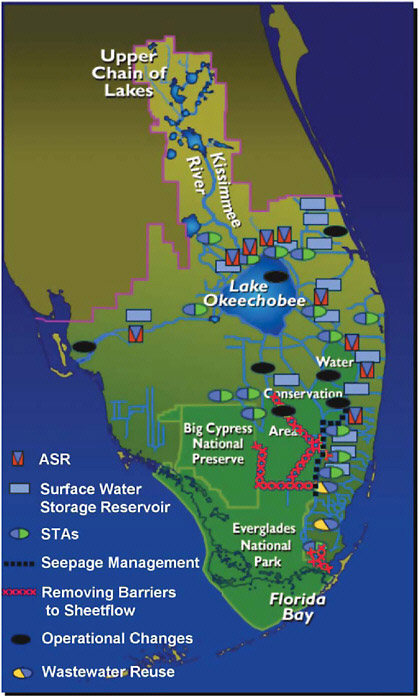
The CERP conceptual plan (USACE and SFWMD, 1999; also called the Yellow Book) proposes major alterations to the C&SF Project in an effort to reverse decades of ecosystem decline. The Yellow Book includes more than 40 major projects and 68 project components to be constructed at a cost of approximately $10.9 billion (estimated in 2004 dollars; DOI and USACE, 2005; Figure 2-4). Major components of the restoration plan focus on restoring the quantity, quality, timing, and distribution of water for the natural system. These major CERP components include the following:
At the federal level, five acts of Congress have had the most significant effect on restoration efforts:
|
-
Conventional surface-water storage reservoirs, which will be located north of Lake Okeechobee, in the St. Lucie and Caloosahatchee basins, in the EAA, and in Palm Beach, Broward, and Miami-Dade counties, will provide storage of approximately 1.5 million acre-feet.
-
Aquifer storage and recovery is a highly engineered approach that proposes to use a large number of wells built around Lake Okeechobee, in Palm Beach County, and in the Caloosahatchee basin to store water approximately 1,000 feet below ground; the approach has not yet been tested at the scale proposed.
-
In-ground reservoirs will store water in quarries created by rock mining.
-
Stormwater treatment areas (STAs) are man-made wetlands that will treat agricultural runoff water before it enters natural wetlands.
-
Seepage management approaches will prevent unwanted loss of water from the natural system through levees and groundwater flow; the approaches include adding impermeable barriers to the levees, installing pumps near levees to redirect lost water back into the Everglades, and holding water levels higher in undeveloped areas between the Everglades and the developed lands to the east.
-
Removing barriers to sheet flow, including 240 miles of levees and canals, will reestablish shallow sheet flow of water through the Everglades ecosystem.
-
Rainfall-driven water management will be created through operational changes in the water delivery schedules to the WCAs and Everglades National Park to mimic more natural patterns of water delivery and flow through the system.
-
Water reuse and conservation strategies will build additional water supply in the region; two advanced wastewater treatment plants are proposed for Miami-Dade County in order to clean wastewater to a standard which would allow it to be discharged to wetlands along Biscayne Bay or to recharge the Biscayne aquifer.
The largest portion of the budget is devoted to storage and water-conservation projects and to acquiring the lands needed for them (see NRC, 2005).
The modifications to the C&SF Project embodied in the CERP are expected to take more than three decades to complete, and, to be successful, they require a clear strategy for managing and coordinating restoration efforts. The Everglades Programmatic Regulations specifically require coordination with other agencies at all levels of government, although final responsibility ultimately rests with the USACE and SFWMD. WRDA 2000 endorses the use of an adaptive management framework for the restoration process (see Chapter 4), and the Programmatic Regulations formally establish an adaptive management program that will “assess responses of the South Florida ecosystem to implementation of the Plan;…[and] seek continuous improvement of the Plan based upon new information resulting from changed or unforeseen circumstances, new scientific and technical information, new or updated modeling; information developed through the assessment principles contained in the Plan; and future authorized changes to the Plan.” An interagency body called Restoration Coordination and
Verification (RECOVER) has been established to ensure that sound science is used in the restoration. The RECOVER Leadership Group oversees the monitoring and assessment program that will evaluate the progress of the CERP toward restoring the natural system and assess the need for changes to the plan through the adaptive management process. Progress in developing these essential programmatic aspects of the CERP is discussed in Chapter 4.
In 2004, Florida launched Acceler8, a plan to hasten the pace of project implementation, and committed $1.5 billion of its portion of the state-federal cost share for the CERP by 2010 for this initiative. Through Acceler8, Florida intends to implement 8 projects comprising 11 CERP project components and 3 non-CERP components (for further discussion of Acceler8, see Chapter 5 and Box 5-2).
Non-CERP Restoration Activities
When Congress authorized the CERP in WRDA 2000, several activities intended to restore key aspects of the Everglades ecosystem were already being implemented by the SFWMD, the USACE, the National Park Service (NPS), and the U.S. Fish and Wildlife Service. These non-CERP initiatives are critical to the overall restoration success. In fact, the effectiveness of the CERP was predicated upon the completion of many of these projects. These projects include Modified Water Deliveries to Everglades National Park (Mod Waters), C-111, and the Critical Projects (see Box 2-2). Several additional projects also are under way or in planning to meet the broad restoration goals for the South Florida ecosystem and associated legislative mandates. They include extensive water quality initiatives, such as the Everglades Construction Project, and programs to establish BMPs to reduce nutrient loading (see Boxes 2-1 and 2-2).
RECENT CHANGES IN THE NATURAL AND HUMAN CONTEXT
The Everglades watershed and the surrounding landscape is not the same as it was 10-15 years ago when the current restoration effort began. Because these changes have moved the Everglades further from its historical defining characteristics and increased the human pressure on the system in terms of competition for space and water, the implications of these changes for the restoration should be considered in any assessment of restoration progress. In this section selected examples of how the natural and human environments have changed during the past 10-15 years are described in order to elucidate how those changes influence the restoration.
|
BOX 2-2 Non-CERP Restoration Activities in South Florida The following represent the major non-CERP initiatives currently under way in support of the South Florida ecosystem restoration (Figure 2-5). 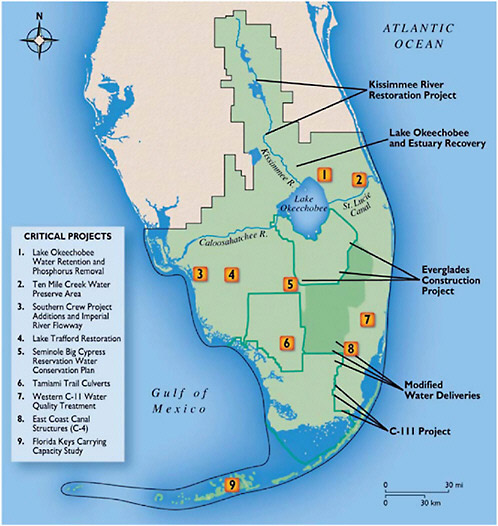 FIGURE 2-5 Locations of major non-CERP initiatives. © International Mapping Associates. |
|
Modified Water Deliveries to Everglades National Park Project (Mod Waters) This federally funded project, authorized in 1989, is designed to restore more natural hydrologic conditions in Everglades National Park. The project includes levee modifications and installation of a seepage control pump to increase water flow into WCA 3B and northeastern portions of Everglades National Park. It also includes providing flood mitigation to about 60 percent of the 8.5-square-mile area (a low-lying but partially developed area on the northeast corner of Everglades National Park; see Glossary) and raising portions of Tamiami Trail (Figure 2-6). Mod Waters is a prerequisite for the first phase of “decompartmentalization” (i.e., removing some barriers to sheet flow), which is part of the CERP. Completion is expected by 2009 (DOI and USACE, 2005).a Modifications to the C-111 Project This project is designed to improve hydrologic conditions in Taylor Slough and the Rocky Glades of the eastern panhandle of Everglades National Park and increase freshwater flows to northeast Florida Bay, while maintaining flood protection for urban and agricultural development in south Miami-Dade County (Figure 5-6). The project plan includes a tieback levee with pumps to capture groundwater seepage to the east, detention areas to increase groundwater levels and thereby enhance flow into Everglades National Park, and backfilling or plugging several canals in the area. A Combined Structural and Operational Plan (CSOP) has been developed that will integrate the goals of the Mod Waters and C-111 projects and protect the quality of water entering Everglades National Park. Completion is expected in 2010 (DOI and USACE, 2005).a 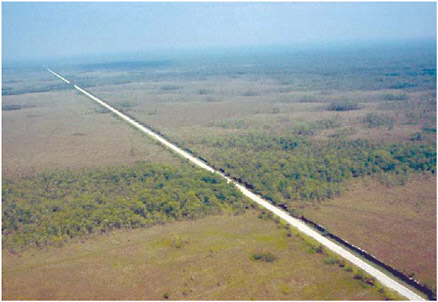 FIGURE 2-6 Built in the 1920s, the two-lane Tamiami Trail (and the adjacent levee L-29) interrupts the natural north-south flow of water through Big Cypress National Preserve and Everglades National Park. SOURCE: http://www2.nature.nps.gov/parksci/vol18/vol18(1)/13weeks.htm. |
|
Kissimmee River Restoration Project This project, authorized by Congress in 1992, aims to reestablish the historical river-floodplain system at the headwaters of the Everglades watershed and, thereby, restore biological diversity and functionality. The project plans to backfill 22 miles of the 56-mile C-38 canal and restore 43 miles of meandering river channel in the Kissimmee River. The project includes a comprehensive evaluation program to track ecological responses to restoration. Completion is expected by 2012 (SFWMD and FDEP, 2005). Everglades Construction Project The Everglades Forever Act (see Box 2-1) required the state of Florida to construct 45,000 acres of STAs to reduce the loading of phosphorus into the Arthur R. Marshall Loxahatchee National Wildlife Refuge, the WCAs, and Everglades National Park. These STAs are part of the state’s Long-Term Plan for achieving water quality goals, including the total phosphorus criterion of 10 ppb.b Critical Projects Congress gave programmatic authority for the Everglades and South Florida Ecosystem Restoration Critical Projects in WRDA 1996, with modification in WRDA 1999. These were small projects that could be quickly implemented to provide immediate and substantial restoration benefits such as improved quality of water discharged into WCA 3A and Lake Okeechobee and more natural water flows to estuaries. Examples of the Critical Projects include the Florida Keys Carrying Capacity Study, Lake Okeechobee Water Retention and Phosphorus Removal, Seminole Big Cypress Reservation Water Conservation Plan, Tamiami Trail Culverts, Ten Mile Creek Water Preserve Area, and the Lake Trafford Restoration (DOI and USACE, 2005).c Invasive Species Plant Research Laboratory The Melaleuca Quarantine Facility was constructed in 2005 with funding from the Department of the Interior (DOI) and the SFWMD to increase the capabilities to test new biological invasive species controls (DOI and USACE, 2005). Increased capacity to control invasive species will be essential to restoring the mosaic of communities that comprised the historical Everglades. Lake Okeechobee and Estuary Recovery In October 2005, the state of Florida announced a new $200 million plan for Lake Okeechobee and Estuary Recovery (LOER). The plan aims to improve water quality, expand water storage, enhance the health of Lake Okeechobee, and facilitate land acquisition. LOER includes the expansion of two STAs, a new storage reservoir, rerouting runoff for water quality treatment in two basins, a revised regulation schedule for the lake, mandatory BMPs, and innovative approaches for land-use planning, among others. Several of these projects will support the CERP.d
|
Changes in the Natural Environment
The most important changes to the natural system during the past 10-15 years include water management, habitat changes, water quality, and invasive species. Some of these changes in the natural system add urgency to the rapid implementation of CERP and non-CERP projects benefiting the natural system.
Management of Water for the Natural System
As the effects of the levees and canal systems on the Everglades ecosystem were recognized, natural resource managers for Everglades National Park began to devise ways to alter the water management system in hopes of reversing (or at least slowing) the park’s decline. One major initiative, the Experimental Water Deliveries Program (Experimental Program) to Everglades National Park, was initiated after heavy rains and large unscheduled water releases to Everglades National Park led park managers to declare an environmental emergency (Hendrix, 1983). In response, the Experimental Program was authorized by Congress (P.L. 98-181) in 1984 as a bold experiment. The program used iterative tests in an attempt to replicate, using the existing water management system, a more natural, rainfall-driven water delivery regime to replace the minimum monthly water delivery schedule mandated previously by Congress in 1970. Seven iterations were tested before the program ended in 2000 (see Box 2-3).
The Experimental Program was a commendable attempt at adaptive management, but its effectiveness was severely restricted by flood-control constraints. The program demonstrated that important and often surprising knowledge can be gained through the adaptive management process, that operating constraints for flood control and water supply can thwart restoration plans if trade-offs are not resolved, and that small changes to the structure and operation of the existing water management system are unlikely to result in significant restoration. To achieve restoration goals larger changes in water deliveries were needed beyond that which the Experimental Program was able to produce. Also, the operational rules that were in place to provide flood protection and water supply were not compatible with restoration of the natural system. More than anything else, the Experimental Program demonstrated a need for a new comprehensive and integrated framework for water management to balance restoration, water supply, and flood protection objectives.
The CERP fills this need. The original vision of the CERP involves unin-
|
BOX 2-3 Experimental Water Deliveries Program to Everglades National Park The Experimental Program, operated by the USACE with concurrence from the SFWMD and the NPS, aimed to reduce large, environmentally damaging, regulatory releases of water to West Shark River Slough and increase the amount of water in Northeast Shark River Slough to restore historical distributions of flow (Figure 2-7). The results of the Experimental Program were mixed. 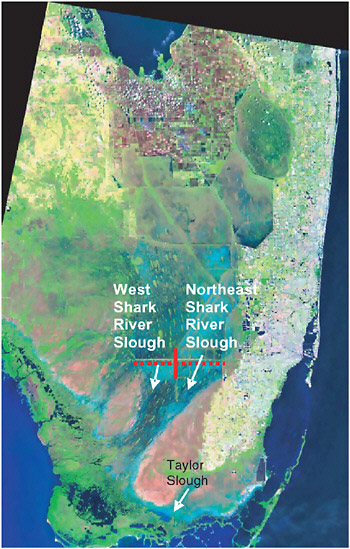 FIGURE 2-7 West Shark River Slough and Northeast Shark River Slough. SOURCE: Johnson (2005). |
|
The first test (termed the Flow-Through Plan), conducted from 1983 to 1985, indicated that the rainfall-driven water delivery plan did improve the linkages between rainfall and overland flow and produced more natural dry season recessions in the Shark River Slough wetlands. However, it also had some undesirable effects, including negative impacts on water supply that led managers to end the test prematurely (Van Lent et al., 1999). Subsequent tests of the Experimental Program involved attempts to increase flows to Northeast Shark River Slough to more closely resemble historical flow patterns (Figure 2-8) and thereby reduce the need for releases to West Shark River Slough. Despite an environmental assessment and short-term field tests indicating that the planned releases of water to Northeast Shark River Slough would not increase the risk of flooding on developed land east of the park, land-owner concerns led managers to use water levels on these lands as a constraint on the operation of the key structures regulating flow into Northeast Shark River Slough (Van Lent et al., 1999). This constraint, which focused specific attention on the water level in two wells within the 8.5-square-mile area, precluded managers from achieving the desired improvements in the delivery of water to Everglades National Park. A larger proportion of flows went to Northeast Shark River Slough than previously, but large regulatory releases to West Shark River Slough continued, and flows to Northeastern Shark Slough never approached the program objective of 55 percent of total flow (Figure 2-8). Although the program improved hydrologic conditions somewhat in many areas, conditions in other areas worsened, apparently as a direct result of the severity of the flood-control constraint employed. Water levels in the private lands east of Everglades National Park actually were kept lower than they had been prior to the Experimental Program (Neidrauer and Cooper, 1989; Van 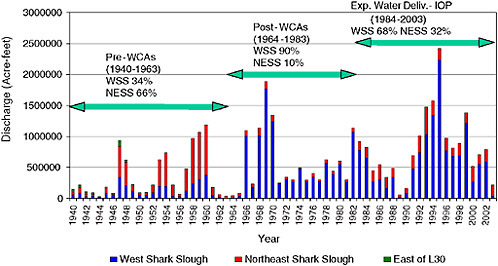 FIGURE 2-8 Water discharges into Everglades National Park by way of West Shark River Slough (WSS), Northeast Shark River Slough (NESS), and east of the L-30 levee from 1940 to 2002 showing how water was diverted to WSS at the expense of NESS, with some return to NESS more recently. The graph indicates the proportion of water flowing through each of the three pathways prior to creation of the WCAs (1940-1963), subsequent to creation of the WCAs (1964-1983), and during the Experimental Water Deliveries Program and beyond (1984-2003). SOURCE: Johnson (2005). |
|
Lent et al., 1993), though dry conditions may have contributed to these lower levels in some years. Impacts on populations of Cape Sable Seaside Sparrows illustrate this pattern well (Figure 2-9). Conditions for a population (A) in West Shark River Slough that previously had suffered from prolonged high water levels were unchanged. Conditions for a population (F) immediately adjacent to the 8.5-square-mile area, which previously had been too dry, became even drier. Another population (D) in the south near Taylor Slough experienced conditions sufficiently wetter to convert habitat to an undesirable form (see below), due to diversion of water for flood protection for the 8.5-square-mile area (Van Lent et al., 1999). When record high rainfalls occurred in 1993-1995 during Test 6, these difficulties became a crisis. Following heavy rains large regulatory releases were limited to West Shark River Slough because of the continuing flood-control constraints on releases to Northeast Shark River Slough, resulting in prolonged periods of high water in western Everglades National Park (Van Lent et al., 1999). A variety of adverse impacts resulted for the natural environment, especially marl prairie habitat (Orians et al., 1996). The most contentious impact was the near extirpation of the largest remaining population of the endangered Cape Sable Seaside Sparrow (population A, Figure 2-9; Curnutt et al., 1998; Nott et al., 1998; Walters et al., 2000). Concern over the inability of the water management system to provide for the sparrow resulted in regulatory action by the U.S. Fish and Wildlife Service (USFWS) under the Endangered Species Act, which brought the Experimental Water Deliveries Program, then in Test 7, to an end. The USACE, in consultation with the USFWS, the NPS, and the SFWMD, developed an alternative approach to water management in the form of an Interim Structural and Operational Plan (ISOP) in 2000, followed in 2002 by an Interim Operational Plan (IOP). In addition, the CSOP is being used to develop a final operating plan acceptable to the USFWS that includes the Mod Waters and C-111 projects. The CSOP will eventually supersede the IOP, but not until the Mod Waters and C-111 projects are fully implemented. 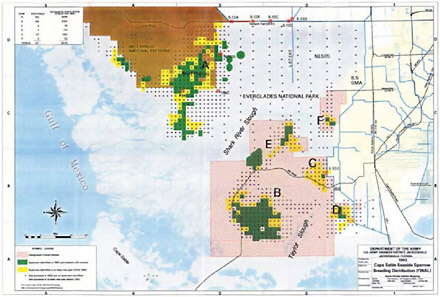 FIGURE 2-9 Cape Sable Seaside Sparrow breeding distributions. SOURCE: USACE (1992). |
terrupted sheet flow over broad areas and employs an adaptive management process to make adjustments to the structure and operation of the water management system. The adjustments are made in response to observations of the dynamics of the sheet flow and its impacts on various performance measures. The CERP is an inclusive process that facilitates integration of restoration, water supply, and flood-control objectives, and it represents the sort of bold change needed to restore a system as vast and complex as the South Florida ecosystem. Further, the CERP is founded on the view that restoration is best achieved by reestablishing the natural processes that historically shaped an ecosystem. In its application to the Everglades, this concept means restoration of large-scale sheet flow. Although all the impacts of large-scale sheet flow are not fully understood, it was clearly a dominant feature of the natural system historically, and the CERP offers the possibility of its return to the system. There is serious concern, however, whether the CERP as it is implemented can continue to adhere to its original bold vision.
Habitat Change
The failure to significantly alter the water management system has allowed many components of the Everglades ecosystem to continue to move away from historical conditions, rather than recover. For some components, such as in the marl prairies adjacent to West Shark River Slough and Taylor Slough on which Cape Sable Seaside Sparrows depend, change accelerated between 1990 and 2005. Extended periods of high water converted the vegetative community from a diverse assemblage of grasses, sedges, and rushes dominated by muhly grass (Muhlenbergia filipes) to an assemblage of taller marsh grasses and sedges dominated by sawgrass (Cladium jamaicense; Armentano et al., 1995; Nott et al., 1998). In the ridge-and-slough landscape (Figure 1-1a), loss of microtopography (NRC, 2003c; SCT, 2003) and decreases in both area and number of tree islands (Sklar and Van der Valk, 2002b) have been extensive. The processes that generate and maintain tree islands are incompletely understood, but recent evidence suggests that tree islands may change if periods of inundation are either too long or too short (Sklar et al., 2004). Both extremes exist in different portions of ridge-and-slough landscapes. Furthermore, the flows of water that once redistributed phosphorus to and around tree islands appear to be essential to maintaining ridge-and-slough topography (Wetzel et al., 2005).
A notable change in the past few years is the appearance of large breeding colonies of wading birds, not in the southern Everglades where
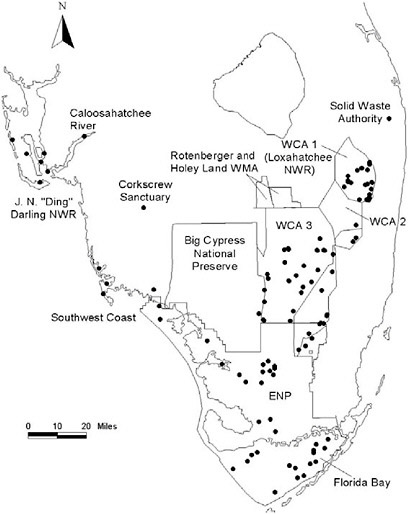
FIGURE 2-10 Distribution of wading bird colonies in 2004.
SOURCE: Crozier and Cook (2004).
they historically occurred, but in more northern areas, particularly northeastern WCA 3A (Crozier and Cook, 2004; Figure 2-10). CERP targets for abundance of breeding wading birds, which are still well below historical numbers, are surpassed by these assemblages, but because the birds are not where they historically occurred, they do not satisfy the spatial distribution goals for wading bird colonies (Crozier and Cook, 2004; Sklar et al., 2005a).
The wading bird changes are the most conspicuous examples of con-
tinuing movement, over the past 10-15 years, of the natural system away from historical conditions, but there are others affecting most habitats within the Everglades watershed. Some parts of the natural system are now further from historical conditions, and many others are not much closer to historical conditions than they were 10-15 years ago when restoration activities began. Fortunately, a few areas, such as the Kissimmee River basin, have improved (see Box 2-2 and Chapter 5).
Changes in Water Quality
The understanding of water quality problems in South Florida’s natural areas has changed dramatically since the 1992 Consent Decree, the 1994 Everglades Forever Act, and the Yellow Book in 1999. Phosphorus remains the major issue. This focus on phosphorus is justified, given that one of the defining characteristics of the historical Everglades was its extremely low nutrient availability and that the remaining system is now surrounded by land uses that add excess phosphorus to the Everglades. However, other water contaminants such as mercury, sulfur, dissolved oxygen, conductivity (dissolved solids or hardness), and various agricultural pesticides also have been shown to exert undesirable effects on the species and communities characteristic of the Everglades and, in some cases, on human health. Their spatial and temporal variability within the Everglades Protection Area (defined in Box 1-1), their interactions with each other and with Everglades soil, and their responses to various flow regimes have challenged researchers and managers to devise restoration efforts that can address them (SFWMD and FDEP, 2005).
By 2004, the state of Florida had made significant progress in reducing phosphorus concentrations and loads entering the natural system from the EAA through non-CERP activities (Figure 2-11; SFWMD and FDEP, 2005). Implementation of BMPs on many agricultural lands and operation of STAs have both exceeded short-term expectations for phosphorus reductions (see Chapter 5). Nonetheless, cattail (Typha domingensis), an indicator of increased phosphorus levels and altered hydrology, continues to spread, albeit less rapidly than previously, in WCA 2A (Sklar et al., 2004; Figure 2-12). Total phosphorus concentrations in inflows to the Arthur R. Marshall Loxahatchee National Wildlife Refuge, WCA 2A, and WCA 3A in 2004 were 38.8, 24.0, and 26.3 ppb, respectively, although interior areas were generally below 10 ppb with the exception of WCA 2A (SFWMD and FDEP, 2005). Compliance with the total phosphorus criterion of 10 ppb (see Box 2-1, the 1994 Florida Forever Act) was extended during the 2006 Florida
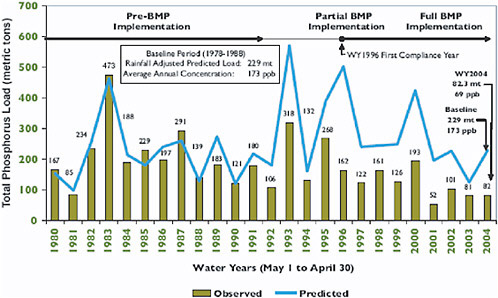
FIGURE 2-11 Total phosphorus loads from the EAA, observed and predicted, since water year 1980.
SOURCE: SFWMD and FDEP (2005).
legislative session from December 31, 2006, until 2016 through allowance of the use of “moderating provisions” in application of the standard.2 While achieving the total phosphorus criterion of 10 ppb throughout the Everglades Protection Area by December 2006 (see Box 2-1, the 1994 Florida Forever Act) may not have been possible, action toward that goal will certainly require additional controls and attention to water quality issues in CERP water storage projects (NRC, 2005), as well as integration with the BMP regulatory program (SFWMD and FDEP, 2005).
Despite decreases in mercury emissions and deposition rates relative to the highs of the early 1990s, mercury continues to be a major concern in the South Florida ecosystem because its methylated form is highly toxic (SFWMD and FDEP, 2005). Methyl mercury concentrations in water in the
|
2 |
For more information, see http://www.dep.state.fl.us/evergladesforever/legislation/. |
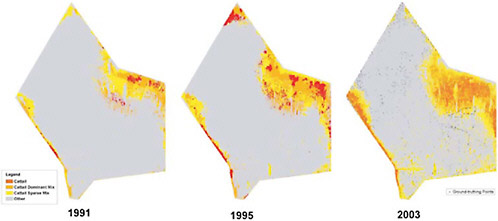
FIGURE 2-12 Spreading of cattail in WCA 2A from 1991 to 2003.
SOURCE: Sklar et al. (2004).
Everglades Protection Area generally either did not change or increased between 1995-1999 and 2000-2005 (Krabbenhoft et al., 2005). Concentrations in fish in all parts of the Everglades remain above the Environmental Protection Agency’s recommended criterion (0.3 mg/kg) and pose risks to fish-eating birds and mammals, including humans (Axelrad et al., 2005). Sulfur is a dominant control of mercury methylation rates, with its effect depending on its concentration and chemical species (Atkeson and Axelrad, 2004); thus, high rates of sulfate discharge from the EAA constitute a multidimensional water quality problem for the Everglades ecosystem.
Scientific understanding of the interactions among mercury, sulfur, and phosphorus is still in the formative stages, with much of the understanding emerging from research in the Everglades. Given that these interactions dominate biogeochemical reactions over large areas of the Everglades watershed, further research will be required to help guide restoration decisions.
Spread of Invasive Exotic Species
The spread of exotic (nonnative) plant and animal species poses multiple challenges to the success of the restoration effort. Invasive exotic spe-
cies may out-compete native species, greatly alter native habitats, provide fuel for fires, and interfere with recreational and navigational activities. Exotic plants now dominate more than 1.5 million acres of the South Florida ecosystem. About 31 percent of vascular plant species and 26 percent of animal species living in South Florida today are introduced exotic species (Ferriter et al., 2005).
Because of the potential for exotic species to replace native species and occur as single-species monocultures to the exclusion of all other species over vast areas, control of exotic species is critical to success of the restoration. Consequently, numerous organized efforts have been under way in South Florida by various agencies and working groups since the early 1990s (Ferriter et al., 2005). Federal and state agencies have worked to improve coordination on exotic-species initiatives, and interagency teams have been formed to address exotic plants (Noxious and Exotic Weed Task Team, or NEWTT) and exotic animals (Florida Invasive Animals Task Team, or FIATT). Progress to date includes an assessment and strategy for control of exotic plant species, compilation of a list of priority exotic plant species that pose the greatest threat to the Everglades ecosystem, and better documentation of the extent of the problem (Ferriter et al., 2005). Two CERP activities are currently under way that address invasive exotic species: the Melaleuca Eradication and Other Exotic Plants project (see Tables 3-1 and 3-2) and the Master Exotic Species Plan, which deals with both invasive exotic plant and animal species.
Since the early 1990s, agencies and independent investigators in South Florida have concentrated their efforts on controlling exotic plants, both because exotic plants pose the most serious threats to the Everglades ecosystem and because control efforts directed at them are likely to prove at least partly successful. Despite major control efforts, however, the exotic plants Melaleuca quinquinerva (melaleuca or paperbark tree), Schinus terebinthifolius (Brazilian pepper tree), and Lygodium microphyllum (old world climbing fern) still cover large areas of the Everglades. For example, the Brazilian pepper tree remains within Everglades National Park where more than 109,000 acres are dominated by this single species (Ferriter et al., 2005). The NPS has removed Brazilian pepper from approximately 4,000 acres of Everglades National Park through scraping and clearing, and herbicides have been used to remove it from an additional 1,300 acres (C. Smith, Everglades National Park, personal communication, 2006). Lygodium appears to pose an even more serious problem as its rate of spread has been exponential in the past decade. According to SFWMD surveys, the fern’s distribution in South Florida increased from 27,000 acres in 1993 to 106,000
acres in 1999. Lygodium is a particular problem in WCA 1 (Loxahatchee National Wildlife Refuge), where it blankets many large tree islands (Figure 2-13). In the Everglades National Park, land colonized by the fern expanded from 1,000 acres to 10,000 acres between 2000 and 2003 (Ferriter et al., 2005).
Unlike the situation with plants, few control methods are currently available for exotic animal species, and they have rarely been implemented in the South Florida ecosystem. Species of concern include the Burmese python (Python molurus vittatus), the Asian clam (Corbicula fluminea), the spiketop applesnail (Pomacea bridgesi), the pike killifish (Belonesox belizanus), the spotted tilapia (Tilapia mariae), the oscar (Astronotus ocellatus), and the brown hoplo (Hoplosternum littorale; see Figure 2-14).
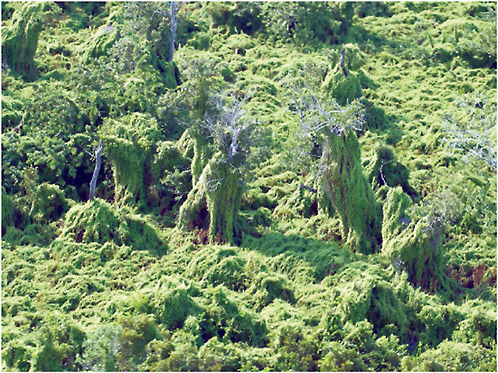
FIGURE 2-13 Lygodium in the Arthur R. Marshall Loxahatchee Wildlife Refuge.
SOURCE: http://www.sfwmd.gov/org/clm/lsd/images/jpgs/exoticslygodiumlnwr.jpg.
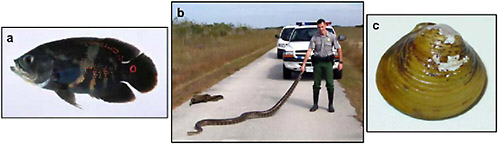
FIGURE 2-14 Examples of exotic animal species in South Florida, including: (a) the oscar, (b) the Burmese python (shown at Shark Valley within Everglades National Park), and (c) the Asian clam.
SOURCE: a: http://sofia.usgs.gov/sfrsf/rooms/species/invasive/intro/; b: Photo taken by Bob DeGross, National Park Service (2003); c: http://cars.er.usgs.gov/pics/nonindig_misc_mollusks/bivalves/bivalves_1.html.
Many of these animals are released pets that have grown too large or are otherwise unwanted, escapees or releases from fish farms, or animals that have been unknowingly introduced along with other species. In 2003, the Task Force established an interagency team (FIATT) that will focus its efforts on exotic animals. The primary goal of this team is to develop a comprehensive assessment and strategy for the control and management of nonindigenous animals (Ferriter et al., 2005). According to Ferriter et al. (2005), FIATT is currently developing a report on the status of invasive exotic animals to help the Task Force determine priorities for control efforts.
Changes in the Human Environment
In addition to the changes in the natural system that influence the CERP, changes in the human environment also influence restoration. The following brief discussion provides general information about the human population of the region to serve as a framework for understanding South Florida ecosystem restoration. The committee recognizes that planning for the CERP entails making certain assumptions about continued population growth and its implications for land and water use, because population growth is the most important driver for environmental change in South Florida. For this reason, the committee supports the CERP planners in their recognition of the importance of the human dimension of the South Florida ecosystem.
The Everglades watershed extends from the vicinity of Orlando southward to Florida Bay and abuts intensive land-use areas along the east and west coasts, so that population trends throughout most of the Florida peninsula have direct effects on the Everglades (Figures 2-15 and 2-16).
Population growth, with its attendant demands for land and water resources along with additional environmental management (such as flood
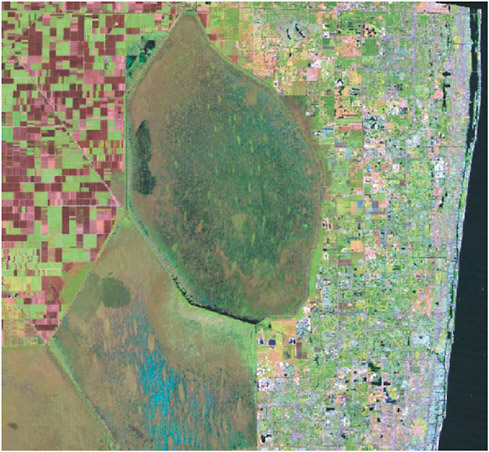
FIGURE 2-15 Satellite image of a portion of the Florida peninsula and the proximity of urban and agricultural land uses to the Everglades. The image shows the Arthur R. Marshall Loxahatchee National Wildlife Refuge (WCA 1) in the center, with its somewhat natural landscape patterns. The urbanizing east coast on the right (east) and the agricultural area on the left (west) directly adjoin the refuge.
SOURCE: McMahon et al. (2005).
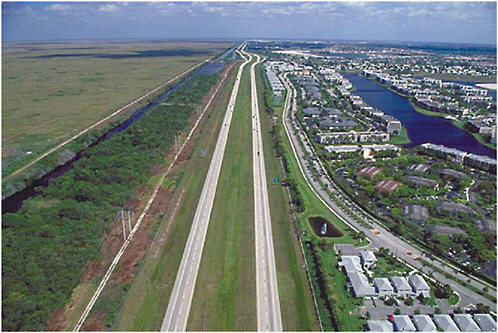
FIGURE 2-16 Highway defining the edge of the encroachment on the Everglades’ eastern edge in Coral Springs, Florida.
control), has three environmentally relevant dimensions: growth of total population numbers, urban sprawl, and water use.
Population Growth
U.S. Census Bureau data show that in the past decade the population of the entire state of Florida has grown more rapidly (an increase of 23.5 percent) than all but five other states (U.S. Census Bureau, 2001). Of the six states with the largest percentage increases in the 1990s, Florida’s 1990 base population of almost 13 million was by far the largest, and the state ranks third, behind California and Texas, in absolute increase in population for the decade of the 1990s. This rapid, recent growth is a continuation of a long-term trend. Prognoses of future population numbers are imprecise, but it is likely that the established trends will continue in the short
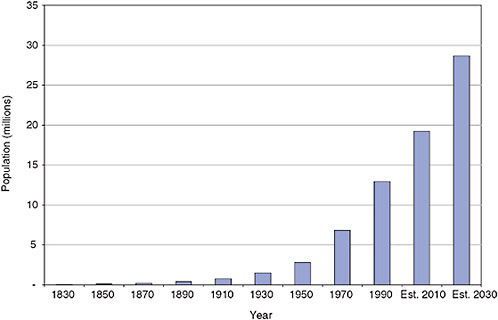
FIGURE 2-17 Population of Florida, 1830 to 1990, with estimates to 2030.
SOURCE: 1830-1970 data—U.S. Census Bureau (1975); 1990—U.S. Census Bureau (1995); 2010-2030— U.S. Census Bureau (2005).
term (Figure 2-17). Recent estimates3 predict that by the time the entire CERP is complete in the 2040-2050 period, Florida may be home to as many as 30-32 million people.
Water Use
Population growth has direct implications for the CERP because of the increasing demands for domestic and commercial water. The SFWMD withdraws about 4,048 million gallons per day (or 4.5 million acre-feet per year) from the ecosystem, substantially more water than that which flows into
|
3 |
See Bouvier and Stein (2001) and http://www.fairus.org/site/PageServer?pagename=research_researchd184#2050project. |
Everglades National Park (Marella, 2004). Recently, Florida’s Department of Environmental Protection indicated that Miami-Dade County’s 20-year water plan threatens the Everglades and is not consistent with state conservation requirements (Negrete, 2006).
The importance of growing water demands for CERP planners is illustrated by the fact that nearly half of the state’s freshwater withdrawals are in the region served by the SFWMD (Fernald and Purdum, 1998; Kranzer, 2002, 2003). With a population of nearly 7 million, estimated likely to grow to more than 12 million by 2050, the water demands in the SFWMD service area will grow in importance when dealing with the water budget for the Everglades. In 1995 the SFWMD used approximately 4 million acre-feet of water per year (Solley et al., 1998), while in 2000 the figure was about 13 percent higher (Marella, 2004). By 2020 the forecasted increases over the 1995 figure are about 24 percent, an estimate that takes into account anticipated reductions in per-capita use through conservation measures (Kranzer, 2002; SFWMD, 2000).
Urban Settlement
Rapid population growth in Florida has fueled dramatic expansion of urban and suburban areas. Between 1970 and 1990, the development surrounding the average Florida city expanded 123 percent with the trend accelerating into the twenty-first century (Kolankiewicz and Beck, 2000). Cities within the South Florida ecosystem grew at similar rates. In an assessment of the area south of Lake Okeechobee, Loveland (2005) found that, between 1973 and 2000, 84,000 acres of wetlands and to a lesser degree land in agricultural use became urbanized according to the study’s definition of urbanized land use.
Florida’s Comprehensive Planning Act (1975) requires county and local governments to engage in comprehensive planning (DeGrove, 1984). Miami-Dade County has conducted comprehensive planning since the mid1970s under its Comprehensive Development Master Plan,4 and other counties associated with the South Florida ecosystem now have planning processes that may have implications for restoration. The density of permitted developments that may replace wetlands or agricultural lands will determine two key components in CERP planning: water supply and flood-control needs.
|
4 |
Further information on the Comprehensive Development Master Plan can be found online at http://www.miamidade.gov/planzone/planning_metro_CDMP.asp. |
Urban sprawl and increasing population have driven up land prices in South Florida. Increasing land prices have important implications for the CERP, which requires the acquisition of several hundred thousand acres of land for project sites and for other restoration purposes. Whereas agricultural land and wetlands that are converted to urban or suburban usage cost $2,000-5,000 per acre during the early 1990s, land converted from orange groves in the upper watershed of the Everglades sold for $15,000-20,000 per acre in 2004 (Teets, 2004). Lands to the south, along urban fringes, are even more expensive. Currently, land outside the urban development boundary for Miami-Dade can cost as little as one-tenth of land inside this boundary (Rabb, 2005), making this land a tempting target for speculators but also making it more affordable for restoration purposes. As a result of increasing land prices, the CERP is under substantial pressure to buy land needed for the project as soon as possible to avoid probable future price increases. The state of Florida has already made commendable investments in land acquisition, yet an even more aggressive land purchase program is essential to avoid even greater costs resulting from continued price increases (see Chapter 5). A major issue with direct implications for the success of the CERP is the fate of lands presently in the EAA. Their conversion to urban use would alter the flows of water and nutrients to the Everglades in ways that have yet to be examined.
Implications of the Human and Natural Changes for the CERP
If restoration of the South Florida ecosystem constituted a challenge of almost unimaginable complexity when restoration planning was initiated in the early 1990s, it is no less so today. The amount, timing, spatial distribution, and quality of water entering the WCAs and Everglades National Park is not much closer to resembling historical characteristics. Because the completion of the Mod Waters and C-111 projects has been substantially delayed, the Everglades landscape continues to move away from historical conditions. Population growth, with its attendant demands on land and water resources for development, water supply, flood protection, and recreation, only heightens the challenges facing the restoration efforts. Everglades National Park especially continues to suffer from these challenges. It lies at the lowest part of the drainage basin; thus, it is influenced by activities carried out upstream in the watershed. For example, human influences in the regions surrounding the remnant Everglades are generating massive nutrient enrichment.
On the other hand, where hydrologic conditions have been restored to
more closely resemble pre-drainage conditions (e.g., the Kissimmee River), the ecosystem has responded quickly and ecological communities have returned (see also Chapter 5; SFWMD and FDEP, 2005). Implementation of BMPs in the EAA has drastically reduced phosphorus outflows from agricultural lands and STAs have greatly reduced phosphorus inputs to the WCAs (see also Chapter 5; SFWMD and FDEP, 2005). Despite new challenges and complexities, these positive examples of restoration progress show that restoration is possible given continued state and federal support.
CONCLUSIONS AND RECOMMENDATIONS
The CERP represents a bold vision for the future of the ecosystems and water management in South Florida, but it operates within a political and environmental system of great complexity. The forces that impinge upon the restoration effort are formidable. It is constrained by the historical loss of about half of the original spatial extent of the Everglades and the water storage capacity this area represented, and by the pragmatic mandate to maintain existing levels of flood protection and provide for other water-related needs, including water supply, for a South Florida population that is growing rapidly. The nature and degree of change away from the ecological features that characterized the historical Everglades are substantial: alteration of all elements of its hydrologic regime; compartmentalization of a once-continuous mosaic of biological communities shaped by the uninterrupted flow of water from north to south; release of excess nutrients, particularly phosphorus, into an inherently nutrient-poor system; and establishment and proliferation of many exotic species.
The changes of the past 10-15 years have made the restoration effort more rather than less difficult in many ways. The amount, timing, spatial distribution, and quality of water entering Everglades National Park does not more closely resemble historical characteristics than it did 10-15 years ago, because attempts at restoration through the Experimental Water Deliveries program were stymied by water supply and flood-control constraints, and subsequent restoration projects (Mod Waters and C-111) have been substantially delayed. The CERP embodies the large-scale, integrated approach to restoration needed to overcome such obstacles. Nevertheless, since the time that restoration planning began, some habitats distinctive of the Everglades have continued to move further from historical conditions. Phosphorus concentrations in water entering the WCAs still exceed target levels, and exotic species of plants and animals continue to spread. Human population growth, with its attendant demands on land and water resources,
heightens the challenges facing the restoration efforts beyond those that existed when CERP was authorized.
Although this highly involved context imposes constraints on the restoration, it also makes clear that progress should not be impeded by sets of cumbersome or inflexible metrics of success. Rather progress should be assessed in terms of the extent to which actions are consistent with simple and basic ecological principles that are well understood to determine the fundamental characteristics of the Everglades. The committee, therefore, draws the following conclusions.
Natural system restoration will be best served by moving the system as quickly as possible toward physical, chemical, and biological conditions that previously molded and maintained the historical Everglades. Ecosystems are characterized by the processes that regulate them. If the conditions necessary for those processes to operate are met, recovery of species and communities is far more likely than if attempts are made only to manage and otherwise control individual constituents and elements of the ecological system. Rather than judging restoration progress only by the project completion dates or populations of particular species present, decision makers should judge progress in terms of restoring and maintaining the key ecosystem processes whose functioning strongly influenced the characteristics of the Everglades.
The remaining Everglades landscape will continue to move away from conditions that support the defining ecosystem processes until greater progress is made in implementing CERP and non-CERP projects. Restoring the key functional processes requires (1) providing sufficient water quantity to support the restoration of the Everglades ecosystem, (2) providing the mechanisms and flow paths by which to deliver and distribute water to the natural system in ways that resemble the historical hydrologic regime, (3) reducing eastward seepage of water so that more water can be maintained and distributed within the Everglades ecosystem, (4) implementing measures that reduce the inputs of nutrients to the system, and (5) securing the land needed to support key ecosystem processes. If these five critical components of restoration are achieved, the basic physical, chemical, and biological processes that created the historical Everglades should once again create a functional mosaic of biotic communities that resemble what was distinctive about the historical Everglades.


