
5
Analysis of the Balancing of Benefits and Risks of Seafood Consumption
The committee’s task included a charge to develop a decision path appropriate to the needs of US consumers for selecting seafood in ways that balance nutritional benefits against exposure risks. In the committee’s judgment, there are three distinct steps in the process of designing consumer guidance about balancing benefits and risks in making seafood consumption decisions (see Box 5-1). After a brief overview, this chapter addresses the first step in the process: the scientific assessment and balancing of the benefits and risks of seafood consumption. Subsequent chapters address the second and third steps in the process.
The scientific assessment and balancing of the benefits and risks of seafood consumption contained in this chapter is based on the evidence presented in Chapters 3 and 4. The committee found that its ability to quantify benefit-risk trade-offs was limited from the benefit side (e.g., the quantitative link between eicosapentaenoic acid/docosahexaenoic acid [EPA/DHA] consumption and health benefits), the risk side (e.g., the quantitative risk of methylmercury [MeHg] exposure for adult men), and in terms of benefit-risk interactions. Because of this uncertainty, the committee concluded that it was not feasible to present a quantitative benefit-risk assessment and balancing. Thus it relied on its expert judgement to produce a qualitative scientific benefit-risk analysis and balancing of the benefits and risks of seafood consumption.
INTRODUCTION
Advice to consumers about balancing the benefits and risks of seafood consumption must be based on the best available scientific information. The
|
BOX 5-1 A Three-Step Process to Design Consumer Guidance on Balancing Benefits and Risks Associated with Seafood Consumption Step 1: Scientific benefit-risk analysis and balancing of the benefits and risks (including attention to characteristics [e.g., age, sex] that distinguish target populations and the effects of potential food substitutions made by consumers). Step 2: Empirical analysis of consumer perceptions and decision-making (understanding decision contexts and their variability; eliciting input from consumers regarding how they perceive and make choices) (see Chapter 6). Step 3: Design and evaluation of the guidance program itself (including the format of guidance, program structure and media [e.g., brochures, websites, public meetings or programs, radio spots, point-of-purchase displays, hotlines], and the combination of communication products and processes) (see Chapter 7). |
scientific assessment and balancing of the benefits and risks associated with seafood consumption is a complex task. Diverse evidence, of varying levels of completeness and uncertainty, on different types of benefits and risks must be combined to carry out the balancing required in the first step in designing consumer guidance. To produce coordinated benefit-risk advice requires combining expertise from several disciplines, as this committee has done.
In other settings, balancing benefits and risks has been approached through a variety of summary metrics. These include: Quality Adjusted Life Years (QALYs), which combine the quantity and quality of life; Disability Adjusted Life Years (DALYs), which are the sum of years of potential life lost due to premature mortality and the years of productive life lost due to disability (Gold et al., 2002); monetary measures; utility measures (estimates from multi-attribute utility analyses); and deliberative decision-making exercises. These decision-making exercises focus on trade-offs as a means to inform policymakers about, first, decision attributes of different choices and, second, development of means-ends objectives networks that illustrate values people want to achieve and how they think those can best be achieved (Gregory and Wellman, 2001; Gregory et al., 2001). However, in the case where benefits and risks have an outcome on the same endpoint,
such as MeHg and EPA/DHA impacts on neurologic development, it is not necessary to artificially link the benefit and risk through a separate construct such as QALYs.
In light of uncertainty in the scientific information associated with both nutrient intake and contaminant exposure from seafood, it is the committee’s judgment that no summary metric adequately captures the complexity of seafood benefit-risk trade-offs. The committee outlined an approach to balance benefits against risks, conducted an analysis of the trade-offs, and considered additional factors that informed each in order to produce a decision framework that incorporates benefit and risk analysis. Over time, the process of balancing benefits and risks must be iterative, with systematic, objective reviews following strict profiles, and updates and reinterpretation as new evidence is developed. This can be accomplished through the convening of an expert group such as this committee or through the organization of expertise within federal agencies to provide comprehensive benefit-risk analysis rather than piecemeal benefit-by-benefit and risk-by-risk analysis.
APPROACH TO BALANCING BENEFITS AND RISKS
In developing its approach to balancing benefits and risks, the committee considered previous approaches developed to analyze scientific evidence and balance benefits and risks: two of these approaches are risk-risk or risk-trade-off analysis and risk relationship analysis.
“Risk-risk” or “risk-trade-off” analysis was developed as a means of further evaluating regulatory and other actions targeted at reducing a specific risk (Gray and Hammitt, 2000; Hammitt, 2000; IOM, 2003). This approach emphasizes that in reducing a targeted risk, it is possible that other risks would be created or increased. This approach also provides a means for considering multiple countervailing risks that may indicate whether it is either riskier to remediate a problem or take no action.
“Risk-relationship” analysis goes a step further, recognizing the possible existence of ancillary benefits as well as countervailing risks that may result from adopting a particular risk-management option (IOM, 2003). For example, efforts to reduce a contaminant in a specific food product may pose a countervailing risk if the efforts make a nutrient-rich food too expensive for some consumers to afford. In addition, the higher price of the product could cause consumers to switch to alternative products that pose similar or higher risk from the same or other contaminants. However, if the product is high in a food component that is unhealthful, then a switch away from it may generate ancillary benefits such as reduced risk for chronic disease.
The committee concluded that its charge goes an important additional step beyond risk-relationship analysis. Risk-relationship analysis starts with a targeted risk reduction and attempts to identify significant potential
ancillary benefits and countervailing risks that may affect the risk reduction actually achieved through a risk management option. In the case of designing guidance to consumers on selecting seafood, there is a suite of benefits and risks that needs to be simultaneously targeted and considered. The target of analysis is the overall effect of seafood selection and consumption decisions, and not reduction of a specific risk or enhancement of a specific benefit. For this reason, the construct of ancillary benefits and countervailing risks is not applicable.
For Step 1 of the three-step process, the committee developed the approach of benefit-risk analysis to design consumer guidance on balancing benefits and risks associated with seafood consumption, shown in Box 5-1. The approach points to the types of information needed to improve benefit-risk decisions. An expert judgment technique is one approach to this task, given the uncertainty in the data that supports the evidence on benefits and risks. In its deliberations, the commmittee adapted a four-part protocol based on previous work (IOM, 2003) to complete Step 1, scientific benefit-risk analysis, in the process of designing seafood guidance.
Part A. Identify and determine the magnitude of the benefits and risks associated with different types of consumption for the population as a whole and, if appropriate, for specific target populations.
Part B. Identify the benefits and risks that evidence suggests are important enough to be included in the balancing process used to develop consumption guidance for the population as a whole and, if appropriate, for specific target populations.
Part C. Evaluate changes in benefits and risks associated with changes in consumption patterns. The magnitude of the changes depends on the magnitude of exposure to specific agents, either nutrients or contaminants, and how the magnitude of the response varies in relation to changes in intake or exposure.
Part D. Balance the benefits and risks to arrive at specific guidance for healthy consumption for the population as a whole and, if appropriate, for specific target populations.
SCIENTIFIC BENEFIT-RISK ANALYSIS FOR SEAFOOD CONSUMPTION
Part A. Identify and Determine the Magnitude of the Benefits and Risks
The committee identified the range of benefits and risks that the evidence suggests are important to balance in developing seafood choice guidance. The nutritional benefits of seafood include: it is a source of protein that is low in saturated fat, and contains several essential micronutrients, especially
selenium. Seafood also is a primary source of the omega-3 fatty acids EPA and DHA. The evidence detailed in Chapter 3 indicates that consumption of seafood and/or EPA/DHA by pregnant females may provide benefits to their developing fetuses. Infants receiving EPA/DHA either from breast milk or supplemented formula may benefit in terms of neurological and visual development. Similarly, there is evidence that consumption of fish is associated with cardiovascular benefits in the general population.
These benefits must be balanced against risks to health, as reviewed in Chapter 4, from exposure to chemical and/or microbial contamination that may be present in some seafood available to US consumers. The bestcharacterized risk from chemical contamination of seafood is from methylmercury, a potent neurotoxin. Thus, the population groups at greatest risk from exposure to contaminants in seafood are the developing fetus, infants, and young children. As discussed in Chapter 4, a Reference Dose (RfD) has been established for methylmercury on the basis of developmental tests in children born to mothers from populations where seafood is a major part of their diets. At the same time, evidence suggests the fetus and infant may be among the principal beneficiaries from certain nutrients in seafood. Evidence available on levels of MeHg that may be detrimental to nonpregnant adults has not allowed the formulation of a similar reference dose based on risks to these population segments.
In establishing their joint advisory targeted at pregnant women and children, the US Environmental Protection Agency (US EPA) and Food and Drug Administration (FDA) examined potential intakes of MeHg that would occur in pregnant women given consumption patterns using various available commercial sources of seafood. If predatory fish high in mercury were avoided completely, they concluded that up to 12 ounces of fish (four 3-ounce servings per week) could be consumed without exceeding the RfD dose that has been established with studies in populations of women consuming substantial amounts of seafood (US EPA/FDA, 2004) (see Chapter 4). Though the committee recognized that the RfD was not a “bright line” that established a firm cutoff for risk, the FDA/EPA fish advisory provides reasonable guidelines for pregnant women to consume seafood in amounts that may confer benefit without significantly increasing risk. There is little evidence available about levels of methylmercury that may be detrimental to other segments of the population.
Risks from other contaminants in seafood are, comparatively, less well-characterized than methylmercury. Contamination from persistant organic pollutants (POPs) has been characterized at exposure levels that result from industrial releases or occupational exposure, and for fish-consumers in geographic areas where contaminants are more concentrated. However, at lower levels of exposure there is less information available on adverse health effects. In addition, levels of dioxin-like compounds (DLCs) and polychlori-
nated biphenyls (PCBs) vary considerably among different types of seafood, with relatively higher levels found in fatty compared to lean fish. There is limited available data on levels of DLCs and PCBs in seafood and terrestrial animal products, but levels in seafood may on average be comparable to or higher than those in red meat and full-fat dairy products (IOM, 2003). Risks from microbiological hazards will vary, largely according to handling and preparation methods (e.g., consuming raw rather than cooked seafood).
Part B. Identify Important Benefits and Risks in the Balancing Process
Although some guidance applies to all groups, e.g., general nutritional benefits and microbial risks, a key conclusion of the committee’s deliberations is that the evidence in regard to the benefits and risks associated with seafood consumption varies in important ways across target populations. Thus, guidance should be tailored to these populations. Equally important is that everyone in the population be covered by specific guidance.
Given the current evidence reviewed in this report, decisions about seafood consumption for the general population consuming commercially available seafood fall into four target populations: (1) females who are or may become pregnant, and those who are breastfeeding; (2) infants and children up to age 12; (3) adolescent males, adult males, and females who will not become pregnant; and (4) adult males and females at risk for coronary heart disease. During the committee’s initial deliberations, adult males and females with a history of coronary heart disease were considered as a separate target population. However, recent evidence suggests that the guidance for these persons is not different from that for adult males and females at risk of coronary heart disease.
The committee recognizes that there are additional groups of consumers for whom guidance must be further tailored, such as subsistence and recreational fishers. However, designing guidance for these groups requires further separate, specific analyses of benefit and risk impacts. As noted in Chapter 4, to date there is little known about the impact of high seafood consumption, beyond that previously reported on neurological development in fetuses and young children. The committee decided there was insufficient evidence to set an upper limit on the amount of seafood consumed each week by the general public, except where research supports such recommendations.
Part C: Evaluating Changes in Benefits and Risks Associated with Changes in Consumption Patterns
The committee conducted several analyses to evaluate and understand changes in benefits and risks that may be associated with changes in con-
sumption patterns that could occur due to the type of guidance provided to consumers. The extent of these changes depends on the magnitude of exposure to a specific agent—either nutrients or contaminants—and how the change of the response varies in relation to changes in intake or exposure. These analyses and their implications for the design of consumer guidance are discussed below.
Substitution Impact on Selected Nutrients
The committee reviewed the impact of substitution in two ways. First, it considered the quantity of various foods that would need to be eaten to provide approximately 100 mg of EPA/DHA. Next, the committee reviewed the differences in selected nutrients contributed by 3-ounce portions of various meat, poultry, and seafood sources. While recognizing that there are many species of seafood, those chosen for this analysis represent the most frequently eaten types in the United States (e.g., shrimp, tuna, and salmon). The committee further considered the contribution of specific nutrient levels (e.g., EPA/DHA in species of salmon) in developing consumer guidance (see Figures 7-5 through 7-8b). The committee looked at the specific impact of food choice trade-offs involving calories, saturated fat, EPA/DHA, selenium, and iron. The committee did not consider potential impacts of seafood choices on other vitamins and minerals because it relied on the conclusions already drawn by the Dietary Guidelines Advisory Committee (DGAC) that the substitution of two servings of seafood for two servings of animal protein foods would not substantially impact the vitamin and mineral content of the diet of the average American consumer (DGAC, 2005).
Figure 5-1 compares the number of portions (servings) from various animal foods that an individual would need to select to consume 100 mg EPA/DHA. The graph shows that to achieve a similar EPA/DHA intake level, a smaller amount of a high-EPA/DHA seafood, e.g., salmon, is needed compared to other food sources. This difference (consuming higher quantities of food to achieve an equivalent intake of EPA/DHA) is significant because of the corollary increase in total caloric and saturated fat intake from most other foods (see Table 5-1). Nonanimal sources of omega-3 fatty acids are not included in this comparison.
Weighing benefits against risks from consuming seafood needs to be considered in the context of the total diet. Table 5-1 highlights nutritional factors that may influence the assessment of the benefits and risks associated with seafood consumption by comparing nutrient levels from one 3-ounce serving of different animal protein foods commonly consumed by Americans. The foods selected as examples include lean (10 percent fat) and fatty (20 percent fat) beef, chicken (< 5 percent fat), shrimp, and canned tuna, both light and white (albacore). Preparation methods chosen were the low-
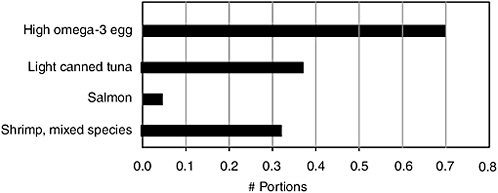
FIGURE 5-1 Number of portions* needed to consume 100 mg EPA/DHA in selected animal protein foods.
*Portion size = 100 g uncooked for all foods except eggs (~85 g = 1 egg).
SOURCE: US Department of Agriculture [USDA] Nutrient Database, Release 18. [Online]. Available: http://www.nal.usda.gov/fnic/foodcomp/Data/SR18/sr18.html; Sindelar et al., 2004.
est in fat (e.g., baked). It should be noted that any adjustments to the total diet to accommodate the addition of one food choice can be balanced by decreases in other choices (e.g., higher and lower energy foods). Benefits associated with selecting a specific food may be counterbalanced by risks associated with food preparation methods, e.g., the introduction of more calories and saturated fat by frying fish.
Although most seafood choices are lower in fat than animal meats, poultry, and eggs, the impact on energy and saturated fat intake depends on the particular substitution being made. For example, although salmon provides less energy and saturated fat than either of the beef choices shown in Table 5-1, it is higher in both these nutrients than chicken or eggs. Nonetheless, the substitution of salmon for all other animal protein sources results in increases in EPA/DHA intake levels (from 0.0 to 1.8 g). In fact, the substitution of any of the seafood choices listed in Table 5-1 for any of the beef, chicken, or egg choices results in more EPA/DHA and selenium. Finally, it can be seen that salmon and tuna are generally lower in iron than beef, which may be a consideration for pregnant females, other females of childbearing age, and individuals at risk for iron deficiency anemia.
Substitution Impact on Selected Contaminants
There are limited available data from which to construct scenarios of the risk impacts of substituting seafood for other animal protein sources. Contaminants for which there are reported values are methylmercury and
dioxins and DLCs. Food choices are compared in Table 5-1. For a 57 kg reference female to make a weekly selection of two 3-ounce servings of seafood and not exceed the RfD level for methylmercury (5.7 µg MeHg per day) requires that no more than one of those selections be white (albacore) tuna. In contrast, levels of DLCs in two 3-ounce servings of white (albacore) or light canned tuna or salmon do not exceed target exposure limits. Making a trade-off of 20 percent fat beef for salmon will not decrease the exposure levels to DLCs, although it will for MeHg. Selecting light canned tuna in place of white (albacore) tuna will decrease exposure levels to both MeHg and DLCs, but will also significantly decrease intake levels of EPA/DHA.
Uncertainties in Substitution Analysis
The substitution analyses presented above are based on nutrient and contaminant values. However, there are several sources of uncertainty in the estimates of these nutrient and contaminant values. Mean estimates of nutrients represent best estimates of the value one would expect to find in any specific case. A common indication of how much one can expect individual values to vary from the mean is a confidence band, the calculation of which is based on the individual sample values observed. The committee did not have access to individual sample values or estimates of the variability in those for the estimates reported in Table 5-1.
Table 5-2 characterizes some of what is known about the data from which the estimates in Table 5-1 were derived (i.e., their provenance). As Table 5-2 illustrates, sample sizes and ages vary tremendously. While it is difficult to determine just how significant it is, variability in sample sizes and approaches, together with changes over time in analytical methods (Igarashi et al., 2000; Siddiqui et al., 2003) and in feed (e.g., reductions in the use of fishmeal in poultry feed) are noteworthy sources of uncertainties (Barlow, 2001). The EPA/DHA levels in chicken provide a case in point.
Comparison of the estimates in Table 5-1 with those from other sources also suggests considerable variability and uncertainty. Hamilton et al. (2005) illustrate that levels of omega-3 fatty acids in salmon vary by source. Using samples of farmed, wild, and store-purchased salmon from a large number of locations, they estimated that omega-3 fatty acid levels in farmed Atlantic salmon are more than twice as high as in salmon from other sources. Further, their estimate of omega-3 fatty acid levels in farmed Atlantic salmon is almost twice as high as that shown in Table 5-1.
Importantly, specific population subgroups, e.g., Native Alaskans who previously relied on seafood and marine mammal consumption and followed advice to decrease their intake of these foods to reduce the risks associated with exposure to contaminants, suffered negative consequences in overall nutrition (Wheately and Wheately, 1981; Murphy et al., 1995;
TABLE 5-1 Estimated Levels of Selected Nutrients and Contaminants per 3-ounce Cooked Serving of Seafood and Animal Food Choices
|
Food Choice |
Energy |
Saturated Fat |
Cholesterol |
EPA/DHA |
||||
|
# Data points |
# Data points |
# Data points |
# Data points |
|||||
|
Salmon |
N/A |
175 |
N/A |
2.1 |
2 |
54 |
2 |
1.8 |
|
White (albacore) tuna |
N/A |
109 |
N/A |
0.7 |
N/A |
36 |
N/A |
0.7 |
|
Light tuna |
N/A |
99 |
N/A |
0.2 |
3 |
26 |
5 |
0.2 |
|
Shrimp |
N/A |
84 |
N/A |
0.2 |
0 |
166 |
11 |
0.3 |
|
Beef, 20% fat |
N/A |
230 |
35 |
5.8 |
36 |
77 |
N/A |
0 |
|
Beef, 10% fat |
N/A |
184 |
35 |
4 |
36 |
72 |
N/A |
0 |
|
Chickeni |
N/A |
140 |
N/A |
0.9 |
0 |
72 |
N/A |
0.03 |
|
Eggi |
N/A |
132 |
N/A |
2.8 |
7 |
360 |
37 |
0.04 |
|
Point of Reference |
Men ≈ 2700 kcal/day Women ≈ 2100 kcal/day Pregnant ≈ +300 kcal/day Lactating ≈ +500 kcal/day |
As low as possible while consuming a nutritionally adequate diet1 |
As low as possible while consuming a nutritionally adequate diet |
Men = 1.6 g/day Women = 1.1 g/day Pregnant = 1.4 g/day Lactating = 1.3 g/day |
||||
|
|
Assume that 10% of total omega-3 fatty acids come from EPA/DHA |
|||||||
|
Food Choice |
Selenium |
Iron |
Methylmercury |
Dioxin/Dioxin-like Compounds |
||||
|
# Data points |
# Data points |
# Data points |
# Data points |
|||||
|
Salmon |
N/A |
35.2 |
2 |
0.3 |
N/A |
1 |
N/A |
21 |
|
White (albacore) tuna |
2 |
55.8 |
5 |
0.8 |
N/A |
29 |
N/A |
No data |
|
Light tuna |
45 |
68.3 |
30 |
1.3 |
N/A |
10 |
N/A |
1 |
|
Shrimp |
58 |
33.7 |
N/A |
2.6 |
N/A |
4 |
N/A |
4 |
|
Beef, 20% fat |
72 |
18.3 |
36 |
2.1 |
N/A |
0 |
N/A |
20 |
|
Beef, 10% fat |
72 |
18.4 |
36 |
2.3 |
N/A |
0 |
N/A |
10 |
|
Chickeni |
20 |
23.5 |
16 |
0.9 |
N/A |
0 |
N/A |
2 |
|
Eggi |
69 |
26.2 |
14 |
1 |
N/A |
0 |
N/A |
2 |
|
Point of Reference |
Men and women = 55 µg/day Pregnant = 60 µg/day Lactating = 70 µg/day |
Men = 8 mg/day Women = 18 mg/day Pregnant = 27 mg/day Lactating = 9 mg/day |
Men and women = 0.1 µg/kg/day |
Men and women = 1–4 TEQ/kg/day |
||||
|
NOTE: N/A means that the values are not available. aFor nutrient data: Salmon = Salmon, Atlantic, farmed, cooked; White tuna = Tuna, white, canned in water, drained; Light tuna = Tuna, light, canned in water, drained; Shrimp = Shrimp, cooked, moist heat; Beef, 20% fat = Beef, ground, 80% lean/20% fat, broiled; Beef 10% fat = Beef, ground, 90% lean/10% fat, broiled; Chicken = Chicken, breast, meat only, cooked, roasted; Egg = Egg, whole, cooked, hard-boiled. bFor methylmercury data: White tuna = Tuna (canned, albacore); Light tuna = Tuna (canned, light); Beef = Beef w/vegetables in sauce, from Chinese restaurant; Chicken = Chicken breast, roasted; Egg = Egg, boiled. cTEQ = Toxicity Equivalency (see Chapter 4 for explanation); Because of different analytical methods, the dioxin/DLC data are averaged from 2001, 2002, and 2003. Ground beef represents lower-fat beef, chuck roast represents higher-fat beef, roasted chicken breast data was used for “chicken,” and boiled egg data was used for “egg.” dEER = Estimated Energy Requirements. EER for men aged 19 years and older = 662 − (9.53 × age in years) + PA(15.91 × weight in kilograms + 539.6 × height in meters); reference man is 70 kg in weight, 1.77 m in height, PA of 1.11 (low active). EER for women aged 19 years and older = 354 − (6.91 × age in years) + PA(9.36 × weight in kilograms + 726 × height in meters); reference women is 57 kg in weight, 1.63 m in height, PA of 1.12 (low active). eAI = Adequate Intake; the recommended average daily intake level that is assumed to be adequate for a group (or groups) of apparently healthy people, used when an RDA cannot be determined. fRDA = Recommended Dietary Allowances; the average daily dietary nutrient intake level sufficient to meet the nutrient requirement of 97 to 98 percent of healthy individuals in a particular life stage and gender group. gRfd = Reference Dose; an estimate (with uncertainty spanning perhaps an order of magnitude) of daily exposure to the human population (including sensitive subgroups) that is likely to be without an appreciable risk of deleterious effects during a lifetime; for a 70 kg reference man the Rfd is 7 µg/day; for a 57 kg reference women the Rfd is 5.7 µg/day. |
||||||||
|
hTDI = Tolerable Daily Intake; represents an index for a contaminant similar to the Adequate Daily Intake, used for food additives. These limits are based on the assumption of an experimental threshold dose level below which no toxic effect is found in animal models and includes an additional uncertainty factor for extrapolation to humans. TEQ = Toxicity Equivalency. iEPA/DHA levels in chicken and egg are based on existing published data; changes in the use of fishmeal in feed sources may have an impact on levels detected in the future. SOURCES: *USDA, 2005. **Adapted from http://www.cfsan.fda.gov/~frf/sea-mehg.html; Carrington et al., 2004; Mahaffey, 2004; CFSAN, 2005b. ***Adapted from CFSAN, 2005a. 1 IOM, 2002/2005. 2 IOM, 2000. 3 IOM, 2001. 4 NRC, 2000. 5 IOM, 2003. |
TABLE 5-2 Data Available on Sampling of Selenium, EPA/DHA, and Mercury in Food
|
Food |
Seleniuma |
EPA/DHAa |
Methylmercuryb |
|
Salmon (Atlantic, farmed, cooked) |
N/A* |
2 samples |
5 samples: 4 from 1992, 1 from 1993 |
|
Tuna (light, canned in water, drained) |
45 samples |
5 samples |
2 samples from 1991–1992 (plus 131 samples for methylmercury from 2003–2004) |
|
Shrimp |
58 samples |
11 samples |
19 samples from 1991–1992, 1993, 1996 (plus 2 samples for methylmercury from 1993 and 1995) |
|
Chickenc |
20 samples (data over 20 years old); New data forthcoming show most nutrient levels comparable to earlier samples, but EPA/DHA levels as undetectable. |
44 samples from 1990–1993 through 2003–2004 |
|
|
*N/A means that the values are not available. SOURCES: aData from USDA Agriculture Handbook 8 (1976–1992) and its four supplements (1990–1993) as listed in USDA, 2005. bCFSAN, 2006a. cPersonal communication, J.M. Holden, USDA-ARS-BHNRC-NDL, Beltsville, MD, March 30, 2006. |
|||
Nobmann and Lanier, 2001). Native Alaskans who switched from their traditional diet high in seafood products had few affordable healthful substitution foods from which to choose. When they decreased their seafood intake, they purchased more processed foods that were less nutrient-dense (such as manufactured snack products) and actually decreased the overall quality of their diets (see discussion Chapter 2, American Indian/Alaska Native and First Nations Populations).
Table 5-2 illustrates the available sampling data on nutrients and contaminants in food. The Agricultural Research Service (ARS) of the US Department of Agriculture (USDA) has begun updating its nutrient database through its National Food and Nutrient Analysis Program in collaboration with the National Institutes of Health (NIH). This ambitious project, which began in 1997, includes instituting a monitoring program for key foods and critical nutrients; conducting a thorough analysis of selected poultry products, restaurant foods, and items on FDA’s list of the most commonly consumed fruits, vegetables, and seafood; and developing databases of foods of importance to ethnic subpopulations (Source: http://www.ars.usda.gov/Research/docs.htm?docid=9446).
In the committee’s judgment, it is important to conduct substitution analyses of the potential impacts of changes in consumption despite the uncertainties about the underlying nutrient and contamination levels. These analyses are incorporated into the balancing of benefits and risks in the following discussion.
Part D: Balancing the Benefits and Risks to Arrive at Specific Guidance for Healthy Consumption
To complete the scientific analysis considering benefits and risks together, the committee developed the following consumption guidance for each of the four target population groups:
-
Females who are or may become pregnant or who are breastfeeding:
-
May benefit from consuming seafood, especially those with relatively higher concentrations of EPA and DHA;
-
A reasonable intake would be two 3-ounce (cooked) servings but can safely consume 12 ounces per week;
-
Can consume up to 6 ounces of white (albacore) tuna per week;
-
Should avoid large predatory fish such as shark, swordfish, tilefish, or king mackerel.
-
-
Children up to age 12:
-
May benefit from consuming seafood, especially those with relatively higher concentrations of EPA and DHA;
-
-
-
A reasonable intake would be two 3-ounce (cooked), or age-appropriate, servings but can safely consume 12 ounces per week;
-
Can consume up to 6 ounces (or age-appropriate servings) of white (albacore) tuna per week;
-
Should avoid large predatory fish such as shark, swordfish, tilefish, or king mackerel.
-
-
Adolescent males, adult males, and females who will not become pregnant:
-
May reduce their risk for cardiovascular disease by consuming seafood regularly, e.g., two 3-ounce servings per week;
-
Who consume more than two servings a week should choose a variety of types of seafood to reduce the risk for exposure to contaminants from a single source;
-
-
Adult males and females who are at risk of cardiovascular disease:
-
May reduce their risk of cardiovascular disease by consuming seafood regularly, e.g., two 3-ounce servings per week;
-
Although supporting evidence is limited, there may be additional benefits from including high-EPA/DHA seafood selections;
-
Who consume more than two servings a week should choose a variety of types of seafood to reduce the risk for exposure to contaminants from a single source.
-
This information differs from the dietary guidance and advisories available from federal agencies and private organizations (see Chapter 2) in three important ways. First, the information combines benefit and risk information to yield coordinated statements. Second, the information comprehensively covers everyone in the population so that population groups are not left with uncertainties about which information applies to them. Third, while previous guidance has had tailored messages for people with a risk for cardiovascular disease (and to those with a history of such disease), the committee concludes that current scientific evidence suggests that the guidance for them is not materially different from that for the more general “adolescent males, adult males, and females who will not become pregnant” reflected above. For this reason the decision pathway that follows focuses on target populations 1–3 identified above. This suggested guidance should be reconsidered periodically as new data on risks and benefits associated with seafood consumption emerge.
The suggested guidance presented above is the endpoint of judgements about the important benefits and risks, as well as how they balance. The process of forming such guidance can be made more transparent with the use of tables that present the key considerations. Table 5-3 illustrates this
TABLE 5-3 Potential for Benefits and Risks Associated with Seafood Choices by Population Group
|
Seafood Choices for Females Who Are or May Become Pregnant and Those Who Are Breastfeeding |
|
|
Choice |
Consume locally caught freshwater fish (commercial and recreational catches) only after checking state advisories. |
|
Potential for Benefit |
Might reduce food costs; continues family traditions. |
|
Potential for Risk |
Potential for increased MeHg, dioxin, and PCB exposure compared to other seafood selections. Risk for bacterial contamination will increase if consumed raw. Intake levels of iron will be lower than meat selections. |
|
Choice |
May benefit from consuming seafood, especially those with relatively higher concentrations of EPA and DHA. A reasonable intake would be two 3-ounce (cooked) servings but can safely consume 12 ounces per week; should avoid large predatory fish such as shark, swordfish, tilefish, or king mackerel. |
|
Potential for Benefit |
Seafood is a high-quality low-fat protein source. Intake levels of saturated fat will likely decrease compared to meat selections. Intake levels of EPA/DHA will increase compared to meat and “nonfatty” seafood selections. Intake of selenium may increase compared with beef, pork, and poultry selections. |
|
Potential for Risk |
Available data suggest levels of MeHg are not associated with adverse health effects if consumption is limited to no more than four 3-ounce servings per week. Potential risk from exposure to dioxins and PCBs is similar to meat selections. Risk for bacterial contamination will increase if raw seafood is consumed. Intake levels of iron will be lower than meat selections. |
|
Choice |
Can consume up to 6 ounces of white (albacore) tuna per week. |
|
Potential for Benefit |
Seafood is a high-quality low-fat protein source. Intake levels of saturated fat will likely decrease compared to meat selections. Intake levels of EPA/DHA will increase compared to meat and leaner seafood selections. Intake of selenium may increase compared with beef, pork, and poultry selections. |
|
Potential for Risk |
Available data suggest levels of MeHg are not associated with adverse health effects if consumption is limited to 6 ounces per week. Potential risk from exposure to dioxins and PCBs is similar to meat selections. Risk for bacterial contamination will increase if raw seafood is consumed. Intake levels of iron will be lower than meat selections. |
|
Seafood Choices for Children up to Age 12 |
|
|
Choice |
May benefit from consuming seafood, especially those with relatively higher concentrations of EPA and DHA. |
|
Potential for Benefit |
Decreased caloric intake from total and saturated fats and increased intake of selenium compared with beef, pork, and poultry selections. Intake levels of EPA/DHA will increase compared to meat and lean seafood selections. |
|
Potential for Risk |
Available data suggests levels of MeHg in high-EPA and -DHA seafood are not associated with adverse health effects at recommended consumption levels. Potential risk from exposure to dioxins and PCBs is similar to meat selections. Decreased intake of iron compared to meat selections. Risk for bacterial contamination will increase if raw seafood is consumed. |
|
Choice |
A reasonable intake would be two 3-ounce (cooked) or age-appropriate servings but they can safely consume 12 ounces per week. |
|
Potential for Benefit |
Intake levels of EPA/DHA will increase compared to meat and lean seafood selections. Decreased caloric intake from total and saturated fats compared with beef, pork, and poultry selections, but increased compared to lean seafood selections. Increased intake of selenium compared to meat selections. |
|
Potential for Risk |
Potential for greater exposure to dioxins and PCBs compared with lean seafood. Decreased intake of iron compared to meat selections. |
|
Choice |
Should avoid large predatory fish such as shark, swordfish, tilefish, or king mackerel. |
|
Potential for Benefit |
Available data suggests reduced exposure to MeHg. No anticipated impact on exposure to POPs. |
|
Potential for Risk |
Intake levels of EPA/DHA and selenium will be lower if meat is selected as a substitute. |
|
Choice |
Can consume up to 6 ounces of white (albacore) tuna per week. |
|
Potential for Benefit |
Seafood is a high-quality low-fat protein source. Intake levels of saturated fat will likely decrease compared to meat selections. Intake levels of EPA/DHA will increase compared to meat and leaner seafood selections. Intake of selenium may increase compared with beef, pork, and poultry selections. |
|
Potential for Risk |
Available data suggest levels of MeHg are not associated with adverse health effects if consumption is limited to two 3-ounce servings per week. Potential risk from exposure to dioxins and PCBs is similar to meat selections. Risk for bacterial contamination will increase if raw seafood is consumed. Intake levels of iron will be lower than meat selections. |
|
Seafood Choices for Adolescent Males, Adult Males, and Females Who Will Not Become Pregnant |
|
|
Choice |
Consume seafood regularly, e.g., two 3-ounce servings per week; if more are consumed, then insure a variety of choices are made to reduce exposure to contaminants. |
|
Potential for Benefit |
Decreased caloric intake from total and saturated fats and increased intake of selenium compared with beef, pork, and poultry selections. Intake levels of EPA/DHA will increase compared to meat selections if high EPA/DHA seafood is selected. |
|
Potential for Risk |
Available data suggest levels of MeHg, dioxins, and PCB exposure will likely be within exposure guidelines regardless of type of seafood selected. The potential for exposure to contaminants is increased if locally caught seafood is consumed without regard to local advisories. Increased risk for exposure to infectious microorganisms if raw seafood is consumed. Decreased intake of iron compared to meat selections. |
more detailed background approach to the design of guidance intended for the four target populations.
A decision tree or other decision representation is another way of depicting the consumption guidance listed above. This kind of diagram highlights the variables that group consumers into specific target populations who face different benefits and risks and who should receive tailored advice. In the committee’s judgment, the variables that distinguish between target populations facing different benefit-risk balances, based on existing evidence, are age, gender, and pregnant or could become pregnant, or breastfeeding. A fourth distinguishing variable explored by the committee was risk of cardiovascular disease. However, as noted above, the committee believes the evidence is insufficient to warrant separate guidance to this group beyond that which would be offered based on age, gender, and pregnancy or breastfeeding status. These three variables, as they apply to the target population groups, are arrayed in a decision pathway, shown in Figure 5-2, that illustrates the committee’s final analysis of the balance between benefits and risks associated with seafood consumption.
Acknowledging Limitations of the Benefit-Risk Analysis
The committee believes that it is fundamentally important to acknowledge that benefit-risk analysis as conducted here will always have limitations related to the availability of data on and evaluation of benefits and risks. For example, here the committee relied on data that contain a variety of uncertainties. In the case of seafood consumption, the potential for an adverse health effect from exposure to a contaminant is presumed to depend upon, among other things, differences in prior exposure levels as well as differences in sensitivity to toxicants among individuals. Likewise, persons may receive variable benefits, including no benefit, from nutrients that are found in higher concentrations in seafood than in most other foods, i.e., EPA/DHA and selenium. Those already at low risk for cardiovascular disease, for example, may see little cardiovascular benefit from seafood consumption. Furthermore, it is difficult to obtain information regarding when sampling occurred, the number of samples taken, and the methodology used to identify and quantitate specific nutrients over time, resulting in uncertainty about the variability of nutrient levels in seafood. Finally, no two samples of seafood, either from the same species or from different tissues in the same seafood will contain the same level of either nutrients or contaminants.
In the committee’s judgment, these uncertainties may reduce the applicability of the guidance to a specific person, but the general guidance for safe seafood consumption applies to most persons in a category. The

FIGURE 5-2 A decision pathway or representation of the balance between benefits and risks associated with seafood consumption. This diagram highlights the variables that group consumers into specific target populations who should receive tailored advice. Specific details about consumer advice are discussed in Chapter 7.
following points illustrate the variables that influence what can be generally applicable:
-
Concentrations of contaminants in seafood are known to be influenced by factors such as location of harvest, seasonal variations, size, and species. General guidance to consumers must be based on available data for average levels of potential contaminants in type or species of seafood. Sparse data on adverse health effects associated with some contaminants make it difficult to estimate the variability of specific contaminant levels in seafood, as well as levels of EPA and DHA.
-
Levels of EPA and DHA in seafood depend upon the fatty acid content of the type of seafood consumed, the source of fat in feed for farmed fish, and serving size. Sparse data make it difficult to determine variability in the EPA and DHA content. As more seafood is produced by aquaculture rather than wild-caught, EPA and DHA levels within species could change.
-
There is considerable uncertainty about the concentration of contaminants that present a health risk. Methylmercury exposure levels that pose a risk were established for the most vulnerable members of the population, i.e., the fetus, infant, and young child. However, methylmercury exposure levels that pose a risk for adverse health effects for other population categories listed above are unknown. Similarly, exposure limitations for persistant organic pollutants, dioxins and dioxin-like compounds, and PCBs are unclear.
-
Methylmercury intake exposures that are used to indicate a potential for risk for the fetus, infant, and young child are adjusted (as noted in Chapter 4) to make them more conservative than levels of observed risk.
These uncertainties mean that guidance to individual consumers can, at best, present the broad trade-offs of benefits and risks associated with seafood selections and consumption patterns, and inform consumers of the inherent uncertainties therein. The committee is aware that considerations other than health benefits or risks also may influence consumers’ choice of seafood. These include environmental concerns about aquaculture and the sustainability of wild seafood stocks. These considerations are beyond the charge to the committee and are not included in the decision pathway.
FINDINGS
-
Relatively few studies have attempted to simultaneously assess both the health benefits and the risks associated with seafood consumption. However, there is emerging evidence of the trade-offs between the benefits
-
and risks associated with seafood consumption for health endpoints such as infant development and cardiovascular disease.
-
Given the uncertainty in the underlying exposure data and evolving health impacts, there is no summary metric that can adequately capture the complexity of seafood choices to balance benefits and risks for purposes of providing guidance to consumers. An expert judgement technique can be used to consider benefits and risks together, to yield specific suggested consumption advice.
-
Developing guidance on seafood consumption requires the development of a benefit-risk analysis that identifies the magnitude of benefits and risks associated with different types of consumption, identifies which are important enough to be included in the balancing process, evaluates changes in benefits and risks associated with changes in consumption patterns, and balances the benefits and risks to arrive at specific guidance for healthy consumption for the population as a whole or, if appropriate, for specific target populations.
-
Current evidence suggests that important benefits and risks to be considered in benefit-risk analysis vary across the following target populations: (1) females who are or may become pregnant and those who are breastfeeding; (2) children up to age 12; and (3) adolescent and adult males, and females who will not become pregnant. The committee did not find evidence that adult males and females who are at risk of cardiovascular disease differ from group 3 in terms of potential benefits and risks.
-
The impact of substituting selected species of seafood for other animal protein sources can result in increased consumption of EPA/DHA and selenium; however, impacts on saturated fats and energy intakes vary depending on the seafood selected.
-
The impact of substituting selected species of seafood for other animal protein sources on exposure to environmental toxicants other than methylmercury is uncertain due to inadequate supporting evidence.
-
Considering benefits and risks together yields specific suggested consumption guidance for the three targeted populations enumerated in Finding 4 above.
-
Guidance should be reconsidered periodically, and on an ongoing basis, as new data on both risks and benefits associated with seafood consumption emerge.
CONCLUSIONS
Combining expertise from the disparate relevant disciplines to consider benefits and risks simultaneously is an essential step to producing a comprehensive benefit-risk balancing analysis. An organization of experts is needed among appropriate federal agencies to oversee and manage coordinated
benefit-risk judgments and to implement a coordinated research effort to generate the data needed by agencies to issue timely, accurate, and continuously updated advice to consumers, including target populations.
REFERENCES
ARS (Agriculture Research Service). 2006. National Food and Nutrient Analysis Program. [Online]. Available: http://www.ars.usda.gov/Research/docs.htm?docid=9446 [accessed May 11, 2006].
Barlow S. 2001 (October). Fishmeal and Oil—Supplies and Markets. A presentation to Group Fish Forum, St. Albans, UK, International Fishmeal and Fish Oil Organization. [Online]. Available: http://www.iffo.org.uk/Supplies.pdf#search=%22Fishmeal%20and%20oil%3A%20resources%20and%20markets%22 [accessed August 24, 2006].
Carrington CD, Montwill B, Bolger PM. 2004. An intervention analysis for the reduction of exposure to methylmercury from the consumption of seafood by women of child-bearing age. Regulatory Toxicology and Pharmacology 40(3):272–280.
CFSAN (Center for Food Safety and Applied Nutrition). 2005a. Dioxin Analysis Results/Exposure Estimates. [Online]. Available: http://www.cfsan.fda.gov/~lrd/dioxdata.html [accessed April 17, 2006].
CFSAN. 2005b. Total Diet Study Statistics on Element Results. College Park, MD: US Food and Drug Administration. [Online]. Available: http://www.cfsan.fda.gov/~acrobat/tds1byel.pdf [accessed April 17, 2006].
CFSAN. 2006a. CFSAN Mercury Concentrations in Fish: FDA Monitoring Program (1990–2004). [Online]. Available: http://www.cfsan.fda.gov/~frf/seamehg2.html [accessed April 19, 2006].
CFSAN. 2006b. Mercury Levels in Commercial Fish and Shellfish. [Online]. Available: http://www.cfsan.fda.gov/~frf/sea-mehg.html [accessed April 17, 2006].
DGAC (Dietary Guidelines Advisory Committee). 2005. Dietary Guidelines Advisory Committee Report. Washington, DC: Department of Health and Human Services and the Department of Agriculture. [Online]. Available: http://www.health.gov/dietaryguidelines/dga2005/report/ [accessed November 29, 2005].
Gold MR, Stevenson D, Fryback DG. 2002. HALYS and QALYS and DALYS, oh my: Similarities and differences in summary measures of population health. Annual Review of Public Health 23(1):115–134.
Gray GM, Hammitt JK. 2000. Risk/risk trade-offs in pesticide regulation: An exploratory analysis of the public health effects of a ban on organophosphate and carbamate pesticides. Risk Analysis 20(5):665–680.
Gregory R, Wellman K. 2001. Bringing stakeholder values into environmental policy choices: A community-based estuary case study. Ecological Economics 39(1):37–52.
Gregory R, McDaniels T, Fields D. 2001. Decision aiding, not disputing resolution: Creating insights through structured environmental decisions. Journal of Policy Analysis and Management 20(3):415–432.
Hamilton MC, Hites RA, Schwager SJ, Foran JA, Knuth BA, Carpenter DO. 2005. Lipid composition and contaminants in farmed and wild salmon. Environmental Science and Technology 39(22):8600–8629.
Hammitt JK. 2000. Analytic methods for environmental regulations in the United States: Promises, pitfalls and politics. International Journal for Risk Assessment and Management 1(1/2):105–124.
Igarashi T, Aursand M, Hirata Y, Gribbestad IS, Wada S, Nonaka M. 2000. Nondestructive quantitative determination of docosahexaenoic acid and n-3 fatty acids in fish oils by resonance spectroscopy. Journal of the American Oil Chemists’ Society 77:737–748.
IOM (Institute of Medicine). 2000. Dietary Reference Intakes for Vitamin C, Vitamin E, Selenium, and Carotenoids. Washington, DC: National Academy Press.
IOM. 2001. Dietary Reference Intakes for Vitamin A, Vitamin K, Arsenic, Boron, Chromium, Copper, Iodine, Iron, Manganese, Molybdenum, Nickel, Silicon, Vanadium and Zinc. Washington, DC: National Academy Press.
IOM. 2002/2005. Dietary Reference Intakes for Energy, Carbohydrate, Fiber, Fat, Fatty Acids, Cholesterol, Protein, and Amino Acids. Washington, DC: The National Academies Press.
IOM. 2003. Dioxins and Dioxin-Like Compounds. Washington, DC: The National Academies Press.
Mahaffey KR. 2004. Fish and shellfish as dietary sources of methylmercury and the omega-3 fatty acids, eicosahexaenoic acid and docosahexaenoic acid: Risks and benefits. Environmental Research 95(3):414–428.
Murphy NJ, Schraer CD, Thiele MC, Boyko EJ, Bulkow LR, Doty BJ, Lanier AP. 1995. Dietary change and obesity associated with glucose intolerance in Alaska Natives. Journal of the American Dietetic Association 95(6):676–682.
Nobmann ED, Lanier AP. 2001. Dietary intake among Alaska native women resident of Anchorage, Alaska. International Journal of Circumpolar Health 60(2):123–137.
NRC (National Research Council). 2000. Toxicological Effects of Methylmercury. Washington, DC: National Academy Press.
Siddiqui N, Sim J, Silwood CJL, Toms H, Iles RA, Grootveld M. 2003. Multicomponent analysis of encapsulated marine oil supplements using high-resolution 1H and 13C NMR techniques. Journal of Lipid Research 44(12):2406–2427.
Sindelar CA, Scheerger SB, Plugge SL, Eskridge KM, Wander RC, Lewis NM. 2004. Serum lipids of physically active adults consuming omega-3 fatty acid-enriched eggs or conventional eggs. Nutrition Research 24(9):731–739.
US EPA/FDA. 2004. What You Need to Know About Mercury in Fish and Shellfish. [Online]. Available: http://www.epa.gov/waterscience/fishadvice/advice.html or http://www.cfsan.fda.gov/~dms/admehg3.html [accessed August 27, 2006].
USDA. 2005. USDA National Nutrient Database for Standard Reference Release 18. [Online]. Available: http://www.nal.usda.gov/fnic/foodcomp/Data/SR18/sr18.html [accessed October 10, 2005].
Wheatley MA, Wheatley B. 1981. The effect of eating habits on mercury levels among Inuit residents of Sugluk, P.Q. Etudes/Inuit/Studies 5(1):27–43.


