
A
Glossary and Supplementary Information
GLOSSARY
Abbreviations/Acronyms
5-HT In vivo synaptic serotonin
AA Arachidonic acid
ADHD Attention Deficit Hyperactivity Disorder
AEDS Atopic eczema/dermatitis syndrome
AHA American Heart Association
AHR Airway hyperresponsiveness
AHRQ Agency for Healthcare Research and Quality
AI Adequate Intake
ALA Alpha-linolenic acid
ALSPAC Avon Longitudinal Study of Parents and Children
AMI Acute myocardial infarction
ANOVA Analysis of variance
AOCS American Oil Chemists Society
APC Aerobic bacterial counts
APGAR Activity, Pulse, Grimace, Appearance, and Respiration
APO Apolipoprotein
APTT Activated partial thromboplastin time
ARS Agricultural Research Society
AUC Area under the curve
BDI Beck Depression Inventory
BMD Benchmark dose
BMDLs Benchmark dose lower bound
BMI Body Mass Index
CAD Coronary artery disease
CAPS Childhood Asthma Prevention Study
CAT Clinical Adaptive Test
CD Cluster of differentiation (molecule)
CDC Centers for Disease Control and Prevention
CDDs Chlorinated dibenzo-p-dioxins
CDFs Chlorinated dibenzofurans
CFR Code of Federal Regulations
CGOST Combined Cow and Gate Premium and Osterfeed formulae
CHD Coronary heart disease
CI Confidence interval
CLAMS DQ Clinical Linguistic and Auditory Milestone Scale—Development Quotient
CNPase 2′,3′-cyclic nucleotide 3′-phosphodiesterase
CNS Central nervous system
COPD Chronic obstructive pulmonary disease
COT Committee on Toxicity
CRP C-reactive protein
CSFII Continuing Survey of Food Intake by Individuals
CSPI Center for Science in the Public Interest
CVD Cardiovascular disease
DART Diet and Reinfarction Trial; Diet and Angina Randomized Trial
DALY Disability adjusted life years
DBD Disruptive Behavior Disorders
DBP Diastolic blood pressure
DDE Dichlorodiphenyldichloroethane
DDST Denver Developmental Screening Test
DDT Dichlorodiphenyltrichloroethane
DGA Dietary Guidelines for Americans
DGAC Dietary Guidelines Advisory Committee
DGLA Dihomo-gamma-linolenic acid
DHA Docosahexaenoic acid
DHHS Department of Health and Human Services
DNA Deoxyribonucleic acid
DPA Docosapentaenoic acid
DQ Developmental quotient
DRI Dietary Reference Intake
DSM Diagnostic and Statistical Manual of Mental Disorders
DTA Docosatetraenoic acid
ECG Electrocardiogram
EFA Essential fatty acids
EFSA European Food Safety Authority
EPA Eicosapentaenoic acid
EPDS Edinburgh Postpartum Depression Scale
EPIC European Prospective Investigation into Cancer and Nutrition
ETA Eicosatrienoic acid
FAO Food and Agriculture Organization of the United Nations
FDA Food and Drug Administration
FDCA Federal Food, Drug, and Cosmetic Act
FFQ Food Frequency Questionnaire
FSA Food Standards Agency (UK)
FVEP Flash-visual evoked potential
GLA Gamma-linolenic acid
GRAS Generally recognized as safe
GSH-Px Glutathione peroxidase
HACCP Hazard Analysis and Critical Control Point
Hb Hemoglobin
HDL-C High-density lipoprotein cholesterol
HHS Health and Human Services
HIV Human immunodeficiency virus
HR Hazard ratio
HRA Health risk appraisal
HRT Hormone replacement therapy
HSCL Hopkins Symptom Checklist
HUFA Highly unsaturated fatty acid
HVA Homovanillic acid
IFN-γ Interferon-gamma
IgG Immunoglobin G
IgM Immunoglobin M
IHC Interactive Health Communication
IHD Ischemic heart disease
IL Interleukin
IMT Intima-media thickness
IOM Institute of Medicine
IQ Intelligence quotient
IRR Incidence rate ratio
ISAAC International Study of Asthma and Allergy in Childhood
ISSC Interstate Shellfish Sanitation Conference
JECFA Joint FAO/WHO Expert Committee on Food Additives and Contaminants
K-ABC Kaufman Assessment Battery for Children
KPS Knobloch, Passamanik, and Sherrad’s Developmental Screening Inventory
LA Linoleic acid
LCPUFA Long-chain polyunsaturated fatty acids
LDL-C Low-density lipoprotein cholesterol
LNA Linolenic acid
LOAEL Lowest observed adverse effect level
MCDI MacArthur Communicative Development Inventory
MDI Bayley Scales of Infant Development Mental Index
MEC Multiethnic Cohort Study
MFFT Matching Familiar Figures Test
MI Myocardial infarction
MPCOMP Mental Processing Composite
MPN Most probable number
NCP Northern Contaminants Program
NHANES National Health and Nutrition Examination Survey
NIH National Institutes of Health
NLV Norwalk-like viruses
NMFS National Marine Fisheries Service
NOAA National Oceanic and Atmospheric Administration
NOAEL No observed adverse effect level
NONVERB Nonverbal abilities
NRC National Research Council
NYHA New York Heart Association
OA Oleic acid
OR Odds ratio
OVA Ovalbumin
PC Phosphatidylcholine
PCB Polychlorinated biphenyls
PCDD Polychlorinated di-benzo-p-dioxin
PCDF Polychlorinated di-benzo-p-furan
PCR Polymerase chain reaction
PDI Psychomotor Developmental Index
PE Phosphatidylethanolamine
PGF2α Prostaglandin F2α
PHP Post-harvest processing
PL Phospholipid
Ppm Parts per million
PT Prothrombin time
PUFA Polyunsaturated fatty acids
QALYs Quality Adjusted Life Years
RBC Red blood cell
RCT Randomized clinical trial or randomized controlled trial
RDA Recommended Dietary Allowance
RR Relative risk
RRR Relative risk reduction
RTE Ready-to-eat
SACN Scientific Advisory Committee on Nutrition (UK)
SBP Systolic blood pressure
SCDS Seychelles Child Development Study
SCID-CV Statistical Manual of Mental Disorders, Fourth Edition, Axis I Disorders—Clinical Version
SE Standard error
SEQPROC Sequential processing
SIMPROC Simultaneous processing
TCDD Tetrachlorodibenzo-p-dioxin
TDE Tetrachlorodiphenylethane
TDI Tolerable Daily Intake
TEF Toxicity Equivalency Factor
TEQ Toxicity Equivalency
TF Total fatty acids
TG Triglycerides
TNF-α Tumor necrosis factor alpha
TOVA Test of Variables of Attention
UNEP United Nations Environmental Programme
USDA US Department of Agriculture
US EPA US Environmental Protection Agency
VEP Visual evoked potential
VLDL Very low-density lipoprotein
VRM Visual recognition memory
WHO World Health Organization
WIC Special Supplemental Nutrition Program for Women, Infants, and Children
Definitions
24-hour recall A method of collecting food consumption data; an interviewer solicits detailed information regarding what a study participant ate and drank in the previous 24 hours or on the previous day
Adipose tissue Fat tissue
Aflatoxin Any of a group of toxic compounds produced by certain molds that contaminate stored food supplies such as animal feed and peanuts
Analysis of variance (ANOVA) To identify sources of variability; to describe the relationship between a continuous dependent variable and one or more nominal independent variables
Anglers Those who crab and/or fish
Anthropogenic Of human origin
Aquaculture Rearing or cultivating marine or freshwater fish or shellfish under controlled conditions for food
Arrhythmia An irregular heartbeat
Assay The evaluation of a substance for impurities, toxicity, etc.
Atherosclerosis A condition in which plaques containing cholesterol and lipids are deposited on the innermost layer of the walls of large and medium-sized arteries
Atopic Of, relating to, or caused by a hereditary predisposition toward developing certain hypersensitivity reactions, such as hay fever, asthma, or chronic urticaria, upon exposure to specific antigens
Axonal The usually long process of a nerve fiber that generally conducts impulses away from the body of the nerve cell
Bayesian hierarchical model A statistical method to make inferences about an unknown parameter in a multi-level model
Benchmark dose modeling A technique for quantitative assessment of noncancer health effects; based on the level at which the prevalence of a defined health abnormality exceeds the background prevalence of the abnormality by a specified amount
Benefit-risk analysis Comparison of the benefits of a situation to its related risks
Best practices A technique or methodology that, through experience and research, has reliably proven to lead to a desired result
Bioaccumulative pollutants Substances that increase in concentration in living organisms as they take in contaminated air, water, or food because they are very slowly metabolized or excreted
Biomagnification The process by which the concentration of toxic substances increases in each successive link in the food chain
Body burden The total amount of a chemical in the human body or in human tissue from exposure to contaminants in the environment
Boston naming test A type of picture-naming vocabulary test used in the examination of children with learning disabilities and the evaluation of brain-injured adults
Calcarine fissure A narrow groove in the mesial surface of the occipital lobe of the cerebrum
Case-control study An epidemiological and observational study in which persons are selected because they have a specific disease or other outcome (cases) and are compared to a control (referent comparison) group without the disease to evaluate whether there is a difference in the frequency of exposure to possible disease risk factors; also termed a retrospective study or case referent study
Cerebellum A region of the brain that plays an important role in the integration of sensory perception and motor output
Chloracne A severe skin condition with acne-like lesions that occur mainly on the face and upper body after exposure to high doses of dioxin and dioxin-like compounds
Cholesterol The chief sterol in all animal tissues, especially brain, nerve, adrenal cortex, and liver; it functions as a constituent of bile and as a precursor of vitamin D; cholesterol circulates in the blood as lipoprotein, in combination with protein and other blood lipids
Ciguatera A natural toxin occurring sporadically in certain fish harvested from specific tropical to subtropical regions (i.e., South Florida, the Caribbean, and Hawaii)
Clostridium botulinum (C. botulinum) A specific microorganism that, under anaerobic conditions and thermal abuse, can produce an extremely potent toxin (destroyed by sufficient heating); produces spores that can be hazardous to babies, individuals on antibiotic therapy, or immunocompromised individuals
Cochrane review Systematic literature reviews based on the best available information about health care interventions. They explore the evidence for and against the effectiveness and appropriateness of treatments (medications, surgery, education, etc.) in specific circumstances
Complex mixture A mixture that is a combination of many chemicals, has a commonly known generic name, and is naturally occurring; a fraction of a naturally occurring mixture that results from a separation process; or a modification of a naturally occurring mixture or a modification of
a fraction of a naturally occurring mixture that results from a chemical modification process
Confounder A factor that is associated with both the exposure and outcome of interest and can distort the apparent magnitude or direction of the studied effect
Congener One of two or more compounds of the same kind with respect to classification
Correlation coefficient A measure of the extent to which two variables are related
Cortical Relating to the outer portion of an organ
Crustaceans Aquatic arthropods characteristically having a segmented body, a chitinous exoskeleton, and paired, jointed limbs; includes lobsters, crabs, shrimps, and barnacles
Cytokines Hormone-like proteins which regulate the intensity and duration of immune responses and are involved in cell-to-cell communication
De novo Anew; often applied to particular biochemical pathways in which metabolites are newly biosynthesized
Dioxins and dioxin-like compounds Unintentional contaminants that are released into the environment from combustion processes and accumulate, through the food chain, in the lipid component of animal foods
Disappearance model The total supply of imported and landed food converted to edible weight, subtracting exports, nonfood uses, and other decreases in supply, adding imports, and then dividing by the total population to estimate per capita consumption
Dose-response relationship A relationship between the amount of an agent (either administered, absorbed, or believed to be effective) and changes in certain aspects of the biological system, apparently in response to the agent
Dysarthria A disturbance of speech and language
Effect modifier Variation(s) in the association between an exposure and outcome occurring across different strata of a third variable (e.g., the association between oral contraceptive use and myocardial infarction differs between smokers and nonsmokers)
Efficacy measurement endpoint Measure of an intervention’s influence on a disease or health condition
Epidemiology The study of the distribution and determinants of health-related states and events in populations and the control of health problems
Erythrocyte A mature red blood cell
Essential fatty acids Fatty acids that cannot be synthesized by the body and therefore must be included in the diet (e.g., ALA)
Etiology Cause and origin of a disease
Experimental trials A type of study in which human or animal exposure to a substance occurs in a controlled environment for the purpose of studying its effects; in humans, experimental trials are only ethical when there is equipoise between the two arms of the trial
Fate and transport Models used by risk assessors to estimate the movement and chemical alteration of contaminants as they move through the environment (e.g., air, soil, water, groundwater)
Fibrinogen A protein in blood plasma that is essential for the coagulation of blood
Filter-feeding animal An aquatic animal, such as a clam, barnacle, or sponge, that feeds by filtering particulate organic material from water
First Nation An organized aboriginal group or community, especially any of the bands officially recognized by the Canadian government
Flora The microorganisms that normally inhabit a bodily organ or part
Food frequency questionnaire (FFQ) A method of collecting food consumption data; a self-administered questionnaire that asks a study participant how often he/she consumed, on average, a list of specific foods in the past weeks, months, or years to determine a usual long-term diet
Functional foods Foods or dietary components that may provide a health benefit beyond basic nutrition
Genotoxin A toxin (poisonous substance) that harms the body by damaging DNA molecules
Geometric mean A measure of central tendency by which all N terms are multiplied together and the Nth root extracted; useful for summarizing highly skewed data and ratios
Global (in the sense of study) Involving the whole population
Grating stimuli A geometric pattern used as a substitute for letters or symbols in tests of visual acuity in infants
Half-life The time required for the elimination of half a total dose from the body
Hazard ratio (HR) Broadly equivalent to relative risk (RR); applying information collected at different times, it is useful when the risk is not constant with respect to time; the term is typically used in the context of survival over time; if the HR is 0.5, then the relative risk of death for one group is half the risk of death in the other group
Health Professionals Follow-up Study A study initiated in 1986 and conducted by researchers at the Harvard School of Public Health; enrolled 51,529 male health professionals (dentists, pharmacists, optometrists, osteopath physicians, podiatrists, and veterinarians), aged 40–75, to evaluate the relationship between nutritional factors and the incidence of serious illnesses such as cancer, heart disease, and other vascular diseases in men; follow-up questionnaires were mailed out every two years to
update exposure information and identify cases; designed to complement the all-female Nurses’ Health Study (see below)
Health risk appraisal (HRA) An instrument commonly used in worksite preventive health care to identify the likelihood that an individual will develop a preventable or chronic disease, based on personal, medical, and lifestyle indications; comprises a questionnaire, risk estimation, and educational information
Histamine A hormone/chemical transmitter involved in local immune responses, regulating stomach acid production, and in allergic reactions as a mediator of immediate hypersensitivity; has been implicated in seafood toxicants from certain species of fish exposed to thermal abuse
Homeostasis The state of equilibrium in the body with respect to various functions and to the chemical compositions of the fluids and tissues
Hot spots Localized areas with high pollutant concentrations
Immunoglobulin A (IgA) The class of antibodies produced predominantly against ingested antigens, found in body secretions such as saliva, sweat, or tears, and functioning to prevent attachment of viruses and bacteria to epithelial surfaces
In vitro In an artificial environment outside the living organism
Intima-media thickness A unique diagnostic and monitoring service to determine the presence of coronary atherosclerosis in its early stages; refers to a measurement of the first two layers of the artery (intima and media)
Intrauterine growth retardation A condition resulting in a fetal weight less than the 10th percentile of predicted weight for gestational age
Inuit A general term for a group of culturally similar indigenous peoples inhabiting the Arctic coasts of Siberia, Alaska, the Northwest Territories, Nunavut, Québec, Labrador, and Greenland
Lean meat equivalent Amounts of meat alternatives that count as equivalent to 1 ounce of cooked lean meat, e.g., 1/2 cup of cooked dry beans or peas, 1/2 cup tofu, 2 tablespoons of peanut butter, 1/3 cup of nuts, or 1/4 cup of seeds
Leukocyte White blood cell; blood cells that engulf and digest bacteria and fungi; an important part of the body’s defense system
Linear model Fitting a straight line to the data to help describe a pattern in the data; the term “linear” refers to the fitted straight line, and the term “model” refers to the equation that summarizes the fitted line
Lipids Members of a large group of organic compounds insoluble in water and soluble in fat solvents; lipids of nutritional importance include essential fatty acids, triglycerides, and sterols
Lipophilic compounds Substances capable of dissolving, of being dissolved in, or of absorbing lipids; lipid soluble
Lipoprotein A compound protein consisting of protein and lipid; has the solubility characteristics of protein and hence is involved in lipid transport
High-density lipoprotein (HDL) A complex of lipids and proteins in approximately equal amounts that functions as a transporter of cholesterol in the blood; high levels are associated with a decreased risk of atherosclerosis and coronary heart disease
Low-density lipoprotein (LDL) A lipoprotein that transports cholesterol in the blood; composed of a moderate amount of protein and a large amount of lipid; high levels are thought to be associated with increased risk of atherosclerosis and coronary heart disease
Listeria monocytogenes A principal pathogenic bacterium that has been associated with safety risk from a large variety of foods, including seafoods
Lipoprotein (a) [Lp(a)] An LDL-like particle that is produced in the liver; numerous studies have found that concentrations of plasma Lp(a) above 0.3 g/L (note reference ranges may vary between laboratories) are associated with an increased risk of coronary heart disease
Maximum likelihood A popular statistical method used to make inferences about parameters of the underlying probability distribution of a given dataset
Mechanistic Of or relating to the philosophy of mechanism, especially tending to explain phenomena only by reference to physical or biological causes
Meta-analysis Combined results of several studies that address a set of related research hypotheses
Metaphase A stage of mitosis; condensed chromosomes, carrying genetic information, align in the middle of the cell before being separated into each of the two daughter cells
Methylmercury The form of mercury of greatest concern with regard to seafood consumption; results when mercury from other forms is deposited in bodies of water and biotransformed through the process of methylation by microorganisms; it bioaccumulates through the food chain, and thus its highest concentrations are in large long-lived predatory species
Minimal risk level An estimate of the daily human exposure to a hazardous substance that is likely to be without appreciable risk of adverse noncancer health effects over a specified duration of exposure
Mitotic Of or relating to mitosis, the process by which a cell separates its duplicated genome into two identical halves
Molar A unit of concentration for solutions
Molluscan Of or relating to numerous chiefly marine invertebrates, typically having a soft unsegmented body, a mantle, and a protective calcareous shell; includes edible shellfish and snails
Monte Carlo analysis Randomly generates values for uncertain variables over and over to simulate a model
Muktuk The skin and underlying fat (blubber) layer of a whale
Multicenter A single study conducted in more than one location
Multipliers Quantifies the additional effects of an exposure/intervention beyond those that are immediately attributable to the intervention alone
Multivariate analysis A method in which several dependent variables can be considered simultaneously; not to be confused with multivariable analysis that involves several variables, even if only one dependent variable is considered at a time
Myocardial infarction Sudden insufficiency of arterial or venous blood supply involving the middle layer of the heart usually as a result of a closed, or closing, coronary artery
Myometrium The muscular wall of the uterus
MyPyramid Released in 2005 by the US Department of Agriculture (USDA) to help consumers make choices from every food group, find their balance between food intake and physical activity, and get the most nutrition out of their calories; replaced the Food Guide Pyramid; can be found at http://www.mypyramid.gov
Norovirus A group of related, single-stranded RNA, nonenveloped viruses that cause acute gastroenteritis in humans; transmitted primarily through the fecal-oral route, either by consumption of fecally contaminated food or water, or by direct person-to-person spread
Northern dwellers Native people living in the far north
Nunavik The arctic region of Québec, Canada; an Inuit homeland
Nurses’ Health Study A study initiated in 1976 and conducted by researchers at the Channing Lab, Harvard Medical School and the Departments of Epidemiology and Nutrition, Harvard School of Public Health; enrolled 121,700 female registered nurses aged 30–55 living in 11 states to assess risk factors for cardiovascular disease and cancer; follow-up questionnaires were mailed out every two years to update exposure information and identify cases and, as of 1980, included a diet assessment
Observational studies Study types that follow a population (either prospectively or retrospectively) to examine how exposure to risk factors influences one’s probability of developing a disease in the absence of intervention; includes cross-sectional studies, cohort studies, and case-control studies
Occipital cortex The part of the brain used to process visual information
Odds ratio (OR) In a case-control study (see above), the exposure odds among cases compared to the exposure odds among controls, where the exposure odds are the number of individuals with the exposure relative to the number of individuals without the exposure (e.g., if 3 out of 10 people are exposed, then the exposure odds are 3:7)
Omega-3 fatty acids (n-3 fatty acids) Polyunsaturated fatty acids found in oil from fatty fish as well as plant sources; characterized by the presence of a double bond 3 carbons from the methyl end in the carbon chain; includes alpha-linolenic acid (ALA), eicosapentaenoic acid (EPA), and docosahexaenoic acid (DHA)
Omega-6 fatty acids (n-6 fatty acids) Polyunsaturated fatty acids found in animal and vegetable sources of fat; characterized by the presence of a double bond 6 carbons from the methyl end in the carbon chain; includes linoleic acid (LA) and arachidonic acid (AA)
One component pharmacokinetic model Assumes that the drug in question is evenly distributed throughout the body into a single compartment and that the rate of elimination is proportional to the amount of drug in the body; only appropriate for drugs which rapidly and readily distribute between the plasma and other body tissues
P-value As in hypothesis testing; the probability of getting a value of the test statistics as extreme as, or more extreme than, the value observed, if the null hypothesis (i.e., no association, no effect of treatment) were true; the alternative hypothesis determines the direction of “extreme”; usually p<0.05 means that the null hypothesis is rejected and the association between the exposure and outcome is statistically significant
Parenteral The introduction of substances into an organism by intravenous, subcutaneous, intramuscular, or intramedullary injection
Paresthesia A skin sensation, such as burning, prickling, itching, or tingling, with no apparent physical cause
Pathogenic bacteria Bacteria that cause disease or abnormality
Pelagic fish Fish living in open oceans or seas rather than waters adjacent to land or inland waters
Persistent organic pollutants (POPs) Organic chemicals that remain intact in the environment for long periods, become widely distributed geographically, bioaccumulate up the food chain by accumulating in fatty tissues of animals, and pose a risk of causing adverse effects to human health and to the environment
Plasma lipids Lipids in the fluid portion of anticoagulated blood
Platelet A type of blood cell that helps prevent bleeding by causing blood clots
Population attributable risk The proportion of disease in a population that would be prevented if the risk factor were removed from the entire population
Post hoc Formulated after the fact; for example, a post hoc analysis is designed and applied to data already collected for another study
Precentral gyrus The convolution of the frontal lobe of the brain that is bounded in back by the central sulcus and that contains the motor area
Preeclampsia A toxic condition developing in late pregnancy characterized by a sudden rise in blood pressure
Prophylactic Preventing disease
Prospective cohort study An epidemiological and observational study in which a defined group of persons known to be exposed to a potential disease risk factor is followed over time and compared to a group of persons who were not known to be exposed to the potential risk factor, to evaluate the differences in rates of the outcome; also termed a prospective observational study, follow-up study, incidence study
Prostaglandins Lipid-based membrane-associated chemical messengers synthesized by most tissue cells; act locally as a hormone-like substance; may be synthesized from both omega-3 and omega-6 fatty acids
Provisional tolerable weekly intake Exposure limit presented in micrograms of contaminant per week and per 1 kg body mass
Public Health Service Act Defines the federal agencies and their personnel who are are part of the federal Public Health Service
Reference Dose (RfD) An estimate (with uncertainty spanning perhaps an order of magnitude) of daily exposure to the human population (including sensitive subgroups) that is likely to be without an appreciable risk of deleterious effects during a lifetime
Regression coefficient The slope of the straight line that most closely relates two correlated variables; the number of units that a dependent variable changes for each one unit increase in an independent variable
Relative risk (RR) Rate of the outcome of interest in a population compared with the rate in the reference population
Risk assessment An organized process used to describe and estimate the likelihood of adverse health outcomes from environmental exposures to chemicals; the four steps are hazard identification, dose-response assessment, exposure assessment, and risk characterization
Salmonella spp. A genus of bacteria including several pathogenic species that have been associated with risk from contaminated foods, including seafoods
Saturated fat Fatty acids with no double bonds; fats that are solid enough to hold their shape at room temperature (about 70°F)
Science-based knowledge Conclusions (findings and recommendations) based on clear and consistent evidence from both observational and experimental study designs
Scombroid poisoning Intoxication by foods that contain high levels of histamine caused by bacterial contamination
Serum lipids Lipids in the fluid portion of coagulated blood
Shellfish Common terminology used to identify crustacean and/or molluscan seafoods
Standard deviation A statistic that shows how tightly all the various data points are clustered around the mean in a set of data
Tertile A contiguous grouping (low, middle, high) of one-third of a sample or population
Thermal abuse Improper refrigeration or heat exposure during preparation, storage, or transfer
Toxicant Any substance or material that can injure living organisms through physicochemical interactions
Toxicity equivalency factor A numerical index that is used to compare the toxicity of different congeners and substances
Toxicokinetic The processes of absorption, distribution, metabolism, and excretion that occur between the time a toxic chemical enters the body and when it leaves
Toxin A poisonous substance (of animal, mineral, vegetable, or microbial origin) that can cause damage to living tissues
Trophic Of or relating to nutrition
Triglycerides (TG) A naturally occurring ester of three fatty acids and glycerol that is the chief constituent of fats and oils
Uncertainty factor (UF) One of several (generally 10-fold factors) used in operationally deriving the Reference Dose (RfD) from experimental data. UFs are intended to account for (1) the variation in sensitivity among members of the human population; (2) the uncertainty in extrapolating animal data to the case of humans; (3) the uncertainty in extrapolating from data obtained in a study that is of less-than-lifetime exposure; and (4) the uncertainty in using Lowest Observed Adverse Effect Level data rather than No Observed Adverse Effect Level data
Value trade-off The willingness to pay a higher price for something with a higher value rating attached
Vibrio vulnificus A bacterium usually associated with raw molluscan shellfish
Voluntary Seafood Inspection Program A program for inspection and certification of seafood processing plants, designed to ensure quality more than product safety; conducted by the National Marine Fisheries Service
SUPPLEMENTARY INFORMATION ON NUTRIENTS OF SPECIAL INTEREST IN SEAFOOD
Omega-3 Fatty Acids
Omega-3 fatty acids occur widely throughout the plant and animal kingdoms. Algae, fungi, bacteria, insects, and some vertebrates possess the array of enzymes needed for de novo synthesis of these fatty acids (Gill and Valivety, 1997a). Genetically complex plants, though they may be good
sources of alpha-linolenic acid (ALA), rarely produce polyunsaturated fatty acids longer than 18 carbons and thus are not sources of eicosapentaenoic acid (EPA) and docosahexaenoic acid (DHA). Though more genetically complex animals can synthesize EPA and DHA from ALA (Qiu, 2003), the rate of synthesis in most species is low. Fish are good sources of EPA and DHA primarily because their natural diets contain these fatty acids, not because they are able to synthesize them de novo. Organisms low on the food chain consume the algal and microbial sources of EPA and DHA, which become concentrated in the lipid stores of those species higher up in the food chain.
Derivation of the Omega-3 Fatty Acids
Omega-3 fatty acids are long-chain polyunsaturated fatty acids that are characterized by the presence of a double bond at the omega position (3 carbon atoms from the methyl end) in the carbon chain. This position is what identifies them as omega-3 fatty acids. EPA and DHA are not endogenously synthesized from saturated, monounsaturated, or omega-6 fatty acids; they can only be made from the precursor omega-3 fatty acid, ALA. Figure A-1 shows the synthesis pathways for omega-3 fatty acids.
The omega-3 fatty acids include:
-
Alpha-linolenic acid, 18:3 n-3, a plant-derived source of fatty acid. ALA can be converted to the omega-3 fatty acids EPA and DHA through a series of desaturation and chain elongation events, but the conversion in humans is inefficient and varies with the content of other fatty acids in the diet (see discussion below for more information about conversion efficiency);
-
Eicosapentaenoic acid, 20:5 n-3, a fatty acid synthesized from ALA and found primarily in fatty fish. EPA is a precursor molecule in the human synthesis of one family of eicosanoids, including prostaglandins, thromboxane, leukotrienes, hydroxy fatty acids, and lipoxins. These compounds serve as modulators of cardiovascular, pulmonary, immune, reproductive, and secretory functions at the cellular level;
-
Docosahexaenoic acid, 22:6 n-3, a fatty acid synthesized from ALA and found primarily in fatty fish. It is a component of all membrane structural lipids in neural and retinal tissues and spermatozoa. The developing brain accumulates large amounts of DHA late in fetal life. This accumulation continues through at least the first 2 postnatal years.
Selenium
Selenium is an element classified within Group VIA in the periodic table following oxygen and sulfur but preceding tellurium and polonium.
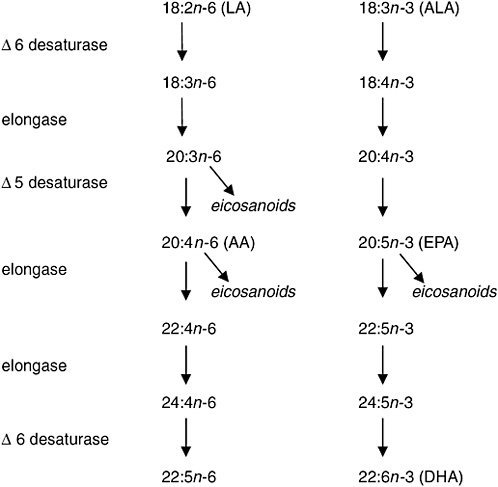
FIGURE A-1 Biosynthesis of long-chain fatty acids.
NOTES: LA = Linoleic acid; AA = Arachidonic acid; ALA = Alpha-linolenic acid; EPA = Eicosapentaenoic acid; DPA = Docosapentaenoic acid; DHA = Docosahexaenoic acid.
SOURCE: Derived from IOM, 2002/2005.
This position in the periodic table leads to the classification of selenium as a metalloid element with unique chemistry and biochemistry, i.e., exhibiting both metallic and nonmetallic properties. Selenium can form bonds with other selenium atoms, a characteristic referred to as catenation and shared with other elements like carbon, silicon, and sulfur. Elemental selenium is found in three forms: the gray-black form or metallic hexagonal selenium, an amorphous white form, and a monoclinic red form. Selenium has six electrons in the 4s and 4p, orbital and the empty dπpπ bonds of selenium, like sulfur, can be filled by pπ electrons of oxygen. Selenium and sulfur have
similar radii Δ, 1.03 and 1.07 (covalent radii), and similar electronegativities of 2.44 and 2.48, respectively. Thus, the chemical reactivity of selenium and sulfur are similar. However, the reduction potential of selenous and selenic acids are much greater than those of the analogous sulfur acids so that when both are in the same mixture, selenite will be reduced to elemental selenium but sulfite will be oxidized to sulfate.
Selenium Essentiality
Selenium occurs in all the cells and tissues of mammalian species and reflects the level of dietary selenium over a wide range of intakes. Selenium was recognized as an essential nutrient when Schwarz and Foltz (1957) showed that a form of liver necrosis developed in rats if either vitamin E or selenium was excluded from their diet. It is now recognized that both selenium and vitamin E have important roles in the detoxification of hydroperoxides and free radical byproducts (Sunde, 2001).
Selenium deficiency has been demonstrated in premature infants and patients utilizing long-term selenium-free enteral or parenteral solutions. Deficiency symptoms include red blood cell hemolysis, cardiomyopathy, growth retardation, cataract formation, abnormal placenta retention, lack of spermatogenesis, and skeletal muscle degeneration. There is a decline of selenoproteins, particularly glutathione peroxidase activity. Selenium deficiency has been found to be endemic in regions of China, where it is called Keshan disease. Children are particularly susceptible, and the disease is characterized by cardiomyopathy. Selenite-enriched salt has been shown to assist in the reversal of this deficiency, but it is likely that selenium is only one factor. Coxsackie virus has been isolated from persons with Keshan disease, and recent animal research has provided evidence that viral infections may be influenced by selenium status. The Institute of Medicine has recommended an intake of no less than 55 and no more than 400 µg of selenium per day as sufficient to meet the needs of the average adult (IOM, 2000).
Selenium is an essential element in a group of proteins, i.e., selenoproteins. Sulfur amino acids and selenium are involved in the synthesis of these selenoproteins via selenophosphate to form selenocysteine, catalyzed by the enzyme selenophosphate synthetase. Approximately 25 selenoproteins have been identified, with half characterized with respect to their function (Kryukov et al., 2003). Of those characterized for function, over half perform free radical detoxification. The list of established selenoproteins and their respective biological functions are listed in Table A-1 (Sunde, 2000). The selenium is incorporated into the peptide backbone of selenium-containing proteins as selenocysteine. Novel metabolic pathways are necessary to convert various dietary forms of selenium into the selenocysteine entity. Dietary selenate and selenite are reductively converted to selenide,
TABLE A-1 Selenoproteins and Biological Functions
|
Selenoproteins |
Function |
|
Cytosolic glutathione peroxidase, GPX1 |
Major form of selenium, protects against hydroperoxides |
|
Phospholipid hydroperoxide glutathione peroxidase, GPX4 |
Lipophilic, works within membranes to destroy peroxides |
|
Gastrointestinal glutathione peroxidase, GPX2 |
Protect intestine against external peroxides |
|
Extracellular glutathione peroxidase, plasma GPX, GPX3 |
Secreted GPX, major form of selenium in milk |
|
Selenoprotein W, SELW |
Small 9.8 kDa selenoprotein found in muscle, postulated to have antioxidant function |
|
Selenoprotein P, SELP |
Major plasma selenoprotein, postulated to protect the cardiovascular system against oxidant damage |
|
Thioredoxin reductase, TRRs |
Reduce small intracellular molecules, regulate intracellular redox state, and may have important roles in antioxidant defense |
|
Iodothyronine deiodinase |
Activation and metabolism of thyroid hormone |
|
Sperm capsule selenoprotein |
|
|
SOURCE: Derived from Sunde, 2001. |
|
usually in the intestinal or erythrocyte cells. Selenium released from selenomethionine breakdown will also enter this pool as selenide. Subsequently, synthesis of selenocysteine involves several unique intermediates but it is the selenide that serves as the precursor to selenocysteine.
Selenium Food Sources
Plant and animal levels of selenium vary widely, reflecting the wide range of selenium content of soils (Sunde, 2001). Corn, rice, and soybeans grown in a selenium-poor region of China contain 0.0005, 0.007, and 0.010 µg/g, respectively, while those grown in seleniferous areas of China can have a selenium content as high as 8.1, 4.0, and 11.9 µg/g, respectively. Organ meats and seafood are usually good sources for this element (USDA, 2005), with levels ranging from 0.4 to 1.5 µg/g, whereas levels in muscle meats
range from 0.1 to 0.4 µg/g, and in dairy products, less than 0.1 to 0.3 µg/g. Drinking water usually has a negligible selenium content, unless it comes from well waters in seleniferous areas (Sunde, 2001).
Selenium Toxicity
Berzelius first reported the existence of selenium as a metal in 1817. In nature, selenium is often found in combination with lead, copper, mercury, and silver as selenides, similar to sulfur counterparts. Localized seleniferous areas can be found in various parts of the Great Plains in North America. Seleniferous areas also have been identified in Ireland, Israel, Australia, Russia, and South Africa. In grazing livestock of North America, the disease associated with excess selenium intake is known as alkali disease or blind staggers. Selenium accumulator plants ingested by livestock are often the source of selenosis or selenium poisoning. Selenium poisoning can be a mild chronic condition, or severely acute, resulting in death. Acute selenium poisoning resulting in death is often preceded by blindness, abdominal pain, salivation, grinding of the teeth, and paralysis. Death is usually due to respiratory failure, which is often complicated by starvation resulting from loss of appetite, marked restriction of food intake, anemia, and severe pathological changes in the liver (Hogberg and Alexander, 1986). Dullness and lack of vitality, emaciation and roughness of coat, loss of hair, erosion of the joints, atrophy of the heart and cirrhosis of the liver, and anemia characterize chronic selenium poisoning. Chronic selenium poisoning can occur in rats and dogs given diets containing 5–10 ppm selenium. It is likely that the minimum toxic level is 4–5 ppm selenium. Acute toxicity in humans occurs when selenium intake is in excess of 750 µg/day. Usually toxicity occurs when individuals are exposed to high dietary intake and industrial conditions (smelters) that increase the body burden of selenium.
The precise ways in which selenium at toxic intakes exerts toxicity are not completely understood. Inhibition of oxygen consumption by tissues appears to be mediated through a poisoning of succinic dehydrogenase.
When selenium intake is high, it can be methylated through S-adenosylmethione by either microsomal or cytosolic methyltransferases, forming the products methyl, dimethyl, trimethyl derivatives. Dimethyl selenide is the volatile seleno derivative giving the garlic-like odor (Sunde, 2001).
References
Gill I, Valivety R. 1997. Polyunsaturated fatty acids, part 1: Occurrence, biological activities and applications. Trends in Biotechnology 15:401–409.
Hogberg J, Alexander J. 1986. Selenium. In: Friberg, L, Norberg, G, Vouk VB, eds. Handbook on the Toxicology of Metals. Vol 2. Amsterdam, Netherlands: Elsevier. Pp. 482–512.
IOM (Institute of Medicine). 2000. Dietary Reference Intakes for Vitamin C, Vitamin E, Selenium, and Carotenoids. Washington, DC: National Academy Press. Pp. 284–324.
IOM. 2002/2005. Dietary Reference Intakes for Energy, Carbohydrate, Fiber, Fat, Fatty Acids, Cholesterol, Protein, and Amino Acids. Washington, DC: The National Academies Press.
Kryukov GV, Castellano S, Novoselov SV, Lobanov AV, Zehtab O, Guigo R, Gladyshev VN. 2003. Characterization of mammalian selenoproteins. Science 300:1439–1443.
Qui X. 2003. Biosynthesis of docosahexaenoic acid (DHA, 22:6–4, 7, 10, 13, 16, 19): Two distinct pathways. Prostaglandins, Leukotrienes and Essential Fatty Acids 68:181–186.
Schwartz K, Foltz CM. 1957. Selenium as an integral part of factor 3 against dietary necrotic liver degeneration. Journal of the American Chemical Society 79(12):3292–3293.
Sunde RA. 2001. Selenium. In: Bowman BA, Russel RM, eds. Present Knowledge in Nutrition. Washington, DC: International Life Sciences Institute Press. Pp. 352–365.
USDA (US Department of Agriculture). 2005. National Database for Standard Release 18. [Online]. Available: http://www.nal.usda.gov/fnic/foodcomp/Data/SR18/sr18.html) [accessed December 4, 2006].


