
1
Introduction
Atmospheric processes have an enormous impact on the lives of Americans and the rest of the world’s population. From everyday weather to hurricanes and tornadoes, from the quality of the air we breathe to the integrity of the stratospheric ozone layer, and from the impact of increasing greenhouse gases to that of intense solar storms, understanding the atmosphere is of principal importance. The past 50 years have brought impressive advances in our understanding of all of these processes and in our ability to anticipate and prepare for them. Yet, the imperative to advance atmospheric science is more important than ever, especially in the face of changing environmental conditions and even greater societal demand for relevant information and services.
Research activities in the atmospheric sciences are addressing a wide range of societally relevant topics. For example, more timely tornado warning and more accurate predictions of hurricane frequency, location, and intensity have resulted from research to develop better atmospheric models and observations, and improve our understanding of these phenomena. During the 2005 North Atlantic hurricane season there were an unprecedented 27 named storms, and one of these, Katrina, caused extensive destruction after landfall on the U.S. Gulf Coast. During 2003 and 2004, a record number of tornadoes in the United States caused much loss of property and life. Great advances in severe storm prediction have been made, but we can still do better.
Poor air quality continues to adversely affect the health and life spans of tens of millions of people in the United States and many hundreds of millions worldwide, as epidemiological studies confirm that current urban
levels of airborne particulates have serious health impacts. Both forecasting and managing air quality require more precise knowledge of pollutant emissions, transformations, and transport. Furthermore, following the model of numerical weather prediction, new prediction capabilities will be emerging for concentrations of key chemical constituents and for aerosols that impact human health.
Increasing greenhouse gas concentrations are warming the surface of the Earth, with worrisome implications for vulnerable ecosystems, low-lying coastal communities, hydrological systems, the cryosphere, and degraded air quality. Crucial policy decisions involving our energy, industrial, and transportation systems will be made on the basis of increasing capabilities to model the future climate and its response to societal actions. Understanding the atmospheric component of climate variability and change is crucial for making successful projections of future climate conditions.
Intense solar storms impact near-Earth space and the planet’s atmosphere, with sometimes dramatic effects on communications and observational satellites as well as ground-based electrical distribution systems. Quantitative models and approaches to forecasting space weather are now reaching the stage similar to the early stages of numerical weather prediction. Our understanding of the Sun now makes it possible to predict future solar cycles on the basis of numerical, physics-based models, and useful predictions that trigger actions to protect satellites, astronauts, and the electrical power grid are emerging.
Farsighted and effective support for the atmospheric sciences will have a crucial impact on needed advances addressing these important problems. During the past 50 years the National Science Foundation’s (NSF’s) Division of Atmospheric Sciences (ATM) has played a vital role in the advancement of the atmospheric sciences and the enhancement of the field’s capabilities to address issues vital to society. Over the next 50 years addressing the pressing atmospheric issues noted above will demand wise and bold investments in the atmospheric sciences. In this report we review the record of ATM activities and the advances they have enabled, assess the current state of NSF-sponsored atmospheric science programs, and discuss actions that we hope will help aid future ATM investments to strengthen our science and enhance its ability to address the atmospherically related problems facing humanity.
ATMOSPHERIC SCIENCES AT THE NATIONAL SCIENCE FOUNDATION
The fact that Earth’s atmosphere is by and large beyond our experimental control fundamentally shapes how atmospheric research is conducted. Atmospheric scientists employ a mix of direct observations of
the atmosphere, analysis of these observations, laboratory experiments that seek to re-create atmospheric conditions, numerical modeling, and theory. Atmospheric observations can come from routine weather observations, special field programs of relatively short duration, long-term research observations, and climate observing systems. In many cases our understanding is advanced by continually testing theoretical predictions or simulations of system parameters against observations of these same parameters. By iteratively comparing model results with observations and improving understanding of individual processes, representations of natural physical processes in mathematical models of physical systems, such as the atmosphere, the ocean, or the climate system, are continually improved. An ultimate test occurs when these models are used to predict future behavior of natural systems and are tested against observations. Improving our knowledge about the atmosphere thus requires an approach that balances multiple approaches and facilitates the interplay among them.
NSF is responsible for the overall health of science and engineering across all disciplines and for ensuring the nation’s supply of scientists, engineers, and science and engineering educators. The Geosciences Directorate (GEO) of NSF includes the ATM, Division of Earth Sciences, and Division of Ocean Sciences. ATM supports research to develop new understanding of Earth’s atmosphere and the dynamic Sun, as illustrated in the organizational chart for the division (Figure 1-1). Over the past six years, ATM has devoted about 30 percent of its budget to supporting the Lower Atmospheric Research Section, 16 percent to the Upper Atmospheric Research Section, 42 percent to the University Corporation for Atmospheric Research and Lower Atmospheric Facilities Oversight Section, and the remaining 12 percent to other activities (including Science and Technology Centers, cross-directorate funding, special activities within GEO, and the division-wide account for midsize infrastructure). ATM’s total budget for these activities in 2004 was $238.8 million.
ATM supports activities to enhance education at all levels, the diversity of the scientific community, and outreach to the public. ATM-funded scientists conduct research to address NSF-wide priorities and participate in interagency and international research efforts. ATM employs a range of modes of support for these activities: grants to individuals and to teams of researchers; small research centers (e.g., the Science and Technology Centers); a large federally funded research and development center, specifically the National Center for Atmospheric Research (NCAR) located in Boulder, Colorado; and the acquisition, maintenance, and operation of observational and computational facilities operated by NCAR, universities, and other entities (see also Box 1-1). Approximately two-thirds of the ATM’s budget is for science research projects, and the remaining one-third is for facility support (Figure 1-2).
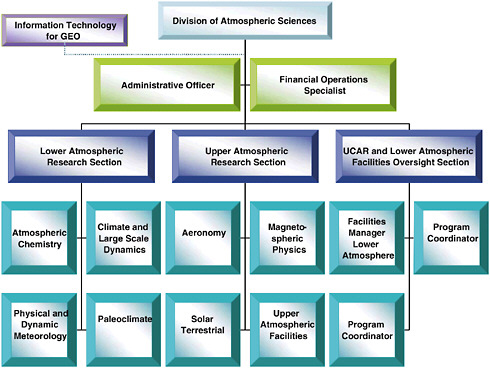
FIGURE 1-1 Organizational chart for ATM.
NSF is unique in that its mission explicitly covers federal funding for basic research in the atmospheric sciences, which is fundamental to advancing our understanding. Other agencies that fund atmospheric research, such as the National Aeronautics and Space Administration (NASA) and the National Oceanic and Atmospheric Administration (NOAA), have missions that are more applied and mission specific. For example, NASA has funded the development and application of technology at least as much as the use of the technology in doing basic research; in particular, it has supported the development of satellite sensors, which are used as platforms for probing Earth’s weather and climate. NOAA has funded projects with specific missions directed at climate and weather products and services, such as acquiring data to be used in numerical forecast models, to develop and improve weather forecasting models and techniques, and has developed and maintained networks of observing systems in support of them.
NSF’s primary role of funding basic research in the atmospheric sciences is very important. Not all basic scientific discoveries are immediately useful to society, but many of the objectives of basic research, when realized, can
ultimately be applied to society’s problems. This was discussed thoroughly in the NSF-commissioned report Technology in Retrospect and Critical Events in Science (Illinois Institute of Technology, Research Institute, 1968). In reviewing several case studies of technological and applications developments, the authors of that report note that:
What was most significant, however, was that all applications depended vitally, critically, on a long history of basic research, a substantial part of which was non-mission, uncommitted research.
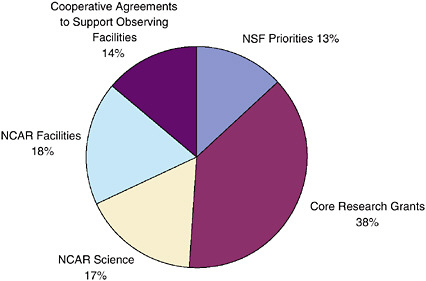
FIGURE 1-2 Expenditure allocations for ATM in fiscal year 2004; total is $238.8 million.
An example from the atmospheric sciences is basic research on severe thunderstorms and tornadoes, which led to a sufficiently improved understanding of them that technology could be used appropriately to better warn the public of impending disaster. Another example is the basic research that provided the foundation for understanding the oceanic and atmospheric conditions associated with El Niño, before the first successful long-lead forecasts during the 1980s. Such advances would not have been possible without the foundation of basic knowledge about the phenomenon’s characteristics and behavior. How and why tornadoes or El Niño conditions form must be well known before one can reliably tackle the applied problems of improving warnings or forecasts of them. While applied research can sometimes lead to basic discoveries, in many instances basic research is a prerequisite for successful applied research.
STUDY STRATEGY AND REPORT ROADMAP
To provide NSF’s ATM division with the requested guidance the committee solicited broad input from the atmospheric science community in its deliberation in the following ways: (a) Several workshops were organized to invite representatives from the community to provide thoughts on the committee’s statement of task; (b) during its initial phase it held several town
hall meetings with the purpose of soliciting community input; (c) comments were invited via the committee’s Web site; and (d) an interim report was released with the intent to solicit additional community input at subsequent town halls. The committee discussed and considered these comments as part of its deliberative process before drawing its final conclusions.
One important and especially challenging aspect of the committee’s charge was to assess the balance among the modes of support employed by ATM. The committee defines balance in Box 1-1 as the evolving diversity of modes and approaches to ensure the overall health of the enterprise. In a largely successful program like ATM, the balance is always shifting to reflect changing priorities and opportunities. In this report, the use of the word “balance” does not imply a specific percentage to any particular component. Indeed, there is no way to objectively determine the perfect balance among the modes. That said, the committee took three different tacks to evaluate the balance among the modes and activities supported by ATM in order to identify whether any modifications to the balance were warranted at this time. Chapter 2 examines several major achievements of the field over the past 30 years and to what extent the various modes were important in each. Chapter 3 reviews how the field has evolved over the past 40 years to help us consider whether new modes are needed to address new challenges. Chapter 4 assesses how each mode operates today to identify the strengths and shortcomings of each.
Chapter 5 highlights another major theme of the committee’s deliberations: cross-disciplinary, interagency, and international collaborations that are critical for the success of the atmospheric sciences. In the final chapter of the report the committee concludes with its findings and recommendations regarding the overall balance and value of the various funding modes and activities and points to broad areas where attention by NSF is warranted to improve support for the atmospheric sciences.


