
4
Assessing the U.S. Position
This chapter presents the background and current status of developments progressing toward a U.S. Facility for Rare-Isotope Beams (U.S. FRIB) and places the facility in the broader context.
RECENT HISTORY
In 1999, the joint Department of Energy/National Science Foundation (DOE/NSF) Nuclear Science Advisory Committee (NSAC) convened a task force that unanimously concluded that there was a scientific imperative for the United States to build a next-generation rare-isotope beam facility (termed the Rare Isotope Accelerator, or RIA) and recommended a unique technological solution that included both the in-flight and Isotope Separator On-Line (ISOL) isotope-production capabilities.1 The main feature of the recommended facility was a novel accelerator (driver) capable of accelerating any stable ion from hydrogen to uranium. The driver would have delivered primary beam powers up to 400 kW for the production of unparalleled yields of rare isotopes from both ISOL targets and fragmentation targets. Other major
components of the proposed facility included isotope separators for isotopic separation of in-flight fragmentation-produced exotic beams, a gas catcher/ ion guide for preparing these in-flight beams for subsequent injection into an accelerator, and a postaccelerator facility for varying the energy of these rare isotopes.
The 1999 report recommended conducting modest preconstruction research and development (R&D) on key elements of the facility to enhance the predicted performance and to reduce costs. The subsequent R&D has enhanced the concept, verified that the concept is robust, expedited the readiness to proceed to detailed engineering, and reduced the need for large financial contingencies. Key developments were made in the areas of ion source technology, superconducting cavity design, accelerator design, beam target and stripper technology, and gas catcher technology. The baseline concept design for the accelerator now includes about 1,200 major elements (300 radio-frequency [RF] resonators, 90 solenoids, 100 quadrupoles, and 16 magnetic dipoles) to achieve at least an energy of 400 MeV/A for all ions. The final energy for an ion depends on its charge-to-mass ratio (that is, hydrogen, with a charge-to-mass ratio of 1, will reach more than twice the energy/ mass unit of the heaviest ions). The lower-energy (200 MeV/A) driver, proposed for a FRIB, would merely be a shortened version of this existing design.
At the time of the NSAC task force, there was no ion source that had demonstrated the heavy-ion current to realize the 400 kW specification for the heaviest ions. To reach this specification required nearly an order-of-magnitude improvement in uranium ion current. Subsequently, with DOE-supported R&D, a group at the Lawrence Berkeley National Laboratory demonstrated that its Electron Cyclotron Resonance Ion Source meets the required specifications. The ion source is shown in Figure 4.1. Beam dynamics calculations have shown that the beam characteristics from the ion source are, in fact, so excellent that it is even possible to accelerate two charge states simultaneously. A unique radio-frequency quadrupole (RFQ) linac that accommodates the acceleration of multi-charge-states has been prototyped at the Argonne National Laboratory (ANL). The ability to simultaneously accelerate ions of different charge-states is important for reaching high beam powers.
The velocity of the accelerated ions varies considerably over the length of the accelerator, and the technology to accelerate these ions has been optimized to achieve cost-efficient acceleration. The concept design is unique in that it proposes to use superconducting RF cavities throughout the acceleration process. To reduce the size and cost of the accelerator, various cavity structures have been proposed and prototyped. The cavity structures are grouped into several accelerator sections according to the respective betas (β [beta] = v/c, ion velocity/speed of light) and resonating frequency. The structures include fork, quarter wave, half wave, triple
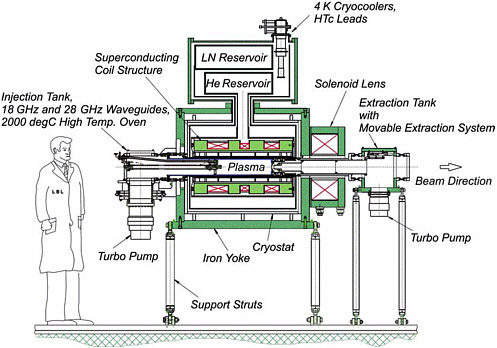
FIGURE 4.1 The ion source developed for the Rare Isotope Accelerator (RIA). It has delivered 8 × 10¹² of Bi in charge state +30. Courtesy of the Lawrence Berkeley National Laboratory.
spoke, and elliptical cell resonating structures. All proposed resonator structures have been either prototyped or tested. Figure 4.2 shows the design and prototype performance of a quarter wave resonator.
For a given energy, the length of the accelerator affects the overall cost of the facility; a lower total number of accelerating RF cavities results in a lower total accelerator cost. For RIA, and presumably also for a FRIB, the cost of the driver accelerator has been minimized through the use of electron strippers at optimal points in the accelerator chain. At these locations, the charge state of an ion is increased by removing electrons from the ions. The total energy gain in crossing a voltage gap of an RF cavity is enhanced, since the energy gain is proportional to the charge of ion. A technological challenge for next-generation rare-isotope facilities has been to develop electron strippers that have manageable lifetimes at the power densities of the uranium beams. Graphite foils are commonly used in accelerators but can only tolerate relatively low beam power deposited in the foil. Initially, large rotating graphite wheels were proposed to deal with the required increased power deposition. Recently, a thin, high-speed, liquid-lithium film has been proposed as
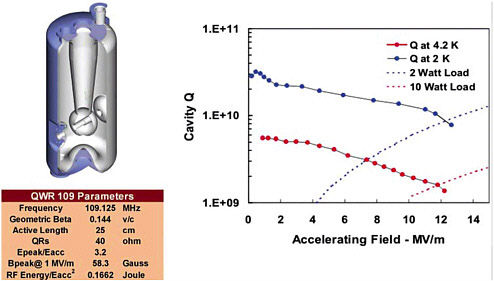
FIGURE 4.2 Design and performance of a prototype superconducting quarter wave resonator (QWR). Courtesy of Argonne National Laboratory, managed and operated by UChicago Argonne, LLC, for the U.S. Department of Energy under Contract No. DE-AC02-06CH11357.
the preferred solution and has successfully undergone initial testing to confirm some of the basic requirements. This development comes as a by-product of the R&D on a liquid-lithium fragmentation target. The liquid-lithium “foil” designs and a photograph of their operation is shown in Figure 4.3.
For exotic beams produced by the fragmentation technique, a focused, 400 kW, high-energy high-mass beam from the driver accelerator impinges on a windowless liquid-lithium target. Fragments from the collision reaction of the high-energy beam and the lithium atoms are captured and transported to a mass separator. The liquid-lithium target must be capable of withstanding approximately 4 MW/cm3. A windowless lithium jet has been assembled, tested in vacuum with an electron beam, and confirmed to be stable with a uranium-beam-equivalent deposited beam power.
A major novel element of the proposed design for RIA is a gas catcher system that permits mass-separated isotopes formed via fragmentation to be stopped and reaccelerated. The output of the gas catcher would be a low-energy cooled beam of isotopes in a single-charge state. To meet scientific requirements, the gas catcher must be efficient, universal, and fast. Of particular interest are the small quantities of very-short-lived isotopes at the extremes of the nuclear landscape. Tests have
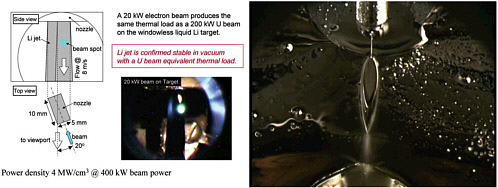
FIGURE 4.3 Layout of the liquid-lithium “foils” that serve as fragmentation targets for the heavy-ion beam from the accelerator. The foil on the left is 1 cm thick and 0.5 cm wide; it has been shown to be capable of serving as a target in a 400 kW beam. The foil on the right is the object in the center of the photograph. It is ~10−3cm thick and has a high mass flow rate of 2 g/s. It is to be used to strip electrons from 10 MeV/A heavy-ion beams and should be able to handle the power deposition. Courtesy of Argonne National Laboratory, managed and operated by UChic ago Argonne, LLC, for the U.S. Department of Energy under Contract No. DE-AC02-06CH11357.
confirmed that a large gas catcher capable of operating at these energies can be built and that it operates essentially as predicted. In a test of the U.S.-built gas catcher at the Gesellschaft für Schwerionenforschung (GSI) accelerator complex in Germany, a remarkable 50 percent of the radioactive ions stopped in the gas catcher were extracted as a singly-ionized low-energy radioactive ion beam.2 Figure 4.4 shows the focusing forces in a gas catcher and lists some observed performance levels. As of this writing, a final test to verify the upper operating intensity limit for the beam into the gas catcher is imminent. In spite of this one unanswered question, it is clear that the gas catcher already meets expectations for a majority of the scientifically interesting rare isotopes.
The driver can also accelerate the light ions required to produce exotic isotopes through the ISOL technique. Isotopes of interest are created via the process of spallation or by fission. The isotopes diffuse from the target material and effuse to an ionizer. Both processes are enhanced if the target is maintained at elevated temperatures. A major technological challenge is to develop targets that are small enough to release short-lived exotic isotopes rapidly and yet capable of operating with the 400 kW beam power that the driver accelerator can provide and which the scientific program requires. For optimal operation, it is essential that regardless of the beam power, the target material be maintained at an elevated temperature (typically 1200 to 1600°C) in order to speed diffusion of the ISOL-induced rare isotopes; high efficiency requires good thermal conductivity in the target to maintain a uniform temperature. The yield of exotic isotopes is proportional to the intensity (power) of the driver beam. Target developments at the Isotope Separator and Accelerator (ISAC) have shown that the technology exists to handle 50 kW beam powers effectively.
DOE-funded R&D has modeled various target-design concepts that could potentially operate at these substantially higher powers. One of the schemes is being tested and offers significant advantages for both the production of neutron-rich exotic beams and the suppression of unwanted isotopes. In this approach the exotic isotopes are created by the ISOL technique via two-step neutron-induced fission. In essence there are two targets combined into one unit. A primary target is used to produce neutrons. A secondary target, an actinide compound, uses the neutrons to produce the exotic beams by a fission reaction. The beam power from the driver accelerator can be deposited in a target that is adequately cooled to handle the power. The secondary target has much less deposited power and can be
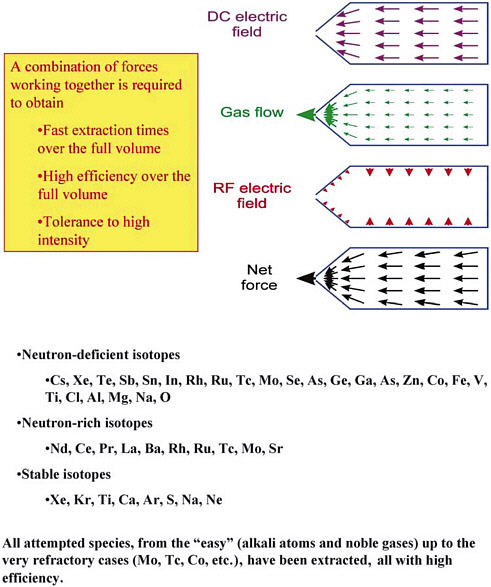
FIGURE 4.4 Composite figure showing the various force fields at play in a gas catcher design and a list of the various ions that have been extracted. The principal uncertainty in gas catcher performance is its efficiency when a high flux of ions is present in the catcher. Courtesy of Argonne National Laboratory, managed and operated by UChicago Argonne, LLC, for the U.S. Department of Energy under Contract No. DE-AC02-06CH11357.
maintained at the required elevated temperatures using conventional ISOL target-heating techniques.
Radiation control, activation reduction, contamination control, and remote handling are essential considerations for a FRIB facility. The end-to-end simulations developed for the RIA accelerator have been effectively addressing these issues. In spite of the large currents, beam loss in the driver accelerator, with the exception of the stripper and target locations, has been minimized to permit hands-on maintenance. Remote-handling procedures have been considered where required. Initial layouts of target servicing have included consideration of how best to address these issues.
A postaccelerator concept has been developed that would efficiently capture and accelerate the broad range of scientifically interesting isotopes (from lightest to heavy masses) that could be produced in the FRIB. The requirements as a whole dictate a novel design. The accelerator must accept singly-charged isotopes (large charge-to-mass ratio range), operate in a continuous-wave mode, and provide an output energy that can be continuously varied over the entire energy range. Ongoing developments at the U.S. rare-isotope beam facilities are developing and using the accelerator beam diagnostics that are required to monitor the beam characteristics over the large dynamic range of currents that will be used.
As mentioned in the beginning of Chapter 1, in the course of this committee’s deliberations the scope of RIA was reduced and the start of construction delayed. Fortunately the technology under development for RIA appears to be directly applicable to the reduced-scope FRIB. The significant technical advances are listed below.
The technical concepts to go into the U.S. FRIB have evolved and been strengthened through a vigorous national R&D program that has been ongoing for about 10 years at several national laboratories and universities in the United States,3 in many cases leading to strong, multi-institutional collaborations. In recent years, the RIA R&D program of the DOE’s Office of Nuclear Physics has been funded at the level of $2.8 million, $4 million, $6 million, $6.5 million, and $4 million in fiscal years (FY) 2002 through 2006, respectively. The current plan is to continue with R&D for advanced exotic-beam facilities at roughly the present level in the coming years. The direct DOE programmatic funding of RIA/FRIB R&D has been leveraged with significant contributions via discretionary programs at several of these institutions.
Major milestones achieved through this R&D program include the following:
-
Electron cyclotron resonance ion source—The necessary intensities of heavy ions have been demonstrated.
-
Driver linac beam dynamics—The multiple-charge-state, high-intensity mode of operation of the driver linac has been simulated in detail.
-
Superconducting RF resonators—Prototype resonators to cover the necessary velocity regime from 0.02 c to 0.8 c have been demonstrated at the gradients required for the driver.
-
Driver linac front end—Engineering concepts have been developed for the room-temperature injector including the low-energy bunching and RFQ for two-charge-state operation.
-
High-power production targets—The liquid-lithium target concept for uranium beams has been demonstrated at equivalent power using an electron beam. Detailed production rates and thermal simulations have been completed for a high-power two-step ISOL target.
-
Large-acceptance fragment separators—Concepts for optical solutions and physical layouts for both the in-flight and gas catcher branches have been developed.
-
Gas catcher for rare isotopes—The gas catcher concept has been demonstrated at a range of energies, including the full-energy test at GSI.
-
Radiological issues and concepts in the production areas—Preliminary concepts for the physical layouts and remote-handling options, including proposals for high-power beam dumps for both the ISOL and fragmentation areas have been developed.
-
Rare-isotope postacceleration—Alternatives for postacceleration with emphasis on high efficiency and beam quality have been worked out.
-
Experimental facilities—User workshops have led to tentative layouts that incorporate the necessary instruments for rare-isotope research in the four required energy regimes.
Ongoing R&D needs include further development of engineering prototypes in many of these areas in order to address issues such as radiation resistance, accelerator diagnostics, instrumentation, and fast controls necessary for fail-safe high-power operations; stripper foil development; further development and demonstration of gas catcher operation at higher intensities; and more detailed concepts for advanced instrumentation for research with rare isotopes.
As mentioned in Chapter 1, the Department of Energy decided not to address the construction of a facility for rare-isotope beams for 5 years and reduced the budget of the facility by roughly half. The two proponents for the facility, the
Argonne National Laboratory and Michigan State University (MSU), provided the committee with quick-turnaround presentations on how they would reduce the cost of the facility to meet the new DOE target. Both parties chose to reduce the energy of the driver accelerator by a factor of two, so that the new driver would provide approximately 500 MeV protons and 200 MeV/A uranium. The ANL presentation focused on complementing the main driver with an extensive ISOL program, while the MSU presentation favored the use of fast beams from fragmentation of the heavy ions from the driver with a small ISOL component. These presentations to the committee of course were not formal proposals, but they included some data on the projected reduced performance that were used in making the comparisons presented in the following section, “Global Context for a U.S. FRIB.”
The committee examined the reduction in scope given that a FRIB was defined to cost only about half as much as RIA. The central issue revolves around what one means exactly by “scope.” If it is taken to mean simply the reduction in the number and intensity of rare isotopes that can be produced, then the options initially shared with the committee (by ANL and MSU, the former proponents of and hopeful sites for RIA) of cutting the maximum energy of the heavy-ion accelerator back to 200 MeV/A (from 400 MeV/A) have the following consequences. For the production of many isotopes, typically those not far from stability, there is only modest reduction (0 to 20 percent) in production rates. However, for those isotopes farthest from the valley of stability, which are produced by in-flight fission, the loss is much larger. In these cases, the production rates for a 400 MeV/A, 400 kW driver are more than an order of magnitude higher than a 200 MeV/A, 400 kW driver because yields for ions far from the beam (particularly for fission fragments) drop rapidly with the available beam energy owing to overall collection efficiency and secondary production in thick targets. In terms of scientific impact, the study of very-neutron-rich nuclei near the drip line in the mass 70 to 120 range would be most significantly affected. There would appear to be no way to develop a technical solution to this shortcoming without increasing the driver energy and the cost.
Analyzing the two strawman proposals further, however, the committee observed that the proponents had tried to preserve as much of the isotope-production capability as possible, in exchange for cutting back the experimental capabilities—research space, multiplicity of end stations, and overall flexibility. These factors are critical to research productivity and user “throughput.”
Given the ambiguity and uncertainty that this issue entails together with the limited information and time available, the reduction in scope (and its impact) is uncertain. Based on information from ANL, reducing the driver energy by a factor of 2 accounts for about 60 percent of the $600 million cost reduction. Savings were
also assumed by proposing that a larger acceleration gradient be used in the accelerator, thereby recovering some of the energy while still “shortening” the accelerator. The other reductions were in the experimental areas, so the reduced-scope facility could only provide beam to one user at a time, and the budget for experimental equipment would be reduced from $100 million to $30 million.
The committee also considered the DOE-proposed delay in schedule for a U.S. FRIB. Understanding and predicting the consequences of a delayed start date are even more difficult than anticipating the effects of budget reduction because of all the uncertainties that the future holds for any area of science. There are both advantages and disadvantages to a later schedule. For instance, on the one hand an extreme precautionary stance would argue that all delays ultimately result in a more technologically advanced facility. On the other hand, prolonged delays in starting a project can eventually render it meaningless because the expert community could wither away, the scientific objectives could be achieved elsewhere, or the global perception of the United States as a credible and serious partner in the field could crumble.
GLOBAL CONTEXT FOR A U.S. FRIB
The primary impact of the proposed schedule delay for a U.S. FRIB relative to the original RIA timeline is shown in Figure 4.5. As illustrated, the reduced scope for a FRIB will also have an effect on the U.S. capabilities in the global effort: instead of arriving early on the science scene with a new facility, the United States might arrive last with a FRIB, although the facility could have unique capabilities compared to other facilities available at that time. Clearly, the major national user facilities in the United States (the National Superconducting Cyclotron Laboratory at MSU and the Holifield Radioactive Ion Beam Facility at the Oak Ridge National Laboratory) are now competitive with the world’s other leading facilities and thus are extremely important. Worldwide coordination of the use of all these facilities by the United States and its partners should be pursued to optimize science outcomes. Exemplifying the need for such coordination, the NSAC subcommittee, comparing RIA and the Facility for Antiproton and Ion Research (FAIR) at GSI and placing a special emphasis on the U.S. and German communities that it studied, found that the upgraded facilities at GSI would not be sufficient to meet the combined global demands for access to such rare-isotope beams.
The geographical, representative distribution of projected major rare-isotope beam facilities is seen in Figure 4.6. In the report by the Working Group of Nuclear Physics of the Organisation for Economic Co-operation and Development (OECD) Megascience Forum, published in January 1999, the major recommendations stated, “the Working Group recognizes the importance of radioactive nuclear
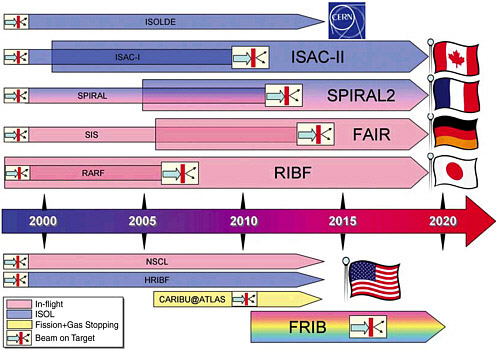
FIGURE 4.5 Timeline for the global development of dedicated rare-isotope beam facilities; the unique capabilities of each facility are slightly oversimplified to allow for this cartoon comparison. The “beam-on-target” date approximates the date on which the facility began (or is scheduled to begin) operations. To a certain extent this diagram is misleading because it portrays only the largest facilities. The fact that countries such as Brazil and India are building small, dedicated facilities is perhaps a better demonstration of the worldwide interest in rare-isotope beam physics. They may not be able to compete in the short term, but they have recognized the relevance and are working to invest a substantial fraction of their resources into the development of their own facilities. NOTE: ISOLDE—On-Line Isotope Mass Separator; ISAC—Isotope Separator and Accelerator; SPIRAL—Système de Production d’Ions Radioactifs en Ligne; SIS—Heavy Ion Synchrotron; FAIR—Facility for Antiproton and Ion Research; RARF—RIKEN Accelerator Research Facility; RIBF—Rare-Isotope Beam Factory; NSCL—National Superconducting Cyclotron Laboratory; HRIBF—Holifield Radioactive Ion Beam Facility; CARIBU—Californium Rare Isotope Breeder Upgrade; ATLAS—Argonne Tandem Linear Accelerator System; FRIB—Facility for Rare-Isotope Beams; ISOL—Isotope Separator On-Line.
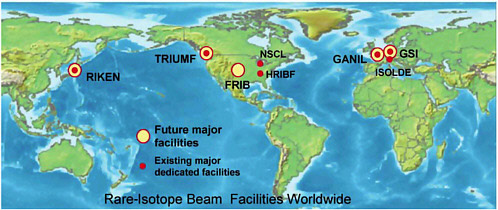
FIGURE 4.6 Representative distribution of projected major facilities for rare-isotope beams. The location of a facility for rare-isotope beams within the United States has not been determined and is therefore placed arbitrarily in the center of the country. NOTE: FRIB—Facility for Rare-Isotope Beams; HRIBF—Holifield Radioactive Ion Beam Facility; NSCL—National Superconducting Cyclotron Laboratory; ISOLDE—On-Line Isotope Mass Separator; GANIL—Grand Accélérateur National d’Ions Lourds; GSI—Gesellschaft für Schwerionenforschung; TRIUMF—Tri-University Meson Facility.
beam facilities for a broad program of research in fundamental nuclear physics and astrophysics, as well as applications of nuclear science. A new generation of radioactive nuclear beam facilities of each of the two basic types, ISOL and In-flight, should be built on a regional basis.”4 This conclusion was based on the recognition that, unlike a field such as particle physics in which facilities can be targeted and optimized for finding answers to a specific question (or two), nuclear science requires a very large number of systematic studies.5 Hence, progress in this
|
4 |
OECD Megascience Forum, Report of the Study Group on Radioactive Nuclear Beams to the Working Group on Nuclear Physics, Paris, France: OECD Megascience Working Group on Nuclear Physics, 1999, p. 39. |
|
5 |
The reader may recall from the section entitled “Technological Context” in Chapter 1 that the ISOL method provides high-quality beams from low up to, in principle, high energies. However, it has a limitation for the acceleration of short-lived isotopes owing to the finite release time of radioactive nuclei from the production target and transfer time to the ion source. The present practical limit is on the order of 10 to 100 milliseconds. The in-flight method provides the fastest separation time, on the order of 100 nanoseconds, that is, the flight time of the radioactive nuclei in the fragment separator. Therefore, not only drip-line nuclei but also many isomers can be produced by |
field is limited not only by the range (“exoticity”) of nuclei available but also by the beam time available for experiments.
Rare-isotope science (and even nuclear physics in general) is no stranger to the march toward globalization—and the efforts to coordinate worldwide plans to address and exploit the most compelling scientific opportunities.6 Indeed, as discussed above, considerations about global coordination and cooperation in nuclear physics have infused recent meetings of the OECD Global Science Forum (formerly the Megascience Forum) and the European Science Foundation’s Research Infrastructure Council.7 As the U.S. nuclear science community undertakes the next cycle of its long-range planning process through NSAC, it will have to address these issues carefully.
The original RIA design was intended to be a world-leading facility in nearly every regard. If a FRIB were constructed in the United States, however, the facility could be world leading in several areas, thereby adding value to both the regional and the global portfolios. Nevertheless, as described above, the usage of the other regional facilities included in Figures 4.5 and 4.6 should be investigated until a new U.S. rare-isotope facility would be in operation (approximately 10 years from now). The U.S. rare-isotope research community, in concert with the DOE and NSF, needs to establish an appropriate balance of usage of domestic and overseas facilities.
The committee briefly examined global “supply” of and “demand” for rare-isotope beams. As noted above, at face value the demand for rare-isotope beams seems strong, given the new large investments being made in Europe and Asia as well as the many smaller projects (described in Appendix C). Within the United
States, the anticipated user community for RIA numbers about 800 researchers; as noted above, FAIR, Système de Production d’Ions Radioactifs en Ligne (SPIRAL) 2, ISAC, and the Rare-Isotope Beam Factory at RIKEN together will serve a community of more than 2,000 users. Although these populations often overlap, the committee observes that the facilities in Asia and Europe are not likely to be able to provide access to the full U.S. community.8 In general terms, the NSAC subcommittee comparing RIA and GSI came to a similar conclusion.9 Finally, the committee notes that the ISAC facility in the American region reports an “oversubscription” rate that forces many users with approved proposals to wait more than a year to obtain access to conduct their experiments.
AN OPPORTUNITY FOR THE UNITED STATES
The technical developments at many of the laboratories cited make construction feasible for a FRIB with a flexible driver that can accelerate ions from protons to uranium nuclei. Those same developments would also permit the effective reacceleration of stopped charged radioactive ions. This combination with supporting technology, such as a gas catcher capable of efficiently extracting exotic ions at high incident beam-power levels, would make a FRIB potent and flexible. The higher intensity of beams created by heavy-ion fragmentation would allow the investigation of nuclei closer to the neutron drip line. The lower energy of a FRIB relative to RIA could use the gas catcher technique more easily (if the technique can handle the higher intensity).
To be more specific, consider the utility of a FRIB for addressing the scientific drivers discussed in the following subsections. Making specific predictions about the advance of scientific progress is fraught with uncertainty (especially 10 years into the future when a FRIB might come online), but it is the committee’s judgment that the scientific agenda outlined in this report is likely still to be viable at that time.
Nuclear Structure
A FRIB has a variety of applications for nuclear structure science.
-
Single- and two-nucleon transfer reactions for studying shell structure. This research traditionally needs beams (in inverse kinematics) corresponding to light projectile energies (p, d, He …) of typically 15 to 20 MeV and so historically has not easily been performed at in-flight facilities; in recent years, however, many experiments have been successful with higher energies. The whole area of study of shell structure is best done with well-focused beams with precisely controlled energies, especially if the strength is fragmented and the detailed structure is important.
The intensities expected at a FRIB for beams such as 100Sn, 48Ni, 78Ni, and 132Sn are on the order of 35, 0.5, 40, and 2 × 10¹⁰ ions per second, respectively. These are typically two to three orders of magnitude above what is currently available.
-
Research in pairing. Two-nucleon transfer studies to probe pairing properties can be carried out at a FRIB within a week, with beam intensities of 104 ions per second. For specifically N = Z nuclei, experiments with 56Ni, 64Ge, 72Kr, and the heavier N = Z nuclei up through 88Ru and probably 92Pd will be possible.
-
Researching collectivity. Collective motion in nuclei can be investigated in a variety of ways. Some aspects of collective behavior require fragmented beams, while others require low-energy reaccelerated beams. For example, collective modes of excitation near the ground state are often best studied with single or multiple Coulomb excitation. Multiple Coulomb excitation requires beams of ~103 to 104 ions per second in inverse kinematics and is better suited to a reaccelerated beam. This kind of experimental data is an excellent way to deeply map out nuclear structure along long iso-chains.
-
The heaviest nuclei. For example, intense beams of 132Sn on neutron-rich targets at controlled energies of, and slightly below, the Coulomb barrier could be used to study the reaction mechanisms governing fusion and multineutron transfer. In favorable cases in which the intensity of the rare isotope is large (90,92Kr, 90,92Sr >1011 ions per second), fusion reactions become feasible with reaccelerated beams of high intensity and precise energies.
-
Neutron skins. The measurements of nuclear matter radii will involve optical model analysis of the (quasi) elastic scattering data. Those scattering experiments (involving protons or alpha particles) often require reaccelerated beams of high intensity and precise energies.
Nuclear Astrophysics
Accretion-induced thermonuclear explosions, such as novae and x-ray bursts, are driven mainly by the hot carbon-nitrogen-oxygen cycles and/or the rapid proton-capture process (rp-process). Most of these reaction sequences are based on theoretical model predictions and assumptions regarding the associated nuclear reaction processes. These assumptions may lead to significant uncertainties in reaction path, reaction flow, energy production, and timescales. Most important to measure are nuclear structure parameters far off stability, such as masses, level-densities, half-lives, decay branchings on rp-process to rapid-neutron-capture-process (r-process) nuclei, but also critical are particular reaction rates for so-called waiting-point nuclei, which in many cases are not uniquely identified yet. The field is haunted by these underlying uncertainties, which make it difficult to pinpoint the “key reaction” clearly at this time.
Measurements in nuclear astrophysics at a FRIB would mostly be associated with explosive stellar processes at timescales less than or comparable to typical beta-decay lifetimes. At these conditions, reaction sequences are far off stability and depend critically on the timescales of the associated nuclear processes.
Shock-front-induced explosions (such as those anticipated for core collapse supernovae) are expected to be important sites for the r-process and possibly antineutrino production. The latter would be generated by charge-exchanging on protons to build up elements on the neutron-deficient side of the line of stability, complemented by the neutron-induced r-process and the gamma-induced p-process.
Fundamental Interactions
There is not a readily envisioned program of research on fundamental interactions but rather a series of experiments, each of which addresses some aspect of fundamental physics at the existing limit of knowledge at the time of the different experiments. Fundamental interaction studies usually involve the measurement of very weak effects in very specific nuclei. Thus, the critical requirement is intensity and purity, that is, a maximum yield of the isotopes of interest and the absence of contaminants. Precision tests of fundamental symmetries are often limited by statistical uncertainties, and therefore experiments need to collect high volumes for data, typically running for extended periods of time. Thus, multiuser beam-sharing and isotope-harvesting facilities would be needed to enable efficient use of accelerator time. These applications also usually require specialized instrumentation, such as laser facilities.
The highest intensities always come from isotopes that can be extracted by the ISOL technique, not from gas stopping. For those species, the FRIB concept yields
intensities higher than any other facility and a broader range of isotopes because of the variety of production beams available.
If gas stopping is required, the number of incident particles generating the exotic species of interest is always the main issue. In this area, the driver of a FRIB always surpasses any other existing or proposed driver, certainly when heavy-ion beams are considered. The lower energy is also an advantage over facilities such as FAIR, since less energy per particle is lost in the gas catcher, which allows it to operate at higher intensity without space-charge limitations.
For most of the periodic table, a FRIB would have instantaneous intensities that were at worst 70 percent of the RIA intensities (in most cases they would be the same). Only in the region where in-flight fission dominates production would the yield be lower (~30 percent of RIA).10 This is the region of neutron-rich nuclei around 132Sn where no case for fundamental interaction studies has been identified thus far.
Applications of Rare-Isotope Science
It is likely that much of the nuclear physics currently desired for stockpile stewardship and inertial fusion will remain unknown until dedicated experiments at a FRIB-like facility are conducted. Other current U.S. facilities have neither the low-energy exotic beams nor the motivation to measure the important cross sections relevant to these processes. This may also hold true for some of the measurements relevant to the advanced nuclear fuel cycle where the reach of the surrogate method at a FRIB may provide some of the needed cross sections on short-lived isotopes.
As indicated in Chapter 2, the impact of a FRIB on medical research and industrial processes has considerable potential. However, the actual incorporation of FRIB science results into these endeavors depends on so many external factors that it is impossible to predict the outcomes.
PROGRAMMATIC CONSIDERATIONS
The Context of the Nuclear Physics Portfolio
The scientific agenda of nuclear science in the United States contains a diversified portfolio with a triad of research frontiers: (1) quantum chromodynamics
(QCD) and its implications for the state of matter in the early universe, quark confinement, the role of gluons, and the structure of hadrons; (2) the study of nuclei and astrophysics, which addresses the origin of the elements, the structure and limits of nuclei, and the evolution of the cosmos; and (3) the Standard Model and its possible extensions as they bear on the properties of neutrinos, neutrons, and other subatomic particles.
U.S. nuclear scientists employ a broad range of facilities to carry out the research programs described above. The two major facilities, the Relativistic Heavy Ion Collider at the Brookhaven National Laboratory and the CEBAF Large Acceptance Spectrometer detector at the Thomas Jefferson National Accelerator Facility, are dedicated to probing the consequences of QCD for hot and cold strongly interacting matter. These two relatively new world-class facilities are likely to remain at the forefront of nuclear physics for the foreseeable future.
At present, individual DOE and NSF low-energy facilities carry out the program in nuclear structure and astrophysics. A community of nuclear physicists proposes to build a world-class FRIB to strengthen and focus the present activities and to exploit new scientific opportunities. Complementary to this activity is a set of new and challenging experiments in fundamental physics carried out at a variety of facilities—some of which are abroad. Within the United States, the advent of the Spallation Neutron Source and the prospect of building the Deep Underground Science Engineering Laboratory offer new opportunities for nuclear physicists pursuing these lines of research.
The construction of a U.S. FRIB of the capability discussed in this report would align the national nuclear science agenda with world-class facilities in each of its three frontiers. This is a sound strategy for maintaining a balanced program and one that would likely put the U.S. nuclear science agenda in a unique leadership position worldwide. For the United States to effectively utilize its investment in world-class facilities, support for nuclear science at U.S. universities must be strengthened to increase the participation of young researchers. Otherwise, the cost of operating world-class facilities could put additional pressure on the already-tight research budget in nuclear physics, which creates and develops the needed young researchers.
Education, Training, and Workforce in Nuclear Science
An NSAC subcommittee on education recently issued a comprehensive report entitled Education in Nuclear Science, after a 2-year study that included extensive surveys among undergraduate and graduate students, postdoctoral fellows, and recent Ph.D.’s 5 to 10 years after receiving their doctorates. One of its key recommendations deals with Ph.D. production of nuclear physicists: “We recommend
that the nuclear science community work to increase the number of new Ph.D.’s in nuclear science by approximately 20% over the next five to ten years.”11 This recommendation was based on an analysis of the current demographics of the field and a projection of future demand using expected retirements and growth in university and laboratory staff with expertise in nuclear physics. These general expectations, however, are difficult to connect with the specific case of a U.S. FRIB.
The demand for increasing the production of nuclear scientists and engineers comes at a time when much of the existing basic-research and applied-technology nuclear workforce is approaching retirement. Indeed, Nuclear Regulatory Commission News reported that an estimated 76 percent of the nuclear engineering workforce (in industry) will be at retirement age during the period from 2000 to 2010.12 This projection does not directly affect the anticipated U.S. basic-research community for a FRIB, but it does highlight the important leverage that nuclear physics graduate-training programs have on the much larger industry of nuclear energy. For instance, the aforementioned NSAC report found that up to two-thirds of the recipients of recent nuclear physics Ph.D.’s were employed outside the university and national laboratory system of basic research.
As exciting forefront research opportunities attract the best young minds, the construction of a world-class FRIB in the United States would certainly enhance the nation’s capability for attracting Ph.D. candidates to low-energy nuclear physics. It would allow for the training of scientists with hands-on experience in experimental nuclear science at a time when many accelerator facilities at universities have been ramped down or closed. The committee notes that the construction and operation of a large facility is not, in general, a recipe for revitalizing the education and training aspects of a basic-research program. The future NSAC long-range planning committee will need to evaluate how best to maintain the vitality of the U.S. nuclear physics community while best deploying it to address the most compelling science.13 Without a forefront facility at which nuclear physicists are engaged in exciting research, it will be hard to attract able students to the field.
Moreover, students trained in the science that drives a new FRIB fill an important niche in the national need for nuclear scientists. These scientists have already made innovative contributions in many areas such as nuclear medicine, stockpile stewardship, homeland security, and nuclear energy.
In a final note, the committee considered the broader impact of a U.S. FRIB in light of the national attention on economic competitiveness, recently highlighted in a report by the National Academies—Rising Above the Gathering Storm: Energizing and Employing America for a Brighter Economic Future.14 The report argued that strong public support of basic research can help fuel the national economic engine; one of the suggested pathways was through technological developments that occur as part of the progress of science and engineering. While it is nearly impossible to argue that any one specific investment is critically necessary to maintaining the future health of the enterprise, the committee does recognize the value of a U.S. FRIB as one element of a much broader portfolio in the physical sciences.


