
4
System Concepts
The design of imaging systems will certainly be driven by the performance requirements of specific applications. For example, a system designed to screen passengers in an airport for hidden weapons and explosives would focus on maximizing the contrast between threat materials and the human body with high resolution, but without placing too much emphasis on the ability to detect these weapons at high standoff distance. In a field application, resolution and contrast might be sacrificed for the ability to gather information when the subject is farther than a few meters away from the screener.
In this report, the committee focuses mainly on the screening of people in a controlled area such as an airport using a portal system, but it should be kept in mind that
a change in the performance requirements also changes the importance and priority of the technology challenges.
SYSTEM-DEVELOPMENT REQUIREMENTS
The system-development requirements need to reflect the operational needs and validated threats and match the technology capabilities against those operational needs and threats.1 The system-development requirements are to develop a technology that can accomplish the following:
-
Detect the presence, location, and identification of weapons (metallic and ceramic), explosive devices, and other proscribed items concealed underneath a person’s clothing; and
-
Monitor a person for weapons (metallic and ceramic), explosive devices, and other proscribed items quickly and safely, without violating anyone’s privacy.
An imaging system (or systems) is proposed because proscribed items and baggage now vary so broadly in terms of size and materials.
It is generally acknowledged that no single sensor technology has the capability to accomplish the entire mission. A millimeter-wavelength/terahertz imaging device is seen to be a critical subsystem in a layered system of complementary systems that can be dynamically reconfigured, combined, and deployed against an evolving terrorist threat to commercial transport. The most likely fielding of millimeter-wavelength/terahertz imaging systems will be accomplished as a part of an overall systems approach as an element of the passenger-screening checkpoint and baggage checkpoint, or as part of the access control to the secure areas of the facility or aircraft interior.
The principal imaging system components are these:
-
A detector array and/or a scanning system,
-
Image acquisition hardware and software,
-
Image analysis and recognition computation,
-
A database of key threat images and spectra,
-
Display hardware, and
-
A network interface with other elements of the layered system.
SYSTEM CAPABILITIES AND DESIGN
The system-development requirements will drive the system design. Each requirement needs to be analyzed and validated to ensure that valid trade-offs between performance requirements and system design issues can be made.2
A comprehensive discussion of the screening technologies in various environments (indoor and outdoor, controlled and uncontrolled areas, day and night, and so on) and for various scenarios (pat-down search, surveillance, tracking, and so on) is found in a National Institute of Justice Guide 602-00, Guide to the Technologies of Concealed Weapon and Contraband Imaging and Detection.3
The goal of any millimeter-wavelength/terahertz imaging system will be not only to locate an object of concern but also to identify what it is. This process of identification begins with detection and progresses through processes variously described as recognition and classification. For this report, “detection” is defined as “the process for discriminating objects of possible interest from their surroundings.” An operator, however, may not know what type of object is detected but only that something was detected. Conventional walk-through metal detectors will let the operator know that metal objects have passed through the portal, but these systems do not provide the location or the identification of the type (gun versus keys) of the metal objects.
The next level of sophistication is to acquire images of the detection space and then to use image-recognition algorithms to convert the image into an indication (such as an audible or visual alarm). The imaging and image-recognition capability requires access to, or possession of, a large information (data) storage capability and significant computing power to provide the real-time detection capability of finding contraband hidden on individuals in a line of moving people.
The recognition process must follow a strict hierarchy of algorithms with ever-increasing thresholds in order to arrive at a positive indication with a high probability of recognition and low occurrence of false recognition. The algorithm taxonomy begins with the detection of an item or object of interest, followed by a decision on classification as threat or nonthreat. An item classified as threatening is further examined in order to recognize the threat, for example, a weapon or firearm. A package of explosives may be recognized as an anomaly in the body image because the reflective properties of the explosive differ from the reflective properties of a human body, as shown in Table 4-1. A further refinement is identification. The identification step may be necessary in order to reduce false positives generated by prosthetics, shoe shanks, and so on.
The task of developing an imaging system that is capable of identification is difficult at the onset and will require creative and innovative algorithm design. For the identification system to recognize a specific threat item, a catalog of images and spectral features is required, including the impact of unique orientations. Given that the set of all threats is extensive and the set of nonthreats is even more so, a method of learning must be implemented by which systems are networked and the catalog of threats and nonthreats can be updated continually.
Table 4-1 Reflectivity of Basic Explosives and Human Flesh
Screening Considerations
Imaging data that have been collected and processed and alarmed are typically passed to a human operator for final disposition. Thus, it is important to design the system and the human operator’s role together if costly mistakes are to be avoided at the deployment stage. This applies in a situation in which the human role ranges from the unaided interpretation of a screen image to the interpretation of machine-suggested decisions. While this challenge is true for any security technology, imaging presents some unique problems, as the operator has direct, often visual, access to data about a passenger’s body and clothing. This access raises both cultural issues of persons being under intimate observation and performance issues of interpretation of indications that may require subsequent physical access to the passenger’s body. A question is whether operators and their managers will attempt to avoid specifying a hand search that the passenger is likely to find intrusive.
Conclusion: Millimeter-wavelength/terahertz image quality raises personal privacy issues that need to be addressed.
Recommendation: As with x-ray-based passenger imaging, the Transportation Security Administration needs to address issues associated with personal privacy raised by the millimeter-wavelength/terahertz imaging.
Human Operators
The most basic level of integration between the imaging system and the human operator is to ensure that the display provides an image that has sufficiently high spatial resolution and contrast to make a threat detectable with a high probability. This problem has largely been solved for other imaging systems by combining the modulation transfer function of the system with the contrast sensitivity function of the human eye. Unless requirements at this level are met, detection is not possible.
At the next level, the system must be able to search for and recognize the threats for which it is being deployed. Unaided human search is possible, but it is not considered highly reliable compared with a computer-augmented search for well-defined threat targets. The human visual search process is time-intensive, as it is a self-terminating, exhaustive search, albeit guided by expectations and experience—for example, knowing where to look first for potential targets. Search, whether of the unaided-human or machine-augmented type, ends in one of two ways: with the discovery of an indication or with the decision not to spend more time on a particular image and to move on to the next one.
The next logical function is recognition, that is, the classification of an indication as either a threat or a nonthreat. Note that this classification can be deferred by a demand for additional information from beyond the imaging system—for example, for a pat-down search. Human recognition depends strongly on both the orientation of the target and on the training of the human operator. Training programs that expose operators to a variety of views of each class of threat in a controlled manner have been highly effective in improving x-ray checkpoint screening.4 These programs allow the operator to build up prototypical templates of each threat class, so that an unusual example of the threat class or an unusual view of the threat can be understood and recognized. At the level of human-and-system integration, the imaging system and the training program need to be designed together to optimize system performance.
At the highest level of human-and-system integration, the imaging system must be designed for the cultural background in which it will operate in the field. Privacy concerns need to be addressed, presumably by using the principle of choice: the passenger can choose between the imaging system and a currently fielded non-imaging approach, such as pat-down search. Where this has been tried—for example, in London Heathrow Airport (LHR)—passengers have overwhelmingly chosen the imaging
alternative.5 In other applications, such as area surveillance where people may not be passengers, less-revealing technologies may be more appropriate.
Cultural factors constitute only one in a larger set of factors influencing the bias that operators bring to a final decision. In any decision situation with serious consequences, and security decisions are certainly in that category, the operator chooses a balance between two errors: missing a threat and creating a false alarm. Signal detection theory (SDT) is the usual quantitative model for how the biases arise in such binary decisions. On the basis of the perceived costs and payoffs of the outcomes and the perceived prior probability of a true threat, the operator chooses a decision criterion for how much certainty is needed to report a threat. Any factors that might result in a cost of some kind are likely to influence the choice of criterion. For example, if operators perceive that their management wishes to avoid the embarrassment of calling for an unnecessary pat-down search with a sensitive passenger, an operator may not make that request, possibly resulting in a security breach.
Finally, as in all security applications, good human factors in the design of the equipment, its human interface, the physical ergonomics of the workplace, and the sociotechnical design of the organization play a part in ensuring that performance meets security needs. To cite an extreme example, even poor body posture can reduce the quality of performance in an inspection task.6 Only by analyzing the operational situation and adapting the system for compatibility between the operational environment and the human physical, cognitive, and social functioning in that environment can any security system function as planned.
SECURITY SYSTEMS UNDER DEVELOPMENT
Passenger Portal Scanning
Active Millimeter-Wavelength Imaging— Pacific Northwest National Laboratory
Active millimeter-wave imaging technologies operate as short-range radar systems that project a narrow beam of millimeter-wave energy against a target and detect the reflected rays. The beam is scanned from head to toe or toe to head to produce an image of the subject. The U.S. Department of Energy’s Pacific Northwest National Laboratory (PNNL) has developed a system for screening people that is based on active millimeter-wave technology. This method involves illuminating the subject with millimeter-wave radiation, but at a level low enough to prevent adverse health effects. However, the popular perception of the dangers of microwave radiation may cause public concern over this imaging technique.
|
5 |
Austin Considine. October 9, 2005. Will new x-rays invade privacy? The New York Times. Available at http://travel2.nytimes.com/2005/10/09/travel/09xray.html?pagewanted=1&ei=5070&en=ae024c7c386b9100&ex=1164344400. Accessed November 22, 2006. |
|
6 |
V. Bhatnager, C.G. Drury, and S.G. Schiro. 1985. Posture, postural discomfort and performance. Human Factors 27(2): 189-200. |
Active millimeter-wave imaging bounces waves off the object being scanned, then reads and images the reflected waves. The image processor acts as the lens, focusing the millimeter waves to form the image. A vertical scanner and a 112-element horizontal linear array of antennas scan a person in 1 second. The radar array distributes the illuminating source from the transmitter over the length of the imaging aperture. At the same time, the array receives reflected millimeter-wave signals from the person under surveillance. A computer processes the data obtained from the scan and reconstructs it into high-resolution images. Unlike passive millimeter-wave systems that operate at 100 GHz, the PNNL scanner operates at between 12 GHz and 18 GHz. PNNL has entered into a commercial relationship with SafeView, Inc., of Santa Clara, California, to develop and market an entry portal based on the PNNL holographic imager.
25 GHz to 30 GHz Three-Dimensional Imager—SafeView
Using active millimeter-wave scanning technology developed at PNNL, SafeView has developed a line of next-generation security scanning portals7 (Figure 4-1). These portals allow security personnel to determine safely and efficiently if people—whether visitors, employees, residents, guests, or passengers—are transporting undesirable objects onto or off the premises. This approach is an effective alternative to metal detectors, x-ray machines, and pat-down searches at security checkpoints. Airports using or in the process of conducting trials with millimeter-wave technology are Schiphol (Amsterdam), Mexico City, Jeddah (Saudi Arabia), Chiang Mai (Thailand), and Madrid (Spain), and the technology is under consideration in the United Kingdom, Italy, Australia, Russia, and Singapore.
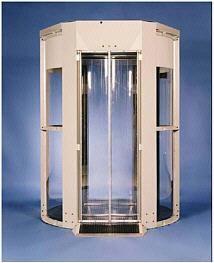
FIGURE 4-1 SafeView security screening portal. SOURCE: Courtesy L-3 Communications, SafeView.
|
7 |
3-D Holo Body Scanner: Description. Available at http://availabletechnologies.pnl.gov/securityelectronics/bodydescription.stm. Accessed August 25, 2006. |
Millimeter-wave three-dimensional imagers have been deployed at several locations outside the United States. The results of these field trials indicate that a millimeter-wave imaging portal may be a compelling application for the detection of explosives hidden underneath clothing.8 The results are published in press releases and on company Web pages, and thus the performance claims for detection and false-alarm rates tend to be anecdotal and optimistic. A well-designed field trial by an independent evaluator is needed to establish sound performance characteristics for millimeter-wave imaging systems.
For security applications, backscatter x-ray imagers and millimeter-wavelength/terahertz imagers produce images of quality and resolution similar to the quality and resolution from millimeter-wave three-dimensional imaging. X-ray photons have sufficient energy (100 electronvolts [eV] to 1 megaelectronvolt [MeV]) to penetrate dense materials, to cause chemical damage to molecules, and to knock particles out of atoms. Hence, they produce ionizing radiation.9 Millimeter-wavelength/terahertz radiation is an electromagnetic wave with longer wavelengths and lower frequency than x-rays by several orders of magnitude. A millimeter-wavelength/terahertz photon does not have sufficient energy (~0.01 eV) to penetrate dense materials, cause chemical damage to molecules, or knock particles out of atoms.10 Thus, it is non-ionizing radiation. The safety of millimeter-wavelength/terahertz energy has been established by a 2004 European Union study entitled THz-BRIDGE—Tera-Hertz Radiation in Biological Research, Investigation on Diagnostics and Study of Potential Genotoxic Effects.11 Of note, this study has specific discussions on the little information that exists on corneal epithelial cells, which suggests that there are no adverse effects from exposure.
Conclusion: Millimeter-wavelength/terahertz technology and x-rays provide images of similar quality. However, millimeter-wavelength/terahertz energy has the safety benefit of being non-ionizing radiation, while x-rays are ionizing radiation. Millimeter-wavelength/terahertz energy cannot penetrate metal objects.
Recommendation: The Transportation Security Administration should examine how millimeter-wavelength/terahertz technology can be employed with other technologies to enhance the detection of weapons and explosives.
|
8 |
Shareholder Relations. 2006. Endwave Makes Initial Production Deliveries to L-3 SafeView for Phase II Switch Arrays: RF Designs Utilize Endwave’s New Epsilon™ Packaging Technology. Available at http://www.shareholder.com/endwave/news/20060517-197245.cfm. Accessed August 25, 2006. |
|
9 |
National Institute of Standards and Technology. 1996. Table of X-Ray Mass Attenuation Coefficients and Mass Energy-Absorption Coefficients. Available at http://physics.nist.gov/PhysRefData/XrayMassCoef/cover.html. Accessed August 28, 2006. |
|
10 |
By comparison: ultraviolet light is 50 eV, visible light is 2 eV, microwaves are 0.0001 eV, and radiowaves are 0.00000009 eV. |
|
11 |
G.P. Gallerano et al. 2004. THz-BRIDGE: Tera-Hertz Radiation in Biological Research, Investigation on Diagnostics and Study of Potential Genotoxic Effects. Available at http://www.frascati.enea.it/THz-BRIDGE/reports/THz-BRIDGE%20Final%20Report.pdf. Accessed August 28, 2006. |
Standoff Scanning
Passive Millimeter-Wave Scanner—QinetiQ
The QinetiQ (pronounced like “kinetic”) passive millimeter-wave scanner12 can scan large numbers of people and vehicles as they move in a continual stream through restricted or controlled areas, such as border checkpoints, airport terminals, or outdoor arenas. Most objects reflect radiation. As stated previously, the human body reflects about 35 percent of the incidental millimeter-wave radiation that it receives. At these levels, clothing and other materials appear transparent, giving the scanner operator a highly accurate and real-time image of the now-uncovered subject. The scanner sees guns, knives, and metal and ceramic devices through clothes and bags.
The scanner is completely passive, safe, and radiation-free. The QinetiQ system can operate covertly or overtly to give an instantly clear and comprehensive picture of the subjects, who need never know they have been scanned.
Millimeter-Wave Imaging System—Agilent Technologies
Agilent Technologies is developing a millimeter-wave imaging system based on a reflective, confocal millimeter-wave lens (see Figure 4-2). Agilent claims that the active millimeter-wave panel at less than 6 inches deep and under 30 pounds has demonstrated capabilities to locate concealed objects (explosive simulants,13 metals, and ceramics) through typical clothing materials (wool, leather, cotton, and synthetics) as well as through plastics, commercial wallboard, and glass. This system was only recently announced, and as of this writing, limited information has been released by the company.
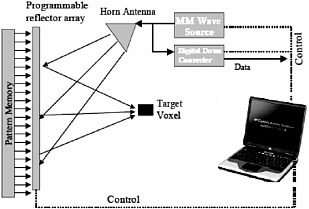
FIGURE 4-2 Agilent Technologies millimeter-wave imaging system based on a reflective, confocal millimeter-wave lens.
|
12 |
QinetiQ. 2005. Case Studies—Security. Available at http://www.qinetiq.com/home/case_studies/security/pmmw_scanning.html. Accessed August 28, 2006. |
|
13 |
Simulants are inert materials with densities and reflectivities similar to those of explosives (see Table 4-1 in this chapter). |
Passive Millimeter-Wave Imaging—Millitech
Millitech, LLC, is developing a passive millimeter-wave (W-band) imaging sensor designed for use at a distance of up to 12 feet for the rapid and remote detection of metallic and nonmetallic weapons, plastic explosives, drugs, and other contraband concealed under multiple layers of clothing.14
When a person is scanned using this sensor, any concealed item shows up as a dark image against the lighter background image of the individual. This system was only recently announced, and as of this writing, limited information has been released by the company. Because this purely passive imaging technique relies solely on existing natural emissions from objects, it does not require human-made irradiation. To demonstrate the technology, Millitech is currently developing a proof-of-concept camera with a 300 millimeter aperture and monitoring console for fixed entranceway surveillance. Millitech has recently been acquired by Smiths Group.
Passive Millimeter-Wave Camera—Trex Enterprises Corporation
Under U.S. Army-sponsored development since 1992,15 Trex Enterprises’ Passive Millimeter-Wave Camera has demonstrated the ability to create thermal imagery at video frame rates, converting naturally occurring heat from the environment into monochromatic imagery in real time.16 A prototype wide-field system has the following specifications:
-
77 GHz to 95 GHz real-time (30 Hz) imaging sensor,
-
2 ft aperture,
-
0.35° angular resolution,
-
1.7° temperature resolution at 30 Hz, and
-
30° by 24° field of view.
Trex Enterprises’ Passive Millimeter-Wave Camera couples a planar millimeter-wave antenna with a low-noise phased-array receiver/processor and an array of millimeter-wave spectrum analyzers to realize a compact radiometer architecture for use in confined spaces.
|
14 |
Millitech, LLC. 2005. Microwave and Millimeter Wave Radiometry. Available at http://www.millitech.com/pdfs/Radiometer.pdf. Accessed August 28, 2006. |
|
15 |
Stuart E. Clark, John A. Lovberg, Christopher A. Martin, and Vladimir Kolinko. 2003. Passive millimeter-wave imaging for airborne and security applications. Passive Millimeter-Wave Imaging Technology VI and Radar Sensor Technology VII, Roger Appleby, David A. Wikner, Robert Trebits, and James L. Kurtz, eds. Proceedings of SPIE, Vol. 5077. |
|
16 |
Stuart E. Clark, John A. Lovberg, Christopher A. Martin, and Joseph A. Galliano. 2002. Passive millimeter-wave imaging for concealed object detection. Sensors, and Command, Control, Communications, and Intelligence (C3I) Technologies for Homeland Defense and Law Enforcement, Edward M. Carapezza, ed., Proceedings of SPIE, Vol. 4708. |
Passive Millimeter-Wave Weapons-Detection System—Brijot
Brijot Imaging Systems, Inc.,17 in conjunction with Lockheed Martin, is developing an automated target-recognition-based concealed-weapons-detection system to detect and identify weapons underneath a person’s clothing. It consists of a millimeter-wave camera combined with a videocamera and special algorithm software. Outputs are a real-time video with visual identification of where a suspicious item is located on a person and electronic alarm notification signaling. The camera system is completely passive and is designed to operate at a range of up to 45 feet.
Millimeter-Wave Imaging—Millivision
The Millivision camera uses focal-plane-array technology, an imaging process that employs receiver elements positioned along the focal plane of the optical system. In addition to using a primary lens, optic filters, wave plates, and other elements, the Millivision imagers use a new class of optics employing arrays of wave-processing monolithic microwave integrated circuit (MMIC) chips from HRL (Malibu, California). The chips, which are made from indium phosphide, amplify the weak signals and perform the signal-processing functions on the electromagnetic waves. (The Millivision patents have been acquired by the L-3 Corporation.)
Conclusion: Millimeter-wavelength/terahertz technology in portal applications has been demonstrated for detecting and identifying objects concealed on people.
Recommendation: The Transportation Security Administration should commence developmental and operational testing of millimeter-wave-based portals to assess their effectiveness and suitability.
Conclusion: Universities, national laboratories, and the commercial sector (both national and international businesses) continue to increase investment in millimeter-wavelength/ terahertz technologies for security, medical, nondestructive inspection, and manufacturing quality-control applications.
Recommendation: The Transportation Security Administration should actively pursue joint projects through agreements such as cooperative research and development agreements with industry, academia, the Department of Defense, and the national laboratories to benefit from their investments in millimeter-wavelength/terahertz technology and applications.
|
17 |
Brijot Imaging Systems, Inc. 2006. BIS-WDS™ Prime. Available at http://www.brijot.com/bis-wds.php. Accessed August 28, 2006. |
Baggage Scanning
The current technologies employed to screen both carry-on and checked baggage are based on x-rays. The images produced result from density variations. The shape and size of items in the image are examined visually for carry-on baggage and with a computer for computed tomography images of checked baggage. Suspicious items are then examined manually for identification. A technique to reliably identify the chemical structure of a suspect item remotely would improve baggage throughput by resolving alarms. Mass spectroscopy systems to detect explosives by means of vapor analysis are currently going through field trial investigations.
As discussed in Chapter 2 of this report, there is a significant ongoing effort in examining terahertz time domain spectroscopy (TTDS) to detect spectral features of explosives. There have been numerous reports of TTDS being used for explosives detection in transmission mode. However, for real-field applications, reflection measurements are preferred, since most bulky targets are impossible to measure in a transmission mode, in which the targets will attenuate the incident energy completely. The reflection mode may be used in a standoff detection system, but it is not clear that individuals and vital assets could be outside the zone of severe damage of an explosive detonation.
Conclusion: Millimeter-wavelength/terahertz technology has potential for contributing to overall aviation security, but its limitations need to be recognized. It will be most effective when used in conjunction with sensor technologies that provide detection capabilities in additional frequency regions.


