
5
Implementation Strategy for the Deployment of Millimeter-Wavelength/Terahertz Technologies for Aviation Security
The millimeter-wavelength/terahertz spectral region has been the province of scientists and engineers for many years and has only recently been endowed with the label “hot research topic” with real business potential. Past applications have generally been for sophisticated experimentation or military use, and this work continues. Past commercial applications have been tried and/or discussed for four decades. These include the manufacture of power cables, the measurement of dehydration in plants and animals, imaging systems for environmental problems such as detection of oil spills, imaging for law enforcement, and a variety of proposals for remote detection of gaseous species.
Many of these past applications are sound concepts; they have not blossomed into commercial businesses for a variety of reasons.
The deployment of millimeter-wavelength/terahertz technologies in aviation security applications has to be made with a full appreciation of multiple past failed attempts and the realistic promise that newer work and concepts offer. It can be said that the past millimeter-wavelength/terahertz business case suffered from a “chicken-and-egg” problem. Promising applications depend on low cost and the availability of hardware; low cost and available hardware depend, in turn, on investments associated with applications. It can also be said that this “crossover spectral region” where the radiation is neither optical nor electronic1 has created special challenges for the design engineer attempting to build hardware. Neither a compelling application nor a compelling breakthrough design concept has emerged to change the paradigm. Therefore, the committee is left with assessing the hardware and applications in an incremental or evolutionary sense, building on the current commercial progress.
First, there is no evidence for a current compelling application in the millimeter-wavelength/terahertz spectral region. There does seem to be new promise for a number of industrial or medical applications that are useful. Based on recent developments one can cite the following:
-
Nondestructive inspection through dielectrics using TTDS pulse techniques,
-
Medical use through skin or thin tissue for nonintrusive inspection, and
-
Millimeter-wave imaging of people to detect contraband underneath clothing.
The committee notes that the imaging of people using millimeter-wave techniques is not really a compelling application, since x-ray techniques can also be used. The millimeter-wave techniques have one stand-out advantage. This radiation is non-ionizing and does not cause tissue damage, which trumps x-ray techniques if an individual is to be inspected repeatedly in a venue such as a prison. If one credits public perception as an important consideration (and this has certainly been the case in some screening applications), millimeter-wave trumps x-ray inspection for the general public. Still, the intrusive inspection of people may require extensive public relations campaigns for either technique to succeed. This may be a less prominent issue for government applications. Otherwise, cost and performance determine the usage.
A clear-cut case can be made for a millimeter-wave portal used for scanning people. Several businesses, Millitech, MilliVision, QinetiQ, SafeView, and Trex Enterprises, are building hardware and creating the production environment essential to successful portal performance, reliability, supportability, and cost reduction. Venture-capital investment is attracted by the business diversity of such a portal, which can operate to detect drugs and guns carried by people, for purposes of transportation security, security of government buildings, security of ports, customs, requirements of prisons, security of commercial buildings, and so on. Applications have been developed that use millimeter-wave imaging for the fitting of clothing as well as for the detection of the removal of contraband, such as computer hardware from industrial sites. All of these business opportunities are enhanced by the increasing global terrorist threat and the
proliferation of drug trafficking. It would seem that aviation security could take advantage of this business base to fine-tune portal requirements for its use in a cost-effective manner.
Conclusion: A decision by the Transportation Security Administration to invest in an imaging portal depends on the potential threat posed by passengers carrying either weapons or explosives or other material. The cost of a system, the probability of detection, the false-alarm rate, and the throughput versus that of a competing x-ray system would impact the management decision.
This trade-off is, of course, influenced by the increasing sophistication of the perpetrator, who may use nonmetallic guns or knives or unconventional explosives. As a minimum, it would seem advisable to thoroughly test such a portal both technically and operationally to provide a firm basis for making deployment decisions.
Recommendation: The Transportation Security Administration should follow a two-pronged investment strategy:
-
Focus on millimeter-wave imaging as a candidate system for evaluation and deployment in the near term, and
-
Invest in research and development and track national technology developments in the terahertz region.
Inherent in all of the discussion above is the recognition that aviation, port, building, border, or prison security venues will surely require some tailoring of millimeter-wave portals to suit each individual application and its public acceptance. Serious contemplation of millimeter-wave portal use needs to include these costs in the strategic plan for evaluation and deployment.
TEST AND EVALUATION
Privacy Issues
Operational trade-offs among the level of automation, manual operation with a highly trained operator to interpret images, false-alarm rate, and throughput performance will drive the ultimate design of a millimeter-wavelength/terahertz-based detection system. The performance criterion will be the probability of detection achieved versus the rate of false positives at a specified throughput.
For systems that provide detailed images of anatomical features, other factors such as privacy and modesty issues need to be considered. In general, displaying detailed anatomical features of a person is considered a violation of that individual’s privacy. The issue of whether it is or is not a violation of privacy to acquire an image with anatomical detail even though the image is never displayed needs be addressed rigorously by experts in the legal, human factors, and psychological areas.
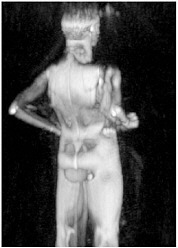
FIGURE 5-1 Millimeter-wave image—Pacific Northwest National Laboratory.
The image in Figure 5-1 has a resolution of less than 1 cm, and when displayed on a monitor shows sufficient detail to be offensive or embarrassing to many people. Legal challenges are likely from privacy groups. The following is a statement of Timothy D. Sparapani, American Civil Liberties Union legislative counsel, at a hearing regarding the U.S. Transportation Security Administration’s physical screening of airline passengers and related cargo screening before the U.S. Senate Committee on Commerce, Science, and Transportation on April 4, 2006:
Passengers expect privacy underneath their clothing and should not be required to display highly personal details of their bodies—such as evidence of mastectomies, colostomy appliances, penile implants, catheter tubes, and the size of their breasts or genitals—as a prerequisite to boarding a plane. However, X-ray backscatter technology has tremendous potential to screen carry-on bags, luggage, and cargo.2
The National Research Council report entitled Airline Passenger Security Screening: New Technologies and Implementation Issues includes a complete and thorough presentation on the key issues of health, convenience, privacy, and comfort that will determine the acceptance or rejection of imaging technologies. To address privacy concerns about and obtain public acceptance of full-body imaging will require careful and extensive public education to preclude the spread of “urban legends” and false or misleading information. The report states:
|
2 |
Statement of Timothy D. Sparapani, American Civil Liberties Union Legislative Counsel, at a Hearing Regarding the U.S. Transportation Security Administration’s Physical Screening of Airline Passengers and Related Cargo Screening Before the U.S. Senate Committee on Commerce, Science, and Transportation. 2006. Available at www.aclu.org/privacy/gen/24856leg20060404.html. Accessed August 28, 2006. |
The panel concluded that the images produced by these technologies are of sufficiently high quality to make them effective for screening passengers. However, when the perceived level of threat is low, passengers, crews, and others passing through screening checkpoints are likely to object to having images of their bodies displayed. There are also likely to be concerns about the use and storage of the data used to generate images. Procedures, such as having operators of the same sex view the images or moving operators away from the screening checkpoints, could allay concerns. However, for financial and logistical reasons, these procedures are likely to make imaging technologies extremely unattractive for use as primary screening systems at all checkpoints. Quantifying the level of threat at which people are likely to accept this kind of invasion of privacy is difficult but necessary prior to mandating the use of any imaging technology for screening passengers at airports.3
The resolution of privacy issues in other countries is not likely to be relevant to the resolution of these issues in the United States because local attitudes and perceptions determine the issues of privacy to be addressed. In practice to date, many of these issues are solved via the operational protocols adopted by various countries. For example, only male operators screen males, and females screen females. The person screening is remote and does not see the subject, and vice versa. Also, software allows for various measures of privacy and automatic target detection. Finally, imaging allows for “directed search,” which means that in place of a full pat-down, the person has to explain or show only what is in a specific area, typically a pocket.
Decisions on such issues will have to be made prior to a deployment of these imaging technologies. For this report, the committee limited its review to the technical issues that would move these technologies closer to implementation, without considering the public’s acceptance of the deployed technology.
A field trial to gauge both feasibility and public acceptance of such technology was conducted by QinetiQ at Gatwick Airport and summarized as follows: “The results of this trial indicated that public reaction to the possible introduction of this technology into UK airports has been favorable, and that the performance of this imager in detecting specific threat items concealed on passengers, such as metal or ceramic weapons has been very encouraging.”4
Cost Issues
In the past decade, the cost reductions and performance improvements of devices to generate, control, and detect radiation in the spectral region millimeter-wavelength/ terahertz made detection systems viable for checking baggage and scanning people. However, a reasonable and affordable initial cost is only part of the total life-cycle cost of a deployed operating system. There are other recurring and nonrecurring costs over the lifetime of the system that will likely exceed the initial purchase price. The following are
other issues that should be considered in the life-cycle cost analysis and evaluation of millimeter-wavelength/terahertz imaging systems:
-
Installation—time, footprint, and skill requirements for installation personnel;
-
Integration—interconnectivity and interoperability implementation costs;
-
Reliability—expected lifetime before replacement, MTBF (mean time before failure) statistics, and unscheduled downtime costs;
-
Scheduled downtime—calibration or scheduled maintenance costs;
-
Repairs—MTTR (mean time to repair) statistics, availability of repair parts, warranty, onsite or offsite, and skill requirements;
-
Environmental—Occupational Safety and Health Administration requirements; and
-
Training—initial and update training, operator skill-level requirements.
A valid life-cycle cost analysis needs sound data input. These data (1) can be developed using widely acceptable reliability predictor models, or (2) be gathered from operations of similar systems and complete logs maintained during the pilot demonstration phase of system deployment. Industrial experience has shown that initial cost may comprise only 10 to 15 percent of the total cost.5
|
5 |
J.T. Bailey and S.R. Heidt. 2003. Why Is Total Cost of Ownership (TCO) Important? If You Want to Know Where Your Money Goes, Get Ready to Master the Concept of TCO. Available at http://www.darwinmag.com/read/110103/question74.html. Accessed August 28, 2006. |


