
3
The School Environment
INTRODUCTION
The organizational structure of the schools is an important consideration in formulating recommendations for standards for competitive foods and beverages in schools. U.S. school systems are complex organizations. Internally, they are made up of many different constituencies competing for limited organizational resources. Externally, they must respond to the varied requirements and constraints imposed by federal and state agencies, as well as taxpayers and parents. Decisions governing the availability of competitive foods are interwoven in this complicated structure.
This chapter describes the way in which competitive foods are connected to the complex school environment. Although the committee’s primary task was to define nutritional standards based on health considerations and the committee was not charged with developing a detailed implementation plan, the ultimate goal of optimizing the overall school nutrition environment will be determined largely by the extent to which local, state, and federal policymakers anticipate and address a variety of implementation challenges. This chapter identifies these challenges and provides the background for related recommendations in Chapter 5. The chapter first addresses the organization of the U.S. public school system, then provides an operational description of the National School Lunch Program (NSLP) and the School Breakfast Program (SBP). Although foods and beverages offered through these programs are not included in the committee’s definition
of competitive foods, they set the food-service context within which many competitive foods and beverages are provided.
ORGANIZATION OF PUBLIC SCHOOLS
Federal, State, and Local Governance
The federal role in education is limited to certain issues, such as laws involving civil rights and the rights of disabled and at-risk students. The relevant federal legislation includes Title I of the Elementary and Secondary Education Act of 1965, which includes the No Child Left Behind Act of 2001; Richard Russell National School Lunch Act; Child Nutrition Act of 1966; Title IX of the Education Amendments of 1972, which includes the Individuals with Disabilities Education Act; and the Civil Rights Act of 1964.
The American public school system, providing for nearly 50 million children aged 4 through 19, is primarily the responsibility of individual states; within the states, it is the shared responsibility of multiple partners. Each state’s governor can create policy through executive order; the legislature can create policy through the development of law; the chief state school officer makes policy; and the state board of education creates policy through a variety of mechanisms including rule making, regulation, and, in some states, self-executing powers. The chief state school officer and the state board of education, with the assistance of the state department of education, are charged with the task of seeing that all laws and regulations are carried out by the local boards of education.
The chief state school officer may be appointed by the governor or the state board of education, or he or she may be elected by partisan or nonpartisan statewide ballot. Membership on the state board of education may also be either by appointment or by election. In 32 states, the state school board members are appointed by the governor; 10 have elected boards and 8 have other arrangements.
Each state is composed of school districts governed by a local school board. Local school board members are usually elected, although in some states they are appointed. Local school board members make up the largest group of elected officials in the United States, totaling about 95,000 members. These officials bear the responsibility for translating state and federal laws and regulations into workable school district policies, and they have the authority to develop operations of their local schools, as long as those policies are consistent with state and federal laws and regulations.
Professional organizations such as the National Governors Association, the National Conference of State Legislatures, the Council of Chief State
School Officers, the National Association of State Boards of Education, and the National School Boards Association represent their members in policy-setting contexts and offer services and training that help members strengthen state and local leadership in educational policy making. Membership in these organizations also provides school board members access to information concerning new and established federal and state laws.
Educational Funding Sources
Federal funding, determined by Congress during the budget process, accounts for about 7 to 10 percent of most local education budgets. Additional funding mechanisms for the balance are determined by the state legislatures. In some states, the major source of funding is the state government, while in others it is the local school districts. Property taxes are a major source of funding for education, along with sales taxes, utility taxes, lottery revenue, statewide and local levies, and state general fund revenue.
Each state has its own method of determining how monies are levied and collected, and local boards of education generally have the authority to pass local taxes to support the local schools. Local funding also enables school districts to go beyond the minimum requirements of state and federal laws that govern their schools.
Revenue also accrues to many schools from the sale of federally reimbursable meals under the NSLP and SBP, and some states allocate state money to support various school meal programs. In addition, most school districts receive revenue from the sale of competititive foods and beverages. Data presented later in this chapter suggest that overall revenues from competitive foods and beverages are small in relation to total school budgets—less than 1 percent for most schools. However, these monies often play an important role in school operations because they constitute a significant proportion of funds available for certain activities.
Administration of School Nutrition Programs
The NSLP and SBP are usually administered by the state departments of education, though sometimes state departments of agriculture assume this role. Federal regulations require that participating districts designate a School Food Authority (SFA) to operate the program. The SFA can be determined at the local school level, but this occurs more often at the school-district level.
Districts enter into annual agreements with relevant state departments of education to participate in the federally reimbursable school meals programs. In implementing these programs, districts are required to follow
established procedures involving reporting on meals served and claiming reimbursements. The state department of education is responsible for training, technical assistance, and monitoring for these programs.
Local school boards set broad food service policy to be executed by school staff. SFAs plan menus, purchase food, oversee meal preparation and service, and keep records that document claims for reimbursement. SFAs work with principals in setting meal schedules and making other arrangements for meals. Nevertheless, the food service programs are typically administered on a district-wide basis rather than at the school level. Although some states and some school districts pay part of the meal program’s costs from nonfood revenue, many SFAs are expected to cover costs from revenues generated. However, for all SFAs, any revenue in excess of costs must be reinvested in the meal programs; under federal regulations, schools cannot make a profit from their federally reimbursable school nutrition programs.
NATIONAL SCHOOL LUNCH AND SCHOOL BREAKFAST PROGRAMS
Created in 1946, the NSLP provides meals in most public schools throughout the country as well as in a substantial number of private schools, and currently provides lunch to about 29 million children daily. Participating children from low-income families receive meals either free or at a reduced price, with the federal government providing subsidies to the schools for meals. Children from families that do not meet the income criteria for these free or reduced-price meals are referred to as full-price participants; however, schools also receive a small subsidy for those meals.
To participate in the program, schools are required to comply with regulations designed to ensure that meals served under the programs are healthful and nutritious. However, there is considerable flexibility permitted for meeting these requirements.
A parallel but formally separate program, the SBP provides breakfast to children at school. Although considerably smaller in participation level than the NSLP, the breakfast program is substantial, serving about 9 million breakfasts on a typical day. Although the program is available to all children, more than 80 percent of participants are from low-income families. After-school snacks can be provided by schools through the NSLP or the Child and Adult Care Food Program.
Although foods and beverages sold as part of the NSLP and SBP are not among the competitive foods and beverages that are the focus of this report, they inform the definition of competitive foods. Furthermore, these two programs provide the school food service context that establishes how
competitive foods and beverages are provided. Understanding how the federally reimbursable meal programs work is therefore of great importance to the committee’s task.
Regulation of School Meal Programs
The NSLP and SBP are authorized under federal legislation, and related federal regulations are determined by the U.S. Department of Agriculture (USDA), Food and Nutrition Service. State agencies, usually the state department of education, develop state regulations based on federal law and regulations, as well as relevant state legislation regarding the operations of the program, and monitor compliance at the school level. These state agencies serve as intermediaries in the fiscal reimbursement process, consolidating reimbursement requests from within the state and transmitting them to USDA.
Day-to-day operations of the programs, including certifying students’ eligibility for subsidies, preparing food, and conducting food service operations, is the responsibility of the SFA, which is usually coincident with school districts. In some instances, a group of school districts may combine to form a single SFA. Some SFAs contract with outside vendors for food preparation or other aspects of operations.
Federal Reimbursement for School Meal Programs
Federal reimbursement to the SFA is set on a per-meal basis, with the level of the subsidies determined largely by federal legislation. Federal law requires that students whose families have incomes below certain levels are not charged for meals. The legislation also sets the maximum price allowable for reduced-price meals (currently 40 cents for lunch and 30 cents for breakfast). Schools with high rates of participation by low-income students receive slightly higher reimbursement rates. SFAs are allowed to set the price of the full-price meals they sell. They also determine which qualifying foods are served, subject to detailed regulations designed to ensure that the meals are nutritious and healthful.
There is no federal requirement that SFA must be cost/revenue neutral on their food service operations. However, many school districts expect food service operations to cover their costs without district subsidies. Many SFAs report that they find themselves squeezed by these local financial expectations on the one hand and the federal regulations on the other. In some instances, SFAs use competitive food and beverage sales, which are subject to fewer regulations and allow more flexibility in SFA decision making, to meet the financial expectations of their districts.
Nutrition Requirements for School Meal Programs
From its inception, the NSLP emphasized the importance of providing nutritious meals. Until the 1990s, this was done by specifying “meal pattern,” which required that the meals served included certain generic components, such as milk; a protein source; breads, grains, and cereals; and fruits or vegetables. Detailed regulations and guidelines defined exactly what foods and beverages and what serving sizes met these specifications.
In the early 1990s, the first School Nutrition Dietary Assessment (SNDA-I) (Burghardt et al., 1993) found evidence that, although school meals were generally meeting or exceeding various nutrient requirements, they substantially exceeded the Dietary Guidelines for Americans (DGA) recommended limits for total and saturated fat. These observations, together with other factors, led to a series of legislative actions that changed the nutrition requirements of the program. New regulations specified that fat content conform to federal recommendations. They also encouraged greater attention to sodium, cholesterol, and fiber content, and changed methods for monitoring school meals.
The revised system that emerged allows three ways of satisfying nutrition requirements:
-
Schools develop menus using a computer-assisted, nutrient-based system;
-
Alternatively, schools continue to use a food-based system, which is essentially the same as the previous meal pattern requirements; or
-
Schools use an enhanced food-based pattern that includes additional requirements for grains and vegetables.
The regulations also allow SFAs to provide other alternatives for meeting requirements.
COMPETITIVE FOODS AND BEVERAGES
Definition and Overview
The term “competitive foods” is used in this report to include all foods and beverages that are sold, served, or given to students in the school environment other than meals served through the NSLP, SBP, and After-School Snack and Meal Programs. Competitive foods may be available in à la carte lines, snack bars, student stores, vending machines, or school activities, such as fund-raisers, achievement rewards, classroom parties or snacks, school celebrations, and school meetings. They do not include brown bag lunches. The nutritional value of competitive foods and beverages is largely
unregulated by the federal government. Furthermore, availability is usually not overseen by the school food service staff. As a result, competitive foods and beverages reflect a broad range of energy and nutrient content. Some competitive foods and beverages consist of healthful items, such as fruits and vegetables. However, many are snack foods and beverages that are calorie dense, nutrient poor, and contain high levels of fat, sugar, and sodium.
Federal regulation has labeled a subcategory of competitive foods and beverages as Foods of Minimal Nutritional Value (FMNV). USDA defines FMNV as those that provide very low amounts per portion for each of eight specified nutrients: protein, vitamins A and C, niacin, riboflavin, thiamin, calcium, and iron. Included in this category are carbonated soft drinks, chewing gum, water ices, and certain candies made predominantly from sweeteners. Schools participating in the NSLP are prohibited from selling FMNV during meal periods in school cafeterias and other food service areas (GAO, 2005). Schools are also prohibited from designing food service areas in such ways that encourage or facilitate the choice or purchase of FMNV as a ready substitute for, or addition to, federally reimbursable meals.
The federal regulations dealing with FMNV set a minimum standard. This does not preclude local schools from setting stricter rules. For example, some states prohibit the sale of FMNV on campus until 30 minutes after the last lunch period (see Chapter 4 discussion of state and local policies).
The widespread availability of competitive foods and beverages is well documented (Wechsler et al., 2001). They are often sold in the school cafeteria, and they may be offered elsewhere in school buildings, on school grounds, or at school-sponsored events. According to the Government Accountability Office (GAO) report School Meal Programs (GAO, 2005), nearly 90 percent of schools offer competitive foods and beverages. Their prevalence means that most students at all age levels have many food choices in the school environment in addition to the federally reimbursable school nutrition programs or the brown bag lunch (Box 3-1).
The array of possibilities was illustrated graphically in a recent GAO report, reproduced here as Figure 3-1.
Table 3-1 shows the percentage of schools where students can purchase specific types of foods and beverages through à la carte sales in the cafeteria or in vending machines, school stores, canteens, or snack bars. For columns 3 and 4 of the table, the original source, Wechsler et al. (2001), reported percentage of schools (data from the Centers for Disease Control and Prevention [CDC]/School Health Policies and Programs Study [SHPPS]) using as a base the number of schools that had a vending machine, school store, canteen, or snack bar. The base of the percentage was converted to represent all schools by multiplying the percentage reported in the original article by the percentage of schools having at least one of these sales venues.
|
BOX 3-1 Competitive Foods Are Widely Available National data on the extent to which competitive foods are offered in schools are available from the 2005 Government Accountability Office (GAO) report (and others). The GAO study found that
SOURCE: GAO, 2005. |
For example, the source table in the article indicated that 28.8 percent of elementary schools sold 1-percent milk in a vending machine, school store, canteen, or snack bar. However, only 43 percent of elementary schools were reported to have one or more of these sales venues. Therefore, for all schools, the percentage of elementary schools selling 1-percent milk in at least one of these venues is 43 times 0.288, or 12.4 percent, the percentage reported at the top of column 3 of Table 3-1.
The subsequent discussion provides details about competitive food and beverage sales venues and the kinds of foods often available outside the federally reimbursable school nutrition programs. Often, the same types of foods are sold or served to students in different locations, although safety and health factors such as refrigeration and freshness place limitations on distribution. Most high schools offer competitive foods and beverages in one or more of the categories listed in this section. Access to competitive foods and beverages is more limited in elementary schools, but is still very common.
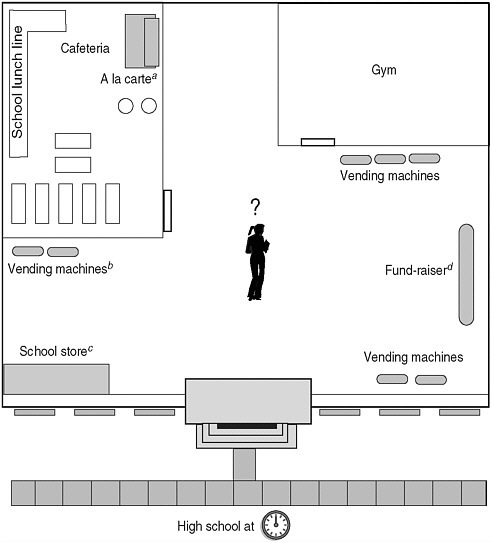
FIGURE 3-1 Groups most frequently involved in various competitive food venues commonly available in high schools.
aÀ la carte: school food authority.
bVending machines: school food authority, vending operator, school official or administrator, physical education department, student association or club.
cSchool store: school official or administrator, student association or club.
dFund-raisers: physical education department, music or art department, business teacher, student association or club, booster groups.
SOURCE: GAO, 2005.
TABLE 3-1 Percentage of Schools Offering Various Types of Competitive Foods by Venue
|
|
Schools Offering Food or Beverage À La Carte |
Schools Where Students Can Purchase Food or Beverage in Vending Machines or in a School Store, Canteen, or Snack Bar |
||
|
Type of Food or Beverage |
Percentage of Elementary Schools |
Percentage of Senior High Schools |
Percentage of Elementary Schoolsa |
Percentage of Senior High Schoolsb |
|
Often Low in Fat |
||||
|
1% or skim milk |
n/ac |
n/a |
12.4 |
22.7 |
|
100% fruit or vegetable juice |
57.8 |
77.4 |
21.2 |
63.8 |
|
Bottled water |
n/a |
n/a |
13.1 |
64.7 |
|
Bread sticks, rolls, bagels, pita bread, or other bread products |
40.9 |
73.8 |
6.3 |
29.1 |
|
Fruits or vegetables |
68.1 |
90.4 |
8.6 |
21.6 |
|
Sandwichesc |
n/a |
n/a |
n/a |
n/a |
|
Entrées from NSLP mealc |
n/a |
n/a |
n/a |
n/a |
|
Low-fat cookies, crackers, cakes, pastries, or other low-fat baked goods |
36.1 |
48.0 |
11.4 |
48.7 |
|
Low-fat or fat-free ice cream, frozen yogurt, or sherbet |
27.0 |
49.0 |
9.8 |
24.1 |
|
Low-fat or nonfat yogurt |
31.0 |
47.9 |
5.7 |
20.5 |
|
Salty snacks that are low in fat |
29.5 |
58.3 |
19.1 |
63.8 |
|
Often High in Fat, Sodium, or Added Sugars |
||||
|
2% or whole milk |
n/a |
n/a |
21.3 |
43.7 |
|
Chocolate candy |
2.4 |
23.7 |
12.6 |
70.9 |
|
Cookies, crackers, cakes, pastries, or other baked goods that are not low in fat |
48.8 |
79.9 |
22.6 |
79.2 |
|
Ice cream or frozen yogurt that is not low in fat |
26.3 |
54.5 |
13.4 |
41.7 |
|
Other kinds of candy (non-chocolate) |
4.2 |
22.2 |
15.3 |
73.7 |
|
Salty snacks that are not low in fat |
25.8 |
57.8 |
21.9 |
81.5 |
|
Soft drinks, sports drinks, or fruit drinks that are not 100% juice |
19.0 |
57.2 |
25.0 |
91.9 |
|
aAmong the 43.0 percent of elementary schools with a vending machine, school store, canteen or snack bar. bAmong the 98.2 percent of senior high schools with a vending machine, school store, canteen or snack bar. cNot included in survey; data not available. SOURCE: Derived from Wechsler et al. (2001) with additional information from GAO (2005). Most entries are based on SHPPS (2000) data. |
||||
À La Carte Sales
The majority of competitive foods and beverages available during the school day are offered in school cafeterias through à la carte sales. In some cases, à la carte selections are foods and beverages that are also part of a school’s regular reimbursable meal offerings. À la carte selections may also include foods and beverages sold separately that are not sold as part of the federally-funded school meals.
As shown in Table 3-1, à la carte sales include a broad range of foods and beverages from fruits, vegetables, and bread products to cookies and salty snacks. It is important to note that the “n/a” symbol in the table means that the relevant food was not asked about in the survey, not that it was not frequently available. Indeed, other information (GAO, 2005) indicates that items not asked about in the survey represented in this table are commonly available à la carte, including milk, bottled water, sandwiches, pizza, and entrées from the main NSLP meals.
Competitive foods, including à la carte offerings, are part of the food service program in a majority of U.S. schools (GAO, 2004). However, some states do not allow à la carte sales as part of the school meal programs, and some limit what can be served. For example, Title 126 of the West Virginia Board of Education Policy 4321.1, requires that only meal components can be sold as à la carte items at breakfast, and only fluid milk, milk shakes, and bottled water can be sold à la carte at lunch (WVDE, 2004).
Vending Machines
Vending machines are common in secondary schools and many elementary schools also allow them on school property (French et al., 2003; Nestle, 2000). CDC (Wechsler et al., 2001) showed that 43 percent of elementary schools, 74 percent of middle schools, and 98 percent of high schools have either a vending machine, a school store, or a snack bar where students can purchase foods and beverages.
The range of food and beverage choices found in vending machines is much narrower than that of the à la carte line (French et al., 2003). This may be due, in part, to the need for refrigeration of fresh food and beverage products. In a GAO report to Congress, the most common types of food and beverage offered in school vending machines were identified as water, fruit and vegetable juices, sports drinks, salty snacks, and soft drinks (GAO, 2005). The most common types of competitive foods offered in high schools through any venue were identified as fruit and vegetable juices, sports drinks, salty snacks, baked goods, sandwiches, pizza, frozen desserts, candy, and soft drinks (GAO, 2005).
In assessing the prevalence of vending machines in schools, it is im-
portant to note that, although they are common, there have been attempts to regulate how and when they are used. Some state and local boards of education have created policies that restrict location and times of use. For example, placement of a vending machine near dining areas is sometimes forbidden because machine sales can detract from participation in the federally reimbursable school nutrition programs. Many states and districts have decided to keep all vending machines turned off during regular school hours or until the end of the last lunch period, or prohibit sale of carbonated soft drinks until the end of the school day. Soft drinks are not sold at elementary and middle schools in some states. Many state and district policies that address the content of vending machines specify that foods and beverages sold in them must meet acceptable nutrition guidelines or that at least half of all items in the machines meet nutrition guidelines.
School Stores, Snack Bars, and Related Venues
Other venues for competitive foods and beverages such as school stores, snack bars, and concession stands often raise money for student activities, school-sponsored clubs, and sports teams. School stores and snack bars are often open during lunch periods as well as before and after school.
Concession stands at sports events and other activities outside school hours are popular with booster organizations that rely on the funds garnered from the sale of foods and beverages to support related activities. Relatively few state or district policies address the sale of competitive foods and beverages on school grounds outside the school day. However, wellness policy requirements recently enacted in federal law prompted a number of districts to address food and beverage availability in various venues.
Special Fund-Raisers
In addition to school stores, snack bars, and concession stands, other fund-raising activities may also occur during the school day. These fundraisers may include the sale of foods such as candy bars, cakes, and pizza. They may also include more nutritious foods such as low-fat dairy products, juices, fruits, vegetables, nuts, grain products, meats, and legumes.
Fund-raisers conducted during school hours often follow policies established at the school or state levels for other competitive foods and beverages. Many schools allow food and beverage items to be sold during school lunch periods; others do not allow sales while meals are being served. Some districts have policies that place limitations on the frequency of sales, for example, one event per month during school hours. If a student store operates in the food service area, sales of FMNV are prohibited during meal
periods (time of serving and the time that students spend eating meals) by federal regulation.
Foods Used as Rewards and Discipline
Foods and beverages used as rewards for achievement in school are also a form of competitive foods and beverages. For example, a math teacher may include the use of colored candies for props in lessons teaching computation. If the child is successful, he or she may be allowed to eat the candy as a reward. Also, food is used as a reward for good behavior in some classroom situations. Use of food as a reward or for discipline can convey unintended messages about dietary behaviors and may be associated with the development of inappropriate food choices and patterns (Orrell-Valente et al., 2007). Furthermore, use of food as a reward does not model healthful eating behaviors (Ritchie et al., 2005). Some schools have reported that teachers and others use food as an aid in managing behavior and as academic incentives (GAO, 2003). A 2002 survey of 339 Kentucky schools found that “81 percent used food as a reward for behavior, attendance, or academic achievement, and 90 percent used nonfood rewards” (USDA/CDC, 2005).
Although it may be difficult to control the use of food as reward or discipline, some schools have attempted to discourage the use of food as rewards and some district wellness policies have included rules to address this issue.
Effects of Competitive Foods and Beverages on Students’ Food Intakes
Substantial proportions of competitive foods and beverages—though not all of them—are of relatively low nutritional quality. This has caused many observers to be concerned that these foods and beverages may have negative effects on the overall quality of students’ diets. In the absence of experimental data or large-scale studies, the evidence on this issue must be viewed as suggestive rather than conclusive. The subsequent review includes several selected studies of the nutritional impact of competitive foods and beverages.1
Kubik et al. (2003) studied seventh and eighth graders to examine possible displacement of fruits and vegetables by competitive foods and beverages and concluded there was a negative correlation between the number of à la carte items available and the amount of fruits and vegetables children consumed. Also, the presence of snack vending machines on campus was
associated with a decline in fruit intake among students compared to those in schools that did not have snack vending machines.
Cullen and Zakeri (2004) found that when children transitioned into middle schools with additional competitive food and beverage options, consumption of fruits, milk, and non-starchy vegetables tended to be lower. Consumption of high-fat vegetables went up.
Templeton et al. (2005) examined sixth graders in three middle schools who sometimes bought competitive foods and beverages, including snack items and sweetened beverages, at school. They found that purchase of these items tended to be associated with higher food energy intakes and higher consumption of fats.
Each of these studies included a relatively small sample, but the results support the view that competitive foods and beverages may be associated with less healthful eating practices at school. It is likely that more studies will become available in the coming years as evaluations are conducted of policies designed to limit the availability of competitive foods and beverages.
Other studies have focused on factors influencing food choice by student age. O’Dea (2003) examined the ability of children and adolescents to select benefits and barriers to healthful food choices and to suggest ways to overcome them. The older students (fifth and sixth grades) were found to be able to articulate the benefits of selecting healthful foods and the adverse effects of non-healthful food choices. Neumark-Sztainer et al. (1999) assessed perceptions about factors influencing food choices among adolescents. This study found a broad range of factors that contributed to food choices, including concern for health. Among the most important factors were food appeal, convenience, and time involved in eating. However, the study also revealed that by addressing the range of factors influencing adolescent food choices, interventions could be designed to improve their choices.
COORDINATING SCHOOL NUTRITION POLICIES WITH OTHER HEALTH-RELATED PROGRAMS IN SCHOOLS
There has been growing awareness among both health professionals and educators that it is important to coordinate school nutrition policies within the broader context of all school health-related programs. In particular, considering these programs in this broader context makes it possible to set priorities and to make sure that the relevant programs work in complementary ways for maximum effectiveness. Described below are components to consider in coordination of health-related policies. More detail is provided about two areas that are particularly closely linked to nutrition policy: physical education and nutrition education.
Growth in Interest in Coordinated School Health Programs
A significant factor contributing to interest in the coordination of school health-related policies is the leadership work of CDC. In particular, since 1994, CDC encouraged schools to use the Coordinated School Health Program (CSHP) model, which consists of eight interactive components: health education; physical education; health services; nutrition services; counseling, psychological, and social services; healthful school environments; health promotion for staff; and family and community involvement. Materials available from CDC encourage schools to further define their comprehensive school health programs.
Increased interest in the coordination of school health-related policies was stimulated by the 2004 reauthorization legislation for the child nutrition programs. This required all school districts that participate in the federal school meal programs to develop local wellness policies by July 1, 2006, setting guidelines for foods and beverages sold and offered in schools, nutrition education, and opportunities for physical activity. Specifically, the law required that local wellness policies include
-
Goals for nutrition education, physical activity, and related activities
-
Nutrition guidelines for all foods and beverages available at the school during the school day
-
An assurance that guidelines for reimbursable meals will not be less restrictive than USDA regulations
-
A plan for measuring implementation of the wellness policies
-
Involvement of parents, students, and other school constituencies in the wellness policy process
Some school districts completed their wellness policies in 2006, while others are likely to do so soon. This spurred considerable interest and activity among schools in addressing these issues.
It is important to note that the development of wellness policies within schools is relatively recent, and much implementation and monitoring will still be required. This report should be of use to local wellness policy committees and school districts that are still in the process of developing wellness policies, are developing implementation and monitoring procedures for their policies, or are modifying their wellness policies.
Below are overviews of the goals and activities relating to the physical activity and nutrition education elements of these coordinated policies that are particularly germane to the committee’s task.
Physical Education
Physical education and related activities are important in a study of competitive foods and beverages because children’s physical activity levels are critical to determining their energy expenditures, and thus their food needs. Physical activity is generally accepted as a contributor to good health (IOM, 2002/2005).
National Recommendations Regarding Physical Activity and Education
The DGA (DHHS/USDA, 2005) recommends that children and adolescents engage in at least 60 minutes of physical activity most days of the week. In addition, Healthy People 2010 (DHHS, 2000) provides two related recommendations:
-
Increase to at least 50 percent the proportion of adolescents who participate in daily physical education.
-
Increase to at least 50 percent the proportion of adolescents who spend at least half their school physical education class time engaged in physically active activities.
The National Association for Sport and Physical Education (NASPE) recommends that all elementary school students participate in at least 150 minutes per week of physical education, and all middle and high school students participate in at least 225 minutes per week for the entire school year (NASPE/AHA, 2006). These recommendations reflect a growing awareness that greater physical activity levels are important both for contributing to children’s overall health and reducing the “obesity epidemic.”
Current Levels of Physical Activity and Education
Physical education standards and requirements are generally determined at the local level and are based on policies set by individual states or national recommendations. Information compiled by the NASPE (NASPE/ AHA, 2006) indicates that about 70 percent of states mandate physical education for elementary students, while 83 percent of these do so for high school students. However, only about 20 percent specify the number of minutes required, and of the few that do specify time, only two are consistent with the NASPE recommendations.
According to data from the CDC Youth Risk Behavior Survey (Eaton et al., 2006), in 2005, approximately 54 percent of high school students were enrolled in a physical education class, but only about 33 percent of students
participated on a daily basis. Only about 84 percent of students were physically active during their physical education classes when participating.
Nutrition Education
Encouraging healthy eating habits at a young age is generally seen as an important contributor to optimal growth, development, health, and well-being and to prevention of some chronic diseases. Schools are in a good position to help young people improve eating habits by implementing effective nutrition education programs and support services (DASH, 2006). Reviews of nutrition education in schools have found that most programs have resulted in moderate to minimal effects, due in some measure to implementation issues and short time frames (Baranowski et al., 2003a, 2003b; Contento et al., 1995; Doak et al., 2006; Flynn et al., 2006; Lytle and Achterberg, 1995; Lytle et al., 2001). However, improved eating patterns are more likely to occur when changes in the school meals are implemented as well as classroom curriculums, as was found, for example, with the Child and Adolescent Trial for Cardiovascular Health (CATCH), a study of third to fifth graders (Luepker et al., 1996), and the Teens Eating for Energy and Nutrition at School (TEENS) study with middle school youth (Lytle et al., 2004). Results of interventions based on changes in the school meals with and without promotional activities (but without a classroom component) found that the use of multiple components was more effective (O’Neil and Nicklas, 2002; Perry et al., 2004; Whitaker et al., 1994). One study found that a curriculum in which students in the classroom cooked the same recipes as offered in the cafeteria resulted in increased consumption of these recipes in the school lunch, whereas changes in the school lunch by itself did not (Liquori et al., 1998). Although nutrition education to enhance healthy eating is challenging even with changes in the school environment (Lytle et al., 2006), this research does suggest that classroom nutrition education can enhance the effectiveness of school-wide efforts to improve children’s eating practices.
In light of the above, nutrition education may provide an important opportunity for reinforcement of the importance of, and skills used in, making healthful food choices. Below are highlights of key aspects of nutrition education in the school setting.
National Recommendations Pertaining to Nutrition Education
A position statement issued jointly by the American Dietetic Association, the Society for Nutrition Education, and the American School Food Service Association (now called the School Nutrition Association) calls for
comprehensive, sequential nutrition education, spanning preschool through secondary school (Briggs et al., 2003). It also states: “integrating nutrition education topics into other subject instruction areas may be necessary because of the current educational emphasis on academic achievement and mastery of core standards. However, this strategy should complement, not replace, a comprehensive nutrition education program. Multiyear, sequential nutrition curriculums from preschool through grade 12 facilitate the best use of limited instructional time.”
In terms of suggested content, the statement recommends nutrition education programs that
-
focus on changing specific behaviors rather than learning general facts about nutrition;
-
employ active learning or experiential strategies;
-
use developmentally appropriate instructional concepts;
-
devote adequate time and intensity to focus on behaviors and skills building;
-
provide teachers and other staff with adequate training in nutrition education; and
-
link with the school environment by involving the child’s family and providing school meal programs and school-related policies that reinforce classroom nutrition education.2
Current Levels of Nutrition Education in Schools
Few states specifically require nutrition education as a stand-alone curriculum topic. More frequently, the nutrition curriculum is imbedded in general health or science programs and not taught by nutrition specialists (Kann et al., 2001). A CDC survey conducted in 2000, the School Health Policies and Programs Study, found that 69 percent of states required the topic of “nutrition and dietary behavior” to be taught at the elementary, middle, and high school levels. At the elementary, middle, and high school levels, 75 percent, 76 percent, and 82 percent of school districts stated that they required nutrition be taught. The percentages by school for these three levels were 86 percent, 81 percent, and 87 percent, respectively. Education about nutrition and dietary behavior was incorporated into health education courses in middle and high schools about 75 percent of the time, and was incorporated into other courses about 50 percent of the time. The main topics covered were the benefits of healthy eating, the Food Guide Pyramid,
eating more fruits and vegetables, and balancing food intake and physical activity. These topics were reported to be taught by more than 90 percent of all schools. The major skills taught were decision-making and goal-setting skills for healthy eating (Kann et al., 2001).
The 2004 School Health Profiles survey of public secondary schools in 25 states and 10 large urban school districts found that the percentage requiring any instruction in nutrition and dietary behavior in a mandatory health education course ranged from 93 to 100 percent with a median of about 99 percent (CDC, 2006). However, although some nutrition education appears to be common in schools, the amount offered is often quite limited. The median number of hours per year that schools devote to teaching nutrition and dietary behavior is estimated to be five for elementary schools, four for middle schools, and five for high schools (Kann et al., 2001). Given this very limited time spent on nutrition education, teachers can be encouraged to focus on the importance of a healthy school food environment and skills in making healthy food choices.
A notable trend in nutrition education has been the use of innovative hands-on and behaviorally focused teaching strategies to enhance healthy eating at school. For example, classroom nutrition education curriculums involving cooking have been shown to enhance the consumption of similar foods introduced at the lunch meal (Liquori et al., 1998). Likewise, working in school gardens has been used to promote healthful eating (Graham and Zidenberg-Cherr, 2005). Another program to improve children’s diets, increase physical activity, and prevent tobacco use was the CATCH program, implemented in 96 schools in 4 states. Three years after the intervention, the CATCH cohort had maintained the positive outcomes from the program (Hoelscher et al., 2001).
FISCAL CONCERNS
Many school districts feel financial pressure as they strive to achieve the twin goals of having strong academic programs and providing a wide range of extracurricular activities for students. Discussed below are the implications of this issue for policies on competitive foods and beverages.
The past few years have been a time of considerable change in primary and secondary education in the United States, with important implications for school budgets. Most importantly, the No Child Left Behind Act placed pressure on school systems to increase the quality of instruction to ensure that children pass the testing programs mandated by the act. Challenged by these and other instructional pressures, schools have become increasingly creative in funding programs and providing resources that enhance the overall educational environment.
Also important to recognize is that school administrators have limited
discretion over how state and federal funds are used. Typically, budget allocations from various funding sources are designated for specific areas such as salaries of instructional staff, textbooks, instructional and library supplies, computers, technology supplies, printing supplies, equipment, furniture, and capital improvements.
Competitive food and beverage revenues may be one of the few sources of discretionary funds for a school administrator. These monies may provide funding for a variety of extracurricular activities such as field trips, art programs, theater, band and orchestra, additional computers and technology equipment, and educational competitions. Although these are items and/or activities that fall outside instructional budget allocations, they can be important in the operation of a successful school.
The revenues generated by sales of competitive foods and beverages are relatively small. Evidence presented below suggests that they probably amount to less than 1 percent of expenditures in most schools. However, as a percentage of the revenues spent on these and similar discretionary activities, the competitive food and beverage revenues may be significant. Below are estimates of the overall size of these revenues.
Revenues Generated by Sales of Competitive Foods and Beverages
The most recent nationally representative source of information of competitive food and beverage finances is a 2005 GAO study. Based on survey reports from a sample of schools in 2003–2004, this report estimated the percentages of schools in various ranges of competitive food and beverage revenues.3 Assumptions about the average revenues of the schools within each range show the average annual competitive food revenues were $8,500 per school for elementary schools, $39,500 for middle schools, and $80,000 for high schools (see Table 3-2). Extrapolating, based on numbers of schools nationwide, suggests approximately $2.3 billion worth of competitive foods and beverages are sold annually. Several different perspectives can be used to assess this $2.3 billion figure. As a fraction of total school
TABLE 3-2 Competitive Foods and Beverages Revenue in Schools
|
|
Elementary |
Middle |
High |
All |
|
Percentage of schools with more than $100,000 revenue from competitive foods and beverages |
0% |
11% |
32% |
|
|
Percentage of schools with less than $1,000 revenue from competitive foods and beverages |
52% |
21% |
9% |
|
|
Average annual competitive foods and beverages revenue per schoola |
$8,500 |
$39,500 |
$80,000 |
|
|
Approximate number of schoolsb |
52,000 |
16,000 |
15,000 |
|
|
Estimated total competitive food revenues across all schoolsc |
|
|
|
$2.3 billion |
|
Reference figure: Total expenditures of all schoolsd |
|
|
|
$384 billion |
|
aComputed assuming that averages were approximated by midpoints of ranges in GAO, 2005, p. 28. bBased on GAO (2005), p. 54. cExtrapolated based on numbers of schools and the average annual competitive foods and beverages revenue per school. dTotal expenditures in all U.S. schools for all purposes; based on multiplying an estimate of per pupil annual cost of $8,000, times approximately 48 million pupils. |
||||
expenditures, it is quite low—less than 1 percent. However, as a share of the overall money spent on food service in the schools, it is much more substantial. Federal school meal program costs for 2004 are estimated to have been about $9.4 billion (Source: www.fns.usda.gov/pd/cncosts.htm [accessed February 27, 2007]). With the estimated $2.3 billion of competitive foods, this implies a total revenue related to food service of $11.7 billion. Competitive food and beverage sales represents about 19 percent of this figure. To place this number in perspective, the total expenditures on public schools was approximately $384 billion.
A third perspective that may be more meaningful than either of the above is that discussed in GAO (2005). Competitive food monies may be a very important source of revenue for schools because they fund a significant share of discretionary activities that cannot be funded out of regular school activities (see additional discussion below).
In most schools, the majority of competitive food monies is likely to come from à la carte sales in the cafeteria. Data for high schools suggest that à la carte sales make up well over 50 percent of total revenues related to competitive foods and beverages. Similar conclusions can be drawn from
the American School Food Service Association’s (ASFSA) À la Carte and Vending Research Program, Summary Report (ASFSA, 2002).
Comparisons between the revenue for à la carte and for vending may be somewhat misleading (see footnote 3).
How the Money Is Used
In assessing how competitive food and beverage funds are used by schools, it is important to distinguish between à la carte sales and revenues and sales from other competitive food and beverage venues. À la carte revenues usually (but not always) accrue to the district SFA, which uses the money to offset deficits in the food service operations or to improve the quality of foods and beverages sold. On the other hand, although revenues from vending and other competitive food and beverage sales venues sometimes accrue to the SFA, they are more likely to accrue to special accounts controlled by school officials for use in supporting various school activities directly to student organizations.4
Use of Competitive Foods Money by School Food Service Authority
In the GAO (2003) survey of 22 schools in 13 school districts, SFA indicated that financial pressures have led them to offer more and “less healthful” à la carte items because these items generate needed revenue. “One School Food Service director said that à la carte sales help her balance the budget. She said the SFA probably sells about $600 a day in à la carte items.”
Similar information was reported in a 2002 School Nutrition Association (then ASFSA) study on school à la carte and vending sales (ASFSA, 2002). SFA stated that à la carte sales had a number of positive impacts. In particular, study participants reported that the revenue from sales of competitive foods allowed
-
more price flexibility and higher pricing margins;
-
greater overall revenue;
-
opportunities for offering items such as branded foods, which respond to student preferences, but cannot be offered under the standard reimbursable meal; and
-
opportunities to be more responsive to student requests in menu offerings.
Use of Competitive Foods Money by Other Constituencies in the School
As indicated earlier, schools often find it necessary to identify ways of funding programs and activities that fall outside those areas that receive funding through the instructional supplies and materials budgets.
GAO (2005) (see Figure 3-2) reported that schools use money from the sale of competitive foods and beverages in diverse ways, including funding field trips, school assemblies, athletic facilities and equipment, textbooks, and other supplies. Similar information was reported in the 2005 USDA and CDC Making It Happen! toolkit (USDA/CDC, 2005).
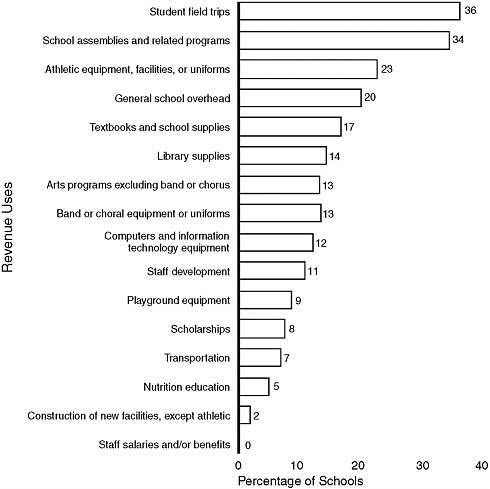
FIGURE 3-2 Estimated percentage of schools using competitive foods revenue, excluding food service revenue, for various purposes in 2003–2004.
SOURCE: GAO, 2005.
Thus à la carte revenues, which are likely the majority of competitive food revenues (see discussion above), are mainly devoted to food service operations. Essentially, they are used to pay off salaries of food service workers and to obtain food and other supplies. As indicated in ASFSA (2002), more than 90 percent of à la carte revenues are used for food service operation costs.
Experience of Schools in Restricting Competitive Foods and Beverages
The committee examined the financial experiences of schools that have restricted the availability of competitive foods and beverages to their students. Relatively little information was available because schools have only recently begun to make this transition and share their experiences (see below).
Evidence from the California LEAF Study
Probably the most thorough research is a pilot study of the effects of competitive food and beverage restriction implementation in California (Woodward-Lopez et al., 2005). Sixteen schools in nine districts were studied, and financial data were obtained from school district personnel. The study was conducted by the Center for Weight and Health at the University of California at Berkeley.
The investigators found that, when competitive food and beverage restrictions were imposed, gross revenue from school meals went up for 13 of 16 schools after the pilot changes. This increase in gross revenue occurred largely because more students participated in the NSLP, instead of buying competitive foods. However, gross revenue by itself is an imperfect measure of impact on the schools because it fails to account for possible changes in costs that might offset the revenue. The investigators found that only 5 of the 16 schools could provide sufficient data with which to estimate changes in net income. Net income decreased in two of those five schools and increased in three. For at least one and possibly two of the three schools where net income was increased, other factors, not directly related to restricting competitive foods also seemed to have been at least partially responsible.
Although this study was limited to only 16 schools in a single state, it suggests at least two important conjectures. First, it is unclear that schools can implement changes in competitive foods and beverages without losses in net income. Second, it appears that the routine availability of accounting information in schools is limited, and thus it is difficult to fully assess changes in net income. Research that follows on this pilot study may clarify the impact of changes in competitive food sales on school net income.
2005 GAO Report
GAO (2005) noted concerns about the availability of information to assess the financial impact of competitive food and beverage restrictions. GAO staff visited six schools that had recently undertaken initiatives to improve the quality of competitive foods and beverages, and examined financial impacts. However, they reported, “The effects of changes to competitive foods on revenues were often unclear because of limited data; nonetheless, many officials expressed concern about revenue losses.”
Evidence from Trade Sources
The number of school vending machines is reported to have decreased for schools (elementary through college) between 2003 and 2004. Vending operators cited two primary reasons for retreating from schools: (1) resistance from SFA that view vending operations as competition rather than support, and (2) growing nutrition restrictions (Maras, 2004).
School Reports
Additional discussions of the financial effects of implementing new competitive foods policies are also available in Making It Happen!, a compendium of 32 school and school district “success stories” published by the government to provide information on how to improve nutrition in the schools. Seventeen of the school district reports mention financial variables, and twelve indicate that limiting competitive foods and beverages did not adversely affect school revenues or resulted in benefit; four reported no change (USDA/CDC, 2005).
School reports are of limited use because the information reflects school and parent self-reports rather than independent outside observations and a standardized research protocol. Also, these school reports were not randomly selected; they were chosen to highlight schools that were changing their competitive foods program. Overall, this compendium suggests that it has been possible to restrict competitive foods and beverages without the school reporting additional financial pressure. However, assessing feasibility across schools will be difficult. Careful consideration must be given to how data are represented. When schools report success or failure, the data reported may not be representative of financial impacts across all schools.
The importance of small revenue sources may be underestimated because school officials often have more discretion over income from competitive foods than over other funding streams. There is insufficient evidence available to determine the financial impact of restricting competitive foods and beverages.
MARKETING
Marketing activities represent another element of the nutrition-related environment in schools. Marketing includes both the selling of specific brands of food and beverages, and the prominent use of food and beverage company names and logos in schools. Although there is a paucity of rigorous scientific evidence on the impact of marketing on food selection and purchase by children in schools, it is possible that marketing reflects, in part, the considerable resources many students have to spend. Food and beverage companies are also eager to shape students’ brand awareness and loyalty, and thus purchasing patterns, as they mature into adulthood (GAO, 2000; IOM, 2006; Palmer et al., 2004; Story and French, 2004). For example, more than $200 billion is spent annually by children and adolescents. Candy, carbonated soft drinks, and salty snacks consistently represent the leading categories of food and beverage items that are purchased by this group (IOM, 2006). In addition, a rigorous review of peer-reviewed literature on the effect of food marketing, primarily advertising, found that among many factors, food and beverage marketing influences the preferences and purchase requests of children, influences consumption at least in the short term, is a likely contributor to less healthful diets, and may contribute to negative diet-related health outcomes and risks among children and youth (IOM, 2006). Indeed, in many ways the schools represent an ideal audience for marketing, with millions of students attending school at least six hours a day, five days a week. Schools are often also eager to be involved in marketing efforts to help alleviate chronically tight budgets (Palmer et al., 2004; Story and French, 2004).
The report Food Marketing to Children and Youth: Threat or Opportunity? (IOM, 2006) indicates that “[t]he competitive multifaceted marketing of high-calorie and low-nutrient food and beverage products in school settings is widely prevalent and appears to have increased steadily over the past decade.” Encouraging soft drink sales is the most common kind of marketing activity in schools. In addition, 20 percent of high schools sell branded fast foods (Wechsler et al., 2001).
A particularly prevalent form of advertising at school is on scoreboards, in the form of corporate logos and soft drink ads (GAO, 2000). Also, more than one-third of middle and high schools use Channel One, which provides news programs for classroom viewing that include commercials for soft drinks and snacks.
Food and beverage marketing in the school environment can appear in many forms. For example, Story and French (2004) identified
-
sales of foods and beverages that benefit the school, the school district, or a student activity;
-
sales of brand-name fast foods;
-
awards to schools of cash or equipment in exchange for proofs of purchase of foods or beverages;
-
coupons, labels, or receipts from students;
-
fund-raising activities by parents and students that involve the sale of foods and beverages;
-
food and beverage advertising in schools, on athletic fields, on buses, and on school equipment and books;
-
food and beverage advertising in school publications, on television programs shown at school, and on computers;
-
free food and beverage samples;
-
educational materials, contests, and grants provided by food and beverage corporations; and
-
market research conducted by food and beverage firms at school, concerning student food and beverage preferences.
Many observers have raised concerns about the extent of food and beverage marketing in schools and the susceptibility of students to its influence. Despite this, local, state, or national regulation or voluntary controls on this kind of marketing in schools are not widespread (IOM, 2006). Because the selling of various products in school is itself a form of marketing, the growing restrictions on competitive foods and beverages in schools, as documented in Chapter 4, may be resulting in less marketing overall.
OTHER ASPECTS OF THE SCHOOL ENVIRONMENT RELATED TO THE NSLP AND COMPETITIVE FOODS AND BEVERAGES
Schools vary substantially in many different ways, including physical layout, class and activity scheduling, the availability of various programs, and levels of overall maintenance. Many of these factors have an influence on how the use of competitive foods and beverages has evolved in the schools and on the difficulty of creating standards for such foods and beverages. Noted below are the most important of these interactions.
Lack of Space
Some schools lack the physical capacity to serve all of their students in the available cafeteria space during times generally regarded as appropriate for lunch. As a result, schools have sometimes resorted to beginning the lunch period much earlier than most students might want. This potentially diminishes the attractiveness of participating in the NSLP (and thereby increases the relative appeal of competitive foods and beverages when students are hungry). Other consequences of having inadequate cafeteria space
may include overcrowded conditions or the need for students to use other food sources, such as school stores or vending machines, to obtain food, thus increasing the relative attractiveness of competitive foods.
Scheduling
Closely related to issues concerning cafeteria space are broader constraints that schools face for scheduling. Under pressure to ensure high academic performance (or to provide time for other school priorities), some schools schedule relatively short lunch periods. This may lead some students to choose competitive foods and beverages rather than NSLP meals if these can be purchased more quickly. A related timing issue involves whether schedules are such that students choose between buying and consuming an NSLP meal or having more recess time. Also, for high school students, there may be choices between having time for lunch and having time for an extra class or other academic opportunity.
Open Versus Closed Campuses
Some schools, particularly high schools, choose to “open” their campuses to allow students to be away from school during lunch periods and, in some instances, during other times when the students do not have classes scheduled. Nationally, 94 percent of elementary, 89 percent of middle, and 73 percent of high schools have closed campuses (Wechsler et al., 2001). Some schools have an open campus because of space constraints such as those noted above; in other instances, the school district may have made a conscious decision to allow older students to come and go from campus based on the assumption that they have a higher level of responsibility.
The open campus environment affects the dynamic of the interaction between the NSLP and competitive foods and beverages. In large part this is true because being able to leave the campus at lunchtime opens up additional lunch alternatives, thus reducing student use of both the NSLP and school competitive foods and beverages. Having an open campus likely undermines the nutrition objectives of the NSLP, because the foods and beverages bought by students off campus are probably not as nutritious as those served within the NSLP.
Availability of “Grab and Go” Programs Within the NSLP
To compensate for facility constraints and other issues, some schools have developed “express” versions of the NSLP that provide students with meals more quickly. Similar efforts to serve meals more quickly include “grab and go” breakfasts and breakfasts in the classroom. These alterna-
tives allow students the opportunity to select options that are more nutritious and decrease opportunities to select competitive foods and beverages of low nutritional value.
Conditions Within the School Cafeteria
Students use of competitive foods and beverages may also be influenced by school cafeteria conditions. Besides overcrowding, key issues include cleanliness, noise levels, and the enforcement of rules that ensure a pleasant, safe eating environment without being overly restrictive. A related issue is the availability of alternative places to eat within the school or on the school grounds, and whether students are allowed to consume NSLP meals and/or foods and beverages at non-cafeteria locations.
In summary:
-
Most schools have the infrastructure or arrangements in place to produce and serve healthy foods, either through their own kitchens, central district kitchens, or outside vendors. Although compliance is not yet 100 percent, evidence shows that greater numbers of schools are meeting the nutritional standards for the NSLP and SBP in meals served.
-
The successful operation of the NSLP and SBP in most schools, with their extensive nutritional requirements, suggests that schools have the capability to shift from current competitive foods and beverages to more nutritious competitive foods and beverages.
-
At a time when there are significant pressures on SFA budgets, competitive foods and beverages may be important for many SFAs to meet requirements that they balance their budgets. This may be an obstacle to modifying school competitive food and beverage policies in some schools.
SUMMARY
The preceding discussion of ways in which the school environment influences competitive food and beverage use is not exhaustive. However, it highlights the most important interactions, including the fact that different school conditions lead to quite different patterns of competitive food and beverage use. It also suggests that the effects of regulating competitive foods and beverages may also “play out” differently depending on the circumstances.


