
4
Impacts of Wind-Energy Development on Humans
INTRODUCTION
Although they have some unusual characteristics, such as visibility at a distance, wind-energy projects are not unique in their impacts on people. They share many characteristics with other projects—not only energy-production projects but also landfills, waste incinerators, etc.—that create both benefits and burdens. In considering how to undertake local interactions and how to temper negative socioeconomic impacts while enhancing benefits, much can be learned from past experiences with other potentially controversial issues.
One important lesson—and an important prelude to this chapter—is that concern about visual, auditory, and other impacts is a natural reaction, especially when the source of the impacts is or will be close to one’s home. The project’s potential for negative impacts as well as benefits, and the fact that different people have different values as well as different levels of sensitivity, are important aspects of impact assessment.
This chapter addresses some key potential human impacts, positive and negative, of wind-energy projects on people in surrounding areas. The impacts discussed here include aesthetic impacts; impacts on cultural resources such as historic and archeological sites and recreation sites; impacts on human health and well-being, specifically, from noise and from shadow flicker; economic and fiscal impacts; and the potential for electromagnetic interference with television and radio broadcasting, cellular phones, and radar.
The topics covered in this chapter do not represent an exhaustive list
of all possible human impacts from wind-energy projects. For example, we have not addressed potentially significant social impacts on community cohesion, sometimes exacerbated by differences in community make-up (e.g., differences in values and in amounts and sources of wealth between newcomers and long-time residents). Also not covered are psychological impacts—positive as well as negative—that can arise in confronting a controversial project (Gramling and Freudenburg 1992; NRC 2003). We have not focused on these matters because they can vary greatly from one local region or project site to another; and also as a function of population density and local and regional economic, social, and economic conditions; and in other ways. As a result, it is very difficult to generalize about them. In addition, not covered in this chapter but discussed elsewhere in this report (see especially Chapter 2) are diffuse health and economic effects of wind-energy projects. The topics covered in this chapter are, however, the chief local environmental impacts that have been recognized to date.
Thus far, there has been relatively little dispassionate analysis of the human impacts of wind-energy projects. Much that has been written has been from the vantage points of either proponents or opponents. There also are few data that have been systematically gathered on these impacts. In the absence of extensive data, this chapter is focused mainly on appropriate methods for analysis and assessment and on recommended practices in the face of uncertainty. Several of the methods discussed follow general principles and practice in socioeconomic impact assessments conducted as part of environmental impact statements; nevertheless, the chapter is tailored to the potential local human impacts of wind-energy projects and to their predominantly rural settings.
Wind-energy projects, like other potentially controversial developments, vary in their social context and thus in their social complexity. In this chapter, comments and methodological recommendations are directed toward relatively complex wind-energy facilities such as those being proposed for the Mid-Atlantic Highlands. While still applicable to smaller, less controversial installations, recommended methods should be simplified accordingly.
AESTHETIC IMPACTS
Aesthetics is often a primary reason for expressed concern about wind-energy projects (Figure 4-1). Unfortunately, few regulatory review processes adequately address aesthetic issues, and far fewer address the unique aesthetic issues associated with wind-energy projects in a rational manner. This section begins by describing some of the aesthetic issues associated with wind-energy projects. It then discusses existing methods for identifying visual resources and evaluating visual impacts in general, and it
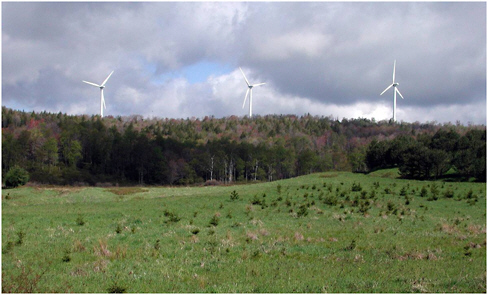
FIGURE 4-1 View of Mountaineer Project from .5 mile. The project includes a total of 44 wind turbines.
SOURCE: Photograph by Jean Vissering.
provides recommendations for adapting those methods to the assessment of visual impacts associated with wind-energy projects. Finally, the section briefly examines the potential for developing guidelines to protect scenic resources when planning for, siting, and evaluating prospective wind-energy projects.
Visual impacts are the focus of this discussion of aesthetic impacts, but noise is considered to the extent that it is related to the overall character of a particular landscape. Noise and shadow flicker are discussed further in this chapter, under the section addressing potential impacts on human health and well-being associated with wind-energy projects.
Aesthetic Issues
The essence of aesthetics is that humans experience their surroundings with multiple senses. We often have a strong attachment to place and an inherent tendency to protect our “nest.” Concern over changes in our personal landscapes is a universal phenomenon; it is not limited to the United States or to the present day. Public perceptions of wind-energy projects vary widely. To some, wind turbines appear visually pleasing, while others view them as intrusive industrial machines. Unlike some forms of development (e.g., cell towers), there are many people who find wind turbines to
be beautiful. Nevertheless, even beautiful objects may not be desirable in one’s current surroundings. Research has shown strong support for wind energy generally but substantially less support for projects close to one’s home (Thayer and Hansen 1989; Wolsink 1990; Gipe 2002).
There are a number of reasons why proposed wind-energy projects evoke strong emotional reactions. Modern wind turbines are relatively new to the United States. Some of the early projects were built in remote areas, but increasingly, they are being built in or proposed for areas that are close to residential and recreational uses, and often in areas never before considered for industrial land uses. They must be sited where wind resources, transmission lines, and access exist; in some cases, particularly in the eastern United States, these sites are relatively high in elevation (e.g., mountain ridgelines) and highly visible. Some projects extend over fairly extensive land areas, though only small portions of the area are occupied by the turbines themselves. The turbines1 often are taller than any local zoning ordinance ever envisioned, and they are impossible to screen from view. The movement of the blades makes it more likely that they will draw attention (Thayer and Hanson 1988; Gipe 2002).
Federal Aviation Administration obstruction lighting (pulsing red or white lights at night) is another aesthetic issue, and one that may result in some of the greatest aesthetic concerns (Hecklau 2005). In addition, wind turbines may produce noise, and the movement of the blades can result in shadow flicker from certain vantage points. Both the noise and the shadow flicker can be aesthetically troubling for some people who live nearby. While less concern has been raised about other project infrastructure such as meteorological towers, roads, power lines, and substations along with their associated site clearing and regrading, these can also result in negative visual impacts. Finally, a lack of regulatory guidance and stakeholder participation can contribute to fears of cumulative impacts if numerous projects are within a single viewshed.
Based on the few studies that have been conducted, it appears that despite low public acceptance during the project-proposal phase, acceptance levels generally have increased following construction (Thayer and Hanson 1989; Wolsink 1990; Palmer 1997). It is possible to find communities that identify their local wind projects as tourist attractions. Part of the positive image many people hold is linked to wind energy’s “green image” and spe-
cifically to its potential for replacing CO2-emitting electricity sources, with the hopeful prospect of reducing air pollution and global warming.
When evaluating the visual impacts of wind-energy projects, the essential question is not whether people will find them beautiful or not, but instead to what degree they may affect the important visual resources in the surrounding area. It is impossible to predict how any one individual will react to a wind-energy project. It is, however, possible to identify the visual character and scenic resources of a particular site and region. Evaluating the aesthetic impacts of wind-energy projects needs to focus on the relationship of the proposed project to the scenic landscape features of the site and its surrounding context. The factors that contribute to scenic quality can be identified and described with reasonable accuracy (Appleton 1975; Zube and Mills 1976; Litton 1979). This is especially true when viewing natural landscapes. Preferences are harder to predict for altered landscapes, although particular qualities of such landscapes have been identified in research of human preferences (Palmer 1983; Smardon et al. 1986). Nevertheless, we know enough to develop meaningful processes for reviewing aesthetic impacts. Despite the tremendous importance of a wind-energy project’s aesthetic impacts, especially on nearby residents, this issue is too often inadequately addressed.
Current Information
There is a growing body of information concerning the aesthetic impacts of wind-energy projects. The National Wind Coordinating Committee (NWCC) provides general outlines of aesthetic issues and some examples of local ordinances addressing wind-energy projects. The latter are very basic and do not address the broader issues of protecting particular landscape values. More comprehensive are the Proceedings of the NWCC Siting Technical Meeting (December 2005), which cover a range of relevant topics and provide a useful bibliography. The visual issues are addressed at length by Pasqualetti et al. (2002). While providing an excellent overview, that book predates the use of modern 1.5-3 MW turbines. And while it provides excellent guidance for mitigating impacts, it does not address siting or landscape characteristics. Research on public perceptions of specific wind-energy projects is fairly common in Europe (both pre- and post-construction studies), but there are fewer examples in the United States (Stanton 2005). Of those in the United States, most are focused on western landscapes (Thayer and Hansen 1989), while few are focused on eastern landscapes, including wooded ridgelines. While such studies are useful in understanding public reactions generally, visual impacts are largely site-specific (Pasqualetti 2005). Other available resources include legal and regulatory guidelines for review of wind-energy projects. New York’s State Environmental Quality Review Act (SEQRA) is one of the more explicit in the eastern United
States in terms of specifying what applicants need to submit and what will be considered (NYSDEC 2005; NYSERDA 2005a). Maine’s Department of Environmental Protection adopted similar language in its environmentalreview process (MEDEP 2003). In addition, there are several visual resource methods used for identifying scenic landscapes and for addressing visual impacts. Some important ones are discussed below.
Visual Assessment Methods
Two complementary approaches have been used to identify scenic resources and assess the impacts of proposed development projects. The first often is called a “professional approach” and relies on an individual or group with training in visual-resource and visual-impact assessment. These assessments rely on the research concerning human perceptions of landscapes (USFS 1979; Smardon et al. 1986) and on the adaptation of well-established methods for evaluating scenic landscape quality and for assessing visual impacts on particular landscapes. The second approach involves an assessment of public perceptions, attitudes, and values concerning a proposed project and its visual impacts on scenic resources. Landscapes are complex and imbued with cultural meaning that may not be understood by outside professionals. Techniques for assessing public perceptions, values, and attitudes include surveys, public meetings, interviews, and forums as well as examination of public documents identifying valued scenic resources (Smardon et al. 1986; Priestley 2006).
Among the best known and established methods for evaluating the scenic attributes of landscapes are the Visual Management System (USFS 1974) and the later Scenery Management System (USFS 1995) established by the U.S. Forest Service (USFS). Similarly, the U.S. Bureau of Land Management (BLM) uses a method called Visual Impact Assessment. The USFS and the BLM assessment methods have been used and adapted by numerous state and local agencies either for planning purposes (e.g., identifying scenic landscapes) or for assessing the impacts of proposed projects such as highways, ski areas, power plants, and forest harvesting (MADEM 1982; Smardon et al. 1986; RIDEM 1990).
While these methods are useful starting points, federal agencies such as the USFS usually go further in managing visual impacts on federal lands: they generally have plans in place that identify scenic values and set acceptable thresholds for alterations to the landscape. Even with detailed plans, these methods often fall short of providing meaningful guidance for evaluating the visual impacts of projects such as wind-energy facilities.
Most wind-energy projects are proposed on private land where there is far less guidance, especially with respect to evaluating aesthetic impacts. Many regulatory requirements adopted by states focus only on the tools for understanding the visibility of projects and fail to describe how visual im-
pacts should be evaluated. In other words, most processes are not very successful in addressing questions of what landscape or project characteristics would make a project aesthetically unacceptable or the impacts “undue.”
Below we outline a process for evaluating the conditions under which the aesthetic impacts of a proposed wind project might become unacceptable or “undue” in regulatory terms.
An Assessment Process for Evaluating the Visual Impacts of Wind-Energy Projects
The following steps summarize a process for moving from collecting measurable and observable information about visibility and landscape characteristics to analyzing the significance and importance of the visual resources involved and the effects of the proposed project on the landscape character and scenic resources of the surrounding area. Finally and most important, this process helps to inform the regulatory process about whether a proposed project is acceptable as designed, potentially acceptable with appropriate mitigation techniques, or unacceptable. The steps outlined below are described in greater detail in Appendix D.
Project Description
All site alterations that will have potential visual impacts must be identified by the developer in detail. These should include the turbine characteristics (height, rotor diameter, color, rated noise levels, proposed lighting) as well as the number of turbines and their locations; meteorological towers; roads; collector, distribution, and transmission lines; permanent and temporary storage “laydown” areas; substations; and any other structures associated with the project. In addition, all site clearings should be identified, including clearings for turbines, roads, power lines, substations, and laydown areas. All site regrading should be presented in sufficient detail to indicate the amount of cut and fill, locations, and clearing required. This information forms the basis for the visual assessment.
Project Visibility, Appearance, and Landscape Context
Viewshed mapping, photographic and virtual simulations, and field inventories of views are useful tools for determining with reasonable accuracy the visibility of the proposed project and for describing the characteristics of the views as well as identifying distinctive features within views (see Appendix D for more detail). Viewshed maps show areas of potential project visibility based on digital-elevation modeling. The modeling also can be used to determine the number of turbines that would be visible from a par-
ticular viewpoint. Actual visibility must be field-verified as trees, buildings, and other objects may restrict views. Field inventories also are necessary to document descriptive characteristics of the view. Inventories normally focus on areas of public use within a 10-mile radius of a project (Box 4-1). These include public roads, recreation areas, trails, wilderness and natural areas, historic sites, village centers, and other important scenic or cultural features identified in planning documents or in public meetings.
Photomontages or simulations provide critical project information for analysis. They should most usefully illustrate visually sensitive viewpoints and a range of perspectives and distances. They should also illustrate “worst-case” conditions to the greatest extent possible (clear weather and leaf-off conditions). Excellent software is available for creating simulations, but the technical requirements for accuracy should be clearly understood and specified (see Appendix D).
Identifying impacts from private residences can be more difficult without entering private property. Viewshed mapping can identify potential visibility. Geographic Information System (GIS) data generally provide additional information concerning existing vegetation and structures along with their primary use (residence, camp, or business). Providing regular notices to residents within a certain distance of the project can offer a means of learning more about visibility from private properties.
|
BOX 4-1 Area of Assessment: 10-Mile Radius The size of the area for analysis may vary from location to location depending on the particular geography of the area and on the size of the project being proposed. Modern wind turbines of 1.5-3 MW can be seen in the landscape from 20 miles away or more (barring topographic or vegetative screening), but as one moves away from the project itself, the turbines appear smaller and smaller, and occupy an increasingly small part of the overall view. The most significant impacts are likely to occur within 3 miles of the project, with impacts possible from sensitive viewing areas up to 8 miles from the project. At 10 miles away the project is less likely to result in significant impacts unless it is located in or can be seen from a particularly sensitive site or the project is in an area that might be considered a regional focal point. Thus, a 10-mile radius provides a good basis for analysis including viewshed mapping and field assessment for current turbines. In some landscapes a 15-mile radius may be preferred if highly sensitive viewpoints occur at these distances, the overall scale of the project warrants a broader assessment, or if more than one project is proposed in an area. In the western United States, landscape scale and visibility may require a larger area of assessment. |
Scenic Resource Values and Sensitivity Levels
Some landscapes are more visually sensitive than others due to such factors as numbers of viewers, viewer expectations, and identified scenic values. Processes exist for determining the relative visual quality of landscapes, the features that contribute to visual quality, and the sensitivity levels of particular landscape features and their uses. These are outlined in Appendix D and also can be found in methods used by the USFS Visual Management System (USFS 1974) and its later Scenery Management System (USFS 1995). Scenic resources values can also be determined in public planning documents and through public meetings.
Assessment of Visual Impacts
Visual impacts vary considerably depending on the particular characteristics of the project and its landscape context. Visibility of a project is only one of many variables that should be examined. Significant visual impacts generally arise because of the combination of many factors such as proximity of views, sensitivity of views, duration of views, the presence of scenic resources of statewide or national significance, and the scale of the project in relation to its setting (see Appendix D). Some examples of potentially significant impacts might include the following:
-
The project is located within a scenic context and is viewed in close proximity, for an extended duration (e.g., broad area or linear miles) from a highly sensitive use area, especially one for which the enjoyment of natural scenery is important, and that is an identified resource of statewide or national significance.
-
The project is located on a landform that is an important focal point that is highly visible throughout the region.
-
The project is of a scale that would dominate views throughout a region (or 10-mile assessment area) so that few other scenic natural views would be possible without including turbines.
Mitigation Techniques
A well-designed project will incorporate a number of techniques into the planning and design of the project to minimize visual impacts, including sensitive siting and ensuring that project infrastructure is well screened from view. Establishing “Best Practice” Guidelines can help ensure that minimum standards are met before project permit applications are submitted. Nevertheless, a thorough review by interested parties may result in further adjustments. If the visual impacts are deemed unacceptable, additional
mitigation techniques can be explored (see Appendix D). In some cases, however, mitigation techniques may not solve inherent concerns, and the project may be found to have “undue aesthetic impacts.”
Determination of Unacceptable or Undue Aesthetic Impacts
Guidance on when projects may be found unacceptable tends to be lacking or inadequate in many review processes. The information gathered in the above process can inform this decision by providing a detailed understanding of the particular issues involved in the visual relationship between the project and its surrounding context. Appendix D provides questions that could help determine the degree of visual impact.
Among the factors to consider are:
-
Has the applicant provided sufficient information with which to make a decision? These would include detailed information about the visibility of the proposed project and simulations (photomontages) from sensitive viewing areas. New York’s SEQRA process offers an example of clearly identifying the information required and the mitigation measures that need to be considered.
-
Are scenic resources of local, statewide, or national significance located on or near the project site? Is the surrounding landscape unique in any way? What landscape characteristics are important to the experience and visual integrity of these scenic features?
-
Would these scenic resources be significantly degraded by the construction of the proposed project?
-
Would the scale of the project interfere with the general enjoyment of scenic landscape features throughout the region? Would the project appear as a dominant feature throughout the region or study area?
-
Has the applicant employed reasonable mitigation measures in the overall design and layout of the proposed project so that it fits reasonably well into the character of the area?
-
Would the project violate a clear, written community standard intended to protect the scenic or natural beauty of the area? Such standards can be developed at the community, county, region, or state level.
Guidelines for Protecting Scenic Resources
Planning and Siting Guidelines
Siting guidelines that prospectively identify suitable and unsuitable locations for wind-energy projects have been considered in many regions. Problems with such guidelines arise, however. Each site is visually different,
local attitudes toward wind-energy development vary, and a wind developer must grapple with several non-aesthetic factors in locating a potentially developable site (e.g., willing property lessors, adequate wind resources, access to transmission lines, and a market for the electricity generated). Several combined approaches may be the most feasible. As discussed in more detail in Chapter 5, they would include the following:
-
State and regional guidance providing criteria concerning site conditions that may be inherently suited or unsuited to wind development due to particular scenic values, and/or sensitivity levels that would raise concerns requiring additional detailed study. Policies regarding aesthetic conditions and wind development on state-owned lands would also be appropriate.
-
Local and state planning documents that identify valuable scenic, recreational, and cultural assets. Defining particular landscape attributes or other public values that contribute to the resources is helpful when making decisions concerning proposed landscape development proposals.2 In addition, insofar as a “comprehensive plan” is voted on by the local governing body, the plan may provide guidance to a developer as an expression of the will of the community.
-
Statewide policies that address the relationship between the development of wind energy and the protection of valuable scenic resources.
Guidelines for Evaluating Cumulative Aesthetic Impacts
While wind-energy development is relatively new in the United States, the potential for cumulative aesthetic impacts resulting either from several new projects in a particular region or from expansion of existing projects is likely to become an issue that may need to be addressed at local, regional, and state levels. The following questions could help to evaluate the potential for undue cumulative aesthetic impacts:
-
Are projects at scales appropriate to the landscape context?
-
Are turbine types and sizes uniform within the wind resource area and over time?
-
How great is the offsite visibility of infrastructure?
-
Have areas that are inappropriate for wind projects due to terrain or important scenic, cultural, or recreational values been identified and described?
-
If the project is built as proposed, would each region retain undeveloped scenic vistas?
-
Would any one region be unduly burdened with wind-energy projects?
Considerations for Improving the Evaluation of Aesthetics and Implementation of Projects
-
Accurate and detailed information about the visual appearance of all aspects of a proposed project is extremely important. Incomplete or inaccurate information often results in public mistrust.
-
Generally, an area of 10 miles surrounding the project site is adequate for viewshed mapping and field assessment for turbines of a size currently used in the United States. In some landscapes, a 15- to 20-mile radius may be preferred, especially if highly sensitive viewpoints occur at these distances, the overall scale of the project warrants a broader assessment, or more than one project is proposed in an area.
-
In evaluating the aesthetic impacts of wind-energy projects, the discussion should focus not on whether people find wind-energy projects attractive but on the characteristics of the landscapes in which the projects will be located; the particular landscape features that contribute to scenic quality; the relative sensitivity of viewing areas; and the degree of degradation that would result to valued scenic resources, especially documented scenic values.
-
Computerized viewshed analyses provide useful information about potential project visibility but are best used as the basis for conducting field investigations. Within forested areas, views are likely to be minimal at best. The software allows more detailed analysis of numbers of turbines that can be seen from any one point.
-
Photomontages and photo simulations are essential tools in understanding project visibility, and appearance. Accurate representations involve exact technical requirements, such as precise camera focal lengths, Global Positioning System records of the photo location, and digital elevation (GIS-based) software. The technologies are changing, and it is important that simulations are accurately constructed (Stanton 2005). Local planning boards and the general public should be consulted in determining photo-
-
montage locations. They should illustrate sensitive or scenic viewpoints as well as “worst-case” situations such good weather conditions and the most scenic perspectives.
-
An independent assessment of visual impacts by trained professionals can provide more unbiased information than assessments provided on behalf of either developers or other interested and affected parties, and can provide useful comparisons with those assessments.
-
Meaningful public involvement is essential, and standards for providing information and opportunities for involvement can be helpful (see also Chapter 5).
-
Equally important are perceptions of clear benefits from wind-energy projects. Aesthetic perceptions are linked to our sense of general wellbeing. This has to do both with financial or material benefits (contributions to local taxes, payments for use of property, offsets such as protection of open space) and with making a real difference in terms of reducing pollution and CO2 levels (Damborg 2002).
-
Towns, counties, regions, and states can provide helpful guidance to developers and decision makers by identifying landscape resources of value. This process is particularly useful when it is part of formally adopted documents such as comprehensive land-use plans, but it can also be used for developing guidelines.
-
Wind-energy projects will not necessarily conflict with areas of moderate to high scenic quality, and may even appear more attractive in these settings. Problems can arise when the setting is an important regional focal point, or when a project will be seen close to highly sensitive viewing areas where a natural or intact landscape is important.
-
The potential for cumulative impacts either from the location of several projects within a region, or from future expansions of existing projects, could become a problem. Cumulative impacts cannot be addressed at the project or local scale, and so a regional or statewide perspective is needed.
-
Scale is relative. The apparent size of a wind turbine in relation to its surrounding is most relevant. Despite their large sizes, modern wind turbines can fit well in many landscapes. Vertical scale is likely to be an issue primarily if the turbines appear to overwhelm an important ridgeline, focal point, or cultural feature that appears diminished in prominence due to the relative height of the turbines.
-
The number of turbines or horizontal scale of wind projects will be an important determination of reasonable fit within a region. A project that dominates views throughout a region is more likely to have aesthetic impacts judged unacceptable than one that permits other scenic or natural views to remain unimpaired throughout the region. If residences, especially those not directly benefiting from a proposed project, are surrounded by wind turbines, adverse aesthetic impacts are likely to be reported.
-
Visual clutter often is adversely perceived and commonly results from the combination of human-made elements in close association that are of differing shapes, colors, forms, patterns, or scales. Generally simple and uniform arrays or groupings of wind turbines are more visually appealing than mixed types and sizes. Screening of associated infrastructure also is important in reducing visual clutter.
-
Turbines with rotating blades have been shown to be more visually appealing than those that are still. Maintenance or removal of poorly functioning turbines can be important.
-
Turbine noise usually is most critical within a half-mile of a project. Efforts to reduce potential noise impacts on nearby residents therefore may be most important within that distance.
-
Decommissioning wind-energy projects appropriately would be considered in initial permit approvals. While some wind-energy projects may have longer life spans than originally anticipated, provisions are needed for removal of site structures that no longer contribute to the project, and for site restoration. Funding provided in escrow for decommissioning is sometimes essential.
-
Obstruction lighting required on objects more than 200 feet tall often is an extremely important aesthetic concern. Eliminating or reducing major lighting impacts merits a high priority.
CULTURAL IMPACTS
Recreation
Wind-energy facilities create both positive and negative recreational impacts. On the positive side, many wind-energy projects are listed as tourist sights: some offer tours or provide information areas about the facility and wind energy in general; and several are considering incorporating visitor centers. Some developers allow open access to project sites that may provide additional opportunities for hunting, hiking, snowmobiling, and other activities.
There are two types of potential negative impacts on recreational opportunities: direct and indirect. Direct impacts can result when existing recreational activities are either precluded or require rerouting around a wind-energy facility. Indirect impacts include aesthetic impacts (addressed above) that may affect the recreational experience. These impacts can occur when scenic or natural values are critical to the recreational experience.
Most wind projects to date have been located on or proposed for private land. Policies vary regarding public use around wind turbines on both private and public lands. At project sites, access roads are often gated to
prevent public access along roads, but projects are not usually fenced from public use, although signage may discourage use.
Evaluating Recreational Impacts
-
In most cases, recreational uses will be identified in state and local documents and often on maps, although there may be times when recreational uses are only locally known. Some developers conduct recreation surveys to determine recreational uses in the study area and attitudes of users toward the development of wind-energy projects. Recreational concerns and interests are often identified in informal meetings and at public hearings. The USFS ranks recreational facilities as shown in Table 4-1. This provides an example that may need to be adapted by states or local communities in evaluating the impacts of wind-energy facilities.
Most aesthetic and recreational-assessment methods identify relative “sensitivity levels” of recreational uses related to factors such as the amount of use and the expectations of users. A high sensitivity level does not necessarily mean that a wind-energy facility should not be visible, but instead is an indication that further study is needed. The USFS defines the following levels for evaluating impacts on USFS recreational experiences:
-
Sensitivity Level 1 areas (highly sensitive areas) include all areas seen from primary travel routes, use areas, and water bodies where a minimum of one-fourth of the forest visitors have a major concern for the scenic qualities. Areas specifically considered to be highly sensitive include roads providing access to highly sensitive recreation sites (i.e., sites where a natural environment, non-motorized use, and quiet are characteristic); National Scenic or Recreation Trails; heavily used seasonal trails through areas recognized as scenic attractions; significant recreational streams; water bodies with heavy fishing, boating, swimming, and other uses highly dependent on viewing scenery; wilderness and primitive areas; and observation sites along highly sensitive travelways.
TABLE 4-1 U.S. Forest Service Recreational Facilities Rankings
|
Primary Use Areas/Travel Routes |
Secondary Use Areas/Travel Routes |
|
National importance |
Local importance |
|
High use volume |
Low use volume |
|
Long use duration |
Short use duration |
|
Large size |
Small size |
|
SOURCE: Adapted from Visual Management System (USFS 1974) and the later Scenery Management System (USFS 1995). |
|
-
Sensitivity Level 2 areas (“moderately sensitive locations”) include roads and trails on National Forest recreation maps that are not Level 1 or Level 3 and water bodies receiving low to moderate use.
-
Sensitivity Level 3 areas (least sensitive areas) include travelways constructed primarily for non-recreation purposes such as timber access roads and utility line clearings, and areas where uses primarily depend little on scenic viewing (e.g., hunting or gathering fuel wood, Christmas trees, or berries).
Historic, Sacred, and Archeological Sites
In analyzing impacts on historic, sacred, and archeological sites, the primary concern is that no permanent harm should be done that would affect the integrity of the site. Archeological inventories are generally required in most states before construction can begin. Some Native American tribes have sacred sites that may not be known to outsiders. Direct impacts (actual removal or physical harm) to historic, sacred, or archeological sites can be easily avoided in most instances.
Some states and localities have designated certain landscapes as having particular historical significance. For example, a proposed wind project in Otsego County, New York, that would have been located within the Lindesay Patent Historic District was later withdrawn.3 Designation of a historic district provides a reasonable indication of historic value, uniqueness, and public concern for the resource. Whether or not a wind-energy project would damage the resource may depend on the specific nature of the historic resources involved.
The indirect effects on the experience of a historic or sacred site or area resulting from either seeing or hearing a wind-energy project nearby are not as well documented. Most historic sites are assumed to be part of evolving landscape contexts. Concerns generally would arise only when specific aesthetic or landscape attributes of the surrounding area are identified in the documentation of the site’s historic value. A setting where a multisensory experience has been re-created, such as at Plimoth Plantation in Massachusetts, might also warrant consideration. There, the visitor expects not just to see pre-revolutionary structures but to actually experience life at the time of the early settlers. A recent and currently unresolved case in Vermont concerned a historic Civilian Conservation Corps bath-house that was documented as having been sited to take advantage of scenic views down a lake where a proposed wind-energy facility would be visible. Unlike
housing developments, wind-energy projects cannot be screened from view, except behind intervening topography and vegetation. Such issues are likely to arise as wind projects are proposed in cultural landscapes, and guidance as to what constitutes an undue impact to historic or sacred sites and areas will be necessary.
Evaluating Impacts on Historic, Sacred, and Archeological Sites
Historic, sacred, and archeological sites and settings must be regarded as sensitive sites. In most states, key historic sites are well documented and rated regarding their local, state, or national significance. State Offices of Historic Preservation, along with local historical societies, provide detailed information on historic sites and properties, and usually are involved in the review of proposed wind-energy projects. State archaeologists generally recommend specific guidelines for archaeological surveys, depending on the site involved. Archeological and sacred sites may be less well known. Documentation of these sites is essential. Good descriptive documentation will identify the particular values involved and the extent to which the context or setting contributes to the structure or landscape and in what way. Generally, the documentation of historic sites offers useful guidance to the value of the surrounding landscape to the interpretation of the resource, although the final determination probably should be done by experts. Most states are only now beginning to develop methods for reviewing onsite and offsite impacts of wind-energy facilities on historic sites (e.g., Vermont Division for Historic Preservation 2007). Siting wind-energy projects in the vicinity of identified and documented historic or sacred landscapes as well as historic, sacred, and archeological sites is likely to “raise red flags.” The impacts of viewing wind facilities from historic or sacred landscapes will require similar kinds of analyses to those noted in Appendix D for aesthetic impacts; however, additional guidance from relevant experts is needed in this area.
IMPACTS ON HUMAN HEALTH AND WELL-BEING
Wind-energy projects can have positive as well as negative impacts on human health and well-being. The positive impacts accrue mainly through improvements in air quality, as discussed previously in this report. These positive impacts (i.e., benefits) to health and well-being are diffuse; they are experienced by people living in areas where conventional methods of electricity generation are used less because wind energy can be substituted in the regional market.
In contrast, to the extent that wind-energy projects create negative impacts on human health and well-being, the impacts are experienced mainly
by people living near wind turbines who are affected by noise and shadow flicker.
Noise
As with any machine involving moving parts, wind turbines generate noise during operation. Noise from wind turbines arises mainly from two sources: (1) mechanical noise caused by the gearbox and generator; and (2) aerodynamic noise caused by interaction of the turbine blades with the wind. As described below (see “Noise Levels”), noise of greatest concern can be generally classified as being of one of these three types: broadband, tonal, and low-frequency.
The perception of noise depends in part on the individual—on a person’s hearing acuity and upon his or her subjective tolerance for or dislike of a particular type of noise. For example, a persistent “whoosh” might be a soothing sound to some people even as it annoys others. Nevertheless, it appears that subjective impressions of the noise from wind turbines are not totally idiosyncratic. A 1999 study (Kragh et al. 1999) included a laboratory technique for assessing the subjective unpleasantness of wind-turbine noise. Preliminary findings indicated that noise tonality and noise-fluctuation strength were the parameters best correlated with unpleasantness (Kragh et al. 1999).
Broadband, tonal, and low-frequency noise have all been addressed to some degree in modern upwind horizontal wind turbines, and turbine technologies continue to improve in this regard. With regard to the design of a wind-energy project, one is generally interested in assessing whether the additional noise generated by the wind turbines (relative to the ambient noise) might cause annoyance or a hazard to human health and well-being.
Noise impacts also can result from project construction and maintenance. These are generally of relatively short duration and occurrence but can include equipment operation, blasting, and noise associated with traffic into and out of the facility. These are not addressed in detail in this section. In the following, a brief review of wind-turbine noise and its impacts is presented along with suggested methods for assessing such impacts and mitigation measures.
Noise Levels
Noise from wind turbines, at the location of a receptor, is described in terms of sound pressure levels (relative to a reference value, typically 2 × 10⁻⁵ Pa) and is typically expressed in dB(A), decibels corrected or A-weighted for sensitivity of the human ear. Note that there is a difference between sound power used to describe the source of sound and sound pres-
sure used to describe the effect on a receptor. The sound power level from a single turbine is usually around 90-105 dB(A); such a turbine creates a sound pressure of 50-60 dB(A) at a distance of 40 meters (this is about the same level as conversational speech). Noise (sound-pressure) levels from an onshore wind project are typically in the 35-45 dB(A) range at a distance of about 300 meters (BWEA 2000; Burton et al. 2001). These are relatively low noise or sound-pressure levels compared with other common sources such as a busy office (~60 dB(A)), and with nighttime ambient noise levels in the countryside (~20-40 dB(A)). While turbine noise increases with wind speed, ambient noises—for example, due to the rustling of tree leaves— increase at a higher rate and can mask the turbine noise (BLM 2005a).
In addition to the amplitude of the noise emitted from turbines, its frequency content is also important, as human perception of sounds is different at different frequencies. Broadband noise from a wind turbine typically is a “swishing” or “whooshing” sound resulting from a continuous distribution of sound pressures with frequencies above 100 Hz. Tonal noise typically is a “hum” or “pitch” occurring at distinct frequencies. Low-frequency noise (with frequencies below 100 Hz) includes “infrasound,” which is inaudible or barely audible sound at frequencies below 20 Hz.
Mechanical sounds from a turbine are emitted at “tonal” frequencies associated with the rotating machinery, while aerodynamic sounds are typically broadband in character. Mechanical noise is generated from rotating components in the nacelle, including the generator and gearbox, and to a lesser extent, cooling fans, pumps, compressors, and the yaw system. Aerodynamic noise, produced by the flow of air over blades, is created by blades interacting with eddies created by atmospheric inflow turbulence. This broadband aerodynamic noise is generally the dominant type of wind-turbine noise, and it generally increases with tip speed. Both mechanical and aerodynamic noise often are loud enough to be heard by people.
With older downwind turbines, some infrasound also is emitted each time a rotor blade interacts with the disturbed wind behind the tower, but it is believed that the energy at these low frequencies is insufficient to pose a health hazard (BWEA 2005). Nevertheless, a recent study by van den Berg (2004, 2006) suggests that, especially at night during stable atmospheric conditions, low-frequency modulation (at around 4 Hz) of higher frequency swishing sounds is possible. Note that this is not infrasound, but van den Berg (2006) states that it is not known to what degree this modulated fluctuating sound causes annoyance and deterioration in sleep quality to people living nearby.
Low-frequency vibration and its effects on humans are not well understood. Sensitivity to such vibration resulting from wind-turbine noise is highly variable among humans. Although there are opposing views on the subject, it has recently been stated (Pierpont 2006) that “some people feel disturbing amounts of vibration or pulsation from wind turbines, and can
count in their bodies, especially their chests, the beats of the blades passing the towers, even when they can’t hear or see them.” More needs to be understood regarding the effects of low-frequency noise on humans.
Assessment
Guidelines for measuring noise produced by wind turbines are provided in the standard, IEC 61400-11: Acoustic Noise Measurement Techniques for Wind Turbines (IEC 2002), which specifies the instrumentation, methods, and locations for noise measurements. Wind-energy developers are required to meet local standards for acceptable sound levels; for example, in Germany, this level is 35 dB(A) for rural nighttime environments. Noise levels in the vicinity of wind-energy projects can be estimated during the design phase using available computational models (DWEA 2003a). Generally, noise levels are only computed at low wind speeds (7-8 m/s), because at higher speeds, noise produced by turbines can be (but is not always) masked by ambient noise.
Noise-emission measurements potentially are subject to problems, however. A 1999 study involving noise-measurement laboratories from seven European countries found, in measuring noise emission from the same 500 kW wind turbine on a flat terrain, that while apparent sound power levels and wind speed dependence could be measured reasonably reliably, tonality measurements were much more variable (Kragh et al. 1999). In addition, methods for assessing noise levels produced by wind turbines located in various terrains, such as mountainous regions, need further development.
Mitigation Measures and Standards
Noise produced by wind turbines generally is not a major concern for humans beyond a half-mile or so because various measures to reduce noise have been implemented in the design of modern turbines. The mechanical sound emanating from rotating machinery can be controlled by sound-isolating techniques. Furthermore, different types of wind turbines have different noise characteristics. As mentioned earlier, modern upwind turbines are less noisy than downwind turbines. Variable-speed turbines (where rotor speeds are lower at low wind speeds) create less noise at lower wind speeds when ambient noise is also low, compared with constant-speed turbines. Direct-drive machines, which have no gearbox or high-speed mechanical components, are much quieter.
Acceptability standards for noise vary by nation, state, and locality. They can also vary depending on time of day—nighttime standards are generally stricter. In the United States, the U.S. Environmental Protection Agency only provides noise guidelines. Many state governments issue their own regulations (e.g., Oregon Department of Environmental Quality
2006), and local governments often enact noise ordinances. Standards of acceptability need to be understood in the context of ambient (background) noise resulting from all other nearby and distant sources.
Shadow Flicker
As the blades of a wind turbine rotate in sunny conditions, they cast moving shadows on the ground resulting in alternating changes in light intensity. This phenomenon is termed shadow flicker. Shadow flicker is different from a related strobe-like phenomenon that is caused by intermittent chopping of the sunlight behind the rotating blades. Shadow flicker intensity is defined as the difference or variation in brightness at a given location in the presence and absence of a shadow. Shadow flicker can be a nuisance to nearby humans, and its effects need to be considered during the design of a wind-energy project.
In the United States, shadow flicker has not been identified as causing even a mild annoyance. In Northern Europe, on the other hand, because of the higher latitude and the lower angle of the sun, especially in winter, shadow flicker can be a problem of concern.
Assessment
Shadow flicker is a function of several factors, including the location of people relative to the turbine, the wind speed and direction, the diurnal variation of sunlight, the geographic latitude of the location, the local topography, and the presence of any obstructions (Nielsen 2003). Shadow flicker is not important at distant sites (for example, greater than 1,000 feet from a turbine) except during the morning and evening when shadows are long. However, sunlight intensity is also lower during the morning and evening; this tends to reduce the effects of shadows and shadow flicker. The speed of shadow flicker increases with wind-turbine rotor speed.
Shadow flicker may be analytically modeled, and several software packages are commercially available for this purpose (e.g., WindPro and GH WindFarmer). An online tool for simple shadow calculations for flat topography is also available (DWEA 2003b). These software packages generally provide conservative results as they typically ignore the numerous influencing factors listed above and only consider a worst-case scenario (i.e., no shadow or full shadow). Inputs to a shadow-flicker model in WindPro, for example, include a description of the turbine and site, the topography, the joint wind speed and wind direction distribution, and an average or distribution of sunshine hours. Typical output results include the number of shadow-hours per year; these are often represented by iso-lines or contours of equal annual shadow-hours on a topographical map. Daily and
annual shadow variations may also be a part of the result (DWEA 2003b). A typical result might indicate, for example, that a house 300 meters from a 600 kW wind turbine with a rotor diameter of 40 meters will be exposed to moving shadows for approximately 17-18 hours annually, out of a total of 8,760 hours in a year (Andersen 1999).
Impacts
Shadow flicker can be a nuisance to people living near a wind-energy project. It is sometimes difficult to work in a dwelling if there is shadow flicker on a window. In addition to its intensity, the frequency of the shadow flicker is of importance. Flicker frequency due to a turbine is on the order of the rotor frequency (i.e., 0.6-1.0 Hz), which is harmless to humans. According to the Epilepsy Foundation, only frequencies above 10 Hz are likely to cause epileptic seizures. (For reference, frequencies of strobe lights used in discotheques are higher than 3 Hz but lower than 10 Hz.) If a turbine is close to a highway, the movement of the large rotor blades and possible resulting flicker can distract drivers. Irish guidelines, for example, recommend that turbines be set back from the road at least 300 meters (MSU 2004).
Mitigation Measures
Shadow flicker is not explicitly regulated. When a maximum number of hours of allowed shadow flicker per year is imposed for a neighbor’s property (such as 30 hours/year for one wind-energy project in Germany), this number refers to those hours when the property is actually used by the people there and when they are awake. Denmark has no legislation regarding shadow flicker, but it is generally recommended that there be no more than 10 hours per year when flicker is experienced.
Even in the worst situations, shadow flicker only lasts for a short time each day—rarely more than half an hour. Moreover, flicker is observed only for a few weeks in the winter season. To avoid even limited periods of shadow flicker, a possible solution is to not run the turbines during this time. Obviously, another solution is to site the turbines such that their shadow paths avoid nearby residences.
Since tools for estimation of shadow flicker are readily available, such calculations are routinely done while planning a wind-energy project. One such study was performed for the Wild Horse project in the state of Washington (Nielsen 2003). Using results presented in the form of shadow flicker maps and distributions, one can determine suitable locations for wind turbines. Recently, tools have become available (GH WindFarmer) that not only compute shadow flicker in real time during turbine operation, but also convey information to the turbine control system to enable shutdown if the
shadow flicker at a particular location becomes particularly problematic. However, the committee is unaware if such real-time systems have been implemented at any specific wind-energy project.
LOCAL ECONOMIC AND FISCAL IMPACTS
Wind-energy projects can have a range of economic and fiscal impacts, both positive and negative. Some of those impacts are experienced at the national or regional level, as discussed in Chapter 2. These involve, for example, tax credits and other monetary incentives to encourage wind-energy production, as well as effects of wind energy on regional energy pricing. In this section, the focus is on the local level: on private economic impacts, positive and negative, as well as on public revenues and costs.
Lease and Easement Arrangements
As discussed in Chapter 5, most of the onshore wind-energy projects in the United States have been sited on private land. Typically, the developer of a wind-energy project acquires rights to the use of land through negotiations with landowners. Rarely is land purchased in fee simple; instead, the developer purchases leases or easements for a specified duration. While a uniform offer may be made to landowners, contract prices may be negotiated individually and privately. The power of eminent domain is not available to non-government wind-energy developers.
Assessment
According to the American Wind Energy Association (AWEA 2006f), leasing arrangements can vary greatly, but a reasonable estimate for a lease payment to a landowner from a single utility-scale turbine is currently about $3,000 per year. Lease and easement arrangements can be a financial boon to landowners, providing a steady albeit modest income, but only if the financial and other contractual terms are fair.
A number of guides are now available for landowners who are considering either lease arrangements or granting easements for wind-energy projects. Some of these, such as the guides of the Wind Easement Work Group of Windustry, located in Minnesota, have been prepared by collaborations of wind-energy industry, government, and other partners (Nardi and Daniels 2005a). This work group has provided extensive guidance addressing such questions as:
-
How much of my land will be tied up and for how long?
-
What land rights am I giving up? What activities can I continue?
-
How much will I be paid and how will I receive payments?
-
Are the proposed payments adequate now and will they be adequate in the future?
-
Does the proposed method of payment or the agreement itself present adverse tax consequences to me?
-
Are there firm plans to develop my land, or is the developer just trying to tie it up?
-
If payments are to be based on revenues generated by the wind turbines, how much information is the developer willing to disclose concerning how the owners’ revenue will be determined?
-
What rights is the developer able to later sell or transfer without my consent?
-
Does the developer have adequate liability insurance?
-
What are the developer’s termination rights?
-
What are my termination rights?
-
If the agreement is terminated either voluntarily or involuntarily, what happens to the wind-energy structures and related facilities on my land?
Policies to Protect the Parties Involved
In a companion document, Windustry’s Wind Easement Work Group issued a short set of best practices and policy recommendations regarding easements and leases (Nardi and Daniels 2005b). These included:
-
Public disclosure of energy production from wind turbines: In order to facilitate transparency for production-based payments, increase public knowledge about the wind resource, and provide information to the state on the economic contribution of wind power.
-
Public filing of lease documents and public disclosure of terms (or include a “no gag” clause): In order to reduce competition among neighbors, encourage developers to give fair deals, and lower the possibility of a single holdout among landowners.
-
Limiting easement periods to 30 years and option periods to 5 years: To avoid tying up either the landowners or the developer for unduly long periods.
Property Values
It has been claimed that wind-energy projects do not adversely affect property values (Associated Press 2006). In contrast, it has been asserted that “adverse impacts on environmental, scenic and property values are often overlooked” (Schleede 2003, p. 1).
It is difficult to generalize about the effects of wind-energy projects on property values. A 2003 Renewable Energy Policy Project (REPP) study of the effect of wind development on property values found no statistical effects of changes in property values over time from wind-energy projects (Sterzinger et al. 2003). This study examined changes in property values within 5 miles of 10 wind-energy projects that came online between 1998 and 2001, looking at the three-year period before and after each project came online and using a simple linear-regression analysis. The study found no major pre-post differences, and it also found no major differences when property-value changes in the 5-mile areas around the wind-energy projects were compared with selected “comparable communities.”
The REPP study, however, examined only average price changes. The authors noted that “it would be desirable in future studies to expand the variables incorporated into the analysis and to refine the view shed in order to look at the relationship between property values and the precise distance from development” (Sterzinger et al. 2003, p. 3). A 2006 study (Hoen 2006) more closely examined the effects on property values between 1996 and 2005 within 5 miles of a 20-turbine, 30-MW project in Madison County, New York. This study used a hedonic regression analysis method and found no measurable effects on property values, positive or negative, even on residences within a mile of the facility. In contrast, a 2005 analysis by the Power Plant Research Program of the Maryland Department of Natural Resources concerning a proposed wind energy facility—the Roth Rock facility in Garrett County, Maryland—concluded that the facility would have an uncertain impact on the property values of neighboring properties. It reached this conclusion after reviewing the 2003 REEP study as well as a 2004 study in the United Kingdom by the Royal Institution of Chartered Surveyors (RICS), which found negative impacts, especially on non-farm properties (RICS 2004), and after analyzing the property-value impacts of the Allegheny Heights (Clipper) wind-energy project located north of the Roth Rock project and permitted in 2003 (MDDNR 2006).
Property values are affected by many variables. Thus, empirically isolating the impacts of one variable (a wind-energy project) is extremely difficult unless one or more turbines are located close to a specific property, and even then, there may be confounding factors. Forecasts of property values in prospective host areas that are based on comparisons with existing host areas are of questionable validity, especially if there are significant differences between the areas.
Assessment
Despite the difficulty of reaching widely generalizable conclusions about the effects of wind-energy projects on property values, it is possible to theo-
rize about important variables. The discussion of aesthetic impacts earlier in this chapter is relevant. On the one hand, to the extent that a property is valuable for a purpose incompatible with wind-energy projects, such as to experience life in a remote and relatively untouched area, a view that includes a wind-energy project—especially one with many turbines—may detract from property values. On the other hand, to the extent that the wind-energy project contributes to the prosperity of an area, it may help to bring in amenities and so may enhance property values.
Because wind installations in the United States are a relatively recent phenomenon and are only now beginning to burgeon, the long-term effects of wind-energy projects on property values also are difficult to assess. While property values may be initially affected by a wind-energy project, the effect may diminish as the project becomes an accepted part of the landscape. On the other hand, the effects on local and regional property values of a few projects with 20 to 50 turbines may be quite different from the effects of numerous projects with 100 to 200 turbines.
Mitigation Measures
When siting facilities that provide a public benefit but may be undesirable as neighbors, one mitigation measure that has been explored, for example, with waste facilities, is to provide property-value guarantees to property owners within a specified distance from the facility when they want to sell their properties (Zeiss and Atwater 1989; Smith and Kunreuther 2001). An issue in this arrangement is the fair level of the guaranteed selling price, as adjusted over time by an inflation factor.
Employment and Secondary Economic Effects
A wind-energy project is a source of jobs throughout its life cycle: for parts manufacturers and for researchers seeking to improve wind-turbine performance; for workers who transport and construct wind turbines and related infrastructure; for workers employed in the operation and maintenance of turbines, transmission lines, etc.; and for workers involved in project decommissioning. The number, skill and pay level, and location of the jobs will vary depending upon the scale, location, and stage of the project. Some of the jobs may be in the area that will host the wind turbines; some may be in a manufacturing plant several states away. At all locations, in addition to direct employment impacts, employment may be indirectly fostered through secondary economic effects, including indirect impacts (e.g., changes in inter-industry purchasing patterns) and induced impacts (e.g., changes in household spending patterns).
In addition, however, it is conceivable that a wind-energy project will
have some adverse impacts on the economy of its host area. While it has been argued that wind-energy facilities can be a tourist attraction (AusWEA 2004), it also has been argued that wind projects are seen by people as undesirable in national forest areas (Grady 2004) and can damage tourism in areas of high scenic beauty (Schleede 2003). It is also possible that, while one or a few wind-energy facilities may be a tourist attraction, a proliferation may have the reverse effect.
Assessment
According to the AWEA’s “Wind Energy and Economic Development: Building Sustainable Jobs and Communities,” the European Wind Energy Association has estimated that in total, every MW of installed wind capacity directly and indirectly creates about 60 person-years of employment and 15 to 19 jobs. The fact sheet notes that the rate of job creation will decline as the industry grows and is able to take advantage of economies of scale (AWEA 2006f).
Of greatest interest at the local level, however, are not these totals but rather the jobs that become available to local or regional workers because of a wind-energy project in their vicinity. These jobs are likely to involve site preparation and facility construction during the project start-up period; skeleton crews for facility, grounds, and transmission line maintenance during facility operation typically about 20 years; and crews to perform decommissioning and site restoration work when the facility is closed.
The size of crews will vary depending upon the project scale, site characteristics, etc., but estimates of the number of employees, pay scales, skill requirements, and duration of employment can be made with reasonable accuracy. The secondary effects of wind-energy projects on the economy (both positive and negative) are much harder to estimate. On the one hand, a wind-energy project may increase the need for service sector businesses and jobs (gas stations, motels, restaurants, etc.). On the other hand, it may deter economic growth that would otherwise occur in the area (e.g., second homes, recreational facilities, and related amenities).
To estimate the secondary effects of a wind-energy project on a region’s economy, the region first must be geographically defined. Changes in its economic activity generally are then measured in terms of changes in either (1) employment, including part-time and seasonal employment; (2) regional income, i.e., the sum of worker wages and salaries plus business income and profits; or (3) changes in sales or spending. A regional economic multiplier may be used to estimate the secondary economic effects of new money flowing into the region. In conducting the impact analysis, the aim is to estimate the changes that would occur if the project is built versus if it is not built (not just the before/after changes).
While regional economic models have been available for some time, they generally are not well suited to assessing the secondary economic impacts of a single project on a small region or area. Recently, however, an economic model was developed specifically to estimate the economic benefits from a new wind-energy facility. This model, which was developed for the National Renewable Energy Laboratory (NREL), is called JEDI (Jobs and Economic Development Impacts). JEDI is an input-output model that calculates the direct, indirect, and induced economic benefits from new wind-energy facilities. (A new JEDI model, JEDI II, estimates the local economic benefits from new coal and natural gas facilities as well.) JEDI II uses input data such as the size of the project, its plant-construction cost, the length of the construction period, and fixed and variable operation and maintenance costs to estimate impacts (direct, indirect, and induced) in terms of jobs, wage and salary income, and output (economic activity) both during the construction period and during the operating years (Goldberg et al. 2004).
Models such as JEDI can improve understanding of the economic impacts of new energy facilities, especially when those impacts are considered at the macro level. Similarly, assessments of the actual economic impacts of wind-energy facilities, in addition to forecasts of economic impacts, can improve our collective understanding of the economic benefits of wind-energy facilities and how those benefits are distributed. Surveying 13 studies of economic impacts (actual and forecast) of wind facilities on rural economies, one NREL report concluded that these facilities have a large direct impact on the economies of rural communities, especially those with few other supporting industries; however, such communities also see greater “leakage” of secondary economic effects to outside areas. In addition, the report concluded that the number of local construction and operations jobs created by the facility depends on the skills locally available (Pedden 2006).
More studies are needed of the economic impacts of wind facilities, both actual and estimated. The NWCC (2001) provides these guidelines for assessing the economic development impacts of wind energy:
-
The audience for the study and the objectives to be pursued should receive primary consideration.
-
The assumptions and scenarios used to analyze economic development impacts should be clearly stated.
-
The model used to calculate impacts should use regional economic input data. The data should be representative of the study region (country, state, county, reservation, or multiple states and counties).
-
Both the potential positive and negative (i.e., displacement) economic impacts of wind-energy development should be considered.
-
The evaluation should consider the ownership, equity and sources of capital, and markets for the project for their relative impacts on the local community, reservation, state, region, or county.
-
The evaluation should consider the timing and scale of the project in relation to other wind-energy development in the state, region, or country. Pioneering projects in new areas face economic considerations different from those of incremental projects in mature wind-resource areas.
-
The evaluation should distinguish between short-term and longterm impacts.
-
The evaluation should consider relative impacts on the economy at a level appropriate to the scope of the study.
-
For both wind development and the displaced alternative, the evaluation should consider how new labor, material, and services would be supplied.
These guidelines are apt but demanding. From the perspective of the local affected area, it may be best to focus on the jobs that will be directly created by the project—what skills they require, what their pay levels are, what their duration will be, and what the company’s hiring practices are— as well as on reasonably anticipated effects—positive and negative—on the local economy.
Employment Commitments
A developer seeking to be favorably received by a host area may explore with local officials the possibility of a commitment to give hiring preferences to local workers. As Pedden (2006) noted in a report on the economic impacts of wind facilities in rural communities, “some local governments offer incentives to developers in return for the developer agreeing to hire local labor.”
Public Revenues and Costs
Like other industries, a wind-energy project generates tax dollars for the local government. According to the AWEA,“Wind Energy and Economic Development: Building Sustainable Jobs and Communities” (AWEA 2006f):
-
Alameda County, in California, collected $725,000 in property taxes in 1998 from wind-turbine installations valued at $66 million.
-
240 MW of wind capacity installed in Iowa in 1998 and 1999 produced $2 million annually in tax payments to counties and school districts.
-
The director of economic development in Lake Benton, Minnesota, said that each 100 MW of wind development generates about $1 million annually in property-tax revenue.
In addition, as with the private economy, the wind-energy project may indirectly generate taxes for the local government. However, as discussed above with regard to the private economy, an assessment of fiscal benefits in the form of tax revenue should be based on changes that would occur if the project was built versus if it was not built. The project may encourage some forms of economic development that generate taxes, but it may deter others.
A wind-energy facility also may entail public costs. Some of these, such as improvements of local public roads accessing the facility, will be obvious. Others, such as improved community services that may be expected in the wake of the development, will be indirect and less obvious. Taken together, the costs to a small, rural government have the potential to be significant.
Fiscal Commitments
The developer and the local government should have a clear mutual understanding of both the basis for tax revenues and what public expenditures are expected to make the project possible.
ELECTROMAGNETIC INTERFERENCE
Through electromagnetic interference (EMI), wind-energy projects conceivably can have negative impacts on various types of signals important to human activities: television, radio, microwave/radio fixed links, cellular phones, and radar.
EMI is electromagnetic (EM) disturbance that interrupts, obstructs, or otherwise degrades or limits the effective performance of electronics or electrical equipment. It can be induced intentionally, as in some forms of electronic warfare, or unintentionally, as a result of spurious emissions and responses and intermodulation products. In relation to wind turbines, two issues are relevant: (1) possible passive interference of the wind turbines with existing radio or TV stations, and (2) possible electromagnetic emissions produced by the turbines.
There are several ways in which electromagnetic waves can deviate from their intended straight-line communication paths. These include:
-
Blocking the path with an obstacle, thus creating a “shadow” or area where the intended EM wave will not occur. To a large extent, the
-
“blocking” depends on the size of the obstacle as a function of the wave-length of the electromagnetic wave.
-
Refraction of the EM wave. Refraction is the turning or bending of any wave, such as a light or sound wave, when it passes from one medium into another with different refractive properties.
In the context of wind-energy projects, EMI often is discussed in relation to the following telecommunications facilities:
-
Television broadcast transmissions (approx 50 MHz-1 GHz)
-
Radio broadcast transmissions (approx 1.5 MHz [AM] and 100 MHz [FM])
-
Microwave/radio “fixed links” (approx 3-60 GHz)
-
Mobile phones (approx 1 or 2 GHz)
-
Radar
Television
The main form of interference to TV transmission caused by wind-energy projects is the scattering and reflection of signals by the turbines, mainly the blades. In relation to the components that make up a wind turbine, the tower and nacelle have very little effect on reception (i.e., only a small amount of blocking, reflection, and diffraction occurs). This is backed up by laboratory measurements that show that the tower introduces only a small, localized (up to approximately 100 m) attenuation of the signal (Buckley and Knight Merz 2005).
The British Broadcasting Corporation has issued recommendations based on a simple concept for calculating the geometry associated with reflected signals from wind turbines and how directional receiving aerials can provide rejection of the unwanted signals (BBC 2006).
Typical mitigation requirements include:
-
Re-orientation of existing aerials to an alternative transmitter
-
Supply of directional aerials to mildly affected properties
-
Switch to supply of cable or satellite television (subject to parallel broadcast of terrestrial channels)
-
Installation of a new repeater station in a location where interference can be avoided (this is more complex for digital but also less likely to be required for digital television)
Radio
Available literature indicates that effects of wind projects on both Amplitude Modulated (AM) and Frequency Modulated (FM) radio transmission systems are considered to be negligible and only apply at very small distances from the wind turbine (i.e., within tens of meters). For AM transmissions, this is due to low broadcast frequencies and long (100+ meter) signal wavelengths, which makes distortion difficult even for very large wind turbines. For FM transmissions, this is due to the fact that ordinary FM receivers are susceptible to noise interference only while operating in the threshold regions relative to signal-to-noise ratios. Thus, a distorted audio signal may be superimposed on the desired sound close to a wind turbine, potentially causing interference, only if the primary FM signal is weak.
Fixed Radio Links
Fixed radio links, also known as point-to-point links, are by definition a focused radio transmission directed at a specific receiver. Fixed links are not intended to be picked up by any receivers other than those at which they are directed. They typically rely on the use of a parabolic reflector antenna (like satellite dishes) to transmit a direct narrow beam of radio waves to a receiving antenna. A direct line of sight is required between the transmitter and receiver, and any obstructions within the line of sight may degrade the performance or result in the loss of the link.
A wind turbine may degrade the performance of a fixed link, not only if it is within the line of sight of the link but also if it is within a certain lateral distance of the link, known as the “Fresnel Zone.”
Cellular Phones
Mobile-phone reception depends greatly on the position of the mobile receiver. Therefore, the movement of the receiver and the topography—including both natural and unnatural obstacles—have a major impact on the quality of the signal. The mere movement of the receiver can ensure that wind turbines will have a very minimal effect, if any, on communication quality.
Radar
The potential for interference of wind turbines with radar is only partially understood. If there is such interference, it would primarily af-
fect military and civilian air-traffic control. In addition, National Weather Service weather radars might be affected.
Two recent reports treated the problems in some detail. The first is a report by the U.S. Department of Defense to the U.S. Congressional Defense Committees (DOD 2006). The second is a British report on the impacts of wind-energy projects on aviation radar (Poupart 2003).
The DOD report concludes that “[w]ind farms located within radar line of sight of air defense radar have the potential to degrade the ability of the radar to perform its intended function. The magnitude of the impact will depend upon the number and locations of the turbines. Should the impact prove sufficient to degrade the ability of the radar to unambiguously detect objects of interest by primary radar alone this will negatively influence the ability of U.S. military forces to defend the nation.” It concludes further that “[t]he Department has initiated research and development efforts to develop additional mitigation approaches that in the future could enable wind turbines to be within radar line of sight of air defense radars without impacting their performance.”
The U.K. report focused on the development and validation of a computer model that can be used to predict the radar reflection characteristics, which are a function of the complex interaction between radar energy and turbines. These effects are described by the Radar Cross Section (RCS). The report concludes that the model enables a much more detailed quantification of the complex interaction between wind turbines and radar systems than was previously available. Among the findings are:
-
Wind-turbine towers and nacelles can be designed to have a small RCS.
-
Blade RCS returns can be effectively controlled only through the use of absorbing materials (stealth technology).
-
The key factors influencing the effect of wind-energy facilities on radar are spacing of wind turbines within a facility, which needs to be considered in the context of the radar cross-range and down-range resolutions.
-
No optimal layout or format can be prescribed, because each wind-energy facility will have its own specific requirements that depend on many factors.
The report concludes that the model has a large potential for further use, such as the following:
-
It can generate the detailed data required for sophisticated initial screening of potential facility sites.
-
It can support the development of mitigation and solutions, in-
-
cluding siting optimization, control of wind-turbine RCS, and the development of enhanced radar filters that are able to remove returns from wind turbines.
-
It is clear that as of late 2006, the interference of wind turbines with radars is a problem as yet unsolved. Research and larger-scale investigations are currently under way in several countries; they may eventually lead to standardization and certification procedures.
CONCLUSIONS AND RECOMMENDATIONS
Aesthetic Impacts
Wind-energy facilities often are highly visible. Responses to proposed wind projects based on aesthetics are among the most common reasons for strong reactions to them. Reactions to the alteration of places that contribute to the beauty of our surroundings are natural and should be acknowledged. Excellent methods exist for identifying the scenic resource values of a site and its surroundings, and they should be the basis for visual impact assessments of proposed projects. Tools are available for understanding project visibility and appearance as well as the landscape characteristics that contribute to scenic quality. Lists of potential mitigation measures are also readily available. Nevertheless, the difficult step of determining under what circumstances and why a project may be found to have undue visual impacts is still poorly handled by many reviewing boards. The reasons include a lack of understanding of visual methods for landscape analysis and a lack of clear guidelines for decision making.
Current Best Practices
Information concerning best practices in the United States is found through the NWCC and its sponsored proceedings and links. Europe and Canada generally have done a more thorough job in providing definitive best-practice guidelines. The integration of local, regional, and national planning and review efforts in those countries contributes to the success of their review processes. Funding in those nations for planning and more extensive surveys of public perceptions of wind energy is also far ahead of that in the United States. Here, standards for best practices are evolving as communities and states recognize the need for a more systematic approach to evaluating visual impacts. There is considerable variability in the review of proposed projects.
Information Needs
Processes for evaluating the aesthetic impacts of wind-energy projects should be developed with a better understanding of the aesthetic principles that influence people’s experience of scenery. Comparative studies are needed of wind-energy projects that have relatively widespread acceptance of their aesthetic impacts and those that do not. These studies could provide useful information about a range of factors that contribute to acceptability within different landscape types. These studies should take into account that sites and projects vary dramatically in the types of scenic resources involved; the proximity and sensitivity of views; and the particular project characteristics, including scale.
The tradeoffs between placing wind-energy projects close to population centers where they are closer to electricity users but visible to more people, and placing them in remote areas where they are less visible but where the wilderness, remote, and undeveloped qualities of the landscape may hold value need discussion as well as a clear understanding of the tradeoffs involved. These issues need to be addressed broadly, not only singling out aesthetic concerns.
Impacts on Recreational, Historic, Sacred, and Archeological Sites
Wind-energy projects can be compatible with many recreational activities, but concerns may arise when they are close to recreational activities for which the enjoyment of natural scenery is an important part of the experience. Historic, sacred, and archeological resources can be harmed by direct impacts that affect the integrity of the resource or future opportunities for research and appreciation. The experience of certain historic or sacred sites or landscapes can also be indirectly affected by wind-energy projects, especially if particular qualities of the surrounding landscape have been documented as important to the experience, interpretation, and significance of the proximate historic or sacred site. Greater clarity is needed about how such situations should be evaluated. For example, the importance and special qualities of the experience must be assessed within the context of the relative visibility and prominence of the proposed wind-energy project.
Current Best Practices
Useful methods exist for evaluating both the relative sensitivity of recreational areas and recreational users, and for determining valuable scenic resources. Siting to avoid impacts on highly sensitive recreational uses, and project design to mitigate both direct and indirect impacts can be important. Mitigation techniques can include relocation of project design
elements, relocation of recreational activities (such as a trail), and enhancement of existing recreational activities.
State Historic Preservation Offices (SHPOs) generally identify all known historic sites of state and national significance. Local historical societies or comprehensive plans may identify additional sites of local significance. The SHPO typically requires a Class II survey to determine the existence of unknown resources in areas where such surveys are lacking. Guidelines for evaluating direct impacts on historic sites and structures often are available, and many states require archeological surveys for certain sites. Few guidelines currently exist, however, for evaluating indirect impacts of wind-energy projects on historic or sacred sites and landscapes.
Information Needs
-
Research examining the perceptions of recreational users toward wind-energy projects that are located near dispersed and concentrated recreational activities would provide useful data for decision makers. However, aesthetic impacts are very site-specific, so the results of such research likely will be able to guide site-specific assessments but not substitute for them.
-
Guidelines are needed concerning distances at which recreational activities can occur safely around wind turbines.
-
Policy makers and decision makers need better guidance from historic-preservation experts and others concerning the methods for evaluating the effects of wind-energy projects on historic, sacred, and archeological resources.
Noise and Shadow Flicker
Noise can be monitored by various measurement techniques. However, an important issue to consider, especially when studying noise, is that its perception and the degree to which it is considered objectionable depend on individuals exposed to it.
Shadow flicker caused by wind turbines can be an annoyance, and its effects need to be considered during the design of a wind-energy project. In the United States, shadow flicker has not been identified as even a mild annoyance. In Northern Europe, because of the higher latitude and the lower angle of the sun, especially in winter, shadow flicker has, in some cases, been noted as a cause for concern.
Best (or Good) Practices
Good practices for dealing with the potential impacts of noise from a wind-energy project could include the following:
-
Analysis of the noise should be made based on the operating characteristics of the specific wind turbines, the terrain in which the project will be located, and the distance to nearby residences.
-
Pre-construction noise surveys should be conducted to determine pre-project background noise levels and to determine later on what, if any, changes the wind project brought about.
-
If regulatory threshold levels of noise are in place, a minimum distance between any of the wind turbines in the project and the nearest residence should be maintained so as to reduce the sound to the prescribed threshold.
-
To have a process for resolving potential noise complaints, a telephone number should be provided through which a permitting agency can be notified of any noise concern by any member of the public. Then, agency staff can work with the project owner and concerned citizens to resolve the issue. This process can also include a technical assessment of the noise complaint to ensure its legitimacy.
Shadow flicker is reasonably well understood. With a little careful planning and the use of available software, the potential for shadow flicker can be assessed at any site, and appropriate strategies can be adopted to minimize the time when it might be an annoyance to residents nearby.
Information Needs
Recent research studies regarding noise from wind-energy projects suggest that the industry standards (such as the IEC 61400-11 guidelines) for assessing and documenting noise levels emitted may not be adequate for nighttime conditions and projects in mountainous terrain. This work on understanding the effect of atmospheric stability conditions and on sitespecific terrain conditions and their effects on noise needs to be accounted for in noise standards. In addition, studies on human sensitivity to very low frequencies are recommended.
Computational tools have become available that not only compute shadow flicker in real time during turbine operation, but also convey information to the turbine-control system to allow shutdown if the shadow flicker at a particular location becomes particularly problematic. Hence, the development and implementation of a real-time system at a wind-en-
ergy project to take such actions when shadow flicker is indicated might be useful.
Local Economic and Fiscal Impacts
When assessing the economic and fiscal impacts of a wind-energy project, the main issues that arise include (1) fair treatment of both landowners who lease land for the project and other affected but uncompensated owners and occupants; (2) a fine-grained understanding of how wind-energy facilities may affect property values; (3) a realistic appraisal of the net economic effects of the wind-energy facility, during its construction and over its lifetime; and (4) a similarly realistic assessment of the revenues the local government can expect and the costs it will have to assume.
Current Best Practices
The guidelines referred to in the text—of Windustry, regarding leasing and easement arrangements; and of the NWCC, regarding assessments of economic development impacts of wind power—contain good advice and are examples of current standards for best practices. In addition, best practices include:
-
Gathering as much “hard” information as possible: the terms of the lease and easement arrangements; the type, pay scale, and duration of jobs that are likely to be generated for local workers; the taxes that the project will directly generate; and the known public costs that it will entail.
-
Qualitatively taking into account other, less tangible economic factors: opportunity costs that may arise from the project; the duration of benefits from the project; and the likelihood of an uneven distribution of benefits (e.g., one landowner may realize income by leasing land for a turbine while another may be within close range of the turbine but receive no income).
-
Adopting guarantees and mitigation measures that are tailored to the facility, the surrounding community members, and the local government and are fair to all involved.
Information Needs
Large wind-energy facilities are fairly new in the United States. Many current analyses of their economic impacts are fueled by enthusiasm or skepticism. There is a need for systematic collection and analysis of economic data on a facility-by-facility and region-by-region basis. These data should take into account the type of facility, including the number of tur-
bines at the facility and elsewhere in the region. The data should cover the following types of information:
-
Leasing arrangements
-
Jobs directly created (including skill and pay levels, duration, hiring policies)
-
Local government revenue and costs
-
Economic mitigation and enhancement measures
More studies also are needed of public attitudes toward specific wind-energy facilities and how they affect economic behavior (e.g., property values, tourism, new residential development). To allow for cross-facility and longitudinal comparisons, the methods of data collection and analysis used in these studies should be replicable.
Electromagnetic Interference
With the exception of radar, the main EMI effects of wind-energy projects are well understood. Wind turbines have the potential to cause interference to television broadcasts, while the audio parts of TV broad-casts are less susceptible to interference. The data available are adequate to predict interference effects and areas and to minimize interference at the planning stage or propose suitable mitigation requirements.
Information Needs
Regarding radar, more research is needed to understand the conditions under which wind turbines can interfere with radar systems and to develop appropriate mitigation measures.
In addition, while EMI is not an issue in all countries (e.g., it is not an issue in Denmark), EMI issues should be given sufficient coverage in environmental impact statements and assessments to provide adequate evaluation of wind-energy project applications.
GENERAL CONCLUSIONS AND RECOMMENDATIONS
Well-established methods are available for assessing the positive and negative impacts of wind-energy projects on humans; these methods enable better-informed and more-enlightened decision making by regulators, developers, and the public. They include systematic methods for assessing aesthetic impacts, which often are among the most-vocalized concerns expressed about wind-energy projects.
Because relatively little research has been done on the human impacts of wind-energy projects, when wind-energy projects are undertaken, routine documentation should be made of processes for local interactions and impacts that arise during the lifetime of the project, from proposal through decommissioning. Such documentation will facilitate future research and therefore help future siting decisions to be made.
The impacts discussed in this chapter should be taken within the context of both the environmental impacts discussed in Chapter 3 and the broader contextual analysis of wind energy—including its electricity production benefits and limitations—presented in Chapter 2. Moreover, the conclusions and recommendations presented by topic here should not be taken in isolation; instead, they should be treated as part of a process. Chapter 5 elaborates on processes for planning and evaluating wind-energy projects and for public involvement in these processes.
Finally, the text of this chapter describes many specific questions to be asked and issues to be considered in assessing various aspects of the effects of wind-energy projects on humans, especially concerning aesthetic impacts, and those questions and issues should be covered in assessments and regulatory reviews of wind-energy projects.


