4
Current Status
One of the specific tasks of this study was to describe the current status of parcel databases across the nation at all levels of government. This chapter addresses that task by examining the status of parcel data programs from a variety of administrative levels including the federal, tribal, state, and local levels, as well as those developed by private industry. It also describes parcel data systems in other countries as context.
4.1
FEDERAL PARCEL DATA PROGRAMS
Although there is not a single dedicated program for development of nationwide parcel data within the United States, numerous ongoing programs within the federal government directly relate to creating, managing, or collecting parcel data. Some of these programs address parcel data for federal lands; others are related to national parcel data. This section looks at the current status of federal parcel data programs in terms of overall coordination and standards, parcel data production by various land management agencies, other federal programs that are using or collecting parcel data, and the framework for access to parcel data.
4.1.1
Parcel Data Coordination and Standards—the Federal Geographic Data Committee (FGDC) Subcommittee for Cadastral Data
The FGDC Subcommittee for Cadastral Data is the focal point for activities relating to parcel or cadastral information within the federal government.1 Funding for the activities of the subcommittee has been provided by the Bureau of Land Management (BLM) Cadastral Survey Program, which is the designated custodian for cadastre information and federal land ownership status. As part of the FGDC, this subcommittee is charged with coordinating the interest in cadastral information of stakeholders at all levels of government. To support the coordination activities the subcommittee established an eastern and a western coordinator and steering committees. The committees focus on
activities of regional concern as well as items of national interest. As discussed in Chapter 2, this subcommittee was instrumental in creating the content data standard for a modern land parcel data model. This standard is part of the Framework Content Data Standard, which is now going through its final approval at the American National Standards Institute level. Once approved, it will become an American National Standard applicable for adoption and use at all levels of government and industry. The FGDC subcommittee is extremely active and has extensive membership from federal, state, and local agencies as well as private industry. It meets regularly and has actively promoted the use of parcel data to correspond with directions from the Presidential E-Government Initiative, Western Governors’ Association Policy on Cadastral Data, National Association of Counties, and Fifty States Initiative. In addition to the development of the content standard, the subcommittee has completed two surveys of parcel activities at the state and local levels, analyzed the role of parcel data to assist in emergency response activities, documented best practices, and developed business model templates with appropriate metrics (or measures) for assessing progress.
Some of the highlights of the most current activities include developing data element standards for energy, hurricane response, wildland fire response, and homeland security. These efforts have resulted in a series of case studies and best-practice examples that document the importance of parcel data for critical decision making. The FGDC subcommittee has also developed an extract from the Cadastral Data Content Standard to facilitate data discovery for Geospatial One-Stop. It has adopted a focus on states for the stewardship of parcel data. This resulted in a business plan template that describes how to go about setting up a parcel data development program including a framework for inventorying the current status and needs of all cadastral producers in a state. For example, Arkansas has developed the State of Arkansas Cadastral Spatial Data Infrastructure Business Plan, which is based on the FGDC Cadastral Data Core Content Standard (Arkansas Assessment Coordination Department and Arkansas Geographic Information Office, 2006, p. 7).
One recent activity that demonstrates how the subcommittee operates is its work to develop a parcel publication standard in three western states. This standard conforms to the BLM Cadastral Survey Geographic Coordinate Database. These data have been transferred to the states and are being hosted by those states. In Utah the data are used to coordinate the energy management programs and as data integration for county-produced parcel data. In return, Utah provides updated corner coordinates and parcel data for the Geographic Coordinate Data Base (GCDB). In Montana, the GCDB publication format is being used for the official Public Land Survey System (PLSS) and federal parcel representation. The state and federal agencies are using these data to coordinate further update of control and are in the process of a shared survey control project. This is an excellent example of the type of state and federal cooperation and coordination that is promoted by the FGDC and the new Office of Management and Budget (OMB) Geospatial Line of Business.
The subcommittee continues to be extremely active and has identified several specific objectives for 2006-2007. These include the following:
-
Develop priority business data profiles from the Cadastral Data Content Standard for cadastral data based upon national and Western Governors Association priorities.
-
Determine and track the status of parcel conversion to facilitate a national implementation strategy.
-
Maintain the Cadastral Data Content Standard, publication standards, and guidelines.
-
Promote the adoption of national standards by tribal, state, and local governments.
-
Maintain and support eastern, western, and national strategies for supporting the National Spatial Data Infrastructure (NSDI) including the U.S. offshore cadastral systems.
-
Provide technical assistance for implementing NSDI standards and guidelines.
-
Coordinate cadastral activities among participating and interested parties.
|
BOX 4.1 The National Integrated Land System (NILS) The National Integrated Land System (NILS) is a joint project between the BLM and the USDA Forest Service in partnership with the states, counties, and private industry to provide business solutions for the management of cadastral records and land parcel information in a geographic information system (GIS) environment. NILS provides a process to collect, maintain, and store parcel-based land and survey information that meets the common, shared business needs of land title and land resource management. The NILS project is being developed in four modules: Survey Management (S), Measurement Management (M), Parcel Management (P), and GeoCommunicator (G). NILS provides the user with tools to manage land records and cadastral data in a “Field-to-Fabric” manner. The user can use field survey measurement data directly from the survey measuring equipment, manipulate these data into lines and points, and create legal land and parcel descriptions to be used in mapping and land record maintenance. NILS has unified the worlds of surveying and GIS. This unification process is fundamental for land records managers and maintainers of cadastral mapping databases to improve the accuracy and quality of the data, to create standard land descriptions and cadastral data that can be used by anyone. Commercial off-the-shelf (COTS) GIS technology forms the foundation of NILS. Based on industry standards, including the Common Object Model (COM) and object-oriented (OO) technology, the software provides a modern development platform for NILS. Object-oriented software engineering techniques will be used to extend the COTS to meet the specific needs of NILS users. SOURCE: NILS website, http://www.blm.gov/nils/. |
4.1.2
Federal Lands Parcel Data
From an operational point of view the most visible federal government parcel data activity is the National Integrated Land System (NILS). BLM and the U.S. Forest Service are jointly developing NILS as a seamless representation of federally managed lands (see Box 4.1). The primary purpose of NILS is to “automate the BLM cadastral surveying and land records business rules in a geographic information system (GIS) environment. The integration of surveying and GIS provides land managers with a complete field-to-fabric technology solution.”2 The technical innovations of NILS are discussed in Chapter 2. Currently, it is in a prototype phase and a limited set of federal parcel data is accessible through the GeoCommunicator component of NILS. GeoCommunicator is being used to provide a web-based query and discovery tool for general access to U.S. Forest Service property that is available for sale (Figure 4.1).
BLM also carries out other duties related to parcel data. It is responsible for surveying Indian lands, which is described further in Section 4.2. Because of the need for high-quality survey information and the special survey needs on tribal lands, BLM has initiated the Certified Federal Surveyor program. This will ensure that land surveyors performing surveys for tribes understand the special requirements of federal lands and tribal lands surveys. BLM has ongoing responsibilities for the PLSS and for the GCDB. The GCDB contains digital geographic information for the PLSS, and is computed from BLM survey records (official plats and field notes), local survey records, and geodetic control information. The GCDB was started in 1989 and currently includes approximately three-quarters of the townships in 10 western states and more than 300 townships east of the Mis-
|
2 |
See http://www.blm.gov/nils/NILS-overview.htm [accessed February 15, 2007]. |
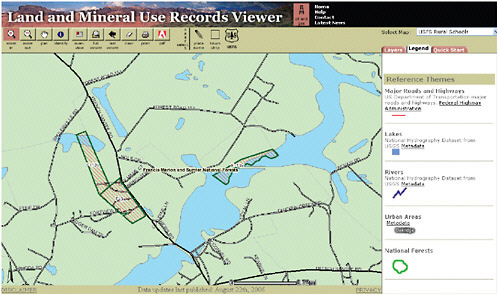
FIGURE 4.1 Screenshot from NILS. SOURCE: http://www.geocommunicator.gov/NILS-PARCEL2/map.jsp?MAP=USFS [accessed February 23, 2007].
sissippi River.3 To improve the geodetic control, the National Geodetic Survey has worked hard to establish a geodetic state adviser in every state and to develop state partnerships to improve survey control. These programs have been very effective where they have been implemented; for example, good cooperative programs exist in Minnesota, North Carolina, Arizona, Florida, and Wisconsin.
Other federal land management agencies also develop land parcel data, such as the U.S. Fish and Wildlife Service, Bureau of Reclamation, National Park Service, U.S. Army Corps of Engineers, and Department of Defense, among others. A preliminary inspection by the FGDC Subcommittee for Cadastral Data determined that the larger land management agencies have programs to develop land parcel data in cooperation with the BLM Cadastral Survey Program. The status of agencies with smaller land management responsibilities is unknown. Other quasi-federal agencies such as the Tennessee Valley Authority (TVA) also have parcel data programs. A representative from the TVA at the Land Parcel Summit said that TVA is struggling to work with 220 counties across seven states, but has the best luck in Tennessee where the state has helped counties develop standard parcel maps.
4.1.3
Related Federal Programs
Numerous other federa l programs are collecting or using parcel data to meet their programmatic needs. This section describes other parcel data-related programs in the federal government.
Department of Agriculture, Farm Service Agency (FSA)—Common Land Units
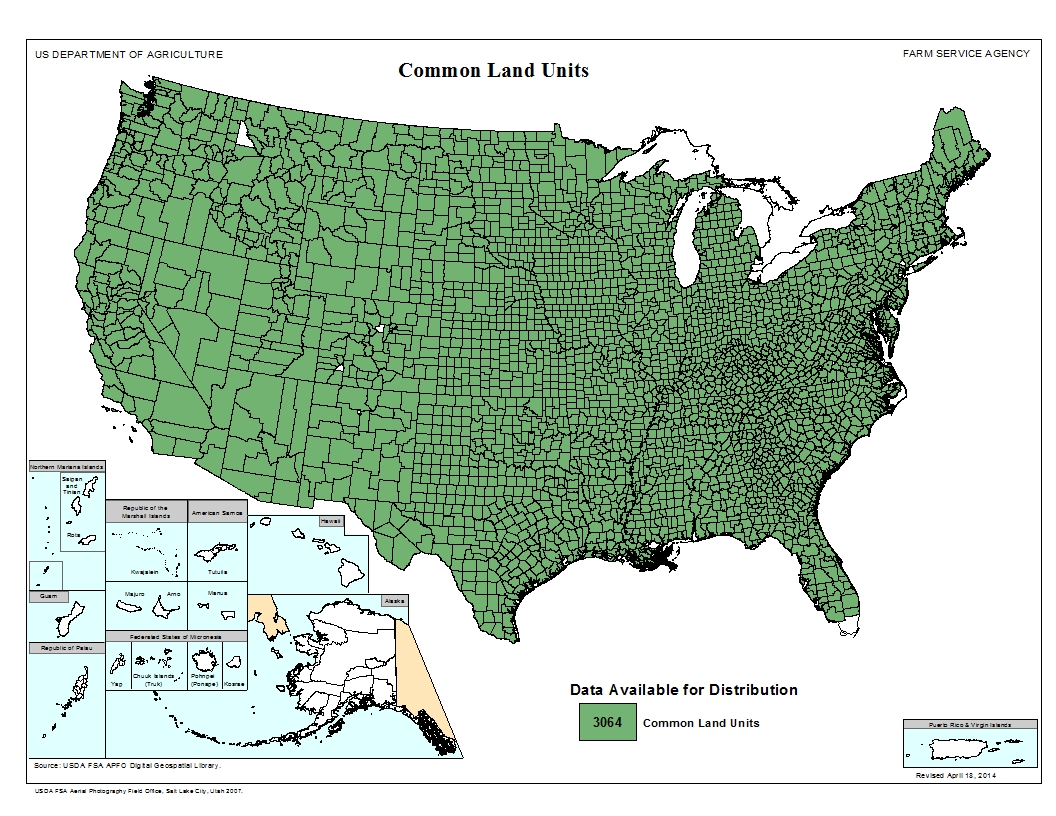
The U.S. Department of Agriculture (USDA) Farm Service Agency (FSA) is producing a national coverage of more than 33 million farm and field boundaries, or common land units (CLUs) (Figure 4.2). CLUs are field-based polygons of individual contiguous agricultural parcels. In effect, this program is building a GIS layer of subdivisions of land parcels. The Common Land Unit Program was established to support the Agricultural Risk Act of 2000. As USDA documentation states (USDA, 2000, p. iii):
Specifically, the Deputy Under Secretary, FFAS [Farm and Foreign Agricultural Service], and the RMA [Risk Management Agency] and FSA Administrators established a cross-functional team to implement a common information system that will eliminate the need for producers to report the same information to FSA and to reinsured companies; create efficiencies for producers, the agencies, and reinsured companies; and reduce the need for data reconciliation. The common information system (CIS) will enable the sharing of customer land use related information by utilizing USDA’s e-Gov initiative and the Office of Management and Budget’s (OMB) Geospatial One-Stop Initiative. The system is based on the common land unit (CLU), which identifies all farm fields, range land, and pasture land in the United States. USDA customers report and receive services related to land location, such as insurance, commodity payments, loans, conservation plans, and program contracts.
The Agricultural Risk Protection Act of 2000 was implemented to modernize and improve the oversight and reporting functions of the FSA. Because FSA is responsible for billions of dollars in loans, farm payments, and disaster assistance, and these payments are directly tied to what happens on the land and acreage reported by producers, an accurate map of field acreage is necessary (Heald, 2000).
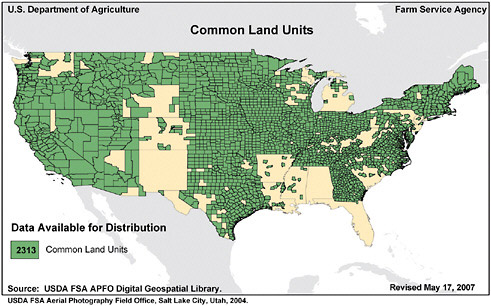
FIGURE 4.2 The current status of common land unit information. SOURCE: USDA FSA Aerial Field Photography Office Digital Geospatial Library. Available at http://datagateway.nrcs.usda.gov/Catalog/GatewayStatusMaps/CLU.jpg [accessed June 4, 2007].
Initially the USDA established a set of regional service centers to create the database. GIS analysts in the service centers digitized CLUs through on-screen digitizing of digital orthophoto quadrangles. They were saved as geographically registered polygons with associated attribute data. Updates and changes to the CLU are now done by the individual county offices (USDA, 2006).
The lessons learned through the creation of the CLUs can provide some valuable insight for the generation of national parcel data. Perhaps most importantly, this serves as a clear example of the federal government interest in parcel data in order to meet specific programmatic needs. By having subparcel-level data in a GIS format the USDA believes that it will be more accountable and improve its control over fraudulent claims. It has taken an open approach to the use of its data and has built a program of coordination with state and local governments. In fact, the FSA seems to understand that many other groups have interests in the CLU and has worked to partner with other organizations to pool resources. It believes that support from state offices is vital, and it encourages active participation from universities. It also has established a model for technology transfer that would be directly applicable to parcel data creation. The distribution of the CLUs also has interesting implications in terms of privacy and confidentiality. The integration of field-level geographic data provides an extremely easy manner for public scrutiny of land use activities on private property. In any county with a parcel database it is a simple procedure to link these activities to specific landowners. On the other hand, it did not appear to the committee that this program was done in coordination with any other federal programs related to parcel data.
U.S. Forest Service
As mentioned in Chapter 3, the U.S. Forest Service (USFS) uses local parcel data in wildfire management to identify the location of structures and assets at risk in a program called Rapid Assessment of Values at Risk (RAVAR). This will be a national program by 2008. The RAVAR program is part of a larger initiative spearheaded by the FGDC Subcommittee for Cadastral Data Wildland Fire Project Team. The team has attempted to contact each county in 13 western states to determine the availability of digital parcel data. The June 2007 status map from this project (Figure 4.3) provides an interesting illustration of the availability of parcel data. The map also identifies those counties that share their data on an emergency basis, those that cannot share their data, and those with incomplete parcel data.
Department of Homeland Security
As stated previously, a representative from the Department of Homeland Security (DHS) addressed the committee and highlighted the importance of parcel-level data to meet important programmatic needs. Current information on land ownership is essential for response and rescue operations during an emergency, fair distribution of recovery funds, assessing eligibility for flood insurance, and effective planning and mitigation activities. Organization of geospatial information within DHS has been a major priority. As part of this process, its Geospatial Management Office has developed a Geospatial Data Model (GDM) to support DHS mission requirements. The importance of parcel-level data to the DHS mission can be judged by the extensive level of parcel attributes that it has included in the GDM (DHS, 2006): Improvement Assessment
Land Assess: Total value of the parcel
Owner Class: Primary owner classification
Owner Managing Agency: Owning agency or organization
Parcel Address: Parcel address
Parcel ID: Unique parcel identifier as defined by the jurisdiction
Public Parcel Name: Commonly recognized name of publicly owned parcel
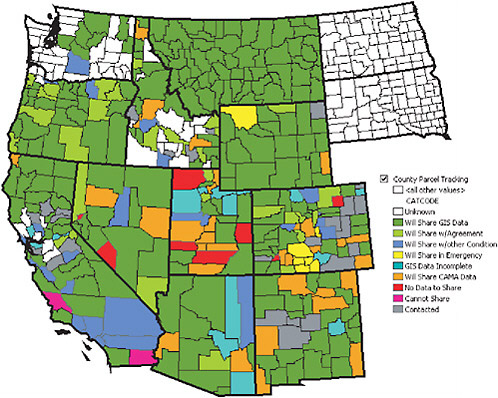
FIGURE 4.3 Availability of parcel data in June 2007 as collected by the RAVAR project. SOURCE: FGDC Cadastral Subcommittee. Available at http://www.nationalcad.org/data/documents/County-Data-Status-Junepercent2022.pdf [accessed July 10, 2007].
Source Ref: Source reference for the parcel
Source Ref Date: Source reference date
Subdivision Name: Subdivision name
Tax Address: Postal service address for tax bill mailing
Use Classification: Land use classification code
Zone Code: Current land use zoning code
DHS created the GDM based on various existing frameworks or standards, such as the FGDC Framework, the proposed FGDC street address standard (developed by Urban and Regional Information Systems Association (URISA) and sponsored by the Census Bureau), Project Bluebook (GIS for the Nation), and the National Information Exchange Model (NIEM). Each of these has a tie to parcel data. For example, the use of the FGDC framework translates directly to the use of the Cadastral Data Content Standard. The proposed URISA Address Standard was developed by URISA, the National Emergency Numbers Association, and the U.S. Postal Service. Project Bluebook is a set of templates that demonstrate how a GIS for the Nation would be created. (GIS for the Nation is
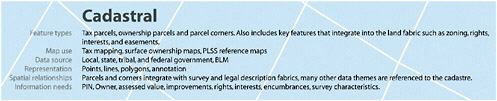
FIGURE 4.4 Cadastral component of GIS for the Nation. SOURCE: GIS for the Nation (poster), available at http://www.geodata.gov/ [accessed September 27, 2007].
not formally endorsed by the FGDC but is accessible on the Geospatial One-Stop.) The Geospatial One-Stop model for GIS for the Nation includes a major description of its cadastral component, as shown in Figure 4.4. In this description, the source of cadastral data is listed as local, state, tribal, and federal government, BLM.
Finally, the GDM states that it will conform to the NIEM, which is a partnership of the U.S. Department of Justice and DHS. The NIEM is designed to
… develop, disseminate and support enterprise-wide information exchange standards and processes that can enable jurisdictions to effectively share critical information in emergency situations, as well as support the day-to-day operations of agencies throughout the nation.4
Soon to be added to the GDM is the DHS National Asset Data Base content. It represents the planned data content to meet the base layer and mission layer geospatial needs of DHS and will be required at DHS for exchange of geospatial data. DHS has asked the FGDC Homeland Security Working Group, Content Subgroup to publicly vet the model.5
In summary, DHS received considerable criticism for its inability to respond promptly or efficiently to the needs of people and property in the fall of 2005. In fact, there are still significant issues relating to insurance claims and the efforts to rebuild communities along the Gulf Coast. There is little doubt that these events have led DHS to acknowledge the need for parcel-level information to fulfill its various missions. This also suggests that appropriate resources can be dedicated to meet these programmatic needs.
Department of Housing and Urban Development (HUD)
As mentioned earlier, HUD recognizes the need for parcel data to carry out its mission. HUD has recently been tasked by Congress with developing long-term housing assistance to communities ravaged by Hurricanes Katrina, Rita, and Wilma. In order to do this, HUD needs a clear picture of where damage occurred, the extent to which building permits have been pulled or grants provided to repair that damage, and whether (and which) neighborhoods are rebounding quickly or slowly. The first step was to gather parcel data, which HUD acquired from a commercial vendor for some of the Gulf Coast areas. Although it was not possible to collect complete data for the area, the data are being standardized and improved, and HUD is optimistic that the experiment will provide a sound basis for improved geocoding capabilities within HUD and will assist its efforts to meet the objectives laid out by Congress. The HUD Office of Policy Development and Research has also
|
4 |
See NIEM website, http://www.niem.gov/. |
|
5 |
See http://www.fgdc.gov/participation/working-groups-subcommittees/hswg/dhs-gdm/index_html [accessed February 15, 2007]. |
initiated an exploratory research project to determine if it is feasible to link information on extent of damage with measures of recovery at the neighborhood, block, and individual parcel levels. If research finds this linking to be feasible and potentially useful, HUD will work with federal, state, and local agencies to establish data sharing agreements that would allow use of this information for careful planning while still protecting individual confidentiality promises made by each agency. In effect, this will enable local agencies to use land parcels as a common basis for damage inspection, Small Business Administration loans, Federal Emergency Management Agency grants, state Community Development Block Grant disaster grants and loans, and city building permit and progress data (Jon Sperling, e-mail to D. Cowen, February 26, 2007).
Census Bureau Programs
Although the Census Bureau does not create or explicitly use parcel data, it has several important programs that are closely associated with parcel information. Three of those programs follow:
-
Boundary and Annexation Survey (BAS) program. Under the FGDC framework data program that was mandated under OMB Circular A-16, the Bureau of the Census is the custodian for governmental units. These administrative units “describe, by a consistent set of rules and semantic definitions, the official boundary of federal, state, local, and tribal governments as reported/certified to the U.S. Census Bureau by responsible officials of each government for purposes of reporting the Nation’s official statistics.” To meet this obligation and support the programmatic needs of the decennial Census, the bureau conducts the Boundary and Annexation Survey. Counties and their equivalents, Minor Civil Divisions, incorporated places, and American Indian areas and off-reservation trust lands are asked to participate in the survey. This survey updates information about the legal boundaries and names of all governmental units. Participation in this annual survey is voluntary; however, in its letters to local government the Census Bureau includes the following statement suggesting that coordination of information regarding governmental units should be required: “Please note that in many states you are required to report your local and county annexations and deannexations to your state officials” (U.S. Census Bureau, 2006a; see also http://www.census.gov/geo/www/bas/bashome.html).
There are several aspects of the BAS that are relevant to this study. It is approved by OMB and is considered to be the primary source of information for legal boundaries, names of governments, legal status, types of government units, new governments, dissolved governments, and boundary changes. In effect, this survey serves as the legal basis for all administrative units in the United States. It not only serves as the basis for all levels of political representation but also serves as the official basis for allocation of funds for numerous federal programs.
An example of how parcel data can be used to assist the BAS is provided by the boundary of the Town of Port Royal, South Carolina (Figure 4.5). This map demonstrates clearly the complexity of the boundaries of incorporated areas. It would be extremely difficult for the bureau to accurately represent the limits of Port Royal with anything other than parcel data.
Furthermore, any changes to the current boundaries typically are based on annexations of specific parcels of land. Many local governments impose a set of topological rules to build boundaries of incorporated areas from parcels. In Beaufort County, South Carolina, the parcel database includes a code for the incorporated area. In effect, the boundaries of incorporated areas are defined by the parcels. At the same time, local governments also use parcel boundaries to build their own representations of census blocks, block groups, and tracts. A Census representative at a meeting of the committee indicated that the bureau recognizes the importance of using parcel boundary data to better define Census-designated areas. The back lot line of parcels is often much more useful
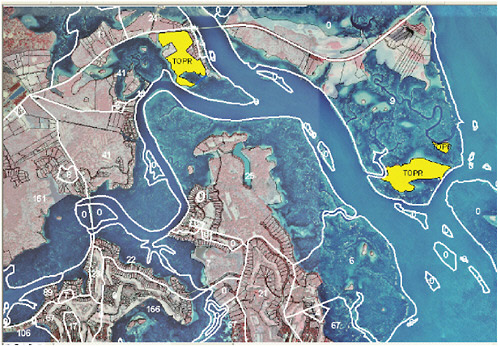
FIGURE 4.5 Boundaries of Town of Port Royal (TOPR), South Carolina (yellow), in relationship to the parcels (black lines) and census blocks (white lines). The figure demonstrates that the boundaries of incorporated areas often cannot be defined using census blocks. In this case the boundary of Port Royal includes only a selected set of parcels that are separated by more than 2 miles of water and marsh. Generated by D. Cowen from Beaufort County, South Carolina, parcel data, Census Bureau data, and U.S. Geological Survey orthoimagery.
-
in defining areas than the boundaries of the large census blocks that exist in low-density areas. Evidence of this is also provided in Figure 4.5.
-
Given the significance of this information a strong case can be made that participation in the BAS should be mandatory and that it should utilize the most appropriate data, which are often parcel data. Political boundaries are sometimes congruent with parcel boundaries and there are no physical features that could provide source information for proper BAS placement.
-
Local Update of Census Addresses (LUCA) program.6 The LUCA program, also known as the Address List Review program, is a partnership program that allows the Census Bureau to benefit from local knowledge in developing its Master Address File (MAF). Participants contribute to a more complete and accurate census for their area. The LUCA program is made possible by the Census Address List Improvement Act of 1994 (P.L. 103-430), which for the first time authorized designated representatives of local and tribal governments to review the MAF. Under the program, local or tribal governments designate a liaison to review the portion of the MAF covering the area under their jurisdiction. The liaisons must treat the address lists as confidential information under Title 13 of the United States Code and participants must sign an oath promising to protect the
-
confidentially of the addresses.7 The Census Bureau sends the liaisons listings from the MAF (in either paper or electronic form), corresponding maps, and a tally of MAF records for each census block in their jurisdictions. In areas with city-style addresses, the liaison provides input regarding individual addresses on the list, as well as addresses missing from the list that should be added. The Census Bureau verifies this input and provides feedback to the participants about the results. In areas with non-city-style addresses (i.e., rural route and box number), the liaisons provide input regarding the completeness and accuracy of the housing unit counts for each block. The Census Bureau revisits the blocks identified as having a different number of housing units and provides feedback about the number of housing units found. Public Law 103-430 allows the local participants to appeal final Census Bureau decisions. While the LUCA program allows the Census Bureau to benefit from local review, local governments that provide the feedback do not receive comparable benefits. The restrictions on use of the MAF mean that new addresses included in the MAF cannot be incorporated into local databases. This restriction means that local governments must function with what may be erroneous or missing data. This limitation could actually result in the loss of life or property and discourages many local governments from providing feedback to the bureau.
-
MAF addresses and local parcels most often have a one-to-one relationship. If the county shows a home or business on its parcel map, there is at least one address that should be part of the MAF. Conversely, and especially for counties without a parcel map, MAF coordinates could provide the basis for a primitive parcel map.
-
MAF/TIGER Accuracy Improvement Project (MTAIP). Under the MTAIP there will be a major improvement in the positional accuracy of the Topologically Integrated Geographic Encoding and Referencing (TIGER) line files and the location of residential dwelling units. In 2002 the Census Bureau awarded an eight-year contract to perform this project, which includes developing “a complete and current list of all addresses and locations where people live or work, covering an estimated 115 million residences, as well as 60 million businesses and other structures in the U.S. The TIGER portion of the project is a digital database that identifies the type, location and name of streets, rivers, railroads and other geographic features, and geospatially defines their relationships to each other, to the MAF addresses, and to numerous other entities.”8 In terms of this report and parcel data, the project represents a new approach to the way in which the bureau associates Census responses to the actual location on the ground.
The 1990 version of TIGER was a single integrated system of transportation features, hydrological units, and administrative boundaries that formed a set of census blocks. This approach forced an integration of several themes into a seamless wall-to-wall coverage of the United States. In preparation for the 2010 decennial Census, the bureau is taking a different approach. It is ingesting a wide range of local government street centerline data to improve the positional accuracy of TIGER to a standard of 7.6 meters (Broome and Godwin, 2003). At the same time it is creating a separate layer for residential structures that will be represented as points with an associated street address. The bureau plans to create these point-level representations by having Census employees armed with 500,000 hand-held global positioning system (GPS) units visit the front entrances of every dwelling in the United States. As a result, the federal government will be creating the type of address point layer depicted in the 1980 version of a multipurpose cadastre (Figure 4.6). However, unlike the TIGER line file representations of street features that include names and address ranges, this point-level layer will not be placed in the public domain, because of Title 13 of the United States Code.
|
7 |
It should be noted that a local government may avoid any issues relating to Title 13 confidentially by simply providing a list of addresses to the Census Bureau with the understanding that it will receive no feedback. |
|
8 |
See http://www.census.gov/geo/mod/maftiger.html [accessed May 18, 2007]. |
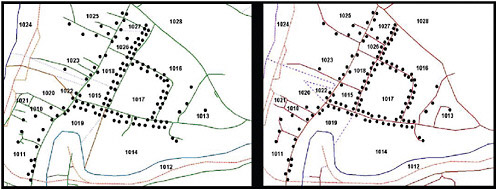
FIGURE 4.6 Example of how TIGER modernization procedures are improving point-level address locations to a minimum spatial accuracy of 7.6 meters to support field data collection with GPS: before realignment; after realignment. SOURCE: Krmenec, 2006.
4.1.4
Framework for Parcel Data Access and Distribution
In order to maximize the use of a nationally integrated system of parcel data it will be important to have a system that can dynamically and continuously acquire, support, and distribute geospatial data to a wide user community. The National Geospatial Program Office (NGPO) of the U.S. Geological Survey has been the focal point for this type of information service. In addition to staffing the FGDC, the NGPO also manages The National Map and Geospatial One-Stop programs. As stated on its website, The National Map is an “online, interactive map service … it provides public access to high-quality, geospatial data and information from multiple partners to help support decision making by resource managers and the public.”9 From the perspective of this report it is significant that the federal government has determined it appropriate to provide the technology that allows a broad user community to access, view, and even download a wide range of geospatial data from all levels of government. Since the technology supports a geographically distributed system of servers, individual counties and states can add their data to The National Map, and several county governments have already linked their parcel data to The National Map.
While The National Map is a federally supported system to generate interactive maps through a web browser, Geospatial One-Stop is a “geographic information system (GIS) portal that serves as a public gateway for improving access to geospatial information and data. Geospatial One-Stop is one of 24 E-Government initiatives sponsored by the Federal Office of Management and Budget (OMB) to enhance government efficiency and to improve citizen services.”10 This portal provides access to metadata records and links to various kinds of geospatial data. The Geospatial One-Stop initiative is a tangible example of the federal government’s desire to move beyond providing national map products to the next level of technology support that would assist users in discovering and utilizing diverse geospatial data that are actually collected and maintained by all levels of government as well as the private sector.
As part of the larger federal involvement in geospatial information, The National Map and Geospatial One-Stop play an intermediary role in the flow of information. These programs do not
|
9 |
|
|
10 |
See http://gos2.geodata.gov/gos/static/default/faq.htm [accessed February 15, 2007]. |
actively produce or directly consume any geospatial information. In conjunction with the FGDC, the programs act to facilitate the discovery of and access to data. Therefore, they would be considered facilitators that form a linkage between the wide range of users and the producers of geospatial information, including parcel data.
4.1.5
Summary of Federal Parcel Programs
By reading all of the federal government circulars, mission statements, stewardship assignments, and program announcements described in Section 2.2, one could conclude that the United States has a comprehensive approach to parcel data. However, a detailed analysis of the situation suggests just the opposite. The FGDC has designated BLM to be the steward for federal land parcel data and the coordinator of cadastral data, and the FGDC Subcommittee for Cadastral Data, which the BLM sponsors, has made significant progress in terms of standards and coordination. However, it is difficult to ascertain the status of parcel data within the various federal agencies, and it appears that none of the federal land management agencies have a comprehensive and complete parcel data set for the lands they manage. NILS, which is the closest thing to a coordinated program, remains much more of a set of technologies than a source of parcel data. There is also evidence that many federal agencies that do not manage lands are acknowledging that they need parcel data to fulfill their missions and, in the absence of a national means to access the data nationwide, are creating data sets to meet their particular needs, often without coordination with other federal agencies that may have needs for the same or similar data. For example, the USDA’s CLU program is generating subparcel data to monitor fraudulent crop insurance claims, and HUD has been collecting parcel data to deal with hurricane recovery along the Gulf Coast. DHS has been working recently to include a detailed specification for parcel data in its geographic data model. This is a tangible recognition of the essential role parcel data can play in improving the level of service from federal agencies.
4.2
INDIAN COUNTRY PARCEL DATA
Any national perspective on parcel data must include a discussion of the representation of land ownership on tribal lands. There are a total of 561 federally recognized tribes in the United States. The U.S. Department of the Interior Bureau of Indian Affairs (BIA) website reports that 55.7 million acres of trust lands are held for American Indians.11 A report from the BIA’s Land Title Mapper process indicates there are currently between 236,017 and 285,000 trust parcels mapped with a total GIS acreage of 37,878,202 and about 17,800,000 acres of unmapped land most likely found in the Eastern BIA Region, in Alaska, and on the Navaho Reservation (Colleen Keeling, BIA, personal communication to Frank Roberts, June 16, 2006).
The management of Native American lands in the United States is an extremely complex issue and the legal recognition of parcels is much different than for non-Indian-owned parcels. To understand the mapping of parcels in Indian Country one must understand the concept of trust ownership. Much of the Native American land in the United States is held in trust for the tribes or individual tribal members. Technically, the title of the land is not held by the tribe or individual but rather by the federal government. Therefore, the concept of ownership of trust land is not synonymous with other parcels in Indian Country.
When land is held in trust, no local or county taxes are assessed on the value of the land. In addition, the official record of survey is not kept on file with the local or county government. Often when a tribe purchases land (i.e., private nontrust land), it goes through a lengthy process to get the land put into trust status. This process can take years to complete. During this period these parcels are
|
11 |
See http://www.doi.gov/bureau-indian-affairs.html [accessed February 15, 2007]. |
temporarily in the county tax rolls and hence mapped by the county or local government. Therefore, the creation of a national parcel framework will require inputs not just from local governments, but also from the federal government or tribes that track the parcel boundaries for Indian trust lands.
Within trust ownership there are two primary categories of parcels. The first category is tribal trust. In this category the lands are held by the federal government for the tribal government. Activities occurring on these lands are typically determined by the tribal government, much as a publicly held corporation makes decisions in the best interests of its stockholders. Activities occurring on these lands tend to be functions that benefit the tribe as a whole, such as casinos, timber land management, and other potential profit making ventures. Often, accurate tracking of these parcels and their boundaries is critical to the tribe. In addition, accurate mapping of these parcels may be very important for emergency response services.
The other category of trust land is tribal member allotments. The General Allotment Act of 1887 (Dawes Act) gave each individual head of household 160 acres of land on the reservation. Any remaining land on the reservation was opened up to non-Indian homesteading. Therefore, many reservations have vast amounts of non-Indian-owned land, and there may actually be more non-Indian land than trust land. Fractionated interest makes management on allotment parcels very difficult. Fractionated interest occurs when a tribal member passes away and interest in the allotment is divided among the heirs. Over the past century the amount of fractionation that has occurred is staggering. For example, on the Colville Reservation in Washington State, one 40-acre allotment has 400 individual allottees. Furthermore, these fractionated ownerships have no geographic dimensions. They are simply owned percentages of the original allotment. Since tribal members have deep ties to their allotments there is a strong desire for these parcels to be accurately mapped. Furthermore, since individual tribal members’ homes are located on the tribal allotments it is important to represent them in any database used for emergency response. Unfortunately, in the current system the county database typically lists only the U.S. government contact. Finally, because of the federal government’s trust responsibilities to tribes and tribal people, there are many legal issues with the release of trust parcel information. For example, the federal government and local tribes are not allowed to release the allotment owners’ names.
The status of parcel data across Native American lands in the United States is very diverse. As with many local and county governments, creation of parcel data has taken several different paths. Ultimately, BIA and BLM have the official responsibility for creating and maintaining the parcel data and geodetic control for Indian Country. However, on most reservations these efforts have greatly lagged those in the local and county governments. At best, an antiquated version of digital parcel data exists for some tribes and is currently held by the BIA Geographic Data Service Center (GDSC). Until September 2006 the GDSC was a division of the BIA that provided GIS services to tribes. As of October 2006, those services have been provided by Office of the Chief Information Officer within a new BIA office called the National Geospatial Resource Center. The majority of up-to-date parcel GIS data is currently managed and maintained at the tribal level by tribal staff. There is no universal approach to parcel data creation on tribal lands. Some tribes have depended solely on the efforts of the BIA and BLM for their parcel mapping. These are often the tribes that have not developed other means of providing income for parcel creation or do not have resources on their lands that justify the investment of parcel mapping. Other tribes have taken the lead on the creation and upkeep of their parcel data. In many cases this has been driven by natural resource management activities such as forestry and farming. In other cases, the increase in land value has justified the tribe’s investment in creating parcel data (e.g., Palm Springs Agua Caliente Tribe).
There has been a limited amount of resources and assistance available to tribes for surveys and parcel data creation. Some tribes with the knowledge of these resources have been able to successfully tap them to get better geodetic control and improved parcel locations. The majority of this
assistance has come from the BLM. The BIA GDSC has also developed a number of tools over the past 10 years to assist tribes in creating parcel data.
Example of Successful Land Records System at the Coeur d’Alene Tribe
An example of successful parcel creation program exists on the Coeur d’Alene Tribe Reservation in Idaho. The Coeur d’Alene Tribe’s Reservation is approximately 343,208 acres in size, with trust land covering approximately one-third of the reservation. The tribe started its GIS program in the early 1990s and at that time acquired its initial trust parcel GIS data from the BIA GDSC. The primary thrusts of the GIS efforts were to support natural resource management on the reservation. In the mid-1990s the tribe took the leap of developing nontribal parcel data in watersheds of concern around the reservation. This was fueled by the needs of the Tribal Fisheries program. In the early 2000s the tribe completed the parcel fabric for the entire reservation, and the trust parcels GIS layer was merged with the non-trust parcels layer. In order to maintain that last effort, the tribe entered into Memoranda of Understanding (MOUs) with both counties in which the reservation is located. These MOUs have enabled the tribe to more effectively get updates of county data and to foster an environment of cooperation.
The success of the Coeur d’Alene Tribe has occurred because of four main components. The first component of successful parcel data development at the Coeur d’Alene Tribe is the institutional need for parcel data. The drive for parcel data has to be something that assists tribal programs and departments. For the Coeur d’Alene Tribe, the initial need was to assist the tribe with improving water quality for native cutthroat trout.
A second component of the successful parcel data program has been the desire of the counties and the tribe to work together. In the case of Coeur d’Alene Reservation, one county did not have any GIS data or the skills to create GIS data. This generated a need in the county assessor’s office to work with the tribe and get an MOU in place. Once the MOU was in place the tribal GIS staff mentored the county assessor staff on how to update the parcel data and also provided technical support on how to use parcel data. The other county that did have GIS staff believed that the additional cooperation gained by an MOU would benefit the county and reduce duplication of effort. The need for up-to-date tabular information about parcel owners also increased the tribe’s desire to work with the counties. Parcel data without up-to-date ownership information have little value. Now all three organizations share data on a regular basis.
Sufficient geodetic survey control on corners of the PLSS is another essential component of the parcel data creation in Indian Country. Due to the remote locations of most reservations, it is typical to have very poor geodetic survey control for the PLSS, and it is also expensive to establish such control. If parcel boundaries are anchored to this poor control, end users lose faith in the data. An equally important issue is that many reservations in the West have been allotted. This means that lands within the reservation boundaries were once surveyed and each tribal member was given a patent by the U.S. government. In many instances the records of the surveys of the allotments have been lost. Because these surveys were not recorded with counties, tribes, or the federal government, contemporary surveyors have been unaware of their existence. Furthermore, many of the corners set in the allotment surveys have been lost to farming and other destructive activity. Therefore, it is necessary to conduct new surveys to find or to reestablish corners of lands held in trust for the tribe.
In the western United States, the GCDB is the primary building block for parcel data. The BLM GCDB staff is continually improving the spatial reliability of GCDB data by incorporating new accurate resurveys of the PLSS into the database. However, in many places the GCDB is simply not accurate enough to encourage its use. Idaho has a nearly complete GCDB, and the Coeur d’Alene Tribe has been able to request numerous updates to the GCDB on the reservation to raise its accu-
racy to an acceptable level. In 2002, the BLM Cadastral Survey and the tribe worked together to improve the GCDB on the reservation.
Staffing is also critical in parcel data development. The Coeur d’Alene Tribe has more than 50 years of collective GIS experience, and three of the tribal GIS staff members have worked for the tribe for more than 10 years each. Two of the tribal GIS staff members have lived on the reservation most of their lives, and their knowledge of both the geography and the individuals on the reservation has made parcel data collection a success. Working relationships in Indian Country are typically face-to-face relationships, and trust comes with time invested in the tribal community. Understanding both county and tribal policy and politics is crucial for success.
The experiences of the Coeur d’Alene Tribe provide an excellent case study of what is possible when organizations agree to cooperate and share resources. Unfortunately, there are many more reservations that have not been successful at creating parcel data. The unique nature of land ownership on Indian lands and the substantial acreage involved highlight the need for the special attention that would be required to make any national system of land parcel data successful.
4.3
STATE AND LOCAL PARCEL DATA
The FGDC Subcommittee for Cadastral Data has performed an inventory of the current status of parcel data programs in the United States. Stage and von Meyer conducted surveys in 2003 and 2005 (Stage and von Meyer, 2003, 2006b). Their findings provide an interesting benchmark for such systems and are summarized in the following paragraphs. They estimate that there are about 144 million private land parcels in the United States and about 8 million publicly managed parcels. Of these, about 68 percent have been converted into digital representations. Stage and von Meyer estimate that there was about a 10 percent increase in the number of parcels that have digital data in the two years between the surveys due to an accelerated growth rate for parcel data programs, as well as further conversion of parcel data within existing programs. However, the status of parcel data conversion varies enormously across the nation. Digital parcel data programs are concentrated in only 24 percent of the counties. In fact, 19 states have converted 80 percent or more of their parcels to digital format. At the other end of the spectrum, more than three-quarters (2,389) of the counties in the United States do not have digital parcel data. The states of South Carolina, West Virginia, and New Hampshire are estimated to have only about 10 percent of their parcels converted. In effect, a major digital divide in terms of parcel data exists within the United States. Many communities such as DuPage County, Illinois, have maintained a digital parcel database since the 1970s, while more than 2,000 counties have land record systems that often rely on information recorded on paper maps and the memory of clerks.
Stage and von Meyer also found that all states, with the exception of Alaska, distribute the responsibility for collecting parcel data to local governments with varying degrees of oversight and support provided by a state agency. Twelve states indicated that they centrally manage parcel data and eight of these states indicated that the geometry is centrally managed. It is not surprising that states with statewide parcel programs have a much higher conversion rate (86 percent) than those that do not. Based on follow-up questions to the original survey, many states require local governments to submit all or a portion of their real estate tax information to a state auditing agency (typically the state department of revenue) that is responsible for ensuring equity of assessments across jurisdictions. Even though the data provided by the counties may not be in the form of a parcel GIS layer, the central reporting required in many states demonstrates that state-level coordination is being practiced.
The number of entities in a state that are responsible for collecting parcel data varies from less than 10 in Delaware, Hawaii, and Montana to more than 250 in Texas (253), Massachusetts (351), Vermont (255), Maine (500), and New Jersey (566). In most states the responsibility rests at
the county level, with a total of 2,925 counties acting as the primary responsible entity for collecting and managing parcel data. Eight states (Arizona, Arkansas, Florida, Maine, Montana, North Carolina, Oregon, and Tennessee) have taken on the responsibility for integrating or in some cases even developing parcel data. For example, in Montana, parcel boundaries are being maintained for 48 of 56 counties.
The 144.3 million privately owned parcels vary greatly in terms of density. The average number of persons per parcel is 2.0 (1.99) but ranges from 0.3 in Wyoming to 3.5 in New York. Another perspective on parcel density can be acquired by looking at the parcels per square mile. The average density is about 80 parcels per square mile. New Jersey and Rhode Island reported the highest parcel density with each having 373 parcels per square mile, and Alaska the least at 1.7 parcels per square mile followed closely by South Dakota at 4 parcels per square mile. Five states were at the lower end of the range, having densities of less than 10 parcels per square mile: Alaska (1.7), South Dakota (4), North Dakota (5), Montana (7), and Nevada (9). Four states were on the high end, having densities greater than 250 parcels per square mile: Connecticut (260), Massachusetts (281), Rhode Island (373), and New Jersey (373). The District of Columbia, which is the one representation of a 100 percent urban environment, reported 2,464 parcels per square mile.
By comparing Stage and von Meyer’s 2005 survey with their 2003 survey it is possible to make some comparisons and to identify some trends:
-
The number of parcels increased by 2 percent from 141.3 million to 144.2 million.
-
The number of parcels converted from hard-copy maps or documents to digital format (points or polygons) increased from 61 to 68 percent.
-
The persons per parcel remained about the same (1.99 versus 2.0 persons per parcel).
-
The number of states with a large-scale orthoimagery program increased from 8 to 16 while the small-scale orthoimagery programs decreased from 30 to 22.
-
Eighteen states indicated that they had some type of parcel management program to assist local governments. There appears to be an increased emphasis by states to support the efforts of local governments by acquiring large-scale imagery.
The conversion of parcel data into a format that can be used in a GIS continues to grow. An important part of this process is the acquisition of high-resolution imagery. Although the total number of parcels converted is approaching 70 percent, it seems likely that most of the conversion to digital format is taking place in the more urban areas and considerable effort will be required to assist the remaining counties. The experiences in Montana and Tennessee provide evidence that states can play a key role not just in coordination but in actual production of parcel data. While state government can play an important role in the initial creation of parcel data, experience demonstrates that even small counties can gain considerable benefits from maintaining and using their own parcel data. In fact, in many rural counties the parcel data can be integrated with USDA’s common land units to monitor agricultural activities.
There are many examples of effective parcel data programs at the state and local levels. Table 4.1 summarizes a sampling of these programs.
TABLE 4.1 Examples of Online Parcel Data Systems at the State, County, and City Levels
|
Host |
Website |
Details |
|
State of Arkansas |
GeoStor |
GeoStor serves as the State of Arkansas’ geospatial data clearinghouse. The system provides the state a consolidated hosting service for interactive Internet mapping. The system enables local, state, and federal agencies to store, publish, and distribute GIS data they produce for other organizations to use. The data can be searched, accessed, and retrieved for users to analyze in their own software. This cost-saving approach eliminates duplication of effort |
|
State of Montana |
Montana Cadastral Mapping Site |
This project is a unique intergovernmental collaborative program that produces and maintains parcel information in a consistent digital format for the entire state. The system is the foundation for the Montana Department of Revenue CAMA. In addition to demonstrating the feasibility of a statewide approach to parcel coordination, Montana has been a test bed for integrating the Bureau of Land Management GCDB with the Census Bureau’s TIGER modernization plans |
|
State of North Carolina |
NC OneMap |
This system serves as an excellent example of how a state government can act as an intermediary between local providers and the user community. While each participating data provider stores and controls the release of its own parcel data, it can enlist the resources of the North Carolina Center for Geographic Information and Analysis to distribute the data. Since the NC OneMap portal is a partner in The National Map program it demonstrates the kind of flexibility that is possible with today’s technology |
|
State of Tennessee, Division of Property Assessments |
State of Tennessee Comptroller of the Treasury Real Assessment Data |
The Tennessee Division of Property Assessments operates a statewide computer-assisted tax billing system and a long-range program for periodic reappraisal of locally assessed real property. As part of this program the state actually creates and maintains county-level parcel data to “ensure county property ownership maps are accurate and current so assessing officials can correctly locate property boundaries and related information.” It updates parcel maps for 52 of the 95 counties. This is an important example of how a state agency has built parcel data to meet programmatic needs |
|
Boulder County, Colorado |
e-Maps |
Since 1987, parcel-oriented GIS technology has become an integral part of almost all of Boulder County’s governmental functions. These include property assessment; land use and zoning issues; road construction and maintenance; emergency and law enforcement; snow plowing; open-space acquisitions, operations, and management; wildfire mitigation; health concerns; and precinct delineation |
|
Host |
Website |
Details |
|
Delaware County, Ohio |
DALIS Web |
The DALIS project was established in 1994 by the Delaware County auditor. Since then, the division has been recognized for its innovative use of parcel data to support an equitable property tax system and integrate parcel data with many other applications relating to planning, emergency response, and economic development. Every two weeks updated versions of the parcel data are posted on the website for free and anonymous distribution |
|
County and City of Honolulu, Hawaii |
Honolulu Land Information System (HoLIS) and Hawaii’s Economic Development Property Locator Geographic Information System |
The City and County of Honolulu have built a comprehensive parcel-based system for Oahu. The parcel data are the core of an extraordinary range of planning and emergency response applications. Hawaii’s Economic Development Property Locator Geographic Information System locates available commercial real estate property and generates different types of demographic and business reports |
|
King County, Washington |
Parcel Viewer http://www5.metrokc.gov/parcelviewer/Viewer/ KingCounty/Viewer.asp |
King County, Washington’s GIS is one of the most comprehensive parcel data systems in the Northwest region. Through its website a user can access several parcel retrieval and mapping applications |
|
Louisville and Jefferson County, Kentucky |
Louisville/Jefferson County Information Consortium (LOJIC) |
LOJIC represents an example of a successful multiagency effort to build and maintain a comprehensive multipurpose parcel-based GIS that meets the need for property assessment as well as the concerns of the regional water and sewer districts. All participants are sharing the cost and effort involved in the full development and implementation of LOJIC |
|
Oakland County, Michigan |
Oakland County Enterprise GIS |
The Oakland County Enterprise GIS is a multifaceted parcel data program that supports and promotes coordinated data development and access across jurisdictional and departmental boundaries. Oakland County has worked with the FGDC Subcommittee for Cadastral Data to develop and test a contemporary parcel data model. It also developed a series of popular value-added services that provide revenue to support its program |
|
Wake County and City of Raleigh, North Carolina |
iMaps |
Raleigh and Wake County North Carolina have established a coordinated approach to GIS that enables them to share the cost of data, training, and joint application development activities. The coordinated city-county approach eliminates redundant activities and ensures that information is current and accurate throughout the county. The close working relationship that exists within the county is often cited as a model for intergovernmental coordination. Wake County and the City of Raleigh also participate in NC OneMap (described above) and The National Map program |
4.4
PRIVATE SECTOR PARCEL DATA SYSTEMS
There are a number of firms in the private sector that are actively creating parcel data sets. The needs for parcel data can be divided into applications that require accurate geographic location for the address of the property and those that require detailed attributes about the ownership, use, and value of the property. There is a robust market for each of these application areas, and a sample of each of these types of companies is listed in Table 4.2. The firms that offer digital geographic files that support address locating services and vehicle navigation are listed first in the table, and the customers for these reference files include major U.S. companies such as Microsoft, Google, and MapQuest that support location-based services for thousands of clients. Companies dealing with location-based services are concerned only about the association between a street address and geographic coordinates, not about attributes of the building or property. The second set of com-
TABLE 4.2 Sample of Firms That Offer Parcel-Based Information
|
Company |
Product |
Points or Polygons |
Internal Use / Distributed |
Coverage |
|
Firms that support improved address location and navigation |
||||
|
NAVTEQ |
ParcelBoundaries |
Polygons |
Distribute |
U.S. |
|
Tele Atlas |
Address Points |
Points |
Distribute |
U.S. |
|
First American |
ParcelPoint |
Points and polygons |
Both |
U.S. |
|
GDR |
Addresspoints |
Points |
Distribute |
U.S. |
|
Proxix |
PxPoint |
Points and polygons |
Both |
U.S. |
|
Firms that provide parcel information and boundaries |
||||
|
Boundary Solutions |
National Parcel Portal |
Polygons |
Distribute |
U.S. |
|
Parcel Quest |
ParcelQuest |
Polygons |
Distribute |
California |
|
Sidwell Maps |
Digital Tax Maps, Shapefiles |
Polygons |
Distribute |
Illinois, Iowa, Indiana, Michigan, Minnesota |
|
eMapsPlus |
Digital Tax Maps |
Points |
Distribute |
California, Alabama, Florida, Tennessee, Michigan, Missouri, Mississippi, Georgia, New Mexico, South Carolina |
|
Netronline |
Digital Tax Maps |
Polygons |
Distribute |
U.S. |
panies in Table 4.2 concentrates on detailed information about the property. Customers for these products are concerned about various aspects of insuring, financing, exchanging, and developing property and thus include major insurance companies, lending institutions, real estate brokers, and title companies. Some firms such as Proxix and First American provide a range of vertical markets that involve internal uses of the data as well as distribution. Box 4.2 lists marketing comments from these firms, which provide a clear image of their desire to build national parcel data sets.
Therefore, in the absence of any coordinated public sector effort, market forces are pushing for rapid completion of a national approach to parcel data. In fact, over the next couple of years we are likely to see several competing versions of databases that provide a link between at least a point-level representation of a parcel and a street address for the developed parts of the United States. This is being driven in part by the need for accurate address location systems, as highlighted by the following (W. Gail, e-mail to D. Cowen, May 1, 2007):
The customers who utilize our Virtual Earth application currently demand that we correctly associate a street address to the proper features displayed in the imagery. Ultimately, the ability to distinguish even among multiple entryways into a single building will be required—particularly for business and emergency responder uses.
However, while this type of parcel information has great value for the location-based service industry and even public systems such as 911 that require accurate address locating systems, it does not meet the full suite of needs and demands for parcel information as described in Chapter 3 of this report. First, it is highly unlikely that the private sector would have the necessary motivation or financial incentives to create a complete coverage of parcel data across the United States. This point was emphasized by the private sector representatives at the Land Parcel Summit held as part of this study. Next, the committee believes that it is important to have a parcel data system operate within the controls of public sector accountability. Finally, it should be noted that private sector efforts are
|
BOX 4.2 Statements from Private Industry Companies Developing Parcel Data Sets “PxPoint provides you with these unique geocoding capabilities: Geocode to a layer of any feature type—point, lines, or polygons. Geocode to parcel boundaries for the most accurate geocoding available in the U.S.” SOURCE: http://www.proxix.com/products/products_geocoding.htm [accessed May 16, 2007]. “Boundary Solutions Inc. assembled the National ParcelMap Data Portal, or NPDP, the most extensive normalized database of parcel map data released for general use from jurisdictions throughout the United States. Finally, there is a single source of national parcel boundary-based location data to improve the accuracy, throughput and usefulness of your GIS operations.” SOURCE: http://www.boundarysolutions.com/ [accessed June 10, 2007]. “First American, the $8-billion leader in property information for the banking and insurance industries, has created a new solution that combines parcel and address information with exact latitude and longitude. The result? The most accurate database of property locations in the U.S.” SOURCE: http://location.firstam.com [accessed June 10, 2007]. “The Tele Atlas Address Points product delivers the ultimate in accuracy by pinpointing discrete, actual street addresses to physical buildings or property parcels. This enables unparalleled geospatial analysis and navigation and offers users a faster, more precise method of locating addresses.” SOURCE: http://www.teleatlas.com/stellent/groups/public/documents/content/ta_004881.pdf [accessed June 10, 2007]. “Our users save time with the convenience of our online maps and parcel information. No more wading through page after page of atlases to find the map you need; no more struggling to make a copy of a parcel map.” SOURCE: http://www.sidwellmaps.com/access_info_sidwellmaps.asp [accessed June 10, 2007]. “Digital images of parcel maps from county assessing agencies. Not all maps are available in all areas. May be searched for by address or parcel number. Those who have signed up for our Professional Users service may also search by name.” SOURCE: http://www.netronline.com/products.asp?s=5 [accessed June 10, 2007]. “eMapsPlus is the most advanced online service available for accessing GIS property data. This powerful tool is perfect for the specific needs of the casual user as well as the wider, on-going commercial requirements of property related businesses.” SOURCE: http://www.emapsplus.com/ [accessed June 10, 2007]. “Addresspoints is a highly precise dataset that accurately displays rooftop level U.S. residential and commercial buildings with optional consumer and business data attributes enabling both precise routing to a building location as well as site-specific intelligence. Addresses are individually located by point and building structure on each map (not just estimated or geocoded), to display every structure in its actual location via a rooftop point.” SOURCE: http://www.gdr.com/solutions_addresspoints.htm [accessed June 10, 2007]. “NAVTEQ Parcel Boundaries™, a collection of property boundaries encompassing over 50% of the US population. Never before have parcel boundaries been assimilated and standardized to the extent NAVTEQ Parcel Boundaries have, enabling use across a wide spectrum of industries while greatly improving decision criteria for land related visualization, analysis, and reporting.” SOURCE: http://news.thomasnet.com/fullstory/498996 [accessed June 10, 2007]. “ParcelQuest CD and ParcelQuest Online include the clearest parcel maps on the market. With ParcelQuest, even tiny lot dimensions are easy to read! Enlarge, rotate, print, and even measure to calculate lot area all with the click of the mouse. Print full maps or blow-up sections to fit any paper size. Include them in your reports to make lasting impressions!” “ParcelQuest contains County Direct Assessor data. Why? Because the Assessor is the only source that can physically verify property information! National property database companies outsource complex documents to offshore data entry plants. Recorded documents can, and do, frequently contain incorrect information. These facilities have no way to verify their information. Only the Assessor has the expertise to correct errors.” SOURCE: http://parcelquest.com/parcelquestmaps.html, http://parcelquest.com/data_better.html [accessed June 10, 2007]. |
usually just aggregations of already digitized, publicly available data. Their efforts do not address communities for which no digital data exist or where their distribution is highly restricted.
4.5
INTERNATIONAL CONTEXT
To provide context for the current status of parcel data in the United States, the international status was also assessed. One of the important organizations that monitors the status of national parcel data programs and promotes their modernization has been the International Federation of Surveyors (FIG). In 1998 FIG produced a report entitled Cadastre 2014: A Vision for a Future Cadastral System, which it describes as follows (Kaufmann and Steudler, 1998):
Cadastre 2014 is a methodically arranged public inventory of data concerning all legal land objects in a certain country or district, based on a survey of their boundaries. Such legal land objects are systematically identified by means of some separate designation. They are defined either by private or by public law. The outlines of the property, the identifier together with descriptive data, may show for each separate land object the nature, size, value and legal rights or restrictions associated with the land object.
The FIG report includes a summary of a list of six statements that it considers to be the trends that will exist in modern cadastre systems (Box 4.3).
The concept of a federally maintained cadastre is firmly planted in many nations and is closely associated with the way public services are provided in those countries. The most notable survey of federal parcel-level programs has been conducted by the Centre for Spatial Data Infrastructures and Land Administration, Department of Geomatics, University of Melbourne. Individuals from that center and the Centre for International Cooperation, Swiss Federal Directorate of Cadastral
Surveying, have been assessing the status of national cadastres throughout the world. In a recent article, “Assessing the Worldwide Comparison of Cadastral Systems” (Rajabifard et al., 2007), the researchers provided the best available status report on national cadastre efforts. They conclude (Rajabifard et al., 2007, p. 275):
There is growing interest internationally in land administration and cadastral systems and especially in their role as part of a national Spatial Data Infrastructure (SDI). The important role the cadastre plays in supporting sustainable development is also well recognized. Both developed and developing countries accept the need to evaluate cadastral systems to help identify areas of improvement and whether their systems are capable of addressing future needs. Countries are continually re-engineering and implementing various aspects of the cadastre, comparing systems and trying to identify best practice within nations of the same socio-economic standing.
In 2006, 34 nations had completed a standardized template that requests information about land policy, laws and regulations, land tenure, land administration and cadastre, institutional arrangements, spatial data infrastructures, and technology as well as human resources and capacity. These nations range from Australia, Denmark, Belgium, Germany, Switzerland, and Sweden to Namibia, Uzbekistan, and Nepal. The authors concluded (Rajabifard et al., 2007, p. 285):
In terms of the completeness and usefulness of spatial cadastral data within countries, only 10 countries (Belgium, Brunei, Czech Republic, Denmark, Germany, Hungary, South Korea, the Netherlands, Sweden and Switzerland) reported total coverage of their cadastral records. Data also showed that countries with a low level of completeness of registration had a high level of illegal occupation of land (with the exception of Japan).
One of the most important recent events to focus on the status of cadastral systems on an international scale was the 2004 Special Forum on Development of Land Information Policies in the Americas. This forum was sponsored by the International Federation of Surveyors, the United Nations Statistics Division, Department of Economic and Social Affairs, and the Permanent Committee on Spatial Data Infrastructures for the Americas (PC IDEA). It was hosted by the Mexican government’s National Institute of Statistics, Geography and Informatics (INEGI) in Aguascalientes, Mexico. A keynote address at this meeting “Building Land Information Policies” (Enemark, 2004) provided a useful conceptual model of the importance of cadastre systems from a national perspective. As noted in Figure 4.7, in this model a cadastral system forms the basis for land value, land use, taxation, and development and supports a host of important societal needs including economic growth and land tenure. Enemark also suggests that a land information system based on the cadastre is required for sustainable development that incorporates effective land management and markets (Figure 4.8).
In contrast to the United States, Denmark represents an example of a strong centralized approach to parcel data management. At the national scale, Denmark maintains a cadastral map series that includes property boundaries, administrative boundaries, and other features. These maps have been in digital form since 1997 and have been created and maintained according to an accepted national specification for digital cadastral maps. While it is difficult and perhaps inappropriate to compare the situation in the United States with that in Denmark (Denmark is 43,094 square kilometers, or twice the size of Massachusetts, and has a population of 5,468,120; CIA, 2007), it is interesting to see how a parcel-based approach to information management can be implemented to great advantage on a national scale.
The United Kingdom provides an interesting contrast to the United States in the area of point-level address files. Unlike the confidential nature of the Census Bureau’s new point-level address files, the Ordnance Survey (OS) in the United Kingdom maintains an official commercially licensed point-level representation of property and associated addresses (Figure 4.9):
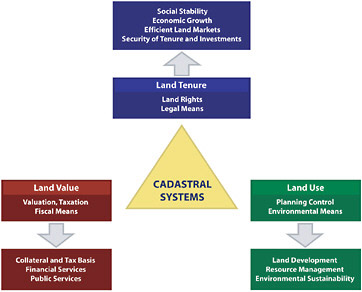
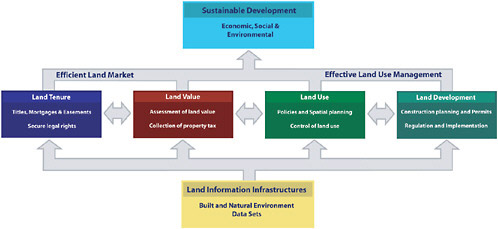
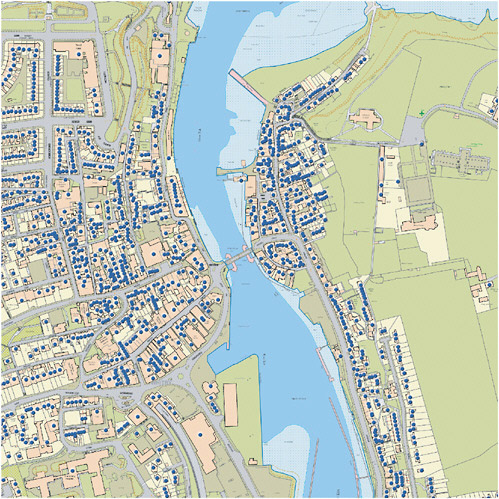
FIGURE 4.9 An example of the U.K.’s OS MasterMap Address Layer overlaid on the OS MasterMap Topography Layer. Image courtesy of U.K. Ordnance Survey. Copyright 2007 Crown copyright Ordnance Survey. All rights reserved.
The OS ADDRESS-POINT is a dataset that uniquely defines and locates residential, business and public postal addresses in Great Britain. It is created by matching information from Ordnance Survey digital map databases with more than 26 million addresses recorded in the Royal Mail® Postcode Address File (PAF®). Each address has a unique Ordnance Survey ADDRESS-POINT reference (OSAPR). In addition, ADDRESS-POINT carries a status flag to define the quality and accuracy of each address as well as indicators for change and source currency.12
The address point file is also used as the basis for Her Majesty’s Land Registry. A quick view of that website provides a startling contrast with the role of the U.S. government in the entire process
|
12 |
From http://www.ordnancesurvey.co.uk/oswebsite/products/addresspoint/ [accessed May 25, 2007]. |
of land records. For example, the site is maintained under Crown Copyright and provides a set of fee-based services to meet the needs of various users. Her Majesty’s Land Registry also provides a House Price Index.13
At another scale in Europe, the European Union recently established the Permanent Committee on Cadastre. The mission of this organization is:
To create an adequate space in which to promote the full awareness of the activities developed by the European Union and the Member States related with Cadastre and, by means of this information, to develop strategies and propose common initiatives with the aim of achieving greater co-ordination among the different European cadastral systems and their users.14
There are two other activities in Europe that are also of interest. One is the series of “REGNO” conferences that provide a forum for voluntary efforts to coordinate and eventually integrate national registers (including cadastres) in northern Europe.15 Second, the United Nations Economic Commission for Europe Working Party on Land Administration promotes land administration through security of tenure, establishment of real estate markets in countries in transition, and modernization of land registration systems in advanced economies.16
It would be impossible in this report to cover the full range of international government responses to the cadastre and land records. While their systems of government and distribution of federal, state, and local powers may differ from those of the United States, the experiences in Australia and Canada provide useful benchmarks for developed nations outside Europe.
Australia
The Australian experience provides an interesting example of public and private cooperation. Public Sector Mapping Agencies of Australia (PSMA) is a unique public-private partnership whose core business is the assembly and delivery of fundamental spatial data sets of Australia. To date, it has developed five national data sets and supplies data to more than 20 value-added resellers. A good description of the organization, its history, and its current mandate may be found in Holland et al. (2006), and its 2005-2008 strategic plan can be downloaded from the web.17
PSMA’s portfolio of themed spatial data sets includes CadLite, Australia’s 10.5 million land parcels including suburb names as well as property boundaries. (See Figure 4.10 for a PSMA map of parcels.) Today, through special licenses and using industry partners, PSMA assembles these data sets from state and commonwealth government sources across the country. Separate licensing arrangements with Australia Post and the Australian Electoral Commission cover use of address data. The success of PSMA relies to a large extent on the strength of its relationships with key stakeholders. These stakeholders include government shareholders, government agency data suppliers, and national coordinating forums such as the Spatial Information Council of Australia and New Zealand.18 PSMA does not provide its data at no charge. Rather, its pricing reflects the value of each data set in different applications. The intention is to ensure that high-value products are
|
13 |
For the U.K. Land Registry, see http://www.landreg.gov.uk/ [accessed May 25, 2007]. |
|
14 |
See http://www.eurocadastre.org/eng/about2.html [accessed February 15, 2007]. |
|
15 |
See http://www.vaestorekisterikeskus.fi/vrk/home.nsf/pages/0B4801132155BD9DC22572C9004570B8 [accessed May 4, 2007]. |
|
16 |
See http://www.unece.org/hlm/wpla/welcome.html [accessed May 4, 2007]. |
|
17 |
For the for the PSMA 2005-2008 Strategic Plan, see http://www.psma.com.au/file_download/19 [accessed February 15, 2007]. |
|
18 |
This was formerly known as the Australia New Zealand Land Information Council, or ANZLIC. Even though the name has changed, it has kept the acronym ANZLIC. For information about ANZLIC, see http://www.anzlic.org.au/about.html [accessed February 15, 2007]. |
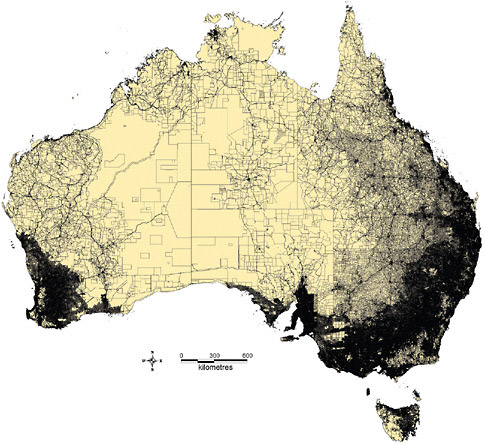
FIGURE 4.10 PSMA map of land parcels in Australia. Note the density of parcels in the more populated areas along the coast, while some parcels in the middle of the country are large enough to be discernible, even at this scale. Image copyright PSMA Australia, 2001, http://www.psma.com.au. Used with permission.
reflected in the pricing matrix, while also facilitating opportunities to have the data used ubiquitously in low-price digital products. A dual fee structure applies to PSMA data sets. Annual access fees and royalties are based on a matrix of data type, data volume, user applications, and number of users. On the other hand, many of the PSMA data sets provided to value-added resellers end up as part of the base data available on well-known web mapping services such as Google Maps and many others (see Figure 4.11). In effect, the Australians have managed to create a nationwide parcel data system by establishing a business model that is similar to one used by many regional governments in the United States. However, in this case a private enterprise has been established to handle the consolidation of data from the equivalent of state governments in the United States. The company has been able to develop value-added products that generate revenue that is shared with the state and local governments. It should be noted that the Australian Census Bureau funded (and continues to provide some funding for) the first national land parcel file. The Geocoded National Address File was funded later from the consortium using funds generated from the national land
FIGURE 4.11 Example of parcel data from Australia available via Google Maps. Note PSMA listed as a source of data in the lower right. Map courtesy Google Maps™, copyright 2007, MapData Sciences Pty Ltd (http://www.mapds.com.au), PSMA.
parcel file. This is an interesting model that demonstrates the value of spatial data and the technical efficiencies that are possible. However, the Australian private sector model would appear to be contrary to the general U.S. federal policy regarding the dissemination of geospatial data under OMB Circular A-130.
Canada
Canadian federal and provincial government organizations have a long history of building and maintaining digital topographic mapping data sets, road network files, and property mapping databases in support of their own respective mandates and obligations. Beginning in the mid-1980s,
cooperative cost-sharing arrangements at both the federal and the federal-provincial levels were developed in support of accelerating several of these mapping programs (Coleman, 1999). Since 1996, a collection of these organizations has been instrumental in establishing and developing the Canadian Geospatial Data Infrastructure (CGDI) Initiative. Geomatics Canada,19 an organization within the Earth Sciences Sector of Natural Resources Canada (NRCan), has the mandate for provision of nationwide geodetic control and topographic mapping frameworks. It is also responsible for the land survey system and cadastral mapping on Canada Lands.20 Except for Canada Lands, provincial governments21 are usually responsible for production and distribution of cadastral (property) mapping, while property valuation and taxation may be either a provincial or a local responsibility. Excellent integrated examples of such activities may be found in most provinces, although they may not be immediately apparent from the government websites since many service their customers on a password-protected, subscription basis. The Province of New Brunswick, for example, was the first provincial (or state) organization in North America to provide province-wide web-based property mapping, valuation, and registry-related data to its customers beginning in fall 1996 (Arseneau et al., 1997). Now managed by Teranet, Inc., the Province of Ontario’s system provided from the early 1990s onward a very early example of using public-private partnerships to build a province-wide digital cadastral database.22
In partnership with other government organizations, the Legal Surveys Division23 of NRCan supports the operation of the federal and territorial property rights systems on Canada Lands. Internally, various local, provincial, and even federal organizations have responsibility for managing their own properties and may originally obtain basic information from the relevant organization in the province(s) in which they operate. However, most will subsequently update their own attribute records and, in some cases, offer property map databases on their own websites. Large title insurance companies also maintain extensive property mapping databases covering selected parts of Canada. While communication exists through strong professional networks and informal relationships, there is no requirement at this time for regular operational contact between the land administration organizations in different provinces.
The Canadian government is also studying the feasibility of creating a comprehensive nationwide cadastral database or a national approach to land parcel data. In October 2006, NRCan’s GeoConnections Secretariat collaborated with federal and provincial partners in issuing a Request for Proposals (RFP) to contract development of the business case for parcel data. Many of the goals of the RFP parallel those of this study. These include a user-needs analysis and cost-benefit analysis to help guide different levels of government in determining the various options for establishing a National Parcel Data System (or NPDS). Aside from possible internal initiatives, there had been no formal effort within Canada until 2006. The rationale of the partners involved was that “access to a national parcel database and integration of that data with other data sets within the CGDI would help improve coordination among CGDI user communities and would support decision making” (GeoConnections, 2006). The project was awarded in November 2006 and was still under way at the time this document was being prepared.
|
19 |
Geomatics Canada website available at http://ess.nrcan.gc.ca/geocan/index_e.php [accessed February 15, 2007]. |
|
20 |
Canada Lands consist of approximately 2,600 Indian reserves, the National Parks system (including historic sites and canals such as the Rideau and Chambly), the Yukon, Northwest Territories, Nunavut, and offshore areas of Canada. |
|
21 |
For a list of links to provincial government mapping organizations in Canada, see http://www.geoconnections.org/CGDI.cfm/fuseaction/partners.welcome/gcs.cfm [accessed February 15, 2007].. |
|
22 |
For a description and examples of Teranet’s current services to the real estate industry in Ontario, see http://www.teranet.ca/services/realestate.html [accessed February 15, 2007]. |
|
23 |
For details on the Legal Surveys Division, see http://www.lsd.nrcan.gc.ca/english/index_e.asp [accessed February 15, 2007]. |
Clearly, the respective distributions of government powers in Australia and Canada differ from that found in the United States. Parcel mapping and land registration is almost fully a state or provincial government responsibility in both of those countries, offering more centralized control of the processes and standards involved, and meaning that there are fewer parties involved in trying to reach consensus on national initiatives. All Australian states, the western Canadian provinces, much of Ontario, and most recently, New Brunswick use a land titles rather than a deed registry system, implying a stronger parcel-based focus and smoothing the way toward more comprehensive and ongoing recording of all real property transactions in a given jurisdiction.
However, there is evidence of past practices in both countries suggesting duplication of parcel data collection efforts, different government departments and private companies maintaining their own parcel databases, and lack of shared standards among different jurisdictions. While there may be much left to do in both countries, Australia and Canada are examples of cooperative national initiatives that have begun processes to (1) recognize these past practices; (2) overcome them where appropriate; and (3) develop policies, practices, and incentives to create shared products and services that are accessible nationally.
As shown above, in many parts of the world a national system of land parcel information is viewed as a key part of the foundation of government services. In contrast, for a number of historic, geographic, and legal reasons, parcel- or cadastre-level information within the United States has not been viewed as a federal responsibility. However, it should be noted that the United States has devoted large sums of federal tax dollars to the U.S. Agency for International Development (USAID) and the World Bank to fund parcel data programs in other nations. The full extent of USAID involvement in funding land parcel and cadastre programs is difficult to measure; however a recent study provides an interesting overview of programs in sub-Saharan Africa, Asia and the Near East, Eastern Europe and Eurasia, and Latin America and the Caribbean (Bloch et al., 2003). One of these projects in Thailand involved a USAID loan of $118.1 million. The USAID website lists several former and current national cadastre programs that it is managing and funding. One of the most interesting is East Timor’s Land and Property Unit (LPU), which USAID is supporting by providing maps and computer equipment. The LPU is responsible for land titling, cadastre, mapping, land management, and developing policy and drafting legislation on land issues.24
4.6
SUMMARY
A specific objective of this study was to assess the current status of parcel data. This chapter provides a systematic overview of parcel or cadastral data and programs from the international to the local government scales. The analysis suggests that the current situation in the United States may be unique in the world. At one end of the spectrum there are examples of county-level parcel data systems that have been operating for more than 30 years. Many of these counties have worked with the commercial GIS software industry in the United States to advance the technology to an extraordinary level. There are many examples of local governments that maintain parcel data in real time as real estate and other transactions are recorded. These data are immediately available to serve a wide range of applications and are available to the public through web browser-based applications. At the other end of the spectrum, about three-quarters of the counties in the United States do not maintain a digital parcel database. State involvement in parcel data is also inconsistent. While some states such as Montana and Tennessee have assumed the responsibility of statewide parcel coordination and even production there are several states in which fewer than 10 percent of the parcels are in digital formats. The role of the federal government in parcel data development and maintenance is also fragmented. Unlike many developed countries that operate a nationwide cadastre, the U.S.
|
24 |
See http://timor-leste.usaid.gov/SGHighlightsArchives/SGArchive3.htm [accessed February 15, 2007]. |
federal government has not assumed that responsibility. There is no comprehensive land parcel data set for federal lands, although NILS is in development. In the absence of a system to access land parcel data across the nation, various federal agencies are collecting land parcel data to meet specific mission needs. The number of counties yet to develop digital parcel databases combined with large tracts of public lands and Indian territories that also do not have digital parcel data means there is no accurate digital representation of the parcel boundaries of the majority of land area of the United States. However, at the same time, several private companies appear to be competing to develop the most comprehensive set of parcel data for the nation. This robust market is fueled by an extensive and growing demand for location-based services and real estate applications.
The survey of parcel data programs also revealed some important trends. Perhaps the most significant is the estimate that digital parcel data increased by 10 percent between 2003 and 2005. This provides strong evidence that parcel data programs are necessary, feasible, and affordable. In many cases, state governments have assumed the responsibility for initial parcel conversion but there is also evidence that communities with as few as 20,000 residents can justify such a parcel program without any state or federal assistance. It is fair to conclude that local and tribal governments will continue to initiate parcel data programs. State involvement will accelerate the process in many parts of the country. The federal government lacks an effective program or set of incentives that would enable it to access and use this valuable set of parcel data.