
Summary
The history of nuclear medicine over the past 50 years reflects the strong link between government investments in science and technology and advances in health care in the United States and worldwide. As a result of these investments, new nuclear medicine procedures have been developed that can diagnose diseases non-invasively, providing information that cannot be acquired with other imaging technologies; and deliver targeted treatments. Nearly 20 million nuclear medicine procedures using radiopharmaceuticals and imaging instruments are carried out annually in the United States alone. Overall usage of nuclear medicine procedures is expanding rapidly, especially as new imaging technologies, such as positron emission tomography/computed tomography (PET/CT) and single photon emission computed tomography/computed tomography (SPECT/CT), continue to improve the accuracy of detection, localization, and characterization of disease, and as automation and miniaturization of cyclotrons and advances in radiochemistry make production of radiotracers more practical and versatile.
Recent advances in the life sciences (e.g., molecular biology, genetics, and proteomics1) have stimulated development of better strategies for detecting and treating disease based on an individual’s unique profile, an approach that is called “personalized medicine.” The growth of personalized medicine will be aided by research that provides a better understanding of normal and pathological processes; greater knowledge of the mechanisms
by which individual diseases arise; superior identification of disease subtypes; and better prediction of an individual patient’s responses to treatment. However, the process of advancing patient care is complex and slow. Expanded use of nuclear medicine techniques has the potential to accelerate, simplify, and reduce the costs of developing and delivering improved health care and could facilitate the implementation of personalized medicine.
Current clinical applications of nuclear medicine include the ability to:
-
diagnose diseases such as cancer, neurological disorders (e.g., Alzheimer’s and Parkinson’s diseases), and cardiovascular disease in their initial stages, permitting earlier initiation of treatment as well as reduced morbidity and mortality;
-
non-invasively assess therapeutic response, reducing patients’ exposure to the toxicity of ineffective treatments and allowing alternative treatments to be started earlier; and
-
provide molecularly targeted treatment of cancer and certain endocrine disorders (e.g., thyroid disease and neuroendocrine tumors).
Emerging opportunities in nuclear medicine include the ability to:
-
understand the relationship between brain chemistry and behavior (e.g., addictive behavior, eating disorders, depression);
-
assess the atherosclerotic cardiovascular system;
-
understand the metabolism and pharmacology of new drugs;
-
assess the efficacy of new drugs and other forms of treatments, speeding their introduction into clinical practice;
-
employ targeted radionuclide therapeutics to individualize treatment for cancer patients by tailoring the properties of the targeting vehicle and the radionuclide;
-
develop new technology platforms (e.g., integrated microfluidic chips and other automated screening technologies) that would accelerate and lower the cost of discovering and validating new molecular imaging probes, biomarkers, and radiotherapeutic agents;
-
develop higher resolution, more sensitive imaging instruments to detect and quantify disease faster and more accurately;
-
further develop and exploit hybrid imaging instruments, such as positron emission tomography/magnetic resonance imaging (PET/MRI), to improve disease diagnosis and treatment; and
-
improve radionuclide production, chemistry, and automation to lower the cost and increase the availability of radiopharmaceuticals by inventing a new miniaturized particle accelerator and associated technologies
-
to produce short-lived radionuclides for local use in research and clinical programs.
In spite of these exciting possibilities, deteriorating infrastructure and loss of federal research support are jeopardizing the advancement of nuclear medicine. It is critical to revitalize the field to realize its potential.
CHARGE TO THE COMMITTEE
The National Academies were asked by the Department of Energy (DOE) and the National Institutes of Health (NIH) to review the state of the science of nuclear medicine in response to discussions between the DOE and the Office of Management and Budget about the future scientific areas of research for the DOE’s Medical Applications and Sciences Program. In response to this request, the National Academies formed the Committee on the State of the Science of Nuclear Medicine. The committee’s mandate was to review the current state of the science in nuclear medicine; identify future opportunities in nuclear medicine research; and identify ways to reduce the barriers that impede both basic and translational research (Sidebar 1.1). Although the committee is aware that funds will be required to implement the recommendations made in this report, providing funding recommendations is beyond the scope of the committee’s charge. This report reflects the consensus views and judgments of the committee members, based in part on consultation with experts from academia, major medical societies, relevant governmental agencies, and industry representatives.
FINDINGS AND RECOMMENDATIONS
Advances on the horizon in nuclear medicine could substantially accelerate, simplify, and reduce the cost of delivering and improving health care. To realize this promise, we need to focus research on the following: (1) the development of new radionuclide production facilities and technologies; (2) the synthesis of new radiotracers to improve understanding of how specific organs function; (3) the development of imaging instruments, enabling technologies, and multimodality imaging devices, such as PET/CT and PET/MRI, to improve disease diagnosis; (4) the development and use of targeted radionuclide therapeutics that will allow cancer treatments to be tailored for individual patients; (5) the use of nuclear medicine imaging as a tool in the discovery and development of new drugs; and (6) the translation of research from bench to bedside, including investment in training of clinician scientists in nuclear medicine techniques. Specific research opportunities are discussed in Chapters 3, 4, 6, and 7 of the report. Achieving
these research goals will require collaboration among academic institutions, industry, and federal agencies.
FINDING 1: Loss of Federal Commitment for Nuclear Medicine Research.
FINDING 1A: The Medical Applications and Sciences Program2 under the DOE’s Office of Biological and Environmental Research (DOE-OBER) (and precursor agencies, Atomic Energy Commission and Energy Research and Development Administration) has provided a platform for the conceptualization, discovery, development, and translation of basic science in chemistry and nuclear and particle physics for several decades (examples include FDG-PET,3 technetium-99m SPECT, targeted radionuclide therapy). In fiscal year (FY) 2006, Congress reduced funding of the program by 85 percent (Figure S.1).
The committee finds that as a result of this reduction in funding, there
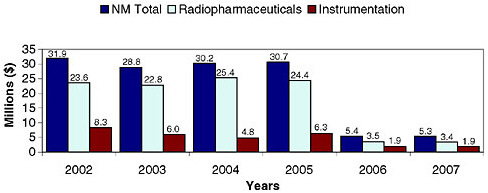
FIGURE S.1 DOE-OBER funding for nuclear medicine research, 2002—2007. SOURCE: DOE-OBER.
has been a substantial loss of support for the physical sciences and engineering basic to nuclear medicine. There is now no specific programmatic long-term commitment by any federal agency for maintaining high-technology infrastructure (e.g., accelerators, research reactors) or centers for instrumentation and chemistry research and training, which are at the heart of nuclear medicine research and development (Chapters 6 and 7).
FINDING 1B: The DOE-Nuclear Energy (NE) Isotope Program is not meeting the needs of the research community because the effort is not adequately coordinated with NIH activities or with the DOE-OBER (Chapter 5).
FINDING 1C: Public Law 101-101, which requires full-cost recovery for DOE-supplied isotopes, whether for clinical use or research, has restricted research isotope production and radiopharmaceutical research. The lack of new commercially available radiotracers over the past decade may be due in part to this legislation (Chapter 5).
RECOMMENDATION 1: Enhance the federal commitment to nuclear medicine research. Given the somewhat different orientations of the DOE and the NIH toward nuclear medicine research, the two agencies should find some cooperative mechanism to support radionuclide production and distribution; basic research in radionuclide production, nuclear imaging, radiopharmaceutical/radiotracer and therapy development; and the transfer of these technologies into routine clinical use (Chapter 6).
Implementation Action 1A: Reinstating support for the DOE-OBER nuclear medicine research program should be considered.
Implementation Action 1B: A national nuclear medicine research program should be coordinated by the DOE and the NIH with the former emphasizing the general development of technology and the latter disease-specific applications. In committing itself to the stewardship of technology development (radiopharmaceuticals and imaging instrumentation), the DOE would reclaim a leadership role in this field.
Implementation Action 1C: In developing their strategic plan, the agencies should avail themselves of advice from a broad range of authorities in academia, the national laboratories, and industry; these authorities should include experts in physics, engineering, computer science, chemistry, radiopharmaceutical science, commercial development, regulatory affairs, clinical trials, and radiation biology.
FINDING 2: Cumbersome Regulatory Requirements.
There are three primary impediments to the efficient entry of promising new radiopharmaceutical tracer compounds into clinical feasibility studies: (1) complex U.S. Food and Drug Administration (FDA) toxicologic and other regulatory requirements (i.e., lack of regulatory pathways specifically for both diagnostic and therapeutic radiopharmaceuticals that take into account the unique properties of these agents); (2) lack of specific guidelines
from the FDA for good manufacturing practice for PET radiodiagnostics and other radiopharmaceuticals; and (3) lack of a consensus for standardized image acquisition in nuclear medicine imaging procedures and harmonization of protocols appropriate for multi-institutional clinical trials (Chapters 3, 4, and 6).
RECOMMENDATION 2: Clarify and simplify regulatory requirements, including those for (A) toxicology and (B) current good manufacturing practices (cGMP) facilities (Chapters 3 and 4).
Implementation Action 2A, Toxicology: The FDA should clarify and issue final guidelines for performing pre-investigational new drug evaluation for radiopharmaceuticals, particularly with regard to the recently added requirement for studies to determine late radiation effects for targeted radiotherapeutics.
Implementation Action 2B, cGMP: The FDA should issue final guidelines on cGMP for radiopharmaceuticals. These guidelines should be graded commensurate with the properties, applications, and potential risks of the radiopharmaceuticals, instead of regulating minimal-risk compounds with the same degree of stringency as de novo compounds and new drugs that have pharmacologic effects.
Implementation Action 2C: To develop prototypes of standardized imaging protocols for multi-institutional clinical trials, members of the imaging community should meet with representatives of federal agencies (e.g., DOE, NIH, FDA) to discuss standardization, validation, and pathways for establishing surrogate markers of clinical response.
FINDING 3: Inadequate Domestic Supply of Medical Radionuclides for Research.
There is no domestic source for most of the medical radionuclides used in day-to-day nuclear medicine practice. Furthermore, the lack of a dedicated domestic accelerator and reactor facilities for year-round uninterrupted production of medical radionuclides for research is discouraging the development and evaluation of new radiopharmaceuticals. The parasitic use4 of high-energy physics machines has failed to meet the needs of the medical research community with regard to radionuclide type, quantity, timeliness of production, and affordability (Chapters 4, 5, and 6).
RECOMMENDATION 3: Improve domestic medical radionuclide production. To alleviate the shortage of accelerator- and nuclear reactor-produced medical radionuclides available for research, a dedicated accelerator and an appropriate upgrade to an existing research nuclear reactor should be considered (Chapters 4 and 5).
This recommendation is consistent with other studies that have reviewed medical radionuclide supply in the United States and have come to the same conclusions (IOM 1995, Wagner et al. 1999, Reba et al. 2000).
FINDING 4: Shortage of Trained Nuclear Medicine Scientists.
FINDING 4A: There is a critical shortage of clinical and research personnel in all nuclear medicine disciplines (chemists, radiopharmacists, physicists, engineers, clinician-scientists, and technologists) with an impending “generation gap” of leadership in the field. Training, particularly of radiopharmaceutical chemists, has not kept up with current demands at universities, medical institutions, and industry, a problem that is exacerbated by a shortage of university faculty in nuclear chemistry and radiochemistry (NRC 2007). There is a pressing need for additional training programs with the proper infrastructure to support interdisciplinary science, more doctoral students, and post-doctoral fellowship opportunities (Chapter 8).
RECOMMENDATION 4A: Train nuclear medicine scientists. To address the shortage of nuclear medicine scientists, engineers, and research physicians, the NIH and the DOE, in conjunction with specialty societies, should consider convening expert panels to identify the most critical national needs for training and determine how best to develop appropriate curricula to train the next generation of scientists and provide for their support (Chapter 8).
FINDING 4B: With the current decline in the number of U.S. students going into chemistry, the restriction of training grants to U.S. citizens and permanent residents as required by the Public Health Service Act is a substantial impediment to recruitment of new talent into the field (Chapter 8).
RECOMMENDATION 4B: Provide additional, innovative training grants. To address the needs documented in this report, specialized instruction of chemists from overseas could be accomplished in some innovative fashion (particularly in DOE-supported programs) by linking training to research. This might take the form of subsidies for course development and delivery as well as tuition subventions. By directly linking training to specific re-
search efforts, such subventions would differ from conventional NIH/DOE training grants (Chapter 8).
FINDING 5: Need for Technology Development and Transfer.
FINDING 5A: There is an urgent need for the further development of highly specific technology and of targeted radiopharmaceuticals for disease diagnosis and treatment. Improvements in detector technology, image reconstruction algorithms, and advanced data processing techniques, as well as development of lower cost radionuclide production technologies (e.g., a versatile, compact, short-lived radionuclide production source), are among the research areas that should be explored for effective translation into the clinic. Such technology development frequently needs long incubation periods and cannot be carried out in standard 3- to 5-year funding cycles (Chapters 6 and 7).
FINDING 5B: Transfer of technological discoveries from the laboratory to the clinic is critical for advancing nuclear medicine. Historically, federally funded research and development has driven the development of instrumentation and radiotracers that form the backbone of nuclear medicine practice worldwide. These discoveries have largely been due to the proximity of scientific disciplines in nuclear science and technology. Capitalizing on this multi-disciplinary mix has served nuclear medicine well in the past and could do so in the future (Chapter 7).
RECOMMENDATION 5: Encourage interdisciplinary collaboration. The DOE-OBER should continue to encourage collaborations between basic chemistry, physics, computer science, and imaging laboratories, as well as multi-disciplinary centers focused on nuclear medicine technology development and application, to stimulate the flow of new ideas for the development and translation of next-generation radiopharmaceuticals and imaging instrumentation. The role of industry should be considered and mechanisms developed that would hasten the technology development process (Chapters 6 and 7).
LOOKING AHEAD
Groundbreaking work in genomics, proteomics, and molecular biology is rapidly increasing our understanding of disease processes and disease management. As a result, we now have the opportunity to develop highly personalized medicine, in which each patient and disease can be individually characterized at the molecular level to identify the treatment strategies that will be most effective. Nuclear medicine techniques that image biochemi-
cal function in vivo can facilitate the development and implementation of such tailored treatment. However, while history highlights the payoff and public benefit from government investments in science and technology for nuclear medicine, the competitive edge that the United States has held for the past 50 years is seriously challenged. Three major impediments have been identified:
-
There is no short- or long-term programmatic commitment by any agency to funding chemistry, physics, and engineering research and associated high-technology infrastructure (accelerators, instrumentation, and imaging physics), which are at the heart of nuclear medicine technology research and development.
-
There is no domestic supplier for most of the radionuclides used in day to day nuclear medicine practice in the United States and no accelerator dedicated to research on medical radionuclides needed to advance targeted molecular therapy in the future.
-
Training for nuclear medicine scientists, particularly for radiopharmaceutical chemists, has not kept up with current demands in universities and industry, a problem that is exacerbated by a shortage of university faculty in nuclear and radiochemistry.
Thus, although the scientific opportunities have never been greater or more exciting, the infrastructure on which future innovations in nuclear medicine depend hangs in the balance. If the promise of the field is to be fulfilled, a federally supported infrastructure for basic and translational research in nuclear medicine should be considered.


