
Appendix C
Case Studies
CASE STUDY COMPANIES
-
Advanced Ceramics Research
-
Creare, Inc.
-
Faraday Technology, Inc.
-
Immersion Corporation
-
ISCA Technology, Inc.
-
Language Weaver
-
MicroStrain, Inc.
-
National Recovery Technology, Inc.
-
NVE Corporation
-
Physical Sciences, Inc.
-
SAM Technologies
-
Savi Technology
-
Sociometrics Corporation
Advanced Ceramics Research1
Irwin Feller
American Association for the Advancement of Science
Advanced Ceramics Research (ACR) was originally incorporated as a start-up, self-financed firm in 1989 by Anthony Mulligan who had recently graduated in mechanical engineering from the University of Arizona, and Mark Angier who was still a student in mechanical engineering, also at the University of Arizona. Shortly after, they were joined by Dr. Donald Uhlmann, a professor at the University of Arizona, and Kevin Stuffle, a chemical engineer previously employed at Ceramatec Corporation, Salt Lake City, Utah. In late 1996 Dr. Daniel Albrecht, retired CEO of Buehler Corporation, joined as a shareholder and officer until 2000. Since 2000, Angier and Mulligan have remained as the only shareholders and are active in the management of the company.
From its inception, ACR sought to become a product development company, capable of manufacturing products for a diverse set of industries based on its technological developments. Although its competitive advantage has been in its advanced technology, it has sought to avoid being limited to being a contract R&D house. Over its history, the relative emphasis on R&D, product development, and manufacturing has varied, being primarily shaped by market demand conditions for its end-user products. The firm has both an extended set of collaborative, network relationships with university researchers, who conduct basic research on materials, and “downstream” customers, for its products.
Also, from its early inception, the firm knew about the SBIR program, but viewed its profit ceiling margins, placed at 5-7 percent, as too low to warrant much attention. Only commercial products were seen as yielding an adequate profit margin. Over time though, it has participated in the SBIR program of several federal agencies, including DoD, NASA, Department of Energy, and the National Science Foundation.
ACR’s initial 2 products were PVA-SIC grinding stones and Polyurethane friction drive belts for the aluminum memory disk manufacturing industry. These two products were a direct result of a NASA Phase I SBIR program entitled “Laser Induced Thermal Micro-cracking for Ductile Regime Grinding of Large Optical Surfaces.” While the program did not go on to Phase II, the commercial sales generated from the first two products was significant for the growth of the company.
The firm also saw market potential in developing products from advanced ceramics. The attractiveness of the SBIR program was that it would underwrite concept development. Firm representatives had several discussions with DoD
|
ADVANCED CERAMICS RESEARCH: COMPANY FACTS AT A GLANCE
|
officials about the SBIR program, but the catalytic event was a meeting with a DARPA program officer, Bill Coblenz. Coblenz already held a patent (issued in 1988) on ceramic materials. He was interested in supporting ‘far out’ ideas related to the development of low-cost production processes on advanced ceramics, based on the technique of rapid prototyping. DARPA already was supporting research at the University of Michigan.
ACR was encouraged to begin work on low-cost production techniques. It did this under a series of DARPA awards and SBIR awards, although never con-
centrating on SBIR. Drawing in part on the advanced research being done at the University of Michigan and drawing on its expertise in both advanced ceramics and manufacturing, ACR developed a general purpose technology of being able to convert autoCAD drawings into machine readable code, then to direct generation of ceramic, composite, and metal parts.
Initially SBIR awards accounted for nearly all of ACR’s revenues. By 1993 the firm had transitioned to nearly 50 percent of its revenues from the commercial sector and about 25 percent of its revenues from non-SBIR government R&D funding, with the remaining 25 percent as SBIR revenues. For 2005 the company projects about $20 million in sales with about 15-20 percent of the revenues coming from STTR/SBIR Phase I and Phase II programs. The firm’s R&D also has been underwritten by revenues generated by its manufacturing operations. Its primary use of SBIR awards was to develop specific application technologies based on its core technology.
One market that it saw as having considerable potential was that of developing and manufacturing “flexible carriers for hard-disk drives” for the electronics industry. After aggressively “knocking on doors” to gain customers, it soon became a major supplier to firms such as SpeedFam Corporation, Komag, Seagate, and IBM. ACR’s competitive advantage rested in its ability to make prototypes accurately, quickly, and at competitive prices. Demand for this product line grew rapidly, enabling the firm to go to a 3-shift, 7-day-a-week operation. In addition, ACR developed ancillary products related to testing and quality control tied to this product line.
The firm financed its expansion through a combination of retained earnings and license revenues, primarily from Smith Tools International, an oil and rock drilling company, and Kyocera, a Japan-based firm, which specialized in ceramics for communications applications, which licensed its Fibrous Monolith technology. ACR also reports receiving approximately $100,000 in the form of a bridge loan between a Phase I and Phase II award from a short-lived Arizona’s state economic development program, funded from state lottery revenues. It reports no venture capital financing. It remains a privately held firm.
Demand for ACR’s electronic products seemed to be on an upward trajectory through the 1990s. In response to demands from its primary customers for an increase in output from 5,000 to 60,000 units monthly, ACR built a new 30,000 square foot plant. The electronics market for ACR’s products however declined abruptly in 1997, when two of its major customers-Seagate and Komag, two of the largest producers of hard disk drives, shifted production to Asia. This move represented both the shift from 8-inch to 5-inch and then 3.5-inch disks, and lower production costs, which drove down the price of the carrier components they produced from $16 to $1.50 per unit. The loss of its carrier business was a major reversal for the firm. Heavy layoff resulted, with employment declining to low of about 28 employees in 1998.
1998-1999 are described as years of reinvention for survival for ACR. The
firm’s R&D division, which formerly had been losing money, was now seen as having to become its primary source of revenue. The explicit policy was to undertake only that R&D which had discernible profit margins and the opportunity for near term commercialization. Previously, ACR had conducted a small number of Phase I SBIR awards, but had not actively pursued Phase II awards unless it could readily see the commercial product that was likely to flow from this research or it had a commercial partner.
ACR reports several outcomes from its participation in the SBIR program. As of 2005, it has received 75 Phase I and 21 Phase II awards. The larger number of awards have been from DoD, followed by NASA, with a few from the other agencies such as NSF and DoE. Products based on SBIR awards received from DARPA and NASA have had commercial sales of approximately $14 million.
ACR is now actively engaged in development and marketing of Silver Fox, a small unmanned aerial vehicle (UAV). R&D for the Silver Fox has been supported by awards under DoD’s STTR program, and involves collaboration between ACR and researchers at the University of Arizona, University of California-Berkeley, the University of California-Los Angeles, and MIT.
The genesis of the project highlights the multiple uses of technological innovations. In 2000, while in Washington, DC, to discuss projects with Office of Naval Research (ONR) program managers, ACR representatives also had a chance meeting with a program manager for the Navy interested in small SWARM unmanned air vehicles (UAVs). At the time, ONR expressed an interest and eventually provided funding for developing a new low-cost small UAV as a means to engage in whale watching around Hawaii, with the objective of avoiding damage to the Navy’s underwater sonic activities. Once developed however, the UAV’s value as a more general purpose battlefield surveillance technology soon became apparent and ONR provided additional funding to further refine the UAV for war-fighter use in Operation Iraqi Freedom.
ACR has a bonus compensation plan that rewards employees for invention disclosures, patents, licenses, and presentations at professional meetings. These incentives are seen as fostering outcome from SBIR awards (as with all other company activities).
ACR owns a 49 percent stake in a joint venture manufacturing company called Advanced Ceramics Manufacturing, LLC, which is located on the Tohono O’Odham Reservation south of Tucson, Arizona. Fifty-one percent is owned by Tribal Land Allotees. The company, which employs about 10 people who manufacture ceramic products in a multi-million dollar facility (15,000 square feet), is expected to do about $2.5 million in sales revenues over the next 12 months.
ACR also has also recently opened 2500 square feet of laboratory and office space in Arlington, Virginia where it is basing its new Sensors Division and providing customer support to its military customers with an initial staff of eight persons.
Funding delays between Phase I and Phase II awards have been handled
primarily through a process of shared decision making, leading to consensus-based reallocations of firm resources and staff assignments. ACR typically has several R&D projects occurring simultaneously. When delays occur, researchers are assembled to determine whether the firm’s internal funds, including its IR&D funds, will be used to continue a specific project.
DoD’s SBIR review and award procedures are seen as fair and timely. The dollar amounts of Phase I and Phase II awards and SBIR “paperwork” requirements likewise are seen as reasonable.
The Navy is seen as especially good in the speed with which it handles the selection process. It has reduced the length of time to make awards from 3-4 months to 2 months; NSF, by way of contrast, takes 6 months.
The length of the selection process across federal agencies does influence ACR’s decisions. It is more likely to pursue Phase I awards from agencies such as DoD that have short selection cycles than those with long(er) ones.
The company has seen great benefit in accelerating commercialization of its SBIR/STTR programs through participation of the Navy’s Technology Assistance Program (TAP). ACR first participated in the TAP program for its Water Soluble Tooling Technology, its Fibrous Monolith Technology, and its UAV technology. ACR’s diligent following to what it learned in the Navy’s TAP program has assisted it in receiving three separate Indefinite Deliverables, Indefinite Quantities (ID/IQ) Phase III contracts totaling $75 million. Each of the three technologies has received a $25 million ID/IQ contract to facilitate continued government use of the technology.
Creare, Inc.2
Philip A. Auerswald
George Mason University
OVERVIEW
Creare Inc. is a privately held engineering services company located in Hanover, New Hampshire. The company was founded in 1961 by Robert Dean, formerly a research director at Ingersoll Rand. It currently has a staff of 105 of whom 40 are engineers (27 PhDs) and 21 are technicians and machinists. A substantial percentage of the company’s revenue is derived from the SBIR program. As of Fall 2004, Creare had received a total of 325 Phase I awards, 151 Phase II awards—more in the history of the program than all but two other firms.3 While its focus is on engineering problem solving rather than the development of commercial products, since its founding, it has been New Hampshire’s version of Shockley Semiconductor, spawning a dozen spin-off firms employing over 1,500 people in the immediate region, with annual revenues reportedly in excess of $250 million.4
Creare’s initial emphasis was on fluid mechanics, thermodynamics, and heat transfer research. For its first two decades its client base concentrated in the turbo-machinery and nuclear industries. In the 1980s the company expanded to energy, aerospace, cryogenics, and materials processing. Creare expertise spans many areas of engineering. Research at Creare now bridges diverse fields such as biomedical engineering and computational fluid and thermodynamics.
At any given point in time Creare’s staff is involved in approximately 50 projects. Of the 40 engineers, 10-15 are active in publishing, external relations with clients, and participation in academic conferences. The company currently employs one MBA to manage administrative matters (though the company has operated for long periods of time with no MBAs on staff). As Vice President and Principal Engineer Robert Kline Schoder states, “Those of us who are leading
business development also lead the projects, and also publish. We wear a lot of hats.”
The company’s facilities comprise a small research campus, encompassing over 43,000 square feet of office, laboratory, shop, and library space. In addition to multipurpose labs, Creare’s facilities include a chemistry lab, a materials lab with a scanning electron microscope, a clean-room, an electronics lab, cryogenic test facilities, and outdoor test pads. On-site machine shops and computer facilities offer support services.
FIRM DEVELOPMENT: FOUNDING AND GROWTH
Creare’s founder, Robert (Bob) Dean, earned his PhD in engineering (fluid/thermal dynamics) from MIT. He joined Ingersoll Rand as a director of research. Not finding the research work in a large corporation to his liking, he took an academic position at Dartmouth’s Thayer School. Soon thereafter, he and two partners founded Creare. One of the two left soon after the company’s founding; the other continued with the company. But for its first decade, Robert Dean was the motive force at Creare.
Engineer Nabil Elkouh relates that the company was originally established to “invent things, license the inventions, and make a lot of money that way.” Technologies that would yield lucrative licensing deals proved to be difficult to find. The need to cover payroll led to a search for contract R&D work to cover expenses until the proverbial “golden eggs” started to hatch.
The culture of the company was strongly influenced by the personality of the founder, who was highly engaged in solving research and engineering problems, but not interesting in building a commercial company—indeed, it was precisely to avoid a “bottom line” preoccupation that he had left Ingersoll Rand. Thus, even the “golden eggs” that Bob Dean was focused on discovering were innovations to be licensed to other firms, not innovations for development at Creare.
As Elkouh observes “the philosophy was—even back then—that what a product business needs isn’t what an R&D business needs. You’re not going to be as creative as you can be if you’re doing this to support the mother ship…. Products go through ebbs and flows and sometimes they need a lot of resources.” Furthermore, Dean was a “small organization person,” much more comfortable only in companies with a few dozen people than in a large corporation. A case in point: In 1968, Hypertherm was established as a subsidiary within Creare to develop and manufacture plasma-arc metal-cutting equipment. A year later Creare spun off Hypertherm. Today, with 500 employees, it is the world leader in this field.
By 1975, an internal division had developed within Creare. Where Dean, the founder, continued to be focused on the search for ideas with significant commercial potential, others at Creare preferred to maintain the scale and focus consistent with a contract research firm. The firm split, with Dean and some
engineers leaving to start Creare Innovations. Creare Innovations endured for a decade, during which time it served as an incubator to three successful companies: Spectra, Verax, Creonics.
The partners who remained at Creare Inc. instituted “policies of stability” that would deemphasize the search for “golden eggs”—ultimately including policies, described below, to make it easy for staff members to leave and start companies based upon Creare technologies.
The nuclear power industry became the major source of support for Creare. That changed quickly following the accident at Three Mile Island. At about the same time, the procurement situation with the federal government changed. Procurement reform made contracting with the federal government a far more elaborate and onerous process than it had been previously. As research funds from the nuclear industry disappeared and federal procurement contracts became less accessible to a firm of Creare’s size, the company was suddenly pressured to seek new customers for its services.
In the wake of these changes came the SBIR program. The company’s president at the time, Jim Block, had worked with New Hampshire Senator Warren Rudman, a key congressional supporter of the original SBIR legislation. As a consequence, the company knew that SBIR was on its way. Creare was among the first firms to apply for, and to receive, an SBIR award.
Elkouh notes that “early in the program, small companies hadn’t figured out how to use it. Departments hadn’t figured out how to run the program.” The management of the project was ad hoc. The award process was far less competitive than it is today.” Emphasis on commercialization was minimal. Program managers defined topics according to whether or not they would represent an interesting technical challenge. There was little intention on the part of the agency to use the information “other than just as a report on the shelf.”
IMPACTS
From the earliest stages of its involvement in the SBIR program, Creare has specialized in solving agency-initiated problems. Many of these problems required multiple SBIR projects, and many years, to reach resolution. In most instances, the output of the project was simply knowledge gained—both by Creare employees directly, and as conveyed to the funding agency in a report. Impacts of the work were direct and indirect. As Elkouh states: “You’re a piece in the government’s bigger program. The Technical Program Officer learns about what you’re doing. Other people in the community learn about what you’re doing—both successes and failures. That can influence development of new programs.”
Notwithstanding the general emphasis within the company on engineering problem solving without an eye to the market, the company has over thirty years generated a range of innovative outputs. The firm has 21 patents resulting
from SBIR funded work.5 Staff members have published dozens of papers. The firm has licensed technologies including high-torque threaded fasteners, a breast cancer surgery aid, corrosion preventative coverings, an electronic regulator for firefighters, and mass vaccination devices (pending). Products and services developed at Creare include thermal-fluid modeling and testing, miniature vacuum pumps, fluid dynamics simulation software, network software for data exchange, and the NCS Cryocooler used on the Hubble Space Telescope to restore the operation of the telescope’s near-infrared imaging device.
In some cases, the company has developed technical capabilities that have remained latent for years until a problem arose for which those capabilities were required. The cryogenic cooler for the Hubble telescope is an example. The technologies that were required to build that cryogenic refrigerator started being developed in the early 1980s as one of Creare’s first SBIR projects. Over 20 years, Creare received over a dozen SBIR projects to develop the technologies that ultimately were used in the cryogenic cooler. Additionally, Creare has been awarded “Phase III” development funds from programmatic areas that were 10 times the magnitude of all of the cumulative total of SBIR funds received for fundamental cryogenic refrigerator technology development. However, until the infrared imaging device on the Hubble telescope failed due to the unexpectedly rapid depletion of the solid nitrogen used to cool it, there had been no near-term application of the technologies that Creare had developed. The company has built five cryogenic cooler prototypes, and has been contacted by DoD primes and other large corporations seeking to have Creare custom build cryogenic coolers for their needs.6
Cooling systems for computers provide another example. The company worked intensively for a number of years in two-phase flow for the nuclear industry. This work branched into studies of two-phase flow in space—that is, a liquid-gas flow transferring heat under microgravity conditions. In the course of this work, the company developed a design manual for cooling systems based on this technology. The manual sold fifteen copies. As Elkouh observes, “there aren’t that many people interested in two-phase flow in space.” A Creare-developed computer modeling program for two-phase flows under variable gravity had a similar limited market. Ten years later, Creare received a call from a large semiconductor manufacturing company seeking new approaches to cooling its equipment because fans and air simply were not working any more. This led to a sequence of large industrial projects doing feasibility studies and design work to assist the client in evaluating different possible cooling systems, including two-phase approaches. The work covered the spectrum from putting together
|
5 |
Numbers as of Fall 2004. |
|
6 |
See National Aeronautics and Space Administration, “Small Business/SBIR: NICMOS Cryocooler—Reactivating a Hubble Instrument,” Aerospace Technology Innovation, 10(4):19-21, 2002 (July/August), accessed at <ipp.nasa.gov/innovation/innovation104/6-smallbiz1.html>. See also <http://www.nasatech.com/spinoff/spinoff2002/goddard.html>. |
complete design methods—based on work performed under SBIR awards—to building experimental hardware. Most recently, NASA has contacted Creare with a renewed interest in the technology. From the agency standpoint, there is a benefit to Creare’s relative stability as a small firm: They don’t have to go back to square one to develop the technologies, if a need disappears and then arises again years later.
As academic research in the 1990s demonstrated the power of small firms as machines of job creation, the perception of the program changed. In the process, the relationship of perennial SBIR recipient firms such as Creare changed as well. These new modes of relationship, and some recommendations for the future, are described below.
Spin-off Companies
The success of the numerous companies that have spun off from Creare naturally leads to the question: Is fostering spin-offs an explicit part of the company’s business model?
The answer is no to the extent that the company does not normally seek an equity stake in companies that it spins off. The primary reason has to do with the culture of Creare. Elkouh states that, as a rule, Creare has sought to inhibit firms as little as possible. “If you encumber them very much, they’re going to fail. They are going to have a hard enough row to hoe to get themselves going. So, generally, we’ve tried to institute fairly minimal encumbrances on them. We’ve even licensed technology to companies who’ve spun off on relatively generous terms for them.”
Does the intermittent drain of talent and technology from Creare due to the creation of spin-off firms create a challenge to the firm’s partners? According to Kline-Schoder, no: “It has not happened all that often and when it has, opportunities for people who stay just expand. It’s not cheap [to build a company] starting from scratch. So there’s a barrier to people leaving and doing that. The other thing—in some sense, is that Creare is a lifestyle firm. Engineers are given a lot of freedom—a lot of autonomy in terms of things to work on. We think that Creare is a rather attractive place to work. So there’s that barrier too.”
ROLE OF THE SBIR PROGRAM
The founding of Creare pre-dated the start of the SBIR program by 20 years. However, SBIR came into being at an extremely opportune moment for the firm. It is very difficult to say whether or not the firm would have continued to exist without the program, but it is plain that the streamlined government procurement process for small business contracting ushered in by the SBIR program facilitated its sustainability and growth. In the intervening years, the SBIR program and
technologies developed under the program have become the primary sources of revenue for the firm.
What accounts for the company’s consistent success in winning SBIR awards? Kline-Schoder relates that “I’ve come across companies that have spunout of a university or a larger organization. I routinely receive calls—five years or more after I met these start-ups—calling us and asking ‘We were wondering, how you guys have been so successful? Can you tell us how do you do it?’”
As reported by the firm’s staff members, Creare’s rate of success in competitions where it has no prior experience with the technology or no prior relationship with the sponsor—“cold” proposals—is about the same as the overall average for the program. However, in domains where it has done prior work, the company’s success rate is higher than that of the program overall. In some of these cases the author of the technical topic familiar with Creare’s work may contact the firm to make them aware of the topic (this phenomenon is not unique to Creare).
Where the company has success with “cold proposals,” it is often because the company successfully bridges disciplinary boundaries. In these instances, as Elkouh states, “We may have done something in one field. Someone in a different field needs something that’s related to our previous work and we carry that experience over.”
IMPROVING THE ADMINISTRATION OF THE SBIR PROGRAM
According to Creare’s current staff members, the single most significant determinant of the Phase III potential of a project is the engagement of the author of the technical topic. Kline-Schoder states: “If your goal is to, at the end, have something that transitions (either commercially or to the government) having well written topics with authors who are energetic enough and know how to make that process happen. Oftentimes we see that you develop something, it works—it’s great—and then the person on the other side doesn’t know what to do. Even if you sat it on a table, the government wouldn’t know how to buy it. There’s no mechanism for them to actually buy it.”
It is something of an irony that today, forty years after its founding, Creare is increasingly fulfilling the original ambitions of its founder: earning an increasing share of its revenue from the licensing of its technologies. Here, also, the active engagement of the topic author is critical. In one instance Elkouh worked with a Navy technical topic manager who saw the potential in a covering that had been developed at Creare with SBIR funds. This individual introduced him to over 300 people, and helped set up 100 presentations. That process led to Creare making a connection with a champion within a program area in the Navy who had the funds and was willing to seek a mechanism to buy the technology from Creare for the Navy’s use.
However, even in this instance, concluding the license was not a simple matter. The appropriation made it into the budget—but that funding was still two
years away. Elkouh: “The government funded the development of the technology because there was a need. Corrosion is the most pervasive thing that the Navy actually fights—a ship is a piece of metal sitting in salt water. There were reports from the fleet of people saying ‘We want to cover our whole ship in this.’ So now you have the people who use it say they want it, but who buys it? There is this vacuum right there—who buys it?”
With regard to contracting challenges, the SBIR program has largely solved the problem of a small business receiving R&D funds. From the standpoint of the staff interviewed at Creare, the contracting process directly related to the award is straightforward. What the SBIR program has not solved is the challenge of taking a technology developed under the SBIR program and finding the place within the agency, or the government, that could potentially purchase the technology.
Large corporations are no more willing to fund technology development than are government agencies. Kline-Schoder reports being approached by a large multinational interested in a technology that had been developed at Creare. The company offered to assist Creare with marketing and distribution once the technology had been fully developed into a product. However, the company was unwilling to offer any of the development funds required to get from a prototype to production.
Further obstacles to the commercial development of SBIR-funded technology are clauses within the enabling legislation pertaining to technology transfer. Kline-Schoder: “FAR clauses were in existence before the SBIR program. They were inherited by the SBIR program, but they don’t fit. For instance, they state that the government is entitled to a royalty-free license to any technology developed under SBIR. But there has never been a clear definition of what that means.” In one instance Creare developed a coating of interest to a private company for use in a specific product. The federal government was perceived ultimately to be the major potential market for the product in question. The issue arose: Could the company pay a royalty to Creare for its technology, given that it would be prohibited from passing on the cost to the federal buyer? Contracting challenges related to the FAR clauses created a significant obstacle to the commercialization of the technology, even when two private entities were in agreement on its potential value. “We could potentially be sitting here now looking at fairly substantial licensing revenues from that product as would [the corporate partner] and it’s not happening because of that IP issue.”
A second issue pertaining to the intellectual property pertains to timing. As the clause is written, a company that invents something under an SBIR is obliged to disclose the invention to the government. Two years from the day that the company discloses, it must state whether or not it will seek a patent for the invention. However, the gap between the start of Phase I and the end of Phase II is most often longer than two years. So the SBIR-funded company is placed in the awkward position of being compelled to state whether or not it intends to seek a patent on a technology essentially before it is clear if the technology works. Pres-
sure to disclose inventions has increased over time, as the commercial focus of the program has intensified. The time pressure is even more severe when Creare seeks to find the specific corporate partner who wants to use the technology in a product. The requirement also, importantly, precludes the SBIR-funded company from employing trade secrets as an approach to protecting its intellectual property—in certain contexts, a significant constraint. Kline-Schoder: “Patenting is not the only way to protect intellectual property. The way things are structured now, you don’t have that choice. No matter what invention you disclose, you have to decide within two years whether or not to patent. If you don’t patent, then the rights revert to the government.” In this context, Creare has a much longer time horizon than most small companies.
The view expressed by the Creare staff members interviewed was that the size of awards is adequate for the scope of tasks expected. The variation in program administration among agencies is a strength of the program—although creating uniform reporting requirements for SBIR Phase III and commercialization data would significantly reduce the burdens on the company.
Finally, from an institutional standpoint, no substitutes exist for the SBIR program. Private firms often will not pay for the kind of development work funded by SBIR. Once the scale of a proposed project grows over $100K, a private company will question the value of outsourcing the project. Lack of control is also a concern.
CONCLUSION
Creare appears to occupy a singular niche among SBIR funded companies. The company’s forty year history as a small research firm is one characteristic that sets it apart from other SBIR-funded firms. The many spin-offs it has produced is a second. However, from the standpoint of its ongoing success in the SBIR program and in providing corporate consulting services, Creare’s most significant differentiating characteristic may be its range of expertise. The scope of the SBIR-funded work at Creare is very broad. The reports of staff members suggest that the firm’s competitive advantage relative to other small research firms is based to a significant extent on that breadth. “A lot of companies compartmentalize people,” as Elkouh observes. “Everybody here is free to work on a variety of projects. At the end of the day, the companies I work with think that is where we bring the value.” The same factor may account for the longevity of the firm. “We diversified internally by hiring people in different areas. That is when the cross-pollination happened.” Areas come and go. Small product companies or small start-up companies focused in one area will struggle when the money disappears for whatever reason. Having evolved into a diversified research firm, Creare has endured.
CREARE—ANNEX: SAMPLE OF INDEPENDENT COMPANIES WITH ORIGINS LINKED TO CREARE
-
Hypertherm, now the world’s largest manufacturer of plasma cutting tools, was founded in 1968 to advance and market technology first developed at Creare. Hypertherm is consistently recognized as one of the most innovative and employee-friendly companies in New Hampshire.
-
Creonics, founded in 1982, is now part of the Allen-Bradley division of Rockwell International. It develops and manufactures motion control systems for a wide variety of industrial processes.
-
Spectra, a manufacturer of high-speed ink jet print heads and ink deposition systems (now a subsidiary of Markem Corporation) was formed in 1984 using sophisticated deposition technology originally developed at Creare.
-
Creare’s longstanding expertise in computational fluid dynamics (CFD) gave birth to a uniquely comprehensive suite of CFD software that is now marketed by Fluent (a subsidiary of Aavid Thermal Technologies, Inc.), a Creare spin-off company that was started in 1988.
-
Mikros, founded in 1991, is a provider of precision micromachining services using advanced electric discharge machining technology initially developed at Creare.
Faraday Technology, Inc.7
Rosalie Ruegg
TIA Consulting
THE COMPANY
After a stint in a large company research lab where few of the research ideas actually became products, Dr. E. Jennings Taylor was eager to test the waters in a small company environment. He subsequently worked at first one, then another small research company in the Boston area. During this period the entrepreneurial bug bit and he added an MS in technology strategy and policy at Boston University to his PhD in material science from the University of Virginia. Shortly afterwards, he left Boston for Ohio where he launched his own company, Faraday Technology.
He chose Ohio for two reasons: It was his home state, and, while at Boston University, he had heard about the Ohio Thomas Edison Program, which offered an incubator system for business start-ups. The incubator turned out to be an old school building in Springfield. Basement space was provided at the rate of about $2.00 per ft2, plus telephone answering and part-time use of a conference facility. It was modest assistance, but it gave the company inexpensive space to get started. Two years later, the company was able to move into a research park near Dayton, and, two years after this, into a custom-built facility, which has since been expanded. The custom facility provides space for the development of pilotscale prototypes of electrochemical-based processes.
The staff of approximately 10 full-time and 9 part-time employees includes researchers and experienced manufacturing engineers. Dr. Taylor, who is a registered patent agent, serves not only as CTO, but also as IP Director. The company has developed core business competencies in patent analysis. The staff also includes a full-time marketing director who oversees implementation of the company’s strategic marketing plan for developing new implementation areas and customers.
The company has collaborative arrangements with a number of universities, including Columbia University, Case Western Reserve University, University of South Carolina, University of Dayton Research Institute, University of Cincinnati, Ohio State University, Wright State University, University of Nebraska, University of California-San Diego, United States Naval Academy, University
|
7 |
The following informational sources informed the case study: interview at the company with company founder, CTO, and IP Director, Dr. E. Jennings Taylor; telephone discussion with company marketing director, Mr. Phillip Miller; company Web site, <http://www.faradaytechnology.com>; company brochures and other company documents; news articles; Dun & Bradstreet Company Profile Report; and earlier interview results compiled by Ritchie Coryell, NSF (retired). |
|
FARADAY TECHNOLOGY, INC.: COMPANY FACTS AT A GLANCE
|
of Virginia, and others. It often employs students, professors, and post-docs in a research capacity. The company also has collaborated with national laboratories, including Los Alamos National Laboratory.
Asked what drives the company, Dr. Taylor responded, “What drives us is we are technologists and we want to see our stuff implemented…. A company
like Faraday is an innovation house for a number of companies that are not well positioned to innovate themselves.”
THE TECHNOLOGY AND ITS USE
The company’s mission, which has not changed over time, is to develop and commercialize novel electrochemical technology. Called the Faradayic™ Process, the company’s platform technology is an electrically mediated manufacturing process that offers advantages of robust control, enhanced performance, cost effectiveness, and reduced hazards to the environment and to workers as compared with using chemical controls. Electrical mediation entails the sophisticated manipulation of non-steady-state electric fields as a process control method for inventing and innovating electrochemical processes, which add to or remove material from targeted devices and other media.
The technology’s advantages of cleaner, faster, more precise, and cost-effective save money for the company’s customers and support value-added manufacturing for them. It will allow, for example, electronics manufacturers to make smaller circuit boards with 20 or more layers stacked on a single board, with each layer connected by tiny holes uniformly plated with copper.
Faraday is applying its technology platform in multiple applications. Developing each new application area entails a new set of technical problems and is research intensive. Over the company’s first decade, it has developed more than six application areas. About 25 percent of the business is currently in the electronics sectors, and about 28 percent is in edge and surface finishing. Environmental applications account for 15 percent of the business and include effluent recycling and monitoring. Industrial coatings account for about 6 percent of the company’s business. Countermeasures to corrosion account for another 20 percent. Emerging technologies, including nanocoatings, 3-D MEMs manufacturing, and fuel cell catalysis make up the remaining 6 percent of the business. The company is always looking for the next manufacturing process for which it can solve a problem using its Faradayic™ process, and attract new customers.
THE ROLE OF SBIR IN COMPANY FUNDING
Dr. Taylor became aware of the SBIR program from working in two SBIR-funded companies during the early part of his career. Were it not for this experience, he is doubtful that he would have become aware of the SBIR. With his knowledge of the program, he applied for an SBIR grant early in 1993, soon after the company was incorporated. The first SBIR grant was from DoE to harness electrical mediation for monitoring contaminants in soils and groundwaters. A follow-on Phase II application was not successful. Next the company received an SBIR grant from the Navy for a sensor application, followed by non-SBIR funding of more than $1 million from DARPA for developing process technology
to clean up circuit board waste. At that point the company received several EPA SBIR grants to address additional environmental problems. A Phase I SBIR grant from the Air Force followed, and still later the company received SBIR grants from other agencies including NSF. In total, the company has received 47 SBIR grants, 28 of them Phase I, 16 Phase II, and 3 Phase IIB or Phase II enhancements. From NSF, it has received five Phase I grants, four Phase II grants, and one Phase IIB grant. Table App-C-1 summarizes the company’s SBIR/STTR grants in number and amount.
SBIR funding has been an essential component of the company’s funding, particularly in the early years when nearly all the funding came from SBIR grants. In fact, according to Dr. Taylor, SBIR grants are involved in all areas of application pursued by the company. There are concentrations of SBIR funding in certain areas. Some things started out under SBIR, but later other sources of funding supported further research. Some things started out under other sources of funding, but later entailed an SBIR funding component for further development.
Taking into account all funding sources, the company obtained financial support from state and federal government grants and contracts, government sales, commercial sales, licensing, retained earnings, and private investment. Historically, SBIR/STTR grants and federal research contracts have comprised approximately 48 percent of total revenue. The next largest share at 28 percent
TABLE App-C-1 Faraday Technology, Inc.: SBIR/STTR Grants from NSF and Other Agencies
|
NSF Awards |
Number |
Amount ($) |
Other Agency Awards |
Number |
Amount ($) |
Total Number |
Total Amount ($) |
|
SBIR Phase I |
5 |
470,000 |
SBIR Phase I |
23 |
1,875,000 |
28 |
2,345,000 |
|
SBIR Phase IIa |
4 |
1,986,000 |
SBIR Phase IIa |
12 |
6,624,315 |
16 |
8,610,315 |
|
SBIR Phase IIB/Enhancements |
1 |
350,000 |
SBIR Phase IIB/Enhancements |
2 |
749,900 |
3 |
1,099,900 |
|
STTR Phase I |
2 |
200,000 |
STTR Phase I |
0 |
0 |
2 |
200,000 |
|
STTR Phase II |
1 |
532,000 |
STTR Phase II |
0 |
0 |
1 |
532,000 |
|
STTR Phase IIB/Enhancements |
0 |
0 |
STTR Phase IIB/Enhancements |
0 |
0 |
0 |
|
|
Totals |
13 |
3,538,000 |
37 |
9,249,215 |
50 |
12,787,215 |
|
|
aExludes Phase IIB/Enhancement awards which are listed separately. SOURCE: Faraday Technology, Inc. |
|||||||
has come from commercial sales. Sales to the government have comprised about 15 percent. Licensing has provided approximately 3 percent. Reinvestment of retained earnings and facilities reinvestment has comprised another 9 percent and 2 percent, respectively.
According to company sources, the SBIR program has enabled the company in a variety of ways to do what it otherwise would not have done. Reportedly, it has allowed the company to undertake research that otherwise would not have been undertaken. It has sped the development of proof of concepts and pilot-scale prototypes, opened new market opportunities for new applications, and led to the formation of new business units in the company. It has enabled the company to increase licensing agreements for intellectual property. It has led to key strategic alliances with other firms. It has also enabled the hiring of key professional and technical staff.
SBIR conveys more than dollars to the grantee, according to Dr. Taylor. “It is well structured to allow taking on higher risk, and it is highly competitive. The larger government programs tend to have specific deliverables instead of looking at the feasibility of high-risk activities. So to me, it [the SBIR program] is very unique. It is understood that the program is highly competitive, therefore, there is prestige associated with gaining an SBIR grant.”
BUSINESS STRATEGY, COMMERCIALIZATION, AND BENEFITS
Historically the company’s business strategy has been to determine a market need that can potentially be met by an adaptation of its Faradayic™ Process. Then it has pursued an SBIR grant or other sources of research funding to support the necessary research and to develop a pilot-scale prototype of the process. The company actively files patents to protect intellectual property as it develops new technical capabilities. It also investigates who is citing Faraday’s patents in different application areas, obtaining a patent file wrapper to see the documentations that occur in the prosecution of each citing patent. This allows Faraday to see how other companies have claimed around Faraday’s patents, and gives Faraday background knowledge about potential customers in different areas of interest. Patents and the fees they generate are the central focus of Faraday’s business strategy. Thus far, the company has 23 U.S issued patents and three foreign issued patents, which, historically, amounts to 1.4 issued patents per employee.
A major route to commercialization has been to license “fields of use” to interested customers. Company staff members regularly participate in conferences and trade shows to help inform potential customers of Faraday’s existing and newly emerging capabilities. The company’s strategic marketing plan identifies potential customers for further contact. Once engaged, potential customers issue a purchase order to Faraday to adapt its technology for the customers’ needs. In addition to the purchase order, the customer typically pays additional consideration to Faraday contractually to encumber the technology into a “no-shop/stand-still”
position, effectively taking the product off the market during the period of adaptation and evaluation. The potential customer has an option to acquire exclusive rights to the technology by paying a negotiated up-front fee and a license fee in the range of 3 percent to 5 percent of the user’s generated revenue for the life of the patent. The company also performs contract research for hire, and engages in product design and vending for equipment manufacturers. In the future, Faraday hopes more frequently to form strategic partnerships at the outset of a research program both for the purpose of securing research funding, but also to have a better defined path to market.
Although the company’s annual revenue of roughly $2 million is relatively modest, Dr. Taylor makes the point that its license fees signal on the order of 20 to 30 times as much revenue generated by customers who are using Faraday’s manufacturing processes. In Dr. Taylor’s words, “Based on calculations we have done using our royalty and licensee revenue and associated multipliers, we believe that we have created on the order of $30 million in market value. Of course, Faraday only reaped a small part of this.” Over its history, Faraday has generated direct commercial sales of approximately $6.6 million. Customers realize value from Faraday’s processes in several main ways: lower cost manufacturing processes, higher quality output, and a combination of the two.
Beyond developing technical capabilities that lead to revenue for Faraday and value-added for its customers, Dr. Taylor pointed to a whole “under current” of effects that the SBIR is having that nobody is really able to capture. “For example, one of our customers likely was going to move off-shore if it could not find a cost-reducing solution to a manufacturing problem it had. Faraday was able to meet the need through innovative research. Of course, I can’t prove it, but I think the technology solution figured importantly in their decision not to move. So what’s the value of having a company remain in the United States? That’s an example of the benefit of innovation funded by SBIR that is not usually factored into the value of the SBIR program. I can’t quantify the value; yet I feel strongly that it is true based on what I know.”
As an example of another difficult-to-capture type of benefit, the technology also offers the potential of environmental effects in several ways. For one thing, by using electricity to achieve results, the Faradayic™ Process reduces the need for polluting chemical catalysts. For another, the process enables the capture of materials from industrial process waste streams. Yet another emerging application is to control the flow of contaminants through soil for more cost-effective capture and clean up.
Educational benefits also result from the company’s activities. Largely as a result of participating in NSF’s annual conference, the company became active in encouraging young people to pursue careers in science. It has provided internships to three junior high students; it has employed several high school teachers during the summer; and it annually hosts a high school science day. Moreover, as a result of the company’s many collaborative relationships with universities, it has
employed about 20 undergraduate and graduate students, one of whom did a PhD dissertation and another, a master’s thesis under the Dr. Taylor’s supervision.
The innovation process and the multifaceted roles played by the SBIR are complex and nonlinear, noted Dr. Taylor. He recalled several Phase I grants that did not go on to Phase II. By one standard, these would be considered “failed grants.” Yet, he explained, after some twists and turns, the concepts explored in these earlier Phase II grants eventually came to fruition and became important application areas. For example, a “failed” Phase I grant provided the seed for later electronics work that now provides 35 percent of the company’s business and accounts for eight of its patents. “It is not a tidy path; it is a cumulative process.”
VIEWS ON THE SBIR PROGRAM AND PROCESSES
Dr. Taylor made a number of observations about the SBIR program and its processes that may serve to improve the program. These are summarized as follows:
Need to Recognize Multiple Paths to Commercialization
Dr. Taylor expressed the hope that it will be recognized that there are multiple paths to commercialization that have merit. He pointed out that it is particularly important for agencies “to understand the various ways to get to the commercial end game—which could involve venture capitalists, could involve strategic partners, could involve an ongoing company trying to augment its business. Agencies need to be flexible. It would be a myopic view if we were to conclude that SBIR funding should only go to companies that are going to do no more than, say, four years of SBIR work and then go public. That is a model, but another model is that innovation is an ongoing thing…. The idea of some limit to the number of grants a company can receive cannot be addressed well in absolute terms. Rather, it is important to look at a company’s history and see if it is accomplishing something in the longer run—helping to meet R&D needs of an agency or seeding work that eventually turns into something useful.”
He went on to raise the issue of a company that receives many DoD and NASA SBIR grants, posing the question: “Would that make it a mill? Well, I would expect that they are providing a research service that DoE and NASA want…. If the grants process is modeled correctly, with effective criteria and review, and if it is functioning well, there should be no mills without value added, because nobody would keep funding them unless they do have value.” In short, the existence of a mill implies a program breakdown, where SBIR is not taken seriously, where inadequate attention is given to proposal review and project selection.
Mr. Phillip Miller, company marketing director, noted that most SBIR grantees are not OEM suppliers of product; that most grantees develop technology and
intellectual property and in turn sell the innovations to customers through a variety of means—not just through products shipped. Yet, the agencies who collect information about the SBIRs impact, typically ask only about products.
Recommendation for Simpler Accounting
Dr. Taylor’s opinion is that there are a lot of misconceptions among prospective applicants about accounting requirements, particularly in terms of the indirect rate and what is allowable and what is not. A company’s overhead rate may look higher than others because it puts items in it that others put in the direct rate. It is important to look at the overall rate in comparing costs across companies. Furthermore, Dr. Taylor mused, “If the program is geared toward commercialization, and patenting is an important component of this, why wouldn’t they allow you to charge patent costs? After all, the government has so called ‘march-in’ rights,’ Furthermore, what is a patent cost? Clearly filing fees and maintenance fees are patent costs. But, are patent attorney’s fees associated with evaluating and assessing the technical and patent literature also patent costs? We often use consultants and professors to do the same work and allocate these costs to professional services.” He also questioned why the DoD SBIR forms allow you to charge fees and to pay royalties, but the other programs he is familiar with do not have these features. Noting that it is the financial side that is the most daunting to technical people, he urged the SBIR program to give more attention to education on financial issues. He noted that some small companies have very poor accounting systems, and they could benefit from learning how to set up an appropriate system.
SBIR Application Process
According to Dr. Taylor, other agencies’ online submission application processes are easier to manage than the system implemented at NSF. His opinion is that NSF’s application seems a bit strange from a business standpoint because the form is geared to universities, which comprise the majority of NSF’s customers. It is not a dedicated, customized form for SBIR.
Commercialization Issues
Dr. Taylor had heard that a commercialization index is being used to rate SBIR companies, but he did not know how it is computed. He expressed the view that license revenue should be treated differently in computing the index than product sales and other revenue, because a license fee represents on the order of 3 percent to 5 percent of the revenue generated by the licensee. This means that a multiplier of 20 to 30 would need to be applied to license fees to put them on a comparable basis with product sales.
He also emphasized the importance that should be placed on matching funds as a way to indicate commercial potential. “Bringing in cash matching funds is a more powerful signal of commercialization than any review panel’s opinion.”
Misconceptions about the SBIR and Other Government R&D Partnerships
Dr. Taylor noted that many of the other companies he has worked with have had no awareness of the SBIR program. He recalled a strategic partner who had misunderstandings and misconceptions about the SBIR that interfered with negotiations on a strategic alliance. Another partner, he noted, was afraid of march-in rights, and this was a major encumbrance to making a deal. “More public education might help, or even the elimination of the march-in rights clause.”
Turning to the NSF’s SBIR program, Dr. Taylor commented on some of its features as follows:
Support of Manufacturing Innovations
According to Dr. Taylor the NSF SBIR program is unique in its strong support of manufacturing innovations. In his words: “NSF seems more supportive of manufacturing-type innovations…. NSF seems to actively appreciate the importance of innovating in manufacturing.” He contrasted this interest with a lack of interest in manufacturing on the part of most other SBIR programs.
Specification of Topics
Dr. Taylor saw NSF’s SBIR as having more topic flexibility than the other programs. He indicated that this flexibility is helpful for a business like his that wishes to pursue various application areas. Further, he noted that the NSF SBIR is very responsive to national priorities and needs in crafting its topics.
Portfolio or Program Managers
“NSF’s special strength is in what they call their portfolio managers. They have people who manage the different technology sectors. NSF is more proactive in helping grantees through the commercial stuff…. To me, it is a very, very good, solid interactive group…. They hold you to task, but I like that…. I am impressed with the NSF group because they themselves are an innovative entity—they are looking for ways to continually improve the program; improve their grantee’s conference…. For example, NSF is trying to expand its match-maker program—which was geared towards the venture capital community—to include strategic industrial partners … and to me it just makes sense. They had about 12 potential strategic industrial partners in Phoenix” [location of the last NSF annual grantee conference].
Commercialization Assistance
A three-day patenting workshop offered at the NSF annual conferences won special praise from Dr. Taylor. At the same time, he found it interesting that many grantees said they couldn’t afford the time to attend. To him, this indicated not only an excellent opportunity missed, but a lack of seriousness about patenting, and, therefore, a possible lack of effective commercialization plans.
Lack of Travel Funds
Noting that “NSF hasn’t had one person out here,” Dr. Taylor expressed his view that it is unfortunate that NSF staff does not have the funding to travel. At the same time, he acknowledged that NSF requires grantees to attend the annual conference, and the conference provides a forum for interacting with NSF program managers and other people “who are at a similar stage of business as you.” He added that NSF does not appear to be unique in a lack of travel funding.
Proposal Review Process
Commenting on NSF’s review process, Dr. Taylor noted that he has served on panels, and “it is an extensive process.” He explained that the technical and business reviewers sat together on the panels in which he participated, and commented that this combining of the reviewers, which may be unique to NSF, is a valuable approach.
SUMMARY
This case study shows how SBIR grants enabled a start-up company in Ohio, Faraday Technology, Inc., to develop an underlying electrochemical technology platform and, through continuing innovation, to leverage it into multiple lines of business. The company’s main focus is on developing cleaner, faster, more precise, and more cost-effective processes to add to or remove target materials from many different kinds of media, ranging from metal coatings to fabricated parts, to electronic components, to contaminants in soil. By offering innovative processes that reduce costs for customers and support value-added manufacturing, the company serves as an innovation house for a number of manufacturing companies that are not well positioned to innovate themselves.
The case illustrates that a basic technology platform can be leveraged through additional research into many novel applications to solve specific problems. Because the application areas are so different, they each have required advances in scientific and technical knowledge for success. The challenges of devising a process to uniformly coat tiny holes through 20 or more layers of circuits stacked on a printed wiring board, for example, are quite different from the challenges
of developing a process to produce super smooth surface finishing for titanium jet engine components.
The case illustrates a business model that relies primarily on an aggressive patenting strategy and licensing in multiple fields of use to generate business revenue. Essential to leveraging the technology platform is the alignment of intellectual property and marketing strategies. The company continually assesses market drivers to identify needs that may be addressed by Faraday’s platform technology. The company works closely with patent firms, has a patent professional on staff and has its engineers and scientists trained in patent drafting. Furthermore, the company has long employed a full-time Marketing Director.
The case also demonstrates how relatively modest licensing fees rest on a much larger revenue stream realized by the innovating firm’s customers. Further, by leveraging advances from one application area into the next, customers in different industry sectors benefit from the company’s past advances in other industry sectors. Economists studying the rationale for government support of scientific and technical research have identified the licensing of technology as one of the factors conducive to generating higher than average spillover benefits.
Finally, this case compares and contrasts aspects of different agency SBIR programs. It suggests ways for improving the SIBR program.
Immersion Corporation8
Rosalie Ruegg
TIA Consulting
THE COMPANY
As a Stanford graduate student in mechanical engineering, Louis Rosenberg, investigated computer-based and physical simulations of remote space environments to provide a bridge across the sensory time gap created when an action is performed remotely and the resulting effect is known only after a time delay. For example, a satellite robot tightens a screw and scientists on the ground find out with a delay if the screw was stripped. As earlier described by Dr. Rosenberg, “I was trying to understand conceptually how people decompose tactile feeling. How do they sense a hard surface? Crispness? Sponginess? … Vision and sound alone do not convey all the information a person needs to understand his environment. Feel is an important information channel.”9
From aerospace researcher, Dr. Rosenberg turned entrepreneur with a focus on the less-studied sensory problem of feel, which was also closely attuned to his specialization in mechanical engineering. He took as his first business challenge to convert a $100,000, dishwasher-sized NASA test flight simulator into a $99 gaming joystick. To take advantage of his breakthroughs, he founded Immersion Corporation in 1993 in San Jose, initially drawing heavily on other Stanford graduates to staff the company. Reflecting the early NASA-inspired challenge, Immersion’s first products were computer games with joysticks and steering wheels that move in synch with video displays. Other application areas followed.
The company has now grown to 141 employees. Growth over the first seven years reflected internal gains mainly in the entertainment area. Then, in 2000, Immersion grew mainly by acquiring two companies: Haptic Technologies, located in Montreal, Canada, and Virtual Technologies, Inc.10, located in Palo Alto, California, both acquisitions now an integral part of Immersion Corporation.
|
8 |
The following informational sources informed the case study: interview at the company with Mr. Chris Ullrich, Director of Applied Research; company Web site, <http://www.immersion.com>; company 2004 Annual Report; company product brochures; Stanford University School of Engineering alumni profile of Dr. Rosenberg in its 1997-1998 Annual Report; Dun & Bradstreet Company Profile Report; and ownership information obtained from Charles Schwab Investment Service. |
|
9 |
Quote is taken from the Stanford University School of Engineering alumni profile of Dr. Rosenberg contained in its 1997-1998 Annual Report. |
|
10 |
Mr. Ullrich, who was interviewed for this case, joined the company in 2000, in conjunction with the acquisition of Virtual Technologies. |
|
IMMERSION CORPORATION: COMPANY FACTS AT A GLANCE
|
And, in 2001, Immersion acquired HT Medical Systems, located in Gaithersburg, Maryland, renamed it Immersion Medical, and made it a subsidiary of Immersion Corporation. In the case of Haptic Technology and HT Medical Systems, the acquisitions brought into the company competitors’ technologies in application areas new for Immersion. In the case of Virtual Technologies, the acquisition brought in a complementary technology.
THE TECHNOLOGY AND ITS USE
Of our five senses, the sense of touch differs from the others in that “it requires action to trigger perception.” Development of a technology to sense touch draws on the disciplines of mechanical and electrical engineering, computer science, modeling of anatomy and physiology, and haptic content design. The technology uses extensive computer power to bring the sense of touch to many kinds of computer-based applications, making them more compelling or more informative processes. As a company publication puts it, “At last, the world inside your computer can take on the physical characteristics of the world around you…. Tactile feedback makes software programs more intuitive.”
The technology was brought to life for the interviewer by a series of demonstrations. The first demonstration was of a medical training simulator that teaches and reinforces the skills doctors need to perform a colonoscopy. Low grunts from “the patient” informed the performer that a small correction in technique was needed for patient comfort. “Stop, you are really hurting me!” informed the performer in no uncertain terms that her technique was in need of substantial improvement.
Immersion has developed five main AccuTouch® platforms for helping to teach medical professionals. The five platforms teach skills needed for endoscopy, endovascular, hysteroscopy, laparoscopy, and vascular access—all minimally invasive procedures.
The next demonstration was of a gaming application. The weight of a ball on the end of a string was “felt” to swing in different directions in response to manipulating a joystick. The technology is used also to enhance the computer feedback experience when using a mouse or other peripheral computer controllers for PC gaming systems, arcade games, and theme park attractions, as well as for other PC uses.
A third demonstration was of a “haptic interface control knob” to provide human-machine touch interface on an automobile dash to help manage the growing number of feedbacks from navigational, safety, convenience, and other systems. The purpose is to lessen the risk of overloading the driver.
A fourth demonstration was of Immersion’s “Vibe-Tonz” system for mobile phones. The system expands the touch sensations for wireless communications by providing vibrotactile accompaniment to ringtones, silent caller ID, mobile gaming haptics and many other tactile features.
THE ROLE OF SBIR IN COMPANY FUNDING
Though the initial funding of Immersion Corporation was through private equity, the company applied for and received its first SBIR grant in its second year, 1994. In addition, the acquired companies, HT Medical and Virtual Technologies, had received SBIR grants prior to their acquisition by Immersion, and HT Medical had also received a grant from the Advanced Technology Program
(ATP) that was nearing completion at the time Immersion acquired the company. All totaled, Immersion and its acquired companies have received 24 Phase I SBIR grants and 19 Phase II (including 3 Phase IIB) grants, summing to approximately $10.6 million. SBIR funding agencies include NIH, DoE, DoD, Navy, Army, and NSF. Table App-C-2 summarizes the company’s SBIR and STTR grants in number and amount.
According to Mr. Ullrich, SBIR grants gave the company the ability to further develop its intellectual property and to help to grow its intellectual property portfolio, which is the very core of the company’s commercial success. The company has leveraged its government funding by investment funding from private sources in the amount of $12.7 million. The company attributes approximately $33 million in revenue to products directly derived from Phase II SBIR research projects, including licensing, direct sales of product, and product sales due to licensees. However, due to the company’s licensing model, third-party revenues and tertiary economic activity, which are very significant, are not tracked directly by Immersion.
The company now receives only a small fraction of its annual revenue from SBIR/STTR funding, with the percentage ranging variously between 4 percent and 9 percent from 2001 to 2004. Its objectives for rapid commercialization growth are expected to reduce this percentage to an even lower level in the near future.
TABLE App-C-2 Immersion Corporation: SBIR/STTR Grants from NSF and Other Agencies
|
NSF Grants |
Number |
Amount ($) |
Other Agency Grants |
Number |
Amount ($) |
Total Number |
Total Amount ($) |
|
SBIR Phase I |
4 |
400,000 |
SBIR Phase I |
20 |
~1,400,000 |
24 |
~1,800,000 |
|
SBIR Phase IIa |
3 |
1,300,000 |
SBIR Phase IIa |
13 |
6,600,000 |
16 |
7,900,000 |
|
SBIR Phase IIB/Enhancements |
3 |
850,000 |
SBIR Phase IIB/Enhancements |
0 |
0 |
3 |
850,000 |
|
STTR Phase I |
0 |
0 |
STTR Phase I |
3 |
~200,000 |
3 |
~200,000 |
|
STTR Phase II |
0 |
0 |
STTR Phase II |
2 |
1,250,000 |
2 |
1,250,000 |
|
STTR Phase IIB/Enhancements |
0 |
0 |
STTR Phase IIB/Enhancements |
0 |
0 |
0 |
|
|
Totals |
10 |
2,550,000 |
38 |
9,450,000 |
48 |
12,000,000 |
|
|
aExcludes Phase IIB/Enhancement grants which are listed separately. SOURCE: Immersion Corporation. |
|||||||
BUSINESS STRATEGY, COMMERCIALIZATION, AND BENEFITS
From its beginning, Immersion’s prime business strategy has been to develop intellectual property in the field of touch sense and to license it. In addition, the company performs limited manufacturing operations in its 47,000 sq. foot facility in San Jose and in Gaithersburg, and arranges for some contract manufacturing. But far and away, the company’s wealth generation depends on its ever-growing portfolio of patents which it licenses to others. At the time of this interview, the company had more than 270 patents issued in the United States and another 280 pending in the United States and abroad.
Important to identifying and developing relationships with new licensing partners is the company’s participation in trade shows and conferences, and its ongoing interactions with industry associations and teaching universities. The company employs a business development specialist in each of its core business areas to cultivate these contacts.
Because direct sales for Immersion’s technologies are derived from the much larger markets into which its licensees typically sell, estimating ultimate market size is considered “complicated” for Immersion, and it takes a more narrow view. For example, Immersion markets its cell phone vibration technology to a limited number of cell phone OEMs, and those OEMs in turn market to millions of customers. Estimating the larger consumer markets is not Immersion’s focus.
Potential benefits of the technology include boosting the productivity of software use; enhanced online shopping experiences; enhanced entertainment from computer-based games; improved skills of medical professionals resulting, in turn, in improved outcomes for patients; increased automotive safety due to reduced visual distractions to drivers; and savings to industry through the ability to experience prototypes “first hand,” but virtually, before building costly physical prototypes, and the ability to capture 3-D measurements from physical objects. In addition, visually impaired computer users may benefit from the tactile feedback of the mouse, keyboard, or touch-screen.
VIEWS ON THE SBIR PROGRAM AND PROCESSES
Mr. Ullrich made several observations about the SBIR program and its processes that may serve to improve the program. These are summarized as follows:
Difference in Agency Program Intent Helpful to Companies
Mr. Ullrich thought it was clear that there is “a difference in intent” among the various SBIR programs. In particular, DoD is focused on solutions to well-specified problems, while NSF and NIH are more interested in basic technology development that has commercial potential. This distinction is helpful to companies who may wish to develop technologies under both sets of condition. Given
the need to respond to fast developing commercial markets, Mr. Ullrich finds the openness and flexibility of a program to accommodate where a company needs to go to find market acceptance to be a big advantage.
SBIR Application Process
According to Mr. Ullrich, there are only minor differences among the agencies in their proposal application processes, and these differences do not pose a major concern in terms of proposal logistics. At the same time, he noted that the last time the company proposed to NIH, there was no electronic submission process, and he expressed the hope that this lack has been remedied.
SBIR Proposal Review Process
Mr. Ullrich has found the review process in support of the various agencies’ SBIR grant selection to be “tough but fair.” He has found the NSF review to be “much more academic” than the others. Overall, he sees no need for change in the review process.
Turning more exclusively to the NSF’s SBIR program, Mr. Ullrich offered the following comments.
Timing Issue—Funding Cycle Too Long for Software Providers
According to Mr. Ullrich, the biggest drawback in NSF’s SBIR program is the two deadlines per year, with six months between application and grant and 18 months to Phase II grants. This can be too slow for a software developer.
Timing Issue—Funding Gap
Mr. Ullrich pointed to an associated gap in funding that arises in the NSF program, which he thought would be a real hardship for start-up companies that had not yet developed any sales to sustain them in the interval. He pointed to the Fast Track program at NIH and DoD as being very good ideas. At the some time, he noted that having to develop both Phase I and Phase II proposals at once entails a huge investment of time for an all or nothing outcome. He suggested that providing a supplement—as he recalled some parts of DoD do—to close the funding gap would likely be a preferable approach from the company’s perspective.
Phase IIB Matching Funds Requirement
For Immersion, NSF’s Phase IIB matching requirement of “cash in the bank” was an easy test to meet—once the company had partners. At the same time, he
found the associated review awkward in one respect: The company was required to take its business partner (the investor) to a panel review at NSF. The problem was that the company was required to discuss certain financial issues in front of its investor that it would have preferred to have discussed with NSF in private. Furthermore, it found the need to insist that the investor attend the meeting to be cumbersome and, in its opinion, unnecessary.
Commercialization Assistance
The company participated earlier in the Dawnbreaker Commercialization Assistance Program, and found that “it made sense.” However, given the company’s current level of business experience, Mr. Ullrich does not think the company would wish to participate again, and is glad participation is optional. Currently, the company is participating in the Foresight Commercialization Assistance Program for the first time and is “seeing if it will help.”
SUMMARY
This case study describes how SBIR grants helped a young company develop a large intellectual property portfolio centered on adding the sense of touch to diverse computer applications, and how the company grew the business over its first decade to approximately 141 employees and $24 million in annual revenue. It illustrates how government funding can be used by a university spin-off to leverage funding from private sources to achieve faster growth, eventually essentially eliminating the need for government R&D support. The case also illustrates how a basic idea—adding the sense of touch to computer applications—can be used to enhance entertainment experiences, increase productivity of computer use, train doctors, and more. Immersion’s technology was inspired by a NASA system, but its growth centers on its embodiment in consumer products. The case provides a number of suggestions for improving the SBIR program.
ISCA Technology, Inc11
Rosalie Ruegg
TIA Consulting
THE COMPANY
ISCA was founded in 1996 by Dr. Agenor Mafra-Neto, an entomologist performing basic research at the University of California-Riverside on pheromones, chemical substances produced by, in this case, insects that stimulate behavioral responses in other insects of the same species. From his background in basic research, Dr. Mafra-Neto took on the challenge of applying this knowledge to real-world applications. He contacted growers back in his native Brazil who were very supportive of putting his ideas for pest control into practice. His contacts wired up-front financing to cover a contract for pest control traps, and ISCA was born.
For the next two years, the company’s principal business was export of pest control traps to Brazil. Then in January 1999, the company was caught up in a financial crisis that was a result both of the devaluation of the Real, the Brazilian currency, and the default by a customer on a large order of ISCA product. During the months that followed, the company was in severe financial distress, and Dr. Mafra-Neto was unsure of his company’s ability to survive. It was with the help of an SBIR grant that he was able to restructure and reshape the company to provide more advanced product lines targeted at new domestic and foreign markets.
From its new start, the company has grown to 12 employees and annual revenue of $2 million. The company’s offices and facilities are located in an industrial park in Riverside, California, and occupy a combined area of approximately 8,500 square feet. The staff is a multidisciplinary team of specialized researchers, including synthetic organic chemists, engineers, entomologists, and information technologists.
THE TECHNOLOGIES AND THEIR USES
ISCA synthesizes and analyses sex pheromones for a variety of insects. These pheromones are species specific, occur in nature, are environmentally friendly, and do not result in the development of insecticide resistance by the
|
11 |
The following informational sources informed the case study: interviews conducted at the company’s headquarters in Riverside, CA, with Dr. Agenor Mafra-Neto, President, Dr. Reginald Coler, Vice President, and Mr. Annlok Yap, Business and Finance Director; the company Web site, <http://www.iscatech.com>; company product brochures; and a recent Dun & Bradstreet company profile report. |
|
ISCA TECHNOLOGY, INC.: COMPANY FACTS AT A GLANCE
|
pest. These properties make them an ideal alternative to insecticides for pest management.
The insect’s response to pheromones and other attractants is often quantified through the use of electroantennograms (EAG), which measure the neural activity originating from the insect’s antenna. In addition to EAGs, biological assays are also used to determine a variety of performance metrics, such as the optimal pheromone release method and the optimal pheromone trap design and placement. ISCA then develops pheromone delivery and dispensing systems and monitoring traps, and integrates the traps with data collection systems, includ-
ing automated sensors to give pest counts and GPS/GIS analytical tools that are Internet-accessible to give pest locations.12
The results of monitoring provide timely information about the type, number, and location of pests captured in time to predict pest population densities, identify alarm situations, and deliver limited targeted treatments of pheromones to disrupt mating patterns. The advent of ISCA’s pest information management system, equipped with smart traps and wireless communication puts an end to hand counting and the all-too-familiar-to-counters tangled balls of deteriorating insects. The resulting information enables a timely response that avoids insect proliferation throughout a field or larger area and reduces the need for blanket applications of insecticides. Although these technologies individually are not new to the world, their application in the area of integrated pest management has broken new ground.
The company has lines of pheromones, attractants, and repellents to address agricultural pests, including the boll weevil, carob moth, European corn borer, corn earworm, Mediterranean fruit fly, tomato fruit borer, olive fruit fly, peachtree borer, pecan nut casebearer, potato tuber moth, tobacco budworm, and many others. Additionally, ISCA has a product line designed for urban pests, such as the cockroach, housefly, yellow jacket wasp, and mosquito. One of ISCA’s most recent lure technologies is the development of “SPLAT™” (Specialized Pheromone & Lure Application Technology), a sprayable matrix that dispenses attractants over an extended time interval substantially greater than that provided by traditional dispensing technologies.
Information technology comprises a critical component of ISCA’s approach to pest management. The information technology features modular scalability and GPS/GIS capability. At its core is Moritor, an integrated and automated Internet accessible monitoring system.
In support of its R&D, ISCA operates insect rearing chambers, testing rooms, wind tunnels, and olfactometers. It uses an artificial blood membrane system to maintain its mosquito colonies. The company tests its tools and solutions through rigorous field tests as well as by feedback from user groups.
THE ROLE OF SBIR IN COMPANY FUNDING
According to the company founder and president, Dr. Mafra-Neto, the SBIR program was essential to survival of the company after it hit a major financial setback in its third year of operation. He learned about the SBIR program by re-
viewing U.S. Department of Agriculture’s SBIR proposals during his days in the university. He reasoned that if the company were to get an SBIR grant, it could use the research funding to improve its approach to pest control in terms of the chemicals produced, the lure and trap design and placement, and, eventually, data collection and analysis.
NSF put out a call for sensors. The company responded with a proposal to develop an Internet accessible pest monitoring system with automated traps that would count insects. It was subsequently granted SBIR Phase I and Phase II grants, including a Phase IIB supplement. At NSF, there was interest in bringing innovation to a field not known for its use of technology. “The NSF SBIR gave us lots of prestige; it gave us credibility,” said Dr. Mafra-Neto.
ISCA has received a total of seven Phase I SBIR grants, four Phase II grants, and one Phase IIB supplemental grant. It has received SBIR grants from NSF, USDA, DoD, and NIH. The amount the company has received in SBIR grants since 1999 totals a little more than $3 million. Table App-C-3 summarizes the company’s SBIR/STTR grants in number and amount.
According to Dr. Mafra-Neto, the receipt of additional SBIR grants in the future is expected to be important to the company as a means of continuing the innovations necessary to maintain its technical base.
In addition to its SBIR grants, the company received a grant from the Advanced Technology Program, for the period 2002 to 2005. The grant supports
TABLE App-C-3 ISCA Technology, Inc.: SBIR/STTR Grants from NSF and Other Agencies
|
NSF Grants |
Number |
Amount ($) |
Other Agency Grants |
Number |
Amount ($) |
Total Number |
Total Amount ($) |
|
SBIR Phase I |
1 |
100,000 |
SBIR Phase I |
6 |
560,000 |
7 |
660,000 |
|
SBIR Phase IIa |
1 |
499,700 |
SBIR Phase IIa |
3 |
1,756,000 |
4 |
2,255,700 |
|
SBIR Phase IIB/Enhancements |
1 |
250,000 |
SBIR Phase IIB/Enhancements |
0 |
0 |
1 |
250,000 |
|
STTR Phase I |
0 |
0 |
STTR Phase I |
0 |
0 |
0 |
0 |
|
STTR Phase II |
0 |
0 |
STTR Phase II |
0 |
0 |
0 |
0 |
|
STTR Phase IIB/Enhancements |
0 |
0 |
STTR Phase IIB/Enhancements |
0 |
0 |
0 |
0 |
|
Totals |
3 |
849,700 |
|
9 |
2,316,000 |
12 |
3,165,700 |
|
aExcludes Phase IIB/Enhancement grants which are listed separately. SOURCE: ISCA Technology, Inc. |
|||||||
the integration of sensor technologies and information technology in a highly automated pest-management system.
BUSINESS STRATEGY, COMMERCIALIZATION, AND BENEFITS
The company’s competitive advantage lies in its innovations to make smarter traps, which are then linked wirelessly to a centralized database located on the Internet. Automated data collection and subsequent analysis and reporting enables targeted pest control strategies. In addition, the company derives strength from its internally developed “SPLAT” technology that extends the time interval needed for effective seasonal control of pests. Sales of SPLAT products are expected to increase dramatically in the near future.
Between 60-70 percent of the company’s sales now are in the domestic U.S. market. Remaining sales comprise exports to Brazil, Argentina, Chile, India, and other countries.
The company’s approach to pest monitoring and control offers environmental benefits in terms of reductions in the need for and use of insecticides. These benefits result from early alerts of pest activity, targeted treatments, and use of strategies that do not involve the use of insecticides to disrupt mating patterns. Humans may benefit from reduced insecticides on products they consume, as well as from higher quality products due to less damage to fruit and vegetables from pest outbreaks.
This pest-management approach benefits growers who can avoid multiple blanket spraying of fields with insecticides that may cost as much as 10 times more for pest control than ISCA’s method. Avoidance of pest outbreaks may also increase growers’ yield and quality of produce.
The recent development of smart traps that automatically count mosquitoes, together with the company’s pest management information system, may also offer important health benefits by providing an early alert of threats of possible outbreaks of mosquito-borne disease. The widespread use of the system could enable a near instantaneous warning of threatening trends and activities.
VIEWS ON THE SBIR PROGRAM AND PROCESSES
“The SBIR program has allowed us to get where we are today,” said Dr. Mafra-Neto, emphasizing the importance he places on the program. He went on to make the following several observations about the program and its processes, some of which focused on the NSF program.
Reporting Requirements
While noting that he did not particularly like reporting requirements, Dr. Mafra-Neto acknowledged that they forced the company to stay on track. No specific need for change was noted.
Financing Gap
Dr. Mafra-Neto spoke of the difficulties posed by gaps in financing between Phase I and Phase II funding, noting that other companies have died during the gap. “The gap creates uncertainty and breaks the research cycle,” he noted. A mechanism is needed to bridge this gap in those agency programs, which have not already found a solution. He pointed to an approach used by the Army’s SBIR program as an example of a workable bridge.
Resubmittal of Phase II Proposals and Appeal of Funding Decisions
ISCA interviewees were of the opinion that NIH allows submittal of Phase II proposals up to three times, while NSF allows only a single submittal. Similarly, the interviewees believed that NSF does not allow appeals of its SBIR funding decisions. “Often there is a small issue that we could quickly and easily fix if only we were given the chance,” said Dr. Mafra-Neto, noting that “Reviewer critiques can vary substantially.”
Value of Keeping Phase I Grants as Prerequisite to Phase II
Dr. Mafra-Neto stated emphatically that Phase II grants are critically important and should be continued largely as they exist today. The Phase I grants allow companies to test ideas; they may reveal multiple solutions; they may give companies early, though typically limited, insight into markets. “Phase I grants represent a good investment of public funding,” he said.
Possibly a Premature Emphasis on Venture Capital Funding
Dr. Mafra-Neto expressed a concern that NSF may be pushing companies to attempt to obtain venture capital funding too early in the innovation cycle. In the case of ISCA’s approach to show matching funds needed to obtain an NSF Phase IIB SBIR grant, he said the company used ATP funding, and, alternatively, could have used sales revenue. However, had the company been without existing sales and without an ATP grant, he thought that it would have been too early for his company to have attempted to obtain venture capital funding, making it very difficult to meet the Phase IIB requirement. Thus, the comment reflected an impression and a concern for the possible plight of other companies rather than the actual experience of ISCA.
Value of Commercialization Assistance
“It is very useful to train scientists to have business points of view,” said Dr. Mafra-Neto, in commenting on his company’s participation in both the Dawnbreaker Commercialization Assistance Program and the Foresight Program. At the same time, he commented that he would like to see participation continue to be optional, particularly for companies that have established a degree of business acumen.
Observation about NSF’s SBIR Program Manager System
In the opinion of Dr. Mafra-Neto, NSF’s program manager system is good. “The program manager becomes involved with the grantee. He or she can put you in touch with other sources to help meet your special needs. For example, we were put in touch with “Iguana Robotics”
SUMMARY
This case study illustrates how SBIR grants helped a young company survive following the collapse of export sales several years after start-up. It further shows how SBIR-funded research brought needed innovation to the important but largely static field of pest monitoring and control. The development of better lures and smarter traps integrated with advanced communication tools is effectively cutting the grower’s use of insecticides, and thus reducing the unwanted effects on insects (i.e., increasing their resistance to insecticides and impacting nontargeted organisms), lowering pollution, improving the quality of fruits and vegetables, and providing potential health benefits. The case also provides valuable company observations and opinions about the SBIR program and how to improve it.
Language Weaver13
Rosalie Ruegg
TIA Consulting
THE COMPANY
Like a newly born gazelle, Language Weaver found its legs early. In two years it has developed a fully functional commercial software product from a novel, statistics-based translation technology brought to a research prototype by the company founders, professors and researchers in the University of Southern California’s Information Sciences Institute. Of course, it should not be overlooked that approximately 20 person-years of university research, heavily funded by government agencies, were critical to establishing the scientific and technical underpinnings of Language Weaver’s technology. Language Weaver gained exclusive licenses to past and future patents filed by the University in the field.
With a conception date of November 27, 2001, the company’s annual revenue reached several million dollars in 2004, in a market whose potential is estimated in the billions. Having a technology that rather unexpectedly turned out to be much needed at just the right time is paying off.
The company founders are still professors at the university. The company now has about 35 employees, many of them attracted from the university’s Information Sciences Institute. The company is headquartered in an office building with a grand view overlooking a marina just west of downtown Los Angeles.
The company’s first funding came from NSF grants. “When we were trying to start the company,” related Mr. Wong, “it was a little before 9/11, and no one cared about languages. There were no Senate hearings about languages. Then 9/11 happened, and at the time we had already submitted a proposal to NSF. But we didn’t hear back until November, and by then the NSF was able to bootstrap us to get us working quickly, moving code from the university to the company…. It was after the SBIR grant that everything happened. We started getting government interest as it became apparent that we had something interesting. But we would not have been positioned to move quickly to respond to the need if it hadn’t been for that first small amount of NSF funding and the confirmation of the technology.” Subsequently the company was able to obtain venture capital funding.
|
13 |
The following informational sources informed the case study: an interview conducted at the company’s headquarters in Marina del Rey, CA, with Mr. William Wong, Director of Technology Transfer; the company Web site, <http://www.languageweaver.com>; company brochures; two articles: “Automated Translation Using Statistical Methods—A Technology that supports communication in Hindi and other Asian languages,” Multilingual Computing & Technology, 16(2), and “Breaking the Language Barrier,” Red Herring, February 28, 2005; and a recent Company Commercialization Report to the Department of Defense SBIR Program. |
|
LANGUAGEWEAVER: COMPANY FACTS AT A GLANCE
|
“What we are trying to do,” explained Mr. Wong, “is to create the best machine translation in the world, with the highest quality and readability. Our best selling system right now is Arabic to English—to the government. We have customers and we have partners.”
THE TECHNOLOGY AND ITS USE
The state of the practice in commercial machine translation is rule-based, e.g., noun before verb. But 30 years of working with rules has reportedly shown that the approach does not do well in handling special cases. In contrast, Language Weaver’s statistical learning approach to machine translation is designed to learn the appropriate linguistic context for distinguishing and handling words with multiple meanings. This is the kind of problem that confounds rule-based systems because it is impossible to capture all the necessary cases in rules. For example, the English word, “bank” may need to be translated differently in each of the following: “put the money in the bank;” “you can bank on it;” and “paddle the canoe near the bank.”
The machine-based software uses computational algorithms and probability statistics to learn from existing translated parallel texts, analyze words and word groupings, and build translation parameters that will provide the highest statistical probability of providing a correct translation. The development of translation software for a given language entails performance of two analyses: First, a bilingual text analysis is performed using a corpus of text and statistical analysis to learn associations. For example, a bilingual corpus for Spanish/English may be found at Microsoft’s Web site, which gives the same material in both Spanish and in English. From such existing one-to-one translations, the system learns. A translation model is built from the resulting analysis. Second, a great deal of monolingual text is fed into it to increase translation fluency. The process is akin to a computer chess game, whereby the computer is playing chess with itself trying to find the best move, or, in this case, the best translation. The approach requires a lot of computing, but fortunately substantial computing power is available at a reasonable cost.
“Basically, we consume this text corpus. We learn from it and develop the parameters which will be used by the runtime module we call the “decoder.” What we license to the customer is the parameters and the decoder,” related Mr. Wong, describing Language Weaver’s approach.
What about languages for which there is not much of an existing corpus of digital translations available? Language Weaver’s first two contracts involved Somali and Hindi—both of them “electronically low-density languages.” In this case, the company had to employ human translators to generate a body of digital text that they could put into the learning system to create the parameters. “We don’t get as high a quality taking this approach,” said Mr. Wong, “but it’s still readable.”
“We have also developed a Chinese translator—for which a lot of existing data exists—but which is difficult because it uses characters instead of letters. And in the case of Arabic, there is a similar difficulty because we are dealing with script. Chinese and Arabic each presented special challenges that we met,” noted Mr. Wong.
“In summary,” explained Mr. Wong, “instead of rule based, our approach is code breaking. We just need a few weeks to create a new language set. We are getting to the point that we can deal with any language, translating it into another language by pressing buttons.”
Mr. Wong brought the technology to life for the interviewer with some graphic depictions of how it can be used for defense applications: “Every day many hours of potentially important information to U.S. efforts against terrorism are broadcast in Arabic. Our technology is used to provide near simultaneous translation. Similarly, hours of taped interviews with people from different cultures, speaking in a variety of languages, may contain insights and information important for the military effort. Our technology can perform the translations and allow specific questions to be searched.”
Language Weaver’s translation system, for example, has been incorporated into media monitoring systems by BBN, Virage, and Z-Micro Systems. These systems can capture an Arabic satellite news broadcast. The audio track containing speech is extracted in 5-second chunks. A speech recognition system does the transcription of the chunks into Arabic text. From there, the media monitoring system sends the Arabic text to the Language Weaver translation system, which translates it into English. “An exciting part of the media monitoring systems is the way they allow an analyst or viewer to track each translated text segment in synch with the broadcast video and audio. As the speaker speaks, the English text chunk is highlighted that corresponds to what the announcer is saying.”
Continuing, Mr. Wong said, “Or imagine that you are searching a house where terrorists have been and you uncover a trove of dirty or degraded documents written in Arabic, or Farsi, or some other language. These documents may contain valuable information. They can be cleaned, scanned, and transcribed using optical character recognition software, and our system can be used quickly to generate translations. These translations can be stored and searches can be performed on key words as needed.”
THE ROLE OF SBIR IN COMPANY FUNDING
The company founders, Dr. Kevin Knight and Dr. Daniel Marcu, were professors at the University of Southern California’s Information Sciences Institute, when they saw business potential in a new approach to machine language translation they had brought to a research prototype stage.14 This awareness came right at the time the Internet bubble was about to burst, but at a time everyone was still excited about technology, allowing the professors to get their foot in the door with venture capitalists. But they couldn’t get funding—perhaps because the venture capitalists were just then realizing that conditions were about to take an unfavorable turn.
Next the professors went to see the Tech Coast Angels, a group of investors who provide seed and early stage capital in Southern California. They were able to present to the group, but they didn’t get money. However, they did get a mentor who worked with the would-be company for about nine months.
Still, during this time the professors were getting no traction from the commercial sector in terms of investment funding. It was at that point that Daniel Marcu, following something of a whim, decided to see if he could get STTR funding and start the company on that. At the university, he had worked on
DARPA and NSF-funded research projects, and he knew from this experience about the NSF STTR grant. He submitted a proposal to NSF and got the STTR grant.
In the words of Mr. Wong, “Getting the STTR grant was a real boon to us, because we were on the verge of saying, ‘This technology is not ready. No one is interested in talking to us. Let’s just shelve it for a while.’ But then came the grant from the National Science Foundation and with it the confirmation and redemption of the technology—an indication that it was useful, or interesting at least.”
“What did that do for us?” Mr. Wong continued. “It wasn’t enough to support more than one person, but it forced us to actually incorporate—that’s one of the rules. The other thing was that it forced us to find a CEO—someone who could drive the formation of a whole company as you see today. And it forced us to spend some time working out the details, including those of us who were volunteering our time. It reinforced that we had something interesting. So basically November 27, 2002, was our conception date, because that is when we got our first STTR. Then we were given a chance to convert the STTR into an SBIR, and we did because the SBIR offered more advantages.15 So the STTR/SBIR from NSF created Language Weaver and what we are today. Without that we would have shelved the technology.”
Language Weaver has received a total of $150,000 in Phase I SBIR grants and $1,500,000 in Phase II grants. It has received SBIR grants from NSF and the U.S. Army. The amount the company has received in SBIR grants since its founding in 2002 totals $1,150,000. Table App-C-4 summarizes the company’s SBIR/STTR grants in number and amount. In addition to its SBIR grants, the company received a multiyear grant from the Advanced Technology Program, for a large scale syntax-based system, expected to bear fruit several years out.
BUSINESS STRATEGY, COMMERCIALIZATION, AND BENEFITS
The company is “a core technology house based on licensing its software.” It licenses its product, statistical machine translation software (SMTS) directly to customers, and through partners, such as solution vendors who add multilingual capability to their applications with Language Weaver. Underpinning its ability to license are more than 50 patents pending worldwide on SMTS. These partners are important marketing vehicles. “We have a symbiotic relationship with our partners,” Mr. Wong explained. “We promote our products and our partner’s product lines that contain our technology; our partners do the same thing.”
In its first two years the company focused on heavy government funding. Grants and development contracts comprising 80-90 percent of company revenue were the company’s “life’s blood.” In 2004, the company received more
TABLE App-C-4 Language Weaver: SBIR/STTR Grants from NSF and Other Agencies
|
NSF Grants |
Number |
Amount ($) |
Other Agency Grants |
Number |
Amount ($) |
Total Number |
Total Amount ($) |
|
SBIR Phase I |
1 |
100,000 |
SBIR Phase I |
1 |
50,000 |
2 |
150,000 |
|
SBIR Phase IIa |
1 |
500,000 |
SBIR Phase IIa |
|
|
|
|
|
SBIR Phase IIB/Enhancements |
1 |
500,000 |
SBIR Phase IIB/Enhancements |
|
|
|
|
|
STTR Phase I |
STTR Phase I |
|
|
|
|
|
|
|
STTR Phase II |
|
STTR Phase II |
|
|
|
|
|
|
STTR Phase IIB/Enhancements |
|
STTR Phase IIB/Enhancements |
|
|
|
|
|
|
Totals |
|
|
|
|
|
|
|
|
aExcludes Phase IIB/Enhancement grants which are listed separately. bAn STTR Phase I grant was converted to an SBIR Phase I grant. SOURCE: Language Weaver. |
|||||||
revenue from licensing, allowing it to get the government share down to 60-70 percent of revenues. According to Mr. Wong, the goal in 2005 is to cut the share of government grants to less than half of company revenue, with the majority coming from licensing.
The company is “not hanging onto research,” explained Mr. Wong. “Yes, we will continue to have researchers internally, but the growth vehicle is the market now. We are sticking with the company’s core technology and then building supporting technologies around it to make the core more useful.” An additional avenue for research support, reminded Mr. Wong, is the fact that the company will continue to benefit from research advances made at the University of Southern California through Language Weaver’s rights to future discoveries.
Mr. Wong elaborated on the ongoing relationship between Language Weaver and the university. “Whatever they are working on that improves the quality of automated language translation, Language Weaver will gain the rights to. This arrangement used to be unusual, especially unusual for research university institutions because they are not focused on commercial prospects. We were probably the poster child—actually the second one—to break this path where we not only receive current rights but also future rights (for five years) from the university. Because the university shares in the company’s equity, and we are a healthy company, the university benefits from our success. In addition, Language Weaver hires a steady stream of graduates coming out of the university program.”
Mr. Wong also provided perspective about the company’s view of and use of venture capital and external business management, explaining, “Early on we made the decision that we wouldn’t be control freaks, and that we couldn’t handle all of the management aspects. We found our CEO—Bryce Benjamin—through the Tech Coast Angels. From then on we just wanted reasonable ownership of the company for the amount of money they were giving us. We decided not to worry about the fact that we are giving up shares. Rather we would worry about how much value is being added. We did not have to give up majority ownership in order to attract funding. We stayed away from people who didn’t see the future of the technology, and just seemed out to get majority ownership. To develop a beneficial relationship with venture capitalists, you need to be in that phase when you are moving towards having customers, but need to grow more; in this phase venture capital can help and investors can see potential.”
Language Weaver’s technology offers societal benefits in several ways: First, it reportedly provides a significantly higher rate of accuracy in translation than counterpart rule-based machine translations, providing customers more value. Second, it is able to provide translation systems for languages for which there is a shortage of available translators and for which there is considerable demand for translations, particularly for defense purposes. Third, it can be a more cost-effective solution for translation of large volumes of information than human translators. Fourth, the technology may offer a faster means to obtain needed translations by its ability to process large volumes of data quickly. For example, it reportedly can process in one minute what a human translator would take several days to produce.
VIEWS ABOUT THE SBIR PROGRAM AND ITS PROCESSES
Because NSF SBIR grants make up most of Language Weaver’s funding received through the SBIR program, Mr. Wong’s views on the SBIR program, which follow, mainly reflect NSF’s program.
Commercialization Assistance Program
Language Weaver chose not to participate because when the opportunity arose, the company had just brought in business management and a salesperson with an extensive directory of contacts. The company found the optional nature of participation to its liking.
NSF’s Emphasis on Commercialization
“The NSF provides a lot of encouragement to companies to look more at the commercialization side,” stated Mr. Wong. “You’ve got to find your marketing
or sales guy; you’ve got to find your customers.” They push you to ask “What do your customers really want.”
Assessing this focus, Mr. Wong stated, “I think it was about the right emphasis in our case, being in the software industry. I can see how it might be too fast for some technology areas such as materials, manufacturing, and chemicals, or pharmaceuticals. The time required to commercialize a technology is definitely industry dependent. In the software area, minimizing the time to market is important. We have to worry that someone in some other place will copy our technology—even though at this point there are only a handful of people who understand statistical machine translation, and they are a very tight group, making it less easy to copy. In any case, speed is of the essence.”
NSF’s Phase IIB Matching Funds Requirement
Mr. Wong noted, “NSF’s Phase IIB was very good; it worked well for Language Weaver.” However, he expressed concern that other start-up companies not able to move as fast into commercialization would find it very difficult to meet the matching funds condition of Phase IIB. He explained that getting a Phase I, Phase II, and Phase IIB is not enough to enable a start-up company to bring in a marketing person and is not enough to allow a CEO like Mr. Benjamin to build a business. A start-up company must have already found additional funding in order to position itself to do what is being asked to do at the Phase IIB stage. Thus, the implied sequence of the SBIR phases feeding directly into one another as a tool to launch a business is most cases would be quite problematic. A company will need to go out and find more funding sources and partners very early on. In the words of Mr. Wong, “We were lucky that we were able to do that.”
In response to a question about whether the company was able to use its government defense-related contracts as match for its Phase IIB grant, Mr. Wong responded as follows: “We needed commercial contracts. We could not use our DoD contracts as match. We used venture capital funding as our match. We had to show that we had the money in the bank. It meant actually showing bank receipts.
NSF’s Flexibility and Empowerment of Program Managers
“NSF’s flexibility was extremely helpful to us,” noted Mr. Wong, explaining that because the company was just getting started, it needed to make some changes in its research plan in Phase II after getting underway. He observed that NSF empowers its program managers and provides them enough leeway to make decisions that allow changes from the original research plan if it seems warranted—provided the company reports on it and explains why it was beneficial and the results.
Another point Mr. Wong made about the advantages of NSF’s flexibility was
that the NSF allowed Language Weaver to go at an accelerated pace and finish early—without having to turn back money. The ability to accelerate research was reportedly very important to meeting the rapidly developing market demand for a better machine translation system.
Financing Gap
“A lot of us were willing to work for free during that early time and that helped relieve the financial stress. But I can see how surviving during the start-up phase would be a hardship for some companies,” said Mr. Wong.
Opinion about Phase I Grants
In the words of Mr. Wong, “I think requiring Phase I is a good idea. Always a good idea! You don’t know if an idea is even interesting to someone and if you can get it together in the beginning. So I totally see why we need to have the Phase I—especially when the follow-on phases are so much bigger. Of course it would be nice to get more money up-front, but the Phase I is a way for the government to take a manageable risk.”
NSF Proposal Review Process
In Mr. Wong’s opinion, the process seemed fair and the quality of reviews seemed good. “It seemed more academic in nature,” he said, “but that was good, because it reinforced that we had something new and interesting. And as a new company we needed that third-party affirmation that our ideas were worthwhile. Because we received the NSF SBIR, and the affirmation it gave us, we were able to do follow-on work.”
He noted that there seemed more comments on the business side at the Phase II review. And, the grading seemed pass/no pass. “Is the project sound; is there an inkling of business sense?”
“At the Phase IIB review stage, the emphasis in the review was definitely financial; nuts and bolts. The CEO, Mr. Benjamin and others gave a presentation before a panel for Phase IIB. The presentation was very business oriented, addressing why we have potential as a company.”
Idea for “Phase IIC” Grant
“I think commercialization is very hard for people,” said Mr. Wong. “If we hadn’t been able to recruit our CEO from Tech Coast Angels, we would have had the same problems as everyone else. Making available a Phase IIC grant would be very helpful to extend the time to get to market for longer lead time technologies.
If everything is looking good through the Phase IIB period, a little more money might make a big difference.”
SUMMARY
This case study illustrates how an NSF SBIR grant was critical to bootstrapping a technology with national security and economic potential out of a university into use on a fast-track basis. The credibility afforded the technology by the SBIR grant enabled the company to get the management, additional funding, and strategic partners it needed to make a business. Without the NSF SBIR grant, a technology that turned out to be extremely timely would not have been developed in the same time frame. The technology is statistical machine translation that Language Weaver has applied to translating Arabic, Farsi, Chinese, and other languages. At this time, it is being used mainly for military-related purposes such as to create translations of Arabic broadcasts. From its founding in 2002, Language Weaver has moved from being almost entirely dependent on government grants to receiving the majority of its revenue from licensing fees. The case illustrates the speed capabilities of a software company as well as the speed imperatives that often characterize this field. The interview provided many observations that may help improve the SBIR program.
MicroStrain, Inc.16
Rosalie Ruegg
TIA Consulting
THE COMPANY
While pursuing a graduate degree in mechanical engineering at the University of Vermont, Steve Arms witnessed an incident that led him to his future business. During a horse vaulting gymnastics competition, a friend flipping off the back of a horse injured the anterior cruciate ligaments in both knees when she landed. That set Steve, an avid sportsman himself, wondering about the amount of strain a human knee can take and how to measure that strain. Soon he was making tiny devices called “sensors” in his dorm room to measure biomechanical strain, and soon afterwards he was making money for graduate school by selling sensors around the world—the first a tiny sensor designed for arthroscopic implantation on human knee ligaments.
In 1985, Steve Arms left graduate school to start his company, MicroStrain, Inc. Its business: sensors. “In many ways,” he said, “an excellent time to start a business is when you first leave school and it is easier to take the risk, the opportunity cost is small, and one is used to living on a budget.” He operated the business out of his home at first.
The company is not a university spin-off, but the company has a number of academic collaborators. Among them are the University of Vermont, Carnegie Mellon, the University of Arizona, Penn State, and Dartmouth University.
He located the company in Vermont to be close to family and friends, and to continue to enjoy the excellent quality of life offered by that location. In the longer run, the location has proven positive for high employee retention.
From its initial focus on micro sensors with biomechanical applications, MicroStrain moved into producing micro sensors for a variety of applications. Its sensor networks are in defense applications, security systems, assembly line testing, condition-based maintenance, and in applications that increase the smartness of machines, structures, and materials.
|
16 |
The following informational sources informed the case study: interview with Mr. Steve Arms, President of MicroStrain, conducted at the Navy Opportunity Forum, May 2-4, 2005, Reston, VA; the company Web site, <http://www.microstrain.com>; company product brochures; a paper, “Power Management for Energy Harvesting Wireless Sensors,” by S. W. Arms, C. P. Townsend, D. L. Churchill, J. H. Galbreath, S. W. Mundell, presented at SPHASE IE International Symposium on Smart Structures and Smart Materials, March 9, 2005, San Diego, CA; a book chapter, “Wireless Sensor Networks: Principles and Applications,” Sensor Technology Handbook, Jon S. Wilson, ed., Elsevier Newnes, 2005, Ch. 22, pp. 575-589; a University of Vermont Alumnus Profile of Mr. Arms; a presentation by Mr. Arms at a DHHS SBIR conference; and a recent Dun & Bradstreet Company Profile Report. |
|
MICROSTRAIN, INC.: COMPANY FACTS AT A GLANCE
|
The company has grown to approximately 22 employees, including mechanical and electrical engineers. It occupies 4,200 square feet of industrial space near Burlington, Vermont. Its annual sales revenue was recently reported as $3.0 million in 2004, with revenues growing at about 30 percent per year. Revenues are expected to reach $4.0 million in 2005.
THE TECHNOLOGY AND ITS USES
A “sensor” is a device that detects a change in a physical stimulus, such as sound, electric charge, magnetic flux, optical wave velocity, thermal flux, or mechanical force, and turns it into a signal that can be measured and recorded. Often, a given stimulus may be measured by using different physical phenomena, and, hence, detected by different kinds of sensors. The best sensor depends on the application and consideration of a host of other variables.
MicroStrain focuses on producing smarter and smaller sensors, capable of operating in scaleable networks. Its technology goal is to provide networks of smart wireless sensing nodes that can be used to perform testing and evaluation automatically and autonomously in the field and to report resulting data to decision makers in a timely and convenient manner. The data can be used to monitor structural health and maintenance requirements of such things as bridges, roads, trains, dams, buildings, ground vehicles, aircraft, and watercraft. The resulting reports can alert those responsible to problems before they become serious or even turn into disasters. They can eliminate unnecessary maintenance and improve the safety and reliability of transportation and military system infrastructure, while reducing overall costs.
Among the features that determine how useful sensors will be for the type of system monitoring function described above are the degree to which the sensors are integrated into the structures, machinery, and environments they are to monitor; the degree to which the systems are autonomous, i.e., operate on their own with little need for frequent servicing; and the degree to which they provide efficient and effective delivery of sensed information back to users. MicroStrain’s research has focused on improving its technology with respect to each of these performance features.
Another way to look at it is that MicroStrain has addressed barriers that were impeding the wider use of networks of sensors. For example, MicroStrain was one of the first sensor companies to add wireless capability. Wireless technology overcomes the barrier imposed by the long wire bundles that are costly to install, tend to break, have connector failures, and are costly to maintain. A recently passed international standard for wireless sensors (IEEE 802.15-4) is expected to facilitate wider acceptance of wireless networks.
A barrier to the use of wireless sensor networks is the time and cost of changing batteries. MicroStrain is an innovator in making its networks autonomous, without need of battery changes, by pursuing two strategies: First, it has adopted various passive energy harvesting systems to supply power, such as by using piezoelectric materials to convert strain energy from a structure into electrical energy for powering a wireless sensing node, or by harvesting energy from vibrating machinery and rotating structures, or by using solar cells. Second, the company has reduced the need for power consumption by such strategies as using sleep modes for the networks in between data samples.
A recent newsworthy application of MicroStrain’s sensors was to assist the
National Park Service move the Liberty Bell into a new museum. The Bell has a hairline fracture that extends from its famous larger crack, making the Bell quite frail. MicroStrain applied its wireless sensors developed as part of an NSF SBIR grant to detect motion in the crack and fracture as small as 1/100th the width of a human hair. During a lifting operation at the end of the move, the sensors detected shearing motions of about 15 microns (roughly half the width of a human hair) at the visible crack with simultaneous strain activity at the hairline crack’s tip. MicroStrain’s engineers stopped the riggers during this activity, and the sensor readings returned to baseline. Further lifting proceeded very slowly, and no further readings of concern were observed. The Bell was protected by this early warning detection system, which saved it by literally splitting hairs.
Another newsworthy application by the company of a sensor network was to the Ben Franklin Bridge which links Philadelphia and Camden, New Jersey, across the Delaware River. The bridge carries automobile, train, and pedestrian traffic. At issue was the possible need for major and costly structural upgrades to accommodate strains on the bridge from high-speed commuter trains crossing the bridge. MicroStrain placed a wireless network of strain sensors on the tracks of the commuter train to generate the data needed to assess the added strain to the bridge. “For a cost of only about $20,000 for installing the wireless sensor network, millions were saved in unnecessary retrofit costs,” explained Mr. Arms.
In the future, military systems will benefit from the cost-saving information from MicroStrain’s sensor networks. Current development projects include power-harvesting wireless sensors for use aboard Navy ships, and damage-tracking wireless sensors for use on Navy aircraft. Mr. Arms explained that the data collected in this application is expected to result in recognition that the lives of the aircraft can be safely extended, avoiding billions of dollars of replacement costs.
THE ROLE OF SBIR IN COMPANY FUNDING
Early on, SBIR funding played an important role in supporting company research. While in graduate school at the University of Vermont, Mr. Arms was involved in proposal writing. He also had learned of the SBIR program. “Were it not for this,” he said, “the application process may have seemed intimidating.” He tapped Vermont’s EPSCoR17 Phase O grants to leverage his ability to gain federal SBIR grants. EPSCoR Phase O grants provide about $10,000 per grant. According to Mr. Arms, these Phase O grants helped the company get preliminary data for convincing results and helped it write competitive proposals. The company has leveraged a total of $40,500 in EPSCoR grants to obtain $3.6 million in SBIR funds.
According to Mr. Arms, he found the NSF SBIR program with its “more open topics” particularly helpful in the early stages when the company was building capacity. “The open topics allowed the company to pursue the technical development that best fit its know-how,” he explained. “Now the company is better able to respond to the solicitations of the Navy and the other agencies that issue very specific topics.”
The company regards receipt of an SBIR grant as “a strong positive factor that is helpful in seeking other funding,” said Mr. Arms. “It is used not only to fund the development of new products, but as a marketing tool,” he continued, pointing out that the company issues a press release whenever it receives an SBIR grant.
MicroStrain has received a total of nine Phase I SBIR grants, five Phase II grants, three Phase IIB supplemental grants, and one Phase III grant. It has received SBIR grants from National Science Foundation (NSF), Navy, Army, and the Department of Health and Human Services. The amount the company has received in SBIR grants since its founding in 1985 totals about $3.6 million. Table App-C-5 summarizes the company’s SBIR/STTR grants in number and amount.
According to Mr. Arms, the receipt of additional SBIR grants in the future is hoped for as a means to enable it to continue to innovate and stay at the forefront of its field. The company is targeting about 25 percent of its total funding to come from SBIR grants in coming years.
TABLE App-C-5 MicroStrain, Inc.: SBIR/STTR Grants from NSF and Other Agencies
|
NSF Grants |
Number |
Amount ($) |
Other Agency Grants |
Number |
Amount ($) |
Total Number |
Total Amount ($) |
|
SBIR Phase I |
3 |
224,800 |
SBIR Phase I |
6 |
445,800 |
9 |
670,600 |
|
SBIR Phase IIa |
3 |
1,198,800 |
SBIR Phase IIa |
2 |
1,349,100 |
5 |
2,547,900 |
|
SBIR Phase IIB/Enhancements |
3 |
346,900 |
SBIR Phase III |
1 |
63,000 |
4 |
409,900 |
|
STTR Phase I |
0 |
0 |
STTR Phase I |
0 |
|
0 |
0 |
|
STTR Phase II |
0 |
0 |
STTR Phase II |
0 |
|
0 |
0 |
|
STTR Phase IIB/Enhancements |
0 |
0 |
STTR Phase IIB/Enhancements |
0 |
|
0 |
0 |
|
Totals |
9 |
1,770,500 |
|
9 |
1,857,900 |
18 |
3,628,400 |
|
aExcludes Phase IIB/Enhancement grants which are listed separately. SOURCE: MicroStrain, Inc. |
|||||||
BUSINESS STRATEGY, COMMERCIALIZATION, AND BENEFITS
The company operates at an applied R&D level, and, unlike most R&D-based companies, has had sales from its beginning. Mr. Arms, the company founder and president, emphasized his belief in the need to produce product “to make it real as soon as possible.” Continuing, Mr. Arms said, “Having products lets people know you know how to commercialize and that you intend to do it.”
Mr. Arms sees the company’s main competitive advantage as its role as an integrator of networked sensors. “Our goal is to produce the ideal wireless sensor networks,” he explained, “smart, tiny in size, networked and scaleable in number, able to run on very little power, software programmable from a remote site, capable of fast, accurate data delivery over the long run, capable of automated data analysis and reporting, low in cost to purchase and install, and with essentially no maintenance costs.” These features are important because they help to overcome the multiple barriers that were impeding the wider acceptance of sensors.
While the company sells its sensors mainly in domestic markets, it has from the beginning shipped sensors to customers around the world. Now the company sees market potential particularly in Japan and China. Patenting is reportedly very important to the company’s commercialization strategy.
MicroStrain has received a number of grants in recognition of outstanding new product development in the sensors industry. It has received seven new product grants in the “Best of Sensors Expo” competition. Products that have been recognized by grants include the company’s V-Link/G-Link/SG-Link microdata-logging transceivers for high speed sensor datalogging and bidirectional wireless communications; its WWSN wireless Web sensor networks for remote, internet enabled, ad hoc sensor node monitoring; its FAS-G gyro enhanced MEMS based inclinometer; its MG-DVRT microgauging linear displacement sensor; its 3DM-G gyro enhanced MEMS based orientation sensor; its EMBEDSENSE embeddable sensing RFID tag; AGILE-Link frequency agile wireless sensor networks; and INERTIA-LINK wireless inertial sensor.
Society stands to benefit in a variety of ways from improved sensors and networks of sensors. Structures, such as buildings, bridges, and dams, as well as transportation and industrial equipment should have fewer catastrophic failures, because managers will be alerted to emerging problems in time to take preventative action. Homeland security should be enhanced by smarter networks of sensor-based warning systems. Manufacturing productivity may be increased by better planning of required maintenance and avoidance of costly, unplanned downtime. In general, integration of smart sensor networks into civilian and military structures and infrastructure, transportation equipment, machinery, and even the human body can conserve resources, improve performance, and increase safety.
VIEWS ON THE SBIR PROGRAM AND ITS PROCESSES
Mr. Arms made the following several observations about the SBIR program and its processes, some of which focused on the NSF program, some on the Navy program.
Topic Specification
Mr. Arms contrasted the “open topics” of NSF with the “very specific topics” of the Navy and other agencies, noting the former is particularly important to a company when it is “building capacity,” while the latter is important when the company is positioned to generate a variety of new products.
Financing Gap
Mr. Arms noted that “early on in the life of the company the funding gap was very difficult, but now the company is able to bridge the gap using its sales revenue.”
Value of Keeping Phase I Grants as Prerequisite to Phase II
“Phase I grants are important for getting a reaction to an area; to understanding better a technology’s potential,” said Mr. Arms. “I would not want to see this phase eliminated or by-passed.”
Size of Grants
“It is great that the agencies are beginning to increase the size of their grants,” commented Mr. Arms. “I especially like the NSF’s Phase IIB match grant; it fits well with my company’s commercial emphasis.”
Application Process
Mr. Arms finds the Navy’s SBIR application process particularly agreeable, calling it “the best!”
Value of Commercialization Assistance
The company has not participated in an NSF-sponsored commercialization assistance program, but it has participated in Navy-sponsored opportunity forums and in NSF conferences. It has found the networking provided by these forums and conferences to be very valuable. In fact, it was at an NSF-sponsored conference that MicroStrain made contact with Caterpillar Company, leading it
to become a participant in a joint venture led by Caterpillar and sponsored by the Advanced Technology Program.
Observation about NSF’s and Navy’s SBIR Program Manager Systems
“The way NSF conferences facilitate face to face meetings between program managers, who have extensive business experience, with budding entrepreneur-scientists is excellent,” Mr. Arms said. He expressed special enthusiasm for the Navy program managers, calling them “extremely knowledgeable and focused.”
NSF’s Student and Teacher Programs (outside SBIR)
Like several of the other companies interviewed, MicroStrain has used the NSF students program, “but, regretfully, not the teacher program.” Like the other companies that have used these programs, Mr. Arms said MicroStrain had found the NSF students program valuable. “I think it would be a great thing to expand this idea to the other agencies,” he suggested.
SUMMARY
This case shows a still-small company that has emphasized product sales since its inception in 1985. It has leveraged $40,500 of Vermont’s EPSCoR “Phase O” grants to obtain $3.6 million in federal SBIR grants. With SBIR support it developed an innovative line of microminiature, digital wireless sensors, which it is manufacturing. These sensors can autonomously and automatically collect and report data in a variety of applications. Unlike most research companies, MicroStrain, started by a graduate student, has emphasized product sales since its inception in 1985. Its sensors have been used to protect the Liberty Bell during a move and to determine the need for major retrofit of a bridge linking Philadelphia and Camden. Current development projects include power-harvesting wireless sensors for use aboard Navy ships, and damage-tracking wireless sensors for use on Navy aircraft. Although annual revenues are relatively small ($3 million in 2004), the company can document many millions of dollars of savings achieved by users of its wireless sensor networks. A little more than a quarter of the company’s revenue come from government sources.
National Recovery Technologies, Inc.18
Rosalie Ruegg
TIA Consulting
THE COMPANY
At the time National Recovery Technologies (NRT) was founded, the growth potential for municipal solid waste recycling looked promising. To develop municipal recycling technology, Dr. Ed Sommer applied for an SBIR grant from the U.S. Department of Energy (DoE) soon after starting NRT in 1981. NRT applied first to DoE’s SBIR program for funding, because of the energy implications of municipal waste recycling. After being granted a Phase II DoE SBIR grant, Dr. Sommer said he was advised by a DoE program manager that further research to develop the plastics sorting technology would better fit the mission of EPA because of the environmental benefits of reducing PVC plastic waste in incineration. According to Dr. Sommer, having a close fit with EPA’s mission made it more likely to receive SBIR grants.
Dr. Sommer described his company’s location in Tennessee as very positive from a business standpoint. However, he noted that a drawback is the lack of technology infrastructure in the State. In developing proposals to the SBIR, “you are on your own,” he said. There are not the incubators and other institutional assistance provided by some of the states that have a stronger technology infrastructure. He noted that NRT is the first- or second-largest recipient of SBIR grants in Tennessee.
NRT developed and commercialized several innovative processes for high-speed, accurate analyzing and sorting of municipal solid waste streams. The initial customer base had its origins in state recycling laws. Demand for the company’s initial product was politically driven, not economically driven. In 1991, with venture capital funding, the company installed process lines in large sorting plants located in states with recycling requirements.
An EPA-granted SBIR project was to remove chlorine-bearing PVC from municipal waste streams prior to incineration for the purpose of emissions control. The company was successful in bridging to the new application, and quickly became a world leader in the recycling equipment industry, providing equipment and automated systems for analyzing and sorting plastics and curbside collected materials. It continues to have worldwide equipment sales, mainly in North
|
18 |
The following informational sources informed the case study: interview at the company with company founder, President and CEO, Dr. Ed Sommer, Jr.; company Web site, <http://www.nrt-inc.com>; company brochures; and a recent Dun & Bradstreet company profile report. |
|
NATIONAL RECOVERY TECHNOLOGIES, INC.: COMPANY FACTS AT A GLANCE
|
America, Europe, Japan, and Australia. As a result of this technology development, NRT received EPA’s National Small Business of the Year grant in 1992.
In 1994, the U.S. Supreme Court ruled on a case brought by waste haulers that found that a city violated their rights by requiring them to take collected waste to recycling plants. Because it was cheaper to take it to landfills, many haulers stopped taking it to the sorting plants—taking it to landfills instead—causing large numbers of sorting plants to shut down. Plants that employed their own haulers were more likely to survive. At the same time, there was a move for presorting of curbside waste pick-up, requiring less sorting by secondary processors, further reducing demand for the company’s equipment.
As a result of these developments, the company was in trouble. It needed to move into others areas or go out of business. As it looked for new ways to leverage its existing intellectual capital and technology capabilities, it identi-
fied new areas in which to apply its technical capabilities: metals recycling and airport security. It continued to pursue automated process technology for high throughput sorting of plastics.
Today the company maintains sales of plastics analysis and sorting equipment with annual sales running about $4 million. At the same time, it is developing new lines of business that were not yet generating sales at the time of the interview. The company employs a staff of 14, five of whom are in R&D.
THE TECHNOLOGIES AND THEIR USES
For plastics recycling, NRT used such technologies as IR spectroscopy for polymer identification, machine vision for color sorting, concurrent parallel processing for rapid identification, quick real-time sorting, and precision air jet selection of materials.
An idea that emerged from discussions with potential customers was metals sorting, smelting, and refining. NRT undertook a research effort now in its seventh year to develop metals processing technologies. It is collaborating with another company, wTe Corporation of Bedford, Massachusetts, which has an automobile shredder division, to develop a novel optoelectronic process for sorting metals at ultra-high speeds into pure metals and alloys. It also joined with wTe to form a new company, Spectramet LLC, to serve as the operator of metals reprocessing plants.
An idea for a new technology/business platform that emerged just in the past several years is in the security area. The stream of objects moving along a conveyer belt at an airport security system resembles in many ways a mixed waste stream in the recycling business. NRT’s approach combines fast-throughput materials detection technology with data compilation, retrieval, analysis, storage, and reporting to provide an improvement over the current nonautomated, manual inspection system. The Transportation Security Administration (TSA) is evaluating NRT’s system, a necessary step in qualifying it for use in airport security. According to Dr. Sommer, NRT anticipates product sales in 2005.
THE ROLE OF SBIR IN COMPANY FUNDING
According to Dr. Sommer, “Without the SBIR program, NRT wouldn’t have a business. We couldn’t have done the necessary technical development and achieved the internal intellectual growth.” The SBIR program was critical, he explained, both in developing NRT’s initial technology, and in responding to market forces to develop new technologies after a Supreme Court decision caused many municipal solid waste sorting plants to close and the growth potential of the initial waste recycling technology to decline. “SBIR saved our bacon,” said Dr. Sommer. As a result of the intellectual capabilities built within the company through SBIR-funded research, “we continue to be able to contribute.”
In 1985, the company had received a Phase II grant from DoE to pursue development of an automated process for sorting municipal solid waste. Subsequently the company received a series of SBIR grants from EPA, including eight completed Phase II grants between 1989 and 1996, aimed at developing and refining plastics recycling technologies. In 1996, NRT received SBIR grants again from DoE for plastics recycling and mixed radioactive waste recycling. Since 1996, the company has received SBIR grants from both EPA and NSF. Its first Phase II grant from NSF was received in 1999, when the company was in its second decade of operation. The funded project was aimed at developing new technologies in scrap metals processing. Later NSF SBIR funding was aimed at developing new technologies in the security area.
From the NSF, the company has received a total of three Phase I grants, totaling $0.3 million; three Phase II grants, totaling $1.4 million; and, reportedly two Phase IIB grants. Altogether, the company has received more than $5 million in SBIR funding combined from DoE, EPA, and NSF over the past 20 years.
As time passed and the growth potential of the plastics recycling business flattened, Dr. Sommer said that he turned to NSF’s SBIR program to develop new lines of technology. He said that NSF’s SBIR program was particularly appealing because its solicitation is the broadest among the agency programs. NSF’s solicitations allowed the company more leeway to propose new technology development projects that it believed would lead to business opportunities with higher growth potential. At the same time, he characterized NSF’s SBIR program as “very competitive” and its grants “the hardest to get.” With NSF funding, NRT was able to develop metals recycling technology and, more recently, the detection system for airport security.
The “openness” of NSF, Dr. Sommer said, was critical to his business model, which entails first finding a need for a new product, performing market analysis, and then looking for funding to perform research needed to bring a product to the prototype stage. Contrasting NSF’s openness with the “narrow” solicitations of the Department of Defense (DoD), Dr. Sommer explained that he did not apply to the DoD SBIR program because “for us it is not conducive to developing products aimed at a general market.”
Dr. Sommer related how his company (in a subcontractor position to the wTe Corporation, Bedford, Massachusetts) had subsequently looked to the ATP for larger amounts of funding to help further develop the metals reprocessing technology. In describing the sequence, he said there was a “spring-off from SBIR to ATP.”
BUSINESS STRATEGY, COMMERCIALIZATION, AND BENEFITS
While it develops the metals reprocessing and security product lines, NRT has maintained a steady revenue stream on the order of $2 million-4 million/year, primarily from sales of plastics analysis and sorting equipment. Dr. Sommer sees
a larger market potential in metals reprocessing—which includes partnerships to operate as well as provide equipment—with projected annual sales revenue in the range of $10-30 million. He sees a larger potential in the security market, with projected sales revenue in the range of $100 million/year. Dr. Sommer expressed his intention to take the company into a faster growth mode with the development of these new lines of business.
Annual sales revenue is currently running approximately $4 million. Revenues reportedly generated as a result of SBIR grants, referred to as “Phase III revenues,” totaled approximately $44 million from the start of the company up to November 2003.
At least eight products are on the market derived from DoE and EPA SBIR-funded research, including, for example, the following:
-
NRT VinylCycle® system—a grant winning sorting system for separating PVC from a mixed stream of plastic bottles introduced in 1991
-
NRT MultiSort®IR System—an advanced plastic bottle sorting system for separating specific polymers from a mixed stream of materials
-
NRT Preburn™ Mied Waste Recycling System—a facility with integrated technologies to provide a system for achieving maximum material recovery from waste streams otherwise slated for landfill
Products funded by the NSF SBIR program are still in the development stage. The metal alloy sorting technology under development with NRT’s commercialization partner wTe Corporation is planned to be used by the Spectramet LLC spin-off, jointly owned by NRT and wTe Corp, for processing of metals as opposed to the technology being made available as a commercial equipment product. The advanced third generation of this sorting technology is installed and in initial commercial operation processing selected loads of scrap metals from various suppliers.
Two patents resulting from the NSF funded research have been issued. Four additional patents are pending.
Dr. Sommer identified four types of social benefits that have resulted, or may result, from the SBIR-funded technologies. (1) Knowledge creation and dissemination result from patents the company filed on the intellectual capital coming out of its NSF research, and from presentations. Patents signal the creation of new knowledge and provide a path of dissemination. Company researchers have also presented at conferences in the fields of metallurgy and plastics recycling. (2) Safety effects arise from the automation of sorting machines in recycling plants, which appear to have reduced injuries as compared with conveyer belts using labor-intensive hand-picking techniques that bring the worker in close interface with potentially unhealthy waste streams and possibly injurious equipment. (3) Environmental effects result because NRT’s sensing and sorting technologies are based in electronics, not chemicals. Using “dry processes” rather than “wet
processes” avoids the runoff of chemicals into waste streams and the associated pollution. Additionally, environmental benefits result directly from recycling plastics and metals into reuse instead of dumping them into landfills. The availability of automated systems that increase the efficiency of the process helps to enable cost-effective recycling of diverse materials around the world. (4) National security benefits may result if NRT is successful in leveraging its automated materials sensing technology into the security arena, improving the efficiency—and more important—the effectiveness of security at airports and other security check points. NRT’s technology is currently under evaluation for airport security applications, and not yet in use.
VIEWS ON THE SBIR PROGRAM AND PROCESSES
Submitting Proposals Through NSF’s FastLane
Discussing the SBIR application process and how the application process compares among agencies, Dr. Sommer noted that the answer is very time dependent given that the agencies have recently developed more computerized applications processes. He noted that NSF’s FastLane system is “very slick.” It is also very complex, he said, with many modules, which make navigating around the system hard on a newcomer. However, once one becomes familiar with it, it becomes more useful, he concluded.
NSF’s Review Process
Dr. Sommer’s view was that NSF does a “fabulous job” with its review of SBIR proposals. He noted that earlier there was an issue—“too heavy a reliance on university reviewers”—but believes that now there is more use of reviewers who come from the commercial sector who are better able to assess proposals for technology development with commercial potential. He noted that he was so impressed that he wanted to give back to the system, and volunteered to serve on a review panel for NSF. The experience, he said, gave him confidence in the process as being fair. He also saw the experience as a good way to learn the ins and outs of preparing higher quality proposals.
NSF’s Feedback on Reviews
Dr. Sommer also found useful NSF’s feedback system to give applicants information from review results. He said his company had resubmitted a rejected proposal, taking into account feedback received, and was successful with the resubmitted proposal. Asked if he felt his company’s proprietary ideas had ever been threatened during the proposal and review process, he responded with a definite no with respect to DoE, EPA, and NSF.
NSF Program Managers
In speaking of NSF program managers, Dr. Sommer praised those with whom he had direct experience as “extremely dedicated.”
Grant Size
When asked if he thought the size of SBIR grants should be increased, possibly in trade-off to a decrease in the number of grants, Dr. Sommer responded that he thought the size of Phase I grants is about right, and noted that “it is good to spread around the funding,” rather than concentrate it in fewer grants. He said that he would, however, like to see somewhat larger Phase II grants. In this regard, he characterized NSF’s Phase IIB grant as “a very good tool, providing a boost to finding other dollars.” He noted that the Phase IIB requirements fit well with his business model. He also reiterated that it is good that the ATP is available to provide larger research grants.
Funding Gap
Dr. Sommer noted that there often is a lag—a funding gap—between Phase I and Phase II grants that can “put the brakes on research.” He explained that he is fortunate in having an ongoing business with a revenue stream that can help him bridge the gap with internal funding, rather than shut down the research as he would otherwise have to do.
Phase I as a Prerequisite to Phase II
When asked if he would like the opportunity to bypass the Phase I grant and go directly to Phase II, Dr. Sommer responded that often research funded in-house positions him to have the ability to apply directly for a Phase II grant. “Phase I,” he said, “makes you do your feasibility analysis more thoroughly than you might otherwise do, but this can slow you down.” He saw both pros and cons to keeping Phase I as a prerequisite; his response was inconclusive.
Commercialization Assistance Program
A company founder and CEO, Dr. Sommer, holds a doctorate degree in physics from Vanderbilt University. He went into business soon after receiving the degree. According to Dr. Sommer, he earlier resisted participating in the commercialization assistance programs sponsored by SBIR programs, and dropped out of a program that he had begun. He thought that the time requirements were excessive, and he resisted a diversion from his focus on technical issues. In 2000, however, he enrolled for a second time in the commercialization assistance program provided by Dawnbreaker Company. This time he completed the program,
which he described as highly beneficial, providing him with insights, vision, know-how, and tools to more aggressively pursue business opportunities. He said he needed the training.
NSF’s Solicitation Topics
Dr. Sommer emphasized that he would like to see preserved the “openness” of NSF’s solicitation, which he called “critical” to maintain.
NSF’s Emphasis on Commercialization
Another important feature of the NSF program that Dr. Sommer thought should be kept is the emphasis of the program on commercialization.
NSF’s Review Process
Dr. Sommer expressed the view that it is very important that NSF achieve a balance in the use of university reviewers and those knowledgeable and experienced in business.
SUMMARY
This case study shows how SBIR is used not only by a start-up company to help it establish a technology platform from which it can launch a business, but also by a mature company that needs to rejuvenate its technology platform in order to meet changing markets. The case study company, NRT, used SBIR grants initially to support R&D underlying its first line of business. In its second decade, it used SBIR grants to leverage its existing technological base in a directional change that offers potential for future robust growth.
The NSF SBIR grant solicitation with its broad topic areas and emphasis on commercialization fits particularly well the company’s business strategy of first identifying a potential market opportunity, developing a research plan to bring a product/process to the prototype stage, and then looking for early stage research funding to make it happen.
This case also illustrates a business trajectory that, although up to this time, is not dramatic in terms of its growth, is significant when considered as one of many such companies enabled by the SBIR program. The company has survived for over 20 years, remaining small but steadily employing approximately 10-15 people, generating on the order of $4 million per year, meeting niche market needs that have energy and environmental implications, and poised to make further, potentially substantial technological contributions and to achieve growth. It may be argued that this company represents a component of the R&D landscape, which in its aggregate is an extremely important part of the nation’s capacity to innovate.
NVE Corporation19
Rosalie Ruegg
TIA Consulting
THE COMPANY
This small company traces its origins to a very large company, Honeywell, Inc. The company founder, Dr. James Daughton, co-invented “Magnetoresistive” Random Assess Memory (MRAM) while at Honeywell. On retiring from Honeywell, he licensed the technology for pursuit of civilian development and applications, and, in 1989, founded Nonvolatile Electronics, Inc. (NVE).20 Other former Honeywell employees joined NVE following a downsizing at Honeywell and continue with NVE today.
Initially the company operated out of the founder’s home in a Minneapolis suburb, but in the early 1990s after receiving research funding from the SBIR program and from the Advanced Technology Program (ATP), it found space in a nearby Eden Prairie, Minnesota, industrial park. Today it leases a facility of approximately 21,000 square feet, which includes offices and a clean-room for research and fabrication of semiconductor devices. It employs a staff of 70, including 24 in R&D—12 at the PhD level, and the rest in product development, manufacturing, and administration.
The company has licensing arrangements with other companies, among them Honeywell, Motorola, Cypress Semiconductor, and Agilent Technologies. It also has affiliations with a number of universities, including the University of Minnesota, Iowa State University, and the University of Alabama, and it has sponsored a university student through an NSF program.
THE TECHNOLOGY AND ITS USE
Since its founding, the company has continued development of MRAM, a revolutionary technology that fabricates memory with nanotechnology and uses electron spin to store data. MRAM computer chips could prevent accidental losses
|
19 |
The following informational sources informed the case study: interview at the company with Robert Schneider, Director of Marketing, Richard George, Chief Financial Officer, and John Myers, Vice President of Development; information from the company Web site, <http://www.nve.com>; the company’s Annual Report for 2004; company press releases and selected press clippings; an article about the company’s technology in Sensors, 21(3), March 2004; Dun & Bradstreet company profile report; earlier interview results compiled by Ritchie Coryell, NSF (retired); and an earlier “status report” developed by ATP. |
|
20 |
In 2000 through a reverse merger, the company officially took the corporate name of NVE Corp. It trades on the Nasdaq SmallCap Market under the symbol “NVEC.” |
|
NVE CORPORATION: COMPANY FACTS AT A GLANCE
|
of information when the power is interrupted, extend battery life, and replace essentially all RAM technology in use today. A Web site devoted to MRAM news (<http://mram-info.com>) calls the technology the “holy-grail” of memory, and states that it “promises to provide non-volatile, low-power, high-speed and low-cost memory.” MRAM is based on effects named “Giant MagnetoResistance” (GMR) and “spin-dependent tunneling,” whereby a sandwich of metals shows a substantially greater change in resistance than a single metal of the same size when exposed to a magnetic field. These effects enabled researchers to increase signal strength while increasing density and decreasing size.
The technology has proven a challenging pursuit indeed. A decade later MRAM remains largely a promise still falling short of the realization of its
huge commercial potential. However, NVE has developed significant intellectual property in MRAM that it has licensed to both Motorola and USTC for initial license fees and future royalty payments when it is put into commercial use. Other companies, including IBM Corporation, Hewlett-Packard Company, Infineon Technologies AG, NEC Corporation, Fujitsu Limited, Sony Corporation, and Samsung Electronics are also seeking to develop MRAM chips.
It should be noted that there are currently available nonvolatile memories, such as “flash” memories and ferroelectric random access memories (FRAMs), and there are also emerging technologies that are expected to compete with MRAM, such as polymeric ferroelectric random access memory (PFRAM), ovonic unified memory (OUM), and carbon nanotubes. However, according to its developers, MRAM offers advantages over the existing nonvolatile memories in terms of speed, lower power use, longer life expectancy, and freedom from other limitations, and also advantages over the emerging technologies, including being closer to market.
As NVE pursued MRAM development, it saw other potential commercial applications in the GMR effect. By the mid-1990s, NVE was making and selling GMR-based sensing products for such diverse applications as automotive braking systems, medical devices, and portable traffic monitoring instruments.
NVE now describes its technical focus as “spintronics,” a nanotechnology based on MRAM research, which, like MRAM, takes advantage of the property of electron spin. The technology combines quantum mechanical tunneling with magnetic scattering from the spin of electrons, resulting in a new phenomenon called “spin-dependent tunneling (SDT)” or “magnetic tunnel junctions (MTJ).” (SENSORS, March 2004). The targeted application area is magnetic field sensing for which very small, inexpensive sensors with high sensitivity to small changes in the magnetic field are required. Standard silicon microprocessing methods can be used to fabricate SDT devices. The company expects to enter the market within several years with SDT sensors in complex magnetometer systems, in small simple event detectors, in arrays for perimeter security, vehicle detection, and other security systems, and also for detection of deep cracks, corrosion, and other deeply buried flaws. Further in the future, applications are anticipated for physiological monitoring, advanced magnetic imaging, and other areas not yet identified.
THE ROLE OF SBIR AND OTHER GOVERNMENT R&D FUNDING
Federal grants for R&D—both from SBIR and ATP—have played an essential role in the company’s start-up, survival, and growth. During its early days, the company’s founder credited government R&D funding with preventing the company from failing and improving its ability to attract capital from other sources.
More recently, NVE’s vice president called the SBIR program “the mother of invention.” The company currently derives approximately half of its funding
from government funding, including SBIRs and BAAs (Broad Area Announcements that federal agencies may use to solicit contract work), and the remaining half from commercial sales, up-front license fees and royalties, stockholder investment, and retained earnings. It views SBIR and other government R&D funding programs as essential to being able to perform the advanced R&D that has allowed the company subsequently to produce products for sale and to license intellectual property.
Table App-C-6 summarizes the company’s SBIR/STTR Grants from the National Science Foundation (NSF) and other agencies. The 121 SBIR and STTR grants received have totaled $34.3 million in R&D funding. Approximately a fourth of the 121 grants have come from NSF.
BUSINESS STRATEGY, COMMERCIALIZATION, AND BENEFITS
NVE President and CEO, Daniel Baker, has been recently quoted as saying, “We believe that NVE is well-positioned with critical intellectual property covering a broad range of near-term and long-term MRAM designs. Our MRAM strategy, therefore, will be to focus on an intellectual property business model, providing technology to enable revolutionary memory designs rather than both providing technology and selling devices.” (NVE Press Release, April 19, 2005)
TABLE App-C-6 NVE Corporation: SBIR/STTR Grants from NSF and Other Agencies
|
NSF Grants |
Number |
Amount ($) |
Other Agency Grants |
Number |
Amount ($) |
Total Number |
Total Amount ($) |
|
SBIR Phase I |
19 |
1,487,000 |
SBIR Phase I |
51 |
4,512,000 |
70 |
5,999,000 |
|
SBIR Phase IIa |
9 |
3,540,000 |
SBIR Phase IIa |
34 |
22,428,000 |
43 |
25,968,000 |
|
SBIR Phase IIB/Enhancements |
2 |
582,000 |
SBIR Phase IIB/Enhancements |
2 |
488,000 |
4 |
1,070,000 |
|
STTR Phase I |
1 |
100,000 |
STTR Phase I |
1 |
70,000 |
2 |
170,000 |
|
STTR Phase II |
0 |
0 |
STTR Phase II |
2 |
1,120,000 |
2 |
1,120,000 |
|
STTR Phase IIB/Enhancements |
0 |
0 |
STTR Phase IIB/Enhancements |
0 |
0 |
0 |
0 |
|
Totals |
31 |
5,709,000 |
|
90 |
28,618,000 |
121 |
34,327,000 |
|
aExcludes Phase IIB/Enhancement grants which are listed separately. SOURCE: NVE Corporation. |
|||||||
Regarding NVE’s strategy regarding sensors and signal couplers, it appears that NVE will continue to build its intellectual property base in SDT and GMR sensors, as well as continue to design, fabricate, and sell a variety of sensor and signal coupler devices for both commercial and defense applications.
Product revenue from sales of spintronic sensors and couplers has steadily increased, reaching $5.4 million in FY2004, and the company projects its commercial product revenues to continue to grow. R&D revenue for FY2004 rose to $6.6 million, as government contract revenue increased. Total revenue for FY2004 totaled $12 million. As of the end of FY2004, NVE had been profitable for two years, and the firm was projecting continued profitability into FY2005.
The spintronic sensors and couplers sold by NVE offer value-added benefits to users in terms of accuracy and data rates. The firm’s unique components provide up to 3 to 4 times the accuracy and twice the data rate of conventional electronics, allowing users to make better products at lower costs.
NVE has stated recently that the commercial viability of MRAM technology is now more assured. It expects FY2005 to be pivotal for MRAM commercialization. In additional to nonvolatility, MRAM’s potential benefits to users are high speed, small size, increased life expectancy, lower power use, and scalability. Nevertheless, as indicated earlier, the competition among firms and among technologies is intense.
VIEWS ON THE SBIR PROGRAM
The interviewees strongly supported the SBIR program in general. They noted that it has fostered the development of a large number of small R&D companies like itself that “collectively comprise the modern-day equivalents of the Bell Labs of the past.” They emphasized the advantages of performing R&D in a small-company environment where “there is much more freedom to innovate” and “R&D is not viewed as an unwelcome tax on what is considered the productive part of the corporation.” They expressed the hope that program officials and policy makers will not underrate the importance of this collective group of small firms by assuming that only if they individually grow into large companies are they worthwhile from the standpoint of the economy and its innovative capacity.
At the interviewer’s request, the three NVE officials shifted their focus to NSF’s SBIR program, beginning with a positive comment and then turning to areas for potential improvement:
Praise for NSF Portfolio Mangers
NVE officials emphasized the high quality of NSF’s program managers. They identified several of the program managers by name, calling them as a group “a class act.”
Concern about an Unofficial Limit on Number of Grants to a Firm
The NVE team voiced concern that NSF (NIST was also mentioned) appears to be imposing an unofficial criterion on top of the official proposal eligibility criteria, in the form of a limit on the number of grants a given company can receive. According to the company representatives, the company is sometimes informed that it must choose a subset of the total number of grants for which it has been deemed eligible, as evaluated against the published criteria.
Moreover, since the company is aware of firms that it believes have received many more SBIR grants than NVE, it has the impression that the agency may be applying an unofficial limit on grants unevenly among applicant firms. At the same time, other agencies do not appear to have such a criterion—either officially or unofficially.
NVE’s position is that if the company has submitted multiple proposals that meet an agency’s published SBIR eligibility requirements, it should be able to receive the grants for which it is eligible without limit, given there is no overlap among them and adequate funding. If there is a limit on the number of grants that a company can receive, NVE believes this limit should be made official, explicit, and be evenly applied so that companies can know up-front exactly what rules apply before they incur the considerable costs of proposing.
Concern about Limit on Number of Proposals Allowed
NVE also noted a limit on the number of proposals a company can submit to NSF in a given year. If topical solicitations are spread out over the year, as they are for NSF, this limit means that a company must make decisions about how it will spend its proposal “quota” among the topic areas before it may be ready to do so strategically.
Need to Overcome a Timing Problem
NVE noted that NSF’s timing of its solicitations mean that if you miss a key date, you miss a whole grant cycle. Extending the proposal submittal window or opening it several times a year would help to overcome this timing problem.
Comments on Commercialization Assistance
According NVE’s Director of Marketing, participation in the Foresight activity was of greater value to the company than was the Dawnbreaker activity. A reason given was that the Foresight staff appeared to have more industry experience.
Lack of NSF Travel Funds
NVE officials expressed concern that NSF program managers are not able to conduct company site visits. “On-site visits would be good.” At the same time, they noted that the annual SBIR/STTR Phase II meeting provides them the opportunity to discuss their projects with the NSF program managers.
SUMMARY
This case study shows how a company, which traces its origins to a large company, used SBIR and other federal grants to help launch the company, to keep it from failing, and to improve its ability to attract capital from other sources. Since its founding, the company has pursued development of MRAM technology that uses electron spin to store data and promises nonvolatile, low-power, high-speed, small-size, extended-life, and low-cost computer memory. As NVE pursued MRAM development, it saw related potential applications such as magnetic field sensors. NVE has developed substantial intellectual property in MRAM technology. The company has licensing arrangements with a number of other companies. Approximately half of the company’s funding comes from government funding, and the remainder from commercial sales of magnetic field sensors, up-front license fees, and royalties. The company is now traded on the NASDAQ Small Cap Market.
Physical Sciences, Inc.
Irwin Feller
American Association for the Advancement of Science
THE COMPANY
Physical Sciences, Inc. (PSI) was established in 1973 by Robert Weiss, Kurt Wray, Michael Finson, George Caledonia, and other colleagues at the Avco-Everett Research Laboratory, a Massachusetts-based, DoD-oriented research firm. The founders left Avco-Everett to start their own firm in part because they sought a smaller firm research and working environment than was possible at Avco-Everett, which at the time of their leaving had grown to about 900 employees.
PSI is located in Massachusetts, and has retained its major laboratories and corporate headquarters there because it is where its founders live. It has additional operations in Bedford, Massachusetts, Princeton, New Jersey, Lanham, Maryland and San Ramon, California.
The firm’s growth was modest at first. Its initial contracts were with the Air Force and the Department of Energy. By the early 1980s, it had approximately $10m in revenues and a staff of 35-50. Sizeable reductions in DoE’s R&D budget in the early 1980s caused its contract revenues to fall by approximately one-third. The firm recovered after that period, in part by diversifying the range of its Federal customers, such as participation in NSF’s Research Applied to National Needs (RANN) program. As the breadth of its technical competencies kept pace with rapidly changing advances in laser and optics technology, and as it become more actively involved in the SBIR program, it was able to expand its range of technological expertise as well as of Federal governmental and private sector customers. For FY2005-2006, its revenues are estimated at $35m, and its employment level at 175. (These figures include sales and employment levels at its wholly owned subsidiaries Q-Peak and Research Support Instruments, Inc., but exclude employment at Confluent Photonics Corp., a commercial spinout.) Approximately 40 percent of estimated FY2005 revenues are derived from SBIR awards. SBIR awards have contributed a diminishing portion of firm revenues, falling from a peak of about 60 percent in the late 1990s to a projected 35 percent in FY2006.
The founding vision for the firm was to do world-class basic and applied research and prototype product development under contracts from government and private-sector sponsors. It has grown primarily by self-financing and employee stock ownership. This strategy rather, than one based on pursuit of external angel or venture capital, has been adopted in order to avoid dilution of owner/employee direction of the firm. Related to this vision of being a premier research organiza-
|
PHYSICAL SCIENCES, INC.: COMPANY FACTS AT A GLANCE
|
tion was the expectation that the firm’s staff would publish research findings in the open literature. These foundational principles have continued in force to the present, accounting for the firm’s emphasis on R&D and prototype development rather than manufacturing, which would require additional external capital.
The firm’s initial financing came from the assets of its founders, including mortgages on their homes, and funds from family and friends. The firm has drawn
little support and seen few benefits in the various technology development programs operated by the Commonwealth of Massachusetts. Massachusetts is seen as lagging behind other states in the scale and flexibility of programs targeted at fostering the establishment and growth of small, high-technology firms.
In keeping with its pursuit of autonomy and a concentration on contract R&D, PSI has limited its involvement with venture capital firms. Its engagement with them has generally involved the launching of spin-off firms to commercialize products derived from PSI’s R&D technological developments, all of which flowed from SBIR funding. To date, this involvement has been infrequent, and the economic record has been mixed. One such firm in the area of medical instrumentation failed when it couldn’t raise sufficient (3rd stage) venture capital funding to complete clinical trials and obtain FDA approval. Another spin-off firm underwritten by venture capital funds did succeed, and was acquired by a strategic partner. A more recent venture in the area of optical communications is currently manufacturing components for the telecommunications and cable television industries.
From its inception, the firm’s business strategy has been to specialize in the performance of contract research and development and prototype development. In terms of DoD’s categorization of R&D, the firm sees itself as oriented toward 6.2 and 6.3 projects. In the terminology derived from Donald Stoke’s classic work, “Pasteur’s Quadrant,” it has strategically chosen to position itself in Pasteur’s Quadrant, that is as a performer of R&D characterized by the pursuit of both fundamental understanding and utility.
PSI’s initial research expertise was based upon and has continued to center on the development and application of laser and optics technology. Reflecting the experience of its founders, the firm initially targeted the aerospace industry as its primary customer. As optical technology has evolved to an ever-wider set of applications, the firm’s technological and market bases have widened to encompass applied R&D, production operations, and bundling of “hands-on” service delivery with the application of newly developed products, especially in the areas of instrument development, diagnostics and monitoring.
Over time, PSI has applied its core research expertise to a widening, more diversified set of technological applications and for an increasingly diversified set of government and private sector clients, both in the U.S. and internationally. It has strategically positioned itself in an R&D market niche defined by multidisciplinary expertise and research infrastructure in specialized high-tech areas too small to attract major investments by large DoD prime contractors, while at the same time too mission-driven to elicit competition from universities. Its interdisciplinary orientation reflects its origin: Its founding partners represented expertise in aeronautical and mechanical engineering, physical chemistry, and physics. Its current R&D projects encompass optical sensors, laser systems, space hardware, contaminant monitors, aerospace materials, weapons of mass destruction detectors, power sources, signal processing, system modeling, and
weapons testing. Reflecting the breadth and interdisciplinary nature of this R&D portfolio, its research staff has R&D expertise in fields extending from astrophysics to zoology.
Given this breadth of activity, the firm operates on a matrix model; it has multiple divisions, arrayed across general topical areas. Its research staff, however, operate across divisions, employing their specific expertise to multiple projects It also employs cross-division review procedures to set priorities, sift prospective responses to DoD solicitations for Phase I proposals, and provide critical technical evaluation of work in process.
The firm’s primary customer is the Department of Defense. DoD R&D contracts drawn from across several services account for an estimated 70 percent of firm revenues. In recounting the impacts of its R&D endeavors, PSI emphasize the application of its technologies and the beneficial impacts these applications have had on the ability of DoD sponsors to achieve mission objectives. Given this emphasis, it sees concepts and related measures of technology transfer, applications, contributions to mission needs, and impact as more important indicators of the quality of the work it performs under Phase I and Phase II SBIR awards than more commonly used measures of commercial impact.
Some of the firm’s contracts with DoD involve development of specialized, one of a kind, technologies, that are seen as significantly contributing to the service’s mission, but for which the total market, public or private sector as measured by sales volume, is quite small or nonexistent. Other DoD contracts lead to the development of technologies, mainly in the area of instruments, that the firm seeks to market to the private sector. For example, PSI’s development under SBIR awards of sensor technology to detect methane gas leaks has been sold to gas companies. In general, sales to the private sector are largely based on technologies developed for DoD under SBIR awards.
PSI’s strategy of emphasizing contractual R&D has led it to purposefully limit the degree to which it seeks to move beyond bench and field prototypes, especially in the scale of manufacturing activities. Thus, it engages in limited production for specific instruments for DoD and other federal agencies. When its technological developments lead to commercially viable products, PSI follows a mixed strategy. One strategy is to form new firms, with new, independent management, that operate as partially owned spinouts. Shaping this business decision is the firm’s view that the “cultures” and operational needs of contract R&D and manufacturing firms differ sufficiently that it is more efficient to operate them as separate entities rather than attempt to combine them into one larger firm. Conversely, wholly owned subsidiaries, which are focused on R&D activities, have become eligible for SBIR competition on their own. Since 1990, PSI has formed four new product companies employing technologies developed by their R&D activities. In general, though, PSI sees itself as operating in technologically sophisticated areas whose commercial markets are too small to attract the interest of venture capital firms.
Another strategy is to sell directly to a customer. This strategy is followed for products where the scale of production is low and does not require extensive capital investment in new plant and equipment. In cases where the product has larger market potential but primarily as a subcomponent in a larger complex technological product, PSI has licensed the (patented) technology to an industry leader.
PSI also notes that the gestation period of the technological advances contained in several of its DoD R&D-funded projects is often quite lengthy, with the implication that attempts to measure the commercial import within short periods of time, say 3 years, can be misleading. Its experiences with DoD also have demonstrated the multiple but at times different uses to which a technology has been applied rather than that projected in an initial proposal. PSI also conducts classified research, one effect of which is to limit public disclosure of the technological or economic impact of some of its activities. Its 30-year history also highlights cases in which a different service than the one that supported the initial Phase I award has made beneficial use of the resulting research findings or technology.
EXPERIENCES WITH SBIR
PSI received its first SBIR award in 1983, 10 years after its founding. The SBIR program however is credited by the firm for contributing significantly to growth and diversification since then. As stated in its corporate material. “The Small Business Innovation (SBIR) program has played a pivotal role in PSI’s technical and commercial success, and has been responsible for a family of intelligent instrumentation products based on proprietary electro-optical, and electromechanical technologies.”
Since its first award, PSI has been a highly successful competitor for Phase I and Phase II SBIR awards. As of 2005, summed across all federal agencies, it had received 435 Phase I and 176 Phase II awards, placing it among the top five recipients of SBIR awardees. PSI has received SBIR awards from multiple agencies, including several DoD services, NIH, NSF, NASA, DoE, NIST and EPA.
Acknowledging its distinctive performance in SBIR competitions, PSI, however, rejects the label that it an “SBIR mill.” Rather, it sees itself as winning SBIR awards because it provides valuable R&D services to its (repeat) federal agency customers, who have limited discretionary resources other than SBIR.
SBIR awards are seen as an especially flexible mechanism by which DoD can contract for the development and application of advanced instrumentation for monitoring and testing. SBIR Phase I and Phase II awards are seen as an especially effective and appropriate mechanism to further DoD’s 6.2 R&D objectives, especially in advancing technologies to the stage of a bench prototype. It notes that the Phase II award frequently culminates at that stage; additional R&D support is seen as needed to move the technology through the stages of field prototypes, engineering prototypes, and eventually to manufacturing prototypes,
with each of these stages being necessarily preludes to the commercial introduction of a new product.
Addressing the delays between Phase I and Phase II awards, PSI considers it prudent to avoid spending money on Phase II awards until it receives formal notice that its proposal has been successful. However, at times, it will allocate company funds to bridge the gap between awards in order to keep an R&D project going. Since this support invariably involves closing down or deferring other R&D projects, at times those being conducted by other divisions, decisions about the use of internal funds involve extensive consultation with R&D staff. PSI’s current size and matrix organization are seen as enabling it to somewhat buffer these delays, an advantage it now sees itself as having as compared with smaller firms or those with limited SBIR award portfolios. It will shift staff among projects, as needed, to minimize interruptions in the course of work on projects deemed likely to win Phase II competitions. (The Navy is singled out for commendation on its ability to compress the time between Phase I and Phase II awards).
RECOMMENDATIONS FOR SBIR
PSI believes that SBIR needs to maintain and indeed increase its emphasis on breakthrough technologies. It is concerned that the increasing emphasis being placed on and within SBIR towards commercialization will cause it to “die by incrementalism.” Commercialization is conventionally measured by sales, at times with the implication that only those to the private sector “count.” In the view of the firm, this narrowing of the objectives of the SBIR program omits or obscures the contributions that the “application” of the outputs of specific SBIR projects can make to the mission requirements of DoD. As stated by PSI representatives, a root cause of this problem is the failure at times to recognize that the legislative intent of SBIR is both to meet the mission-oriented needs of the sponsoring agencies and to produce commercial spin-off, wherever possible. Over time, the two objectives have incorrectly been interpreted as one, with the latter one becoming the exclusive criterion for evaluating the aggregate performance of SBIR awardees, and the program itself.
PSI also sees an increase in the dollar size of Phase I and Phase II awards as needed, even at the trade-off of DoD and other federal agencies thus being able to make fewer awards. Administrative expenses chargeable to the SBIR program also are seen as needed to reduce the unduly lengthy review processes for both types of award and to shorten the time between Phase I and Phase II awards. PSI recognizes that its views on administrative costs differ from that of most other participants in the SBIR program, who see such charges as subtracting from the amount available for awards to firms.
SBIR’s award processes are described as fair, but not necessarily competent. Acknowledging that agencies may encounter difficulties in recruiting competent
reviewers who do not have conflicts-of-interest, PSI’s reaction to some reviews of its proposals is that some reviewers are flat-out incompetent. Among federal agencies with SBIR programs, DoD is viewed to have the most efficiently run program, with the Navy being deemed the best of all services. One reason is the DoD culture that encourages one-on-one conversations with program managers and cutting edge technology. Similarly, NIH is held to have a highly effective SBIR program. It is seen as truly viewing small firms as contributing to technological innovation, and as understanding that multiple Phase II awards are frequently necessary to convert findings generated from Phase I awards into marketable products and processes. NIH also is commended for the breadth of its outreach activities; these include meetings between the firm and NIH program managers, and opportunities at larger forums for small firms to interact with university researchers and other, larger firms. NIH review procedures though are criticized for the propensity of some reviewers to confuse SBIR proposals with RO1 submissions. While the proposals are arguably of equal quality, the scoring system used for SBIRS is different from that used to evaluate an RO1.
At the other end of the distribution, NSF’s SBIR program is said to be the worst among federal agencies, both because of its protracted review and award processes and the confusing commercial emphasis of its (mostly academic) reviewers. It is also the only agency that restricts companies to four proposals per year. DoE is seen as having very smart personnel, but lacking respect for the R&D capabilities of small businesses. Instead, in its operation of the SBIR program, DoE sees small businesses mainly as vendors of new products, particularly instruments, that are to be used in national laboratories. NASA has mission objectives similar to the DoD, but needs to improve on communicating its goals and requirements through program manager-to-company interactions.
SAM Technologies
Robin Gaster
North Atlantic Research
BACKGROUND AND HISTORY
Dr. Gevins founded SAM in 1986, at about the same time that he founded its sister nonprofit research organization, the San Francisco Brain Research Institute, founded by Gevins in 1980 and previously part of the University of California School of Medicine in San Francisco. Dr. Gevins was focused on a project he had conceived while a freshman at MIT, to build a technology that could measure the intensity of mental work in the brain—reflecting in real time the concentration and attention capacity of the user.
Since 1986, SAM has consistently pursued this single goal, using all its SBIR and other awards to help build a prototype to measure signals in the brain that reflect attention and memory. This is, in short, a case study in how multiple SBIR and other awards can help to support a visionary and very high risk project in long-term biomedical research.
Dr. Gevins had received RO1 grants at UCSF, where he was offered a tenured position in the psychology department. However, RO1 reviewers were not in the mid-1980s friendly to technology-oriented projects, and Dr. Gevins found that SBIR was a better channel for his engineering activities.
Over the past 30 years, Dr. Gevins has received continuous federal support from the Air Force, the Navy, DARPA, NASA, NSF, and seven NIH institutes. These awards have been used to maintain a core staff working on the central project of the company. To fund such a complex and long-term project, Dr. Gevins systematically divided it into essential individual subprojects, and sought funding for them through unsolicited federal basic research and SBIR awards. This minimized overall risk, and SAM’s work has been supported by many SBIR awards from many agencies, as the project covers many possible applications of the technology. For example, SAM has received significant support from support from the National Institute on Ageing, because SAM’s assessment and analysis technology could have a very large impact on seniors facing performance deficits of many kinds.
SAM has developed both the hardware that measures brain signals and transmits that signal to a processing device (now a PC), as well as the software used to integrate different kinds of brain stimulation signals. One early SBIR was designed to build the meters necessary to capture the EEG signals SAM intended to work with, as these meters were not then available elsewhere.
In 2005-2006, SAM completed the first commercial product in the MM line, the world’s first medical test that directly measures brain signals regulating at-
tention and memory, the SAM Test (Sustained Attention & Memory Test). The SAM Test is covered by four U.S. patents and by a number of trade secrets. The test is designed to fill an urgent need for an objective measure of how a patient’s cognitive brain functioning is affected by a disease, injury, or treatment in a wide range of areas including head injuries, sleep disorders, mild cognitive impairment of aging, attention deficit hyperactivity disorder, epilepsy, and depression.
The next proposed product, the Online Mental Meter, is designed for widespread use beyond medical care as a computer peripheral that provides continuous information about the user’s state of alertness and mental overload or under load, by measuring mental activity in real time while people perform everyday tasks at a computer. The Online MM constitutes a substantial technical leap from the SAM Test, which requires that a subject perform a standardized repetitive psychometric test of sustained focused attention and memory. SBIR projects 17 and 18 (see Table App-C-7) have paved the way for this advance.
Continuous real-time measurement of mental effort could become a key enabling technology for a wide variety of advanced adaptive systems that will vary the sharing of tasks between a human and a computer in an optimal manner depending on the user’s cognitive state. SAM believes that such systems may well be ubiquitous in the future.
SAM aims to become the gold standard for medical testing in neurology. Currently, the brain measurement component of psychological testing requires a PET or MRI scene, which is inconvenient and very costly ($4,000 or more each). In addition, existing performance-based tests can be misleading, as they fail to measure brain activity directly. For example, early Alzheimer’s patients often produce acceptable memory and brain performance, because these patients are able to compensate for their initial problems. Direct brain measurement would reveal what performance analysis obscures—the actual problem at the neuron level.
Federal funding has allowed SAM to reject overtures from venture capital companies. According to Dr. Gevins, venture companies have “a different agenda, timescale, and process.” In contrast, SBIR supports a transition from basic research to the next step.” Dr. Gevins observed that venture capital companies in general have declining interest in truly innovative work, because such work often takes too long to get to market for venture capital timescales.
SAM is currently working with consultants under the LARTA commercialization support program to develop a strategic alliance with a large corporation in order to make the SAM Test commercially available as a fee-for-service medical test. The partner will need to undertake independent clinical trials, FDA registration, approval for third-party reimbursement and a major marketing and sales campaign, activities that could take at least 3 years and cost in excess of $15 million.
Staff
SAM has 13 scientists, engineers, and associates, and several outside consultants, covering a range of disciplines. The eight most senior staff members have been with SAM an average of 11 years. Collaborations with scientists and doctors at universities, medical schools, and government labs are used to leverage internal research efforts, and SAM has made distribution agreements with medical device companies which account for most product sales. SAM is an FDA registered Medical Device Manufacturer.
OUTCOMES
Commercial Products
Six of the SBIR-funded projects (#3, 7, 9-12) have to date resulted in two commercial products.
Image Vue™
Image Vue™ is a software package for visualizing brain function and structure by fusing EEG data with MRI (Magnetic Resonance Images), using patented algorithms to integrate functional and structural information about the brain, in order to localize epileptic seizures in a patient’s brain. A wizard-driven software system running under Windows XP, it co-registers EEGs with MRIs, performing patented DEBLURRING™ spatial enhancement and several types of source localization analysis, and provides interactive 3-D graphics visualization. The patented XCALIPER™ hardware and associated software facilitates rapid measurement of EEG electrode positions needed for co-registration with MRIs.
The product is used primarily to visualize and localize the origin and spread of epileptic seizures in the human brain in planning neurosurgical treatment of complex partial seizure disorders that are refractory to treatment with antiepileptic drugs.
Image Vue™ is FA-registered and is sold by Nicolet Biomedical, Inc. (a subsidiary of Viasys Healthcare, Inc), the world’s largest supplier to the clinical neurology market. Nicolet has purchased approximately 100 systems from SAM to date, from which they have generated about $2,000,000 in revenues. A number of competing products worldwide have been modeled on Image Vue™
MANSCAN®
MANSCAN® evolved from basic research completed under prior NIH R01s, which with the aid of SBIR awards has been turned into robust algorithms embodied in a convenient, integrated system to enable research on human brain function that would not otherwise be commercially available.
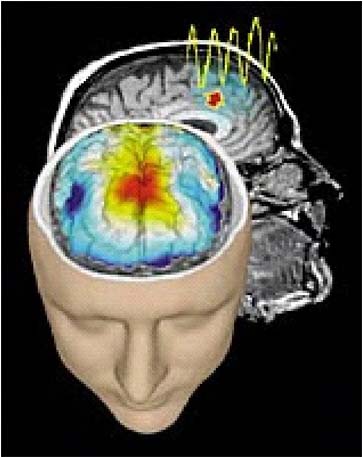
FIGURE App-C-1 MANSCAN®.
SOURCE: SAM Technologies.
MANSCAN® is an integrated software and hardware system for performing brain function research via high-resolution EEG and event-related potential (ERP) studies, and for integrating the results with magnetic resonance images. MANSCAN® It was the first system to integrate the high time resolution of EEG with the high anatomical resolution of MRI, and the first to allow subsecond measurement of rapidly shifting functional cortical networks. It enabled a new generation of research, and a number of significant advances in understanding attention, memory and other basic cognitive brain functions have been made with it.
Results of these studies provide unique views of structural and functional neuroanatomy. MANSCAN® analysis and visualization functions quickly and easily quantify features from EEGs and ERPs, leading neuroscience toward the goal of uniting brain electrical activity with brain anatomy.
MANSCAN®’s hardware includes quick application electrode caps, an ef-
ficient device called XCALIPER™ for measuring electrode positions, and an advanced digital amplifier called MICROAMPS™. MANSCA® software is fully integrated with the Microsoft NT/W2000/XP operating system running on a PC.
Thirty MANSCAN® systems have been sold to qualified scientists at U.S. universities, medical schools and government labs, where it is helping to perform advanced research. MANSCAN® has generated approximately $650,000 of revenue. Several competing products worldwide have been modeled on MANSCAN®. MANSCAN® is also specifically designed as a step toward the MM.
Knowledge Effects
SAM aims to produce commercial products—clearly, its entire mission is focused on commercial outcomes in the long run. However, there have been significant knowledge effect benefits during the course of this high-risk research. Nine of the projects listed below led to over 50 peer-reviewed scientific and engineering publications. Thirteen of the projects led to 18 U.S. patents. More widely, SAM staff have published more than 150 peer-reviewed publications including five papers in Science.
SBIR Issues and Concerns
The Selection Process
In recent years, SAM has been criticized as being “insufficiently innovative,” possibly because the field is catching up with SAM. Dr. Gevins notes that the recent drive for closer attention to commercialization is impacting SBIR reviews at NIH, but also that reviewers from academia have a better understanding of more basic research and are likely to be somewhat biased toward it. He also notes that academic reviewers are not themselves unbiased, in that they tend to focus on whether outputs from the project in question will be useful in their own research. Review quality and outcomes also vary very substantially by study section.
Conflict of Interest
Dr. Gevins is very concerned about potentially major conflicts of interest stemming from the use of industry participants on study sections. He believes procedures for addressing such conflicts are “pathetic”: section members are handed a written conflict of interest description immediately before the panel meets, and are then on the honor system to disqualify themselves. No NDA is signed, and little attention is paid to the process. Dr. Gevins believes that the current approach is just designed to protect NIH from awkward questions, rather than to provide real protections to applicants.
SAM always reviews membership of review panels, and not infrequently
requests that the SRA exclude a panel member from reviewing a SAM proposal. This veto process mostly works, according to Dr. Gevins, but is not foolproof. There is clearly some element of risk involved in releasing internal plans to outsiders (Dr. Gevins pointed out that this risk is endemic to the funding process—and that venture capitalists never sign NDAs, so there are also risks involved in working with venture capitalists).
In short, Dr. Gevins argues that while formal protections are in place, no effort is made at NIH to define or verify the absence of conflicts of interest, even though SRAs are in general honest and conscientious.
Recommendation: NIH must take the conflict of interest problem much more seriously. It should implement its own conflict of interest policies more effectively, and should consider mechanisms for auditing reviewer activities, at least on a random basis.
Expertise
Dr. Gevins sees a disconnect between the SRA running the selection process, and the IC which will eventually fund the project, and which has technical expertise in the subject area. This contrasts with funding at DoD, NSF, where a single point of contact essentially determines funding and manages the award.
Recommendation: It should be mandatory that the primary reviewer have technical competence in the field covered by the proposal.
Commercial Review
Dr. Gevins sees substantial room for improvement in addressing commercializing concerns. He does not support the commercialization index in use at DoD, which he regards as highly oversimplified and biased toward short-cycle projects. He did agree that a commercialization review could be useful, but though there might be helpful ways to separate out technical/scientific review from commercialization, which could be addressed by a separate perhaps permanent panel of experts, and where problems could be addressed within a single funding cycle rather than requiring full resubmission, which means at least one and possibly two funding cycles delay.
Reviewer Evaluation
CSR manages this function and does so fairly effectively. Dr. Gevins believes that the key motivation for reviewer participation is to follow activity near the cutting edge in a particular field.
Overly Random Scoring
Like many interviewees, Dr. Gevins noted the substantial random element in the review process. In particular, he believed that that there are quite substantial differences in scoring tendency between different review panels.
Recommendation: Scores should be normalized across study sections, just as they are for RO1’s. Otherwise it is perfectly possible—indeed likely—that one study section will tend to systematically provide higher scores than another. As all scores are integrated into a single priority score list for a given IC, this would inevitably generate a bias toward projects that were reviewed by the higher scoring study section.
Funding Issues
Size of Awards
Dr. Gevins said that in his experience, over-limit applications were always discussed beforehand with the program manager. SAM makes a point of mentioning this in the application, to ensure that reviewers know that the relevant program manager is in the loop. Extra-large awards can sometimes be held up for one or more funding cycles by the program manager, even if they are technically inside the payline. This is a less formal procedure, but similar to that in place at NIH for RO1 awards.
Recommendation: SAM supports increasing the size of Phase I awards and reducing the number of awards. Some program announcements already call for Phase Is in the vicinity of $500,000. SAM also supports increasing the size of Phase II awards and reducing the number. SAM would recommend a three-year Phase II award for $1 million, possibly requiring prior approval from the program manager.
Commercialization Support
SAM has actively participated in the new LARTA-led program. It sees the program as useful, particularly because it forces companies to focus on commercialization. However, at the time of the interview, SAM had received almost no useful time from the consultants, who appeared to have too many companies in their portfolios (20 or more each).
In general, the basic outline of the LARTA support program met SAM’s needs, which focused not on preparing for public presentations, but on moving steadily through the steps of developing a good commercialization plan, focused on strategic alliances. SAM had received a steady flow of reminder/check-up calls, pushing the company to focus on the commercial element of the business.
Recommendation: NIH should consider allowing LARTA to focus its resources more tightly on fewer companies, providing them with more resources.
Program Managers
Dr. Gevins wondered what role SBIR program managers or liaisons play at the various institutes. As they did not appear to manage the financial and reporting aspects of individual grants, and did not substantially influence selection, he
was unclear as to their role? He saw program managers as providing no value added for recipients, and added that in some cases they could be highly destructive (a point also made by other interviewees). He believed that some managers clearly had their own research agendas, and sought to impose these on the SBIR application process. Dr. Gevins also noted that being a program manager with responsibilities for many SBIR awards was not a plum job at NIH; as a result, it was often handed off to the least senior staff member.
Recommendation: SAM suggested adding a program manager review section to the final report for each project, which would allow NIH to gather better feedback about program manager performance.
Funding Gap Issues
SAM handles the gap by operating with multiple overlapping project. Current work has taken 6 years on a specific stage of the overall brain measurement project.
Dr. Gevins also noted that IC’s do not always fund projects immediately—the latter can be delayed for one or more funding cycle. SAM believes that April applications are likely to be funded fastest, because they show up at the beginning of the fiscal year and require least juggling from the IC. For example, SAM had a project that was approved during a September Council meeting, but had still not been funded by the IC as of the following March.
Other Concerns and Recommendations
SAM offered a range of other concerns and suggestions:
-
Believes awards are too short. Six months for Phase I is “a joke,” as Phase I research always takes about a year. SAM has never completed a two-year Phase II award in the standard two years.
-
Does not support FastTrack, partly because reviewers tend to split FastTrack applications in two anyway, and also because there are too few advantages in this process for companies, in comparison to the additional uncertainty.
-
Supports direct access to Phase II, without prior Phase I. SAM believes that the time required to apply for and complete a Phase I is the problem, as this can add a year or more to a project.
-
Supports the view that drug development funding could be distorting the overall shape of the SBIR program.
-
Supports competing continuation awards.
TABLE App-C-7 SBIR Awards to SAM Technologies
|
Awarding Agency |
Year |
Award Number |
Technology Description |
|
1 NIH |
1988 |
R44-RR03553 |
Removal of Distortion from Magnetic Resonance Images |
|
2 NIMH |
1989 |
R44-MH42725 |
Active Electrode Hat for EEG Imaging of Schizophrenics |
|
3 AFOSR |
1989 |
F49620-89-C-0049 |
Software Tools for Signal Identification using Neural Networks |
|
4 AFRL |
1989 |
F33615-89-C-0605 |
Flight Helmet EEG System |
|
5 NIMH |
1991 |
R44-MH43075 |
EEG ArtifactDetection |
|
6 AFOSR |
1991 |
F49620-92-C-0013 |
Physiological Indices of Mental Workload |
|
7 NINDS |
1992 |
R44-NS27392 |
Neurofunctional Research Workstation |
|
8 NIAAA |
1993 |
R44-AA08680 |
Cognitive Performance Assessment for Alcohol Intoxication |
|
9 NIMH |
1993 |
N44-MH30023 |
128 Channel Automated EEG Recording System |
|
10 NINDS |
1994 |
R44-NS28623 |
Multimodality Workstation for Seizure Localization |
|
11 NINDS |
1995 |
R44-NS32241 |
Functional Brain Imaging of Unconstrained Subjects |
|
12 NASA |
1995 |
NAS9-19333 |
Spacecrew Testing and Recording System |
|
13 AFRL |
1995 |
F41624-95-C-6000 |
Decontamination of Physiological Signals of Mental Effort |
|
14 NIMH |
1996 |
N44-MH60027 |
Neurocognitive Experiment Authoring Tool |
|
15 NIAAA |
1997 |
R44-AA11702 |
Attention & Alertness Neurometer |
|
16 NINDS |
1998 |
N44-NS-0-2394 |
Assessment of Alertness in Patients with Sleep Disorders |
|
17 AFOSR |
1998 |
F49620-98-C-0049 |
Sustained Attention Meter for Monitoring Cognitive Load |
|
18 AFOSR |
1998 |
F49620-96-C-0021 |
Brain Automatization Monitor |
|
19 AFOSR |
1998 |
F41624-98-C-6007 |
Operator State Classifier Developer’s Toolkit |
|
20 AFRL |
1998 |
F41624-97-C-6030 |
Rapid Application Cutaneous Electrode (RACE) System |
|
21 AFRL |
1999 |
F41624-99-C-6007 |
An Ambulatory Neurophysiological Monitoring System |
|
22 NIMH |
2001 |
R44-MH60053 |
NeuroCognitive Assessment Meter For Psychiatric Drugs |
|
23 NIDA |
2001 |
R44-DA12840 |
Neurocognitive Index of Cannabis Effects |
|
24 NIA |
2002 |
R44-AG17397 |
Neurocognitive Assessment of the Elderly |
|
25 NICHD |
2002 |
R44-HD37728 |
|
|
26 NINDS |
2003 |
R44-NS42992 |
|
|
27 DARPA |
2003 |
DAAH01-03-C-R292 |
Multicompartment Neuroworkload Monitor |
|
28 NHLBI |
2004 |
R44-HL065265 |
|
|
29 ONR |
2004 |
N00014-04-C-0431 |
Multitasking Personnel Selection Test |
|
SOURCE: SAM Technologies. |
|||
Savi Technology
Irwin Feller
American Association for the Advancement of Science
FIRM HISTORY
Savi Technology was established in 1989 by Robert Reis, a Stanford University engineering graduate and serial entrepreneur, about the core technological concept of installing radio frequency emitters, or tags, in products as a means of identifying their location. Based on an experience in which Reis had difficulty locating his young son in a store, the original market concept was to install the technology in children’s shoes as a way for parents to monitor their whereabouts. This concept quickly proved technically and commercially unworkable.
The value of integrating radio frequency identification devices (RIFD) with the Internet for purposes of supply chain management soon became evident, and it is along these lines that Savi has developed, becoming an international leader. From the late 1980s through the early 1990s, the firm experienced modest growth. Its growth has increased rapidly since then, especially after adoption of its technology by the Army, where it is credited with greatly improving the efficiency and effectiveness of DoD’s logistic management capabilities.
By the mid-1990s, Savi made a major business decision to systematically focus on the defense market. This strategy has led to a sequential extension of its
|
SAVI TECHNOLOGY: COMPANY FACTS AT A GLANCE
|
technology to a widening set of DoD requirements, international defense customers, homeland security, and asset security management.
Savi is now the major supplier of RFID technology to the Department of Defense, and one of the key technologies provides to its Global Total Asset Visibility Network. It has developed a strong international presence, being a major supplier of RIFD and related technologies to the United Kingdom’s Ministry of Defense, NATO, NATO member nations, and Australia. It also is increasingly engaged in the development of globally interoperable logistics monitoring systems with major international ports. It has also built a steadily increasingly commercial business, especially among multinational firms.
If its technological path has been relatively straightforward, consisting of a continuing stream of improvements and widened applications of its radio frequent identification technology, Savi’s history as a firm has been circuitous. As a relatively small firm, with about 40 employees and $10 million in sales but with limited markets, Savi was sold in 1990 to Texas Instruments (TI) for $40 million, which at that time was following a diversification strategy. Soon after however, following the death of TI’s chief executive office, Savi’s place within TI became unclear. In 1997, TI sold Savi to Raytheon, which was in the process of acquiring several firms as part of a diversification strategy. Raytheon’s business strategy soon gave way to one of concentrating on core businesses, with Savi at the margins of Raytheon’s operations. In 1999, Savi’s management entered into a buyout agreement, purchasing the firm from Raytheon for $10 million.
CAPITAL FORMATION
Begun as a start-up operation, augmented with an infusion of angel capital in 1992, Savi remains a privately held firm, albeit with several rounds of venture capital since its management buyout. Being sold twice and then regaining its autonomy via a management buyout, although at one level detracting from Savi’s ability to articulate and operate a focused technology development and business strategy, has over time proven beneficial to the firm. TI and Raytheon are estimated to have invested $50 million in Savi’s R&D. As a consequence, when Savi regained its independence, it was on stronger technological and production basis that when it was first sold. As described by Vikram Verman, Savi’s CEO, the firm’s history thus resembles the story of Jonah, albeit with a positive outcome: As a fledging firm, it was swallowed up by a whale—actually two of them, nurtured inside their bellies, and then disgorged as a stronger unit, better able to fend for itself.
Savi has had four rounds of venture capital funding since 1999, raising a total of $150 million. Among these investors are Accel, UPS Strategic Investment Fund, Mohr Davidow, Temasek, an investment holding company for the Port of Singapore and Neptune Orient Lines, Hutchison Whampoa and Mitusi, among others.
EXPERIENCES UNDER SBIR
The SBIR program provided two key inputs into Savi’s long-term growth. First, a combination of DARPA and Navy SBIR awards to the firm in 1989 and 1990 provided it with the seed capital that enabled it to refine the initial technological concept of radio frequency identification tags, such that it performed as needed when its initial market opportunity surfaced during the First Gulf War. Second, it provided the funding that led to the employment of Vikram Verman, then a Stanford University PhD student in engineering. Verma was born in India, moving to the United States at age 18 to study electrical engineering. Upon completing his undergraduate degree at Florida Institute of Technology, he moved first to the University of Michigan and then to Stanford University for graduate work. He joined Savi in 1990, advancing steadily from staff engineer, to vice president for engineering, to his current position as CEO.
In total, Savi received 38 SBIR awards, with the last of these awards being received in 1992. Savi credits its subsequent technological and business success to these early SBIR awards, even though they did not commercialize the technology identified in the initial SBIR projects. Rather, in its formative period, essentially between 1989-1991, SBIR awards were critical in helping Savi build the organizational infrastructure, engineering teams and knowledge base that undergirded its subsequent growth. Furthermore, although successful in competing for SBIR R&D awards, Savi never saw itself as a government contract R&D firm. Rather, its founding and continuing objective has been to be a commercially oriented, product-based firm. R&D is a means to obtain a competitive advantage for its products and related services.
Savi sees its greatest asset to be the know-how and organizational infrastructure gained from multiple R&D projects. These internal, often intangible, assets permit it to deal from a position of strength when it negotiates with external investors, such as venture capital funds. Verma estimates that Savi received a total of $3 million in SBIR awards for the development of RFID. For its part, the firm invested about $150 million in development, and that development took approximately 10 years.
INTELLECTUAL PROPERTY
Intellectual property protection in the form of patents is seen as of modest importance to Savi. It files patent, primarily to defend it technology and market position, not as a means though of securing license revenues or of entering into cross-licensing agreement. As viewed by the firm, its know-how and organizational capacity to assemble high-performing engineering teams are the main sources of its continuing technological innovativeness.
INVOLVEMENT IN STATE GOVERNMENT PROGRAMS
Savi has not participated in any State of California high-tech or economic development programs.
RECOMMENDATIONS
Savi’s participation in the SBIR program ended by the mid-1990s. Accordingly, its assessments of the SBIR program and recommendations for its improvement relate more to the general place of the program within the U.S. national innovation system than to its specific programmatic details. In its view, the SBIR program accords with the federal government’s role of financing R&D before a technology is commercially viable, and before a fledging firm can attract external capital. SBIR should be viewed and used as a source of seed capital. It is a means to an end, the end being the development and production of a usable and competitively marketable product. Firms that make a habit of living off the SBIR program are misusing the program. To guard against this practice, selection criteria should include requirements that firms detail how they plan to commercialize a product. Also, the importance and contributions of the SBIR program need to be more fully and effectively communicated.
SUMMARY
The SBIR program served both as a source of seed capital for Savi’s early R&D on RFID devices that have been the base of its employment and revenue growth and as the foundation for the knowledge and organizational infrastructure that have made it an internationally prominent firm in supply chain management technology. Although it no longer participates in the program, Savi views SBIR as an essential element—a national treasure in America’s long-term capacity to compete internationally on the basis of technological innovation.
Sociometrics Corporation
Robin Gaster
North Atlantic Research
EXECUTIVE SUMMARY
Sociometrics is a woman- and minority-owned company of approximately 16 employees that develops commercial products and services based on state-of-the-art behavioral and social research. Located in California’s Bay Area R&D hub, it has received funding from diverse government and private sources, generating revenues of more than $28 million since its foundation in 1983. By introducing the concept of packaged replication programs to the practice of social behavior change, Sociometrics has changed the nature of the field.
Sociometrics illustrates well one type of successful SBIR company. Winner of an NIH SBIR award during the first year of the program in 1984, Sociometrics has gone on to continue winning awards with consistency. Between 1992 and 2002, the company received 19 Phase I awards from NIH (see annex to this case study); 18 of these have become Phase II projects, a very high 94 percent conversion rate. Since 2003, six new Phase I projects have been awarded; two additional Phase I applications have received priority scores at the fundable level. Sociometrics will be submitting eight Phase II applications from these projects at the appropriate time.
Consistent with the goals of the SBIR program, Sociometrics has become a product-oriented company. Every Phase II it has conducted has generated a highly-marketable, commercial product. Sociometrics has now developed several product lines, secured a distribution agreement with a major electronic publishing house, and had products chosen by the Centers for Disease Control and Prevention (CDC) for its public health initiatives. In 2002, the majority of the firm’s profits shifted from contract and grant research fees to product sales, a testament to the firm’s SBIR-related success. This success has been due in part to the cumulative and strategic nature of Sociometrics’ efforts. New projects and products build on previous ones, adding one or more innovations in the process. The company has also leveraged the ubiquity of the World Wide Web to increase its products’ reach and public access, designing most products for download or interactive use on the Internet.
Despite Sociometrics’ own success, its market niche—the development of behavioral and social science-based commercial products—remains under-resourced with private funds. In part, this situation obtains because typical customers for such products are nonprofit organizations that appreciate and use the resources but cannot afford to pay very much for them. Responding to this important need, Sociometrics has kept its product pricing at close to production
cost, leveraging instead good business practice with a sense of public service. For these reasons the company continues to rely on SBIR funding to provide the necessary development support to create new products and expand its range of services. While SBIR grants remain an important revenue stream for many small companies in the program, Sociometrics’ involvement has distinguished itself with: a) a wide set of well-regarded and widely-used products; b) a profitable business model, distinguishing it from many other behavioral and social science-focused SBIR firms; and c) Phase II funding as sufficient support to bring the company’s products to market, in contrast to many biotech- and pharmaceutical-oriented companies.
Motivated once again by both business and public service concerns, Sociometrics staff members have published extensively in peer-reviewed journals. The company does not develop patentable products.
PRIMARY OUTCOMES
-
Four major product lines, with a fifth under development;
-
Consistent profitability from inception;
-
Industry standard for topically focused social science data and program archives;
-
Distribution agreement for data products with world-leading provider of authoritative reference information solutions;
-
CDC adoption of program archive products for nationwide distribution;
-
Product line with social impact: Effective program replication kits have changed the way behavioral practitioners operate in community settings; and
-
More than 60 peer-reviewed publications based on SBIR-funded projects
KEY SBIR ISSUES
Sociometrics has found the SBIR program a very productive platform for its work. The program has allowed Sociometrics to: a) take state-of-the-art social and behavioral research in its topical areas of expertise (reproductive health, HIV/AIDS, drug abuse, and mental health); b) use scientist expert panels to assess the research and identify the best available data, practices, and knowledge; and c) develop commercial products and services based on the panels’ selections. Sociometrics’ products are aimed at a diverse set of target audiences. For example, its data archives and evaluation instruments are meant for use by researchers, faculty members, and students. Its effective program replication kits, evaluation publications, and program development and evaluation training workshops are intended for use by health practitioners in schools, clinics and community-based organizations. Its forthcoming Web-based behavioral and social science informa-
tion resources, summarizing state-of-the-art research knowledge in select topical areas in nonscientist language, will be aimed at both academic and practitioner audiences.
BACKGROUND
Sociometrics Corporation was established in September 1983 as a corporation in the State of California. Within a year of its founding, Sociometrics had applied for its first SBIR project. Dr. Josefina Card, Sociometrics founder and CEO, was encouraged to found the company as a for-profit organization by Dr. Wendy Baldwin, then a program manager at NIH. (Dr. Baldwin later went on to become Deputy Director of NIH for Extramural Research.) Dr. Baldwin suggested that Sociometrics incorporate as a for-profit entity in order to benefit from the newly created SBIR program without precluding the possibility of obtaining basic and applied research grants.
Sociometrics’ goals are:
-
to conduct applied behavioral and social research to further our understanding of contemporary health and social problems;
-
to promote evidence-based policymaking and intervention program development;
-
to conduct evaluation research to assess the effectiveness of health-related prevention and treatment programs;
-
to facilitate data sharing among social scientists as well as public access to exemplary behavioral and social data; and
-
to help nonexperts utilize and benefit from social science and related technologies and tools.
In carrying out its mission, several areas of corporate expertise have been developed:
-
the design and operation of machine-readable, topically focused data archives;
-
the development of powerful, yet user-friendly, software for search and retrieval of information in health and social science databases;
-
the harnessing of state-of-the-art developments in computer hardware and software to facilitate access to, and use of, the best data in a given research area;
-
primary and secondary analysis of computer data bases using a variety of commercially available statistical packages as well as custom-designed software;
-
the design, execution, and analysis of program evaluations;
-
the design, execution, and analysis of health and social surveys;
-
the collection and analysis of social and psychological data using a variety of modes (mail; telephone; focus groups; in person interviews);
-
the collection and dissemination of social intervention programs with demonstrated promise of effectiveness; and
-
the provision of training and technical assistance on all the above topics.
Sociometrics currently has 16 employees, six of whom have PhDs and five of whom have Masters degrees. Expertise of its staff spans a diverse set of behavioral and social science fields, including sociology, social psychology, clinical psychology, demography, linguistics, education, and public administration. In June 2005, a seventh PhD, specializing in political science and international relations, will be joining the firm.
Sociometrics has been the recipient of several awards including:
-
a Medsite award for “quality and useful health-related information on the Internet”;
-
a U.S. Small Business Administration Administrator's Award for Excellence “in recognition of outstanding contribution and service to the nation by a small business in satisfying the needs of the Federal procurement system”; and
-
a certificate of recognition for Project HOT (Housing Options for Teachers) by the California State Senate, the California State Assembly, and the Palo Alto Council of PTAs “in appreciation for service supporting Palo Alto Unified School District's teachers and staff.”
PRODUCTS
Sociometrics currently provides four research-based product lines:
-
data archives and analysis tools;
-
replication kits for effective social and behavioral intervention programs;
-
evaluation research; and
-
training and technical assistance services.
Sociometrics staff members are currently developing a fifth product line, online behavioral and social science-based information resources, to facilitate “distance learning.”
Data Archives and Analysis Tools
The Sociometrics data archives are collections of primary research data. Each collection is focused on a topic of central interest to an NIH Institute or Center (IC). The data sets comprising each collection are selected and vetted by high-level scientist advisory boards to ensure that each collection is best-of-breed. Data sets are acquired from their holders, packaged and documented in standard fashion, and then made publicly available both online and on CD-ROM. Each successive data archive has leveraged features of previous archives that promote ease of use and has then developed new features of its own. This cumulative development effort has resulted in a digital library consisting of several hundred topically-focused datasets that are easy to use, even by novices such as students and early-career researchers. Data in Sociometrics’ archives are accompanied by standard documentation, SPSS and SAS analytic program statements, and the company’s proprietary search and retrieval tools. By providing high-quality data resources, and adding features facilitating appropriate and easy use, Sociometrics has created a niche of standardized, quality data products that complement the larger, though not universally standardized, data resources offered by other major data providers such as the University of Michigan. Currently, Sociometrics publishes nine data archives (see Box App-1), with a tenth data archive on childhood problem behaviors under development. The nine collections are disseminated both as single data sets (by Sociometrics) as well as via institutional
|
BOX App-1 The Sociometrics Data Archives: Topical Foci and Scope
|
subscriptions to the entire collection known as the Social Science Electronic Data Library (SSEDL).
Sociometrics’ first data archive on adolescent pregnancy and pregnancy prevention was funded as part of the very first cohort of SBIR awards at NIH. More than 20 years after its initial release, this archive continues to be highly relevant, utilized, and regularly updated by Sociometrics. The archive was originally published on mainframe tapes, and has since been delivered to its customers using ever-changing computer data storage technologies including 5 ¼ and 3 ½ inch floppy disks and CD-ROM. It is now available 24/7 on the World Wide Web, where it has been accessible for the past 8 years.
A year ago, Sociometrics entered into a five-year distribution agreement for the Social Science Electronic Data Library (SSEDL) with Thomson Gale, a world-leading provider of authoritative reference information solutions. The agreement calls for Thomson Gale to market SSEDL via subscription to its wide range of academic and research library customers, while allowing Sociometrics to continue selling individual datasets from its own Web site. Sociometrics receives a portion of the Thomson Gale subscription sales in royalties. Several thousand SSEDL data sets have been downloaded from the Sociometrics Web site over the last three years, some by pay-as-you-go customers who execute a secure credit card transaction, others by faculty members and students able to download the data sets at no charge because their university is an SSEDL subscriber. Sales of the data archives and associated products have yielded approximately $125,000 in profits over the last three years. This figure does not yet include royalties from the Thomson Gale agreement which came into effect at the close of the 2003-2004 fiscal year, the latest date for which figures are available.
Competition
The Inter-University Consortium for Political and Social Research (ICPSR) data archive at the University of Michigan provides the main competition for Sociometrics’ data archives. Despite ICPSR’s much larger collection of data sets, Sociometrics has maintained a specialized niche, leveraging organization around selected health-related topics, careful selection of exemplary data by Scientist Expert Panels standardized documentation, ease of use of data sets, and value-added SPSS and SAS data analytic statements into a specialized collection tailored to data novices such as students and early-career researchers, that complements the ICPSR collection.
Replication Kits
Having developed the Data Archives, Sociometrics realized in 1992 that additional public service would occur if it extended and adapted its work beyond selection, packaging, and distribution of exemplary data to selection, packaging,
and distribution of practices shown by such data to be effective in changing unhealthy or problem behaviors. Diverse health issues with important behavioral determinants (adolescent pregnancy, STD/HIV/AIDS, and substance abuse) were selected to showcase the new product line. Prior to 1992, information on effective programs was limited to brief descriptions in scientific journals often not read by health practitioners, a serious barrier to their widespread use. Using SBIR funding, Sociometrics sought to overcome this barrier by adapting to this new product line the time-tested methods it used to establish its data archives.
The company again worked with Scientist Expert Panels to identify and select effective programs based on their empirical support, collaborated with developers of selected programs to create replication kits for Panel-selected behavior change interventions, and partnered with networks of health professionals to disseminate these kits to schools, clinics, and community-based organizations. Replication kits were conceptualized as boxes containing all the materials required to reimplement the effective intervention. Typical replication kits contain a user’s guide to the program, a teacher’s or facilitator’s manual, a student or participant workbook, one or more videos, and forms for “homework” assignments or group exercises.
The first effective program collection, the Program Archive on Sexuality, Health & Adolescence (PASHA) now comprises 29 replication kits. The newer HIV/AIDS Prevention Program Archive (HAPPA) and the Youth Substance Abuse Prevention Program Archive (YSAPPA) encompass 11 and 12 replication kits, respectively. Despite considerable initial skepticism from academics and some practitioners, the program-in-a-box approach has been received with considerable enthusiasm. PASHA, HAPPA, and YSAPPA have all proven to be social successes, with their programs being implemented in hundreds of schools, clinics, and communities across the country. They have also proven to be commercial successes, generating profits totaling over half a million dollars in the last three years.
Like the Sociometrics Data Archives, the Sociometrics replication kits (known collectively as the Sociometrics Program Archives) are topically focused, best-of-class collections, selected using clearly defined effectiveness criteria by Scientist Expert Panels, and sold with free technical support for purchasers. This complimentary technical assistance has been lauded as an extremely valuable service by Sociometrics’ customers and the company’s reputation follows, in part, from the excellent product support it provides.
The replication kits have been sold individually from the Sociometrics Web site to such customers as schools, community health and service organizations, and medical clinics. They have also been displayed at exhibit booths at annual meetings of health practitioner professional organizations. Their dissemination is further supported by a company newsletter published three times annually and reaching 30,000 recipients. In 2003 CDC became an important customer for several replication kits, providing “train the trainer” workshops in Atlanta for
hundreds of practitioners in use of selected kits. These new trainers have in turn returned to their hometowns and home organizations to train more staff, resulting in further sales of the replication kits and dissemination of important prevention programs.
Competition
CDC has provided the impetus for the only real competition to Sociometrics in the field of replication kit development for effective teen pregnancy and HIV/AIDS prevention programs. The CDC initiatives have been based on a decentralized distribution model, with CDC funding program developers to publish their programs themselves or to seek out their own commercial distributors. In contrast, the Sociometrics distribution model is centralized, with Sociometrics’ Web site serving as a one-stop-shopping-point for highly effective programs in the areas in which the company operates.
The inevitable delays in implementing a new initiative, plus changes in policy at CDC and substantial budget cuts, have put one of the CDC’s two development programs on hold (the one on teen pregnancy prevention), leaving the Program Archive on Sexuality, Health, and Adolescence without significant current competition. The other CDC program on HIV/AIDS prevention, a competitor to Sociometrics’ HIV/AIDS Prevention Program Archive, is using replication kits developed at Sociometrics for some of its selected programs, boosting sales of the Sociometrics HIV/AIDS Prevention Program Archive by an order of magnitude. In this manner Sociometrics Program Archives have complemented the larger CDC efforts, just as the Sociometrics Data Archives have complemented the larger University of Michigan efforts.
Longer-Term Challenges and Opportunities
Over the longer term it is possible that commercial challenges may arise from changes in the academic world, where more and more developers of effective programs are deciding to publish their work themselves, releasing kits or parts of kits through their own Web sites or negotiating other arrangements with commercial publishers. Sociometrics is not overly concerned by these developments as it regards its work as complementary to, and supportive of, developers’ efforts to get their effective programs in the public domain. Recent history is supportive. During the initial establishment of Sociometrics’ HIV/AIDS Prevention Program Archive (HAPPA), the advisory panel recommended 18 effective programs for inclusion in the archive; of these one was withdrawn as “obsolete” by its original developer, seven developers had previously decided to use a commercial publisher, and ten were made available through HAPPA. Thus with the help of Sociometrics’ efforts complementing existing efforts, replication kits for almost all effective programs are now publicly available to community-based
organizations striving to prevent HIV. This constitutes an important public service in terms of: (1) packaging the most promising interventions to enhance their usability; (2) facilitating low-cost access to, and widespread awareness of, these interventions; (3) encouraging additional rigorous tests of the interventions’ effectiveness in a variety of populations; and (4) demonstrating the value of, and providing a model for, the research-to-practice feedback loop.
Further opportunities for enhanced product dissemination arise from Sociometrics’ collaboration with other organizations besides CDC. In particular, large nonprofit networks provide many opportunities for partnership. For example, on the teen pregnancy prevention program archive, Sociometrics has worked with the National Campaign to Prevent Teen Pregnancy, Advocates for Youth, and the National Organization for Adolescent Pregnancy, Prevention, and Parenting, Inc. These organizations have become bulk purchasers of replication kits. They have provided other marketing support as well; for example, Advocates for Youth placed a link to Sociometrics on its Web site, and marketed Sociometrics’ kits to its constituency from there.
Evaluation Research
Sociometrics has considerable expertise in program evaluation research and technical assistance. Over the last 15 years, the company has conducted many studies and provided technical assistance to many nonprofit organizations to determine whether a particular social intervention program was able to meet its short-term goals and long-term objectives. While most of the company’s work developing its data and program archives has been funded by the SBIR program, Sociometrics’ evaluation work has been funded primarily by state governments (such as California, Minnesota, and Wisconsin), local governments (such as Santa Clara County), private sources, especially foundations seeking an evaluation of the efforts of their grantees (the Packard Foundation, the Mott Foundation, the Northwest Area Foundation, and the Kaiser Family Foundation), and nonprofits seeking an evaluation of the effectiveness of their work. Sociometrics publishes a number of books and resource materials on program evaluation (e.g., Data Management: An Introductory Workbook for Teen Pregnancy Program Evaluators). It also offers at low cost (15 cents per page) evaluation research instruments that have been used in national surveys or in successfully implemented and published evaluation efforts.
Training Services
Sociometrics conducts workshops and courses to familiarize practitioners with the tools and benefits of social science and related technologies. These courses have recently been put online to increase their reach while lowering access costs. Training is offered in a variety of social science areas, particu-
larly in effective program selection, development, and implementation; program evaluation concepts, design, and execution; and data collection, management, and analysis.
Science-Based Information Modules
These new products, still under development, will integrate the research literature in a given topical area, describe what science says in language and format easily understood by nonscientists (eighth grade reading level), and disseminate the information online via the Internet for easy “distance learning” access by all.
Into the Future
Most of Sociometrics’ products are available for 24/7 download (with payment by credit card) on its award-winning Web site at <http://www.socio.com>. Its data archives, collectively known as The Social Science Electronic Data Library (SSEDL), are also available via institutional subscriptions marketed to universities and research libraries by Sociometrics’ dissemination partner Thomson Gale. Sociometrics will continue its development of its Web site as a major product platform. In 2003, this Web site received over 1.7 million hits resulting in 29,729 product downloads. The company will also continue to develop additional subscription products. For example, Sociometrics plans to bundle its HIV and teen pregnancy replication kits, evaluation resources, training courses, and information module products and disseminate these bundled products to academics and health practitioners via online subscriptions. Eventually, mental health resources will be added to the Data Library, HIV, and teen pregnancy subscription resources as a fourth subscription line. Two current and two forthcoming SBIR Phase I grants support expansion into this important topical focus of mental health.
Profits and Revenues
Sociometrics’ gross annual revenues are approximately $2.3 million with approximately 22 percent of this amount being profit (Table App-C-8). Profits from product sales are now substantially larger than profits from SBIR project fees, a testament to the success of Sociometrics as an SBIR firm. However, the profit stream is still insufficient to replace SBIR as the primary funding engine for future development efforts. Sociometrics does not market price its products, as many of its customers are small, community-based nonprofits that cannot afford products fully priced to market. Rather Sociometrics’ products are priced at the cost of production with a small profit mark-up equivalent to a technical assistance retainer. Sociometrics sees this focus on widespread dissemination
TABLE App-C-8 Sources of Revenue and Profit, Sociometrics Corporation, 1984 to 2004
and use (as opposed to single-minded emphasis on profits alone) as part of its important public service.
REVIEW PROCESS
Sociometrics is generally satisfied with the SBIR proposal review process. It believes that it has “learned to compete successfully on paper.” The company takes a very pragmatic approach to review. It understands that there is a substantial random element in the process (a study conducted by NSF in the early 1990s found that the chance effect for whether a journal article or proposal is accepted by peers is approximately 50 percent). Therefore it believes that the best
approach to unfunded proposals is to consider all reviewer comments seriously and resubmit the proposal whenever these comments can be addressed. Another source of variability is the frequent change in study section make-up from one review to the next. As a result, comments made by one Panel may be negated by the next Panel who have new considerations and concerns. Nevertheless, Sociometrics believes that with tenacity its good proposals will eventually be approved through the current SBIR peer review mechanism. The company estimates that 70 percent of its applications for SBIR Phase I support and 95 percent of its applications for SBIR Phase II support are eventually successful. Forty percent of Phase I applications and 75 percent of Phase II applications are successful at first submission; the other applications require one or two resubmissions before they are eventually funded.
Commercialization has always been a strength for Sociometrics. The company has been pleased that this success criterion has received increased emphasis in recent application guidelines. Consistent with this, Sociometrics staff have observed that reviewer comments have recently praised the company’s strength in this area.
Sociometrics makes sure that its SBIR applications highlight its sales track record as well as its sales and marketing expertise. The company notes that this is very different from R01 research grant applications, for which these capacities are essentially irrelevant.
There needs to be ongoing evaluation of reviewers serving on study sections, providing some accountability. Sociometrics supports the concept that “bad reviewers” should be eliminated, but also understands that it is hard to find reviewers. Related to this problem is the concern that reviewers have appropriate expertise for the proposals they evaluate, which is a challenge when study sections cover quite broad areas.
OTHER OUTCOMES
Other Funding
Sociometrics has been funded by many NIH agencies and by government agencies outside NIH. Initial SBIR funding came from the Office of Population Affairs under the Deputy Assistant Secretary for Population Affairs, Department of Health and Human Services. Other projects have been funded by the National Science Foundation (NSF), the Centers for Disease Control and prevention (CDC), the Veterans Administration (VA), the National Center for Health Statistics (NCHS), private companies, nonprofit organizations, state and local governments, and private foundations. Sociometrics has never sought venture capital funding because its profits, while impressive for a behavioral and social science firm, are not large enough to make the company sustainable without SBIR funding, a requirement for venture capital funding.
Changing the Field
NIH and CDC officials, among others, regard Sociometrics’ effective-program replication kits as an important innovation helping to bridge the gap between health-related research and practice. The program-in-a-box opened the door for researchers to generate something more than an article or book as an output from their studies, and many researchers were especially pleased to find a way to connect their work to the improvement of practice.
Publications
Sociometrics’ staff members have more than 250 peer-reviewed publications; approximately 60 of these are based on the company’s SBIR work.
Training Effects
Sociometrics is poised for expansion now that younger staff are becoming qualified as PIs in their own right, which relieves some of the PI burden from the two senior managers, who were until recently PIs on all projects.
NIH Institutes and Centers (IC’s)
Sociometrics has had the longest relationship with—and is closest to—the National Institute on Child Health and Human Development (NICHD). Sociometrics’ Founder and CEO, Dr. Josefina Card, has served on several NICHD study sections, and has also been on the NICHD National Advisory Council.
SUPPLEMENTAL FUNDING
Supplemental funding procedures vary substantially by IC. Typically, small supplement requests—up to 25 percent of the annual award amount at NIMH—are available at the discretion of the program officer (depending on funding availability). These are referred to as “non-competing administrative supplements.” Large supplementary funding requests must compete with other similar requests, seeking a “competing supplementary award.” Sociometrics has obtained a few non-competing administrative supplements. It has also obtained three larger supplement awards by expanding the scope of the funded Phase II grant in a way deemed “high priority” by the funding agency or by competing successfully via another funding mechanism (such as an RFA) with the funding agency then deciding, for administrative simplicity reasons, to add monies to the SBIR grant instead of issuing a new grant award. Examples include:
-
Teen pregnancy prevention program replication kits. Originally funded by NICHD, Sociometrics sought a third year of Phase II support through
-
a supplement to expand the scope of the Program Archive on Sexuality, Health & Adolescence (PASHA) from teen pregnancy prevention alone to teen STD/HIV/AIDS prevention as well. This expansion had been recommended by the PASHA Scientist Expert Panel, in light of the national spotlight on HIV/AIDS and the similar sexual-risk behaviors underlying both unintended pregnancy and STD/HIV/AIDS. The supplement request was forwarded by NICHD to the Deputy Assistant Secretary of Population Affairs who serves simultaneously as Director of the Office of Population Affairs. This political appointee interviewed the Sociometrics PI, and then personally approved the requested additional $750,000 in Phase II funding, transferring the monies to the NICHD grant.
-
Program Archive for HIV/AIDS in adults. Initially funded by the National Institute of Allergy and Infectious Diseases (NIAID), supplementary funding was requested for the HIV/AIDS Prevention Program Archive (HAPPA) to expand the project to include programs targeted directly at minorities. In this case, the request was for approximately $575,000 over three years. However, an end-of-year budget under-run at NIAID resulted in the full requested funding being provided over one year, instead the requested three years.
-
Complementary and Alternative Medicine Data Archive. Sociometrics had Phase II funding from the National Center on Alternative Medicine (NCAM) to establish the Complementary and Alternative Medicine Data Archive (CAMDA) when it responded to an RFA issued by NCAM encouraging research on minorities and CAM. Sociometrics responded to the RFA by proposing to expand CAMDA to include data sets especially focused on minority populations. Its proposal received a high priority score and NCAM decided to fund the project via an administrative supplement to the Phase II project rather than via a new grant award.
RECOMMENDATIONS
Sociometrics believes that the SBIR program provides an essential resource for generating innovative and effective research-based products in efficient fashion. In response to questions about its support for various issues and trends in the program, Sociometrics makes the following recommendations:
-
Normalization of scores. Scores should be normalized across SBIR study sections.
-
Award size and duration. Phase I duration should be one year, and additional funding (beyond $100,000) should be available with justification. Phase II size and duration limits could remain as they are ($750,000 over two years); Sociometrics has always found it possible to split larger projects into two or more ideas qualifying for separate SBIR funding. While
-
Sociometrics has no a priori objection to “supersized” Phase II awards (awards exceeding the Phase II guidelines of $750,000), it recommends that if such awards are indeed becoming common, then information about them should be fully communicated to applicants and transparency increased. The increasing prevalence of larger Phase II awards might tend to benefit well-established companies and could result in fewer SBIR grants being made. These consequences should be taken into account in approving very large Phase II awards.
-
Direct to Phase II. Phase II competition should be open to all applicants meeting small business qualifications, permitting bypass of Phase I awards (though not of the need to show equivalent results). This might also, however, tend to benefit well-established companies.
-
Resubmission. The one-page Phase I proposal limit for summarizing applicants’ responses to reviewer comments is insufficient. The limit should be increased to two pages or even three, as is the case for Phase II proposals.
-
Evaluation. NIH should develop a program to evaluate the health, social, and economic impact of SBIR projects. Sociometrics would very much like to undertake evaluations either of its own SBIR projects, or of a group of projects that would include some of its own.
-
Chartered study sections for SBIR. Given the now-permanent character of the program, NIH should consider asking Congress to charter what are currently Special Emphasis Panels (SEPs), or should consider changing its guidelines for SEPs to mimic those for chartered study sections. In this manner, the composition of review panels would be more stable from one review round to the next, resulting in better reviews.
Sociometrics—Annex: Sociometrics’ SBIR Awards, NIH-Sponsored Phase I Projects Started in FY 1992-2002
|
Fiscal Year |
Phase Type |
Award Amount ($) |
Project Title |
IC |
|
1994 |
Phase I |
80,991 |
AMERICAN FAMILY DATA CENTER |
HD |
|
1995 |
Phase II |
216,369 |
AMERICAN FAMILY DATA CENTER |
HD |
|
1996 |
Phase II |
222,496 |
AMERICAN FAMILY DATA CENTER |
HD |
|
1998 |
Phase II |
114,998 |
AMERICAN FAMILY DATA CENTER |
HD |
|
1997 |
Phase I |
99,817 |
ARCHIVE—EFFECTIVE YOUTH DRUG ABUSE PREVENTION PROGRAMS |
DA |
|
1998 |
Phase II |
343,632 |
ARCHIVE—EFFECTIVE YOUTH DRUG ABUSE PREVENTION PROGRAMS |
DA |
|
1999 |
Phase II |
396,232 |
ARCHIVE—EFFECTIVE YOUTH DRUG ABUSE PREVENTION PROGRAMS |
DA |
|
2001 |
Phase II |
24,999 |
ARCHIVE—EFFECTIVE YOUTH DRUG ABUSE PREVENTION PROGRAMS |
DA |
|
1999 |
Phase I |
95,825 |
CHILD WELL-BEING & POVERTY: STATISTICAL ABSTRACT & DATA |
HD |
|
2001 |
Phase II |
377,391 |
CHILD WELL-BEING & POVERTY: STATISTICAL ABSTRACT & DATA |
HD |
|
2002 |
Phase II |
371,768 |
CHILD WELL-BEING & POVERTY: STATISTICAL ABSTRACT & DATA |
HD |
|
1999 |
Phase I |
94,833 |
COMPLEMENTARY AND ALTERNATIVE MEDICINE DATA ARCHIVE |
AT |
|
2002 |
Phase II |
375,345 |
COMPLEMENTARY AND ALTERNATIVE MEDICINE DATA ARCHIVE |
AT |
|
2003 |
Phase II |
374,587 |
COMPLEMENTARY AND ALTERNATIVE MEDICINE DATA ARCHIVE |
AT |
|
2004 |
Phase II |
215,070 |
COMPLEMENTARY AND ALTERNATIVE MEDICINE DATA ARCHIVE |
AT |
|
2005 |
Phase II |
258,084 |
COMPLEMENTARY AND ALTERNATIVE MEDICINE DATA ARCHIVE |
AT |
|
1992 |
Phase II |
162,492 |
DATA ARCHIVE ON MATERNAL DRUG ABUSE |
DA |
|
1993 |
Phase II |
174,720 |
DATA ARCHIVE ON MATERNAL DRUG ABUSE |
DA |
|
1993 |
Phase II |
18,336 |
DATA ARCHIVE ON MATERNAL DRUG ABUSE |
DA |
|
1997 |
Phase I |
99,834 |
DATASET DEVELOPMENT SOFTWARE & FAMILY RESEARCH ITEM BANK |
HD |
|
1998 |
Phase II |
382,614 |
DATASET DEVELOPMENT SOFTWARE & FAMILY RESEARCH ITEM BANK |
HD |
|
1999 |
Phase II |
356,870 |
DATASET DEVELOPMENT SOFTWARE & FAMILY RESEARCH ITEM BANK |
HD |
|
Fiscal Year |
Phase Type |
Award Amount ($) |
Project Title |
IC |
|
1995 |
Phase I |
70,770 |
ESTABLISHING A CONTEXTUAL DATA ARCHIVE |
HD |
|
1996 |
Phase II |
338,926 |
ESTABLISHING A CONTEXTUAL DATA ARCHIVE |
HD |
|
1997 |
Phase II |
409,298 |
ESTABLISHING A CONTEXTUAL DATA ARCHIVE |
HD |
|
1993 |
Phase I |
49,975 |
ESTABLISHMENT OF A RESEARCH ARCHIVE ON DISABILITY |
HD |
|
1994 |
Phase II |
236,145 |
ESTABLISHMENT OF A RESEARCH ARCHIVE ON DISABILITY |
HD |
|
1995 |
Phase II |
230,731 |
ESTABLISHMENT OF A RESEARCH ARCHIVE ON DISABILITY |
HD |
|
1996 |
Phase II |
31,288 |
ESTABLISHMENT OF A RESEARCH ARCHIVE ON DISABILITY |
HD |
|
1997 |
Phase II |
149,709 |
ESTABLISHMENT OF A RESEARCH ARCHIVE ON DISABILITY |
HD |
|
1992 |
Phase II |
220,955 |
ESTABLISHMENT OF AN AIDS/STD DATA ARCHIVE |
HD |
|
1993 |
Phase II |
236,301 |
ESTABLISHMENT OF AN AIDS/STD DATA ARCHIVE |
HD |
|
1994 |
Phase II |
42,070 |
ESTABLISHMENT OF AN AIDS/STD DATA ARCHIVE |
HD |
|
1995 |
Phase II |
10,000 |
ESTABLISHMENT OF AN AIDS/STD DATA ARCHIVE |
HD |
|
1998 |
Phase II |
350,655 |
HIV/AIDS PREVENTION PROGRAM ARCHIVE |
AI |
|
1999 |
Phase II |
397,449 |
HIV/AIDS PREVENTION PROGRAM ARCHIVE |
AI |
|
2000 |
Phase II |
574,670 |
HIV/AIDS PREVENTION PROGRAM ARCHIVE |
AI |
|
1997 |
Phase I |
99,221 |
INSTITUTE FOR PROGRAM DEVELOPMENT AND EVALUATION |
HD |
|
1999 |
Phase II |
337,465 |
INSTITUTE FOR PROGRAM DEVELOPMENT AND EVALUATION |
HD |
|
2000 |
Phase II |
412,385 |
INSTITUTE FOR PROGRAM DEVELOPMENT AND EVALUATION |
HD |
|
2001 |
Phase II |
49,987 |
INSTITUTE FOR PROGRAM DEVELOPMENT AND EVALUATION |
HD |
|
1993 |
Phase I |
49,494 |
INSTRUMENT ARCHIVE OF SOCIAL RESEARCH ON AGING |
AG |
|
1992 |
Phase II |
223,017 |
MICROCOMPUTER DATA ARCHIVE OF SOCIAL RESEARCH ON AGING |
AG |
|
1993 |
Phase II |
19,106 |
MICROCOMPUTER DATA ARCHIVE OF SOCIAL RESEARCH ON AGING |
AG |
|
2001 |
Phase I |
197,562 |
PROMOTING EVALUATION/TEACHING/RESEARCH ON AIDS (PETRA) |
MH |
|
2003 |
Phase II |
420,281 |
PROMOTING EVALUATION/TEACHING/RESEARCH ON AIDS (PETRA) |
MH |
|
Fiscal Year |
Phase Type |
Award Amount ($) |
Project Title |
IC |
|
2004 |
Phase II |
329,507 |
PROMOTING EVALUATION/TEACHING/RESEARCH ON AIDS (PETRA) |
MH |
|
1994 |
Phase I |
80,991 |
SOCIONET—ONLINE ACCESS TO SOCIAL SCIENCE DATA |
HD |
|
1995 |
Phase II |
446,682 |
SOCIONET: ONLINE ACCESS TO SOCIAL SCIENCE DATA |
HD |
|
1996 |
Phase II |
303,033 |
SOCIONET: ONLINE ACCESS TO SOCIAL SCIENCE DATA |
HD |
|
1998 |
Phase I |
99,340 |
STATISTICS ON DEMAND: DATA ANALYSIS OVER THE INTERNET |
HD |
|
2000 |
Phase II |
381,525 |
STATISTICS USING MIDAS: DATA ANALYSIS OVER THE INTERNET |
HD |
|
1999 |
Phase II |
367,726 |
STATISTICS USING MIDAS: DATA ANALYSIS OVER THE INTERNET |
HD |
|
2002 |
Phase I |
99,011 |
VIRTUAL PROGRAM EVALUATION CONSULTANT (VPEC) |
HD |
|
2003 |
Phase II |
383,357 |
VIRTUAL PRACTIONER EVALUATION CONSULTANT (VPEC) |
HD |
|
2004 |
Phase II |
363,923 |
VIRTUAL PRACTIONER EVALUATION CONSULTANT (VPEC) |
|
|
1993 |
Phase I |
50,000 |
ARCHIVE OF TEEN PREGNANCY PREVENTION PROGRAMS |
HD |
|
1995 |
Phase II |
408,644 |
PROGRAM ARCHIVE ON SEXUALITY, HEALTH, & ADOLESCENCE |
HD |
|
1996 |
Phase II |
987,378 |
PROGRAM ARCHIVE ON SEXUALITY, HEALTH, & ADOLESCENCE |
HD |
|
1997 |
Phase II |
45,000 |
PROGRAM ARCHIVE ON SEXUALITY, HEALTH, & ADOLESCENCE |
OPA |
|
1994 |
Phase I |
79,383 |
ESTABLISHING A STROKE DATA ARCHIVE |
NS |
|
2002 |
Phase I |
199,922 |
PROMOTING CULTURALLY COMPETENT/EFFECTIVE HIV/AIDS PREVENTION PROGRAMS |
AI |
|
2004 |
Phase II |
361,223 |
PROMOTING CULTURALLY COMPETENT/EFFECTIVE HIV/AIDS PREVENTION PROGRAMS |
AI |
|
SOURCE: Sociometrics Corporation. |
||||


