



Below is the uncorrected machine-read text of this chapter, intended to provide our own search engines and external engines with highly rich, chapter-representative searchable text of each book. Because it is UNCORRECTED material, please consider the following text as a useful but insufficient proxy for the authoritative book pages.
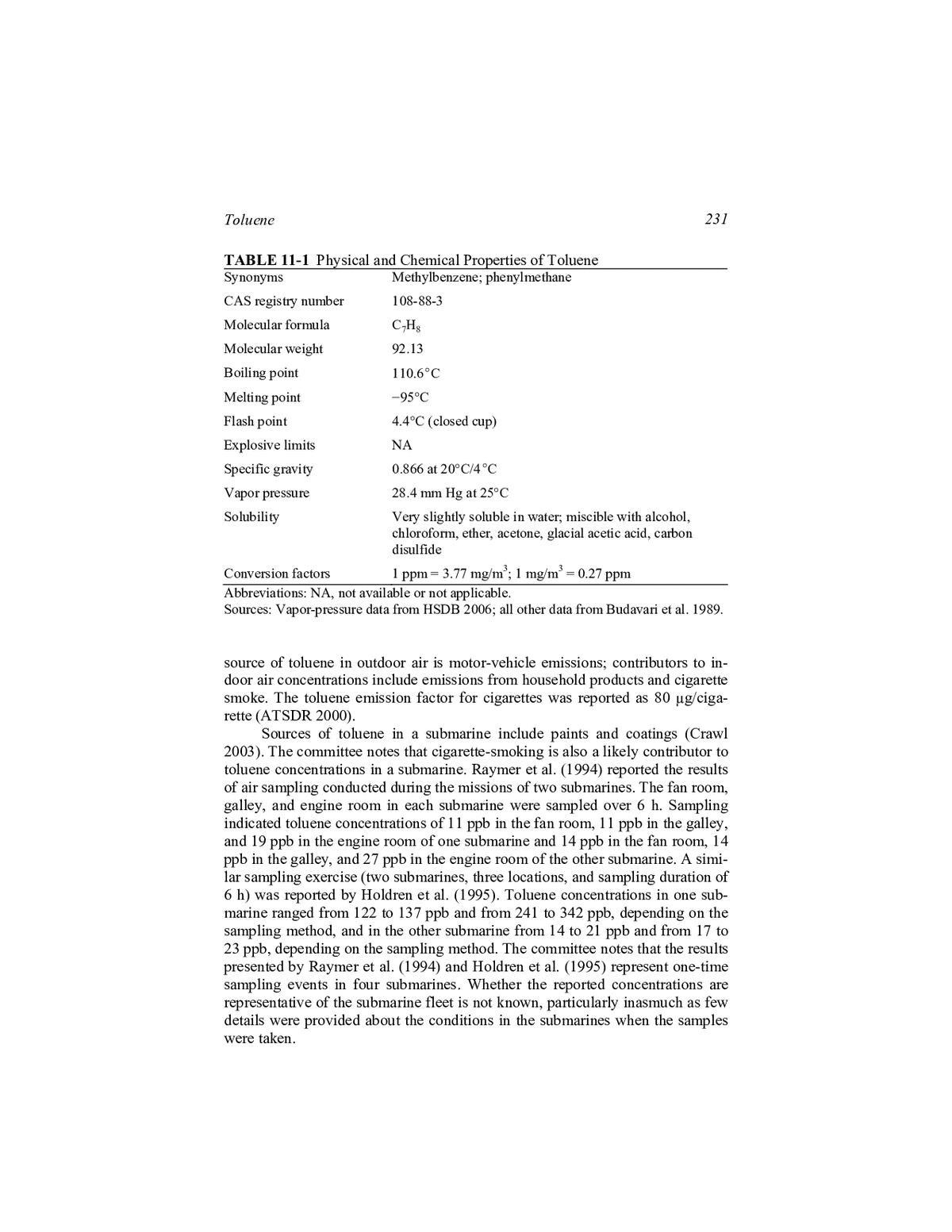
11 Toluene This chapter summarizes relevant epidemiologic and toxicologic studies of toluene. Selected chemical and physical properties, toxicokinetic and mechanis- tic data, and inhalation exposure levels from the National Research Council (NRC) and other agencies are also presented. The committee considered all that information in its evaluation of the Navyâs current and proposed 1-h, 24-h, and 90-day exposure guidance levels for toluene. The committee's recommendations for toluene exposure guidance levels are provided at the conclusion of this chap- ter with a discussion of the adequacy of the data for defining the levels and the research needed to fill the remaining data gaps. PHYSICAL AND CHEMICAL PROPERTIES Toluene is a flammable liquid at room temperature with a benzene-like odor (Budavari et al. 1989). The odor threshold has been reported to be 2.9 ppm (ATSDR 2000). Selected physical and chemical properties are presented in Table 11-1. OCCURRENCE AND USE Toluene is an important industrial chemical. It is used as a blending com- ponent for automotive fuels, as a chemical intermediate, and as a solvent primar- ily for paints and coatings and also for inks, adhesives, and pharmaceuticals. Toluene is a common contaminant of outdoor and indoor air. The Agency for Toxic Substances and Disease Registry (ATSDR 2000) reported that toluene concentrations in suburban and urban air range from 1.3 to 6.6 ppb. Indoor air concentrations are often higher than outdoor air concentrations. The primary 230
Toluene 231 TABLE 11-1 Physical and Chemical Properties of Toluene Synonyms Methylbenzene; phenylmethane CAS registry number 108-88-3 Molecular formula C7H8 Molecular weight 92.13 Boiling point 110.6EC Melting point â95°C Flash point 4.4°C (closed cup) Explosive limits NA Specific gravity 0.866 at 20°C/4EC Vapor pressure 28.4 mm Hg at 25°C Solubility Very slightly soluble in water; miscible with alcohol, chloroform, ether, acetone, glacial acetic acid, carbon disulfide Conversion factors 1 ppm = 3.77 mg/m3; 1 mg/m3 = 0.27 ppm Abbreviations: NA, not available or not applicable. Sources: Vapor-pressure data from HSDB 2006; all other data from Budavari et al. 1989. source of toluene in outdoor air is motor-vehicle emissions; contributors to in- door air concentrations include emissions from household products and cigarette smoke. The toluene emission factor for cigarettes was reported as 80 µg/ciga- rette (ATSDR 2000). Sources of toluene in a submarine include paints and coatings (Crawl 2003). The committee notes that cigarette-smoking is also a likely contributor to toluene concentrations in a submarine. Raymer et al. (1994) reported the results of air sampling conducted during the missions of two submarines. The fan room, galley, and engine room in each submarine were sampled over 6 h. Sampling indicated toluene concentrations of 11 ppb in the fan room, 11 ppb in the galley, and 19 ppb in the engine room of one submarine and 14 ppb in the fan room, 14 ppb in the galley, and 27 ppb in the engine room of the other submarine. A simi- lar sampling exercise (two submarines, three locations, and sampling duration of 6 h) was reported by Holdren et al. (1995). Toluene concentrations in one sub- marine ranged from 122 to 137 ppb and from 241 to 342 ppb, depending on the sampling method, and in the other submarine from 14 to 21 ppb and from 17 to 23 ppb, depending on the sampling method. The committee notes that the results presented by Raymer et al. (1994) and Holdren et al. (1995) represent one-time sampling events in four submarines. Whether the reported concentrations are representative of the submarine fleet is not known, particularly inasmuch as few details were provided about the conditions in the submarines when the samples were taken.
232 Exposure Guidance Levels for Selected Submarine Contaminants SUMMARY OF TOXICITY Toluene is a central nervous system (CNS) depressant and, at very high concentrations, can be irritating to the eyes. Consequences of accidental or in- tentional inhalation include renal toxicity, cardiac arrhythmias, blood dyscrasias, hepatomegaly, and developmental toxicity (ACGIH 1998, 2001, 2007). Suffi- ciently high concentrations of toluene vapor can produce euphoria; with increas- ing concentration, stupor, unconsciousness, or coma can occur with little ac- companying irritation. The literature contains many descriptions of toluene narcosis and intoxication and the multiorgan sequelae of acute or chronic abuse. Deaths have occurred among abusers, who may expose themselves to acute toluene concentrations as great as 10,000 ppm (Press and Done 1967). Exposure to toluene at the high concentrations encountered in situations of abuse can lead to liver and kidney failure and multifocal leukoencephalopathy. In less affected people, toluene abuse has been reported to cause cognitive dysfunction. This review does not cover the topic of toluene abuse in great depth, because studies of persons known or suspected to have engaged in solvent abuse provide little quantitative information regarding dose-response relationships, and substance abuse is not a relevant model for exposure conditions expected onboard a mod- ern submarine. For a review of the effects of exposure to toluene under condi- tions of abuse, see Schaumburg (2000). The database available for characterization of toluene toxicity is large and includes considerable quantities of human and animal data suitable for deriva- tion of exposure guidelines. Many toxicologic reviews are available and include evaluations by the NRC (1966, 1978, 1987; Garcia 1996), ATSDR (2000), the International Agency for Research on Cancer (IARC 1989, 1999), the American Conference of Governmental Industrial Hygienists (ACGIH 1998, 2001, 2007), the National Toxicology Program (NTP 1990), CIIT (Gibson and Hardisty 1983), and the U.S. Environmental Protection Agency (EPA 2005, 2007a). Toluene is readily absorbed from the respiratory and gastrointestinal tracts and distributed throughout the body, accumulating in tissues with high lipid con- tent. Results of many of the older studies, earlier than about 1960, are now thought to be compromised because of impurities, such as benzene, in the tolu- ene test articles and the limited accuracy of the analytic techniques in use at the time (Neubert et al. 2001a). More recent clinical and epidemiologic studies that involve a variety of toluene exposures are considered more relevant to guideline development. Numerous studies conducted with rodents address neurotoxicity, and data from well-conducted mouse and rat lethality studies are available. CNS depression by and metabolism of inhaled toluene are well docu- mented and understood. Specific sensitive populations are not identified in the literature, because the primary mechanism of toxicity (CNS depression) is the same in all mammalian species and the toluene vapor concentrations at which CNS depression occurs do not differ greatly among individuals. Controlled studies with volunteers indicate that blood and brain concentra- tions reach a steady state rapidly. As a consequence, effects observed during the
Toluene 233 first hour of an exposure do not increase in severity when the exposure extends over several hours. Toluene is not a primary mucous membrane irritant, and adaptation to both the odor and the potential drying effects of toluene on mucous membranes occurs. Complaints of eye and nose irritation have been reported in some con- trolled studies in which subjects were exposed at concentrations of 100 ppm or more for several hours. Available human and animal data are considered insufficient to support an estimation of carcinogenic potential in humans (IARC group 3 compound, ânot classifiable as to its carcinogenicity to humansâ; EPA class D compound, ânot classifiedâ as to its carcinogenicity). ACGIH (2007) has concluded that toluene is ânot classifiable as a human carcinogen.â Extensive and well-conducted stud- ies specifically designed to evaluate toluene carcinogenicity have found no asso- ciation between cumulative toluene dose (as ppm-years) and standardized mor- tality ratios for multiple anatomic sites or respiratory tract cancers in humans or for carcinogenic activity by standard measures in chronic and subchronic studies of male and female mice and rats (NTP 1990). Effects in Humans Accidental Exposure There are several case reports of accidental occupational exposure that re- sulted in intoxication, manifested as narcotic effects (muscular weakness, inco- ordination, and mental confusion). Early reports suggesting bone marrow toxic- ity were confounded by exposure to benzene. High exposures encountered in cases of intentional solvent abuse have caused deaths, usually associated with cardiac arrythmia and CNS depression. Severe renal acidosis has also been re- ported in those patients. The toxicity of toluene in humans has been reviewed by NRC (1981, 1987; Gracia 1996), Cohr and Stockholm (1979), the World Health Organization (WHO 1985), Cosmetic Ingredient Review (CIR 1987), ATSDR (2000), and EPA (1990). Two men using toluene to remove excess glue from tiles in an empty swimming pool were exposed to toluene at greater than 1,842 ppm in air for 2 and 3 h (Meulenbelt et al. 1990). Toluene concentrations were measured at the pool edge with a Drager tube 3 h after the workers were rescued. It is assumed that toluene concentrations at the pool bottom, where the workers were found, exceeded 1,842 ppm in light of the vapor density (toluene vapor density relative to air) of 3.1. When found, both workers were disoriented; one was unable to walk or sit, and the other experienced difficulty when attempting to walk. Physi- cal examinations 1 h after they were found revealed mucosal irritation of the eyes, slurred speech, headache, paresis, and amnesia. The patient exposed for 3 h had an excessive anion gap and sinus bradycardia. The second, exposed for 2 h, complained of headache, and clinical examination revealed sinus tachycardia
234 Exposure Guidance Levels for Selected Submarine Contaminants and a slightly excessive anion gap. Neither patient exhibited abnormalities in liver function or hematologic measures. Blood toluene concentrations 2 h after exposure were 4.1 and 2.2 mg/L in the 3-h and 2-h patients, respectively. The most striking effect was the increased anion gap in both patients, which the au- thors attributed to a high plasma concentration of toluene metabolites (benzoic or hippuric acid) or distal tubular acidosis. Both patients recovered without per- manent sequelae. Longley et al. (1967) reported two cases of accidental occupational expo- sure to toluene at high concentrations. In one case, workers spraying an antirust paint in an enclosed space (ballast tank) aboard a commercial ship were over- come by toluene vapors from the paint formulation. During the incident and rescue operations, at least 17 men exhibited signs and symptoms of dizziness, collapse, unconsciousness, severe mental confusion, amnesia, and illogical be- havior. All affected workers recovered fully within 30 min after breathing oxy- gen. No estimate of toluene exposure concentrations was reported. In the second case, the hold of a merchant ship was mistakenly sprayed with an undiluted in- secticide mixture containing malathion (20%), piperonyl butoxide (8%), pyre- thrum (1.5%), and toluene (to 100%) (Longley et al. 1967). Effects exhibited by workers and rescuers could not be attributed to toluene exposure alone. Every- one involved recovered without persistent effects after leaving the vessel. Experimental Studies Numerous studies have been conducted with healthy human subjects ex- posed in controlled settings to toluene at monitored concentrations for various periods. Studies performed in the 1940s are now considered compromised by impurities (for example, other solvents, including benzene) and poor analytic characterization of exposure concentrations, but multiple recent well-conducted clinical studies are eminently suitable for exposure guideline estimations (Table 11-2). More than 300 people have been evaluated in clinical studies involving toluene exposure at 40-800 ppm, and several thousand have been surveyed in occupational monitoring studies involving toluene exposure at up to 1,500 ppm. Those populations were composed of healthy people and represent a broad spec- trum of uptake rates (sedentary, working, and exercise conditions). Although many clinical studies used a concentration of 100 ppm, the addition of exercise to the protocol in the studies of Astrand et al. (1972), Baelum et al. (1990), and Rahill et al. (1996) more than doubled the blood concentrationâto that greater than would result from exposure at 200 ppm with subjects at rest (Astrand et al. 1972; Veulemans and Masschelein 1978). Baelum et al. (1990) investigated peak exposures of 300 ppm (14 times during a 7-h exposure at a mean concen- tration of 100 ppm) with exercise (950-100 W) undertaken for 15 min during three of the peak exposures. Astrand et al. (1972) also incorporated exercise into 200-ppm exposures.
TABLE 11-2 Sensory and Neurobehavioral Effects of Toluene in Short-Term, Controlled Human Studies Concentration (ppm) Exposure Duration Subjects and Effects Reference 10, 40, 100 6h 16 men, 21-32 years old Andersen et al. Slight irritation of eyes and nose at 100 ppm; no effect on mood, fatigue, or 1983 sleepiness; increase in occurrence of headache, dizziness, and feeling of intoxication, rated slight to moderate; no effect on lung function or nasal mucous flow; no significant effect on performance on 8 tests of visual perception, vigilance, psychomotor function, and higher cortical function (five-choice, rotary pursuit, screw-plate, Landoltâs rings, Bourdon Wiersma, multiplication, sentence comprehension, and word memory); 40 ppm is NOAEL for tested effects 40 4 h (each of 2 12 men, 20-50 years old Lammers et al. sessions separated No effects on measures of motor performance, attention, perceptual coding and 2004, 2005a by 1 week) memory, or mood and affect; positive correlation between results of finger-tapping 3, 30-min peaks Over 4 h test with alternate hands and blood toluene concentrations at end of 4 h to 110 (1 session) 50a 3h 10 men, 20 women, 19-45 years old Luderer et al. No subjective symptoms; no abnormal episodic LH secretion profile in females or 1999 males; âsubtle effectsâ on LH secretion in males and females in luteal phase (clinical significance unclear) 50 4.5 h 20 nonsmoking men, 30.5 ± 5.2 years old Muttray et al. Sleepiness measured after exposure with Pupillographic Sleeping Test and 2005 Pupillary Unrest Index did not show a toluene-exposure effect (for example, no increased sleepiness); questionnaire scores for âunpleasant smellâ significantly different from control; nonsignificant throat-irritation scores 80 4h 8 men, 22-50 years old Cherry et al. 1983 No impairment in neurobehavioral tasks (Continued) 235
TABLE 11-2 Continued 236 Concentration (ppm) Exposure Duration Subjects and Effects Reference 80 4h 16 men, 23-38 years old Olson et al. 1985 No differences in subjective symptoms between control and exposed group; no impairment in tests of simple reaction time, short-term memory, or choice reaction time; no effect on heart rate 80 4.5 h 12 men, 22-44 years old Iregren et al. 1986 Increase in subjective symptoms (nausea, headache, irritation) but rated negligible; no impairment in tests of simple and choice reaction time, color-word vigilance, or memory; no effect on EEG or sleep latency; âweakâ depression of heart rate during sleep latency test (disappeared during performance testing) 100 3.5 h 18 Winneke 1982 No behavioral deficits in psychomotor tests 100 4h 30 men and women Dick et al. 1984 No serious impairment in series of neurobehavioral tests (choice response time and pattern recognition); significant impairment in one measure of visual-vigilance test 100 6h 6 men and women, 27-38 years old Rahill et al. 1996 No significant effect on lung function (subjects exercised for 30 min); slight effects on some multitask and neuropsychologic tests (increased latency, but not accuracy, on neurobehavioral tasks) 100 6.5 h 43 male printers and 43 male nonprinter referents, 29-50 years old; 4 groups Baelum et al. 1985 tested: 2 exposed and 2 controls Irritation of eyes, nose, and throat (no annoyance or nausea); sleepiness, fatigue, and lower performance on 4 of 10 tests (3 tests evaluated visual perseverance, and the other manual dexterity); complaints of low air quality and strong odor; no changes in kidney function
100 1, 3, 7.5 h, over 10 men and 9 women Stewart et al. 1975 several days No decrement in psychomotor tests on first day of exposure; slight decrement in women on alertness test and deleterious change in 1 of 2 men in visual evoked response at 7.5 h/day, 5 days/week; increase in eye, nose, and throat irritation at 100 ppm 3 h/day, 5 days/week 100 7h 32 men and 39 women, 31-50 years old Baelum et al. 1990 100 (TWA; varied with (3 15-min exercise Sensory irritation of nose and lower airways, but not eyes, in toluene-exposed 15-min peaks to 300 periods with load of groups; slight decrease on 1 of 4 psychomotor performance tests; no differences in ppm every 30 min) 50-100 W; both symptoms or performances between groups exposed to constant and varied toluene exposures) concentrations 75 7 h over 3 days 42 male and female students, 18-35 years old Echeverria et al. 150 7 h over 3 days Mean 7% decrement on several neurobehavioral tests at 150 ppm; slight increases 1989, 1991 in headache and eye irritation exhibited dose-response relationship; sleepiness on first day; CNS effect demonstrated by dose-response relationship in number of times subjects slept; no clear pattern of neurobehavioral effects found; variation in control data across 3 days greater than solvent effect 100a, 200a 30, 60 min 11 men, 18-29 years old; 4 women, 27-46 years old Astrand et al. No difference in heart rate, pulmonary ventilation, oxygen consumption, or blood 1972 lactate either at rest or during a work load of 50 W (Continued) 237
TABLE 11-2 Continued 238 Concentration (ppm) Exposure Duration Subjects and Effects Reference 100, 200 3, 7 h with 1-h break 23 naive men, average 23 years old Ogata et al. 1970 Decrease in pulse rate at 200 ppm for 3 h; tendency to prolonged reaction time at 200 ppm; at 100 ppm, no significant change from control in pulse rate, diastolic or systolic blood pressure, flicker value, or reaction time; no clear dose-response relationship 100a Successive 20-min 12 men, 20-35 years old Gamberale and 300a exposure periods At 100 ppm, no effect on reaction time or perceptual speed; at 300 ppm, increase in Hultengren 1972 500a (one 5-min break); simple reaction time; at 500 ppm, increase in complex reaction time; at 700 ppm, 700a total 85 min decrease in perceptual speed at end of exposure; no effect on heart rate during total exposure; 1 of 12 subjects able to distinguish between control and toluene exposures 200, 400, 600, 800 7-8 h 2 subjects Carpenter et al. Transitory mild throat and eye irritation and slight exhilaration at 200 ppm; metallic 1944 taste, transitory headache, lassitude, inebriation, and slight nausea at 800 ppm; threshold for âsteadinessâ task, 800 ppm 220b 15 min 6 subjects Carpenter et al. 427b At 220 ppm, all subjects willing to work for 8 h, negligible sensory symptoms; at 1976 427 ppm, 3 of 6 subjects willing to work for 8 h; 2 subjects reported slight âlightheadednessâ; 1 reported âstuffy, drowsy feelingâ 200 6h 5 men, resting Suzuki 1973 Increase in pulse rate; no changes in respiration rate, galvanic skin reflex, or EEG. 240 Three 30-min 11 men, 20-21 years old Horvath et al. sessions Impaired vigilance in third session; decreased fatigue during second session 1981 a Subjects exposed via mouthpiece. b Measured as toluene in âtoluene concentrate.â Abbreviations: CNS, central nervous system; EEG, electroencephalography; LH, luteinizing hormone; NOAEL, no-observed-adverse-effect level; TWA, time-weighted average.
Toluene 239 Although slight irritation involving the eyes and nose in humans was re- ported in several studies at 80-200 ppm (Table 11-2), toluene is not a primary respiratory irritant, as evidenced by the high RD50 value (the concentration asso- ciated with a 50% depression in respiratory rate) of 5,300 ppm in male Swiss- Webster mice (Nielsen and Alarie 1982). Complaints increased among the con- trols, especially in studies with long exposure durations. Other studies reported exposures at 80-100 ppm to be nonirritating (Stewart et al. 1975; Cherry et al. 1983; Olson et al. 1985; Rahill et al. 1996). The value of 200 ppm is far below concentrations reported to cause frank CNS effects. No CNS effects were re- ported at 80-100 ppm in studies by Winneke (1982), Cherry et al. (1983), and Stewart et al. (1975); effects were minor in other studies at 100-700 ppm (Gam- berale and Hultengren 1972; Dick et al. 1984; Baelum et al. 1990). There were no biologically significant pulmonary or cardiovascular effects at 100 and 200 ppm for up to 6 h (Astrand et al. 1972; Suzuki 1973) and no indications of kid- ney damage (Nielsen et al. 1985). Exposures at 100 ppm in the study by Stewart et al. (1975) were repeated for 5 days with no greater effects. Thus, the highest no-observed-adverse-effect levels (NOAELs) for more than mild sensory dis- comfort and other than subtle CNS effects were 100 ppm for 7.5 h (Stewart et al. 1975), 200 ppm for 60 min with exercise (Astrand et al. 1972), 300 ppm over 15 min with exercise (Baelum et al. 1990), and 700 ppm for 20 min (Gamberale and Hultengren 1972). Muttray et al. (2005) assessed the potential for acute (4.5 h) toluene expo- sures to induce sleepiness in a two-period crossover design (50-ppm toluene alternating with air only) exposure-chamber experiment with 20 healthy non- smoking men (mean age, 30.5 ± 5.2 years). Quantitative measurement of the degree of âsleepinessâ was performed with the Pupillographic Sleepiness Test and Pupillary Unrest Index, in which pupillary diameter oscillations were moni- tored (Muttray et al. 2005). Compared with the results of air-only exposure, pa- rametric crossover analysis showed no effects of toluene exposure. Muttray et al. (2005) concluded that acute toluene exposure at 50 ppm did not increase sleepiness. Studies of toluene exposure in combination with other solvents or alcohol reported delayed metabolism of toluene (Dossing et al. 1984), but there were no additive effects in neurobehavioral tests (Cherry et al. 1983). Complaints of sensory irritation and differences in neurobehavioral tests have been reported in some occupational monitoring studies (Iregren 1982; Foo et al. 1990; Deschamps et al. 2001; Neubert et al. 2001a). Exposures in those situations were usually at or below the workplace guidelines (now 50-100 ppm but up to 200 ppm earlier) and have ranged up to 300-500 ppm for short dura- tions during the workday (Deschamps et al. 2001). The 20-min NOAEL expo- sure at 700 ppm by Gamberale and Hultengren (1972) indicates that 700 ppm (after 20 min at 500 ppm, which itself followed successive 20-min exposures at 100 and 300 ppm) may be a threshold for CNS depression. Frank effects were reported at 800 ppm in the studies of von Oettingen et al. (1942a,b) and Carpen- ter et al. (1944), but the studies suffered from inferior analytic techniques and
240 Exposure Guidance Levels for Selected Submarine Contaminants potential benzene contamination of the test article. The clinical study of Gam- berale and Hultengren (1972) with support from the clinical and occupational studies of von Oettingen et al. (1942a,b), Carpenter et al. (1944), and Wilson (1943) established that 700 ppm for a short duration (20 min) may be a threshold for decreased ability to complete complex tasks in a timely manner, whereas 800 ppm for 3-8 h may result in nausea and incoordination sufficient to impair es- cape (von Oettingen et al. 1942a,b; Carpenter et al. 1944). Occupational and Epidemiologic Studies Occupational studies have focused primarily on CNS impairment. Al- though exposure concentrations and durations are usually not well characterized, the studies provide information about the more common toxic effects. Interpre- tation of the results of many occupational studies is confounded by coexposure to other solvents, alcohol use, and age of participants (Table 11-3). Wilson (1943) surveyed the effects of toluene at various concentrations in workers at a large industrial plant. About 1,000 workers were exposed at 50- 1,500 ppm for 1-3 weeks. About 10% of the employees exhibited symptoms severe enough to require examination at a local hospital. Employees were grouped according to the concentration of toluene at their job sites as measured with a combustible-gas indicator. In workers exposed to toluene at 200 ppm, the most common complaints were headache, lassitude, and loss of appetite; work- ers exposed at 200-500 ppm complained of more pronounced headache, lassi- tude, and anorexia. The latter workers also complained of nausea, a âbad tasteâ in the mouth, loss of coordination, impaired reaction time, and momentary loss of memory. At measured concentrations greater than 500 ppm, the major com- plaints were nausea, headache, dizziness, anorexia, palpitation, and weakness. Physical and laboratory examinations of the roughly 60 workers exposed at 200 ppm were negative, and no significant physical or laboratory findings were noted in the 30 workers exposed at 200-500 ppm. On physical examination of the remaining 10% (exposed at measured concentrations greater than 500 ppm), loss of coordination, impaired reaction time, and skin petechiae were observed. Laboratory investigations of those patients revealed low red-blood-cell counts and leukopenia; in two of the patients, a bone-marrow biopsy revealed aplastic anemia. Workers who were hospitalized were treated symptomatically, and no deaths occurred. The Wilson (1943) results illustrate confounding by the pres- ence of other workplace solvents or such contaminants as benzene; toluene alone is not known to cause hematopoietic toxicity. Greenberg et al. (1942) identified time-weighted average (TWA) toluene exposures at 100-1,100 ppm (most were at 500 ppm) in a workplace survey of 106 painters employed from 2 weeks to 5 years in an aircraft factory. Other sol- vents were present in the paint mixtures. A symptom survey for headache, sore throat, and weakness found no increase in complaints. In 30% of the workers,
TABLE 11-3 Effects of Toluene in Occupational Settings Concentration (ppm) Time Subjects and Effects Reference â¤200 8 h/day, 1-3 weeks Industrial-plant workers; results compromised by presence of other solvents Wilson 1943 200-500 At â¤200 ppm, headache, lassitude, and loss of appetite observed; at 200-500 ppm, >500 severe headache, nausea, anorexia, incoordination, increased reaction time, and memory loss; at >500 ppm, nausea, headache, weakness, anorexia, palpitation, low RBCs, leukopenia, and some aplastic anemia (indicative of nontoluene-solvent exposure) observed 100-1,100 (TWA); 2 weeks-5 years Aircraft-factory painters; results compromised by presence of other solvents Greenberg et most # 500 Enlarged liver, increased lymphocyte count, and increased mean corpuscular al. 1942 volume $101 8-h workshift Industrial workers in printing, paint production, surface coating, painting, and shoe- Ukai et al. monitoring making facilities; 4 Chinese cities 1993 (undefined exposure Dizziness, floating sensations, nausea; no eye, nose, or throat irritation duration over working life) 30.6 (average) 14.8 years Auto painters Hanninen et Deficits in intelligence, memory, and performance test battery al. 1976 60-100 40 months Female shoe workers Matshushita Neurologic and muscular deficits et al. 1975 117 (average) 22 years Male rotogravure workers Juntunen et No clinically significant neurophysiologic or autonomic nervous system deficits; al. 1985 some workers complained of âmemory disturbanceâ (Continued) 241
TABLE 11-3 Continued 242 Concentration (ppm) Time Subjects and Effects Reference 150 in 1974; 50 in 1979 Multiple years Printers Iregren 1982 No significant difference from control in 9 of 10 tests of mental and physical dexterity; increase in simple reaction time in toluene-exposed group 9-467 (workplace $5 years Male and female workers not exposed to other solvents Deschamps monitor: 9-48 ppm for Mucosal irritation significantly greater in toluene group; no differences from et al. 2001 3.5-5 h, 50-300 ppm for controls for such cognitive-function tests as simple reaction time; toluene-exposed 15 min) workers scored significantly higher than controls on vocabulary tests 50-100 (TWA) at time of $20 years German rotogravure-factory workers Neubert et al. study; 6 h/shift No alteration from referent group on standard tests of psychophysiologic and 2001a,b psychomotor functions; all scores of toluene-exposed group within referent range Maximal (regulatory) $20 years German rotogravure printers and helpers Gericke et al. concentrations of 200 in Examined blood pressure, color vision, clinical chemistry, and hormone 2001 1985; 100 (1985-1993), concentrations; no evidence that long-term occupational exposure was 50 (1993-present); âconvincingly associatedâ with chronic adverse health effects or altered surrogate median printer exposure markers measured in workplace, 25 at time of study (maximum, 216) 45 ± 17 Work lifetime 47 healthy adult workers in German rotary printing plants; average subject age, Seeber et al. (average 21.2 years) 42.9 years; sex not reported; 18 of 47 smokers 2005 No health effects observed in self-reported diseases (such as loss of appetite and pain), sensory function (vibration and hearing thresholds and color discrimination), cognitive function (memory), psychomotor function (manual dexterity)
9±7 work lifetime 39 healthy adult workers in German rotary printing plants; average subject age, Seeber et al. (average 21.3 years) 45.6 years; sex not reported; 19 of 39 smokers 2005 No health effects observed in self-reported diseases (such as loss of appetite and pain), sensory function (vibration and hearing thresholds and color discrimination), cognitive function (memory), psychomotor function (manual dexterity) 26 ± 19 5.5 years (average) 59 healthy adult workers in German rotary printing plants; average subject age, Seeber et al. 31.4 years; sex not reported; 20 of 59 smokers 2005 No health effects observed in self-reported diseases (such as loss of appetite and pain), sensory function (vibration and hearing thresholds and color discrimination), cognitive function (memory), psychomotor function (manual dexterity) 2±3 6.6 years (average) 47 healthy adult workers in German rotary printing plants; average subject age, Seeber et al. 33.2 years; sex not reported; 11 of 47 smokers. 2005 No health effects observed in self-reported diseases (such as loss of appetite and pain), sensory function (vibration and hearing thresholds and color discrimination), cognitive function (memory), psychomotor function (manual dexterity) Abbreviations: RBC, red blood cell; TWA, time-weighted average. 243
244 Exposure Guidance Levels for Selected Submarine Contaminants the liver was enlarged and both lymphocyte count and mean corpuscular volume were increased. Other solvents were present in the workplace, so those changes could not be attributed solely to toluene. Juntunen et al. (1985) examined 43 male rotogravure printers with long- term (up to 22 years) occupational toluene exposure for clinical, neurophysi- ologic, neuropsychologic, and auditory effects and subjective symptoms. Results were compared with those in 31 matched control subjects. Neurologic examina- tions included physical coordination, reflexes, language and memory functions, computerized axial tomography of the brain, electrocardiography, and electro- encephalography. The estimated average long-term workplace toluene concen- tration was 117 ppm. Of the symptoms tabulated, only the incidence of âmem- ory disturbanceâ was significantly increased. Overall, the examinations failed to reveal any statistically significant differences between the groups. The authors concluded that there were no clinically significant adverse effects on the nervous system under the study conditions examined. Ukai et al. (1993) conducted a factory survey in China, using personal sampling for workplace toluene exposure, questionnaires on subjective symp- toms, and clinical evaluation of hematology, serum biochemistry, and urinary hippuric acid concentration. Workers were also given a neurologic evaluation. When they were compared with workers without toluene exposure, hematologic and clinical-chemistry measures were essentially normal. A dose-dependent increase in some subjective symptoms among toluene-exposed workers was observed with a threshold concentration at 100 ppm for 22 subjective symptoms. At 101 ppm, complaints of dizziness, âfloatingâ sensations, and nausea (but not eye, nose, or throat irritation) were associated with a significant dose-response relationship. Deschamps et al. (2001) tested cognitive function in 72 workers (42 men and 30 women) exposed to toluene (but no other solvent) at 9-467 ppm for at least 5 years. A general questionnaire on subjective symptoms was also adminis- tered. Personal samplers worn during the workshift indicated mean 3.5- to 5-h exposures at 9-48 ppm in several factories and mean exposures at 50-300 ppm in 15-min samples from pathology laboratories. Exposed workers were compared with 61 matched workers who had no known toluene exposure. The mean age of all workers was 43 years, and the mean duration of chronic exposure of the tolu- ene-exposed workers was 20 years. Workers were tested 48 h after removal from exposure; the absence of toluene in the alveolar air of the subjects ensured that the solvent had been eliminated from the blood. Tests consisted of vocabu- lary, simple reaction time, digit symbol, digit span forward and backward, con- tinuous tracking, color word vigilance, and switching attention. Except for the vocabulary test in which toluene-exposed workers scored significantly higher than the control group, there were no significant differences between groups in any of the tests. Of six subjective symptoms, only mucosal irritation had a sig- nificantly increased score (1.54 vs 1.37). Iregren (1982) evaluated performance of a group of 34 toluene-exposed printers on a battery of psychologic tests and compared the results with test
Toluene 245 scores from a group of spray painters exposed to a mixture of solvents and with a control group. The toluene-exposed printers differed significantly from the control group on only one of 10 tests addressing mental and physical dexterity. Simple reaction time was increased in the printer group compared with the con- trol group (printers, 276 msec; controls, 238 msec). Although workplace air concentrations were not specifically stated, the authors indicated that exposures had decreased from about 150 ppm in 1974 to 50 ppm in 1979. The tests were administered at the end of the week that followed the last workday. Neubert et al. (2001a) evaluated toluene-exposed employees at 12 German rotogravure factories. The study involved 1,290 exposed workers (1,178 males and 112 females) and 200 controls in a multicenter, controlled, blinded field study with the specific goal of evaluating dose-response relationships. Examina- tions included subjective self-rating of feeling and standard tests of psycho- physiologic and psychomotor functions (verbal memory span, visuomotor per- formance, immediate visual memory, combined auditory and visual vigilance, and critical flicker-fusion frequency). Subjects were tested before and 0.5 h after a 6-h workday, and blood toluene concentrations were measured before and after the workshift. Air concentrations were monitored by continuous sample collec- tion over the workshift with portable personal monitors. Age and alcohol con- sumption were recognized as confounding factors and were taken into account. Neither blood toluene concentrations of 0.85-1.70 mg/L nor TWA ambient-air concentrations of 50-100 ppm were clearly associated with alterations in results of psychophysiologic and psychomotor performance or increased subjective complaints in male volunteers. Compared with the referent group, no higher frequencies of headache or other unpleasant sensations were reported with tolu- ene exposures up to 75-100 ppm. All test scores of toluene-exposed persons were within the reference range. There were too few subjects to support conclu- sions concerning males exposed at more than 100 ppm (blood toluene concen- tration, greater than 1.70 mg/L). A subgroup of the printers and their helpers (1,077 male subjects) that par- ticipated in the Neubert et al. (2001a) study described above was further evalu- ated after long-term exposure to toluene (Gericke et al. 2001). The referent group (109 subjects) was selected from the paper industry. The length of expo- sure of some of the toluene-exposed and referent workers was 20 years. Exposure duration and gross extent of exposure were taken into account. Blood pressure, pulmonary function, color vision, clinical chemistry, hormone concen- trations, and subjective symptoms were tallied. Trends showing reduced per- formance in the digit-symbol and visual-reproduction tests were correlated with age in both the printers and the referents. Although insomnia, dry mucous mem- branes, and allergies were higher in the toluene-exposed group than in the refer- ent group, the frequency of these complaints and complaints of headache, nau- sea, loss of appetite, and gastrointestinal distress did not correlate with the duration or extent of toluene exposure. There was no association between circu- lating liver glutamine oxaloacetic transaminase and glutamic pyruvic transami- nase with the length or extent of toluene exposure or age. A small upward trend
246 Exposure Guidance Levels for Selected Submarine Contaminants was observed for serum cholesterol, but it appeared to be age-related. Renal function as measured by creatinine clearance was unaffected. Follicle stimulat- ing hormone, luteinizing hormone, and testosterone concentrations were not affected by exposure. Higher systolic blood pressure correlated weakly with toluene exposure of longer than 20 years, but confounding factors associated with hypertension were not taken into account. Overall, no clear adverse effects could be verified in this study of long-term occupational exposure. The authors point out the limitations of their study, including the reversibility of effects that may have occurred during past exposures at higher concentrations and the healthy-worker effect. Seeber et al. (2005) studied 192 workers in German rotary-printing plants who had undergone âlongâ (about 20 years) or âshortâ (5.5-6.6 years) exposure to toluene in various portions of the plants. The authors pointed out that the long-term workers had been historically exposed at much higher concentrations (140 ppm vs about 40 ppm currently for the âhighâ group; and 20 ppm vs about 5 ppm currently for the âlowâ group). The resulting four exposure-duration groups were made up of people exposed at 45 ppm for 21.2 years, 9 ppm for 21.3 years, 26 ppm for 5.5 years, and 2 ppm for 6.6 years. Smoking was repre- sented in each subject population (see Table 11-3), as was alcohol consumption. Odds ratios were used to evaluate a number of measures: sensory function (vi- bration and hearing thresholds and color discrimination), cognitive function (memory), and psychomotor function (manual dexterity). For all measures evaluated, results do ânot support the hypothesis that there are health effects of toluene at current exposures of about 25 ppm or lifetime weighted exposures of about 46 ppmâ (Seeber et al. 2005). Furthermore, âevidence for neurobehavioral effects due to long-term toluene exposure below 50 ppm was not establishedâ (Seeber et al. 2005). Monitoring studies indicate that workers have been historically and rou- tinely exposed at 32 ppm (range, 0.1-457 ppm; Neubert et al. 2001b), at 26 and 45 ppm (26 ± 19 ppm and 45 ± 17 ppm; Seeber et al. 2005), at a TWA of 63-118 ppm (range, 5-353 ppm; Ovrum et al. 1978), at 132 ppm (range, 66-250 ppm; Zavalic et al. 1998), at 100-440 ppm with peaks at 200-500 ppm (Eller et al. 1999), at 200 ppm (Forni et al. 1971), and at 200-800 ppm (Parmeggiani and Sassi 1954). In most cases in which psychomotor tests were administered, tests were given before the workday began, so acute changes were not measured. In most of the studies, only subtle differences in neurologic measures, such as al- terations in the visual evoked response, or small impairments of reaction time were found in comparisons with controls (Abbate et al. 1993; Boey et al. 1997; Eller et al. 1999; Murata et al. 1993; Vrca et al. 1995; 1997a,b; Yin et al. 1987; Zavalic et al. 1998). No changes from baseline in any sensory measure, cogni- tive function, or psychomotor function were noted by Seeber et al. (2005). Irrita- tion of the conjunctiva and upper respiratory tract was found in one of 11 work- ers exposed at 200-800 ppm (Parmeggiani and Sassi 1954). In some studies, the incidence of sore throat was greater than in matched control groups. Chronic occupational exposure to toluene at routine concentrations in workplace air has
Toluene 247 not resulted in serious kidney damage (ATSDR 2000). An acute exposure of flexoprint workers at about 100 ppm for 6.5 h failed to show significant changes in β-microglobulin or albumin compared with air-exposed controls (Nielsen et al. 1985). Occupational studies suggest that chronic toluene exposure may be associ- ated with hearing loss (reviewed in ATSDR 2000; Morata et al. 1997; Chang et al. 2006) but these studies do not always account for noise-induced hearing damage. In a study (Chang et al. 2006) of adhesive plants where ânoise onlyâ reference occupational populations were also examined, the ânoise + tolueneâ population exhibited hearing losses of a type and magnitude similar to those in the ânoise onlyâ group (both groups had been employed for more than 20 years), but the prevalence of hearing loss was significantly greater (p < 0.001) in the ânoise + tolueneâ group even at the lowest occupational toluene exposure con- centration of 33 ppm. In studies of 333 rotogravure-printing workers (Schaper et al. 2003) and 192 rotary-printing plant workers (Seeber et al. 2005), exposure at less than 50 ppm could not be related to ototoxicity. In animal models, toluene is associated with damage to outer-ear hair cells in rats exposed at 1,400 ppm 14 h/day for 8 days (Johnson and Canlon 1994). Guinea pigs have not been shown to exhibit solvent-induced hearing loss (Campo et al. 1993); this may be due to significant and large differences in tolu- ene uptake and metabolism between the rat and guinea pig (lower in the guinea pig). The result is lower toluene body burdens for the guinea pig (Campo et al. 2006), which are surmised to induce few or no ototoxic effects. One evaluation of color-vision impairment in toluene-exposed workers (Zavalic et al. 1998) determined that alcohol use and age were confounding fac- tors. Potential mechanisms of toluene-related effects on hearing and color vision are further discussed under âToxicokinetics and Mechanistic Considerations.â Effects in Animals Acute Toxicity Lethality and sublethality data on the rat (Pryor et al. 1978; Cameron et al. 1938; Hinman 1987; Kojima and Kobayashi 1973; Smyth et al. 1969; Wada et al. 1989; Mullin and Krivanek 1982; and Lammers et al. 2005b), the mouse (Moser and Balster 1985; Bruckner and Peterson 1981a,b; Bushnell et al. 1985; Bonnet et al. 1979; and Svirbely et al. 1943), and the dog (Ikeda et al. 1990) are available. On the basis of LC50 values, the mouse is slightly more sensitive to the effects of toluene than the rat. For the mouse, LC50 values ranged from 38,465 ppm for 10 min to 5,320 ppm for 7 h. Highest nonlethal exposures were 12,000 ppm for 20 min for the mouse (Bruckner and Peterson 1981a) and 5,000 and 6,250 ppm for 2 h for the rat (Kojima and Kobayashi 1973; Mullin and Krivanek 1982).
248 Exposure Guidance Levels for Selected Submarine Contaminants Because few human experimental data on neurotoxicity at concentrations below those causing frank narcosis are available, the extensive animal database characterizing neurobehavioral effects has been examined for application to the current analysis. The experimental-animal dataset is large (especially on the laboratory rat) and this necessitates presentation of selected studies representa- tive of the body of available data (see Table 11-4). Toluene, like many other CNS depressants and anesthetics, generates an initial excitatory stage followed by narcosis. Except for increased activity, ex- perimental toluene concentrations below 1,000 ppm have little or no effect on gross manifestations of animal behavior (NRC 1981) (see Table 11-4). At 2,000 ppm, motor activity and the rate of response in neurobehavioral tests are in- creased. Higher concentrations suppress activity. In neurotoxicity tests, CNS depression increases motor activity and response rates (excitation) at low con- centrations and decreases activity and responses at higher concentrations (Moser and Balster 1981, 1985; Wood et al. 1984). Increases in activity with no or mi- nor decrements in accuracy on tasks occurred in rats and mice at 1,000-2,000 ppm (Mullin and Krivanek 1982; Kishi et al. 1988; Wood and Cox 1995). Mice exposed at about 2,000 ppm for short periods began to fail equilibrium tests in some studies (Moser and Balster 1985; Tegeris and Balster 1994) but exhibited increased activity in others (Kishi et al. 1988; Wada 1997). Mice exposed at 5,200 ppm became immobile in 45 min and lost consciousness in 1.5 h (Bruck- ner and Peterson 1981a). Those neurologic deficits are similar to ones observed in humans. The onset of neurobehavioral deficits is not readily observable in rodents, so extrapolation to humans is difficult. Furthermore, the increase in activity exhibited by rodents exposed to toluene at low concentrations is not readily observed in humans. In general, acute exposures to toluene at high concentrations have pro- duced conflicting data in animal studies, some reporting significant neurobehav- ioral effects and others no significant effects. None of the animal studies repro- duced effects observed in humans exposed to toluene at high concentrations for extended periods (Schaumburg 2000). Furthermore, toluene at concentrations that produced unconsciousness in experimental animals has failed to produce residual organ damage (Svirbely et al. 1943; Bruckner and Peterson 1981b; NTP 1990). Repeated Exposure and Subchronic Toxicity Taylor and Evans (1985) subjected adult female cynomolgus macaques to 50-min, head-only exposures to toluene at 0, 100, 200, 500, 1,000, 2,000, 3,000, or 4,500 ppm and simultaneously tested for delayed matching-to-sample behav- ior as a measure of cognitive function. Monkeys were exposed singly at each concentration, and each monkey was tested twice at each concentration. The procedure took 6 weeks. Previously, two of the monkeys were exposed at
Toluene 249 TABLE 11-4 Neurobehavioral Effects of Acute Toluene Inhalation Exposure in Rats Concentration (ppm) Duration Effects Reference 150 0.5, 1 h Stimulatory effect, multiple schedule performance Geller et al. 150 2, 4 h Reduced performance 1979 0, 1,200, 1,600, 70 min Signal-detection task; concentration-related re- Oshiro and 2,000, 2,400 duced attention and increased response time; no Bushnell effect on false hits; rats sleepy but arousable at 2004 2,400 ppm 178, 300, 560 2h Increased activity (for reward) Wood and 1,000, 1,780 2h Increased activity, then return to control rate Cox 1995 3,000 2h Increased activity, then decrease below control rate 800 4h Threshold, decreased unconditioned reflexa Mullin and 1,340 1h EC50, most sensitive unconditioned reflexa Krivanek 3,200 2h Decreased conditioned-avoidance response 1982 125, 250, 500 4h Decreased conditioned-avoidance responses Kishi et al. 1,000, 2,000 4, 2 h Increased incorrect responses and reaction time 1988 4,000 4h Excitation, increased response rate, ataxia 1,000, 1,500, 1h Initial decrease in detection of auditory signals at Bushnell et 2,000 all concentrations followed by return to control al. 1994 levels 1,000 4h Little effect on avoidance responses Shigeta et 3,000 4h Changes in response pattern al. 1978 1,000, 1,780, 2h 1,780 and 3,000 ppm: increased concentration- Wood et al. 3,000 dependent rates of response to food reward in spite 1984 of electric-shock punishment 3,000 4h Ataxia 1,000 4h No change in behavior (number of rearings) Takeuchi 2,000 4h Increased rearings and seizures and 4,000 4h Excitation followed by narcosis Hisanaga 1977 2,000 4h Increased number of lever presses to avoid shock, Harabuchi no change in avoidance behavior et al. 1993 4,000 4h Increased number of lever presses to avoid shock, decrease in avoidance response 1,700 4h No decrease in activity after exposure Miyagawa 3,400 4h Activity decreased by 31% followed by recovery et al. 1986 5,100 4h Inactivity followed by partial recovery 2,000 4h Increased locomotor activity Wada et al. 4,000 4h Decreased conditioned-avoidance responses 1989 6,000, 8,000 4h Decreased conditioned-avoidance responses, ataxia, narcosis (Continued)
250 Exposure Guidance Levels for Selected Submarine Contaminants TABLE 11-4 Continued Concentration (ppm) Duration Effects Reference 1,333, 2,667 7.5 h Effects on visual discrimination, increased motor van 8,000 Peak activity, return to baseline on following day Asperen et al. 2003 2,500 1h No effect on motor activity during exposure Hinman 5,000 1h Increased locomotor activity 1987 10,000 1h Increased activity followed by slight decrease 15,000 1h Increased activity followed by cessation a Unconditioned reflex tests evaluated locomotor activity, coordination, corneal reflex, and righting reflex; EC50 determined for test failure (Mullin and Krivanek 1982). Abbreviations: EC50, statistical determination of the effect concentration in 50% of the sample population. 100 ppm and one monkey at 1,000 ppm 6 h/day, 5 days/week for 90 days. Tolu- ene concentration was monitored continuously. Responses at 100 and 200 ppm were similar to those during the control sessions. Responses at 500 and 1,000 ppm were nonsignificantly lower than control responses. Cognitive function was impaired at 2,000 ppm as indicated by an increase in response time and a de- crease in matching accuracy. Response time at 4,500 ppm increased by 0.26 sec over the control response time, and monkeys failed to respond during the second half of the session. Most monkeys remained awake at 4,500 ppm but failed to respond. The effect was characterized by the study authors as an attentional deficit with no specific memory effect. In some cases, behavioral measurements (particularly of olfactory sensi- tivity to toluene) can be demonstrated as positively associated with histopa- thologic changes, such as altered cell density and epithelial thickness in olfac- tory neuroepithelium (Jacquot et al. 2006). Jacquot et al. (2006) compared T- maze sensitivity to toluene odor with nasal-cavity neuroepithelial changes in naive female OF-1 mice during each week of repeated exposure to toluene at 1,000 ppm 5 h/day, 5 days/week for 4 weeks. Atay et al. (2005) exposed 4-week-old Swiss albino BALB/c mice repeat- edly to toluene at 300 ppm 6 h/day for 8 weeks to evaluate potential changes in bone mineralization. Dual x-ray absorptiometry of the right femoral neck al- lowed accurate measurement of bone mineral density (BMD) and bone mineral content (BMC). In the toluene-exposure group, statistically significant (p < 0.05) decrements in both BMD and BMC were observed in comparison with the con- trols. Atay and co-workers are uncertain about the mechanisms whereby tolu- ene-vapor exposure alters bone metabolism. Jenkins et al. (1970) exposed Sprague-Dawley rats to inhaled toluene re- peatedly or continuously to evaluate long-term effects on mortality, body weight, and hematology. A group of 15 male and female rats was exposed to toluene at 1,085 ppm 8 h/day, 5 days/week for 6 weeks and a group of 13 male and female rats continuously exposed at 107 ppm for 90 days. The control group
Toluene 251 was composed of 14 rats. No rats died during the repeated exposure. Two rats died during the continuous exposure (one on day 28 and the second on day 56). Rats in both treatment groups gained more weight than the control group; how- ever, starting weights were not balanced: both treated groups weighed more than the control group. There were no apparent effects on hemoglobin, hematocrit, or leukocyte count. The NTP (1990) reported subchronic inhalation-exposure studies of groups of 10 male and 10 female F344/N rats and 10 male and 10 female B6C3F1 mice exposed to toluene vapor at 0, 100, 625, 1,250, 2,500, or 3,000 ppm (rats) or 0, 312, 625, 1,250, 2,500 or 3,000 ppm (mice) 6.5 h/day, 5 days/week for 15 weeks (rats) or 14 weeks (mice). In the rats, eight of the 10 males exposed at 3,000 ppm died during week 2; there were no other deaths in any other exposure group among the males and no deaths at any concentration among the females throughout the study. Final body weights were lower, and ataxia was noted in the 2,500- and 3,000-ppm groups. Dyspnea as a clinical sign was observed in all exposed groups âexcept males exposed at 3000 ppm and females exposed at 1250 ppmâ (NTP 1990, p. 34). Relative weights of multiple organs in males and females were increased at 2,500 and 3,000 ppm, as were the kidney and liver weights in males at 1,250 ppm. The NTP (1990) authors did not consider any observed differences in he- matologic measures or serum chemistry to be biologically significant. There were no treatment-related effects on sperm count or the estrous cycle. In the mice, death occurred swiftly at 3,000 ppm in both sexes, and all fe- males at this concentration were dead by week 2. Deaths also occurred among females exposed at 625 ppm or higher in a roughly dose-dependent manner. Final body weights were lower in all exposed groups. Dyspnea occurred only at 2,500 and 3,000 ppm. Relative organ weights were greater in populations ex- posed at 625 ppm or higher. The NTP (1990) authors did not consider any ob- served differences in hematologic measures or serum chemistry to be biologi- cally significant. There were no treatment-related effects on sperm count or the estrous cycle. Chronic Toxicity Gibson and Hardisty (1983) evaluated the chronic toxicity and carcino- genicity of inhaled toluene in male and female F344 rats exposed at 0, 30, 100, or 300 ppm 6 h/day, 5 days/week for up to 2 years. Groups of 120 animals of each sex were exposed with interim sacrifices at 6, 12, and 18 months. Each animal was examined for clinical changes, and selected animals were examined further for ophthalmologic, hematologic, urinary, or clinical blood chemistry effects. Although female rats exposed at 100 and 300 ppm exhibited slightly (but significantly) reduced hematocrit and the females exposed at 300 ppm ex- hibited slightly (but significantly) increased mean corpuscular hemoglobin con- centration, the authors did not appear to consider these findings as biologically
252 Exposure Guidance Levels for Selected Submarine Contaminants significant. They concluded that there were no treatment-related effects on he- matology or clinical chemistry measures and that no tissue or organ lesions were attributable to toluene treatment. The observed low incidence of âproliferative, degenerative and inflammatoryâ lesions was similar in the control and toluene- exposed groups and was not considered attributable to treatment; the authors observed that such lesions were similar to those expected spontaneously. Thus, there were no increases in the incidences of neoplasms in treated rats compared with air controls. IARC (1989) considered that the Gibson and Hardisty (1983) exposure regimen evaluated toluene at concentrations that may have been too low. As a consequence, the NTP (1990) conducted a second series of oncogenic bioassays in rats and mice exposed at higher concentrations. Groups of 60 male and 60 female F344/N rats and 60 male and 60 female B6C3F1 mice were exposed to toluene at 0, 600, or 1,200 ppm (rats) or 0, 120, 600, or 1,200 ppm (mice) 6.5 h/day, 5 days/week for up to 2 years. The results revealed no evidence of car- cinogenicity compared with concurrent controls. Mild degeneration of the nasal- cavity olfactory and respiratory epithelium was observed at 600 and 1,200 ppm, and inflammation and metaplasia of nasal mucosa was observed in exposed fe- male rats. The NTP authors noted that the spectrum of lesions was ânot unusualâ during inhalation studies of organic solvents and was representative of a generic solvent effect rather than a toluene-specific effect (NTP 1990, p. 43). The NOAELs for carcinogenicity and survival were both 1,200 ppm in rats and mice. Reproductive Toxicity in Males Although toluene is reported to produce teratogenic effects in the infants of women who have abused it (Schaumburg 2000), male-mediated effects on reproduction have not been convincingly demonstrated. Most human studies characterizing potential reproductive effects are occupational studies in which mixed exposures cannot be eliminated or studies of persons known or suspected to have abused solvents. Such studies provide little quantitative information re- garding dose response and will not be considered further in the present analysis. In a study of 1,077 male rotogravure workers compared with a referent group of 109 male workers in the paper industry, Gericke et al. (2001) found no effect of chronic (at least 20 years) toluene exposure on follicle-stimulating hormone (FSH), luteinizing hormone (LH), or testosterone concentration; work- place toluene exposure concentrations monitored in 1993-1995 were 50-100 ppm (TWA) for a portion (24%) of the study participants; the remainder were exposed at lower concentrations (Neubert et al. 2001b). Gericke et al. (2001) and Neubert et al. (2001b) both acknowledge that the estimation of chronic indi- vidual exposures for past decades is undefined and variable. Luderer et al. (1999) examined the reproductive endocrine effects of acute exposure on 10 males and 20 females by mouthpiece exposure at 50 ppm for 3 h; no alterations in serum gonadotrophins, including LH and FSH, resulted; however, subtle ef-
Toluene 253 fects on LH secretion were observed in male participants and in luteal-phase females. The clinical relevance of the findings is not clear. Luderer et al. (1999) observed no change in male blood testosterone concentration in the exposure regimen described. More complete data are available on laboratory animals. Male F344/N rats and B6C3F1 mice evaluated during the toluene-inhalation studies of the NTP (1990) exhibited no compound-related effects on sperm count or motility when exposed at up to 3,000 ppm for 14 weeks or up to 1,200 ppm for 2 years. There were no histopathologic lesions observed in the epididymes, prostate, or testes of male mice or rats. The relative weights of the right testis of male rats exposed at 2,500 ppm or higher for 15 weeks were increased 15-24% compared with the control; although the changes were statistically significant, the NTP did not con- sider the difference to be biologically meaningful. Male Sprague-Dawley rats exposed at 600 ppm 6 h/day for 90 days exhib- ited a slight decrease (13%) in sperm count; when exposed at 2,000 ppm under the same protocol, the sperm count decreased significantly by 26% and the weight of the epididymes decreased by 15% (Ono et al. 1996); the changes had no effect on mating performance or fertility as characterized by fertility and copulation indexes. Immunotoxicity Numerous investigators have noted that results of many early toluene stud- ies (for example, those conducted before about 1985) have been confounded by the presence of benzene (a bone-marrow suppressant) as a contaminant (NTP 1990; NRC 1987; EPA 1985, 1987, as cited in ATSDR 2000). In those earlier times, solvent-extraction procedures were such that industrial toluene often con- tained some benzene (percentage not reported). Most later studies performed in North America and Europe include purity characterization as part of the experi- mental protocol. Burns-Naas et al. (2001) note that toluene possesses some im- munomodulating activity but that âwhen compared to benzeneâ toluene has âlit- tle to no effect on immunocompetence.â Because of assumed competition for metabolic enzymes, Burns-Naas et al. (2001) point out that toluene exposure can attenuate benzene immunotoxicity. The following immunotoxicity analysis is drawn from summaries prepared by the NTP (1990), ATSDR (2000), and Gib- son and Hardisty (1983). During the 14-week and 15-week inhalation studies of the NTP (1990), male and female F344/N rats and B6C3F1 mice (exposed to toluene at 0, 100, 625, 1,250, 2,500, or 3,000 ppm 6.5 h/day, 5 days/week) exhibited no âbiologi- cally meaningfulâ differences in multiple hematologic measures, including counts of leukocytes, lymphocytes, reticulocytes, and eosinophils. The NTP (1990) authors observed an insignificant decrease in leukocyte count in female rats exposed at 1,250 ppm or higher. An additional NTP study for 15 months (rats exposed at 0, 600, or 1,200 ppm and mice exposed at 0, 120, 600 or 1,200
254 Exposure Guidance Levels for Selected Submarine Contaminants ppm) led the NTP (1990) to conclude that there were no compound-related ef- fects on any of the hematologic measures. There were no histologic changes in the rat or mouse spleen or thymus at any exposure concentration during the 14- week and 15-week studies nor in the thymus of rats and mice exposed at concen- trations at up to 1,200 ppm for 24 months (NTP 1990). The incidence of spleen pigmentation in male mice increased at 120 ppm or higher in the 24-month study; the biologic significance of the observation is not known and was not linked to any immunologic end point by the NTP (1990); it is mentioned here for completeness. The long-term CIIT studies of male and female F344 rats exposed to tolu- ene at 0, 30, 100, or 300 ppm for up to 24 months also examined multiple hema- tologic measures, including total and differential leukocyte counts. At study termination, leukocyte values were not different from those of the controls. Variable response of toluene-exposed CD-1 mice to Streptococcus zooepi- demicus challenge has been documented (Aranyi et al. 1985, as cited in ATSDR 2000). A single 3-h exposure to toluene at 2.5-500 ppm was associated with significant increases in susceptibility to S. zooepidemicus infection, as was serial exposure to toluene at over 100 ppm 3 h/day for 4 weeks. âPulmonary bacteri- cidal activityâ was decreased after toluene exposure at 2.5 ppm and 100-500 ppm but not 5-50 ppm. Genotoxicity Toluene has undergone extensive in vitro and in vivo genotoxicity charac- terization; the large body of evidence indicates that toluene exhibits no genotoxic activity (NTP 1990). The few positive studies (rat in vivo studies by Dobrokhotov 1972; Liapkalo 1973; Sina et al. 1983; Dobrokhotov and Enikeev 1977, all as cited in NTP 1990 and EPA 2007a) have confounding factorsâsuch as protocol artifacts, test-article purity, and presence of other solventsâthat limit study reliability and relevance (NTP 1990). Summarized below are se- lected studies previously reviewed in CIR (1987, as cited in EPA 2007a), NTP (1990), ATSDR (2000), and EPA (2007a,b). Negative cellular assays reviewed include reverse mutation or growth in- hibition due to DNA damage in Salmonella typhimurium (with and without acti- vation), mitotic gene conversion and mitotic crossover in Saccharomyces cere- visiae, chromosomal aberrations in bone marrow cells of laboratory rodents, and chromosomal aberrations or sister-chromatid exchange (SCE) in cultured human lymphocytes (EPA 2007a and NTP 1990). Reviewed studies in mouse lym- phoma L5178Y cells, Chinese hamster ovary cells, Bacillus subtilis and Es- cherichia coli were all negative for genotoxicity (EPA 2007a). Mouse in vivo studies of toluene have been negative for micronucleus in- duction, sperm-head abnormalities, dominant lethal mutations, SCE, and chro- mosomal aberrations (reviewed in EPA 2007a).
Toluene 255 Carcinogenicity IARC has published evaluations of toluene twice, most recently in 1999 (IARC 1989, 1999). In both cases, IARC has classified toluene as a group 3 compound (ânot classifiable as to its carcinogenicity to humansâ) on the basis of âinadequate evidenceâ in humans and experimental animals. Human evidence evaluated by IARC (1999) included results of eight studies: three cohort studies of Swedish rotogravure printing workers by Svensson et al. (1990), U.S. aircraft maintenance workers in Utah by Blair et al. (1998), and U.S. shoe- manufacturing workers in Ohio by Walker et al. (1993); three nested case- control studies of Texas petrochemical plant workers by Austin and Schnatter (1983), U.S. rubber workers by Wilcosky et al. (1984), and U.S. nuclear facility workers by Carpenter et al. (1988); and two case-control community studies of brain cancer in the male workers of Lund, Sweden by Olsson and Brandt (1980) and multiple cancers in male residents of Montreal, Canada by GJrin et al. (1998). IARC (1999) considers the findings of those epidemiologic studies to be only weakly consistent and compromised by multiple workplace exposures and the small numbers sampled. IARC notes further that cancers observed at most anatomic sites were not significantly associated with toluene exposures in any human studies examined. Experimental laboratory animal evidence includes the inhalation-exposure studies of F344 rats by Gibson and Hardisty (1983; the CIIT study previously discussed) and F344 rats and B6C3F1 mice by NTP (1990). Under conditions of the 2-year inhalation-exposure protocol (for example, 6.5 h/day, 5 days/week for 52 weeks), the NTP (1990) states that there was âno evidence of carcinogenic activityâ in male or female F344/N rats exposed to toluene at 600 or 1,200 ppm or in male or female B6C3F1 mice at 120, 600, or 1,200 ppm. The most recent EPA assessment of toluene carcinogenicity for lifetime exposure characterizes toluene as a class D compound, ânot classifiedâ as to carcinogenicity (revision of February 1994; IRIS accessed December 2004). The basis of that determination is the stated lack of human data and âinadequate animal dataâ and the observation that toluene was not genotoxic in the majority of assays available for examination. Laboratory animal evidence presented to support the EPA classification included the CIIT chronic vapor-inhalation study of F344 rats (CIIT 1980) and dermal-application studies of mice: chronic expo- sure of three times a week (Poel 1963), two times a week for 50 weeks followed by observation for 1 year after exposure termination (Coombs et al. 1973), two times a week for 56 weeks (Doak et al. 1976), and two times a week for 72 weeks (Lijinsky and Garcia 1972), all as cited by EPA (2007b). Cellular-assay data evaluated included much of what is summarized in the genotoxicity analy- sis above. The EPA assessment also considered in vivo evaluations of potential chromosomal aberration in the lymphocytes of workers exposed to toluene (only) (Maki-Paakkanen et al. 1980; Forni et al. 1971, as cited in EPA 2007b).
256 Exposure Guidance Levels for Selected Submarine Contaminants TOXICOKINETIC AND MECHANISTIC CONSIDERATIONS An extensive database evaluating the uptake, metabolism, distribution, and toxic mechanisms of toluene is available and has been reviewed by the NTP (1990), IARC (1989, 1999), NRC (1987), Garcia (1996), and EPA (2007a). Toxicokinetics Toluene is a CNS depressant and is readily absorbed by the blood after pulmonary exposure. Although inhalation is the principal route of exposure, absorption can also take place through the skin or alimentary tract; dermal ab- sorption approximates 1% of that from respiratory absorption (Kezic et al. 2000, as cited in EPA 2007a). Pulmonary retention of toluene was 50% in healthy male subjects as measured by inspired and expired air concentrations when it was inhaled at 50 ppm at a 50-W workload or at 80 ppm in sedentary conditions (Lof et al. 1990, 1993, as cited in EPA 2007a). Because of the dependence of toluene uptake on respiratory rate, uptake is greater during exercise than at rest (Astrand et al. 1972; Veulemans and Masschelein 1978; Carlsson and Lindqvist 1977; Carlsson 1982, all as cited in EPA 2007a); however, once steady state is achieved, blood concentrations are relatively independent of respiratory rate. Toluene can be detected in human blood within 10-15 sec of an exposure; at air concentrations as low as 100 or 200 ppm, toluene reaches 60% of maximal arte- rial concentrations within 10-15 min (Astrand et al. 1972; Benignus 1981, all as cited in EPA 2007a). When monitored subjects were sedentary and exposed at 80 ppm for 4 h, 90% of the final 4-h blood concentration of toluene was attained after 2 h (Hjelm et al. 1988; Lof et al. 1990, 1993, all as cited in EPA 2007a); when subjects were exercising, a steady state was achieved more rapidly. After a 90-min exposure of seven human subjects to toluene at 50 ppm, Benoit et al. (1985, as cited in EPA 2007a) reported that retention was 83% at steady state as measured by elimination in exhaled air. Toluene is highly lipophilic, so its distribution to body tissues and organs depends on the lipid content of the tissue, blood flow to the tissue, metabolic rate, and exposure duration. After absorption, toluene is rapidly distributed to highly vascularized tissues, such as the liver, kidney, and brain; accumulation in the brain is rapid because of that organâs high lipid content (Bruckner and War- ren 2001). Toluene is eventually taken up and stored in adipose tissues; conse- quently, obese people tend to accumulate more toluene than do people with low body fat (Carlsson and Lindqvist 1977, as cited in EPA 2007a). Male Sprague- Dawley rats that inhaled 14C-labeled toluene at 550 ppm for 1 h exhibited a higher concentration of labeled material in adipose tissue than in any other tissue examined: adipose tissue, 87 µg/g; adrenal, 56 µg/g; kidney, 55 µg/g; liver, 21 µg/g; and brain, 15 µg/g (Carlsson and Lindqvist 1977). Other metabolic stud- ies of 14C-labeled toluene in rats indicate that initial 14C activity in the brain was highest in the lipid-rich medulla and pons, followed by the midbrain (10-min
Toluene 257 exposure at an unstated toluene vapor concentration; Gospe and Calaban 1988, as cited in ATSDR 2000). Lof et al. (1993) found that toluene elimination from the blood of nine human volunteers after exposure to toluene at 53 ppm for 2 h was triphasic, with three half-lives of 3, 40, and 738 min. Presumably, the longer half-life represents the mobilization of toluene from adipose tissue given its high lipophilicity. Brugnone (1985) reported half-lives of 31.8 and 29 min in vessel-rich tissue and muscle, respectively, and 36 and 2.7 h in fat and vessel-poor tissues. After the first 20-30 min of inhalation exposure, the ratio of toluene concentration in the blood and brain is constant until exposure termination (Benignus et al. 1984). Absorbed toluene is rapidly and extensively metabolized, primarily in the liver (Low et al. 1988; ATSDR 2000). Metabolism to benzoic acid and later conjugation to form hippuric acid is the primary pathway of toluene detoxifica- tion and elimination. In humans, oxidation of the methyl group by the hepatic cytochrome isozyme CYP2E1 in humans yields benzyl alcohol (Liira et al. 1991; Nakajima et al. 1997), which is rapidly oxidized by alcohol dehydro- genase to benzaldehyde. Benzaldehyde is converted to benzoic acid by aldehyde dehydrogenases. About 75-80% of the absorbed dose of toluene is ultimately metabolized to benzoic acid. Benzoic acid is primarily conjugated with glycine and excreted in the urine as hippuric acid; smaller amounts of benzoic acid are excreted as the sulfate or glucuronide conjugate. Toluene can also be hydroxy- lated to form o-, m-, or p-cresols, which are conjugated with sulfate or glucuron- ide and are also excreted in the urine. The cresols are considered minor urinary metabolites. The remainder of the absorbed dose of toluene (about 18%) is eliminated via the lungs as unchanged toluene. Studies with rat liver microsomes indicate that metabolic pathways are the same in humans and rats. Because of population variability in the time course and yields of metabolic reactions, moni- toring of the urinary metabolites hippuric acid and cresols are best considered qualitative, rather than quantitative, markers of toluene exposure (Andersen et al. 1983; Baelum et al. 1987; Hasegawa et al. 1983). Toluene concentrations in blood and tissues are proportional to alveolar air concentrations. Numerous investigators have reported on exposure and alveolar toluene concentrations in relation to tissue concentrations during controlled ex- posures of human subjects (Astrand et al. 1972; Gamberale and Hultengren 1972; Veulemans and Masschelein 1978; Carlsson 1982; Hjelm et al. 1988; Tar- dif et al. 1991) and animal models (Benignus 1981; Benignus et al. 1984; Bruckner and Peterson 1981a; Tardif et al. 1992; van Asperen et al. 2003). Sev- eral studies measured toluene concentrations in the rodent brain. With the excep- tion of concentrations greater than 5,200 ppm in a mouse study (Bruckner and Peterson 1981a), all the studies demonstrated a linear relationship between blood concentration and concentrations in atmospheric and alveolar air. Where several studies involving the same species can be compared, there is relatively good agreement among peak blood concentrations. In general and for similar air concentrations, peak blood concentrations are inversely related to body size.
258 Exposure Guidance Levels for Selected Submarine Contaminants Empirical data on humans and rodents indicate that venous blood concen- trations rapidly increase to a plateau during the first 15 min of vapor exposure, which is followed by minimal increases in blood concentration with continuing exposure (Tardif et al. 1993, 1995). Available human and animal data demon- strate that increasing toluene exposure concentration positively correlates with increase in venous blood concentration. The data indicate that concentration, not duration, is a prime determinant of toluene-induced CNS toxicity. Evidence in- dicates that toluene irritation of mucous membranes depends on toluene concen- tration rather than exposure duration. It would thus be inappropriate to apply a time-scale adjustment to exposure guidelines on the basis of narcosis or sensory irritation. Mechanisms of Toxicity Toluene is considered primarily a CNS depressant, although it can also cause ocular irritation at high concentrations. CNS depression and narcosis are thought to involve reversible interaction of toluene (not its metabolites) and lipid or protein components of nervous system membranes. Bruckner and Warren (2001) summarized several theories on mechanisms of action: a change in mem- brane fluidity that alters intercellular communication and normal ion move- ments, interaction with hydrophobic regions of proteins that alters membrane- bound enzyme activity or receptor specificity, enhancement of the neurotrans- mitter gamma-aminobutyric acid (GABA) receptor function, and activation of the dopaminergic system. For repeated exposure, two toxic mechanisms have been proposed for CNS effects (ATSDR 2000): interaction of toluene with membrane proteins or phospholipids in brain cells may change activities of en- zymes involved in synthesis or degradation of neurotransmitters, and toluene may change neurotransmitter binding to membrane receptors. Toluene is highly lipophilic and, as a nonpolar planar molecule, behaves as an anesthetic and dis- solves in the interior lipid matrix of a membrane. Increasing toluene concentra- tions are thought to produce membrane expansion and changes in membrane structure and fluidity. After acute exposure, toluene diffuses out of the mem- brane, original integrity is regained, and functional characteristics can be re- stored (ATSDR 2000). The molecular mechanisms of action for hearing loss and potential color- vision impairment are poorly understood (ATSDR 2000). Toluene exposure may lead to a loss of outer hair cells in the ear; there may also be neural-cell mem- brane effects. Color-vision impairment may involve toluene interference with dopaminergic mechanisms of retinal cells or demyelinization of optic nerve fi- bers (see Zavalic et al. 1998; Gericke et al. 2001). At the exposure concentrations found in cases of life-threatening toluene abuse, distal renal tubular acidosis has been reported and manifested by general- ized muscle weakness, neuropsychiatric derangements, and other effects (Strei- cher et al. 1981; Batlle et al. 1988; Marjot and McLeod 1989). The disorder re-
Toluene 259 sults from the inability of the distal tubule of the nephron to secrete hydrogen ions through the active transport pathway of the kidney tubule, which leads to metabolic acidosis and production of alkaline urine. The high anion gap of the blood may be due to accumulation of the acidic toluene metabolites benzoic acid and hippuric acid. INHALATION EXPOSURE LEVELS FROM THE NATIONAL RESEARCH COUNCIL AND OTHER ORGANIZATIONS A number of organizations have established or proposed inhalation expo- sure levels or guidelines for toluene. Selected values are summarized in Table 11-5. COMMITTEE RECOMMENDATIONS The committeeâs recommendations for EEGL and CEGL values for tolu- ene are summarized in Table 11-6. The current and proposed U.S. Navy values are provided for comparison. The literature contains an abundance of human-exposure data derived from multiple clinical, monitoring, and metabolic studies carried out at toluene concentrations less than 1,000 ppm for various exposure durations and thus suit- able for direct estimation of exposure guidelines. Several hundred adults were subjects of the clinical studies summarized in Table 11-2, and several thousand workers were monitored in the occupational studies summarized in Table 11-3; it is rare to have access to such a robust human dataset for analysis. Some stud- ies (von Oettingen et al. 1942a,b; Wilson 1943; Greenberg et al. 1942; Carpenter et al. 1944) were not used in the following assessment, because of the strong likelihood that the toluene test article was contaminated with other solvents (not unusual before 1960), the potential for exposure to multiple solvents in the workplace, and acknowledgment of the poor analytic detection capability for vapor exposures during the 1940s. The dataset that was considered includes hu- man populations made up of healthy people representing a broad spectrum of activities (and thus uptake rates), ranging from sedentary to working and exer- cise conditions; individual differences in metabolic rates are also present (Gam- berale and Hultengren 1972; Veulemans and Masschelein 1978; Brugnone et al. 1986; Hjelm et al. 1988). Although slight respiratory irritation was reported in several studies at 100 and 200 ppm, that toluene is not considered to be a respi- ratory irritant is supported by the high RD50 value, 5,300 ppm (Nielsen and Ala- rie 1982).
260 Exposure Guidance Levels for Selected Submarine Contaminants TABLE 11-5 Selected Inhalation Exposure Levels for Toluene from the NRC and Other Agenciesa Exposure Level Organization Type of Level (ppm) Reference Occupational ACGIH TLV-TWA 20 ACGIH 2007 NIOSH REL-TWA 100 NIOSH 2005 REL-STEL 150 OSHA PEL-TWA 200 29 CFR 1910.1000 PEL-CC 300 PEL-MP 500 Spacecraft NASA SMAC Garcia 1996 1-h 16 24-h 16 30-day 16 180-day 16 Submarine NRC EEGL NRC 1987 1-h 200 24-h 100 CEGL 90-day 20 General Public ATSDR Acute MRL 1.0 ATSDR 2000 Chronic MRL 0.08 NAC/NRC AEGL-1 (1-h) 200 EPA 2007c (Interim) AEGL-2 (1-h) 1,200 AEGL-1 (8-h) 200 AEGL-2 (8-h) 650 a The comparability of EEGLs and CEGLs with occupational-exposure and public-health standards or guidance levels is discussed in Chapter 1 (âComparison with Other Regula- tory Standards or Guidance Levelsâ). Abbreviations: ACGIH, American Conference of Governmental Industrial Hygienists; AEGL, acute exposure guideline level; ATSDR, Agency for Toxic Substances and Dis- ease Registry; CC, ceiling concentration; CEGL, continuous exposure guidance level; EEGL, emergency exposure guidance level; MP, maximum peak; MRL, minimal risk level; NAC, National Advisory Committee; NASA, National Aeronautics and Space Administration; NIOSH, National Institute for Occupational Safety and Health; NRC, National Research Council; OSHA, Occupational Safety and Health Administration; PEL, permissible exposure limit; REL, recommended exposure limit; SMAC, spacecraft maximum allowable concentration; STEL, short-term exposure limit; TLV, Threshold Limit Value; TWA, time-weighted average.
Toluene 261 TABLE 11-6 Emergency and Continuous Exposure Guidance Levels for Toluene U.S. Navy Values (ppm) Exposure Level Current Proposed Committee Recommended Values (ppm) EEGL 1-h 200 150 200 24-h 100 50 100 CEGL 90-day 20 16 20 Abbreviations: CEGL, continuous exposure guidance levels; EEGL, emergency exposure guidance level. 1-Hour EEGL On the basis of the human data summarized in Tables 11-2 and 11-3, the highest concentrations that resulted in minimal effects after exposure for about 1 h were 200 ppm for 60 min (Astrand et al. 1972) and the serial concentrations (in successive 20-min periods) of 100-700 ppm over 85 min in Gamberale and Hultengren (1972). The exercise regimen incorporated into the study of Astrand et al. (1972) took into account the physical stress that may occur during an emergency situation onboard a submarine. The Astrand et al. (1972) study of 15 subjects (11 men and four women) noted no treatment-related effects on heart rate, pulmonary ventilation, oxygen consumption, or blood lactate; subjective symptoms were not reported. Subjects were exposed via mouthpiece and exercised during exposure periods on a bicy- cle ergometer at intensities of 50 W or 75 W. The neurobehavioral effects observed by Gamberale and Hultengren (1972) in 12 male subjects were subtle and reversible. The gradual changes ob- served were from no effect on reaction time or perceptual speed after a 20-min exposure at 100 ppm to an increase in simple reaction time after 20 min at 100 ppm and 20 min at 300 ppm (an average of 200 ppm for 40 min) to an eventual decrease in perceptual speed after successive 20-min exposures at 100, 300, 500, and 700 ppm (with one 5-min break presumably at 0 ppm). The latter serial- exposure regimen is equivalent to an average concentration of 376 ppm over 85 min. The degree of effect observed in Gamberale and Hultengren (1972) is minimal and reversible and should not interfere with performance of critical tasks during an emergency onboard. Empirical data and pharmacokinetic modeling in humans and rodents in- dicate that rapid increases in blood concentration during the first 15-20 min of exposure are followed by minimal increases with continuing exposure (Gamber- ale and Hultengren 1972; Tardif et al. 1993; 1995). Toluene reaches an asymp- tote in the blood within 20-30 min (Gamberale and Hultengren 1972; Carlsson 1982), and a steady state between blood and brain would be attained in a similar
262 Exposure Guidance Levels for Selected Submarine Contaminants period (Benignus et al. 1984). With exercise during exposure, the steady-state concentration could be attained more quickly. Thus, effects are not expected to become more severe in the period from attainment of steady state to the termina- tion of exposure at 1 h. The preponderance of data from clinical studies indicates that even a mul- tiple-hour exposure to toluene at about 200 ppm would result in few substantial effects of concern for emergency exposure (for example, see Ogata et al. 1970; Suzuki 1973). The TWA of 376 ppm for the 85-min serial-exposure study of Gamberale and Hultengren (1972) indicates that a 1-h EEGL of 200 ppm would be protective. The weight of evidence from the extensive clinical dataset and the clinical studies of Astrand et al. (1972) and Gamberale and Hultengren (1972) have been used to derive the 1-h EEGL of 200 ppm. The use of human-subjects data obviates the application of an interspecies uncertainty factor. Furthermore, at such low and nonnarcotic concentrations, there is little justification for appli- cation of an intraspecies uncertainty factor. 24-Hour EEGL The clinical human-exposure studies of Andersen et al. (1983), Baelum et al. (1985, 1990), Nielsen et al. (1985), Ogata et al. (1970), and Stewart et al. (1975) were evaluated to determine the 24-h EEGL (see Table 11-2). With the exception of Stewart et al. (1975) who used serial exposures at 100 ppm for a maximum of 7.5 h over multiple days, all the studies were of single exposures at 100 ppm for multiple hours (range, 3-7 h). That exposure duration is sufficient to allow blood concentrations of toluene to maximize and attain a steady state between blood and brain concentrations. The Baelum et al. (1990) study included exercise at a load of 50-100 W and two exposure regimens: one with a constant 100-ppm exposure for 7 h and one with exposure at a 100-ppm TWA with 15-min peaks to 300 ppm every 30 min for 7 h. Effects noted were minor and included sensory irritation of nose and lower airways but not eyes, increase in dizziness and feeling of intoxication, and a slight decrement in one of four psychomotor performance tests. No differ- ences were observed in symptoms or performance between groups exposed to toluene at constant and varying concentrations. The study design was an im- provement over that of Baelum et al. (1985) and Nielsen et al. (1985), which tested groups of previously (occupationally) exposed rotogravure printers. After exposure of naive male students at 100 ppm, Ogata et al. (1970) observed no change from control in pulse rate, diastolic or systolic blood pressure, flicker value, or reaction time. After 6 h at 100 ppm, Andersen et al. (1983) reported slight irritation of the eyes and nose and some increase in occurrence of head- ache, dizziness, and âfeelings of intoxicationâ but no effect on sleepiness, fa- tigue, lung function, nasal mucus flow, or performance on eight psychomotor tests. By the end of each exposure duration, subjects reported air-quality deterio- ration and odor in most of the studies.
Toluene 263 The effects are minimal and reversible and should not interfere with per- formance of critical tasks during an emergency onboard. Furthermore, effects do not appear to increase in severity significantly with repeated equivalent doses of similar duration (Stewart et al. 1975). A time-scaling adjustment is not applied in this case, for several reasons: a steady state in the blood is achieved, no greater effects were observed after re- peated exposure, CNS and irritation effects of toluene are known to be concen- tration-dependent rather than time-dependent, and adaptation and acclimatiza- tion are associated with the irritation caused by toluene. The preponderance of clinical human data on minimal effects at 100 ppm after exposure for multiple hours and repeated exposure supports the selection of 100 ppm as the 24-h EEGL. The use of human-subjects data obviates the application of an interspe- cies uncertainty factor. Again, at such low and nonnarcotic concentrations, there is little justification for application of an intraspecies uncertainty factor. 90-Day CEGL Estimation of a 90-day CEGL is on the basis of long-term occupational and epidemiologic evidence (see Table 11-3). The most completely character- ized occupational assessments are of German rotogravure-factory workers, as documented in Gericke et al. (2001), Neubert et al. (2001a,b), and Seeber et al. (2005). About 1,500 volunteers in 12 factories were evaluated by Gericke et al. (2001) and Neubert et al. (2001a,b), and 192 workers in an unreported number of rotary-printing facilities were evaluated by Seeber et al. (2005). Although the investigators acknowledge the inability to determine toluene exposures over several decades, maximally exposed people are known to be printers and their helpers. Study participants in that occupational category had been employed for at least 240 months. The purity of toluene used was high (over 99.98%), and the authors state that benzene contamination has not been a problem since 1960 (Neubert et al. 2001a). Since 1993, the maximal allowable workplace concentra- tion of toluene permitted by the Federal Republic of Germany has been 50 ppm (Gericke et al. 2001). The Neubert et al. (2001a,b) studies measured ambient air concentrations (the TWA for 6-h shift) of 50-100 ppm in the workplaces of the majority of printers. Nevertheless, neither those air concentrations nor blood toluene concentrations of 850-1,700 µg/L in the highest toluene-exposure group was âconvincingly associatedâ with subjective complaints or alteration from the referent group on standard tests of psychophysiologic and psychomotor func- tions; all scores of the toluene-exposure group were within the referent ranges (Neubert et al. 2001a,b). The standard tests administered evaluate short-term and visual memory, vigilance, CNS-depressant effects, and dimensions of neuroti- cism. Some printers are exposed at concentrations greater than 100 ppm, but Neubert et al. (2001a,b) consider the dataset on that group to be too small âfor reaching conclusions.â
264 Exposure Guidance Levels for Selected Submarine Contaminants If straight-line extrapolation is assumed for the psychophysiologic and psychomotor functions tested, a concentration of 50-100 ppm over a 6-h shift is about equivalent to continuous exposure at 12.5-25 ppm for 24 h during the mul- tiple years described in the occupational studies of Neubert et al. (2001a,b). Workers exposed at 26 ± 19 ppm for multiple years exhibited no change from controls in several sensory and cognitive functions and psychomotor measures (Seeber et al. 2005). Given that the rotogravure workers evaluated by Neubert et al. (2001a,b), Gericke et al. (2001), and Seeber et al. (2005) have been exposed to toluene at concentrations greater than 25 ppm for multiple years and exhibit no adverse effects in standard and well-conducted tests of cognition, vigilance, and CNS effects; the weight of evidence from other occupational studies; and the toxi- cokinetics of toluene, the committee recommends a 90-day CEGL of 20 ppm, the same value as recommended by NRC (1987). The committee notes that there is little justification for an intraspecies uncertainty factor because the CEGL is based on studies that evaluate large populations and thus incorporate variability and susceptibility that might be observed in the submariner population. DATA ADEQUACY AND RESEARCH NEEDS Because toluene is a common solvent, its effects on humans have been ex- tensively studied. Numerous controlled human-exposure studies assess end points meeting the EEGL definition. Animal neurotoxicity studies are extensive, and supporting animal data were in reasonable agreement with values based on human studies. Toluene is fatal to humans only after exposure to extremely high concentrations (greater than 10,000 ppm), and deaths most often occur in cases of solvent abuse. The anesthetic effects and metabolism of toluene are well documented and characterized. Although specific sensitive populations are not identified, the mechanism of action of CNS depression is the same in all mammalian species, and the concentration at which this effect occurs after toluene inhalation does not differ greatly among individual humans. Although empirical data on toluene toxicity in humans and animals are abundant, few experimental dose-response data on human serial exposures are available. This is especially true for long-term human exposures encompassing multiple days or weeks. Several well-conducted chamber studies have involved human volunteers, but exposure concentrations were limited to concentrations that produce little if any impairment or anesthesia in humans and to exposure durations of less than 12 h. On the basis of existing human studies that describe effects over time and the fact that blood and brain concentrations reach a steady state rapidly, effects observed during the first hours of an exposure are relevant for exposures up to 24 h. Nevertheless, better characterization could be obtained from studies of a larger range of nonanesthetic concentrations for longer con- tinuous exposure durations.
Toluene 265 REFERENCES Abbate, C., C. Giogianni, F. Munao, and R. Brecciaroli. 1993. Neurotoxicity induced by exposure to toluene: An electrophysiologic study. Int. Arch. Occup. Environ. Health 64(6):389-392. ACGIH (American Conference of Governmental Industrial Hygienists). 1998. Toluene. Pp. 1568-1580 in Documentation of the Threshold Limit Values and Biological Exposure Indices. American Conference of Governmental Industrial Hygienists, Cincinnati, OH. ACGIH (American Conference of Governmental Industrial Hygienists). 2001. Toluene. Documentation of Biological Exposure Indices, 7th Ed. American Conference of Governmental Industrial Hygienists, Cincinnati, OH [online]. Available: http://www.acgih.org. ACGIH (American Conference of Governmental Industrial Hygienists). 2007. Toluene. 2007 TLVs and BEIs: Based on the Documentation of the Threshold Limit Values for Chemical Substances and Physical Agents & Biological Exposure Indices. American Conference of Governmental Industrial Hygienists, Cincinnati, OH. Andersen, I., G.R. Lundqvist, L. Molhave, O.F. Pedersen, D.F. Proctor, M. Vaeth, and D.P. Wyon. 1983. Human response to controlled levels of toluene in six-hour ex- posures. Scand. J. Work Environ. Health 9(5):405-418. Aranyi, C., W.J. OâShea, R.L. Sherwood, J.A. Graham, and F.J. Miller. 1985. Effects of toluene inhalation on pulmonary host defenses of mice. Toxicol. Lett. 25(1):103- 110. Astrand, I., H. Ehrner-Samuel, A. Kilbom, and P. Ovrum. 1972. Toluene exposure. I. Concentration in alveolar air and blood at rest and during exercise. Work Environ. Health 9(3):119-130. Atay, A.A., E. Kismet, T. Turkbay, M. Kocaoglu, E. Demirkaya, S.U. Sarici, A. Con- gologlu, and E. Gokcay. 2005. Bone mass toxicity associated with inhalation ex- posure to toluene. Biol. Trace Elem. Res. 105(1-3):197-203. ATSDR (Agency for Toxic Substances and Disease Registry). 2000. Toxicological Pro- file for Toluene (Update). U.S. Department of Health and Human Services, Public Health Service, Agency for Toxic Substances and Disease Registry, Atlanta, GA [online]. Available: http://www.atsdr.cdc.gov/toxprofiles/tp56.pdf [accessed June 27, 2007]. Austin, S.G., and A.R. Schnatter. 1983. A case-control study of chemical exposures and brain tumors in petrochemical workers. J. Occup. Med. 25(4):313-320. Baelum, J., I.B. Andersen, G.R. Lundqvist, L. Mølhave, O.F. Pedersen, M. Vaeth, and D.P. Wyon. 1985. Response of solvent-exposed printers and unexposed controls to six-hour toluene exposure. Scand. J. Work Environ. Health 11(4):271-280. Baelum, J., M. Døssing, S.H. Hansen, G.R. Lundqvist, and N.T. Andersen. 1987. Tolu- ene metabolism during exposure to varying concentrations combined with exer- cise. Int. Arch. Occup. Environ. Health 59(3):281-294. Baelum, J., G.R. Lundqvist, L. Mølhave, and N.T. Andersen. 1990. Human response to varying concentrations of toluene. Int. Arch. Occup. Environ. Health 62(1):65-72. Batlle, D.C., S. Sabatini, and N.A. Kurtzman. 1988. On the mechanism of toluene- induced renal tubular acidosis. Nephron 49(3):210-218. Benignus, V.A. 1981. Health effects of toluene: A review. Neurotoxicology 2(3):567- 588.
266 Exposure Guidance Levels for Selected Submarine Contaminants Benignus, V.A., K.E. Muller, J.A. Graham, and C.N. Barton. 1984. Toluene levels in blood and brain of rats as a function of toluene level in inspired air. Environ. Res. 33(1):39-46. Benoit, F.M., W.R. Davidson, A.M. Lovett, S. Nacson, and A. Ngo. 1985. Breath analy- sis by API/MS human exposure to volatile organic solvents. Int. Arch. Occup. En- viron. Health. 55(2):113-120. Blair, A., P. Hartge, P.A. Stewart, M. McAdams, and J. Lubin. 1998. Mortality and can- cer incidence of aircraft maintenance workers exposed to trichloroethylene and other organic solvents and chemicals: Extended follow-up. Occup. Environ. Med. 55(3):161-171. Boey, K.W., S.C. Foo, and J. Jeyaratnam. 1997. Effects of occupational exposure to tolu- ene: A neuropsychological study on workers in Singapore. Ann. Acad. Med. Sin- gapore 26(2):184-187. Bonnet, P., G. Raoult, and D. Gradiski. 1979. Concentrations léthales 50 des principaux hydrocarbures aromatiques. Arch. Mal. Prof. Med. Trav. Secur. Soc. 40(8-9):805- 810. Bruckner, J.V., and R.G. Peterson. 1981a. Evaluation of toluene and acetone inhalant abuse. I. Pharmacology and pharmacodynamics. Toxicol. Appl. Pharmacol. 61(1):27-38. Bruckner, J.V., and R.G. Peterson. 1981b. Evaluation of toluene and acetone inhalant abuse. II. Model development and toxicology. Toxicol. Appl. Pharmacol. 61(3):302-312. Bruckner, J.V., and D.A. Warren. 2001. Toxic effects of solvents and vapors. Pp. 891- 916 in Casarett & Doullâs Toxicology: The Basic Science of Poisons, 6th Ed., C.D. Klaassen, ed. New York: McGraw-Hill. Brugnone, F. 1985. Uptake of solvents from the lungs. Br. J. Ind. Med. 42(8):569. Brugnone, F., E. De Rosa, L. Perbellini, and G. Bartolucci. 1986. Toluene concentrations in the blood and alveolar air of workers during the workshift and the morning af- ter. Br. J. Ind. Med. 43(1):56-61. Budavari, S., M.J. OâNeil, A. Smith, and P.E. Heckelman, eds. 1989. Toluene. P. 1501 in Merck Index: An Encyclopedia of Chemicals, Drugs, and Biologicals, 11th Ed. Rahway, NJ: Merck. Burns-Naas, L.A., B.K. Meade, and A.E. Munson. 2001. Toxic responses of the immune system. Pp. 419-470 in Casarett & Doullâs Toxicology: The Basic Science of Poi- sons, 6th Ed, C.D. Klaassen, ed. New York: McGraw-Hill. Bushnell, P.J., H.L. Evans, and E.D. Palmes. 1985. Effects of toluene inhalation on car- bon dioxide production and locomotor activity. Fundam. Appl. Toxicol. 5(5):971- 977. Bushnell, P.J., K.L. Kelly, and K.M. Crofton. 1994. Effects of toluene inhalation on de- tection of auditory signals in rats. Neurotoxicol. Teratol. 16(2):149-160. Cameron, G.R., J.L.H. Paterson, G.S.W. de Saram, and J.C. Thomas. 1938. The toxicity of some methyl derivatives of benzene with special reference to pseudocumene and heavy coal-tar naptha. J. Path. Bact. 46:95-107. Campo, P., R. Lataye, and P. Bonnet. 1993. No interaction between noise and toluene on cochlea in the guinea pig. Acta Acustica 1:35-42 (as cited in Campo et al. 2006). Campo, P., V. Blachére, J.P. Payan, B. Cossec, and P. Ducos. 2006. Toluene toxicokinet- ics and metabolism parameters in the rat and guinea pig. Environ. Toxicol. Phar- macol. 21(3):276-282. Carlsson, A. 1982. Exposure to toluene: Uptake, distribution and elimination in man. Scand. J. Work Environ. Health 8(1):43-55.
Toluene 267 Carlsson, A., and T. Lindqvist. 1977. Exposure of animals and man to toluene. Scand. J. Work Environ. Health 3(3):135-143. Carpenter, C.P., C.B. Schaffer, C.S. Weil, and H.F. Smyth. 1944. Studies on the inhala- tion of 1,3-butadiene with a comparison of its narcotic effect with benzol, toluol, and styrene and a note on the elimination of styrene by the human. J. Ind. Hyg. Toxicol. 26(3):69-78. Carpenter, C.P., D.L. Geary, R.C. Myers, D.J. Nachreiner, L.J. Sullivan, and J.M. King. 1976. Petroleum hydrocarbon toxicity studies. XIII. Animal and human response to vapors of toluene concentrate. Toxicol. Appl. Pharmacol. 36(3):473-490. Carpenter, A.V., W.D. Flanders, E.L. Frome, W.G. Tankersley, and S.A. Fry. 1988. Chemical exposures and central nervous system cancers: A case-control study among workers at two nuclear facilities. Am. J. Ind. Med. 13(3):351-362. Chang, S.J., C.J. Chen, C.H. Lien, and F.C. Sung. 2006. Hearing loss in workers exposed to toluene and noise. Environ. Health Perspect. 114(8):1283-1286. Cherry, N., J.D. Johnston, H. Venables, H.A. Waldron, L. Buck, and C.J. MacKay. 1983. The effects of toluene and alcohol on psychomotor performance. Ergonomics 26(11):1081-1087. CIIT (Chemical Industry Institute of Toxicology). 1980. A Twenty-Four Month Inhala- tion Toxicology Study in Fischer-344 Rats Exposed to Atmospheric Toluene. Pre- pared by Industrial Bio-Test Laboratories, Inc., Decatur, IL, and Experimental Pa- thology Laboratories, Inc., Raleigh, NC, for CIIT, Research Triangle Park, NC (as cited in EPA 2005). CIR (Cosmetic Ingredient Review Expert Panel). 1987. Final report on the safety assess- ment of toluene. J. Am. Coll. Toxicol. 6(1):77-120. Cohr, K.H., and J. Stockholm. 1979. Toluene: A toxicological review. Scand. J. Work Environ. Health 5(2):71-90. Coombs, M.M., T.S. Bhatt, and C.J. Croft. 1973. Correlation between carcinogenicity and chemical structure in cyclopenta[a]phenanthrenes. Cancer Res. 33(4):832-837. Crawl, J.R. 2003. Review/Updating of Limits for Submarine Air Contaminants. Presenta- tion at the First Meeting on Emergency and Continuous Exposure Guidance Levels for Selected Submarine Contaminants, January 23, 2003, Washington, DC. Deschamps, D., C. Geraud, and S. Dally. 2001. Cognitive functions in workers exposed to toluene: Evaluation at least 48 hours after removal from exposure. Int. Arch. Occup. Environ. Health 74(4):285-288. Dick, R.B., J.V. Setzer, R. Wait, R., M.B. Hayden, B.J. Taylor, B. Tolos, and V. Putz- Anderson. 1984. Effects of acute exposure of toluene and methyl ethyl ketone on psychomotor performance. Int. Arch. Occup. Environ. Health. 54(2):91-109. Doak, S.M., B.J. Simpson, P.F. Hunt, and D.E. Stevenson. 1976. The carcinogenic re- sponse in mice to the topical application of propane sultone to the skin. Toxicology 6(2):139-154. Dobrokhotov, V.B. 1972. Mutagenic influence of benzene and toluene under experimen- tal conditions [in Russian]. Gig. Sanit. 37(10):36-39. Dobrokhotov, V.B., and M.I. Enikeev. 1977. The mutagenic effect of benzene, toluene, and a mixture of these hydrocarbons in a chronic experiment [in Russian]. Gig. Sanit. 0(1):32-34. Døssing, M., J. Baelum, S. H. Hansen, and G.R. Lundqvist. 1984. Effect of ethanol, ci- metidine and propranolol on toluene metabolism in man. Int. Arch. Occup. Envi- ron. Health 54(4):309-315. Echeverria, D., L. Fine, G. Langolf, A. Schork, and C. Sampaio. 1989. Acute neurobe- havioral effects of toluene. Br. J. Ind.. Med. 46(7):483-495.
268 Exposure Guidance Levels for Selected Submarine Contaminants Echeverria, D., L. Fine, G. Langolf, T. Schork, and C. Sampaio. 1991. Acute behavioral comparisons of toluene and ethanol in human subjects. Br. J. Ind. Med. 48(11): 750-761. Eller, N., B. Netterstrøm, and P. Laursen. 1999. Risk of chronic effects on the central nervous system at low toluene exposure. Occup. Med. 49(6):389-395. EPA (U.S. Environmental Protection Agency). 1985. Drinking Water Criteria Document for Toluene. EPA 600/X-84/188. NTIS PB 86-117975. Office of Drinking Water, U.S. Environmental Protection Agency, Cincinnati, OH. EPA (U.S. Environmental Protection Agency). 1987. Health Advisory for Toluene. EPA 820K87005. Office of Drinking Water, U.S. Environmental Protection Agency, Cincinnati, OH. March 31, 1987. EPA (U.S. Environmental Protection Agency). 1990. Drinking Water Criteria Document for Toluene. ECAO-CIN-408. Environmental Criteria and Assessment, Office of Health and Environmental Assessment, U.S. Environmental Protection Agency, Cincinnati, OH. July 1990. EPA (U.S. Environmental Protection Agency). 2005. Toxicological Review of Toluene (CAS No. 108-88-3). In Support of Summary Information on the Integrated Risk Information System (IRIS). EPA/635/R-05/004. U.S. Environmental Protection Agency, Washington, DC. September, 2005 [online]. Available: http://www.epa. gov/iris/toxreviews/0118-tr.pdf [accessed June 29, 2007]. EPA (U.S. Environmental Protection Agency). 2007a. Toluene (CAS Reg. No. 108-88- 3). Interim Acute Exposure Guideline Levels (AEGLs). Interim 4: 03/2007. Na- tional Advisory Committee/AEGLs, U.S. Environmental Protection Agency, Washington, DC. EPA (U.S. Environmental Protection Agency). 2007b. Toluene (CAS RN 108-88-3). Integrated Risk Information System, U.S. Environmental Protection Agency [online]. Available: http://www.epa.gov/iris/subst/0118.htm [accessed July 2, 2007]. EPA (U.S. Environmental Protection Agency). 2007c. Interim Acute Exposure Guideline Levels (AEGLs) for Toluene (CAS RN 108-88-3). AEGL Program, Office of Pol- lution, Prevention and Toxics, U.S. Environmental Protection Agency [online]. Available: http://www.epa.gov/oppt/aegl/pubs/results32.htm [accessed September 5, 2007]. Foo, S.C., J. Jeyaratnam, and D. Koh. 1990. Chronic neurobehavioral effects of toluene. Br. J. Ind. Med. 47(7):480-484. Forni, A., E. Pacifico, and A. Limonta. 1971. Chromosome studies in workers exposed to benzene or toluene or both. Arch. Environ. Health 22(3):373-378. Gamberale, F., and M. Hultengren. 1972. Toluene exposure. II. Psychophysiological functions. Work Environ. Health. 9(3):131-139. Garcia, H.D. 1996. Toluene. Pp. 373-393 in Spacecraft Maximum Allowable Concentra- tions for Selected Airborne Contaminants, Vol. 2. Washington, DC: National Academy Press. Geller, I., R.J. Hartmann, S.R. Randle, and E.M. Gause. 1979. Effects of acetone and toluene vapors on multiple schedule performance of rats. Pharmacol. Biochem. Behav. 11(4):395-399. Gericke, C., B. Henke, G. Beckmann, M.M. Baltes, K.P. Kuhl, and D. Neubert. 2001. Multicenter field trial on possible health effects of toluene. III. Evaluation of ef- fects after long-term exposure. Toxicology 168(2):185-209.
Toluene 269 Gérin, M., J. Siemiatycki, M. Désy, and D. Krewski. 1998. Associations between several sites of cancer and occupational exposure to benzene, toluene, xylene and styrene: Results of a case-control study in Montreal. Am. J. Ind. Med. 34(2):313-316. Gibson, J.E., and J.F. Hardisty. 1983. Chronic toxicity and oncogenicity bioassay of in- haled toluene in Fischer-344 rats. Fundam. Appl. Toxicol. 3(4):315-319. Gospe, S.M., and M.J. Calaban. 1988. Central nervous system distribution of inhaled toluene. Fundam. Appl. Toxicol. 11(3):540-545. Greenberg, L., M.R. Mayers, H. Heiman, and S. Moskowitz. 1942. The effects of expo- sure to toluene in industry. J. Am. Med. Assoc. 118(Feb. 21):573-578. Hänninen, H., L. Eskelinen, K. Husman, and M. Nurminen. 1976. Behavioral effects of long-term exposure to a mixture of organic solvents. Scand. J. Work Environ. Health 2(4):240-255. Harabuchi, I., R. Kishi, T. Ikeda, H. Kiyosawa, and H. Miyake. 1993. Circadian varia- tions of acute toxicity and blood and brain concentrations of inhaled toluene in rats. Br. J. Ind. Med. 50(3):280-286. Hasegawa, K., S. Shiojima, A. Koizumi, and M. Ikeda. 1983. Hippuric acid and o-cresol in the urine of workers exposed to toluene. Int. Arch. Occup. Environ. Health 52(3):197-208. Hinman, D.J. 1987. Biphasic dose-response relationship for effects of toluene inhalation on locomotor activity. Pharmacol. Biochem. Behav. 26(1):65-69. Hjelm, E.W., P.H. Näslund, and M. Wallén. 1988. Influence of cigarette smoking on the toxicokinetics of toluene in humans. J. Toxicol. Environ. Health 25(2):155-163. Holdren, M.W., J.C. Chuang, S.M. Gordon, P.J. Callahan, D.L. Smith, G.W. Keigley, and R.N. Smith. 1995. Final Report on Qualitative Analysis of Air Samples from Submarines. Prepared for Geo-Centers, Inc., Newton Upper Falls, MA, by Bat- telle, Columbus, OH. June 1995. Horvath, M., E. Frantik, and P. Krekule. 1981. Diazepam impairs alertness and potenti- ates the similar effect of toluene. Activ. Nerv. Super. 23:177-179. HSDB (Hazardous Substances Data Bank). 2006. Toluene (CASRN: 108-88-3). TOXNET, Specialized Information Services, U.S. National Library of Medicine, Bethesda, MD [online]. Available: http://toxnet.nlm.nih.gov/cgi-bin/sis/htmlgen? HSDB [accessed June 29, 2007]. IARC (International Agency for Research on Cancer). 1989. Toluene. Pp. 79-123 in Some Organic Solvents, Resin Monomers, and Related Compounds, Pigments, and Occupational Exposures in Paint Manufacture and Painting. IARC Monographs on the Evaluation of the Carcinogenic Risk to Humans, Vol. 47. Lyon, France: Inter- national Agency for Research on Cancer. IARC (International Agency for Research on Cancer). 1999. Toluene. Pp. 829-864 in Re- Evaluation of Some Organic Chemicals, Hydrazine and Hydrogen Peroxide (Part Two). IARC Monographs on the Evaluation of the Carcinogenic Risk to Humans, Vol. 71. Lyon, France: International Agency for Research on Cancer. Ikeda, N., H. Takahashi, K. Umetsu, and T. Suzuki. 1990. The course of respiration and circulation in toluene-sniffing. Forensic Sci. Int. 44(2-3):151-158. Iregren, A. 1982. Effects on psychological test performance of workers exposed to a sin- gle solvent (toluene) - A comparison with effects of exposure to a mixture of or- ganic solvents. Neurobehav. Toxicol. Teratol. 4(6):695- 701. Iregren, A., T. Akerstedt, B. A. Olsen, and F. Gamberale. 1986. Experimental exposure to toluene in combination with ethanol intake. Scand. J. Work Environ. Health 12(2):128-136.
270 Exposure Guidance Levels for Selected Submarine Contaminants Jacquot, L., G. Pourie, G. Burton, J. Monnin, and G. Brand. 2006. Effects of toluene inhalation exposure on olfactory functioning: Behavioral and histological assess- ment. Toxicol. Lett. 165(1):57-65. Jenkins, L.R., R.A. Jones, and J. Siegel. 1970. Long-term inhalation screening studies of benzene, toluene, o-xylene, and cumene on experimental animals. Toxicol. Appl. Pharmacol. 16(3):818-823. Johnson, A.C., and B. Canlon. 1994. Progressive hair cell loss induced by toluene expo- sure. Hear. Res. 75(1-2):201- 208. Juntunen, J., E. Matikainen, M. Antti-Poika, H. Suoranta, and M. Valle. 1985. Nervous system effects of long-term occupational exposure to toluene. Acta Neurol. Scand. 72(5):512-517. Kezic, S., A.C. Monster, J. Krüse, and M.M. Verberk. 2000. Skin absorption of some vaporous solvents in volunteers. Int. Arch. Occup. Environ. Health 73(6):415-422. Kishi, R., I. Harabuchi, T. Ikeda, H. Yokota, and H. Miyake. 1988. Neurobehavioral effects and pharmacokinetics of toluene in rats and their relevance to man. Br. J. Ind. Med. 45(6):396-408. Kojima, T., and H. Kobayashi. 1973. Toxicological study on toluene poisoning by inhala- tion - correlation of toluene concentration for exposure with mortality and toluene tissue level. Nippon Hoigaku Zasshi 27:282-296. Lammers, J.H., W. Meuling, L. van der Horst-Groeneveld, W.R.P. Rijcken, D. de Groot, and V. Feron. 2004. Neurobehavioral Evaluation and Kinetics of Peak and Con- stant Inhalatory Exposure to Toluene in Human Volunteers. Poster presented at the 43rd Annual Meeting of Society of Toxicology, March 22, 2004, Baltimore, MD. Lammers, J.H.C.M., W.J.A. Meuling, H. Muijser, A.P. Freidig, and J.G.M. Bessems. 2005a. Neurobehavioral evaluation and kinetics of inhalation of constant or fluctu- ating toluene concentrations in human volunteers. Environ. Toxicol. Pharmacol. 20(3):431-442. Lammers, J.H.C.M., J. van Asperen, D. de Groot, and W.R.P. Rijcken. 2005b. Behav- ioural effects and kinetics in brain in response to inhalation of constant or fluctuat- ing toluene concentrations in the rat. Environ. Toxicol. Pharmacol. 19(3):625-634. Liapkalo, A.A. 1973. Genetic activity of benzene and toluene [in Russian]. Gig. Tr. Prof. Zabol. 17(3): 24-28. Liira, J., E. Elovaara, H. Raunio, V. Riihimäki, and K. Engström. 1991. Metabolic inter- action and disposition of methyl ethyl ketone and m-xylene in rats at single and re- peated inhalation exposures. Xenobiotica 21(1):53-63. Lijinsky, W., and H. Garcia. 1972. Skin carcinogenesis tests of hydrogenated derivatives of anthanthrene and other polynuclear hydrocarbons. Z. Krebsforsch. Klin. Onkol. Cancer Res. Clin. Oncol. 77(3):226-230. Löf, A., M. Wallen, and E.W. Hjelm. 1990. Influence of paracetamol and acetylsalicylic acid on the toxicokinetics of toluene. Pharmacol. Toxicol. 66(2):138-141. Löf, A., E.W. Hjelm, A. Colmsjö, B.O. Lundmark, A. Norström, and A. Sato. 1993. Toxicokinetics of toluene and urinary excretion of hippuric acid after human expo- sure to 2H8-toluene. Br. J. Ind. Med. 50(1):55-59. Longley, E.O., A.T. Jones, R. Welch, and O. Lomaev. 1967. Two acute toluene episodes in merchant ships. Arch. Environ. Health 14(3):481-487. Low, L.K., J.R. Meeks, and C.R. Mackerer. 1988. Health effects of the alkylbenzenes. I. Toluene. Toxicol. Ind. Health 4(1):49-75. Luderer, U., M.S. Morgan, C.A. Brodkin, D.A. Kalman, and E.M. Faustman. 1999. Re- productive endocrine effects of acute exposure to toluene in men and women. Oc- cup. Environ. Med. 56(10):657-666.
Toluene 271 Mäki-Paakkanen, J.K. Husgafvel-Pursiainen, P.L. Kalliomäki, J. Tuominen, and M. Sorsa. 1980. Toluene-exposed workers and chromosome aberrations. J. Toxicol. Environ. Health 6(4): 775-781. Marjot, R., and A.A. McLeod. 1989. Chronic non-neurological toxicity from volatile substance abuse. Hum. Toxicol. 8(4):301-306. Matsushita, T., Y. Arimatsu, A. Ueda, K. Satoh, and S. Nomura. 1975. Hematological and neuromuscular response of workers exposed to low concentration of toluene vapor. Ind. Health 13(3):115-121. Meulenbelt, J., G. de Groot, and T.J. Savelkoul. 1990. Two cases of acute toluene intoxi- cation. Br. J. Ind. Med. 47(6):417-420. Miyagawa, M., T. Honma, M. Sato, and H. Hasegawa. 1986. Behavioral change after single exposure to toluene, and brain toluene levels in rats. Ind. Health. 24(3):157- 161. Morata, T.C., A.C. Fiorini, F.M. Fischer, S. Colacioppo, K.M. Wallingford, E.F. Krieg, D.E. Dunn, L. Gozzoli, M.A. Padrão, and C.L. Cesar. 1997. Toluene-induced hear- ing loss among rotogravure printing workers. Scand. J Work Environ. Health 23(4):289-298. Moser, V.C., and R.L. Balster. 1981. The effects of acute and repeated toluene exposure on operant behavior in mice. Neurobehav. Toxicol. Terat. 3(4):471-475. Moser, V.C., and R.L. Balster. 1985. Acute motor and lethal effects of inhaled toluene, 1,1,1-trichloroethane, halothane, and ethanol in mice: Effects of exposure duration. Toxicol. Appl. Pharmacol. 77(2):285-291. Mullin, L.S., and N.D. Krivanek. 1982. Comparison of unconditioned reflex and condi- tioned avoidance tests in rats exposure by inhalation to carbon monoxide, 1,1,1- trichloroethane, toluene or ethanol. Neurotoxicology 3(1):126-137. Murata, K., S. Araki, K. Yokoyama, T. Tanigawa, K. Yamashita, F. Okajima, T. Sakai, C. Matsunaga, and K. Suwa. 1993. Cardiac autonomic dysfunction in rotogravure printers exposed to toluene in relation to peripheral nerve conduction. Ind. Health 31(3):79-90. Muttray, A., U. Spelmeyer, G. Hommel, F. Oesch, D. Jung, D.M. Rose, O. Mayer- Popken, B. Rossbach, and S. Letzel. 2005. Acute exposure to 50 ppm toluene does not increase sleepiness. Environ. Toxicol. Pharmacol. 19(3):665-669. Nakajima, T., R.S. Wang, E. Elovarra, F.J. Gonzalez, H.V. Gelboin, H. Raunio, O. Pelk- onen, H. Vainio, and T. Aoyama. 1997. Toluene metabolism by cDNA-expressed human hepatic cytochrome P450. Biochem. Pharmacol. 53(3):271-277. Neubert, D., C. Gericke, B. Hanke, G. Beckmann, M.M. Baltes, K.P. Kühl, G. Bochert, and J. Hartmann. 2001a. Multicenter field trial on possible health effects of tolu- ene. II. Cross-sectional evaluation of acute low- level exposure. Toxicology 168(2):159-183. Neubert, D., G. Bochert, C. Gericke, B. Hanke, and G. Beckmann. 2001b. Multicenter field trial on possible health effects of toluene. I. Toluene body burdens in workers of the rotogravure industry. Toxicology 168(2):139-157. Nielsen, G.D., and Y. Alarie. 1982. Sensory irritation, pulmonary irritation and respira- tory stimulation by airborne benzene and alkylbenzenes: Prediction of safe indus- trial exposure levels and correlation with their thermodyamic properties. Toxicol. Appl. Pharmacol. 65(3):457-477. Nielsen, H.K., L. Krusell, J. Baelum, G. Lundqvist, O. Omland, M. Vaeth, S.E. Husted, C.E. Mogensen, and E. Geday. 1985. Renal effects of acute exposure to toluene: A controlled clinical trial. Acta Med. Scand. 218(3):317-321.
272 Exposure Guidance Levels for Selected Submarine Contaminants NIOSH (National Institute for Occupational Safety and Health). 2005. NIOSH Pocket Guide to Chemical Hazards. DHHS (NIOSH) Publication No. 2005-149. National Institute for Occupational Safety and Health, Centers for Disease Control and Pre- vention, U.S. Department of Health and Human Services, Cincinnati, OH [online]. Available: http://www.cdc.gov/niosh/npg/ [accessed June 8, 2007]. NRC (National Research Council). 1966. Report on Advisory Center on Toxicology Pro- ject 390. Washington, DC: National Academy of Sciences. NRC (National Research Council). 1978. TolueneâRecommendations for Use in Tests for Water and Sediment in Lubrication Oil. Washington, DC: National Academy of Sciences. 5 pp. NRC (National Research Council). 1981. The Alkyl Benzenes. Washington, DC: Na- tional Academy Press. NRC (National Research Council). 1987. Toluene. Pp. 47-61 in Emergency and Continu- ous Exposure Guidance Levels for Selected Airborne Contaminants, Vol. 7. Wash- ington, DC: National Academy Press. NTP (National Toxicology Program). 1990. Toxicology and Carcinogenesis Studies of Toluene (CAS No. 108-88- 143) in F344/N Rats and B6C3F1 Mice (Inhalation Studies). NTP-TR-371. NIH 90-2826. U.S. Department of Health and Human Ser- vices, Public Health Service, National Institute of Health, National Toxicology Program, Research Triangle Park, NC. Ogata, M., K. Tomokuni, and Y. Takatsuka. 1970. Urinary excretion of hippuric acid and p-methylhippuric acid in the urine of persons exposed to vapours of toluene and p- xylene as a test of exposure. Br. J. Ind. Med. 27(1):43-50. Olson, B.A., F. Gamberale, and A. Iregren. 1985. Co-exposure to toluene and p-xylene in man: Central nervous functions. Br. J. Ind. Med. 42(2):117-122. Olsson, H., and L. Brandt. 1980. Occupational exposure to organic solvents and Hodg- kinâs disease in men. A case-referent study. Scand. J. Work. Environ. Health 6(4):302-305. Ono, A., K. Sekita, Y. Ogawa, A. Hirose, S. Suzuki, M. Saito, K. Naito, T. Kaneko, T. Furuya, K. Kawashima, K. Yasuhara, K. Matsumoto, S. Tanaka, T. Inoue, and Y. Kurokawa. 1996. Reproductive and developmental toxicity studies of toluene. II. Effects of inhalation exposure on fertility in rats. J. Environ. Pathol. Toxicol. On- col. 15(1):9-20. Oshiro, W.M., and P.J. Bushnell. 2004. Acute and Repeated Inhalation of Toluene by Rats Performing a Signal Detection Task Leads to Behavioral Tolerance on Some Performance Measures. Poster presented at the 43rd Annual Meeting of Society of Toxicology, March 22, 2004, Baltimore, MD. Ovrum, O., M. Hultengren, and T. Lindqvist. 1978. Exposure to toluene in a photogra- vure printing plant: Concentration in ambient air and uptake in the body. Scand. J. Work Environ. Health 4(3):237-245. Parmeggiani, L., and C. Sassi. 1954. Occupational risk of toluene: Atmospheric investi- gations and clinical findings in chronic poisoning [in Italian]. Med. Lav. 45(11):574-587. Poel, W.E. 1963. Skin as a test site for the bioassay of carcinogens and carcinogen pre- cursors. Natl. Cancer Inst. Monogr. 10:611-625. Press, E., and A.K. Done. 1967. Solvent sniffing: Physiologic effects and community control measures for intoxication from the intentional inhalation of organic sol- vents. I. Pediatrics 39(3):451-461. Pryor, G.T., R.A. Howd, R. Malik, R.A. Jensen, and C.S. Rebert. 1978. Biomedical Stud- ies on the Effects of Abused Inhalant Mixtures. Annual Progress Report 2. Pre-
Toluene 273 pared by SRI International (Contract No. 271-77- 3402) for the National Institute on Drug Abuse, Rockville, MD (as cited in Garcia 1996). Rahill, A.A., B. Weiss, P.E. Morrow, M.W. Frampton, C. Cox, R. Gibb, R. Gelein, D. Speers, and M.J. Utell. 1996. Human performance during exposure to toluene. Aviat. Space Environ. Med. 67(7):640-647. Raymer, J.H., E.D. Pellizzari, R.D. Voyksner, G.R. Velez, and N. Castillo. 1994. Qualita- tive Analysis of Air Samples from Submarines. Project RTI/5937/00-01F. Pre- pared for Geo-Centers, Inc., Newton Upper Falls, MA, by Research Triangle Insti- tute, Research Park, NC. December 22, 1994. Schaper, M., P. Demes, M. Zupanic, M. Blaszkewicz, and A. Seeber. 2003. Occupational toluene exposure and auditory function: Results from a follow-up study. Ann. Oc- cup. Hyg. 47(6):493-502. Schaumburg, H.H. 2000. Toluene. Pp. 1183-1189 in Experimental and Clinical Neuro- toxicology, 2nd Ed., P.S. Spencer, and H.H. Schaumburg, eds. New York: Oxford University Press. Seeber, A., P. Demes, E. Kiesswetter, M. Schäper, C. van Thriel, and M. Zupanic. 2005. Changes of neurobehavioral and sensory functions due to toluene exposure below 50 ppm? Environ. Toxicol Pharmacol. 19(3):635-643. Shigeta, S., H. Aikawa, T. Misawa, and A. Kondo. 1978. Effect of single exposure to toluene on Sidman avoidance response in rats. J. Toxicol. Sci. 3(4):305-312. Sina, J.F., C.L. Bean, G.R. Dysar, V.I. Taylor, and M.O. Bradley. 1983. Evaluation of the alkaline elution/rat hepatocyte assay as a predictor of carcinogenic/mutagenic po- tential. Mutat. Res. 113(5):357-391. Smyth, H.F., C.P. Carpenter, C.S. Weil, U.C. Pozzani, J.A. Striegel, and J.S. Nycum. 1969. Range-finding toxicity data: List VII. Am. Ind. Hyg. Assoc. J. 30(5):470- 476. Stewart, R.D., C.L. Hake, H.V. Forster, A.J. Lebrun J. E. Peterson, and A. Wu. 1975. Toluene: Development of a Biologic Standard for the Industrial Worker by Breath Analysis. Contract Report No. 99-72-0084. NIOSH-00080663. National Institute for Occupational Safety and Health, Cincinnati, OH. Streicher, H.Z., P.A. Gabow, A.H. Moss, D. Kono, and W.D. Kaehny. 1981. Syndromes of toluene sniffing in adults. Ann. Intern. Med. 94(6):758-762. Suzuki, H. 1973. Autonomic nervous responses to experimental toluene exposure in hu- mans [in Japanese]. Sangyo Igaku 15:379-384. Svensson, B.G., G. Nise, V. Englander, R. Attewell, S. Skerfving, and T. Möller. 1990. Deaths and tumours among rotogravure printers exposed to toluene. Br. J. Ind. Med. 47(6):372-379. Svirbely, J.L., R.C. Dunn, and W.F. von Oettingen. 1943. The acute toxicity of vapors of certain solvents containing appreciable amounts of benzene and toluene. J. Ind. Hyg. Toxicol. 25(8):366-373. Takeuchi, Y., and N. Hisanaga. 1977. The neurotoxicity of toluene: EEG changes in rats exposed to various concentrations. Br. J. Ind. Med. 34(4):314-324. Tardif, R., S. Laparé, G.L. Plaa, and J. Brodeur. 1991. Effect of simultaneous exposure to toluene and xylene on their respective biological exposure indices in humans. Int. Arch. Occup. Environ. Health 63(4):279-284. Tardif, R., G.L. Plaa, and J. Brodeur. 1992. Influence of various mixtures of inhaled tolu- ene and xylene on the biological monitoring of exposure of these solvents in rats. Can. J. Physiol. Pharmacol. 70(3):385-393.
274 Exposure Guidance Levels for Selected Submarine Contaminants Tardif, R., S. Laparé, K. Krishnan, and J. Brodeur. 1993. Physiologically based modeling on the toxicokinetic interaction between toluene and m-xylene in the rat. Toxicol. Appl. Pharmacol. 120(2): 266-273. Tardif, R., S. Laparé, G. Charest-Tardif, J. Brodeur, and K. Krishnan. 1995. Physiologi- cally-based pharmacokinetic modeling of a mixture of toluene and xylene in hu- mans. Risk. Anal. 15(3):335-342. Taylor, J.D., and H.L. Evans. 1985. Effects of toluene inhalation on behavior and expired carbon dioxide in macaque monkeys. Toxicol. Appl. Pharmacol. 80(3):487-495. Tegeris, J.S., and R.L. Balster. 1994. A comparison of the acute behavioral effects of alkylbenzenes using a functional observational battery in mice. Fundam. Appl. Toxicol. 22(2):240-250. Ukai, H., T. Watanabe, H. Nakatsuka, T. Satoh, S.J. Liu, X. Qiao, Y. Hong, C. Jin, G.L. Li, and M. Ikeda. 1993. Dose-dependent increase in subjective symptoms among toluene-exposed workers. Environ. Res. 60(2):274- 289. van Asperen, J., W.R. Rijcken, and J.H. Lammers. 2003. Application of physiologically based toxicokinetic modelling to study the impact of the exposure scenario on the toxicokinetics and the behavioural effects of toluene in rats. Toxicol. Lett. 138(1- 2):51-62. Veulemans, H., and R. Masschelein. 1978. Experimental human exposure to toluene. II. Toluene in venous blood during and after exposure. Int. Arch. Occup. Environ. Health 42(2):105-117. von Oettingen, W.F., P.A. Neal, D.D. Donahue, J.L. Svirbely, H.D. Baernstein, A.R. Monaco, P.J. Valaer, and J.L. Mitchell. 1942a. The Toxicity and Potential Dangers of Toluene with Special Reference to its Maximal Permissible Concentration. Pub- lic Health Bulletin No. 279. Washington, DC: U.S. Government Printing Office. 50pp. von Oettingen, W.F., P.A. Neal, and D.D. Donahue. 1942b. The toxicity and potential dangers of toluene: Preliminary report. J. Am. Med. Assoc. 118(Feb. 21):579-584. Vrca, A., D. BoziceviÄ, V. KaraciÄ, R. Fuchs, D. PrpiÄ-MajiÄ, and M. Malinar. 1995. Visual evoked potentials in individuals exposed to long-term low concentrations of toluene. Arch. Toxicol. 69(5):337-340. Vrca, A., D. BoziceviÄ, V. Bozikov, R. Fuchs, and M. Malinar. 1997a. Brain stem evoked potentials and visual evoked potentials in relation to the length of occupational ex- posure to low levels of toluene. Acta. Med. Croatica 51(4-5):215-219. Vrca, A., V. Karacic, D. Bozicevic, R. Fuchs, and M. Malinar. 1997b. Cognitive evoked potentials VEP P300 in persons occupationally exposed to low concentrations of toluene. Arh. Hig. Rada. Toksikol. 48(3):227-285. Wada, H., T. Hosokawa, and K. Saito. 1989. Single toluene exposure and changes of response latency in shock avoidance performance. Neurotoxicol. Teratol. 11(3):265-272. Wada, H. 1997. Toluene and temporal discrimination behavior in the rat. Neurotoxicol. Teratol. 19(5):399-403. Walker, J.T., T.F. Bloom, F.B. Stern, A.H. Okun, M.A. Fingerhut, and W.E. Halperin. 1993. Mortality of workers employed in shoe manufacturing. Scand. J. Work Envi- ron. Health 19(2):89-95. WHO (World Health Organization). 1985. Toluene. Environmental Health Criteria 52. Geneva: World Health Organization. Wilcosky, T.C., H. Checkoway, E.G. Marshall, and H.A. Tyroler. 1984. Cancer mortality and solvent exposures in the rubber industry. Am. Ind. Hyg. Assoc. J. 45(12):809- 811.
Toluene 275 Wilson, R.H. 1943. Toluene poisoning. J. Am. Med. Assoc. 123(Dec. 25):1106-1108. Winneke, G. 1982. Acute behavioral effects of exposure to some organic solvents - psy- chophysiological aspects. Acta Neurol. Scand. 92(Suppl.):117-129. Wood, R., and C. Cox. 1995. A repeated measures approach to the detection of the acute behavioral effects of toluene at low concentrations. Fundam. Appl. Toxicol. 25(2):293-301. Wood, R., J.B. Coleman, R. Schuler, and C. Cox. 1984. Anticonvulsant and antipunish- ment effects of toluene. J. Pharmacol. Exp. Ther. 230(2):407-412. Yin, S.N., G.L. Li, Y.T. Hu, X.M. Zhang, C. Jin, O. Inoue, K. Seiji, M. Kasahara, H. Nakatsuka, and M. Ikeda. 1987. Symptoms and signs of workers exposed to ben- zene, toluene or the combination. Ind. Health 25(3):113-130. ZavaliÄ, M., Z. MandiÄ, R. Turk, A. Bogadi-Sare, and D. Plavec. 1998. Quantitative as- sessments of color vision impairment in workers exposed to toluene. Am. J. Ind. Med. 33(3):297-304.
