







Below is the uncorrected machine-read text of this chapter, intended to provide our own search engines and external engines with highly rich, chapter-representative searchable text of each book. Because it is UNCORRECTED material, please consider the following text as a useful but insufficient proxy for the authoritative book pages.
8 BLACK AMERICANS' HEALTH 391
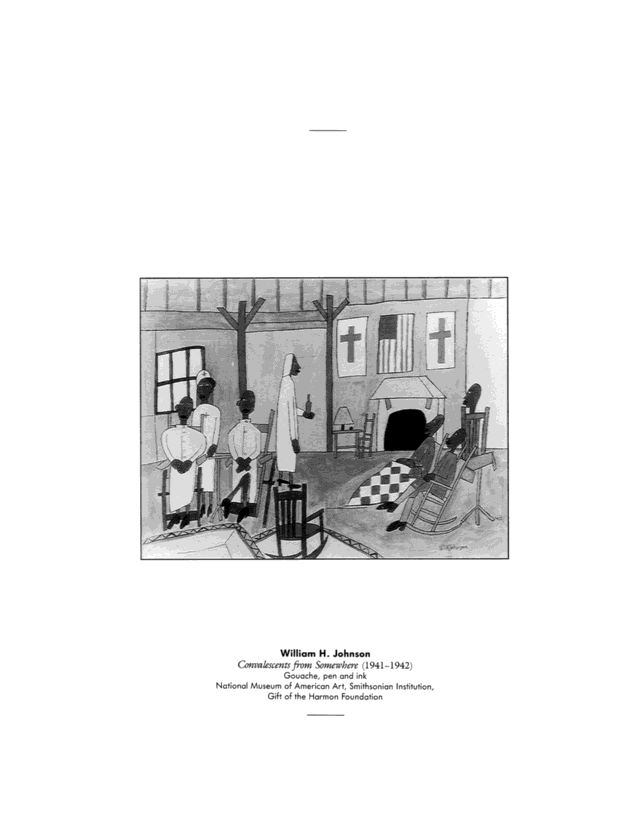
William H. Johnson Convalescents Mom Somewhere (1941-1942) Gouache, pen and ink National Museum of American Art, Smithsonian Institution, Gift of the Harmon Foundation
Who will live and who will die and how much handicap and disability will burden their lives depend in large part on conditions of education, environment, and employment as well as on access to adequate medical services. Health is not only an important "good" in itself, it is also a determinant of life options during the entire life span. For example, lack of prenatal care leads to greater likelihood of infant death, neurological damage, or developmental impairment; childhood ill- nesses and unhealthy conditions can reduce learning potential; adolescent childbearing, substance abuse, and injuries cause enormous personal, social, and health effects; impaired health or chronic disability in adults contributes to low earning capacity and unemployment; and chronic poor health among older adults can lead to premature retirement and loss of ability for self-care and independent living. Health status is therefore an important indicator of a group's social position as well as of its present and future well-being. OVERV! EW This chapter provides data describing trends in black health status and the differential rates of illness, disability, and death that persist between black and white Americans. The discussion focuses on conditions that sustain the continuing health differentials between blacks and whites. We consider bio- medical, environmental, and social factors that contribute to the health outcomes for blacks within defined periods of the life span, giving particular 393
A COMMON DESTINY: BLACKS AND AMERICAN SOCIETY attention to poverty and those sociocultural factors that influence access to health services. Although multiple factors contribute to the persistent health disadvantages of blacks, poverty may be the most profound and pervasive determinant. There has been a consistent finding across communities and nations that persons of the lowest socioeconomic status have higher death rates. In a classic study, Kitagawa and Hauser (1973) found that there was a gradient of mortality rates with steady increases from the highest to the lowest social classes. Mortality rates were higher as socioeconomic status declined for both whites and blacks, whether that status was measured by family income, educational level, or occupation. For people of the lowest status, overall mortality was 80 percent greater than for those at the highest socioeconomic level. In addition to increased mortality, almost every form of disease and disability is more prevalent among the poor. Because of the relationship between poverty and health, and because pov- erty has been a persistent problem for blacks in the United States, it is to be expected that blacks' greater poverty is responsible for much of the black- white health disparity. Poverty rates among children cause special concern for their future health status. Poverty in childhood often means lack of proper nutrition, unsafe housing, and poor access to health care or other resources needed for healthy growth and development. During much of the period covered in this study, there was open segrega- tion of medical facilities in the United States. In the 25-year period before 1965, persistent barriers to access to preventive, primary, and hospital care influenced the quality of life and the patterns of illness observed among blacks. Organizations such as the Medical Committee on Human Rights, the National Medical Association, and the Student National Medical Association played important roles in efforts to end discrimination in health care facilities and in health professional schools. Following the 1954 Brown Supreme Court decision, which declared segregation in public schools unconstitutional, ef- forts to desegregate health care facilities intensified. Important events that led to more equal access to medical care for blacks were the Civil Rights Act in 1964 and the Medicaid and Medicare legislation in 1965. Title VI of the Civil Rights Act prohibited racial discrimination in any institution receiving federal funds, thus giving hospitals a powerful in- centive to alter their practices. Hospitals receiving federal funds were forbid- den to deny admission to patients, to subject patients to separate treatments, or to deny admitting privileges to medical personnel solely on the basis of race. Access to health care was further increased when litigation in the 1960s explicitly defined the obligation of hospitals using; federally provided con ~ ~ ~ 1 ~ ~ ~ . · ~ 1 . . .1 · (~ ~ · . 1 . . 1 struct~on tunds to meet their tree care requirements and to serve those unable to pay. A second method of addressing blacks' unequal access to health care con- cerned their underrepresentation in the medical care professions. During the 1960s and 1970s many efforts were mounted to enlarge the representation 394
BLACK AMERICANS' HEALTH FIGURE 8-1 Life expectancy at birth, by race and sex, 1950-1985. - cn 70 - llJ A: 65 60 55 White Females _ - Black Females White Males - . - ol I I I I I I I 1950 1955 1960 1965 1970 1975 1980 1985 YEAR Source: Data from the National Center for Health Statistics. Of blacks and other minorities in the health professions. It was believed that access to health care for poor blacks would improve if there were more black physicians. This belief prompted some medical schools to recruit more black and other minority students and to channel them into primary care special- t~es. While the chapter presents facts about past and current health disadvan- tages of blacks compared with whites, the focus on problem areas should not leave the impression that most black Americans are unhealthy. Over the past 50 years, blacks' health status and life expectancies have improved a great deal. A general overview of this point can be made by considering trends in mortality and life expectancy. A useful summary index of the effects of differing mortality rates is the average (mean) life expectancy at birth. It is calculated on the basis of age- specific death rates as of a given date, and it estimates the number of years that will be lived on the average by individuals born in a particular year, assuming a constancy of then-current age-specific mortality rates.) Figure 8-1 summarizes trends in black-white differences in life expectancy at birth. In the 1950-1985 time span, death rates fell for both races, particularly for black females, but whites continued to enjoy an advantage over blacks. The difference in life expectancy of black and white men decreased from a gap of about 11 years in 1940 to a 6-year difference in 1960 and has shown little 1. Mean life expectancy at birth is calculated by methods analogous to the calculation of mean lifetime earnings and employment used in Chapter 6. 395
A COMMON DESTINY: BLACKS AND AMERICAN SOCIETY improvement since then. Among women, there has been a consistent pat- tern of relative improvement for blacks, and the racial gap in the mid-1980s was less than one-half its size in 1940. As a result, the advantage in life expectancy black women enjoy over black men increased during this period. The life expectancy of a black male in 1985 (65.3 years) is lower than that already achieved by white males in 1950, 66.5 years (National Center for Health Statistics, 1988:80-81~. Projections of mortality rates into the future are necessarily uncertain, particularly given the current epidemic of acquired immune deficiency syn- drome (AIDS). Nonetheless, we estimate that if the 1950-1985 trends continue, life expectancies for black and white women will converge in the first half of the twenty-first century, but no convergence to white rates can be foreseen for black men (R. Farley, 1985~. These summary statements conceal a complex pattern of age-specific and cause-specif~c changes (Farley and Allen, 1987; U.S. Department of Health and Human Services, 1985e). Among children under age 15, there have been consistent and large decreases in the risk of death, but the death rates for black children are 30 percent to 50 percent higher than those for white children. Between 1950 and the late 1960s, mortality rates actually rose among adult men, especially black men, and fell at a very slow rate among adult women of both races. The last two decades have been characterized by rapid declines in mortality rates, declines that were not foreseen by health experts. Rates have fallen for almost all race-sex groups, but the decline at the older ages, 60 and above, has been unusually sharp, redacting, perhaps, improvements in the income level of the elderly and the government's assumption of many health care costs with Medicare (Crimmins, 1981~. Contagious and infectious diseases were more common causes of death among blacks than among whites in 1940, but that specific cause of disparity has been reduced. Mortality from heart disease declined slowly between 1940 and the mid- 1960s and more rapidly afterward. The pace of change was more rapid for women than men among both races. Improved detection and treatment of hypertension, and changes in smoking, diet, and exercise were factors influ- encing the reductions. There is still a large disparity and excess of black deaths from heart diseases. Mortality from suicide remains much higher for whites than blacks, while cirrhosis and diabetes death rates, although declin- ing rapidly since the late 1960s, remain higher for blacks (R. Farley, 1985~. Two causes of death merit special attention, cancer and homicide. If data from the 1930s and early 1940s are accurate, then blacks formerly had considerably lower cancer mortality rates than whites (Lilienfeld et al., 1972~. This has changed in a dramatic manner. Since the 1940s, there have been particularly sharp increases in death rates from lung cancer for both races, but the rise has been greater among blacks, especially black men. Mortality from other types of cancer has held steady or declined among whites in the last two decades but has increased among blacks. Thus, there is now a substantial excess in cancer mortality among blacks. Homicide has a particu- larly large impact on average life expectancy since its usual victims are young 396
BLACK AMERICANS' HEALTH adults. Although recent trends show lower homicide rates among blacks, it remains a leading cause of death for black men. The U.S. Department of Health and Human Services (HHS) Report of the Secreta~y's Task Force on Black and Minority Health (1986b) identified six medical conditions for which the gaps in mortality between whites and blacks are the greatest. The six causes of death, taken together, account for about 86 percent of the excess black mortality in relation to the white population: accidents and homicides (35.1 percent), infant mortality (26.9 percent), heart disease and stroke (14.4 percent), cirrhosis (4.9 percent), cancer (3.8 percent), and diabetes (1.0 percent).2 The report did not attempt to encom- pass the full dimensions of disparities in health status; while the mortality data for these six conditions are important, they do not capture the full personal and societal costs of deaths from other causes and of chronic or acute illness. In particular, this methodology has omitted important health problems of black children. In the rest of this chapter we analyze the health status of black Americans across the life span, using the following divisions: pregnancy and infancy; childhood (ages 1-14~; adolescents and young adults (ages 15-24~; adult- hood (ages 25-65~; and older adults (over age 65) . For each period of life, a few conditions of highest concern have been selected for analysis. In making these choices consideration has been given to magnitude, severity, distribu- tion, and knowledge of contributory factors. We also emphasize the poten- tial for prevention. The black population has benefited from advances in medicine, but not equally with whites. From birth to advanced old age, blacks at each stage of the life cycle still die at higher rates (except for adult black women since 1970) and suffer disproportionately from a wide range of adverse health conditions. When national health objectives for 1990 were established by the Public Health Service (U.S. Department of Health and Human Services, 1980), the black-white disparity in the late 1970s was so great that it did not appear possible to overcome it in the short term. In the areas of infant mortality and deaths by injury, separate and unequal goals for blacks and whites were set. For many of the objectives set by the Public Health Service, the national targets were achieved before 1990 for whites but not for blacks (U.S. Depart- ment of Health and Human Sen~ces, 1986d). Based on recent trends, blacks are not projected to achieve equality in health by 1990 or in the near future. PREGNANCY AND INFANCY Infant mortality, the rate at which children die before their first birthday, serves both nationally and internationally as an indicator of the overall status 2. Access death expresses the difference between the number of deaths actually observed in a minority group and the number of deaths that would have occurred if that group had experi- enced the same death rates for each age and sex as in the white population. 397
A COMMON DESTINY: BLACKS AND AMERICAN SOCIETY TABLE 8-l Infant Mortality Rates in Various Countries, 1984 Country Japan Sweden Finland Switzerland Denmark France The Netherlands Norway Canada ~- omgapore Australia United States, white Federal Republic of Germany Great Britain opam German Democratic Republic Belgium Austria Italy New Zealand Israel Greece Cuba Czechoslovakia Bulgaria United States, black Infant Mortality Rate 6 6.4 6.5 7.5 7.7 8.2 8.3 8.3 8.5 8.8 9.2 9.4 9.6 9.6 9.7 10.0 10.7 11.4 11.6 11.6 12.8 14.1 15.0 15.3 16.1 18.4 Notes: The infant mortality rate is deaths per 1,000. Rankings are Tom lowest to highest infant mortality rates based on the latest data available for countries with at least 1 million population and with complete counts of live births and infant deaths, as indicated by the United Nations (1985). Of the health of a community or a nation. Infant mortality in the United States, 10.6 deaths per 1,000 live births in 1985, remains persistently higher than the rate in many other developed nations; Finland, Japan, and Sweden enjoy the world's lowest rates, less than 7 deaths per 1,000 live births (National Center for Health Statistics, 1987c:94~; see Table 8-1. Black rates of infant mortality have remained at approximately twice the rate for whites over the course of this century despite impressive improve- ments for all groups in reduced infant mortality. In 1985, the infant mortal- ity rate for whites was 9.3, for blacks 18.2. After relative stagnation in the 1960s, the infant mortality rate began a rapid decline (see Figure 8-2~. The accumulating evidence (McCormick, 1985) indicates that a major factor in 398
BLACK AMERICANS' HEALTH FIGURE 8-2 Infant mortality rates, by race, 1940-1985. 75 70 65 c`' 60 55 m 50 o 45 As 40 co I C) as 35 30 25 20 15 10 5 o \ Relative - \ ~Black/White Odds/ \ t-. i. , ~ 'I, . . I . . . \~ck Infant Mortality White Infant Mortality - ,, 1 1 1 1 1 1 1 1To 1970 1975 19801985 1940 1945 1950 1955 1960 1965 YEAR Source: Data Mom the Nanona1 Center for Health Statistics. 2.0 1.9 o 1.8 ~ of: G oh 1.7 O > 1.6 1.5 the rapid decline after the 1960s has been the increased survival of low- birthweight infants, largely attributed to high-technology, hospital-based management and regional neonatal intensive care units. The national average figures for infant mortality do not show all the disparities between blacks and whites in infant mortality rates across the United States. Black infant mortality rates show considerable variations by region. During 1982-1984, the black infant mortality rate was lowest in the Mountain and Pacific states (15.4 and 16.2 deaths per 1,000 live births, respectively), and highest in the East North Central states (21.7), particularly in Illinois (23.3) and Michigan (23.7) (National Center for Health Statistics, 1987c:Table 14~. Across states, the lowest state mortality rate for black infants (12.5) was higher than the highest state mortality rate (10.1) for white infants. N EONATAL AN D POSTN EONATAL MORTALITY During the first half of this century most of the infant mortality was postneonatal (deaths between 28 days and 1 year) and was caused by low living standards and infectious disease. After 1960, with improved living standards and major advances in control of infection, neonatal mortality 399
A COMMON DESTINY: BLACKS AND AMERICAN SOCIETY (death prior to 28 days) became the major component of infant mortality. Low birthweight, 2,500 grams (5.5 pounds) or less, is the major predictor of neonatal mortality and accounts for 60 percent of all infant deaths. Cur- rently, 20 percent of postneonatal deaths are attributed to low birthweight (Institute of Medicine, 1985:29) . The relationship between birthweight and infant mortality has been re- peatedly documented. For infants born weighing less than 2,500 grams, the mortality rate rapidly increases with decreasing birthweight until infants weighing less than 1,000 grams (1.5 pounds) have only a 20 percent chance of survival under optimal care. Compared with normal birthweight infants, low-birthweight infants are almost 40 times more likely to die in the neonatal period; for very low birthweight (1,500 grams or less) infants, the relative risk of neonatal death is much greater. The marked gap in the infant mortality rate between whites and blacks mirrors the more than twofold difference in the rates of low birthweight and very low birthweight between the two groups. Blacks are twice as likely as whites to have low-birthweight infants: black rates are 12.4 per 1,000 live births, and white rates are 5.6 (National Center for Health Statistics, 1987c:27~. This increased risk for blacks also occurs for very low birthweight babies: 2.56 percent for blacks and 0.92 percent for whites (National Center for Health Statistics, 1987c:77~. Blacks account for 16.2 percent of all live births but 30 percent of all low-birthweight newborns and 34 percent of very low birthweight newborns. In the neonatal period there is a survival advantage of black infants in the low-birthweight range, but it is overwhelm- ingly offset by the high percentage of low-birthweight black infants. Some low-birthweight babies are very small but born at full term. How- ever, most low-birthweight infants are born prematurely (preterm). An ana- lytic review of the trends, causes, and preventive approaches to low birth- weight (Institute of Medicine, 1985) identified a high-risk profile that in- cluded such demographic factors as poverty, low educational level, unmar- ried status, and black race; medical factors such as poor obstetrical history, very young or very old age of childbearing, and urogenital infections; and behavioral factors such as use of tobacco, alcohol, or illegal drugs, exposure to toxic substances, and absent or inadequate prenatal care. The report highlighted the importance of black race as a high-risk factor and emphasized the urgent need for research to investigate causes of racial differences in birthweight. The Institute of Medicine (IOM) study showed that babies born in the United States have the best chance, worldwide, for survival at low birth- weights, a condition attributed to the excellence of sophisticated perinatal medical services. However, these medical triumphs are offset by the fact that the United States has continued to have a far higher percentage of low- birthweight babies over the past 25 years than other comparable industrial . , . zeu nations. A national study of low-birthweight births to 2 million white women and 418,000 black women for 1973-1983 showed that the racial disparity in 400
BLACK AMERICANS' HEALTH birthweights is increasing (Kleinman and Kessel, 1987~. Births of infants with moderately low birthweights (between 3.3 and 5.5 pounds) decreased much more among whites (16 percent) than among blacks (6 percent). Rates of very low birthweights (less than 3.3 pounds) decreased 3 percent among whites but increased 13 percent among blacks. The study emphasized that preterm birth, not low birthweight per se, is the primary cause of perinatal mortality. Over the decade studied, preterm low birthweight has remained constant and low birthweight at term declined. During the decade of study, blacks were found to be more highly concen- trated than whites in high-risk socioeconomic groups. Furthermore, even blacks who were at low risk in terms of age, marital status, and education had a somewhat higher incidence of preterm delivery than whites who were at high risk in terms of the same factors (17.2 for blacks and 15.1 for whites per 1,000 live births) . Causes of this persistence of black-white differences in birthweight even among black mothers at lower risk were not completely explained. This study also found that the overall contribution of teenage births to low birthweight has been overemphasized: if all teenage births had been prevented in 1983, the low-birthweight rates would have decreased by only 8 percent for whites and 3 percent for blacks. Lieberman and colleagues (1987) concluded that race is not an independ- ent risk factor and that the black-white differences in prematurity rates are attributable to specific medical and socioeconomic characteristics. This study of a hospital-based cohort of 8,903 black and white women found the rate of prematurity to be a function of the number of risk factors present regard- less of which particular risk was present. When single marital status, age under 20 years, on welfare, high school not completed, and maternal anemia were included as factors, essentially all the racial variation in prematurity was explained. A prospective study of a cohort of 29,415 Asian, black, and white pregnant women in a Kaiser-Permanente health maintenance organization considered patterns of mean birthweight and low birthweight; after exami- nation of 22 variables, it was concluded that ethnicity is not an independent risk factor (Shiono et al., 1986~. It is likely that intergenerational effects of socioeconomic conditions on the growth and development of a mother from prebirth to childhood may influence the intrauterine growth of her child. Since many middle-class blacks are the first generation in their family to achieve that status, the designation by current income may mask the effects of maternal childhood poverty. A research project is planned to track the birth histories of a cohort of blacks who have an intergenerational history of sustained economic advan- tage. This group will be drawn from descendants of black physicians who were graduates of Meharry Medical College early in the century (Samuel Kessel, personal communication, l988~. Since the highest infant death rates are associated with preterm birth, research is increasingly being directed to this problem. However, on the basis of existing knowledge, a great many medical conditions that predispose to prematurity could be prevented by appropriate prenatal care. 401
A COMMON DESTINY: BLACKS AND AMERICAN SOCIETY PRENATAL CARE Prenatal care is clearly related to positive pregnancy outcome. Many of the risks associated with low birthweight can be identified in a first prenatal visit, and steps can be taken to prevent or correct them. Conversely, late care or no care is associated with low birthweight, increased prematurity rates, in- creased stillbirths, and increased newborn mortality. A pregnant woman who receives no prenatal care is 3 times as likely as others to have a low-birth- weight baby. Neonatal, postneonatal, and infant death rates are 4 times higher for babies born to women who received no prenatal care than for those receiving at least some care (Centers for Disease Control, 1986a:272; Institute of Medicine, 1985; Office of Technology Assessment, 1988~. Despite shortcomings in many evaluations of prenatal care, the evidence of more than 55 studies confirms the medical effectiveness and cost benefits of timely prenatal care. Yet, one-quarter of all pregnant women still receive none or only belated prenatal care. These percentages are significantly higher among poor, black, adolescent, and unmarried women, those in rural areas, and those over 40-the groups most likely to be at high risk from other causes. In 1984, 20 percent of white women and 38 percent of black women received no prenatal care in the first trimester of pregnancy (National Center for Health Statistics, 1987c:77~. The provision of prenatal care can have a demonstrable effect on pregnancy outcomes among high-risk populations. In New York City, for example, publicly supported Maternity and Infant Care (MIC) projects have provided prenatal care for eligible poor residents for 15 years, and perinatal mortality rates have been consistently lower for MIC patients than for otherwise comparable patients living in the same districts, and they have also been lower than average rates for New York City as a whole (Kessner et al., 1973~. Diet and nutrition of mothers during pregnancy affect the birthweight, growth, and development of their infants. Despite awareness of the risks of poor nutrition and a public policy for food supplementation for poor moth- ers, a sizable percentage of pregnant black women exhibit nutritional defi- ciencies of protein, calories, and especially iron (Lieberman et al., 1987~. Nutritional problems are especially serious for the youngest teenage mothers, who must nourish their own rapid development as well as that of the fetus. Preventive care programs have shown positive results in assuring adequate nutrition. For a targeted population of poverty mothers, the U.S. Depart- ment of Agriculture's (USDA) Supplemental Food Program for Women, Infants, and Children (WIC) provides food supplements for pregnant and lactating women and infants and children up to 5 years of age. A positive impact on weight gain during pregnancy, on increased birthweight, and on infant survival has been found in studies of its effects. In addition to the direct benefits of more and better nutrition, VVIC eligibility requires medical prescription and thus itself provides entry into the health care system as an additional benefit and contributor to the positive outcomes of the VVIC program (Kennedy et al., 1982; Kotelchuck et al., 1984). 402
BLACK AMERICANS' HEALTH Substance abuse by mothers is another important factor in the health of infants. Low birthweight is associated with maternal cigarette smoking, which may be a significant factor in 20 to 40 percent of low-birthweight infants born in the United States (Institute of Medicine, 1985:68~. Low-income and less educated women have the highest rates of smoking, thus adding to their total risk. Studies also indicate that mothers who consume substantial amounts of alcohol are at risk for low-birthweight babies and fetal alcohol syndrome that can include birth defects or mental retardation (Institute of Medicine, 1985:69~. AIDS is becoming an increasing problem in the area of black infant mor- tality and morbidity. Recent assessments of the pattern and spread of the AIDS outbreak confirm the heavy and increasing prevalence of AIDS and human immunodeficiency virus (HIV) infection among blacks (and Hispan- ics) (Centers for Disease Control, 1986b). The impact on infants is due to maternal intravenous drug use and heterosexual transmission and the result- ing prenatal or perinatal infection of babies. It is estimated that 30 to 50 percent of HIV-infected mothers will give birth to an infected infant. Among AIDS cases in children where race is known, between June 1981 and July 1988, approximately 55 percent have occurred in blacks (and 14 percent in Hispanics) (Centers for Disease Control, 1988a). MATERNAL MORTALITY Maternal mortality is defined as the number of deaths to women per 100,000 live births from complications of pregnancy or childbirth or within 90 days postpartum. The disparities between black and white maternal mor- tality rates are greater than the infant mortality differences, and although rates have fallen significantly for both groups, the disparities have barely changed in more than 30 years. In 1950, the rate of maternal mortality for whites was 60, and the rates for nonwhites, 200 (R. Farley, 1985:7~; in 1984, the maternal mortality rate for whites was 5.4 and that for blacks was 19.7 (National Center for Health Statistics, 1987c:111~; thus, the black rate remains more than 3 times the white rate. National figures may understate maternal deaths because in many states the information on the death certifi- cate does not indicate whether the woman was pregnant or had recently been pregnant. Some recent evidence suggests that the recent steep decline in maternal mortality related to infection is largely due to the reduction in septic abortion and reflects legalization of abortion in 1973, combined with improved obstetrical care. Many of the same factors that influence infant mortality also influence maternal mortality. One-third to one-half of the maternal deaths studied in Massachusetts between 1954 and 1985 were judged to have been prevent- able, the deaths having resulted from the high rate of teenage pregnancy, late or no prenatal care, "inadequate" prenatal care judged to be a factor in 50 percent of the nonwhite maternal deaths), and a high rate of unintended 403
A COMMON DESTINY: BLACKS AND AMERICAN SOCIETY births. It seems clear that black-white disparity in maternal mortality could be sharply reduced by efforts to ensure early and adequate prenatal care. While all of the determinants of infant and maternal mortality and morbid- ity between blacks and whites described here are not understood by medical science, many specific programs and practices are known to be beneficial in reducing the risk of infant and maternal mortality, especially the preeminent role of low birthweight in determining infant mortality. There is consensus in the medical field about the importance of the following (see Institute of Medicine, 1985~: · Pregnancy risk identification, counseling, and risk reduction; health ed- ucation related to pregnancy outcome generally and to low birthweight in particular; and full availability of family planning services, especially for low- income women and adolescents. · Ensuring that all pregnant women in the United States, especially those at medical or socioeconomic risk, are given access to and receive high-quality prenatal care. · A public information program to call the problem of low birthweight to the public's attention and to reinforce its importance with the nation's leaders and to help reduce low birthweight by conveying a set of ideas to the public about avoidance of important risk factors. CH I LDHOOD DEMOGRAPHY AND HEALTH STATUS In 1987, there were 5.3 million black American children aged 5-14; they represented 16 percent of the nation's children in this age group. Although there is a declining proportion of children in the total population, because of differential birthrates the percentage of black children will represent an increasing percentage of the nation's future population of children. Black children are much more likely to live in a single-parent household, often with an adolescent mother, and they are somewhat more likely to have parents who have not completed high school. Nationwide, black children are overrepresented among the poor, and the youngest black children are the most likely to live below the poverty level (see Chapters 6 and 10~. The links between poverty and poor health in childhood have been well established. For example, research done in Boston, where there is wide access to hospital care, found substantial socioeconomic and racial disparity in mortality rates. The socioeconomic effects varied across different ages and causes of death but were prominent throughout childhood (Wise et al., 1985~. Other studies have confirmed that poor children are more frequently ill, more seriously ill, and are more likely to have severe health consequences (Dutton, 1981; Egbuonu and Starfield, 1982~. Although poor education is often associated with poverty, it does exert an independent effect on health 404
BLACK AMERICANS' HEALTH TABLE 8-2 Mortality Rates for Children Aged 1-14, by Children 1-4 5-14 Malls White 52.4 29.9 Black 89.0 41.3 Female White 39.7 19.4 Black 70.3 28.1 Note: Mortality rate is deaths per 100,000 children aged 1-14. Source: Data Tom National Center for Health Statistics. status. Children born to parents who are poorly educated also suffer health disadvantages. Using indirect estimation procedures for 1975 data, Mare (1982) found that childhood mortality is highly associated with family in- come and educational attainment of parents as independent effects. Survival rates of children whose mothers had less than a high school education were as much as one-third lower than those whose mothers were high school graduates. Black children have benefited from the impressive health gains for all American children since 1950. The rate of death from all causes for children aged 1-4 was 139.4 in 1950 and 51.4 by 1985. For children aged 5-14, the comparable rates were 60.1 in 1950 and 26.3 in 1985 (National Center for Health Statistics, 1988:80~. However, black children have not shared equally in the overall health gains, and their death rates are much higher than those for white children. Despite dramatic overall mortality gains, death rates for black children are from 30 percent to 50 percent higher than for whites, and the rate of decline in black children's mortality has slowed in recent years. The mortality dis- parities are strikingly high for black male children, approximately 50 percent higher than for white males and 100 percent higher than for white females of comparable ages (see Table 8-2~. Injury is the leading cause of death in childhood. Accidents cause 3 times more deaths than either of the next two leading causes of childhood death (cancer and congenital anomalies). Nearly all of the dramatic decline in childhood mortality since 1950 was due to reduction in infections and other deaths from natural causes. In contrast, ~ . . . . . c eat IS trom Tunes are nsmg. Automobile passenger injuries have taken their greatest toll among white children. For black children, the highest rates of injuries occur in or near the home. Injuries are related to socioeconomic status: poor children are very likely to live in areas in which heavy traffic patterns lead to pedestrian injury, streets need repair, there are dilapidated or abandoned structures, and there is dangerous uncollected trash or litter. Within the house, unrepaired stair- wells and inadequate or absent screens or window guards expose children to the risk of falls. Missing smoke detectors along with defective heaters and 405
A COMMON DESTINY: BLACKS AND AMERICAN SOCIETY other household appliances pose fire hazards. Poor homes are also more likely to contain toxic substances such as chemicals for pest control or peeling lead paint. RISKS TO HEALTHY GROWTH, DEVELOPMENT, AN D LEARN I NO During childhood there is an important interaction between physical status and healthy development. This section briefly discusses the factors-apart from acute or chronic illness per se-that have a significant impact on healthy growth development and learning. These factors include malnutrition, ane- mia, lead poisoning, lack of immunization, lack of dental care, and child neglect and abuse. All of these factors affect poor, black children dispropor- tionately. Each of them exerts an independent influence, but unfortunately, they tend to occur together and thus to multiply the adverse effects. Malnn~t~m Good nutrition is an exceedingly important aspect of brain growth and learning. The most rapid brain growth occurs in the unborn fetus and during early infancy. Head circumference at birth and in early life is an important proxy measure for brain growth and development in early infancy. This early brain growth and development is heavily dependent on nutrition (Engle et al., 1979; Winick, 1970~. Literal starvation, the extreme of malnutrition, is not common in the United States. However, there is hunger and malnutrition among poor children. Current studies emphasize the interaction between malnutrition and environmental influences, particularly the amount and type of early stimulation. Cravioto and Delacardie (1978) pointed out that apart from direct effects on brain growth and development, chronic marginal malnutri- tion influences mental functioning in three other ways: the chronically mal- nourished child loses learning time because of chronic or repeated illnesses; there is apathy and inattentiveness that relate to lack of energy (calories); and the malnourished child tends to develop a pattern of lack of engagement with persons and objects in the environment, with a resulting lack of needed . . . attention or st1mu at1on. Height in less than the 10th percentile is defined as linear growth retarda- tion and is used as a measure of marginal nutrition for children. The Centers for Disease Control (CDC) (1983) reported that from 10.9 to 23.6 percent of low-income black and other minority children showed linear growth retardation. (The population surveyed was children who were eligible for VVIC and EPSDT [Early Periodic Screening, Diagnosis, and Treatment] pro- grams, which are designed to overcome child malnutrition.) There is a "national health objective" (U.S. Department of Health and Human Serv- ices, 1980) that growth retardation of infants and children caused by inade 406
BLACK AMERICANS' HEALTH quate diets should be eliminated by 1990, but many eligible children are not served by current programs (see below). Under current programmatic efforts, the 1990 goal will not be met. Anemia Iron-deficiency anemia is a specific indicator of nutritional deficiency in infants and young children. Iron-deficiency anemia affects many organ sys- tems (Lanzkowsky, 1978; Smith and Rios, 1974~. Fatigue, weakness, ano- rexia, pica (eating nonfoods such as dirt), and acute gastrointestinal blood loss are not uncommon in anemic children. Severe anemia may result in intestinal inflammation, malabsorption, and cardiovascular pathology. Re- cently, iron deficiency even in the absence of overt anemia has been impli- cated in effects on the brain that cause irritability, attention deficits, and distractibility (Leibel, 1977; Oski and Stockman, 1980~; these conditions obviously may affect learning. Studies show that these symptoms can be reversed by giving diets rich in iron and that the brain symptoms disappear earlier than measurable changes in blood iron. Infants are particularly prone to anemia because their rapid growth and development deplete body iron stores at a time when a largely milk diet contains insufficient iron for growth requirements. Current studies show that among poor black children, the young children are most at risk. Ac- cording to the Nutrition Surveillance Annual Summary for 1983-1985 (Cen- ters for Disease Control, 1985), 8.2 percent of black children fell below the 5th percentile for hematocrit measure (packed red cell volume) of anemia. According to the report of the Joint Nutrition Monitoring Committee (U.S. Department of Health and Human Services, 1986e:9), the highest preva- lence of iron deficiency (20.6 percent) was observed among poor children aged 1-2 years; the diets for 96 percent of this group were reported to be . . . nac Equate in iron. Diagnosis of anemia is accurate and inexpensive; it only requires a finger prick. Anemia can be prevented by starting an iron-fortified diet in infancy. The efficacy of iron therapy is well documented (Starfield, 1977) . The newly discovered relationship of iron deficiency to enhanced lead absorption and higher body lead levels makes this health problem even worse. Although WIC programs have reached 2.8 million children and nursing mothers since it was established in 1970 and has reduced anemia for those whom it served, only 25 to 30 percent of eligible infants and mothers are reached by the program. Lead Poisoning Lead poisoning is one of the most prevalent health problems among children in the United States. It is increasingly clear that children are highly susceptible to the toxic effects of lead, even at the very lowest levels. With 407
A COMMON DESTINY: BLACKS AND AMERICAN SOCIETY TABLE 8-3 Immunization of Children Aged 1~, by Race, 1976 and 1985 (in percent) Measles Rubella OPTS Mumps Polio . Children 1976 1985 1976 1985 1976 1985 1976 1985 1976 1985 White 68.3 63.6 63.8 66.3 75.3 70.0 50.3 61.8 66.2 58.9 Nonwhites 54.8 48.8 61.6 47.4 68.7 48.7 61.8 47.0 39.9 40.1 aDiphthena, pertussis, tetanus. Source: Data from National Center for Health Statistics. repeated exposure, lead accumulates in the body. Until about 1970 a level of 60 micrograms of lead per deciliter or lower was considered nontoxic. Beyond that cutoff level, lead encephalopathy occurs and causes vomiting, convulsions, delirium, coma, and even death. However, recent research has shown that levels as low as 25 to 30 micrograms per deciliter are toxic to the nervous system, and they are being adopted as the new cutoff standard for treatment. The most recent data suggest that even lower levels are damaging. Lead toxicity symptoms include irritability, slowed nerve conduction rates, attention deficits, fatigue, loss of appetite, weakness, sleep disturbance, and sudden appearance of atypical behavior. Needleman and colleagues (1979) report deficits in classroom performance associated with elevated levels of lead in children. The child's nutritional status is significant in determining risk. Deficiencies in iron, calcium, and phosphorus enhance absorption and retention of lead. Therefore, children in poverty are likely to have nutritional deficiencies that render them more vulnerable to even low-level lead expo- sure, and they also tend to live under conditions that can give rise to heavy exposures to lead. A national survey (Mahaffey et al., 1982) reported that an estimated 675,000 children 6 months to 5 years of age had lead levels of 30 micrograms or higher. They found that 2 percent of white children had elevated blood levels, compared with 12.2 percent of black children. Among black children living in inner-city areas and in families at or below the poverty level, 18.6 percent had lead levels above the toxic level. This is 9 times the rate in white children. There is a screening test (free erythrocyte porphyrin EFEP]) for lead levels that is accurate and inexpensive (Centers for Disease Control, 1985:10; Piomelli, 1973~. This test has the added advantage of screening for iron deficiency along with lead levels. Lack of Immunization Immunization rates for many of the preventable serious infectious diseases of childhood have grown only slowly or have fallen since 1976 (see Table 8-3~. Measles is considered the most threatening of the preventable child- hood contagious diseases. Its frequent complications include pneumonia, ear infections, and deafness. Brain inflammation (encephalitis) occurs in about 1 of every 1,000 cases, often producing permanent brain damage and mental 408
BLACK AMERICANS' HEALTH TABLE 84 Decayed, Filled, and Missing Teeth, Children Aged 5-17, by Race, 1979-1980 Percent Distnbution of Mean No. of Decayed, Filled, Decayed Filled Missing Children or Missing Teeth Teeth Teeth Teeth Total White Male 4.57 14.9 79.8 5.3 100.0 Formals 5.24 13.1 80.8 6.1 100.0 Nonwhites Male 3.79 37.1 46.8 16.1 100.0 Female 4.50 31.5 53.3 15.2 100.0 Source: Data Tom National Center for Health Statistics (1982b). retardation. About 1 of every 10,000 children afflicted with measles dies as a result of complications. There has been a recent rise in measles, from 1,497 reported cases in 1983 to 2,704 reported cases in 1985. :A national health goal is to reduce reported cases below 500 by 1990 (National Center for Health Statistics, 1987b:307. Rubella (German measles) remains an impor- tant problem, with 20,000 reported cases in 1977, and actual cases are estimated to be as much as 20 times the reported number. There is a national health goal for a reported rubella incidence of less than 1,000 cases by 1990 (National Center for Health Statistics, 1987b:30~. The striking benefits that intensive systematic immunization can achieve are perhaps most dramatically demonstrated by the worldwide elimination of smallpox. The postvaccination decline in paralytic polio in the United States from 20,000 cases a year to 5 cases in 1985 is another example (National Center for Health Statistics, 1987b:31~. The current decline in immunization rates and rising black-white disparities argue for national and local campaigns on a sustained basis to increase both access to immunization and parental awareness of the importance of immunization. Ink of Dental Care Dental care is an often ignored but important area of health. Dental decay (caries) and periodontal disease start in childhood and cause progressive destruction leading to extensive tooth loss in adult life. Repeated national surveys and a detailed collaborative study (Robert Wood Johnson Founda- tion, 1983) have shown that black children have much higher rates of untreated dental disease than whites. Table 84 shows the results of the 1979-1980 National Dental Caries Prevalence Survey: it can be inferred that once a tooth begins to decay, black children have a lower likelihood that it will be filled and a higher likelihood that it will become a missing tooth. Reductions in dental caries are accomplished by use of fluorides in drinking water, dental sealants, and toothpastes; education of children in oral hygiene and noncariogenic dietary practices; and regular visits to the dentist for 409
A COMMON DESTINY: BLACKS AND AMERICAN SOCIETY prevention and remedial care. Dental care is typically not covered by private or public health insurance, public dental insurance for the poor is limited, and poor children have very low rates of dental visits. The EPSDT program for Medicaid children has increased its early dental care for poor children very slowly. In the early 1980s, only 20 percent of the target population had been screened, and of those screened only 25 percent were referred for treatment. Child Ne,glect and Abuse Child neglect and abuse appear to have increased significantly in the past few decades. A review of the 50 states and the District of Columbia found that abuse reports and numbers of deaths attributed to abuse increased by 180 percent (to 1.9 million cases) in the period from 1976 to 1985 (U.S. Congress, 1987~. This reported increase is partly related to the establishment of a universal absolute legal mandate for the reporting of suspected child abuse in the United States during that period. Local laws are typically vague and open to broad interpretation. For many reasons, abuse is more likely to be reported among poor and minority families than among the affluent ones. Reports show that 85 percent of the perpetrators of abuse and neglect are the child's biological or stepparents. Types of abuse are categorized as phys- ical abuse, physical neglect, psychological abuse, psychological neglect, and sexual abuse. The available data indicate that child neglect is twice as preva- lent as child abuse. 1 ~ High-risk families range from those who are obviously deeply troubled and chronically disorganized, often already known to the social agencies, police, or other community resources, to othenvise stable families temporarily under stress. Some child abuse is related to drug-abusing parents, and alcohol is implicated in many cases. Abuse and neglect have been found to rise with chronic unemployment. Physically or mentally handicapped children can be targets of abuse by parents frustrated by the difficulties in coping with the handicaps. Teenage parenthood or parental ignorance and immaturity can , . be critical factors in child neglect and abuse. When parents are immature, dependent, or unable to handle responsibil- ity, their feelings of stress may cause them to direct their anger and frustra- tion at a child. They often have strong beliefs about the value of physical punishment and often expect children to perform according to unrealistic wishes. Abusing parents often are isolated socially and have difficulty seeking help even when they are troubled about their parenting behaviors. Efforts to reduce child abuse will have to be multifaceted. Some promising approaches involve preventive parent education and skills training; enhance- ment of community and social support systems, including home visits to high-risk mothers; and assistance to abusing parents through collaborative efforts of the public and private sectors. Projects designed to create an integrated health and social service delivery system for multiproblem families offer promise. Such programs help ensure that families at risk or invo ved in 410
BLACK AMERICANS' HEALTH neglect or child abuse have continuing contact and follow-up care from a health or social services agency from the prenatal through the school years. The use of home visitors has had more rigorous evaluation than any other preventive approach, and four of five programs that were evaluated were found to be effective in reducing rates of maltreatment (Armstrong, 1981; Gray et al., 1979; Lutzker and Rice, 1984; Olds et al., 1986~. ADOLESCENTS AND YOUNG ADULTS The youth population of the United States peaked in 1980 as a result of the post-World War II baby boom and is now declining. Because of the slower rate of decline among blacks, the proportion of youths who are black will rise from 13.7 percent in 1980 to 15.2 percent in 1996. At current fertility rates, and with a smaller childbearing cohort, the total population aged 15-24 is expected to show only moderate growth after 1996. Relative to whites, blacks and other minorities will be a significantly larger proportion of American youth in the coming cohorts. Mortality rates for youths aged 15-24 are among the lowest for any period of life, and their health is considerably better than it was for people of that age 40 years ago. In recent years, however, male adolescents and young adults have not shown the sustained health gains seen in other segments of the population. Among male youth in the 1970s and 1980s, death rates due to accidents, homicide, and suicide were higher than they were in 1950. The HHS special report on minority health (U.S. Department of Health and Human Services, 1985e) identified injuries as one of the six causes of excess deaths among blacks. This increased risk occurs over the entire age range, but it is most prominent in the late adolescent and young adult groups. Deaths from auto accidents, suicide, homicide, and other injuries now ac- count for more than three-quarters of all mortality among people aged 15- 24. Since 1950 there has been a shift in the burden of adolescent illness away from the traditional medical etiologies of disease toward newly defined health problems that arise from environmental factors and health-related personal behaviors. For black youth, several conditions are of major concern: teenage pregnancy and reproductive health; substance abuse (tobacco, alcohol, illegal drugs); injuries (accidental and nonaccidental); and glaucoma. Adolescents are the most medically underserved sector of the population. The 1986 National Access Survey found that black youth is heavily repre- sented in the profile of persons experiencing cutbacks in the availability of health care. Preventive health care is especially important to adolescents, and these services are least likely to be covered by insurance of any kind. The national health objectives were stated by the surgeon general to reduce deaths for youth 15-24 years of age to fewer than 93 per 100,000 by 1990. In 1985 the death rates were 136.3 for white males, 174.1 for black males, 411
A COMMON DESTINY: BLACKS AND AMERICAN SOCIETY 48.4 for white females, and 59.5 for black females. Clearly, the stated objec- tives will not be met for white or black males. TEENAGE CH I LDBEARI NG AN D REPRODUCTIVE HEALTH For adolescent and young adult women, pregnancy and reproductive health-related conditions are the leading causes of hospital admission and sick days. Teenage childbearing is one of the major issues confronting black youth. It has profound, immediate, and long-term health implications for the young mother and her children, and also represents a challenge to black family structure and functioning. Birthrates among teenage black women have been dropping since the 1960s (see Chapter 10~. However, because the total number of black adoles- cent women increased by 20 percent, there were substantial increases in the total births to black teenagers, despite the declining birthrates. In addition, because birthrates to black teenagers remain 2 to 3 times higher than those for whites, a higher proportion of all black births occur among teenage mothers: in 1984, 20 percent of all black births were to teenagers, compared with 11.1 percept among whites (Hofferth end Hayes, 1987~. Because black teenage women represent only 14 percent of the U.S. adolescent female population, the overvvhelrning majority of all teenage births nationally are to white adolescent girls. Nonetheless, special attention to teenage childbearing among blacks is needed because of the adverse medical, personal, and social consequences of those teenage births. The higher birthrate for black teenagers can be accounted for by earlier initiation of sexual intercourse (on average 2 years earlier than whites); less use of contraception; less likelihood of abortion; and almost universal deci- sion to keep and rear children who are born, rather than offering them for adoption (Newcomer et al., 1983; Smith and Udry, 1985; Zelnick et al., 1981~. Black teenagers are slightly less likely than whites to terminate an unintended pregnancy by abortion. However, because of their higher rate of pregnancy, black abortion rates per 1,000 women are double those for whites. In 1981, abortion rates for girls 15-19 were 69 per 1,000 for blacks and 39 per 1,000 for whites (Hayes, 1987~. As discussed above, black teenage mothers are at risk for bearing low- birthweight infants for whom neonatal mortality and postneonatal mortality and morbidity rates are very high. Among the babies who are low-birth- weight survivors, there is greater likelihood of experiencing long-term neu- rological, developmental, or learning problems. The youngest mothers are also at increased risk for obstetrical complications or death in comparison with older mothers. Late or inadequate prenatal care, poor nutrition, and poor self-care are factors in low birthweight and infant mortality as well as in maternal death. In 1984, 46 percent of teenage mothers had not received early prenatal care. Adolescent motherhood, regardless of race, predicts lower educational and occupational attainment, lower wages, and increased risk of living in chronic 412
BLACK AMERICANS' HEALTH poverty compared with peers who postpone parenthood. The children of teenage mothers face higher health risks as well as greater risks of lower intellectual and academic achievement and of social behavior problems. They may also be more likely to become adolescent parents themselves than are the children of adult mothers (Hofferth and Hayes, 1987~. Social status, family structure, and neighborhood were studied by Hogan and Kitagawa (1985) as factors influencing age of initiation of intercourse and likelihood of pregnancy among urban disadvantaged blacks. They found that young age of initial intercourse is the best predictor of teenage preg- nancy. Early sex initiation and pregnancy were found to be linked to several family factors: having a single parent, five or more siblings, a sibling who is an adolescent parent, and lax parental control of dating. Additional risk factors were living in a ghetto neighborhood and low educational aspirations or achievement. In addition to risking pregnancy, the early onset of unprotected inter- course among blacks places them at high risk of contracting sexually trans- mitted diseases. These diseases increasingly threaten the health and well- being of millions of adolescents and young adults. Although there has been some recent decline in the incidence of gonorrhea and syphilis in the popu- lation as a whole, both diseases continue to increase among adolescents: the 15-24 age group represents about 75 percent of all reported cases. Moreover, newer sexually transmitted diseases such as genital herpes, chlamydia, papil- loma virus, and venereal warts have risen sharply in the general population. Chlamydia, most common in the 15-24 age group, is now the most preva- lent venereal disease. These infections may be without apparent symptoms, and many young people can suffer serious permanent complications from unrecognized and untreated disease. Even when aware of symptoms, adoles- cents are reluctant to seek care (O'Reilly and Aral, 1988~. AIDS, through heterosexual transmission, poses a special threat to minority youth. SPECIAL HEALTH RISKS Dings, Tobacco, and Alcohol Use Substance abuse, particularly alcohol and stimulant drugs, increases risk of accidents, suicides, and homicides; family disruption; and poor school and job performance and may lead to acute and chronic medical conditions. Drug abuse among adolescents is highly correlated with adolescent preg- nancy, poor grades, dropping out of school, and delinquency (Tessor and lessor, 1982~. Prior to the early 1960s, experience with illicit drugs was probably limited to less than 2 percent of the general population. However, even at that time, rates of use were high in some black urban ghettos: in St. Louis, half of black, urban-born 30-year-olds surveyed in 1962 had tried marijuana (Robins and Murphy, 1967~. At present, black adolescents have a lower reported use of illicit drugs and alcohol than whites. For example, a 1985 household survey reports that for 413
A COMMON DESTINY: BLACKS AND AMERICAN SOCIETY illicit drugs, any use in the past year among those aged 12-17 was 25 percent for whites and 19 percent for blacks, and among those aged 18-25 it was 44 percent for whites and 39 percent for blacks. For cocaine the figures for those aged 12-17 were 4.4 percent among whites and 2.5 percent among blacks. For those aged 18-25, cocaine use was reported as 18 percent among whites and at 11 percent among blacks (National Institute on Drug Abuse, 1987~. However, these data may suffer from unrepresentative sampling. Surveys are usually based on high school student samples or household surveys, thus excluding school dropouts and institutionalized and street youths, and underrepresenting students with high absentee rates. The true dimensions of drug use for blacks may be underreported. This hypothesis is supported by a 1979 survey that found mortality from drug- related deaths increased steeply in nine major metropolitan areas, and about one-third of those fatalities occurred among black youth in the 15-24 age group (National Institute on Drug Abuse, 1980~. Currently, cocaine, and its potent derivative "crack," show increased use among all youth. In 1986, the first national data report of high school seniors found that 4.1 percent had used crack in the past year and 17 percent had tried cocaine (Johnston et al., 1987~. By any measure, drug problems have greatly increased over the past 40 years, and although that increase may now have slowed, a majority of adolescent blacks and whites have experimented with illicit drugs. The drug problem is potentially far more serious now because of the AIDS risk associated with the sharing of needles or "drug works." Although heroin use is minimal among adolescents, there is an increasing trend toward intra- venous injection of cocaine. Cocaine injection poses a higher risk of HIV infection because cocaine's effects are of short duration, and so users inject far more frequently than do heroin users. Tobacco smoking patterns for both whites and blacks occur at a median age of 17 years for males and about 18.5 years for females. A 1985 household survey reported that cigarette use in the past month for those aged 12-17 was 18 percent for whites and 9 percent for blacks; for those aged 18-25, cigarette use was reported by 39 percent of whites and 35 percent of blacks (National Institute on Drug Abuse, 1987~. These survey data may suffer from unrepresentative sampling problems similar to those of survey data on drug use. Cigarette advertising has been found to be targeted to women and youthful black populations (Davis, 1987). These campaigns often include free distribution of sample cigarettes. Health education programs can include awareness of these commercial pressures and teach techniques of consumer resistance. There are current models of school-based, peer-mediated inter- vention programs that are effective in reducing rates of initiation of smoking (Botvin et al., 1980; McAllister et al., 1979~. Alcoholism and alcohol-related mortality and morbidity are leading con- tributors to the total burden of illness. It is estimated that alcohol is impli- cated in about one-half of all homicides and in a substantial percentage of adolescent and adult unintentional injuries (e.g., burns, falls, drownings, auto accidents). Cirrhosis of the liver and cancers of the esophagus are direct 414
BLACK AMERICANS' HEALTH consequences. Among young blacks and whites, alcohol is frequently asso- ciated with abuse of other drugs and magnifies their adverse consequences (U.S. Department of Health and Human Services, 1985a,c,d). The 1985 household survey reported that among persons aged 18-25, use of alcohol in the past month was reported for 76 percent of whites and 58 percent of blacks (National Institute on Drug Abuse, 1987~. The dangers associated with alcohol use are not well understood by adoles- cents. In 1986, only 25 percent of high school seniors perceived any risk of harm from one or two drinks daily, and only 39 percent perceived "great risk" of harm from regular drinking of 5 or more drinks once or twice each weekend. While 67 percent perceived great risk in consuming 4 or 5 drinks nearly every day, this means that 33 percent did not view this as harmful (Johnston et al., 1987~. Evidently, there is a place for programs that educate adolescents about the dangers of alcohol use and that teach skills for respon- sible use and resisting pressures to drink. I· - norms As noted above, injuries are the leading cause of death for adolescents, and there are very large disparities in death rates for blacks and whites (see Figure 8-3~. Among both blacks and whites, the total rates are 3 to 4 times higher for males than for females. In 1984, the rates for major causes of deaths per 100,000 for males aged 15-24 were homicide: blacks, 62 and whites, 11; motor vehicle accidents: blacks, 32 end whiles, 59; end suicide: blacks, 11 and whites, 22. Drownings, falls, and burns are important causes of death by unintentional injury in this age group. Injuries also figure prominently as a source of morbidity, with those in the 15-19 age group accounting for as many as 44 percent of hospitalizations and 48 percent of emergency room visits for injuries. For every death, there are many other adolescents who are impaired or disabled by nonfatal injuries. Homicide (intentional injury) is the major cause of death and disability among black male adolescents (see Figure 8-4~. The black homicide rate decreased by 22 percent between 1970 and 1985, from its peak of 102.5 to 66.1; white homicide rates increased by 30 percent, from 7.9 to 11.2, in the same time period (Centers for Disease Control, 1986a). Although the dis- parity has narrowed, black homicide rates in 1985 for those aged 15-24 were still 6 times greater than white rates (National Center for Health Statistics, 1988~. The CDC analysis was unable to ascertain the contribution of socio- economic status to the risk of homicide. The study did find that the highest risk of homicide is faced by young males, who are killed by friends or acquaintances using firearms (usually handguns) in the course of an argu- ment. Accident (nonintentional injury) data are derived from death certificates, hospital discharge abstracts, emergency room reports, National Health Inter- view Survey reports, and traffic accident data. There is no national reporting 415
A COMMON DESTINY: BLACKS AND AMERICAN SOCIETY FIGURE 8-3 Death rates hom (a) homicide, (b) residential fires, (c) drowning, and (d) pedestnan accidents, by race and age group. 60 (a) A Homicide 0 50 ~ 1' \Black C l 1 \ LL 40 ~ 1 \ ° 3o ~ 1 \ ~\ I 20 _ ~I 10 _ / '_ White V, ~-_ _ O '_' 1 1 1 1 1 - --- u: ~ ~ \ / ~N C~) ~J tS) (D V O O O O O O N C ~U: (D AGE GROUP (years) 5.5 5.0 llJ ~ 4.5 O 4.0 o 3.5 o o o 3.0 o <~g 2.5 2.0 1.5 1.0 r~ co 0 0 oo (C) Drowning | \/\ Black r l \ I/ i-\ ~1 \ ~ / \ \ A ``White V \ · 1 _ _ ~d I 1 1 ~I 1 1 V ~N CO ~u-) CD ~03 O O O O O o O O ~N CO ~I£) (D ~00 AGE GROUP (years) ~ ~ - ~ So?~rce: Centers for Discase Control (1988). 14 13 LL, 1 2 ~, 11 0 10 0 9 o o o o I C] 8 7 6 5 4 3 2 1 40r 35 30 25 20 15 10 5 (b) Residential Fires Black / White, ~,,' o '-k=F ~- ~n V ~N CV) ~tO (D I ~ O O O O O O O O N CO ~UD CO ~03 AGE GROUP (years) (d) Pedestrlan Accidents Black/ _ ~1 -A /` / ~ \ ~Whitei -';l-`'- ~~'~J 1 1 1 1 1 d ~ V ~N ~d" U: O O O O O ~N CO ~uD AGE GROUP (years) 1 1 1 system for the accidents that do not result in death. Some studies have found that deaths due to fires are strongly income-related for urban children. Investigations into the dusters of human and environmental factors that account for specific injuries to specific cohorts of persons are an emerging research area for clarifying the epidemiology of the black-white disparities in mortality and morbidity due to injuries. Glancom~ Glaucoma is a disorder of increased fluid pressure within the eye that causes damage to the retina and the optic nerve. It is the leading cause of blindness 416
BLACK AMERICANS' HEALTH FIGURE 84 Homicide rates for people aged 15-24, by race and sex, 1950-1985. 110 100 LLI 90 0 80 IL 0 70 lo at 60 lo Cal 50 40 30 20 10 o 1950 1 960 /\ \Black Males ~E31ack Females -~ White Males Females 1970 1980 1985 YEAR Source: Data Tom Centers for Disease Control. among blacks in the United States. Recent clinical evidence has called atten- tion to the fact that the prevalence of blindness from glaucoma in black children and young adults is much higher than it is for whites. For adults aged 45-64 years, excess rates of blindness due to glaucoma are even higher for blacks. In 1984, the American Academy of Ophthalmology issued a special announcement alerting clinicians to glaucoma as a major health prob- lem for blacks. Irreversible vision loss is often extensive by the time the patient seeks health services. Early detection is possible through a simple intraocular pressure measurement test (tonometry). Black children who are near sighted (myopic) are at particularly high risk. Currently, little is known of the determinants of this disorder or reasons for high risk for blacks. There are no data regarding diet, stress, health habits, toxic exposures, or other factors that could act singly or in combination to cause the heightened glaucoma and blindness experienced by blacks. ADULTHOOD Younger people are expected to be healthier than the elderly, and the differential is usually explained as a result of the aging process. There are 417
A COMMON DESTINY: BLACKS AND AMERICAN SOCIETY FIGURE 8-5 Leading causes of death, by race and age group, 1984. 700 MEL O 500 400 oh 300 200 100 o 3 .~... Black O White 1 Homicides 2 Accidents 3 Heart Disease 4 Suicide 5 Cancer 6 Stroke 2 6 25-34 35-44 45-54 55-64 AGE GROUP (years) Source: Data from U.S. Department of Health and Human Services. some sex differences in mortality. The greater longevity of women has been partly explained by a lesser exposure to environmental hazards and less participation in hazardous life-styles, including use of firearms, speeding, heavy substance abuse, and promiscuity. To the extent that these differences are reduced, there is the prospect that men will approach more closely the life expectancy of women. Biological differences appear to explain very little of the difference in health status between blacks and whites. There were 58,942 excess deaths for blacks in 1980. Only 379 of these deaths, less than 1 percent, were attributable to hereditary conditions such as sickle cell anemia, for which genetic patterns among blacks have been established (U.S. Department of Health and Hu- man Services, 1985e). Instead, the major factors appear to be socioeconomic and physical environments, personal health habits, and life-styles (see Figure 8-5~. In this section we focus on five of the problems that contribute to health disparities between white and black adults-homicide, AIDS, sub- stance abuse, hypertension, and cancer. This list is very different from what it would have been in 1940; tuberculosis and many other infectious diseases are no longer high on the list. But the current problems pose as many challenges today as did infectious diseases in 1940. J MAJOR HEALTH RISKS Homicide Intentional injury has only recently been recognized as a public health problem. Intentional injury includes a wide spectrum of assaultive behaviors: 418
BLACK AMERICANS' HEALTH child abuse, spouse abuse, rape, suicide, and homicide. Our discussion is focused primarily on homicide because it contributes so heavily to the differ- ential in mortality between blacks and whites during the middle years of life. Homicide is the leading cause of death for black males aged 15-34. There are 8,000 black victims of homicide a year. Although blacks were 11.5 percent of the population in 1983, they were 43 percent of the homicide victims. The black-white differentials for homicide are higher than for any other leading cause of death. And because the typical homicide victim is young, every homicide accounts for an average 30.6 years of potential life lost prior to age 65; in comparison, the potential average time of life lost is only 2.1 years for death due to heart disease (Centers for Disease Control, 1986a). Although homicide risk is greatest among males in the 25-34 age group, the gap between black and white risks is evident for both sexes in all age groups (see Figure 8-3~. In both blacks and whites, most homicides are intraracial and inflicted by young male acquaintances and relatives as a result of a quarrel, not as part of another crime (Tason et al., 1983~. Homicide rates fluctuate a great deal over time, suggesting that societal factors play a significant role. Brenner (1983) reported an association be- tween the homicide rate and unemployment. In recent years, there has been a significant decline in the black homicide rate, and of the five race-specific health objectives stated for 1990, this is the only one which seems likely to be met (U.S. Department of Health and Human Services, 1986d). The decline cannot be explained as due to any specific intervention. The causes of homicide are complex. They are associated with three sepa- rate sets of risk factors: biological, psychological, and sociological. Biological risk factors for involvement in homicide as a victim or perpetrator relate to being male and being young. Psychological factors relate to violence that is learned from role models or is the result of disturbed developmental patterns and the failure to develop adequate inhibitions against inappropriate and excessive expression of anger and frustrations. Sociological risk factors relate to American culture and the structure of American society (National Com- mission on the Causes and Prevention of Violence, 1969) . For example, it is estimated that about one-half of all homicides in the United States are related to the use of alcohol. Between 10 and 20 percent of homicides nationwide are associated with the use of illegal drugs (U.S. Department of Health and Human Services, 1986a: 163~. For attempted homicides, the outcome is influenced by the lethality of the instruments to which the individuals may have access. Access to handguns, used most frequently by people aged 25-34, has been considered to be a major cause of homicide. The evidence for this is not conclusive and indeed is difficult to establish Outright et al., 1983~. Further studies of fatal and nonfatal outcomes may increase understanding of the problem (see Chapter 91. At present there are no scientifically proven efficacious interventions that would lead to the reduction of homicide. Under the circumstances, limiting 419
A COMMON DESTINY: BLACKS AND AMERICAN SOCIETY Cumulative Incidence of AIDS and Relative Risk, by Race and TREBLE 8-5 Ethnic Groups, Age, and transmission category, lY6l-lYb/ Category Adults, totals Adult men Adult women Homosexual men Bisexual men Heterosexual IV chug users Hemophiliacs Transfusion recipients Pediatric, totals Mother, IV drug user White 380.8 (1.0)1,068.1 (2.8) a 188.9 (1.0)578.2 (3.1)a 12.2 (1.0)161.1 (13.2)a 298.6 (1 0)413.8 (1 4) 46.8 (1 0)177.7 (3.8)a 10.1 (1.0)201.2 (19.9)a 2.6 (1 0)1.4 (0.6)a 5.1 (1 0)7 5 (1 5) 3.8 (1 0)46.3 (12.1)a 0.8 (1 0)21.8 (26.4)a Black Hispanic 1,036.3 (2.7)a 141.0 (0.4 564.4 (3.0)a 74.4 (0.4 104.6 (8.6)a 11.1 (0.9) 513.9 (1.7)a 94.7 (0.3 126.3 (2.7)a 24.9 (0.5 195.1 (19.3)a 4.2 (0.3 2.7 (1.0) 1.7(0.Q 6.5 (1.3) 5.0 (1.0) 26.1 (6.8)a 3.2 (0 8) 13.9 (16.9)a 1.3 (1 6) Other Mother's partner, TV drug 0.2 (1.0) 5.5 (25.8)a 6.2 (29.2)a 0.0 (0.0) user Transfusion-associated 1.1 (1 0) 2.7 (2.3)a 2.1 (1 9) 0.0 (0 O) Hemophiliacs 0.6 (1.0) 0.7 (1 0) 1.3 (2 0) 0.6 (1.0) a Relative risk significantly different from 1.0 (P < 0.05). tFor all men, homosexual men and bisexual men the denominator consisted of all men , , >15 years; for all women, the denominator was all women >15 years; for other adult catego- ries, the denominators included all men and women-15 years. CFor pediatric categories, the denominators consisted of all children <15 years. Notes: Cumulative incidence is given per 1 million population. Relative risk is given in paren- theses. Relative risk is the ratio of the cumulative incidence in each race or ethnic group to the . . . , . inch .ence in whites. Source: Data from Curran et al. (1988). Reprinted with permission. access to handguns and training in conflict resolution have been recom- mended. But perhaps the most important aspect of the situation is that the subject of violence is now accepted as a legitimate public health concern. AIDS AIDS has created an international challenge of enormous proportions for the society in general and the medical profession in particular. Persons at greatest risk are homosexual males, intravenous drug users, recipients of blood transfusions, those who have had heterosexual contact with infected individuals, and children born to women who are infected. Women who are infected with the virus can transmit it during pregnancy to their prospective children. AIDS is a special problem for blacks: 25 percent of all reported cases and more than 50 percent of the children under the age of 15 who have AIDS are black (Centers for Disease Control, 1986b); see Table 8-5. Blacks with AIDS are more likely to be IV drug users, most of whom identify themselves as heterosexuals. The epidemiologic patterns of viral transmission in blacks suggest greater incursion into the heterosexual population. The 420
BLACK AMERICANS' HEALTH greatest source of new infections is infected persons who presently show no symptoms and do not know they are infected. The AIDS epidemic can be devastating to people who face large medical bills without adequate insurance (see section on Provision of Health Care). The financial costs for the care of persons with AIDS are enormous, ranging from $23,000 to $168,000 per patient over a lifetime (Bloom and Carliner, 1988~. The cost of treatment with azedothymine (AZT), an antiviral agent, can range from $10,000 to $20,000 a year per patient. Although there is as yet no vaccine and no effective cure, enough is known about methods of transmission of the virus (HIV) that causes AIDS so that almost all future infections with the AIDS virus could theoretically be pre- vented (Francis and Chin, 1987~. The use of condoms inhibits the sexual transmission of the virus (Conant et al., 1986), and in the case of intravenous drug users, the use of sterile needles can prevent transmission. The over- whelming need is for public education to change behaviors with respect to safer sex and drug-use practices. A recent report (Turner et al., 1989) detailed how education must be culturally sensitive to blacks and other minorities and initiate comprehensive interventions at various levels of personal and . . . community involvement. Substance Abuse Substance abuse includes the excessive use of tobacco, alcohol, or illicit drugs. The abuse of these substances is conceptually linked by the addiction, the compulsion, loss of control, and continued use despite adverse conse- quences. In general, the use of cigarettes, alcohol, and drugs is learned at an early age (during high school and college) and continued during the adult years, when most of the effects on health and mortality begin to be seen. The National Health Survey (National Center for Health Statistics, 1987c) indicates that in 1985, among the age group 20 and over, 41 percent of blacks and 32 percent of whites smoked tobacco. The magnitude of this problem in blacks can be judged by deaths related to substance abuse. The mortality rate per 100,000 people for lung cancer is 95 for black males and 70 for white males. These deaths are largely due to smoking. It is also estimated that cigarette smoking is responsible for 30 percent of cancer deaths and that smoking-related deaths are particularly high among blacks. The mortality from cirrhosis of the liver-which is closely related to alcohol consumption-is 29 for blacks and 15 for whites. Alcohol and drugs are also important factors in many cases of intentional and unin- tentional injury. It is this combination of circumstances that gives substance abuse its high priority among problems for black adults. It appears that genetic and social factors play an important role in the case of alcoholism. For example, it has been shown that adopted children with an alcoholic biological parent are at 4 times higher risk of alcoholism than control subjects (Bohman et al., 1981; Goodwin et al., 1974~. Schuckit 421
A COMMON DESTINY: BLACKS AND AMERICAN SOCIETY (1985) has concluded that genetic influences are important in alcoholism and reflect multiple genes interacting with environmental factors. Apart from genetic influences, children living in a home in which parents use alcohol as a means of coping with problems may learn that model. Ease of access to the various substances also constitutes a considerable risk. Re- search is needed to clarify the contributions of heredity and environment to all addictive processes and to provide a sound scientific basis for the devel- opment of preventive strategies. Hyp~rtens~n It has been recognized for a long time that blacks experience higher rates of hypertension than whites. It has been estimated that hypertensive disease is responsible for more than 5,000 excess deaths a year in the black popula- tion (National Center for Health Statistics, 1987c). Hypertension is an im- portant risk factor for stroke, especially stroke due to cerebral hemorrhage. The a~e-adiusted death rate for stroke among; blacks is almost twice that for --D - J _ _ _ . . ~ . . ~ . In, ~ '~ · 1 1 whites (National Center for Health Statistics, limbo. ted-stage renal disease is another consequence of hypertension, and it has been estimated that its incidence is 3 to 4 times higher among blacks than among whites (Easterling, 1977~.3 Although the cause of hypertension and the racial differences in its inci- dence are not known, increased awareness of the disease and early diagnosis and treatment have been shown to be effective in reducing hypertension among blacks. Indeed, hypertension control among blacks is one of the success stories of modern public health (see Table 8-6~. In the period from 1960 to 1980, the proportion of people with hyperten- sion found in epidemiologic surveys who had had no medical contact for their disease has declined significantly, and the decline among blacks was much greater than the decline among whites. Greater awareness has increased the chances of early diagnosis and prompt treatment (National Center for Health Statistics, 1982a). Limited use of salt, an adequate supply of foods containing potassium, abstinence Tom smoking, and weight control are usually recommended as first steps, with medication recommended if these steps are insufficient. The success of the hypertension program can be attributed not only to individual action but also to a comprehensive national strategy of research and education. There has been the coordinated effort of the National Heart, Lung, and Blood Institute, the American Heart Association, the American 3. The cause of hypertension is not known, nor is there a satisfactory explanation for the much higher rates for blacks (Gillum, 1979). The epidemiological evidence does not seem to support a genetic basis (Tyroler and James, 1978). Other theories, still unsupported, include racial differences in sodium and potassium metabolism (Luff et al., 1977; Page, 1976) and effects of weight gain. Sociocconomic status and stress have also been considered as possible causal factors. 422
BLACK AMERICANS' HEALTH TABLE 8-6 Prevalence Rates of Hypertension for Persons Aged 25-74 (in percent) by Treatment History, [lace, and Sex, 1960-1980 . Hypertension All White White Black Black Prevalence peopled Men Women Men Women In the population 1960-1962 20.3 16.3 20.4 31.8 39.8 197~1976 22.1 21.4 19.6 37.1 35.5 1976-1980 22.0 21.2 20.0 28.3 39.8 Hypertension never diagnosed 1960-1962 51.1 57.6 43.9 70.5 35.1 197~1976 36.4 42.3 29.7 41.0 28.9 1976-1980 26.6 40.6 25.2 35.7 14.5 On medication 1960-1962 31.3 22.4 38.2 18.5 48.1 197~1976 34.2 25.9 48.5 24.0 36.4 1976-1980 56.2 38.3 58.6 40.9 60.6 On medication and controlled C 1960-1962 16.0 11.8 21.9 5.0 20.2 197~1976 19.6 15.1 28.1 12.7 22.3 1976-1980 36.1 20.9 40.3 16.1 30.9 aIncludes all other races not shown separately. [Reported that was never told by physician that he or she had high blood pressure or hypertension. CSubset of "on medication" group; those taking ani~hypertensive medication whose blood pressure was not elevated at the time of the examination. Notes: Hypertension is defined as elevated blood pressure, that is, a systolic measurement of at least 160 mm Hg or a diastolic measurement of at least 95 mm Hg, or as taking antihypertensive medication. Populations are age adjusted by the direct method to the population at the midpoint of the 1976-1980 National Health and Nutrition Examination Survey. Source: Data Tom U.S. Department of Health and Human Services. Red Cross, the National Black Health Providers' Task Force on Blood Pres- sure Education and Control, and other organizations. It is an example of how community action combined with individual responsibility can improve individual and public health. Cancer Most blacks have learned that hypertension is a problem, but most blacks are believed to be unaware of the magnitude of the problem of cancer in the black population. From 1978 to 1981, the average annual age-adjusted cancer mortality rate per 100,000 population for all sites of cancer was 163.6 for whites and 208.5 for blacks. In 1930, white females had the highest and 423
A COMMON DESTINY: BLACKS AND AMERICAN SOCIETY nonwhite males the lowest cancer mortality in the United States; by 1970- 1975 their relative positions were reversed (Greenberg, 1983~. There are several possible statistical explanations for the reversal, such as increased completeness of diagnosis among blacks and underestimates of the rate among black males because of greater underenumeration of black males in earlier censuses. But even making allowances for these possible errors, the evidence for an increase in the cancer rate for blacks seems indisputable. Blacks experience higher incidence, higher mortality, and poorer survival from cancer than whites. The overall rate of incidence exceeds that of whites by 10 percent. Much of the difference can be attributed to black males, whose rate of incidence is 25 percent higher than that of white males. Cancers of the lung and prostate account for many of the cancers in males and are largely responsible for the higher rates for blacks. The esophagus is another site at which the black excess is relatively great. It has been known for a long time that lung cancer is associated with cigarette smoking (U.S. Department of Health, Education, and Welfare, 1979~. The risk of cancer is related to the duration of tobacco use, the amount of daily smoking, the tar and nicotine content of the tobacco, and the depth of inhalation. Even passive smoking has been shown to be harmful to one's health (Sandier et al., 1985~. It has been estimated that 90 percent of the risk of bronchogenic carcinoma can be attributed to smoking. Both tobacco and alcohol are known to contribute to cancer of the esophagus. Cancer of the cervix is more common in black than in white women. Where diagnosed early, this is a highly treatable form of cancer. The contin- uing deaths for black women from cervical cancer is a marker of the inade- quate prevention and treatment they receive. A number of risk factors have been associated with cervical cancer, but there is still a great deal to be learned about its causes (Hulka, 1982; Kessler and Adams, 1976~. The predominant view is that it is related to sexual behavior and probably precip- itated by genital infection with the papilloma virus and herpes virus. Evi- dence concerning possible causes of prostate cancer other than age is still scanty. Dietary and hormonal factors are thought to be possible contribu tors. Socioeconomic factors have been shown to be strongly related to the incidence, survival, and mortality from cancer (Nomura et al., 1981; Page and Kuntz, 1980~. It is suspected that a significant portion of the higher rates in blacks is due to the higher proportion of persons in the lower socioeconomic positions who are less likely to receive such preventive services such as Pap smears and breast examinations, but a great deal of research is still needed. Prevention strategies include cessation of smoking, reduction of alcohol use, and periodic Pap smears for early detection of cervical cancer. At the present time, the most important strategy for reducing prostate cancer is to work toward a better understanding of the causes and toward more effective means of early detection. Progress in the reduction of cancer will require more emphasis on prevention research and on education of the black com 424
BLACK AMERICANS' HEALTH munity with respect to the early signs and to the necessary changes in health behavior. OLDER ADULTS DEMOGRAPH IC CHARACTERISTICS AN D HEALTH Black adults reach age 65 with life histories of disproportionate prevalence of acute and chronic disease, illness, and disability. They have had poorer quality of health care from conception and birth, continuing exposure to greater and more severe environmental risk factors, and the stress of prejudice and discrimination (Cooper et al., 1981~. Cohort data for cause-specific mortality and morbidity over the past four decades suggest the presence of accumulated deficits across the early years of the life course. These deficits place black older people at greater risk for morbidity and mortality than whites of comparable ages. Older age among blacks, as in the general population, is not a time of inevitable decline (Katzman, 1985; Rowe, 1985~. Changes in life-styles, reductions in environmental risks, and medical interventions can positively affect the quality of late life of older black adults. Survey data (Gibson and Jackson, 1987) reveal that many of the black oldest old (80 years and older) are free from functional disability and limitations of activity due to chronic illness and disease. Health care improved tremendously with the passage and implementation of Medicare and Medicaid in 1965, and consecutive cohorts of older blacks are better educated and thus more likely to take advantage of available health resources. The changing age structure of this society will have important effects on the health of older blacks. Over the past 40 years, the percentage of the population in the 65 and older age group has grown, and this increase will continue over the next several decades (see Table 8-7~. It is projected that by the year 2020, blacks and whites over age 65 will constitute approximately 12 and 19 percent of the total black and white populations, respectively. The greatest proportionate growth for both blacks and whites will be in the oldest old-age categories. Disproportionate growth of the older segment of the population, particu- larly among the very old, will create severe cost and support burdens to care for frail individuals (Davis, 1986; Siegel and Taeuber, 1986; Soldo, 1980~. An increasingly elderly society is already placing strains on public sources of health care financing (Davis, 1986; Davis et al., 1987~. Black older adults are more dependent than whites on public health care resources because their past lower earnings and greater job instability have made many ineligible for private pension plans, decreased their ability to accumulate personal savings, and restricted their Social Security accumulations. New limitations on public programs and the increased privatization of health care delivery systems ~11 make it relatively more difficult for older blacks to meet rising health care costs. 425
A COMMON DESTINY: BLACKS AND AMERICAN SOCIETY TABLE 8-7 Elderly Population by Race (percentage of total population), 1950-2020 Race and Age 1950 1960 1970 1980 1990 2000 2010 2020 White 65+ 8.4 9.6 10.2 11.9 13.6 14.0 14.9 18.6 70+ 5.0 6.0 6.7 7.9 9.3 10.4 10.5 12.7 75+ 2.7 3.3 3.9 4.7 5.9 7.0 7.3 7.9 80+ 1.2 1.5 1.9 2.5 3.2 4.1 4.7 4.7 85 + 0.4 0.5 0.7 1.1 1.5 2.7 3.4 3.5 Black 65+ 5.7 6.3 6.8 7.8 8.2 8.4 8.9 11.6 70+ 3.0 3.7 4.1 4.9 5.6 6.0 6.1 7.4 75+ 1.6 1.9 2.2 2.8 3.5 3.9 4.1 4.5 80+ 0.8 0.9 1.1 1.4 1.8 2.3 2.6 2.7 85 + 0.3 0.4 0.5 0.6 0.9 1.2 1.4 1.5 Sources: Data from decennial censuses and Census Bureau projections. Significant improvement in the social and economic status of older blacks has occurred over the past four decades (Jackson, 1981~. Since 1950, individ- uals over the age of 65 have enjoyed an increase in unadjusted median income. Older black adults in comparison to whites, however, continue to experience relative disadvantages Jackson, 1981~. Family income for people aged 65 years and older does not vary much by type of household. As in the general black population, female-headed households are relatively disadvan- taged. Although 39 percent of blacks over 65 lived in poverty in 1981, it represented a large decrease from 1959, when 63 percent of black older adults had incomes below the poverty line. If slightly more generous criteria for poverty are used-designating poor persons as those whose incomes are less than 125 percent of the poverty level-then in 1980 approximately 52 percent of blacks over the age of 65 were poor (Chen, 1985) . Among female- headed households, some 69 percent of blacks over the age of 65 were below 125 percent of the poverty level. An examination of sources of income clearly indicates why elderly blacks are in poverty: 22 percent of the black population over age 65 receive support from Supplemental Security Income, reflecting their prior poor earning status. Only 5 percent receive any income from savings; in contrast, 36 percent of the white older adult population has income from savings. The largest sources of income for blacks, in and out of poverty, is from government programs such as Social Security and Supplemental Security Income. Of special note is the fact that for every family type and living arrangement, black older adults receive approximately $2,000 less Social Security income than comparable whites (Jackson, 1985~. Jackson and Gib- son (1985) found in 1980 that the black elderly were more likely to be working and to be dependent on single sources of funds, largely public, for their support. Few reported receiving any financial support from relatives or friends. Given the general poverty rates and financial status across the adult 426
BLACK AMERICANS' HEALTH life spans of blacks, family and friends have few resources to share with older black adults. The longer survival of females than males means that there are few males relative to females for middle-aged and older adults. In 1985, for example, in the total population aged 65 and older there were 67 males for every 100 females. For the ages over 75, there were 54 males for every 100 females. The sex ratios for blacks were not significantly different: 64 males for every 100 females aged 65 to 74 and 56 males for every 100 females among those 75 years of age or older. The projections to the year 2020 suggest a decrease in the black sex ratio, while the white sex ratio is projected as remaining constant and even showing a slight increase. MORTALITY AN D MORBI DITY Although there is disagreement regarding the extent of the change, most observers find that the health status of older blacks has improved consider- ably over the past few decades, particularly with the advent of Medicaid and Medicare in the mid-1960s. Among indicators of this improvement are an increase in private physician care and a slight increase in nursing home placements for older black adults. The latter improvement is particularly relevant given the increasing numbers of oldest old blacks the largest oro- spective users of nursing home care. ~7 1 Although both blacks and whites have made gains in life expectancy, there has been a persisting lag in gains for blacks. Between 1900 and 1984, the expected remaining years of life at age 65 increased from 11.5 to 14.8 for white men; from 10.4 to 13.4 for black men; from 12.2 to 18.8 for white women; and from 11.4 to 17.5 for black women. A crossover in expected remaining years of life between blacks and whites occurs in the oldest ages (Manton et al., 1979~. At about age 80, black men and women can expect to outlive their white counterparts. It has been suggested, but not established, that this crossover in expected years of life is due to the weeding out of all but the hardiest blacks by very old age as a result of their earlier greater susceptibility to illness and violent death (Siegel and Davidson, 1984~. Omran (1977) reported that the largest increment in life expectancy exten- sion occurred with the eradication of infectious diseases. The current major killers in middle and older ages for both black and white men in 1980 were heart disease (including arteriosclerosis), cancer, accidents, cerebrovascular disease, and homicide. For black and white women, the rank ordering of the leading causes of death is similar to that of males, the only difference being that cerebrovascular disease ranks third rather than fourth. For black women, pneumonia is no longer among the four leading causes of death, while accidents now play a larger role than in earlier periods. For black men, there has been an increase in cancers and a reduction of cerebrovascular disease as causes of death. Only a few categories of causes account for the majority of the individual 427
A COMMON DESTINY: BLACKS AND AMERICAN SOCIETY deaths in the total population over 65 years of age (Brody and Brock, 1985; Jackson, 1981; Siegel, 1980; Siegel and Davidson, 1984~. Diseases of the heart accounted for 44 percent of all deaths in 1980, and the combination of diseases of the heart, malignant neoplasms, and cerebrovascular diseases accounted for 75 percent of all deaths. While there has been a decrease in heart disease for both black men and women since 1950, this decrease has not been as steep as the decrease for white males. Jackson (1981) notes that the general decline in death rates from heart disease is undoubtedly due to better medical care and greater efficiency in diagnosing and managing hyper- tension. There have also been reductions in cerebrovascular disease as a cause of death in all race and sex groupings at each decade over the 30-year period. The rates for white men and women are higher than the rates for blacks over this period only in the over age 85 groups (Kuller, 1985~. The importance of cardiovascular disease (diseases of the heart, cerebrovas- cular diseases, and arteriosclerosis) as a cause of death for older blacks can be estimated by calculating what the remaining years of life would be if a particular cause of death was totally eliminated (Siegel, 1980; Siegel and Davidson, 1984; Siegel and Taeuber, 1986~. For the total population over the age of 65 in 1978, an average of 14.3 years would have been added to the existing life expectancy if these diseases were totally eliminated. White and black men would have gained the fewest years (10.1 and 11.2, respec- tively), white women would have gained 17.4 years, and black women would have gained an additional 22.1 years of life. The relative importance of cardiovascular disease for black females is emphasized by noting that the elimination of malignant neoplasms in 1978, in contrast, would have added only 2 years to their life expectancy. Measures of morbidity (including health self-assessments, reports on re- strictions in minor and major activities, and work days lost) have consistently shown that the black elderly have greater morbidity than older whites (Gib- son, 1986; Shanas, 1980; Siegel and Davidson, 1984~. While good trend data comparing blacks and whites are not available prior to 1965, the find- ings since then reveal diminishing but continued race differences in the major morbidity indicators (Shanas, 1980~. Table 8-8 shows the race by sex differ- entials for 1978-1980. These differences are representative of the trends over the past two decades. BARRIERS TO HEALTH UTILIZATION AND HEALTH CARE It has often been claimed that older blacks suffer perceived and actual osvcholo~ical. social, and structural barriers to health care (Haywood, 1984; Jackson, lY8l; James et al., 1984; Isle 1984; Myers, 1984; Woodlander et al., 1985~. The usual explanation offered is that low social status is a major impediment to good health care. Recent writings on this topic, however, suggest that other factors may be involved (Davis and Lillie-Blanton, 1987; Davis and Rowland, 1983; Neighbors and Jackson, 1986, 1987). lames and colleagues (1984) found that blacks with hypertension of all social classes ~J -I ) ~._ ~ ~ _ 428
BLACK AMERICANS' HEALTH TABLE 8-8 Selected Morbidity Indicators for Elderly People, by Race, 978-1980 White Black SM ~rcbiedity All Ages 65 and Over All Ages 65 and Over Indicator Male Female Male Female Male Female Male Female . . . . L~m~ta~aon In ma . . jor activity due to chronic con dition (percent) 11.2 10.5 42.5 34.2 12.7 12.2 56.5 46.5 Restncted activity (days per year) 16.6 20.6 34.1 41.4 19.0 20.5 54.3 58.7 Bed disability (days per year) 5.5 7.6 11.4 13.9 8.0 10.7 24.8 21.5 Time (days) lost from work 4.6 5.1 3.5 4.9 7.1 8.3 3.5 6.5 Source: Data Dom National Center for Health Statistics (1984). report less frequent use of medical care, more difficulties in getting into the health care system, and greater dissatisfaction with medical care services than do similarly afflicted whites. Woodlander and colleagues (1985) estimated that one-third of the excess of black over white deaths in Alameda County, California, in 1978 were preventable, and they proposed that inequalities in health services reinforce broader social inequalities and are in part responsible for disparities in mortality. Cooper and colleagues (1981) reached a similar conclusion. Lack of financial resources 'is clearly implicated as a major barrier to good medical care (Davis and Rowland, 1983; Jackson, 1981, 1985~. In analyses of 1980 national survey data, Neighbors and Jackson (1986, 1987) found that both lack of insurance coverage and perceived barriers to health care contributed to blacks' perceptions of a lack of quality care available to them. Other factors, however, including racial discrimination in treatment, lack of knowledge of racial and ethnic group life-styles, and cultural factors, also seem to act as barriers to effective treatment (Cooper et al., 1981; Haywood, 1984; lames et al., 1984; Kasl, 1984~. Following the introduction of Medicare and Medicaid, many people have argued that financial resources are no longer a serious barrier to care (Siegel and Davidson, 1984~. However, recent analyses (Davis, 1986; Palmer and Gould, 1986) suggest that extensive copayment requirements and facets of needed health care that are not covered by government programs necessitate the contribution of significant personal financial resources in order to obtain quality care at older ages (Berk and Wilensky, 1985~. PROVISION OF HEALTH CARE As already noted, access to health care has improved considerably for black Americans since the early 1960s. However, on several indicators of access, 429
A COMMON DESTINY: BLACKS AND AMERICAN SOCIETY black-white differentials have remained constant, and those gains that have been made have not been shared evenly among blacks. Data on health insurance coverage, sources of care, use of health services, and quality of care provide evidence of access to and entry into the health care system. In this section we review each of these areas as well as data concerning minority professionals and current trends in the minority work force. INSURANCE COVERAGE Funding sources for health care services in the United States have changed enormously in the past four decades. The proportion of the population with health insurance for hospital care increased from 57 percent in 1953 to 68 percent in 1963 (U.S. Department of Health, Education, and Welfare, 1979~. Since then health coverage has been broadened to cover outpatient services, and with the enactment of Medicaid (for the poor) and Medicare (for the elderly) in 1965, the number of poor and elderly black and white Americans with health coverage under public programs increased greatly. Since 1970, Medicaid has provided health coverage for about one of every five blacks under age 65. Approximately one-third of all Medicaid benefici- aries are black, and Medicare's coverage of the elderly has assured minimum benefits for blacks aged 65 or older. The gap between the number of blacks and whites with no health coverage has declined, although the trend since 1978 has been toward an increase in the percentage of both black and white Americans with no health coverage. Black Americans are still much less likely to have health coverage than whites. In 1984, an estimated 22 percent of blacks and 14 percent of whites under age 65 were not covered by either public or private health insurance (Na- tional Center for Health Statistics, 1987c), and those figures have been rising since then. Children's risk of being uninsured is slightly higher, 25 percent of black and 17 percent of white children in 1984 (Sulvetta and Swartz, 1986~; those figures have also been rising. Current Population Survey data show that in 1986, 61 percent of all children who were uninsured came from poor and near-poor families. The Office of Technology Assessment estimates that 19 percent of children under age 13 were uninsured in 1986. This is an increase from the 17 percent who were uninsured in 1980 (Swartz, 1986~. Between 1978 and 1986 federal appropriations for maternal and child health services declined (in 1978 dollars) by 43 percent, for Community Health Centers by 11 percent, and for migrant health centers by 33 percent (Office of Technology Assessment, 1988~. Medicaid eligibility has been re- stricted and payments to physicians have been reduced along with other reforms of Medicaid designed to reduce expenditures. As a result of these changes, more than one-third of physicians in obstetrics, pediatrics, and other specialties refuse to participate. Low fees are the chief reason for nonparticipation, but payment delays and paperwork are also cited. Uninsured blacks and whites continue to face serious problems in obtain 430
BLACK AMERICANS' HEALTH ing ambulatory care comparable to that obtained by those with health cov- erage. Data from metropolitan areas (averaged for 1978-1980) show that about one-third of uninsured blacks and whites under age 65 had not seen a physician in the past year, compared with about one-fourth of blacks and whites with private coverage and one-sixth of blacks and whites covered by Medicaid (Trevino and Moss, 1983~. Previous research generally has characterized black older adults as having greater morbidity and, thus, greater need for health care than white older adults (Kovar, 1980~. Yet, they have typically received less health care than whites. Davis (1986) reported racial disparities in service utilization under Medicare during the initial years of the program. An examination of the program in more recent years found that although differences had narrowed, blacks were still receiving less care than whites (Rusher and Dobson, 1981~. A 1980 survey (Robert Wood Johnson Foundation, 1983) found that ap- proximately 12 percent of the total population reported problems in getting access to health care-and the problems were greater among poor blacks and other racial minorities. Other work has shown less health insurance coverage among blacks, less continuity of insurance coverage, and more dissatisfaction with health care (Neighbors and Jackson, 1986~. Barriers to access to care are also experienced by a substantial number of blacks who are underinsured, a number estimated to be between 1 million and 2 million in 1984 (P. Farley, 1985~. Counting these and the more than 6.4 million blacks who are uninsured, at least one in four black Americans faces a potential barrier in access to ambulatory and hospital care (Davis and Lillie-Blanton, 1987~. SOURCES OF CARE Blacks are twice as likely as whites to be without a regular source of medical care or to have no regular source other than a hospital outpatient department or emergency room. Some reversals in these patterns have been achieved in the past 20 years, but in 1983, 27 percent of blacks, compared with 13 percent of whites, reported a hospital outpatient department or emergency room as their usual source of care (National Center for Health Statistics, 1986~. In 1985 blacks used emergency services at about twice the rate that whites did (Table 8-9~. The use of hospital outpatient departments and emergency rooms has implications for both quality and continuity of care. Diagnosis and treatment are enhanced by a provider's knowledge of a patient's history, by patient follow-up, and by a good provider-patient relationship. The potential for each of these is greatly reduced in hospital outpatient departments and emergency rooms. The consequences of not having a health care provider who serves as an entry point into the health care system or who monitors the care received can be serious. The U.S. health care system is highly decentralized and complex, with many specialties and subspecialties. For this large and often impersonal system, a primary provider who can facilitate the 431
A COMMON DESTINY: BLACKS AND AMERICAN SOCIETY TABLE 8-9 Physician Visits per Capita, by Race and Source of Care (in percent), 1964-1985 Year and Visits per Capita glacklvvhite Place of Visit Whites Blacks Ratio Year 1964 4.7 3.6 0.77 1980 4.8 4.6 0.96 1983 5.1 4.8 0.94 1985 5.3 4.9 0.92 Source of care Doctor's office, clinic, or group price 1964 71.0% 56.2% 0.79 1985 58.4% 47.6% 0.82 Hospital outpatient department or emergency room 1964 10.2% 32.7% 3.21 1985 13.1% 24.8% 1.89 TTote: Values for source of care do not add to 100 percent because they do not include all sources or places of care (e.g., house calls and telephone visits). Source: Data derived Tom National Health Interview Surveys. linkage with the most appropriate form of care can make a difference in access to and receipt of health services. One indicator of access to health care can be found in the number of physician visits per year. In the early 1960s, blacks were more likely than whites to report their health as poor or fair and to suffer from chronic conditions, but they saw physicians less frequently than whites did. In 1964, blacks (and other minorities) saw physicians an average of 3.6 times per year, compared with an average of 4.7 times per year for whites (see Table 8-9~. By 1985, the gap between whites and blacks had narrowed, with blacks averaging 4.9 visits per year and whites 5.3 visits per year (National Center for Health Statistics, 1987c). However, there are subgroups of the black population that appear to face continued barriers in access to health care. For example, striking racial differences in the use of physician services are evident in data for blacks and whites who are uninsured, under age 17, living in the South, living in rural parts of the country, or seeking care for specific medical conditions (Davis and Rowland, 1983; Trevino and Moss, 1984; U.S. Department of Health and Human Services, 1985b). In 1980 older blacks and whites differed little in their number of physician contacts. In fact, older black men and women reported slightly more con- tacts on average (Davis and Rowland, 1983~. Overall, the difference between blacks and whites in the use of various physician specialties has narrowed over the past 10 years. Some data also suggest a decrease in racial differences in the "quality" of physician visits for the same time period. In 1981, there was a decrease in racial differences in reported first visits, the length of visits, and the average number of rescheduled visits. In all categories of quality of care, blacks show improvement between 1964 and 1983. Nearly three-quarters 432
BLACK AMERICANS' HEALTH TABLE 8-10 Elderly Residents of Nursing Homes and Personal Care Homes (number per 1,000 population), by Race and Age, 1963-1977 Race and Age a 19631969 1973-1974 ~197_ White 65 and over 26.638.8 47.3 49.7 65-74 8.111.7 12.5 14.2 75-84 41.754.1 61.9 70.6 85 and over 157.7221.9 269.0 229.0 Black 65 end over 10.317.6 21.9 30.4 65-74 5.99.6 10.6 16.8 75-84 13.822.9 30.1 38.6 85 and over 41.852.4 91.4 102.0 aFor data for the years 1963-1969, Hispanic ong~n was not designated; therefore, Hispanics may be included in either the white or all other category. For data for the years 1973-1974 and 1977, Hispanics were included in the white category. [Excludes residents in personal care or domiciliary care homes. CIncludes residents in domiciliary care homes. Source: Data from National Center for Health Statistics (1987c). now report having seen a physician within the past year, and the percentages reporting no visits over 2 years have decreased appreciably, from 21.8 percent in 1964 to 12.6 percent in 1983. For the period 1978-1980, black and white older adults do not differ in the intervals since last physician visits. In 1980, 5 percent of the total population over 65 was in nursing homes (Kovar, 1980~. Rates of nursing home use, however, differ greatly by age and sex. Rates are 11 times higher for men over 85 than for men aged 65- 69 and 16 times higher for men over 85 than for women aged 65-69 (Rice and Feldman, 1983~. The use of nursing homes by both males and females has increased progressively since 1963 (see Table 8-10~. Although there has been less use of nursing homes by blacks than other racial groups, blacks have experienced a similar increase over time. It is estimated that by the year 2040, persons in the over-85-year group will constitute over 50 percent of the demand for nursing home beds or other long-term services (Soldo and Manton, 1985~. By the year 2040 there will be 13.3 million Americans over the age of 85, 4 million of whom will require some type of personal assistance in daily living. These numbers could translate into a total need for 2.7 million nursing home beds. Preventive Cane Preventive care and access to it are critical components of long-range efforts to reduce illness or disability within a population. In the recent past, blacks had far fewer general physical examinations than did whites. Since 1970, this situation has considerably improved (U.S. Department of Health and Hu- man Services 1985e 1986a). By 1984, 62 percent of black women, com 433
A COMMON DESTINY: BLACKS AND AMERICAN SOCIETY TABLE 8-~l Hospital Discharges per 100 Persons, by Race and Poverty Status, 1964-1979 Poor Nonpoor Race 1964 1973 1976 1979 1964 1973 1976 1979 White 15 20 19 21 13 13 13 13 Black (and others) 10 15 17 17 10 12 12 12 White/black ratio 1.50 1.33 1.12 1.24 1.30 1.08 1.08 1.08 Source: Data from President's Commission for the Study of Ethical Problems in Medicine and Biomedical and Behavioral Research (1983). pared with 80 percent of white women, began prenatal care in the first trimester of pregnancy (Anderson et al., 1987) . Immunizations for prevent- able diseases show a similar pattern. Difficulties of access and issues of confidentiality, consent, and ability to pay pose barriers that make adolescents reluctant to seek care. Black youth like black children and adults chiefly receive care in emergency rooms, public clinics, and hospitals rather than in office-based facilities. In 1986, the Robert Wood Johnson Foundation found that 20 percent of blacks and 16 percent of whites reported no regular source of care. In addition to the conditions discussed in this chapter, mental health problems and chronic and handicap- ping conditions also represent significant unmet needs. Adolescents tend to seek care only when they are acutely ill, injured, or pregnant. However, preventive health care and health promotion are espe- cially important for them. This is the age group when many adult patterns of health behavior will be established. The reluctance of adolescents to seek health care makes outreach an important component of health care delivery. Adolescent health problems are often multiple and intercorrelated. Most health settings are not prepared at a single site to offer services for drug or alcohol abuse, sexually transmitted diseases, prenatal care, assessment of learning disorders, and so on. Community-based comprehensive adolescent health services, including school-related clinics, seem to offer promise for meeting the special needs of adolescents. Hospital Care Hospital care or at least access to it can be indicated by hospital discharge rates. From 1964 to 1979, hospital discharge rates (hospital discharges per 100 persons) of blacks and other minorities increased, reducing the black- white gap almost entirely among the nonpoor (President's Commission for the Study of Ethical Problems in Medicine and Biomedical and Behavioral Research, 1983~; see Table 8-11. More recent data, unadjusted for income or health status, indicate that the progress achieved by blacks has been maintained. Excluding deliveries, hospital discharge rates in 1985 were 10.7 for blacks and 11.1 for whites (U.S. Department of Health and Human Services, 1986a). 434
BLACK AMERICANS' HEALTH Several studies, however, report black-white differences in the use of hos- pital services by Medicaid beneficiaries. One study found hospital discharge rates for black Medicaid beneficiaries of 224 per 1,000 compared with 400 per 1,000 for white beneficiaries even after adjusting for socioeconomic characteristics and health conditions (O'Brien et al., 1985) . Studies of blacks in the general population provide contradictory evidence. The studies differ methodologically in so many ways that the varied findings could well be a result of differences in the study designs. Further research will be required to evaluate gains in access to hospital care. Among people aged 65 and older, black-white differences in the use of hospital inpatient services declined substantially between 1965 and 1982. Rates for blacks and other minorities, unadjusted for health status, were fairly similar to those of whites (Rusher and Dobson, 1981~. Evidence re- garding access to long term care facilities is less reassuring. In 1977, elderly blacks were about half as likely as whites to receive care in nursing homes. As noted above, however, this finding reflects a considerable narrowing of the gap observed in 1963. The factors that account for differential use of nursing home services are unclear, but continuing racial and economic bar- riers have been identified and are under investigation (Lief, 1985; National Senior Citizens Law Center, 1980~. QUALITY OF CARE Little research has been conducted on quality of care by race (or any other demographic characteristic). It cannot be assumed that the greater equity in the quantity of care obtained is matched by an increasing equity in quality of care. Varying population needs, ill-defined standards, and unsystematic evaluation have made the assessment of differences in quality difficult. While the evidence is by no means definitive, there are ample data to suggest that some black-white differences in quality exist. For example, Mitchell and Cromwell (1980) found that physicians with large Medicaid practices were less qualified (as measured by board certification, age, and hospital-admitting privileges) than physicians with a small percentage of Medicaid patients. Janzen (1973) reported that the quality of care (as mea- sured by interpersonal aspects of care received by patients in 19 Michigan hospitals) was lower for blacks than for whites, even though there were few differences in the technical aspects of care. Similar findings were reported by Gottesman and Bourestom (1974) on the basis of a survey of nursing home residents. Differences in source of care are one indicator of likely differences in quality of care. Egbert and Rothman (1977) found that between 1952 and 1972, black patients and Medicaid patients in a Maryland hospital were significantly more likely to be operated on by a surgical resident than by a staff surgeon. And, as noted above, current survey data also show that blacks are more likely than whites to obtain care from emergency rooms and hospital outpa- tient departments. While the technical care rendered in these situations 435
A COMMON DESTINY: BLACKS AND AMERICAN SOCIETY cannot be assumed to be of lower quality, the interpersonal aspects of care are in question. But other studies report no inequities in quality of health care by race. Furthermore, most of the studies on quality are from a single locality or health care setting, and their findings cannot necessarily be generalized. After a critical assessment of the available literature, Wyszewianski and Donabedian (1981) concluded that there are few studies that have shown that any one population group disproportionately receives poor quality care. The lack of research and data that can be used to answer questions about the appropriateness or adequacy of care has seriously hindered the assessment of differences in the quality of care received. Although empirical evidence of inequities in quality is minimal, it is unlikely that the economic and racial stratifications that historically existed in this country have been fully reversed in 20 years. Some of the Medicaid systems of payment or financial incentive (e.g., reimbursement at prevailing rates in an area) probably help to maintain some of the differences in care provided in higher income and white neigh- borhoods in contrast to lower income and black neighborhoods. Whether the differences result in lower quality care still needs to be examined in well- designed research. HEALTH PROFESSIONALS AN D WORK FORCE There are relatively few black health professionals. In 1950, 2.1 percent of all the physicians in the United States were black, and in 1983, the number had barely increased, to 2.7 percent. In 1981, less than 2 percent of the faculties of U.S. medical schools were black (Sullivan, 1983:807~. Black women in medicine were more underrepresented than black men or white women in the profession: in 1980, 11.6 percent of all physicians were women, a mere 0.8 percent of all physicians were black women. Aggregate national data on dentists, registered nurses, optometrists, and pharmacists also show ratios of the number of black professionals in these areas to black population to be well below similar ratios for the nonminority population (U.S. Department of Health and Human Services, 1985b). Table 8-12 shows the percentages of blacks in selected health occupations. During the 1960s and 1970s efforts were made to increase the representa- tion of blacks and other minorities in the health professions. These efforts were motivated by a desire to improve access to health care on the assump- tion that minority health personnel would be more likely to serve minority patients and the poor. Although more than 80 percent of black patients report having a white physician as their primary provider, the assumption is supported by the fact that more than 80 percent of the clients of black physicians are black (McKinney, 1986:214; see also Keith et al., 1985; U.S. Department of Health and Human Services, 1985b:383~. The location and practice patterns of minority health professionals are significantly different from those of majority health professionals (Hanft et al., 1985:8; Keith et al., 1985). Black practitioners are more likely than whites to locate in areas 436
BLACK AMERICANS' HEALTH TABLE 8-~7 Black Employment (as percentage of total employment) in Selected Health Occupations, 1983 Occupanon Black Percentage of Total Physicians Dentists Registered nurses Physician's assistants Licensed practical nurses Health technologists and technicians Nursing aides, orderlies, and attendants Therapists Source: McKinney (1986:204). 2.7 3.2 6.7 7.7 17.7 12.7 27.3 7.6 with high percentages of poverty and in urban areas with significant black populations (Hanft et al., 1985:8-9~. The proportion of black health professionals serving black populations is not likely to change appreciably in the near future. In virtually none of the states considered in a relatively recent study does the percentage of black graduates of medical, dental, and pharmacy schools (the three disciplines examined) approach the percentage of blacks in the population. Thus, even if the numbers of black graduates continue to rise, it is not likely that they will significantly alter black professional-to-population ratios in the near future (U.S. Department of Health and Human Services, 1985b:384~. Black students in medical schools increased most in the late 1960s and early 1970s: the percentage of black first-year students rose from 2.7 percent to 7.5 percent. But the percentage then fell to under 7 percent and remained at that level throughout the rest of the 1970s and into the 1980s (see Figure 8-6) . The percentages of minorities enrolling in and graduating from medical school have changed little since the mid-1970s, even though the percentage of minority applicants to medical schools increased 12 percent between 1974-1975 and 1981-1982 (U.S. Department of Health and Human Ser- vices, 1984:21, 36~. Because of decreased funds for student financial aid (Sandson, 1983) and because most black medical students come from fami- lies with annual incomes below $20,000 (Hanft et al., 1983), there is a very real possibility that the number of blacks enrolling in medical schools in the future will drop precipitously (see Association of American Medical Colleges, 1983~. Comparisons of first-year enrollment for minority women in schools of medicine since 1971 show that minority women have increased their repre- sentation in medical schools at a faster rate than all women or minority males. Black women were 20.4 percent of black medical students in 1971- 1972, 38.2 percent in 1977-1978, and 44.9 percent in 1983-1984 (U.S. Department of Health and Human Services, 1984:35, 39~. The contribution of the predominantly black medical schools to the edu- cation of black physicians is significant. Despite considerable expansion in medical education in the United States during the past 25 years, in 1981 437
A COMMON DESTINY: BLACKS AND AMERICAN SOCIETY FIGURE 8-6 Blacks as a percentage of the U.S. population, of undergraduate students, and of first-year enrollees in schools of medicine, 1970-1971 to 1983-1984. 12 8 At 6 LLJ 4 O 1 1 1 1 1 1968-1969 1975-1 976 Population Undergraduate Students '' _ _ ~ ~ / 1 1 1 1 1 1 First-Year Enrollees in Schools of Medicine 1983-1984 ACADEMIC YEAR Source: Data from U.S. Department of Health and Human Services. 1982 the four predominantly black medical schools (Morehouse, Meharry, Drew, and Howard) had almost 25 percent of the black students in the nation's 127 medical schools. Six of the nation's medical schools had no black students, and 75 (61 percent) had a black student enrollment of less than 5 percent. Other studies have shown that more than 60 percent of the graduates of Meharry and Howard medical schools practice in inner cities and rural areas (Lloyd et al., 1978; Sullivan, 1983~. Black nonphysician health employees are concentrated in the lower wage health occupations of aides, practical nurses, and technicians. Blacks hold 24 percent of health service jobs. These same occupations are also female dom- inated. Given changes taking place in the industry, earnings are not likely to grow as rapidly as they did in the 1970s. In fact, licensed practical nurses, nursing aides, custodial workers, dietitians, and kitchen workers, as well as other support workers, are expected to experience significant reductions in demand for their services by the nation's hospitals (McKinney, 1986:202- 206, 212). 438
BLACK AMERICANS' HEALTH CONCLUSIONS Over the past 50 years there has been enormous progress in the health statuses of both blacks and whites. This progress has been most striking for females. However, a considerable relative disadvantage for blacks remains. A common hypothesis is that the difference is mainly due to the higher pro- portion of blacks in the lower income groups. This is a plausible argument based on the well-known association between income and health. Poverty limits access to medical care. Medicare and Medicaid have been identified as factors that have contributed to improved health statuses for both blacks and whites. While available data do not provide conclusive evidence, it does appear that access to care by minorities and the poor increases with the availability of minority providers. The recent trends of stabilization or decline in num- bers of black health professional students, particularly in medicine, thus signal continuation in the future of access problems, especially in poor rural areas. With many public hospitals in financial crisis, private hospitals experiencing higher uncompensated care debts, and an increase in for-profit health care providers, the uninsured and underinsured are likely to encounter greater rather than fewer barriers in access to care. The data suggest that black Americans are at a relative disadvantage in obtaining quality health care, because they are more likely than whites to be uninsured and to rely on hospital-based providers for their primary care. Over the past two decades, there had been significant progress in reducing the prior inequities and assuring that poor and minority children had ade- quate access to health care. This was accomplished through a number of policy actions that included the targeting and expansion of maternal and child health services under Title V of the Social Security Act, the develop- ment of Head Start, the formation of community health centers, and the establishment of Medicaid as health insurance for the nation's poor. By the mid-1970s, based on medical visits per year, indicators showed major gains in access for the poor. However, the pattern of care has differed. Poor and minority children obtain care in hospital emergency rooms and hospital clinics rather than from a private physician. This care results in little conti- nuity for poor black children and imposes hardships in terms of the condi- tions of obtaining care. .. . . In general, these visits represent serious medical conditions; parents do not tend to bring children for routine or preventive care. The use of medical care by children has been found to be highly sensitive to the cost of obtaining care. The Medicaid program offers care for many of the very poorest children but typically in settings that make access more burdensome for Medicaid children and serve to reduce access. When parents cut back on health visits, they have not discriminated well between visits that are highly effective and those that are not (Leibowitz et al., 1985~. Poor children and minority children are disproportionately affected by these ero 439
A COMMON DESTINY: BLACKS AND AMERICAN SOCIETY signs of access to care. Some of the sensitive indicators such as low birth- weight in neonates, as discussed, have already shown slowed decline or reversals. There are concerns that the adverse effects are pervasive across the life course. Many of the problems responsible for the current gap in health conditions between blacks and whites are problems for which medical knowledge is deficient, for example, knowledge of the causes of hypertension, low birth- weight, or cancer of the prostate. But progress in health status does not always depend on full knowledge of causation. There has been significant recent progress in reducing rates of hypertension among blacks, without further knowledge of its primary causes. Preventive health services and systematic programs of outreach have dem- onstrated their effectiveness in prenatal and infant care. The same concepts apply to other periods of the life span and to such problems as teenage pregnancy, hypertension, AIDS, and to the long-term care that is likely to be a major health problem of the black elderly in the near future. There is also growing awareness of the importance of interventions that provide early treatment or prevent health-damaging personal behaviors relat- ing to sexually transmitted diseases, smoking, drugs, and alcohol. In the specific Oloyectz~es for the Nathan (U.S. Department of Health and Human Services, 1980), the overall goal set by the surgeon general was to improve the health habits of youth and by 1990 to reduce deaths among people aged 15-24 by at least 20 percent, from a 1977 baseline of 115 to fewer than 93 per 100,000. Progress has been made but the goals have not yet been met. A midcourse review by HHS of the status of these objectives in 1986 showed that none of them were met for black youth regarding sexually transmitted diseases, smoking, drugs, or alcohol (U.S. Department of Health and Hu- man Services, 1986b). Many of the problems that contribute to the differentials in health status are not subject to a simple medical solution, but require an understanding of social and individual behavior and an appreciation for comprehensive interdisciplinary approaches. The disparities in black and white rates of ho- micide, teenage pregnancy, or AIDS are not likely to be eliminated purely by medical science even with the best public health expertise available. Due to progress in the prevention and cure of most infectious diseases, chronic diseases are now a significant source of illness in the United States and other developed countries. For both blacks and whites, behavioral fac- tors are crucial in the development and management of these chronic dis- eases. The combination of these behavioral factors with fewer resources to meet daily needs, less opportunity to obtain these resources, and less power to overcome disadvantaged circumstances largely accounts for blacks' poorer health status. ~I.' 1-.' 440
BLACK AMERICANS' HEALTH REFERENCES Andersen, R., M. Chen, L. Aday, and L. Cornelius 1987 Health status and medical care utilization. Health Affairs 6(Spring)~1~:136-156. Armstrong, K. A. 1981 A treatment and education program for parents and children who are at risk of abuse and neglect. Child Abuse and Neglect 5:167-175. Association of American Medical Colleges 1983 Minority Students in Medical Education: Facts and Figures. Washington, D.C.: Office of Minority Affairs. Bark, M. L., and G. R. Wilensky 1985 Health care of the poor elderly: supplementing Medicare. Gerontologist 25:311- 314. Bloom, D. E., and G. Carliner 1988 The economic impact of AIDS in the United States. Science 239:604-609. Bohman, M., S. Siquaardsson, and R. Cloninger 1981 Material inheritance of alcohol abuse. Archives of General Ps~hia~y 38:965-969. Botvin, G. J., A. Eng, and C. L. Williams 1980 Preventing the onset of cigarette smoking through life skills training. Journal of Pteventive Medicine 9:135-143. Brenner, M. H. 1983 Mortality and economic stability: detailed analysis for Britain and comparative analysis for selected industrialized countries. International~o?'rnal of Health Slices 13~4~:563. Brody, J. A., and D. B. Brock 1985 Epidemiologic and statistical characteristics of the United States elderly popula- tion. In C. E. Finch and E. L. Schneider, eds., Handbook of the Biology of Ailing. New York: Van Nostrand Reinhold. Centers for Disease Control 1983 N?~=tionSu~veillance. DHHS Pub. No. 8. Washington, D.C.: U.S. Department of Health and Human Services. 1985 ~eventin,g Lead Poisonin,!jr in Young Children. DHHS Pub. No. 99-2230. Washing- ton, D.C.: U.S. Department of Health and Human Services. 1986a Morbidity and Mortality Weekly Port 35:272. 1986b Acquired immunodeficiency syndrome (AIDS) among blacks and Hispanics- United States. Morbidity and Mortality Weekly Port 35~42~:655-666. 1987 Human immunodeficiency virus infection in the United States. Morbidity and Mortality Weekly Report 36: 1-20. 1988a Distribution of AIDS cases by racial/ethnic group and exposure category: United States, June 1, 1981-July 4, 1988. Morbidity and Mortality Weekly Port 55~3~: 1-10. 1988b Differences in death rates due to injury among blacks and whites. Morbidity and Mortality Weekly Report 55~3~:25-32. Chen, Y. 1985 Economic status of aging. Pp. 641-665 in R. B. Binstock and E. Shanas, eds., Handbook of Agings and the Social Sciences. New York: Van Nostrand Reinhold. Conant, M., D. Hardy, J. Sernatinger, D. Spicer, and J. A. Levy 1986 Condoms prevent transmission of AIDS-associated retrovirus. Journal of the American Medical Association 255:1706. Cooper, R.. M. Steinhauer, A. Schatzkin, and W. Miller 1981 Improved mortality among U.S. blacks, 1968-1978: the role of antiracist strug- gle. International Journal of Health Sauces 1 1: 51 1-522 . 441
A COMMON DESTINY: BLACKS AND AMERICAN SOCIETY Cravioto, J., and E. R. Delacardie 1978 Nutrition, mental development and learning. In F. Faulkner and J. M. Tanner, eds., Human Growth. New York: Plenum Press. Crimmins, Eileen M. 1981 The changing pattern of American mortality decline, 1940-77, and its implica- tions for the future. American Journal of Sociology 844~6~ :839-854. Curran, J. W., H. W. Jaffe, A. M. Hardy, W. M. Morgan, R. M. Selik, and T. J. Dondero 1988 Epidemiology of HIV infection and AIDS in the United States. Science 239(4840):610-616. Davis, K. 1986 Aging and the health-care system: economic and structural issues. Daedal?~s 115:227-246. Davis, Karen, and Marsha Lillie-Blanton 1987 Health Care for Black Americans: Trends in Financing and Delivery. Paper pre- pared for the Committee on the Status of Black Americans, National Research Council, Washington, D.C. Davis, K., M. Lillie-Blanton, B. Lyons, F. Mullan, N. Powe, and D. Rowland 1987 Health care for black Americans: the public sector role. Pp. 213-247 in David P. Willis, ea., Cements of Health Policy: Impacts on Black Americans, Part 1. Milbank Quarterly (Suppl.~65. Davis, K., and D. Rowland 1983 Uninsured and underserved: inequities in health care in the United States. Mill lank Quarterly 61: 149-176. Davis, R. M. 1987 Current trends in cigarette advertising and marketing. New England Journal of Medicine 316:725-732. Dischinger, P. C., A. Y. Apostolides, G. Entwisle, and J. R. Hebel 1981 Hypertension incidence in an inner city black population. Journal of Chronic Diseases 34:405-413. Dutton, D. B. 1981 Children's health care: the myth of equal access. Pp. 357-440 in Better Health for Our Children: A National Strategy. Vol. 1~ Background Papers. DHHS Pub. No. 79-55071. Washington, D.C.: U.S. Department of Health and Human Services. Easterling, R. E. 1977 Racial factors in the incidence and causation of end-stage renal disease. Transactions of the American Society for Artificial Internal Organs 23:28-33. Eghert, L. D., and I. L. Rothman 1977 Relations between the race and economic status of patients and who performs their surgery. New England Journal of Medicine 297:90. Egbuonu, L., and B. Starfield 1982 Child health and social status. Pediamcs 69(S) :550-557. Engle, P. L., M. Irwin, R. E. Klein, C. Yarbrough, and J. W. Townsend 1979 Nutrition and mental development in children. Pp. 291-306 in M. Winick, ea., Human Nutrition: A Comprehensive Treatise. Vol. 1. New York: Plenum Press. Farley, Pamela 1985 Who are the underinsured' Milbank Memorial Fund Q~rterly/Health and Society 63~3) :476-503. 442
BLACK AMERICANS' HEALTH Parley, Reynolds 1985 An Analysis of Mortality, 1940 to the Present. Paper prepared for the Committee on the Status of Black Americans, National Research Council, Washington, D.C. 1986 Racial Trends and Differentials in Mortality: 1940 to 1984. Revision of 1985 paper prepared for the Committee on the Status of Black Americans, National Research Council, Washington, D.C. Parley, Reynolds, and Walter Allen 1987 The Color Line and the Quality of American life. New York: Russell Sage Founda- tion. Francis, D. P., and J. Chin 1987 The prevention of acquired immunodeficiency syndrome in the United States: an objective strategy for medicine, public health, business and the community. ~5o?`r- nal of the American Medical Association 257: 1357-1366. Gibson, R. 1986 Blacks in an aging society. Dacdalus 115:349-372. Gibson, R. C., and J. S. Jackson 1987 The black aged. In Davis P. Willis, ea., Currents of Health Policy: Impacts on Black Americans, Part 2. Milbank Quarterly (Suppl.) 65. Gillum, R. 1979 Pathophysiology of hypertension in blacks and whites: a review of the basis of racial blood pressure differences. Hypertension 1:468-475. Goodwin, D. W., F. Schulsinger, and N. Moller 1974 Drinking problems in adopted and non-adopted sons of alcoholics. Arch zones of General Psychology 31:164-169. Gottesman, L. E., and N. C. Bourestom 1974 Why nursing homes do what they do. Gerontologist 14:501. Gray, J. D., C. A. Sutler, and J. G. Dean 1979 Prediction and prevention of child abuse and neglect. jro?~rnal of Social Issues 35(2): 127-139. Greenberg, M. R. 1983 Urbanization and Cancer Mortality: The United States Experience 1950-1975. New York: Oxford University Press. Hanft, R. S., L. E. Fishman, and W. J. Evans 1983 Blacks and the Health Professions in the 80's: A National Crisis and a Time for Action. Washington, D.C.: Association of Minority Health Professions Schools. Hanft, R. S., L. E. Fishman, and C. C. White 1985 Minorities and the Health Professions: An Update. DraBc of August 1985, Asso- ciatic~n of Minority Health Professions Schools, Washington, D.C. Hayes, Cheryl D., ed. 1987 Asking the Future: Adolescent Sexuality, J~egnancy, and Chil~ean~g. Vol. I. Panel on Adolescent Pregnancy and Childbearing, Committee on Child Development Research and Public Policy, National Research Council. Washington, D.C.: Na- tional Academy Press. Hay~vood, J. L. 1984 Coronary heart disease mortality/morbidity and risk in blacks. II. Access to medi- cal care. American Heart~o?~rnal 3 :79~796. Hofferth, Sandra L., and Cheryl D. Hayes, eds. 1987 Risking the Future: Adolescent Sexuality, Pregnancy, and Childbearing. Vol. II. Work- ing Papers and Statistical Appendixes. Panel on Adolescent Pregnancy and Child- bearing, Committee on Child Development Research and Public Policy, National Research Council. Washington, D.C.: National Academy Press. 443
A COMMON DESTINY: BLACKS AND AMERICAN SOCIETY Hogan, D. P., and E. M. Kitagawa 1985 The impact of social status, family structure and neighborhood on the fertility of black adolescents. Am~ncanfournalofSociolo~y 90:825-855. Hulka, B. 1982 Risk factors for cervical cancer. normal of Chronic Disease 35~1~:3-11. Institute of Medicine 1985 Preventing Low Birthweight. Committee to Study the Prevention of Low Birth- weight, Division of Health Promotion and Disease Prevention. Washington, D.C.: National Academy Press. Jackson, J. S. 1981 Urban black Americans. Pp. 37-129 in A. Hardwood, ea., Ethnicity and Medical Care. Cambridge, Mass.: Harvard University Press. 1985 Race, national origin, ethnicity, and aging. Pp. 264-303 in R. B. Binstock and E. Shanas, eds., Handbook of Aging and the Social Sciences. New York: Van Nostrand Reinhold. Jackson, J. S., and R. C. Gibson 1985 Work and retirement among the black elderly. Pp. 193-222 in Z. S. Blau, ea., Cement Perspectives on A,gin,~ and the Life Cycle. Vol. I. Greenwich, Conn.: JAI Press, Inc. James, S. A., E. H. Wagner, D. S. Strogatz, S. A. Beresford, D. G. Kleinbaum, C. A. Williams, L. M. Cutchin, and M. A. Ibrahim 1984 The Edgecombe County (NC) high blood pressure control program. II. Barriers to the use of care among hypertensives. American Journal of Public Health 74:468- 472. Janzen, E. 1973 Paper prepared for an institute on quality assurance for nursing care. American Nurses' Association and the American Hospital Association, Kansas City, Mis- soun. Jason, J., M. Flock, and C. W. Tyler, Jr. 1983 Epidemiologic characteristics of primary homicides in the United States. American Jo?~w~al of Epidemiology 117(4) :419-428. Jessor, R., and S. Jessor 1982 Adolescence to young adulthood: a twelve year prospective study of problem behavior and psychosocial development. In S. A. Mednick and M. Harway, eds., I~gitudinal Research in the United States. Boston: Martinus Nijhoff. Johnston, L., P. O'Malley, and J. G. Bachman 1987 1986 Senior High School Survey. University of Michigan Institute of Social Research. Ann Arbor, Mich. Kasl, S. V. 1984 Social and psychologic factors in the etiology of coronary heart disease in black populations: an exploration of research needs. American Heart~o?~rnal 108:660- 668. Katzman, R. 1985 Aging and age-dependent disease: cognition and dementia. In America's Aging: Health in an Older Society. Committee on an Aging Society, Institute of Medicine and National Research Council. Washington, D.C.: National Academy Press. Keith, Stephen N., Robert M. Bell, August G. Swanson, and Albert P. Williams 1985 Effects of affirmative action in medical schools: a study of the class of 1975. New E~glandJonw~l of Medicine 313(24):1519-1525. 444
BLACK AMERICANS' HEALTH Kennedy, E. T., S. Gershoff, R. Reed, and J. E. Austin 1982 Evaluation of the effect of WIC supplemental feeding on birthweight. Journal of the American Dietetic Association 80:220-227. Kessler, J. L., and E. Adams 1976 Human cervical cancer as a venereal disease. Cancer Research 36:783. Kessner, D., J. Singer, C. Kalk, and E. Schlesinger 1973 Contrasts in Health Status. Vol. 1: Infant Death: An Analysis by Maternal Risk and Health Care. Institute of Medicine. Washington, D.C.: National Academy of Sciences. Kitagawa, Evelyn M., and Philip M. Hauser 1973 Differential Mortality in the United States. Cambridge, Mass.: Harvard University Press. Kleinman, J. C., and S. S. Kessel 1987 Racial differences in low birth weight. New England Journal of Medicine 317:749- 753. Kotelchuck, M., J. Schwartz, M. Anderka, and K. Finison 1984 WIC participation and pregnancy outcomes: Massachusetts statewide evaluation project. American Journal of Public Health 74~0ctober):1086-1092. Kovar, M. G. 1980 Morbidity and health care utilization. In S. Haynes and M. Feinleib, eds., Epide- miolo~gy of Ming. NIH Pub. No. 80-969. Washington, D.C.: U.S. Government Printing Office. Kuller, L. H. 1985 Stroke report. Pp. 477-584 in Report of the Secreta~y's Task Force on Black and Minority Health. Sol. W: Cardiovascular and C~rebr~asc?~lar Disease. Washington, D.C.: U.S. Department of Health and Human Services. Lanzkowsky, P. 1978 Iron metabolism and iron deficiency anemia. Pp. 173-211 in D. R. Miller, H. A. Pearson, and C. H. Smith, eds., Smith's Blood Diseases in Infancy and Childhood. 4th ed. St. Louis: Mosby. Leibel, R. L. 1977 Behavioral and biochemical correlates of iron deficiency. Journal of the American Dietetic Association 71:398~04. Leibowitz, A., W. G. Manning, and E. B. Keeler 1985 Effect of cost-sharing on the use of medical services by children: interview results from a randomized controlled trial. Pediatrics 75~5~:942-951. Lieberman, E., K. J. Ryan, R. R. Monson, and S. C. Schoenbaum 1987 Risk factors accounting for racial differences in the rate of premature birth. New England Journal of Medicine 317:743-748. Lief, Beth 1985 Legal and administrative barriers to health care. New Fork State Journal of Medicine 85~4~:126-127. Lilienfeld, Abraham M., Morton L. Levin, and Irving Kessler 1972 Cancer in the United States. Cambridge, Mass.: Harvard University Press. Lloyd, S. M., Jr., D. G. Johnson, and M. Mann 1978 Survey of graduates of a traditionally black college of medicine. fonrnal of Medical Education 53:640-650. LuBt, F. C., C. E. Grim, J. T. Higgins, Jr., and M. H. Weinberger 1977 Differences in response to sodium administration in normotensive white and black subjects. Journal of Laboratory and Clinical Medicine 90:555-562. 445
A COMMON DESTINY: BLACKS AND AMERICAN SOCIETY Lutzker, J. R., and J. M. Rice 1984 Project 12-ways: measuring outcome of a large in-home service for treatment and prevention of child abuse and neglect. Child Abuse and Neglect 8:519-524. Mahaffey, K. R., J. Annest, J. Roberts, and R. Murphy 1982 National estimates of blood lead levels: United States 1976-1980: association with selected demographic and socioeconomic factors. New England Journal of Medicine 307:573-579. K., S. S. Poss, and S. Wing The black/white mortality crossover: investigation from the perspective of the components of aging. Gerontologist 19:291-300. . D. Socioeconomic effects on child mortality in the United States. American Journal of Public Health 72:539-547. McAllister, A., C. Perry, and N. Maccoby 1979 Adolescent smoking: onset and prevention. Pediatrics 63:650-658. McCormick, Marie C. 1985 The contribution of low birth weight to infant mortality and childhood morbid- ity.NewE~glandJournal of Medicine 31242):82-90. McKinney, Fred 1986 Employment implications of a changing health-care system. Pp. 199-215 in Margaret C. Simms and Julianne M. Malveaux, eds., Slipping Through the Cracks: The Statics of Black Women. New Brunswick, N.J.: Transaction Books. Mitchell, J. B., and J. Cromwell 1980 Medicaid mills: fact or fiction. Health Care Financing Renew 2: 37. Myers, H. F. 1984 Summary of workshop III: working group on socioeconomic and sociocultural influences. American Heart owl 108:706-710. National Center for Health Statistics 1982a Blood Pressure Levels undo Hypertension in Persons Aged 6-74. United States 1976-80. DHHS Pub. No. (PHS) 82-1250. Washington, D.C.: U.S. Department of Health and Human Services. 1982b The J~evalence of Dental Canes: The National Dental Cards Ptevalance Survey. NIH Pub. No. 82-2245. Washington, D.C.: U.S. Department of Health and Human Services. 1984 Monthly Vital Statistics ~port. 33(,3) Supplement. U.S Department of Health and Human Services. r~D"1'l1 rr~it~.c'.~.t.DC. 79~; nwn.s Ah No (PHS] 86-1232. Washington D.C.: Manton, 1979 Mare, R 1982 1986 . _ . U.S. Department of Health and Human Services. 1987a Advance Report of Final Mortality Statistics, 1985. Monthly Vital Statistics Port 36~5) . Washington, D.C.: U.S. Department of Health and Human Services. 1987b Annual Summary of Births, Marriages, Divorces, and Deaths: United States, 1986. Monthly Vital Statistics Report 35~13~. Washington, D.C.: U.S. Depart ment of Health and Human Services. r-rP,/tft~ rT~1~.Pd .cf.~.t.~` 79~6 nuns Pith No (PHS) 87-1232. Washington D.C.: 1987c . - vies ~ ~ - ~ - ~ - ~ - - . _ . ~ \ U.S. Department of Health and Human Services. 1988 Health United States: 1987. DHHS Pub. No. 88-1232. Washington, D.C.: U.S. Government l~r~nt~ng Office. National Commission on the Causes and Prevention of Violence 1969 To Establish Justice, to Insure Domestic Tranquility, Final ~port. 13 vols. Washing ton, D.C.: U.S. Government Printing Office. National Institute on Drug Abuse 1980 Dow Abuse Deaths in Nine Cities: A Survey ~port. Research Monograph 29. Washington, D.C.: U.S. Department of Health and Human Services. 446
BLACK AMERICANS' HEALTH 1987 Population Estimates: National Survey on Dan Arouse. DHHS Pub . No. (ADM) 87- 1539. Washington, D.C.: U.S. Department of Health and Human Services. National Senior Citizens Law Center 1980 Race discrimination in nursing homes. Nursing Home Law Letter No. 39 and 40. Needleman, H., C. Gunnoe, A. Leviton, R. Reed, H. Peresie, C. Marker, and P. Barrett 1979 Deficits in psychological and classroom performance in children with elevated dentine lead levels. New England Journal of Medicine 300:689-693. Neighbors, H. W., and J. S. Jackson 1986 Uninsured risk groups in a national survey of black Americans. Journal of the National Medical Association 78:275-282. 1987 Barriers to medical care among adult blacks: what happens to the uninsured? Journal of the National Medical Association 79~5) :489-493. Nomura, A., L. Kolonel, W. Rellahan, J. Lee, and E. Wegner 1981 Racial survival patterns for lung cancer in Hawaii. Cancer 48:1265-1271. O'Brien, M. D., J. Rodgers, and D. Baugh 1985 Ethnic and RacialPatternsin Enrollment, Health Status, and Health Services Utilization in the Medicaid Population. Washington, D.C., Health Care Financing Administra- tion. Office of Technology Assessment 1988 Children's access to health care. Pp. 52-70 in Healthy Children: Investing in the Future. U.S. Congress. Washington, D.C.: U.S. Government Printing Office. Olds, D. L., C. R. Henderson, anti R. Chamberlin 1986 Preventing child abuse and neglect: a randomized trial of nurse visitations. Pedi- atrics 78(~1~:65-78. Omran, A. R. 1977 Epidemiologic transition in the U.S. Population Bulletin 32:3-42. O'Rcilly, K. R., and S. Aral 1988 Adolescence and sexual behavior: trends and implications for STD. Journal of Adolescent Health Care 2 :43-51. Oski, F., and J. Stockman 1980 Anemia due to inadequate iron sources or poor iron utilization. Pediatric Clinics of North America 27:237-252. Page, L. B. 1976 Epidemiologic evidence on the etiology of human hypertension and its possible prevention. American Heart~o?~rnal 91 :527-534. Page, W. F., and A. J. Kuntz 1980 Racial and socioeconomic factors in cancer survival: a comparison of Veterans Administration results with selected studies. Cancer 45:1029-1040. Palmer, J. L., and S. G. Gould 1986 The economic consequences of an aging society. Dacdalus 115:295-324. Piomelli, S. 1973 A micromethod for free erythrocyte porphyrins: the FEP test. Journal of I~orato~y and Clinical Medicine 81:932-936. President's Commission for the Study of Ethical Problems in Medicine and Biomedical and Behavioral Research 1983 Sec?~rin,g Access to Care. Vol. 1. Washington, D.C.: U.S. Government Printing Office. Rice, D. P., and J. J. Feldman 1983 Living longer in the United States: demographic changes and health needs of the elderly. Milbank Memorial Fund Q~arterly/Health and Society 61 :362-396. 447
A COMMON DESTINY: BLACKS AND AMERICAN SOCIETY Robert Wood Johnson Foundation 1983 Updated Report on Access to Health Care for the American People. Princeton, N.J. Robert Wood Johnson Foundation. Robins, Lee Nelkens, and G. E. Murphy 1967 Drug use in a normal population of yolmg Negro men. American Journal of Public Health 57:1580-1596. Rowe, J. W. 1985 Health care of the elderly. New England Journal of Medicine 312:827-835. Ruther, M., and A. Dobson 1981 Unequal treatment and unequal benefits: a reexamination of the use of Medicare services by race, 1967-1976. Health Care Financing Review. HCFA Pub. No. 03090. Washington, D.C.: U.S. Department of Health and Human Services. Sandier, D. P., A. J. Wilcox, and R. B. Everson 1985 Cumulative effects of lifetime passive smoking on cancer risks. Lancet 1:312. Sandson, J. I. 1983 A crisis in medical education: the high cost of student financial assistance. New England Journal of Medicine 308(21): 1286-1289. Schuckit, M. A. 1985 Genetics and the risk of alcoholism. Jo?vrnal of the American Medical Association 254:261~2617. Shanas, E. 1980 Self-assessment of physical function: white and black elderly of the United States. In S. Haynes and M. Feinleib, eds., Epidemiology of Aging. NIH Pub. No. 80- 969. Washington, D.C.: U.S. Government Printing Office. Shiono, P. H., M. A. Klebanoff, B. I. Granbard, H. W. Berendes, and G. G. Rhoads 1986 Birth weight among women of different ethnic groups. Journal of the American Medical Association 255:48-52. Siegel, J., and Davidson, M. 1984 Demographic and Socioeconomic Aspects of A,gin,g in the United States. INS. Bureau of the Census, Current Population Reports, Series P-23, No. 138. Washington, D.C.: U.S. Government Printing Office. Siegel, J. S. 1980 Recent and prospective demographic trends for the elderly population and some implications for health care. In S. Haynes and M. Feinleib, eds., Epidemiolo,gy of Aging. NIH Pub. No. 80-969. Washington, D.C.: U.S. Government Printing Office. Siegel, J. S., and C. M. Taeuber 1986 Demographic perspectives on the long-lived society. Dacdalus 115:77-118. Smith, E. A., and J. R. Udry 1985 Coital and non-coital sexual behaviors of white and black adolescents. American Jonw~l of Public Health 75:1200-1203. Smith, N., and E. Rios 1974 Iron metabolism and iron deficiency in infancy and childhood. Advances in Pedi- amcs 21:239-280. Soldo, B. 1980 America's elderly in the 1980's. Population Bulletin 35:3~7. Soldo, B., and K. G. Manton 1985 Changes in the health status and service needs of the oldest old: current patterns and future trends. Pp. 286-323 in R. Sugman and M. W. Riley, ads., Milbank Memarial Fund Q~rterly/The Oldest Old 63. 448
BLACK AMERICANS' HEALTH Starfield, B. 1977 Iron-deficiency anemia. Pp. 77-120 in Children's Medical Care Needs and Treat- ments. Cambridge, Mass.: Ballinger. Sullivan, Louis W. 1983 Special report: the status of blacks in medicine: philosophical and ethical dilem- masforthe 1980s. New E~glandJo?~rnalofMedicine 309~13~:807-808. Sulvetta, M., and K. Swartz 1986 The Uninsured and Uncompensated Care, aChartbook. Washingon, D.C.: Urban Swartz, K. Institute. 1986 Statistical Analysis of the Bureau of the Census' C?~went Population Survey 1980, 1984, 1986. Prepared for the Office of Technology Assessment, U.S. Congress. Wash- ingon, D.C.: Urban Institute. Trevino, F. M., and A. T. Moss 1983 Health insurance coverage and physician visits among Hispanic and non-His- panic people. In Health United States: 1983. DHHS Pub. No. (PHS) 84-1232. Washington, D.C.: U.S. Department of Health and Human Services. Turner, Charles F., Heather G. Miller, and Lincoln E. Mosses, ells. 1989 AIDS: Sepal Behavior and Intravenous Dan Use. Committee on AIDS Research and the Behavioral, Social, and Statistical Sciences, Commission on Behavioral and Social Sciences and Education, National Research Council. Washington, D.C.: National Academy Press. Tyroler, H. A., and S. A. James 1978 Blood pressure and skin color. American Journal of Public Health 68:1170-1172. United Nations 1985 Demographic Yearbook: 1985. Table 20. New York: United Nations. U.S. Congress, House of Representatives 1987 Abused Children in America: Victims of Official Neglect. HR 100-260. Select Com- mittee on Children, Youth, and Families. W~chin~f~n n it. ~: ~ o~`,~rnmPn' Printing Office. U.S. Department of Health Education and Welfare ~it, ~·, ~ · ~ · · ~,^, ~ _~. ~ ~ . , 1979 Smoking and Health: A Report of the Surgeon General. DHEW Pub. No. (PHS) 79- 50066. Washington, D.C.: U.S. Department of Health, Education, and Wel- fare. U.S. Department of Health and Human Services 1980 J~omotin~g Health/~eventing Disease, Objectives for the Nation. Public Health Service, Office of the Assistant Secretary for Health. Washington, D.C.: U.S. Depart- ment of Health and Human Services. 1984 Minorities and Women in the Health Fields. DHHS Pub. No. (HRSA) HRS-DV 84-5. Washington, D.C.: U.S. Department of Health and Human Services. 1985a Health Status of Minorities and Low Income Groups. DHHS Pub. No. (HRSA) HRSA-P-DV 85-1. Washington, D.C.: U.S. Department of Health and Human Services. 1985b Minority and other health professionals serving minority communities: report of the working group on health professionals. Pp. 375-549 in Report of the Task Farce on Black and Minority Health. Vol. II: Crosscutting Issues. Washington, D.C.: U.S. Department of Health and Human Services. 1985c Secreta~y's Task Farce on Black and Minority Health. Office of the Secretary of Health. Washingon, D.C.: U.S. Department of Health and Human Services. 1985d Report of the Secretary's Task Force on Black Art Minority Health. Vol. I: Summary. Washington, D.C.: U.S. Department of Health and Human Services. 1986a Current Estimates, 1985. DHHS Pub. (PHS). Washington, D.C.: U.S. Depart- ment of Health and Human Services. 449
A COMMON DESTINY: BLACKS AND AMERICAN SOCIETY 1986b Sport of the Secreta~y's Task Force on Black and Minority Health. Vol. I7: Cardiovas- cular and Cerebranasc?~lar Disease. Part 1. Washington, D.C.: U.S. Department of Health and Human Services. 1986c The 1990 Health Objectives for the Nation: A Midcourse Reriew. Office of Disease Prevention and Health Promotion, Public Health Service. Washington, D.C.: U.S. Department of Health and Human Services. 1986d Prevention of Disease, Disability and Death in Blacks and Other Minorities. Annual Program Review, 1986. Centers for Disease Control, Public Health Service. Washington, D.C.: U.S. Department of Health and Human Services. 1986e Nutrition' Monitoring in the United States: J~o,gress Hport. DHHS Pub. No. (PHS) 86-1255. Washington, D.C.: U.S. Department of Health and Human Services. Winick, M. 1970 Nutrition and mental development. Medical Clinics of North America 54~6~:1413- 1429. Wise, P. H., M. Kotelchuck, and M. L. Wilson 1985 Racial and socioeconomic disparities in childhood mortality in Boston. New Eng- k~nd Journal of Medicine 313:360-366. Woodlander, S., D. U. Himmelstein, R. Silber, M. Bader, T. Harnly, and A. A. Jones 1985 Medical care and mortality: racial differences in preventable deaths. International Journal of Health Slices 15: 1-22 . Wright, Jangles D., Peter H. Rossi, and Kathleen Daly 1983 Under the Gun: Weapons, Crime, and Violence in America. New York: Aldine Publishing Company. Wysz~wianski, L., and A. Donabedian 1981 Equity in the distribution of quality of care. Medical Care 19~12 Suppl.~:28-56. Zelnik, M., J. Kanter, and K. Ford 1981 Sex and Pregnancy in Adolescence. Beverly Hills, Calif.: Sage Publications Inc. 450
