
Introduction
The Chrysanthemum Meets the Eagle: The Co-evolution of Innovation Policies in Japan and the United States
Sadao Nagaoka
Hitotsubashi University
Kenneth Flamm
University of Texas at Austin
When the U.S. Navy sailed into Tokyo Bay prior to the U.S. civil war, technology was a key element on the national policy agendas in both nations. The military were the primary U.S. government patron for technological innovation. In the early 19th century, the U.S. Army had invested substantial resources in developing the technology required to mass produce firearms with interchangeable parts. This effort had played an important role in the development of the “American system of manufactures,” which fostered the growth of machine tools and trained machinists in the U.S., and had already begun to propel American manufacturing technology to the fore in global competition by the time Commodore Perry arrived in Japan. In the last quarter of that same century, the U.S. Navy worked closely with the U.S. steel industry to secure access to European know-how in high performance steel, needed in the manufacture of advanced armor plating for American warships, and underwrote the development of U.S. steel makers’ capabilities in high quality steels.
During World War I, the Army acted to create an American aircraft industry virtually overnight, where previously there had been none. During that very same war, the Navy became concerned with the security of the long distance radio communications that had become essential to command and control in naval warfare. In the 1920s, it stepped in to create a patent pool for all major American radio patents, and formed industrial giant RCA to serve as guarantor that leading edge radio technology would remain in American hands.
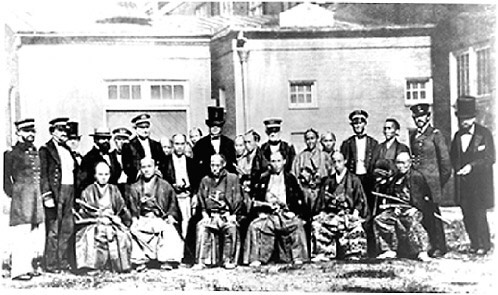
FIGURE 1 Photograph taken on the Washington Navy Yard when the first official delegation from Japan visited the United States in 1860.
SOURCE: <http://www.history.navy.mil>.
World War II was a war that was ultimately won by disruptive advances in technology—the first electronic digital computers, radar, nuclear weapons, among other advances. For the first time, the entire scientific enterprise in the United States—in universities, in industries, in research labs—was mobilized and harnessed to the war effort, developing new technologies for military use. What had been episodic support by the government for the development of technologies critical to defense was transformed into a broad and sustained commitment. The wartime compact between American government and industry, to team in developing new technology to serve the national defense, was sustained into the Cold War that followed.
In the United States, many of the great research universities that were to become the backbone of the U.S. innovation system had developed in part with subsidies from the Federal government, as grants of land to the states. One explicit mission given to the land grant colleges was to serve in advancing the useful technical arts, and by the early twentieth century, many land grant schools—MIT, for example—had established important outreach programs that connected their faculty and students to industry. The role of the military in supporting technological development useful for defense had already been well established, but advances in medical technology had also played an important role during the Second World War, and after the war, a large scale program of research grants to universities
through the civilian National Institutes of Health was also ramped up. While the United States in the middle of the nineteenth century had relatively weak protections for intellectual property (like many other developing economies), by the beginning of the twentieth century, with its growing technological prowess, U.S. industry was supporting much stronger protections for IP.
In late nineteenth century Japan, events took a different, but parallel course. Japan—living in self-imposed isolation from foreign contact for centuries—was now faced with the new problem of an Asia increasingly patrolled by foreign military forces armed with state-of-the-art technology, delivered by sophisticated and technically advanced national industries at home. In order to preserve its independence in an epoch of unrestrained European colonial expansion, it was imperative to achieve parity with the foreign technology it faced, and create modern institutions that would support and deliver the technologically advanced industrial base required to maintain a first rate military. A crash industrialization program in the late nineteenth and early twentieth centuries was successful in achieving this goal.
In the pattern of development in Japan and the United States in the late nineteenth century can be seen many of the features that were to shape the interplay between the U.S. and Japanese innovation systems in the late twentieth century. In Japan, the tradition of scanning the globe for the best available technology, then importing, adapting, and improving the foreign technology, was born out of the necessities of its crash industrialization program. A relatively weak system of intellectual property protections was natural, given its position mainly as an importer of foreign technology. The government took an active role in subsidizing and supporting the industrial infrastructure it strove to develop in the national interest. A strong and highly capable, elite bureaucracy was created to coordinate and support the efforts of the private sector in reaching this target. Japan’s drive for industrialization and the adoption of Western technology led to the establishment of its national university system and the founding of elite private universities, like Keio and Waseda, modeled after institutions their founders had observed abroad.
World War II was enormously costly for Japan and Japanese industry, and much of the early postwar history of Japanese innovation policy marked a rebuilding of the institutions that had led its earlier drive to industrialization. Rapidly importing and adapting foreign technology was once again key, as Japan strove to rebuild a modern, technologically advanced economy out of the wartime rubble.
The United States, perceiving a newly minted peer technological competitor in Japan in the 1980s, undertook some major changes and policy experiments, some of which were intended to copy perceived successes in postwar Japanese innovation policy. These changes in the United States had visible effects, and in the 1990s, perceptions of American success led Japan to alter some of its innovation policies and institutional arrangements. This co-evolution of innovation policies in the United States and Japan continues today.
CHANGES IN U.S. INNOVATION POLICIES IN THE 1980s
Japanese technological capabilities first came onto the U.S. radar screen in the late 1950s, when the Japanese electronics industry succeeded in mastering the production of transistors for use in consumer electronics. To some extent, Japanese success in this arena was dependent on U.S. antitrust policy—as a price for dropping its antitrust litigation against AT&T, the Justice Department had required AT&T to license critical patents on the transistor for a reasonable fee to all comers, a mandate interpreted to include foreign companies. Massive U.S. imports of Japanese transistors, primarily assembled into inexpensive consumer electronics—like transistor radios, provoked the first public campaign against high-tech Japanese imports. In a preview of debates to come, the U.S. electronics industry divided over how to react—some component makers called for restrictions on Japanese imports, while the more advanced producers of the highest tech devices (high performance silicon transistors, and early integrated circuits) argued that the key was to invest in newer, more advanced technology, leaving more mature, and hence less profitable, products for followers—like the Japanese—to fight over.
Through most of the 1960s and early 1970s, a series of high-tech products—primarily in consumer electronics, and including televisions, then calculators, then digital watches, fell into this cycle of American product innovation, followed by Japanese imitation, adaptation, and improvement. The cycle time between an initial American innovation and successful Japanese improvement, and ultimately, market dominance, seemed to get shorter and shorter. A similar story also played out in a product with a distinctly more mature and less high-tech character, the automobile. The common denominator in both cases was that Japanese improvements seemed to typically focus on continuous improvement of manufacturing processes and product quality, and use in delivery of a higher quality product at lower cost. An explosion of interest, and books, on Japanese manufacturing techniques, and Japanese industrial policies, was highly visible in U.S. industrial and policy circles in the late 1970s and early 1980s.
The result was a series of trade battles over Japanese exports over this period. In addition to the more obvious weapons of trade policy—dumping cases, retaliatory tariffs and quotas—some more creative armaments were also deployed. Japanese exporters of high-tech products into U.S. markets were sued over infringement of patents, through the Federal courts and through the U.S. International Trade Commission. Others focused on Japanese use of home market protection as an indirect method of subsidizing its high-tech industry, and urged that political pressure be applied to Japan to lower the formal and informal barriers surrounding its high-tech markets, particularly for semiconductors and computers, where U.S. firms seemed to hold a clear technical lead.
A seminal event for U.S. innovation policy was Japanese success in the global market for leading edge semiconductor memory chips in the late 1970s and early 1980s (see Flamm 1996). These memory chips, DRAMs (dynamic random access memories) were the technology driver for the entire semiconductor industry—the
highest volume product, making use of the most advanced available manufacturing equipment. U.S. DRAM producers were shocked by the rapid advance of Japanese producers into manufacture of the highest tech current generation chips in the early 1980s. Worse yet, customers were reporting that the reliability and quality of the Japanese chips exceeded that of the U.S. product. Even worse, the Japanese DRAM makers in some cases seemed to be selling at prices below U.S. producers’ costs, and were using Japanese production equipment that seemed better than that available to U.S. makers.
In addition to the now-traditional trade policy remedies, many U.S. academics and policy analysts focused on the apparent success of some of the strategies used by Japan to move to the leading edge. The superior DRAM manufacturing technology, in particular, was perceived by many in industry to be linked to cooperative government-industry R&D projects that had been organized by the Japanese government in the 1970s. Elements of these projects included joint labs, supported by both government and industry funds, to which companies sent R&D personnel; the participation of elite government labs in these joint R&D programs; and dissemination of research outcomes on a preferential basis among the membership of the joint R&D consortia. The success of Japanese producers in employing these strategies in their rapid ascent to the leading edge of semiconductor technology led many in the U.S. industrial and the policy communities to urge that similar steps be taken in the United States.
A number of concrete legislative measures were passed in the 1980s to facilitate these suggestions, and fundamentally altered the contours of U.S. innovation policy. The first was the passage of the Stevenson-Wydler Technology Innovation Act, passed in 1980. In an effort to speed the rollout of technology “sitting on the shelf” in government labs, and to facilitate collaboration of government researchers with their industry counterparts under the Stevenson-Wydler Act, government labs created the Cooperative Research and Development Agreement (CRADA) as a legal vehicle to enable government researchers in national laboratories to undertake joint projects with industry. Thousands of CRADAs were active, annually, within a decade of the passage of Stevenson-Wydler.
A second major change was passage of the Bayh-Dole University and Small Business Patent Act, also in 1980.1 Some had argued that a unique strength of the American innovation system—its great research universities—was contributing too little to its high tech industrial muscle. Great technology was sitting on the shelves of our universities, it was argued, because university professors had too little incentive to patent, and universities too little incentive to license, when
funded by government grants. Bayh-Dole granted patent rights on government-funded research grants to universities, and encouraged them to actively transfer technology to private industry.
A third major effort culminated in the National Cooperative Research Act (NCRA) of 1984, which gave U.S. joint industry R&D consortia that registered with government some limited immunity from prosecution under U.S. antitrust laws. Hundreds of U.S. R&D consortia registered under this law in the decade following passage of the act. In 1993, the act was amended and limited antitrust immunity also extended to production joint ventures.
Two consortia formed in the 1980s were particularly well known. One, the Microelectronics and Computer Technology Corporation (MCC) was one of earliest, and ultimately, least successful of these experiments. Japan’s announcement of a government-funded, “Fifth Generation” computer R&D program in 1982, explicitly intended to put Japanese computer producers at the leading edge in computer technology, stimulated American fears that the competitive achievements of Japanese producers in DRAMs were about to be duplicated in computers. U.S. electronics firms formed the consortium in late 1982, and lobbied hard for the NCRA as part of the launch process. MCC was mainly privately funded, and had an “a la carte” menu of projects that its members could choose to fund and participate in. It shut down in 2001 and is largely viewed as a failure today.
The second such R&D consortium was SEMATECH, founded in 1987 by U.S. semiconductor makers, with support from the Department of Defense. In response to the alarms being raised about U.S. semiconductor producers no longer dominating the production of the most advanced chips, a 1986 Defense Science Board report had called for DoD to fund an R&D consortium with industry intended to assure U.S. supply of the most advanced chips. With 50/50 industry/defense funding, SEMATECH ultimately settled on a common R&D program designed to improve the manufacturing technology base, funded jointly by all members. SEMATECH was widely perceived by industry to have had a significant impact on U.S. semiconductor manufacturing performance in the 1990s—when its federal subsidy ended in 1997, SEMATECH continued with purely private industrial funding. SEMATECH went international in the late 1990s. It admitted non-U.S. firms as full members, and became the administrative home of a highly influential and innovative contribution to the global innovation system—the International Technology Roadmap for Semiconductors—that has since become a major force coordinating R&D across both industrial and national boundaries within the global semiconductor industry.
A fourth development was a policy change within the National Science Foundation, which historically had marked a sharp boundary between pure academic research and more applied industrial research and development in its funding policies. In 1984, the NSF began to allocate substantial resources to a series of Engineering Research Centers, designed to foster collaboration between university scientists and engineers and their industrial counterparts, in jointly funded efforts.
A fifth development in the 1980s was a strengthening of the U.S. patent system. The creation in 1982 of a Court of Appeals of the Federal Circuit (CAFC) ultimately tipped the scales toward a vastly more “pro-patent holder” legal system than had previously existed. As the result of the rulings of this court, for example, the patentability of software had been established by the early 1990s, in a departure from earlier practice. While not explicitly targeting foreign competitors, the changes in the patent system in the early 1980s initially were felt most directly by foreign companies with relatively skimpy U.S. patent portfolios to use to countervail lawsuits. Whether these changes in the patent system were ultimately beneficial or detrimental to innovation is today the subject of heated discussion, and patent reform legislation is currently being actively debated in the U.S. Congress.
Finally, the traditional tool of postwar technology policy in the United States—funding of R&D by the Department of Defense—continued to play an important role supporting innovation in some key areas, even as the relative importance of U.S. government funding of R&D continued to decline, dwarfed by a booming high-tech economy. A good example of how this funding had an impact was DoD’s reaction to Japan’s “Fifth Generation” computer R&D program, described above. At roughly the same time the Fifth Generation program was announced, the three large Japanese electronics firms manufacturing mainframe computers had began to sell substantial numbers of supercomputers at home and abroad. While the Fifth Generation program ultimately was to create little threat to U.S. computer companies (because of other developments in the industry, including the advent of the low cost commodity microprocessor and personal computers based on it), it was one stimulus to a substantial government effort in the United States to accelerate the pace of high performance computing innovation. In the 1980s this program, led by the Defense Department’s Defense Advanced Research Projects Agency (DARPA), funded a massive (over a billion dollars of funding over 1983-1993) Strategic Computing Initiative (SCI) that transformed the face of the U.S. supercomputer industry (see National Research Council 2005).
The prospect of serious competition from Japanese computer companies in mainstream markets also led to a series of trade policy responses. In the 1980s, U.S. trade negotiators signed agreements with the Japanese government designed to open up government procurement in Japan (where, as in the United States, the government was the bulk of the market for supercomputers) to U.S. supercomputer producers. In the mid-1990s, the U.S. government also supported U.S. supercomputer makers in bringing an antidumping case against Japanese supercomputer sales in the U.S. market. That case ultimately forced Japanese companies out of the U.S. market until 2003, when a suspension agreement was signed.
While one part of the U.S. government reacted by building walls around the U.S. market, DARPA and its SCI program (in concert with active cooperation and funding from other government agencies) took the opposite tack, attempting to stimulate a burst of innovation that would qualitatively alter the industry.
The United States could not regain a significant qualitative lead in computing technology (the assumed cornerstone of qualitative superiority for U.S. weapons systems) merely by introducing faster or cheaper computer components, it was argued, since Japanese producers had clearly achieved technological parity, if not some element of superiority, in manufacturing these electronic building blocks at this point.
Instead, the idea was to fund an intense effort to do what had not previously been done—to create a viable new architecture for computers built around massively parallel processors, in contrast to previous approaches to improving supercomputers reliant on the use of ever faster processors. Once the architectural details of how to scale these systems up were worked out, very large parallel machines could be put to work, and supercomputers orders of magnitude faster would confer new qualitative technological advantages to government agencies charged with national security.
Dozens of new industrial flowers bloomed in DARPA’s Strategic Computing hothouse from the mid-1980s through the early 1990s. Old players and new ones received substantial support for experiments with new, parallel architectures. While there was an extraordinarily high mortality rate among the companies that took the government funds and developed parallel computer architectures in the 1980s and early 1990s, important architectural and conceptual problems were confronted and parallel systems were made to work, on at least some scale. The lessons learned were absorbed by other U.S. companies (who typically hired key technical staff from defunct parallel supercomputer pioneers). At the end of the day, there were five major new U.S. entrants into the HPC market in the 1990s—IBM, SGI, Sun, DEC/Compaq (merged into HP recently), and Convex/HP—which today have survived with the lion’s share (measured in numbers of systems) of the global high performance computing marketplace. All but one of the Japanese producers marketing supercomputers in the early 1980s have basically exited from this market today.
Assessment of the net impact of these changes on the effectiveness of the U.S. innovation system remains the subject of great debate in the United States. There is no academic consensus on the merits of most of the changes described above (see Mowery, Nelson, Sampat and Ziedonis [2001]) on the effects of the Bayh-Dole act and see Jaffe and Lerner [2006] and Hall [2006] on the patent system). However, there clearly has been a “revealed preference” of industry at home and abroad for some of the changes. SEMATECH, for example, continued to be funded by a variety of companies from around the globe, even when there were no government subsidies being collected. A large number of semiconductor and semiconductor equipment companies from around the globe invest significant resources in the International Technology Roadmap for Semiconductors R&D coordination process. Perhaps, most importantly, the perceived success of these U.S. innovation policy changes led Japan to alter some of its policies in the mid-1990s.
NEW DEVELOPMENTS IN JAPANESE INNOVATION POLICIES SINCE THE 1990s
There have been significant new developments in Japanese innovation policies since the 1990s, strongly influenced by developments in the United States in the 1980s. They include a significant increase for funding in the science and technology budget, coupled with major institutional reforms in national universities and research laboratories, measures to strengthen industry and academic science partnerships, including the enactment of the Japanese version of the Bayh-Dole Act, and a significant strengthening of intellectual property rights protection. The most important reason for these changes was the recognition of policy makers that Japan needed to strengthen its innovation capability, as an engine of economic growth, given that the catch-up phase of Japanese economic growth was over. This perception was widely shared, as shown by the fact that the “Basic Law on Science and Technology,” which set the new framework for science and technology policymaking, received unanimous support from all political parties in its enactment in 1995. The policy priority on innovation increased as the stagnation in Japan’s economy extended over almost a decade.
The U.S. model of an innovation system has strongly influenced the development of Japanese innovation policy. It is widely believed in Japan that the strong basic research capability of U.S. universities, supported by a high level of federal support, close collaboration between industry and universities, and strong protection of intellectual property rights, have been major contributing factors to the impressive recovery of the U.S. economy since the early 1980s. Japan’s perception of the U.S. model of an innovation system may basically be characterized as follows (recognizing that there is no complete unanimity in Japan on the validity of all points). Significant government support for basic or generic research, combined with strong research competition, has enabled U.S. research universities to continuously create scientific discoveries, to retain leadership in global scientific research, attract the best talent in the world, and to accumulate the know-how and human capital in technological frontier areas. Close partnerships between universities and industry have enabled basic scientific capabilities to be transformed into emergent new industries in such areas as biotechnology and IT (information technology). The Bayh-Dole Act, encouraging patent ownership by universities, is believed to have been an important reform stimulating this process, by enhancing the incentives for university professors to engage in technology transfer. Finally, strong protection of intellectual property rights in the United States is thought to have stimulated private R&D investments in risky frontier areas. There are three categories of major policy initiatives taken by the Japanese government which were stimulated by this common interpretation of the U.S. experience.
Increased Funding and Institutional Reform in Science and Technology Policy
Four major changes in science and technology policy have taken place. First, there has been a significant expansion of government support for research in the budget, prescribed in the Science and Technology Basic Plans (for five year periods), starting in 1996. This happened despite the dire fiscal situation created by continuing economic stagnation. As a result, the ratio of government-funded research to GDP increased over the last decade by 10 percent, from 0.60 percent in the first half of the 1990s, to 0.67 percent in the latter part of the 1990s, and then to 0.69 percent in the first half of 2000s. This compares with 0.83 percent of GDP in the U.S. in 2004, and 0.76 percent in Germany (including military R&D budgets in these figures). The expansion of budgets helped modernize the research facilities in national universities and laboratories, which had become increasingly obsolete due to underinvestment in previous years. The expansion in budgets also enabled a significant amount of new research investment in four priority areas (life science, information and communication, environment and nanotechnology/materials). The share of the R&D budget allocated to these priority areas increased from 29.1 percent in early 1990s to 38.6 percent in early 2000s.
In semiconductors, in particular, Japanese government funding for R&D consortia in this area had dimmed in the face of trade friction with the United States in the 1980s. By the mid-1990s, however, as the U.S. SEMATECH effort seemed to produce results and the competitive fortunes of U.S. semiconductor producers rebounded, the Japanese semiconductor industry began a decline in the face of intensified global competition. Japan launched a new round of industrial, university, and private R&D consortia (with names like SELETE, STARC, and ASET, see Fujimura and Chuma 2006 for some details) that seemed modeled, in part, on SEMATECH and growing government-industry-university collaborative efforts in the United States (which in turn had been based on the perceived success of the earlier Japanese VLSI efforts)!
Second, there have been a number of important institutional reforms. The portion of research funding allocated through competition has increased significantly. It rose almost sixfold during the period from 1991 to 2005. Perhaps most importantly, national universities and national research institutes have been transformed into nonprofit, starting in April 2004. This transformation was motivated in large part by a government target for reductions in the total number of national civil servants by the end of FY2003. However, it has also greatly increased freedom in activities undertaken at Japanese universities. Since national universities and laboratories account for the bulk of scientific and technological research within the Japanese university system, their corporatization should have a long-term effect enhancing flexibility and efficiency in allocation of resources to research.
Since one might expect a significant lag before policy reforms affect research performance in national universities and laboratories, it is too early to assess their impact. However, there are some statistical indicators available. The White Paper
on Science and Technology (2006) suggests that research performance of Japanese scientists has improved, although the gain may not be impressive. The share of Japanese researchers in both numbers and citations of scientific papers in major scientific journals has increased significantly over the last two decades. Japan’s share increased from less than 7 percent in 1981 to around 10 percent in 2004 in terms of the total number of publications (vs. 32 percent for the United States), while it increased from less than 6 percent in 1981 to around 9 percent in 2004 in terms of forward citations (vs. 48 percent for the United States). There remain, however, doubts over the impact of the increases in government expenditures for science and technology in enhancing industrial innovations in Japan to date.
Strengthening University-Industry Partnerships
There once was strong collaboration between universities and industry in Japan (see Kondo 2006). For an example, the Department of Engineering of Tokyo University was established in 1873 as the first engineering department in a university in the world, and played a major role in facilitating the absorption of foreign advanced technology within Japan. University professors also contributed as industrial inventors when the R&D capability of Japanese firms was weak. A good example is the former RIKEN (Institute of Physical and Chemical Research), which successfully incubated a number of new firms in Japan, derived from the inventions of university professors. However, university-industry partnerships had become less important by the late 1960s and 1970s, as the absorptive and R&D capability of Japanese firms strengthened, and as student political activism and turbulence on campus discouraged such partnerships.
The importance of the university has re-emerged in Japanese research in recent years, since it is now expected to play a central role in creating the foundation for industrial innovation. In both the United States and Japan, a university is a major player in basic R&D: accounting for 62.0 percent and 46.5 percent of basic research, respectively, in the United States and in Japan. Thus, improved efficiency in technology transfer from university to industry could play a major role in strengthening science-driven industry. There has been significant institutional reform in Japan designed to pursue this objective.
First, Japanese policymakers have adopted a system of technology transfer based on the principle of university ownership of patent rights, following precedents set out in the Bayh-Dole Act of 1980. In particular, the Japanese Bayh-Dole Act (The Law on the Special Measures for Revitalizing Industrial Activities) was enacted in 1999, and permits the retention by the grantees or by contractors of the patents to the inventions derived from publicly funded research. In 1998, legislation to promote the establishment and activities of Technology Licensing Organizations (TLOs) was enacted. Today there exist organizations responsible for technology transfer at all universities with major scientific and engineering research capability. After national universities were incorporated in 2004, most of
them adopted employment contracts containing an invention disclosure obligation for faculty members, and a transfer of ownership of inventions to the university. As in the United States, an inventor owns patent rights, unless otherwise agreed, even employed by another entity. In the past, it used to be that when a university professor made an invention, patent rights to the invention were transferred to a private company when supported by a research grant, since universities did not have institutional capabilities to support filing, licensing, and enforcing patents.
Second, the government has encouraged collaborative research between industry, and universities, and national research laboratories, as well as the incubation of new business entities derived from these organizations. The government started by helping to establish Collaborative Research Centers in national universities after 1987. The government has also provided research grants targeting university-industry joint research, such as Research Grants for University-Industry Collaborative Research from FY1999. It has also supported the establishment of “Venture” (meaning startup) Business Laboratories (VBLs) after 1995. Finally, it has relaxed regulations preventing national university professors from serving as board members of private companies, particularly when this is helpful for technology transfer (the Law on the Enhancement of Industrial Technologies in 2000).
Again, it is too early to assess the full impact of this reform. However, there are hints of some notable changes. The number of annual domestic patent applications by universities and approved TLOs has increased substantially, from 641 in 2001 to 8,527 in 2005. The number of domestic patent applications is at a level equivalent to those by U.S. universities (6,509 in year 2002). In addition, the number of university-industry joint research projects increased from less than 1,500 annually in 1995 to more than 10,000 in 2005. The number of academic industrial spin-offs has also increased significantly (179 in Japan in 2003, compared with 364 in the United States in 2002).
On the other hand, the amount of the licensing revenue received by Japanese universities is still tiny (it was less than 0.5 percent of that in the U.S., according to Kondo 2006), and the number of academic startups which have reached the IPO stage is also tiny. The apparent impact of university research on industrial innovation, measured by these measures, is still very small. Besides a short history of university ownership of patents, this may also reflect the absence of really valuable university inventions, lack of experience in patenting and licensing strategy, and a weak infrastructure for supporting high-technology startups, including limited availability of risk capital and professional services.
Strengthening the Protection of Intellectual Property Rights
While Japan has a long history of intellectual property rights (IPRs) protection (the first full-fledged patent law was enacted in 1885), IPRs protection in Japan has been significantly strengthened since the early 1990s (see Nagaoka 2006). Initially the impetus for such change came from abroad: a U.S.-Japan
agreement in 1994 and the TRIPs (Trade-Related aspects of Intellectual Property rights) agreement negotiated in creating the World Trade Organization in 1995. Subsequently, however, further changes have been a core domestic reform initiative in Japan. Extensive reforms in Japan in the 2000s include the implementation of the series of action plans coordinated by the Intellectual Property Policy Headquarters headed by the Prime Minister since 2002 (including the enactment of the Basic Law on Intellectual Property in 2003), and the establishment of the Intellectual Property High Court in 2005, with the U.S. Court of Appeals of the Federal Circuit (CAFC) as a model.
Stronger penalties to deter infringement have been a major policy change. The patent law was revised in 1998 to reinforce the private damages system, increase criminal sanctions, and to improve the ability of a patentee to collect evidence of infringement. The amendments introduced a new provision which allows a patentee to presume the amount of damages due to infringement, based on the sales made by an infringer and on the profit rate of the patentee. The law was further amended in 1999, again strengthening the power of a patentee to collect evidence needed to show infringement of a patent.
Second, there has been an expansion of patentable subject matter in the field of computer programs. Although the issue of patentability of software was also a major issue in the United States, given that an algorithm or mathematical formula itself is not patentable, the issue was resolved after the early 1980s in the United States. A major constraint in Japan was that the patent law defines an invention eligible for patent as a “technical idea utilizing natural laws.” Reflecting this qualification, a computer program per se was not patentable until 1993, unless it was a part of an invention using hardware. It became patentable in 1997, when recorded in a computer-readable storage medium. In 2000 a computer program itself became fully patentable as a product patent.
Third, the Japanese Supreme Court affirmed the “doctrine of equivalents” in 1998. The Supreme Court ruled, among other things, that “equivalence” should be determined based on technologies available at the time of the infringement, not at the time of the patent application. Thus, the modifications that are obvious given the technologies available at the time of infringement are deemed equivalent. After this ruling, 140 cases involving the issue of equivalence were initiated from 1998 to 2003, and equivalence was recognized by the courts in 15 cases during this period.
Fourth, there was a switch from a pre-grant opposition system to a post-grant opposition system in 1994. The pre-grant opposition system allowed any person to oppose a patent before its grant. It was one source of delays in patent examination in Japan in the early 1990s. Even though it provided a mechanism for a third party to add valuable information on prior art, it also opened the door for a competitor to file opposition without substantial merit. The post-grant opposition system was integrated into invalidation trials after 2004, in order to provide a definitive resolution of conflicts between a patent applicant and opponents.
The level of IPRs protection in Japan is now widely recognized to be very high. According to the assessment of the level of business software piracy by the Business Software Alliance, Japan is the third lowest (25 percent) in 2006, following the United States (21 percent) and New Zealand (22 percent). The effect on innovation is more difficult to assess. The number of patent examination requests has increased substantially over time. This may indicate that the value of patents have risen, encouraging R&D by Japanese firms. Stronger protection of IPRs may have also strengthened R&D rivalry among firms, and therefore increased R&D. On the other hand, the increasing complexity of patent claims and the increasing number of the requests for patent examinations are putting strong pressure on scarce examination capacity at the JPO. The proliferation of patents and other intellectual property rights can deter rather than promote innovation, by hindering a firm from combining technologies efficiently, due to high transaction costs, holdup risk, and inefficiency in chains of vertical monopolies, given the difficulty of forming and coordinating coalitions to exploit elements of technology owned by different firms.
CONCLUSIONS
There have been significant changes in Japanese innovation policy since the 1990s, influenced by the perceived success of U.S. innovation policy initiatives in the 1980s. These U.S. policy changes of the 1980s in turn were developed in response to increased high tech competition from Japanese firms. Although it will require significantly more evidence and research in order to evaluate the full effects of these changes on both U.S. and Japanese innovation policies, some preliminary observations can be made with respect to the lessons learned, and challenges faced, in both systems since the 1990s.
First, policy reform in Japan has placed priority on strengthening competitive mechanisms in creating innovations—a process that is likely to be one of the main sources of the strength of U.S. innovation system. A significant expansion of competitive research funding, the corporatization of both national universities and public laboratories, and stronger protection of intellectual property rights are best interpreted as important steps in that direction. Since efficient production of knowledge benefits from competition based on the priority of publications and inventions (such competition not only strengthens the intensity of a race for research results, but also helps avoid duplication in research, and facilitates the division of labor in research, both locally and globally), this policy shift seems to be clearly pointed in the right direction.
Second, recent innovation system reforms in Japan also put priority on strengthening university and industry partnerships, another major source of strength in the U.S. innovation system. Although there is a long tradition of university-industry collaboration in Japan at the individual professor level, Japanese universities did not provide institutional support for such collaboration
until recently. Stronger institutional support for collaborative research, licensing and high-tech startups would strengthen technology transfer from university to industry. Even in the United States, however, how a university can best contribute to industrial innovation remains controversial. Some argue that universities can best contribute through research excellence, transmitted via good scientific publications, and education, and that university and industry partnerships may crowd out these more traditional but core activities. In addition, the effectiveness of these partnerships may depend on the availability of complementary institutions, such as infrastructure for supporting high-technology startups, including the availability of risk capital and professional services. This suggests that a model which works well in the United States may not work in Japan. More research—and experience—may be needed to resolve this complex issue.
Third, while intellectual property rights protection is an important stimulus to innovation, current systems seem far from perfect. How effectively IPR protection serves the goal of innovation may depend on details of institutional design and management. Excessive protection of IPRs under a low standard of non-obviousness or inventiveness may motivate firms to apply for patents for low quality inventions, which can stifle innovation. High standards for granting patent protection, and efficient utilization of the third-party information in patent examination, may be very important. Furthermore, the proliferation of intellectual property rights can deter innovation in technology areas where progress is cumulative, if this exacerbates the “patent thicket” problem. It is important to improve the efficiency of technology markets, including licensing mechanisms for patents related to industrial standards.
Fourth, it is important to strengthen mechanisms for international collaboration. Since knowledge flows do not respect borders and high-tech competition has become global, efficiency in knowledge production and use will often involve global solutions. The success of International SEMATECH in coordinating and accelerating global semiconductor innovation through the international semiconductor technology roadmap is a good example of how a global approach to coordinating private and public innovation investments can be effective. International sharing of databases and international coordination of patent examinations among major national patent offices may also help improve the quality of patent examinations, worldwide, and contribute to an improved global innovation system.
REFERENCES
Hall, Bronwyn H. 2006. “Issues and Possible Reforms in the U.S. Patent System.” Presentation at the conference, 21st Century Innovation Systems for the United States and Japan: Lessons from a Decade of Change. Tokyo, Japan. The National Academies, NISTEP of Japan, and The Institute of Innovation Research of Hitotsubashi University. <http://www.nistep.go.jp/IC/ic060110/pdf/5-2.pdf>.
Flamm, Kenneth. 1996. Mismanaged Trade: Strategic Policy and the Semiconductor Industry. Washington, D.C.: The Brookings Institution.
Fujimura, Shuzo, and Hiroyuki Chuma. 2006. “Semiconductor Consortia in Japan: Experiences and Lessons.” Presentation at the conference, 21st Century Innovation Systems for the United States and Japan: Lessons from a Decade of Change. Tokyo, Japan. The National Academies, NISTEP of Japan, and The Institute of Innovation Research of Hitotsubashi University. <http://www.nistep.go.jp/IC/ic060110/pdf/5-2.pdf>.
Jaffe, Adam B., and Josh Lerner. 2006. Innovation and Its Discontents: How Our Broken Patent System is Endangering Innovation and Progress, and What to Do About It. Princeton, NJ: Princeton University Press.
Kondo, Masayuki. 2006. “University-Industry Partnerships in Japan.” Presentation at the conference, 21st Century Innovation Systems for the United States and Japan: Lessons from a Decade of Change. Tokyo, Japan. The National Academies, NISTEP of Japan, and The Institute of Innovation Research of Hitotsubashi University. <http://www.nistep.go.jp/IC/ic060110/pdf/5-2.pdf>.
Mowery, David C., Richard R. Nelson, Bhaven N. Sampat, and Arvids A. Ziedonis. 2001. “The Growth of Patenting and Licensing by U.S. Universities: An Assessment of the Effects of the Bayh–Dole Act of 1980.” Research Policy 30.
Nagaoka, Sadao. 2006. “Reform of Patent System in Japan and Challenges.” Presentation at the conference, 21st Century Innovation Systems for the United States and Japan: Lessons from a Decade of Change. Tokyo, Japan. The National Academies, NISTEP of Japan, and The Institute of Innovation Research of Hitotsubashi University. <http://www.nistep.go.jp/IC/ic060110/pdf/5-2.pdf>.
National Research Council. 2005. Getting Up to Speed: The Future of Supercomputing. Washington, D.C.: The National Academies Press.


