



Below is the uncorrected machine-read text of this chapter, intended to provide our own search engines and external engines with highly rich, chapter-representative searchable text of each book. Because it is UNCORRECTED material, please consider the following text as a useful but insufficient proxy for the authoritative book pages.
3 Research Questions, Approaches, Projects, and Needs T o fulfill the main charge of the workshop, participants divided into groups to identify key research topics at the interface of managed and natural ecosystems where genetically engineered organisms (GEOs) would be likely to interact with wildlife and their habitats. These interfaces, which included agriculture/wildland; silviculture/wild for- est; and aquaculture/aquatic habitat provided the context for discussing the potential interactions that might occur, and possible approaches to observe or study them. Approximately ten participants were assigned to each group, based on their area of expertise. (Because of the participant numbers, two separate agriculture/wildland groups met for a total of four breakout groups). Each group met twice. During the first breakout session, the groups were asked to identify research questions or topics related to the potential impacts of GEOs on wildlife and habitats at the given interface and to consider the range of research approaches available that could address these topics and themes, including fundamental or theoretical research, modeling, laboratory, and field approaches. During a second breakout session, the groups were assigned with building on the research topics they identified by drafting more specific proposals for research at their respective ecosystem interface. As work- shop committee chair Kapuscinski said in explaining the charge to the group, âImagine that next week, cross-organizational teams were asked to submit proposals. What would you propose to study?â Recognizing that these proposals were produced in just a few hours, they nonetheless are 33
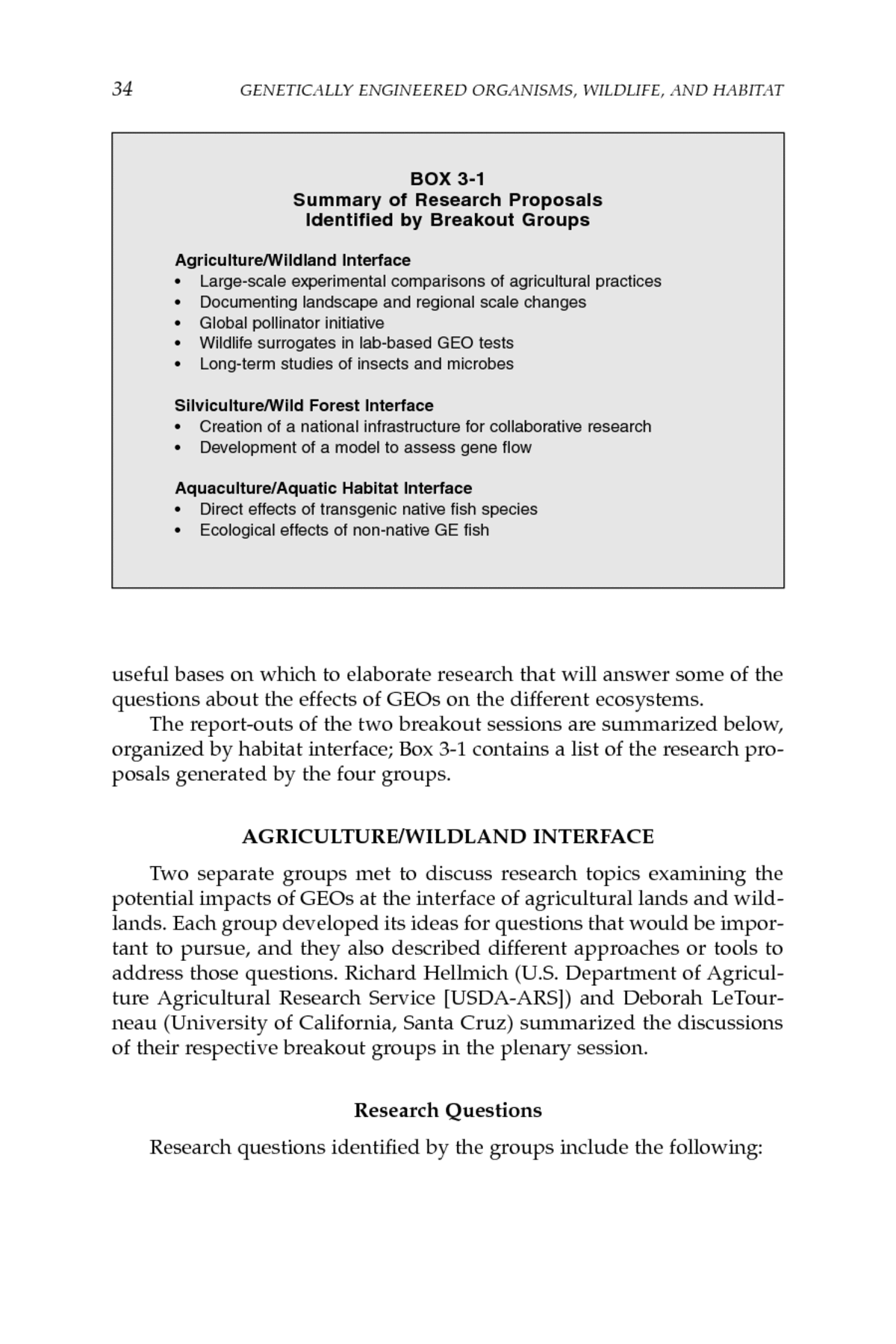
34 GENETICALLY ENGINEERED ORGANISMS, WILDLIFE, AND HABITAT BOX 3-1 Summary of Research Proposals Identified by Breakout Groups Agriculture/Wildland Interface ⢠Large-scale experimental comparisons of agricultural practices ⢠Documenting landscape and regional scale changes ⢠Global pollinator initiative ⢠Wildlife surrogates in lab-based GEO tests ⢠Long-term studies of insects and microbes Silviculture/Wild Forest Interface ⢠Creation of a national infrastructure for collaborative research ⢠Development of a model to assess gene flow Aquaculture/Aquatic Habitat Interface ⢠Direct effects of transgenic native fish species ⢠Ecological effects of non-native GE fish useful bases on which to elaborate research that will answer some of the questions about the effects of GEOs on the different ecosystems. The report-outs of the two breakout sessions are summarized below, organized by habitat interface; Box 3-1 contains a list of the research pro- posals generated by the four groups. AGRICULTURE/WILDLAND INTERFACE Two separate groups met to discuss research topics examining the potential impacts of GEOs at the interface of agricultural lands and wild- lands. Each group developed its ideas for questions that would be impor- tant to pursue, and they also described different approaches or tools to address those questions. Richard Hellmich (U.S. Department of Agricul- ture Agricultural Research Service [USDA-ARS]) and Deborah LeTour- neau (University of California, Santa Cruz) summarized the discussions of their respective breakout groups in the plenary session. Research Questions Research questions identified by the groups include the following:
RESEARCH QUESTIONS, APPROACHES, PROJECTS, AND NEEDS 35 What Are the Effects of Gene Flow? In the context of agricultural crops, gene flow means that a gene has moved from a GEO crop and has been sexually incorporated into a wild population of plants in the field or near the field, or perhaps into microbes of the rhizosphere. The fact that this movement has occurred might be considered an âeffectâ on its own, but a fundamental question is whether there will be consequences of gene flow on wildlife and their habitats. The answer to that question might depend on the nature of the gene involved, whether it persists in the natural environment because it confers fitness to organisms into which it has moved, how those organisms relate to the rest of their environment and whether the transgene has altered that relation- ship, and how widespread the gene flow is. What Are the Direct and Secondary Effects of GE Crops? Direct effects include toxicity or some other negative effect on an organism. But there might also be secondary effects, for example if the GE crop resulted in the âremovalâ of food eaten by wildlife (such as insects or weeds). How far into the food web, it was asked, might those secondary effects be observed, for example that might result in changes in population sizes? What Are the Effects of GE-Related Agriculture Practices Relative to Other Practices? Not only do GE crops have potential direct and secondary effects, but because certain agricultural practices are associated with the use of GE crops, they might have effects as well. For example, no-till planting of GE crops causes less soil disturbance than traditional plowing, and crop residue is also left on the surface of the soil. Pesticide use will be different for Bt-crops than conventional crops. Picking up on the studies described by Wolfenbarger, the group felt that an examination of the effects of agri- cultural practices should include comparators that place into perspective the significance of any changes relative to the alternative. How Would GE-Bioremediation Applications be Evaluated? One suggestion for a research topic was whether it would be possible to use the tools of genetic engineering to develop plants or microbes or other organisms that would be released in order to improve compromised or degraded ecosystems (e.g. transgenic microbes to metabolize soil con- taminants or transgenic ash trees to protect against emerald ash borers). The group felt such applicationsâfor the purpose of environmental biore-
36 GENETICALLY ENGINEERED ORGANISMS, WILDLIFE, AND HABITAT mediationâprobably would not arise out of a commercial motivation (as GE crops have) but might be developed with public funding. The use of GEOs to improve ecosystems was thought to be something that the U.S. Geological Survey (USGS) might champion to improve the environment. The same questions about gene flow and direct and indirect effects would also apply, but with a twist, because the goal is to have a purposeful impact on the environment. Some felt that this would be an opportunity to demonstrate to the public the positive impacts of biotechnology while generating research information on the interactions of GEOs with wildlife and natural habitats. Research Approaches In addition to suggesting important research questions, the two groups identified possible methods and approaches to studying the ques- tions listed above. Identification and Use of Indicator Species It might be possible to identify species that would be useful indicators of direct effects of GE crops on wildlife, both for direct toxicity testing or other negative effects, and for examining effects at higher trophic levels. Perhaps standard protocols could be developed using indicators to evalu- ate the risk of GE crops to wildlife. Hellmich noted that he participates in the International Organiza- tion for Biological Control, which is working to harmonize protocols for laboratory testing of surrogate species, particularly for so-called Tier 1 tests on safety. He thought USGS could contribute by identifying species of interest to add to the list. It was pointed out that sometimes a com- promise about the selection of indicators is neededâthe species (often insects) must be widely available and easily reared in a lab, even if a more informative indicator may exist. Another point made was that indica- tors should reflect effects on wildlife at different life stages (for example, pupae, juveniles, adults). Historical Data Analysis A compilation of relevant historical, geographic, and socioeconomic data on land use and environmental quality can help evaluate different scenarios or hypothesis about the negative or positive effects of GEO use. As an example, LeTourneau cited a theory that the use of GE crops would lead to more intensive farming on smaller parcels of land (leaving more land in an unmanaged or wild state). Another theory is that GE crops
RESEARCH QUESTIONS, APPROACHES, PROJECTS, AND NEEDS 37 reduce pesticide runoff and reduce soil erosion. These potential benefits could be examined through the lens of historical land use and environ- mental data. Planned Experimental Comparisons The breakout group thought that a U.S. version of the U.K. Farm Scale Evaluation (FSE; see Box 2-1) could be useful in examining the effects of different agricultural practices, including the use of GE crops, on habi- tats and organisms, both on farms and in surrounding landscapes. Such a study would require partnerships among government agencies, such as between USGS and USDA, as well as incentives to growers to use specified alternative practices. The group noted the FSE provides valu- able lessons for a U.S. version, but that there are a wider range of agricul- tural practices employed in the United States. The group also proposed that such a study would need to anticipate future changes in cropping practices, such as an eventual second generation of GE crops that would replace current Bt-crops or the next generation of herbicide-resistant crops as resistance to the herbicide glyphosate develops in field weeds. The study would examine the effects of refuges, buffers, riparian zones, and other wildlands, perhaps more than the FSE. Spatial Modeling Existing data might help to predict the spatial distribution of GEO impacts on wildlife. For example, existing Canadian data on GE rape- seed (canola) could be used to form a hypothesis about the evolution and spread of glyphosate resistance to weeds in the United States. In addi- tion, if glyphosate were to become ineffective against weeds, herbicide use might change and that, in turn could have effects on wildlife. Other areas to look at are habitat replacement by drought- and salt-tolerant crop expansion, as well as expansion of crops modified for production of biofuels and industrial materials. Targeted Data Collection and Integration In addition to analyzing and integrating historical data, an effort could be made to collect data in farmlands that would permit detection of landscape-level and long-term effects of transgenic organisms. Key data to augment existing databases could include increased monitoring of agricultural habitat, a comprehensive database on commercial releases and field tests of transgenic events by county, determination of the inci- dence of high exposure of organisms in order to see spatial overlap with
38 GENETICALLY ENGINEERED ORGANISMS, WILDLIFE, AND HABITAT releases, coordination with the Forest Inventory Assessment database, and use of GIS mapping to detect robust impacts or early warning signs. Use of Existing USGS Monitoring Systems The emphasis on mapping, spatial modeling, and combining new and existing databases to put GE questions into context was in part to build on USGSâ strengths. The question was asked whether existing USGS efforts could be used to track effects of GE crops on wildlife and habitats. Looking for effects on pollinators, it was suggested, might be a good fit, given the recent high level of interest in monitoring their status. Would USGS water quality monitoring programs identify effects of GE crops if there were any? This discussion prompted USGS participants to describe some of their agencyâs efforts and capabilities for data collection. Bob Szaro noted that the USGS is looking at landscape change, including agricultural practices, particularly now that the Department of Interior has a broader perspec- tive on the landscape that it manages. Adding GEOs to these efforts would be location-dependent, since information is more available in some places than others. The USGS is working toward a coordinated national effort; participants suggested such an effort on the agriculture/wildland interface would be of huge value for many sectors of society. Many ques- tions that are controversial could be more definitively answered and, depending on the answers, laid to rest or addressed. Kay Briggs added that USGS currently has a better handle on public lands in the West and on the wildland-urban interface, principally because Department of Interior lands are located there and because of firefighting concerns. But more information will be available in the future: USGS is talking about moving toward a national Light Detecting and Ranging (LIDAR) database and making satellite imagery available to the public at no charge via the Internet. Research Proposals The agriculture participants regrouped in the second breakout ses- sion to see if they could develop more research proposals based on the research topics summarized above. Subgroups of three or so participants developed the research questions below, and began to flesh out strategies for how each question could be answered.
RESEARCH QUESTIONS, APPROACHES, PROJECTS, AND NEEDS 39 Study of the Effects of Agricultural Practices on Wildlife and Habitats Using the U.K. Farm Scale Evaluation as a model, this research ques- tion, summarized by Emma Rosi-Marshall (Loyola University, Chicago), could be addressed through a large-scale working farm experiment, situ- ating study sites in areas where wildlife and habitats of concern overlap with agriculture, looking at current agricultural practices, as well as those anticipated in the next decade. The group proposed two regions to study soy and corn farming: The Platte River Valley because it is already designated as a USGS Priority Ecosystem Science Study Area and is a hotspot for migratory birds, and, as a contrast, upstate New York because of its different scale of agricul- tural land use, as well as different pests, wildlife, and habitats. The group also suggested Arizona and Georgia to compare organic, conventional, and transgenic cotton production, again because of the two statesâ differ- ent wildlife, habitats, and agricultural practices. Data collection, the group suggested, could take place within fields, on the margins, and in adjacent wildlands, and could measure biodiver- sity, species of concern and their habitats (such as migrating wildlife and endangered species), and water quality. The groupâs envisioned outcome is data to help determine the effects of agricultural practices, including GE crops, on wildlife and habitats. It was suggested that support for the activity might be sought from the USDA Biotechnology Risk Assessment Grants (BRAG) program (see Chapter 1), which supports research beyond predicting worst-case sce- narios. Although a specific study size was not discussed, Rosi-Marshall said the group envisioned a study on a larger scale than that in the United Kingdom, which had 60 sites. Study of Consequences of GE Practices at the Landscape and Regional Scales Speaking for his breakout group, Norman Ellstrand (University of California, Riverside) described the objectives of the study as trying to elucidate putative risks and benefits of GE crops to guide future policy decisions. The project would integrate spatial data about cropping prac- tices with data from previous monitoring studies on species distribution and abundance, environmental quality, and socioeconomic and demo- graphic patterns. The project would record and measure changes in the distribution of transgenics (and transgenes) over time, and be used to predict future distribution of transgenes and their effects. The proposed approach would be to add a new information layer to current maps. The new layer would plot transgenic events and alter- native practices at the county scale or finer, using GIS analysis for past
40 GENETICALLY ENGINEERED ORGANISMS, WILDLIFE, AND HABITAT distribution effects. Spatial modeling would be used to predict future distribution. Study of the Effects of Agricultural Practices (Including GE Corps) on Pollinator Abundance and Function, Including the Role of Pollinators in Gene Flow from Crops Diane Larson (USGS) summarized her groupâs proposal to estimate the number and diversity of bees and other pollinators on different habi- tat types in the agricultural landscape, to measure the seed set of selected native outcrossing species of plants, and to characterize landscape loads of pollen, including GE pollen. Because the study would focus on agri- cultural practices, which is broader than the use of GE crops, the study would be able to document the impact of GE pollen relative to other practices. The group suggested the many different types of stakeholders would first need to be engaged on a study steering committee. Stakeholders would include farmers, beekeepers, members of the Xerces Society, sci- entists, and others. A pilot study could develop methods and mapping resources, later scaling up to a long-term study that would include resto- ration if problems were identified. It was suggested that recent concern about the abundance and distri- bution of pollinators might mean that there is public interest in providing resources to study them. Other groups may have interest in combining resources, perhaps through establishment of a pollinator database similar to that which exists for birds. Exploration of Surrogate Species for Lab-Testing of Possible Effects of GEOs on Non-Target Wildlife The objectives of this proposal would be to develop lab-based (tier) tests for select wildlife species associated with GEOs, including lab-rear- ing methodology, and to determine how well Tier 1 tests predict outcomes of higher-tier tests. Hellmich, speaking on behalf of the subgroup, recom- mended consultations with experts in USGS, the Fish and Wildlife Service, and other agencies to identify candidate species that would potentially be exposed to GE crops and trees, and consultations with regulatory scien- tists to develop tests that ideally could be harmonized for international use. He noted that regulatory approval of some testing materials might be necessary. The group could not identify specific surrogate species, although it was suggested that insects would probably be the initial surrogates stud- ied. He reiterated the opportunity for USGS to become involved with the
RESEARCH QUESTIONS, APPROACHES, PROJECTS, AND NEEDS 41 International Organization for Biological Control. There was also some discussion about the iterative progressive methods used in a tiered test- ing scheme (e.g., Tiers 1-4 used by EPA) and whether GEOs adhere to the paradigm of when and how to test at each level. Baseline Studies of Insects and Microbes Guy Knudsen (University of Idaho) reported on the discussion of his group, which felt that a 5- to 10-year time frame was too short to develop a specific research agenda about the effects of GE insects and microbes on wildlife and habitat. While there are GE insects and microbial applications in the pipeline, few, if any will likely be in use in the next five to ten years except in small-scale trials. Over a slightly longer time frame, however, there will be many differ- ent kinds of GEOs released, including engineered sterile insects, paratrans- genic insects (insects containing GE microbes), and engineered biocontrol fungi and bacteria. Potential ecological effects include possible gene flow into native populations, nontarget activity of antibiosis (growth inhibi- tion) or pathogenicity, the alteration of rhizosphere communities, and the alteration of species composition in wild plant communities. Rather than specific proposals to look at effects, this subgroup emphasized under- standing insect and microbial ecology, and the need to look beyond food chains and food webs to symbioses and biogeochemical relations. Therefore, the shorter-term research agenda might be to collect base- line information and to survey and characterize the associations of plants and animals with insects and microbes (such as mutualists, commensals, and parasites) in the context of a wildland biotic community. That infor- mation could lead to the development of models that could be used to examine a range of âwhat ifâ scenarios involving the release or escapes of GE microbes or insects. Because the issue of containment (or lack thereof) will be an issue with introduced organisms, the group felt it might be worthwhile to develop and refine technology for rapid detection and tracking of specific arthropods and microbial genotypes in the environment. Because arthro- pods and microbes are so fundamental to ecosystem processes, a change in the microbial flora may have the surprising potential to affect wildlife more than other, better-researched species. Participants urged the USGS and other research agencies to keep this in mind, even if the diversity of organisms, in addition to the time frame, made it difficult to develop research proposals at this workshop.
42 GENETICALLY ENGINEERED ORGANISMS, WILDLIFE, AND HABITAT SILVICULTURE/WILD FOREST INTERFACE A third breakout group examined the interface between managed for- est plantations where GE trees may be grown and surrounding wild forest habitats. The results of the groupâs two breakout sessions to first identify topics and then research proposals, are reported here. Research Topics As reported by David Harry (Oregon State University), the groupâs thoughts crystallized around three priority research areas: 1) gene flow; 2) general experimental approaches using exemplars; and 3) development of new technologies for genetic manipulation. Gene Flow Because current environmental concerns and regulations prevent gene flow from being studied in the field, the group felt that simulations and alternatives using GEO proxies, such as natural mutants, are needed. The effect of factors, such as flowering, phenology, and pollen viability on gene flow rate and distance, need to be better understood. Eventually, if GE trees are to be released, there is likely to be some gene flow, because containment is never complete. Therefore, the group would like to see agreement on an acceptable threshold of gene flow, which might be estab- lished by research with proxies, at least in terms of risk quantification. One participant observed that there are different opinions about whether it is possible to draw generalizations about the risk of categories or types of genes. He suggested that some research on gene-by-environment- by-organism (G x E x O) effects shows that hybrids that result from a cross of a transgenic and non-transgenic species have improved fitness charac- teristics, suggesting that containment must be maintained. However, he added, much can be learned by setting up pre-flowering systems, perhaps with some additional redundant systems built in. Another participant noted that when the question was posed to a scientific advisory panel a few years ago about an acceptable level of gene flow, the response was that even a tiny level of gene flow just shifts the time frame of the effects: thus, the acceptable level, according to this panel, was zero. The Catch-22, summarized Harry, is that because we do not know what the fitness effects are, there can be no releaseâbut without field study, the fitness effects will not be known. An acceptable level of gene flow perhaps could be on the order of a mutation rate, proposed a participant, because that kind of gene flow would be the same as a muta- tion occurring within the population.
RESEARCH QUESTIONS, APPROACHES, PROJECTS, AND NEEDS 43 Start with Simple Approaches The group noted that case-by-case research is important, but if that cannot always be achieved, then moving forward will require using exem- plar species and traits. Despite limitations created by containment require- ments, some kinds of field experiments can take place, particularly with trees before they reach the flowering stage (recognizing that with trees, as opposed to smaller plants, this stage could last many years). The effects of modified lignin or other commercially important phytochemicals, Harry suggested, are researchable even today. A matrix to design or plan field studies could help lay out questions and risks. Gene flow is the major concern related to field trials of GE trees because that represents a biological (and self-replicating) escape. Studies to determine the fitness benefits and nontarget effects of transgenes could be conducted in creative ways in contained, semi-wild environments if the will and vision were present, keeping in mind regulations governing this type of research on public lands. Some participants suggested that gene flow might not be the only way a transgenic tree could affect the environment, and asked what kinds of studies could help us to understand the ecological interactions between GE trees and wildlife moving through the area. Members of the work- ing group admitted that trees in field trials might have an impact on the broader community of herbivores, microbes, animals, and other organ- isms moving through the area, but posited that this is less of a concern than gene flow. They noted that GE trees would most likely be used in plantations, not in wildlands (with a few exceptions, such as the reforesta- tion of native American chestnut trees), which assume different types of forest management. The appropriate baseline for studying the impact of a stand of transgenic trees on transient wildlife would be a comparison of GE versus non-GE plantation-managed trees, rather than comparison with a natural forest. That kind of study could rely on existing data about effects of conventional plantation forestry on wildlife and ecosys- tem services. Biotechnology The effects of genetic background in forest trees on GE expression and the resulting phenotype is much less understood than in agricultural crops. The group saw a need for better technology for inserting genes precisely and for alternative breeding approaches for moving genetic constructs into different genetic backgrounds.
44 GENETICALLY ENGINEERED ORGANISMS, WILDLIFE, AND HABITAT Research Proposals The forestry group identified two research proposals to study the priority areas they identified, as reported by Richard Lindroth (University of Wisconsin). Creation of a National Infrastructure for Collaborative Research to Address Key GE issues, Using Exemplar Species and Traits The forestry subgroup identified an overriding need for âbig scienceâ to study the effects of GE trees on a large and long-term scale. The impor- tant questions to answer, the group felt, are beyond the realm of individ- ual investigators. Rather, they need to be addressed through multiscale, multilevel, long-term studies that will require significant scientific, social, regulatory and political commitments. National Ecological Observatory Network NEON (see Box 2-3) is as an example of the large-scale effort needed to study the effect of GE trees on wildlife and habitats. Taking off from NEON, this group proposed a âGEONâ (GE Obser- vatory Network) to conduct studies on three focal areas: the production and yield characteristics of GE trees, their impacts on biodiversity, and their impacts on ecosystem function. The overall goal of the proposal is to develop baseline information on the consequences (both positive and negative) of GE forestry for wildlife, forest ecosystems, and commerce. The first exemplar traits to examine would be Bt insertion and lignin modification, and possibly others such as phytoremediation. The experi- mental design proposed by the group would encompass single tree plots to understand growth, fitness, and competition, as well as growth/yield block plots to understand community and ecosystem effects. The plots should include nontransgenics and transgenics both with and without the trait of interest. Some caveats to a GEON are that some issues cannot be addressed adequately at this scale and that appropriate controls would be complex and variable. A GEON would also require significant funding, although no specific amount was estimated in this exercise. Development of a Model to Assess Gene Flow The groupâs second proposal would lead to better understanding of the effects of gene flow from GE trees on wildlife and habitat. The group proposed development of spatially explicit landscape models linked to the results of exemplar studies. Perhaps with the assistance of USGS map- ping expertise, the research could answer questions about where genes will move and what impacts may occur. A model could be refined using new genotyping platforms for param-
RESEARCH QUESTIONS, APPROACHES, PROJECTS, AND NEEDS 45 eter estimation (such as non-GE trees), and âinnocuousâ GE markers for tracking. The model, once developed, could also be used to determine appropriate levels of containment for specific genes and environments, as well as the importance of rare long distance movements, such as severe storms or animal transport. The question was raised about this groupâs suggestion to compare GE trees both with and without the trait of interest (null transformant). Although this has been done in crops, these comparisons have not been done with GE poplar and pine. Another important comparison would be the difference in GE effects on managed versus unmanaged areas. Understanding the impacts of the spread of transgenes into a wild area on the fitness of transgenic offspring is important for addressing the issue of ecosystem services. AQUACULTURE/AQUATIC HABITAT INTERFACE A significant challenge in studying the ecological effects of GE fish, in addition to the containment issue referred to earlier, is their diversity, said Tim King (USGS), as he introduced the priority research areas of the aquatic subgroup. Most fish are fusiform-shaped, he quipped, but that is about where the similarities end. Research Topics The group identified two âtop-tierâ research topics and two âtop-tierâ research approaches needed to help understand the effects of GE fish on the environment: What Are the Gene X Environment Interactions of GE Fish? Documenting the physiological characteristics of transgenic fish under many different aquatic environmental conditions would generate data on the range of possible outcomes that might occur if transgenics were released into the wild. Observing the variability of transgenes on fish behavior, growth, and survival, including the variability of antago- nistic pleiotropic (opposing) effects, is essential for predicting critical fit- ness traits and ecological consequence traits, the group felt. This is more complex than it sounds because these interactions are very species- and situation-specific, and may even be strain-specific in some cases. There was question as to whether a framework could be established to figure out which genetic traits and environments are the most important to assess. But King noted that the field is at the earliest stage of develop- ing systematic protocols and methodologies, given the many species with
46 GENETICALLY ENGINEERED ORGANISMS, WILDLIFE, AND HABITAT highly variable genetic backgrounds and environments. The mere process of developing these systems would serve as a starting point to eventually determining what kinds of studies to do and also help regulators frame their questions in the future. It was suggested that a group with the right expertise get together to brainstorm a key set of traits on which to focus. This consensus could help identify what needs to be asked. How Does Genetic Background Affect Trait Expression? Related to the first research topic, the group felt that it is essential to understand better how subtle differences in the genome into which trans- genes would be introduced would affect critical fitness and ecological consequence traits for fish and aquaculture targets. As Devlinâs (Canada Department of Fish and Oceans) earlier presentation revealed, the effects of transgenes are very different when introduced into a wild-type fish versus a cultivated fish of the same species. Research Approaches Development of Models of Critical Fitness and Ecological Consequences One approach to understanding and predicting fish-environment interactions is to develop models with real world conditions in mind. Thus, the breakout group felt that models need to be integrated with data collected on real ecosystems, fish demography, and information about the fish genetics as it relates to critical fitness traits and ecological consequence traits. This is something the group felt that USGS should contribute to and even excel at, given its Status & Trends of Biological Resources program and strong mapping capability. Collecting Baseline Ecological Data In addition to collecting data for models, the group felt that the syn- thesis of existing baseline ecological data on aquatic systems was an important activity for documenting the current conditions of a wide vari- ety of existing aquatic environments. Gap analysis could be used to deter- mine where the collection of new data is essential. Important, but lower priorities for research efforts and approaches proposed by this group include the following: ⢠Trial applications of uncertainty (sensitivity) analysis methods. ⢠Research and development to improve and assess the effectiveness of bioconfinement methods.
RESEARCH QUESTIONS, APPROACHES, PROJECTS, AND NEEDS 47 ⢠Use of transgenics to control invasive species. Research Proposals In its second breakout session, the group developed two broad research proposals that might be conducted using species that are of high- est importance in the U.S. aquaculture industry: catfish, rainbow trout, tilapia, followed by Atlantic salmon and shrimp. Other species of concern include ornamental fish and transgenic biocontrol species. Before describing its proposals the group first explained that in order to conduct the research, there would need to be large, confined mesocosm facilities that mimic the wild or natural environment. The development of those facilities is a tall order in itself, given the many variables that define the real environment. Indeed, one workshop participant asked how one would know if the mesocosm would adequately reflect a real environment. Another asked if there were a serious scientific threat to releasing experimental fish at very small scale semi-natural or natural environments. The fisheries group responded that if permission were even granted to use a part of an estuary to study salmon, for example, it would be so cordoned off that researchers would learn less than with good artificial facilities. A third participant drew comparisons with trees that can be studied before flowering or with insects that can be sterilized, and asked whether fish could be made sterile and then studied for that one generation. Mem- bers of the fisheries group said that transgenic sterility is under develop- ment. Other sterilization techniques, such as triploidy (a sterile fish with three copies of chromosomes) exist, but there are effects of sterilization on growth and other characteristics that are essential to understand. The fisheries group, said Jim Winton (USGS), is convinced of the need for large contained facilities, and has spent a lot of time discussing how to improve mesocosm facilities. It became clear, he said, that an important first step is to take an inventory of existing facilities, perhaps modify some of them, and set up a network so that scientists can work on a larger scale. Another important point of discussion was how to develop principles so that experiments help the risk assessment process, even if the experimen- tal subject is not the exact species or environment that a regulatory agency has to deal with. The two research proposals of the fisheries group are as follows: Exploring the Environmental Impacts of GE Native Fish Species The group proposed research to look at the effects of genes that influ- ence growth enhancement, disease resistance, and sterility/reproductive
48 GENETICALLY ENGINEERED ORGANISMS, WILDLIFE, AND HABITAT reduction in native fish, such as catfish and rainbow trout. The research would explore four subjects: ⢠G à E interactions: The study would compare the impact of varying temperature, food, and pathogens on GE fish as compared to wild/native species. ⢠Genetic background effects: The study would compare various commercial-use stocks to understand the effect of different genetic back- grounds of recipient populations. ⢠Competition with natives: Using mesocosms developed to reflect the extremes of the G à E interactions, the study would examine how GE fish compete relative to natives. ⢠Gene flow to natives: Behavioral studies of reproduction would be conducted in the different mesocosms at the time of spawning. Study of the Ecological Effects of Non-Native GE Fish The second research proposal generated in this breakout session would be to determine how transgenic properties (growth, disease resis- tance, sex control, and others) influence the effects of non-native GE fish on the broader ecosystem. In particular, the studies would examine four variables: ⢠Competition with native species: The study would ask if the GE traits make a non-native fish more or less competitive with a community of native fish. ⢠Food web interactions: The research would look how a non-native GE fish would impact the naturally existing food web. ⢠Habitat use and environmental boundaries: The research would examine the range of a GE fish and its use of physical and biotic resources in the aquatic environment. ⢠Reproductive fitness: The research would explore whether the transgenic traits influence the ability of the non-native GE fish to become established. Field studies that look at the same ecological effects of unmodified non-native fish and that parallel these four studies would inform future risk assessments and mesocosm studies. This research might be conducted with the goal of understanding the implications of using transgenic technologies to develop biocontrol agents. The control of invasive species would involve the delivery of disruptive genes carried by the released transgenic biocontrol fish to the invasive species through breeding. It was noted that an international symposium on this topic currently is being organized.
