




Below is the uncorrected machine-read text of this chapter, intended to provide our own search engines and external engines with highly rich, chapter-representative searchable text of each book. Because it is UNCORRECTED material, please consider the following text as a useful but insufficient proxy for the authoritative book pages.
5 Assessing Learning and Development A ssessments for purposes other than screening and diag- nosis have become more and more common for young children. Some of these assessments are conducted to answer questions about the child (e.g., monitoring progress dur- ing instruction or intervention). Other assessments are conducted to provide information about classrooms and programs (e.g., to evaluate a specific curriculum or type of program) or society in general (e.g., to describe the school readiness of children entering kindergarten). Many of the assessments widely in use in educa- tional settings are designed primarily to inform instruction by helping classroom personnel specify how children are learning and developing and where they could usefully adapt and adjust their instructional approaches. Thus, the goals of much testing in this later period are more closely related to educational than to medical or public health issues, and the nature of the assessments as well as the domains assessed are modified accordingly. The greater role of education in these assessments means that the settings for assessing children may be different, and the range of domains toward which assessments are directed is expanded. Assessment that is educationally oriented often takes school-age achievement as the ultimate target and thus is organized into domains that are highly relevant to K-12 schooling (e.g., literacy, science, social studies). Understanding the developmentally rel- 85
86 EARLY CHILDHOOD ASSESSMENT evant conceptualization of these skills for preschool-age children is a task for researchers as well as test developers; nonetheless, it is clear that precursors to academic literacy, mathematics, and general knowledge can be measured long before formal instruc- tion in these domains has commenced. The domains of relevance to schooling extend well beyond cognition and knowledge. Children being educated or cared for in groups are expected to be able to regulate their emotions and attention; to form social relationships with peers and with non familial adults; to learn from observation, participation, and direct instruction; and increasingly to direct their own learning. All these capacities are crucial if children are going to function well in preschool and child care or in K-12 programs, and promoting these capacities is also a primary goal of adults in group care and educational settings. Thus, assessments of such capacities are seen to reflect not only child skills but also the adequacy of the settings in which children spend their time. In addition, group care and educational settings vary in quality and in design, although state and local guidelines for teacher-child ratios, number of children served, and the preparation required of preschool teachers and caregivers limit the degree of variation to some extent. Screening and diagnosis remain crucial purposes in assess- ment of older preschoolers, as well as infants and toddlers. In addition, such purposes as tracking the progress of children with an individualized education program or of groups of children exposed to a particular program or curriculum become particu- larly salient for older preschoolers. The measures discussed in this chapter are typically more appropriate for progress monitoring or program evaluation than for individual screening or diagnosis. Nonetheless, we recognize that all these domains raise assessment issues for the full range of purposes. The chapter covers five domains: (1) physical well-being and motor development, (2) social and emotional development, (3) approaches to learning, (4) language and literacy, and (5) cog- nitive skills, including mathematics as a particular case. These are widely accepted domains differentiated in various policy statements, such as the âall children ready for schoolâ goal of the National Education Goals Panel (Kagan, Moore, and Bredekamp,
ASSESSING LEARNING AND DEVELOPMENT 87 1995) and in the analysis of state learning standards by Scott- Little, Kagan, and Frelow (2006). For each of the domains, we first discuss how it is defined and how its internal structure has been delineated. We then present evidence for the importance of the domain: that it is widely mentioned in child achievement standards, that it is a focus of developmental theory and research, or that it relates to other outcomes important in the short or long term. We also consider evidence that the developmental domain is malleable, that is, amenable to change through interventions, since the capacity to change is another source of evidence for the importance of assessing it. We then describe some of the assess- ment approaches and tools that have been widely used to reflect status or progress in that domain. Appendix Tables 5-1 through 5-7 provide a summary listing of the major instruments discussed here, with a table for each domain. For each table, the first column indicates the subscale or specific domain assessed, and the second through fifth columns list the instruments that offer the relevant subscales, categorized by the measurement method(s) used by each: direct assessment, questionnaire, observation, or interview. Because many useful instruments do not quite fit into the domains we discuss, we have also included a table for general knowledge (sometimes categorized under cognitive skills), and have included science in the table with mathematics. For more detailed information on instruments, including evaluative reviews, specific age range, time to administer, admin- istrator qualifications required, as well as psychometric informa- tion, we have listed and described a variety of print and online instrument compendia and reviews in Appendix D. Physical well-being and motor development Defining the Domain This domain encompasses issues of health, intactness of sen- sory systems, growth, and fitness, as well as motor development. Motor development has long been a topic of interest in pediatric and developmental studies, and it also is one of the areas used in screening children for possible developmental problems. The com-
88 EARLY CHILDHOOD ASSESSMENT ponent of this domain attracting particular policy interest recently is fitness, with evidence that increases in obesity and lack of exercise in childhood are coming to constitute public health challenges. Evidence of Consensus Healthy children are a goal of every society, and indicators of health are included in standards promulgated by states as well as in Head Start standards and other documents reflecting policy. Piotrkowski, Botsko, and Matthews (2000) found in a survey of kindergarten teachers that good health was one of the factors perceived to be essential to school readiness. Surprisingly, issues of physical fitness are rarely addressed in state standards items, despite their clear importance to long-term health outcomes. Half of the physical well-being and motor development items cata- loged by Scott-Little, Kagan, and Frelow (2005) addressed motor skills, but only 11.5 percent addressed fitness. Perhaps because physical fitness and health have traditionally been considered of medical rather than educational relevance, they are not richly represented in the measures typically used in developmental assessment. An interest in the general welfare of children, however, dictates more focus on them in ongoing assessment. In particular, levels of childhood obesity constitute a recognized crisis (American Academy of Pediatrics, 2005; Insti- tute of Medicine, 2005). Given the potential influences of early childhood care and education settings (which provide meals and organize physical activities that can influence obesity and fitness) and the evidence that preschool status on these dimensions pre- dicts later health indices (Quattrin et al., 2005; Weiss et al., 2004), more attention is warranted to these indicators as part of develop- mental assessment. Many general developmental measures (e.g., the Bayley Scales of Infant Development and the Denver II) have subscales reflecting motor development, but greater attention to easily obtained measures of fitness (height, weight, body-mass index) as part of early childhood assessment in care and education settings is clearly merited.
ASSESSING LEARNING AND DEVELOPMENT 89 Social and emotional development Defining the Domain Research on young childrenâs social and emotional develop- ment has focused on three broad issues: (1) social competence, which reflects the degree of effectiveness the child has in social interactions with others (Fabes, Gaertner, and Popp, 2006); (2) self- regulation, which involves the modulating thought, affect, and behavior by means of deliberate as well as automated responses (Rothbart, Posner, and Kieras, 2006); and (3) maladjustment, con- sisting of clusters of symptoms that emerge over time, in more than one context, in more than one relationship, and that may impede the childâs ability to adapt and function in the family and the peer group (Campbell, 2006). Although there is general agreement on these three dimensions, different researchers parse the field somewhat differently, with the result that the various measures that have been developed reflect different emphases in defining the domain. Importance in Practice and Policy Although there is a lack of agreement as to how this domain should be subdivided, there is substantial agreement on the importance of the social and emotional development of young children to those working directly with them before and after the transition to formal schooling. In addition, a number of state consensus documents defining what young children should know and be able to do include a strong focus on their social and emotional skills, reflecting a recognition of the importance of this domain among policy makers as well. Many states have addressed social and emotional develop- ment in their early learning guidelines. In reviews of state early learning guidelines, Scott-Little and colleagues conclude that guidelines for preschool-age children focus more on language and cognition than on physical and social and emotional devel- opment, whereas guidelines for infants and toddlers are more balanced across domains, with the guidelines for infants focus- ing especially on social and emotional development (Scott-Little,
90 EARLY CHILDHOOD ASSESSMENT Kagan, and Frelow, 2006). Californiaâs âPreschool Learning Foun- dations in Social and Emotional Development for Ages 3 and 4â (http://www.cde.ca.gov/re/pn/fd/documents/preschoollf.pdf) is an excellent example of the development of a consensus docu- ment regarding expectations for childrenâs social and emotional skills in the preschool years. Relying heavily on the research on young childrenâs social and emotional development, the docu- ment âdescribes benchmarks for the behavior of 3- and 4-year- olds in central domains of social and emotional development. . . . In focusing on social and emotional foundations of school readi- ness, a central assumptionâwell supported by developmental and educational researchâis that school readiness consists of social-emotional competencies as well as other cognitive compe- tencies and approaches to learning required for school successâ (p. 1). The standards for social and emotional development in Californiaâs early learning standards identify the dimensions of self (self-awareness and self-regulation, social and emotional understanding, empathy and caring, and initiative in learning), social interaction (including interactions with familiar adults, interaction with peers, group participation, and cooperation and responsibility) and relationships (attachments to parents, close relationships with teachers and caregivers, and friendships). The perspective that social and emotional development and early learning are closely linked is reflected in the inclusion of âInitia- tive in Learningâ as a component of social and emotional develop- ment, involving the childâs interest in activities in the classroom, enjoyment of learning and exploring, and confidence in his or her ability to make new discoveries. Importance for Later Development The social and emotional demands of formal schooling on young children differ from those of early childhood settings, and childrenâs skills in this area at school entry are predictors of how well they make the adjustment to the new setting and progress academically (see Bierman and Erath, 2006; Campbell, 2006; Ladd, Herald, and Kochel, 2006; Mashburn and Pianta, 2006; Raver, 2002; Thompson and Raikes, 2007; Vandell, Nenide, and Van  Winkle, 2006). Early childhood care and educational
ASSESSING LEARNING AND DEVELOPMENT 91 settings usually involve a choice of activities for portions of the day, many activities involve small rather than large groups, and children tend to have access to adult caregivers and teachers not only for guidance on activities but also when they are upset or experiencing difficulty with peers. Studies of kindergarten class- rooms indicate a shift toward large group activities, which are structured, directed by teachers, and involve less choice. Lower adult-child ratios and more structured activities result in more limited access to adults. Not only do children need to learn to navigate  interactions in larger groups and in tasks with more structure, but they also need to form new relationships with peers and teachers. The domains of socioemotional development and executive functionâthe cognitive processes used in response to novel stimuliâare of central importance in early childhood, although a final decision about exactly which subskills in this area are most important to measure and most predictive would be somewhat speculative at this point. Nonetheless, providing a full picture of a young childâs development or of the impact of a care and edu- cational setting requires attending at least to the measurement of social competence, attention regulation, and behavior problems. Studies in these areas illustrate evidence of linkages between early social and emotional development and behavioral adjustment to school as well as academic performance. Social competence: A series of studies by Ladd and colleagues provides evidence for how different facets of social engagement in the kindergarten classroom combine to predict participation in the classroom and achievement. In one, the researchers concluded that findings were consistent with the hypothesis that âchildrenâs classroom participation, particularly the ability to behave in a cooperative/independent manner in the kindergarten milieu, is a powerful precursor of early achievementâ (Ladd, Birch, and Buhs, 1999). The connection between a childâs socioemotional characteris- tics and teacher-child relationships is well established. Teachers report more conflicts with children who exhibit antisocial behav- iors, such as interpersonal aggression or tantrums (e.g., Birch and Ladd, 1998; Hamre and Pianta, 2001; Howes, Phillipsen, and Peisner-Feinberg, 2000; Ladd and Burgess, 2001; Ladd, Birch, and
92 EARLY CHILDHOOD ASSESSMENT Buhs, 1999; Pianta and Steinberg, 1992; Silver et al., 2005). Close- ness, conflict, and dependence have been identified as three fea- tures of teacher-child relationships that are important to childrenâs development (Mashburn and Pianta, 2006). While relationships with teachers as well as peers during the transition to formal schooling appear to be central to posi- tive engagement in school and thereby achievement, positive teacher and peer relations in turn appear to rest at least in part on childrenâs knowledge of emotions and their ability to regulate the expression of their own emotions (Bierman et al., under review; Denham, 2006; Vandell, Nenide, and Van Winkle, 2006). Self-regulation: Recent research on self-regulation acknowl- edges that some aspects of it involve emotion (e.g., modulation in the expression of negative emotions) and behavior (e.g., Âinhibition of aggressive impulses), and other aspects focus more on atten- tional and cognitive skills (e.g., the ability to maintain a set of instructions actively in working memory over time and despite distractions, taking the perspective of another, switching attention as task demands change) (Diamond et al., 2007; McClelland et al., 2007; Raver, 2002, 2004). Socioemotional development is of importance during the early childhood period because it relates to childrenâs capacities to form relationships, both trusting relationships with adults and friendships with peers, and these relationships in turn seem to be related to the speed of learning in early care and educational set- tings. These markers of positive relations with peers and teachers have implications for childrenâs engagement and participation in the classroom. Children learn to regulate the expression of emo- tion in a variety of ways, including turning to others with whom they have secure relationships for comfort and support, using external cues, and, increasingly with age, managing their own states of arousal (Thompson and Lagattuta, 2006). Behavior problems: Serious behavior problems are apparent early in some children. Research summarized by Raver (2002) indicates that children with early and serious problems of aggres- sion who are rejected by peers are at elevated risk in terms of poor academic achievement, grade retention, dropping out of school, and eventually delinquency. Raver notes that children who are disruptive tend to get less instruction and positive feedback from
ASSESSING LEARNING AND DEVELOPMENT 93 teachers, to spend less time on task, to engage less with peers in learning tasks, and to show lower levels of school engagement overall, as reflected in part by lower attendance. With respect to evidence relating to early social and emotional competencies, two notes of caution are needed. First, social and emotional competencies are worthy developmental goals in their own right, independent of their relationship to academic out- comes. Second, research in this area is not all in accord with the perspective that early social and emotional development predicts more positive academic achievement. We note that, in a recent study, Duncan and colleagues (2007) carried out coordinated analyses of six major data sets looking at early predictors of later academic achievement. They found that early measures of achievement were strong predictors of later academic achievement, that measures of attention were moder- ately strong predictors of later achievement, but that measures of early social and emotional development, gleaned from parent and teacher reports, showed no or almost no predictive relationship to later achievement. The findings of this important study clearly differ from those of the reviews and findings summarized earlier. However, as the authors of this article themselves note, âour analysis is focused on behavior during the years just before and at the point of school entry. If some types of socioemotional skills are well established before the preschool years, and unchanging during these years, then we will not be able to detect their effectsâ (p. 1442). A further issue with this set of analyses is that the extensive set of control variables in the analyses includes many of the documented predictors of early social and emotional devel- opment, such as maternal education, family structure, Â family income, and, in some of the data sets, also parenting and home environment as well as participation in early care and education. This extensive set of controls may have diminished the capacity to detect relationships between early social and emotional develop- ment and later achievement. Finally, there was differential attri- tion in a number of the data sets included in the analyses, with greater attrition among families at greater risk. Selective attrition also works against detecting patterns of relationship between social and emotional development and academic achievement. In summary, a number of recent reviews summarize evidence
94 EARLY CHILDHOOD ASSESSMENT confirming the relation of early social and emotional competen- cies, self-regulation, and absence of serious behavior problems to early participation in learning activities and to academic achieve- ment. While it is important to note that social and emotional development predicts later academic outcomes, at the same time we insist that childrenâs social and emotional well-being and competencies are worthy developmental goals in their own right, independent of their relationship to academic outcomes. Evidence of Malleability According to a review by Raver (2002), there is substantial evidence from experimental evaluations that it is possible to improve young childrenâs social and emotional development at the point of school entry or earlier, helping them to develop and stay on a positive course in their relationships with teachers and peers and to engage positively in learning activities. While the evidence summarized points to program effects across all the levels of intensity and the setting of the interventions considered (in the classroom, with parents, or both), findings are stronger when interventions engage parents as well as teachers and are more intensive. More recent reviews contribute to understanding the complexity of this domain (Bierman and Erath, 2006; Fabes, Gaertner, and Popp, 2006). Several recent developments in intervention research on young childrenâs social and emotional development are note worthy. First, very recent work has focused explicitly on interven- tions targeting childrenâs self-regulation skills. In recent work by Diamond and colleagues (Diamond et al., 2007), the Tools of the Mind curriculum, which embeds direct instruction in strengthen- ing executive function in play activities and social interactions, was experimentally evaluated in prekindergarten programs in low-income neighborhoods. This intervention takes a Vygotskian approachâthat is, it encourages extended dramatic play, teaches children to use self-regulatory private speech, and provides external stimuli to support inhibition. Results showed signifi- cant improvements in direct assessments of childrenâs executive function. By the end of the school year, children in classrooms
ASSESSING LEARNING AND DEVELOPMENT 95 implementing Tools of the Mind did not need help staying on task or redirecting inappropriate behavior. This study provides impor- tant evidence that aspects of self-regulation are malleable. Measurement Issues An ongoing challenge in the research on social and emotional development of young children is to forge agreement about spe- cific constructs, measures, and the mapping of constructs to mea- sures (Fabes, Gaertner, and Popp, 2006; Raver, 2002). The internal complexity of the domain is reflected in the fact that different measures parse it differently. The lack of agreement impedes the capacity to look across studies at accumulating patterns of find- ings (Zaslow et al., 2006). Another challenge is that some see measures of social and emotional development as reflecting in part the early child- hood environment and the teacher-child relationship, rather than as pure measures of the child. For example, a teacher who requires 3-year-olds in an early childhood classroom to sit still for long periods to do seat work is likely to assess many children as  inattentive or disruptive (Thompson and Raikes, 2007). Her r  ating of a child as having behavior problems may actually be a reflection of her inappropriate expectations, rather than a childâs enduring behavior problem. Another measurement challenge is the heavy reliance in this domain on teacher and parent reports. In development are direct assessments of childrenâs behavioral self-regulation (Emotion Matters II Direct assessments developed by Raver and modeled after work by Kochanska and colleagues); of the executive func- tion aspects of self-regulation (the Head to Toe Task described by McClelland and colleagues, 2007); and of the Dots Task from the Directional Stroop Battery and the Flanker Task described by  Diamond and colleagues (2007). Further work with these measures may generate important evidence about their reli- ability and validity, as well as their sensitivity to intervention approaches and their relation to teacher and parent reports and direct observations.
96 EARLY CHILDHOOD ASSESSMENT Testing All Children Much developmental research has assumed universality of many measures tapping socioemotional processes in child devel- opment (Phinney and Landin, 1998). More recently, investigators have begun to challenge this assumption by testing whether measures show a similar or different factor structure and different patterns of predictive validity across groups of children who vary by race, ethnicity, and culture (Knight and Hill, 1998;  Mendez, Fantuzzo, and Cicchetti, 2002; Phinney and Landin, 1998; Raver, Gershoff, and Aber, 2007). Measures and constructs should be reviewed carefully for the presence or absence of consistent psychometric properties across groups of black, Hispanic, and European American children. More often than not, measurement equivalence for Asian and Pacific Islander children, American Indian children, and biracial children has been all but ignored (see Chapter 8 for more on assessing special populations). Available Measures Existing measures of socioemotional development address two large groups of constructs: socioemotional functioning and self-regulation. Socioemotional functioning, in turn, can be divided into measures of positive functioning (prosocial behavior, relations with peers, attachment to caregiver, acceptance of author- ity) and problematic functioning (aggression, resisting authority, loneliness, depression). Self-regulation measures typically tap such domains as delayed gratification, sustained attention, behav- ioral persistence, and problem-solving skillsâÂmeasures that may overlap with those classified under âapproaches to learningâ by some researchers. A relatively well-articulated inventory of measures that can be used to capture constructs in the socioemotional domain now exists, although approximately half of those measures are newly developed and thus are not yet endowed with high levels of certainty about the full spectrum of psychometric properties. That said, the field has developed enough experience using these measures in experimental and nonexperimental research with low-income preschool-age children that solid estimates of their
ASSESSING LEARNING AND DEVELOPMENT 97 reliability, predictive validity, and distributional properties exist, as does information about the costs of collecting these assess- ments and their relative costs and benefits. Appendix Table 5-2 lists many of these measures. Approaches to Learning Defining the Domain The developmental domain of approaches to learning includes such constructs as showing initiative and curiosity, engagement and persistence, and reasoning and problem-solving skills (U.S. Department of Health and Human Services, Administration for Children and Families, 2003b). These skills are viewed sepa- rable from both socioemotional adjustment and overall cognitive skills (Fantuzzo et al., 2007), although it will be clear from the preceding section that the distinction from socioÂemotional skills is sometimes hard to draw. Approaches to learning are defined as âdistinct, observable behaviors that indicate ways children become engaged in classroom interactions and learning activi- ties,â according to a recent review (Fantuzzo et al., 2007). Such behaviors are viewed as an essential component of school readi- ness (National Education Goals Panel, 1997; U.S. Department of Health and Human Services, Administration for Children and Families, 2003b), although they are less understood or researched than other components Â(Fantuzzo et al., 2007). Evidence of Consensus There is general consensus that children need to be able to engage in classroom activities in order to learn in a classroom set- ting. The National Education Goals Panel (1997) underscored the importance of such learning behaviors. Subsequently, Head Start included indicators regarding approaches to learning in its Child Outcomes Framework (U.S. Department of Health and Human Services, Administration for Children and Families, 2003a). And 16 states have included indicators in this area in their early learn- ing guidelines. Furthermore, elementary school  teachers in the early grades believe that these behaviors are important (Foulks
98 EARLY CHILDHOOD ASSESSMENT and Morrow, 1989; Lewit and Baker, 1995), claiming that many children, especially from low-income homes, enter kindergarten lacking them (Rimm-Kaufman, Pianta, and Cox, 2000). Evidence of Continuity and Associations with Important Outcomes Aspects of infant behavior, such as giving attention and the ability to sustain attention, appear to show continuity over time and relate to educational outcomes. Learning behaviors, such as persistence and attention in the classroom, have been shown to be related to specific academic skills in early childhood, such as early mathematics and literacy skills, across a number of studies (Fantuzzo, Perry, and McDermott, 2004; Green and Francis, 1988; McDermott, 1984; McWayne, Fantuzzo, and McDermott, 2004), even when measures of emotional adjustment were also consid- ered. Approaches to learning as rated by the kindergarten teacher at entry to school predicted growth in mathematics from kinder- garten to third grade in a national sample, the Early Childhood Longitudinal Study-Kindergarten Cohort (ECLS-K) (DiPerna, Lei, and Reid, 2007). Several studies have found significant associations between young childrenâs learning-related behavior and their academic performance. Normandeau and Guay (1998) reported that first gradersâ âcognitive self-controlâ (the ability to plan, evaluate, and regulate problem-solving activities; attend to tasks; persist; resist distraction) was associated with their academic achievement, net of their intellectual skills assessed in kindergarten. Howse et al. (2003) found that teachersâ ratings of kindergartenersâ (but not second gradersâ) motivation (e.g., âis a self-starter,â âlikes to do challenging workâ) predicted concurrent reading achievement, with receptive vocabulary (but not previous reading achieve- ment) held constant. In a longitudinal study of children from kindergarten through second grade by McClelland, Morrison, and Holmes (2000), teachersâ ratings of kindergarten childrenâs work-related skills (compliance with work instructions, memory for instructions, completion of games and activities) were significantly associated
ASSESSING LEARNING AND DEVELOPMENT 99 with childrenâs academic performance in kindergarten, with IQ controlled. Work-related skills in kindergarten also predicted aca- demic performance at the end of second grade, with kindergarten academic scores controlled. In a more recent study, McClelland, Acock, and Morrison (2006) found that learning-related behavior in kindergarten predicted reading and mathematics scores in sixth grade and growth in reading and mathematics between kindergarten and second grade, but not between second and sixth grades. They controlled for IQ, age, ethnicity, and maternal edu- cation. The measure they used was very broad, including social interaction and participation in play activities as well as task behavior (such as working independently and organizing work products). In one of the few other longitudinal studies, Green and Francis (1988) found that learning style (e.g., settles down well at an activity that needs concentration, willing to try on his or her own, copes with something new without getting nervous or upset) in 5- and 6-year-olds predicted reading scores 4 years later, when the children were 9 and 10 years old. The study did not, however, hold constant previous reading scores. Evidence from Interventions and Malleability A number of observational studies have examined the extent to which approaches to learning in the fall predicted emotion regulation and peer play (Fantuzzo et al., 2005), mathematics and  literacy skills at the end of the Head Start year (Fantuzzo, Perry, and McDermott, 2004; Fantuzzo et al., 2007), and gains in mathematical skills during the first 4 years of elementary school (DiPerna, Lei, and Reid, 2007). Efforts to promote childrenâs approaches to learning are inher- ent in many of the components of center-based education. Specific tests of their effectiveness, however, have been few. As noted above, a recently published experimental study (Diamond et al., 2007) showed effects for the Vygotskian play-based preschool curriculum called Tools of the Mind (Bodrova and Leong, 2001) on aspects of childrenâs executive functioning related both to socioemotional development and to approaches to learning, such as maintaining attention and controlling behavior.
100 EARLY CHILDHOOD ASSESSMENT Testing All Children Many of the studies that have specifically focused on approaches to learning during early childhood appear to have been conducted in Head Start classrooms, which serve low- income children, including many black children and English language learners. Available Measures Appendix Table 5-3 lists many measures of approaches to learning. The most widely used measures are questionnaires completed by the teacher. The Preschool Learning Behavior Scale (McDermott et al., 2000) asks the teacher about observable learn- ing behaviors of children ages 3- to 5½-year-olds in the classroom context. The Teacher Rating Scale, an adaptation of the Social Skills Rating Scale for the ECLS-K study, includes a scale measur- ing approaches to learning for 5-year-olds, including items asking about engagement in learning, organization, creativity, and adapt- ability. These measures show good internal consistency and some content-Âspecific validity, in that they predict academic outcomes even when other teacher ratings of emotional adjustment are also considered. Other measures include observations of behaviors during testing conditions appropriate for children as young as 3 months through entry to kindergarten and specific tasks mea- suring attention or inhibitory control (see the section on cognitive skills), as well as measures of motivation. Language and Literacy Defining the Domain Development of language and emergent literacy has long been targeted for research, with the result that many assessment procedures have been developed not only for use in research, but also for clinical and educational purposes. The increasing empha- sis on school readiness as a target of early childhood programs has motivated the development of formative assessments for various domains of emergent literacy. The domain of language and lit-
ASSESSING LEARNING AND DEVELOPMENT 101 eracy is complex because of the many component skills that can be assessed and because disagreement persists about how these component skills relate to one another and to long-term outcomes of importance. The classic approach to child language assessment for pur- poses of research and diagnosis involves eliciting a sample of child speech, transcribing it, and then analyzing it to generate such indices as amount of talk per minute, variety of words pro- duced, mean length of utterance, correctness of morphological markers, and responsiveness to adult talk. The use of automated analysis tools makes this approach relatively efficient and reliable, but it remains too time-consuming for purposes of evaluation or progress monitoring. Aspects of language development can be assessed more effi- ciently as early as 1 year of age, typically with instruments that rely on structured parent or caregiver reports of the words and phrases children understand and produce, and for which norms are now available based on relatively large numbers of children tested in English, Spanish, and a number of other  languages (MacArthur-Bates Communicative Development Inventoriesâ F  enson et al., 1993). Standardized assessments involving one-on- one testing of receptive vocabulary have norms for children as young as 18 months, but the validity of a childâs score on these tests is greatly threatened by such factors as shyness, familiarity with the examiner, and familiarity with the activity of responding on demand to adult requests. Vocabulary is the component skill that is most widely assessed in educational as well as research contexts, for a number of reasons: it is relatively straightforward to assess, it shows strong relationships with other aspects of oral language (syntax, discourse skills) and emergent literacy (phono- logical awareness, early conventional reading), and it has been well instrumented in several modes, including the calculation of lexical diversity measures based on spontaneous speech samples (Malvern and Richards, 1997), the use of parent and teacher reports (http://www.sci.sdsu.edu/cdi/), and the use of direct assessments (e.g., Peabody Picture Vocabulary TestâDunn and Dunn, 2007; Woodcock-Johnson, Schrank, Mather, and Woodcock, 2006; Expressive One-Word Vocabulary TestâGardner and Brownell, 2000).
102 EARLY CHILDHOOD ASSESSMENT Beyond vocabulary, the aspects of language skill that are considered important depend very much on the goal. Identifying and diagnosing children with language delay or disorder requires information about their skills with phonology and grammar, as deficits in these domains are often helpful in specifying the disorder and in guiding intervention. For these purposes, direct assessments, such as the TOLD-P:3, the TELD-3, or the Preschool Language Assessment (PLA) are needed (Blank, Rose, and Berlin, 1978; Hammill and Newcomer, 1997; Hresko, Reid, and Hammill, 1999); these are typically administered by speech and language clinicians with special training. Tracking outcome attainment for accountability, in contrast, typically requires less detailed infor- mation, because for normally developing children the various components of the language system develop in synchrony and thus a measure of vocabulary is a good proxy for language in general. Vocabulary is also a robust predictor of emergent and conventional literacy skills, but increasing evidence now sug- gests the importance of including measures of extended discourse (comprehension or production of stories and explanations) to provide a complete picture of language development, especially because producing connected discourse is more vulnerable to mild clinical problems than is skill in conversational contexts (e.g., Hemphill et al., 2002). Emergent literacy is seen as encompassing a general under- standing of what print isâthat it represents spoken language, that books are sources of pleasure and information, that writing can be used for various purposes, as well as specific skills, such as book handling, letter recognition, âreadingâ environmental print, âreadingâ familiar storybooks, âwritingâ with intention to communicate, and recognizing the analyzability of spoken words into smaller units (phonological awareness) (National Research C Â ouncil, 1998). Widely used approaches to collecting informa- tion about childrenâs skills in these domains exist. Typically, they involve the systematic use of information collected during slightly structured versions of natural interactive settings, such as look- ing at a book with an adult (Marie Clayâs Concepts of Print task; Clay, 1979), retelling a story (Sulzbyâs Familiar Storybook Reading scale; Sulzby, 1985), or scribbling/drawing/writing (developmen- tal scales for judging the sophistication of childrenâs scribbling
ASSESSING LEARNING AND DEVELOPMENT 103 and emergent writing with invented spelling; Bear et al., 1999). Somewhat more direct testing is typically involved in assessing childrenâs phonological awareness (among the most widely used is the Comprehensive Test of Phonological Processing; Wagner, Torgesen, and Rashotte, 1990). Evidence of Associations with Important Outcomes Many would argue that language and literacy are outcomes of obvious importance in their own right, and thus that arguments about their relationship to other or later developmental outcomes are unnecessary. However, given the internal complexity of this domain, it is perhaps worth considering which of the many com- ponents that one might assess are most likely to provide informa- tion of long-term interest. This task is made more complex by the fact that all these components are, at least in normally developing children, highly intercorrelated, in part because they are all likely to be supported by the same kinds of environments and inter- active experiences (see the next section). Nonetheless, in terms of outcomes related to school success, there is now very strong evidence supporting the power of vocabulary at school entry in predicting literacy outcomes, for early as well as later reading outcomes (Craig, Connor, and Washington, 2003; Dickinson and Tabors, 2001; Poe, Burchinal, and Roberts, 2004; Roth, Speece, and Cooper, 2002; Snow et al., 1995, 2007). Some have argued that early reading outcomes are better predicted by the emergent literacy skills of letter recognition and phonological awareness (Schatschneider et al., 2004), and indeed it is clear that these âinside-outâ (Whitehurst and Lonigan, 1998) skills predict early reading growth better than they predict later reading growth, while the power of kindergarten vocabulary and discourse skills to predict first grade reading outcomes is some- what less than for later reading outcomes (Mason et al., 1992; Sénéchal and LeFevre, 2002). Some of the disagreement about the relative strength of the various predictors may have to do with the impact of threshold effects in either the emergent literacy or the language domains, or perhaps with the interaction between childrenâs skills and the approaches to early reading instruction they encounter (Juel and Minden-Cupp, 2000). Nonetheless, there
104 EARLY CHILDHOOD ASSESSMENT is little disagreement that, ultimately even if not immediately upon school entry, the oral language skills developed during the preschool period are closely associated with success in literacy (de Jong and van der Leij, 2002; Dickinson et al., 2003; Sénéchal and LeFevre, 2002). Evidence of Malleability Language and emergent literacy skills are prime targets of most early childhood programs, and in particular of programs designed to serve children from low-income or non-English- speaking families. There is abundant evidence that these skills are sensitive to the quality of the language and literacy environment both in the home (e.g., Barone, 2001; Vernon-Feagans, 1996) and in out-of-home settings (McCartney, 2002; NICHD Early Child Care Research Network, 2000, 2005). There is also evidence that they can be influenced by interventions, such as Early Head Start or the Abecedarian Project, designed to improve the overall richness of the language and literacy environment (National Institute for Early Education Research, 2002; Reynolds and Temple, 1998; U.S. Department of Health and Human Services, Administration for Children and Families, 2004; Wasik, Bond, and Hindman, 2006) and to increase the language focus in parent-child interactions (Jordan, Snow, and Porche, 2000) or by more targeted interven- tions focused on improving the quality of book-reading interac- tions (Whitehurst et al., 1994) or on teacher talk in the classroom (Beck, McKeown, and Kucan, 2002; Silverman, 2007). Testing All Children The challenges of collecting interpretable data on the lan- guage skills of children from non-English-speaking or bilingual backgrounds are significant. Of course, spontaneous speech samples can be collected in any language, but information about the normal course of development is available for only a minority of the languages represented among children in American early care and educational settings. The testing industry has focused on English language assessments, and although language and literacy assessments are available in other languages, the range of
ASSESSING LEARNING AND DEVELOPMENT 105 such assessments is likely to be much narrower, their applicability to children growing up in the United States is likely to be limited, and their availability in the languages of immigrants (except for Spanish) nonexistent. Even assessments developed in Spanish- speaking countries should be used with caution for assessing Spanish speakers in the United States, who are probably exposed to English from an early age and are decreasingly likely to have access to emergent or conventional literacy experiences in Spanish. Thus, tests normed on monolinguals are unlikely to adequately reflect the knowledge of bilinguals growing up in complex socio- linguistic settings. Yet testing children only in English if they are growing up bilingual clearly threatens to vastly underrepresent their language capacities. One promising approach that has been funded by the Head Start University Partnership Measurement Development Grants Program involves eliciting reports on the Bates-MacArthur Communicative Development Inventory from mothers about the home language and from classroom person- nel about English; teacher reports add crucial information about these childrenâs language skills (Pan, Mancilla-Martinez, and Vagh, 2008). Even if one resolved the challenge of the paucity of direct tests appropriate for a large portion of the non-English-Âspeaking popu- lation, the challenges of administering those tests well would be daunting, and those challenges overlap to a large extent with the challenges of testing speakers of nonstandard varieties of English or members of minority English-speaking groups. Particularly when directly assessing young children, ensuring trust and mutual understanding is absolutely crucial. Thus, having well- trained testers who understand and value the childâs language and language variety, who can speak that language variety in a way that is understandable to the child, and who can interact with the child in a way that is familiar is prerequisite to getting interpretable results. When a typical urban preschool might be serving children from a dozen different language backgrounds, this is no easy task. Although the emergent literacy measures are somewhat more tractable, the validity of conclusions drawn from them can also be threatened by differences of language, language variety, o  rthography, and literacy experience. For example, what if a child
106 EARLY CHILDHOOD ASSESSMENT being tested in English knows letter names only in Spanish? What if she or he adopts the natural Spanish approach to syllable seg- mentation, producing paân instead of pâan when asked to divide up a syllable? What if she or he hears Spanish phonemes and thus segments the word âdayâ into dâaâI, counting three phonemes (correct in Spanish) instead of the expected two? None of these responses would lead to difficulty if the tester were bilingual or well informed about the likelihood of these responses, but under normal circumstances these responses are likely to be counted wrong, if not actually deviant. Available Measures Many measures are available for assessing the components of language, ranging from those used primarily for research purposes, to researcher measures that have been developed into scales or report forms with norms, to formal tests. Many are listed in Appendix Table 5-4. The domains of vocabulary and p  honological awareness have been the most richly populated with formal tests, although indices, report forms, and assessments for other domains exist as well. A language test of particular noteâ because it was designed specifically to resolve the problem of dialect differences in identifying children with language disorders and has been provided with normsâis the Diagnostic Evaluation of Language Variation (DELV; Seymour et al., 2003). The DELV focuses on sentence processing, in particular the comprehension of constructions that are universal and least likely to be affected by lexical, morphological, or syntactic differences among different varieties of English. Because the DELV focuses on aspects of the language system selected to be present among normally devel- oping children, it is more useful as a diagnostic than a progress monitoring instrument. Cognitive Skills Defining the Domain This wide-ranging domain encompasses general intellectual functioning; knowledge of specific topics, such as mathematics,
ASSESSING LEARNING AND DEVELOPMENT 107 science, and social studies; and more specific cognitive skills, such as executive function, attention, and memory. Most mea- sures of general cognitive skills in this area reflect the somewhat freighted construct of IQ, and many of the general knowledge constructs are difficult to differentiate from vocabulary, while many of the Âspecific cognitive skills are difficult to differentiate from approaches to learning. In this section, we focus on the constructs and measures of general and specific cognitive skills because those measures are either widely used or viewed as crucial skills for social, language, and academic development. In the next section, we take mathematics as a specific case in which a large amount of developmental and assessment work has been done; it is considered an example of cognition, in particular of declarative knowledge. We recognize and endorse the growing attention to the need to teach science, social studies, and the arts in early childhood in addition to the traditional domains of language, literacy, and mathematics; see, for example, the National Child Care Informa- tion Center website, which provides links to many resources for teaching science and social studies (http://www.nccic.org/ poptopics/mathscience.html). Although we do not treat these topics here because of the paucity of research-based informa- tion about or assessment approaches to them, we hope they will merit inclusion in a future report dealing with early childhood assessment. Although concepts of general cognitive skills vary widely, all include the ability to âunderstand complex ideas, to adapt effec- tively to the environment, to learn from experiences, to engage in various forms of reasoning, and to overcome obstacles by tak- ing thoughtâ (Neisser et al., 1996). The American Psychological Association convened a task force after the book, The Bell Curve (Herrnstein and Murray, 1994), sparked intense debate about intelligence. The task force report summarized existing theory and research, indicating that these conceptualizations vary in the extent to which different types of systems of intellectual abilities are differentiated and in the role attributed to culture in defining and acquiring intellectual skills. It also reported a general con- sensus that psychometric measures of cognitive skills tend to be highly correlated and are strongly influenced by an individualâs
108 EARLY CHILDHOOD ASSESSMENT genetic background and individual experiences (American P Â sychological Association Task Force on Intelligence, 1996). The role of individual experiences in the development of general cognitive skills is especially evident in early childhood. On one hand, measures of early cognitive skills show only low to moderate correlations with measures from school age or later, with stronger correlations emerging as children become adept at using language (McCall, 1977). Somewhat stronger associations obtain when measures of infant habituation are used to assess infant cognitive skills (McCall and Carriger, 1993). On the other hand, correlations with measures of the childâs environment are stronger in early childhood than subsequently (McCall, A Â ppelbaum, and Hogarty, 1974). In contrast to the long history of research on the develop- ment of general cognitive skills, research on the development of memory, attention, executive function, and emotional regulation has grown dramatically in the past 10-20 years. As mentioned ear- lier, evidence from both psychological and neuroscience research indicates that emotional regulation and executive function skills play an important role in developing self-regulation and social and academic competence during early childhood in both typi- cally and atypically developing populations of children (Blair, 2002; Blair and Razza, 2007). Similarly, considerable research on the acquisition of memory skills shows the crucial role memory plays in the acquisition and retention of knowledge (Gathercole, 1998). Executive function (EF), also known as fluid cognitive abil- ity to distinguish it from crystallized cognition, or knowledge of declarative information, comprises cognitive processes utilized in response to novel stimuli. As investigated in a range of cognitive psychological research from information processing (Miyake et al., 2000), psychometric (Flanagan and McGrew, 1997; Woodcock, 1990), and neuropsychological and neurobiological perspectives (Norman and Shallice, 1986; Posner and Rothbert, 2000; Welsh, Pennington, and Groisser, 1991), the cognitive processes involved in executive function include the ability to hold information in mind in working memory, inhibit incorrect responses, and sustain or switch attention for the purposes of goal-directed action. Gen-
ASSESSING LEARNING AND DEVELOPMENT 109 erally speaking, executive function refers to effortful cognitive processes as opposed to relatively automatic aspects of cognition associated with crystallized knowledge and declarative memory (memory for information that has been learned). Executive function consists of distinct but moderately inter- related cognitive functions, including working memory, inhibi- tory control, and attention shifting components (Espy et al., 1999, 2004; MacDonald et al., 2000; Miyake et al., 2000; Robbins, 1996) that are related to, but distinct from, general intelligence (Blair, 2006; Bull and Scerif, 2001; Espy et al., 1999; Lehto, 2004). Working memory refers to the process of holding information in mind for the purpose of goal-directed activity. Attention shifting refers to the switching of the focus of attention between distinct but often closely related aspects or dimensions of a given object or objects within a task. Inhibitory control refers to the ability to inhibit or override a prepotent or previously well-learned stimulus- response association in favor of a subdominant response. Memory is also viewed as multidimensional. During early childhood, children develop short-term memory, autoÂbiographical memory, episodic memory, and metamemory (Gathercole, 1998). Short-term memory includes phonological memory and visual Âspatial memory and is often considered part of executive function. Evidence of Consensus There is consensus that general cognitive skills are important, regardless of whether they are viewed holistically or as multiple types of academic or practical intelligence (Neisser et al., 1996) and that executive function plays a critical role in the develop- ment of social, language, and academic skills (Blair and Razza, 2007). Developmental psychologists have long recognized the importance of cognitive capacities as a crucial aspect of childrenâs development, an aspect of importance in its own right, and one that interacts with health, language, academic, approaches to learning, and socioemotional adjustment.
110 EARLY CHILDHOOD ASSESSMENT Evidence of Continuity and Associations with Important Outcomes Cognitive skills measured in early childhood show increas- ing levels of stability and associations with important outcomes as children age. Developmental assessments of preverbal infants show very modest associations with subsequent IQ measures, whereas measures of infant habituation have shown moder- ate levels of associations with later cognitive scores (Neisser et al., 1996). In contrast, IQ scores of 3- to 5-year-olds show high levels of continuity with school-age assessments, although indi- vidual children can show substantial changes in scores over time (McCall, Appelbaum, and Hogarty, 1974). Standardized measures of general cognitive skills, such as IQ scores, provide very good prediction by ages 3-5 of academic achievement and modest cor- relations with adult outcomes, such as occupations (see Neisser et al., 1996, for a comprehensive review). However, the overlap between general cognitive skills and language remains. Attempts to develop culture-free and Âlanguage-free measures of cognitive ability have had limited success (Neisser et al., 1996). Measures of specific cognitive skills have also demonstrated continuity and associations with important outcomes. Executive function and attention have been measured in children as young as 2.5 years, and these skills appear to become more stable during early childhood, until they reach strong levels of stability by age 8 (Olson et al., 2005; Posner and Rothbert, 2000). Memory function- ing shows substantial qualitative change during infancy and the preschool years, stabilizing around age 7 into adult-like structures of continuity (Gathercole, 1998). Measures of effortful control, inhibitory control, and attention-shifting in preschool predicted mathematical and literacy skills in kindergarten in a study of Head Start children. Similarly, both working memory and especially inhibitory control were related to mathematical skills in a sample of 4-year-olds (Blair and Razza, 2007). A computerized task measur- ing sustained attention provided moderately strong prediction of reading and mathematical skills in primary school in the Study of Early Child Care and Youth Development of the National Institute of Child Health and Human Development (Duncan et al., 2007). Phonological memory and processing is thought to play a critical role in reading and other academic skills.
ASSESSING LEARNING AND DEVELOPMENT 111 Evidence of Malleability The theory of change for most early childhood intervention programs is that some form of preschool enrichment will lead to more rapid growth in cognitive skills for participants, often children from low-income families. Most often, cognitive skills are measured via individual direct assessments using standard- ized tests administered by trained staff members. A recent Rand Corporation study (RAND Labor and Population, 2005) examined programs implemented in the United States that provide services to children and families during early childhood and reported effect sizes (d) for cognitive outcomes for successful programs that ranged from .13 to 1.23. The largest effect sizes were obtained in the most inten- sive interventions in assessments of children after age 2. The A Â becedarian Project, a single-site experimental intervention that delivered 5 years of full-time quality child care, yielded effect sizes of d = .50 at 18 months, d = .83 at 24 months, d = 1.23 at 36 months, and d = .73 at 54 months on standardized infant developmental or IQ tests (note that the reduction in effect sizes between ages 3 and 5 appears to be related to the fact that control children were attending quality child care centers) (Burchinal, Lee, and Ramey, 1989). The High Scope/Perry Preschool Project, a single-site pro- gram that delivered 2 years of preschool between ages 3 and 5 and included a home visit/parenting education component, yielded effect sizes of d = 1.03 at age 5 on standardized IQ tests. The Infant Health and Development Project, a large multisite research project that delivered 3 years of home visiting and 2 years of full-time high-quality child care from birth, yielded an effect size of d = .83 on an IQ test at the end of the program at 36 months. The Early Training Project (Gray and Klaus, 1970), which included both home visiting and child care for preÂschoolers, reported an effect size of d = .70 in an IQ test. In contrast, much weaker effect sizes were obtained for inter- ventions that were less intense: d = .27 for the Ypsilanti Carnegie Infant Education project, which provided home visiting (Epstein and Weikart, 1979); d = .13 at 36 months for Early Head Start, a large multisite research site that delivered 2-3 years of home vis- iting and high-quality child care in some sites (U.S. Department of Health and Human Services, Administration for Children and
112 EARLY CHILDHOOD ASSESSMENT Families, 2004); d = .13 for the Prenatal Early Infancy Project- Elmira site (Olds et al., 1993), another home visiting project; and d = .12 at 48 months for the Head Start Impact Study, which evalu- ated the impact of a year of Head Start involving both center care and home visiting (U.S. Department of Health and Human Ser- vices, Administration for Children and Families, 2005). Finally, the relatively frequent need to renorm cognitive tests provides further evidence of mutability for general cognitive scores (Neisser et al., 1996). As the average level of education rose in this country, IQ tests had to be renormed to ensure that the mean score did not rise substantially. A growing literature also demonstrates mutability in execu- tive functioning. Experimental studies have demonstrated that children who participated in âbrain trainingâ activities and cur- ricula exhibited improved neurocognitive abilities (including executive function) and, in some cases, behavior relative to peers who did not participate in the training activities (Diamond et al., 2007; Dowsett and Livesey, 2000; Klingberg et al., 2005; Rueda et al., 2005; Semrud-Clikeman et al., 1999). Testing All Children The challenges of collecting interpretable data on the cogni- tive skills of children from non-English-speaking or multicultural backgrounds have been hotly debated. Overall, recent IQ and general cognitive tests have been developed using diverse popu- lations in their norming samples, and scores on these tests tend to show similar patterns of prediction with academic achieve- ment and other criteria for different ethnic and economic groups ( Â Neisser et al., 1996). However, insufficient evidence exists to draw definitive conclusions regarding the use of these measures with infants, toddlers, and preschoolers. Similarly, many measures of specific cognitive skills were developed using middle-class white children but have been used recently in studies in Head Start classrooms or other programs serving low-income, ethnically diverse children. There is growing attention to the psychometric properties of these measures as the research moves away from documenting normative development to examining individual differences (Blair and Razza, 2007).
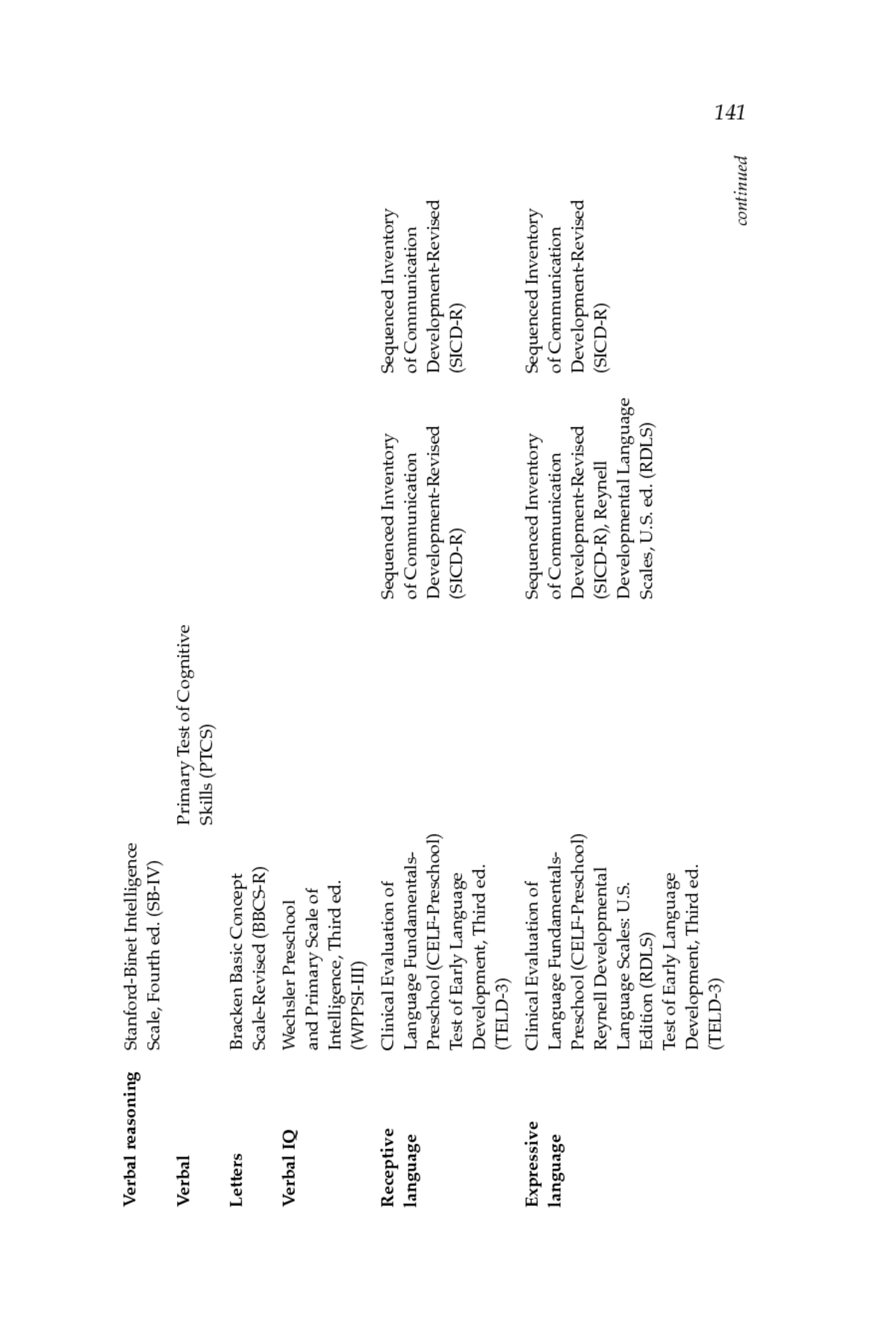
ASSESSING LEARNING AND DEVELOPMENT 113 Available Measures Measures of general cognitive skills during early childhood include psychometrically developed developmental and IQ tests, questionnaires, specific tasks, and curriculum-based assessments. Many of these are listed in Appendix Table 5-4. The Bayley Scales of Infant Development measure the mental and motor develop- ment and test the behavior of infants from 1 to 42 months of age. The Wechsler tests may be the most widely used measures of 3- to 8-year-olds, although other psychometric tests are also widely used for children age 2 years and older, including the Stanford Binet Intelligence Scales, the Woodcock-Johnson III (WJ-III) Tests of Cognitive Abilities, and the Kaufman Assessment Battery for Children (K-ABC) (Bayley, 2005; Kaufman and Kaufman, 2006; Roid, 2003; Wechsler, 2003; Woodcock, McGrew, and Mather, 2001). The K-ABC assesses sequential and simultaneous process- ing skills as well as achievement. Similarly, the WJ-III assesses specific cognitive and achievement skills. In contrast, most measures of executive function involve l  aboratory-based tasks. The continuous performance task is widely used to measure sustained attention for typically devel- oping children in research and for children referred for cogni- tive delays or disorders. Assessments of executive skills were reviewed recently (Carlson, 2005), listing tasks appropriate for toddlers and preschoolers. Perhaps the most widely used mea- sures include the continuous performance task, shape Stroop, snack delay, day/night, and Simon says (note that these are also used as measures of constructs defined under socioemotional development, again pointing out the porous boundaries between emotional and cognitive development). Assessments of memory include scales on psychometrically developed assessments and a wide variety of laboratory assessments (Gathercole, 1998). Ceiling and floor effects have limited the use of many of the laboratory tasks across a variety of ages, and concerns about the extent to which tasks require multiple specific cognitive skills result in measures that cannot provide pure assessment of a single execu- tive function or memory skill.
114 EARLY CHILDHOOD ASSESSMENT Mathematics In this section we discuss the development of mathematical understanding, concepts, and skills during early childhood as a particular aspect of the cognitive skills domain. Defining the Domain Researchers emphasize that very young children can and should be acquiring knowledge that provides the foundations for later mathematics learning in number sense, spatial sense and reasoning (geometry), measurement, classification and patterning (algebra), and mathematical reasoning. Each of these subdomains of mathematics is described briefly below. Research suggests that children begin developing number sense in early infancy (Clements, 2004; Clements, Sarama, and DiBiase, 2004; ÂFeigenson, Dehaene, and Spelke, 2004; Xu, Spelke, and  Goddard, 2005) and much of what young children know about numbers depends on their understanding and mastery of counting (Fuson, 1992a; National Research Council, 2001). Stud- ies suggest that the three major basic skills required for counting are knowing the sequence of number words, one-to-one corre- spondence, and cardinality (Becker, 1989; Clements, 2004; Fuson, 1988, 1992a, 1992b; Hiebert et al., 1997; National Research Council, 2001). Following initial acquisition of counting, children begin to acquire an understanding of number operations (Clements, 2004; Hiebert et al., 1997; National Council of Teachers of Mathematics, 2000; National Research Council, 2001) and then simple opera- tions and word problems (Fuson, 1992a). Number operations for preschoolers mainly involve understanding additive number relationships in which two (or more) small numbers make up one larger number (e.g., 2 and 3 make 5), which will develop into addition and subtraction concepts in the future. In acquiring these skills related to number sense, young children and students of nonmajority backgrounds tend to be influenced by the context of the problem and perform better with more contextual information (Boaler, 1994; Cooper and Dunne, 1998; Lubienski, 2000; Means and Knapp, 1991). Geometry is the study of space and shape (Clements, 1999).
ASSESSING LEARNING AND DEVELOPMENT 115 Shape knowledge involves not only recognition and naming, but also an understanding of shape characteristics and proper- ties. Spatial reasoning involves location, direction, distance, and identification of objects (Clements, 1999). Based on Van Hieleâs theory (1986), children are believed to learn about geometry on a progression of levelsâvisualization, analysis, abstraction, deduc- tion, and rigorâand many geometry curricula and assessments follow this hierarchy. Measurement involves assigning numbers to a set of con tinuous quantities (Clements and Stephan, 2004). To understand the concept of measurement, children must be able to decide on the attribute of objects to measure (e.g., width or length), select the units to measure the attribute, and use measuring skills and tools to compare the units (Clements, 2004). A typical developmental trajectory involves children first learning to use words that rep- resent quantities or magnitude of a certain attribute (e.g., big and small); second, demonstrating an ability to compare two objects directly and recognize equality or inequality; and finally, learning to measure, connecting numbers to attributes of objects, such as length, weight, amount, area, and time (Clements, Sarama, and DiBiase, 2004; Ginsburg, Inoue, and Seo, 1999). In the early childhood years, children develop beginning alge- braic concepts as they sort and classify objects, observe patterns in their environment, and begin to predict what comes next based on a recognized pattern. Sorting, classifying, and working with patterns help them to bring order, organization, and predictability to their world. Classification and the analysis of patterns provide a foundation for algebraic thinking as children develop the abil- ity to recognize relationships, form generalizations, and see the connections between common underlying structures Â(Clements, 2004; National Council of Teachers of Mathematics, 2000). Classi fication, defined as the systematic arrangement of objects into groups according to established criteria, involves categorizing, sorting, and grouping. Understanding a pattern involves the ability to identify similarities and differences among elements of a pattern, note the number of elements in the repeatable group, identify when the first group of elements begins to replicate itself, and make predictions about the order of elements based on given information. Acquisition of these skills appears to depend on
116 EARLY CHILDHOOD ASSESSMENT identifying the core unit of the pattern, which, in turn, is depen- dent on the types of experiences the child experiences at home or in care and educational settings (Klein and Starkey, 2004; Starkey, Klein, and Wakeley, 2004). Most young children can solve problems involving simple mathematical reasoning by age 3, often by modeling with real objects or thinking about sets of objects. Alexander, White, and Daugherty (1997) propose three conditions for reasoning in young children: (1) the children must have a sufficient knowledge base, (2) the task must be understandable and motivating, and (3) the context of the task must be familiar and comfortable to the prob- lem solver. Although these conditions probably apply to problem solvers of all ages, they may be particularly important for young children who are not motivated to complete tasks for external reasons (e.g., good grades). Importance of the Domain The case for assessing mathematics in early education pro- grams is easy to make. Looking across international compara- tive studies, U.S. studentsâ performance in mathematics is in the b  ottom third (American Institutes for Research, 2005). And recent analyses of longitudinal studies have shown that mathematical concepts, such as knowledge of numbers and ordinality, at school entry are the strongest predictors of later academic achievement, even stronger than early literacy skills (Duncan et al., 2007). Efforts clearly need to be made to improve opportunities for mathematics learning and carefully monitor childrenâs learning. Furthermore, all the state early childhood standards mention mathematical development as a target for attention. Testing All Children The ability to articulate thinking and problem-solving approaches in mathematics is currently recognized as an impor- tant skill (National Council of Teachers of Mathematics, 2000), although this may prove difficult for children who are not profi- cient in English or have not yet learned mathematics vocabulary. Mathematical skills therefore need to be assessed in multiple
ASSESSING LEARNING AND DEVELOPMENT 117 ways, with objects that can be manipulated and questions requir- ing verbal explanations. Available Measures Each of the domains in mathematics discussed above has measures associated with it, although of varying quality and degrees of development. Both formative and summative assess- ments should measure childrenâs skills in the different sub domains and not focus only on number sense. Because childrenâs mathematical experiences and learning are grounded in their everyday lives, often in practical situations, it is also important that the problems, even in formal and structured assessments, be familiar and involve materials that children can use to solve the problem and show their thinking. Young children need to be able to touch and move objects to give an accurate demonstra- tion of their understanding of the concepts. Assessments using still pictures on a piece of paper are likely to underestimate their mathematical understanding, as they may be better able to solve problems when they are allowed to move actual objects around physically. Some of the skills that should be examined in each domain are listed below. Since young childrenâs primary experience with numbers focuses on counting, any assessment of number sense should examine how children count groups of objects. Assessments should include asking the child to count to measure their knowl- edge of number sequence names and rote counting, assessing the childâs understanding of one-to-one correspondence between objects and counting and of cardinality. Similarly, assessment of spatial sense and reasoning (geometry) should involve observa- tion of children engaged in activities using shapes. Assessment of childrenâs understanding of measurement in early childhood should begin with asking them to make direct comparisons of dif- ferent attributes of objects. For classification and sorting, children should be provided with materials or objects and asked to create their own groups and describe their reasoning. Their reasoning should be carefully noted and their understanding should be evaluated based on their reasoning, not solely by the evaluatorâs criteria. Assessment items for mathematical reasoning should be
118 EARLY CHILDHOOD ASSESSMENT embedded in other content topics. Because childrenâs lives involve much problem solving, the more the assessment task is embedded in their everyday plays and activities, the better. When an assess- ment task is given, childrenâs approaches should be observed carefully, and if they modify their approach in the process, the modification should be noted, because changing and adjusting strategies often provide information about their reasoning. A growing number of assessment instruments is now avail- able. Appendix Table 5-6 lists some of these measures as exam- ples, and we give examples of tools that are useful for formative and summative evaluations of young children.  Assessments are embedded in curricula, like Everyday Mathematics, pro- viding tools for the teacher to monitor each childâs progress. The Desired Results Developmental Profile, Californiaâs pre kindergarten evaluation tool, has teachers rate preschoolers based on observation. Psychometrically developed standard- ized tests, like the ÂWoodcock-Johnson, used for evaluation and diagnosis, are individually administered by a trained adult to children ages 2 to 5. Each of these tools assesses number sense, but only the teacher report tools also assess geometric, measure- ment, and algebraic skills. CONCLUSION In this chapter, we have attempted to bring some organiza- tion to the very complicated question of what to assess in young children, taking into account not only the domains of importance to parents and preschool educators, but also those that predict long-term academic success. Although an exhaustive analysis of the theories of change that underlie prevention and intervention services was beyond the scope of work we could complete, we did use information about the design and effectiveness of such pro- grams to help refine our list of domains. Inevitably, the discussion of domains to assess is influenced by the availability of assess- ment instruments for each of the domains, their quality, and the ease of using them. Identifying a domain as of high importance has little immediate effect on assessment activities if there are no tools available to measure it. Such identification, however, can serve as an important motivation for the development of better
ASSESSING LEARNING AND DEVELOPMENT 119 measurement tools for use in the future. As the history of instru- ment development in the domains of approaches to learning and social/emotional development shows, identifying a domain as important can generate researcher and practitioner interest that translates itself initially into informal assessments, which are refined and expanded to meet the psychometric criteria of impor- tance from wider use. The default when thinking about assessment is to think about direct, formal testingâthe familiar scenario of an adult sitting down with a child and presenting prescribed questions or challenges for him or her to solve, in a prescribed sequence. It is important to emphasize that, although many of the assessment tools discussed in this chapter have that character, the repertoire of usable, reliable, and informative assessments is in fact much larger, including observation of the child in natural or somewhat structured settings, collecting information from primary care givers and from adults in child care and educational settings about the childâs behavior, and interacting with the child directly but without formal test items or materials. The reliability and validity of such measures for young children needs more study, and such research is beginning to be done. For example, Meisels, Xue, and Shamblott (in press) studied the Work Sampling for Head Start (WSHS) measure, derived from the Work Sampling System, which has observers complete a checklist of childrenâs demonstrated capabilities. They reported moderate correla- tions with direct assessment instruments for language, literacy, and mathematics, but did not recommend use of the WSHS for accountability purposes.
APPENDIX TABLES: 120 5-1 through 5-7âTables of Preschool Instruments1 APPENDIX TABLE 5-1â Physical Well-Being and Motor Development Instruments Assessment Data-Gathering Method Subscales Direct Assessment Questionnaire Observation Interview Physical Denver II Creative Curriculum Growth Charts Denver II development Development Creative Curriculum Continuum for Ages 3-5 Development The Work Sampling Continuum for Ages 3-5 System (WSS) The Work Sampling System (WSS) Motor Bayley Scales of Infant Denver II development Development (BSID), Third ed. Denver II Well-being Indices of Obesity Nutrition Toddler-Parent Mealtime Toddler-Parent Mealtime Behavior Questionnaire Observation Motor control NEPSY Games as Measurement Bayley Scales of Infant for Early Self-Control Development (BSID), (GAMES) Third ed.
Impulse control/ Games as Measurement delay gratification for Early Self-Control (GAMES) Processing speed Woodcock-Johnson III Clinical Evaluation of (WJ-III) Language Fundamentals (CELF)-Preschool Behavioral Observation Checklist Physical activity Perceptual motor The Galileo System The Galileo System development for the Electronic for the Electronic Management of Learning Management of Learning (Galileo) (Galileo) Music and High/Scope Child High/Scope Child movement Observation Record Observation Record (COR) (COR) Motor quality Bayley Scales of Infant Development (BSID), Third ed., Behavioral Rating Scale (BRS) Play and leisure Vineland Social-Emotional time Early Childhood Scales (SEEC) 1These listings do not imply any approval or endorsement by the committee of particular instruments. They are included to provide examples of instruments available for measuring various domains and outcomes. Appendix D provides information on where reviews 121 of the instruments may be found.
APPENDIX TABLE 5-2â Social-Emotional Development Instruments 122 Assessment Data-Gathering Method Subscales Direct Assessment Questionnaire Observation Interview Attachment Strange Situation Attachment Q-Sort Behavior Child Behavior Checklist The Work Sampling Social Skills Rating Scale problems System (WSS) (SSRS) Social Skills Rating Scale (SSRS) Emotion Bayley Scales of Infant Delay-of-Gratification regulation Development (BSID), Task Third ed., Behavioral Rating Scale (BRS) Social skills Social Skills Rating Scale The Work Sampling Social Skills Rating Scale (SSRS) System (WSS) (SSRS) ECLS-K Adaptation of the Social Skills Rating System (SSRS), Task Orientation/Approaches to Learning Scale Adaptive Social Behavior Index Negative Adapted EZ-Yale reaction Personality/Motivation tendency Questionnaire (Adapted EZPQ)
Outer Adapted EZ-Yale directedness Personality/Motivation Questionnaire (Adapted EZPQ) Self-regulation Games as Measurement tasks for Early Self-Control (GAMES) Behavior rating Bayley Scales of Infant scale Development (BSID), Third ed. Fatigue/ Clinical Evaluation of boredom/ Language Fundamentals frustration (CELF)-Preschool Behavioral Observation Checklist Social-emotional Creative Curriculum Creative Curriculum development Development Continuum Development Continuum for Ages 3-5 for Ages 3-5 Social The Galileo System The Galileo System development for the Electronic for the Electronic Management of Learning Management of Learning (Galileo) (Galileo) 123 continued
APPENDIX TABLE 5-2â Continued 124 Assessment Data-Gathering Method Subscales Direct Assessment Questionnaire Observation Interview Social relations High/Scope Child High/Scope Child Observation Record Observation Record (COR) (COR) Personal The Work Sampling The Work Sampling and social System (WSS) System (WSS) development Attention/ Bayley Scales of Infant arousal Development (BSID), Third ed., Behavioral Rating Scale (BRS) Clinical scales Behavioral Assessment System for Children (BASC) Composites Behavioral Assessment System for Children (BASC) Syndromes Child Behavior Checklist (CBCL) and Caregiver- Teacher Report Form (C-TRF)
Summary scales Child Behavior Checklist (CBCL) and Caregiver- Teacher Report Form (C-TRF) DSM-oriented Child Behavior Checklist scales (CBCL) and Caregiver- Teacher Report Form (C-TRF) Factor Connorâs Rating Scales- analytically Revised (CRS-R) derived subscales Auxiliary scales Connorâs Rating Scales- Revised (CRS-R) Protective Devereux Early factors scale Childhood Assessment (DECA) Behavioral Devereux Early concern Childhood Assessment (DECA) Externalizing Infant-Toddler Social and Infant-Toddler Social and symptoms Emotional Assessment Emotional Assessment (ITSEA) (ITSEA) 125 continued
APPENDIX TABLE 5-2â Continued 126 Assessment Data-Gathering Method Subscales Direct Assessment Questionnaire Observation Interview Internalizing Infant-Toddler Social and Infant-Toddler Social and symptoms Emotional Assessment Emotional Assessment (ITSEA) (ITSEA) Dysregulation Infant-Toddler Social and Infant-Toddler Social and Emotional Assessment Emotional Assessment (ITSEA) (ITSEA) Competence Infant-Toddler Social and Infant-Toddler Social and Emotional Assessment Emotional Assessment (ITSEA) (ITSEA) Overall Social Competence and adjustment Behavioral Evaluation scales (SCBE), Preschool Ed. Peer social Social Competence and interactions Behavioral Evaluation scales (SCBE), Preschool Ed. Adult social Social Competence and interactions Behavioral Evaluation scales (SCBE), Preschool Ed. Social Social Competence and competence Behavioral Evaluation (SCBE), Preschool Ed.
Internalizing Social Competence and problems Behavioral Evaluation (SCBE), Preschool Ed. Externalizing Social Competence and problems Behavioral Evaluation (SCBE), Preschool Ed. General Social Competence and adaptation Behavioral Evaluation (SCBE), Preschool Ed. Interpersonal Vineland Social-Emotional relationships Early Childhood Scales (SEEC) Coping skills Vineland Social-Emotional Early Childhood Scales (SEEC) Personal and Denver II social skills 127
APPENDIX TABLE 5-3â Approaches to Learning Instruments 128 Assessment Data-Gathering Method Subscales Direct Assessment Questionnaire Observation Interview The Galileo System for the The Galileo System for the Electronic Management of Electronic Management of Learning (Galileo) Learning (Galileo) Executive NEPSY Tower of Hanoi functioning Inhibitory control NEPSY, CPT Emotion regulation Delay-of-Gratification Task Academic mastery Adapted EZ-Yale motivation Personality/Motivation Questionnaire (Adapted EZPQ) Engagement in ECLS-K Adaptation of the learning Social Skills Rating Scale (SSRS), Task Orientation/ Approaches to Learning Scale Organization ECLS-K Adaptation of the Social Skills Rating Scale (SSRS), Task Orientation/ Approaches to Learning Scale
Creativity ECLS-K Adaptation of the Social Skills Rating Scale (SSRS), Task Orientation/ Approaches to Learning Scale Adaptability ECLS-K Adaptation of the Social Skills Rating Scale (SSRS), Task Orientation/ Approaches to Learning Scale Visuospatial NEPSY processing Attention to task CELF-Preschool Behavioral Observation Checklist Self-help The Galileo System for the The Galileo System for the Electronic Management of Electronic Management of Learning (Galileo) Learning (Galileo) Initiative High/Scope Child High/Scope Child Observation Record (COR) Observation Record (COR) Orientation/ Bayley Scales of Infant engagement Development (BSID), Third ed., Behavioral Rating Scale (BRS) Adaptive behavior Behavioral Assessment scales System for Children (BASC) 129
APPENDIX TABLE 5-4â Cognitive Skills Instruments 130 Assessment Data-Gathering Method Subscales Direct Assessment Questionnaire Observation Interview Expressive One-Word Picture Vocabulary Test (EOWPVT) Woodcock-Johnson III (WJ-III) Intelligence Bayley, Stanford-Binet, Wechsler Preschool and Primary Scale of Intelligence (WPPSI), WISC Executive NEPSY Tower of Hanoi functioning Cognitive control Games as Measurement for Early Self-Control (GAMES) Sustained Games as Measurement for attention Early Self-Control (GAMES) Memory and NEPSY learning Sequential Kaufman Assessment processing Battery for Children (K-ABC)
Simultaneous Kaufman Assessment processing Battery for Children (K-ABC) Mental Kaufman Assessment processing Battery for Children (K-ABC) Achievement Kaufman Assessment scale Battery for Children (K-ABC) Woodcock-Johnson III (WJ-III) Spatial Primary Test of Cognitive Skills (PTCS) Memory Primary Test of Cognitive Skills (PTCS) Concepts Primary Test of Cognitive Skills (PTCS) Short-term Stanford-Binet Intelligence memory Scale, Fourth ed. (SB-IV) Woodcock-Johnson III (WJ-III) Long-term Woodcock-Johnson III retrieval (WJ-III) 131 continued
APPENDIX TABLE 5-4â Continued 132 Assessment Data-Gathering Method Subscales Direct Assessment Questionnaire Observation Interview Visual-spatial Woodcock-Johnson III thinking (WJ-III) Auditory Woodcock-Johnson III processing (WJ-III) Fluid reasoning Woodcock-Johnson III (WJ-III) Response Clinical Evaluation of latency Language Fundamentals (CELF)-Preschool Behavioral Observation Checklist Phonological Woodcock-Johnson III awareness (WJ-III) Cognitive Creative Curriculum Creative Curriculum development Development Continuum Development Continuum for Ages 3-5 for Ages 3-5 Early cognitive The Galileo System for the The Galileo System for the development Electronic Management of Electronic Management of Learning (Galileo) Learning (Galileo)
APPENDIX TABLE 5-5â General Knowledge Instruments Assessment Data-Gathering Method Subscales Direct Assessment Questionnaire Observation Interview Woodcock-Johnson III Work Sampling Plans, (WJ-III), Peabody Portfolio, Summative Individual Achievement Instructional Tools (e.g., Test (PIAT), Peabody COR) Individual Achievement Test-Revised (PIAT-R) Mental scale Bayley Scales of Infant Development (BSID), Third ed. Colors Bracken Basic Concept Scale-Revised (BBCS-R) Performance IQ Wechsler Preschool and Primary Scale of Intelligence, Third ed. (WPPSI-III) Full-scale IQ Wechsler Preschool and Primary Scale of Intelligence, Third ed. (WPPSI-III) 133 continued
APPENDIX TABLE 5-5â Continued 134 Assessment Data-Gathering Method Subscales Direct Assessment Questionnaire Observation Interview Sizes Bracken Basic Concept Scale-Revised (BBCS-R) Comparisons Bracken Basic Concept Scale-Revised (BBCS-R) Shapes Bracken Basic Concept Scale-Revised (BBCS-R) Direction/position Bracken Basic Concept Scale-Revised (BBCS-R) Self-/social Bracken Basic Concept awareness Scale-Revised (BBCS-R) Texture/material Bracken Basic Concept Scale-Revised (BBCS-R) Quantity Bracken Basic Concept Scale-Revised (BBCS-R) Time/sequencing Bracken Basic Concept Scale-Revised (BBCS-R) Abstract/visual Stanford-Binet Intelligence reasoning Scale, Fourth ed. (SB-IV)
Academic Expressive One-Word progress Picture Vocabulary Test (EOWPVT) Creative arts The Galileo System for the The Galileo System for the Electronic Management of Electronic Management of Learning (Galileo) Learning (Galileo) Creative High/Scope Child High/Scope Child representation Observation Record (COR) Observation Record (COR) Social studies The Work Sampling System The Work Sampling System (WSS) (WSS) The arts The Work Sampling System The Work Sampling System (WSS) (WSS) 135
APPENDIX TABLE 5-6â Math and Science Instruments 136 Assessment Data-Gathering Method Subscales Direct Assessment Questionnaire Observation Interview Mathematics Woodcock-Johnson III Work Sampling Plans, (WJ-III), Peabody Individual Portfolio, Summative Achievement Test (PIAT), Instructional Tools Peabody Individual Achievement Test-Revised (PIAT-R), Test of Early Mathematics Ability (TEMA) Science Woodcock-Johnson III Work Sampling Plans, (WJ-III), Peabody Individual Portfolio, Summative Achievement Test (PIAT) Instructional Tools Quantitative Stanford-Binet Intelligence reasoning Scale, Fourth ed. (SB-IV) Number/ Bracken Basic Concept counting Scale-Revised (BBCS-R)/SRC Sizes Bracken Basic Concept Scale-Revised (BBCS-R)/SRC Shapes Bracken Basic Concept Scale-Revised (BBCS-R)/SRC
Quantity Bracken Basic Concept Scale-Revised (BBCS-R) Achievement Kaufman Assessment scaleâarithmetic Battery for Children subtest (K-ABC) Formal Test of Early Mathematics mathematics Ability, Second ed. (TEMA-2) Informal Test of Early Mathematics mathematics Ability, Second ed. (TEMA-2) Achievementâ Woodcock-Johnson III broad (WJ-III) mathematics Achievement- Woodcock-Johnson III mathematical (WJ-III) calculation skills Achievementâ Woodcock-Johnson III mathematical (WJ-III) reasoning Early The Galileo System for the The Galileo System for the mathematics Electronic Management of Electronic Management of Learning (Galileo) Learning (Galileo) 137 continued
APPENDIX TABLE 5-6â Continued 138 Assessment Data-Gathering Method Subscales Direct Assessment Questionnaire Observation Interview Nature and The Galileo System for the The Galileo System for the science Electronic Management of Electronic Management of Learning (Galileo) Learning (Galileo) Logic and High/Scope Child High/Scope Child mathematics Observation Record (COR) Observation Record (COR) Mathematical The Work Sampling System The Work Sampling System thinking (WSS) (WSS) Scientific thinking The Work Sampling System The Work Sampling System (WSS) (WSS)
APPENDIX TABLE 5-7â Language and Literacy Instruments Assessment Data-Gathering Method Subscales Direct Assessment Questionnaire Observation Interview The Galileo System for the The Galileo System for the Electronic Management of Electronic Management of Learning (Galileo) Learning (Galileo) High/Scope Child High/Scope Child Observation Record (COR) Observation Record (COR) The Work Sampling System The Work Sampling System (WSS) (WSS) General language Clinical Evaluation of Creative Curriculum Creative Curriculum Language Fundamentals Development Continuum Development Continuum (CELF), for Ages 3-5 for Ages 3-5 MacArthur-Bates Communicative Development Inventories (CDI), Test of Language Dominance (TOLD), Woodcock-Johnson III (WJ-III), NEPSY Vocabulary Peabody Picture Vocabulary MacArthur-Bates Test (PPVT), Expressive Communicative One-Word Picture Development Inventories Vocabulary Test (EOWPVT) (CDI) 139 continued
APPENDIX TABLE 5-7â Continued 140 Assessment Data-Gathering Method Subscales Direct Assessment Questionnaire Observation Interview Phonological Comprehensive Test of awareness Phonological Processing (CTOPP), Woodcock- Johnson III (WJ-III) Grammar Diagnostic Evaluation of Language Variation (DELV) Literacy Test of Early Reading Ability Work Sampling Plans, (TERA), Woodcock-Johnson III Portfolio, Summative (WJ-III), Peabody Individual Instructional Tools Achievement Test (PIAT) Concepts About Print (Clay) Sulzby Classification Schemes: Emergent Storybook Reading (1985) Reading Peabody Individual recognition Achievement Test-Revised (PIAT-R) Reading Peabody Individual comprehension Achievement Test-Revised (PIAT-R) Spelling Peabody Individual Achievement Test-Revised (PIAT-R)
Verbal reasoning Stanford-Binet Intelligence Scale, Fourth ed. (SB-IV) Verbal Primary Test of Cognitive Skills (PTCS) Letters Bracken Basic Concept Scale-Revised (BBCS-R) Verbal IQ Wechsler Preschool and Primary Scale of Intelligence, Third ed. (WPPSI-III) Receptive Clinical Evaluation of Sequenced Inventory Sequenced Inventory language Language Fundamentals- of Communication of Communication Preschool (CELF-Preschool) Development-Revised Development-Revised Test of Early Language (SICD-R) (SICD-R) Development, Third ed. (TELD-3) Expressive Clinical Evaluation of Sequenced Inventory Sequenced Inventory language Language Fundamentals- of Communication of Communication Preschool (CELF-Preschool) Development-Revised Development-Revised Reynell Developmental (SICD-R), Reynell (SICD-R) Language Scales: U.S. Developmental Language Edition (RDLS) Scales, U.S. ed. (RDLS) Test of Early Language Development, Third ed. (TELD-3) 141 continued
APPENDIX TABLE 5-7â Continued 142 Assessment Data-Gathering Method Subscales Direct Assessment Questionnaire Observation Interview Total language Clinical Evaluation of Language Fundamentals- Preschool (CELF-Preschool) Quick-test Clinical Evaluation of Language Fundamentals- Preschool (CELF-Preschool) Recall ability Kaufman Assessment Battery for Children (K-ABC), Expressive Vocabulary Subtest Verbal Kaufman Assessment expression Battery for Children (K-ABC), Expressive Vocabulary Subtest Words and MacArthur-Bates gestures Communicative Development Inventories (CDI) Words and MacArthur-Bates sentences Communicative Development Inventories (CDI)
Expressive Preschool Language Scale, communication Fourth ed. (PLS-4) Auditory Preschool Language Scale, comprehension Fourth ed. (PLS-4) Verbal Reynell Developmental comprehension Language Scales, U.S. ed. (RDLS) Spoken language Test of Early Language quotient Development, Third ed. (TELD-3) Initial sound Dynamic Indicators of Basic fluency Early Literacy Skills, Sixth ed. (DIBELS) Letter naming Dynamic Indicators of Basic fluency Early Literacy Skills, Sixth ed. (DIBELS) Word use fluency Dynamic Indicators of Basic Early Literacy Skills, Sixth ed. (DIBELS) Phoneme Dynamic Indicators of Basic segmentation Early Literacy Skills, Sixth fluency ed. (DIBELS) 143 continued
APPENDIX TABLE 5-7â Continued 144 Assessment Data-Gathering Method Subscales Direct Assessment Questionnaire Observation Interview Nonsense word Dynamic Indicators of Basic fluency Early Literacy Skills, Sixth ed. (DIBELS) Oral reading Dynamic Indicators of Basic fluency and retell Early Literacy Skills, Sixth fluency ed. (DIBELS) Alphabet Test of Early Reading Ability-3 (TERA-3) Conventions Test of Early Reading Ability-3 (TERA-3) Meaning Test of Early Reading Ability-3 (TERA-3) Letter-word Woodcock-Johnson III identification (WJ-III) Writing samples Woodcock-Johnson III (WJ-III) Word attack Woodcock-Johnson III (WJ-III) Language skills Denver II Denver II
