






Below is the uncorrected machine-read text of this chapter, intended to provide our own search engines and external engines with highly rich, chapter-representative searchable text of each book. Because it is UNCORRECTED material, please consider the following text as a useful but insufficient proxy for the authoritative book pages.
5 Stormwater Management Approaches A fundamental component of the U.S. Environmental Protection Agencyâs (EPA) Stormwater Program, for municipalities as well as industries and con- struction, is the creation of stormwater pollution prevention plans. These plans invariably document the stormwater control measures that will be used to pre- vent the permitteeâs stormwater discharges from degrading local waterbodies. Thus, a consideration of these measuresâtheir effectiveness in meeting differ- ent goals, their cost, and how they are coordinated with one anotherâis central to any evaluation of the Stormwater Program. This report uses the term storm- water control measure (SCM) instead of the term best management practice (BMP) because the latter is poorly defined and not specific to the field of stormwater. The committeeâs statement of task asks for an evaluation of the relationship between different levels of stormwater pollution prevention plan implementation and in-stream water quality. As discussed in the last two chapters, the state of the science has yet to reveal the mechanistic links that would allow for a full assessment of that relationship. However, enough is known to design systems of SCMs, on a site scale or local watershed scale, to lessen many of the effects of urbanization. Also, for many regulated entities the current approach to storm- water management consists of choosing one or more SCMs from a preapproved list. Both of these facts argue for the more comprehensive discussion of SCMs found in this chapter, including information on their characteristics, applicabil- ity, goals, effectiveness, and cost. In addition, a multitude of case studies illus- trate the use of SCMs in specific settings and demonstrate that a particular SCM can have a measurable positive effect on water quality or a biological metric. The discussion of SCMs is organized along the gradient from the rooftop to the stream. Thus, pollutant and runoff prevention are discussed first, followed by runoff reduction and finally pollutant reduction. HISTORICAL PERSPECTIVE ON STORMWATER CONTROL MEASURES Over the centuries, SCMs have met different needs for cities around the world. Cities in the Mesopotamian Empire during the second millennium BC had practices for flood control, to convey waste, and to store rain water for household and irrigation uses (Manor, 1966) (see Figure 5-1). Today, SCMs are considered a vital part of managing flooding and drainage problems in a city. What is relatively new is an emphasis on using the practices to remove pollut- ants from stormwater and selecting practices capable of providing groundwater recharge. These recent expectations for SCMs are not readily accepted and re- 339
340 URBAN STORMWATER MANAGEMENT IN THE UNITED STATES quire an increased commitment to the proper design and maintenance of the practices. With the help of a method for estimating peak flows (the Rational Method, see Chapter 4), the modern urban drainage system came into being soon after World War II. This generally consisted of a system of catch basins and pipes to prevent flooding and drainage problems by efficiently delivering runoff water to the nearest waterbody. However, it was soon realized that delivering the water too quickly caused severe downstream flooding and bank erosion in the receiv- ing water. To prevent bank erosion and provide more space for flood waters, some stream channels were enlarged and lined with concrete (see Figure 5-2). But while hardening and enlarging natural channels is a cost-effective solution to erosion and flooding, the modified channel increases downstream peak flows and it does not provide habitat to support a healthy aquatic ecosystem. FIGURE 5-1 Cistern tank, Kamiros, Rhodes (ancient Greece, 7th century BC). SOURCE: Robert Pitt, Uni- versity of Alabama.
STORMWATER MANAGEMENT APPROACHES 341 FIGURE 5-2 Concrete channel in Lincoln Creek, Milwaukee, Wisconsin. SOURCE: Roger Bannerman, Wisconsin Department of Natural Resources. Some way was needed to control the quantity of water reaching the end of pipes during a runoff event, and on-site detention (Figure 5-3) became the stan- dard for accomplishing this. Ordinances started appearing in the early 1970s, requiring developers to reduce the peaks of different size storms, such as the 10- year, 24-hour storm. The ordinances were usually intended to prevent future problems with peak flows by requiring the installation of flow control structures, such as detention basins, in new developments. Detention basins can control peak flows directly below the point of discharge and at the property boundary. However, when designed on a site-by-site basis without taking other basins into account, they can lead to downstream flooding problems because volume is not reduced (McCuen, 1979; Ferguson, 1991; Traver and Chadderton, 1992; EPA, 2005d). In addition, out of concerns for clogging, openings in the outlet struc- ture of most basins are generally too large to hold back flows from smaller, more frequent storms. Furthermore, low-flow channels have been constructed or the basins have been graded to move the runoff through the structure without delay to prevent wet areas and to make it easier to mow and maintain the deten- tion basin. Because of the limitations of on-site detention, infiltration of urban runoff to control its volume has become a recent goal of stormwater management. Without stormwater infiltration, municipalities in wetter regions of the country can expect drops in local groundwater levels, declining stream base flows (Wang et al., 2003a), and flows diminished or stopped altogether from springs feeding wetlands and lakes (Leopold, 1968; Ferguson, 1994).
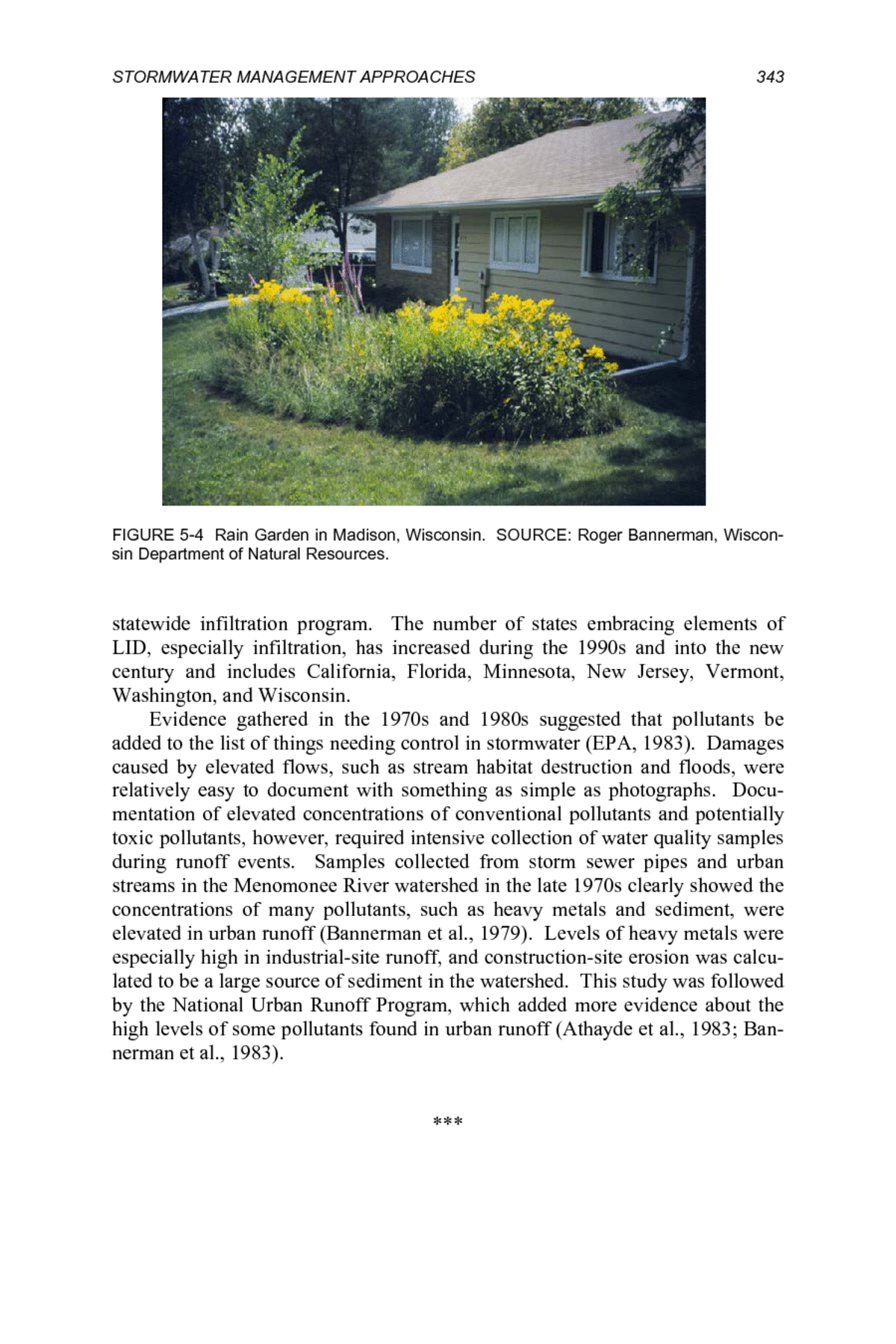
342 URBAN STORMWATER MANAGEMENT IN THE UNITED STATES FIGURE 5-3 On-site detention. SOURCE: Tom Schueler, Chesapeake Stormwater Net- work, Inc. The need to provide volume control marked the beginning of low-impact development (LID) and conservation design (Arendt, 1996; Prince Georgeâs County, 2000), which were founded on the seminal work of landscape architect Ian McHarg and associates decades earlier (McHarg and Sutton, 1975; McHarg and Steiner, 1998). The goal of LID is to allow for development of a site while maintaining as much of its natural hydrology as possible, such as infiltration, frequency and volume of discharges, and groundwater recharge. This is accom- plished with infiltration practices, functional grading, open channels, disconnec- tion of impervious areas, and the use of fewer impervious surfaces. Much of the LID focus is to manage the stormwater as close as possible to its sourceâthat is, on each individual lot rather than conveying the runoff to a larger regional SCM. Individual practices include rain gardens (see Figure 5-4), disconnected roof drains, porous pavement, narrower streets, and grass swales. In some cases, LID site plans still have to include a method for passing the larger storms safely, such as a regional infiltration or detention basin or by increasing the capacity of grass swales. Infiltration has been practiced in a few scattered locations for a long time. For example, on Long Island, New York, infiltration basins were built starting in 1930 to reduce the need for a storm sewer system and to recharge the aquifer, which was the only source of drinking water (Ferguson, 1998). The Cities of Fresno, California, and El Paso, Texas, which faced rapidly dropping groundwa- ter tables, began comprehensive infiltration efforts in the 1960s and 1970s. In the 1980s Maryland took the lead on the east coast by creating an ambitious
STORMWATER MANAGEMENT APPROACHES 343 FIGURE 5-4 Rain Garden in Madison, Wisconsin. SOURCE: Roger Bannerman, Wiscon- sin Department of Natural Resources. statewide infiltration program. The number of states embracing elements of LID, especially infiltration, has increased during the 1990s and into the new century and includes California, Florida, Minnesota, New Jersey, Vermont, Washington, and Wisconsin. Evidence gathered in the 1970s and 1980s suggested that pollutants be added to the list of things needing control in stormwater (EPA, 1983). Damages caused by elevated flows, such as stream habitat destruction and floods, were relatively easy to document with something as simple as photographs. Docu- mentation of elevated concentrations of conventional pollutants and potentially toxic pollutants, however, required intensive collection of water quality samples during runoff events. Samples collected from storm sewer pipes and urban streams in the Menomonee River watershed in the late 1970s clearly showed the concentrations of many pollutants, such as heavy metals and sediment, were elevated in urban runoff (Bannerman et al., 1979). Levels of heavy metals were especially high in industrial-site runoff, and construction-site erosion was calcu- lated to be a large source of sediment in the watershed. This study was followed by the National Urban Runoff Program, which added more evidence about the high levels of some pollutants found in urban runoff (Athayde et al., 1983; Ban- nerman et al., 1983). ***
344 URBAN STORMWATER MANAGEMENT IN THE UNITED STATES With new development rapidly adding to the environmental impacts of ex- isting urban areas, the need to develop good stormwater management programs is more urgent than ever. For a variety of reasons, the greatest potential for stormwater management to reduce the footprint of urbanization is in the suburbs. These areas are experiencing the fastest rates of growth, they are more amenable to stormwater management because buildings and infrastructure are not yet in place, and costs for stormwater management can be borne by the developer rather than by taxpayers. Indeed, most structural SCMs are applied to new de- velopment rather than existing urban areas. Many of the most innovative stormwater programs around the country are found in the suburbs of large cities such as Seattle, Austin, and Washington, D.C. When stormwater management in ultra-urban areas is required, it entails the retrofitting of detention basins and other flow control structures or the introduction of innovative below-ground structures characterized by greater technical constraints and higher costs, most of which are charged to local taxpayers. Current-day SCMs represent a radical departure from past practices, which focused on dealing with extreme flood events via large detention basins de- signed to reduce peak flows at the downstream property line. As defined in this chapter, SCMs now include practices intended to meet broad watershed goals of protecting the biology and geomorphology of receiving waters in addition to flood peak protection. The term encompasses such diverse actions as using more conventional practices like basins and wetland to installing stream buffers, reducing impervious surfaces, and educating the public. REVIEW OF STORMWATER CONTROL MEASURES Stormwater control measures refer to what is defined by EPA (1999) as âa technique, measure, or structural control that is used for a given set of conditions to manage the quantity and improve the quality of stormwater runoff in the most cost-effective manner.â SCMs are designed to mitigate the changes to both the quantity and quality of stormwater runoff that are caused by urbanization. Some SCMs are engineered or constructed facilities, such as a stormwater wetland or infiltration basin, that reduce pollutant loading and modify volumes and flow. Other SCMs are preventative, including such activities as education and better site design to limit the generation of stormwater runoff or pollutants. Stormwater Management Goals It is impossible to discuss SCMs without first considering the goals that they are expected to meet. A broadly stated goal for stormwater management is to reduce pollutant loads to waterbodies and maintain, as much as possible, the natural hydrology of a watershed. On a practical level, these goals must be made specific to the region of concern and embedded in the strategy for that
STORMWATER MANAGEMENT APPROACHES 345 region. Depending on the designated uses of the receiving waters, climate, geomorphology, and historical development, a given area may be more or less sensitive to both pollutants and hydrologic modifications. For example, goals for groundwater recharge might be higher in an area with sandy soils as com- pared to one with mostly clayey soils; watersheds in the coastal zone may not require hydrologic controls. Ideally, the goals of stormwater management should be linked to the water quality standards for a given stateâs receiving wa- ters. However, because of the substantial knowledge gap about the effect of a particular stormwater discharge on a particular receiving water (see Chapter 3 conclusions), surrogate goals are often used by state stormwater programs in lieu of water quality standards. Examples include credit systems, mandating the use of specific SCMs, or achieving stormwater volume reduction. Credit systems might be used for practices that are known to be productive but are difficult to quantify, such as planting trees. Specific SCMs might be assumed to remove a percent of pollutants, for example 85 percent removal of total suspended solids (TSS) within a stormwater wetland. Reducing the volume of runoff from im- pervious surfaces (e.g., using an infiltration device) might be assumed to capture the first flush of pollutants during a storm event. Before discussing specific state goals, it is worth understanding the broader context in which goals are set. Trade-offs Between Stormwater Control Goals and Costs The potentially substantial costs of implementing SCMs raise a number of fundamental social choices concerning land-use decisions, designated uses, and priority setting for urban waters. To illustrate some of these choices, consider a hypothetical urban watershed with three possible land-cover scenarios: 25, 50, and 75 percent impervious surface. A number of different beneficial uses could be selected for the streams in this watershed. At a minimum, the goal may be to establish low-level standards to protect public health and safety. To achieve this, sufficient and appropriate SCMs might be applied to protect residents from flooding and achieve water quality conditions consistent with secondary human contact. Alternatively, the designated use could be to achieve the physical, chemical, and/or biological conditions sufficient to provide exceptional aquatic habitat (e.g., a high-quality recreational fishery). The physical, biological, and chemical conditions supportive of this use might be similar to a reference stream located in a much less disturbed watershed. Achieving this particular designated use would require substantially greater resources and effort than achieving a secondary human contact use. Intermediate designated uses could also be imag- ined, including improving ambient water quality conditions that would make the water safe for full-body emersion (primary human contact) or habitat conditions for more tolerant aquatic species. Figure 5-5 sketches what the marginal (incremental) SCM costs (opportu- nity costs) might be to achieve different designated uses given different amounts of impervious surface in the watershed. The horizontal axis orders potential
346 URBAN STORMWATER MANAGEMENT IN THE UNITED STATES MCC ($) 75% impervious cover 50% impervious cover 25% imper- vious cover Secondary Adequate Primary Exceptional Recreational Aquatic Recreational Aquatic Contact Uses Contact Uses Designated Use FIGURE 5-5 Cost of achieving designated uses in a hypothetical urban watershed. MCC is the marginal control cost, which represents the incremental costs to achieve successive expansion of designated uses through SCMs. The curves are constructed on the assump- tion that the lowest cost combination of SCMs would be implemented at each point on the curve. designated uses in terms of least difficult to most difficult to achieve. The three conceptual curves represent the SCM costs under three different impervious surface scenarios. The relative positions of the cost curves indicate that achiev- ing any specific designated use will be more costly in situations with a higher percentage of the watershed in impervious cover. All cost curves are upward sloping, reflecting the fact that incremental improvements in designated uses will be increasingly costly to achieve. The cost curves are purely conceptual, but nonetheless might reasonably reflect the relative costs and direction of change associated with achieving specific designated uses in different watershed conditions. The locations of the cost curves suggest that in certain circumstances not all designated uses can be achieved or can be achieved only at an extremely high cost. For example, the attainment of exceptional aquatic uses may be unachiev- able in areas with 50 percent impervious surface even with maximum applica- tion of SCMs. In this illustration, the cost of achieving even secondary human contact use is high for areas with 75 percent impervious surfaces. In such highly urbanized settings, achievement of only adequate levels of aquatic uses could be exceedingly high and strain the limits of what is technically achievable. Finally, the existing and likely expected future land-use conditions have significant im-
STORMWATER MANAGEMENT APPROACHES 347 plications for what is achievable and at what cost. Clearly land-use decisions have an impact on the cost and whether a use can be achieved, and thus they need to be included in the decision process. The trade-off between costs and achieving specific designated uses can change substantially given different de- velopment patterns. The purpose of Figure 5-5 is not to identify the precise location of the cost curves or to identify thresholds for achieving specific designated uses. Rather, these concepts are used to illustrate some fundamental trade-offs that confront public and private investment and regulatory decisions concerning stormwater management. The general relationships shown in Figure 5-5 suggest the need for establishing priorities for investments in stormwater management and con- trols, and connecting land usage and watershed goals. Setting overly ambitious or costly goals for urban streams may result in the perverse consequence of causing more waters to fail to meet designated uses. For example, consider ef- forts to secure ambitious designated uses in highly developed areas or in an area slated for future high-density development. Regulatory requirements and in- vestments to limit stormwater quantity and quality through open-space require- ments, areas set aside for infiltration and water detention, and strict application of maximum extent practicable controls have the effect of both increasing de- velopment costs and diminishing land available for residential and commercial properties. Policies designed to achieve exceedingly costly or infeasible desig- nated uses in urban or urbanizing areas could have the net consequence of shift- ing development (and associated impervious surface) out into neighboring areas and watersheds. The end result might be minimal improvements in âwithin- watershedâ ambient conditions but a decrease in designated uses (more impair- ments) elsewhere. In such a case, it might be sound water quality policy to ac- cept higher levels of impervious surface in targeted locations, more stormwater- related impacts, and less ambitious designated uses in urban watersheds in order to preserve and protect designated uses in other watersheds. Setting unrealistic or unachievable water quality objectives in urban areas can also pose political risks for stormwater management. The cost and difficulty of achieving ambitious water quality standards for urban stream goals may be understood by program managers but pursued nonetheless in efforts to demon- strate public commitment to achieving high-quality urban waters. Yet, promis- ing what cannot be realistically achieved may act to undermine public support for urban stormwater programs. Increasing costs without significant observable improvements in ambient water conditions or achievement of water quality standards could ultimately reduce public commitment to the program. Thus, there are risks of âsetting the barâ too high, or not coordinating land use and designated stream uses. The cost of setting the bar too low can also be significant. Stormwater re- quirements that result in ineffective stormwater management will not achieve or maintain the desired water uses and can result in impairments. Loss of property, degraded waters, and failed infrastructure are tangible costs to the public (Johns- ton et al., 2006). Streambank rehabilitation costs can be severe, and loss of con-
348 URBAN STORMWATER MANAGEMENT IN THE UNITED STATES fidence in the ability to meet stormwater goals can result. The above should not be construed as an argument for or against devoting resources to SCMs; rather, such decisions should be made with an open and transparent acknowledgment and understanding of the costs and consequences involved in those decisions. Common State Stormwater Goals Most states do not and have never had an overriding water quality objective in their stormwater program, but rather have used engineering criteria for SCM performance to guide stormwater management. These criteria can be loosely categorized as: Erosion and sedimentation control, Recharge/base flow, Water quality, Channel protection, and Flooding events. The SCMs used to address these goals work by minimizing or eliminating in- creases in stormwater runoff volume, peak flows, and/or the pollutant load car- ried by stormwater. The criteria chosen by any given state usually integrate state, federal, and regional laws and regulations. Areas of differing climates may emphasize one goal over another, and the levels of control may vary drastically. Contrast a desert region where rainwater harvesting is extremely important versus a coastal region subject to hurricanes. Some areas like Seattle have frequent smaller vol- ume rainfallsâthe direct opposite of Austin, Texasâsuch that small volume controls would be much more effective in Seattle than Austin. Regional geol- ogy (karst) or the presence of Brownfields may affect the chosen criteria as well. The committeeâs survey of State Stormwater Programs (Appendix C) re- flects a wide variation in program goals as reflected in the criteria found in their SCM manuals. Some states have no specific criteria because they do not pro- duce SCM manuals, while others have manuals that address every category of criteria from flooding events to groundwater recharge. Some states rely upon EPA or other statesâ or transportation agenciesâ manuals. In general, soil and erosion control criteria are the most common and often exist in the absence of any other state criteria. This wide variation reflects the difficulties that states face in keeping up with rapidly changing information about SCM design and performance. The criteria are ordered below (after the section on erosion and sediment control) according to the size of the storm they address, from smallest to most extreme. The criteria can be expressed in a variety of ways, from a simple re- quirement to control a certain volume of rainfall or runoff (expressed as a depth)
STORMWATER MANAGEMENT APPROACHES 349 to the size of a design storm to more esoteric requirements, such as limiting the time that flow can be above a certain threshold. The volumes of rainfall or run- off are based on statistics of a regionâs daily rainfall, and they approximate one another as the percentage of impervious cover increases. Design storms for lar- ger events that address channel protection and flooding are usually based on extreme event statistics and tend to represent a temporal pattern of rainfall over a set period, usually a day. Finally, it should be noted that the categories are not mutually exclusive; for example, recharge of groundwater may enhance water quality via pollutant removal during the infiltration process. Erosion and Sedimentation Control. This criterion refers to the preven- tion of erosion and sedimentation of sites during construction and is focused at the site level. Criteria usually include a barrier plan to prevent sedimentation from leaving the site (e.g., silt fences), practices to minimize the potential ero- sion (phased construction), and facilities to capture and remove sediment from the runoff (detention). Because these measures are considered temporary, smaller extreme events are designated as the design storm than what typically would be used if flood control were the goal. Recharge/Base Flow. This criterion is focused on sustaining the precon- struction hydrology of a site as it relates to base flow and recharge of groundwa- ter supplies. It may also include consideration of water usage of the property owners and return through septic tanks and tile fields. The criterion, expressed as a volume requirement, is usually to capture around 0.5 to 1.0 inch of runoff from impervious surfaces depending on the climate and soil type of the region. (For this range of rainfall, very little runoff occurs from grass or forested areas, which is why runoff from impervious surfaces is used as the criterion.) Water Quality. Criteria for water quality are the most widespread, and are usually crafted as specific percent removal for pollutants in stormwater dis- charge. Generally, a water quality criterion is based on a set volume of storm- water being treated by the SCM. The size of the storm can run from the first inch of rainfall off impervious surfaces to the runoff from the one-year, 24-hour extreme storm event. It should be noted that the term âwater qualityâ covers a wide range of groundwater and surface water pollutants, including water tem- perature and emerging contaminants. Many of the water quality criteria are surrogates for more meaningful pa- rameters that are difficult to quantify or cannot be quantified, or they reflect situations where the science is not developed enough to set more explicit goals. For example, the Wisconsin state requirement of an 80 percent reduction in TSS in stormwater discharge does not apply to receiving waters themselves. How- ever, it presumes that there will be some water quality benefits in receiving wa- ters; that is, phosphorus and fecal coliform might be captured by the TSS re- quirement. Similarly water quality criteria may be expressed as credits for good practices, such as using LID, street sweeping, or stream buffers.
350 URBAN STORMWATER MANAGEMENT IN THE UNITED STATES Channel Protection. This criterion refers to protecting channels from ac- celerated erosion during storm events due to the increased runoff. It is tied to either the presumed âchannel-forming eventââwhat geomorphologists once believed was the storm size that created the channel due to erosion and deposi- tionâor to the minimum flow that accomplishes any degree of sediment trans- port. It is generally defined as somewhere between the one- and five-year, 24- hour storm event or a discharge level typically exceeded once to several times per year. Some states require a reduction in runoff volume for these events to match preconstruction levels. Others may require that the average annual dura- tion of flows that are large enough to erode the streambank be held the same on an annual basis under pre- and postdevelopment conditions. It is not uncommon to find states where a channel protection goal will be written poorly, such that it does not actually prevent channel widening. For ex- ample, MacRae (1997) presented a review of the common âzero runoff increaseâ discharge criterion, which is commonly met by using ponds designed to detain the two-year, 24-hour storm. MacRae showed that stream bed and bank erosion occur during much lower events, namely mid-depth flows that generally occur more than once a year, not just during bank-full conditions (approximated by the two-year event). This finding is entirely consistent with the well-established geomorphological literature (e.g., Pickup and Warner, 1976; Andrews, 1984; Carling, 1988; Sidle, 1988). During monitoring near Toronto, MacRae found that the duration of the geomorphically significant predevelopment mid-bankfull flows increased by more than four-fold after 34 percent of the basin had been urbanized. The channel had responded by increasing in cross-sectional area by as much as three times in some areas, and was still expanding. Flooding Events. This criterion addresses public safety and the protection of property and is applicable to storm events that exceed the channel capacity. The 10- through the 100-year storm is generally used as the standard. Volume- reduction SCMs can aid or meet this criterion depending on the density of de- velopment, but usually assistance is needed in the form of detention SCMs. In some areas, it may be necessary to reduce the peak flow to below preconstruc- tion levels in order to avoid the combined effects of increased volume, altered timing, and a changed hydrograph. It should be noted that some states do not consider the larger storms (100-year) to be a stormwater issue and have separate flood control requirements. Each state develops a framework of goals, and the corresponding SCMs used to meet them, which will depend on the scale and focus of the stormwater management strategy. A few states have opted to express stormwater goals within the context of watershed plans for regions of the state. However, the setting of goals on a watershed basis is time-consuming and requires study of the watersheds in question. The more common approach has been to set generic or minimal controls for a region that are not based on a watershed plan. This has been done in Maryland, Wisconsin (see Box 5-1), and Pennsylvania (see Box 5-2). This strategy has the advantage of more rapid implementation of
STORMWATER MANAGEMENT APPROACHES 351 BOX 5-1 Wisconsin Statewide Goal of TSS Reduction for Stormwater Management To measure the success of stormwater management, Wisconsin has statewide goals for sediment and flow (Wisconsin DNR, 2002). A lot is known about the impacts of sedi- ment on receiving waters, and any reduction is thought to be beneficial. Flow can be a good indicator of other factors; for example, reducing peak flows will prevent bank erosion. Developing areas in Wisconsin are required to reduce the annual TSS load by 80 per- cent compared to no controls (Wisconsin DNR, 2002). Two flow-rated requirements for developing areas are in the administrative rules. One is that the site must maintain the peak flow for the two-year, 24-hour rainfall event. Second, the annual infiltration volume for postdevelopment must be within 90 percent of the predevelopment volumes for residential land uses; the number for non-residential is 60 percent. Both of these flow control goals are thought to also have water quality benefits. The goal for existing urban areas is an annual reduction in TSS loads. Municipalities must reduce their annual TSS loads by 20 percent, compared to no controls, by 2008. This number is increased to 40 percent by 2013. All of these goals were partially selected to be reasonable based on cost and technical feasibility. BOX 5-2 Volume-Based Stormwater Goals in Pennsylvania Pennsylvania has developed a stormwater Best Management Practices manual to support the Commonwealthâs Storm Water Management Act. This manual and an accom- panying sample ordinance advocates two methods for stormwater control based on vol- ume, termed Control Guidance (CG) 1 and 2. The first (CG-1) requires that the runoff vol- ume be maintained at the two-year, 24-hour storm level (which corresponds to approxi- mately 3.5 inches of rainfall in this region) through infiltration, evapotranspiration, or reuse. This criterion addresses recharge/base flow, water quality, and channel protection, as well as helping to meet flooding requirements. The second method (CG-2) requires capture and removal of the first inch of runoff from paved areas, with infiltration strongly recommended to address recharge and water quality issues. Additionally, to meet channel protection criteria, the second inch is required to be held for 24 hours, which should reduce the channel-forming flows. (This is an un- usual criterion in that it is expressed as what an SCM can accomplish, not as the flow that the channel can handle.) Peak flows for larger events are required to be at preconstruction levels or less if the need is established by a watershed plan. These criteria are the starting point for watershed or regional plans, to reduce the effort of plan development. Some cred- its are available for tree planting, and other nonstructural practices are advocated for dis- solved solids mitigation. See http://www.dep.state.pa.us/dep/deputate/watermgt/ wc/subjects/stormwatermanagement/default.htm.
352 URBAN STORMWATER MANAGEMENT IN THE UNITED STATES some SCMs because watershed management plans are not required. In order to be applicable to all watersheds in the state, the goals must target common pol- lutants or flow modification factors where the processes are well known. It must also be possible for these goals to be stated in National Pollutant Discharge Elimination System (NPDES) permits. Many states have selected TSS reduc- tion, volume reduction, and peak flow control as generic goals. A generic goal is not usually based on potentially toxic pollutants, such as heavy metals, due to the complexity of their interaction in the environment, the dependence on the existing baseline conditions, and the need for more understanding on what are acceptable levels. The difficulty with the generic approach is that specific wa- tershed issues are not addressed, and the beneficial uses of waters are not guar- anteed. One potential drawback of a strategy based on a generic goal coupled to the permit process is that the implementation of the goal is usually on a site-by-site basis, especially for developing areas. Generic goals may be appropriate for certain ubiquitous watershed processes and are clearly better than having no goals at all. However, they do not incorporate the effects of differences in past development and any unique watershed characteristics; they should be consid- ered just a good starting point for setting watershed-based goals. Role of SCMs in Achieving Stormwater Management Goals One important fundamental change in SCM design philosophy has come about because of the recent understanding of the roles of smaller storms and of impervious surfaces. This is demonstrated by Box 3-4, which shows that for the Milwaukee area more than 50 percent of the rainfall by volume occurs in storms that have a depth of less then 0.75 inch. If extreme events are the only design criteria for SCMs, the vast majority of the annual rainfall will go untreated or uncontrolled, as it is smaller than the minimum extreme event. This relationship is not the same in all regions. For example, in Austin, Texas, the total yearly rainfall is smaller than in Milwaukee, but a large part of the volume occurs dur- ing larger storm events, with long dry periods in between. The upshot is that the design strategy for stormwater management, includ- ing drainage systems and SCMs, should take a regionâs rainfall and associated runoff conditions into account. For example, an SCM chosen to capture the majority of the suspended solids, recharge the baseflow, reduce streambank ero- sion, and reduce downstream flooding in Pennsylvania or Seattle (which have moderate and regular rainfall) would likely not be as effective in Texas, where storms are infrequent and larger. In some areas, a reduction in runoff volume may not be sufficient to control streambank erosion and flooding, such that a second SCM like an extended detention stormwater wetland may be needed to meet management goals. Finally, as discussed in greater detail in a subsequent section, SCMs are most effective from the perspective of both efficiency and cost when stormwater
STORMWATER MANAGEMENT APPROACHES 353 management is incorporated in the early planning stages of a community. Ret- rofitting existing development with SCMs is much more technically difficult and costly because the space may not be available, other infrastructure is already installed, or utilities may interfere. Furthermore, if the property is on private land or dedicated as an easement to a homeowners association, there may be regulatory limitations to what can be done. Because of these barriers, retrofit- ting existing urban areas often depends on engineered or manufactured SCMs, which are more expensive in both construction and operation. Stormwater Control Measures SCMs reduce or mitigate the generation of stormwater runoff and associ- ated pollutants. These practices include both âstructuralâ or engineered devices as well as more ânonstructural measuresâ such as land-use planning, site design, land conservation, education, and stewardship practices. Structural practices may be defined as any facility constructed to mitigate the adverse impacts of stormwater and urban runoff pollution. Nonstructural practices, which tend to be longer-term and lower-maintenance solutions, can greatly reduce the need for or increase the effectiveness of structural SCMs. For example, product substitu- tion and land-use planning may be key to the successful implementation of an infiltration SCM. Preserving wooded areas and reducing street widths can allow the size of detention basins in the area to be reduced. Table 5-1 presents the expansive list of SCMs that are described in this chapter. For most of the SCMs, each listed item represents a class of related practices, with individual methods discussed in greater detail later in the chapter. There are nearly 20 different broad categories of SCMs that can be applied, of- ten in combination, to treat the quality and quantity of stormwater runoff. A primary difference among the SCMs relates to which stage of the development cycle they are applied, where in the watershed they are installed, and who is responsible for implementing them. The development cycle extends from broad planning and zoning to site de- sign, construction, occupancy, retrofitting, and redevelopment. As can be seen, SCMs are applied throughout the entire cycle. The scale at which the SCM is applied also varies considerably. While many SCMs are installed at individual sites as part of development or redevelopment applications, many are also ap- plied at the scale of the stream corridor or the watershed or to existing municipal stormwater infrastructure. The final column in Table 5-1 suggests who would implement the SCM. In general, the responsibility for implementing SCMs primarily resides with developers and local stormwater agencies, but planning agencies, landowners, existing industry, regulatory agencies, and municipal separate storm sewer system (MS4) permittees can also be responsible for im- plementing many key SCMs. In Table 5-1, the SCMs are ordered in such a way as to mimic natural sys- tems as rain travels from the roof to the stream through combined application of
354 URBAN STORMWATER MANAGEMENT IN THE UNITED STATES TABLE 5-1 Summary of Stormwater Control MeasuresâWhen, Where, and Who Stormwater Control When Where Who Measure National, state, Product Substitution Continuous Regulatory agencies regional Watershed and Land- Local planning agen- Planning stage Watershed Use Planning cies Conservation of Natural Site and watershed Developer, local Site, watershed Areas planning stage planning agency Impervious Cover Developer, local Site planning stage Site Minimization review authority Developer, local Earthwork Minimization Grading plan Site review authority Erosion and Sediment Developer, local Construction Site Control review authority Reforestation and Soil Site planning and Developer, local Site Conservation construction review authority Pollution Prevention Operators and local Post-construction SCMs for Stormwater Site and state permitting or retrofit Hotspots agencies Runoff Volume Developer, local Post-construction Reductionâ Rooftop planning agency or retrofit Rainwater harvesting and review authority Runoff Volume Developer, local Post-construction Reductionâ Site planning agency or retrofit Vegetated and review authority Runoff Volume Developer, local Post-construction Reductionâ Site planning agency or retrofit Subsurface and review authority Developer, local Peak Reduction and Post-construction Site planning agency Runoff Treatment or retrofit and review authority Developer, local Post-construction Runoff Treatment Site planning agency or retrofit and review authority Developer, local Planning, construc- Aquatic Buffers and planning agency tion and post- Stream corridor Managed Floodplains and review author- construction ity, landowners Local planning Stream Rehabilitation Postdevelopment Stream corridor agency and review authority continues next page
STORMWATER MANAGEMENT APPROACHES 355 TABLE 5-1 Continued Stormwater Control When Where Who Measure Streets and Municipal Postdevelopment stormwater MS4 Permittee Housekeeping infrastructure Illicit Discharge Stormwater Detection and Postdevelopment MS4 Permittee infrastructure Elimination Stormwater Stormwater Education Postdevelopment MS4 Permittee infrastructure Stormwater Residential Stewardship Postdevelopment MS4 Permittee infrastructure Note: Nonstructural SCMs are in italics. a series of practices throughout the entire development site. This order is upheld throughout the chapter, with the implication that no SCM should be chosen without first considering those that precede it on the list. Given that there are 20 different SCM groups and a much larger number of individual design variations or practices within each group, it is difficult to au- thoritatively define the specific performance or effectiveness of SCMs. In addi- tion, our understanding of their performance is rapidly changing to reflect new research, testing, field experience, and maintenance history. The translation of these new data into design and implementation guidance is accelerating as well. What is possible is to describe their basic hydrologic and water quality objec- tives and make a general comparative assessment of what is known about their design, performance, and maintenance as of mid-2008. This broad technology assessment is provided in Table 5-2, which reflects the committeeâs collective understanding about the SCMs from three broad perspectives: Is widely accepted design or implementation guidance available for the SCM and has it been widely disseminated to the user community? Have enough research studies been published to accurately characterize the expected hydrologic or pollutant removal performance of the SCM in most regions of the country? Is there enough experience with the SCM to adequately define the type and scope of maintenance needed to ensure its longevity over several decades? Affirmative answers to these three questions are needed to be able to reliably quantify or model the ability of the SCM, which is an important element in de- fining whether the SCM can be linked to improvements in receiving water qual- ity. As will be discussed in subsequent sections of this chapter, there are many SCMs for which there is only a limited understanding, particularly those that are nonstructural in nature. The columns in Table 5-2 summarize several important factors about each SCM, including the ability of the SCM to meet hydrologic control objectives
356 URBAN STORMWATER MANAGEMENT IN THE UNITED STATES and water quality objectives, the availability of design guidance, the availability of performance studies, and whether there are maintenance protocols. The hy- drologic control objectives range from complete prevention of stormwater flow to reduction in runoff volume and reduction in peak flows. The column on wa- ter quality objectives describes whether the SCM can prevent the generation of, or remove, contaminants of concern in stormwater. The availability of design guidance tends to be greatest for the structural practices. Some but not all nonstructural practices are of recent origin, and communities lack available design guidance to include them as an integral ele- ment of local stormwater solutions. Where design guidance is available, it may not yet have been disseminated to the full population of Phase II MS4 communi- ties. TABLE 5-2 Current Understanding of Stormwater Control Measure Capabilities Hydrologic Water Available Performance Defined SCM Control Quality Design Studies Maintenance Objectives Objectives Guidance Available Protocols Product Substitution NA Prevention NA Limited NA Watershed and Land-Use Planning All objectives Prevention Available Limited Yes Conservation of Natural Areas Prevention Prevention Available None Yes Impervious Cover Prevention and Minimization Prevention Available Limited No reduction Earthwork Minimization Prevention Prevention Emerging Limited Yes Erosion and Sediment Prevention and Prevention Control Available Limited Yes reduction and removal Reforestation and Soil Prevention and Prevention Conservation Emerging None No reduction and removal Pollution Prevention SCMs for Hotspots NA Prevention Emerging Very few No Runoff Volume Reductionâ Rainwater Reduction NA Emerging Limited Yes harvesting Runoff Volume Reductionâ Vegetated (Green Reduction and some peak Removal Available Limited Emerging Roofs, Bioreten- attenuation tion, Bioinfiltration, Bioswales) Runoff Volume Reductionâ Subsurface (Infil- Reduction and some peak Removal Available Limited Yes tration Trenches, attenuation Pervious Pavements) continues next page
STORMWATER MANAGEMENT APPROACHES 357 TABLE 5-2 Continued SCM Hydrologic Water Available Performance Defined Control Quality Design Studies Maintenance Objectives Objectives Guidance Available Protocols Peak Reduction and Runoff Treatment (Stormwater Peak Removal Available Adequate Yes attenuation Wetlands, Dry/Wet Ponds) Adequateâ Runoff Treatment sand filters (Sand Filters, None Removal Emerging Limitedâ Yes Manufactured Devices) manufactured devices Aquatic Buffers and NA Prevention Managed Available Very few Emerging and removal Floodplains Stream Rehabilitation NA Prevention Emerging Limited Unknown and removal Municipal Housekeeping (Street Sweeping/ NA Removal Emerging Limited Emerging Storm-Drain Cleanouts) Illicit Discharge Detection/ Prevention NA Available Very few No Elimination and removal Stormwater Education Prevention Prevention Available Very few Emerging Residential Stewardship Prevention Prevention Emerging Very few No Note: Nonstructural SCMs are in italics. Key: Hydrologic Objective Water Quality Objective Available Design Guidance? Prevention: Prevents Prevention: Prevents genera- Available: Basic design or implementa- generation of runoff tion, accumulation, or wash- tion guidance is available in most Reduction: Reduces volume of off of pollutants and/or areas of the country are readily avail- runoff reduces runoff volume able Treatment: Delays runoff Removal: Reduces pollutant Emerging: Design guidance is still delivery only concentrations in runoff by under development, is missing in Peak Attenuation: Reduction of physical, chemical, or many parts of the country, or peak flows through detention biological means requires more performance data Defined Maintenance Performance Data Available? Notes: Protocol? Very Few: Handful of studies, not enough data to No: Extremely limited under- generalize about SCM standing of procedures to performance maintain SCM in the future Limited: Numerous studies Emerging: Still learning about NA: Not applicable for the SCM have been done, but results how to maintain the SCM are variable or inconsistent Yes: Solid understanding of Adequate: Enough studies maintenance for future SCM have been done to ade- needs quately define performance
358 URBAN STORMWATER MANAGEMENT IN THE UNITED STATES The column on the availability of performance data is divided into those SCMs where enough studies have been done to adequately define performance, those SCMs where limited work has been done and the results are variable, and those SCMs where only a handful of studies are available. A large and growing number of performance studies are available that report the efficiencies of struc- tural SCMs in reducing flows and pollutant loading (Strecker et al., 2004; ASCE, 2007; Schueler et al., 2007; Selbig and Bannerman, 2008). Many of these are compiled in the Center for Watershed Protectionâs National Pollutant Removal Performance Database for Stormwater Treatment Practices (http://www.cwp.org/Resource_Library/Center_Docs/SW/bmpwriteup_092 007_v3.pdf), in the International Stormwater BMP Database (http://www.bmp- database.org/Docs/Performance%20Summary%20June%202008.pdf), and by the Water Environment Research Foundation (WERF, 2008). In cases where there is incomplete understanding of their performance, often information can be gleaned from other fields including agronomy, forestry, petroleum exploration, and sanitary engineering. Current research suggests that it is not a question if whether structural SCMs âworkâ but more of a question of to what degree and with what longevity (Heasom et al., 2006; Davis et al., 2008; Emerson and Tra- ver, 2008). There is considerably less known about the performance of non- structural practices for stormwater treatment, partly because their application has been uneven around the country and it remains fairly low in comparison to structural stormwater practices. Finally, defined maintenance protocols for SCMs can be nonexistent, emerging, or fully available. SCMs differ widely in the extent to which they can be considered permanent solutions. For those SCMs that work on the individual site scale on private property, such as rain gardens, local stormwater managers may be reluctant to adopt such practices due to concerns about their ability to enforce private landowners to conduct maintenance over time. Similarly, those SCMs that involve local government decisions (such as education, residential stewardship practices, zoning, or street sweeping) may be less attractive because governments are likely to change over time. The following sections contain more detailed information about the individ- ual SCMs listed in Tables 5-1 and 5-2, including the operating unit processes, the pollutants treated, the typical performance for both runoff and pollutant re- duction, the strengths and weaknesses, maintenance and inspection require- ments, and the largest sources of variability and uncertainty. Product Substitution Product substitution refers to the classic pollution prevention approach of reducing the emissions of pollutants available for future wash-off into stormwa- ter runoff. The most notable example is the introduction of unleaded gasoline, which resulted in an order-of-magnitude reduction of lead levels in stormwater runoff in a decade (Pitt et al., 2004a,b). Similar reductions are expected with the
STORMWATER MANAGEMENT APPROACHES 359 phase-out of methyl tert-butyl ether (MTBE) additives in gasoline. Other exam- ples of product substitution are the ban on coal-tar sealants during parking lot renovation that has reduced PAH runoff (Van Metre et al., 2006), phosphorus- free fertilizers that have measurably reduced phosphorus runoff to Minnesota lakes (Barten and Johnson, 2007), the painting of galvanized metal surfaces, and alternative rooftop surfaces (Clark et al., 2005). Given the importance of coal power plant emissions in the atmospheric deposition of nitrogen and mercury, it is possible that future emissions reductions for such plants may result in lower stormwater runoff concentrations for these two pollutants. The level of control afforded by product substitution is quite high if major reductions in emissions or deposition can be achieved. The difficulty is that these reductions require action in another environmental regulatory arena, such as air quality, hazardous waste, or pesticide regulations, which may not see stormwater quality as a core part of their mission. Watershed and Land-Use Planning Communities can address stormwater problems by making land-use deci- sions that change the location or quantity of impervious cover created by new development. This can be accomplished through zoning, watershed plans, com- prehensive land-use plans, or Smart Growth incentives. The unit process that is managed is the amount of impervious cover, which is strongly related to various residential and commercial zoning categories (Cappiella and Brown, 2000). Numerous techniques exist to forecast future wa- tershed impervious cover and its probable impact on the quality of aquatic re- sources (see the discussion of the Impervious Cover Model in Chapter 3; CWP, 1998a; MD DNR, 2005). Using these techniques and simple or complex simula- tion models, planners can estimate stormwater flows and pollutant loads through the watershed planning process and alter the location or intensity of develop- ment to reduce them. The level of control that can be achieved by watershed and land-use plan- ning is theoretically high, but relatively few communities have aggressively ex- ercised it. The most common application of downzoning has been applied to watersheds that drain to drinking water reservoirs (Kitchell, 2002). The strength of this practice is that it has the potential to directly address the underlying causes of the stormwater problem rather than just treating its numerous symp- toms. The weakness is that local decisions on zoning and Smart Growth are reversible and often driven by other community concerns such as economic de- velopment, adequate infrastructure, and transportation. In addition, powerful consumer and market forces often have promoted low-density sprawl develop- ment. Communities that use watershed-based zoning often require a compelling local environmental goal, since state and federal regulatory authorities have tra- ditionally been extremely reluctant to interfere with the local land-use and zon- ing powers.
360 URBAN STORMWATER MANAGEMENT IN THE UNITED STATES Conservation of Natural Areas Natural-area conservation protects natural features and environmental re- sources that help maintain the predevelopment hydrology of a site by reducing runoff, promoting infiltration, and preventing soil erosion. Natural areas are protected by a permanent conservation easement prescribing allowable uses and activities on the parcel and preventing future development. Examples include any areas of undisturbed vegetation preserved at the development site, including forests, wetlands, native grasslands, floodplains and riparian areas, zero-order stream channels, spring and seeps, ridge tops or steep slopes, and stream, wet- land, or shoreline buffers. In general, conservation should maximize contiguous area and avoid habitat fragmentation. While natural areas are conserved at many development sites, most of these requirements are prompted by other local, state, and federal habitat protections, and are not explicitly designed or intended to provide runoff reduction and stormwater treatment. To date, there are virtually no data to quantify the runoff reduction and/or pollutant removal capability of specific types of natural area conservation, or the ability to explicitly link them to site design. Impervious Cover Reduction A variety of practices, some of which fall under the broader term âbetter site design,â can be used to minimize the creation of new impervious cover and dis- connect or make more permeable the hard surfaces that are needed (Nichols et al., 1997; Richman, 1997; CWP, 1998a). A list of some common impervious cover reduction practices for both residential and commercial areas is provided below. Elements of Better Site Design: Single-Family Residential o Maximum residential street width o Maximum street right-of-way width o Swales and other stormwater practices can be located within the right- of-way o Maximum cul-de-sac radius with a bioretention island in the center o Alternative turnaround options such as hammerheads are acceptable if they reduce impervious cover o Narrow sidewalks on one side of the street (or move pedestrian path- ways away from the street entirely) o Disconnect rooftops from the storm-drain systems o Minimize driveway length and width and utilize permeable surfaces o Allow for cluster or open-space designs that reduce lot size or setbacks in exchange for conservation of natural areas o Permeable pavement in parking areas, driveways, sidewalks, walkways, and patios
STORMWATER MANAGEMENT APPROACHES 361 Elements of Better Site Design: Multi-Family Residential and Commercial o Design buildings and parking to have multiple levels o Store rooftop runoff in green roofs, foundation planters, bioretention areas, or cisterns o Reduce parking lot size by reducing parking demand ratios and stall dimensions o Use landscaping areas, tree pits, and planters for stormwater treatment o Use permeable pavement over parking areas, plazas, and courtyards CWP (1998a) recommends minimum or maximum geometric dimensions for subdivisions, individual lots, streets, sidewalks, cul-de-sacs, and parking lots that minimize the generation of needless impervious cover, based on a national roundtable of fire safety, planning, transportation and zoning experts. Specific changes in local development codes can be made using these criteria, but it is often important to engage as many municipal agencies that are involved in de- velopment as possible in order to gain consensus on code changes. At the present time, there is little research available to define the runoff re- duction benefits of these practices. However, modeling studies consistently show a 10 to 45 percent reduction in runoff compared to conventional develop- ment (CWP, 1998b,c, 2002). Several monitoring studies have documented a major reduction in stormwater runoff from development sites that employ vari- ous forms of impervious cover reduction and LID in the United States and Aus- tralia (Coombes et al., 2000; Philips et al., 2003; Cheng et al., 2005) compared to those that do not. Unfortunately, better site design has been slowly adopted by local planners, developers, designers, and public works officials. For example, although the project pictured in Figure 5-6 has been very successful in terms of controlling stormwater, the better-site-design principles used have not been widely adopted in the Seattle area. Existing local development codes may discourage or even prohibit the application of environmental site design practices, and many engi- neers and plan reviewers are hesitant to embrace them. Impervious cover reduc- tion must be incorporated at the earliest stage of site layout and design to be effective, but outdated development codes in many communities can greatly restrict the scope of impervious cover reduction (see Chapter 2). Finally, the performance and longevity of impervious cover reduction are dependent on the infiltration capability of local soils, the intensity of development, and the future management actions of landowners. Earthwork Minimization This source control measure seeks to limit the degree of clearing and grad- ing on a development site in order to prevent soil compaction, conserve soils, prevent erosion from steep slopes, and protect zero-order streams. This is ac- complished by (1) identifying key soils, drainage features, and slopes to protect
362 URBAN STORMWATER MANAGEMENT IN THE UNITED STATES th FIGURE 5-6 110 Street, Seattle, part of the Natural Drainage Systems Project. This location exhibits several elements of impervious cover reduction. In particular, vege- tated swales were installed and curbs and gutters re- moved. There are sidewalks on only one side of the street, and they are separated from the road by the swales. The residencesâ rooftops have been disconnected from the storm-drain systems and are redirected into the swales. SOURCE: Seattle Public Utili- ties. and then (2) establishing a limit of disturbance where construction equipment is excluded. This element is an important, but often under-utilized component of local erosion and sediment control plans. Numerous researchers have documented the impact of mass grading, clear- ing, and the passage of construction equipment on the compaction of soils, as measured by increase in bulk density, declines in soil permeability, and in- creases in the runoff coefficient (Lichter and Lindsey, 1994; Legg et al., 1996; Schueler, 2001a,b; Gregory et al., 2006). Another goal of earthwork minimiza- tion is to protect zero-order streams, which are channels with defined banks that emanate from a hollow or ravine with convergent contour lines (Gomi et al., 2002). They represent the uppermost definable channels that possess temporary or intermittent flow. Functioning zero-order channels provide major watershed functions, including groundwater recharge and discharge (Schollen et al., 2006; Winter, 2007), important nutrient storage and transformation functions (Bernot and Dodds, 2005; Groffman et al., 2005), storage and retention of eroded hill- slope sediments (Meyers, 2003), and delivery of leaf inputs and large woody debris. Compared to high-order network streams, zero-order streams are dispro- portionately disturbed by mass grading, enclosure, or channelization (Gomi et al., 2002; Meyer, 2003).
STORMWATER MANAGEMENT APPROACHES 363 The practice of earthwork minimization is not widely applied across the country. This is partly due to the limited performance data available to quantify its benefits, and the absence of local or national design guidance or performance benchmarks for the practice. Erosion and Sediment Control Erosion and sediment control predates much of the NPDES stormwater permitting program. It consists of the temporary installation and operation of a series of structural and nonstructural practices throughout the entire construction process to minimize soil erosion and prevent off-site delivery of sediment. Be- cause construction is expected to last for a finite and short period of time, the design standards are usually smaller and thus riskier (25-year versus the 100- year storm). By phasing construction, thereby limiting the exposure of bare earth at any one time, the risk to the environment is reduced significantly. The basic practices include clearing limits, dikes, berms, temporary buffers, protection of drainage-ways, soil stabilization through hydroseeding or mulch- ing, perimeter controls, and various types of sediment traps and basins. All plans have some component that requires filtration of runoff crossing construc- tion areas to prevent sediment from leaving the site. This usually requires a sediment collection system including, but not limited to, conventional settling ponds and advanced sediment collection devices such as polymer-assisted sedi- mentation and advanced sand filtration. Silt fences are commonly specified to filter distributed flows, and they require maintenance and replacement after storms as shown in Figure 5-7. Filter systems are added to inlets until the streets are paved and the surrounding area has a cover of vegetation (Figure 5-8). Sedimentation basins (Figure 5-9) are constructed to filter out sediments through rock filters, or are equipped with floating skimmers or chemical treatment to settle out pollutants. Other common erosion and sediment control measures include temporary seeding and rock or rigged entrances to construction sites to remove dirt from vehicle tires (see Figure 5-10). Control of the runoffâs erosive potential is a critical element. Most erosion and sediment control manuals provide design guidance on the capacity and abil- ity of swales to handle runoff without eroding, on the design of flow paths to transport runoff at non-erosive velocities, and on the dissipation of energy at pipe outlets. Examples include rock energy dissipaters, level spreaders (see Figure 5-11), and other devices. Box 5-3 provides a comprehensive list of recommended construction SCMs. The reader is directed to reviews by Brown and Caraco (1997) and Shaver et al. (2007) for more information. Although erosion and sediment con- trol practices are temporary, they require constant operation and maintenance during the complicated sequence of construction and after major storm events. It is exceptionally important to ensure that practices are frequently inspected and repaired and that sediments are cleaned out. Erosion and sediment control are
364 URBAN STORMWATER MANAGEMENT IN THE UNITED STATES FIGURE 5-7 A functioning silt fence (top) and an improperly maintained silt fence (bottom). SOURCES: Top, EPA NPDES Menu of BMPs (available at http://cfpub.epa.gov/npdes/storm- water/menuofbmps/index.cfm? action=factsheet_results& view=specific&bmp=56) and, bot- tom, Robert Traver, Villanova University. FIGURE 5-8 Sediment filter left in place after construction. SOURCE: Robert Traver, Villanova University.
STORMWATER MANAGEMENT APPROACHES 365 FIGURE 5-9 Sediment basin. SOURCE: EPA NPDES Menu of BMPs (available at http://cfpub.epa.gov/npdes/stormwater/menuofbmps/index.cfm?action=factsheet_results& vew=specific&bmp=56). FIGURE 5-10 Rumble strips to remove dirt from vehicle tires. SOURCE: Laura Ehlers, National Research Council.
366 URBAN STORMWATER MANAGEMENT IN THE UNITED STATES FIGURE 5-11 Level spreader. SOURCE: Robert Traver, Villanova University. BOX 5-3 Recommended Construction Stormwater Control Measures 1. As the top priority, emphasize construction management SCMs as follows: ⢠Maintain existing vegetation cover, if it exists, as long as possible. ⢠Perform ground-disturbing work in the season with smaller risk of erosion, and work off disturbed ground in the higher risk season. ⢠Limit ground disturbance to the amount that can be effectively controlled in the event of rain. ⢠Use natural depressions and planning excavation to drain runoff internally and isolate areas of potential sediment and other pollutant generation from draining off the site, so long as safe in large storms. ⢠Schedule and coordinate rough grading, finish grading, and erosion control ap- plication to be completed in the shortest possible time overall and with the shortest possible lag between these work activities. 2. Stabilize with cover appropriate to site conditions, season, and future work plans. For example: ⢠Rapidly stabilize disturbed areas that could drain off the site, and that will not be worked again, with permanent vegetation supplemented with highly effective tem- porary erosion controls until achievement of at least 90 percent vegetative soil cover. ⢠Rapidly stabilize disturbed areas that could drain off the site, and that will not be worked again for more than three days, with highly effective temporary erosion controls. ⢠If at least 0.1 inch of rain is predicted with a probability of 40 percent or more, before rain falls stabilize or isolate disturbed areas that could drain off the site, and that are being actively worked or will be within three days, with measures that will pre- vent or minimize transport of sediment off the property. continues next page
STORMWATER MANAGEMENT APPROACHES 367 BOX 5-3 Continued 3. As backup for cases where all of the above measures are used to the maximum extent possible but sediments still could be released from the site, consider the need for sediment collection systems including, but not limited to, conventional settling ponds and advanced sediment collection devices such as polymer-assisted sedimentation and ad- vanced sand filtration. 4. Specify emergency stabilization and/or runoff collection (e.g., using temporary de- pressions) procedures for areas of active work when rain is forecast. 5. If runoff can enter storm drains, use a perimeter control strategy as backup where some soil exposure will still occur, even with the best possible erosion control (above measures) or when there is discharge to a sensitive waterbody. 6. Specify flow control SCMs to prevent or minimize to the extent possible: ⢠Flow of relatively clean off-site water over bare soil or potentially contaminated ar- eas; ⢠Flow of relatively clean intercepted groundwater over bare soil or potentially con- taminated areas; ⢠High velocities of flow over relatively steep and/or long slopes, in excess of what erosion control coverings can withstand; and ⢠Erosion of channels by concentrated flows, by using channel lining, velocity control, or both. 7. Specify stabilization of construction entrance and exit areas, provision of a nearby tire and chassis wash for dirty vehicles leaving the site with a wash water sediment trap, and a sweeping plan. 8. Specify construction road stabilization. 9. Specify wind erosion control. 10. Prevent contact between rainfall or runoff and potentially polluting construction materials, processes, wastes, and vehicle and equipment fluids by such measures as en- closures, covers, and containments, as well as berming to direct runoff. widely applied in many communities, and most states have some level of design guidance or standards and specifications. Nonetheless, few communities have quantified the effectiveness of a series of construction SCMs applied to an indi- vidual site, nor have they clearly defined performance benchmarks for individ- ual practices or their collective effect at the site. In general, there has been little monitoring in the past few decades to characterize the performance of construc- tion SCMs, although a few notable studies have been recently published (e.g., Line and White, 2007). Box 5-4 describes the effectiveness of filter fences and filter fences plus grass buffers to reduce sediment loadings from construction activities and the resulting biological impacts.
368 URBAN STORMWATER MANAGEMENT IN THE UNITED STATES BOX 5-4 Receiving Water Impacts Associated with Construction Site Discharges The following is a summary of a recent research project that investigated in-stream biological conditions downstream of construction sites having varying levels of erosion controls (none, the use of filter fences, and filter fences plus grass buffers) for comparison. The project title is Studies to Evaluate the Effectiveness of Current BMPs in Controlling Stormwater Discharges from Small Construction Sites and was conducted for the Alabama Water Resources Research Institute, Project 2001AL4121B, by Drs. Robert Angus, Ken Marion, and Melinda Lalor of the University of Alabama at Birmingham. The initial phase of the project, described below, was completed in 2002 (Angus et al., 2002). While this case study is felt to be representative of many sites across the United States, there are other examples of where silt fences have been observed to be more effective (e.g., Barrett et al., 1998). Methods This study was conducted in the upper Cahaba River watershed in north central Ala- bama, near Birmingham. The study areas had the following characteristics. (1) Topogra- phy and soil types representative of the upland physiographic regions in the Southeast (i.e., southern Appalachian and foothill areas); thus, findings from this study should be relevant to a large portion of the Southeast. (2) The rainfall amounts and intensities in this region are representative of many areas of the Southeast and (3) the expanding suburbs of the Birmingham metropolitan area are rapidly encroaching upon the upper Cahaba River and its tributaries. Stormwater runoff samples were manually collected from sheet flows above silt fences, and from points below the fence within the vegetated buffer. Water was sam- pled during âintenseâ ( 1 inch/hour) rain events. The runoff samples were analyzed for turbidity, particle size distribution (using a Coulter Counter Multi-Sizer IIe), and total solids (dissolved solids plus suspended/non-filterable solids). Sampling was only carried out on sites with properly installed and well-maintained silt fences, located immediately upgrade from areas with good vegetative cover. Six tributary or upper mainstream sites were studied to investigate the effects of sedi- mentation from construction sites on both habitat quality and the biological âhealthâ of the aquatic ecosystem (using benthic macroinvertebrates and fish). EPAâs Revision to Rapid Bioassessment Protocols for Use in Streams and Rivers was used to assess the habitat quality at the study sites. Each site was assessed in the spring to evaluate immediate ef- fects of the sediment, and again during the following late summer or early fall to evaluate delayed effects. Results Effectiveness of Silt Fences. Silt fences were found to be better than no control measures at all, but not substantially. The mean counts of small particles (<5 m) below the silt fences were about 50 percent less than that from areas with no erosion control measures, even though the fences appeared to be properly installed and in good order. However, the variabilities were large and the difference between the means was not statis- tically significant. For every variable measured, the mean values of samples taken below silt fences were significantly higher (p < 0.001) than samples collected from undisturbed vegetated control sites collected nearby and at the same time. These data therefore indi- cate that silt fences are only marginally effective at reducing soil particulates in runoff wa- ter.
STORMWATER MANAGEMENT APPROACHES 369 Effectiveness of Filter Fences with Vegetated Buffers. Runoff samples were also collected immediately below filter fences, and below filter fences after flow over buffers having 5, 10, and 15 feet of dense (intact) vegetation. Mean total solids in samples col- lected below silt fences and a 15-foot-wide vegetated buffer zone were about 20 percent lower, on average, than those samples collected only below the silt fence. The installation of filter fences above an intact, good vegetated buffer removes sediment from construction site runoff more effectively than with the use of filter fences alone. Biological Metrics Sensitive to Sedimentation Effects (Fish). Analysis of the fish biota indicates that various metrics used to evaluate the biological integrity of the fish com- munity also are affected by highly sedimented streams. As shown in Figure 5-12, the over- all composition of the population, as quantified by the Index of Biotic Integrity (IBI) is lower; the proportion and biomass of darters, a disturbance-sensitive group, is lower; the propor- tion and biomass of sunfish is higher; the Shannon-Weiner diversity index is lower; and the number of disturbance-tolerant species is higher as mean sediment depth increases. Benthic Macroinvertebrates. A number of stream benthic macroinvertebrate com- munity characteristics were also found to be sensitive to sedimentation. Metrics based on these characteristics differ greatly between sediment-impacted and control sites (Figure 5- 13). Some of the metrics that appear to reflect sediment-associated stresses include the Hilsenhoff Biotic Index (HBI), a variation of the EPT index (percent EPT minus Baetis), and the Sorensen Index of Similarity to a reference site. The HBI is a weighted mean tolerance value; high HBI values indicate sites dominated by disturbance-tolerant macroinvertebrate taxa. The EPT% index is the percent of the collection represented by organisms in the generally disturbance-sensitive orders Ephemeroptera, Plecoptera, and Trichoptera. Specimens of the genus Baetis were not included in the index as they are relatively distur- bance-tolerant. The HBI and the EPT indices also show positive correlations to several other measures of disturbance, such as percent of the watershed altered by development. FIGURE 5-12 Association between two fish metrics and amount of stream sediment. NOTE: The IBI is based on numerous characteristics of the fish population. The percent relative abundance of darters is the percentage of darters to all the fish collected at a site. SOURCE: Angus et al. (2002). continues next page
370 URBAN STORMWATER MANAGEMENT IN THE UNITED STATES BOX 5-4 Continued FIGURE 5-13 Associations between two macroinvertebrate metrics and the amount of stream sediment. SOURCE: Angus et al. (2002). Reforestation and Soil Compost Amendments This set of practices seeks to improve the quality of native vegetation and soils present at the site. Depending on the ecoregion, this may involve forest, prairie, or chapparal plantings, tilling, and amending compacted soils to improve their hydrologic properties. The goal is to maintain as much predevelopment hydrologic function at a development site as possible by retaining canopy interception, duff/soil layer interception, evapotranspiration, and surface infiltration. The basic methods to implement this practice are described in Cappiella et al. (2006), Pitt et al. (2005), Chollak and Rosenfeld (1998), and Balusek (2003). At this time, there are few monitoring data to assess the degree to which land reforestation or soil amendments can improve the quality of stormwater runoff at a particular development site, apart from the presumptive watershed research that has shown that forests with undisturbed soils have very low rates of surface runoff and extremely low levels of pollutants in runoff (Singer and Rust, 1975; Johnson et al., 2000; Chang, 2006). More data are needed on the hydrologic properties of urban forests and soils whose ecological functions are stressed or degraded by the urbanization process (Pouyat et al., 1995, 2007). Pollution Prevention SCMs for Stormwater Hotspots Certain classes of municipal and industrial operations are required to main- tain a series of pollution prevention practices to prevent or minimize contact of pollutants with rainfall and runoff. Pollution prevention practices involve a wide range of operational practices at a site related to vehicle repairs, fueling, washing and storage, loading and unloading areas, outdoor storage of materials, spill prevention and response, building repair and maintenance, landscape and
STORMWATER MANAGEMENT APPROACHES 371 turf management, and other activities that can introduce pollutants into the stormwater system (CWP, 2005). Training of personnel at the affected area is needed to ensure that industrial and municipal managers and employees under- stand and implement the correct stormwater pollution prevention practices needed for their site or operation. Examples of municipal operations that may need pollution prevention plans include public works yards, landfills, wastewater treatment plants, recycling and solid waste transfer stations, maintenance depots, school bus and fleet storage and maintenance areas, public golf courses, and ongoing highway maintenance operations. The major industrial categories that require stormwater pollution prevention plans were described in Table 2-3. Both industrial and municipal operations must develop a detailed stormwater pollution prevention plan, train employees, and submit reports to regulators. Compliance has been a significant issue with this program in the past, particularly for small businesses (Duke and Augustenberg, 2006; Cross and Duke, 2008) Recently filed investigations of stormwater hotspots indicate many of these operations are not fully implement- ing their stormwater pollution prevention plans, and a recent GAO report (2007) indicates that state inspections and enforcement actions are extremely rare. The goal of pollution prevention is to prevent contact of rainfall or storm- water runoff with pollutants, and it is an important element of the post- construction stormwater plan. However, with the exception of a few industries such as auto salvage yards (Swamikannu, 1994), basic research is lacking on how much greater event mean concentrations are at municipal and industrial stormwater hotspots compared to other urban land uses. In addition, little is presently known about whether aggressive implementation of stormwater pollu- tion prevention plans actually can reduce stormwater pollutant concentrations at hot spots. Runoff Volume ReductionâRainwater Harvesting A primary goal of stormwater management is to reduce the volume of run- off from impervious surfaces. There are several classes of SCMs that can achieve this goal, including rainwater harvesting systems, vegetated SCMs that evapotranspirate part of the volume, and infiltration SCMs. For all of these measures, the amount of runoff volume to be captured depends on watershed goals, site conditions including climate, upstream nonstructural practices em- ployed, and whether the chosen SCM is the sole management measure or part of a treatment train. Generally, runoff-volume-reduction SCMs are designed to handle at least the first flush from impervious surfaces (1 inch of rainfall). In Pennsylvania, control of the 24-hour, two-year storm volume (about 8 cm) is considered the standard necessary to protect stream-channel geomorphology, while base flow recharge and the first flush can be addressed by capturing a much smaller volume of rain (1â3 cm). Where both goals must be met, the de- signer is permitted to either oversize the volume reduction device to control the
372 URBAN STORMWATER MANAGEMENT IN THE UNITED STATES larger volume, or build a smaller device and use it in series with an extended detention basin to protect the stream geomorphology (PaDEP, 2006). Some designers have reported that in areas with medium to lower percentage impervi- ous surfaces they are able to control up to the 100-year storm by enlarging run- off-volume-reduction SCMs and using the entire site. In retrofit situations, cap- ture amounts as small as 1 cm are a distinct improvement. It should be noted that there are important, although indirect, water quality benefits of all runoff- volume-reduction SCMsâ(1) the reduction in runoff will reduce streambank erosion downstream and the concomitant increases in sediment load, and (2) volume reductions lead to pollutant load reductions, even if pollutant concentra- tions in stormwater are not decreased. Rainwater harvesting systems refer to use of captured runoff from roof tops in rain barrels, tanks, or cisterns (Figures 5-14 and 5-15). This SCM treats run- off as a resource and is one of the few SCMs that can provide a tangible eco- nomic benefit through the reduction of treated water usage. Rainwater harvest- ing systems have substantial potential as retrofits via the use of rain barrels or cisterns that can replace lawn or garden sprinkling systems. Use of this SCM to provide gray water within buildings (e.g., for toilet flushing) is considerably more complicated due to the need to construct new plumbing and obtain the necessary permits. FIGURE 5-14 Rainwater harvesting tanks at a Starbucks in Austin, Texas. SOURCE: Laura Ehlers, National Research Council.
STORMWATER MANAGEMENT APPROACHES 373 FIGURE 5-15 A Schematic of rainwater harvesting. SOURCE: PaDEP (2006). The greatest challenge with these systems is the need to use the stored water and avoid full tanks, since these cannot be responsive in the event of a storm. That is, these SCMs are effective only if the captured runoff can be regularly used for some grey water usage, like car washing, toilet flushing, or irrigation systems (golf courses, landscaping, nurseries). In some areas it might be possi- ble to use the water for drinking, showering, or washing, but treatment to pota- ble water quality would be required. Sizing of the required storage is dependent on the climate patterns, the amount of impervious cover, and the frequency of water use. Areas with frequent rainfall events require less storage as long as the water is used regularly, while areas with cold weather will not be able to utilize the systems for irrigation in the winter and thus require larger storage. One substantial advantage of these systems is their ability to reduce water costs for the user and the ability to share needs. An example of this interaction is the Pelican Hill development in Irvine, California, where excess runoff from the streets and houses is collected in enormous cisterns and used for watering of a nearby golf course. Furthermore, compared to other SCMs, the construction of rainwater harvesting facilities provide a long-term benefit with minimal main- tenance cost, although they do require an upfront investment for piping and stor- age tanks. Coombes et al. (2000) found that rainwater harvesting achieved a 60 to 90 percent reduction in runoff volume; in general, few studies have been conducted to determine the performance of these SCMs. It should be noted that rainwater harvesting systems do collect airborne deposition and acid rain.
374 URBAN STORMWATER MANAGEMENT IN THE UNITED STATES Runoff Volume ReductionâVegetated A large and very promising class of SCMs includes those that use infiltra- tion and evapotranspiration via vegetation to reduce the volume of runoff. These SCMs also directly address water quality of both surface water and groundwater by reducing streambank erosion, capturing suspended solids, and removing other pollutants from stormwater during filtration through the soil (although the extent to which pollutants are removed depends on the specific pollutant and the local soil chemistry). Depending on their design, these SCMs can also reduce peak flows and recharge groundwater (if they infiltrate). These SCMs can often be added as retrofits to developed areas by installing them into existing lawns, rights of way, or traffic islands. They can add beauty and prop- erty value. Flow volume is addressed by this SCM group by first capturing runoff, cre- ating a temporary holding area, and then removing the stored volume through infiltration and evapotranspiration. Examples include bioswales, bioretention, rain gardens, green roofs, and bioinfiltration. Swales refer to grassy areas on the side of the road that convey drainage. These were first designed to move runoff away from paved areas, but can now be designed to achieve a certain contact time with runoff so as to promote infiltration and pollutant removal (see Figure 5-16). Bioretention generally refers to a constructed sand filter with soil and vegetation growing on top to which stormwater runoff from impervious surfaces is directed (Figure 5-17). The original rain garden or bioretention facilities were constructed with a fabric at the bottom of the prepared soil to prevent infiltration and instead had a low-level outflow at the bottom. Green roofs (Figure 5-18) are very similar to bioretention SCMs. They tend to be populated with a light expanded shale-type soil and succulent plants chosen to survive wet and dry periods. Finally, bioinfiltration is similar to bioretention but is better engineered to achieve greater infiltration (Figure 5-19). All of these devices are usually at the upper end of a treatment train and designed for smaller storms, which mini- mizes their footprint and allows for incorporation within existing infrastructure (such as traffic control devices and median strips). This allows for distributed treatment of the smaller volumes and distributed volume reduction. These SCMs work by capturing water in a vegetated area, which then infil- trates into the soil below. They are primarily designed to use plant material and soil to evapotranspirate the runoff over several days. A shallow depth of pond- ing is required, since the inflows may exceed the possible infiltration ability of the native soil. This ponding is maintained above an engineered sandy soil mix- ture and is a surface-controlled process (Hillel, 1998). Early in the storm, the soil moisture potential creates a suction process that helps draw water into the SCM. This then changes to a steady rate that is âpractically equal to the satu- rated hydraulic conductivityâ of the subsurface (Hillel, 1998). The hydrologic design goal should be to maximize the volume of water that can be held in the soil, which necessitates consideration of the soil hydraulic conductivity (which varies with temperature), climate, depth to groundwater, and time to drain.
STORMWATER MANAGEMENT APPROACHES 375 FIGURE 5-16 Vegetated swale. SOURCE: PaDEP (2006). FIGURE 5-17 Bioretention during a storm event at the University of Maryland. SOURCE: Reprinted, with permission, from Davis et al. (2008). Copyright 2008 by the American So- ciety of Civil Engineers.
376 URBAN STORMWATER MANAGEMENT IN THE UNITED STATES FIGURE 5-18 City Hall in the center of Chicagoâs downtown was retrofitted with a green roof to reduce the heat island effect, remove airborne pollutants, and attenuate stormwater flows as a demonstration of innovative stormwater management in an ultra-urban setting. SOURCE: Courtesy of the Conservation Design Forum. FIGURE 5-19 Retrofit bioinfiltration at Villanova University immediately following a storm event. SOURCE: Robert Traver, Villanova University. Usually these devices are designed to empty between 24 and 72 hours after a storm event. In some cases (usually bioretention), these SCMs have an under- drain. The choice of vegetation is an important part of the design of these SCMs. Many sites where infiltration is desirable have highly sandy soils, and the vege- tation has to be able to endure both wet and dry periods. Long root growths are desired to promote infiltration (Barr Engineering Co., 2001), and plants that attract birds can reduce the insect population. Bioretention cells may be wet for
STORMWATER MANAGEMENT APPROACHES 377 longer periods than bioinfiltration sites, requiring different plants. Denser plant- ings or âthornsâ may be needed to avoid the destruction caused by humans and animals taking shortcuts through the beds. The pollutant removal mechanism operating for volume-reduction SCMs are different for each pollutant type, soil type, and volume-reduction mecha- nism. For bioretention and SCMs using infiltration, the sedimentation and filtra- tion of suspended solids in the top layers of the soil are extremely efficient. Several studies have shown that the upper layers of the soil capture metals, par- ticulate nutrients, and carbon (Pitt, 1996; Deschesne et al., 2005; Davis et al., 2008). The removal of dissolved nutrients from stormwater is not as straight- forward. While ammonia is caught by the top organic layer, nitrate is mobile in the soil column. Some bioretention systems have been built to hold water in the soil for longer periods in order to create anaerobic conditions that would pro- mote denitrification (Hunt and Lord, 2006a). Phosphorus removal is related to the amount of phosphorus in the original soil. Some studies have shown that bioretention cells built with agricultural soils increased the amount of phospho- rus released. Chlorides pass through the system unchecked (Ermilio and Traver, 2006), while oils and greases are easily removed by the organic layer. Hunt et al. (2008) have reported in studies in North Carolina that the drying cycle ap- pears to kill off bacteria. Temperature is not usually a concern as most storms do not overflow these devices. Green roofs collect airborne deposition and acid rain and may export nutrients when they overflow. However, this must be tem- pered by the fact that in larger storms, most natural lands would produce nutri- ents. A group of new research studies from North America and Australia have demonstrated the value of many of these runoff-volume-reduction practices to replicate predevelopment hydrology at the site. The results from 10 recent stud- ies are given in Table 5-3, which shows the runoff reduction capability of biore- tention. As can be seen, the reduction in runoff volume achieved by these prac- tices is impressiveâranging from 20 to 99 percent with a median reduction of about 75 percent. Box 5-5 discusses the excellent performance of the bioswales installed during Seattleâs natural drainage systems project (see also Horner et al., 2003; Jefferies, 2004; Stagge, 2006). Bioinfiltration has been less studied, but one field study concluded that close to 30 percent of the storm volume was able to be removed by bioinfiltration (Sharkey, 2006). A very recent case study of bioinfiltration is provided in Box 5-6, which demonstrates that the capture of small storms through these SCMs is extremely effective in areas where the ma- jority of the rainfall falls in smaller storms. The strengths of vegetated runoff-volume-reduction SCMs include the flexibility to utilize the drainage system as part of the treatment train. For ex- ample, bioswales can replace drainage pipes, green roofs can be installed on buildings, and bioretention can replace parking borders (Figure 5-27), thereby reducing the footprint of the stormwater system. Also, through the use of swales and reducing pipes and inlets, costs can be offset. Vegetated systems are more tolerant of the TSS collected, and their growth cycle maintains pathways for
378 URBAN STORMWATER MANAGEMENT IN THE UNITED STATES TABLE 5-3 Volumetric Runoff Reduction Achieved by Bioretention Bioretention Design Location Runoff Reduction Reference Infiltration CT 99% Dietz and Clausen (2006) PA 86% Ermilio and Traver (2006) FL 98% Rushton (2002) AUS 73% Lloyd et al. (2002) Underdrain ONT 40% Van Seters et al. (2006) Model 30% Perez-Perdini et al. (2005) NC 40 to 60% Smith and Hunt (2007) NC 20 to 29% Sharkey (2006) NC 52 to 56% Hunt et al. (2008) MD 52 to 65% Davis et al. (2008) BOX 5-5 th Bioswale Case Study 110 Street Cascade, Seattle, Washington A recent example of the ability of SCMs to accomplish a variety of goals was illus- trated for water quality swales in Seattle, Washington. As part of its Natural Drainage Sys- tems Project, the City of Seattle retrofitted several blocks of an urban residential neighbor- hood with curbside vegetated swales. On NW 110th Street, the two-block-long system was developed as a cascade, due to the steep slope (6 percent). Twelve stepped, in-series biofilters were installed between properties and the road, each of which contains a storage area and an overflow weir. During rain events, the cells were designed to fill before emptying into the cell downstream. The soils in the bottom of each cell were over one foot thick and consisted of river rocks overlain by a swale mix. Native plants were chosen to vegetate the sides of the swale. Extensive flow and water quality sampling occurred during 2003â2006 at the inflow and outflow of the biofilters as well as at references points elsewhere in the neighborhood that are not served by the new SCMs. Perhaps the most profound observation was that almost 50 percent of all rainfall flowing into the cascade was infiltrated, resulting in a corre- sponding reduction in runoff. Indeed, the cascade discharged measurable flow only during 49 of 235 storm events during the period. Depending on preceding conditions, the cascade was able to retain all of the flow for storms up to 1 inch in magnitude. In addition to the reduction in runoff affected by the swales, they also achieved significant peak flow reduc- tion, as shown in Figure 5-20. Many peak flow rates were entirely dampened, even those where the inflow peak rate was as high as 0.7 cfs. continues next page
STORMWATER MANAGEMENT APPROACHES 379 BOX 5-5 Continued Peak flow rates at inlet and outlet Peak flow rates at inlet and outlet Campbell Scientific flow data -- edited ISCO flow data 1.5 1.5 All storms All storms Outlet peak flow rate, cfs Peak flow rate inlet = outlet Peak flow rate inlet = outlet Outlet peak flow rate, cfs 1 1 0.5 0.5 0 0 0 0.5 1 1.5 0 0.5 1 1.5 Inlet peak flow rate, cfs Inlet peak flow rate, cfs FIGURE 5-20 Peak flow rates at the inlet and outlet of the cascade, as measured by two different devices: Campbell Scientific (left) and ISCO (right). SOURCE: Horner and Chap- man (2007). Water quality data were also extremely encouraging, as shown in Table 5-4. For total suspended solids, influent concentration of 94 mg/L decreased to 29 mg/L at the outlet of the cascade. Similar percent removals were observed for total copper, total phosphorus, total zinc, and total lead (see Table 5-4). Soluble phosphorus concentrations tended to increase from the inflow of the cascade to the outflow. TABLE 5-4 Typical Outflow Quality from the 110th Street Cascade. Pollutant Range (mg/L) Total Suspended Solids 10â40 Total Nitrogen 0.6â1.4 Total Phosphorus 0.09â0.23 Soluble Reactive Phosphorus 0.02â0.05 Total Copper 0.004â0.008 Dissolved Copper 0.002â0.005 Total Zinc 0.04â0.11 Dissolved Zinc 0.02â0.06 Total Lead 0.002â0.007 Dissolved Lead <0.001 Motor Oil 0.11â0.33 SOURCE: Horner and Chapman (2007). Taking both measured concentrations and volume reduction into account, the cascade reduced the mass loadings for the contaminants by 60 percent to greater than 90 percent. As shown in Table 5-5, pollutants associated with sediments were reduced to the greatest extent, while dissolved pollutants were less readily removed. continues next page
380 URBAN STORMWATER MANAGEMENT IN THE UNITED STATES BOX 5-5 Continued th TABLE 5-5 Pollutant Mass Loading Reductions at 110 Street Cascade. Pollutant Percent Reduction (90% Confidence Interval) Total Suspended Solids 84 (72â92) Total Nitrogen 63 (53â74) Total Phosphorus 63 (49â74) Total Copper 83 (77â88) Dissolved Copper 67 (50â78) Total Zinc 76 (46â85) Dissolved Zinc 55 (21â70) Total Lead 90 (84â94) Motor Oil 92 (86â97) SOURCE: Horner and Chapman (2007). This level of performance was compared to other parts of the neighborhood treated with conventional ditch and pipe systems. The concentrations of almost all pollutants at the th th outlet of the 100 Cascade was significantly lower than a corresponding outlet at 120 Street. Furthermore, the ability of this SCM to attenuate peak flows and reduce runoff was remarkable. BOX 5-6 SCM Evaluation Through Monitoring: Villanova Bioinfiltration SCM The Bioinfiltration Traffic Island located on the campus of Villanova University in Southeastern Pennsylvania is part of the Villanova Urban Stormwater Partnership (VUSP) BMP Demonstration Park (see Figure 5-21). Originally funded through the Pennsylvania Growing Greener Program, and now through the Stateâs 319 nonpoint source monitoring program, the site has been monitored continuously since soon after it was constructed in 2001. This monitoring has lead to a wealth of information about the performance and moni- toring needs of infiltration SCMs. FIGURE 5-21 Villanova Bioinfiltration Traffic Island SCM. SOURCE: Reprinted, with per- mission, from VUSP. Copyright by Villanova Urban Stormwater Partnership. The SCM is a retrofit of an existing curb-enclosed traffic island in the parking lot of a university dormitory complex. The original grass area was dug out to approximately six feet. The soil removed during the excavation was then mixed with sand onsite to create a 50 percent sandâsoil mixture. This soil mixture was then placed back into the excavation to continues next page
STORMWATER MANAGEMENT APPROACHES 381 BOX 5-6 Continued a depth of approximately four feet, leaving a surface depression that is an average of two feet deep. Care was taken during construction to prevent any compaction of either the soil mixture or the undisturbed soil below. Placement of the mixed soil is shown in Figure 5-22. FIGURE 5-22 Placement of the mixed soil in the basin. Notice the construction equipment being kept away from the basin to avoid potential compaction of the sub-base. SOURCE: Re- printed, with permission, from VUSP. Copyright by Villanova Urban Stormwater Partnership. During construction two curb cuts were created to direct runoff into the SCM. Creation of one of the cuts entailed filling and paving over an existing stormwater inlet to redirect the runoff that previously entered the stormwater drainage system of the parking lot. Another existing inlet was used to collect and redirect runoff into the SCM. Plants were chosen based on their ability to thrive in both extreme wet and dry conditions; the species chosen are commonly found on sand dunes where similar wet/dry conditions may exist. The contributing watershed is approximately 50,000 square feet and is 52 percent im- pervious surfaces. The design goal of the SCM was for it to temporarily store the first inch of runoff. The one-inch capture depth is based on an analysis of local historical rainfall data showing that capture of the first inch of each storm would account for approximately 96 percent of the annual rainfall. This capture depth would therefore also account for the majority of the annual pollutant load coming from the drainage area. Continuous monitoring over multiple years has increased our understanding of how this type of structure operates and its benefits. For example, Heasom et al. (2006) was able to produce a continuous hydrologic flow model of the site based on season. Figure 5- 23 shows the variability of the infiltration rate on a seasonal basis, and the relationship between infiltration and temperature (Emerson and Traver, 2008). This work has also shown no statistical change in performance over the five-year monitoring period. When examining the yearly performance of the site from a surface water standpoint, it is easily shown that on a regular basis approximately 50 to 60 percent of the runoff that reaches the site is removed from the surface waters, and 80 to 85 percent of the rainfall is infiltrated (Figure 5-24). continues next page
382 URBAN STORMWATER MANAGEMENT IN THE UNITED STATES BOX 5-6 Continued FIGURE 5-23 Seasonal Infiltration Rate. SOURCE: Reprinted, with permission, from Em- erson and Traver (2008). Copyright 2008 by Journal of Irrigation and Drainage Engineer- ing. The performance of the SCM during individual storm events was examined in 2005. Out of 77 rainfall events, overflow was recorded for only seven events. Generally overflow did not occur for rainfalls less than 1.95 inches except for one occasion. As the bowl vol- ume is much less than this value, substantial infiltration must be occurring during the storm event. When one extreme 6-inch storm was recorded (Figure 5-25), it was surprising to note that infiltration occurred all during the storm event, as did some unexpected peak flow reduction. What is even more impressive is to examine the reduction in the duration of flows, which is directly related to downstream channel erosion (Figure 5-26). Clearly the bioinfiltration SCM exceeded its design goals. Research on this site is currently examining water quality benefits and groundwater in- teractions. When evaluating the pollutant removal of bioinfiltration, it is critical to consider flow volumes and pollutant levels together. For example, during many of the overflow events, there were higher nutrient levels leaving the SCM than entering due to the plants contained within the SCM. However, when the runoff volume reduction is considered, the total nitrogen and phosphorus removed from the influent is impressive (Davis et al., 2008). Water quality studies of the infiltrated water are still incomplete but generally show some conversion of nitrate to nitrite, and high chlorides from snow melt chemicals moving through the system. Nutrient levels are relatively low in the samples at the 8-foot depth.
STORMWATER MANAGEMENT APPROACHES 383 2003 Bioinfiltration Traffic Island 1,400 Rainfall 1,200 Inflow Outflow 1,000 Volume M^3 800 600 400 200 0 JAN FEB MAR APR MAY JUN JUL AUG SEP OCT NOV DEC 68% removal of Runoff 88% removal of Rainfall 2005 - Bioinfiltration Traffic Island 1400 Rainfall 1200 Inflow Outflow Volume M^3 1000 800 600 400 200 0 Jan Feb Mar Apr May Jun Jul Aug Sep Oct Nov Dec 71% removal of Runoff 86% removal of Rainfall FIGURE 5-24 2003 Performance and 2005 Performance. SOURCE: Reprinted, with per- mission, from VUSP. Copyright by Villanova Urban Stormwater Partnership. continues next page
384 URBAN STORMWATER MANAGEMENT IN THE UNITED STATES BOX 5-6 Continued 2.00 0 1.80 Rainfall 0.05 1.60 Inflow 0.1 Outflow 1.40 0.15 5 October 2005 6.01" 1.20 0.2 Rainfall (in) Flow (Cfs) 1.00 0.25 0.80 0.3 0.60 0.35 0.40 0.4 0.20 0.45 0.00 0.5 0:00 3:00 6:00 9:00 12:00 15:00 18:00 21:00 0:00 Time Hrs FIGURE 5-25 October 2005 extreme storm event. SOURCE: Reprinted, with permission, from VUSP. Copyright by Villanova Urban Stormwater Partnership. 1.40 5 October 2005 6.01" 1.20 1.00 0.80 Inflow Outflow Flow (Cfs) 0.60 0.40 0.20 0.00 0:00 2:00 4:00 6:00 8:00 10:00 12:00 Time Hrs FIGURE 5-26 Flow duration curves, October 2005. SOURCE: Reprinted, with permission, from VUSP. Copyright by Villanova Urban Stormwater Partnership.
STORMWATER MANAGEMENT APPROACHES 385 FIGURE 5-27 North Carolina Retrofit Bioretention SCMs. SOURCE: Robert Traver, Villa- nova University. infiltration and prevents clogging. Freezeâthaw cycles also contribute to path- way maintenance. The aesthetic appeal of vegetated SCMs is also a significant strength. Weaknesses include the dependence of these SCMs on native soil infiltra- tion and the need to understand groundwater levels and karst geology, particu- larly for those SCMs designed to infiltrate. For bioinfiltration and bioretention, most failures occur early on and are caused by sedimentation and construction errors that reduce infiltration capacity, such as stripping off the topsoil and com- pacting the subsurface. Once a good grass cover is established in the contribut- ing area, the danger of sedimentation is reduced. Nonetheless, the need to pre- vent sediment from overwhelming these structures is critical. The longevity of these SCMs and their vulnerability to toxic spills are a concern (Emerson and Traver, 2008), as is their failure to reduce chlorides. Finally, in areas where the land use is a hot spot, or where the SCM could potentially contaminate the groundwater supply, bioretention, non-infiltrating bioswales, and green roofs may be more suitable than infiltration SCMs. The role of infiltration SCMs in promoting groundwater recharge deserves additional consideration. Although this is a benefit of infiltration SCMs in re- gions where groundwater levels are dropping, it may be undesirable in a few limited scenarios. For example, in the arid southwest contributions to base flow from irrigation have turned some dry ephemeral stream systems into perennial streams that support the growth of dense vegetation, which may be less desirable habitat for certain riparian species (like the Arroyo toad in Southern California). Infiltration SCMs could contribute to changing the flow regime in cases such as these. In most urban areas, there is so much impervious cover that it would be
386 URBAN STORMWATER MANAGEMENT IN THE UNITED STATES difficult to âoverinfiltrate.â Nonetheless, the use of infiltration SCMs will change local subsurface hydrology, and the ramifications of thisâgood and badâshould be considered prior to their installation. Maintenance of vegetated runoff-volume-reduction SCMs is relatively sim- ple. A visit after a rainstorm to check for plant health, to check sediment buildup, and to see if the water is ponded can answer many questions. Mainte- nance includes trash pickup and seasonal removal of dead grasses and weeds. Sediment removal from pretreatment devices is required. Depending on the pollutant concentrations in the influent, the upper layer of organic matter may need to be removed infrequently to maintain infiltration and to prevent metal and nutrient buildup. At the site level, the chief factors that lead to uncertainty are the infiltration performance of the soil, particular for the limiting subsoil layer, and how to pre- dict the extent of pollutant removal. Traditional percolation tests are not effec- tive to estimate the infiltration performance; rather, testing hydraulic conductiv- ity is required. Furthermore, the infiltration rate varies depending on tempera- ture and season (Emerson and Traver, 2008). Basing measurements on percent removal of pollutants is extremely misleading, since every site and storm gener- ates different levels of pollutants. The extent of pollutant removal depends on land use, time between storms, seasons, and so forth. These factors should be part of the design philosophy for the site. Finally, it should also be pointed out that climate is a factor determining the effectiveness of some of these SCMs. For example, green roofs are more likely to succeed in areas having smaller, more frequent storms (like the Pacific Northwest) compared to areas subjected to less frequent, more intense storms (like Texas). Runoff Volume ReductionâSubsurface Infiltration is the primary runoff-volume-reduction mechanism for subsur- face SCMs, such that much of the previous discussion is relevant here. Thus, like vegetated SCMs, these SCMs provide benefits for groundwater recharge, water quality, stream channel protection, peak flow reduction, capture of the suspended solids load, and filtration through the soil (Ferguson, 2002). Because these systems can be built in conjunction with paved surfaces (i.e., they are often buried under parking lots), the amount of water captured, and thus stream pro- tection, may be higher than for vegetated systems. They also have lower land requirements than vegetated systems, which can be an enormous advantage when using these SCMs during retrofitting, as long as the soil is conducive to infiltration. Similar to vegetated SCMs, this SCM group works primarily by first captur- ing runoff and then removing the stored volume through infiltration. The tem- porary holding area is made either of stone or using manufactured vaults. Ex- amples include pervious pavement, infiltration trenches, and seepage pits (see Figures 5-28, 5-29, 5-30, 5-31, and 5-32). As with vegetated SCMs, a shallow
STORMWATER MANAGEMENT APPROACHES 387 FIGURE 5-28 Schematic of a seepage pit. SOURCE: PaDEP (2006). FIGURE 5-29 Porous asphalt. SOURCE: PaDEP (2006).
388 URBAN STORMWATER MANAGEMENT IN THE UNITED STATES FIGURE 5-30 A retrofitted infiltration trench at Villanova University. SOURCE: Reprinted, with permission, from VUSP. Copyright by VUSP. FIGURE 5-31 Pervious concrete at Villanova University. SOURCE: Reprinted, with per- mission from Villanova University. Copyright by VUSP.
STORMWATER MANAGEMENT APPROACHES 389 FIGURE 5-32 A small office building conversion at the edge of downtown Denver included the replacement of a portion of the siteâs parking with modular block porous pavement un- derlain by an 18-inch layer of crushed rock. Rainfall on the porous pavement and roof runoff for most storm events are contained in the reservoir created by the crushed rock. The pavement infiltrates runoff from most storm events for one-third of the impervious area on the half-acre site. SOURCE: Courtesy of Wenk Associates. depth of ponding is required, since the inflows may exceed the possible infiltra- tion ability of the native soil. In this case, the ponding is maintained within a rock bed under a porous pavement or in an infiltration trench. These devices are usually designed to empty between 24 and 72 hours after the storm event. The infiltration processes operating for these subsurface SCMs are similar to those for the vegetated devices previously discussed. Thus, much like for
390 URBAN STORMWATER MANAGEMENT IN THE UNITED STATES vegetated systems, the level of control achieved depends on the infiltration abil- ity of the native soils, the percent of impervious surface area in the contributing watershed, land use contributing to the pollutant loadings, and climate. A large number of recent studies have found that permeable pavement can reduce runoff volume by anywhere from 50 percent (Rushton, 2002; Jefferies, 2004; Bean et al., 2007) to as much as 95 percent or greater (van Seters et al., 2006; Kwiat- kowski et al., 2007). Box 5-7 describes the success of a recent retrofitting of asphalt with pervious pavement at Villanova University. The strengths of subsurface runoff-volume-reduction SCMs are similar to those of their vegetated counterparts. Additional attributes include their ability to be installed under parking areas and to manage larger volumes of rainfall. These SCMs typically have few problems with safety or vector-borne diseases because of their subsurface location and storage capacity, and they can be very aesthetically pleasing. The potential of permeable pavement could be particu- larly far-reaching if one considers the amount of impervious surface in urban areas that is comprised of roads, driveways, and parking lots. The weaknesses of these SCMs are also similar to those of vegetated sys- tems, including their dependence on native soil infiltration and the need to un- derstand groundwater levels and karst geology. Simply estimating the soil hy- draulic conductivity can have an error rate of an order of magnitude. Specifi- cally for subsurface systems that use geotextiles (not permeable pavement), there is a danger of TSS being compressed against the bottom of the geotextile, preventing infiltration. There are no freezeâthaw cycles or vegetated processes that can reopen pathways, so the control of TSS is even more critical to their life span. In most cases (permeable pavement is an exception), pretreatment is re- quired, except for the cleanest of sources (like a slate roof). Typically, manufac- tured devices, sediment forebays, or grass strips are part of the design of subsur- face SCMs to capture the larger sediment particles. The maintenance of subsurface runoff-volume-reduction SCMs is relatively simple but critical. If inspection wells are installed, a visit after a rainstorm will check that the volume is captured, and later that it has infiltrated. Porous sur- faces should undergo periodic vacuum street sweeping when a sediment source is present. Pretreatment devices require sediment removal. The difficulty with this class of SCMs is that, if a toxic spill occurs or maintenance is not proactive, there are no easy corrective measures other than replacement. Low-Impact Development. LID refers primarily to the use of small, engi- neered, on-site stormwater practices to treat the quality and quantity of runoff at its source. It is discussed here because the SCMs that are thought of as LIDâ particularly vegetated swales, green roofs, permeable pavement, and rain gar- densâare all runoff-volume-reduction SCMs. They are designed to capture the first portion of a rainfall event and to treat the runoff from a few hundred square meters of impervious cover.
STORMWATER MANAGEMENT APPROACHES 391 BOX 5-7 Evaluation Through Monitoring: Villanova Pervious Concrete SCM Villanova Universityâs Stormwater Research and Demonstration Park is home to a pervious concrete infiltration site (Figure 5-33). The site, formerly a standard asphalt paved area, is located between two dormitories. The area was reconstructed in the summer of 2002 and outfitted with three infiltration beds overlain with pervious concrete. Usage of the site consists primarily of pedestrian traffic with some light automobile traffic. The pervious concrete site is designed to infiltrate small-volume storms (1 to 2 inches). Roof top runoff is directly piped to the rock bed under the concrete. For these smaller events, there is essen- tially no runoff from the site. FIGURE 5-33 Villanova University pervious concrete retrofit site. SOURCE: Reprinted, with permission, from VUSP. Copyright by VUSP. The pervious concrete is outlined with decorative pavers that divide the pervious con- crete into three separate sections as seen in Figure 5-33. Underneath these three sections are individual storage beds. Since the site lies on a significant slope it was necessary to create earthen dams that isolate each storage area. At the top of each dam there is an overflow pipe which connects the storage area with the next one downstream. The final storage bed has an overflow that connects to the existing storm sewer. The beds are ap- proximately 4 feet deep and are filled with stone, producing about 40 percent void space within the beds. A geotextile pervious liner was laid down to separate the storage beds from the undisturbed soil below (Figure 5-34). The primary idea was to avoid any upward migration of the in-situ soil, which could possibly reduce the capacity of the beds over time. continues next page
392 URBAN STORMWATER MANAGEMENT IN THE UNITED STATES BOX 5-7 Continued FIGURE 5-34 Infiltration bed under construction. Pervious concrete has functionality and workability similar to that of regular concrete. However, the pervious concrete mix lacks the sand and other fine particles found in regular concrete. This creates a significant amount of void space which allows water to flow relatively unobstructed through the concrete. This site was the first attempt at creating a pervious concrete SCM in the area, and there were construction and material problems. Since that time the industry has matured, and a sec- ond site on campus constructed in 2007 has not had any significant difficulties. SOURCE: Reprinted, with permission, from VUSP. Copyright by VUSP.
STORMWATER MANAGEMENT APPROACHES 393 Note the runoff from impervious concrete spilling over to the pervious concrete. SOURCE: Robert Traver, Villanova University Continuous monitoring of the site over a number of years has considerably increased our understanding of infiltration. Similar to the bioinfiltration site (Box 5-6), the infiltration rate of permeable concrete does vary as a function of temperature (Braga et al., 2007; Emerson and Traver, 2008), and the SCM volume reduction is impressive. As shown in Figure 5-35, over 95 percent of the yearly rainfall was infiltrated with minimal overflow. Besides hydrologic plots, water quality plots also show the benefits of permeable concrete (Kwiatkowski et al., 2007). Because over 95 percent of the runoff is infiltrated, well over 95 percent of the pollutant mass is also removed. Figure 5-36 shows the level of copper ex- tracted from lysimeters buried under the rock bed and surrounding grass. The plot is ar- ranged in quartiles, with readings in milligrams per liter. Lysimeter samples from under the surrounding grass and one foot and four feet under the infiltration bed all report almost no copper, compared to samples taken from the port in the rock bed and from the gutters draining the roof tops. continues next page
394 URBAN STORMWATER MANAGEMENT IN THE UNITED STATES BOX 5-7 Continued FIGURE 5-35 Rainfall and corresponding outflow from the weir of the SCM. SOURCE: Reprinted, with permission, from VUSP. Copyright by VUSP. FIGURE 5-36 Copper measured at various locations. The three quartiles correspond to th the 25th, 50th, and 75 percentile value of all data collected. A21 is a lysimeter location under the surrounding grass, while B11 and B13 refer to locations that are one foot and four feet under the infiltration bed, respectively. SOURCE: Reprinted, with permission, from VUSP. Copyright by VUSP.
STORMWATER MANAGEMENT APPROACHES 395 As discussed earlier, several studies have measured the runoff volume re- duction of individual LID practices. Fewer studies are available on whether multiple LID practices, when used together, have a cumulative benefit at the neighborhood or catchment scale. Four monitoring studies have clearly docu- mented a major reduction in runoff from developments that employ LID and Better Site Design (see Box 5-8) compared to those that do not. In addition, six studies have documented the runoff reduction benefits of LID at the catchment or watershed scale using a modeling approach (Alexander and Heaney, 2002; Stephens et al., 2002; Holman-Dodds et al., 2003; Coombes, 2004; Hardy et al., 2004; Huber et al., 2006). Peak Flow Reduction and Runoff Treatment After efforts are made to prevent the generation of pollutants and to reduce the volume of runoff that reaches stormwater systems, stormwater management focuses on the reduction of peak flows and associated treatment of polluted run- off. The main class of SCMs used to accomplish this is extended detention ba- sins, versions of which have dominated stormwater management for decades. These include a wide variety of ponds and wetlands, including wet ponds (also known as retention basins), dry extended detention ponds (as known as deten- tion basins), and constructed wetlands. By holding a volume of stormwater run- off for an extended period of time, extended detention SCMs can achieve both water quality improvement and reduced peak flows. Generally the goal is to hold the flows for 24 hours at a minimum to maximize the opportunity of set- tling, adsorption, and transformation of pollutants (based on past pollutant re- moval studies) (Rea and Traver, 2005). For smaller storm events (one- to two- year storms), this added holding time also greatly reduces the outflows from the SCM to a level that the stream channel can handle. Most wet ponds and storm- water wetlands can hold a âwater qualityâ volume, such that the flows leaving in smaller storms have been held and âtreatedâ for multiple days. Extended deten- tion dry ponds greatly reduce the outflow peaks to achieve the required resi- dence times. Usually extended detention devices are lower in the treatment train of SCMs, if not at the end. This is both due to their function (they are designed for larger events) and because the required water sources and less permeable soils needed for these SCMs are more likely to be found at the lower areas of the site. Some opportunities exist to naturalize dry ponds or to retrofit wet ponds into stormwater wetlands but it depends on their site configuration and hydrology. Stormwater wetlands are shown in Figures 5-40 and 5-41. A wet pond and a dry extended detention basin are shown in Figures 5-42 and 5-43. Simple ponds are little more than a hole in the ground, in which stormwater is piped in and out. Dry ponds are meant to be dry between storms, whereas wet ponds have a permanent pool throughout the year. Detention basins reduce peak flows by restricting the outflows and creating a storage area. Depending on the
396 URBAN STORMWATER MANAGEMENT IN THE UNITED STATES BOX 5-8 Jordan CoveâAn LID Watershed Project LID refers to the use of a system of small, on-site SCMs to counteract increases in flow and pollution following development and to control smaller runoff events. Although some studies are available that measure the runoff volume reduction of individual LID prac- tices, fewer studies are available on whether multiple LID practices, when used together, have a cumulative benefit at the neighborhood or catchment scale. Of those listed in Table 5-6, Jordan Cove is the most extensively studied, as it was monitored for ten years as part of a paired watershed study that included a site with no SCMs and a site with traditional (detention) SCMs. The watersheds were monitored during calibration, construction, and post-construction periods. The project consisted of 12 lots, and the SCMs used were biore- tention, porous pavements, no-mow areas, and education for the homeowners (Figure 5- 37). TABLE 5-6 Review of Recent LID Monitoring Research on a Catchment Scale Runoff Location Practices Reduction Jordan Cove, USA Permeable pavers, bioretention, 84% Dietz and Clausen (2008) grass swales, education Somerset Heights, USA Grass swale, bioretention, and roof- 45% Cheng et al. (2005) top disconnection Figtree Place, Australia Rain tanks, infiltration trenches, swales 100% Coombes et al. (2000) FIGURE 5-37 Jordan Cove LID subdivision. SOURCE: Reprinted, with permission, from Clausen (2007). Copyright 2007 by John Clausen.
STORMWATER MANAGEMENT APPROACHES 397 Figure 5-38 (right panel) displays the hydrograph from a post-construction storm com- paring the LID, traditional, and control watersheds. Note that the traditional watershed shows the delay and peak reduction from the detention basins, while the LID watershed has almost no runoff. The LID watershed was found to reduce runoff volume by 74 percent by increasing infiltration over preconstruction levels. FIGURE 5-38. Significant changes in runoff volume (m3/week), runoff depth (cm/week) and 3 peak discharge (m /sec/week) after construction was completed (top panel). Hydrograph of all three subdivisions in the project, showing the larger volume and rate of runoff from the traditional and control subdivisions, as compared to the LID (bottom panel). SOURCE: Reprinted, with permission, from Clausen (2007). Copyright 2007 by John Clausen. continues next page
398 URBAN STORMWATER MANAGEMENT IN THE UNITED STATES BOX 5-8 Continued Comparisons of nutrient and metal concentrations and total export in the surface water shows the value of the LID approach as well as the significance of the reduction in runoff volume. Figure 5-39 shows the changes in pollutant concentration and mass export before and after construction for the traditional and LID subdivisions. Note that concentrations of TSS and nutrients are increased in the LID subdivision (left-hand panel); this is because swales and natural systems are used in place of piping as a âgreenâ drainage system and because only larger storms leave the site. The right-hand panel shows how the large re- duction in runoff achieved through infiltration can dramatically reduce the net export of pol- lutants from the LID watershed. FIGURE 5-39 Significant changes in pollutant concentration, after construction was com- pleted (top). Units are mg/L for NO3-N, NH3-N, TKN, TP, and BOD, and µg/L for Cu, Pb, and Zn. Significant changes in mass export (kg/ha/year) after construction was completed (bottom). SOURCE: Reprinted, with permission, from Clausen (2007). Copyright 2007 by John Clausen.
STORMWATER MANAGEMENT APPROACHES 399 FIGURE 5-40 Constructed wetland. SOURCE: PaDEP (2006). FIGURE 5-41 Retrofitted stormwater wetland at Villanova University. SOURCE: Re- printed, with permission, from VUSP. Copyright by VUSP. FIGURE 5-42 Wet pond. SOURCE: PaDEP (2006).
400 URBAN STORMWATER MANAGEMENT IN THE UNITED STATES FIGURE 5-43 Dry extended detention pond. SOURCE: PaDEP (2006). detention time, outflows can be reduced to levels that do not accelerate erosion, that protect the stream channel, and that reduce flooding. The flow normally enters the structure through a sediment forebay (Figure 5-44), which is included to capture incoming sediment, remove the larger parti- cles through settling, and allow for easier maintenance. Then a meandering path or cell structure is built to âextendâ and slow down the flows. The main basin is a large storage area (sometimes over the meandering flow paths). Finally, the runoff exits through an outflow control structure built to retard flow. Wet ponds, stormwater wetlands, and (to a lesser extent) dry extended de- tention ponds provide treatment. The first step in treatment is the settling of larger particles in the sediment forebay. Next, for wet ponds a permanent pool of water is maintained so that, for smaller storms, the new flows push out a vol- ume that has had a chance to interact with vegetation and be âtreated.â This volume is equivalent to an inch of rain over the impervious surfaces in the drainage area. Thus, what exits the SCM during smaller storm events is base- flow contributions and runoff that entered during previous events. For dry ex- tended detention ponds, there is no permanent pool and the outlet is instead greatly restricted. For all of these devices, vegetation is considered crucial to pollutant removal. Indeed, wet ponds are designed with an aquatic bench around the edges to promote contact with plants. The vegetation aids in reduc- tion of flow velocities, provides growth surfaces for microbes, takes up pollut- ants, and provides filtering (Braskerud, 2001). The ability of detention structures to achieve a certain level of control is size relatedâthat is, the more peak flow reduction or pollutant removal re- quired, the more volume and surface area are needed in the basin. Because it is not simply the peak flows that are important, but also the duration of the flows that cause damage to the stream channels (McCuen, 1979; Loucks et al., 2005),
STORMWATER MANAGEMENT APPROACHES 401 FIGURE 5-44 Villanova University sediment forebay. SOURCE: Reprinted, with permis- sion, from VUSP. Copyright by VUSP. some detention basins are currently sized and installed in series with runoff- volume-reduction SCMs. The strength of extended detention devices is the opportunity to create habi- tats or picturesque settings during stormwater management. The weaknesses of these measures include large land requirements, chloride buildup, possible tem- perature effects, and the creation of habitat for undesirable species in urban ar- eas. There is a perception that these devices promote mosquitoes, but that has not been found to be a problem when a healthy biological habitat is created (Greenway et al., 2003). Another drawback of this class of SCMs is that they often have limited treatment capacity, in that they can reduce pollutants in stormwater only to a certain level. These so-called irreducible effluent concen- trations have been documented mainly for ponds and stormwater wetlands, as well as sand filters and grass channels (Schueler, 1998). Finally, it should be noted that either a larger watershed (10â25 acres; CWP, 2004) or a continuous water source is needed to sustain wet ponds and stormwater wetlands. Maintenance requirements for extended detention basins and wetlands in- clude the removal of built-up sediment from the sediment forebay, harvesting of grasses to remove accumulated nutrients, and repair of berms and structures after storm events. Inspection items relate to the maintenance of the berm and sediment forebay. While the basic hydrologic function of extended detention devices is well known, their performance on a watershed basis is not. Because they do not sig- nificantly reduce runoff volume and are designed on a site-by-site basis using synthetic storm patterns, their exclusive use as a flood reduction strategy at the
402 URBAN STORMWATER MANAGEMENT IN THE UNITED STATES watershed scale is uncertain (McCuen, 1979; Traver and Chadderton, 1992). Much of this variability is reduced when they are coupled with volume reduction SCMs at the watershed level. Pollutant removal is effected by climate, short- circuiting, and by the schedule of sediment removal and plant harvesting. Ex- treme events can resuspend captured sediments, thus reintroducing them into the environment. Although there is debate, it seems likely that plants will need to be harvested to accomplish nutrient removal (Reed et al., 1998). Runoff Treatment As mentioned above, many SCMs associated with runoff volume reduction and extended detention provide a water quality benefit. There are also some SCMs that focus primarily on water quality with little peak flow or volume ef- fect. Designed for smaller storms, these are usually based on filtration, hydro- dynamic separation, or small-scale bioretention systems that drain to a subse- quent receiving water or other device. Thus, often these SCMs are used in con- junction with other devices in a treatment train or as retrofits under parking lots. They can be very effective as pretreatment devices when used âhigher upâ in the watershed than infiltration structures. Finally, in some cases these SCMs are specifically designed to reduce peak flows in addition to providing water quality benefits by introducing elements that make them similar to detention basins; this is particularly the case for sand filters. The sand filter is relied on as a treatment technology in many regions, par- ticular those where stream geomorphology is less of a concern and thus peak flow control and runoff volume reduction are not the primary goals. These de- vices can be effective at removing suspended sediments and can extend the lon- gevity and performance of runoff-volume-reduction SCMs. They are also one of the few urban retrofits available, due to the ability to implement them within traditional culvert systems. Figures 5-45 and 5-46 show designs for the Austin sand filter and the Delaware sand filter. Filters use sand, peat, or compost to remove particulates, similar to the processes used in drinking water plants. Sand filters primarily remove sus- pended solids and ammonia nitrogen. Biological material such as peat or com- post provides adsorption of contaminants such as dissolved metals, hydrocar- bons, and other organic chemicals. Hydrodynamic devices use rotational forces to separate the solids from the flow, allowing the solids to settle out of the flow stream. There is a recent class of bioretention-like manufactured devices that combine inlets with planters. In these systems, small volumes are directed to a soil planter area, with larger flows bypassing and continuing down the storm sewer system. In any event, for manufactured items the user needs to look to the manufacturerâs published and reviewed data to understand how the device should be applied.
STORMWATER MANAGEMENT APPROACHES 403 FIGURE 5-45 Austin sand filter. SOURCE: Robert Traver, Villanova University. FIGURE 5-46 Delaware sand filter. SOURCE: Tom Schueler, Chesapeake Stormwater Network.
404 URBAN STORMWATER MANAGEMENT IN THE UNITED STATES The level of control that can be achieved with these SCMs depends entirely on sizing of the device based on the incoming flow and pollutant loads. Each unit has a certified removal rate depending on inflow to the SCM. Also all units have a maximum volume or rate of flow they can treat, such that higher flows are bypassed with no treatment. Thus, the user has to determine what size unit is needed and the number to use based on the areaâs hydrologic cycle and what criteria are to be met. With the exception of some types of sand filters, the strengths of water quality SCMs are that they can be placed within existing infrastructure or under parking lots, and thus do not take up land that may be used for other purposes. They make excellent choices for retrofit situations. For filters, there is a wealth of experience from the water treatment community on their operations. For all manufactured devices there are several testing protocols that have been set up to validate the performance of the manufactured devices (the sufficiency of which is discussed in Box 5-9). Weaknesses of these devices include their cost and maintenance requirements. Regular maintenance and inspection at a high level are required to remove captured pollutants, to replace mulch, or to rake and re- move the surface layer to prevent clogging. In some cases specialized equip- ment (vacuum trucks) is required to remove built-up sediment. Although the underground placement of these devices has many benefits, it makes it easy to neglect their maintenance because there are no signs of reduced performance on the surface. Because these devices are manufactured, the unit construction cost is usually higher than for other SCMs. Finally, the numerous testing protocols are confusing and prevent more widespread applications. The chief uncertainty with these SCMs is due to the lack of certification of some manufactured devices. There is also concern about which pollutants are removed by which class of device. For example, hydrodynamic devices and sand filters do not address dissolved nutrients, and in some cases convert sus- pended pollutants to their dissolved form. Both issues are related to the false perception that a single SCM must be found that will comprehensively treat stormwater. Such pressures often put vendors in a position of trying to certify that their devices can remove all pollutants. Most often, these devices can serve effectively as part of a treatment train, and should be valued for their incre- mental contributions to water quality treatment. For example, a filter that re- moves sediment upstream of a bioinfiltration SCM can greatly prolong the life of the infiltration device. Aquatic Buffers and Managed Floodplains Aquatic buffers, sometimes also known as stream buffers or riparian buff- ers, involve reserving a vegetated zone adjacent to streams, shorelines, or wet- lands as part of development regulations or as an ordinance. In most regions of the country, the buffer is managed as forest, although in arid or semi-arid
STORMWATER MANAGEMENT APPROACHES 405 BOX 5-9 Insufficient Testing of Proprietary Stormwater Control Measures Manufacturers of proprietary SCMs offer a service that can save municipalities time and money. Time is saved by the ability of the manufactures to quickly select a model matching the needs of the site. A city can minimize the cost of buying the product by re- quiring the different manufacturers to submit bids for the site. All the benefits of the service will have no meaning, however, if the cities cannot trust the performance claims of the dif- ferent products. Because the United States does not have, at this time, a national program to verify the performance of proprietary SCMs, interested municipalities face a high amount of uncertainty when they select a product. Money could be wasted on products that might have the lowest bid, but do not achieve the water quality goals of the city or state. The EPAâs Environmental Technology Verification (ETV) program was created to fa- cilitate the deployment of innovative or improved environmental technologies through per- formance verification and dissemination of information. The Wet Weather Flow Technolo- gies Pilot was established as part of the ETV program to verify commercially available technologies used in the abatement and control of urban stormwater runoff, combined sewer overflows, and sanitary sewer overflows. Ten proprietary SCMs were tested under the ETV program (see Figure 5-47), and the results of the monitoring are available on the National Sanitation Foundation International website. Unfortunately, the funding for the ETV program was discontinued before all the stormwater products could be tested. With- out a national testing program some states have taken a more regional approach to verify- ing the performance of proprietary practices, while most states do not have any type of verification or approval program. The Washington Department of Ecology has supported a testing protocol called Tech- nology Assessment ProtocolâEcology that describes a process for evaluating and reporting on the performance and appropriate uses of emerging SCMs. California, Massachusetts, Maryland, New Jersey, Pennsylvania, and Virginia have sponsored a testing program called Technology Acceptance and Reciprocity Partnership (TARP), and a number of prod- ucts are being tested in the field. The State of Wisconsin has prepared a draft technical standard (1006) describing methods for predicting the site-specific reduction efficiency of proprietary sedimentation devices. To meet the criteria in the standard the manufacturers can either use a model to predict the performance of the practice or complete a laboratory protocol designed to develop efficiency curves for each product. Although none of these state or federal verification efforts have produced enough information to sufficiently reduce the uncertainty in selection and sizing of proprietary SCMs, many proprietary practices are being installed around the country, because of the perceived advantage of the service be- ing provided by the manufacturers and the sometimes overly optimistic performance claims. All those involved in stormwater management, including the manufacturers, will have a much better chance of implementing a cost-effective stormwater program in their cities if the barriers to a national testing program for proprietary SCMs are eliminated. Two of the barriers to the ETV program were high cost and the transferability of the results. Also, the ETV testing did not produce results that could be used in developing efficiency curves for the product. A new national testing program could reduce the cost by using laboratory testing instead of field testing. Each manufacturer would only have to do one series of tests in the lab and the results would be applicable to the entire country. The laboratory continues next page
406 URBAN STORMWATER MANAGEMENT IN THE UNITED STATES BOX 5-9 Continued protocol in the Wisconsin Technical Standard 1006 provides a good example of what should be included to evaluate each practice over a range of particle sizes and flows. These types of laboratory data could also be used to produce efficiency curves for each practice. It would be relatively easy for state and local agencies to review the benefits of each installation if the efficiency curves were incorporated into urban runoff models, such as WinSLAMM or P8. Stormwater 360 Hydrodynamic Separator. SOURCE: EPA (2005c). Downstream Defender. SOURCE: Available online at http://epa.gov/Re- gion1/assistance/ ceitts/stormwater/techs/downstreamdefender.html
STORMWATER MANAGEMENT APPROACHES 407 Bay Seperator. SOURCE: EPA (2005a). Stormfilter. SOURCE: EPA (2005b). FIGURE 5-47 Proprietary Manufactured Devices tested by the ETV Program.
408 URBAN STORMWATER MANAGEMENT IN THE UNITED STATES regions it may be managed as prairie, chapparal, or other cover. When properly designed, buffers can both reduce runoff volumes and provide water quality treatment to stormwater. The performance of urban stream buffers cannot be predicted from studies of buffers installed to remove sediment and nutrients from agricultural areas (Lowrance and Sheridan, 2005). Agricultural buffers have been reported to have high sediment and nutrient removal because they intercept sheet flow or shallow groundwater flow in the riparian zone. By contrast, urban stream buff- ers often receive concentrated surface runoff or may even have a storm-drain pipe that short-circuits the buffer and directly discharges into the stream. Con- sequently, the pollutant removal capability of urban stream buffers is limited, unless they are specifically designed to distribute and treat stormwater runoff (NRC, 2000). This involves the use of level spreaders, grass filters, and berms to transform concentrated flows into sheet flow (Hathaway and Hunt, 2006). Such designed urban stream buffers have been applied widely in the Neuse River basin to reduce urban stormwater nutrient inputs to this nitrogen-sensitive waterbody. The primary benefit of buffers is to help maintain aquatic biodiversity within the stream. Numerous researchers have evaluated the relative impact of riparian forest cover and impervious cover on stream geomorphology, aquatic insects, fish assemblages, and various indexes of biotic integrity. As a group, the studies suggest that indicator values for urban stream health increase when riparian forest cover is retained over at least 50 to 75 percent of the length of the upstream network (Goetz et al., 2003; Wang et al., 2003b; McBride and Booth, 2005; Moore and Palmer, 2005). The width of the buffer is also important for enhancing its stream protection benefits, and it ranges from 25 to 200 feet de- pending on stream order, protection objectives, and community ordinances. At the present time, there are no data to support an optimum width for water quality purposes. The beneficial impact of riparian forest cover is less detectable when watershed impervious cover exceeds 15 percent, at which point degradation by stormwater runoff overwhelms the benefits of the riparian forest (Roy et al., 2005, 2006; Walsh et al., 2007). Maintenance, inspection, and compliance for buffers can be a problem. In most communities, urban stream buffers are simply a line on a map and are not managed in any significant way after construction is over. As such, urban stream buffers are prone to residential encroachment and clearing, and to coloni- zation by invasive plants. Another important practice is to protect, preserve, or otherwise manage the ultimate 100-year floodplain so that vulnerable property and infrastructure are not damaged during extreme floods. Federal Emergency Management Agency (FEMA), state, and local requirements often restrict or control development on land within the floodway or floodplain. In larger streams, the floodway and aquatic buffer can be integrated together to achieve multiple social objectives.
STORMWATER MANAGEMENT APPROACHES 409 Stream Rehabilitation While not traditionally considered an SCM, certain stream rehabilitation practices or approaches can be effective at recreating stream physical habitat and ecosystem function lost during urbanization. When combined with effective SCMs in upland areas, stream rehabilitation practices can be an important com- ponent of a larger strategy to address stormwater. From the standpoint of miti- gating stormwater impacts, four types of urban stream rehabilitation are com- mon: Practices that stabilize streambanks and/or prevent channel inci- sion/enlargement can reduce downstream delivery of sediments and attached nutrients (see Figure 5-48). Although the magnitude of sediment delivery from urban-induced stream-channel enlargement is well documented, there are very few published data to quantify the potential reduction in sediment or nutrients from subsequent channel stabilization. Streams can be hydrologically reconnected to their floodplains by building up the profile of incised urban streams using grade controls so that the channel and floodplain interact to a greater degree. Urban stream reaches that have been so rehabilitated have increased nutrient uptake and processing rates, and in particular increased denitrification rates, compared to degraded urban streams prior to treatment (Bukavecas, 2007; Kaushal et al., 2008). This sug- gests that urban stream rehabilitation may be one of many elements that can be considered to help decrease loads in nutrient-sensitive watersheds. Practices that enhance in-stream habitat for aquatic life can improve the expected level of stream biodiversity. However, Konrad (2003) notes that im- provement of biological diversity of urban streams should still be considered an experiment, since it is not always clear what hydrologic, water quality, or habitat stressors are limiting. Larson et al. (2001) found that physical habitat improve- ments can result in no biological improvement at all. In addition, many of the biological processes in urban stream ecosystems remain poorly understood, such as carbon processing and nutrient uptake. Some stream rehabilitation practices can indirectly increase stream bio- diversity (such as riparian reforestation, which could reduce stream tempera- tures, and the removal of barriers to fish migration). It should be noted that the majority of urban stream rehabilitation projects undertaken in the United States are designed for purposes other than mitigating the impacts of stormwater or enhancing stream biodiversity or ecosystem func- tion (Bernhardt et al., 2005). Most stream rehabilitation projects have a much narrower design focus, and are intended to protect threatened infrastructure,
410 URBAN STORMWATER MANAGEMENT IN THE UNITED STATES FIGURE 5-48 Three photographs illustrate stream rehabilitation in Denver. The top picture is a creek that has eroded in its bed due to urbanization. The middle picture shows a por- tion of the stabilized creek immediately after construction. Check structures, which keep the creek from cutting its bed, are visible in the middle distance. The bottom image shows the creek just upstream of one of the check structures two years after stabilization. The thickets of willows established themselves naturally. The only revegetation performed was to seed the area for erosion control. SOURCE: Courtesy of Wenk Associates.
STORMWATER MANAGEMENT APPROACHES 411 naturalize the stream corridor, achieve a stable channel, or maintain local bank stability (Schueler and Brown, 2004). Improvements in either biological health or the quality of stormwater runoff have rarely been documented. Unique design models and methods are required for urban streams, com- pared to their natural or rural counterparts, given the profound changes in hydro- logic and sediment regime and streamâfloodplain interaction that they experi- ence (Konrad, 2003). While a great deal of design guidance on urban stream rehabilitation has been released in recent years (FISRWG, 2000; Doll and Jennings, 2003; Schueler and Brown, 2004), most of the available guidance has not yet been tailored to produce specific outcomes for stormwater mitigation, such as reduced sediment delivery, increased nutrient processing, or enhanced stream biodiversity. Indeed, several researchers have noted that many urban stream rehabilitation projects fail to achieve even their narrow design objectives, for a wide range of reasons (Bernhardt and Palmer, 2007; Sudduth et al., 2007). This is not surprising given that urban stream rehabilitation is relatively new and rarely addresses the full range of in-stream alteration generated by watershed- scale changes. This shortfall suggests that much more research and testing are needed to ensure urban stream habilitation can meet its promise as an emerging SCM. Municipal Housekeeping (Street Sweeping and Storm-Drain Cleanouts) Phase II NPDES stormwater permits specifically require municipal good housekeeping as one of the six minimum management measures for MS4s. Al- though EPA has not presented definitive guidance on what constitutes âgood housekeepingâ, CWP (2008) outlines ten municipal operations where house- keeping actions can improve the quality of stormwater, including the following: municipal hotspot facility management, municipal construction project management, road maintenance, street sweeping, storm-drain maintenance, stormwater hotline response, landscape and park maintenance , SCM maintenance, and employee training. The overarching theme is that good housekeeping practices at municipal opera- tions provide source treatment of pollutants before they enter the storm-drain system. The most frequently applied practices are street sweeping (Figure 5-49) and sediment cleanouts of sumps and storm-drain inlets. Most communities
412 URBAN STORMWATER MANAGEMENT IN THE UNITED STATES FIGURE 5-49 Vacuum street sweeper at Villanova University. SOURCE: Robert Traver, Villanova University. conduct both operations at some frequency for safety and aesthetic reasons, al- though not specifically for the sake of improving stormwater quality (Law et al., 2008). Numerous performance monitoring studies have been conducted to evaluate the effect of street sweeping on the concentration of stormwater pollutants in downstream storm-drain pipes (see Pitt, 1979; Bender and Terstriep, 1994; Brinkman and Tobin, 2001; Zarrielo et al., 2002; Chang et al., 2005; USGS, 2005; Law et al., 2008). The basic finding is that regular street sweeping has a low or limited impact on stormwater quality, depending on street conditions, sweeping frequency, sweeper technology, operator training, and on-street park- ing. Sweeping will always have a limited removal capability because rainfall events frequently wash off pollutants before the sweeper passes through, and only some surfaces are accessible to the sweeper, thus excluding sidewalk, driveways, and landscaped areas. Frequent sweeping (i.e., weekly or monthly) has a moderate capability to remove sediment, trash and debris, coarse solids, and organic matter. Fewer studies have been conducted on the pollutant removal capability of frequent sediment cleanout of storm-drain inlets, most in regions with arid cli- mates (Lager et al., 1977; Mineart and Singh, 1994; Morgan et al., 2005). These studies have shown some moderate pollutant removal if cleanouts are done on a monthly or quarterly basis. Most communities, however, report that they clean out storm drains on an annual basis or in response to problems or drainage com- plaints (Law, 2006). Frequent sweeping and cleanouts conducted on the dirtiest streets and storm
STORMWATER MANAGEMENT APPROACHES 413 drains appear to be the most effective way to include these operations in the stormwater treatment train. However, given the uncertainty associated with the expected pollutant removal for these practices, street sweeping and storm-drain cleanout cannot be relied on as the sole SCMs for an urban area. Illicit Discharge Detection and Elimination MS4 communities must develop a program to detect and eliminate illicit discharges to their storm-drain system as a stormwater NPDES permit condition. Illicit discharges can involve illegal cross-connections of sewage or washwater into the storm-drain system or various intermittent or transitory discharges due to spills, leaks, dumping, or other activities that introduce pollutants into the storm-drain system during dry weather. National guidance on the methods to find and fix illicit discharges was developed by Brown et al. (2004). Local illicit discharge detection and elimination (IDDE) programs represent an ongoing and perpetual effort to monitor the network of pipes and ditches to prevent pollution discharges. The water quality significance of illicit discharges has been difficult to de- fine since they occur episodically in different parts of a municipal storm drain system. Field experience in conducting outfall surveys does indicate that illicit discharges may be present at 2 to 5 percent of all outfalls at any given time. Given that pollutants are being introduced into the receiving water during dry weather, illicit discharges may have an amplified effect on water quality and biological diversity. Many communities indicate that they employ a citizen hotline to report il- licit discharges and other water quality problems (Brown et al., 2004), which sharply increases the number of illicit discharge problems observed. Stormwater Education Like IDDE, stormwater education is one of the six minimum management measures that MS4 communities must address in their stormwater NPDES per- mits. Stormwater education involves municipal efforts to make sure individuals understand how their daily actions can positively or negatively influence water quality and work to change specific behaviors linked to specific pollutants of concern (Schueler, 2001c). Targeted behaviors include lawn fertilization, litter- ing, car fluid recycling, car washing, pesticide use, septic system maintenance, and pet waste pickup. Communities may utilize a wide variety of messages to make the public aware of the behavior and more desirable alternatives through radio, television, newspaper ads, flyers, workshops, or door-to-door outreach. Several communities have performed before-and-after surveys to assess both the penetration rate for these campaigns and their ability to induce changes in actual behaviors. Significant changes in behaviors have been recorded (see Schueler,
414 URBAN STORMWATER MANAGEMENT IN THE UNITED STATES 2002), although few studies are available to link specific stormwater quality improvements to the educational campaigns (but see Turner, 2005; CASQA, 2007). Residential Stewardship This SCM involves municipal programs to enhance residential stewardship to improve stormwater quality. Residents can undertake a wide range of activi- ties and practices that can reduce the volume or quality of runoff produced on their property or in their neighborhood as a whole. This may include installing rain barrels or rain gardens, planting trees, xeriscaping, downspout disconnec- tion, storm-drain marking, household hazardous waste pickups, and yard waste composting (CWP, 2005). This expands on stormwater education in that a mu- nicipality provides a convenient delivery service to enable residents to engage in positive watershed behavior. The effectiveness of residential stewardship is enhanced when carrots are provided to encourage the desired behavior, such as subsidies, recognition, discounts, and technical assistance (CWP, 2005). Conse- quently, communities need to develop a targeted program to educate residents and help them engage in the desired behavior. SCM Performance Monitoring and Modeling Stormwater is characterized by widely fluctuating flows. In addition, in- flow pollutant concentrations vary over the course of a storm and can be a func- tion of time since the last storm, watershed, size and intensity of rainfall, season, amount of imperviousness, pollutant of interest, and so forth. This variability of the inflow to SCMs along with the very nature of SCMs makes performance monitoring a complex task. Most SCMs are built to manage stormwater, not to enable flow and water quality monitoring. Furthermore, they are incorporated into the collection system and spread throughout developments. Measurement of multiple inflows, outflows, evapotranspiration, and infiltration are simply not feasible for most sites. Many factors, such as temperature and climate, play a role in how well SCMs function. Infiltration rates can vary by an order of mag- nitude as a function of temperature (Braga et al., 2007; Emerson and Traver, 2008), such that a reading in late summer might be twice that of a winter read- ing. Determining performance can be further complicated because, e.g., at the start of a storm a detention basin could still be partially full from a previous storm, and removal rates for wetlands are a function of the growing season, not to mention snowmelt events. Monitoring of SCMs is usually performed for one of two purposes: func- tionality or more intensive performance monitoring. Monitoring of functionality is primarily to establish that the SCM is functioning as designed. Performance monitoring is focused on determining what level of performance is achieved by
STORMWATER MANAGEMENT APPROACHES 415 the SCM. Functionality Monitoring Functionality monitoring, in a broad sense, involves checking to see whether the SCM is functioning and screening it for potential problems. Both the federal and several state industrial and construction stormwater general per- mits have standard requirements for visual inspections following a major storm event. Visual observations of an SCM by themselves do not provide informa- tion on runoff reduction or pollutant removal, but rather only that the device is functioning as designed. Adding some grab samples for laboratory analysis can act as a screening tool to determine if a more complex analysis is required. The first step of functionality monitoring for any SCM is to examine the physical condition of the device (piping, pervious surfaces, outlet structure, etc.). Visual inspection of sediments, eroded berms, clogged outlets, and other problems are good indications of the SCMâs functionality (see Figure 5-50). For infiltration devices, visiting after a storm event will show whether or not the device is functioning. A simple staff gauge (Figure 5-51) or a stilling well in pervious pavement can be used to measure the amount of water-level change over several days to estimate infiltration rates. Minnesota suggests the use of fire equipment or hydrants to fill infiltration sites with a set volume of water to measure the rate of infiltration. For sites that are designed to capture a set vol- ume, for example a green roof, a visit could be coordinated with a rainfall event of the appropriate size to determine whether there is overflow during the event. If so, then clearly further investigation is required. FIGURE 5-50 Rusted outlet structure. SOURCE: Reprinted, with permission, from Emerson. Copyright by Clay Emerson.
416 URBAN STORMWATER MANAGEMENT IN THE UNITED STATES FIGURE 5-51 Staff gauge attached to ultra- sonic sensor after a storm. SOURCE: Re- printed, with permission, from VUSP. Copyright by VUSP. For extended detention and stormwater wetlands, the depth of water during an event is an indicator of how well the SCM is functioning. Usually high-water marks are easy to determine due to debris or mud marks on the banks or the structures. If the size of the storm event is known, the depths can be compared to what was expected for the structure. Other indicators of problems would in- clude erosion downstream of the SCM, algal blooms, invasive species, poor water clarity, and odor. For water quality and manufactured devices, visual inspections after a storm event can determine whether the SCM is functioning properly. Standing water over a sand or other media filter 48 hours after a storm is a sign of problems. Odor and lack of flow clarity could be a sign of filter breakthrough or other problems. For manufactured devices, literature about the device should specify inspection and maintenance procedures. Monitoring of nonstructural SCMs is almost exclusively limited to visual observation due to the difficulty in applying numerical value to their benefits. Visual inspection can identify eroded stream buffers, additional paved areas, or denuded conservation areas (see Figure 5-52). Performance Monitoring Performance monitoring is an extremely intensive effort to determine the performance of an SCM over either an individual storm event or over a series of
STORMWATER MANAGEMENT APPROACHES 417 FIGURE 5-52 Wooded conservation area stripped of trees. Note pile of sawdust. SOURCE: Robert Traver, Villanova University. storms. It requires integration of flow and water quality data creating both a hydrograph and a polutograph for a storm event as shown in Figure 5-53. The creation of these graphs requires continuous monitoring of the hydrology of the site and multiple water quality samples of the SCM inflow and outflow, the va- dose zone, and groundwater. Event mean concentrations can then be determined from these data. There should be clear criteria for the number and type of storms to be sampled and for the conditions preceding a storm. For example, for most SCMs it would be improper to sample a second storm event in series, as the inflow may be free of pollutants and the soil moisture filled, resulting in a poor or negative performance. (Extended detention basins are an exception be- cause the outflow during a storm event may include inflows from previous events.) The size of the sampled storm is also important. If the water quality goal is focused on smaller events, the 100-year storm would not give a proper picture of the performance because the occurrence is so rare that it is not a water quality priority. For runoff-volume-reduction SCMs, performance monitoring can be ex- tremely difficult because these systems are spread over the project site. The monitoring program must consider multiple-size storms because these SCMs are designed to remove perhaps the first inch of runoff. Therefore, for storms of less than an inch, there is no surface water release, so the treatment is 100
418 URBAN STORMWATER MANAGEMENT IN THE UNITED STATES 9/18-9/19/2003 Suspended Solids Pollutograph 40000 0 35000 Inlet Comb. Outlet 0.1 Rainfall 30000 0.2 25000 grams/ 5 m in 20000 0.3 in. 15000 0.4 10000 0.5 5000 0 0.6 9/18/03 7:40 PM 9/18/03 9:21 PM 9/18/03 11:02 PM 9/19/03 12:43 AM 9/19/03 2:24 AM 9/19/03 4:04 AM FIGURE 5-53 Example polutograph that displays inflow and outflow TSS during a storm event from the Villanova wetland stormwater SCM. SOURCE: Reprinted, with permission, Rea and Traver (2005). Copyright 2005 by the American Society of Civil Engineers. percent effective for surface discharges. During larger events, a bioretention SCM or green roof may export pollutants. When viewed over the entire spec- trum of storms, these devices are an outstanding success; however, this may not be evident during a hurricane. Through the use of manufactured weirs (Figure 5-54), it is possible to de- velop flow-depth criteria based on hydraulic principles for surface flows enter- ing or leaving the SCM. Where this is not practical, various manufacturers have Doppler velocity sensors that, combined with geometry and depth, provide a reasonable continuous record of flow. Measurement of depth within a device can be accomplished through use of pressure transducers, bubblers, float gauges, and ultrasonic sensors. Other common measures would include rainfall and temperature. One advantage of these data recording systems is that they can be connected to water quality probes and automated samplers to provide a flow- weighted sample of the event for subsequent laboratory analysis. Field calibra- tion and monitoring of these systems is required. Groundwater sampling for infiltration SCMs is a challenge. Although the rate of change in water depth can indicate volume moving into the soil mantle, it is difficult to establish whether this flow is evapotranspirated or ends up as base- flow or deep groundwater input. Sampling in the vadose zone can be established
STORMWATER MANAGEMENT APPROACHES 419 FIGURE 5-54 Weir flow used to meas- ure flow rate. SOURCE: Robert Traver, Villanova University. through the use of lysimeters that, through a vacuum, draw out water from the soil matrix. Soil moisture probes can give a rough estimation of the soil mois- ture content, and weighing lysimeters can establish evapotranspiration rates. Finally groundwater wells can be used to establish the effect of the SCM on the groundwater depth and quality during and after storm events. Performance monitoring of extended detention SCMs is difficult because the inflows and outflows are variable and may extend over multiple days. Hy- drologic monitoring can be accomplished using weirs (Figure 5-54), flow me- ters, and level detectors. The new generation of temperature, dissolved oxygen, and conductivity probes allows for automated monitoring. (It should be noted that in many cases the conductivity probes are observing chlorides, which are not generally removed by SCMs.) In many cases monitoring of the downstream stream-channel geomorphology and stream habitat may be more useful than performance monitoring when assessing the effect of the SCM. The performance monitoring of treatment devices is straightforward and in- volves determining the pollutant mass inflows and outflows. Performance monitoring of manufactured SCMs has been established through several proto- cols. An example is TARP, used by multiple states (http://www.dep.state.pa.us/ dep/deputate/pollprev/techservices/tarp/). This requires the manufacturer to test their units according to a set protocol of lab or field experiments to set perform- ance criteria. Several TARP member and other states have published revised
420 URBAN STORMWATER MANAGEMENT IN THE UNITED STATES protocols for their use. These and other similar criteria are evolving and the subject of considerable effort by industry organizations that include the Ameri- can Society of Civil Engineers. Finally, much needs to be done to determine the performance of nonstruc- tural SCMs, for which little to no monitoring data are available (see Table 5-2). Currently most practitioners expand upon current hydrologic modeling tech- niques to simulate these techniques. For example, disconnection of impervious surfaces is often modeled by adding the runoff from the roof or parking area as distributed ârainfallâ on the pervious area. Experiments and long-term monitor- ing are needed for these SCMs. More information on SCM monitoring is available through the International Stormwater BMP Database (http://www.bmpdatabase.org). Modeling of SCM performance Modeling of SCMs is required to understand their individual performance and their effect on the overall watershed. The dispersed nature of their imple- mentation, the wide variety of possible SCM types and goals, and the wide range of rainfall events they are designed for makes modeling of SCMs ex- tremely challenging. For example, to model multiple SCMs on a single site may require simulation of many hydrologic and environmental processes for each SCM in series. Modeling these effects over large watersheds by simulating each SCM is not only impractical, but the noise in the modeling may make the simu- lation results suspect. Thus, it is critical to understand the modelâs purpose, limitations, and applicability. As discussed in Chapter 4, one approach to simulating SCM performance is through mathematical representation of the unit processes. The large volumes of data needed for process-based models generally restrict their use to smaller-scale modeling. For flow this would start with the hydrograph entering the SCM and include infiltration, evapotranspiration, routing through the system, or whatever flow paths were applicable. The environmental processes that would need to be represented could include settling, adsorption, biological transformation, and soil physics. Currently there are no environmental process models that work across the range of SCMs. Rather, the state of art is to use general removal effi- ciencies from publications such as the International Stormwater BMP Database (http://www.bmpdatabase.org) and the Center for Watershed Protectionâs Na- tional Pollutant Removal Database (CWP, 2000b, 2007b). Unfortunately, this approach has many limitations. The percent removal used on a site and storm basis does not include storm intensity, period between the storms, land use, tem- perature, management practices, whether other SCMs are upstream, and so forth. It also should be noted that percent removals are a surface water statistic and do not address groundwater issues or include any biogeochemistry. Mechanistic simulation of the hydrologic processes within an SCM is much advanced compared to environmental simulation, but from a modeling scale it is
STORMWATER MANAGEMENT APPROACHES 421 still evolving. Indeed, models such as the Prince Georgeâs County Decision Support System are greatly improved in that the hydrologic simulation of the SCM includes infiltration, but they still do not incorporate the more rigorous soil physics and groundwater interactions. Some models, such as the Stormwater Management Model (SWMM), have the capability to incorporate mechanistic descriptions of the hydrologic processes occurring inside an SCM. At larger scales, simulation of SCMs is done primarily using lumped mod- els that do not explicitly represent the unit processes but rather the overall ef- fects. For example, the goal may be to model the removal of 2 cm of rainfall from every storm from bioinfiltration SCMs. Thus, all that would be needed is how many SCMs are present and their configuration and what their capabilities are within your watershed. What is critical for these models is to represent the interrelated processes correctly and to include seasonal effects. Again, the pol- lutant removal capability of the SCM is represented with removal efficiencies derived from publications. Regardless of the scale of the model, or the extent to which it is mechanistic or not, nonstructural SCMs are a challenge. Limiting impervious surface or maintenance of forest cover have been modeled because they can be represented as the maintenance of certain land uses. However, aquatic buffers, disconnected impervious surfaces, stormwater education, municipal housekeeping, and most other nonstructural SCMs are problematic. Another challenge from a watershed perspective is determining what volume of pollutants comes from streambank erosion during elevated flows versus from nonpoint source pollution. Most hy- drologic models do not include or represent in-stream processes. In order to move forward with modeling of SCMs, it will be necessary to better understand the unit processes of the different SCMs, and how they differ for hydrology versus transformations. Research is needed to gather performance numbers for the nonstructural SCMs. Until such information is available, it will be virtually impossible to predict that an individual SCM can accomplish a cer- tain level of treatment and thus prevent a nearby receiving water from violating its water quality standard. DESIGNING SYSTEMS OF STORMWATER CONTROL MEASURES ON A WATERSHED SCALE Most communities have traditionally relied on stormwater management ap- proaches that result in the design and installation of SCMs on a site-by-site ba- sis. This has created a large number of individual stormwater systems and SCMs that are widely distributed and have become a substantial part of the con- temporary urban and suburban landscape. Typically, traditional stormwater infrastructure was designed on a subdivision basis to reduce peak storm flow rates to predevelopment levels for large flood events (> 10-year return period). The problem with the traditional approach is that (1) the majority of storms throughout the year are small and therefore pass through the detention facilities
422 URBAN STORMWATER MANAGEMENT IN THE UNITED STATES uncontrolled, (2) the criterion of reducing storm flow does not address the need for reducing total storm volume, and (3) the facilities are not designed to work as a system on a watershed scale. In many cases, the site-by-site approach has exacerbated downstream flooding and channel erosion problems as a watershed is gradually built out. For example, McCuen (1979) and Emerson et al. (2005) showed that an unplanned system of site-based SCMs can actually increase flooding on a watershed scale owing to the effect of many facilities discharging into a receiving waterbody in an uncoordinated fashionâcausing the very flood- ing problem the individual basins were built to solve. With the relatively recent recognition of unacceptable downstream impacts and the regulation of urban stormwater quality has come a rethinking of the de- sign of traditional stormwater systems. It is becoming rapidly understood that stormwater management should occur on a watershed scale to prevent flow con- trol problems from occurring or reducing the chances that they might become worse. In this context, the âwatershed scaleâ refers to the small local watershed to which the individual site drains (i.e., a few square miles within a single mu- nicipality). Together, the developer, designer, plan reviewer, owners, and the municipality jointly install and operate a linked and shared system of distributed practices across multiple sites that achieve small watershed objectives. Many metropolitan areas around the country have institutions, such as the Southeast Wisconsin Regional Planning Commission and the Milwaukee Metropolitan Sewage District, that are doing stormwater master planning to reduce flooding, bank erosion, and water quality problems on a watershed scale. Designing stormwater management on a watershed scale creates the oppor- tunity to evaluate a system of SCMs and maximize overall effectiveness based on multiple criteria, such as the incremental costs to development beyond tradi- tional stormwater infrastructure, the limitations imposed on land area required for site planning, the effectiveness at improving water quality or attenuating discharges, and aesthetics. Because the benefits that accrue with improved wa- ter quality are generally not realized by those entities required to implement SCMs, greater value must be created beyond the functional aspects of the facil- ity if there is to be wide acceptance of SCMs as part of the urban landscape. Stormwater systems designed on a watershed basis are more likely to be seen as a multi-functional resource that can contribute to the overall quality of the urban environment. Potential even exists to make the stormwater system a primary component of the civic framework of the communityâelements of the public realm that serve to enhance a communityâs quality of life like public spaces and parks. For example, in central Minneapolis, redevelopment of a 100-acre area called Heritage Park as a mixed-density residential neighborhood was organized around two parks linked by a parkway that served dual functions of recreation and stormwater management. Key elements of the watershed approach to designing systems of SCMs are discussed in detail below. They include the following: 1. Forecasting the current and future development types.
STORMWATER MANAGEMENT APPROACHES 423 2. Forecasting the scale of current and future development. 3. Choosing among on-site, distributed SCMs and larger, consolidated SCMs. 4. Defining stressors of concern. 5. Determining goals for the receiving water. 6. Noting the physical constraints. 7. Developing SCM guidance and performance criteria for the local wa- tershed. 8. Establishing a trading system. 9. Ensuring the safe performance of the drainage network, streams, and floodplains. 10. Establishing community objectives for the publically owned elements of stormwater infrastructure. 11. Establishing a maintenance plan. Forecasting the Current and Future Development Types Forecasting the type of current and future development within the local wa- tershed will guide or shape how individual practices and SCMs are generally assembled at each individual site. The development types that are generally thought of include Greenfield development (small and large scales), redevel- opment within established communities and on Brownfield sites, and retrofitting of existing urban areas. These development types range roughly from lower density to higher density impervious cover. Box 5-10 explains how the type of development can dictate stormwater management, discussing two main catego- riesâGreenfield development and redevelopment of existing areas. The former refers to development that changes pristine or agricultural land to urban or sub- urban land uses, frequently low-density residential housing. Redevelopment refers to changing from an existing urban land use to another, usually of higher density, such as from single-family housing to multi-family housing. Finally, retrofitting as used in this report is not a development type but rather the upgrad- ing of stormwater management within an existing land use to meet higher stan- dards. Table 5-7 shows which SCMs are best suited for Greenfield development (particularly low-density residential), redevelopment of urban areas, and intense industrial redevelopment. The last category is broken out because the suite of SCMs needed is substantially different than for urban redevelopment. Each type of development has a different footprint, impervious cover, open space, land cost, and existing stormwater infrastructure. Consequently, SCMs that are ide- ally suited for one type of development may be impractical or infeasible for an- other. One of the main points to be made is that there are more options during Greenfield development than during redevelopment because of existing infra- structure, limited land area, and higher costs in the latter case.
424 URBAN STORMWATER MANAGEMENT IN THE UNITED STATES BOX 5-10 Development Types and their Relationship to the Stormwater System Development falls into two basic types. Greenfield development requires new infra- structure designed according to contemporary design standards for roads, utilities, and related infrastructure. Redevelopment refers to developed areas undergoing land-use change. In contrast to Greenfields, infrastructure in previously developed areas is often in poor condition, was not built to current design standards, and is inadequate for the new land uses proposed. The stormwater management scenarios common to these types of development are described below. Greenfield Development At the largest scale, Greenfield development refers to planned communities at the de- veloping edge of metropolitan areas. Communities of this type often vary from several hundred acres to very large projects that encompassed tens of thousands of acres requir- ing buildout over decades. They often include the trunk or primary stormwater system as well as open stream and river corridors. The most progressive communities of this type incorporate a significant portion of the area to stormwater systems that exist as surface elements. Such stormwater system elements are typically at the subwatershed scale and provide for consolidated conveyance, detention, and water quality treatment. These ele- ments of the infrastructure can be multi-functional in nature, providing for wildlife habitat, trail corridors, and open-space amenities. Greenfield development can also occur on a small scaleâneighborhoods or individual sites within newly developing areas that are served by the secondary public and tertiary stormwater systems. This smaller-scale, incremental expansion of existing urban patterns is a more typical way for cities to grow. A more limited range of SCMs are available on smaller projects of this type, including LID practices. Redevelopment of Existing Areas Redevelopment within established communities is typically at the scale of individual sites and occasionally the scale of a small district. The area is usually served by private, on-site systems that convey larger storm events into preexisting stormwater systems that were developed decades ago, either in historic city centers or in âfirst ring,â post-World War II suburbs adjacent to historic city centers. Redevelopment in these areas is typically much denser than the original use. The resulting increase in impervious area, and typically the inadequacy of existing stormwater infrastructure serving the site often results in significant development costs for on-site detention and water quality treatment. Elaborate vaults or related structures, or land area that could be utilized for development, must often be com- mitted to on-site stormwater management to comply with current stormwater regulations. Brownfields are redevelopments of industrial and often contaminated property at the scale of an individual site, neighborhood, or district. Secondary public systems and private stormwater systems on individual sites typically serve these areas. In many cases, espe- cially in outdated industrial areas, little or no stormwater infrastructure exists, or it is so inadequate as to require replacement. Water quality treatment on contaminated sites may also be necessary. For these reasons, stormwater management in such developments presents special challenges. As an example, the most common methods of remediation of contaminated sites involve capping of contaminated soils or treatment of contaminants in situ, especially where removal of contaminated soils from a site is cost prohibitive. Given that contaminants are still often in place on redeveloped Brownfield sites and must not be disturbed, certain SCMs such as infiltration of stormwater into site soils, or excavation for stormwater piping and other utilities, present special challenges.
STORMWATER MANAGEMENT APPROACHES 425 TABLE 5-7 Applicability of Stormwater Control Measures by Type of Development Low-Density Intense Stormwater Control Urban Greenfield Industrial Measure Redevelopment Residential Redevelopment Product Substitution Watershed and Land-Use Planning Conservation of Natural Areas Impervious Cover Minimization Earthwork Minimization Erosion and Sediment Control Reforestation and Soil Conservation Pollution Prevention SCMs Runoff Volume Reductionâ Rainwater Harvesting Runoff Reductionâ Vegetated Runoff Reductionâ Subsurface Peak Reduction and Runoff Treatment Runoff Treatment Aquatic Buffers and Managed Floodplains Stream Rehabilitation Municipal Housekeeping NA IDDE Stormwater Education Residential Stewardship NA NOTE: , always; , often; , sometimes; , rarely; NA, not applicable.
426 URBAN STORMWATER MANAGEMENT IN THE UNITED STATES Forecasting the Scale of Current and Future Development The choice of what SCMs to use depends on the area that needs to be ser- viced. It turns out that some SCMs work best over a few acres, whereas others require several dozen acres or more; some are highly effective only for the smallest sites, while others work best at the stream corridor or subwatershed level. Table 5-1 includes a column that is related the scale at which individual SCMs can be applied (âwhereâ column). The SCMs mainly applied at the site scale include runoff volume reductionârainwater harvesting, runoff treatment like filtering, and pollution prevention SCMs for hotspots. As one goes up in scale, SCMs like runoff volume reductionâvegetated and subsurface, earthwork minimization, and erosion and sediment control take on more of a role. At the largest scales, watershed and land-use planning, conservation of natural areas, reforestation and soil conservation, peak flow reduction, buffers and managed floodplains, stream rehabilitation, municipal housekeeping, IDDE, stormwater education, and residential stewardship play a more important role. Some SCMs are useful at all scales, such as product substitution and impervious cover mini- mization. Choosing Among On-Site, Distributed SCMs and Larger, Consolidated SCMs There are distinct advantages and disadvantages to consider when choosing to use a system of larger, consolidated SCMs versus smaller-scale, on-site SCMs that go beyond their ability to achieve water quality or urban stream health. Smaller, on-site facilities that serve to meet the requirements for residential, commercial, and office developments tend to be privately owned. Typically, flows are directed to porous landscape detention areas or similar SCMs, such that volume and pollutants in stormwater are removed at or near their source. Quite often, these SCMs are relegated to the perimeter project, incorporated into detention ponds, or, at best, developed as landscape infiltration and parking is- lands and buffers. On-site infiltration of frequent storm events can also reduce the erosive impacts of stormwater volumes on downstream receiving waters. Maintenance is performed by the individual landowner, which is both an advan- tage because the responsibility and costs for cleanup of pollutants generated by individual properties are equitably distributed, and a disadvantage because ongo- ing maintenance incurs a significant expense on the part of individual property owners and enforcement of properties not in compliance with required mainte- nance is difficult. On the negative side, individual SCMs often require addi- tional land, which increases development costs and can encourage sprawl. Monitoring of thousands of SCMs in perpetuity in a typical city creates a sig- nificant ongoing public expense, and special training and staffing may be re- quired to maintain SCM effectiveness (especially for subgrade or in-building vaults used in ultra-urban environments). Finally, given that as much as 30 per-
STORMWATER MANAGEMENT APPROACHES 427 cent of the urban landscape is comprised of public streets and rights-of-way, there are limited opportunities to treat runoff from streets through individual on- site private SCMs. (Notable exceptions are subsurface runoff-volume-reduction SCMs like permeable pavement that require no additional land and promote full development density within a given land parcel because they use the soil areas below roads and the development site for infiltration.) In contrast, publicly owned, consolidated SCMs are usually constructed as part of larger Greenfield and infill development projects in areas where there is little or no existing infrastructure. This type of facilityâusually an infiltration basin, detention basin, wet/dry pond, or stormwater wetlandâtends to be sig- nificantly larger, serving multiple individual properties. Ownership is usually by the municipality, but may be a privately managed, quasi-public special dis- trict. There must be adequate land available to accommodate the facility and a means of up-front financing to construct the facility. An equitable means of allocating costs for ongoing maintenance must also be identified. However, the advantage of these facilities is that consolidation requires less overall land area, and treatment of public streets and rights-of-way can be addressed. Monitoring and maintenance are typically the responsibility of one organization, allowing for effective ongoing operations to maintain the original function of the facility. If that entity is public, this ensures that the facility will be maintained in perpe- tuity, allowing for the potential to permanently reduce stormwater volumes and for reduction in the size of downstream stormwater infrastructure. Because con- solidated facilities are typically larger than on-site SCMs, mechanized mainte- nance equipment allows for greater efficiency and lower costs. Finally, consoli- dated SCMs have great potential for multifunctional uses because wildlife habi- tat, recreational, and open-space amenities can be integrated to their design. Box 5-11 describes sites of various scales where either consolidated or distrib- uted SCMs were chosen. Defining Stressors of Concern The primary pollutants or stressors of concern (and the primary source areas or stormwater hotspots within the watershed likely to produce them) should be carefully defined for the watershed. Although this community decision is made only infrequently, it is critical to ensuring that SCMs are designed to prevent or reduce the maximum load of the pollutants of greatest concern. This choice may be guided by regional water quality priorities (such as nutrient reduction in the Chesapeake Bay or Neuse River watersheds) or may be an outgrowth of the total maximum daily load process where there is known water quality impairment or a listed pollutant. The choice of a pollutant of concern is paramount, since indi- vidual SCMs have been shown to have highly variable capabilities to prevent or reduce specific pollutants (see WERF, 2006; ASCE, 2007; CWP, 2007b). In some cases, the capability of SCMs to reduce a specific pollutant may be uncer- tain or unknown.
428 URBAN STORMWATER MANAGEMENT IN THE UNITED STATES BOX 5-11 Examples of Communities Using Consolidated versus Distributed SCMs Stapleton Airport New Community This is a mixed-use, mixed-density New Urbanist community that has been under de- velopment for the past 15 years on the 4,500-acre former Stapleton Airport site in central Denver. As shown in Figures 5-55 and 5-56, the stormwater system emphasizes surface conveyance and treatment on individual sites, as well as in consolidated regional facilities.
STORMWATER MANAGEMENT APPROACHES 429 FIGURE 5-55 The community plan, shown on the left, is organized around two day lighted creeks, formerly buried under airport runways, and a series of secondary conveyances which provide recreational open space within neighborhoods. The image above illustrates one of the multi-functional creek corridors. Consolidated stormwater treatment areas and surface conveyances define more traditional park recreation and play areas. SOURCE: Courtesy of the Stapleton Redevelopment Foundation. FIGURE 5-56 A consolidated treatment area adjacent to one of several neighborhoods that have been constructed as part of the projectâs build-out. SOURCE: Courtesy of Wenk Associates. continues next page
430 URBAN STORMWATER MANAGEMENT IN THE UNITED STATES BOX 5-11 Continued Heritage Park Neighborhood Redevelopment A failed public housing project adjacent to downtown Minneapolis, Minnesota, has been replaced by a mixed-density residential neighborhood. Over 1,200 rental, affordable, and market-rate single- and multi-family housing units have been provided in the 100-acre project area. The neighborhood is organized around two neighborhood parks and a park- way that serve dual functions as neighborhood recreation space and as surface stormwater conveyance and a consolidated treatment system (see Figure 5-57). Water quality treat- ment is being provided for a combined area of over 660 acres that includes the 100-acre project area and over 500 acres of adjacent neighborhoods. Existing stormwater pipes have been routed through treatment areas with treatment levels ranging from 50 to 85 per- cent TSS removal, depending on the available land area. FIGURE 5-57 View of a sediment trap and porous landscape detention area in the central parkway spine of Heritage Park. The sediment trap in the center left of the photo was designed for ease of maintenance access by city crews with standard city maintenance equipment. SOURCE: Courtesy of the SRF Consulting Group, Inc. The High Point Neighborhood This Seattle project is the largest example of the cityâs Natural Drainage Systems Pro- ject and it illustrates the incorporation of individual SCMs into street rights-of-way as well as a consolidated facility. The on-site, distributed SCMs in this 600-acre neighborhood are swales, permeable pavement, and disconnected downspouts. A large detention pond ser- vices the entire region that is much smaller than it would have been had the other SCMs not been built. Both types of SCMs are shown in Figure 5-58.
STORMWATER MANAGEMENT APPROACHES 431 FIGURE 5-58 Natural drainage system methods have been applied to a 34-block, 1,600- unit mixed-income housing redevelopment project called High Point. Shown on top, vege- tated swales, porous concrete sidewalks, and frontyard rain gardens convey and treat stormwater on-site. Below is the detention pond for the development. SOURCE: top, Wil- liam Wenk, Wenk Associates, and bottom, Laura Ehlers, National Research Council. continues next page
432 URBAN STORMWATER MANAGEMENT IN THE UNITED STATES BOX 5-11 Continued Pottsdammer Platz This project, in the heart of Berlin, Germany, illustrates the potential for stormwater treatment in the densest urban environments by incorporating treatment into building sys- tems and architectural pools that are the centerpiece of a series of urban plazas. As shown in Figure 5-59, on-site, individual SCMs are used to collect stormwater and use it for sani- tary purposes. FIGURE 5-59 As shown to the left and below, stormwater is collected and stored on-site in a series of vaults. Water is circulated through a series of biofiltration areas and used for toilets and other mechanical systems in the building complex. Large storms overflow into an adjacent canal. SOURCE: Reprinted, with permission, from Her- bert Dreiseitl, Dieter Grau (2001). Copyright 2001 by Birkhäuser Publishing Ltd.
STORMWATER MANAGEMENT APPROACHES 433 Menomonee Valley Redevelopment, Wisconsin The 140-acre redevelopment of abandoned railyards illustrates how a Brownfield site within an existing floodplain can be redeveloped using both on-site and consolidated treat- ment. As shown in Figure 5-60, consolidated treatment is incorporated into park areas which provide recreation for adjacent neighborhoods and serve as a centerpiece for a de- veloping light industrial area that provides jobs to surrounding neighborhoods. Treatment on individual privately owned parcels is limited to the removal of larger sediments and de- bris only, making more land available for development. The volume of water that, by regu- lation, must be captured and treated on individual sites is conveyed through a conventional subsurface system for treatment in park areas. FIGURE 5-60 Illustrations show consolidated treatment areas in proposed parks. The top image illustrates the fair weather condition, the center image the water quality capture vol- ume, and the bottom image the 100-year storm event. Construction was completed in spring 2007. SOURCE: Courtesy of Wenk Associates.
434 URBAN STORMWATER MANAGEMENT IN THE UNITED STATES Determining Goals for the Receiving Waters It is important to set biological and public health goals for the receiving wa- ter that are achievable given the ultimate impervious cover intended for the local watershed (see the Impervious Cover Model in Box 3-10). If the receiving wa- ter is too sensitive to meet these goals, one should consider adjustments to zon- ing and development codes to reduce the amount of impervious cover. The bio- logical goals may involve a keystone species, such as salmon or trout, a desired state of biological integrity in a stream, or a maximum level of eutrophication in a lake. In other communities, stormwater goals may be driven by the need to protect a sole-source drinking water supply (e.g., New York watersheds) or to maintain water contact recreation at a beach, lake, or river. Once again, the wa- tershed goals that are selected have a strong influence on the assembly of SCMs needed to meet them, since individual SCMs vary greatly in their ability to achieve different biological or public health outcomes. Noting the Physical Constraints The specific physical constraints of the watershed terrain and the develop- ment pattern will influence the selection and assembly of SCMs. The applica- tion of SCMs must be customized in every watershed to reflect its unique ter- rain, such as karst, high water tables, low or high slopes, freezeâthaw depth, soil types, and underlying geology. Each SCM has different restrictions or con- straints associated with these terrain factors. Consequently, the SCM prescrip- tion changes as one moves from one physiographic region to another (e.g., the flat coastal plain, the rolling Piedmont, the ridge and valley, and mountainous headwaters). Developing SCM Guidance and Performance Criteria for the Local Watershed Based on the foregoing factors, the community should establish specific siz- ing, selection, and design requirements for SCMs. These SCM performance criteria may be established in a local, regional, or state stormwater design man- ual, or by reference in a local watershed plan. The Minnesota Stormwater Steer- ing Committee (MSSC, 2005) provides a good example of how SCM guidance can be customized to protect specific types of receiving waters (e.g., high- quality lakes, trout streams, drinking water reservoirs, and impaired waters). In general, the watershed- or receiving water-based criteria are more specific and detailed than would be found in a regional or statewide stormwater manual. For example, the local stormwater guidance criteria may be more prescriptive with respect to runoff reduction and SCM sizing requirements, outline a preferred sequence for SCMs, and indicate where SCMs should (or should not) be located
STORMWATER MANAGEMENT APPROACHES 435 in the watershed. Like the identification of stressors or pollutants of concerns, this step is rarely taken under current paradigms of stormwater management. Establishing a Trading System A stormwater trading or offset system is critical to situations when on-site SCMs are not feasible or desirable in the watershed. Communities may choose to establish some kind of stormwater trading or mitigation system in the event that full compliance is not possible due to physical constraints or because it is more cost effective or equitable to achieve pollutant reduction elsewhere in the local watershed. The most common example is providing an offset fee based on the cost to remove an equivalent amount of pollutants (such as phosphorus in the Maryland Critical AreaâMD DNR, 2003). This kind of trading can provide for greater cost equity between low-cost Greenfield sites and higher-cost ultra-urban sites. Ensuring the Safe and Effective Performance of the Drainage Network, Streams, and Floodplains The urban water system is not solely designed to manage the quality of run- off. It also must be capable of safely handling flooding from extreme storms to protect life and property. Consequently, communities need to ensure that their stormwater infrastructure can prevent increased flooding caused by development (and possibly exacerbated future climate change). In addition, many SCMs must be designed to safely pass extreme storms when they do occur. This usu- ally requires a watershed approach to stormwater management to ensure that quality and quantity control are integrated together, with an emphasis on the connection and effective use of conveyance channels, streams, riparian buffers, and floodplains. Establishing Community Objectives for the Publicly Owned Elements of Stormwater Infrastructure The stormwater infrastructure in a community normally occupies a consid- erable surface area of the landscape once all the SCMs, drainage easements, buffers, and floodplains are added together. Consequently, communities may require that individual SCM elements are designed to achieve multiple objec- tives, such as landscaping, parks, recreation, greenways, trails, habitat, sustain- ability, and other community amenities (as discussed extensively above). In other cases, communities may want to ensure that SCMs do not cause safety or vector problems and that they look attractive. The best way to maximize com- munity benefits is to provide clear guidance in local SCM criteria at the site
436 URBAN STORMWATER MANAGEMENT IN THE UNITED STATES level and to ensure that local watershed plans provide an overall context for their implementation. Establishing an Inspection and Maintenance Plan The long-term performance of any SCM is fundamentally linked to the fre- quency of inspections and maintenance. As a result, NPDES stormwater permit conditions for industrial, construction, and municipal permittees specify that pollution prevention, construction, and post-construction SCMs be adequately maintained. MS4 communities are also required under NPDES stormwater permits to track, inspect, and ensure the maintenance of the collective system of SCMs and stormwater infrastructure within their jurisdiction. In larger commu- nities, this can involve hundreds or even thousands of individual SCMs located on either public or private property. In these situations, communities need to devise a workable model that will be used to operate, inspect, and maintain the stormwater infrastructure across their local watershed. Communities have the lead responsibility in their MS4 permits to assure that SCMs are maintained properly to ensure their continued function and performance over time. They can elect to assign the responsibility to the public sector, the private sector (e.g., property owners and homeowners association), or a hybrid of the two, but under their MS4 permits they have ultimate responsibility to ensure that SCM mainte- nance actually occurs. This entails assigning legal and financial responsibilities to the owners of each SCM element in the watershed, as well as maintaining a tracking and enforcement system to ensure compliance. Summary Taking all of the elements above into consideration, the emerging goal of stormwater management is to mimic, as much as possible, the hydrological and water quality processes of natural systems as rain travels from the roof to the stream through combined application of a series of practices throughout the en- tire development site and extending to the stream corridor. The series of SCMs incrementally reduces the volume of stormwater on its way to the stream, thereby reducing the amount of conventional stormwater infrastructure required. There is no single SCM prescription that can be applied to each kind of de- velopment; rather, a combination of interacting practices must be used for full and effective treatment. For a low-density residential Greenfield setting, a com- bination of SCMs that might be implemented is illustrated in Table 5-8. There are many successful examples of SCMs in this context and at different scales. By contrast, Tables 5-9 and 5-10 outline how the general âroof-to-streamâ stormwater approach is adapted for intense industrial operations and urban rede- velopment sites, respectively. As can be seen, these development situations require a differ combination of SCMs and practices to address the unique design
STORMWATER MANAGEMENT APPROACHES 437 TABLE 5-8 From the Roof to the Stream: SCMs in a Residential Greenfield SCM What it Is What it Replaces How it Works Map and plan submitted at earliest stage of development review Early site Doing SWM design Land-Use Planning showing assessment after site layout environmental, drainage, and soil features Preservation of priority forests and Conservation of Maximize forest Mass clearing reforestation of turf Natural Areas canopy areas to intercept rainfall Construction practices to Earthwork Conserve soils Mass grading and conserve soil structure Minimization and contours soil compaction and only disturb a small site footprint Narrower streets, permeable driveways, Impervious Cover Better site de- Large streets, lots clustering lots, and Minimization sign and cul-de-sacs other actions to reduce site IC Runoff Volume A series of practices to Reductionâ Utilize rooftop Direct connected capture, disconnect, Rainwater runoff roof leaders store, infiltrate, or Harvesting harvest rooftop runoff Grading frontyard to treat Positive drainage Frontyard roof, lawn, and from roof to bioretention driveway runoff using Runoff Volume road shallow bioretention Reductionâ Vegetated Shallow, well-drained Curb/gutter and bioretention swales Dry swales storm drain located in the street pipes right-of-way Long, multi-cell, forested Peak Reduction Large detention wetlands located in and Runoff Linear wetlands ponds the stormwater Treatment conveyance system Aquatic Buffers Active reforestation of Stream buffer Unmanaged and Managed buffers and restoration management stream buffers Floodplains of degraded streams Note: SCMs are applied in a series, although all of the above may not be needed at a given residential site. This âroof-to-streamâ approach works best for low- to medium-density resi- dential development.
438 URBAN STORMWATER MANAGEMENT IN THE UNITED STATES TABLE 5-9 From the Roof to the Outfall: SCMs in an Industrial Context SCM What it What it Is How it Works Category Replaces Analysis of the locations and connections of the stormwater Drainage mapping No map and wastewater infrastructure from the site Systematic assessment of runoff Hotspot site Visual problems and pollution Investigation inspection prevention opportunities at the site Use of alternative roof surfaces or Uncontrolled Rooftop coatings to reduce metal runoff, rooftop management and disconnection of roof runoff runoff for stormwater treatment Special practices to reduce dis- Exterior maintenance Routine plant charges during painting, practices maintenance powerwashing, cleaning, sealcoating and sandplasting Extending covers over susceptible Exposed Extending roofs for loading/unloading, fueling, hotspot no exposure outdoor storage, and waste operations management operations Pollution prevention practices Uncontrolled Vehicular pollution applied to vehicle repair, vehicle prevention washing, fueling, and parking operations operations Pollution Prevent rainwater from contact Prevention Outdoor pollution Outdoor with potential pollutants by prevention materials covering, secondary practices storage containment, or diversion from storm-drain system Exposed Improved dumpster location, Waste management dumpster or management, and treatment to practices waste prevent contact with rainwater or streams runoff Develop and test response to Spill control plan and spills to the storm-drain system, No plan response train employees, and have spill control kits available on-site Routine Reduce use of pesticides, landscape fertilization, and irrigation in Greenscaping and turf pervious areas, and conversion maintenance of turf to forest Regular ongoing training of Lack of storm- Employee employees on stormwater water aware- stewardship problems and pollution ness prevention practices Regular sweeping, storm-drain Site housekeeping Dirty site and cleanouts, litter pickup, and and stormwater unmaintained maintenance of stormwater maintenance infrastructure infrastructure Filtering retrofits to remove Runoff Stormwater No stormwater pollutants from most severe Treatment retrofitting treatment hotspot areas Monitoring of outfall quality to IDDE Outfall analysis No monitoring measure effectiveness Note: While many SCMs are used at each individual industrial site, the exact combination depends on the specific configuration, operations, and footprint of each site.
STORMWATER MANAGEMENT APPROACHES 439 TABLE 5-10 From the Roof to the Street: SCMs in a Redevelopment Context SCM Category What it Is What it Replaces How it Works Designing redevelopment footprint to restore natu- Impervious Cover Site design to Conventional site ral area remnants, mini- Minimization prevent pollution design mize needless impervi- ous cover, and reduce hotspot potential Use of green rooftops to Treatment on the Traditional rooftops reduce runoff generated roof from roof surfaces Runoff Volume Use of rain tanks, cisterns, Reductionâ Rooftop runoff Directly connected and rooftop Rainwater treatment roof leaders disconnection to capture, Harvesting and store, and treat runoff Vegetated Use of foundation planters Runoff treatment in Traditional and bioretention areas to landscaping landscaping treat runoff from parking lots and rooftops Reducing runoff from compacted soils through tilling and compost Runoff reduction in Impervious or amendments, and in pervious areas compacted soils Soil Conservation some cases, removal of and unneeded impervious Reforestation cover Providing adequate rooting Increase urban tree volume to develop Turf or landscaping canopy mature tree canopy to intercept rainfall Use of permeable pavers, porous concrete, and Runoff Increase permeabil- similar products to Hard asphalt or Reductionâ ity of impervious decrease runoff concrete Subsurface cover generation from parking lots and other hard sur- faces. Use of expanded tree pits, Runoff Sidewalks, curb dry swales and street Runoff treatment in Reductionâ and gutter, and bioretention cells to fur- the street Vegetated storm drains ther treat runoff in the street or its right-of-way Use of underground sand Underground treat- Catch basins and filters and other practices Runoff Treatment ment storm-drain pipes to treat hotspot runoff quality at the site Targeted street cleaning Municipal on priority streets to re- Street cleaning Unswept streets Housekeeping move trash and gross solids Stormwater retrofits or restoration projects Off-site stormwater elsewhere in the water- Watershed treatment or On-site waivers shed to compensate for Planning mitigation stormwater requirements that cannot be met on- site Note: SCMs are applied in a series, although all of the above may not be needed at a given redevelopment site.
440 URBAN STORMWATER MANAGEMENT IN THE UNITED STATES challenges of dense urban environments. The tables are meant to be illustrative of certain situations; other scenarios, such as commercial development, would likely require additional tables. In summary, a watershed approach for organizing site-based stormwater de- cisions is generally superior to making site-based decisions in isolation. Com- munities that adopt the preceding watershed elements not only can maximize the performance of the entire system of SCMs to meet local watershed objectives, but also can maximize other urban functions, reduce total costs, and reduce fu- ture maintenance burdens. COST, FINANCE OPTIONS, AND INCENTIVES Municipal Stormwater Financing To be financially sustainable, stormwater programs must develop a stable long-term funding source. The activities common to most municipal stormwater programs (such as education, development design review, inspection, and en- forcement) are funded through general tax revenues, most commonly property taxes and sales taxes (NAFSMA, 2006), which is problematic for several rea- sons. First, stormwater management financed through general tax receipts does not link or attempt to link financial obligation with services received. The ab- sence of such links can reduce the ability of a municipality to adequately plan and meet basic stormwater management obligations. Second, when funded through general tax revenues, stormwater programs must compete with other municipal programs and funding obligations. Finally, in programs funded by general tax revenue, responsibilities for stormwater management tend to be dis- tributed into the work responsibilities of existing and multiple departments (e.g., public works, planning, etc.). One recent survey conducted in the Charles River watershed in Massachusetts found that three-quarters of local stormwater man- agement programs did not have staff dedicated exclusively for stormwater man- agement (Charles River Watershed Association, 2007). Increasingly, many municipalities are establishing stormwater utilities to manage stormwater (Kaspersen, 2000). Most stormwater utilities are created as a separate organizational entity with a dedicated, self-sustaining source of fund- ing. The typical stormwater utility generates the large majority of revenue through user fees (Florida Stormwater Association, 2003; Black and Veatch, 2005; NAFSMA, 2006). User fees are established and set so as to have a close nexus to the cost of providing the service and, thus, are most commonly based on the amount of impervious surface, frequently measured in terms of equivalent residential unit. For example, an average single-family residence may create 3,000 square feet of impervious surface (roof and driveway area). A per-unit charge is then assigned to this âequivalent runoff unit.â To simplify program
STORMWATER MANAGEMENT APPROACHES 441 administration, utilities typically assign a flat rate for residential properties (cus- tomer class average) (NAFSMA, 2006). Nonresidential properties are then charged individually based on the total amount of impervious surface (square feet or equivalent runoff units) of the parcel. Fees are sometimes also based on gross area (total area of a parcel) or some combination of gross area and a de- velopment intensity measure (Duncan, 2004; NAFSMA, 2006). Municipalities have the legal authority to create stormwater utilities in most states (Lehner et al., 1999). In addition to creating the utility, a municipality will generally establish the utility rate structure in a separate ordinance. Sepa- rating the ordinances allows the municipality flexibility to change the rate struc- ture without revising the ordinance governing the entire utility (Lehner et al., 1999). While municipalities generally have the authority to collect fees, some states have legal restrictions on the ability of local governments to levy taxes (Lehner et al., 1999; NAFSMA, 2006). The legal distinction between a tax and a fee is the most common legal challenge to a stormwater utility. For example, stormwater fees have been subject to litigation in at least 17 states (NAFSMA, 2006). To avoid legal challenges, care must be taken to meet a number of legal tests that distinguish a fee for a specific service and a general tax. Stormwater utilities typically bill monthly, and fees range widely. A recent survey of U.S. stormwater utilities reported that fees for residential households range from $1 to $14 per month, but a typical residential household rate is in the range of $3 to $6 (Black and Veatch, 2005). Despite the dedicated funding source, the majority of stormwater utilities responding to a recent survey (55 percent) indicated that current funding levels were either inadequate or just ade- quate to meet their most urgent needs (Black and Veatch, 2005). Both municipal and state programs can finance administrative programming costs through stormwater permitting fees. Municipal stormwater programs can use separate fees to finance inspection activities. For instance, inspection fees can be charged to cover the costs of ensuring that SCMs are adequately planned, installed, or maintained (Debo and Reese, 2003). Stormwater management pro- grams can also ensure adequate funding for installation and maintenance of SCMs by requiring responsible parties to post financial assurances. Perform- ance bonds, letters of credit, and cash escrow are all examples of financial as- surances that require up-front financial payments to ensure that longer-term ac- tions or activities are successfully carried out. North Carolinaâs model stormwa- ter ordinance recommends that the amount of a maintenance performance secu- rity (bond, cash escrow, etc.) be based on the present value of an annuity based on both inspection costs and operation and maintenance costs (Whisnant, 2007). In addition to fees or taxes, exactions such as impact fees can also be used as a way to finance municipal stormwater infrastructure investments (Debo and Reese, 2003). An impact fee is a one-time charge levied on new development. The fee is based on the costs to finance the infrastructure needed to service the new development. The ability to levy impact fees varies between states. Mu- nicipalities that use impact fees are also required to show a close nexus between the size of the fee and the level of benefits provided by the fee; a failure to do so
442 URBAN STORMWATER MANAGEMENT IN THE UNITED STATES exposes local government to law suits (Keller, 2003). Compared to other fund- ing sources, impact fees also exhibit greater variability in revenue flows because the amount of funds collected is dependent on development growth. Bonds and grants can supplement the funding sources identified above. Bonds and loans tend to smooth payments over time for large up-front stormwa- ter investments. For example, state and federal loan programs (state revolving funds) provide long-term, low-interest loans to local governments or capital in- vestments (Keller, 2003). In addition, grant opportunities are sometimes avail- able from state and federal sources to help pay for specific elements of local stormwater management programs. Municipalities require funds to meet federal and state stormwater require- ments. Understanding of the municipal costs incurred by implementing storm- water regulations under the Phase I and II stormwater rules, however, is incom- plete (GAO, 2007). Of the six minimum measures of a municipal stormwater program (public education, public involvement, illicit discharge detection and elimination, construction site runoff control, post-construction stormwater man- agement, and pollution prevention/good housekeepingâsee Chapter 2), a recent study of six California municipalities found that pollution prevention activities (primarily street sweeping) accounted for over 60 percent of all municipal stormwater management costs in these communities (Currier et al., 2005). An- nual per-household costs ranged from $18 to $46. Stormwater Cost Review Conceptually, the costs of providing SCMs are all opportunity costs (EPA, 2000). Opportunity costs are the value of alternatives (next best) given up by society to achieve a particular outcome. In the case of stormwater control, op- portunity costs include direct costs necessary to control and treat runoff such as capital and construction costs and the present value of annual operation and maintenance costs. Initial installation costs should also include the value of foregone opportunities on the land used for stormwater control, typically meas- ured as land acquisition (land price). Costs also include public and private resources incurred in the administra- tion of the stormwater management program. Private-sector costs might include time and administrative costs associated with permitting programs. Public costs include agency monitoring and enforcement costs. Opportunity costs also include other values that might be given up as a con- sequence of stormwater management. For example, the creation of a wet pond in a residential area might be opposed because of perceived safety, aesthetic, or nuisance concerns (undesirable insect or animal species). In this case, the di- minished satisfaction of nearby property owners is an opportunity cost associ- ated with the wet pond. On the other hand, if SCMs are considered a neighbor- hood amenity (e.g., a constructed wetland in a park setting), opportunity costs may decrease. In addition, costs of a given practice may be reduced by reducing
STORMWATER MANAGEMENT APPROACHES 443 costs elsewhere. For example, increasing on-site infiltration rates can reduce off-site storage costs by reducing the volume and slowing the release of runoff. In general the cost of SCMs is incompletely understood and significant gaps exist in the literature. More systematic research has been conducted on the cost of conventional stormwater SCMs (wet ponds, detention basins, etc.), with less research applied to more recent, smaller-scale, on-site infiltration practices. Cost research is challenging given that stormwater treatment exhibits consider- able site-specific variation resulting from different soil, topography, climatic conditions, local economic conditions, and regulatory requirements (Lambe et al., 2005). The literature on stormwater costs tend to be oriented around construction costs of particular types of SCMs (Wiegand et al., 1986; SWRPC, 1991; Brown and Schueler, 1997; Heaney et al., 2002; Sample et al., 2003; Wossink and Hunt, 2003; Caltrans, 2004; Narayanan and Pitt, 2006; DeWoody, 2007). In many of these studies, construction cost functions are estimated statistically based on a sample of recently installed SCMs and the observed total construc- tion costs. Observed costs are then related statistically to characteristics that influence cost such as practice size. Other studies estimate costs by identifying the individual components of a construction project (pipes, excavation, materi- als, labor, etc.), estimating unit costs of each component, and then summing all project components. These studies generally find that construction costs de- crease on a per-unit basis as the overall size (expressed in volume or drainage area) of the SCM increases (Lambe et al., 2005). These within-practice econo- mies of scale are found across certain SCMs including wet ponds, detention ponds, and constructed wetlands. Several empirical studies, however, failed to find evidence of economies of scale for bioretention practices (Brown and Schueler, 1997; Wossink and Hunt, 2003). Increasing attention has been paid to small-scale practices, including efforts to increase infiltration and retain water through such means as green roofs, per- meable pavements, rain barrels, and rain gardens (under the label of LID). The costs of these practices are less well studied compared to the other stormwater practices identified above. In general, per-unit construction and design costs exceed larger-scale SCMs (Low Impact Development Center, 2007). Higher construction costs, however, may be offset to various degrees by reducing the investments in stormwater conveyance and storage infrastructure (i.e., less stor- age volume is needed) (CWP, 1998a, 2000a; Low Impact Development Center, 2007). Others have suggested that per-unit costs to reduce runoff may be less for these small-scale distributed practices because of higher infiltration rates and retention rates (MacMullan and Reich, 2007). Compared to construction costs, less is known about the operation and maintenance costs of SCMs (Wossink and Hunt, 2003; Lambe et al., 2005; MacMullan and Reich, 2007). Most stormwater practices are not maintenance free and can create financial and long-term management obligations for respon- sible parties (Hager, 2003). Cost-estimation programs and procedures have been developed to estimate operation and maintenance costs as well as construction
444 URBAN STORMWATER MANAGEMENT IN THE UNITED STATES costs (SWRPC, 1991; Lambe et al., 2005; Narayanan and Pitt, 2006), but ex- amination of observed maintenance costs is less common. Based on estimates from Wossink and Hunt (2003), the total present value of maintenance costs over 20 years can range from 15 to 70 percent of total capital construction costs for wet ponds and constructed wetlands and appear generally consistent with percentages reported in EPA (1999). Operation and maintenance costs were also reported to be a substantial percentage of construction costs of infiltration pits and bioretention areas in Southern California (DeWoody, 2007). Others estimate that over the life of many SCMs, maintenance costs may equal con- struction costs (CWP, 2000a). In general, maintenance costs tend to decrease as a percentage of total SCM cost as the total size of the SCM increases (Wossink and Hunt, 2003). Very few quantifiable estimates are available for public and private regula- tory compliance costs. Compliance costs could include both initial permitting costs (labor and time delays) of gaining regulatory approval for a particular stormwater design to post-construction compliance costs (administration, in- spection monitoring, and enforcement). Compliance monitoring is a particular concern if a stormwater management program relies on widespread use of small- scale distributed on-site practices (Hager, 2003). Unlike larger-scale or regional stormwater facilities that might be located on public lands or on private lands with an active stormwater management plan, a multitude of smaller SCMs would increase monitoring and inspection times by increasing the number of SCMs. Furthermore, municipal governments may be reluctant to undertake en- forcement actions against citizens with SCMs located on private land. Land costs tend to be site specific and exhibit a great deal of spatial varia- tion. Some types of SCMs, such as constructed wetlands, are more land inten- sive than others. In highly urban areas, land costs may be the single biggest cost outlay of land-intensive SCMs (Wossink and Hunt, 2003). In general, cost analyses generally find that the cost to treat a given acreage or volume of water is less for regional SCMs than for smaller-scale SCMs (Brown and Schueler, 1997; EPA, 1999; Wossink and Hunt, 2003). For exam- ple, considering maintenance, capital construction, and land costs, recent esti- mates for North Carolina indicate that annual costs for wet ponds and con- structed wetlands range between $100 and $3,000 per treated acre (typically less than $1,000). Per-acre annual costs for bioretention and sand filters typically ranged between $300 and $3,500, and between $4,500 and 8,500, respectively. However, if SCMs face space constraints, bioretention areas can become more cost effective. Furthermore, other classes of small, on-site practices, such as grass swales and filter strips, can sometimes be implemented for relatively low cost. There are exceptions to the general conclusion that larger-scale stormwater practices tend to be less costly on a per-unit basis than more numerous and dis- tributed on-site practices. For instance, in Sun Valley, California, a recent study indicates that installing small distributed practices (infiltration practices, porous pavement, rain gardens) was more cost effective than centralized approaches for
STORMWATER MANAGEMENT APPROACHES 445 a retrofit program (Cutter et al., 2008). In this particular setting, the difference tended to revolve around the high land costs in the urbanized setting. Small- scale practices can be placed on low-valued land or integrated into existing land- scaping, reducing land costs. Centralized stormwater facilities require substan- tial purchases of high-priced urban properties. Similarly, small distributed prac- tices (porous pavement, green roofs, rain gardens, and constructed wetlands) can also provide a more cost-effective approach to reducing combined sewer over- flow (CSO) discharges in a highly urban setting than large structural CSO con- trols (storage tanks) (Montalto et al., 2007). SCMs are now a part of most development processes and consequently will increase the cost of the development. Randolph et al. (2006) report on the cost of complying with stormwater and sediment and erosion control regulations for six developments in the Washington, D.C., metropolitan area. These costs in- clude primarily stormwater facility construction and land costs. The findings from these case studies indicate that stormwater and erosion and sediment con- trol comprised about 60 percent of all environmental-related compliance costs for the residential developments studied and added about $5,000 to the average price of a home. Nationwide, stormwater and erosion and sediment controls are estimated to add $1,500 to $9,000 to the cost of a new residential dwelling unit (Randolph et al., 2006). As a means to control targeted chemical constituents, SCMs may be an ex- pensive control option relative to other control alternatives. For example, nutri- ents from anthropocentric sources are an increasing water quality concern for many fresh and marine waters. Some states (e.g., Virginia, Maryland, and North Carolina) require stormwater programs to achieve specific nutrient (nitrogen or phosphorus) stormwater standards. The construction, maintenance, and land costs of reducing nitrogen discharge from residential developments using biore- tention areas, wet ponds, constructed wetlands, or sand filters range from $60 to $2,500 per pound (Aultman, 2007). These control costs can be an order of mag- nitude higher than nitrogen control costs from point sources or agricultural non- point sources. The high per-pound removal costs are due in part to the relatively low mass load of nutrients carried in stormwater runoff. These estimates, how- ever, assume that all costs are allocated exclusively to nitrogen removal. The high per-pound removal costs from the control of single pollutants highlight the importance of achieving ancillary and offsetting benefits associated with storm- water control (e.g., removal of other pollutants of concern, stream-channel pro- tection from volume reduction, and enhancement of neighborhood amenities). It should also be noted that installing SCMs in an existing built environment tends to be significantly more expensive than new construction. Construction costs for retrofitted extended detention ponds, wet ponds, and constructed wet- lands were estimated to be two to seven times more costly than new SCMs (Schueler et al., 2007). Retrofit costs can be higher for a variety of reasons, in- cluding the need to upgrade existing infrastructure (culverts, drainage channels, etc.) to meet contemporary engineering and regulatory requirements. Retrofit- ting a single existing residential city block in Seattle with a new stormwater
446 URBAN STORMWATER MANAGEMENT IN THE UNITED STATES drainage system that included reduced street widths, biofiltration practices, and enhanced vegetation cost an estimated $850,000 (see Box 5-5; Seattle Public Utilities, 2007). Estimates suggested that the costs might have been even higher using more conventional stormwater piping/drainage systems (Chris May, per- sonal communication, August 2007; EPA, 2007). As discussed earlier in the chapter, stormwater runoff can be reduced and managed through better site design to reduce impervious cover. Low- to me- dium-density developments can reduce impervious cover through cluster devel- opment patterns that preserve open space and reduce lot sizes. Impervious sur- faces and infiltration rates could be altered by any number of site-design charac- teristics such as reduction in street widths, reduction in the number of cul-de- sacs, and different setback requirements (CWP, 2000a). Finally, impervious surface per capita could be substantially reduced by increasing the population per dwelling unit. Quantifying the cost of many of these design features is more challenging, and the literature is much less developed or conclusive than the literature on conventional SCM costs. Many design features described above (clustering, reduced setbacks, narrower streets, less curb and gutter) can significantly lower construction and infrastructure costs (CWP, 2001; EPA, 2007). Such features may reduce the capital cost of subdivision development by 10 to 33 percent (CWP, 2000a). On the other hand, the evidence is unclear whether consumers are willing to pay for these design features. If consumers prefer features typically associated with conventional developments (large suburban lot, for example), then some aspects of alternative development designs/patterns could impose an opportunity cost on builders and buyers alike in the form of reduced housing value. For ex- ample, most statistical studies in the U.S. housing market find that consumers prefer homes with larger lots and are willing to pay premiums for homes located on cul-de-sacs, presumably for privacy and safety reasons (Dubin, 1998; Fina and Shabman, 1999; Song and Knapp, 2003). These effects, however, might be partly or completely offset by the higher value consumers might place on the proximity of open space to their homes (Palmquist, 1980; Cheshire and Sheppard, 1995; Qiu et al., 2006). Anecdotal evidence indicates that residents feel that Seattleâs Street Edge Alternative program (the natural drainage system retrofit program that combines swales, bioretention and reduced impervious surfaces) increased their property values (City of Seattle, undated). Studies that have attempted to assess the net change in costs are limited, but some evidence suggests that the amenity values of lower-impact designs may match or out- weigh the disamentities (Song and Knapp, 2003). Incentives for Stormwater Management The dominant policy approach to controlling effluent discharge under the Clean Water Act is through the application of technology-based effluent stan-
STORMWATER MANAGEMENT APPROACHES 447 dards or the requirements to install particular technologies or practices. Some note that this general policy approach may not provide the regulated community with (1) incentives to invest in pollution prevention activities beyond what is required in the standard or with (2) sufficient opportunities or flexibility to lower overall compliance costs (Parikh et al., 2005). A loosely grouped set of policies, called here âincentive-based,â1 aim to create financial incentives to manage effluent or volume discharge. Such poli- cies tend to be classified into two groups: price- and quantity-based mechanisms (Stavins, 2000; Parikh et al., 2005). Price-based mechanisms are created when government creates a charge (tax, fee, etc.) or subsidy (payment) on an outcome that government wants to either discourage or encourage. Ideally, the price would be placed on a target outcome (effluents discharged, volume of water released, etc.) and not on the means to achieve that outcome end (such as a tax or subsidy to adopt specific technologies or practices).2 Quantity-based policies require government to establish some binding limit or cap on an outcome (e.g., mass load of effluent, volume of runoff, etc.) for an identified group of dis- chargers, but then allow the regulated parties to âtradeâ responsibilities for meet- ing that limit or cap. The opportunity to trade creates the financial incentive. The trading concept is discussed in greater detail in Chapter 6, while this section focuses on price-based incentives. Some stormwater utilities offer reductions in stormwater fees to landowners who voluntarily undertake activities to reduce runoff from their parcels (Doll and Lindsey, 1999; Keller, 2003). The reduction in tax obligations, called cred- its, can be interpreted as a financial subsidy or payment for implementing on- site runoff controls. Credit payments are typically made based on the volume of water detained. For example, as part of Portland, Oregonâs Clean River Re- wards program, residents and commercial property owners can reduce their stormwater utility fee by as much as 35 percent by reducing stormwater runoff from existing developed properties (Portland Bureau of Environmental Services, 2008a). Residential and commercial property owners are given a number of ways to reduce runoff to receive this financial benefit. In addition, Portland has a downspout disconnection program that aims to reduce discharge into CSOs in targeted areas in the city. Property owners may be reimbursed up to $53 per eligible downspout (Portland Bureau of Environmental Services, 2008b). Alternatively, stormwater utilities could (where allowed) also use fee reve- nue to provide private incentives for stormwater control through a competitive 1 These policies are sometimes called âmarket-basedâ policies, but that term will not be used here because many of the incentive-based policies discussed fail to contain features characteristic of a market system. 2 The literature on what level to set the price (tax or subsidy) is vast, complex, and contro- versial. Parikh et al. (2005) seem to wander into this debate (perhaps unwittingly) by mak- ing a distinction between taxes based on some optimality rule (marginal damage costs equal to marginal control costs) and those based on some other sort of decision rule. Without getting into the specifics of this debate here, this discussion will simply assert more generally that price-based incentive policies structure taxes and subsidies to induce desir- able behavioral change (rather than simply to raise revenue).
448 URBAN STORMWATER MANAGEMENT IN THE UNITED STATES bidding process. Such a bidding process (âreverse auctionâ) would request pro- posals for stormwater reduction projects and fund projects that reduce volume at the least cost. Proposed investments that can meet the program objectives at the lowest per unit cost would receive payments. Such a program creates private incentives to search for low-cost stormwater investments by creating a price for runoff volume reduction. The bidding program could also be used to identify cost-effective stormwater investments in areas targeted for enhanced levels of restoration. A bidding program has been proposed as a way to lower overall costs of a stormwater program in Southern California (Cutter et al., 2008). Revenue to fund such a competitive bid program could come from a variety of sources including stormwater utility fees or fees paid into an in lieu fee program. Finally, impact fees on new developments can be structured in a way to cre- ate incentives to reduce stormwater runoff volumes. Charges based on runoff volume (or a surrogate measure like impervious surface) can provide an incen- tive for developers to reduce the volume of new runoff created. CHALLENGES TO IMPLEMENTATION OF WATERSHED-BASED MANAGEMENT AND STORMWATER CONTROL MEASURES The implementation of SCMs has seen variable success. Environmental awareness, threats to potable water sources or to habitat for threatened and en- dangered species, problems with combined sewer overflows, and other envi- ronmental factors have caused cities such as Portland, Oregon; Seattle, Wash- ington; Chicago, Illinois; and Austin, Texas to aggressively pursue widespread implementation of a broad range of SCMs. In contrast, other cities have been slow to implement recommended practices, for many reasons. This is particu- larly true for nonstructural SCMs, despite their popularity among planners and regulators for the past two decades. A host of real and perceived concerns about individual nonstructural SCMs are often raised regarding development costs, market acceptance, fire safety, emergency access, traffic and parking congestion, basement seepage, pedestrian safety, backyard flooding, nuisance conditions, maintenance, and winter snow removal operations. While most of these con- cerns are unfounded, they contribute to a culture of inertia when it comes to code change (CWP, 1998a, 2000a). As a result, some nonstructural SCMs are discouraged or even prohibited by local development codes. Very few commu- nities make the consideration of nonstructural practices a required element of stormwater plan review, nor do they require that they be considered early in the site layout and design process when their effectiveness would be maximized. Finally, many engineers and planners feel they can fully comply with existing stormwater criteria without resorting to nonstructural SCMs.
STORMWATER MANAGEMENT APPROACHES 449 Cost Issues There are numerous cost issues that have proven to be significant barriers to the use of innovative SCMs. Special construction techniques required for the proper design and function of SCMs, specially formulated manufactured soils, expensive subsurface vaults, and increased land area requirements as a result of increased stormwater storage requirements can significantly increase site devel- opment costs. For smaller projects in highly urbanized areas where land costs are high, there can be a disproportionately large expense to comply with storm- water regulations, causing developers to seek, and often receive, exemption from requirements. Sediment removal and related maintenance activities required to ensure the proper ongoing functioning of SCMs are activities that are not a part of normal building maintenance. Data on maintenance costs of SCMs on privately owned facilities are limited, and management companies responsible for commercial and office building maintenance have yet to provide SCM maintenance as part of their services. Additional costs are incurred when development review periods by public agencies get extended because of an increased level of design review required to evaluate the compliance of SCMs with city ordinances. Additional review in- creases development costs and extends the design process. Even with special- ized training for city staff to evaluate SCM submittals, deviation from the most basic type of SCM design seems to require extended review and documentation. Cost concerns are partly responsible for the markedly slow implementation of the stormwater program. The federal deadlines for permit coverage have long passed; in fact more than 14 years have lapsed for medium and large municipali- ties. A good part of the delay can be explained by the resistance of states and local governments to the unknown cost burden. Cities contend that the permit requirements are unreasonable, expensive, and unrealistic to achieve. Many local government officials view some permit provisions such as LID or better site design as intrusion into the land-use authority of local governments. As discussed in Chapter 2, the U.S. Congress provided no start-up or up- grade financial assistance, unlike what it did for municipally owned and oper- ated wastewater treatment plants after the promulgation of the NPDES permit program under the Clean Water Act in 1972. Local governments have been reluctant to tax residents or create stormwater utilities. States like California and Michigan even have laws that require voter approval in order for local gov- ernments to assess new fees. Thus, to implement the NPDES stormwater pro- gram, states have had to largely rely on stormwater permit fees collected to sup- port a skeletal to modest staff for program oversight. In Denver, and presuma- bly in other cities, there is no reduction in stormwater fees when impervious area is reduced because of construction of on-site SCMs. This amounts to a disincen- tive to do the âright thing.â Meanwhile, the overall federal budget for the NPDES program, including stormwater, has been declining.
450 URBAN STORMWATER MANAGEMENT IN THE UNITED STATES Long-Term Maintenance of Stormwater Control Measures One of the weakest parts of most stormwater management programs is the lack of information about, and funding to support, the long-term maintenance of SCMs. If SCMs are not inspected and maintained on a regular basis, the storm- water management program is likely to fail. This also negatively impacts the design processâif there is no inspection program oand no accountability for maintenance, the designer has no incentive to build better, more maintenance- friendly SCMs. Finally, without an accurate assessment of the maintenance needs of an SCM, land owners and other responsible parties cannot anticipate their total costs over the lifetime of the device. Almost all SCMs require active long-term maintenance in order to continue to provide volume and water quality benefits (Hoyt and Brown, 2005; Hunt and Lord, 2006b). Furthermore, a typical municipality may contain hundreds or thousands of individual SCMs within its jurisdiction. Thus, the long-term obli- gations for maintenance are considerable. For example, the annual maintenance cost of 100 medium-sized wet ponds (one-half acre to 2 acres) is estimated to be a quarter of a million dollars (Hunt and Lord, 2006c). Currently, the majority of municipal stormwater programs do not have adequate plans or resources in place for the long-term maintenance of SCMs (GAO, 2007). A number of issues confront the long-term maintenance of SCMs. First, le- gal and financial responsibility for maintenance must be assigned. Historically stormwater ownership and responsibility have been poorly defined and imple- mented (Reese and Presler, 2005). If a party is an industrial facility that is re- quired to obtain a permit, then responsibility for maintaining SCMs rests with the permittee. Other instances are more ambiguous. For residential develop- ments, the responsibility for long-term maintenance could be assigned to the developer (e.g., establishing long-term financial accounts for maintenance), in- dividual landowners, homeowners associations, or the municipality itself. Some cities, like Austin and Seattle, assume responsibility for long-term maintenance of SCMs in residential areas. Concerns over assigning responsibility to individ- ual residential landowners or homeowners associations include insufficient technical and financial resources to conduct consistent maintenance and a lack of inspection to require maintenance. A recent survey of municipal stormwater programs found that less than one-third perform regular maintenance on storm- water detention ponds or water quality SCMs in general residential areas (Reese and Presler, 2005). To ensure that adequate maintenance will occur, municipali- ties can require performance securities (performance bonds, escrow accounts, letter of credit, etc.) that ensure adequate funds are available for maintenance and repair in the event of failure to maintain the SCM by the responsible party. An effective maintenance program also requires a system to inventory and track SCMs, inspection/monitoring, and enforcement against noncompliance. The large number of SCMs to track and manage creates management challenges. Municipal stormwater programs must administer their regulatory programs, per- form inspection and enforcement activities, and maintain SCMs in public
STORMWATER MANAGEMENT APPROACHES 451 lands/rights-of-way and sometimes in residential areas. Municipal programs often do not have adequate staff to ensure that these maintenance responsibilities are adequately carried out. The lack of adequate staff for inspection and an in- adequate system for prioritizing inspections have been repeatedly pointed out (Duke and Beswick, 1997; Duke, 2007; GAO, 2007). Tracking and monitoring costs may also create disincentives for municipali- ties to adopt smaller-scale SCMs. Residential-scale rain gardens, porous drive- ways, rain barrels, and grass swales all have the potential to increase the cost and complexity of compliance monitoring because of the multitude of small infiltration devices that are located on private property as opposed to having fewer SCMs located in public rights-of-way or public lands. Small-scale dis- tributed SCMs located on private property raise concerns of municipal willing- ness to inspect and enforce against noncompliance. Indeed, some municipalities have banned innovative SCMs like pervious pavement because the municipali- ties have no means to ensure their maintenance and continued operation. Finally, there is concern that there is inadequate funding to maintain the growing number of SCMs on the landscape. The long-term funding obligation for maintenance has been difficult to assess (GAO, 2007), partly because many stormwater programs frequently do not have adequate accounting practices to define capital value and depreciation, maintenance, operation, or management programs (Reese and Presler, 2005). The problem is compounded because the long-term maintenance cost associated with various types of SCMs is not well understood. Additional research and information are needed on the costs of maintaining the performance of SCMs as experienced in the field (rather than ex ante estimates based on design plans). Research into long-term maintenance costs should include not only routine operation and maintenance costs but also costs for inspection and enforcement and remediation costs associated with SCM performance failures. Such research is critical to understanding the long- term cost obligation that is being assumed by municipal stormwater programs that are responsible for managing a growing number of SCMs. At the present time, the maintenance schedule for many of the proprietary and non-proprietary SCMs is poorly defined. It will vary with the type of drain- age area and the activities that are occurring within it and with the efficiency of the SCM. (For example, the city of Austin, Texas, has determined that the aver- age lifespan of their sand filters ranges from 5 to 15 years, but can be as little as one year if there is construction in the drainage area.) In order to establish a maintenance schedule, an assessment protocol needs to be adopted by munici- palities. The protocol, which is specific to the type of SCM, could consist of the following: each year municipalities would be required to collect data from a subset of their SCMs on public and private property, and then over a period of years these data could be used to determine maintenance schedules, predict per- formance based on age and sediment loading, and identify failed systems. A measurement of the depth of deposited sediment might be the only test needed for settling devices, such as hydrodynamic devices and wet detention ponds. Two levels of analysis could be performed for infiltration devicesâone based
452 URBAN STORMWATER MANAGEMENT IN THE UNITED STATES on simple visual observations and the other using an instrument to check infiltra- tion rates. These assessment methods for infiltration devices have been tested at the University of Minnesota (Gulliver and Anderson, 2007). Without an as- sessment protocol for SCMs, the chances for poor maintenance and outright failure are greatly increased, it is difficult if not impossible to determine the ac- tual performance of an SCM, and there will be insufficient data to reduce the uncertainty in future SCM design. Lack of Design Guidance on Important SCMs and Lack of Training Progress in implementing SCMs is often handicapped by the lack of local or national design guidance on important SCMs, and by the lack of training among the many players in the land development community (planners, designers, plan reviewers, public works staff, regulators, and contractors) on how to properly implement them on the ground. For example, design guidance is lacking or just emerging for many of the non-traditional SCMs, such as conservation of natural areas, earthwork minimization, product substitution, reforestation, soil restora- tion, impervious cover reduction, municipal housekeeping, stormwater educa- tion, and residential stewardship. Some LID techniques are better covered, such as the standards for pervious concrete from the American Concrete Institute and the National Ready Mixed Concrete Association. Design guidance for tradi- tional SCMs such as erosion and sediment control may exist but is often incom- plete, outdated, or lacking key implementation details to ensure proper on-the- ground implementation. In other cases, design guidance is available, but has not been disseminated to the full population of Phase II MS4 communities. For example, in an unpublished survey of state manuals used to develop national post-construction stormwater guidance, Hirschman and Kosco (2008) found that less than 25 percent provided sizing criteria, detailed engineering design specifi- cations, or maintenance criteria. Nationwide guidance on SCM design and im- plementation may not be advisable or applicable to all physiographic, climatic, and ecoregions of the country. Rather, EPA and the states should encourage the development of regional design guidance that can be readily adapted and adopted by municipal and industrial permittees. Improvement of SCM design guidance should incorporate more direct consideration of the parameters of con- cern, how they move across the landscape, and the issues in receiving watersâa strategy both espoused in this report (page 351) and in recent publications on this topic (Strecker et al., 2005, 2007). The second key issue relates to how to train and possibly certify the hun- dreds of thousands of individuals that are responsible for land development and stormwater infrastructure at the local and state level. New stormwater methods and practices cannot be effectively implemented until local planners, engineers, and landscape architects fully understand them and are confident on how to ap- ply them to real-world sites. Currently, stormwater design is not a major com-
STORMWATER MANAGEMENT APPROACHES 453 ponent of the already crowded curriculum of undergraduate or graduate planning engineering or landscape architecture programs. Most stormwater professionals acquire their skills on the job. Given the rapid development of new stormwater technologies, there is a critical need for implementation of regional or statewide training programs to ensure that stormwater professionals are equipped with the latest knowledge and skills. The training programs should ultimately lead to formal certification for stormwater designers, inspectors, and plan reviewers. Different Standards in Different Jurisdictions That Are Within the Same Watershed Governmental and watershed boundaries rarely coincide, with the result that most watersheds are made up of many municipal bodies regulating stormwater management. Unfortunately in most cases there is no overarching stormwater regulatory structure that is based upon a watershed analysis. This can result in many unfortunate conflicts, where approval of a stormwater facility does not affect the community issuing the permit. It is often said that the most effective stormwater management for an area high in the watershed is to speed the water downstream, thus saving the upstream community but severely damaging the downstream rivers. While this may be an exaggeration, the problems down- stream are less of a concern to the upper watershed communities, and down- stream communities may not be able to solve their water issues without help from the upstream communities. Often neighboring communitiesâ plans or the methods or data used do not coincide. For example, often out-of-date rainfall distributions, methods, or stan- dards are required in the code that do not apply to the newer focus on smaller storms and volume reduction. If methods that include Modified Rational or TR- 55 are used, it is difficult if not impossible to show the benefits in peak flow reduction gained through volume reduction devices. Also, some municipalities may require curb and piping and not allow swales, impending the implementa- tion of a cost-effective design. Finally, it is difficult to observe a measureable impact of SCMs when they are guided by a patchwork of regulations. One community may require removal of the first inch of runoff, and another may require the reduction of the 25-year, post-construction peak to the 10-year pre- construction level. Water Rights that Conflict with Stormwater Management In the West, water is considered real property, governed by state law and regional water compacts. Landowners in urban areas rarely own surface water rights and are typically prohibited from âbeneficial useâ of that water, which affects how SCMs are chosen. For example, current practices in Colorado typi- cally allow stormwater to be infiltrated within a short period of time on-site
454 URBAN STORMWATER MANAGEMENT IN THE UNITED STATES without violation of water laws. However, storage of and/or pumping this water for broader distribution is considered to be a beneficial use and is therefore pro- hibited. Moreover, as discussed in Chapter 2, SCMs that manage stormwater by driving the water underground with a bored, drilled, or driven shaft or a hole dug deeper than its widest surface dimension are typically considered to be âinjec- tion wells,â requiring a federal permit and regular monitoring under the Safe Drinking Water Act. Some states prohibit infiltration because of concerns over long-term groundwater pollution. In California, which does not have a uniform policy for groundwater management and groundwater rights, authority over groundwater quality management falls to several regional and local agencies. For example, the Upper Los Angeles River Area (ULARA) has a court-appointed Watermas- ter to manage the complex appropriation of its groundwater to user cities and agencies. The ULARA has clashed with the City of Los Angeles regarding rights to all of the water that normally recharges the Los Angeles River via run- off from precipitation. In 2000, the ULARA Watermaster expressed a concern with certain permit provisions of the Los Angeles County MS4 Permit for New Development/ Redevelopment that promoted infiltration, stating that the MS4 permit interfered with the adjudicated right of the City of Los Angeles to man- age groundwater. Urban Development and Sprawl The continued expansion of urban areas is inevitable given population in- creases worldwide and the transition from agricultural to industrial economies. Given that urbanization of almost any magnitudeâeven less than 10 percent impervious areaâhas been demonstrated to have an impact on in-stream water quality, a central question to be addressed is how water quality can be main- tained as cities grow, without having negative impacts on social and economic systems. Ideally, SCMs would perform their water quality function, contribute to the livability of cities, and enhance their economic and social potentials. Low-density, auto-oriented urban development, commonly known as sprawl, has been the predominant pattern of development in the United States, and increasingly worldwide, since World War II. It has been widely criticized for its inefficient use of land, its high use of natural resources, and its high en- ergy costsâall of which are associated with the required auto-oriented travel. Additionally, ongoing economic costs related to the provision of widely dis- persed services and social impacts of a breakdown in community life have been identified (Bruegmann, 2005). Sprawl and the impacts on in-stream water qual- ity that result from urbanization have been an inevitable consequence of im- proved economic conditions. In the United States, sprawl constitutes the vast majority of development occurring today because a majority of the population is attracted to the benefits of a suburban lifestyle, government has subsidized roads and highways at the expense of public transit, and local zoning often limits de-
STORMWATER MANAGEMENT APPROACHES 455 velopment density. There has been a great deal of innovation in city planning and design in the past decade that encourages greater density and a return to urban living. New types of zoning, New Urbanism, Smart Growth, and related innovations in urban planning and design have been developed in parallel with environmental regula- tions at local to national levels (see Chapter 2). They acknowledge the impor- tance of protecting natural resources to maintain quality of life and have estab- lished water quality as an important consideration in city building. It is not clear that current stormwater regulations can be effectively imple- mented over the broad range of development patterns that characterize contem- porary cities or if they inadvertently favor one type of development over an- other. For example, on-site SMCs are often recommended as the preferred means of stormwater management, although they tend to encourage lower- density development patterns. And while they are easily implemented and regu- lated given the incremental, site-by-site development that is typical of most ur- ban growth, monitoring and maintenance can be expensive and difficult for both the individual property owner and the regulating authority. In highly urbanized areas, they are often relegated to subsurface systems that are expensive and that, to be effective, require high levels of maintenance. In newly developing areas, cluster development should be encouraged whenever possible, according to the Smart Growth principles of narrower streets, reduced setbacks, and related approaches to reduce the amount of imper- vious area required and land consumed. Furthermore, an interconnected series of on-site and consolidated SCMs can reduce subsurface stormwater piping re- quirements. Most planned communities have dedicated park and open-space areas that can constitute 25 percent or more of a developmentâs total land area, making it feasible to easily accommodate consolidated SCMs (typically 8 to 10 percent of impervious area) within multi-functional open space and park lands. Cost efficiencies such as a 30 percent reduction in infrastructure costs (Duaney Plater-Zyberk & Company, 2006) can be realized through Smart Growth devel- opment techniques. Clustered housing surrounded by open space, laced with trails, has appreciated in value at a higher rate than conventionally designed subdivisions (Crompton, 2007). In order to encourage infill or redevelopment over sprawl patterns of devel- opment, innovative zoning and other practices will be needed to prevent storm- water management from becoming onerous. For example, incentive zoning or performance zoning could be used to allow for greater densities on a site, freeing other portions of the site for SCMs. Innovations in governance and finance can also be used to incorporate consolidated SCMs into urban environments. For example, the City of Denver, in updating its Comprehensive Plan, designated certain underdeveloped corridors and districts in the city as âareas of changeâ where it hoped to encourage large-scale infill redevelopment. Given the scale of redevelopment, it would be feasible to establish special maintenance districts, allowing the development of consolidated SCMs that have multiple functions. To fund land purchase and facility design and construction, cash in lieu of pay-
456 URBAN STORMWATER MANAGEMENT IN THE UNITED STATES ments could be made. Safety and Aesthetic Concerns Vector-borne diseases, especially West Nile virus, are a concern when SCMs such as extended detention basins, constructed wetlands, and rain barrels are proposed. Furthermore, other SCMs that are poorly designed, improperly constructed, or inadequately maintained may retain water and provide an ideal breeding ground for mosquitoes, increasing the potential for disease transmis- sion to humans and wildlife. Kwan et al. (2005) found that water-retaining SCMs increase the availability of breeding habitats for disease vectors and pro- vide opportunistic species an extended breeding season. State Health Depart- ments generally recommend that SCMs be designed to drain fully in 72 hours, which is the minimum time required for a mosquito to complete its life cycle under optimum conditions. In SCMs where there is permanent standing water, such as stormwater wetlands, there is the possibility of introducing biota that might prey on mosquitoes. Municipalities may have to consider the added cost of vector control and public health when implementing stormwater quality man- agement programs. With larger consolidated and regional extended detention facilities, con- cerns about the safety of children who may be attracted to such SCMs and ensu- ing liability must be considered. These SCMs need to be fenced off or other- wise designed appropriately to reduce the risk of drowning. One aspect of stormwater management that is infrequently considered is the aesthetic appeal, or lack thereof, of SCMs. The visual qualities of SCMs are important because they are a growing part of the urban landscape setting. Al- though it can be assumed that landscapes that are carefully tended are often pre- ferred over other types of landscapes, it depends substantially on oneâs point of view. For example, an engineer may consider a particular SCM that is function- ing as expected to be beautiful in the sense that its engineering function has been realized, even though there is sediment buildup, algae, or other products of a properly functioning SCM visible. Similarly, a biologist or ecologist evaluating an ecologically healthy SCM in an urban context might find it to be beautiful because of its biological or ecological diversity, whereas another individual who evaluates the same SCM finds it to be âweedy.â SCMs can be viewed as a means of restoring a degraded landscape to a state that might have existed be- fore urban development. The desire to âreturn to natureâ is a seductive idea that suggests naturalistic SCMs that may have very little to do with an original land- scape, given the dramatic changes in hydrology that are inevitable with urban streams. Each of these widely varied views of SCMs may be appropriate de- pending on the context and the viewer. A goal of stormwater management should be to make SCMs desirable and attractive to a broader audience, thereby increasing their potential for long-term effectiveness. For example, the Portland convention center rain gardens demon-
STORMWATER MANAGEMENT APPROACHES 457 strate how native and non-native wetland plantings can be carefully composed as a landscape composition and also provide for stormwater treatment. If con- text and aesthetics of a chosen SCM are poorly matched, there is a high prob- ability that the SCM will be eliminated or its function compromised because of modifications that make its landscape qualities more appropriate for its context. CONCLUSIONS AND RECOMMENDATIONS SCMs, when designed, constructed, and maintained correctly, have demon- strated the ability to reduce runoff volume and peak flows and to remove pollut- ants. However, in very few cases has the performance of SCMs been mechanis- tically linked to the guaranteed sustainment at the watershed level of receiving water quality, in-stream habitat, or stream geomorphology. Many studies dem- onstrate that degradation in rivers is directly related to impervious surfaces in the contributing watershed, and it is clear that SCMs, particularly combinations of SMCs, can reduce the runoff volume, erosive flows, and pollutant loadings coming from such surfaces. However, none of these measures perfectly mimic natural conditions, such that the accumulation of these SCMs in a watershed may not protect the most sensitive beneficial aquatic life uses in a state. Fur- thermore, the implementation of SCMs at the watershed scale has been too in- consistent and too recent to observe an actual cause-and-effect relationship be- tween SCMs and receiving waters. The following specific conclusions and rec- ommendations about stormwater control measures are made. Individual controls on stormwater discharges are inadequate as the sole solution to stormwater in urban watersheds. SCM implementation needs to be designed as a system, integrating structural and nonstructural SCMs and in- corporating watershed goals, site characteristics, development land use, con- struction erosion and sedimentation controls, aesthetics, monitoring, and main- tenance. Stormwater cannot be adequately managed on a piecemeal basis due to the complexity of both the hydrologic and pollutant processes and their effect on habitat and stream quality. Past practices of designing detention basins on a site-by-site basis have been ineffective at protecting water quality in receiving waters and only partially effective in meeting flood control requirements. Nonstructural SCMs such as product substitution, better site design, downspout disconnection, conservation of natural areas, and watershed and land-use planning can dramatically reduce the volume of runoff and pollut- ant load from a new development. Such SCMs should be considered first be- fore structural practices. For example, lead concentrations in stormwater have been reduced by at least a factor of 4 after the removal of lead from gasoline. Not creating impervious surfaces or removing a contaminant from the runoff stream simplifies and reduces the reliance on structural SCMs.
458 URBAN STORMWATER MANAGEMENT IN THE UNITED STATES SCMs that harvest, infiltrate, and evapotranspirate stormwater are critical to reducing the volume and pollutant loading of small storms. Ur- ban municipal separate stormwater conveyance systems have been designed for flood control to protect life and property from extreme rainfall events, but they have generally failed to address the more frequent rain events (<2.5 cm) that are key to recharge and baseflow in most areas. These small storms may only gen- erate runoff from paved areas and transport the âfirst flushâ of contaminants. SCMs designed to remove this class of storms from surface runoff (runoff- volume-reduction SCMsârainwater harvesting, vegetated, and subsurface) can also address larger watershed flooding issues. Performance characteristics are starting to be established for most structural and some nonstructural SCMs, but additional research is needed on the relevant hydrologic and water quality processes within SCMs across different climates and soil conditions. Typical data such as long-term load reduction efficiencies and pollutant effluent concentrations can be found in the International Stormwater BMP Database. However, understanding the proc- esses involved in each SCM is in its infancy, making modeling of these SCMs difficult. Seasonal differences, the time between storms, and other factors all affect pollutant loadings emanating from SCMs. Research is needed that moves away from the use of percent removal and toward better simulation of SCM per- formance. Hydrologic models of SCMs that incorporate soil physics (moisture, wetting fronts) and groundwater processes are only now becoming available. Research is particularly important for nonstructural SCMs, which in many cases are more effective, have longer life spans, and require less maintenance than structural SCMs. EPA should be a leader in SCM research, both directly by improving its internal modeling efforts and by funding state efforts to monitor and report back on the success of SCMs in the field. Research is needed to determine the effectiveness of suites of SCMs at the watershed scale. In parallel with learning more about how to quantify the unit processes of both structural and nonstructural practices, research is needed to develop surrogates or guidelines for modeling SCMs in lumped watershed models. Design formulas and criteria for the most commonly used SCMs, such as wet ponds and grass swales, are based on extensive laboratory and/or field testing. There are limited data for other SCMs, such as bioretention and proprie- tary filters. Whereas it is important to continue to do rigorous evaluations of individual SCMs, there is also a role for more simple methods to gain an ap- proximate idea about how SCMs are performing. The scale factor is a problem for watershed managers and modelers, and there is a need to provide guidance on how to simulate a watershed of SCMs, without modeling thousands of indi- vidual sites. Improved guidance for the design and selection of SMCs is needed to improve their implementation. Progress in implementing SCMs is often
STORMWATER MANAGEMENT APPROACHES 459 handicapped by the lack of design guidance, particularly for many of the non- traditional SCMs. Existing design guidance is often incomplete, outdated, or lacking key details to ensure proper on-the-ground implementation. In other cases, SCM design guidance has not been disseminated to the full population of MS4 communities. Nationwide guidance on SCM design and implementation may not be advisable or applicable to all physiographic, climatic, and ecoregions of the country. Rather, EPA and the states should encourage the development of regional design guidance that can be readily adapted and adopted by municipal and industrial permittees. As our understanding of the relevant hydrologic, en- vironmental, and biological processes increases, SCM design guidance should be improved to incorporate more direct consideration of the parameters of con- cern, how they move across the landscape, and the issues in receiving waters. The retrofitting of urban areas presents both unique opportunities and challenges. Promoting growth in these areas is desirable because it takes pres- sure off the suburban fringes, thereby preventing sprawl, and it minimizes the creation of new impervious surfaces. However, it is more complex than Greenfields development because of the need to upgrade existing infrastructure, the limited availability and affordability of land, and the complications caused by rezoning. These sites may be contaminated, requiring cleanup before rede- velopment can occur. Both innovative zoning and development incentives, along with the selection of SCMs that work well in the urban setting, are needed to achieve fair and effective stormwater management in these areas. For exam- ple, incentive or performance zoning could be used to allow for greater densities on a site, freeing other portions of the site for SCMs. Publicly owned, consoli- dated SCMs should be strongly considered as there may be insufficient land to have small, on-site systems. The performance and maintenance of the former can be overseen more effectively by a local government entity. The types of SCMs that are used in consolidated facilitiesâparticularly detention basins, wet/dry ponds, and stormwater wetlandsâperform multiple functions, such as prevention of streambank erosion, flood control, and large-scale habitat provi- sion. REFERENCES Alexander, D., and J. Heaney. 2002. Comparison of Conventional and Low Impact Development Drainage Designs. Final Report to the Sustainable Fu- tures Society. University of Colorado, Boulder. Andrews, E. D. 1984. Bed-material entrainment and hydraulic geometry of gravel-bed rivers in Colorado. Geological Society of America Bulletin 95:371-378. Angus, R., K. Marion, and M. Lalor. 2002. Continuation of Studies to Evaluate the Effectiveness of Current BMPs in Controlling Stormwater Discharges from Small Construction Sites: Pilot Studies of Methods to Improve their
460 URBAN STORMWATER MANAGEMENT IN THE UNITED STATES Effectiveness, and Assessment of the Effects of Discharge on Stream Communities. Alabama Water Resources Research Institute. Arendt, R. 1996. Conservation Design for Subdivisions. Covelo, CA: Island Press. ASCE (American Society of Civil Engineers). 2007. 2007 Data Analysis Re- port. International Stormwater BMP Database. U.S. Environmental Protec- tion Agency and the Water Environment Research Foundation. Available at www.bmpdatabase.orgr. Athayde, D. N., P. E. Shelly, E. D. Driscoll, D. Gaboury, and G. Boyd. 1983. Results of the Nationwide Urban Runoff ProgramâVol. 1, Final Report. EPA WH-554. Washington, DC: EPA. Aultman, S. 2007. Analyzing Cost Implications of Water Quality Trading Pro- visions: Lessons from the Virginia Nutrient Credit Exchange Act. M.S. Thesis, Virginia Polytechnic Institute and State University, Blacksburg. Balusek, J. 2003. Quantifying Decreases in Stormwater Runoff from Deep- Tilling, Chisel-Planting and Compost Amendments. Dane County Land Conservation Department. Madison, WI. Bannerman, R., J. Konrad, D. Becker, G. V. Simsiman, G. Chesters, J. Good- rich-Mahoney, and B. Abrams. 1979. The IJC Menomonee River Water- shed StudyâSurface Water Monitoring Data, EPA-905/4-79-029. Chi- cago: U.S. Environmental Protection Agency. Bannerman, R., K. Baun, M. Bohn, P. E. Hughes, and D. A. Graczyk. 1983. Evaluation of Urban Nonpoint Sources Pollution Management in Milwau- kee County, WisconsinâVol. I, Urban Stormwater Characteristics, Con- stituent Sources, and Management by Street Sweeping: Chicago, U.S. PB 84â114164. Springfield, VA: NTIS. Barr Engineering Co. 2001. Minnesota Small Urban Sites BMP Manual. St. Paul, MN: Metropolitan Council Environmental Services. Barrett, M. E., J. F. Malina, Jr., and R. J. Charbeneau. 1998. An evaluation of the performance of geotextiles for temporary sediment control. Water Envi- ronment Research 70(3):283-290. Barten, J., and J. Johnson. 2007. Nutrient management with the Minnesota phosphorus fertilizer law. Lakeline (Summer):23-28. Bean, E. Z., W. F. Hunt, and D. A. Bidelspach. 2007. Evaluation of Four Per- meable Pavement Sites in Eastern North Carolina for Runoff Reduction and Water Quality Impacts. ASCE Journal of Irrigation and Drainage Engineer- ing 133(6):583-592. Bender, G. M., and M. L. Terstriep. 1984. Effectiveness of street sweeping in urban runoff pollution control. The Science of the Total Environment 33:185-192. Bernhardt, E., and M. Palmer. 2007. Restoring streams in an urbanizing land- scape. Freshwater Biology 52:731-751. Bernhardt, E., M. Palmer, J. Allen, G. Alexander, K. Barnas, S. Brooks, J. Carr, S. Clayton, C. Dahm, J. Follstad-Shah, D. Galat, S. Gloss, P. Goodwin, D. Hart, B. Hassett, R. Jenkinson, S. Katz, G. M. Kondolf, P. S. Lake, R. Lave,
STORMWATER MANAGEMENT APPROACHES 461 J. L. Meyer, T. K. O'Donnell, L. Pagano, B. Powell, E. Sudduth. 2005. Ecology: Synthesizing U.S. river restoration efforts. Science: 308:636-637. Bernot, M., and W. Dodds. 200 5. Nitrogen retention, removal and saturation in lotic ecosystems. Ecosystems 8:442-453. Black and Veatch. 2005. Stormwater Utility Survey. Overland, KS: Black and Veatch. Braga, A., M. Horst, and R. Traver. 2007. Temperature effects on the infiltra- tion rate through an infiltration basin BMP. Journal of Irrigation and Drain- age Engineering 133(6):593-601. Braskerud, B. C. 2001. The Influence of vegetation on sedimentation and re- suspension of soil particles in small constructed wetlands. Journal of Envi- ronmental Quality 30:1447-1457. Brinkman, R., and G. A. Tobin. 2001. Urban Sediment Removal: The Science, Policy, and Management of Street Sweeping. Boston, MA: Kluwer Aca- demic. Brown, E., D. Carac, and R. Pitt. 2004. Illicit discharge detection and elimina- tion: a guidance manual for program development and technical assess- ments. Ellicott City, MD: Center for Watershed Protection. Brown, W., and D. Caraco. 1997. Muddy water in, muddy water out. Water- shed Protection Techniques 2(3):393-404. Brown, W., and T. Schueler. 1997. The Economics of Stormwater BMPs in the Mid-Atlantic Region. Ellicott City, MD: Center for Watershed Protection. Bruegmann, R. 2005. Sprawl: A Compact History. The University of Chicago Press. Bukaveckas, P. 2007. Effects of channel restoration on water velocity, transient storage and nutrient uptake in a channelized stream. Environmental Science and Technology 41:1570-1576. Burton, G., and R. Pitt. 2002. Stormwater Effects Handbook: A Toolbox for Watershed Managers, Scientists and Engineers. Boca Raton, FL: CRC/Lewis. Caltrans. 2004. BMP Retrofit Pilot Program Final Report CTSW-RT-01-050. Sacramento, CA: California Department of Transportation. Cappiella, K., and K. Brown. 2000. Derivation of impervious cover for subur- ban land uses in the Chesapeake Bay. Final Report. Chesapeake Research Consortium. Ellicott City, MD: Center for Watershed Protection. Cappiella, K., T. Schueler, and T. Wright. 2006. Urban Watershed Forestry Manual. Part 2: Conserving and Planting Trees at Development Sites. New- town Square, PA: USDA Forest Service. Carling, P. 1988. The concept of dominant discharge applied to two gravel-bed streams in relation to channel stability thresholds. Earth Surface Processes and Landforms 13:355-367. CASQA (California Stormwater Quality Association). 2007. Municipal Stormwater Program Effectiveness Assessment Guidance. Sacramento, CA: California Association of Stormwater Quality Agencies. Chang, M. 2006. Forest Hydrology: An Introduction to Water and Forests, 2nd
462 URBAN STORMWATER MANAGEMENT IN THE UNITED STATES Ed. New York: CRC Press. Chang, Y., Chou, C., Su, K., and C. Tseng. 2005. Effectiveness of street sweeping and washing for controlling ambient TSP. Atmospheric Envi- ronment 39:1891-1902. Charles River Watershed Association. 2007. CRWA municipal stormwater financing: Survey results. Charles River Watershed Association. Weston, MA. Cheng, M., L. Coffman, Y. Zhang, and J. Licsko. 2005. Hydrologic responses from low impact development compared to conventional development. Pp 337-357 In: Stormwater Management for Smart Growth. New York: Springer. Cheshire, P., and S. Sheppard. 1995. On the price of land and the value of amenities. Economica 62:247-267. Chollak, T., and P. Rosenfeld. 1998. Guidelines for Landscaping with Com- post-Amended Soils. Prepared for City of Redmond Public Works, Red- mond, WA. Available at http://www.ci.redmond.wa.us/insidecityhall/ pub- licworks/environment/pdfs/compostamendedsoils.pdf. Last accessed Au- gust 26, 2008. City of Seattle. No date. Seattle's Natural Drainage Systems: A low-impact development approach to stormwater management. Brochure, Seattle, WA. Clark, S., M. Lalor, R. Pitt, and R. Field. 2005. Wet-weather pollution from commonly used building materials. Paper presented at the 10th International Conference on Urban Drainage, August 21-26, Copenhagen. Clausen, J. C. 2007. Jordan Cover Watershed Project Final Report. Storrs, CT: University of Connecticut. Coombes, P. 2004. Water sensitive design in the Sydney RegionâPractice Note 4. Rainwater Tanks. Published by the Water Sensitive Design in the Sydney Region Project. Coombes, P., J. Argue, and G. Kuczera. 2000. Figtree Place: a case study in water sensitive urban development (WSUD). Urban Water Journal 4(1):335-343. Crompton, J. 2007. The impact of parks and open spaces on property taxes. Chapter 1 In: The Economic Benefits of Land Conservation. T. F. de Brun (ed.). Trust for Public Lands. Cross, L., and L. Duke. 2008. Regulating industrial stormwater: state permits, municipal implementation, and a protocol for prioritization. Journal of the American Water Resources Association 44(1):86-106. Currier, B., J. Jones, and G. Moeller. 2005. NPDES Stormwater Cost Survey. Report prepared for the California State Water Resources Control Board. Sacramento, CA: California State Water Resources Control Board. Cutter, W. B., K. A. Baerenklau, A. DeWoody, R. Sharma, and J. G. Lee. 2008. Costs and benefits of capturing urban runoff with competitive bidding for decentralized best management practices. Water Resources Research, doi:10.1029/2007WR006343. CWP (Center for Watershed Protection). 1998a. Better Site Design: A Hand-
STORMWATER MANAGEMENT APPROACHES 463 book for Changing Development Rules in Your Community. Ellicott City, MD: Center for Watershed Protection. CWP. 1998b. The benefits of better site design in residential subdivisions. Watershed Protection Techniques 3(2):633-646. CWP. 1998c. The benefits of better site design in commercial developments. Watershed Protection Techniques 3(2):647-656. CWP. 2000a. Introduction to better site design. Watershed Protection Tech- niques 3(2):623-632. CWP. 2000b. National Pollutant Removal Performance Database, 2nd Ed. Ellicott City, MD: Center for Watershed Protection. CWP. 2001. The Economic Benefits of Better Site Design in Virginia. Docu- ment prepared for Virginia Department of Conservation and Recreation. CWP. 2004. Stormwater pond and wetland maintenance guidebook. Ellicott City, MD: Center for Watershed Protection. CWP. 2005. Pollution Source Control Practices. Manual 8, Urban Subwater- shed Restoration Manual Series. Ellicott City, MD: Center for Watershed Protection. CWP. 2007a. National Pollutant Removal Performance Database, 3rd Ed. Elli- cott City, MD: Center for Watershed Protection. CWP. 2007b. Urban stormwater retrofit practices. Manual 3, Urban Small Wa- tershed Restoration Manual Series. Ellicott City, MD: Center for Water- shed Protection. CWP. 2008. Municipal good housekeeping practices. Manual 9, Urban Small Watershed Restoration Manual Series. Ellicott City, MD: Center for Wa- tershed Protection. Davis, A. P., W. F. Hunt, R. G. Traver, and M. E. Clar. 2008. Bioretention technology: an overview of current practice and future needs. ASCE Jour- nal of Environmental Engineering (in press). Debo, T. N., and A. J. Reese. 2002. Municipal Stormwater Management, Sec- ond Edition. Location: Lewis Publishers, CRC Press. Deschesne, M., S. Barraud, and J. P. Bardin. 2005. Experimental Assessment of Stormwater Infiltration Basin Evolution. J. Env. Engineering 131(7):1090â1098. DeWoody, A. E. 2007. Determining Net Social Benefits from Optimal Parcel- Level Infiltration of Urban Runoff: A Los Angles Analysis. Master's The- sis, University of California, Riverside. Dietz, M. E., and Clausen, J. C. 2008. Stormwater Runoff and Export Changes with Development in a Traditional and Low Impact Subdivision. Journal of Environmental Management 87(4):560-566. Dietz, M., and J. Clausen. 2006. Saturation to improve pollutant retention in a rain garden. Environmental Science and Technology 40(4):1335-1340. Doll, A., and G. Lindsey. 1999. Credits bring economic incentives for onsite stormwater management. Watershed and Wet Weather Technical Bulletin 4(1):12-15. Doll, R., and G. Jennings. 2003. Stream restoration: a natural channel design
464 URBAN STORMWATER MANAGEMENT IN THE UNITED STATES handbook. North Carolina State University Extension, Raleigh. Duaney Plater-Zyberk & Company. 2006. Light Imprint New Urbanism: A Case Study Comparison. Chicago: Congress for the New Urbanism. Available at http://www.cnu.org/sites/files/Light%20 Imprint%20NU%20Report-web.pdf. Last accessed August 26, 2008. Dubin, R. A. 1998. Predicting house prices using multiple listings data. Jour- nal of Real Estate Finance and Economics 17:35-59. Duke, L. D. 2007. Industrial stormwater runoff pollution prevention regula- tions and implementation. Presentation to NRC Stormwater Committee, August 22, Seattle, WA. Duke, L. D., and P. G. Beswick. 1997. Industry compliance with storm water pollution prevention regulations: the case of transportation industry facili- ties in California and the Los Angles Region. Journal of the American Wa- ter Resources Association 33(4):825-838. Duke, L., and C. Augustenberg. 2006. Effectiveness of self regulation and self- reported environmental regulations for industry: the case of stormwater runoff in the U.S. Journal of Environmental Planning and Management 49(3):385-411 Duncan, R. 2004. Selecting the "right" stormwater utility rate model â an ad- venture in political and contextual sensitivity. In: World Water Congress 2001 Bridging the Gap: Meeting the World's Water and Environmental Re- sources Challenges. ASCE Conference Proceedings, May 20â24, 2001, Or- lando, FL. Emerson, C. H., C. Welty, and R. Traver. 2005. Watershed-scale evaluation of a system of storm water detention basins. Journal of Hydrologic Engineer- ing 10(3):237-242. Emerson, C., and R. Traver. 2008. Multiyear and Seasonal Variation of Infil- tration from Storm-Water Best Management Practices. J. Irrig. Drain. Engrg. 134(5):598-605. EPA (U.S. Environmental Protection Agency). 1983. Results of the Nation- wide Urban Runoff Program. PB 84-185552. Washington, DC: Water Planning Division. EPA. 1999. Preliminary Data Summary of Urban Stormwater Best Manage- ment Practices. EPA-821-R-99-012. Washington, DC: EPA Office of Wa- ter. EPA. 2000. Social Costs in Guidelines for Preparing Economic Analysis. Publ. 240 R-00-003. Washington DC: EPA. EPA. 2005a. Environmental Technology Verification Report, Stormwater Source Area Treatment DeviceâBaySaver Technologies, Inc., BaySaver Separation System, Model 10K. September 2005. EPA/600/R-05/113. Washington DC: EPA. EPA. 2005b. Environmental Technology Verification Report; Stormwater Source Area Treatment Device--The Stormwater Management StormFil- ter® using Perlite Filter Media. August 2005. EPA/600/R-05/137. Wash- ington DC: EPA.
STORMWATER MANAGEMENT APPROACHES 465 EPA. 2005c. Environmental Technology Verification Report: Stormwater Source Area Treatment Device: Vortechnics, Inc. Vortechs System, Model 1000 September 2005 EPA/600/R-05/140. Washington DC: EPA. EPA. 2005d. National Management Measures to Control Nonpoint Source Pol- lution from Urban Areas. Washington, DC: U.S. Government Printing Of- fice. EPA. 2007. Reducing Stormwater Costs Through Low Impact Development (LID) Strategies and Practices. EPA 841-F-07-006. Washington DC: EPA. Ermilio, J., and R. Traver. 2006. Hydrologic and pollutant removal perform- ance of a bio-infiltration BMP. EWRI 2006, National Symposium. Ferguson, B. K. 1991. The Failure of Detention and the Future of Stormwater Design. Landscape Architecture 81(12):76-79. Ferguson, B. K. 2002. Stormwater Management and Stormwater Restoration. Chapter I.1 of Handbook of Water Sensitive Planning and Design. R. L. France (ed.). Lewis Publishers. Ferguson, B. K. 1994. Stormwater Infiltration. Boca Raton, FL: CRC Press. Ferguson, B. K. 1998. Introduction to Stormwater. New York: John Wiley & Sons. Fina, M., and L. Shabman. 1999. Some unconventional thoughts on sprawl. William and Mary Environmental Law Review 23(3):739-775. FISRWG (Federal Interagency Stream Restoration Working Group). 2000. Stream Corridor Restoration: Principles, Processes and Practices. Washing- ton, DC: USDA Natural Resource Conservation Service. Florida Stormwater Association. 2003. Stormwater Utilities Survey. Available online at http://www.florida-stormwater.org/surveys/2003/menu.asp. Last accessed July 2006. GAO. 2007. Further Implementation and Better Cost Data Needed to Deter- mine Impact of EPAâs Storm Water Program on Communities. GAO-07- 479. Washington, DC: GAO. Goetz, S., R. Wright, A. Smith, E. Zinecker, and E. Schaub. 2003. IKONOS imagery for resource management: tree cover, impervious surfaces, and ri- parian buffer analyses in the mid-Atlantic region. Remote Sensing in the Environment 88:195-208. Gomi, T., R. Sidle, and J. Richardson. 2002. Understanding processes and downstream linkages of headwater systems. BioScience 53(10):905-915. Greenway, M., P. Dale, and H. Chapman. 2003. An assessment of mosquito breeding and control in 4 surface flow wetlands in tropicalâsubtropical Aus- tralia. Water Science and Technology 48(5):249â256. Gregory, J., M. Duke, D. Jones, and G. Miller. 2006. Effect of urban soil com- paction on infiltration rates. Journal of Soil and Water Conservation 61(3):117-133. Groffman, P., A. Dorset, and P. Mayer. 2005. N processing within geomorphic structures in urban streams. Journal North American Benthological Society 24(3):613-625. Gulliver, J. S., and J. L. Anderson. 2007. Assessment of Stormwater Best Man-
466 URBAN STORMWATER MANAGEMENT IN THE UNITED STATES agement Practices. Regents of the University of Minnesota. Available at http://wrc.umn.edu/outreach/stormwater/ Last accessed December 4, 2007. Hager, M. C. 2003. Low impact development: lot-level approaches to stormwa- ter management are gaining ground. Stormwater. Available at http://www.lowimpactdevelopment.org/lid%20articles /stormwater_feb2003.pdf. Last accessed August 26, 2008. Hardy, M, P. Coombes, and G. Kuczera. 2004. An investigation of estate level impacts of spatially distributed rainwater tanks. Proceedings of the 2004 International Conference on Water Sensitive Urban DesignâCities as Catchments, November 21â25, 2004, Adelaide. Hathaway, J., and W. Hunt. 2006. Level spreaders: Overview, design and maintenance. Urban Waterways. North Carolina State University and Co- operative Extension. Raleigh. Heaney, J. P., D. Sample, and L. Wright. 2002. Costs of Urban Stormwater Control. EPA-600-02/021. Washington, DC: EPA. Heasom, W., R. G. Traver, and A. Welker. 2006. Hydrologic modeling of a bioinfiltration best management practice. Journal of the American Water Resources Association 42(5):1329-1347. Hillel, D. 1998. Environmental Soil Physics. San Diego, CA: Academic Press. Hirschman, D., and J. Kosco. 2008. Managing stormwater in your community: a guide for building an effective post-construction problem. EPA 833-R- 08-001. Tetra-tech, Inc. and Center for Watershed Protection. Ellicott City, MD. Holman-Dodds, J., A. Bradley, and K. Potter. 2003. Evaluation of hydrologic benefits of infiltration based urban stormwater management. Journal of the American Water Resources Association 39(l):205-215. Horner, R. R., and C. Chapman. 2007. NW 110th Street Natural Drainage Sys- tem Performance Monitoring, with Summary of Viewlands and 2nd Avenue NW SEA Streets Monitoring. Report to Seattle Public Utilities by Depart- ment of Civil and Environmental Engineering, University of Washington, Seattle. Horner, R., H. Lim, and S. Burges. 2003. Hydrologic Monitoring of the Seattle Ultra-Urban Stormwater Management Project. Water Resources Series. Technical Report 170. Seattle, WA: University of Washington Department of Civil and Environmental Engineering. Hoyt, S., and T. Brown. 2005. Stormwater pond and wetland maintenance con- cerns and solutions. Paper presented at the EWRI 2005: Impacts of Global Climate Change Conference, American Society of Civil Engineers, Anchor- age, Alaska, May 15-19. Huber, W. L. Cannon and M. Stouder. 2006. BMP Modeling Concepts and Simulation. EPA/600/R-06/033. Corvallis, OR: U.S. Environmental Pro- tection Agency. Hunt, W., and W. Lord. 2006a. Bioretention Performance, Design, Construc- tion, and Maintenance. AG-588-05. North Carolina Cooperative Extension Service. Urban Waterways.
STORMWATER MANAGEMENT APPROACHES 467 Hunt, W. F., and W. G. Lord. 2006b. Determining Inspection and Maintenance Costs for Structural BMPs in North Carolina. Submitted to University of North Carolina, Water Resources Research Institute. (November). Hunt, W. F., and B. Lord. 2006c. Stormwater wetlands and wet pond mainte- nance. AGW-588-07. North Carolina Cooperative Extension Service. Hunt, W. F., J. T. Smith, S. J. Jadlocki, J. M. Hathaway, and P. R. Eubanks. 2008. Pollutant removal and peak flow mitigation by a bioretention cell in urban Charlotte, NC. ASCE Journal of Environmental Engineering 134(5):403-408. Jefferies, C. 2004. Sustainable Drainage Systems in Scotland: The Monitoring Programme. Scottish Universities SUDS Monitoring Project. Dundee, Scotland. Johnson, C., T. Driscoll, T. Siccama and G. Likens. 2000. Elemental fluxes and landscape position in a northern hardwood forest ecosystem. Ecosystems 3:159-184. Johnston, D. M., J. B. Braden, and T. H. Price. 2006. Downstream economic benefits of conservation development. Journal of Water Resources Plan- ning and Management 132(1):35-43. Kaspersen, J. 2000. The stormwater utility: will it work in your community? Stormwater 1(1). Available at http://www.forester.net/sw_0011_utility.html. Last accessed August 26, 2008. Kaushal, S., P. Groffman, P. Meyer, E. Striz, and A. Gold. 2008. Effects of stream restoration on denitrification in an urbanizing watershed. Ecological Applications 18(3):789-804. Keller, B. 2003. Buddy can you spare a dime? What is stormwater funding? Stormwater 4:7. Kitchell, A. 2002. Managing for a pure water supply. Watershed Protection Techniques 3(4):800-812. Konrad, C. 2003. Opportunities and constraints for urban stream rehabilitation. In: Restoration of Puget Sound Rivers. D. Montgomery, S. Bolton, D. Booth, and L. Wall (eds.). Seattle, WA: University of Washington Press. Kwan, J., M. Metzger, M. Shindelbower, and C. Fritz. 2005. Mosquito produc- tion in stormwater treatment devices in South Lake Tahoe, California. Pro- ceedings and Papers of the Seventy-Third Annual Conference of the Mos- quito and Vector Control Association of California 73:113-119. Kwiatkowski, M., A. L. Welker, R. G. Traver, M. Vanacore, and T. Ladd. 2007. Evaluation of an infiltration best management practice (BMP) utilizing per- vious concrete. Journal of the American Water Resources Association 43(5):1208-1222. Lager, J. A., W. G. Smith, and G. Tchobanoglous. 1977. Catchbasin Technol- ogy Overview and Assessment. EPA-600/2-77-051. Cincinatti, OH: EPA. Lambe, L., M. Barrett, B. Woods-Ballard, R. Kellagher, P. Martin, C. Jefferies, and M. Hollon. 2005. Performance and Whole Life Costs of Best Man- agement Practices and Sustainable Urban Drainage Systems. Publ. 01-
468 URBAN STORMWATER MANAGEMENT IN THE UNITED STATES CTS-21T. Alexandria VA: Water Environment Research Foundation. Larson, M. L., D. B. Booth, and S. M. Morley. 2001. Effectiveness of large woody debris in stream rehabilitation projects in urban basins. Ecological Engineering 18(2):211-226. Law, N. 2006. Research in support of an interim pollutant removal rate for street sweeping and storm drain cleanout. Technical Memo No. 2. Pre- pared for the EPA Chesapeake Bay Program and Urban Stormwater Work- ing Group. Ellicott City, MD: Center for Watershed Protection. Law, N., K. Diblasi, and U. Ghosh. 2008. Deriving Reliable Pollutant Removal Rates for Municipal Street Sweeping and Storm Drain Cleanout Programs in the Chesapeake Bay Basin. Ellicott City, MD: Center for Watershed Pro- tection. Legg, A., R. Bannerman, and J. Panuska. 1996. Variation in the relation of runoff from residential lawns in Madison, Wisconsin. USGS Water Re- sources Investigations Report 96-4194. U.S. Geological Survey. Lehner, P., G. P. Aponte Clark, D. M. Cameron, and A. G. Frank. 1999. Stormwater Strategies: Community Strategies to Runoff Pollution. Natural Resources Defense Council. Available at http://www.nrdc.org/water/pollu- tion/storm/stoinx.asp. Last accessed October 19, 2008. Leopold, L. B. 1968. Hydrology for Urban PlanningâA Guidebook on the Hydrologic Effects of Urban Land Use. USGS Circular 554. Washington, DC: U.S. Geological Survey. Lichter, J., and P. Lindsey. 1994. Soil compaction and site construction: as- sessment and case studies. The Landscape Below Ground. G. W. Watson, and D. Neely (eds.). Savoy, IL: International Society of Arboriculture. Line, D., and N. White. 2007. Effect of development on runoff and pollutant export. Water Environment Research 75(2):184-194. Lloyd, S., T. Wong and C. Chesterfield. 2002. Water sensitive urban design: a stormwater management perspective. Cooperative Research Centre for Catchment. Monash University, Victoria 3800 Australia. Industry Report 02/10 Loucks, D. P., E. van Beek, J. R. Stedinger, J. P. M. Dijkman, and M. T. Villars. 2005. Water Resources Systems Planning and Management: An Introduc- tion to Methods, Models, and Applications. Paris: UNESCO. Low Impact Development Center. 2007. Introduction to low impact develop- ment. Available at http://www.lid-stormwater.net/intro/background.htm. Last accessed December 4, 2007. Lowrance, R., and J. Sheridan. 2005. Surface runoff quality in a managed three zone riparian buffer. Journal of Environmental Quality 34:1851-1859. MacMullan, E., and S. Reich. 2007. The Economics of Low-Impact Develop- ment: A Literature Review. Eugene, OR: ECONorthwest. Available at http://www.econw.com/reports/ECONorthwest_Low-Impact-Development- Economics-Literature-Review.pdf. Last accessed August 26, 2007. MacCrae, C. R. 1997. Experience from morphological research on Canadian streams: Is control of the two-year frequency runoff event the best basis for
STORMWATER MANAGEMENT APPROACHES 469 stream channel protection? Proceedings of the Effects of Watershed Devel- opments and Management on Aquatic Ecosystems Conference, Snowbird, UT, August 4â9, 1996. L. A. Roesner (ed.). New York: American Society of Civil Engineers. Manor, A. W. 1966. Public works in ancient Mesopotamia. Civil Engineering 36(7):50-51. MD DNR. 2005. A Users Guide to Watershed Planning in Maryland. Annapo- lis, MD: DNR Watershed Services. McBride, M., and D. Booth. 2005. Urban impacts on physical stream condi- tion: effects on spatial scale, connectivity, and longitudinal trends. Journal of the American Water Resources Association 6:565-580. McCuen, R. H. 1979. Downstream effects of stormwater management basins. Journal of the Hydraulics Division 105(11):1343-1356. McHarg, I. L., and F. R. Steiner. 1998. To Heal the Earth, Selected Writings of Ian McHarg. Washington, DC: Island Press. McHarg, I. L., and J. Sutton. 1975. Ecological Plumbing for the Texas Coastal Plain. Landscape Architecture 65:78-89. MD DNR (Maryland Department of Natural Resources). 2003. Critical Area 10% Rule Guidance Manual: Maryland Chesapeake and Atlantic Coastal Bays. Annapolis, MD: Critical Area Commission. Meyers, J. 2003. Where Rivers Are Born: The Scientific Imperative for De- fending Small Streams and Wetlands. Washington, D.C.: American Rivers. Mineart, P., and S. Singh. 1994. Storm Inlet Pilot Study. Performed by Woodward Clyde Consultants for Alameda County Urban Runoff Clean Water Program. Montalto, F., C. Behr, K. Alfredo, M. Wolf, M. Arye, and M. Walsh. 2007. Rapid assessment of the cost-effectiveness of low impact development for CSO control. Landscape and Urban Planning 82(3):117-131. Moore, A. and M. Palmer. 2005. Invertebrate diversity in agricultural and ur- ban headwater streams: Implications for conservation and management. Ecological Applications 15(4):1169-1177. Morgan, R. A., F. G. Edwards, K. R. Brye, and S. J. Burian. 2005. An evalua- tion of the urban stormwater pollutant removal efficiency of catch basin in- serts. Water Environment Research 77(5):500-510. MSSC (Minnesota Stormwater Steering Committee). 2005. Minnesota Storm- water Manual. St. Paul MN: Emmons & Oliver Resources, Inc., and the Minnesota Pollution Control Agency. NAFSMA (National Association of Flood and Stormwater Management Agen- cies). 2006. Guidance for Municipal Stormwater Funding. Washington, DC: NAFSMA. Available at http://www.nafsma.org/Guidance%20 Man- ual%20Version%202X.pdf. Last accessed October 19, 2008. Narayanan, A., and R. Pitt. 2006. Costs of urban stormwater control practices. Tuscaloosa, AL: Department of Civil, Construction and Environmental En- gineering, University of Alabama. Nichols, D., Akers, M.A., Ferguson, B., Weinberg, S., Cathey, S., Spooner, D.,
470 URBAN STORMWATER MANAGEMENT IN THE UNITED STATES and Mikalsen, T. 1997. Land development provisions to protect Georgia water quality. The School of Environmental Design, University of Georgia. Athens, GA. 35pp. NRC (National Research Council). 2000. Watershed Management for a Potable Water Supply. Washington, DC: National Academy Press. PaDEP (Pennsylvania Department of Environmental Protection). 2006. Penn- sylvania Stormwater Best Management Practices Manual. Harrisburg, PA: Bureau of Stormwater Management, Division of Waterways, Wetlands and Erosion Control. Palmquist, R. 1980. Alternative techniques for developing real estate price in- dexes. Review of Economics and Statistics 62(3):442-448. Parikh, P., M. A. Taylor, T. Hoagland, H. Thurston, and W. Shuster. 2005. Application of market mechanism and incentives to reduce stormwater run- off: an integrated hydrologic, economic, and legal approach. Environ- mental Science and Policy 8:133-144. Perez-Pedini, C., J. Limbruneer, and R. Vogel. 2004. Optimal location of infil- tration-based Best management practices for stormwater management. ASCE Journal of Water Resources Planning and Management 131(6):441- 448. Philips, R., C. Clausen, J. Alexpoulus, B. Morton, S. Zaremba, and M. Cote. 2003. BMP research in a low-impact development environment: The Jor- dan Cove Project. Stormwater 6(1):1-11. Pickup, G., and R. F. Warner. 1976. Effects of hydrologic regime on magnitude and frequency of dominant discharge. Journal of Hydrology 29:51-75. Pitt, R. 1979. Demonstration of Nonpoint Pollution Abatement Through Im- proved Street Cleaning Practices. EPA-600/2-79-161. Cincinnati, OH: EPA. Pitt, R., with contributions from S. Clark, R. Field, and K. Parmer. 1996. Groundwater Contamination from Stormwater. ISBN 1-57504-015-8. Chelsea, MI: Ann Arbor Press, Inc. Pitt, R., T. Brown, and R. Morchque. 2004a. National Stormwater Quality Da- tabase. Version 2.0. University of Alabama and Center for Watershed Pro- tection Final Report to U.S. Environmental Protection Agency. Pitt, R., Maestre, A., and Morquecho, R. 2004b. National Stormwater Quality Database. Version 1.1. Available at http://rpitt.eng.ua.edu/Research/ ms4/Paper/Mainms4paper.html. Pitt, R., S. Chen, S. Clark, and J. Lantrip. 2005. Soil structure effects associ- ated with urbanization and the benefits of soil amendments. In: World Wa- ter and Environmental Resources Congress. Conference Proceedings. American Society of Civil Engineers. Anchorage, AK. Pouyat, R., I. Yesilonis, J. Russell-Anelli, and N. Neerchal. 2007. Soil chemi- cal and physical properties that differentiate urban land use and cover types. Soil Science Society of America Journal 71(3):1010-1019. Pouyat, R., M. McDonnel, and S. Pickett. 1995. Soil characteristics of oak
STORMWATER MANAGEMENT APPROACHES 471 stands along an urban-rural land use gradient. Journal of Environmental Quality 24:516-526. Prince Georgeâs County, Maryland. 2000. Low-Impact Development Design Strategies. EPA 841-B-00-003. Washington, DC: EPA. Qiu, Z., T. Prato, and G. Boehm. 2006. Economic valuation of riparian buffer and open space in a suburban watershed. Journal of the American Water Resources Association 42(6):1583-1596. Randolph, J., A. C. Nelson, J. M. Schilling, and M. Nowak. 2006. Impact of environmental regulations on the cost of housing. Paper presented at the Association of Collegiate School of Planning, Fort Worth, TX. November 9. Rea, M., and R. Traver. 2005. Performance monitoring of a stormwater wet- land best management practice. National Conference, World Water & En- vironmental Resources Congress 2005 (EWRI/ASCE). Reed, S. C., R. W. Crites, and E. J. Middlebrooks. 1998. Natural systems for waste management and treatment. McGraw-Hill Professional. ISBN 0071346627, 9780071346627. Reese, A. J., and H. H. Presler. 2005. Municipal stormwater system mainte- nance. Stormwater. Available at http://www.stormh2o.com/sw_0509_municipal.html. Last accessed De- cember 4, 2007. Richman, T. 1997. Start at the Source: Design Guidance for Storm Water Qual- ity Protection. Oakland, CA: Bay Area Stormwater Management Agencies Association. Roy, A., C. Faust, M. Freeman, and J. Meyer. 2005. Reach-scale effects of riparian forest cover on urban stream ecosystems. Canadian Journal of Fisheries and Aquatic Science 62:2312-2329. Roy, A., M. Freeman, B. Freeman, S. Wenger, J. Meyer, and W. Ensign. 2006. Importance of riparian forests in urban subwatersheds contingent on sedi- ment and hydrologic regimes. Environmental Management 37(4):523-539. Rushton, B. 2002. Low impact parking lot design infiltrates stormwater. In: Sixth Biennial Stormwater Research & Watershed Management Confer- ence, September 14-17, 1999, Tampa FL. Brooksville, FL: Southwest Flor- ida Water Management District. Sample, D. J., J. P. Heaney, L. T. Wright, C.-Y. Fan, F.-H. Lai, and R. Field. 2003. Costs of best management practices and associated land for urban stormwater controls. Journal of Water Resources Planning and Manage- ment 129(1):59-68. Schollen, M., T. Schmidt, and D. Maunder. 2006. Markham Small Streams StudyâPolicy Update and Implementing Guidelines for the Protection and Management of Small Drainage Courses. Town of Markham, Ontario. Schueler, T. 1998. Irreducible pollutant concentration discharged from storm- water practices. Watershed Protection Techniques 2(2):369-372. Ellicott City, MD: Center for Watershed Protection. Schueler, T. 2001a. The compaction of urban soils. Watershed Protection
472 URBAN STORMWATER MANAGEMENT IN THE UNITED STATES Techniques 3(2):661-665. Ellicott City, MD: Center for Watershed Protec- tion. Schueler, T. 2001b. Can urban soil compaction be reversed? Watershed Pro- tection Techniques 3(2):666-669. Ellicott City, MD: Center for Watershed Protection. Schueler, T. 2001c. On watershed education. Watershed Protection Tech- niques 3(3):680-689. Ellicott City, MD: Center for Watershed Protection. Schueler, T. 2002. On watershed behavior and resident education. Watershed Protection Techniques 3(3):671-686. Ellicott City, MD: Center for Water- shed Protection. Schueler, T., and K. Brown. 2004. Urban Stream Repair Practices: Manual 4. Urban Subwatershed Restoration Manual Series. Ellicott City, MD: Center for Watershed Protection. Schueler, T., D. Hirschman, M. Novotney, and J. Zielinski. 2007. Urban Stormwater Retrofit Practices: Urban Stormwater Restoration Manual 3. Ellicott City, MD: Center for Watershed Protection. Seattle Public Utilities. 2007. Street Edge Alternatives: Community Cost and Benefits. Available at http://www.seattle.gov/util/About_SPU/Drainage_&_Sewer_System/Natura l_Drainage_Systems/Street_Edge_Alternatives/COMMUNITY_200406180 902084.asp. Last accessed August 2007. Selbig, W., and R. Bannerman. 2008. A Comparison of Runoff Quality and Quantity from Two Small Basins Undergoing Implementation of Conven- tional and Low Impact Development Strategies : Cross Plains, WI, Water Years 1999-2005. USGS Scientific Investigations Report 2008-5008. U.S. Geological Survey. Sharkey, L. J. 2006. The Performance of Bioretention Areas in North Carolina: A Study of Water Quality, Water Quantity, and Soil Media. Thesis: North Carolina State University, Raleigh. Shaver, E., R. Horner, J. Skupien, C. May, and G. Ridley. 2007. Fundamentals of Urban Runoff ManagementâTechnical and Institutional Issues. Madison, WI: North American Lake Management Society. Sidle, R. C. 1988. Bed load transport regime of a small forest stream. Water Resources Research 24: 207-218. Singer, M., and R. Rust. 1975. Phosphorus in surface runoff from a deciduous forest. Journal of Environmental Quality 4:302-311. Smith, R. A., and W. F. Hunt. 2007. Pollutant removal in bioretention cells with grass cover. Pp. 1-11 In: Proceedings of the World Environmental and Water Resources Congress 2007. Song, Y., and G. Knaap. 2003. New urbanism and housing values: a disaggre- gate assessment. Journal of Urban Economics 54(2):218-238 Stagge, J. 2006. Field Evaluation of Hydrologic and Water Quality Benefits of Grass Swales for Managing Highway Runoff. Master's Thesis, University of Maryland. Stavins, R. N. 2000. Market-based environmental policies. Public Policies for
STORMWATER MANAGEMENT APPROACHES 473 Environmental Protection. P. R. Portney and R. N. Stavins (eds.). Wash- ington, DC: Resources for the Future. Stephens, K., P. Graham, and D. Reid. 2002. Stormwater Planning: A Guide- book for British Columbia. Vancouver, BC: Environment Canada. Strecker, E. W., W. C Huber, J. P. Heaney, D. Bodine, J. J. Sansalone, M. M. Quigley, D. Pankani, M. Leisenring, and P. Thayumanavan. 2005. Critical assessment of Stormwater Treatment and Control Selection Issues. Water Environment Research Federation, Report No. 02-SW-1. ISBN 1-84339- 741-2. 290pp. and NCHRP Report 565. Strecker, E., M. Quigley, and M. Leisenring. 2007. Critical Assessment of Stormwater Treatment and Control Selection Issues- Implications and Rec- ommendations for Design Standards. 6th International Conference on Sus- tainable Techniques and Strategies in Urban Watershed Management. June 24-28, 2007, Lyon, France. Novatech 2007. Strecker, E., M. Quigley, B. Urbonas, and J. Jones. 2004. Stormwater man- agement: state-of-the-art in comprehensive approaches to stormwater. The Water Report 6:1-10. Sudduth, E., J. Meyer, and E. Bernhardt. 2007. Stream restoration practices in the southeastern U.S. Restoration Ecology 15:516-523. Swamikannu, X. 1994. Auto Recycler and Dismantler Facilities: Environ- mental Analysis of the Industry with a Focus on Stormwater Pollution. Ph.D. Dissertation, University of California, Los Angeles. SWRPC (Southeastern Wisconsin Regional Planning Commission). 1991. Costs of Urban Nonpoint Source Water Pollution Control Measures. Tech- nical Report No. 31. Waukesha, WI: Southeastern Regional Planning Commission. Traver, R. G., and R. A. Chadderton. 1992. Accumulation Effects of Stormwa- ter Management Detention Basins. Hydraulic Engineering: Saving a Threat- ened ResourceâIn Search of Solutions. Baltimore, MD: American Society of Civil Engineers. Turner, M. 2005. Leachate, Soil and Turf Concentrations from Fertilizer- Results from the Stillhouse Neighborhood Fertilzer Leachate Study. Aus- tin: City of Austin Watershed Protection and Development Review Depart- ment. USGS (United States Geological Survey). 2005. Evaluation of Street Sweeping as a Water-Quality Management Tool in Residential Basins in Madison. Scientific Investigations Report. September. Reston, VA: USGS. Van Metre, P. C., B. J. Mahler, M. Scoggins, and P. A. Hamilton. 2006. Park- ing Lot Sealcoat: A Major Source of Polycyclic Aromatic Hydrocarbons (PAHs) in Urban and Suburban Environmental. USGS Fact Sheet 2005- 3147. Van Seters, T., D. Smith and G. MacMillan. 2006. Performance evaluation of permeable pavement and a bioretentions swale. Proceedings 8th Interna- tional Conference on Concrete Block Paving. November 6-8, 2006, San Francisco, CA.
474 URBAN STORMWATER MANAGEMENT IN THE UNITED STATES Walsh, C, K. Waller, J. Gehling, and R. MacNally. 2007. Riverine invertebrate assemblages are degraded more by catchment urbanisation than riparian de- forestation. Freshwater Biology 52(3):574-587. Wang, L., J. Lyons, P, Rasmussen, P. Simons, T. Wiley, and P. Stewart. 2003a. Watershed, reach, and riparian influences on stream fish assemblages in the Northern Lakes and Forest Ecoregion. Canadian Journal of Fisheries and Aquatic Science 60:491-505. Wang, L., J. Lyons, and P. Kanehl. 2003b. Impacts of urban land cover on trout streams in Wisconsin and Minnesota. Transactions of the American Fisher- ies Society 132:825-839. WERF (Water Environment Research Foundation). 2006. Performance and Whole-Life Costs of BMPs and SUDs. Alexandria, VA: IWA. WERF. 2008. Analysis of Treatment System Performance: International Stormwater Best Management Practices (BMP) Database [1999-2008]. Al- exandria, VA: WERF. Whisnant, R. 2007. Universal Stormwater Model Ordinance for North Caro- lina. Chapel Hill, NC: University of North Carolina Environmental Finance Center. Wiegand, C., T. Schueler, W. Chittenden, and D. Jellick. 1986. Cost of Urban Stormwater Runoff Controls. Pp. 366-380 In: Proceedings of an Engineer- ing Foundation Conference. Urban Water Resource. Henniker, NH: American Society of Civil Engineers. Winter, T. 2007. The role of groundwater in generating streamflow in headwa- ter areas in maintaining baseflow. Journal of American Water Resources Association 43(1):15-25. Wisconsin DNR (Department of Natural Resources). 2002. Wisconsin Admin- istrative Code: Environmental Protection General: chaps. TRANS 401.03. Madison, WI: Wisconsin DNR. Wossink, A., and B. Hunt. 2003. The Economics of Structural Stormwater BMPs in North Carolina. Research Report Number 344. Raleigh, NC: Wa- ter Resources Research Institute. Zarriello, P., R. Breault, and P. Weiskel. 2002. Potential effects of structural controls and street sweeping on stormwater loads to the Lower Charles River, Massachusetts. USGS Water Resources Investigations Report 02- 4220. U.S. Geological Survey.
