
1
Need for Persistent Long-Term Forecasting of Disruptive Technologies
In 2005, the Director of Plans and Programs in the Office of the Director of Defense Research and Engineering (DDR&E) presented three reasons why disruptive technologies are of strategic interest to the DoD (Shaffer, 2005):
-
Understanding disruptive technologies is vital to continued competitiveness.
-
The potential for technology surprise is increasing as knowledge in the rest of the world increases.
-
There is a need to stay engaged with the rest of world in order to minimize surprise.
The Quadrennial Defense Review (2006 QDR) of the DoD describes four approaches an enemy can use to challenge the military capabilities of the United States. These include a traditional strategy (conventional warfare), an irregular strategy (insurgencies), a catastrophic strategy (mass-destruction terror attack), and a disruptive strategy (technological surprise, such as a cyberattack or an antisatellite attack). The 2006 QDR went on to describe the introduction of disruptive technologies by international competitors who develop and possess breakthrough technological capabilities. Such an act is intended to supplant U.S. advantages and marginalize U.S. military power, particularly in operational domains. Before the 2006 QDR, the DoD did not have a strategy to address disruptive warfare. Given the cycle time of research and development (R&D), strategy and concept of operations development, and the cycle time of defense procurement, the sponsor felt it would be most useful to develop a method for forecasting disruptive technologies that might emerge within 10 to 20 years.
The sponsor recognizes that many of the disruptive technologies employed by an enemy may originate from nonmilitary applications. With this in mind, the sponsor asked the committee to pay particular attention to those applications and domains in which technical innovations are driven by market demands and opportunities. Specifically, the sponsor requested that a broad forecasting system be developed and that it should extend beyond military technologies. It was agreed that this study should not be classified and that participation on the committee should not require security clearances.
An earlier NRC report, Avoiding Surprise in an Era of Global Technology Advances, provided the intelligence community (IC) with a methodology for gauging the potential implications of emerging technologies (NRC, 2005). This methodology has been widely accepted as a tool for assessing potential future national security threats from these emerging technologies. As part of its ongoing relationship with the Standing Committee for Technology Insight–Gauge, Evaluate, and Review (TIGER), the IC found it needed to identify and evaluate systems that could help it to produce long-term forecasts of disruptive technologies. Box 1-1 presents the statement of task for this study.
|
BOX 1-1 Statement of Task The NRC will establish an ad hoc committee that will provide technology analyses to assist in the development of timelines, methodologies, and strategies for the identification of global technology trends. The analyses performed by the NRC committee will not only identify future technologies of interest and their application but will also assess technology forecasting methodologies of use both in the government and in other venues in an effort to identify those most useful and productive. The duration of the project is twenty-four months; two reports will be provided. Specifically, the committee will in its first report:
The first report will be provided 16 months from contract award. The committee’s second report will be delivered during the second year, and will expand and refine report one in light of subsequent information provided by the more complete technology analyses anticipated. The statement of task of the final report will be developed in the course of meetings of the NRC staff and sponsor and will be brought back to the NRC for approval. |
The idea of creating a persistent forecasting system—that is, a system that is being continually updated and improved—grew out of the TIGER standing committee’s concern that both the defense community and the IC are largely focused on potentially disruptive technologies that are expected in the near future. It is the committee’s understanding that many of the list of such technologies were generated from workshops or surveys that were largely limited to experts, most of them older than 40, from Western, English-speaking countries (often the United States). As discussed later in this report, this method of forecasting may introduce a number of biases, and the committee asked if there might be a better way to forecast disruptive technologies. A goal of this committee is to develop a persistent forecasting methodology that will capture disruptive technologies that other forecasting methodologies might miss and that will describe the nature of the disruption when other methods might not.
If one were to ascertain the frequency with which a particular technology is mentioned, a plot such as that shown in Figure 1-1 would emerge. Technologies to the left, for which citations are frequent, are likely to already
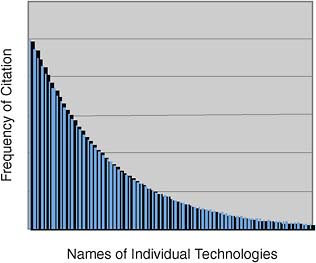
FIGURE 1-1 Curve showing the distribution of notional frequencies of citation for individual technologies.
be captured by traditional systems. The intent of this report is to develop a persistent forecasting system that can adequately identify the impact of technologies that are located in the tail of the distribution, on the far right side of the plot. A new, highly disruptive technology may be in this long tail either (1) because the magnitude of potential change it could produce is not appreciated and thus it is rarely cited or (2) because the market for the new technology is not obvious. The shift of aircraft propulsion from propeller to jet engine is an example of the first, while the rapid growth of the World Wide Web is an example of the second.
The challenge then becomes identifying potentially disruptive technologies in a sea of new technology innovations, applications, and discoveries. Compounding this challenge is the fact that some of the most disruptive technologies may emerge where no threat previously was known or even suspected, and that the ultimate impact may be the result of an integration of multiple existing technologies to create a new, highly disruptive application. These factors make it difficult for forecasters to determine important precursor signals of certain classes of disruptive technologies. New techniques and tools such as backcasting, contextual database searches, social networking analytical tools, interactive online gaming methodologies, alternative reality gaming, predictive markets, expected returns theory, portfolio and venture strategies, and visualization systems could improve signal development and identification.
RATIONALE FOR CREATING A NEW FORECASTING SYSTEM
As the world becomes more interconnected, small changes in one arena can trigger significant disruptions in others. Furthermore, decision makers in government, corporations, and institutions are faced with shrinking time frames in which to plan and react to disruptions. Traditional methodologies for forecasting disruptive technologies are generally incapable of predicting the most extreme scenarios, some of which may lead to the most potentially beneficial or catastrophic events. The committee believes the convergence of a number of advances—the increasing ubiquity of the Internet, the improving cost-efficiency of data storage and communications, the growing power of computation processing, and the globalization of trade and knowledge—has produced new tools and methods for forecasting emerging technologies that will bring about disruptions.
The committee believes there are at least five reasons to engage in a persistent forecasting exercise:
-
To identify or develop methods and tools for the task of identification.
-
To understand the potential disruptive impact of certain technologies.
-
To increase the lead time for stakeholders to plan for and address potential disruptions.
-
To give stakeholders tools to allocate resources in a manner that increases the probability of capitalizing on or mitigating the risk of a potential disruption.
-
To provide data for early warning systems designed to detect the emergence of new and potentially disruptive technologies.
It should be made clear that early warnings of technological surprise cannot justify the suppression of knowledge, which the committee believes is not possible in any event. Instead, such early warnings are needed to prevent technological surprise and to promote adaptive investment flexibility.
HOW A DISRUPTIVE TECHNOLOGY DIFFERS FROM AN EMERGING TECHNOLOGY
Disruptive Versus Emerging Technologies
While the meaning of “emerging technology” is widely understood, that of “disruptive technology” may not be. The word “disruptive” connotes an interruption or upset to the orderly progression of an event, process, or activity. “Disruptive” can also imply confusion or disorder, or a drastic alteration in structure. In short, it entails a discontinuity. “Emerging” means rising up, coming into sight, and becoming apparent, important, or prominent. Something that is emerging can be just coming into existence, or beginning to become evident or obvious after a period of obscurity. While an emerging technology may become disruptive sometime, somewhere, its potential for such disruption may not have been recognized when it was first applied.
What Is a Disruptive Technology?
New technologies continue to emerge in every field and in very part of the world. In many cases, when a technology first emerges, its disruptive potential is not readily apparent. It is only later, once it has been applied or combined in an innovative way, that the disruption occurs. In other cases, however, a disruptive technology can truly be the result of a scientific or technological breakthrough. Some of these technologies are specific and target a niche market, while others possess the potential for widespread use and may open up new markets. A disruptive technology may change the status quo to such an extent that it leads to the demise of an existing infrastructure. Accordingly, three important questions should be asked about emerging technologies: Which of them could be considered latently disruptive? In which sector, region, or application would the technology be disruptive? What is the projected timeline for its implementation?
A scientific breakthrough can lead to not just a single disruption but to a series of them. The discovery of the electron in 1879 led to new technologies that were progressively more disruptive and caused long-lasting changes in the availability of products and services: Transistors (Figure 1-2), integrated circuits, and microprocessors (Figure 1-3) are the direct result of scientific and technical breakthroughs. Other advances are the result of an innovative application of existing technologies to new markets and problem sets: for example, Internet social networking Web sites (e.g., Facebook, MySpace, and LinkedIn), improvised explosive devices (IEDs), and portable digital music players such as the iPod (see Figure 1-4).
Some new technologies will cause shifts that change the world; others will remain laboratory curiosities that are never seen outside basic research centers. Still others will be something in between. Therefore, when examining a potentially disruptive technology, one must strive to understand how relevant it is. It is useful to factor in the scale of dissemination to ensure that the technology is truly disruptive.
The scale of dissemination can be clarified by looking at boundary conditions for the high-dissemination and low-dissemination cases:
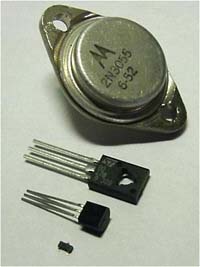
FIGURE 1-2 Assorted discrete transistors from Motorola and Siemens Technologies. SOURCE: Courtesy of Wikipedia. Used with permission from Daniel Ryde.
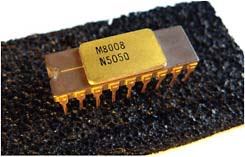
FIGURE 1-3 Microprocessor. SOURCE: Image courtesy of Paul James Ash and rarecpus.com.
-
A high-dissemination technology can be easily replicated, with minimal infrastructure investments. Examples of this would be a new search engine algorithm or new encryption code, which could be replicated by copying information from one computer to another and would only require additional servers and storage systems.
-
A low-dissemination technology or science can only be replicated with significant infrastructure investments. Examples of this include semiconductor technologies, which are created in large and expensive manufacturing facilities, and solar cell technologies, which will need massive capital investments to be able to compete with other alternative energy sources such as coal. If the infrastructure does not exist, the technology may be disseminated in isolated locations or communities, but few people will be able to leverage it.
-
These boundary conditions may not apply to technologies that are targeted at a niche market—for example, flexible solar cells for hikers and the military. Weapons of mass destruction also fall into this category—for
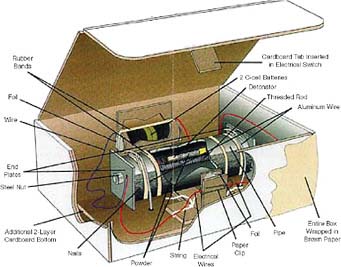
FIGURE 1-4 Improvised explosive device. SOURCE: GlobalSecurity.org.
-
example, biological agents that could affect a broad region. Here, even though its dissemination is limited, the technology may provide a differentiation, profitability, or impact out of proportion to its overall penetration in the society.
Forecasting Disruptive Technologies
The committee offers the following suggestions for the elements of a successful methodology for forecasting disruptive technologies.
Different Techniques Are Required
Techniques beyond those used to forecast emerging technologies will be required to forecast disruptive technologies. Such forecasting does not lend itself to techniques that rely on a linear progression of development or that require consensus from experts. In many cases, a technology is disruptive because few, if any, experts expected it to mature when it did or because they grossly misunderstood or underestimated its impact or applications.
Include a Broad Spectrum of Expertise
The committee believes it will be important to engage a wide variety of researchers, entrepreneurs, technologists, and scientists in any forecast. Since the sponsor wants a forecast that looks 10-20 years into the future, the committee feels it is important to include younger researchers, technologists, entrepreneurs, and scientists, who are most likely to create, and be affected by, these future disruptive technologies. The idea can be tested by surveying the demographics of the participants in a forecasting system. The system would need to have a way to track responses across demographic segments to assess the variation between age cohorts and determine how they would impact a forecast. If nothing else, the results of such an assessment should help inform forecasters about the fields of research being pursued by younger generations of researchers, technologists, scientists, and entrepreneurs.
Look Beyond Domestic Expertise
The committee observed that the defense and intelligence communities draw almost entirely on the opinion of domestic scientific and technical experts when performing forecasts. There is concern that these forecasts may be culturally biased and therefore could lead to the creation of blind spots. Given the impact of globalization, the increasing numbers of overseas research centers and universities, and significant increases in worldwide R&D investments, the committee recognizes the importance of surveying other cultures and regions and believes it is important to engage participants from other cultures in their native languages and familiar environments. The committee also recognizes that disruptive technologies do not disrupt all cultures and regions to the same extent or in the same way, so it is vital to understand how specific technologies may uniquely impact a region, country, or culture.
Wild Card Predictions Play an Important Role
A persistent forecasting system must look beyond the central mass of potential changes in technology, needs, or market drivers that have a modest to high probability of occurring. The system must identify conjunctions of science, technology, and needs that can drive innovations that might have a low probability of emerging owing to either daunting technical challenges or poor prospects for marketability but that could have a high impact if they were put into practice and adopted. These unlikely-to-emerge but potentially-high-impact innovations are sometimes referred to as wild cards. Without sacrificing scientific plausibility, the forecast must identify and evaluate wild card ideas to determine their potential for having a transformative, disruptive impact.
The ability of the human mind to draw conclusions about transformation where science and technology converge with need and opportunity is not well understood. Wild card concepts may be identified from both conventional sources (for example, research and product/process development) and unconventional sources (for example, contextual immersion in online gaming, virtual discussions on technical blogs, ideas from science fiction, the serendipitous results of searches in the library or on the Internet). New low-probability/high-impact wild card ideas may emerge less frequently in peer-reviewed scientific publications than through informal peer-to-peer discussions (for example, summaries of symposium discussions and workshops), team-based interactions (e.g., Internet gaming, simulations, blogs), and popular literature (science fiction, novels, television, and movies). Of particular interest will be a scientifically sound concept that is technically difficult but still possible yet not socially or commercially feasible without a transformation in attitudes, the market, or the culture.
Forecast Beyond the Defense and Intelligence Sectors
While the sponsors of this study are the U.S. Department of Defense (DoD) and the intelligence community (IC), the committee believes there are several compelling reasons not to limit the forecast to the defense- and intelligence-related sectors:
-
One cannot predict all the potential uses of a technology. In many cases, a technology may have its greatest impact when used in a way that is very different from that which was originally intended; second-order effects are even more speculative. An example of this is the global positioning system (GPS). Originally developed by the DoD to meet military requirements, GPS was quickly adopted by the civilian world even before the system was completely operational.1 Today, GPS is used for many applications never imagined by its creators, such as personal locators for Alzheimer’s patients and pets, geocaching for treasure hunters and gamers, photo geotagging, performance measurement for sports and fitness enthusiasts, navigation systems for cell phones, and fleet management for truckers.
-
Often the most disruptive effects arise from the integration of two or more well-understood technologies to create a new, highly disruptive technology or application. These types of disruptive technologies or
|
1 |
Available at http://www.rand.org/pubs/monograph_reports/MR614/MR614.appb.pdf. Accessed April 6, 2009. |
-
applications may emerge from a convergence of resources or from technologies where no correlation had previously been identified. Examples of this phenomenon include the modern Internet, smartphones, personal computers, improvised explosive devices (IEDs), portable digital music players, and digital photography.
The committee recognizes how quickly forecasts, especially long-term forecasts, become obsolete. New information, discoveries, and scientific breakthroughs can quickly change a prediction from unlikely to inevitable. If a forecast is to have value it needs to be kept as current as possible and as dynamic as the domains it is covering.
USEFUL FORECASTS
A useful forecast provides insights that lead to effective action in the present. A forecast user must have confidence in the quality of the underlying data and in the analysis that led to the forecast. Success is measured not by how many accurate predictions a forecast makes, but by the value of its insights. A useful disruptive forecast reduces surprise; it alerts decision makers and provides them with the tools needed to avoid unanticipated and perhaps catastrophic outcomes.
It is also important to make a distinction between a vision (a forecast of a potential future state of reality described in a vague way, e.g., elimination of the gas power combustion engine for passenger vehicles); a measurement of interest (e.g., the energy stored per unit mass); a signpost (a recognized and actionable potential future event, e.g., the commercial availability of a battery that simultaneously surpasses gasoline in energy stored per unit of mass, energy stored per unit volume, and the price per unit of energy stored); and a signal (a piece of data, sign, or event that is relevant to the identification of a potentially disruptive technology—for example, Apple, Inc., placing a large order for new touch capacitance screens from a Chinese supplier). These concepts are critical for being able to discuss the comprehensiveness of forecasts and what one might hope to accomplish with better techniques (Strong et al., 2007).
Tools as Signposts
The appearance of enabling tools is an important signpost and signal. Technology is the result of engineering, and tools enable engineering. Often, the emergence of disruptive technologies is preceded by the appearance of enabling new tools. Examples of this include the following:
-
Tools that perform nanoscale manipulation are enabling the rapid development of nanotechnology.
-
Biological analytical tools built using microfluidic technologies enable the study of proteomics, genomics, and cellomics.
-
The World Wide Web and blogs are tools enabling online social networking.
It should be recognized that many enabling tools are, in and of themselves, disruptive technologies. A useful forecasting exercise is to ask what other technologies could be envisioned once a new tool is predicted.
Those forecasting a disruptive technology should use reasoned analysis and seek expert advice to understand what foundational technologies and tools are required to engineer a new innovation. Estimating the timing of disruptive technologies requires understanding the sequence of foundational technologies and enabling tools and estimating when they will emerge.
Tipping Points as Signpoints
Tipping points, “the levels at which the momentum for change becomes unstoppable” (Walsh, 2007), are especially important to look for. Malcolm Gladwell, who had earlier coined the phrase, defined it then in sociological terms: “the moment of critical mass, the threshold, the boiling point” (Gladwell, 2000). “Tipping point” may refer to the point at which an adopted technology reaches the critical mass, to a time when the manufacturer’s cost drops
low enough to cause a significant change in the pattern of consumption, perhaps even mass substitution, or to the moment something unique becomes common.2
REPORT STRUCTURE
This report is the first of two on the topic requested by the sponsors. In this first report, the committee discusses how technology forecasts are made, assesses the various systems investigated by the committee, and identifies the attributes of a persistent, long-term disruptive technology forecasting system. Chapter 2 of this report outlines the history of technology forecasting and describes current forecasting methodologies and approaches; it also helps to further define and provide metrics for a successful forecast. Chapter 3 describes the nature of disruptive technologies, suggests sectors where disruptive technology is likely to take place, and identifies disciplines of interest for future study. Chapter 4 discusses bias and other factors that can affect the validity of a forecast. Chapter 5 proposes an approach to developing an ideal persistent disruptive technology forecast. In Chapter 6, existing forecasting systems (including those specified in this report’s statement of task) are benchmarked against the ideal system. Finally, the conclusion (Chapter 7) suggests a process to build a persistent forecasting system and lists its potential applications.
In the second report, the committee plans to summarize the results of a workshop that will have assembled experts on forecasting, system architecture, and visualization. The experts will have been asked to envision a system that meets the sponsor’s requirements while incorporating the suggestions in this report.
REFERENCES
Published
Gladwell, Malcolm. 2000. The Tipping Point: How Little Things Can Make a Big Difference. London: Little, Brown and Company.
NRC (National Research Council). 2005. Avoiding Surprise in an Era of Global Technology Advances. Washington, D.C.: The National Academies Press. Available at http://www.nap.edu/catalog.php?record_id=11286. Last accessed November 5, 2008.
Strong, R., J. Ryan, D. McDavid, Y. Leung, R. Zhou, E. Strauss, J. Bosma, T. Sabbadini, D. Jarvis, S. Sachs, P. Bishop, and C. Clark. 2007. A new way to plan for the future. Proceedings of the 40th Hawaii International Conference on Systems Science.
Walsh, B. 2007. A green tipping point. Time Magazine. Available at http://www.time.com/time/world/article/0,8599,1670871,00. html. Accessed April 6, 2009.
Unpublished
Shaffer, Allan. 2005. Disruptive technology: An uncertain future. Available at http://www.docstoc.com/docs/889200/Disruptive-Technology-An-Uncertain-Future. Last accessed May 6, 2009.
|
2 |
Available at http://en.wikipedia.org/wiki/Tipping_Point. Accessed April 6, 2009. |


