
8
Learning Through the Life Span
After visiting a science exhibit, a 73-year-old man who was asked whether he learned anything, responded:
You learn—it’s amazing…. I’m going on 74 and … you’re learning something new every day. And when you see a statement like scientists still don’t agree about algae, whether they’re plants. You know they work a little like a plant but then they don’t and so some say, “yes it is” and some say “no it isn’t.” I’m looking at the spores—amazing tiny little specimens underneath the microscope—the variety. It’s quite intriguing. I think anyone would find it interesting.1
This man’s keen interest in the exhibit and his perceptive response to it underscore one of the core values of learning in informal science settings—it is lifelong, occurring throughout the life span. What’s more, learning takes place as people routinely move between social settings and activities—after-school or community programs, clubs, museums, online venues, homes, and other settings in the community.
In developing exhibitions and planning programs and events for learners, it is essential to know which segment of the population the experience is targeting and to plan accordingly. People’s needs and interests change over the course of a lifetime, along with the way they process information and use tools, such as technology, to facilitate learning. They develop new interests and manage new tasks that arise depending on their stage of life. Leaving school and entering the workforce, learning how to be self-reliant, becoming a parent and being responsible for children, and taking on the task of caring for aging parents are stages that often demand that people navigate and explore new scientific terrain.
Accordingly, motivations related to a particular aspect of science can shift over time. A young person who eagerly absorbs information about sea creatures simply out of a keen interest in the topic may, a few years later, be drawn to expand that knowledge in college in order to obtain the proper credentials for a career in marine biology. Decades later, this same person may be drawn into further study of ocean life simply for the pleasure of remaining current with up-to-date knowledge.
In this chapter, we explore some of the ways science learning varies with age. It is important to remember that, within these broad trends, individuals can differ tremendously. Their learning is influenced by prior experiences, gender, ethnicity, and other aspects of life that have nothing to do with age. And although the nature and extent of science-related learning may vary considerably from one life stage to another, most people develop relevant capabilities and intuitive knowledge from the days immediately after birth and expand on these in later stages of their life. In this sense, science learning in informal environments is truly a lifelong enterprise.2
CHILDREN AND YOUTH
At birth, children begin to build the basis for science learning. By the end of the first 2 years of life, individuals have acquired a remarkable amount of knowledge about the physical aspects of their world.3 This “knowledge” is not formal science knowledge, but rather a developing intuitive grasp of regularity in the natural world. It is derived from the child’s own experimentation with objects, rather than through planned learning by adults. In accidentally dropping something from a high chair or crib, for example, the child begins to recognize the effects of gravity. Although these early experiences do not always lead to accurate interpretations or understandings of the physical world, research has shown that these early naïve conceptions influence later science learning.4
As a child masters language and becomes more mobile, opportunities for science learning expand. Informal and unplanned discoveries of scientific phenomena (e.g., scrutinizing bugs in the backyard) are supplemented by more programmatic learning (e.g., bedtime reading by parents, family visits to museums or science centers, science-related activities in child care or preschool settings). Even in these initial years of life, children display preferences for some topics over others. Such preferences can evolve into specific science interests (e.g., dinosaurs, insects, flight, mechanics) that can be nurtured when parents or others provide experiences or resources related to those interests.5
By the time children enter formal school environments, most have developed an impressive array of cognitive skills, along with an extensive body of knowledge related to the natural world.6 It is also likely that they have become familiar with numerous ways of accessing scientific information other than through formal classroom instruction: reading, surfing the Web, visiting the local library, watching science-related programs on television, talking with peers or adults who have some expertise on a topic, or exploring the environment on their own.7 These activities continue throughout the years in which young people and young adults are engaged in formal schooling, as well as later in life.8
It is also common for elementary school children to bring the classroom home, to regale parents with stories of what happened in school that day and involve them in homework assignments. These events help to alert parents to a child’s specific intellectual interests and may inspire family activities that feature these interests. A child’s comments about a science lesson at school may encourage parents to work with the child on the Web or take him or her to a zoo or museum or concoct scientific experiments with household items in order to answer a specific question. In these ways, informal experiences can supplement and complement school-based science education.
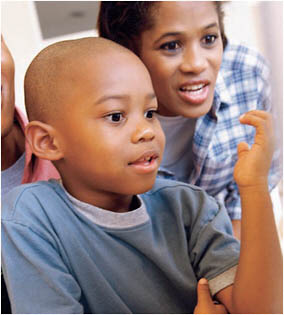
To a considerable extent, children are dependent on others to provide opportunities for science learning—formal or informal. Especially in the early years of childhood, young people look to parents to provide access to reading materials, media resources, programmed environments (such as school, museums, zoos, or libraries), and materials that can enhance informal science learning. Because of their limited knowledge base, children are also more dependent on adults to organize and interpret aspects of their learning experiences. However, children are also quite adept at creating learning opportunities from the resources available to them and deriving scientific insights from these opportunities, even at an early age.9
As young people move into adolescence, they tend to express a desire to pursue activities independently of adults.10 This does not necessarily mean that relationships with parents grow more distant,11 but young people do spend less time with parents or other adult relatives and more time with peers or alone.12 Attachment to teachers also wanes across adolescence.13 With these shifts, new opportunities for science learning become available that are not as closely tied to adult (especially parental) resources and activities. Young people gain greater access to school- and community-sponsored extracurricular activities (e.g., clubs or hobby groups) and, through part-time employment, may have more disposable income that can be devoted to hobbies or personal interests, including science-oriented activities.14 Adolescents generally have greater mobility, especially with the advent of driving privileges, that allows them broader reach into the surrounding community to pursue their personal interests. School systems tend to provide increasing levels of choice in course work with each advancing grade, allowing those with a penchant for science, mathematics, or technology to expand their exposure to science-related learning in formal contexts.
Community- and school-based programs are settings that are receiving increasing attention as a support for science learning among children and youth. Programs, especially during out-of-school time, afford a special opportunity to expand science learning experiences for millions of children and youth. Out-of-school-time programs allow sustained experiences with science and reach a large audience, including a significant population of individuals from nondominant groups.
A range of evaluation studies shows that these programs can have positive effects on participants’ attitudes toward science, as well as on grades, test scores, graduation rates, and specific science knowledge and skills. However, the body of research as a whole is difficult to make sense of because programs are focused on a variety of goals. Some place greatest emphasis on social or emotional well-being, such as developing positive attitudes, self-confidence, life skills, and social relationships. Others are more concerned with academic skills and improved academic achievement, as measured by standardized test scores, grades, graduation rates, and continued involvement in school science. Many are a blend of both. Because of these different emphases, along with the limitations of traditional academic assessments to measure the kind of learning that takes place in informal settings, it becomes difficult to draw definitive conclusions about the learning that is likely to occur. However, the full potential of these programs for supporting science learning has not been tapped.
|
THE EVOLUTION OF OUT-OF-SCHOOL-TIME PROGRAMS Out-of-school-time programs have a long history in this country. They first appeared in the 19th century, and over the years, have evolved and changed to meet different needs, purposes, and concerns. Mostly, however, they have served the important functions of providing a safe haven for academic enrichment, socialization, acculturation, problem remediation, and play. Out-of-school-time programs continue to serve these functions even as they have grown in size and scope. Some are focused on homework help and tutoring, and others are enriched learning experiences or time for nonacademic activities, such as sports or arts and crafts. During the past 20 years, out-of-school-time programs have experienced tremendous growth, largely attributed to increased federal support as well as the entry of more women into the workforce, which has meant that a greater number of children need supervised care after school. Politicians, educators, and parents increasingly view these programs as a necessary component of public education. The increased funding for the 21st Century Learning Centers, for example, is an indication of the growing importance of such programs: their budget rose from $40 million in 1998 to $1 billion in 2002. In 2007, the House of Representatives voted to increase funding to $1.1 billion. The number of children participating in out-of-school-time programs also has increased, with school-based or center-based programs being the most common. In 2005, 40 percent of all students in grades K-8 were in at least one weekly nonparental out-of-school arrangement. An advantage of these programs is that they have the potential to provide large-scale enrichment opportunities for all children, including those from nondominant groups and low-income schools. In fact, at the 21st Century Learning Centers, the typical profile of a program participant is an individual who is black, from a single-parent, low-income home, and on public assistance. Because the programs are reaching nondominant groups in need of services, they are well positioned to make a significant difference in their lives.15 |
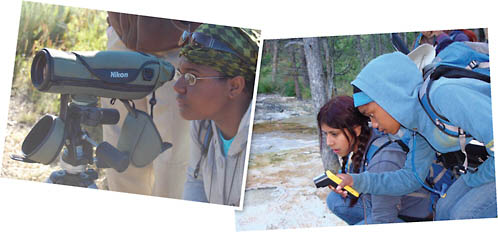
The following case study highlights one such program. Project Exploration is a nonprofit science education organization founded to address issues about access to science, particularly for populations historically underrepresented in the field. Project Exploration’s programs run in out-of-school-time settings, are free for participants, and specifically target girls and minority youth from the Chicago public schools.
|
Learning on Many Levels While the focus of the trip was on science, the girls learned much more than how to use scientific instruments and record their findings in their journals. They pushed themselves hard and learned that they could survive. They tapped into new skills as they developed strategies for working with their peers. As Kassandra, a ninth grader on the trip said, “What does [the trip] mean? It means girls working together and learning new things and helping one another along. It means proving yourself to those who think you’re wrong.” For many girls, having an opportunity like this one was something they never thought possible. Mystica, an eighth grader, remarked, “Before this, I have never thought of going to Yellowstone or traveling this far away from home. But now I know that this is one of the best experiences of my life.” This “best experience” has proven to have had a lasting impact on many of the participants. Data gathered by Project Exploration show that about 43 percent of all girls who graduate from high school as a Project Exploration field expedition alumna go on to major in science in college. In addition, these girls become science majors at 5.3 times the national average rate.16 These findings reflect the goals of executive director Gabrielle Lyon, who points out: “We know that science today does not represent the diversity that is America. Project Exploration is working to change the face of science, literally, by creating and sustaining programs designed to not only get students involved with science but also keep students involved with science.” Perhaps the All Girls Expedition has had success in keeping girls involved because it looks at the importance of building self-esteem while also tapping into the girls’ growing interest in science. Twelfth grader Latrise captures the essence of the science learning, as well as the camaraderie and mutual respect that emerges from this program: “We are smart, intelligent, young women from all over the city of Chicago yearning to explore the world of science and biology.” Victoria, a ninth grader, echoed those sentiments, saying, “The two things I am most proud of are learning how to use a scope and how to track coyotes. I am very proud of these things because I mastered something new I have never done before.” “Letting people see how science unfolds is a terrific way to inspire students and get them excited about science,” concludes Lyon. “This is just one part of our ongoing work to personalize science by focusing on the people who do the science and the questions they ask.”17 |
Project Exploration balances dual goals: promotion of positive social and emotional goals for the girls and support of science learning. The opportunities to work with unfamiliar scientific instruments, observe animals in the wild, and engage in scientific experiments and to be successful in these endeavors not only resulted in science learning but also boosted their self-confidence and sense of their own competence. The program is also consistent with the emerging needs of adolescents for greater independence from their parents and more interaction with their peers.
Looking at the program in terms of the strands, it becomes clear how it provided a multifaceted science learning experience. The program succeeded in getting students involved in science by providing a hook—a trip to Yellowstone that included interesting hands-on experiences based in the real world (Strand 1). By learning how to use such tools as thermometers and tracking scopes (Strand 5), students increased their understanding of scientific concepts (Strand 2). The girls also were expected to write down their observations and the results of their experiments; both of these activities helped in the development of scientific reasoning skills (Strand 3). By discussing their experiences and writing down their thoughts in the form of poems, narratives, and drawings, the participants also revealed that they were reflecting on the expedition and highlighting what they learned (Strand 4).
What’s particularly compelling about this example is evidence that the girls themselves recognized their own accomplishments. They are proud of themselves, especially since many never thought they would have an opportunity to travel and have these experiences, let alone succeed at them. The girls’ ownership of their success lays a foundation for future endeavors in which they are willing to take risks and try new things in college and into adulthood (Strand 6).
INFORMAL SCIENCE LEARNING EXPERIENCES FOR ADULTS
As individuals move into adult roles, they usually reserve a reasonable amount of time for leisure pursuits. Those with hobbies related to science, technology, engineering, or mathematics are especially likely to continue with intentional, self-directed learning activities in that area.18 Science learning may also continue in more unintentional ways, such as watching television shows or movies with scientific content or falling into conversation with friends or associates about science-related issues. Some adults may focus especially on scientific issues related to their occupation or career, and in many cases their pursuit of scientific topics will be
influenced by personal interests or (in later years) the school-related needs of their children.
Beginning in middle age and continuing through later adulthood, individuals are often motivated by events in their own lives or the lives of significant others to obtain health-related information.19 Health-related concerns draw many adults into a new domain of science learning. At the same time, with retirement, older adults have more time to devote to personal interests. Their science learning addresses long-standing scientific interests as well as new areas of interest.20
Adults differ from children in their interest in science and in the way they approach different learning opportunities. Most adults become interested in a science topic because it has immediate relevance to their lives. Adults tend not to be generalists in their pursuit of science learning; instead, they tend to become experts in specific domains related to everyday problems or out of personal interest. The most obvious example is in the area of health. If an adult or a person close to him or her is diagnosed with an illness, such as cancer, that individual often goes to the library to take out books on the subject or goes online to find out as much as possible.
In some cases, this research could even lead to involvement in a support group. For example, one program for people with multiple sclerosis is a social club that also offers information about the administration of medication and the management of side effects. Patients whose treatments require regular injections are given anatomy lessons. To bolster learning and ease anxiety that may be associated with feelings of isolation, groups of patients may convene to share stories about their illness and treatment.
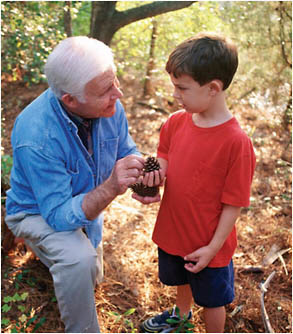
Sometimes, too, the everyday activities of adults lead to involvement in science. Adults may serve as chaperones for a school field trip to a museum, where they are put into the role of facilitator and are expected to answer questions, lead group discussions, and point out important aspects of exhibits. Over the course of a typical day, adults may notice a new kind of bird in the yard and take a moment to look it up online. Or they may tune into Science Friday on National Public Radio while picking up their children at school. If a particular
topic piques their interest, then adults may seek out additional information online or even look into programs organized by local institutions, such as museums, libraries, universities, science centers, and labs.
The move into adulthood can be both liberating and constraining in terms of informal science learning. On one hand, young adults generally exercise considerable control over their choice of activities and lifestyles. On the other hand, choices that they make may place constraints on their ability to freely pursue their interests in scientific phenomena. Certain careers or occupations will emphasize the need to master some scientific domains more than others. Parental responsibilities can trim the amount of free time available to pursue scientific interests, and parents may feel obligated to devote some of their leisure time to activities for their children. Therefore, science learning may be driven as much by the needs and interests of their children as by their own preferences.
Characteristics of Adult Experiences
Adults frequently perceive informal institutions and programs as geared toward children. In fact, there are many opportunities available for adults. Bonnie Sachatello-Sawyer and her colleagues surveyed more than 100 institutions that offer science learning experiences nationwide to assess the number and type of adult programs available. These researchers interviewed staff and participants from informal institutions of different sizes and types (art institutes, natural and cultural history museums, science centers, botanic gardens) offering different kinds of programs (credited versus noncredited classes, guided tours, lectures). Both studies found that 94 percent of all institutions offer some sort of adult programming, but most of the programs—63 percent—were designed for families or children.21
This study also found that although most institutions are offering more adult programs than ever before, they are having trouble attracting and connecting with an audience. Part of the problem is with the kinds of programs offered. Lectures were offered more often than anything else, and they were viewed as dull from the adult learner’s perspective. The adult learners told researchers that they were interested in programs that gave them exposure to unique people, places, and objects. They had positive impressions of programs that gave them access to new perspectives, attitudes, and insights.
In addition, the study found that no single teaching or facilitation method was more effective than another. The quality that participants were looking for in an
instructor or facilitator was the ability to connect with the needs and interests of the learners and to help them discuss, integrate, reflect on, and apply new insights. In fact, for many participants, building a meaningful relationship with these facilitators was the most important part of the program. It is through such relationships that adult learners grow in their knowledge and understanding of a given topic.
As a way to explain the varying reactions adults have to programs in informal settings, Sachatello-Sawyer uses the image of a pyramid. Acquiring new knowledge and skills is at the bottom of the pyramid, followed by expanded relationships, which involve more contacts in the community and new friends. At the next level, adults report increased appreciation of a topic as indicated by their pursuit of additional experiences and discussion of the subject with knowledgeable individuals. Changed attitudes or emotions follow from the previous step, revealed through heightened self-confidence and taking the initiative to pursue new activities.
As adult learners reach the apex of the pyramid, they experience what Sachatello-Sawyer refers to as transformative experiences. Such experiences have caused learners to reevaluate their lives and make life-changing decisions, such as to leave one career for another or to find meaning in new experiences. One learner reported that floating in the Grand Canyon made her realize that she “had a place in the cosmos and was part of the timeless nature of the canyon.” While it is difficult to foster such life-changing experiences, it is a goal to which program developers can aspire.
To illustrate an informal science program for adults and the learning that takes place, consider the next case study. Like the Cornell Lab of Ornithology’s birdwatching program (Chapter 2), the case study also is an example of citizen science. But instead of focusing on gaining insight into animal biology and behavior, the purpose of this program is more practical: to track wildlife that crosses Highway 3, a busy road that cuts through the Rocky Mountains in Alberta, Canada. With greater awareness of the animals’ habits, the possibility of developing interventions to reduce the number of wildlife-vehicle collisions increases.
|
everyday SCIENCE Road Watch in the Pass 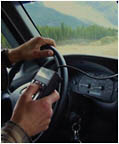 At the Crowsnest Pass on Highway 3, it is not unusual to see bears, elk, cougars, and sheep ambling across the road. Before the highway was built, these animals claimed this route as part of their habitat. Now the animals must share the road with humans. The challenge for people is to figure out how this can be accomplished safely. That’s where the program Road Watch in the Pass comes in. Developed under the auspices of the Miistakis Institute for the Rockies, the program invites local citizens to share their knowledge about animal behavior. By providing information to the local community, their contributions can help reduce the 200 collisions that occur each year to a smaller number. Participants have a couple of different ways to share their observations. The first is by making use of an online interactive map, which allows participants to plot the exact location of an animal sighting. This information is then sent to an online database, where it is stored. Although this approach has resulted in numerous observations (about 4,500 currently in the database), it also has some pitfalls. The observations are random, and there is no way to ensure that the entire road is being evaluated. Understanding accurately where wildlife cross the road and during which season is important for the development of strategies to reduce collisions along the road. 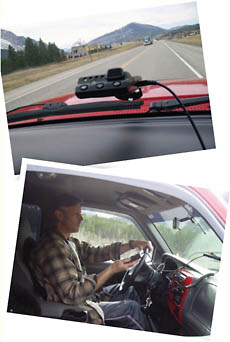
An electronic device allows commuters to track which animals, if any, are on the road. To address these concerns, the project added another data collection tool—the Road Driving Survey. It is designed for commuters who travel the same stretch of Highway 3 each day. Each commuter is assigned to the specific tract of the highway along which he or she drives on a regular basis. The commuters are given an electronic device that enables them to key in which, if any, animals they see in real time. The advantage of this experimental design is that it becomes possible to evaluate more accurately where animals are crossing the highway and if there are seasonal variations in their movements. The data collected with the map and the survey complement each other, providing researchers with a more complete picture of animal behavior. How can data like these be put to use? After 4 years of data collection, Road Watch information was used to develop a community map displaying wildlife-vehicle collisions, highlighting where they are common. Based on June 2007 observations of bighorn sheep, the Fish and Wildlife Division of Alberta Sustainable Resource Development is using conditioning techniques to encourage them to stay off the road. The goal is to reduce the number of mortalities, especially near Crowsnest Lake. Rob Schaufele, coordinator for the project, notes that the data being collected also are being used by several other agencies for planning purposes. “The community of Crowsnest Pass should be proud of their contributions to Road Watch,” says Schaufele. “It increases public and decision-maker awareness.”22 |
Citizen Efforts Lead to Learning
This case study illustrates the pragmatic nature of adult involvement in science. Participation in this program was spurred by concern about the dangers to people and wildlife as a result of traffic on Highway 3. It follows that the people with the most at stake would be more apt to participate. In addition, the impact of the program on animal safety is contingent, at least in part, on participant investment in the effort.
There is evidence that learning has occurred. The number of observations in the database—4,500—indicates that people are interested in the program and motivated to participate (Strand 1). According to the results of a 2007 Road Watch online survey, 85 percent of the respondents (43 individuals) indicated that their knowledge of wildlife-vehicle collision and movement zone patterns had increased. In addition, through participation in the program, people gained much experience recording their observations (Strand 3) and using scientific tools (Strand 5).
On the basis of preliminary analysis of evaluation data, it is difficult to say whether a community of learners has formed. People do, however, discuss the program with their friends, although attendance at scheduled Road Watch meetings and events is erratic, ranging from low to high without a consistent pattern.
The online survey also asked whether respondents learned anything else besides information about wildlife. Participants indicated that they understood the potential of their data to affect future land-use decisions to improve safety conditions for both wildlife and people.23
EXPERIENCES FOR OLDER ADULTS
Older adults are a population with whom informal institutions are working more frequently. Their abilities, needs, and interests require special attention in order to create programs that serve them well. Long-standing misconceptions about aging, especially about the likelihood of such problems as memory loss and cognitive decline, have affected the way programming for this audience has proceeded. To improve this process, researcher Ann Benbow has compiled a list of strategies that should be considered when planning programs for older adults.24 These include explaining the activity clearly, setting aside enough time to complete it, and relating the activity to real-life situations.
Later adulthood often liberates individuals from the competing demands of work and family roles, but it may impose other restrictions on learning activities if such activities are not well designed to accommodate maturational changes of this age period. Many older adults are dependent on public transportation systems to access such community resources as public libraries, museums, or community organizations and scholarly institutions in which learning opportunities reside.25 Learning environments also must make accommodations for adults’ physical limitations. Museum exhibitions that require too much walking or too much reading, especially of fine print material, or that provide few opportunities for intermittent rest, can limit older adults’ participation.26
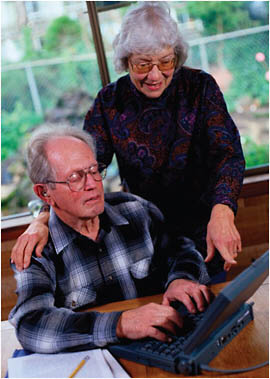
One of the advantages of being older is that people have cultivated an extensive experience and knowledge base. They have a long history of family life, work experiences, and leisure pursuits that can serve as a starting point not only for new learning, but also for sharing knowledge, skills, and experiences.
Research by Guy McKhann and Marilyn Albert has revealed that, throughout their lives, humans continue to generate new neurons in the hippocampus regions of the brain and that new neuronal connections are constantly being formed in response to new life experiences.27 Their research presents biological evidence that learning is truly lifelong.
Another relevant finding from research is that knowledge of general facts and information about the world do not diminish with age; in fact, experience and life skills lead to a more comprehensive understanding of the world. Self-worth, autonomy, and control over emotions increase or remain stable with age. There is evidence to suggest that older adults regulate negative emotions better than young adults while experiencing positive emotions with similar intensity and frequency. Overall, it appears that older adults can achieve an improved sense of well-being by pursuing experiences that are meaningful and tied to emotional information.
On the negative side, researchers Fergus Craik and Timothy Salthouse have found that older adults do face a steady loss in fluid intelligence, or processing capacity.28 This decline can adversely affect the performance of everyday tasks
|
“Overall, it appears that older adults can achieve an improved sense of well-being by pursuing experiences that are meaningful and tied to emotional information.” |
and learning as a result of a weakened capacity for attention and various types of memory performance. Because older adults often face declines in hearing, vision, and motor control, deficits in fluid intelligence can appear exaggerated. Studies also have shown that the extra effort expended by a hearing-impaired listener in order to perform a task successfully comes at the cost of processing resources that would otherwise be directed toward remembering the steps of the task.
Decline in fluid intelligence could have an impact on older adults’ ability to use the computer. Older adults make more errors and perform at a lower level than young people do. In addition, they demonstrate a lower ability to edit out unnecessary information. Because the baby boom generation will presumably continue to use the computer into old age, it is important that website designers keep these deficits in mind and make adjustments accordingly.
Nonetheless, the evidence indicates that older adults can benefit from informal science programs, especially if some of these issues are considered in the program design. One such program, called Project SEE, or Senior Environmental Experiences, is a partnership between Ramapo College of New Jersey, the Meadowlands Environmental Center, and regional aging community services, including the Bergen County Division of Senior Services. Its purpose is to increase interest in the environment among seniors by making it relevant to their lives. The next case study offers a glimpse into this program.
|
everyday SCIENCE Project SEE Offers Science for Seniors  Senior citizens from 32 centers throughout the state of New Jersey can learn about ecology from the experts—scientists from the Meadowlands Environmental Center who are involved in cutting-edge research of the Meadowlands ecosystem. But the scientists aren’t spending time on the road visiting these centers. Instead, the two groups are connecting through videoconferencing technology. Program designers are preparing four modules to use with older adults. The first two have been completed and have already been used in four centers—the United Senior Center Hackensack, the Secaucus Senior Center, the Clara Maass Continuing Care Center, and the Lyndhurst Public Library. Each module asks a timely question and then uses a variety of strategies to present information. The goal of the first module, Should I tell my children and grandchildren to eat the fish and crabs they catch?, is to educate this audience about the continuing dangers of eating contaminated fish. Using this information, the participants can further discuss how to address the region’s ecological problems. 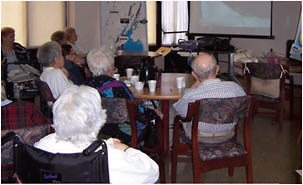
Seniors can hear a lecture given by a scientist from the Meadowlands Environmental Center by making use of videoconferencing technology. Each module includes three sessions. The first, which takes place at the center, introduces the topic through hands-on activities. The next session features a videoconference with scientists from the Meadowlands. In this session for Module 1, scientists point out species of particular concern. They also go over the fish and crabs listed in the state’s advisory and the potential health effects of eating them. The following day, the group participates in the third and final session. Also a videoconference, this session focuses on what seafood people can eat and safe ways to prepare it. The session ends with the seniors competing for prizes during a Marsh Jeopardy Game. “I’ve enjoyed working with each and every senior I have met so far,” says Angela Cristini, project director. “They are interested, engaged, and fun loving. Although it may sound hokey, this experience has certainly shown me that you really are never too old to learn new things.”29 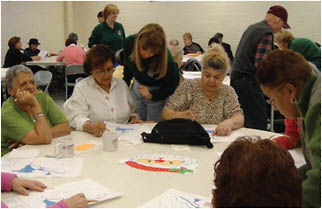
Learners of all ages enjoy hands-on activities. |
Effective Strategies for Work with Senior Citizens
Programming for senior citizens is a new field of informal science education. Although there is little empirical analysis of such programs, it appears that forming partnerships with local organizations and area networks of aging services is a good first step. In developing the program, incorporating knowledge about the adult learner into its design will result in programs more targeted to the needs of this audience. There also appears to be some benefit to using technology to enhance the learning experience.
The informal science education community is increasingly interested in serving older adults more effectively. From the research that has been done to date, it is evident that special accommodations will have to be made. The Meadowlands program used videoconferencing so that the seniors would not have to travel to the center. Depending on the nature of the program, other accommodations and adaptations may be needed.
COHORT EFFECTS
Thus far, we have focused on broad changes with age that have the potential to affect science learning. An underlying assumption in these descriptions is that children will “grow into” the characteristics displayed by adolescents, who likewise will eventually display the characteristics observed in adults. However, some of the differences that can be seen across age groups do not disappear as individuals age. Instead, they serve as distinctive characteristics of a particular generation. These are known as cohort effects, meaning that they are attitudes, traits, or behaviors that typify a group of people born during a specific period, and they tend to stay with that cohort consistently across the life course.
Cohort effects are related to the common life experiences of individuals born in certain time periods. The term has its roots in population biology and has relevance in epidemiological studies in which subsets of a population are studied in relation to their exposure to certain sets of risks that can affect medical conditions, such as heart disease and cancer. Cohort effects are studied in sociology and economics in relation to organizational culture and value orientations in society. One classic study, for example, charted the attitudes and behavior of a group of young people in California who came of age during the Great Depression,
tracing the impact of these dire historical circumstances—and the world war and period of prosperity that followed—on their behavior across adulthood.30
The delineation of cohorts is always somewhat arbitrary, although they may be marked by major historical events. In the United States, some common cohort groupings are Postwar/Depression, Baby Boomers, Generation X (born between 1965 and 1979), and Generation Y (born between 1980 and 1999), also referred to as Millennials. Delineations may differ across cultures or societies.
One important way in which cohort differences are particularly noticeable is in their experiences with and attitudes toward technology. World War I and Postwar/Depression groups who grew up without television are much more attuned to the oral medium of radio, which requires more personal visualization of people and events. Baby Boomers had TV, satellites, and a man on the moon but no personal computers until they were well into adulthood. By the time the first cohort of Generation Xers became teenagers, the computer revolution had started. Late Generation X and all Generation Y children in the United States have always had access to a wide variety of technology. Generation Y has come of age (and continue to do so) with a full range of the current technological tools—e-mail, the Internet, cell phones, text messages, and social networking. Such differences have great potential to affect science learning. For example, in the WolfQuest case study (Chapter 1), it was clear that children and teens had no trouble learning science in the context of a computer game; in fact, learning on this platform was very comfortable for them. It is questionable whether the same could be said of many baby boomers, especially the older members of this group.

It is not always clear how distinctive characteristics of an age cohort will affect each of life’s stages. Instead, informal science educators and program designers must be responsive to the general principle that the program needs of each age group will be determined by the interaction of the primary developmental features and demands of the group’s life stage, as well as the enduring characteristics that mark the group’s age cohort. In short, each generation of children, adolescents, young adults, and older adults will be somewhat different, modulating the general script of a life stage by virtue of the idiosyncrasies of their cohort.

Across the life span, from infancy to late adulthood, individuals learn about the natural world and develop important skills for science learning. Over time, their needs and interests change, affecting what kinds of science activities they choose to pursue. The preferences of individuals are partially influenced by the time period when they were born and the impact of world events on their overall life experience.
Because one of the core values of the informal science education community is to provide science learning experiences throughout the life span, it is important for educators and program designers to consider the audiences they are serving. In particular, programs for school-age children and youth (including after school) are a significant, widespread, and growing phenomenon in which an increasing emphasis is placed on science. Clearly, the needs of children in out-of-school-time programs are very different from those of adults. Keeping these needs in mind and planning accordingly will lead to richer learning experiences.
Things to Try
To apply the ideas presented in this chapter to informal settings, consider the following:
-
Develop an understanding of your audience before developing a program. Ask the following questions in your front-end or needs assessment:
-
What is the background of members of your target audience?
-
What are their strengths and weaknesses?
-
What is their interest, and what motivates them?
-
What learning goals are you trying to accomplish? What do your audiences already know and not know? What do they want to know? How do they want to explore and discover? What would be the best way to meet those goals?
-
-
Seek out partners from the community. This point has been reinforced throughout the book. When planning activities for different ages, it may be necessary for one group to seek out another so that an effective program can be designed. Project SEE, for senior citizens, is an example of how a partnership among three entities—Ramapo College of New Jersey, the Meadowlands Environmental Center, and regional aging community services—joined forces to offer this audience a unique science learning experience.
-
Be aware of new research and best practices. In programs for all three age groups, new information is always emerging about how people learn. Try to become familiar with the research base and use new findings to inform program design and development. There is a considerable body of knowledge on adult learning and adult learners that is relevant to informal science education and learning. There is also a growing body of tested examples and case studies to draw from that are available online or accessible through blogs and listservs.
-
Consider the diversity of your audience. Previous chapters considered cultural and linguistic diversity; differences in interest, motivation, knowledge; and situated identity as factors to consider when providing informal science learning experiences. Age and physical ability are certainly important aspects that help determine the diversity of informal audiences. Culturally oriented designs or universal design principles (that acknowledge differences in physical and mental abilities of visitors or participants) are ways to help serve the multiple audiences of informal science settings.
For Further Reading
Lindberg, C.M., Carstensen, E.L., and Carstensen, L.L. (2007). Lifelong Learning and Technology. Paper prepared for the Committee on Learning Science in Informal Environments of the National Research Council. Available: http://www7.nationalacademies.org/bose/Lindberg_et%20al_Commissioned_Paper.pdf [accessed February 2010].
National Center for Education Statistics. (2006). Digest of Education Statistics: 2006 Digest Tables. Available: http://nces.ed.gov/programs/digest/2006menu_tables.asp [accessed February 2010].
Project Exploration. (2006). Project Exploration Youth Programs Evaluation. Available: http://www.projectexploration.org [accessed July 2007].
Web Resources
Center for the Advancement of Informal Science Education (CAISE): http://caise.insci.org/
Exhibit Files: http://www.exhibitfiles.org
Informal Science: http://www.informalscience.org
Project Exploration: http://www.projectexploration.org/
Project SEE: http://www.marshmemoirs.com/about.htm
Road Watch at the Pass: http://www.rockies.ca/roadwatch/about.php


