
9
Extending and Connecting Opportunities to Learn Science
It’s 7:00 pm on a Sunday evening, and you have just returned home from a long, full day at the local aquarium. Your family saw many exotic fish and read about their behaviors on signs posted near their tanks. You also watched an IMAX film that showed some of these fish in their natural habitats. On the way home, your daughter talked about the fish she has in her classroom at school, and your son described the investigations they have been doing for a science unit on oceans. Now that you are home and relaxing, your daughter wants to see more fish, so she asks to watch the Disney/Pixar film Finding Nemo. Afterward, you decide to sit down and watch some television before going to bed. One channel is showing The Life Aquatic with Steve Zissou, a Hollywood film inspired by the character of Jacques-Yves Cousteau, the great science filmmaker. While celebrating his work, it also points out—and gently makes fun of—his personal idiosyncrasies. Meanwhile, the long-running news program, 60 Minutes, is on the upstairs television. This segment features vacationers diving into ocean waters to observe sharks up close and personal, as well as the consequences of invading their territories. This segment intrigues your son, so he goes to the 60 Minutes website to see a long list of people posting their comments on the show’s content in real time.
EXPANDING OPPORTUNITIES FOR INFORMAL SCIENCE LEARNING
As this example illustrates, science learning, especially informal science learning, is an ongoing and potentially cumulative process. The impact of informal learning is not only the result of what happens during a particular experience, but also the product of events happening before and after an experience. Interest in and knowledge of science is supported by experiences across many different informal
settings, as well as in schools. Although it is important to understand the impact of informal environments, a more important question may be how science learning occurs across the range of formal and informal environments and how formal and informal educators can capitalize on these connections.
Informal science educators are recognizing the power of providing ways for participants to extend and deepen learning experiences and are using the idea of connected learning experiences in their designs. For example, working at the Children’s Museum of Indianapolis, Leona Schauble and Karol Bartlett designed an extended trajectory for science learning by using the idea of a funnel to map the way exhibits were laid out in space.1 The outer edge of the funnel served all learners and consisted of easily accessible, compelling, and loosely structured experiences. The second level of the funnel was a series of quieter, restricted areas called Discovery Labs. Learners who chose to continue to pursue the big idea in question could move into these spaces. At the Dock Shop, participants could explore boat design, including the design of different types of hulls tested for carrying capacity and various sail types tested with a wind machine.
The deepest portion of the funnel was designed for repeat visitors, such as museum members and children from the local neighborhood. The activities in this portion of the gallery built on children’s prior experiences in the museum, at home, and at school. Visitors could borrow kits that were housed in the museum and distributed through local libraries. These kits contained materials that allowed children to extend their explorations in more detailed, sustained studies and to send in their results to the museum through Science Postcards. Learners who wanted to pursue a particular topic in even greater depth might choose to come back for an extended visit or several visits or to seek out other related activities, such as reading books on the topic or watching relevant television shows.
Many institutions extend their learning opportunities through systems for lending visitors objects and interpretive materials, such as books, other printed materials, activity kits, or videos, for a period of time. Some, like Science North in Canada, have made sharing educational resources a two-way street: they allow visitors or customers to contribute to the pool of resources made available to others, by borrowing or buying such resources from visitors who may have developed them as they engaged in scientific pursuits or science education activities outside the institution. Many museums are also turning to other forms of media, particularly the Internet, as a means of extending a visit to the museum through online activities.
In fact, broadcast, print, and digital media can play an important role in facilitating science learning across settings. Educational programming, “serious
games,” entertainment media, and science journalism provide a rich and varied set of resources for learning science. Through such technologies as radio, television, print, the Internet, and personal digital devices, science information is increasingly available to people in their daily lives. Although television is still the most widely referenced source of scientific information for most people, it is rapidly be losing ground to the Web. New media, such as podcasts, webinars, and blogs, can support learning by expanding the reach of science content to larger and more varied audiences. They can also be used in combination with designed spaces or particular educational programs to enhance learners’ access to natural and scientific phenomena, scientific practices (e.g., data visualization, communication, systematic observation), and scientific norms (e.g., through media-based depictions of scientific practice). What’s more, interactive media have the potential to customize portrayals of science by allowing learners to select developmentally appropriate material and culturally familiar portrayals (e.g., choosing the language of a narrative or the setting of a virtual investigation) on their own cell phone or other handheld devices.

Many museums, too, are experimenting with ways to make use of cell phones as personalized interpretation devices. For example, the Liberty Science Center in Jersey City, New Jersey, with funding from the National Science Foundation (NSF), has developed a program called “Science Now, Science Everywhere,” which allows visitors to dial a phone number to receive additional information about an exhibit. Visitors can go online and find the number in advance of their visit so that they are ready to call in as soon as they arrive at the Science Center. Information comes directly to each participating visitor’s cell phone in the form of a voicemail message or as a text.
Currently, the Liberty Science Center is working on expanding the reach of cell phones. Soon visitors will be able to sign up for a weekly photo challenge. While at the center, they can take a photo of an exhibit highlight and post it online. The photos will be reviewed and judged, with a new winner selected each
|
MUSEUM 2.0: THE TREND OF THE FUTURE Designers of children’s science programs strive to encourage viewers to make use of multiple platforms to learn about science. After watching a science television show, they hope that viewers consider visiting a local science center or going online to learn more about a topic. As technology grows more sophisticated, other informal science venues, such as museums, are providing incentives for their visitors to take advantage of multiple platforms for learning. They are doing so by adding interactive features to their websites, offering visitors a chance to view collections online, view webcasts of special events, respond to blogs, watch videos on YouTube, and receive quick updates about museum events on Twitter. Museums are approaching this new world in different ways and at different rates. The director of the Bay Area Discovery Museum, a small children’s museum in northern California, has started a blog for her museum and engages frequently with Yelp, a Web 2.0 parenting and recreation site. The Library of Congress has posted some images from its collection on Flickr, and the North Carolina Museum of Life and Science is experimenting with how to implement Web 2.0 strategies on a small scale. Larger institutions are also in different stages of developing a strong online and interactive presence. The Smithsonian Institution is currently working on how it can become “Smithsonian 2.0.” Plans for this institution-wide initiative include digitizing all of the objects in its vast collection, using Facebook to build interest in the Smithsonian, and encouraging visitors to participate in Smithsonian planning by posting their ideas on one of the institution’s blogs. The Smithsonian is hoping that these steps will help change its culture so that the institution no longer sees itself as an “expert” that educates the public, but as a partner that willingly exchanges information with the public and discusses ideas. The Exploratorium has evolved from posting blogs and exhibits online to building a virtual world that offers visitors a different kind of science experience. In a new world called Exploratorium in Second Life, guests are invited to develop an avatar (a representation of a person) and explore phenomena in ways that are not possible in real life. For example, as part of an exhibit on a solar eclipse, an avatar can literally crawl inside the eclipse’s umbra. Avatars also filled an online amphitheatre to share their thoughts about eclipses with their fellow avatars and an Exploratorium (avatar) staff member. And if a visitor wants to talk directly to someone participating in Second Life, tools ranging from instant messaging to online chats are available as well. These innovations are still in their formative stages, so at this point, research on their impact on learning is not available. But the Exploratorium, the Smithsonian, and many other institutions plan to continue to build their online presence. As they do, the informal science community will develop a deeper understanding of how cutting across multiple platforms and making use of the newest technologies affect learning. Many new ideas on how to expand learning opportunities across settings using new media are discussed at the annual conference, Museums and the Web. Its archive can be accessed at http://www.archimuse.com. |
week. If a visitor would rather just take a photo and save it on his or her phone, that, too, is possible. Through links to feeds on their phones, visitors also will be able to receive headlines of science and technology news posted at the Center. And over the next year or so, more exhibits will be accessible through cell phones.
“We’re continuing to think of ways to use cell phones to enhance the interactive experience,” explains Wayne LaBar, Vice President, Exhibitions and Featured Experiences. “Cell phones are proving to be a way to continue to engage people with exhibits at the Center even after they walk out the door.”
While there is incredible potential for enhancing science learning through opportunities to extend and connect experiences, it is important to realize that little is known about how people learn about a single content area across different informal settings and different media formats. Designing studies that examine this cumulative development of knowledge or skill is difficult. To illustrate this, consider a child reading a book about dinosaurs at age 3. She may like the book and ask to read it many times. Sensing her excitement for dinosaurs, her parents may take her to a museum to see an exhibit on her fourth birthday. Her parents may have also bought her several dinosaur models from a local toy store during that period. A television program on dinosaurs may air after the museum visit, providing more information. And, in the era of networked computing, the family may seek dinosaur information together on the Internet.
Tracking all of this activity and determining the individual and collective impact on the child’s emerging interest, knowledge, and skill are quite challenging. In fact, while it seems important to understand the cumulative effect of various loosely connected learning experiences and to identify the relative contribution of individual experiences, it may be even more important for science educators to understand and appreciate the interconnections and to take them into account when creating and delivering science learning experiences for their audiences. With an appreciation that people will experience many and varied opportunities to learn science over the course of a lifetime, educators can design individual experiences in a way that better supports the overall journey.2 For example, a museum exhibition about dinosaurs may be designed to optimize learning during the visit, with learning gains measured immediately after the experience. A different approach would be to design the exhibition to better connect to previous experiences and generate questions for further exploration at home. The measure of success of such an exhibition would be the quality of the questions generated and the nature of the next step visitors take to pursue those questions once they leave the museum.3
LINKING FORMAL AND INFORMAL SETTINGS
There is a growing recognition that individual museum visits, dinner-table discussions, visits to nearby parks, online searches, or TV shows have a cumulative effect on learning that we don’t yet fully understand. We do know, however, that informal experiences that result in learning science need to be recognized and leveraged as part of an individual’s personal learning pathway in science. Fostering links between experiences in school and out of school is one important way to enhance science learning. These linkages can help children and youth understand that learning is not restricted to schools and that there are opportunities to engage with science all around them. See the Appendix at the end of this chapter for a discussion of major programs of research exploring the links between formal and informal settings for science learning.
Although there is tremendous potential to link formal schooling to informal experiences that occur outside of school, there are also many barriers to overcome when forging these links. For one thing, the goals and objectives of informal learning environments like museums, zoos, parks, libraries, and planetaria do not perfectly match those of schools. Schools focus much of their efforts on imparting knowledge, while informal settings place greater emphasis on interest, emotion, motivation, and engagement, and provide learning experiences that are meant to be entered and explored based on free-choice, rather than a learning agenda that is external to the learner. Another important difference between schools and informal settings is that schools face increasing pressure to meet accountability requirements that place a premium on students’ test scores. These same pressures have affected informal settings to a lesser extent. As a result, schools and informal institutions may appear to hold different goals for learning when, in fact, both share a common interest in enriching the scientific knowledge, interest, and capacity of students and the broader public.
In order to more effectively support science learning across the life span, it is essential to consider how schools and informal settings can work together more effectively. Below we consider some of the major points of intersection between schools and informal settings, focusing on field trips, after-school programs, and professional development opportunities for teachers.
THE VALUE OF FIELD TRIPS
School field trips to informal environments have a long track record, and there is an abundance of literature that helps teachers and informal science educators plan field trips.4 A 1997 study by John Falk and Lynn Dierking showed that all elementary and middle school students, as well as adults, could remember at least one thing they learned on a field trip. Over the short term, however, there are mixed results about the impact of field trips on children’s attitudes, interest, and knowledge, although the majority of studies do show some positive changes in the areas of knowledge and attitudes.
Much of the work that has been done is on the structure of field trips and how it can be improved to facilitate learning. The critical factors that have been studied are advance preparation, active participation by students in the program, teacher involvement, and reinforcement after the field trip. We describe each of these areas below.
Advance Preparation
The purpose of advance field trip preparation is to give students a framework for interpreting what they will experience during the field trip and pointing out what they should pay attention to during the visit. Pre- and post-survey studies and observations show that students concentrate and learn more from their visit if they have engaged in related activities in advance.
Surprisingly, advance preparation is most effective when it reduces the cognitive, psychological, and geographical novelty of the experience. With some preparation, researchers Carole Kubota and Roger Olstad point out, students spend more time interacting with exhibits and learning from their visits.5 Many studies, however, have shown that although advance preparation is beneficial, teachers spend little time on it.
Active Participation in Museum Activities
A review of more than 200 evaluations of field trips by Sabra Price and George Hein indicates that the most effective experiences include both hands-on activities and time for more structured learning, such as viewing films, listening to presen-
tations, or participating in discussions with facilitators and peers.6 For example, children who had an opportunity to handle materials, become involved in science activities, and observe animals and objects were excited about the experience. Similarly, a review of earlier field trip studies—from 1939 to 1989—by John Koran and his colleagues showed that hands-on involvement with exhibits results in more changes in attitudes and interest than passive experiences.7
To help keep students engaged throughout their field trip experience, Australian researchers Janette Griffin and David Symington argued for the inclusion of structured activities in the field trip.8 Observing 30 unstructured classroom visits to museums, they noted that very few students continued exploring the museum purposefully after the first half hour of hands-on activities. Instead, most students were observed talking in the museum café, sitting on gallery benches, copying each other’s worksheets, or moving quickly from exhibit to exhibit.
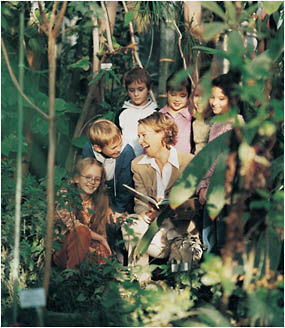
While individual field trips differ dramatically in their goals and character, it appears that successful ones combine elements of structured or guided exploration and learning that are designed with the unique opportunities of the setting in mind. They also incorporate opportunities for students to follow their own individual agenda by exploring on their own or in small groups. While teachers and the host institution may have to show that the field trip connects to standards or is linked to school curricula, field trips are also a way to introduce students to lifelong learning resources in their community.
Teacher/Chaperone Involvement During the Field Trip
Although studies have consistently shown that classroom teacher involvement in field trips can be key to their success, during most field trips the institution’s staff members, not teachers, are usually responsible for making the connections between the exhibits and classroom content. What’s more, a variety of studies indicate that teachers tend to assume a passive and unengaged role during field trips. The evidence indicates that the more involved teachers are in both planning
the trip and the visit itself, the more likely that the activities will align with classroom curriculum and be viewed as valuable experiences by teachers. Not surprisingly, the more engaged the teachers are, the more students will learn. Since field trips are often akin to “outsourcing” expertise, and informal science educators are in fact expected to assume the role of instructor, teachers still need to remain visibly engaged in order for their students to sustain their own participation and engagement. Informal science educators often need teachers to help with class management and crowd control as well.
Parent and teacher chaperones are an essential element of school field trips, often required to supervise students. Unfortunately, it is difficult to recruit chaperones in sufficient numbers. Depending on the nature of the field trip experience, chaperones (like classroom teachers) could assume an enhanced educational role, providing interpretation and instruction and focusing student attention where needed and when appropriate. In fact, there is little evidence that chaperones are used in this fashion. When the California Science Center experimented with chaperone-led field trips, teachers did not make much use of the program, and the initial research on the effectiveness of chaperones as field trip docents was inconclusive.9
While teachers and parent chaperones could be a productive resource for the field trip, there are many informal educators who recommend that they both be used sparingly to avoid adult intervention in student learning. It is a fine line between focusing students’ attention and changing the experience from one of discovery to one of lecture and demonstration.
Reinforcement After the Field Trip
Although teachers intend to do follow-up after a field trip, they often end up just collecting and grading student worksheets that are given out during the field trip. Griffin’s 1994 study of field trips taken by students in 13 Australian schools showed that about half of the teachers reported that they planned to do follow-up activities but only about a quarter actually ended up doing so.10 In addition, few students expected to receive meaningful follow-up, perhaps indicating what they experience most frequently. Studies in Canada, Germany, and the United States produced similar findings.11
One of the reasons that developing meaningful post-visit activities is challenging is that the experience often does not align with the classroom learning program. As a result, follow-up activities could potentially disrupt the work
being done in the classroom. Even when the field trip does align with work being covered at school, connections between the two experiences often are not made. What’s more, when teachers do try to have a discussion after the field trip, often it involves little more than asking students if they enjoyed the experience. When well-designed examples of classroom follow-up have been documented, they are in fact associated with positive educational impacts.
TAKING FIELD TRIPS TO THE NEXT LEVEL
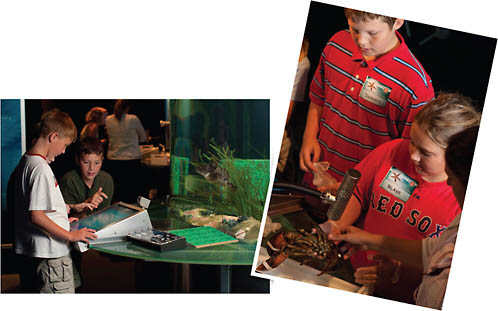
While most field trips may involve one structured activity and a half hour of unstructured time, the Gulf of Maine Research Institute (GMRI) has developed a different type of field trip experience. Not only is the informal science program aligned with the school science curriculum, it also gives students entry to a state-of-the-art facility, the Cohen Center for Interactive Learning, housed at the GMRI.
The following case study describes LabVenture!, the GMRI program that is available to all middle school teachers and their fifth- and sixth-grade students in Maine. To date, more than 10,800 students from 177 schools throughout the state’s 16 counties have participated in the program. It is an example of an ongoing relationship between a scientific facility and the schools that allows students to work with scientific instruments and use the skills of science to answer a compelling real-world problem.
|
At another station, students study the X-Fish’s stomach contents to determine what it eats. A third station shows students how to find the X-Fish, first on a scientific cruise in the Gulf of Maine and then on a fishing expedition. During the expedition, the team works together to make decisions, which determine how profitable the trip turns out to be. At the fourth station, the students come face to face with a large tank of fish. They observe the fishes’ behavior and then imitate them by running around the tank. The trick is to never bump each other, just as schooling fish swim together without getting in each other’s way. After all the students have visited each station, they spend 20 minutes preparing a presentation. Each team then shares its ideas about the X-Fish. Just as scientists do, the student scientists work together to solve the mystery. The program doesn’t end when the students and their teachers leave the center. They can continue to discuss the experience by accessing personalized student websites. The websites document the students’ thoughts and ideas, which have been saved online throughout the day. Students can review and annotate their websites, as well as continue to interact with GMRI staff through the center’s blog. But perhaps the biggest bonus of the experience comes from observing the kids and how well they work together. “What comes across watching the kids is how they treat each other with respect and learn from one another,” says Lishness. “We expect the world from them, and they rise to meet—and even surpass—our expectations.”12 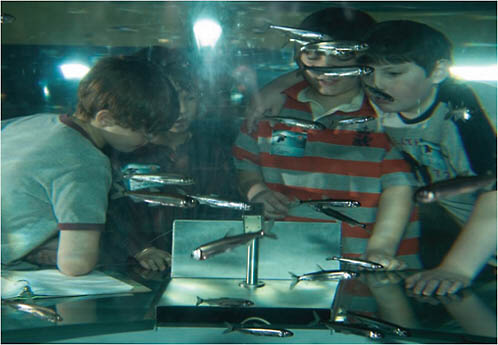 It’s a watery world when you’re up close and personal with fish. |
What Did the Students Learn?
Based on the summative evaluation of LabVenture!,13 much of the learning that took place was in the development of inquiry skills (Strand 3). Based on responses from an online survey, about 74 percent of the students in the research sample said they learned about conducting scientific investigations by observing, forming hypotheses, collecting evidence, and analyzing their results.
The second area of learning mentioned most frequently by the students was working as part of a research team (55 percent). In addition, about 50 percent of the students said that they had the opportunity to figure out how to use scientific tools. Both of these learning gains correspond to Strand 5.
The students also noted that their visit to GMRI piqued their interest in marine science. Nearly half (47 percent) wanted to understand more about the Gulf of Maine watershed, and more than one-third expressed new interest in local freshwater resources.
But equally important, the kids experience learning as enjoyable and satisfying. “I learned how much fun oceanography can be,” one student says. Another mentioned learning about the different types of tools scientists use. And one student expressed his opinion succinctly: “I learned a lot of cool stuff that I didn’t know.”
From the teachers’ vantage point, the experience at GMRI reinforced the fifth- and sixth-grade science curriculum, which includes the study of weather, environmental sciences, ecology, watersheds, and estuaries. Also stressed in these grades is the development of scientific inquiry skills. In the view of many of the
|
“Based on responses from an online survey, about 74 percent of the students in the research sample said they learned about conducting scientific investigations by observing, forming hypotheses, collecting evidence, and analyzing their results.” |
teachers surveyed, GMRI offers their students a chance to learn some of this content and practice science skills in an authentic setting. As one teacher put it, “[GMRI] fits the curriculum like a glove…. It goes perfectly with our unit on fish classification and is a great hands-on science experiment for my students.”
Another teacher echoed those sentiments, adding that “my students would never be exposed to anything dealing with marine science otherwise (and I can say that for grades K-8); this program is a much-needed addition to our science curricula.”
ANOTHER MODEL FOR LINKING SCHOOLS AND INFORMAL SETTINGS
The LabVenture! case study illustrates how a research institution can develop and sustain an ongoing relationship with local schools through what is primarily a field trip experience. Through this relationship, students have an opportunity to experience science in an authentic setting, using real scientific instruments.
The next example discusses a relationship between schools (local high schools), the city in which these schools are located, a large science center, and a nature center. What is unique about this program is that it goes beyond the field trip model. It involves a long-term, sustained experience that capitalizes on unique local resources. This collaboration has evolved into a positive learning experience for students young and old.
|
everyday SCIENCE The Lake Washington Watershed Internship Program 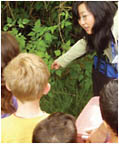 In Washington State, a year-long program for high school students, called the Lake Washington Watershed Internship Program, is made possible through a collaboration among the city of Bellevue, Bellevue’s five high schools, the Pacific Science Center, and the Mercer Slough Environmental Education Center. Throughout the year, 27 students meet once a week to learn about the watershed, conduct hands-on experiments, and work to restore the creek beds around Mercer Slough. One way the program recruits student interns is by going into the schools and seeing who is involved in after-school ecology clubs. After an interview process, the interns are selected. Many stay with the program for 3 years, from 10th through 12th grade. During the first year, they participate as volunteers, but in subsequent years the students are paid. Perhaps the most exciting part of the program is the opportunity that the high school students have to go into local elementary schools to teach younger children about the environment. “They create their own lesson plans and become really passionate about environmental education,” says Julie Rose, the program coordinator. “I hear some of the kids say that the internship inspired them to go into teaching.” To learn more about the impact the program has had on the high school students, Rose and her colleagues posted a survey on the Internet through Facebook. Although the data are preliminary, it appears that interns stay in touch with each other and discuss how the program has affected their lives. This past year, Rose and her colleagues reached the milestone of seeing more than 100 in-terns go through the program. As a testament to the program’s value, the Pacific Science Center has just made it a permanent part of its budget. “The Science Center recognized that the program is worthwhile,” explains Rose. “It is involved in the community and teaches people that science is fun and interesting.”14 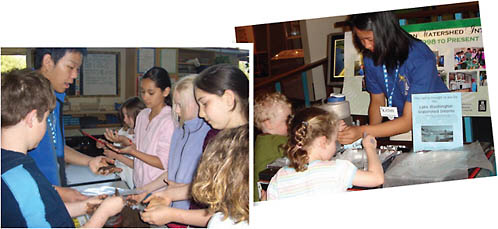 Interns work together and with younger students. |
OUT-OF-SCHOOL-TIME PROGRAMS: AN OPPORTUNITY FOR PARTNERSHIPS
Another way that formal and informal science settings can join forces is to offer unique opportunities for students through out-of-school-time programs. Historically, relationships between schools and out-of-school programs—particularly community-based out-of-school programs—have often been characterized by mutual mistrust and conflict. In a report based on 10 years of research studying approximately 120 youth-based community organizations throughout the United States,15 Milbrey McLaughlin explains:
Adults working with youth organizations frequently believe that school people do not respect or value their young people. Educators, for their part, generally see youth organizations as mere “fun” and as having little to contribute to the business of schools. Moreover, educators often establish professional boundaries around learning and teaching, considering them the sole purview of teachers. If we want to better serve our youth, there is an obvious need for rethinking the relationship between schools and out-of-school programs, particularly for out-of-school programs that have an academic focus such as science.16
There are different models of relationships between schools and out-of-school programs.17 At one extreme, there is the model of “unified” programs that are the equivalent of what is now called extended-day programming. Under this model, out-of-school programs can become essentially indistinguishable from school, since they take place in the same space and are usually under the same leadership (the school principal). At the other extreme lie “self-contained” programs, which intentionally choose to be separate from schools. Taking place in a different location, they often provide students with an entirely different experience from school.
Many programs operate between these two extremes. In some cases, the out-of-school curriculum is closely connected to the school curriculum. In such programs, the program coordinators and staff know on a week-by-week basis the material teachers are covering in class and can directly connect it to out-of-school activities. The result is that the out-of-school science experience is essentially an extension of school science, but with a more informal feel.
In other cases, the out-of-school science programs connect their activities to the general school science curriculum and standards but not to what students
are learning in class on a daily or weekly basis. This approach avoids some of the conflicts between science in schools and out-of-school programs, while allowing out-of-school programs to support students’ learning in schools. It also has logistical benefits, since it does not require the same level of planning and day-to-day communication between school teachers and out-of-school staff.
Finally, in some programs, out-of-school science is entirely disconnected from school science. Directors, coordinators, and staff of the programs make sure that participants are engaging in high-quality science experiences, but they do not consider it essential for students to connect out-of-school science to school science. In some cases, these programs may go so far as to argue that by keeping the two worlds separate, out-of-school programs can provide students with an alternate entry point into science if they have already been turned off from school science.
The Multicultural Education for Resource Issues Threatening Oceans (MERITO) Program in Monterey, California, illustrates a middle ground, where the out-of-school-time curriculum and activities are coordinated with classroom activities, but not necessarily in lockstep. The MERITO Program is a collaboration among the Monterey Bay National Marine Sanctuary (MBNMS), local school districts, and other local stakeholders. Its purpose is to provide underrepresented students with hands-on field experiences and in-class activities to teach them about nature and to instill in them a desire to protect the habitat. The program has two goals: to reach the community’s growing Latino population and to teach this population about the importance of protecting the area’s pristine shorelines and marine life. It is funded in part by the National Oceanic and Atmospheric Administration’s California Bay Watershed Education and Training Program. The next case study provides a look at this program.
|
everyday SCIENCE The Monterey Bay National Marine Sanctuary and Pajaro Valley Unified School District Working Together  In 2002, MERITO launched a pilot program in partnership with the Pajaro Valley Unified School District. Working with Pajaro Middle School and the Elkhorn Slough National Estuarine Research Reserve, educators began by developing activities and field experiences. These experiences would become a full curriculum aligned with California state standards and designed specifically for a diverse population of learners. During the first year, 34 lesson plans were piloted with middle school students. Lessons ranged from native plant restoration, to shark tagging, to crab monitoring. Students met once a week to work on these hands-on science activities. But lessons were not the only element of the curriculum. As part of the program, scientists from the field visited the students in their after-school setting to share their research with them. To cap the experience, participants went on numerous field trips to such places as the Watsonville Waste Water Treatment Plant, the Monterey County Waste Management District, and the Monterey Bay Aquarium. The pilot program was a success. As a result, the former school superintendent requested funds to expand the program to the three other middle schools in the district. Karen Grimmer, acting superintendent of the Monterey Bay Sanctuary and a champion of the program, summarized the reasons behind the program’s effectiveness: “Our communities are multinational and multilingual in nature. Our programs need to reflect the community in order to successfully communicate the importance of protecting our coastal and ocean resources.” The program introduced students to the precious environment in their own backyard. Once students had a better understanding of this ecosystem and the role they could play in protecting it, they embraced the charge and became stewards and advocates of the environment. In the process, the students also learned important science concepts and became energized and excited about the possibilities available to them through a strong background in science.18 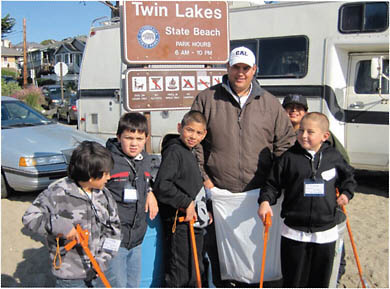 Clean-up day at the beach. |
Documenting the Learning That Occurred
At the beginning of the program, students were given a pretest to see what they knew about the watershed. The results showed little knowledge of this environment. So the teachers began by introducing the students to the basics in these areas. Throughout the year, they built on that foundation in a methodical way. This approach turned out to have tremendous payoffs.
As the year progressed, the evaluation team observed that students were able to explain the connections between watersheds and the ocean, how the health of local waters affects humans and wildlife, and why watersheds and the ocean need protection (Strand 2). In addition, students were excited about what they were learning and brought their families to community events, such as Earth Day (Strand 1). The students worked with their families to create and distribute posters on storm drain pollution (Strand 5).
By the end of the first year, the program could claim some success. Although they had limited resources, the partnership between formal and informal education played a pivotal role in introducing children to their environment and what they could do to protect it.
The Value of Collaboration
These three examples—LabVenture!, the Lake Washington Watershed Internship Program, and MERITO—illustrate the potential of collaborations between formal and informal settings to maximize learning opportunities for students. Educators involved with each informal science program became knowledgeable about the school science curriculum so that they could provide the students with complementary experiences.
Because these programs take place outside school, they have the advantage of providing key instruction away from the pressure inherent in the formal school environment. These advantages could help reach students who have difficulty learning in school, are turned off by formal education, or are looking for a different kind of experience to inspire them to take their interest in learning to the next level.
TEACHER PROFESSIONAL DEVELOPMENT IN INFORMAL SETTINGS
Informal settings have long been recognized as an ideal place for in-service teacher professional development, largely because of their emphasis on learner-directed learning in a phenomenon-rich setting. In fact, teacher professional development is offered extensively by informal institutions such as museums, science centers, zoos, and education and outreach staff of parks for mainly three purposes: to provide content knowledge to pre-K-12 teachers, to provide pedagogical skills based on informal instructional techniques, and to promote the use of teaching materials (often developed by the institution itself). Until recently, however, their role has been relatively undocumented, and much of the evidence for their effectiveness or even successful practice is hidden in evaluation studies that have not been made public. There is evidence that teachers make extensive use of professional development provided through informal institutions and that they enjoy the different perspective provided by informal settings. However, little is known about whether professional development provided by informal science settings is more effective than that offered by other providers.
While many informal settings offer some form of professional development for teachers, very few cooperate with teacher colleges to offer educational experiences for teachers in training or pre-service teacher training. David Anderson and his colleagues from the University of British Columbia, Canada, studied how informal science settings could be used for a pre-service program.19 The setting selected was the Vancouver Aquarium Marine Science Centre. The program began with pre-service teachers participating in a 3-day intensive program, which served as an orientation to the aquarium’s educational programs. They also learned about student-centered, hands-on pedagogy and the institution’s educational goals, described as “developing inspiration, curiosity, and marine stewardship.” Following the program, the teachers spent 10 weeks working in a school. Then they returned to the aquarium for another 3 weeks to work in the educational programs under the guidance of aquarium staff.
After the school and aquarium segments were completed, Anderson conducted two focus groups with the aspiring teachers, analyzed reflective essays they wrote during the semester, and made ethnographic observations at the aquarium. Based on their reflections and experiences, the researchers determined the impact of the experience in terms of their understanding of the big picture of education and their growing sense that learning can take place in many settings; their understanding of education theory; their classroom skills, sense of autonomy, and
commitment to collaborative work; and their self-efficacy and recognition of the power of hands-on experiences in learning science. Although, based on self-reports of a relatively small sample, the results suggest that this is a promising way to integrate teacher education in formal settings with instruction in informal learning environments. However, further research and development are needed to document these promising findings.
Existing research and a variety of evaluation studies suggest that teacher professional development offered by informal science institutions should adhere to the following criteria:
-
goals need to be defined clearly and need to be attainable;
-
programs should be developed in collaboration with teachers and schools to ensure the applicability and usefulness of the strategies offered (conduct a needs assessment);
-
programs ought to aim beyond the immediate professional development experience and focus on implementation in the classroom, with attention to fidelity of implementation while allowing teachers to adjust to their specific situation;
-
professional development experiences need to allow teachers to learn from one another, share experiences, and model new strategies; and
-
online offerings need to include “practice at school” and follow-up support should be provided.
Taking the Lead in a Statewide Initiative
In some instances, informal settings can take the lead in improving the quality of science education in formal settings. In the late 1990s, the Pacific Science Center in Seattle was instrumental in working with other stakeholders to implement a statewide systemic reform effort called LASER (Leadership and Assistance for Science Education Reform). Part of a strategic leadership team, the Pacific Science Center helped bring exemplary inquiry-centered science curriculum materials to the state’s elementary school children. Along with the new curriculum materials, the leadership team also ensured that teachers received professional development before presenting the material in the classroom.
Many evaluation studies have been conducted on the still ongoing LASER project. RMC Corporation investigated the relationship between professional development and the number of fifth-grade students meeting the standards on the state’s science test.20 The results showed a strong positive correlation. The evaluators also determined that students made significant gains in their understanding of science from pre- to post-assessment, which took place after the students had completed work on several modules.
The Pacific Science Center is unique in that it has the capacity to lead such a large-scale effort. It is well positioned to seek private funding, build a coalition of stakeholders, and galvanize community leaders and politicians to get involved. While many informal science institutions are not able to assume such a large role in a major reform effort, this example does indicate the invaluable contributions that well-established informal science institutions can make on teaching and learning.
LEARNING PROGRESSIONS AND PREPARATION FOR FUTURE LEARNING
Learning progressions in science21 are an emerging area of research in science education that could inform and be supported by the informal science community. A learning progression organizes the study of science so that learners can revisit important science concepts and practices over many years. For example, the big ideas of science, such as evolution and matter, are introduced during the early grades or at an early age; as students’ capabilities increase, greater depth and complexity about these big ideas are added. At each phase, learners would be able to draw on and develop relevant capabilities across the strands.
Informal science environments could play a complementary role in supporting the understanding of these key ideas. For example, a program or exhibition in an informal setting could be designed specifically based on our understanding of learning progressions. The New York Hall of Science, working with the Miami Museum of Science and Planetarium and the North Museum (a small natural history museum in Lancaster, PA) and collaborating with a developmental psychologist from the University of Michigan, is developing a traveling exhibition on evolution that is based on current understanding of children’s naïve reasoning and their progressively more sophisticated understanding as they mature from age 5 to age 12. The exhibition itself is designed to lead children of various ages through a series of increasingly more complex explanations of ideas related to evolution. Initial results of research on learning from the exhibition are encouraging. Also,
the inclusion of a learning progression researcher fundamentally altered the design process and the goals for the exhibition: the museum experts, for instance, were more inclined to recognize smaller steps in individual understanding as appropriate goals along a pathway to fully grasping key aspects of evolution. Early research also led to a redesign of the exhibition based on a coherent narrative that brings together key ideas of evolution, such as variation, inheritance, and adaptation.
Alternatively, informal environments could differentiate themselves from the K-12 agenda by going “broad” on issues that the formal community chose to go “deep” with. In this way, informal environments could bridge the gap in teaching and learning by providing information not included in the learning progressions.
Another promising new area of study is the concept of “preparation for future learning,” which recognizes that learning experiences might not always immediately and directly lead to increased knowledge or understanding. Instead, they may prepare the learner by creating cognitive dissonance or other forms of mental preparation that enhance the learning success when the learner encounters a later opportunity to build on the original experience (such as an explanation given by a parent or a follow-up to a field trip in the classroom). This approach has implications for informal settings like museums, since the purpose of the museum visit or a school field trip may not lie in conveying specific knowledge, but to use the original experiences as a preparation for subsequent classroom instruction. The potential of using informal learning environments as a starting point for future learning in the classroom serves as a reminder that informal and formal learning are interconnected aspects of the same overarching principle: a quest for lifelong learning that allows everyone to explore the natural and built environment and grow in their knowledge, understanding, and appreciation of the world.

Science learning has the potential to cut across many platforms. Interested learners can go to an aquarium to observe sea life, go home and find more information on the topic on the Web, and watch a television program in the evening. As technology becomes more sophisticated, many ways to link museums and other designed settings to home computers or mobile devices are becoming available. People can
already view some museum collections online, and podcasts and webinars make events held at different settings accessible to a wide range of learners.
The relationship between formal and informal environments is of particular interest; in fact, research indicates that each setting has much to offer the other, but determining strategies that are applicable to multiple environments is still underway. Based on the research, however, informal science institutions have a role to play as destinations for field trips, settings for out-of-school-time programs, and places where professional development activities are held.
Things to Try
To apply the ideas presented in this chapter to informal settings, consider the following:
-
If you are interested in embarking on a formal–informal collaboration, consider asking the following questions:
-
Is there a shared vision? Do all stakeholders know what they want to get out of the collaboration? Have reasonable goals been established to help all involved realize their vision?
-
Is the informal setting committed to working closely with the schools to develop a program that works for everyone?
-
Conversely, are the schools committed to working closely with informal settings? Does each of the partners know about other partners’ assets and constraints?
-
Have clear and consistent lines of communication been established? Have informal settings considered the best ways to talk with schools? For example, is e-mail better than phone calls? Are more frequent, brief exchanges better than less frequent, more involved encounters? Are there mechanisms in place to inform parents about the nature of the relationship and progress being made? Has there been a staff person assigned to monitor the relationship and be accountable for successes and failures?
-
Are teachers being sufficiently supported by the informal setting? Are strategies in place to build trust and establish a strong relationship in which teachers and staff from the informal setting are learning from each other?
-
-
This chapter has explored ways to strengthen the connections between formal and informal environments, but it is clear that more research is needed. If possible, consider how your institution could contribute to the research base. Can you set up studies that explore how people routinely traverse settings and engage in learning activities across the board, from formal settings to informal ones?
-
Technology may open the doors to greater access to science learning to wider, more diverse audiences. Has your institution developed ways to use technology to expand its reach? Using the ideas in this chapter, consider how technology can be used in your setting not only to help extend science learning, but also how to use technology to integrate school and out-of-school learning experiences.
-
When developing programs and materials that connect formal and informal settings, ensure that the needs of each side are known and that programs or materials are developed with sufficient early input by each stakeholder. Packaged field trip experiences or curricular materials should be developed in close collaboration with teachers and students and pilot-tested before implementation, and the benefit of this process should be made explicit to all stakeholders.
-
Try to embed evaluation and assessment to the extent possible and find authentic ways to assess student learning. Find ways for teachers to be given student assessment materials that address their needs and for evaluations to be conducted in an enjoyable and playful way. Consider learning progressions and follow-up (such as preparation for future learning) when defining goals and outcomes.
-
Collaborate with other informal institutions that have similar goals and face similar problems. Working with others improves your ability to involve the formal sector and provides more options for creating lifelong learning pathways for students.
-
Is there a way to enhance interactivity in your setting by using technology and cutting across platforms? For example, could a museum visit lead people to a website or a real-world setting in which they could continue to explore what they just learned? Could cell phones, MP3 players, or other devices be used to enhance the experience? Are there other ways to use technology to link experiences at informal science environments? Can you capture visitor experiences and provide opportunities for visitors to reflect on their experiences, either onsite or online?
For Further Reading
Anderson, D., Kisiel, J., and Storksdieck, M. (2006). School field trip visits: Understanding the teacher’s world through the lens of three international studies. Curator—The Museum Journal, 49(3), 365-386.
DeWitt, J., and Storksdieck, M. (2008). A short review on school field trips: Key findings from the past and implications for the future. Visitor Studies, 11(2), 181-197.
National Research Council. (2009). Science learning in designed settings. Chapter 5 in Committee on Learning Science in Informal Environments, Learning Science in Informal Environments: People, Places, and Pursuits. P. Bell, B. Lewenstein, A.W. Shouse, and M.A. Feder (Eds.). Center for Education, Division of Behavioral and Social Sciences and Education. Washington, DC: The National Academies Press.
National Science Board. (2007). Science, technology, engineering, and mathematics (STEM) education issues and legislative options. In R. Nata (Ed.), Progress in Education (vol. 14, pp. 161-189). Hauppauge, NY: Nova Science.
Storksdieck, M., Robbins, D., and Kreisman, S. (2007). Results from the Quality Field Trip Study: Assessing the LEAD Program in Cleveland, Ohio. Summit Proceedings. Cleveland: University Circle.
Yager, R.E., and Falk, J. (Eds.). (2008). Exemplary Science in Informal Education Settings: Standards-Based Success Stories. Arlington, VA: NSTA Press.
Web Resources
LabVenture!: http://mystery.gmri.org/about/default.aspx
LASER: http://www.nsrconline.org/school_district_resources/faqs.html
MERITO: http://montereybay.noaa.gov/educate/merito/outreach-community.html
National Marine Sanctuaries News & Events: Innovative Education Program Heightens Ocean Awareness: http://sanctuaries.noaa.gov/news/features/0706_merito.html
Pacific Science Center: http://www.pacsci.org/
The National Science Foundation (NSF) has invested more than $60 million in the last 7 years into four major initiatives that investigate the connection between formal and informal science learning. In addition, a variety of smaller research and development projects across a range of NSF programs have studied this intersection.
By far the largest of these projects is the “Learning in Informal and Formal Environments (LIFE) Center,” which seeks to understand and advance human learning through a simultaneous focus on implicit, informal, and formal learning. The goal of research conducted by the LIFE Center is to produce interdisciplinary theories that can guide the design of effective new learning technologies and environments. The LIFE Center brings together experts from research traditions that have so far tended to work separately from one another: neurobiology and psychology, social and cultural sciences, and science learning technologies. A central premise of the LIFE Center is that successful efforts to understand and propel learning require a simultaneous emphasis on informal and formal learning environments, and on the implicit ways in which people learn. The basic research at the LIFE Center is being conducted through three intersecting and multidisciplinary lines of inquiry. The first line, Implicit Learning and the Brain, investigates the underlying neural processes and principles associated with implicit forms of cognitive, linguistic, and social learning. The second line, Informal Learning, conducts studies of science, technology, engineering, and mathematics (STEM) learning in informal settings to develop comprehensive and coordinated accounts of the cognitive, social, affective, and cultural dimensions that propel learning and development outside of schools. The third line, Designs for Formal Learning and Beyond, conducts experimental studies in support of designing high-quality learning environments, including theories and measures of transfer (i.e., the ability to utilize what has been learned in one setting, situation, or for one problem to another, related one). The $25 million project unites researchers from a variety of universities and nonprofit educational research centers.
In 2006, NSF funded a new initiative entitled Academies for Young Scientists (AYS). The NSF AYS Program funded 15 new projects across the United States, each designed to engage K-8 students to become or remain excited about STEM disciplines. Each of the individual projects is built on partnerships of formal and informal education providers, private-sector partners, and Colleges of Education to expose students to innovative out-of-school-time learning experiences that demonstrate effective synergies with in-school curricula and take full advantage of the special attributes of each educational setting in synergistic ways. While projects funded through NSF AYS differ considerably in their individual approaches and desired outcomes (beyond creating excitement and motivation in the youth participants), NSF also provided support for a Learning and Youth Research and Evaluation Center (LYREC) that compares the relative effectiveness of the various implementation models in urban, rural, and suburban settings representing diverse student populations. The NSF AYS portfolio of projects, taken as a whole, is designed to inform NSF and the broader educational community of what works and what does not, for whom, and in what setting. LYREC is a collaboration of the Exploratorium, Harvard University, Kings College London, SRI International, and University of California (UC) at Santa Cruz. LYREC provides technical assistance to NSF AYS
projects, collects and synthesizes their impact data, and oversees dissemination of progress and results. This center builds on the Center for Informal Learning and Schools (CILS).
In 2002, CILS was funded with almost $12 million in funding by NSF to create a program of research, scholarship, and leadership in the arena of informal learning and the relationship of informal science institutions and schools. CILS is a collaborative effort between the Exploratorium in San Francisco, UC at Santa Cruz, and King’s College in London (UK). CILS focused its efforts on developing a new crop of scholars and disseminating its research broadly into the community. Through dozens of doctoral students and postdoctoral fellows, CILS expanded the area of scholarship in the intersection of formal and informal science education and offered professional development for existing informal science professionals to better enable them to support teachers, students, and the general public. Part of CILS, the “Bay Area Institute” served as a central focus for all CILS activities and has helped in disseminating its work to current and future leaders in the field.
CILS focused on making K-12 science education more compelling and accessible to a diverse student population, including students who come from families with little formal experience with K-12 schools and science learning. CILS did this through studying science learning in out-of-school settings, including informal science institutions, and building programmatic bridges between out-of-school and school science learning, with the ultimate goal of strengthening alliances between informal learning institutions and schools and broadening conceptions of (science) learning.
A different perspective on researching the intersection of formal and informal science learning and teaching was taken by the St. Louis Center for Inquiry in Science Teaching and Learning (CISTL), a project supported by more than $10 million of NSF funding. CISTL combines research into science teaching and learning with a focus on professional development and support needed to bring inquiry-based teaching and learning into K-12 science education in both formal and informal settings. The project brought together three informal science institutions, two universities, five school districts, one community college system, and the Association of Science-Technology Centers (ASTC). CISTL’s research agenda focused on the effect of varying types of collaboration and the interfaces among the collaborators (education and scientific; formal and informal) on professional development of new and experienced educators. Part of the project was the development of a diagnostic tool for assessing strengths and weaknesses in science and inquiry backgrounds for teachers and other science educators. Like LIFE and CILS, CISTL aimed for synergy between research and practice through research based on practice, practice based on research, and the translation of research into practical suggestions for educators.
Aside from these large research-to-practice initiatives, NSF (and other federal and private funders) have supported a wide variety of projects that link teaching and learning in formal and informal environments. One particular example that might have implications for practice is the almost $1 million project Informal Learning and Science in Afterschool: A Research and Dissemination Project (ILSA). The ILSA research project investigates the nature of informal science in after-school programs around the country. The 3-year study consists of surveys of 1,000 programs, in-depth interviews with
a subset of 50, and case studies of 8 sites. The study seeks to document the nature of student participation and learning in science activities in “typical” (nonscience-specific) after-school programs, and the infrastructure required to support these programs. “Infrastructure” includes curriculum, staff recruitment and support, and program leadership and structures. The study brings together researchers at Harvard University (McLean Hospital), the Exploratorium, the Lawrence Hall of Science, and Reginald Clark and Associates. Most importantly, ILSA is part of the Program in Education, Afterschool & Resiliency (PEAR), which is dedicated to making meaningful theoretical and practical contributions to youth development, school reform, and prevention of high-risk behavior. PEAR was founded in 1999 as a collaboration between Harvard Medical School/McLean Hospital and the Harvard Graduate School of Education with a number of strong community partners. The program was established in response to the growing recognition that high-quality afterschool programs hold the promise of building resiliency and preventing high-risk behavior in youth, as well as contributing to school success. PEAR takes a developmental approach to the study of new models of effective afterschool programming, and incorporates educational, health, public policy, and psychological perspectives. PEAR presents on its website (http://atis.pearweb.org/) an assessment tool to measure performance of informal and out-of-school science, technology, engineering, and math programs that features a broad range of proven methodologies and instruments.
Each of the five featured initiatives (LIFE, CILS, AYS, CISTL, and PEAR) publishes its findings through peer-reviewed research articles, conference presentations, symposia, and white papers, some of which are easily accessible through their informative websites. Yet, like many initiatives of these kinds, transfer of knowledge from original research to practice remains challenging. However, readers are encouraged to look for more information and to connect to the growing network of scholars and scholarly practitioners that emerge from these important investments into the intersection of formal and informal teaching and learning.


