
3
Design for Science Learning: Basic Principles
After visiting a physics exhibit illustrating objects floating on a stream of air, a 13-year-old boy noted the following:
“Oh, yeah. I was like, oh, I didn’t know that. I didn’t know it could stay up for so long. I thought eventually it would just die down and the weight would overcome the air pressure and stuff. But it just kept on floating. It was pretty cool.”1
An adult visitor to the Search for Life exhibit at the New York Hall of Science was very excited after experiencing it:
“I think the water exhibit is really brilliant. I can read something in a paragraph and not really have a sense of how much water 16 gallons is. It was just beautifully illustrated and really surprising. I had no idea that that much water is in our body. I think the [New York Hall of Science staff] do a great job of taking abstract contents and making it concrete so you can touch it and see it. That’s why I like to bring my kids. You’re going to absorb something somehow, even if you’re not really trying at all.”2
After visiting a conservatory, a young man said the following:
“(What did you like most about the Conservatory?) “One place that I particularly liked and was pleased with was the Plant Lab because it showed me the way plants come to form life and microscopes show you the different shapes of the seeds, the leaves, the roots—so many things that I didn’t know before…. I came here and many of them refreshed my memory of when I was a child and took classes at school” (male, age 28; translated from Spanish).3
Three different informal science experiences on different topics, but each evoked a powerful response from participants, and each resulted in some learning. The success of informal experiences like these is not accidental. Informal science
educators typically design such experiences over time and make gradual improvements based on how learners respond. Not surprisingly, the design principles that emerge from the work of seasoned informal educators align in many ways with findings from research on learning.
INSIGHTS FROM RESEARCH ON LEARNING
Studies of experts and novices provide insight into what it means to have deep and flexible understanding. Experts in a particular domain are people who have deep, richly interconnected ideas about the world. They are not just good thinkers or people who are exceptionally smart. Nor are novices poor thinkers or not smart. Rather, experts have knowledge in a specific domain—such as chess, waiting tables, chemistry, or tennis—and are not generalists. However, experts do not just know “a bunch of facts.” In fact, having expertise in a topic means that knowledge is organized into coherent frameworks, and the expert understands the interrelationship between facts and can distinguish which ideas are most central. This kind of deep but organized understanding allows for greater flexibility in learning and facilitates application across multiple contexts.
Research has documented how development of expertise can begin in childhood through informal interaction with family members, media sources, and unique educational experiences.4 In fact, from early childhood onward, humans develop intuitive ideas about the world, bringing prior knowledge to nearly all learning endeavors. Children and adults explain and hear explanations from others about why the moon is sometimes invisible, how the seasons progress, and why things fall, bounce, break, or bend. Interestingly, these ideas or assumptions about how the world works develop without tutoring, and people are often unaware of them. Yet they often influence behavior and come into play during intentional acts of learning and education.
Thus, a major implication for thinking about informal science learning is that what learners already understand about the world is perhaps as important as what one wishes for them to learn through a particular experience. Accordingly, efforts to educate should focus on helping learners become aware of and express their own ideas, giving them new information and models that can build on or challenge their intuitive ideas.
Another important feature of experiences that support learning is providing prompts that guide individuals to reflect on their own thinking. This ability
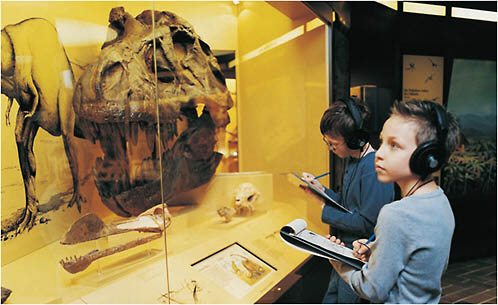
to reflect on and monitor one’s own thinking, termed “metacognition,” is a hallmark of expertise. Metacognition, like expertise, is domain-specific. That is, a particular metacognitive strategy that works in a particular activity (e.g., predicting outcomes, taking notes) may not work in others. However, metacognition is not exclusive to experts; it can be supported and taught. Thus, even for young children and older novices engaged in a new domain or topic of interest, metacognition can be an important means of controlling their own learning.5 Accordingly, as a means of directing and promoting learning, metacognition may have special importance in informal settings, in which learning is self-paced and frequently not facilitated by an expert teacher or facilitator.
STRATEGIES FOR PUTTING RESEARCH INTO PRACTICE
These facets of learning—the development of expertise, the role of intuitive ideas and prior knowledge in gaining deep understanding, and the ability to reflect on one’s own thinking—can be put to use in informal settings to build deeper, more flexible understanding. One way this is accomplished is by creating informal envi-
ronments that juxtapose the learners’ understanding of a natural phenomenon with the formal disciplinary ideas that explain it. This often includes illustrating a surprising or typically hidden aspect of the phenomenon and prompting the learner to reflect on what it means. This approach is intended to help learners examine their own understanding and work toward revising it so that it more closely resembles current scientific understanding.
Another strategy that can aid flexible learning is providing multiple ways for learners to engage with concepts, practices, and phenomena in a particular setting. This strategy reflects the finding that knowledge presented in a variety of contexts is more likely to support flexible transfer of knowledge. For example, in museum settings there is evidence that interpretive materials, such as labels, signs, and audio guides, are more effective in increasing knowledge and understanding than simply interacting with an object or natural phenomenon.6 Similarly, in more extended experiences, such as those offered by programs, it can be beneficial to provide learners with multiple opportunities to learn about a topic, such as through background reading, presentations, discussions with experts, and direct investigations.
A third strategy identified by researchers and experienced designers is interactivity. In her book, Planning for People in Museum Exhibitions, Kathleen McLean defined interactivity as follows: “The visitor acts upon the exhibit, and the exhibit does something that acts upon the visitor.” Interactive experiences offer rich opportunities for provoking learners to recognize and reflect on their current ideas. They also allow learners to pursue the questions that might be generated as a result.
There are many different kinds of interactive experiences. Some involve touching or engaging with objects or live animals. Others involve turning knobs, pushing levers, spinning wheels, or doing other manipulations to create an event or see an answer. More extensive interaction might include carrying out a full-blown scientific investigation. In the case of media such as television, the learner may watch others carry out the interactive component, such as doing the steps in an investigation or engaging with an animal.
Interacting directly with materials appears to have particular value. Powerful learning takes place when an individual is able to find out for him- or herself that by correctly connecting wires to a battery, the bulb will light up, or by touching two different kinds of rocks, it is possible to “feel” the difference between them and classify them accordingly. Making interactive experiences accessible to a wide range of audiences is a distinctive feature of museums, science and nature centers, and other informal science venues.
|
STRATEGIES FOR SUPPORTING LEARNING Juxtaposition Juxtapose the learners’ understanding of a natural phenomenon with the formal disciplinary ideas that explain it. This often includes illustrating a surprising or typically hidden aspect of the phenomenon and prompting the learner to reflect on what it means. Multiple modes Provide multiple ways for learners to engage with concepts, practices, and phenomena in a particular setting. Interactivity Allow the leaner to interact with the phenomenon. Sometimes interaction is simple, such as pressing buttons or turning knobs. Sometimes it is more extensive and might involve carrying out a scientific investigation. |
LEARNING FROM INTERACTIVE EXPERIENCES
There is evidence that interactive experiences support learning across the six strands as well as reflect a concrete way to put the research about learning to work. Such experiences seem to spark interest and maintain learners’ engagement while also increasing knowledge and providing opportunities for reasoning. One such exhibit was designed to help visitors understand the form and function of the human skeleton. The exhibit consisted of a stationary bicycle that a visitor could ride next to a large reflecting pane of glass. When the visitor pedaled the bicycle, the exhibit was arranged so that an image of a moving skeleton appeared inside the pedaling person’s reflection. The movements of the legs and skeleton attracted the visitor’s attention to the role and structure of the lower part of the human skeleton.
According to museum researcher Jack Guichard, the skeleton exhibit experience seemed to transform children’s understanding of the skeleton, knowledge related to Strand 2, Understanding Scientific Content and Knowledge. After the cycling experience, children ages 6-7 were given an outline of the human body and asked to “draw the skeleton inside the silhouette.” Of the 93 children in the
sample, 96 percent correctly drew skeletons whose bones began or ended at the joints of the body; this result was in sharp contrast to the understanding shown by a sample of children of a similar age who did not experience the exhibit; only 3 percent of this group could draw a skeleton correctly. Even more impressively, the children’s understanding persisted over time, with 92 percent retaining the idea of bones extending between places where the body bends 8 months after their museum visit. During that time, the children had not received additional schooling, practice, or warning that they would be tested.7
Interactive experiences also support Strand 3, Engaging in Scientific Reasoning, although the most sophisticated kinds of reasoning are more difficult to support in short-term experiences. In a study of eight interactive exhibits from three different science centers, Scott Randol found that the majority could be categorized as “do and see” activities. That is, visitors manipulate the exhibit to explore its capabilities and observe what happens as a result. Through their actions, the visitors engage in many behaviors associated with inquiry, including turning a dial or rolling a wheel, observing what happens, collecting data, and describing results. More sophisticated elements of scientific reasoning have also been observed, such as interpretation of the observed reactions, connecting them to prior experience, predicting outcomes of additional manipulations, and posing further questions. However, in museum settings, these occur less often than simple observation and description.8
It appears, too, that providing opportunities for active engagement draws more people to an exhibit (Strand 1). Researcher John Koran and his colleagues found that simply removing the plexiglass cover from an exhibit case of seashells increased the number of visitors who stopped there and the amount of time they spent, even though only 38 percent of those who stopped actually picked up a shell.9 Even in institutions with live animals, visitors seek out interactivity. In a study designed by Alexander Goldowsky, visitors were divided into two groups to compare two different learning experiences associated with an exhibit on penguins. The control group went to a typical aquarium exhibit, where they observed live penguins in their natural habitat. The experimental group went to a similar exhibit with an interactive component added—a device that allowed participants to move a light beam across the bottom of the pool. Attracted by the light, the penguins would chase it. After reviewing videotapes for 301 visitor groups (756 individuals), Goldowsky found that those who interacted with penguins were significantly more engaged by the exhibit and more likely to discuss the behavior of the penguins.10
Although interactivity has many benefits for learning, it should be used strategically to further the goals of the experience. In fact, research conducted at the Exploratorium in San Francisco reveals that more interactive features are not necessarily better. In one study, museum developers created three different versions of an exhibit called Glowing Worms. One was highly interactive (with changeable lighting, focus, and dish location) with live specimens; a second was less interactive (with changeable lighting and focus) with live specimens; and a third was noninteractive (with prerecorded video) with no live specimens. The results of the study showed that visitors who saw one of the two interactive exhibits with live specimens stayed longer, enjoyed the exhibit more, and were able to reconstruct more relevant details of their experience than those who saw the noninteractive exhibit. Yet the researchers found no significant differences between the experiences of the visitors at the less interactive exhibit than at the more interactive one.11
These results suggest that adding more features does not necessarily enhance the experience. Extrapolating from this study, Exploratorium staff noted that sometimes too many interactive features can lead to misunderstandings or cause visitors to feel overwhelmed. In fact, these researchers think that there may be an optimal degree of interactivity, which results in a satisfying learning experience for the majority of participants.
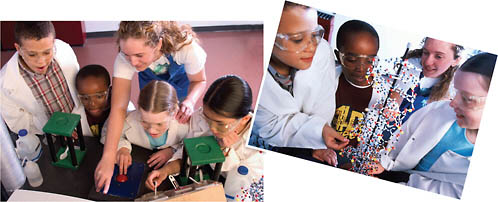
The following case study of a long-term exhibition called Cell Lab, located at the Science Museum of Minnesota, illustrates how these strategies—juxtaposing different ideas to spur reflection, presenting multiple ways to engage with concepts, and interactivity—can prompt learning. Divided into a series of stations, Cell Lab offers visitors the opportunity to use real laboratory equipment to conduct short experiments as a way to learn more about cell biology, genetics, microbiology, and enzymes. The opportunity to have such an authentic, or real-world, experience is one of the hallmarks of informal learning environments.
|
members—high school juniors and seniors who work in the Cell Lab—are available to answer questions. Cell Lab investigations vary from station to station. At one bench, visitors use toothpicks to scrape cells from the inside of their cheeks, fix the cells to a slide, stain the cells, and look at the cells under a microscope. The Lab Companion allows further investigation about the structure of cheek cells and any variations they may have noticed. At another station, called “Testing Antimicrobials,” visitors make a hypothesis about which type of antibacterial cleaner—hand soap, bleach, or sanitizers—most effectively kill a common bacterium, Bacillus megaterium. Participants test their hypotheses by using a fluorescent assay to expose bacteria to each agent. If bacteria are still present, they will glow green. If the agent killed the bacteria, the sample does not glow. This activity allows participants to test their hypotheses and see for themselves the impact of cleaning products on bacteria. To make the experience as safe and authentic as possible, everyone entering Cell Lab must put on a lab coat, goggles, and gloves. This laboratory uniform protects the participants, keeps biological sample bacterial contamination to a minimum, and puts the museum visitor into the proper frame of mind. “The lab coat, goggles, and gloves are really a lab uniform, which becomes part of the experience. Our visitors really enjoy dressing as scientists do,” says Laurie Fink, director of human biology at the museum. Visitors’ Responses to Cell Lab Cell Lab has been open for almost 10 years and was the first wet-lab experience created for the public. It also has proven to be a popular attraction at the museum. During the past 10 years, evaluations have provided the museum with information about who visits Cell Lab, what activities they engage in at the different benches, and what their overall impressions of the experience have been. According to a summative evaluation conducted by Randi Korn & Associates, most of the visitors have been small groups of adults and children (often |
|
average of 15 minutes at each bench. They really enjoy working on the different investigations, with the Cheek Cell bench often selected as one of their favorites. Below are some visitor reactions: “We got to mix all [this] stuff together.” (Interviewer: “What’s fun about that?”) “Mixing stuff is fun.” “It was spelled out in an easy way, so it was easy for the kids to do on their own.” “It was interesting to be able to test some ideas for yourself. Like the anti-bacterial soap and saliva—it didn’t tell you what the answer would be, you had to test it for yourself. Then at the end it [the Lab Companion] provided some information. That … helped you understand [what] you just did. That [is what] makes these [lab benches] so good—the [combination] of experience and information” (male, 43). The first quote above illustrates a common response of visitors; one of their goals for an informal experience is active engagement or doing fun things. The second quote is a reminder that visitors may want to explore complex issues, but prefer to do so through experiences that are easily accessible. Parents are often particularly concerned that their children are able to participate easily. The third quote from an adult describes the full spectrum of the experience and again illustrates that learners can be aware of the content and even the underlying design principles of the experience. Interviews with visitors also reveal that they mostly performed the investigation outlined in the Lab Companion and then talked about what happened. The setup of the benches has been thoughtfully designed to allow for dialogue. “The museum designs these spaces to support social interaction. The benches are arranged so that small groups can do the activities together,” explains Kirsten Ellenbogen, director of evaluation and research on learning at the museum. “People can look at each other’s experiments or specimens and talk about what they see.” These strategies appear to be working. They have been consistently successful in providing visitors with a rewarding experience. Perhaps a father, visiting with his 11-year-old daughter, best sums up the impact of a visit to Cell Lab: “I don’t know if I could really speak for the kids, but they always want to come back to the cell ones [Cell Lab benches]. It’s my favorite because it’s fun to mess around with all this stuff. Do little experiments for yourself rather than watch someone else to do it. We visit all the time and even though the experiment’s the same, the kids get just as excited…. It’s like her own little private laboratory—there are people here to help us and it’s not too crowded…. I think, for her, it’s just the chance to do something you can’t do anywhere else.”12 |
Goals Achieved, Trade-Offs Made
Cell Lab illustrates how the key principles of learning can be incorporated into museum exhibits. The experience itself is interactive; all the stations give visitors an opportunity to use materials to learn something new, such as the structure of cheek cells, or to test their ideas about common household products. Because the labs vary considerably, visitors also are presented with multiple ways to engage with different science concepts.
The strands, too, are reflected in the experiences offered at Cell Lab. Having the opportunity to use scientific equipment motivates visitors to explore the different stations (Strand 1). By conducting the experiments, visitors are both adding to their understanding of scientific content and knowledge (Strand 2) and fine-tuning their ability to engage in scientific reasoning by asking questions, developing hypotheses and checking them against experiments, and continuing to push their thinking by asking increasingly complex questions about the world (Strand 3). In this setting, there are numerous opportunities to share ideas, ask questions, and become familiar with the ways that science involves searching for explanations of an event or phenomena (Strand 4). Using the tools of science, such as microscopes and fluorescent assays, and conducting the experiments in the context of a science museum, surrounded by other science learners, visitors become, at least temporarily, part of a community of scientists (Strand 5). And by donning a uniform of science—lab coat, goggles, and clothes—as they engage in scientific experiments, visitors further identify themselves as scientists (Strand 6).
Despite Cell Lab’s strengths, the exhibit designers note that there is room for improvement. For one, they point out that to ensure that the experience is engaging and accessible to visitors of all ages and backgrounds, certain compromises were made.
“By design, the lab is more of a step-by-step wet-lab experience than an open-ended exploration or investigation,” explains Ellenbogen. “This allows visitors to be consistently successful in completing an experiment that they would not typically be able to access.”
Fink concurs, noting that having a hands-on experience and a chance to “be a scientist” is very appealing to visitors. In fact, visitors become so engaged that nearly everyone stays and completes at least one investigation, which takes about 15 minutes. Sometimes visitors will complete multiple Cell Lab investigations while visiting the museum. Spending that much time at one investigation, let alone multiple ones in the Cell Lab, is an extraordinary difference from a typical interaction with an exhibit, which may last only 30 to 60 seconds.
Even that positive outcome has another side. “Some people raise concerns about ‘through-put.’ In other words, how many people can do an investigation in one day if the experience is 15 minutes instead of 15 seconds,” says Ellenbogen. “But it is important to value a range of experiences in a museum, keeping depth and breadth.”
From Fink’s and Ellenbogen’s perspective, however, they would like to see the labs accomplish even more. “Right now, we’re succeeding at identity development; it’s amazing how wearing lab clothes helps visitors see themselves as scientists,” says Ellenbogen. “And ownership is built into the experiences; when visitors look into the microscope, they are looking at their own cheek cells. They are highly engaged because they are ‘doing science’ and seeing themselves in a new way. But there is certainly interest in finding a way to make the experience more open-ended and to touch on more of a range of learning experiences.”
Doing that is not easy, however. For one thing, the Lab Companion needs to be updated by a computer programmer, making changes difficult. And there is a fine line between open-ended activities that are challenging but not frustrating, especially for young, inexperienced visitors.
To overcome these obstacles, Fink would like to see museums and science centers collaborate on developing the next generation of wet-lab biology activities. “Sharing activities among museums gives us economies of scale,” explains Fink. Other institutions—the Maryland Science Center and the St. Louis Science Center, among others—are experimenting with more flexible lab benches, “so tweaking them for our institution and sharing them is a possibility down the road.”
CHALLENGES OF DESIGNING FOR LEARNING
Ellenbogen’s and Fink’s insights into the strengths and weaknesses of Cell Lab point to the issues faced by all exhibit designers. A desire to make the experience challenging but not frustrating, and open-ended but with opportunities for success built in are widespread goals throughout the informal science community. Figuring out how to realize these goals was a major goal for Exploratorium designers in their development of Active Prolonged Engagement (APE) exhibits.
Unlike more traditional exhibits, which typically present a phenomenon, provide visitors with an opportunity to observe or interact with it in a prescribed way, and then explain what happened in the label, APE exhibits strive to be more open-ended. Their goal is to give visitors more choices about how to approach and
engage with the exhibit, with opportunities for formulating a hypothesis, testing it, learning from the results of their experiments, and performing additional tests.
For example, at an APE exhibit called Downhill Race, visitors are asked to race two of six possible disks down parallel tracks to see which one rolls faster. Most visitors hypothesized that the heavier ones would roll the fastest, but disks with more of their mass located near the hub actually roll faster than those with more mass located near the rim. Visitors race disks to figure out which variable, mass or distribution of mass, is more important. Four of the disks have fixed masses, and two have masses whose location can be changed.
Among many visitors, this exhibit evoked excitement and brought out their competitive spirit. Because the participants wanted to win the race, many stuck with it, manipulating the masses until they figured out which rolled the fastest. After successfully completing the race, visitors appeared happy and energized.13
Interestingly, evaluators of this exhibit found that visitors who had misconceptions about which disk would roll the fastest were the most engaged by it. This intriguing finding may be attributable to the exhibit’s success in making visitors’ naïve understanding more salient to them and providing them with the opportunity to explore alternative explanations.
To continue to think about the challenges inherent in exhibit design, we now look at a different kind of exhibition. Called The Mind, it, too, was developed at the Exploratorium. The issue facing the designers was how to create an exhibition that explores how the mind—the most elusive and mysterious part of ourselves—functions in different situations.
|
“A desire to make the experience challenging but not frustrating, and open-ended but with opportunities for success built in are widespread goals throughout the informal science community.” |


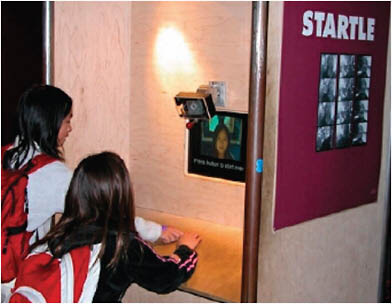 At the Startle Station, visitors can see their own reactions when a balloon explodes nearby. For example, at a station designed to measure emotional reactions by graphing breathing patterns, visitors are given 12 cards with questions, such as “Name somebody you have a crush on.” Two people who don’t know each other can ask that question, but the experience is much more powerful when those two people are friends. “If you know the person, you can ask that question in a way that embarrasses them or gets at another emotion,” Thogersen points out. “The reaction you get is much stronger—and much more interesting.” Even activities that can be done alone, such as experiencing the toilet water fountain or measuring reaction time to sensory stimulus, are more fun when done with a partner. Interestingly, because of the Exploratorium’s development process—exhibits are prototyped and released in groups over a long period of time—Thogersen didn’t realize that about half of the activities were designed for more than one person until after the whole exhibition had been completed. “We noticed it more in retrospect,” Thogersen admits. “It just kept happening, probably because it turned out to be the best way to explore something as abstract as the mind.” Looking ahead, Thogersen and his colleagues are always thinking about innovative ways to design exhibits that elicit strong responses and bring about learning. The possibility of using computer visualizations to model phenomena that can’t be shown, such as the topography of the San Francisco Bay, is one new intriguing idea. This exhibit is currently on display. To introduce an element of interactivity, visitors are asked to use the cursor to drop a virtual can into the bay and then observe how far and in what direction the currents carry it. Visitors can drop the cans anywhere in the bay to compare currents, or they can drop in a whole flotilla to see how small differences in initial placement eventually bring the cans to very different places. Aware that there is room for improvement, Thogersen acknowledges that finding new ways to excite visitors is an ongoing challenge. “We’re always stretching ourselves out of our comfort zone to push ways to bring about engagement,” he says. “We’re always looking for ways to show visitors really cool things that can happen.”14 |
Like the designers of Cell Lab, Thogersen’s team also considered ways to spur learning in developing The Mind exhibition. In doing so, this exhibition illustrates the effectiveness of displaying concepts in multiple ways and creating a unique set of interactive activities.
While exploring The Mind, visitors were stimulated by the variety of options available to them (Strand 1). As they engaged with individual exhibits, they were introduced to content knowledge, some of which was probably new to many (Strand 2).
One of the most interesting features of this exhibition is the way it became a social process, largely because many of the stations were designed for two people. What’s more, Thogersen noted that the learning was even more powerful if the two people knew each other. The importance of the social nature of learning is explored in more detail in the next chapter.
Both of these examples illustrate how science museums have incorporated strategies that are supported by research to develop experiences that foster learning. These same strategies can be put to use in programs, which continue over an extended period of time. In fact, experiences that occur over a longer period of time can provide opportunities to encourage learning across the six strands.
The following case study illustrates the learning that occurs in the context of a program. This experience involves teens working with younger children as part of a program at the St. Louis Science Center.
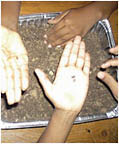
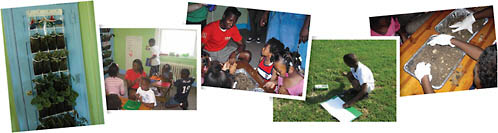
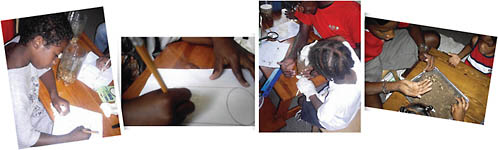 Not only were the spaces now suitable for science, but by the end of the program, most of the teens were headed to college. Before participating, more than half had been D or F students. What had made the difference? How had this program resulted in such a marked transformation in so many students? “We broke through the barriers they had to learning,” explains Miller. “We figured out that one of the biggest deficits was a lack of experience with the natural world. We set out to fill in those gaps by providing the kids with real-world problems and the opportunity to solve them by working together. When they became comfortable, then they could learn.” Being comfortable with one another and with science allowed participants to learn from successes as well as challenges. Most of the teens in the program had never had a pet, so they decided they wanted to purchase a fish tank. But after setting it up, it didn’t take long for all the fish to die. “What happened?” the kids wanted to know. “Why did all the fish die?” While providing guidance, Miller and her colleagues encouraged the teens to find the answers on their own, in any way they could. So they read about the problem in books and on the Web, and they discovered that many variables—including water temperature, the composition of the water, the diet of the fish, and the amount of waste (ammonia) the fish produce—contribute to the health of the fish population. They collected data about their own fish and uncovered the reason for their demise: the ammonia level in the tank was too high. By changing the water more frequently, the kids could prevent this from happening again. “Once students have an experience like this, when they see that they can solve a problem they find compelling, the first major barrier is removed,” explains Miller. “From that point, they become interested and motivated to develop the skills they need to become thinkers and problem solvers.” To assess each student’s progress, Miller and her colleagues asked students to demonstrate what they had learned, often by asking each student to develop a work product. For example, to explain their thinking about the design of a learning space, students produced detailed drawings illustrating each design element. Then each student gave a presentation about his or her design. “Their presentations were very articulate,” says Miller. “They revealed that the kids were not mimicking what someone else had said. They had internalized what they were describing.” But perhaps most significant of all, as a result of these experiences, the teens felt differently about themselves. Not only could they solve problems, they could solve scientific problems. “In our culture, if you can do science, then you must be really smart,” says Miller. “If you can do science, you can do anything. By uncovering the hidden scientist in each student, their identity changed, from nonlearner to learner.” As part of the assessment, one of the teens in the program described this transformation in his own words. “I was misdiagnosed,” he concluded. “I was told I was stupid, but if I can teach at a science center, I must be smart.”15 |
Supporting Learning
The participants in “Teenage Designers of Learning Spaces” faced a different challenge than visitors to the two museum exhibits described earlier. They lacked experience with the natural world and had not had opportunities to explore natural phenomena and develop rich, intuitive ideas about them.
After defining the reason why learning had been difficult for this group, Miller and her team discovered the way to connect with the teens—by asking them to find a compelling real-world problem, which they worked on together to solve. The problem highlighted in the case study was figuring out why their goldfish died. Rather than telling the teens the answer, Miller encouraged them to find out what happened on their own. They talked among themselves, read books, and surfed the Internet until they learned what fish need to survive and what was lacking in the environment they had created for their fish. As discussed earlier, research has found that learning through multiple channels—books, the Web, and conversation—tends to support flexible transfer of knowledge. This approach also proved to be so empowering that it set the teens on a path to further learning. After learning the tools and vocabulary of science (Strand 5), they were ready to ask more questions and find new ways to answer them.
Although the teens were novices, they used some metacognitive strategies to find the answer to their problem. They took notes as they did their research, which was conducted in different modalities (books and the Web). Then, through a process of elimination based on acquired knowledge, they determined which variable (an excess amount of ammonia) was causing the fish to die. Once they knew what the problem was, they had no trouble coming up with a solution—changing the water more frequently.
Two factors determined the amount of learning that took place—time and the quality of the teaching available. Programs represent informal learning experiences that take place over a longer period of time; in this case, it was over a period of 2 years. Miller and her team took advantage of the time they had to work closely with the teens, getting to know them and finding ways to remove barriers to learning.
LEARNING THROUGH MEDIA
In the previous case studies, we illustrated how the principles of learning were used to design two museum exhibitions and one long-term program. Learning through media requires some different design strategies, although the basic learning principles still apply. Television producers of educational experiences with a focus on science cannot provide viewers the opportunity to interact directly with actual phenomena. Instead, their challenge is to find another approach to make science experiences come alive. So they opt for the next best thing—showing viewers what scientific investigations look like, which they call “interactivity.” In fact, they describe their job as “telling a story about science inquiry”; the possibility for interactivity lies in reproducing the process at home, with support potentially available from the Internet. To encourage this to happen, producers strive to develop accompanying activities that use the best design principles in informal learning. Such supplementary learning experiences (often supported by an interactive website) have become the norm for television documentaries, IMAX movies, and planetarium shows.
The next case study describes the storytelling devices unique to this medium that producers rely on to encourage science learning. The case study is followed by a discussion of the learning that results after elementary school students watch an episode of DragonflyTV: Going Places in Science, which is produced by Twin Cities Public Television.
|
“Learning through media requires some different design strategies, although the basic learning principles still apply.” |

|
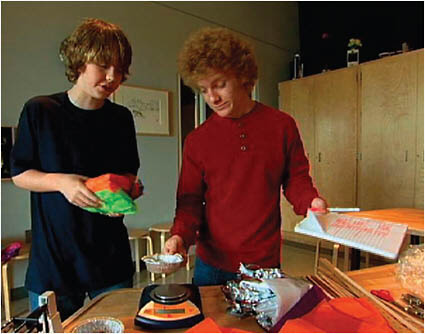
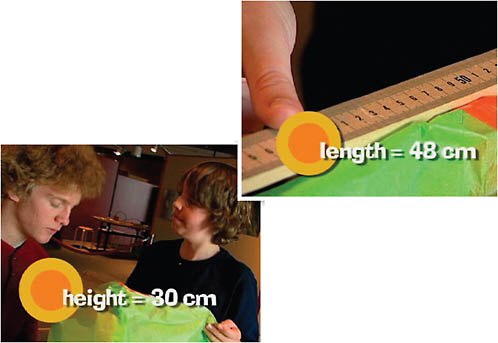
said that “first they try to put hot air in different size plastic bags, but when the plastic bags melted, they decided to make balloons with the tissue paper. They made baskets and added pennies to see if the balloons would go up still.” And 54 percent understood that balloon size was measured in order to calculate volume, which they expressed as follows: “They measured the tissue paper to see how big the balloon was and how much hot air would go into it.” Overall, almost all of the viewers (93 percent) picked up the main point: balloon size must increase to lift more weight. One viewer expressed this idea as follows: “Make the balloon bigger and bigger volume for more passengers.” What Features of the Show Helped Students Learn? One of the goals of the study was to try to figure out which storytelling devices were the most successful in facilitating learning. Apley considered the pace of the episode, its visual appeal, the presentation of the inquiry question, and the use of graphics. Students noted that they liked “Balloons.” because the segment “did not go too fast.” Students also said that they enjoyed the boys’ approach to the problem, characterized by their decision to follow a sequence of tests, adding a new variable at each stage. Perhaps one reason viewers liked this approach was that the experimental procedure was repeated several times, giving them an opportunity to participate and watch as the drama unfolded. At the same time, the episode stayed interesting because a new variable was introduced with each new trial. The segment concluded with a recap of the relationship between balloon size and the weight it can lift—a summary device that helped solidify learning. One lesson to be learned from this study is to pay close attention to the way the inquiry is presented. A clear explanation up front, an interesting question, followed by a logical sequence of investigations, with some repetition to reinforce the main ideas, are storytelling devices that have proven to be effective. A straightforward conclusion, in which the ideas are recapped and summarized, also is helpful. “The trial-and-error approach was engaging for kids,” says Apley. “The kids could follow along with each trial, participating in the drama. It made sense to build a balloon, measure it, and then watch it fly.”16 This case shows that while television shows (or films) cannot use true interactivity to support learning, they can be designed in ways that successfully support learning. In the DragonflyTV example, the compelling narrative and the viewers’ potential ability to imagine themselves in the role of the boys carrying out the investigations kept viewers engaged. The step-by-step unfolding of the investigation probably helped viewers to think actively about what was happening and reflect on the results. One important point: although the specific design options available across different settings and experiences may vary, the underlying principles of how people learn do not change fundamentally. |

Research on the elements of learning discussed in this chapter—expertise development, building on prior knowledge, and metacognition—suggests that program and exhibit developers should provide multiple ways for learners to engage with concepts, practices, and phenomena in a particular setting. In addition, the experiences should prompt and support participants to connect their learning experiences to their own prior knowledge, experiences, and interests. Because learners are diverse, bringing to the informal setting a range of interests and motivations, it is important to create an experience that is multifaceted, interactive, and developed in light of science-specific learning goals.
Continuing with our discussion about how research informs practices in informal settings, Chapter 4 focuses on the social aspects of learning. By designing environments that encourage conversation and support mediation among learners, informal science educators can help their visitors gain deeper knowledge from even one experience and enjoy themselves more in the process.
Things to Try
To apply the ideas presented in this chapter to informal settings, consider the following:
-
Think about the balance between interactive and noninteractive learning opportunities in your setting. Research supports interactivity as a way to engage visitors and audiences with the informal experience and support various modes of learning. Does interactivity support the learning goals of your setting? If so, are there relatively simple, inexpensive ways to make some of these experiences more interactive?
-
Consider how the research discussed in this chapter could help inform program or exhibit design. For example, are there ways to provide more pathways to learning in your setting? Are prompts, such as labels, signs, and audio guides, available? Are there opportunities to support and encourage learners to extend
-
their learning over time or across settings? Do your experiences invite reengagement or repeat visits?
-
Build relationships with neighboring venues. Contact nearby informal learning science environments to discuss common design issues. Is there a way to pool resources to provide visitors with a unique experience that invites them to seek out more in your or other settings? Are connections being made between the current experience and potential future ones? Are there resources for visitors or audiences that summarize all of the local offerings in a comprehensive way? Are there additional resources such as traveling exhibitions that could be brought in to augment the offerings of the setting? These strategies can help facilitate science learning across multiple settings.
For Further Reading
Allen, S. (2004). Designs for learning: Studying science museum exhibits that do more than entertain. Science Education, 88(Suppl. 1), S17-S33.
Falk, J.H., Scott, C., Dierking, L.D., Rennie, L.J., and Cohen Jones, M. (2004). Interactives and visitor learning. Curator, 47(2), 171-198.
Falk, J.H., Dierking, L.D., Rennie, L., and Scott, C. (2005). In praise of “both-and” rather than “either-or:” A reply to Harris Shettel. Curator, 48(4), 475-477.
McLean, K. (1993). Planning for People in Museum Exhibitions. Washington, DC: Association of Science-Technology Centers.
National Research Council. (2009). Introduction, Chapters 5 and 8 in Committee on Learning Science in Informal Environments, Learning Science in Informal Environments: People, Places, and Pursuits. P. Bell, B. Lewenstein, A.W. Shouse, and M.A. Feder (Eds.). Center for Education, Division of Behavioral and Social Sciences and Education. Washington, DC: The National Academies Press.
National Science Foundation. (2006). Now Showing: Science Museum of Minnesota “Cell Lab.” Available: http://www.nsf.gov/news/now_showing/museums/cell_lab.jsp [accessed February 2010].
Shettel, H. (2005). Commentary on Falk, Scott, Dierking, Rennie, and Cohen Jones. Interactives and visitor learning. Curator, 48(2).
Web Resources
Center for the Advancement of Informal Science Education (CAISE): http://caise.insci.org/
DragonflyTV: http://pbskids.org/dragonflytv/
Exploratorium: http://www.exploratorium.edu
Informal Science: http://www.informalscience.org/
Science Museum of Minnesota: http://www.smm.org/
St. Louis Science Center: http://www.slsc.org


