
1
Informal Environments for Learning Science
A great deal of science learning, often unacknowledged, takes place outside school in museums, libraries, nature centers, after-school programs, amateur science clubs, and even during conversations at the dinner table. Collectively, these kinds of settings are often referred to as informal learning environments. Understanding the science learning that occurs in these environments in all of its complexity and then exploring how to more fully capitalize on these settings for learning science are the major issues addressed in this book.
In the course of daily life, virtually everyone engages in informal science learning. In fact, despite the widespread belief that schools are responsible for addressing the scientific knowledge needs of society, the reality is that schools cannot act alone. Society must better understand and draw on informal experiences to improve science education and science learning broadly.
Consider, for example, that by some estimates individuals spend as little as 9 percent of their lives in schools.1 Furthermore, science in K-12 schools is often marginalized by traditional emphases on mathematics and literacy; hence little science is actually taught during school hours.2 Finally—although it needn’t be and isn’t always so—much of science instruction in school focuses narrowly on the “facts” of science and simplistic notions of scientific practice.3 Yet the growing body of research on science learning makes clear that a basic understanding of science requires far more than the acquisition of a body of science knowledge. Rather, knowing science includes understanding, at a basic level, the nature and processes of science. For these reasons, now more than ever, informal environments can and should play an important role in science education.
VENUES FOR LEARNING SCIENCE
As individuals interact with the natural world, their built environment, and participate in family and community life, they develop knowledge about nature and science, as well as science-relevant interests and skills. Science learning can occur through a number of experiences, including mentorship, reading scientific texts, talking with experts, watching educational television, or participating in science-related clubs. Informal learning experiences are often characterized as being guided by learner interests, voluntary, personal, deeply embedded in a specific context, and open-ended.4 Successful informal science learning experiences are seen as not only leading to increased knowledge or understanding in science, but also to further inquiry, enjoyment, and a sense that science learning can be personally relevant and rewarding.
In order to make sense of the vast number of informal settings in which science learning might occur, we use three categories developed in the National Research Council report Learning Science in Informal Environments: People, Places, and Pursuits.5 These include everyday informal environments (such as watching TV; reading newspapers, magazines, or books; searching online; playing educational computer games; having conversations; pursuing one’s hobby; or volunteering for an environmental cause), designed environments (such as museums, science centers, planetariums, aquariums, zoos, environmental centers, or libraries), and programs (such as 4-H programs, museum science clubs, citizen science activities, and after-school activities). All of these environments can be placed on a continuum characterized by the degree of choice given to the learner or group of learners, the extent to which the environments and experiences provided are designed by people other than the learners, and the type and use of assessments.
|
“Everyday learning includes a range of experiences that may extend over a lifetime, such as family discussions, walks in the woods, personal hobbies, watching TV, reading books or magazines, surfing the Web, or helping out on the farm.” |
Everyday Learning
Everyday learning includes a range of experiences that may extend over a lifetime, such as family discussions, walks in the woods, personal hobbies, watching TV, reading books or magazines, surfing the Web, or helping out on the farm. These experiences are very much selected and shaped by the learners themselves and may vary greatly across families, communities, and cultures. People engaging in everyday learning may not be aware that they are learning. Instead, they simply see the activity as part of their daily lives—engaging in a hobby, looking up information on the Internet, enjoying a science documentary on TV, reading a fascinating book about the life of Darwin, playing games (in the backyard, at home, or on the computer), or having a meaningful conversation with friends.
Consequently, learners may not be explicitly asked to demonstrate competence in the same way they are when tested in school. Rather, demonstration of competence or signs of learning are embedded in the activity—for example, parents praising a child who explains how a tree “drinks” water or friends correcting and challenging each other when discussing which foods are the healthiest to eat. In informal settings, individuals may take on or are given more responsibility or more difficult tasks when it is clear that their competence has increased. For example, a child growing up in an agricultural society may start with feeding animals and cleaning stalls and gradually assume responsibility for tending animal wounds and monitoring the animals’ well-being. An amateur astronomer may take on increasingly more sophisticated outreach tasks, progressing from aiding at a public star party to delivering a lesson on astronomy to schoolchildren.
Designed Environments
Designed environments include museums, science and environment centers, botanical gardens, zoos, planetariums, aquariums, visitor centers of all kinds, historic settings, and libraries. In these settings, artifacts, media, signage, and interpretation by staff or volunteers are primarily used to guide the learner’s experience. When the environments are structured by staff of the institutions, individual learners and groups of learners determine for themselves how they interact with them. The choice to attend a museum, aquarium, zoo, or other designed environment is made by the learner or, in the case of children and youth, often by an adult supervising the learner (e.g., a parent or teacher). Once in the setting, learners have
significant choice in selecting their own learning experiences by choosing to attend to only those experiences or exhibits—or aspects of them—that align with their interests. Typically, learners’ engagement is short-term and sporadic in these environments, and learning can take place individually or in peer, family, or mentor interactions. However, there is increasing interest in extending the impact of these experiences over time through postvisit Web experiences, traveling exhibits, and follow-up mail or e-mail contact. These kinds of innovations are discussed in more detail in Chapter 9.
Programs
Programs include after-school programs, summer programs, clubs, museum programs, Elderhostel programs, volunteer groups, citizen science experiences, science cafés, public lecture series, and learning vacations. Often program content includes a formal curriculum that is organized and designed to address the concerns of sponsoring institutions. Although the curriculum and activities are focused primarily on content knowledge or skills, they may also address attitudes and values and may use science to solve applied problems. Often, programs are designed to serve those seen to be in need of support, such as economically disadvantaged children and adults.
As in designed environments, individuals most often participate in programs either by their own choice or the choice of a parent or teacher. They attend programs that align with their interests and needs. Experiences in these environments are typically guided and monitored by a trained facilitator and often include opportunities for collaboration. The time frame of these learning experiences ranges from brief, targeted, short-term experiences to sustained, long-term programs with in-depth engagement. Assessments are often used to determine progress and to allow for adjustments, but they are not typically meant to judge individual attainment or progress against an objective standard or to form the basis for graduation or certification of any kind (although they may affect the participants’ reputation or status in the program or their self-perception and self-confidence).
Insights About Learning in Informal Environments
Although these three types of environments are very different, they all share some basic characteristics that are believed to encourage learning:
-
engaging participants in multiple ways, including physically, emotionally, and cognitively;
-
encouraging participants to have direct or media-facilitated interactions with phenomena of the natural world and the designed physical world in ways that are largely determined by the learner;
-
providing multifaceted and dynamic portrayals of science;
-
building on the learner’s prior knowledge and interest; and
-
allowing participants considerable choice and control over whether and how they engage and learn.
These characteristics have emerged from a philosophical stance toward what it means to provide an informal experience, and they also are informed by a growing research base on learning and how best to promote it. This research base, which forms the foundation for this book, represents multiple fields of inquiry that reflect a wide range of interests, questions, and methods. The diversity of approaches to investigating learning outside schools—both how it occurs and how best to support it—makes the evidence base difficult to pull together. At the same time, the research reveals that the opportunities for promoting learning, as well as inherent challenges in doing so, are similar across the three types of informal environments.
ILLUSTRATING THE COMMON CHARACTERISTICS OF INFORMAL ENVIRONMENTS
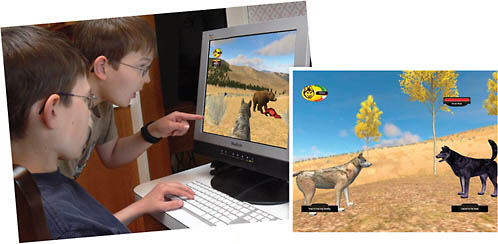
Two examples provide insight into different kinds of informal learning experiences. One is a computer game that can be played at home, and the other is a program for adults. They occur in different settings, with different age groups, different structures, and different time scales. The similarities and differences in the two descriptions highlight the shared characteristics of informal environments for science learning, as well as the unique potential for learning that variation in design can provide.

|
Based on evaluations by the game’s developers, as well as an independent evaluation conducted by researchers from the Institute for Learning Innovation, there is evidence of learning. After analyzing forum postings, the developers found that the data appear to be pointing to the use of inquiry behaviors. Players made predictions about what hunting and mate-finding strategies might work, tested those predictions, analyzed the results through the use of observation and note-taking skills, and worked with their pack mates to develop new strategies. One player analyzed his maneuvers as follows: “[As a wolf], I had trouble with social behavior. I also had to keep up with hunting, and trying not to die. Survival of the fittest. I tested being dominant over the stranger wolves, and how to save energy for hunting. Once I found a mate, everything got easier.” Schaller and Spickelmier also discovered that the players sought out additional wolf-related experiences as a result of their experience with the game. More than 80 percent of participants looked up information on the Web; watched a television show or video about wolves; read about wolves in books, magazines, or newspapers; or talked about the game with family and friends. About 70 percent of the players visited a zoo, nature center, or park to actually see wolves and other wildlife. Interestingly, it appears that the more frequently individuals played the game, the more likely they were to engage in one of these follow-up behaviors. Extrapolating from these findings, it appears that game-playing has potential as a tool that can be used to build knowledge and inquiry behaviors and even lead to additional activities related to wolves and nature. These learning gains, Spickelmier notes, happen as part of the game. As intended, the players don’t even realize that they are applying science. They’re just trying out different ways to make their wolves successful in their environment. “In the world of games in which these kids have grown up,” says Spickelmier, “they expect to have some control over their learning. Maybe that’s why they like games so much. For them, the ability to manipulate their environment is the way education is done.”6 |
This example of everyday learning through media illustrates many of the characteristics of informal learning environments. Participation in the game is entirely voluntary, and the amount of time players devote to it is based on individual choice and interest. The game itself is carefully designed so that, in order to master it, players need to learn about wolves and their habitat. Demonstration of competence is an inherent part of the game, because a player will not succeed unless he or she learns about wolves and is able to use that knowledge to inform his or her strategy and choices in the game.
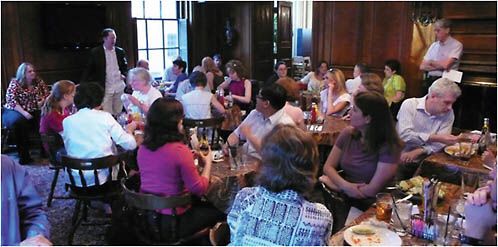
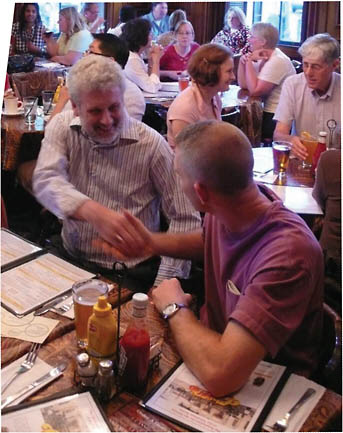
The second informal science experience, called Science Café, was developed by Boston’s public television station WGBH. Unlike WolfQuest, which is targeted for children and teens, Science Café is an evening-long event designed for adults. While Science Cafés have been adapted from Europe and occur nationwide, this particular example reflects the approach developed by WGBH, and it takes place in a pub near Boston. The WGBH approach distinguishes itself by introducing the topic of discussion with a brief video from WGBH’s extensive science documentary material.
|
“Demonstration of competence is an inherent part of the game, because a player will not succeed unless he or she learns about wolves and is able to use that knowledge to inform his or her strategy and choices in the game.” |

|
greenhouse gas methane, a remark that provoked a chuckle in the room. Then he opened the floor for questions and comments. He had a clipboard of notes on hand, thinking he would need to refer to them during the open discussion. The discussion started with questions from regular pub patrons: “How do we know that humans are causing the problem?” they asked. “Are there any beneficial aspects to global warming?” They also challenged what Marshall had described as people’s collective responsibility to protect the planet for future generations. “So what if humans go extinct?” they mused. “Extinctions have happened before. Maybe it’s our fate.” Then the audience returned to the issue of bovine flatulence. “How does bovine flatulence contribute to greenhouse gases?” someone wanted to know. “What if we changed the diet of the cows?” another participant suggested. “If we all became vegetarians, would that help?” It’s a good thing that Marshall has a wry sense of humor—and can think on his feet. For the next 10 minutes, he and the group discussed different ways to deal with this problem. They considered the possibility of feeding cattle different kinds of grains, feeding them their natural diet of grass, or cutting back on people’s weekly meat consumption. Early in the discussion, Marshall cast his notes aside. He hadn’t thought that the conversation would go in this direction, so his notes were of little use. He had to draw on his knowledge of this topic to do his part to keep the discussion going. As it turned out, the event was a learning experience for Marshall, too. In NOVA scienceNOW’s national surveys, 38 percent of participating scientists report that their involvement in the program changed the way they present their work to the public. After 25 minutes of conversation, Wiehe noticed that some people were starting to lose attention. So he ended the group discussion and reminded everyone to enter a prize drawing by completing the evaluation forms at their tables. The noise in the room increased as everyone started talking excitedly with those nearest them. Marshall was immediately surrounded by patrons who had more questions. Wiehe then asked him to circulate around the room, giving everyone the chance to have a face-to-face conversation about whatever interested them most. For some, this meant a technical discussion of the topic. Others simply wanted a chance to meet Dr. Marshall personally. “I’m going to tell my friends I had a beer with a paleontologist,” exclaimed one Thirsty Scholar patron. “This event reminded me of how much I love science.” This participant is not alone in his enthusiasm. In surveys of science cafés around the country, more than 70 percent of those attending a Science Café report staying more up-to-date with current science as a result of the experience. The evidence indicates that the interest ignited through the event was sustained and incorporated into participants’ daily lives. Throughout the rest of the evening, patrons of the pub continued to talk about global warming. The pub’s owner, delighted with the outcome of the evening, was eager to be involved in the next event. Charles Marshall also expressed his enthusiasm for the evening and his desire to participate in future Science Cafés. Perhaps the most telling sign of the evening’s success lay in the hands of several of the regulars who decided to stay for the event: tickets to a concert they had chosen not to attend. They opted instead for an evening of stimulating discussion about science.7 |
REFLECTING ON THE CASES
WolfQuest and the Science Café represent two very different informal science learning experiences. One is for children and teens, and the other is for adults. One is a computer game that is played at home for as long as the learner is engaged, and the other is an organized one-shot event. The goals of WolfQuest were also very different from those of the Science Café. The developers of WolfQuest were experimenting with the learning opportunities available through gaming; Wiehe and his colleagues were trying to provide an enjoyable evening of conversation about science, with the hope of whetting the participants’ appetites for more.
Despite the significant differences between the settings, WolfQuest and the Science Café share an important element that characterizes much of everyday learning in science: learning can be generated by entertaining engagement that is designed to create further interest and a desire to learn more about the topic. The players develop knowledge and skills as a means to succeed in a game, and their success is synonymous with learning at least some science, along with developing positive attitudes toward the topic itself, as exemplified by their growing interest in wolves. The patrons of the Science Café experience the dialogic nature of science and are exposed to a researcher who personalizes science and provides authenticity. In both cases, the learning experience is shaped by to the environment: gamers play and pub patrons talk and discuss.
Furthermore, in both the computer game and the Science Café, the program designers built on the learners’ prior knowledge and interests. Schaller and Spickelmier did so by using the features of gaming that kids enjoy and embedding science content into that framework. Once the players were hooked on the game, they began learning the science content. Wiehe used a video clip to capture the interest of the audience and prepare them for Marshall’s talk. To further this engagement, both programs connected with the participants in multiple ways. In the case of the Science Café, this was by engaging them in a discussion of a topic that was intellectually stimulating and emotionally provocative. By playing the computer game, the participants were involved physically, by manipulating the computer mouse to make decisions about their wolf avatars; emotionally, by taking on the persona of a wolf; and cognitively, by learning what they needed to know to ensure that their wolves survived. Also, participants were allowed and encouraged to follow their own interests. At the Science Café, Marshall allowed people’s interests to direct the conversation, even if it was a topic with which he was less familiar.
These similarities across the two experiences are not a coincidence. They reflect the designers’ commitment to providing informal experiences for learning and their knowledge of how to support learning. This knowledge is informed by a growing body of research exploring how people learn across settings and how individuals would like to learn or experience the world in their free time.
A SYSTEMATIC APPROACH TO LEARNING
Over a century ago, scientists began studying thinking and learning in a more systematic way, taking steps toward what are now called the cognitive and learning sciences. Beginning in the 1960s, advances in fields as diverse as linguistics, psychology, computer science, and neuroscience offered provocative new perspectives on human development and powerful new technologies for observing behavior and brain functions. As a result, over the past 40 years there has been an outpouring of scientific research on the mind and the brain—a “cognitive revolution,” as some have termed it.8 At the same time, applied research and evaluation in informal science learning have exploded and provided the informal science learning profession with many of today’s fundamental principles and frameworks, many of them informed by the results of this cognitive revolution.
This huge and growing body of research on learning provides important insights for designing informal environments for learning science, including guidance about how to understand the varied types of learning that occur in informal science environments; how to actively support this learning through designed experiences that directly tap into natural learning processes; how to assess learning in these settings appropriately; and how to improve on existing informal science environments, including long-term programs, one-shot events, and exhibits. In broad brushstrokes the research on learning to date has revealed the importance of understanding both how individual minds work during the learning process and how the social and cultural context surrounding an individual shapes and supports that learning.
Research on individual cognition and learning, attitudinal development, and motivation has provided insight into the development of knowledge, skills, interests, affective responses, and identity. Some of the relevant principles of individual cognition and learning are articulated in the National Research Council report How People Learn.9 These principles include the influence of prior knowledge; how experts differ from novices (experts being those with deep knowledge and
|
“The sociocultural perspective explores how individuals develop and learn through their involvement in cultural practices, which encompass the language, tools, and knowledge of a specific community or social group.” |
understanding of a specific topic versus novices who have a less developed or naïve conceptual understanding of a topic); and the importance of metacognition, or the ability to monitor and reflect on one’s own thinking. These ideas can be used to inform the design of informal science experiences.
For example, many museums deliberately juxtapose visitors’ prior knowledge with “scientific” ideas that can explain the natural phenomena they are engaging with in an exhibit or activity. This approach to design has been shown to help learners question their own knowledge and more deeply reconstruct that knowledge in a way that comes to resemble that of the scientific discipline. The Exploratorium’s Active Prolonged Engagement (APE) exhibits were designed with this goal in mind. At one exhibit, visitors were asked to figure out which two of six possible disks could roll faster. In doing so, visitors had to determine which variable—mass or distribution of mass—is more important. This process forced them to confront their ideas about this topic, uncovering any misconceptions they had. In fact, evaluators of this exhibit determined that those with misconceptions were the most intrigued with the issues raised by the exhibit, illustrating the development of deeper knowledge about a science topic. For more information about APE exhibits, see Chapter 3, Designing for Science Learning: Basic Principles.
The sociocultural perspective explores how individuals develop and learn through their involvement in cultural practices, which encompass the language, tools, and knowledge of a specific community or social group. This area of research grew out of concern that an emphasis solely on learning processes within individual minds overlooked the crucial role of social interaction, language, and tools in learning. The findings of this research show how verbal and nonverbal social interaction plays a critical role in supporting learning.
Importantly, as people develop the culturally valued skills, knowledge, and identities of a specific community, they also bring their own prior experiences and knowledge to their new community. In this way, culture is a dynamic pro-
cess, shaped and modified by the perspectives of its members. According to this approach, scientists, too, are part of their own cultural group, in which people share common commitments to questions, research perspectives, ideas of what constitutes a viable scientific stance, and how individuals develop effective arguments.
Tools and artifacts are particularly important aspects of the cultural context for learning in science. Scientists use many specialized tools to measure and represent natural phenomena. In addition, tools and artifacts typically represent the backbone of many learning experiences in science. In a museum, for example, visitors make sense of exhibits through forms of talk and physical activities that are fundamentally shaped by the nature of the materials and technological objects they encounter.
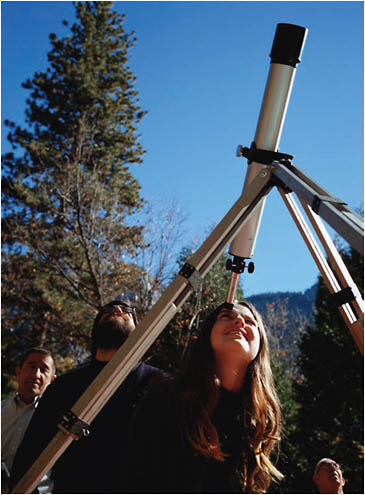
Media also represent a rich layer of learning artifacts. Interactive media, multiplayer video games, and television all provide a specific infrastructure for learning. Information has become broadly available through online resources and communities. In fact, many people routinely develop and share media objects that involve sophisticated learning and social interaction. Research and evaluation during the past 10 years have shown the effectiveness of media, but also highlight their limitations. Recognizing opportunities and limitations, media and brick-and-mortar experiences are becoming increasingly intertwined—for example, a documentary on the history of the telescope is complemented by a similar full-dome planetarium show, an interactive website that features activities for backyard astronomy exploration, and a strategy to link the airing and local release of the shows with outreach activities by amateur astronomy
clubs. Similarly, libraries are becoming multifunctional community centers for informal or free-choice learning. Just as museums are now more than repositories for artifacts, libraries provide access to many resources in addition to books: the Internet, message boards, talks, courses, programs, and even exhibits on science and health in some instances. These kinds of linkages and collaborations are discussed further in Chapter 9.
The chapters of this book draw on this rich body of research to elaborate on how informal environments can best support science learning. Many of the basic principles of learning operate in similar ways across settings. However, different settings and types of experiences offer different kinds of opportunities for learning. For example, a long-term program is likely to support different aspects of learning than a one-shot experience. Similarly, a highly structured exhibit may be more suited for particular kinds of learning outcomes than a purely exploratory one. Such differences mean that practitioners in informal science education need to think carefully about what can be reasonably accomplished in their own settings through the experiences they provide.

It is clear that a great deal of science learning—often unacknowledged—takes place outside school in informal environments. These environments include the home, while playing on the computer or watching television; designed spaces, such as science museums; and out-of-school-time programs or adult-oriented lectures or movies. Although these activities vary considerably and occur in different settings with different age groups, different structures, and different time scales, they all share five common commitments:
-
to engage participants in multiple ways, including physically, emotionally, and cognitively;
-
to encourage participants’ direct interactions with phenomena of the natural and designed world largely in learner-directed ways;
-
to provide multifaceted and dynamic portrayals of science;
-
to build on learners’ prior knowledge and interests; and
-
to allow participants considerable choice and control over whether and how they engage and learn.
These commitments are consistent with findings from research on learning that reveal the importance of understanding both how individual minds work during the learning process and how an individual’s social and cultural context shapes and supports that learning. We expand on both aspects of learning in Part II and explore the implications for learning across the range of informal settings. We begin in the next chapter by elaborating on science as a human endeavor and the implications for what it means to learn science.
For Further Reading
Anderson, D., Storksdieck, M., and Spock, M. (2007). The long-term impacts of museum experiences. In J. Falk, L. Dierking, and S. Foutz (Eds.), In Principle, in Practice: Museums as Learning Institutions (pp. 197-215). Lanham, MD: AltaMira Press.
National Research Council. (1999). Executive summary. How People Learn (pp. xi-xvii). Committee on Developments in the Science of Learning, Division of Behavioral and Social Sciences and Education. Washington, DC: National Academy Press.
National Research Council. (2009). Introduction. Chapter 1 in Committee on Learning Science in Informal Environments, Learning Science in Informal Environments: People, Places, and Pursuits. P. Bell, B. Lewenstein, A.W. Shouse, and M.A. Feder (Eds.). Center for Education, Division of Behavioral and Social Sciences and Education. Washington, DC: The National Academies Press.
Yager, R.E., and Falk, J. (Eds.). (2008). Exemplary Science in Informal Education Settings: Standards-Based Success Stories. Arlington, VA: NSTA Press.
Web Resources
Center for the Advancement of Informal Science Education (CAISE): http://caise.insci.org/
Evaluation of WolfQuest: http://www.archimuse.com/mw2009/papers/schaller/schaller.html
Science Cafés: http://www.sciencecafes.org/
WolfQuest: http://www.WolfQuest.org/


