
5
Interest and Motivation: Steps Toward Building a Science Identity
The lights dim in the dome-shaped theatre at the Tech Museum in San Jose, California. Viewers are waiting for Coral Reef Adventure to begin. The movie unfolds, showing the beauty of the coral reef and explaining why this delicate ecosystem is endangered. The audience is quiet, moved by the cinematic experience.
For the moment, many people are ready to learn more about this environment and take action to protect it. But after the movie ends, the music dies down, and the lights come on, what do people take away from the experience? Do they have a greater understanding of the topic? Are they poised to become environmental activists?
To try to answer these questions, evaluators conducted interviews with 28 people (15 from the Tech Museum and 13 from the Science Museum of Minnesota) immediately after they watched Coral Reef Adventure and 3 months later. Although the study sample was small, the results reveal the potential power of this medium.
Most of the 28 respondents reported that right after seeing the film they talked about it with each other and recommended it to their friends and family. But perhaps what is even more interesting is that 3 months later, 23 of the 28 people interviewed noted that the film had a lasting effect.
“I’ve definitely thought about how coral reefs are endangered. The film made a strong impression on my thinking about the ocean environment.”
“It reinforced my concerns about the environment and conservation. Most people don’t realize what’s happening. They should see this film.”
“We [my wife and I] did a couple of things. One, we were motivated to locate a site on the Internet about helping to preserve the marine environment. We also became members of the Monterey Bay Aquarium. As active participants in a study group at the aquarium we’ve learned more about why those trees are beneficial to the coral reef. We’ve also become members of The Tech [Museum in San Jose]. Thanks for making such a wonderful film.”
These results are corroborated by an evaluation of Dolphins, another IMAX film. According to researcher Barbara Flagg, 3 months after viewing this film, about 20 percent of the interviewed sample reported that they had taken action related to preserving the ocean environment. One respondent said that “we’ve joined a group that regularly goes down to the beaches to help clean them up.”
Based on these findings, it appears that IMAX films can spark interest in a topic and, in some cases, motivate viewers to learn more or to take action. These films are an example of what informal science venues can do to bring in crowds and generate excitement about science.1
THE ROLE OF INTEREST IN INFORMAL ENVIRONMENTS
Informal environments are often characterized by people’s excitement, interest, and motivation to engage in activities that promote learning about the natural and physical world. Typically, participants have a choice or a role in determining what is learned, when it is learned, and even how it is learned.2 These environments are also designed to be safe and to encourage exploration, supporting interactions with people and materials that arise from curiosity and are free of the performance demands that people often encounter in school.3
Interest, as described in Strand 1, includes the excitement, wonder, and surprise that learners may experience and the knowledge and values that make the experience relevant and meaningful. Recent research on the relationship between affect and learning shows that the emotions associated with interest are a major factor in thinking and learning. Not only do emotions help people learn, but they also help determine what is retained and how long it is remembered.4 In addition, interest is an important filter for selecting and focusing on relevant information in a complex environment.5 People pay attention to the things that interest them; hence, interest can drive what is learned.
This finding has been borne out in several studies focusing on conservation; these studies indicate that an individual’s prior interest and involvement in conservation may serve as a better predictor of their responses and actions than typical demographic variables, such as age, gender, ethnicity, or education. Visitors with high interest in conservation stopped at more of the exhibits in a conservation-themed aquarium exhibition,6 and zoo visitors’ emotional responses to animals were more closely associated with emotional or personality variables7 than demographic variables.
People with an interest in science are likely to be motivated learners in science; they are more likely to seek out challenge and difficulty, use effective learning strategies, and make use of feedback.8 These behaviors help learners continue to develop interest, further engaging in activities that promote enjoyment and learning. People who come to informal environments with developed interests are likely to set goals, self-regulate, and exert effort easily in the domains of their interests, and these behaviors often come to be habits, supporting their ongoing engagement.9
Cultivating interest and motivation is a high priority for many informal science educators and has been explored and documented extensively in research, evaluations, and the accounts of practitioners. Many experiences are designed to capture and sustain participants’ interest. There is evidence that the availability or existence of stimulating, attractive learning environments can generate the interest that leads to participation.10 In fact, interactivity, which was discussed extensively in Chapter 3, may be useful in part because it generates and holds participants’ interest.
There are many research-based frameworks for understanding interest and motivation and the role they play in the learning process. One such framework intended to enhance the quality of museum exhibits was developed by museum evaluator Deborah L. Perry.11 The model has six components:
-
Curiosity—The visitor is surprised and intrigued.
-
Confidence—The visitor has a sense of competence.
-
Challenge—The visitor perceives that there is something to work toward.
-
Control—The visitor has a sense of self-determination and control.
-
Play—The visitor experiences sensory enjoyment and playfulness.
-
Communication—The visitor engages in meaningful social interaction.
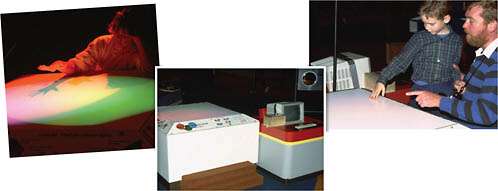
The following case study drawn from Perry’s work with the Children’s Museum of Indianapolis suggests how the model can be applied to exhibit design.
|
How Can the Exhibit Pique Visitors’ Curiosity? The first attention-getting strategy was the different-colored lights shining on the table. Once visitors were engaged, the exhibit kept their attention by using the computer to ask a question. The twist, however, was that the answer was embedded on another computer screen. The search for the answer proved to be an effective way to sustain visitor interest. How Can the Exhibit Give Visitors a Sense of Confidence? Because research has illustrated that people are more likely to pursue activities when they feel they will be successful, this exhibit promoted confidence by providing labels written in an easy-to-read style. The result was that at least one person in a group understood the main ideas and were able to explain them to other members of the group. In particular, the labels were effective in educating parents about the exhibit, who could then convey that information to their children. Many parents commented that they felt successful when they were able to teach their children about the science behind the exhibit. Understanding the science and the rationale for various “experimental conditions” kept frustration to a minimum. How Can the Exhibit Challenge Visitors? Along with clear explanations, the exhibit also included numerous opportunities to stretch visitors’ thinking without creating a sense of failure and frustration. For example, one part of the exhibit asked visitors to experiment with making hand shadows. Another part encouraged visitors to make specific colors by turning the lights on and off. In these ways, visitors could choose to challenge themselves if they felt that they had mastered the main concepts presented in the exhibit. |
|
How Can the Exhibit Promote Feelings of Self-Determination and Control? By definition, museums are “free-choice” settings, but having too many choices in one exhibit can be overwhelming, detracting from both the enjoyment and the learning that takes place. The designers of The Color Connection experienced this problem during the first iteration of the exhibit, when they installed buttons instead of switches for turning the lights on and off. The designers found that people spent long periods pushing the buttons and creating light shows; by doing so, visitors were not learning and, ultimately, did not enjoy themselves either. When the buttons were replaced with switches that required more deliberate use, the visitors still had control over the lights, but they could manipulate them in a context of learning about white light and how it is formed. The switches slowed visitor behavior and made choices more deliberate and controlled. Because their actions were now more goal-oriented, visitors could enjoy what they were doing and feel gratified that they were gaining some information about scientific principles of light and color. How Can the Exhibit Promote Feelings of Sensory Enjoyment and Playfulness? In this exhibit, visitors had opportunities to crawl through the lights, put different objects in the lights, make hand shadows, and then make up stories about their hand shadows. Activities such as these remind visitors how much fun they can have simply by experiencing science-related phenomena in a playful and open-ended way. How Can the Exhibit Stimulate Meaningful Social Interaction? By talking to members of their group, visitors often end up teaching concepts to each other. The exhibit was designed in a way that encouraged visitors to share their experiences, discuss the phenomena they observe, and coordinate their actions. This kind of exchange not only provides opportunities for learning, but it also builds confidence, which helps keep motivation alive. This model represents one approach to museum design. The model continues to evolve and has been tested in other settings. Nonetheless, some areas remain to be fully tested. Still, it offers a way to consider using research to plan exhibits that are more likely to draw in visitors, keep their attention, and encourage them to share knowledge and questions. Setting such goals and then determining whether they have been met not only allows museum educators to document learning, but also provides feedback for improving the quality of their offerings.12 |
Although the focus of the exhibit described in the case was on how to capture and hold visitors’ interest, in the process the designers also provided experiences that supported other strands of science learning. By designing activities that piqued the visitors’ interest, enhanced their sense of confidence, and provided them with engaging challenges, the designers also helped support conceptual understanding (Strand 2) and scientific reasoning (Strand 3).
Elements of design discussed in Chapters 3 and 4 also are evident in this case. The inclusion of labels promoted social interaction and the sharing of expertise. Interactivity played an important role in maintaining interest and supporting learning. At the same time, the designers found that including choices that didn’t require deliberate action encouraged behaviors that detracted from learning—a finding similar to one found at the Exploratorium after studying the interactive features of the Glowing Worms exhibit (Chapter 3).
CULTIVATING AND SUSTAINING INTEREST
Thus far, we have focused on interest as the initial spark that hooks people and encourages them to explore an informal science experience. But interest can involve something more than just a visit to a museum or an hour at the IMAX theatre. Among informal science educators, there also is a desire to build sustained interest that will bring people back to learn more.
Many researchers have developed models for the development of long-term interest. Ann Renninger and Suzanne Hidi provide a useful framework that differentiates between shorter term interest and more sustained, engaged interest.13 Their four-phase model describes how interest emerges and changes as an individual becomes more engaged through repeated experiences related to a topic.
In the first phase, situational interest, excitement or interest is triggered by the situation. The participant’s positive responses to a topic are typically sparked by environmental features that have personal relevance or capture attention because they are unexpected or unusual. In phase two, referred to as maintained situational interest, the participant has repeated positive experiences that are sustained by the meaningfulness of the tasks and personal involvement. In phase three, emerging individual interest, the person’s interest starts to extend beyond the informal learning experience, which at this point is not always needed to stimulate interest or engagement with the topic. In the final phase, a well-developed individual interest becomes evident by the person’s choice to continue his or her involvement
by joining clubs, reading books, or participating in other activities on the topic. When an individual reaches this phase, he or she is highly motivated to look for more ways to learn about the subject. Interestingly, this sequence of increasing investment and meaningfulness has parallels with work done by Beverly Serrell and her colleagues in generating criteria for exhibition excellence based on principles from the visitor studies literature.14
The notion that interest can be deepened and sustained through repeated experiences is important to think about when designing informal learning experiences for science. Some settings or activities may not lend themselves to cultivating sustained interest as much as others do. Short visits to museums or lectures may trigger excitement about a topic, but these experiences do not offer enough exposure for well-developed individual interest to emerge. In order for this level of interest to develop, longer-term engagement and multiple experiences are likely to be necessary and those may be easier to integrate into some settings than others. After-school programs or citizen-science experiences that last for weeks or months may promote sustained engagement more readily. Strategies for extending and connecting learning experiences across time and place are discussed in detail in Chapter 9.
To illustrate how sustained interest can evolve over time, consider the next case study, which describes a community garden project that was sponsored by York College of the City University of New York. Over a period of 9 months, urban African American and Latino teens and their mentors worked together to build a community garden. About 40 teens were involved in at least one aspect of the project, and a core group of 15 (12 boys and 3 girls) was responsible for implementing the project from start to finish. Their efforts illustrate a deepening of interest over the life of the project and the outcomes that are possible when people become truly engaged.
|
everyday SCIENCE An Innovative Project with Urban Teens 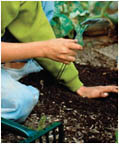 At a New York homeless shelter in the South Bronx, teacher and researcher Dana Fusco was offered a unique opportunity.15 She was asked to work with a group of young people between the ages of 12 and 16 to develop a science project. The teens had already faced many difficulties in their lives; when this project started, the participants were living in the shelter with their families. When Fusco started working with the teens, her goal was for the project to emerge from the kids’ own interests and frame of reference. She didn’t want to impose her ideas on them. Rather, she wanted them to experience a process of reflection and discussion about issues that were of concern to them. From that point, she hoped that they would be able to reach a consensus about a group project. Ideally, the project would be personally meaningful, reflect what they had learned about science, and would benefit the community. 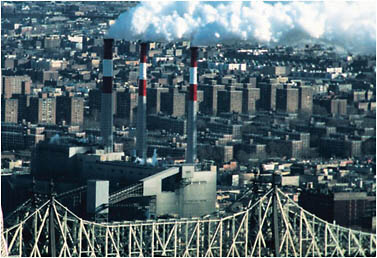 Fusco began by asking the teens what problems they were familiar with. Immediately, they started talking about teen pregnancy, AIDS, gangs, violence, drug and alcohol abuse, and racism—all experiences within their personal frame of reference. To express their views, the teens created a group collage, which they hung up at their meeting place. After the teens had articulated their concerns, the group turned their attention to what they could do to address these problems. Fusco shared with them other projects that had been undertaken by urban youth. She mentioned awareness campaigns, community cleanup projects, mural painting, and gardening. Then Fusco mentioned that the teens had permission to use the lot across from the shelter as the site for their project. At their next meeting, the participants investigated the lot. Although it was strewn with garbage, drug needles, and other debris, the kids immediately recognized its potential. One boy recalled that at one time, people had planted “stuff” in the back of the lot, but the plot had been burned. Other kids decided that their first step in moving forward with a plan should be measuring the lot. They began by coming up with makeshift strategies. One boy counted the number of steps it took to walk across the lot. Another group counted the number of concrete blocks lining the fence. |
|
After their initial investigation of the space, they started discussing how it could best be used. The teens suggested a basketball court, an archery range, a playground, or a community garden. Before making a decision, the kids formed four teams to explore the space more thoroughly. One team measured the lot precisely, while another recorded evidence of living creatures and documented the nature of the nonliving debris. A third team took photographs, and a fourth made sketches of the lot. The teams communicated with each other; for example, the recorders let the photographers and artists know where to go to find artifacts so that they could be captured on film. During this phase, the groups met often to review their data and determine which idea made the most sense for the lot. They narrowed the list down to the following: a playground, a garden, a clubhouse, a penny store, a jungle gym, a sandbox, and a stage. As part of the decision-making process, the teens developed conceptual drawings to illustrate each of these ideas. Perhaps because they had seen evidence that there had once been a garden in that space or as a result of their discussions, the group decided that a community garden would be the centerpiece of the lot, with other structures surrounding and enhancing it. The next phase of the project involved developing the expertise they needed to execute their plan. At this point, the teens realized that talking with community activists and experts in the field would help them build their knowledge base. This phase of the project proved to be very productive because the advice they received led to new questions and new insights. For example, after talking with an environmental psychologist, the group realized that each element in the design of the urban garden has its own set of requirements. So if they built a stage, they would also have to build benches for seating; if they wanted to plant a garden, they would have to make sure that the plants had enough water and sunlight. These realizations led to a new set of activities, including visiting other community gardens and a school with a composting facility, writing to organizations that might donate supplies or technical assistance, and bringing in gardening experts to discuss the garden’s design and to help them test the nutrients in the soil. “During this part of the project, the kids really began doing science,” says Fusco. “That, along with the community service piece, was very empowering.” For their part, the kids were somewhat surprised that they had actually been allowed to follow through with a project with demonstrable results. In fact, one teen remarked that, when the project started, he thought it was “going to be a project, like in school, you know, like a fake project.” Another boy added to that sentiment by saying, “Yeah, I didn’t think we were actually going to do it until you started talking about picking up the garbage and stuff.”15 They came up with a name that reflected their enthusiasm for the project and their new status as scientists: Restoring Environments and Landscapes, or REAL. “We formed our own ‘gang’ as an alternative to those in the streets,” explains Fusco. “The group came together because of the friendships that formed.” Over the course of several months, the REAL team continued to gather more information about the site. During a slide show presentation of outdoor spaces, the group saw elements that they had not thought of, such as a storage shed, a path wide enough for wheelchairs to navigate, and signs. One member of the group felt so strongly about the need for a shed that he designed a storage space to fit under the stage. (This feature was later incorporated into a model the group made of the space.) One of the girls in the group made a sign for the model that said, “Help keep our REAL garden clean!” |
|
Meanwhile, other teens were focusing on the garden. To determine where to place their flower-beds, participants charted the position of sunlight throughout the day. Based on that data, they positioned the seedlings. As new information became available, the teens continued to modify their design. They added a birdbath and pond to attract wildlife to the garden, and they made sure that garbage cans and compost bins were part of the plan, as well as picnic tables, chess tables, and paths wide enough for wheelchairs. All of these features were incorporated into the model the teens made of their garden. After months of research and planning, the group was ready to move into the implementation phase. They decided to hold a Community Day, during which they would share their model with their parents and businesses in the community. They alerted the neighborhood to the event by making flyers and posting them. More than 50 parents, staff, volunteers, neighbors, and children came to the group’s community-wide event. Volunteers from the neighborhood also got involved. Some helped clear out the garbage and sort out the recyclable materials. A professional carpenter worked with the kids to build a new fence. Other teens dug out the pond and planted seeds and seedlings with an expert gardener. During the day, several teens walked around and video-interviewed attendees, asking them how they thought the garden would help the community. Below are samples of the responses they received. After-school coordinator: “It’s gonna give us [a] sense of responsibility because we’re transforming something. We’re making something out of nothing. We’re gonna be extra proud because we did it.” Parent volunteer: “It’s gonna turn out to be beautiful. It’s gonna help the children take care of the neighborhood by seeing beauty.” Teen participant: “It will help the community by giving kids a place to come. Instead of being out in the street and doing things they shouldn’t be doing, they can come in here and just relax and enjoy themselves.” Teen participant: “Because we need to [do] something for these kids right now. Things are not going good right now. Because you know how New York is filled with violence? So an event like this right here, it helps get away from all the violence.” By the time the project ended, the REAL team had planted tomatoes, peppers, and flowers in the garden and had built an arbor for the vines. “I really like doing community projects—it gives me a sense of responsibility and gives me a good feeling about helping people in the community,” one participant remarked. A sense of ownership of the project from beginning to end combined with the opportunity to become involved in and contribute to the community resulted in a sense of accomplishment and deep commitment to the work.15 |
Applying the Interest Development Model to the Community Garden Project
The community garden project is an excellent illustration of how interest can be cultivated and deepened over time. The project began with Fusco making the experience relevant for the urban teens, triggering their excitement. When they realized that she was sincere and wanted them to take charge of the project, they began taking the work even more seriously, as reflected in the teen’s comment that he didn’t think they were really going to do anything until he saw evidence of action. At this point, the teens began to develop a sustained interest in the project and a growing curiosity about what steps they needed to take before they could start creating the garden.
Over the course of several months, the project took on a life of its own. The teens became more engrossed in the activity, taking the initiative to contact experts in the field, research plants, invite the local community to help with the project, and roll up their sleeves to do the work to create their urban garden. Because the project continued over a relatively long period of time, the young people could cultivate their interest and even develop some expertise in gardening, construction, or fundraising. Over time, many of them became self-motivated, empowered by the fact that they were working in their own community and making a difference. At this point, their interest came from within and not from the environment.
It is important, too, to note that the project emerged from the members’ own life experiences, which included concerns about gangs and violence. What happened over the course of the project is that the REAL team became a different kind of gang, as evidenced by such comments as “You down with REAL?” and “I’m getting REAL painted on the back of my denim jacket.” This new “gang” developed its own mini “culture” of science within the larger community. The science gang now looked at the world differently and saw science as a way to reduce violence, create beauty, and bring disparate members of their neighborhood together.
Relating the Community Garden Project to the Strands
While the focus of this chapter has been on the motivational aspects of learning emphasized in Strand 1, this case also illustrates the interconnectedness of the strands. For example, in the teens’ discussions about the lot and the viability of their ideas, they were demonstrating scientific reasoning skills (Strand 3). Further indications of the development of these skills emerged as they were determining
what to plant based on the position of the sun at different times of the day and the quality of the soil.
As the teens prepared the lot for their garden, they used tools to track the living things occupying the lot and to determine the composition of the nonliving debris. Through the experience of using some of the basic tools of science, it can be argued that they were building a community grounded in the culture of science (Strand 5).
These tentative conclusions and their correlation to the strands are based on the observations of Dana Fusco, the project leader. Her views of the learning that occurred during this project reflect the sociocultural perspective on learning, which we summarized in Chapter 2:
The result [of the project] was not only the individual learning of science knowledge but the creation of science (and sciencelike) discourses, tools, and practices that had a real purpose within people’s everyday lives…. What this suggests to me is that as youth, science, and community interact, the potential for change occurs at many levels—within the person, within the physical and social environment, and within the culture of science and science education…. Changes within the participants’ ways of talking, thinking, and doing science occurred alongside practice and the creation of a science in which they would help minimize violence, beautify the community, and foster social and community gatherings and interactions.15
WELL-DEVELOPED INTEREST AND CHANGES IN IDENTITY
As we saw in the interest development model, the last phase is “well-developed” individual interest, in which an individual chooses to engage in an extended pursuit in a particular area. When taken to its logical conclusion, the endpoint of this model is a change in identity on the part of the learner. For instance, an individual who dabbles in gardening becomes so engaged by the activity that his or her identity becomes that of a “gardener.” Such changes occurred in the teens who participated in the community garden as well as those who were part of the long-term program at the St. Louis Science Center (Chapter 3).
Identity, as described in Strand 6, includes the learner’s sense that he or she can do science and be successful in science.16 Identity is often equated with a subjective sense of belonging—to a community, in a setting, or in an activity related to science. The changes in community affiliation and related behaviors that can
signal changes in identity usually require extended time frames of involvement with a program or community.17 A sense of competence or belonging can be experienced retrospectively when reflecting on past events; it can be experienced in relation to current activities; and it can be projected into the future through imaginative acts regarding what one might become.
Identity can be viewed as both a critical factor in shaping educational experiences and a goal into which a broad range of learning experiences can feed. And it is an important element for all learners. While discussions of identity draw on widely recognized ethnic and cultural identities, promoting identification with science learning is an important issue for learners from all backgrounds.
Although researchers in the field generally agree that identity affects science participation and learning,18 there are varied and disparate theoretical frameworks that address issues of identity. Some conceptions of identity emphasize personal beliefs and attitudes measured by the degree to which participants endorse such statements as “I have a good feeling toward science” or “I could be a good scientist.”19 Other conceptions of identity focus on the way that it is created through talk and other features of moment-to-moment interactions that position people among the roles and statuses available in particular situations.20 This latter conception emphasizes that the type of person one can be in a setting—e.g., competent, skilled, creative, or lacking in these qualities—depends on the way these types are defined in a social context; these identities are fluid and can change from setting to setting. The identities assigned to individuals in different settings are reinforced by the ways that people interact with material resources (e.g., instruments, tools, notebooks, media) and other participants (e.g., through speaking, gesture, reading, writing).21
|
“There seems to be a strong relationship between science-related identity and the kinds of activities people engage in, usually with others.” |
There seems to be a strong relationship between science-related identity and the kinds of activities people engage in, usually with others. For example, parents who want to develop a particular family identity are able to quickly adapt the general museum experience, as well as specific content, to reinforce the desired identity. Everything from expectations (“We don’t bang on the computer screen like that”) to personal narrative history (“Do you remember the last time we saw one like that?”) can be used to reinforce the values and identity of the family.22
Identity as a Driver to Informal Science Experiences
But identity is not always the result of interest. John Falk and his colleagues from the Institute of Learning Innovation (ILI) have found that in some instances, it may also be the driving force, motivating people to join an informal science activity and shaping how they engage with it.
These ideas are based on a model of identity previously developed by Falk and his colleagues. This model suggests that visitors bring personal identities—as explorers, facilitators, professionals/hobbyists, experience seekers, or rechargers—to informal science settings. The researchers thought that these identities might be
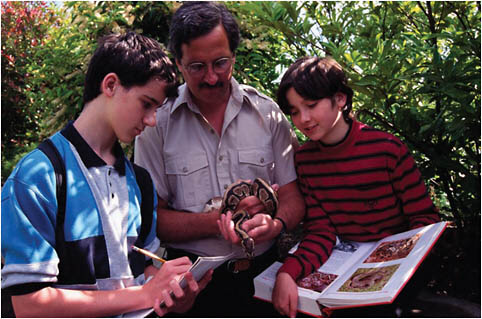
predictive of whether visitors experienced immediate and longer-term changes in their attitudes and knowledge.
To test these ideas, Falk and his team embarked on a 3-year collaboration between ILI, the Association of Zoos and Aquariums (AZA), and the Monterey Bay Aquarium. Specifically, they were interested in finding out if visitors to zoos and aquariums left with a greater appreciation of and deeper commitment to animal conservation.
Using a variety of research instruments, the team set out to test how many visitors could be categorized into the five identity categories and if each group showed distinctive behaviors during their visit. After collecting data from more than 5,500 visitors to 12 AZA-accredited zoos and aquariums, they found that although people had many reasons for visiting that did not fit neatly into a single category, the majority (55 percent) did have one dominant identity-related motivation that predicted how they experienced the setting and what they derived from it.
Explorers, who according to Falk’s model are curiosity-driven and interested in learning more as a result of the zoo or aquarium experience, were satisfied with the chance to see animals and learn more about them, although they reported that their visit did not add to their knowledge or change their attitudes about conservation.
Facilitators, who, along with explorers, represent the two dominant visitor groups, focused on helping the members of their social group enjoy the experience and learn from it. In this study, facilitators were looking for a social experience that benefited members of their social groups. Parents, for example, reported wanting to ensure that their children enjoyed their visit.
Professionals/Hobbyists, although a small group of visitors (10 percent), are important because they feel connected to zoos and aquariums, largely because their offerings match the particular interests of this group. Professionals/hobbyists reported looking for specialized programs, such as photo tours, dive trips, how-to workshops, and theme nights.
Experience seekers enjoy new experiences and visit museums and other sites that are considered to be important. In this study, they made up 8 percent of the visitors and reported visiting as tourists or to support the community. As a group, they were the only ones to show a scientifically reliable positive gain in knowledge as well as a change in attitudes toward conservation. This finding could be explained by the fact that they arrived with the least amount of reported knowledge and the lowest expectation for their visit.
Rechargers are expected to be looking for contemplative and/or restorative experiences. In this study, 4 percent had such motivations, reporting that they wanted a place to think and get away from the noise and activity of the city. Overall, they reported visiting aquariums more than zoos.
Among all the groups, most visitors (61 percent) said that their zoo or aquarium experience supported and reinforced their values and attitudes toward conservation. Many (54 percent) said their visits prompted them to reflect on how they can affect environmental problems and support conservation. This shift indicates that they began to see themselves as part of the solution. Almost half (42 percent) of all visitors believed that zoos and aquariums play an important role in conservation education and animal care, and a majority (57 percent) of visitors said that their experience strengthened their connection to nature.23
Identity as the Gateway to Deeper Engagement with Science
This research suggests that pinpointing identity-related motivations behind visits to zoos and aquariums could help educators figure out ways to better meet the needs of their visitors. For example, because explorers thrive on novelty, a way to reach them may be to offer temporary exhibits or in-depth programs, as well as more challenging experiences. Opportunities for social interaction could be expanded for facilitators by offering meetings with staff and a designated place to go for discussion after their experience or by providing written materials and labels that inspire questioning and conversation. Similarly, experience seekers might enjoy a unique program that surpasses other local attractions, and professionals/hobbyists can be tapped to serve as volunteers. For rechargers, areas for reflection could be created and programs offered at quieter times of the day or year.
Although this model was tested in a museum setting, it also can be applied to other informal venues—even an everyday setting like an individual’s home. The following case illustrates this point.

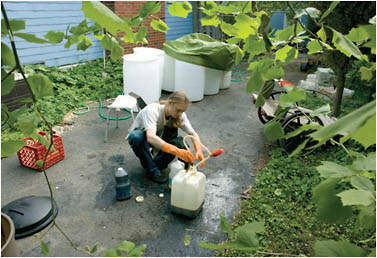
Schwartzman is an example of a highly motivated and engaged learner, one whose interest far exceeds that of most people. Not only did he learn about a new topic—how to make biodiesel fuel—but he also produced the fuel. And in the face of many obstacles, he persisted, showing a strong commitment to learning.

This chapter discussed motivation, interest, and identity in greater depth. In particular, two models were discussed that can be applied to designing an interesting and motivating informal science experience. Perry’s six-component motivation model describes factors to consider when designing effective museum exhibits. Renninger’s and Hidi’s interest development model describes how the environment may initially spark interest before personal motivation develops. A community urban garden project for teens was used to illustrate the four phases of interest development, as well as other kinds of learning described by the strands of learning.
Interest and identity are intertwined. The chapter concludes with a study describing the role of identity in motivating behavior, with suggestions of how informal science settings can make use of this information. The identity model also is flexible enough to be used in evaluating learners’ behavior in everyday settings, as illustrated by Gabe Schwartzman’s experience making biodiesel fuel.
Throughout the book, we have seen how learners do not gain new knowledge and insights in a vacuum. Rather, their learning is enhanced through engagement with others, experimentation, and interaction with artifacts. In later chapters, we will reinforce this point by exploring how an individual’s culture affects the way he or she approaches informal science learning environments. This diversity of perspectives needs to be recognized when designing these learning experiences.
Things to Try
To apply the ideas presented in this chapter to informal settings, consider the following:
-
Share Perry’s six-component motivation model with staff and consider whether or how it can be used in your setting. The case study of exhibit design can be used as a starting point for discussing whether Perry’s motivation model would be helpful in your setting. If so, choose a particular exhibit or program and discuss how each component of the model could be used to design or modify a participant’s experience in your setting.
-
Consider ways to excite interest in a program or exhibit. The research indicates that piquing participants’ interest is an important step in bringing about self-motivation. Discuss how this finding applies to your setting. What strategies have you tried in the past? Based on what you have read, are there other strategies that might be effective in getting participants’ attention, sparking their interest, and sustaining it?
-
Assess experiences for unintended negative emotions. Just as positive emotions can trigger learning, negative emotions can be a turnoff. Which aspects of the informal science experience that you offer might be confusing, overwhelming, or inadvertently unpleasant in any other way? Have you layered the experience sufficiently to make it beneficial and enjoyable to visitors or audiences who approach it with different levels of interest?
-
Consider how your experience can tap into the multiple identities that visitors bring to the experience. Falk’s model explains five identity-related motivations that lead visitors to different kinds of experiences. Can this model be applied in your setting to tailor experiences that meet the needs of these different kinds of visitors? Discuss how this could be accomplished; one possibility is to design an exhibit or experience specifically for one of these types of visitors. Assess whether it was successful and how additional experiences could be designed for other types of visitors highlighted in this model. Consider the overall balance of experiences your institution provides for the five situated identities. Are there opportunities for reflection and restoration in a noisy and active environment? Are there opportunities to explore and seek new experiences even for those who visit multiple times? Can you provide visitors or participants with
-
guidance that allows them to choose experiences in your setting that best align with their situated identity (a parent guide for young children; a guide for a one-time visitor on “what not to miss,” etc.)?
For Further Reading
Falk, J.H., and Storksdieck, M. (2010). Science learning in a leisure setting. Journal of Research in Science Teaching, 47(2), 194-212.
Falk, J.H., Reinhard, E.M., Vernon, C.L., Bronnenkant, K., and Heimlich, J.E. (2007). Why Zoos and Aquariums Matter: Assessing the Impact of a Visit to a Zoo or Aquarium. Silver Spring, MD: Association of Zoos and Aquariums.
Fusco, D. (2001). Creating relevant science through urban planning and gardening. Journal of Research in Science Teaching, 38(8), 800-877.
Perry, D.L. (1994). Designing exhibits that motivate. In R.J. Hannapel (Ed.), What Research Says About Learning in Science Museums (vol. 2, pp. 25-29). Washington, DC: Association of Science-Technology Centers.
Web Resources
Association of Zoos and Aquariums: http://www.aza.org
Cool Fuel: Brew It Yourself: http://www.washingtonpost.com/wp-dyn/content/article/2008/06/30/AR2008063002280.html
Creating Relevant Science through Urban Planning and Gardening: http://www3.interscience.wiley.com/journal/85513199/abstract
Designing Exhibits That Motivate: http://www.selindaresearch.com/Perry1992DesigningExhibitsThatMotivate.pdf
Monterey Bay Aquarium: http://www.montereybayaquarium.org/


