




Below is the uncorrected machine-read text of this chapter, intended to provide our own search engines and external engines with highly rich, chapter-representative searchable text of each book. Because it is UNCORRECTED material, please consider the following text as a useful but insufficient proxy for the authoritative book pages.
6 Epidemiologic Studies of Solvent-Contaminated Water Supplies The results of studies of human populations that were exposed to solvents through water supplies were included as part of the comprehensive evaluations of the epidemiologic literature provided in Chap- ter 5. In those evaluations, the epidemiologic literature was considered comprehensively to evaluate a global question: What is the evidence that a particular chemical may be associated with a specific health outcome? The studies were dominated by occupational studies of dry cleaners and other workers, which typically have greater exposures that are well documented but are restricted to populations of relatively healthy men and involve exposure pathways that differ from those at Camp Lejeune. This chapter focuses more on studies that addressed situations that approximate the circumstances at Camp Lejeune more closely (see Table 6-1). Those situations involve episodes of solvent contamina- tion of water used by a communityâs population for drinking, bathing, and other purposes. As at Camp Lejeune, a populationâs water supply was contaminated with solvents from industrial sources, distributed to the public, and used for household purposes. Thus, such studies have had to grapple with the same methodologic challenges that face investigators of the Camp Lejeune situation, including exposure as- sessment, population identification, potential confounding factors, and small study size and statistical power. The exposed populations typically include the full spectrum of peopleâall ages, both sexes, and varied health status (including pregnancy)âwith varied behavior related to water use and widely varying background influences on disease risk. An examination of those studies in more detail contributes to the context and strategy for address- ing environmental health concerns at Camp Lejeune. First, there may be methodologic lessons to be learned, such as beneficial research strategies that would be suitable for application to epidemiologic studies of Camp Lejeune. Second, as noted above, the studies share some important characteristics with the Camp Lejeune situation. Thus, in setting priorities for outcomes warranting attention at Camp Le- jeune, the committee considered the studies of contaminated community water supplies as a distinctively relevant group of epidemiologic studies. Unfortunately, as noted below, methodologic limitations limited the contribution of such studies despite their advantages in being somewhat analogous to the Camp Le- jeune water-contamination situation. METHODS Study Designs The contamination events whose study is in Table 6-1 came to attention in a variety of ways. In one instance, a disease cluster raised attention (Mallin 1990), but it appears that all the others came to no- tice because environmental contamination raised concern about potential health effects among exposed 165
166 TABLE 6-1 Summary of Epidemiologic Studies Involving Drinking-Water Contamination with TCE, PCE, and Other Solvents Study Primary Exposure Health Outcomes Relative Risk (95% CI); Potential Confounders Reference and Exposure Source Design Assessment Evaluated n = exposed cases Considered Comments Tucson, AZ (well contamination, 1969-1981) TCE, Case- Parental residence or Congenital heart 1969-1987: relative OR estimated to Goldberg et al. 1990, dichloroethylene control employment in census defects be 3 times greater in exposed group; Bove et al. 2002; used and chromium in tracts likely to receive n = 246 inappropriate controls; groundwater from contaminated water at imprecise geographic dumping of least 1 month before 1969-1981: Bove et al. (2002) delineation of contaminated military, industrial and during first reanalyzed data to restrict analysis to area wastes trimester of pregnancya contamination period; prevalence ratio, 2.6 (2.0-3.4) Ecologic Maternal address at Low birth weight, 1979-1981 (years with computerized Gestational time, prenatal- Rodenbeck et al. 2000 delivery linked by GIS very low birth records): very low birth weight care index, pregnancy to census tracts served weight, term low (n = 13): adj OR, 3.3 (0.5-20.6) complications, pregnancy by contaminated wells, birth weight illness, congenital identified with abnormalities, sex of baby, groundwater transport race of baby, Hispanic origin and fate model of baby, parity, age of mother, motherâs education, marital status San Bernardino County, CA (well contamination, 1980-1990; study period, 1988-1998) TCE, ammonium Ecologic Residential location (13 16 cancer types Significantly higher number of cases Morgan and Cassady 2002; perchlorate in census tracts served by than expected for uterine cancer (n = authors attribute excess groundwater contaminated wells) a 124): RR, 1.4 (99% CI, 1.1-1.7); uterine cancer, melanoma (unspecified melanoma (n = 137): RR, 1.4 (99% to higher SES of exposed source) CI, 1.1-1.8) populationb Santa Clara, CA (well contamination, 1980-1981; study period, 1980-1985) Trichloroethane in Cohort Maternal residence in Spontaneous Spontaneous abortion (n = 64): Maternal age, alcohol Deane et al. 1989 groundwater census tract served by abortion, adj RR, 2.3 (1.3-4.2); congenital consumption, smoking, prior contaminated by contaminated wella congenital malformations (n = 10): RR, 3.1 fetal loss, number previous underground waste- abnormalities, low (1.1-10.4); no low-birth-weight pregnancies, ethnicity, solvent storage tank birth weight babies born in contaminated area maternal exposure to organic at semiconductor solvents, petrochemicals, plant pesticides, x rays
Cohort Residential proximity Spontaneous Original study area: Wrensch et al. 1990 to contaminated well, abortion, spontaneous abortion (n = 89): defined by census congenital RR, 3.5 (1.2-10.3); congenital tracts, period a abnormalities, low malformations (n = 96): RR, 4.3 birth weight (1.2-14.7); low birth weight For 1981, groundwater (n = 281): RR, 0.7 (0.2-1.8) fate and transport model coupled to Adjacent census tract likely to have water-distribution been exposed to water from model to estimate contaminated wells: spontaneous maternal first-month, abortion (n = 86): RR, 0.3 (0,1-1.1); first-trimester congenital malformations (n = 105): exposures RR, 0.9 (0,1-6.6); low birth weight (n = 294): RR, 1.7 (0.5-6.0) Case- Consumption of tap, Adverse pregnancy Telephone respondents: Hertz-Picciotto et al. 1992; control bottled water during outcomes spontaneous abortion: OR, 2.2 (unadjusted) ORs are for first trimester (mostly (1.4, 3.6); anomalies: OR, 1.8 consumption of tap, bottled tap water vs mostly (95% CI: 0.8, 4.1) water; hazard ratios also bottled water); among reported for spontaneous women consuming Mail respondents: spontaneous abortion by county (San mostly tap water, abortion: OR, 1.3 (0.8, 2.0); Mateo, Alameda, Santa source (groundwater vs anomalies: OR, 0.8 (0.4, 1.7) Clara), source of water surface water) by (ground vs surface) in county women consuming mostly tap water Case- Maternal address at Congenital cardiac 1981-1982: RR, 2.2 (1.2-4.0), Swan et al. 1989 control delivery linked to areas abnormalities n = 12 in (exposed), outside (unexposed) distribution systema 1981-1983: adj RR, 1.5 (0.8-3.0), Motherâs education, race Shaw et al. 1990 n = 143 Denver, CO TCE, PCE Cohort Hydraulic simulation Neurobehavioral Higher exposure (>15 µg/L; n = 20) Self-reported consumption Reif et al. 2003 contamination of model, GIS used to effects associated with poorer performance of seafood once a week or municipal wells assign mean TCE on digit-symbol test (P = 0.07), more, years of education, from hazardous- levels based on contrast-sensitivity tests C, D smoking, alcohol waste sites residential (census (P = 0.06, 0.07); 37-83% higher consumption block) location mean scores for confusion, depression, tension; strong interaction with alcohol consumption (Continued) 167
168 TABLE 6-1 Continued Study Primary Exposure Health Outcomes Relative Risk (95% CI); Potential Confounders Reference and Exposure Source Design Assessment Evaluated n = exposed cases Considered Comments Denver, CO TCE, PCE Cohort Hydraulic simulation Neurobehavioral Higher exposure (>15 µg/L; Self-reported consumption Reif et al. 2003 contamination of model, GIS used to effects n = 20) associated with poorer of seafood once a week or municipal wells assign mean TCE performance on digit-symbol test (P more, years of education, from hazardous- levels based on = 0.07), contrast-sensitivity tests C, smoking, alcohol waste sites residential (census D (P = 0.06, 0.07); 37-83% higher consumption block) location mean scores for confusion, depression, tension; strong interaction with alcohol consumption Northwestern Illinois Groundwater Ecologic Residence by county, Bladder cancer RR in males (n = 21), 1.7 (1.1-2.6); Mallin 1990 contamination ZIP code in nine- females (n = 10), 2.6 (1.2-4.7) (organic chemicals, county areaa heavy metals) due to dumping of solid, liquid wastes Woburn, MA, 1964-1983 TCE, PCE in Cohort Annual estimates of Childhood Positive associations reported for Smoking, age, prior fetal Lagakos et al. 1986 municipal wells fraction of water supply leukemia, adverse childhood leukemia (n = 20; loss, prior perinatal death, contaminated by served by contaminated pregnancy P = 0.001), eye or ear anomalies prior low birth weight, prior industrial wastes wells; residential outcomes, (n = 9; P < 0.0001), CNS or musculoskeletal anomaly, historya childhood chromosomal or oral cleft anomalies SES, year pregnancy ended disorders (n = 8; P = 0.01), kidney or urinary tract disorders (n = 43; P = 0.02), lung or respiratory disorders (n = 192; P = 0.05), perinatal deaths, 1970-1982 (n = 4; P = 0.003) Case- Average, cumulative Childhood RR, 8.3 (0.7-94.7); n = 19; dose- Costas et al. 2002 control exposure metricsa leukemia response trend (P < 0.05) Cape Cod, MA Leaching of PCE Case- Residential history, Leukemia and Cancers with increased risk: Sex, age at diagnosis or Aschengrau et al. 1993 from inner vinyl control water flow, pipe lung, breast, leukemia (no latency): adj OR, 2.1 index year, vital status, lining of asbestos characteristics to colorectal, bladder, (0.9-5.2); n = 34 education level, occupational cement water- predict PCE in kidney, pancreatic, exposure to solvents, prior distribution pipes distribution systema brain, liver cancer medical treatment with irradiation
Case- See Aschengrau et al. Breast cancer Adj OR (for latency of 0-15 years), Age at diagnosis or index Aschengrau et al. 1998, control (1993) 1.6 (1.1-2.4) to 1.9 (1.1-3.2); year, vital status, family 2003 (combined data n = 930 history of breast cancer, age presented)c at first live birth or stillbirth, prior breast cancer or benign breast disease, occupational exposure to solvents Case- Annual PCE levels Breast cancer Adj OR (for latency of 0-15 years), Age at diagnosis or index Vieira et al. 2005 control (see Aschengrau et al. 1.4 (0.8-2.5) to 1.9 (0.6-5.9); year, family history of breast [1993]) coupled to n = 154d cancer, prior breast cancer, information on tap age at first live birth or water consumption and stillbirth, occupational bathing habits exposure to PCE Case- See Aschengrau et al. Colorectal, lung, Cancers with increased risk: Age at diagnosis or index Paulu et al. 1999 control (1993) brain, pancreatic colorectal cancer (11-year latency): year, vital status, sex, cancer adj OR, 1.7 (0.8-3.8); n = 311 occupational exposure to solvents, history of polyps, inflammatory bowel disease, or ulcerative colitis, occupational history associated with colorectal cancer (exposure to asbestos, solvents) Cohort Residential history; Birth weight, No associations found between Gestational age, maternal Aschengrau et al. 2008 leaching, transport gestation duration exposure and birth weight or race, education level, history model; water- gestational duration; n = 1,353 of low-birth-weight child, distribution model, occupational exposure to GIS to predict monthly solvents, use of self-service levels at nodes in dry cleaning, residential distribution system proximity to dry-cleaning establishments, prior preterm delivery, obstetrical complications in current pregnancy Upper New Jersey (Bergen, Essex, Morris, Passaic Counties) TCE, PCE Ecologic Residential locationa Leukemia Leukemia, males: SIR, 1.0 (0.7-1.5), Fagliano et al. 1990 n = 25; females: SIR,= 1.5 (1.0-2.2), n = 28 (Continued) 169
170 TABLE 6-1 Continued Study Primary Exposure Health Outcomes Relative Risk (95% CI); Potential Confounders Reference and Exposure Source Design Assessment Evaluated n = exposed cases Considered Comments TCE, PCE Ecologic Average 1984-85 levels Leukemia, NHL For highest exposure stratum: Cohn et al. 1994 from quarterly leukemia in males: RR, 1.1 (0.8-1.4), monitoring data for 75 n = 63; females: RR, 1.4 (1.1-1.9), n towns = 56; acute lymphocytic leukemia in females <20 years old: RR, 3.3 (1.3-8.2), n = 6; NHL in males: RR, 1.2 (0.9-1.5), n = 78; females: RR, 1.4 (1.1-1.7), n = 87; diffuse large- cell NHL in males: 1.6 (1.0-2.4), n = 26; females: RR, 1.7 (1.1-2.6), n = 24; non-Burkittâs in males: RR, 1.9 (0.5-6.8), n = 3; females: RR, 3.2 (1.2-8.2), n = 6 TCE, PCE from Case- Maternal address at SGA, preterm TCE: CNS defects: OR, 1.7 (90% CI, Maternal age, race, education Bove et al. 1995; if adjusted landfill leachate, control delivery; monthly birth, birth weight, 0.8-3.5), n = 6; neural-tube defects: level, primipara, prior fetal OR differed by more than industrial waste estimates from birth defects, fetal OR, 2.5 (90% CI, 0.9-6.4), n = 4; loss or stillbirth, sex of child, 15%, adjusted value was disposal, leaking quarterly monitoring death oral-cleft defects: OR, 2.2 (90% CI, adequacy of prenatal care reported as OR; no underground data from 75 1.2-4.2), n = 9 distinction made between storage tanks municipalitiesa adjusted and unadjusted PCE: oral-cleft defects: OR, values 3.5 (90% CI, 1.3-8.8), n = 4 Southern Finland TCE, PCE from Ecologic Residence at diagnosis Liver cancer, Increaseded risks in Hausjarvi: Vartiainen et al. 1993 industrial sources, (Hausjarvi and Hattula)a NHL, Hodgkin leukemia: RR, 1.2 (0.8-1.7), n = 33; dump site disease, multiple Hattula: NHL: RR, 1.4 (1.0-2.0), myeloma, n = 31; Hodgkin disease: RR, leukemia 1.4 (0.7-2.5), n = 11 Taoyuan County, Taiwan Hazardous-waste Case- Residential proximity Cancers Leading causes of cancer deaths Lee et al. 2003 site (formerly control to contaminated wells, in all male population: liver: adj electronics period of deatha MOR, 2.6 (1.2-5.5), n = 53; factory) stomach: adj MOR, 2.2 (1.0-4.9), n = 39; lung: adj MOR, 1.8 (0.8- 3.9), n = 41; colorectal: adj MOR, 0.8 (0.2-2.9), n = 26; all: adj, MOR, 2.1 (1.3-3.3), n = 266
Indiana, Illinois, Michigan Superfund sites Cohort Listed in TCE Multiple health Statistically significant results for Age, sex, smoking, Burg and Gist 1999 exposure registrya outcomes stroke: adj OR, 3.2 (1.1-9.0) to 4.1 occupational exposure, (1.5-11) for max. TCE quartiles, education level for stroke; n = 60; respiratory allergies: adj age, sex for asthma, OR, 2.2 (1.1-4.2), n = NR; asthma, emphysema emphysema: adj OR, 1.8 (1.0-3.3) for cumulative exposure, n = NR Michigan, Indiana, Pennsylvania, Arizona Superfund sites Cohort Listed in TCE Multiple health Excess cases over lifetime of Davis et al. 2005 exposure registrya outcomes registry for anemia, other blood disorders, liver problems, rashes, eczema, other skin allergies Iowa Water-disinfection Ecologic Water-supply source Bladder, breast, No associations between TCE or Isacson et al. 1985 byproducts colon, lung, PCE and cancers prostatic, rectal cancer a See Table 6-2 for more detailed exposure data. b Higher than average SES predicts access to health care, which enhances detection of melanoma. Access to health care also makes it more likely that postmenopausal women will receive estrogen-replacement therapy, which is linked to increased endometrial cancer (main form of uterine cancer). c Adjusted OR in Aschengrau et al. (1998) ranged from 0.6 (0.0-3.7) to 2.3 (0.6-8.8), n = 258; adjusted OR in Aschengrau et al. (2003) ranged from 1.5 (1.0-2.4) to 1.9 (1.0-3.5) for 0-15 years of latency, n = 672. d Analysis restricted to nonproxy subjects. Abbreviations: CI = confidence interval, CNS = central nervous system, GIS = geographic information system, MOR = mortality odds ratio, NHL = non-Hodgkin lym- phoma, NR = not reported, OR = odds ratio, PCE = perchloroethylene, RR = relative risk, SES = socioeconomic status, SGA = small for gestational age, SIR = standard- ized incidence ratio, SRR = standardized rate ratio, TCE = trichloroethylene. 171
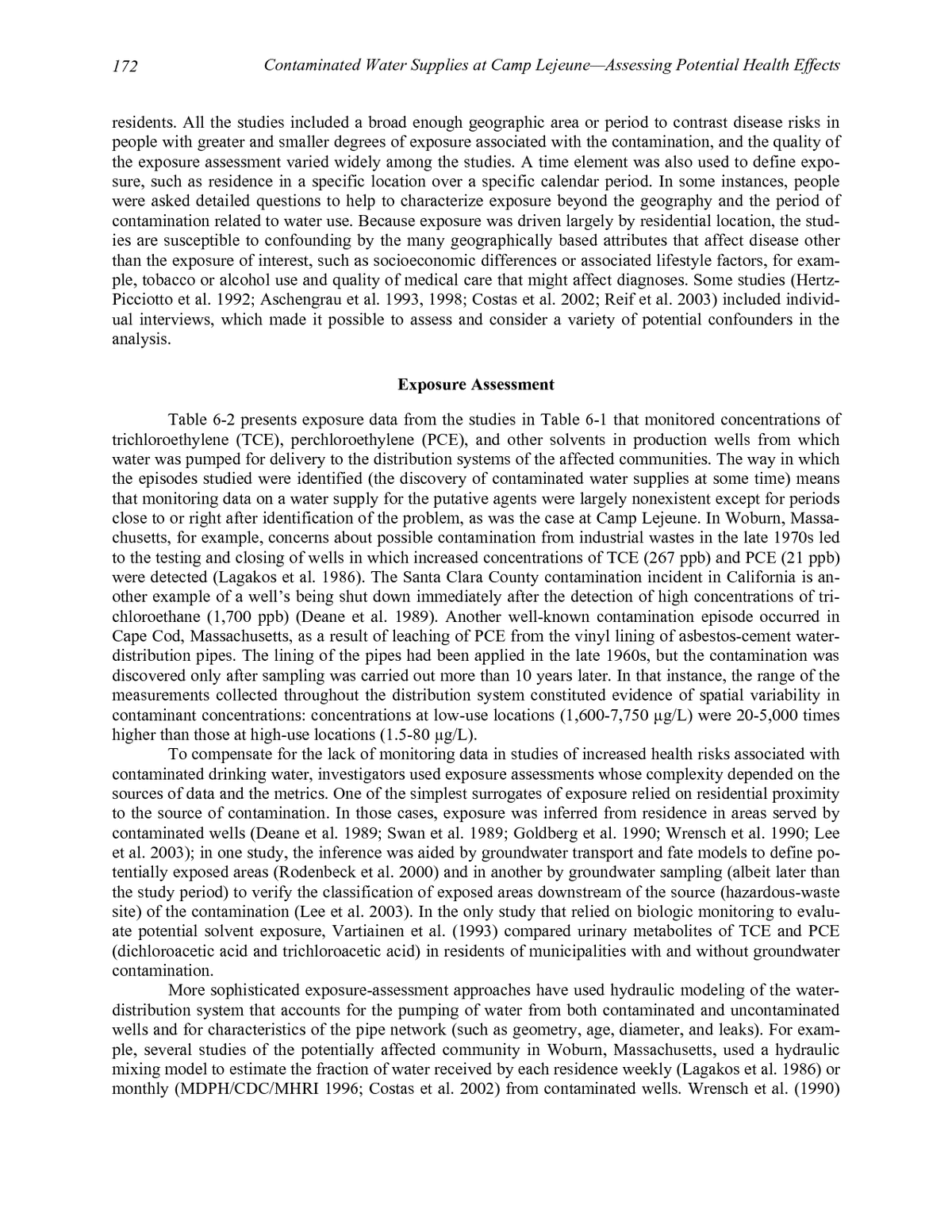
172 Contaminated Water Supplies at Camp LejeuneâAssessing Potential Health Effects residents. All the studies included a broad enough geographic area or period to contrast disease risks in people with greater and smaller degrees of exposure associated with the contamination, and the quality of the exposure assessment varied widely among the studies. A time element was also used to define expo- sure, such as residence in a specific location over a specific calendar period. In some instances, people were asked detailed questions to help to characterize exposure beyond the geography and the period of contamination related to water use. Because exposure was driven largely by residential location, the stud- ies are susceptible to confounding by the many geographically based attributes that affect disease other than the exposure of interest, such as socioeconomic differences or associated lifestyle factors, for exam- ple, tobacco or alcohol use and quality of medical care that might affect diagnoses. Some studies (Hertz- Picciotto et al. 1992; Aschengrau et al. 1993, 1998; Costas et al. 2002; Reif et al. 2003) included individ- ual interviews, which made it possible to assess and consider a variety of potential confounders in the analysis. Exposure Assessment Table 6-2 presents exposure data from the studies in Table 6-1 that monitored concentrations of trichloroethylene (TCE), perchloroethylene (PCE), and other solvents in production wells from which water was pumped for delivery to the distribution systems of the affected communities. The way in which the episodes studied were identified (the discovery of contaminated water supplies at some time) means that monitoring data on a water supply for the putative agents were largely nonexistent except for periods close to or right after identification of the problem, as was the case at Camp Lejeune. In Woburn, Massa- chusetts, for example, concerns about possible contamination from industrial wastes in the late 1970s led to the testing and closing of wells in which increased concentrations of TCE (267 ppb) and PCE (21 ppb) were detected (Lagakos et al. 1986). The Santa Clara County contamination incident in California is an- other example of a wellâs being shut down immediately after the detection of high concentrations of tri- chloroethane (1,700 ppb) (Deane et al. 1989). Another well-known contamination episode occurred in Cape Cod, Massachusetts, as a result of leaching of PCE from the vinyl lining of asbestos-cement water- distribution pipes. The lining of the pipes had been applied in the late 1960s, but the contamination was discovered only after sampling was carried out more than 10 years later. In that instance, the range of the measurements collected throughout the distribution system constituted evidence of spatial variability in contaminant concentrations: concentrations at low-use locations (1,600-7,750 µg/L) were 20-5,000 times higher than those at high-use locations (1.5-80 µg/L). To compensate for the lack of monitoring data in studies of increased health risks associated with contaminated drinking water, investigators used exposure assessments whose complexity depended on the sources of data and the metrics. One of the simplest surrogates of exposure relied on residential proximity to the source of contamination. In those cases, exposure was inferred from residence in areas served by contaminated wells (Deane et al. 1989; Swan et al. 1989; Goldberg et al. 1990; Wrensch et al. 1990; Lee et al. 2003); in one study, the inference was aided by groundwater transport and fate models to define po- tentially exposed areas (Rodenbeck et al. 2000) and in another by groundwater sampling (albeit later than the study period) to verify the classification of exposed areas downstream of the source (hazardous-waste site) of the contamination (Lee et al. 2003). In the only study that relied on biologic monitoring to evalu- ate potential solvent exposure, Vartiainen et al. (1993) compared urinary metabolites of TCE and PCE (dichloroacetic acid and trichloroacetic acid) in residents of municipalities with and without groundwater contamination. More sophisticated exposure-assessment approaches have used hydraulic modeling of the water- distribution system that accounts for the pumping of water from both contaminated and uncontaminated wells and for characteristics of the pipe network (such as geometry, age, diameter, and leaks). For exam- ple, several studies of the potentially affected community in Woburn, Massachusetts, used a hydraulic mixing model to estimate the fraction of water received by each residence weekly (Lagakos et al. 1986) or monthly (MDPH/CDC/MHRI 1996; Costas et al. 2002) from contaminated wells. Wrensch et al. (1990)
TABLE 6-2 Summary of Reported Water-Monitoring Data in Published Epidemiologic Studiesa Reference and Source of Contamination Sampling Period Sampling Location Contaminant Concentrations Comment Tucson Valley, AZ Industrial wastes 1981 9 public wells TCE 6-239 ppb Goldberg et al. 1990 San Bernardino County, CA Unspecified 1980 and later 20 public wells TCE 0.09-97 ppb (<5 ppb in Morgan and Cassady 2001 distribution system since 2002 1991) Public wells (number not specified) Ammonium perchlorate 5-98 ppb (<18 ppb since 2001) Santa Clara County, CA Underground waste- Dec. 7, 1981 Public well 13 1,1,1-TCA 1,700 ppb Deane et al. 1989; Swan solvent storage tank (near Dec. 14, 1981 1,1,1-TCA 8,800 ppb et al. 1989; Wrensch et semiconductor plant) Mar. 1982 1,1,1-DCE 8.8 ppb al. 1990; well 13 removed from service Mar. 1982 Public well 8 TCA 33.5 ppb on Dec. 7, 1981 DCE 9.6 ppb Northwestern Illinois Dumping of solid, liquid 1982-1988 Public well 1 Benzene <1 ppb Mallin 1990 wastes 1,2-Dichloroethane 1.6-2.1 ppb 1,1,1-TCA 7 ppb 1,1-Dichloroethane 2-11 ppb trans-1,2-DCE 8-42 ppb Methylene chloride <1 ppb PCE <1ppb TCE 2-10 ppb Chloroform 1.3 ppb Dibromochloromethane <1 ppb Public well 2 Benzene 1.3-2 ppb 1,2-Dichloroethane 1.7-2 ppb 1,1,1-TCA 1 ppb 1,1-Dichloroethane 1-4.6 ppb trans-1,2-DCE 14-38 ppb Methylene chloride 1-5 ppb (Continued) 173
174 TABLE 6-2 Continued Reference and Source of Contamination Sampling Period Sampling Location Contaminant Concentrations Comment PCE 5.1 ppb TCE 2-15 ppb Chloroform 27 ppb Dibromochloromethane 12 ppb Woburn, MA Industrial wastes 1979 Public wellsG and H TCE 267 ppb Lagakos et al. 1986; PCE 21 ppb Costas et al. 2002; Trichlorofluoroethane 23 ppb Byers et al. 1988; wells closed after sampling in DCE 28 ppb May 1979 Arsenic 0.0020 ppm Chloroform 11.8 ppb Cape Cod, MA TCE in inner vinyl lining ~1980 Water-distribution pipes PCE 1,600-7,750 µg/L Aschengrau et al. 1993, of asbestos-cement water- Low-use sites 1.5-80 µg/L 1998, 2003, 2008; distribution pipes Medium- and high-use sites High value of 18,000 µg/L Paulu et al. 1999; at dead-end sites in Massachusetts Falmouth reported in Paulu Department of et al. (1999) Environmental Protection began program of flushing, continuous bleeding in 1980 to lower PCE concentrations Rhode Island 1976 Water-distribution systems PCE 800-2,000 µg/L Paulu et al. 1999 Upper New Jersey (Bergen, Essex, Morris, Passaic Counties) Landfill leachate; 1985-1988 49 distribution systems serving 75 towns Monthly estimates: Bove et al. 1995 industrial waste disposal, TCE 55 ppb leaking underground PCE 26 ppb storage tanks 1,1,1-TCA 18 ppb Carbon tetrachloride 7 ppb 1,2-Dichloroethane 19 ppb Total DCE 16 ppb Benzene 2 ppb Total trihalomethanes 299 ppb
1984-1985 Routine sampling in distribution systems of 14 unspecified compounds Sum of average of Fagliano et al. (1990) 27 towns in Lower Passaic River and Saddle nontrihalomethane VOCs River drainage basin (no. towns) 72 µg/L (1) 67 µg/L (1) 47 µg/L (1) 40 µg/L (1) 37 µg/L (1) 12 µg/L (1) 9 µg/L (1) 7 µg/L (1) 5 µg/L (4) 3 µg/L (2) 2 µg/L (2) 1 µg/L (9) 0 µg/L (2) Southern Finland Industrial sources (Oitti) 1992 Drinking-water samples TCE, PCE (Oitti) 100-200 µg/L Vartiainen et al. 1993 Dump site (Hattula) July 1992 TCE (Hattula) 212 µg/L 66 µg/L Taoyuan County, Taiwan Hazardous-waste site Oct. 1999- Residential wells Median (range) Lee et al. 2003; (formerly electronics May 2000 Vinyl chloride 0.003 µg/L (ND-72.3) previous reports of factory) Tetrachloroethene 2.95 µg/L (ND-5,228.3) off-site groundwater contamination indicated TCE 28.43 µg/L (ND-1,790.7) up to 930 and 4,800 1,1-DCE 1.35 µg/L (ND-1,240.4) µg/L for TCE and PCE, 1,1,1-TCA 0.67 µg/L (ND-1,504.4) respectively cis-1,2-DCE 3.05 µg/L (ND-1,376.0) 1,1-Dichloroethane 1.81 µg/L (ND-227.9) Indiana, Illinois, Michigan National Priorities List TCE subregistry site TCE Maximum/median Burg and Gist 1999 sites (no. household samples) Verona Well Field and Dowaglac (MI) 2,000/6.0 ppb (66) McGraw-Edison Corporation (MI) 733/1.0 ppb Superior Street (IN) 19,380/84.0 ppb (134) Central Area (IN) 114/0.4 ppb (28) Gemeinhardt Piccolo Company (IN) 1,600/4.0 ppb (100) (Continued) 175
176 TABLE 6-2 Continued Reference and Source of Contamination Sampling Period Sampling Location Contaminant Concentrations Comment Conrail Rail Yard (IN) 1,520/78.0 ppb (49) Acme Solvents Reclamation, Inc. (IL) 100/1 ppb (13) Beloit Corporation (IL) 3/2 ppb (3) Byron Johnson Salvage Yard (IL) 249/9.1 ppb (25) Frinks Industrial Waste (IL) 16/14.0 ppb (5) Southeast Rockford groundwater 122/15.0 ppb (331) contamination (IL) Warner Electronic Brake and Clutch 5,220/234.0 ppb (74) Company (IL) Michigan, Indiana, Illinois, Pennsylvania, Arizona National Priorities List Residential sites TCE Median concentrations, Davis et al. 2005 sites (n = 15) 0.4-234 ppb; maximum concentrations, 3-24,000 ppb Iowa Sampling of drinking water from treatment TCE Data reported as % of Isacson et al. 1985 plants at municipalities in Iowa serving 1,000 PCE towns with detectable VOC or more residents 1,2-Dichloroethane concentrations by source of 1,1,1-TCA supply water (surface, <46 m, 46-152 m, >152 m) a Following studies were also evaluated for water-monitoring data, but none were found: Cohn et al. (1994); Hertz-Picciotto et al. (1992); Reif et al. (2003); Rodenbeck et al. (2000); Shaw et al. (1990); Viera et al. (2005). Abbreviations: DCE = dichloroethylene, ND = not detected, PCE = perchloroethylene, TCA = trichloroacetic acid, TCE = trichloroethylene, VOC = volatile organic compound.
Epidemiologic Studies of Solvent-Contaminated Water Supplies 177 developed a groundwater fate and transport model to estimate concentrations of trichloroethane in the aquifer that supplied water to the production well (in which the contamination was detected); the results were coupled to a water-distribution model to estimate the probability that water from the contaminated well reached specific locations in the distribution system. In studies carried out to investigate the cancer risk posed by PCE-contaminated drinking water in Cape Cod, Massachusetts, investigators used a water- distribution model (the Webler-Brown model) that predicted the amount of PCE leaching from the vinyl- lined pipes and then transported to residences served by the distribution systems (Aschengrau et al. 1993, 1998; Paulu et al. 1999); the modeling effort was later improved on by using geographic information sys- tems (GISs) (rather than tax-assessor maps) to geocode key elements of the water-distribution system and study participantsâ residences (Aschengrau et al. 2003). Reif et al. (2003) also took advantage of the ca- pabilities of GISs and linked residences of persons living near the Rocky Mountain Arsenal whose water supply had been contaminated with TCE to results from a hydraulic model (EPANET) to reconstruct 1985 contaminant concentrations at specific nodes in the distribution system. Cognizant that exposure is influenced not only by concentrations of a contaminant in drinking water but by the amount of water consumed or used in other ways, investigators have also gathered indi- vidual-level information about consumption patterns, bathing and showering habits, and other water- related behavior with questionnaires or interviews. The resulting data have been used to form the primary exposure measure for evaluating the associations between contaminated drinking water and adverse health outcomes (for example, consumption of cold tap water by source and year) (Shaw et al. 1990) and have been incorporated as covariates in the multiple logistic regression models that have been applied. For example, in addition to evaluating the effect of living in an area served by a contaminated well in Santa Clara, California, consumption of cold tap water at home (Deane et al. 1989; Wrensch et al. 1990) and water-filter use (Wrensch et al. 1990) were assessed. To evaluate heterogeneity in the effects of con- taminated water on cancer risk due to water-related behavior, stratified analyses by usual bathing habits (mostly showers, mostly baths, or about equal baths and showers) were conducted in the studies carried out in the Upper Cape region of Massachusetts (Ashengrau et al. 1993, 1998; Paulu et al. 1999). It would be of interest to examine results of studies that used more and less sophisticated approaches to assess ex- posure, but the contamination episodes are so different from one another that it is impossible to isolate the quality of exposure assessment as an independent influence on the final results. Health-Outcome Assessment With few exceptions (such as the study of neurobehavioral function in a Colorado population ex- posed to solvents [Reif et al. 2003] and the study of pregnancy outcome in Santa Clara, California [Hertz- Picciotto et al. 1992]), all the studies have assessed health outcomes on the basis of existing records. Much of the attention in those studies has been on birth outcomes, including the information obtainable through birth records, which constitute one of the few universal health registry systems available in the United States and eliminate concerns about nonresponse. For all geographic areas and for all periods go- ing back several decades, birth weight, duration of gestation, and selected social and demographic factors can be ascertained. Thus, a number of studies addressed birth weight, preterm birth, and stillbirth. Some areas have population-based registries of congenital defects and cancer that provide com- prehensive coverage of geographically defined populations and periods and allow evaluation of associa- tions with exposures also defined by geography and time. Studies of cancer in Massachusetts, Illinois, and New Jersey have relied on outcome ascertainment from population-based registries (Fagliano et al. 1990; Burg and Gist 1999; Aschengrau et al. 2003). The advantage of using established birth or disease regis- tries is efficiency in time and expense of the studies, but they are limited by the quality of the registries (with respect to comprehensiveness and accuracy of diagnoses) and constrain the scope of studies to the subset of health outcomes on which data are available. Pregnancy outcomes and cancer are often impor- tant concerns in episodes of solvent-contaminated water, but they are rarely the only concerns, and other outcomes remain unaddressed.
178 Contaminated Water Supplies at Camp LejeuneâAssessing Potential Health Effects The alternative approach, applied in Colorado (Reif et al. 2003) and California (Deane et al. 1989; Hertz-Picciotto et al. 1992) is to identify the population of concern on the basis of exposure (a product of location and time), sample that population to include the desired exposure contrasts, and con- duct more detailed health assessments of individuals. Reif et al. (2003) selected residentially exposed per- sons and tested neurobehavioral characteristics, outcomes not otherwise assessable with existing regis- tries. Similarly, miscarriage assessment requires collecting information directly from potentially affected people, as was done in Santa Clara, California. There is a marked increase in the expense, but the ap- proach allows a focus on the health outcomes of greatest concern rather than those on which data are readily available. In contrast, the need to rely on respondent cooperation to identify people and include them in a study incurs a cost in the potential for bias due to nonparticipation, which is not a problem with registry-based studies. The quality of self-reported data may also be lower for some outcomes. RESULTS The studies of populations exposed to contaminated water supplies have generated a wide array of positive associations, as reflected in Table 6-1. Among the most increased relative risks were those for congenital heart defects (odds ratio [OR], 2.6; 95% confidence interval [CI], 2.0-3.4) in Tucson, Arizona (Bove et al. 2002); spontaneous abortion (OR, 2.3; 95% CI, 1.3-4.2) and congenital defects (OR, 3.1; 95% CI, 1.1-10.4) in Santa Clara, California (Deane et al. 1989); and liver cancer (OR, 2.6; 95% CI, 1.2- 5.5) in Taoyuan County, Taiwan (Lee et al. 2003). Although the evidence linking solvents in water supplies to individual outcomes seems impres- sive in specific studies, the lack of corroboration among studies (or even attempted corroboration in many instances) weakens their credibility. Furthermore, these largely opportunistic studies typically considered the full array of available outcomes from birth certificates, registries, and other available sources and re- ported the positive findings that emerged from such broad explorations. The universe of other outcomes considered in the studies is not always clear, and the broader universe of investigations of water- contamination episodes that did not identify âinterestingâ associations and were therefore never published is also unknown and could be substantial. In addition, the focus in many cases on rare outcomes (such as individual birth defects and childhood cancers) renders the resulting risk estimates highly imprecise and driven by as few as two or three cases. Although it is possible that some of the scattered, isolated findings are meaningful and could eventually be proved to indicate a replicable association with a specific health outcome, the results presented in Table 6-1 do not support such a conclusion. Therefore, even acknowl- edging that the studies are more directly comparable with the Camp Lejeune circumstances than the methodologically stronger studies discussed in Chapter 5, the committee concluded that the epidemi- ologic literature would be most effectively used if all of it, rather than only studies of community water- contamination episodes, were comprehensively evaluated. The studies reviewed in this chapter were given extra attention because of their applicability, and in some instances (such as the evidence linking water solvents to breast cancer on Cape Cod [Aschengrau et al. 1998, 2003]) the findings contributed sub- stantially to identifying priorities. However, our interpretation of the epidemiologic studies in their total- ity was not dominated by them. DISCUSSION The studies discussed in this chapter yielded reports that were deemed by the investigators and scientific journals to be worthy of publication and that might have generated a disproportionate represen- tation of positive findings. The findings of those studies should not be viewed as a representative or com- prehensive set of findings, because investigation of contamination episodes is commonly undertaken by health departments but rarely reported in the literature. Relative to studies of occupational cohorts, which often have much higher and better documented exposures and large populations, the community studies
Epidemiologic Studies of Solvent-Contaminated Water Supplies 179 are limited by the quality of exposure data and to various extents by the low size of their populations, par- ticularly if such rare outcomes as childhood leukemia and congenital defects are being addressed. Even if the different routes of exposureâinhalation vs ingestionâare recognized, the occupational studies tend to dominate the evidence. The committee has incorporated the information from solvent water- contamination studies, as warranted, into the overall assessments of the epidemiologic evidence as re- flected in the tables and categorization of evidence in Chapter 5 and focuses here on any special contribu- tions as a function of the more direct relevance of water contamination as the source of exposure. With regard to methods, the studies in this chapter have largely started with the conventional ap- proach of characterizing a broad geographic area and period and relating health outcomes to estimated exposure. However, several have gone further in refining the exposure estimates by using sophisticated engineering models (particularly in Woburn, Massachusetts) in ways that are broadly applicable to the situation at Camp Lejeune. Similarly, the Cape Cod studies have gone beyond routinely available infor- mation on water source to estimate delivered dose. The strategy pursued by Reif et al. (2003) and in the series of Santa Clara, California, studies (for example, Wrensch et al. 1990) also warrants consideration. They began with an episode of environmental contamination but proceeded to conduct individual data collection with interviews, medical records, and, in the case of the Denver, Colorado, episode, direct evaluation of potentially affected individuals. Avail- able records have merit as a starting point, but for many health outcomes of interest it is essential to go further to collect new data. CONCLUSIONS Collectively, the epidemiologic studies of solvent contamination of water supplies and adverse health effects are of limited quality. If their distinctive strengths and limitations are taken into account, such studies contribute to the overall assessment of the epidemiologic literature, but the committee has judged that their strengths (comparability with Camp Lejeune in exposure pathways and diversity of ex- posed population) do not overcome their limitations (especially quality of exposure assessment, lower range of exposure, and imprecision in measures of association) to allow identification of high-priority outcomes on the basis of their results alone.
