
3
Renewable Electricity Generation Technologies
A renewable electricity generation technology harnesses a naturally existing energy flux, such as wind, sun, heat, or tides, and converts that flux to electricity. Natural phenomena have varying time constants, cycles, and energy densities. To tap these sources of energy, renewable electricity generation technologies must be located where the natural energy flux occurs, unlike conventional fossil-fuel and nuclear electricity-generating facilities, which can be located at some distance from their fuel sources. Renewable technologies also follow a paradigm somewhat different from conventional energy sources in that renewable energy can be thought of as manufactured energy, with the largest proportion of costs, external energy, and material inputs occurring during the manufacturing process. Although conventional sources such as nuclear- and coal-powered electricity generation have a high proportion of capital-to-fuel costs, all renewable technologies, except for biomass-generated electricity (biopower), have no fuel costs. The trade-off is the ongoing and future cost of fossil fuel against the present fixed capital costs of renewable energy technologies.
Scale economics likewise differs for renewables and conventional energy production. Larger coal-fired and nuclear-powered generating facilities exhibit lower average costs of generation than do smaller plants, realizing economies of scale based on the size of the facility. Renewable electricity achieves economies of scale prmarily at the equipment manufacturing stage rather than through construction of large facilities at the generating site. Large hydroelectric generating units are an exception and have on-site economies of scale, but not to the same extent as coal-and nuclear-powered electricity plants.
With the exception of hydropower, renewable technologies are often disruptive and do not bring incremental changes to long-established electricity industry sectors. As described by Bowen and Christensen (1995), disruptive technologies present a package of performance attributes that, at least at the outset, are not valued by a majority of existing customers. Christensen (1997) observes:
Disruptive technologies can result in worse product performance, at least in the near term. Disruptive technologies bring to market very different value propositions than had been available previously. Generally, disruptive technologies underperform established products in mainstream markets. But they have other features that a few fringe customers value. Disruptive technologies that may underperform today, relative to what users in the market demand, may be fully performance-competitive in that same market tomorrow.
Traditional sources of electricity generation at least initially outperform non-hydropower renewables. The environmental attributes of renewables are the initial value proposition that have brought them into the electricity sector. However, with improvements in renewables technologies and increasing costs of generation from conventional sources (particularly as costs of greenhouse gas production are incorporated), renewables may offer the potential to match the performance of traditional generating sources.
This chapter examines several technologies for generation of renewable electricity. It discusses the technology associated with each renewable resource, the state of that technology, and research and development needs until 2020, between 2020 and 2035, and those beyond 2035.
WIND POWER
Wind power uses a wind turbine and related components to convert the kinetic energy of moving air into electricity and other forms of energy. Wind power has been harnessed for centuries—from the time of the ancient Greeks to the present. The modern era of wind-driven electrical generation began with the oil shocks of the 1970s and accelerated with the passage of the Public Utilities Regulatory Policies Act (PURPA). Both the development of wind technology and the installation of wind power plants have grown ever since.
Status of Technology
System Components
A typical wind turbine consists of a number of components: rotor, controls, drive-train (gearbox, generator, and power converter), tower, and balance of system.1 Each of these components has undergone significant development in the last 10 years, with improvements integrated into the latest turbine designs. In addition, improved understanding and better modeling capabilities have contributed to the rapid introduction of technical improvements. What were initially small clusters of 100 kW turbines in the early 1980s have grown to clusters of hundreds of machines, including machines of 1.5 MW or more.
In general, wind speed increases with height, and the energy capture capability depends on the rotor diameter. Figure 3.1 shows the change in rotor diameter and rated capacity over time. In 2006 the most common installed machine had hub heights of 275 ft (84 m) and a rotor diameter of 220 ft (67 m). Turbines as big as 5 MW have been installed in offshore locations; these have 505 ft (154 m) hub height and 420 ft (128 m) rotor diameter (IEEE, 2007a).2 As noted in Chapter 1, the U.S. wind energy industry installed almost 14,000 MW of capacity during 2007 and 2008. The U.S. wind power capacity is now more than 25 GW and spans 34 states; the world’s largest wind power plant, Horse Hollow Wind Energy center with a capacity of 750 MW, was recently commissioned in Texas (SECO, 2008). U.S. wind farms will generate an estimated 52,000 GWh of electricity in 2008, about 1.2 percent of the U.S. electricity supply. As discussed in Chapter 1, the installed wind power generating capacity worldwide at the end of 2006 was 75,000 MW.
|
1 |
In general, the balance of system (BOS) is the system between the technologies that convert the renewable flux (wind or solar) into electricity and the electricity grid (for power production) or load (for direct use). The BOS might include the power-conditioning equipment that adjusts and converts the DC electricity to the proper form and magnitude required by an alternating-current (AC) load. For solar PV, the BOS consists of the structure for mounting the PV arrays and storage batteries. For wind turbines, it typically includes all the related electronics required to provide the connection to the grid. |
|
2 |
Background description and information on activities of the wind industry can be found on the American Wind Energy Association website at http://awea.org. |
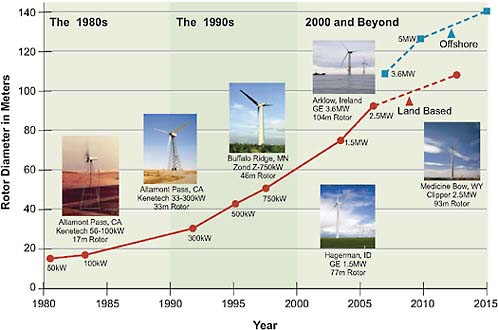
FIGURE 3.1 Increase in rotor dimensions over recent past.
Source: IEEE, 2005. Copyright 2005 IEEE. Reprinted by permission.
Electrical Output Controls
Besides the mechanical characteristics, the development of the turbine mechanical to electrical conversion characteristics have evolved from machines based primarily on fixed-speed induction generators (Type 1), to variable-speed machines with electronic control (Type 2), and then machines incorporating vastly different outputs and controls (Type 3). These Type 3 machines are able to control for low-voltage ride-through (LVRT),3 voltage,4 output5 and ramp rate,6 and volt-ampere-
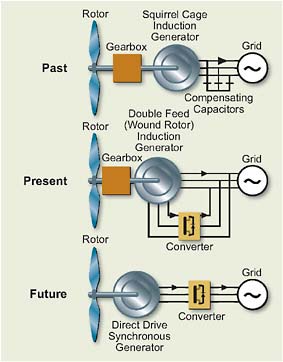
FIGURE 3.2 Evolution of wind turbine technology.
Source: IEEE, 2005. Copyright 2005 IEEE. Reprinted by permission.
reactive (VAR) support.7 While wind generators have increased in height and rotor diameter, the major changes in internal operating characteristics are not as apparent. Figure 3.2 depicts the evolution of the internal operating characteristics. Many perceptions of wind technology’s negative impact on the electrical system, such as the inability to remain connected to the electricity grid during voltage disturbances and the draw on the grid’s reactive power resources, stem from Type 1 machines.
The evolution of control technologies has made wind generators and their electricity output easier to integrate into the utility system. With these new control technologies, wind power plants are better at mimicking traditional generating plants. This capability led to Federal Energy Regulatory Commission (FERC) Order 661-A, issued December 2005, which deals with machine design and system integration. It calls for wind facilities of 20 MW or larger to provide the ability
to maintain operations, including LVRT, during disturbances on the electric grid; provide reactive power; and maintain continuous real-time communications and data exchange with the control area operator. These power integration capabilities have been incorporated into Type 3 machines. However, wind power generation takes place where and when the wind blows, and electricity must be used when it is generated. This intermittency has raised concerns about integrating wind power into the existing power system and requires wind turbines to provide LVRT, voltage control, output and ramp rate controls, and VAR support.
Integrating Type 3 machines into existing grids is not without its challenges. Circumstances such as wind fluctuations and overall grid stability are unique to each particular control area. Thus, even as technologies improve, it will be critical to carry out site-specific analyses of each control area, which will better aid grid operators in balancing the system within their control area.
Integration into Utility System Operation
A number of studies on the integration of wind power into a utility capacity and dispatch structure indicate that wind can be integrated at up to approximately 20 percent of the total electricity mix without requiring storage, although the exact level depends on the power system (Parsons et al., 2006; ETSO, 2007; DOE, 2008).8 The specifics of these studies are discussed in this report in the chapters on economics (Chapter 4), deployment (Chapter 6), and scenarios (Chapter 7). As the studies point out, achieving such levels of renewables penetration will depend on upgrades to the grid (necessary regardless of the energy mix) and new transmission lines for more remote sources.
Modern electricity grid systems are designed to handle loss of the largest power plant without disruption; to have ramp up and ramp down capabilities: and to increase or decrease generation as demand increases or decreases. However, each system has its own generating capacity structure, transmission capabilities, and ability to purchase power outside its own boundaries, making wind power integration somewhat unique for each utility.
|
8 |
A number of studies can be found on the Utility Wind Integration Group (UWIG) website at http://www.uwig.org. |
Small Wind Systems
The vast majority of wind power is generated by large wind turbines feeding into the electricity grid, while small wind turbines generally provide electricity directly to customers. The United States is the leading world producer of small wind turbines. These residential turbines are erected and connected directly to the customer’s facility or to the electricity distribution system at the customer’s site. The manufacture and marketing of wind-powered electric systems sized for residential homes, farms, and small businesses have experienced major growth in the past decade. These small wind turbines (Figure 3.3), defined as 100 kW or less in capacity, have seen significant market growth, and the industry has set ambitious targets: growth at 18–20 percent through 2010.
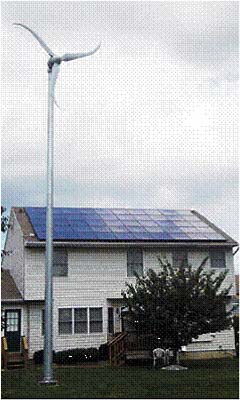
FIGURE 3.3 Small wind turbine, shown near home with rooftop photovoltaic panels installed.
Source: Courtesy of National Renewable Energy Laboratory.
Key Technology Opportunities
Short Term: Present to 2020
The key technological issues for wind power focus on continuing to develop better turbine components and to improve the integration of wind power into the electricity system, including operations and maintenance, evaluation, and forecasting. Goals appear relatively straightforward: taller towers; larger rotors; power electronics; reducing the weight of equipment at the top and cables coming from top to bottom; and ongoing progress through the design and manufacturing learning curve (Thresher et al., 2007; DOE, 2008). Table 3.1 summarizes the incremental improvements under consideration.
Although no big breakthroughs are anticipated, continuous improvement of existing components is anticipated, and many are already being actively developed. For example, there are advanced rotors that use new airfoil shapes specifically designed for wind turbines instead of those based on the design of helicopter blades. These rotors are thicker at points of highest stress and reduce loads during turbulent winds by flying the blades using turbine control systems. Other improvements include the use of composite materials and advanced drivetrains. In particular, gearboxes are a major area of concern for reliability. Approaches for improving this component include direct-drive generators; greater use of rare-earth permanent magnets in generator design; possibility of single-stage drives using low-speed generators; and distributed drivetrains using the rotor to drive several parallel generators. Advanced towers are a major focus for innovation, given the current need for large cranes and transport of large tower and blade sections. Concepts under investigation include self-erecting towers, blade manufacturing on site, vibration damping, and tower–drivetrain interactions.
There is certain to be some development of offshore wind in the United States in the near term, but it is not expected that this will have a significant impact before 2020. Nonetheless, there is a near-term opportunity to learn from offshore projects in Europe and the United States, if offshore wind is going to have an impact in the medium term.
Other near-term opportunities will lie in improving the integration of existing wind power plants into the transmission and distribution system, which includes using improved computational models for simulating and optimizing system integration (Ernst et al., 2007). Chapters 6 and 7 discuss the deployment and integration of wind-generated electricity.
TABLE 3.1 Areas of Potential Wind Power Technology Improvements
|
Technical Area |
Potential Advances |
Performance and Cost Increments Best/Expected/Least (%) |
|
|
Annual Energy Production |
Turbine Capital Cost |
||
|
Advanced tower concepts |
|
+11/+11/+11 |
+8/+12/+20 |
|
Advanced (enlarged) rotors |
|
+35/+25/+10 |
−6/−3/+3 |
|
Reduced energy losses and improved availability |
|
+7/+5/0 |
0/0/0 |
|
Drivetrains (gearboxes and generators and power electronics) |
|
+8/+4/0 |
−11/−6/+1 |
|
Manufacturing and learning curvea |
|
0/0/0 |
−27/−13/−3 |
|
Totals |
|
+61/+45/+21 |
−36/−10/+21 |
|
aThe learning curve results from NREL (2008) (Cohen and Schweizer et al., 2008) are adjusted from 3.0 doubling in the reference to the 4.6 doubling in the 20 percent wind scenario. Source: DOE, 2008. |
|||
Medium Term: 2020 to 2035
Mid-term wind technology development will have two thrusts: the movement toward offshore, and its implications for turbine design; and the development of efficient low-wind speed turbines. Development of offshore wind power plants has already begun in Europe (approximately 1200 MW of installed capacity), but
progress has been slower in the United States. Nine projects are in various stages of development in state and federal waters. In addition to technical risks and higher costs, these projects have been slowed by social and regulatory challenges (DOE, 2008).
In the mid-term, offshore turbines will have a larger size and generating capacity than onshore turbines, but, owing primarily to technical and cost concerns, development will likely lag behind onshore machines. Transmission siting issues with offshore wind power plants will be simplified because of fewer siting impediments. However, underwater cables must be carefully constructed, and there will likely be a move to develop microgrids with high-voltage direct current to integrate the offshore resources. Offshore wind technologies face several transition problems as they move from near-shore, land-based sites to offshore sites of various depths and, finally, floating designs. Assessment tools for sensitive marine areas, wind loads, and system design are not now ready for offshore development. Offshore projects must be built to handle both wind and wave loads, and components must be able to endure marine moisture and extreme weather. Offshore wind projects have a higher balance of station cost (approximately two-thirds of total costs) than do onshore projects, and thus will rely on cost reductions across the system in order to become more competitive. All of these developments pose both technological and organizational problems and will require continuous research and development in order to be feasible. It should be noted that challenges posed by the greater technical difficulties of offshore wind power development are being addressed by other countries. However, political, organizational, social, and economic obstacles may continue to inhibit investment in offshore wind power development, given the higher risk compared to onshore wind energy development (Williams and Zhang, 2008).
In terms of onshore development, as the higher wind speed sites are used, wind power development will move to lower wind speed sites, which will require turbines that are relatively efficient at lower wind speeds, necessitating larger rotors with lighter, stronger materials, as well as increased tower height.
Long Term: After 2035
At present, no revolutionary technology to extract energy from wind has been proposed, but several designs, e.g., vertical wind turbines or eggbeaters, are again under consideration. There have been conceptual proposals to access high-altitude winds using balloons or kites. Component improvements will continue, with
additional emphasis on offshore turbine installation. Floating offshore platforms may gain interest, but first must come experience from anchored offshore wind facilities.
Summary of Wind Power Potential
Wind-power technologies are actively deployed today, and there are no technological barriers to continued deployment. Cost reductions will be possible as a result of wider deployment and incremental improvements in components. No other enhancing technologies are required for wind power to meet 20 percent and higher of U.S. electricity demand.
SOLAR PHOTOVOLTAIC POWER
Solar power involves the conversion of the radiant energy from the sun into electricity by using photovoltaics (PV) or concentrating devices. When sunlight strikes the surface of the PV cell, some of the photons are absorbed and release electrons from the solar cell that are used to produce an electric current flow, i.e., electricity. A solar cell consists of two layers of materials, one that absorbs the light and the other that controls the direction of current flow through an external circuit (Figure 3.4). The absorbing materials can be silicon (Si), which is also used in integrated circuits and computer hardware; thin films of light-absorbing inorganic materials, such as cadmium telluride (CdTe) or gallium arsenide (GaAs), that have absorption properties well matched to capture the solar spectrum; or a variety of organic (plastic) materials, nanostructures, or combinations.
Status of Technology
The PV industry has grown at a rate greater than 40 percent per year from 2000 through 2008. Much of this growth is the result of national and local programs targeted toward growing the PV industry and improving the competitiveness of PV in the marketplace. In 2007, PV modules supplying 3.4 GW were produced worldwide, and approximately 220 MW were installed in the United States.9 Table 3.2 provides a breakdown of PV module shipments by technology type.
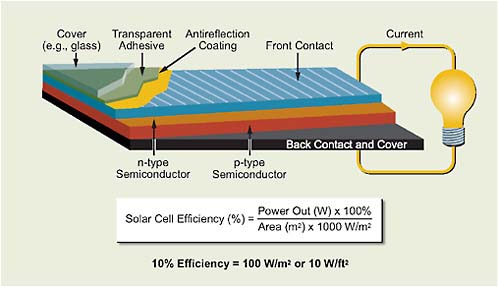
FIGURE 3.4 Schematic of a typical solar cell.
Source: DOE, 2005.
TABLE 3.2 PV Cell and Module Shipments by Type, 2005–2007
|
Type |
Shipments (Peak Kilowatts) |
Percent of Total |
||||
|
2005 |
2006 |
2007 |
2005 |
2006 |
2007 |
|
|
Crystalline silicon |
|
|
|
|
|
|
|
Single-crystal |
71,901 |
85,627 |
128,542 |
32 |
25 |
25 |
|
Cast and ribbon |
101,065 |
147,892 |
181,788 |
45 |
44 |
35 |
|
Subtotal |
172,965 |
233,518 |
310,330 |
76 |
69 |
60 |
|
Thin-film |
53,826 |
101,766 |
202,519 |
24 |
30 |
39 |
|
Concentrator |
125 |
1,984 |
4,835 |
1 |
1 |
|
|
Otherb |
— |
— |
— |
— |
— |
— |
|
U.S. Total |
226,916 |
337,268 |
517,684 |
100 |
100 |
100 |
|
Note: Totals may not equal sum of components due to independent rounding. —, no data reported. aLess than 0.5 percent. b“Other” includes categories not identified by reporting companies. Source: EIA, 2008, Table 3.5. |
||||||
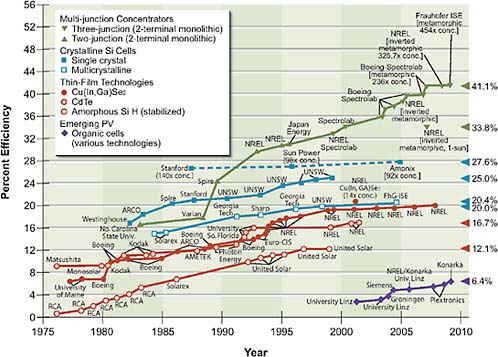
FIGURE 3.5 Historical progress of solar cell efficiencies.
Source: NREL, 2009.
Over the past 30 years, the efficiency of PV technologies has steadily improved. Figure 3.5 presents the historical progress of the best reported solar cell efficiencies through 2008 (NREL, 2009). Commercial (or even the best prototype) modules achieve, on average, only about 10–15 percent efficiency, which is 50–60 percent of the efficiency of the best research cells. Figure 3.5 includes several PV technologies: single-crystalline Si, thin films, multi-junction cells, and emerging technologies, such as dye-sensitized nanocrystalline TiO2 cells, cells based on organic compounds, and plastic solar cells.
Flat-Plate PV Technologies
Photovoltaic technologies can be divided into two main types: flat plates and concentrators. Flat-plate technologies include crystalline silicon (from both ingot and ribbon- or sheet-growth techniques) and thin films of various semiconductor mate-
rials, usually deposited on a low-cost substrate, such as glass, plastic, or stainless steel, using some type of vapor deposition, or wet chemical process. Thin film cells typically are 1–20 μm in thickness and require one-tenth to one-hundredth of the expensive semiconductor material required by crystalline silicon (DOE, 2007f). Additionally, thin film deposition technology allows production of large-area solar cells, and though they exhibit lower efficiencies (upward of 10 percent) than crystalline silicon PV panels, their lower production costs can make them an attractive alternative. Even thinner layers are involved in some of the future generation technologies, such as organic polymers and nanomaterials (DOE, 2007j).
Of the PV modules produced today, nearly 88 percent are based on crystalline silicon wafer technologies. Of this total, about 30 percent are based on conventional, single-crystal silicon grown by the Czochralski ingot process,10 60 percent are based on polycrystalline (also referred to as multicrystalline) ingots cast in a crucible, and 3 percent are from silicon ribbons/sheet produced by various processes. The typical efficiency of these crystalline PV cells is 12–18 percent, and further development is required to increase the efficiency and to lower the production cost (DOE, 2007e).
Concentrator PV Technology
The key elements of a concentrator PV system are low-cost concentrating (reflective or refractive) optics, low-cost mounting and tracking systems (to track the movement of the sun), and high-efficiency III-V11 or silicon solar cells (DOE, 2007g). The large-scale manufacturing capability for all components has already been demonstrated, including 27 percent efficient silicon cells and 28 percent efficient GaAs cells (DOE, 2007g; Surek, 2001). Concentrator systems using point-focus Fresnel lenses have been routinely fabricated. Module efficiencies of up to 20 percent have been demonstrated by commercially made 25 percent efficient silicon solar cells (DOE, 2005). Progress in multi-junction, III-V based solar cells for space applications has led to evaluating their terrestrial potential in concentrating applications (Bett et al., 1999; DOE, 2007g). An efficiency of 37.3 percent (at up to 600 times the sun’s normal intensity) has been achieved for a GaInP2/GaInAs/Ge triple-junction structure (King et al., 2004), and NREL has recently announced
an efficiency of almost 41 percent (at 380 times the sun’s intensity) (NREL Press Release, August 13, 2008).
Concentrated photovoltaic (CPV) plants are composed of many aggregated photovoltaic modules, as are non-concentrator plants, but the required cell area is reduced by the concentration factor (DOE, 2005). The concentration ratio12 of one-axis CPV systems is commonly 10:50. High-concentration PV (HCPV) systems use two-axis trackers with concentration ratios of 200:500. Concentration makes the use of the most efficient and expensive PV cells more practical. Mature HCPV systems are projected to cost about 40–60 percent of standard PV systems and to provide 10–20 percent more energy with the same power rating. Projections put the installed costs of CPV with multi-junction PV cells now under development at about $2/W (DOE, 2007g). The present cost of single-junction systems from Amonix and Solar Systems Pty Ltd. is, for example, about $4/W.
Potential Technology Development
Future directions for thin-film technologies include multi-junction thin films aimed at significantly higher conversion efficiencies, better transparent conducting oxide electrodes, thin polycrystalline silicon films, and organic inks.
Concentrator systems use only direct, rather than diffuse or global, solar radiation; therefore, their areas of best application (e.g., in the southwestern United States) are more limited than those for flat plates. There is also ongoing research to improve the long-term reliability of concentrator systems and to develop standard tests for concentrator cells and systems. Thus, most of today’s remote and distributed markets for PV systems are not suitable for concentrator systems.
By far the fastest-growing segment of the PV industry is that based on casting large, multicrystalline ingots in some crucible that is usually consumed in the process. Manufacturers routinely fabricate large multicrystalline silicon solar cells with efficiencies in the 13–15 percent range; small-area research cells are 20 percent efficient. Silicon ribbon or sheet technologies avoid the costs and material losses associated with slicing ingots. The present commercial approaches in the field are the edge-defined, film-fed growth of silicon ribbons and the string ribbon process. Full-scale production of silicon modules based on micron-sized
silicon spheres was recently announced. In this process, submillimeter-size silicon spheres are bonded between two thin aluminum sheets, processed into solar cells, and packaged into flexible, lightweight modules. Another approach uses a micromachining technique to form deep narrow grooves perpendicular to the surface of a 1- to 2-mm-thick single-crystal silicon wafer. This technique results in large numbers of thin (50 μm), long (100 mm), and narrow (nearly the original wafer thickness) silicon strips that are processed into solar cells just prior to separation from the wafer. In another technique, a carbon foil is pulled through a silicon melt, resulting in the growth of two thin silicon layers on either side of the foil. After the edges are scribed and the sheet is cut into wafers, the carbon foil is burned off, resulting in two silicon wafers (150 μm thick) for processing into solar cells.
Thin-film technologies have the potential for substantial cost advantages over wafer-based crystalline silicon because of factors such as lesser material use due to direct band gaps, fewer processing steps, and simpler manufacturing technology for large-area modules. Thin-film technologies commonly require less or no high-cost crystalline Si. Many of the processes are high throughput and continuous (e.g., roll-to-roll); they usually do not involve high temperatures and, in some cases, do not require high-vacuum deposition equipment. Module fabrication, involving the interconnection of individual solar cells, is usually carried out as part of the film-deposition processes. The major systems are amorphous silicon, cadmium telluride,13 and copper indium diselenide14 (CIS) and related alloys (DOE, 2007h). Future directions include multi-junction thin films aimed at significantly higher conversion efficiencies, better transparent conducting oxide electrodes, and thin polycrystalline silicon films.
Dye-sensitized Solar Cells
The dye-sensitized solar cell (O’Regan and Grätzel, 1991) has its foundation in photochemistry rather than in solid-state physics. In this device, also called the “Grätzel cell” after its Swiss inventor, organic dye molecules are adsorbed on a nanocrystalline titanium dioxide (TiO2) film, and the nanopores of the film are filled with a redox electrolyte. The dyes absorb solar photons to create an excited
molecular state that can inject electrons into the TiO2. The electrons percolate through the nanoporous TiO2 film and are collected at a transparent electrode. The oxidized dye is reduced back to its initial state by accepting electrons from the redox relay via ionic transport from a metal counter-electrode; this completes the circuit, and electrical power is delivered in the external circuit. Dye-sensitized solar cells are very attractive because of the very low cost of the constituent materials (TiO2 is a common material used in paints and toothpaste) and the potential simplicity of their manufacturing process. Additionally, sensitized solar cells are tolerant to impurities, which allow ease in scaling up the production. Laboratory-scale devices of 11 percent efficiency have been demonstrated, but larger modules are typically less than half that efficient. Stability of the devices (e.g., dye materials and electrolyte) while maintaining high efficiency is an ongoing research issue (DOE, 2007k).
Organic and Nanotechnology Solar Cells
Organic semiconductors hold promise as building blocks for organic electronics, displays, and very low-cost solar cells. In an organic solar cell, light creates a bound electron-hole pair, called an exciton, which separates into an electron on one side and a hole on the other side of a material interface within the device. Polymers, dendrimers, small molecules and dyes, and inorganic nanostructures are materials that can be used (DOE, 2007j). Organic solar cells can be about 10 times thinner than thin-film solar cells. Consequently, organic solar cells could lower costs in four ways: low-cost constituent elements (e.g., carbon, hydrogen oxygen, and nitrogen sulfur); reduced material use; high conversion efficiency; and high-volume production techniques (e.g., high-rate deposition on roll-to-roll plastic substrates). Organic solar cells are the focus of DOE’s research goals for 2020 (DOE, 2007j). Research examples in organic solar cells include quantum dots embedded in an organic polymer, liquid-crystal (small-molecule) cells, and small-molecule chromophore cells. Solar cell efficiencies to date are modest (less than 3–5 percent). Unresolved problems associated with this technology include large optical bandgap, unoptimized band offset, and fast degradation rate due to photoxidation, interfacial instability delamination, interdiffusion, and morphological changes (DOE, 2007j).
The use of nanotechnology for PV is especially promising, because the optical and electronic properties of the materials could be tuned by controlling par-
ticle size and shape (DOE, 2007m).15 They may be easy to manufacture when the nanoparticles are produced by means of chemical solution. Some of these concepts are already being pursued commercially. Long-term stability of these devices is another major issue to resolve, along with increasing the efficiency.
Key Technology Opportunities
Short Term: Present to 2020
Currently, polycrystalline silicon PV technologies are well developed and commercially available. Given its higher cost compared to fossil-based electricity now and for the foreseeable future, deployment of the existing PV technology will be constrained only by the extent of financial incentives and the absence of policies that encourage use of solar electricity technology in the nation’s electricity mix. Improvement in thin-film technology efficiencies, which cost less but are less efficient than Si-base cells, is important for the development of this technology.
Balance-of-systems costs must be brought down significantly to reduce the whole cost of a solar electricity system. For example, in California at present, approximately 50 percent or more of the total installed cost of a rooftop PV system is not in the module cost but in the costs of installation and of the inverter, cables, support structures, grid hookups, and other components. These costs must come down through innovative system-integration approaches, or this aspect of a PV system will set a floor on the price of a fully installed PV system, either freestanding or in a rooftop installation. In addition, PV interface devices must improve, including integrated PV inverters; disconnect, metering, and communications interfaces; direct PV-DC devices such as DC-driven end-use devices; and master controllers for use in buildings with PV, storage, and end users.
Medium Term: 2020 to 2035
Cost reductions are needed through new technology development and in the manufacturing that will accompany the scale-up of existing PV technologies. For example, new technologies are being developed to make conventional solar cells by using nanocrystalline inks of precursor as well as semiconducting materials.
New cell structures are being investigated to produce higher efficiency at lower cost.
Thin-film technologies have the potential for substantial cost reduction over current wafer-based crystalline silicon methods because of factors such as lower material use (due to direct band gaps), fewer processing steps, and simpler manufacturing technology for large-area modules. Thin-film technologies have many advantages, such as high throughput and continuous production rate, lower-temperature and non-vacuum processes, and ease of film deposition. Even lower costs are possible with plastic organic solar cells, dye-sensitized solar cells, nanotechnology-based solar cells, and other new PV technologies.
Long Term: After 2035
Widespread deployment of PV technology will depend on the ability to reach scale in manufacturing capacity and achieve cost reductions using technologies for ultralow-cost module production at acceptable efficiency. Reaching ultralow costs will probably require learning-curve-based cost reduction, along with development of future generations of PV materials and systems to increase efficiency. Next-generation PV cells will most likely have structures that will make optimal use of the total solar spectrum to maximize light-to-electricity conversion efficiency.
Summary of Solar PV Potential
A wide range of solar PV technologies are now at various levels of development. Silicon flat-plate PV technologies are mature and actively deployed today. Reduction in the production cost of the cell and an increase in efficiency and reliability will make silicon PV cells even more attractive to customers. New technologies such as thin film, which has great potential to reduce the module cost, are in a relatively mature development stage, with further research and testing required. Other competing technologies, such as dye-sensitized PV and nanoparticle PV, are at an early stage of development, and commercialization will require much more technology development.
The PV industry has a roadmap that sets a deployment goal of 200 GW peak (GWp) in the United States by 2030 (SEIA, 2004). Chapter 7 describes the PV roadmap and other future scenarios for PV. Actual deployment rates will depend on national commitment and policy incentives. This 200 GW potential represents about a 500-fold increase over currently installed capacity in the United States, a much larger expansion than for the other renewable technologies examined in
this report. There is no resource base limitation that would preclude reaching this level of PV deployment; rather, cost, technology, and policy issues are the main variables.
CONCENTRATING SOLAR POWER
Concentrating solar power (CSP) systems use optics to concentrate beam radiation, which is the portion of the solar radiation not scattered by the atmosphere. The concentrated solar energy converts the sun’s energy into high-temperature heat that can be used to generate electricity or drive chemical reactions to produce fuels (syngas or hydrogen). CSP, similar to CPV, requires high-quality solar resources (6.75 kWh/m2 per day or greater), and this restricts its application in the United States to the southwest part of the country (see Figure 2.3).
Status of Technology
Solar thermal electric generation comprises three technologies: parabolic troughs, power towers (also known as central receiver concentrator), and dish-Stirling engine systems (also known as parabolic dishes). Figure 3.6 shows the basic design for CSP technologies. The difference in these technologies is the optical system and the receiver where the concentrated solar radiation is absorbed and converted to heat or chemical potential.16 These differences also define the potential plant size from the smallest (dish-Stirling concentrator) to the largest (parabolic troughs and power towers).
Parabolic Trough
The most mature technology is the parabolic trough combined with a conventional Rankine cycle steam power plant. The concentrator uses concave, parabolic-shaped mirrors to focus the direct beam radiation on a linear receiver. The mirrors track the sun from east to west during the day. The linear receiver is typically a stainless steel tube with a solar selective surface surrounded by an evacuated glass tube. The ratio of the collector area to the absorber area (the concentration ratio) is on the order of 100 or less. Recently, compact linear Fresnel reflec-
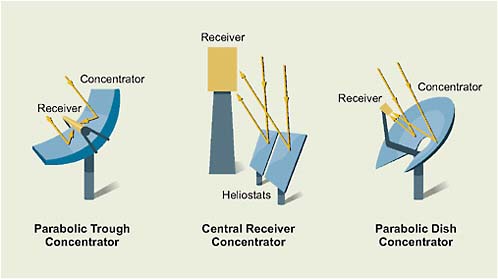
FIGURE 3.6 Optical configurations for concentrating solar power.
tors have been commercialized for use with stationary tubular receivers (Mills et al., 2004). These Fresnel reflectors may reduce the cost, but they have lower efficiencies and a shorter track record than the parabolic trough design. In the commercial parabolic trough systems, synthetic oil is circulated in the tubes. Oil can reach temperatures of about 370ºC. The heated oil is used to superheat steam, which in turn drives a conventional turbine/generator to produce electricity. Individual trough systems can generate about 80 MW of electricity.17 A collector field comprises many troughs in parallel rows aligned on a north-south axis.
The first parabolic trough plant—Solar Energy Generating Systems (SEGS)—was constructed in 1984 by Luz International in the California Mojave Desert near Barstow. In 1990, the installed capacity of the SEGS facility reached 354 MW. The plant has operated continuously since installation, and Southern California Edison purchases the electricity.
Parabolic trough plants can include solar energy storage capabilities, e.g., concrete, molten salt, and thermocline storage, that can extend generation for several hours. At present, many plants have a backup fossil-fired capability that
|
17 |
For more information on the California SEGS design, see http://solar-thermal.anu.edu.au/high_temp/concentrators/basics.php. |
can be used to supplement the solar output during periods of low solar radiation and at night. The SEGS facility includes natural gas generation. Annual solar-to-electric conversion efficiency is 12–25 percent, with capacity factors of 26–28 percent without storage. More recent plants in the United States are the 64 MW Nevada One plant, developed by Solargenix and operational since 2007, and the 1 MW Saguaro plant in Arizona. The Nevada One plant includes a natural gas component that may supply about 2 percent of the plant’s total output.
The Integrated Solar Combined Cycle System (ISCCS) integrates a parabolic trough plant with a gas turbine combined-cycle plant. The ISCCS uses solar heat to supplement the waste heat from the gas turbine to augment power generation in the steam Rankine cycle.
Power Towers
Power towers consist of many two-axis mirrors (heliostats) that track the sun and direct the incoming beam radiation to a receiver located at the top of a tower. The first commercial plant is an 11 MW steam receiver plant developed by Abengoa and inaugurated in March 2007 near Sevilla, Spain. Known as PS10, the plant has a 114-meter tower and 624 heliostats, each 120 square meters. The plant uses a saturated steam receiver and includes a 20 MWp water storage component. The developer reports a solar- to-electric conversion efficiency of 17 percent. Spain’s electric feed-in law, set at 18 euro ¢/kWh at all times, and European Union (EU) and government subsidies for the plant totaling 6.2 million euros were the main drivers for the plant. A 20 MW power tower plant is under construction adjacent to PS10 at the Solúcar Solar Park. The solar field will consist of 1255 heliostats, each 120 square meters, and a 160-meter-high tower. Like PS10, the PS20 receiver will use steam technology.
Dish-Stirling Technology
Dish technology uses a two-axis parabolic dish to concentrate solar energy into a cavity receiver where it is absorbed and transferred to a heat engine/generator (Mancini et al., 2003). The concentration ratio is typically over 2000, and can be as high as 3000 with operation at temperatures of 750ºC. Stirling engines are preferred over Brayton engines because of their high efficiencies (thermal-to-electric efficiencies are about 40 percent) and high power density (40–70 kW/liter). These systems are modular and as large as 25 kW, corresponding to a dish diameter of approximately 10 meters. The ideal concentrator shape is paraboloid, approxi-
mated with multiple spherically shaped mirrors or reflective membranes. The near-term markets identified by the developers of these systems include remote power, grid-connected power, and end-of-line power-conditioning applications. There is no large-scale solar dish Stirling plant to provide operational experience, but annual solar-to-electric efficiencies of 22–25 percent are predicted.
Potential Technology Development
A number of new CSP plants are under development or planned. In Spain, Abengoa is constructing a 20 MW power tower plant next to the PS10 plant. Recent developments include the AndaSol trough project, which is the first large-scale trough plant in Europe and the first anywhere with molten salt storage. The salt is a mixture of 60 percent sodium nitrate and 40 percent potassium nitrate. The Spanish government plans to have 10 GW of CSP within the next 5–7 years.18
There are a number of upcoming projects for CSP in the United States, particularly in California, which has an aggressive renewables portfolio standard (20 percent of investor-owned-utilities’ loads to be served by renewables in 2010, with the same target intended for public utilities).19 A number of utilities in the Southwest have formed a consortium to pursue 250 MW of new CSP plants.20 The CSP industry estimates that 13.4 GW could be deployed for service by 2015 (WGA, 2006a). Purchase agreements for CSP of about 4 GW in the United States had been signed as of February 2009, but there is probably twice that capacity in planned projects.21
An evolving technology that relies on solar concentration is high-temperature chemical processing (Fletcher, 2001; Steinfeld, 2005; Perkins and Weimer, 2004). The concentrating component of these systems is identical to that of concentrated solar thermal processes for power generation, but the receiver placed at the focus of the concentrating reactor is designed to include a chemical reactor. These systems can provide long-term storage of intermittent solar energy, such as storage in the form of fuel or a commodity chemical. The global research community is
|
18 |
Thomas Mancini, Sandia National Laboratories, personal communication, February 2, 2009. |
|
19 |
The lack of other strong renewable energy opportunities in the transmission-constrained state of California has pushed solar project bids ahead of wind power projects. |
|
20 |
See http://www.eere.energy.gov/news/news_detail.cfm/news_id=11474. |
|
21 |
Thomas Mancini, Sandia National Laboratories, personal communication, February 2, 2009. |
pursuing a number of multi-step cycles, including production of hydrogen using water as the feedstock; decarbonization of fossil fuels; gasification of biomass; production of metals including aluminum; and processing and detoxification of waste. These systems are most likely to become cost-competitive when a cost is associated directly with a reduction in carbon emissions.
Key Technology Opportunities
Short Term: Present to 2020
CSP technologies are commercially available, and in the past few years new plants have been deployed in the United States and abroad, with trough systems dominating the U.S. CSP market. With nearly 4 GW of signed purchase agreements and additional planned projects, along with favorable financial policies, it is reasonable to expect significant growth by 2020. Most of the new plants are solar-only plants and do not include fossil-fuel backup on-site. During this timeframe, with the anticipated growth rate, CSP plants will continue to provide peaking power. With even more expanded growth, CSP technologies will probably be hybridized with fossil-fuel-fired components to share the generation portion of a fossil-fuel facility, as well as continue to serve as peaking plants.
In the short term, incremental design improvements will drive down costs and reduce uncertainty in performance predictions. With more systems installed, there will be increased economies of scale, both for plant sites and for manufacturing. Increasing the reflector size and working with low-cost structures, better optics, and high-accuracy tracking may reduce the cost of the heliostat or dish concentrators. There may also be design improvements in receiver technology.
Until 2020, long-term thermal storage, extending over days rather than hours, will not be a major roadblock. However, new storage technologies will be needed in the longer term to make solar dispatchable. Storage technologies, such as concrete, graphite, phase-change materials, molten salt, and thermocline storage, show promise. The number of molten salt tanks providing thermal storage on the order of hours will likely increase, as ancillary equipment such as pumps and valves are improved for greater reliability. Molten salt receivers, which provide storage at about 550ºC to power a turbine, can extend storage up to 12 hours, but there are no molten salt receiver plants at this time.
Availability of water may not be a major deterrent, as water withdrawals are not large with CSP. However, as noted in Chapter 5, CSP consumes at least as much water as some conventional generation technologies. The primary water uses at a Rankine steam solar power plant are for condensate makeup, cooling for
the condenser, and washing of mirrors. Historically, parabolic trough plants have used wet-cooling towers for cooling. With wet-cooling, the cooling tower makeup represents approximately 90 percent of the raw water consumption. Steam cycle makeup represents approximately 8 percent of raw water consumption, and mirror washing represents the remaining 2 percent. Dust-resistant glass is being explored as a possible means to reduce the mirror washing requirement. Chapter 5 includes additional discussion of water-use impacts.
Medium Term: 2020 to 2035
New demands on existing transmission systems may require new or upgraded lines. Longer-term storage on the order of days will be needed if CSP is to be a major source of electricity. Research and development will continue to accelerate design improvement and drive down manufacturing costs. Development of less expensive yet durable optical materials will help control cost and water use, including selective surfaces for receivers in towers and dishes, transparent polymeric materials that are cheaper than glass, and reflective surfaces that prevent dust deposition.
Long Term: After 2035
In the longer term, the use of concentrated solar energy to produce fuels and thus provide storage via a number of reversible chemical reactions is promising. Fuels produced from concentrated solar energy may provide a means of generating electricity during periods of low insolation or at night. Much of the scientific work to date has focused on the production of hydrogen and synthesis gas through various processes, including direct thermolysis of water and a number of metal oxide reduction/oxidation cycles. Direct water splitting is not feasible, because the required temperatures exceed the capability and material limits of modern concentrating systems, and separation of the products at such temperatures is impractical. Multi-step metal oxide reactions are more promising. A two-step process involves endothermic dissociation of a metal oxide (MxOy) to the metal (M) and oxygen in a solar reactor, followed by hydrolysis of the metal to produce hydrogen and the corresponding metal oxide. Carbothermal reduction in a solar reactor reduces the required operating temperature and yields syngas. The process is technically feasible but has not been demonstrated at production scale. Gasification of cellulosic biomass is another promising route to produce synthesis gas (Perkins and Weimer, 2009).
Summary of Concentrating Solar Potential
Concentrating trough and power tower systems are potentially the lowest-cost utility-scale solar electricity for the southwestern United States and other areas of the world with sufficient direct normal solar radiation. In the short term, incremental design improvements will drive down costs and eliminate uncertainties in performance predictions as more systems are installed (the learning curve), increasing economies of scale both for plant sites and for manufacturing. In the medium term, advances in high-temperature and optical materials are needed to reduce costs and improve performance further. An evolving long-term technology that relies on solar concentration is high-temperature chemical processing. Solar thermochemical production of fuels is a promising mechanism for storage of solar energy.
GEOTHERMAL POWER
Today, geothermal electricity is produced by conventional power-generating technologies using hydrothermal resources, hot water or steam, accessible within 3 km of Earth’s surface. Existing plants operate 90–98 percent of the time and thus can provide baseload electricity. Growth of conventional hydrothermal energy is expected to be modest and regional in nature, occurring primarily in the western United States. More aggressive growth would be possible if the heat stored deeper below Earth’s surface could be successfully mined. Enhanced geothermal systems22 (EGSs) would use hydraulic stimulation to mine the heat stored in natural rock reservoirs. In the case of deep, low-permeability rock, hydraulic stimulation would create a porous or fractured reservoir through which fluid could be circulated and heated for use in a conventional generation plant. Figure 3.7 shows a schematic of the EGS system known as “hot dry rock geothermal.” In sites with sufficient natural liquids, stimulation would open up flow paths for dry steam or superheated liquid water. For example, the Iceland Deep Drilling Project plans to access a high-temperature (400–650ºC) hydrothermal resource 4–5 km deep at the Krafla, the Hengill, and the Reykjanes geothermal fields.23
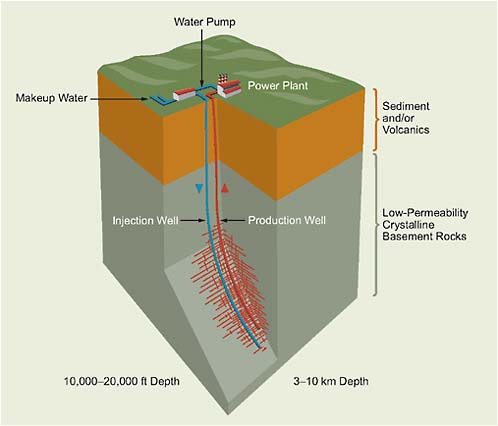
FIGURE 3.7 Schematic of enhanced geothermal systems using an injection and production well.
Source: MIT, 2006. Copyright 2006 MIT.
Status of Technology
Hydrothermal reservoirs are generally classified as either low temperature (less than 150ºC) or high temperature (greater than 150ºC), with high-temperature reservoirs more suitable for electricity production. Hydrothermal power plants are binary or steam. Binary plants are more prevalent than steam plants, because lower-temperature reservoirs suitable for binary plants are far more common than steam reservoirs. In addition, binary plants may be the best option at any temper-
ature for applications with limited water availability. Binary cycle plants convert geothermal waters, normally from 90 to 175ºC, to electricity by routing the hot water through a closed-loop heat exchanger, where a low-boiling-point hydrocarbon, such as isobutane or isopentane, is evaporated to drive a Rankine power cycle. The cooled or “spent” geothermal fluid is returned to the reservoir. Because binary plants use a self-contained cycle, there are no emissions other than water vapor. Current electrical generation costs are 5–8¢/kWh (NREL, 2008). Steam plants either use steam directly from the source to directly drive a turbine, or use flash plants to depressurize hot water from the source (175–300ºC) to produce steam. Energy produced via steam generation costs between 4–6¢/kWh (NREL, 2008).
Enhanced (or engineered) geothermal systems are not in operation yet, but if successfully developed, they would recover thermal energy stored at depths ranging from 3 to 10 km. This resource is vast, but it exists at great depths and low fluxes (see Chapter 2). Broad implementation presents technical and economic challenges because of the required drilling depths, the low permeability, and the need for reservoir enhancement. Accessing the stored thermal energy would first require stimulating the hot rock by drilling a well to reach the hot rock, and then using high-pressure water to create a fractured rock region. Drilling injection and production wells into the fractured region would follow next, and the stored heat would then be extracted by circulating water in the injection well. The heat extraction rate would depend on the site. Technologies for electricity generation from the hot fluid would be similar to those for hydrothermal power plants.
Potential Technology Development
Growth of conventional hydrothermal electricity is expected to be modest and to occur primarily in the western United States. As described in Chapter 2, the Western Governors’ Association (WGA) assessed the potential for new development by 2015 of about 140 known and accessible geothermal sites. The WGA concluded that the western states share an untapped capacity of 5.6 GW that could be developed within the next 10 years, with levelized costs of energy (LCOE) of about 5.3–7.9¢/kWh, assuming that federal production tax credits (PTCs) remain in place (without the PTC, LCOE values would be 2.3¢/kWh higher) (WGA, 2006b). Table 3.3 provides a state-by-state list of potential capacity expansions. The Geothermal Energy Association has identified more than 100 geothermal projects under development in 13 states, which represents more than a doubling of con-
TABLE 3.3 Summary of Western States’ Near-Term New Geothermal Power Capacity
ventional geothermal capacity in the coming decade. No additional technological developments are required to tap these resources, although advances in exploration and resource assessment could affect growth of new plants.
The studies cited previously do not include EGS. Extensive development of EGS is less certain because of the lack of experience in recovering the heat stored at 3- to 10-km depths in low-permeability rock. The primary technical challenges are accurate resource assessment and understanding how to achieve sufficient connectivity within the fractured rock so that the injection and production well system can yield commercially feasible and sustainable production rates. Other unresolved issues involve induced seismicity, land subsidence, and water requirements. Modeling analysis shows a large capability for these wells to yield significant heat (MIT, 2006). However, given the depths needed, there has been limited experience and success in developing EGS wells at sufficient flow rates in the field. Issues associated with EGS, including reservoir operation and management, are summarized in the MIT report (MIT, 2006) and in a series of reports summarizing workshops sponsored by the DOE (DOE, 2007a,b,c,d).
Key Technology Opportunities
Short Term: Present to 2020
In the near term, development of geothermal sites will continue to rely on conventional extraction methods and technologies. Technology is not a major barrier to developing conventional hydrothermal resources, but improvements in drilling and power conversion technologies could result in cost reductions and greater reliability. There is a need for continued and updated resource assessment. There will also be additional EGS field demonstrations.
Medium Term: 2020 to 2035
As indicated in Table 3.4, the largest source of geothermal energy resides in the thermal energy stored in rock formations that require EGS technology for extraction. Implementation of EGS has not been demonstrated at large scale, and there are unanswered questions about the extent of economical power available. Reaching depths of 3 to 5 km is feasible for conventional drilling methods used in the oil and natural gas industry. However, a significant uncertainty is the flow rate achievable in an enhanced reservoir and the heat flux associated with this flow rate. Drilling for geothermal resources is somewhat different from drilling for oil and natural gas, especially since geothermal systems typically occur in crystalline rocks as opposed to much softer sedimentary rocks targeted by oil and
TABLE 3.4 Estimates of U.S. Geothermal Resource Base to 10-km Depth by Category
|
Category of Resource |
Thermal Energy (in Exajoules; 1 EJ = 1018 J) |
Reference |
|
Conduction-dominated EGS |
|
|
|
Sedimentary rock formations |
>100,000 |
MIT (2006) |
|
Crystalline basement rock formations |
13,900,000 |
MIT (2006) |
|
Supercritical volcanic EGSa |
74,100 |
USGS Circular 790 |
|
Hydrothermal |
2,400–9,600 |
USGS Circulars 726 and 790 |
|
Coproduced fluids |
0.0944–0.4510 |
McKenna et al. (2005) |
|
Geopressured systems |
71,000–170,000b |
USGS Circulars 726 and 790 |
|
Note: EGS, enhanced geothermal systems; USGS, U.S. Geological Survey. aExcludes Yellowstone National Park and Hawaii. bIncludes methane content. Source: Adapted from MIT, 2006. |
||
natural gas exploration. With present EIA projections of the price of electricity, successful implementation of EGS would require sustained production at 80 kg/s (equivalent to the rate at a productive hydrothermal reservoir) at a temperature of 250ºC, which would generate about 5 MW per well (DOE, 2007b). The EGS project at Soultz, France (5,000-m-deep wells through crystalline rock), which is the best-performing project to date, has achieved a well productivity of about 25 kg/s. Advances in stimulation and higher productivity are likely as more field demonstrations are conducted. Figure 2.5 shows that temperatures of 250ºC exist primarily at depths of 5.5 km and deeper. On the other hand, the MIT study cited very-high-grade EGS on the margins of hydrothermal systems or in high-thermal-gradient regions that could work well at depths of 3 km. Clear Lake, California, and the Fenton Hill, New Mexico, sites are good examples of these.
Field demonstrations at different high-grade thermal areas would aid a realistic assessment of the risks and potential of EGS. For cost-effective commercial extraction, the studies should demonstrate that EGS technology that is successful at one site can be applied successfully to other sites with different geologic characteristics. The challenges are the technical and economic uncertainty of site-specific reservoir properties, such as fractured rock permeabilities, porosities, and in situ stresses, and the difficulties of stimulating sufficiently large productive reservoirs, and connecting them to a set of injection and production wells.
Long Term: After 2035
Initial field studies of EGS will most likely focus on moderate depths (up to ~5.0 km). If successful, exploration at greater depth may be warranted and bring improved prospects for private investment and commercial deployment.
Summary of Geothermal Power Potential
Geothermal energy is a renewable energy resource that can provide baseload power without storage. Existing geothermal power plants rely on well-understood power plant technology but are restricted to hydrothermal resources within 3 km of Earth’s surface. Large expansion of the U.S. geothermal electricity-generating capacity will rely on resources that are much less accessible. It will be necessary to access the hot rock at depths as great as 10 km. The technical challenge is economically bringing the stored thermal energy to the surface where it can be used to generate electricity. Advances in stimulation and higher productivity are likely as more field demonstrations are conducted.
HYDROPOWER
Technologies for converting energy from water to electricity include conventional hydroelectric technologies and emerging hydrokinetic technologies that can convert ocean tidal currents, wave energy, and thermal gradients into electricity. Conventional hydroelectricity, or hydropower, the largest source of renewable electricity, comes from capturing the energy from freshwater rivers and converting it to electricity.
Status of Technology
Conventional hydroelectricity is one of the least expensive sources of electricity. Hydropower has played a long and important role in the history of electrification in the United States. Federal development of large-scale hydropower projects during the 1930s and 1940s, such as those constructed as part of the Tennessee Valley Authority system and the Grand Coulee, Bonneville, and Hoover dams, aided in rural electrification and the development of the country’s industrial base. Most hydropower projects use a dam to back up and control the flow of water, a penstock to siphon water from the reservoir and direct it through a turbine, and a generator that converts the mechanical energy to electricity. The amount of electricity produced is a function of the capacity of the turbines and generators, the volume of water passing through the turbines, and the hydraulic head (the distance that the water drops in the penstock). Different categories of hydropower include large conventional hydropower with generating capacity greater than 30 MW, low-head hydropower with a hydraulic head of less than 65 feet and a generating capacity of less than 30 MW, and micro-hydropower with a generating capacity of less than 100 kW. All of these categories rely on the same basic technologies.
Potential Technology Development
Conventional Hydropower
Since this resource has been extensively exploited, many prime sites are no longer available. Furthermore, there is increasing recognition of negative ecosystem consequences from hydropower development. Future hydropower technological developments will relate to increasing the efficiency of existing facilities and mitigating the dams’ negative consequences, especially on anadromous fish. Existing
hydropower capacity could be expanded by increasing capacity at existing sites; installing electricity-generating capabilities at flood control, irrigation, or water supply reservoirs; and developing new hydropower sites (EPRI, 2007a). Turbines at existing sites also could be upgraded to increase generation. However, none of these require new technologies. The future of hydropower will play out in the public policy debate, where the benefits of the electric power are weighed against its effects on the ecosystem.
Hydrokinetic Power
New technologies to generate electricity from waterpower include those that can harness energy from currents, ocean waves, and salinity and thermal gradients. Many pilot-scale projects are demonstrating technologies that tap these sources, but only a few of them are commercial-scale power operations at particularly favorable locations. Tapping tidal, river, and ocean currents is done using a submerged turbine. An example of one design is shown in Figure 3.8. There is no
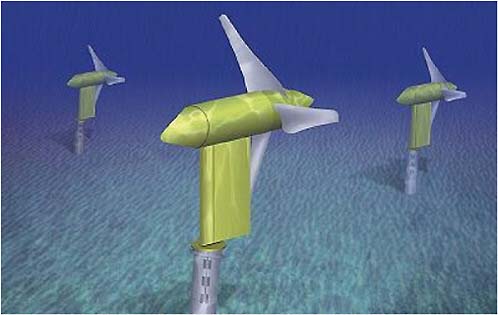
FIGURE 3.8 Verdant Power’s 35 kW turbine design for converting tidal currents into electricity.
Source: Verdant Power; available at http://www.nature.com/news/2004/040809/full/news040809-17.html.
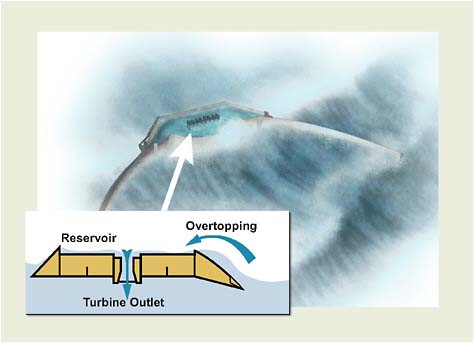
FIGURE 3.9 Design of the Wave Dragon device.
Source: Wave Dragon. Reprinted by permission.
single approach to converting the energy in waves into electricity. Approaches include floating and submerged designs that tap the energy in the impacting wave directly or that use the hydraulic gradient between the top and bottom of a wave (Minerals Management Service, 2006). Figure 3.9 shows the Wave Dragon device, which concentrates waves and allows them to overtop into a reservoir, generating electricity as the water in the reservoir drains out through a turbine.
Other approaches include long multi-segmented floating structures that use the differing heights to drive a hydraulic pump that runs a generator. Ocean thermal energy conversion converts solar radiation to electric power using the ocean’s natural thermal gradient to drive a power-producing cycle. Designs using salinity gradient power would rely on the osmotic pressure difference between freshwater and salt water, although none of these have moved beyond the conceptual stage. In general, even though waves, currents, and gradients contain substantive amounts of energy resources, there are significant technological and cost issues to address before such sources can contribute significantly to electricity generation.
Storms and other metrological events also pose significant issues for hydrokinetic technologies.
Key Technology Opportunities
Short Term: Present to 2020
Key short-term technological developments to expand electricity from waterpower will occur in the area of conventional hydropower. The focus will be on developing and deploying technologies to improve fish passage and water quality, increase turbine efficiencies, and design enhanced tools for monitoring and managing water resources. Environmentally advanced hydropower turbine designs can improve fish survival and improve water quality.24 The Grant County Public Utility District Advanced Hydropower Turbine System program is one example where the need for turbine replacement at a hydropower facility on the Columbia River is resulting in new turbines that have greater efficiencies and improved fish passage survival.25 Other activities, such as those in the Oak Ridge National Laboratory’s Environmental Sciences Division, are directed toward improving the balancing of hydropower production with other objectives for which dams are also operated, such as flood control, recreation, and ecosystem benefits, through mathematical modeling of complex hydrological systems.
Medium Term: 2020 to 2035
Over the next 10 years, many large-scale demonstration projects will be completed to help assess the capabilities of new waterpower sources, including wave and current technologies. It will take at least 10 to 25 years to know whether these technologies are viable for the production of significant electricity. Verdant Power, in a test of the technology shown in Figure 3.8, will install six turbines of this design, with a combined generating capacity of 200 kW, in the East River in New York City. Although an early test of this technology yielded successful generation of grid-connected electricity, the turbine blades failed within a short period of time. Another project in the United States is the Makah Bay, Washington, project, where four 250-kW floating buoys have recently been licensed by the Federal Energy
Regulatory Commission (Miles, 2008). The electricity from these buoys will be connected to a shore station via a 3.7-mile-long submarine transmission cable.
There are also many projects under way in Europe. The 4 MW Wave Dragon depicted in Figure 3.9 is scheduled to be installed in 2008 off the coast of Wales. The device will be tested for 3–5 years and then disassembled. A full-scale prototype of the Pelamis device, a four-segment device rated at 750 kW, was sea-tested for 1,000 hours in 2004.26 An application of this technology began operation in 2008 with three devices rated at 2.25 MW located 5 km off the coast of Portugal. One of the leaders in the development of ocean wave and current electricity is the United Kingdom. The waters around that country are potentially an abundant source of clean renewable energy that could contribute up to 20 percent of its electricity needs (RAB, 2008). However, as noted in its recent assessment of the U.K. ocean energy program, while many prototypes demonstrating wave and tidal power have been deployed, progress has been slower than hoped (RAB, 2008). Particularly, there has not been the level of demonstration at a fully commercial scale as had been expected, although there have been some large demonstrations. One explanation is that the technical challenges, particularly of operating in the marine environment, are more difficult than originally expected.
The key technological challenge will be to develop designs that can withstand the deployment environment without causing harm to the ecosystem. Ultimately, if these new hydropower technologies are to scale up to levels that would contribute a significant amount to electricity generation, there would be deployment issues related to workforce, capital, and other industrial matters that are discussed in detail in Chapter 6.
Long Term: After 2035
Over the long term, deploying large-scale installations for wave and current technologies would depend on technological innovations now imagined but as yet undeveloped. There would likely be significant technological problems arising from moving from pilot plant and full-scale demonstration project operations at individual locations to utility-scale deployment. Future innovations would include standardization of generating technologies, technologies to integrate these new sources of power generation into the electricity system, and technologies to miti-
gate or reduce the potential impacts of use of such technologies on other uses of the ocean.
Other significant potential technologies that use ocean thermal and salinity gradients to generate electricity may also be investigated. These technologies exist in little more than conceptual designs, laboratory experimentation, and field trials. Ocean thermal energy conversion (OTEC) could convert the ocean’s natural thermal gradient—that is, the varying of the ocean temperatures with depth—to drive electricity production (SERI, 1989). If temperatures between the warm surface water and the cold deep water differ by 20ºC (36ºF) or greater, an OTEC system could theoretically produce significant amounts of electricity, although there are major obstacles, including low temperature gradients, high costs, and potential for biofouling. According to NREL, OTEC research needs include improved turbine concepts and heat exchanger systems and actual experience with OTEC plant operation at demonstration plants.27 Another concept for generating electricity in the open ocean is to use salinity gradients to generate electricity using the osmotic pressure differences between salt water and freshwater and waters of varying salinities. In reverse electrodialysis, a salt solution and freshwater are passed through a stack of alternating cathode and anode exchange membranes, and the chemical potential difference between salt water and freshwater generates a voltage over each membrane (Jones and Finley, 2003).
Summary of Hydropower Potential
The pressure to increase generation from traditional hydropower technologies due to their ability to provide low-cost, low-carbon electricity is countered with the understanding that damming freshwater rivers reduces their ecosystem benefits. There are significant pressures to return river systems back to free-running conditions. While removal of major generating facilities is unlikely, environmental and social forces will likely force the removal of some small dams and put a halt to any new hydroelectric dam development. At present, there is also great uncertainty about the future for new current, wave, and tidal generators. Scale demonstrations are under way, and some of these have been connected to the grid. However, there are no uniform designs or long-term experiences with the technologies. Tapping the oceans’ huge reservoirs of energy on a large scale is clearly a distant prospect.
BIOPOWER
Broadly defined, biomass is organic material produced on a short timescale by a biological process. Types of biomass for energy production fall into three broad categories: (1) wood/plant waste; (2) municipal solid waste/landfill gas (LFG); and (3) other biomass, including agricultural by-products, biofuels, and selected waste products such as tires (EIA, 2007). Dedicated energy crops are at present an insignificant portion of the U.S. biomass energy supply. However, there is increasing interest in biomass for alternative liquid transportation fuels (biofuels), which is already beginning to change the methodology of documenting biomass usage. A more complete discussion of biomass for alternative liquid fuels, including co-generation of biofuels and electricity, can be found in the forthcoming report of the America’s Energy Future Panel on Alternative Liquid Transportation Fuels (NAS-NAE-NRC, 2009b) and the upcoming report from the Committee on America’s Energy Future (NAS-NAE-NRC, 2009a).
Biomass is abundant, accounting for almost 50 percent of the national renewable energy resources in 2005, the largest single source of renewable energy (EIA, 2007). In 2005, biomass provided about 10 percent (9,848 MW) of the renewable electricity capacity in the United States, second only to hydroelectric power as a source of renewable electricity (EIA, 2007). From this installed capacity, 60,878 million net kWh of electricity was generated (17 percent of all renewable electricity generation, or 1.5 percent of total electricity generation). However, development of this renewable electricity source has not seen much recent growth. The nature of biomass use is such that electricity and heat are often co-generated. An attractive feature of biomass is that, as a chemical energy source, biomass energy is available when needed, which also makes it attractive for competing applications, such as transportation fuel.
Status of Technology
Because biomass includes a wide variety of resource types with a wide variety of characteristics (solid vs. liquid vs. gas; moisture content; energy content; ash content; emissions impact), a variety of electrical energy generation technologies are employed in biomass use. Despite differences, several commonalities exist. Production of electricity from biomass occurs in much the same manner as from fossil fuels. Similar to coal-fired power plants, the vast majority of biomass-fired power plants operate on a steam-Rankine cycle in which the fuel is directly combusted and the resulting heat is used to create high-pressure steam. The steam then
serves as the working fluid to drive a generator for electricity production. With a gaseous fuel, electricity is produced with a more efficient turbine engine using the gas-Brayton cycle, in a manner similar to natural-gas-fired power plants. In addition to a gas turbine, a gas-reciprocating engine is also frequently used for <5 MW installations where a turbine would be too expensive.
A key difference between dedicated biomass power plants and coal-fired power plants is the size of the power plant, with wood-based biomass power plants (accounting for about 80 percent of biomass electricity) rarely reaching 50 MW, as compared to the 100–1500 MW range of conventional coal-fired power plants. Similarly, LFG power plants have capacities in the 0.5 MW to 5 MW range, whereas those operating on natural gas average about 100 times larger, in the 50 MW to 500 MW range. Because of their smaller sizes, dedicated biomass power plants are typically less efficient than their fossil-fuel-fired counterparts (in the low 20 percent range as opposed to the high 30 percent range for coal), since the cost of implementing high-efficiency technologies is not economically justified at the small scale.
The size difference of coal and biomass plants results, in part, from the high cost of shipping low-energy-content biomass. For example, typical wood has a moisture content of about 20 wt-percentage and an energy content, even after drying, of about 9,780 Btu/lb (18.6 MJ/kg), compared to about 14,000 Btu/lb (25 MJ/kg) for coal. In the case of LFG, shipping costs are eliminated by locating the power plant directly at the landfill site. The size of the power plant is determined by the rate of LFG production, which, in turn, is determined by the overall size of the landfill. Co-location and size matching are also characteristics of biomass power plants operated on black liquor, the lignin-rich by-product of fiber extraction from wood. The power plant, a key component of the paper mill, is sized to match the waste-product stream to meet the overall electrical and process steam needs of the pulping operation, often supplemented by purchases of grid electricity.
An increasing use of biomass is in co-fired power plants that burn coal as the primary fuel source and solid, typically woody, biomass as a secondary source. In co-fired plants, high efficiencies owing to large size are combined with the benefits of reduced CO2 emissions from use of a renewable fuel input. With optimal design, co-fired plants can operate over a range of coal-to-biomass ratios, providing for attractive economics because the cheaper input fuel can be used when it is available. Co-fired plants tend to produce lower SOx and particulate emissions and ash residue compared to purely coal-fired power plants, although NOx emissions
can be higher due to the presence of nitrogen in the biomass. The environmental tradeoffs depend on the specific characteristics of the biomass. An important unresolved issue is the impact of biomass co-firing on the effectiveness of selective catalytic-reduction technologies.
Although municipal solid waste (MSW) contains substantial energy content, designation of this fuel source as renewable is not justified, because much of the carbon in waste products derives from petroleum sources. Storage of that carbon in landfill sites can be viewed as a “carbon sequestration” solution. As a consequence, several states do not include MSW in their renewable portfolio standards. Nevertheless, the use of MSW for electricity production follows that of typical biomass power plants, relying on direct combustion to create steam that subsequently powers a generator. LFG is the gaseous product that results from the anaerobic decomposition of solid waste and contains about 50 percent CH4, 50 percent CO2, and trace components of other organic gases. In contrast to solid waste, LFG by definition cannot be sequestered in a landfill, and the released methane is about 20 times more potent than CO2 as a greenhouse gas. As of December 2007, approximately 445 LFG energy projects operated in the United States, generating approximately 11 billion kWh of electricity per year and delivering 236 million cubic feet per day of LFG to direct-use applications, amounting to just under 20 percent of biomass electricity generation.
Potential Technology Development
Short Term: Present to 2020
The Energy Information Administration (EIA) (2001) estimated that biomass-fired electricity generation capacity could increase under the reference case (business-as-usual) from 6.65 GW in 2000 to 10.40 GW in 2020, thus adding 188 MW of capacity annually. In fact, according to the EIA (2007), the net summer capacity for biomass-derived electricity was essentially flat from 2001 to 2005, rising from 9.71 GW to 9.95 GW. Thus, the average annual growth rate, only 60 MW, was lower than anticipated, but the total capacity is already almost at the prediction for 2020. Existing technologies are sufficient for growing the biopower electrical capacity to 10.40 GW; any barriers are related to deployment. Factors affecting deployment are discussed in Chapter 6.
Technological advances in the short term would likely relate to power plant design to ensure fuel flexibility, particularly in co-fired plants, which in turn implies designing fuel feed and emissions control systems that can adjust to the
variable characteristics of biomass fuel. Strategies include premixing coal and biomass in a single-feed system or providing separate coal and biomass inlets. With such advances, production of biomass electricity at competitive prices (depending on input fuel prices), high efficiency (about 30 percent), and high capacity factors (reaching 100 percent) could become widespread (Wiltsee, 2000).
Some fossil-fuel plants are being converted to 100 percent biomass combustion plants. These tend to be smaller-scale plants (e.g., the 24 MW Peepekeo plant near Hilo, Hawaii), but this trend may be accelerated in the United States, particularly if policy initiatives put a price on carbon. Progress here could also have ramifications in the medium term, if carbon capture and storage technologies are applied to biomass combustion plants. Capturing this carbon would result in net reductions of greenhouse gas emissions, and although no demonstration plant now exists, this potential is being reflected in modeling scenarios, notably in the European Union.
In parallel with improved use of woody biomass, the use of LFG for electricity production can be expected to increase in the near future, because it not only generates electricity in urban settings close to demand points, but also mitigates the release of methane, an extremely potent greenhouse gas. However, over the 2001–2005 time period, the portion of biomass capacity due to MSW/LFG has not changed to reflect these environmental benefits, suggesting the existence of other barriers. Furthermore, methane emissions from landfill sites have steadily decreased in the past decade, largely as a consequence of flaring the recovered methane (simply burning to convert the methane to carbon dioxide and water) rather than using the energy content. As of 2007 the EPA had identified approximately 560 candidate landfills with a total annual electric potential of 11 million MWh, amounting to just over one-quarter of 1 percent of the current U.S. electricity demand (EPA, 2008).
Medium Term: 2020 to 2035
In the medium term, it is likely that new biopower capacity, if pursued, will incorporate a pretreatment step in which the biomass is converted to a gaseous or liquid fuel more suitable for power generation, rather than direct-firing as is the norm today. As with all thermal power plants, higher operating temperatures generally result in higher efficiencies. Engines based on steam cycles (Rankine cycle) are inherently restricted to maximum temperatures of 580ºC owing to the nature of the working fluid, water. In contrast, those based on open-air systems have
a high exhaust-gas temperature because of the nature of the working fluid, air. These differences imply a maximum Rankine cycle efficiency of about 42 percent, whereas for the Brayton cycle (gas turbine engine), it is approximately 50 percent. A combined cycle, which uses the hot exhaust gas of the Brayton cycle to operate a lower-temperature Rankine cycle (steam engine), can potentially obtain a combined efficiency of ~65 percent. A solid fuel cannot be directly used for operation of a gas turbine engine and thus must be converted to a gas or liquid by a method commonly called gasification. Therefore, the efficiency of a biomass gasifier has a direct impact on the electricity production through this route. Biomass gasifiers would require improvement to be a viable option, as the present efficiency of biomass gasifiers is low (~30 percent) compared to the efficiency levels (~75 percent) of today’s coal gasifiers, which are generally larger.
A power plant operated on a solid fuel but incorporating these three components (gasification, high-temperature Brayton cycle, low-temperature Rankine cycle) is known as an integrated gasifier combined cycle (IGCC) power plant (Figure 3.10) (Bain, 1993). Figure 3.11 presents a comparison of the efficiencies of the three generation technologies operated on biomass as a function of power plant size (Bridgewater, 1995).
While large-scale IGCC systems address the need to enhance system effi-
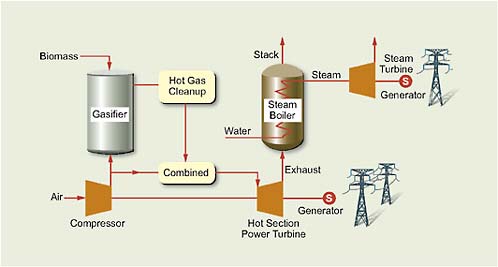
FIGURE 3.10 Diagram of a biopower IGCC plant.
Source: Bain, 1993.
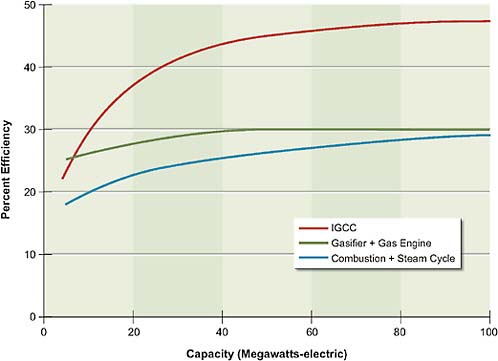
FIGURE 3.11 Typical efficiencies of three classes of biomass power plants as a function of size.
Source: Bridgewater, 1995.
ciency, at smaller scales (<25 MWe) efficiency gains are lower. To obtain high efficiency at the scales typical of biomass power plants, one potential alternative is a fuel cell, in which chemical energy is directly, through electrochemical reactions, converted to electrical energy. Fuel cells are modular in nature, and their efficiency is largely independent of size. Consequently, they can be well matched to biomass power plants. High-temperature fuel cells have chemical-to-electrical conversion efficiencies of ~50–60 percent, and, as with the gas turbine, the high-temperature fuel cell exhaust can be supplied to a steam engine for even higher system efficiencies.
Mid-term developments of biopower can be anticipated in two primary directions: biomass gasification to enable widespread IGCC implementation; and improvements in lifetime and unit costs of fuel cells. In parallel, lower-cost high-temperature materials for both steam engines and gas turbines are potential
development areas. In all cases, such advances would also benefit fossil-fuel-fired power plants, and substantial technology leveraging from those industries for biomass use may be possible, although some of the unique characteristics of biomass may not enable direct transfer between industries. It is noteworthy that biomass is generally more reactive than coal and hence easier to gasify (Williams and Larson, 1996). Furthermore, the lower sulfur content of biomass renders the produced gases more amenable to use in a fuel cell. Both molten carbonate and solid oxide fuel cells can efficiently use the fuel mixture derived from biomass gasification.
Long Term: After 2035
Potential long-term breakthroughs in biopower lie in two distinct areas. The first, and perhaps more tractable, is in advanced biological methods for converting raw biomass into clean fuels. Essentially, the high-temperature catalytic steps of gasification, or pyrolysis, are replaced by ambient-temperature steps through the use of bacteria. Here, natural consortia of bacteria decompose organic matter into methane in the absence of oxygen in closed reactors. This process, anaerobic digestion, is similar to the natural decomposition of waste in landfills, from which methane can also be harvested. Many farm- and community-based systems (particularly in Germany, Denmark, and several developing countries, but also in the United States) already use anaerobic digestion to produce biogas from wastes such as manure, food, and other organics. The biogas is then used in an internal combustion engine to produce electricity or is used directly for heating and cooking. Although much of the biomass resource might be dedicated to biofuel production (thus diminishing its role in electricity generation), biogas technologies could provide a small but nontrivial part of a renewable electricity portfolio, particularly given their flexibility and potential for distributed generation.
The second, more speculative potential breakthrough is in bioengineering new plants to radically enhance the efficiency of photosynthesis. As noted in Chapter 2, the solar-to-biomass conversion in typical plants is only ~0.25 percent; subsequent conversion from biomass to electricity proceeds with another efficiency penalty of at least 50 percent. Thus, solar-to-electric energy conversion efficiency is on the order of 0.1 percent, which is far below the 10–20 percent efficiency achievable with state-of-the-art photovoltaic and concentrating solar power systems. It is unclear, however, whether agricultural practices using bioengineered plants would be sustainable, even if photosynthesis could be enhanced through genetic modification. Even with today’s candidate energy crops (e.g., willow, mis-
canthus, poplar, and switchgrass), it is unknown how much of the biomass must be left in the fields to ensure soil health. A complete evaluation of these uncertainties is beyond the scope of this analysis.
Summary of Biomass Potential
In the absence of a program to grow dedicated energy crops, biomass from waste streams (e.g., forestry, agricultural, and urban) is likely to grow but remain a relatively small contributor to the nation’s electricity supply. As stated in Chapter 2, the long-term potential of biomass is limited by the low conversion efficiency of the photosynthesis process. Further, biomass’s potential depends very much on its competing uses for fuel and electricity. In particular, conversion from raw biomass into syngas or other fuels renders biomass attractive for transportation applications, and competition between the two end uses must be considered. Indeed, the DOE has essentially stopped its biopower programs in favor of biofuels for transportation (Beaudry-Losique, 2007). However, this priority may once again shift if there is a move toward electrified transportation systems (e.g., plug-in hybrids or all-electric vehicles), which would again favor biomass for use in power systems.
ENHANCING TECHNOLOGIES FOR ELECTRICITY SYSTEM OPERATION
There are a host of technologies, operational modifications, and system upgrades that could enhance renewable energy resource use. These include storage, expansion of transmission capacity, and improvements in the intelligence of the electricity transmission and distribution (T&D) system. Because each local electricity system has its own generating capacity, transmission capability, and ability to purchase power outside its own territory, each system’s needs for enhanced technologies for integrating renewables are unique.
New technologies and tools would be required to enable reliable transmission and integration of large-scale renewables, in addition to expanding transmission capacity to connect new renewables to the grid. These include technologies that support the transmission grid by adding reactive power and enabling low-voltage ride-through; advanced transmission planning for integrating intermittent generation; methods of determining supply capacity and reserve requirements for high wind power penetrations; and methods and tools for accommodating high penetrations of wind generation. Integrating high levels of distributed solar PV
electricity would require improvements in PV interface devices and deployment of advanced metering technologies that focus on households or other end users. Integrating large amounts of PV also would require planning models that address PV deployment under two scenarios, existing distribution systems and possible future distribution systems. Modernization of the electricity system is discussed in some detail in the upcoming report of the Committee on America’s Energy Future (NAS-NAE-NRC, 2009a).
Storage
Efficient and cost-effective storage of electrical energy would have a significant impact on the U.S. electrical power infrastructure, irrespective of the role of renewables. Storage requirements depend on where the storage occurs, the mix of renewables deployed, the temporal correlation of generation sources, and other features such as demand-management capabilities or vehicle-to-grid storage. Electricity consumption varies over the course of the day, whereas coal, nuclear, and hydropower electricity plants are generally designed to provide baseload electricity at some optimal level of generation.28 Renewable resources such as solar and wind are intermittent by nature, and that intermittent supply can be mismatched with demand. Thus, neither baseload nor intermittent electricity generation technologies supply electricity in alignment with demand.
Despite this mismatch, electricity systems in the United States are managed today with little or no storage; pumped hydropower storage, the largest storage medium, provides a capacity that is less than 3 percent of the total electricity generation capacity. In the absence of storage, electricity-generating utilities are designed with a capacity sufficient to meet peak rather than average demand, which means each system’s capacity is, on average, underused by roughly 40 percent or more.29 Similarly, storage would be incorporated and designed to reflect not average scenarios but worst-case scenarios, to ensure reliability during low-probability/high-impact events. To date, the mismatch between electricity supply and demand has been handled largely by ramping power output up and down
from natural-gas-fired peaker plants and other peak-power plants. Large penetrations of renewable electricity from wind and solar, which are inherently intermittent, would exacerbate the challenges of load management. However, at moderate penetrations, up to at least 20 percent in the case of wind power, studies indicate that the existing management approaches suffice, and storage is not an immediate necessity for successful integration of renewable resources. These studies are discussed in Chapters 6 and 7.
Storage technologies are differentiated in terms of the time and scale at which they are useful (Figure 3.12). Rapid energy discharge, a feature that would be useful to maintain the quality of the electrical power supply, could some day be achieved with devices such as supercapacitors and high-power flywheels. More relevant to the integration of intermittent renewable technologies into the electrical grid are high-power systems that store energy for at least several hours. These
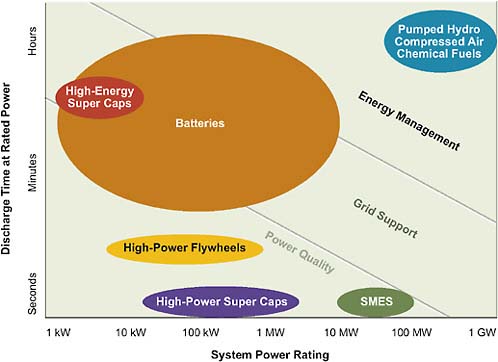
FIGURE 3.12 Capabilities for future storage technologies. SMES, superconducting magnetic energy storage.
Source: Developed from information in Gyuk (2008) and Rastler (2008).
include pumped hydropower, compressed air, some types of batteries, and systems for converting electricity into a chemical fuel such as hydrogen. In addition, some renewable electricity generation technologies, solar thermal and biomass in particular, naturally provide storage solutions. Energy storage in the form of chemical fuels, including biomass and batteries, has direct implications for transportation and underscores the likelihood of increasing overlap between the electricity and transportation sectors in future years.
Pumped Hydropower
Energy storage via pumped hydropower involves the use of electrical energy to move water into an elevated hydropower reservoir by operating the generator as a motor and running the hydroturbine in reverse. When electricity is needed, the water in the upper reservoir is released through the turbine, which operates the motor as a generator to produce electricity. Pumped hydropower is a mature and effective technology that provides the only source of electricity storage today to buffer electricity demand and supply fluctuations. Further growth of pumped hydro is limited, however, because of the lack of environmentally acceptable sites, just as the further growth of hydroelectric power itself is limited.
To put into perspective the scale of possible energy storage requirements to meet U.S. electricity demand and its implications for pumped hydropower, assume that the U.S. peak electricity consumption rate is 7.8 × 10¹¹ J/s = 0.78 TW. Providing 6 hours of electricity at that level of demand would require storage of 1.68 × 10¹⁶ J of energy.30 If storage met only 25 percent of that amount (the rest met by baseload power), it would require a mass of 4.3 × 10¹² kg of water pumped to a height of 100 meters.31 Using the density of water (1 × 10³ kg/m3) means that the system would need to pump 4.3 × 10⁹ m3 of water up 100 meters and then release it during peak demand. In a low-probability scenario (assuming for this discussion that storage was needed to supply 100 percent of peak electricity over a 12-hour period), nearly 35 km3 of water (equivalent to the volume of Lake Mead) would have to be pumped up 100 meters and released.
Pumped hydropower is a relatively low-energy-density storage solution, as demonstrated from another perspective. The energy density of petroleum is 45 MJ/kg, whereas the potential energy of 1 kilogram of water at a height of
100 meters is 1,000 J/kg. Hence, accounting for the density difference between gasoline and water, storing the energy contained in 1 gallon of gasoline would require pumping more than 50,000 gallons of water up the height of Hoover Dam.
Compressed Air Energy Storage
Compressed air energy storage (CAES) refers to the storage of energy as compressed air, usually in an underground air-tight cavern. Other options include storing the compressed air in depleted natural gas fields and aboveground storage tanks. Demonstrated CAES systems (two exist in the world today; one is located in McIntosh, Alabama) use a diabatic32 storage process in which air is cooled before it enters the cavern and, upon increased electricity demand, is expanded using external heating in a modified gas turbine that, in turn, operates an electric generator. CAES allows less expensive nighttime electric energy to be stored and used to replace relatively more expensive, peaking daytime energy (EPRI, 2007b). CAES may reduce the need to build fossil-fired power plants that meet peak rather than average capacity, yet CAES storage must be operated in conjunction with combustion. Because diabatic CAES power plants share similarities with conventional, natural-gas-fired power plants, the two existing systems have operated together reliably since their commissioning, and the technology is considered mature. Overall, the storage capacity provided by these plants is small relative to total U.S. electricity consumption. For example, the McIntosh plant in Alabama has a 110 MW capacity, and the storage cavern allows for 26 hours of continuous operation at the rated power before significant drawdown occurs. The second CAES system, the Huntorf plant in Germany, operates jointly with a nuclear power plant, with the goal of managing the mismatch between the baseload power generation and the variable consumer demand. The storage capacity is smaller, but the discharge rate is higher. New approaches to diabatic compressed air storage are directed toward microscale systems that use smaller volumes and capitalize on underground natural gas storage or storage in depleted gas fields.
Adiabatic CAES systems eliminate the need for combustion fuels by storing not only the mechanical energy of compression, but also the thermal energy
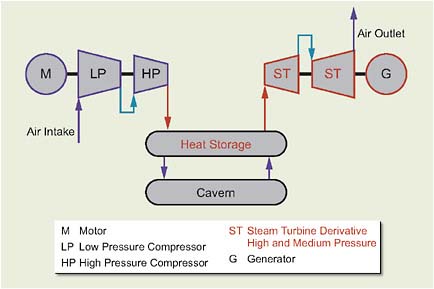
FIGURE 3.13 Function diagram of an adiabatic CAES power plant with a single-stage configuration.
Source: Bullough et al., 2004.
produced when air is compressed. Electric power generation from such a system (Figure 3.13) uses the hot air to operate a turbine (in the absence of combustion), which, in turn, operates an electric generator. Adiabatic compressed air energy storage has not yet been demonstrated, but the majority of the components indicated in Figure 3.14 are known technologies. A concept study supported by the European Union outlines some of the technical challenges and concludes that they are linked largely to system integration and optimization, rather than to individual component development (Bullough et al., 2004). However, the “thermal energy store” unique to adiabatic CAES will require particular attention.
Beyond the technical challenges of constructing and operating CAES power plants, it is of value to consider the storage volume (geologic) requirements for maintaining compressed air energy storage at a scale that would be significant compared to present-day electricity consumption. Operation of the 110 MW McIntosh plant, for example, requires 155 kg/s of compressed air supplied to its turbines, implying a required flow rate of 1.4 kg/s per MW. Given the density of air (1.2 kg m3), this equates to a volumetric flow rate of 1.2 m3 s–1 MW–1. The total deliverability from all of the known natural gas reservoirs in the United States is ~1 × 1011 ft3/day, equal to 3 × 10⁴ m3 s–1. Dividing this total by the
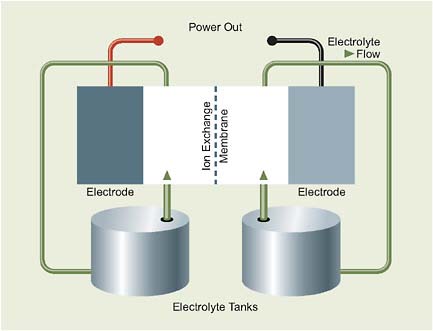
FIGURE 3.14 Schematic of a flow battery.
per-megawatt flow rate required for electricity generation from a compressed air cavern would result in a total generation capacity of 26 GW, which amounts to ~5.5 percent of the U.S. average 2005 load of 460 GW. Though some CAES would be available in aboveground storage tanks, using CAES on a large scale would require extensive, if not immense, amounts of geologic storage.
Batteries
Battery technologies cover an enormous range of chemistries, including lead-acid, lithium ion, and sodium sulfur, and storage efficiencies range from 65 to 90 percent. These values depend not only on the particular chemistry but also on the details of the charge and discharge profile. Furthermore, as in the case of chemical fuel production, present-day activities in battery development and demonstration focus largely on the transportation sector, but with a growing recognition of the importance of utility-scale electricity storage.
A battery is generally constructed with two reactive electrode materials separated by an electrolyte membrane that allows only selected ions to pass through it. During discharge, because of the presence of this separator membrane, the reac-
tion between the two electrode materials must occur via a multi-step process in which a species from one electrode either accepts or rejects electrons to become an ionic species that can pass through the electrolyte. On reaching the second electrode, the ionic species reacts with the material of the second electrode and simultaneously either rejects or accepts electrons to regain its initial charge state. The ion current through the electrolyte is balanced by the electron current through an exterior circuit that draws the power. Depending on the nature of the reaction products that form at the electrodes, the battery may or may not be rechargeable. For rechargeable systems, application of a voltage induces the reserve reactions and regenerates the electrode materials. Rechargeable systems include lithium-ion, lead-acid, nickel-cadmium, and sodium-sulfur batteries. Among these, the sodium-sulfur batteries, because of the favorable balance between system complexity and overall efficiency, are usually considered for utility-scale applications. Lead-acid and nickel-cadmium batteries require the use of rather toxic metals, and lithiumion batteries are costly and have shown significant degradation on deep discharge.
Flow batteries are alternatives to conventional batteries in which the electrode materials are consumed through the electrochemical reaction. In flow systems, the electrodes are inert, serving simply as current collectors, and the overall reaction takes place between two chemical solutions separated again by an electrolyte membrane (see Figure 3.14). Flow batteries are similar to fuel cells. The key difference is the nature of the reactant species. Fuel cells use gases, supplying hydrogen to the anode and oxygen to the cathode (Figure 3.15), whereas in the flow battery liquid electrolyte solutions are supplied to each electrode chamber. As in either conventional batteries or fuel cells, the direct reaction between the chemical species in the anode and cathode chamber is prevented by the presence of the electrolyte. The flow of ions across the membrane is balanced by a flow of electrons through an exterior circuit, in turn providing power generation. Much like a fuel cell, the energy capacity of a flow battery is fixed by the storage volume of the reactant solution, and not by the dimensions of the electrodes, as is the case in a conventional battery. Like fuel cells, however, flow batteries are complex systems involving pumps, valves, the flow of corrosive fluids, and the requirement to regenerate the spent solution in a subsequent step. The separation between the energy storage and energy delivery functions in a flow battery makes a flow battery more useful to utility-scale storage than a conventional battery, but the system complexity renders flow batteries difficult for portable applications. It is unclear where and how fundamental breakthroughs can bring revolutionary advances in battery technologies. For energy storage, the energy density stored in gasoline is
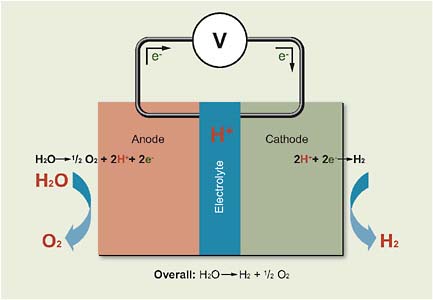
FIGURE 3.15 Operation of an electrolysis cell. A fuel cell is an electrolysis cell operated in reverse, and accordingly the anode and cathode functions are also reversed.
much greater than that storable in existing technologies for lithium-ion or flow batteries.
Chemical Energy Storage
Chemical energy storage refers to synthetic routes to producing fuels from energy resources. Depending on its nature, a fuel can subsequently be used for electricity production via fuel cells or used in conventional combustion systems. By far the simplest fuel to consider in this scenario is hydrogen, created according to the following reaction:

Regardless of how hydrogen is produced, the fuel must be stored, which is a daunting challenge. For example, compressing hydrogen to a pressure of 800 bar incurs an energy penalty of ~13 percent. At any pressure, the volumetric energy density of methane, a fuel more familiar to the electricity industry, is more than three times greater than that of hydrogen stored at an equal pres-
sure (Bossel and Eliasson, 2003). Furthermore, after storage, hydrogen would be used either in a combustion process or in a fuel cell to provide electricity, both incurring additional efficiency penalties (~60 percent loss for combustion and ~30 percent loss for the fuel cell), resulting in a maximum “round-trip” efficiency of ~60 percent, assuming a 70 percent efficient fuel cell and 87 percent efficient compression, excluding energy penalties for the hydrogen production itself. With these caveats, it is nevertheless useful to consider methods of renewable hydrogen generation.
If the energy input for splitting water is electricity, the reaction occurs simply by electrolysis. In the context of renewable electricity, generation is from solar, wind, or other renewable resources, and the electricity is then directed to a separate electrolysis cell. Small-scale electrolyzers are commercially available for the production of hydrogen for technical purposes. However, these systems’ overall efficiency, 65–70 percent, renders them unattractive for large-scale energy storage (Bossel and Eliasson, 2003). These systems require the use of platinum (Pt) at a quantity that can be estimated from the platinum used in state-of-the-art polymer electrolyte membrane fuel cells, which essentially operate in reverse relative to electrolyzers. A DOE target for platinum use is 1 g/kW. Storage for 46 GW average capacity (amounting to 10 percent of the U.S. average) would require 46 × 103 kg of platinum, which is a relatively small amount compared to both the known platinum reserves, ~ 7 × 10⁶ kg, and the present rate of platinum consumption, ~ 250 × 103 kg per year (Wilburn and Bleiwas, 2004). Because of the inverse relationship between electrolyzers and fuel cells, there has been some research on electrochemical cells that could operate in either mode, particularly in the case of high-temperature ceramic electrolyte systems. These dual attributes would be attractive, because costs would be reduced as a result of the multi-functionality of the electrochemical cell, and the high-temperature operation would obviate the need for precious metal catalysts.
In the case of solar energy, direct photo-electrochemical production of hydrogen is an attractive alternative to the two-step process (renewable energy → electricity → fuel). In direct photo-electrochemical production, a semiconductor material, immersed in water, absorbs light, exciting electron-hole pairs across the band gap of the semiconductor. These electronic species are then available to perform reduction and oxidation reactions at the electrodes of the cell. As with the ambient-temperature electrolysis cell, developing robust and efficient, non-precious-metal catalysts remains a daunting challenge for this approach. However, the recognition that biological systems carry out such reactions (i.e., photosynthe-
sis) using base-metal compounds as catalysts suggests that success could ultimately be achieved. The DOE is attempting to increase investment in this area, reflecting the potential offered by recent advances in this approach (e.g., Muckerman et al., 2008).
Yet another alternative for hydrogen production is the thermochemical cycle. In this approach, thermal energy, ideally solar-thermal energy, is the renewable input applied to a material that occurs in oxidized form at low temperatures and undergoes dissociation/reduction at high temperatures. The process of cycling between these two states under appropriate gaseous atmospheres releases the desired reduced chemical fuel. For example, if one considers the FeO/Fe3O4 system, the hydrogen production cycle can be described as

The success of the thermochemical approach relies fundamentally on the chemical thermodynamics of oxide stability. Rapid reaction kinetics and strong coupling of the solar radiation to the material for effective heating are also essential. There are no commercial activities in thermochemical fuel production, but there are ongoing large-scale demonstration plants at Sandia National Laboratories and at ETH Zurich.
Alternatives to hydrogen fuel production are under consideration, because converting renewable energy to hydrogen fuel merely transfers the energy storage problem to a different part of the energy delivery infrastructure. Alternatives typically employ biological processes to produce alcohols, alkanes, or other carbon-containing fuels, and can be considered advanced biomass approaches, such as production of biodiesel from algae. The few synthetic chemistry approaches that are being investigated center largely on electrochemical reduction of CO2 to CO, whereby the combined carbon monoxide and hydrogen, or syngas, becomes the input in known industrial processes for the creation of a more suitable fuel. These approaches, still in the laboratory research stage, focus on chemical reaction pathways rather than potential scale-up to provide an energy solution. Because CO and H2 are produced electrochemically, it is theoretically possible to react them further to generate methane, a fuel familiar to the electricity industry and thus likely to have more immediate impact than penetration of renewable electricity. Because natural-gas peaking plants are often co-sited with solar and wind farms, direct production of methane using the output of the combustion power
plant could provide a closed-loop system in which methane would not have to be transported.
Summary of Storage Potential
Analysis of the future for the various storage technologies is beyond the scope of this panel, but some summary statements are in order. In the near term, diabatic CAES and various battery technologies, especially sodium sulfur batteries, have found initial applications in the electricity sector. In the longer term, when penetrations of renewables in the electricity sector might reach levels requiring energy storage, there may be a variety of approaches, including adiabatic CAES or the use of renewable energy in the production of chemical fuels. Advances in ultracapacitors and other short-term storage solutions may provide additional mechanisms to effectively integrate and stabilize intermittent resources.
Energy storage is a system resource that should be operated for the overall benefit of the system. The greatest value of energy storage is realized when it is operated for the benefit of the entire system, and not dedicated to balancing any particular resource on the system. Storage tied to smart transmission and distribution grids would become a valuable component of any power system, and could provide numerous benefits to the system. Storage benefits the system without renewables, and renewables benefit the system without storage. The task is to manage variability with flexibility.
Improved Grid Intelligence—the Smart Grid
The architecture needed to improve integration of renewables into the electricity grid would incorporate a variety of technologies, such as advanced sensors; smart meters (net metering, turn-on/turn-off capability, and the capability to enable time-of-day pricing); power converters, conditioners, and other power-quality technologies; source and load controls; improved software, including forecasting and operations models; and storage technologies (Kroposki, 2007). Most of these technologies are part of the broad initiative to improve the intelligence of the modern grid.33 The objectives to meet in modernizing the electricity grid go beyond
increasing intermittent renewables, and include improving security and power quality and creating a more efficient, adaptive electricity system. Demonstrations are under way in several U.S. cities (e.g., Boulder, Colorado), but widespread deployment is expected to take decades.34 More details on the objectives and technologies involved in creating a future electricity grid with increased capacity and intelligence are presented in the upcoming report of the Committee on America’s Energy Future (NAS-NAE-NRC, 2009a).
A truly intelligent modern grid would anticipate the fluctuations in the power output from intermittent renewable energy sources and maintain absolute supply/demand equivalency on a given transmission or distribution circuit, while requiring less compensating backup power and storage capacity. Instantaneous electronic control of the grid would allow each transmission line to operate at a higher load factor without risking thermal overload than is now feasible on the electromechanically controlled transmission system. This level of coordinated control would require improved communications and seamless connectivity, or interoperability,35 which would make the grid a dynamic, interactive infrastructure for the real-time exchange of power and information. Open connectivity architecture would create a plug-and-play environment that would securely network grid components and operators. The current lack of uniform interconnection and operations codes and standards, as well as the acceptance of standardized open communications architecture, is restricting the timely implementation of the modern grid. A system-wide integrated cyber security capability is also an important dimension of this communications architecture.
The Smart Grid’s emphasis today is primarily on creating interstate high-voltage transmission capabilities to facilitate bulk wind power access. While important, transmission is only one element of the nationwide grid modernization effort needed to realize the potential benefits of renewable energy. The electronic modernization of the local electricity distribution network is equally essential to incorporating distributed renewable energy technologies such as photovoltaics and wind power. One critical objective of smart distribution grids is to enable the
|
tations. The panel instead uses the improved term “grid intelligence” to refer to the collection of technologies needed to improve the integration of renewables into. |
seamless, uninterruptible balancing of electricity supply and demand, which could allow distributed renewable power generation to be broadly dispatchable. Dispatchability would improve intermittent renewables’ compatibility with the reliability and operational requirements of the bulk power system. The result could help transform buildings into power plants and provide a more reliable, efficient, and clean electricity supply system.
Advanced Metering
Advanced metering—the use of electricity meters that provide detailed consumption profiles—is one technology for improving the intelligence of the grid that would be particularly important to increasing the use of distributed renewables. Unlike conventional metering, advanced metering would couple the cost of electricity generation with the price to the consumer. In the context of renewables integration, the ability to do time-of-day pricing and net metering would better enable the deployment of renewables, especially solar PV. Such meters also could communicate real-time information to the consumer for billing and pricing purposes. Because solar PV generation peaks close to the late-afternoon price peak, meters allowing time-of-day pricing could improve the cost-competitiveness of solar PV at the consumer end. Advanced metering also helps to create incentives to use energy at off-peak times when possible, thereby reducing demands on the transmission and distribution systems. Chapter 4 discusses the use of real-time pricing to encourage the development of renewables.
Furthermore, advanced metering technologies would enable net metering for those with on-site renewable generation. Net metering improves the integration into the grid of distributed renewable resources such as solar PV installed at residential and commercial facilities. It measures both the consumption of electricity and the excess energy produced on-site, and at least partly credits the consumer for excess generation produced by consumer-owned solar PV or other renewable electricity technologies.
Software/Modeling Support
New grid operating tools are also needed to incorporate renewable energy resources, including operating models and system impact algorithms that address the transient behavior of renewable energy; improved operators’ visualization techniques and new training methodologies; and advanced simulation tools that can provide an accurate understanding of grid behavior. These grid operating tools
would also assist system planners in designing reliable power systems for this new environment. Better forecasting algorithms would allow better use of temporally varying resources such as wind energy. The objective of this work is to improve the forecasting of wind and its use in electricity markets (Ahlstrom et al., 2005; Hawlins and Rothleder, 2006; Smith, 2007).
Reactive Dynamic Power
The demand that some renewables place on ancillary services, such as reactive power and dynamic voltage control, also must be considered. Reactive power is the portion of electricity that establishes and maintains the electric and magnetic fields of alternating current (AC) equipment. Because wind and solar power produce direct current (DC), reactive power must be provided in the DC-to-AC conversion process, a requirement that is complicated by the variable/intermittent nature of these renewable energy sources: the reactive power must be equally dynamic to keep pace. Many early wind machines were induction generator wind turbines with a constant frequency and so required reactive power to be supplied from the grid. Although newer machines have solved this problem, voltage stability remains an issue. The European Transmission System Operators (ETSO) recently completed a study on the ancillary services required by wind power as the amount of installed wind capacity in Europe increased from 41 GW in 2005 to an expected 67 GW in 2008 (ETSO, 2007). In particular, the ETSO study looked at the effects of variable power output on the electricity grid and the ability of various wind turbine types to provide system service needed for the stable operation of an electricity grid. Another study describes technologies used to provide reactive power for a large wind farm and the interactions of the wind farm, reactive power compensation, and the power system network (Muljadi et al., 2004).
FINDINGS
The most critical elements of the panel’s findings on renewable electricity generation technologies are highlighted below.
Over the first timeframe through 2020, wind, solar photovoltaics and concentrating solar power, conventional geothermal, and biopower technologies are technically ready for accelerated deployment. During this period, these technologies could potentially contribute a much greater share (up to about an additional
10 percent of electricity generation) of the U.S. electricity supply than they do today. Other technologies, including enhanced geothermal systems that mine the heat stored in deep low-permeability rock and hydrokinetic technologies that tap ocean tidal currents and wave energy, require further development before they can be considered viable entrants into the marketplace. The costs of already-developed renewable electricity technologies will likely be driven down through incremental improvements in technology, “learning curve” technology maturation, and manufacturing economies of scale. Despite short-term increases in cost over the past couple of years, in particular for wind turbines and solar photovoltaics, there have been substantial long-term decreases in the costs of these technologies, and recent cost increases due to manufacturing and materials shortages will be reduced if sustained growth in renewable sources spurs increased investment in them. In addition, support for basic and applied research is needed to drive continued technological advances and cost reductions for all renewable electricity technologies.
In contrast to fossil-based or nuclear energy, renewable energy resources are more widely distributed, and the technologies that convert these resources to useful energy must be located at the source of the energy. Further, extensive use of intermittent renewable resources such as wind and solar power to generate electricity must accommodate temporal variation in the availability of these resources. This variability requires special attention to system integration and transmission issues as the use of renewable electricity expands. Such considerations will become especially important at greater penetrations of renewable electricity in the domestic electricity generation mix. A contemporaneous, unified intelligent electronic control and communications system overlaid on the entire electricity delivery infrastructure would enhance the viability and continued expansion of renewable electricity in the period from 2020 to 2035. Such improvements in the intelligence of the transmission and distribution grid could enhance the whole electricity system’s reliability and help facilitate integration of renewable electricity into that system, while reducing the need for backup power to support the enhanced utilization of renewable electricity.
In the third time period, 2035 and beyond, further expansion of renewable electricity is possible as advanced technologies are developed, and as existing technologies achieve lower costs and higher performance with the maturing of the technology and an increasing scale of deployment. Achieving a predominant (i.e., >50 percent) penetration of intermittent renewable resources such as wind and solar into the electricity marketplace, however, will require technologies that are largely unavailable or not yet developed today, such as large-scale and distributed
cost-effective energy storage and new methods for cost-effective, long-distance electricity transmission. Finally, there might be further consideration of an integrated hydrogen and electricity transmission system such as the “SuperGrid” first championed by Chauncey Starr (Starr, 2002), though this concept is still considered high-risk.
REFERENCES
Ahlstrom, M., L. Jones, R. Zavadil, and W. Grant. 2005. The future of wind forecasting and utility operations. Power and Energy Magazine, IEEE 3(6):57-64.
Bain, R.L. 1993. Electricity from biomass in the United States: Status and future direction. Bioresource Technology 46:86-93.
Bett, A.W., F. Dimroth, G. Stollwerck, and O.V. Sulima. 1999. III-V compounds for solar cell applications. Applied Physics 69:119-129.
Beaudry-Losique, J. 2007. Biomass R&D Program and Biomass-to-Electricity. Presentation at the first meeting of the Panel on Electricity from Renewable Resources, September, 18, 2008. Washington, D.C.
Bossel, U., and B. Eliasson. 2003. Energy and the Hydrogen Economy. Arlington, Va.: Methanol Institute. Available at http://www.methanol.org/pdf/HydrogenEconomyReport2003.pdf.
Bowen, J.L., and C.M. Christensen. 1995. Disruptive technologies: Catching the wave. Harvard Business Review 73(1):43-53.
Bridgewater, A.V. 1995. The technical and economic feasibility of biomass gasification for power generation. Fuel 74:631-653.
Bullough, C., C. Gatzen, C. Jakiel, M. Koller, A. Nowi, and S. Zunft. 2004. Advanced adiabatic compressed air energy storage for the integration of wind energy. Proceedings of the European Wind Energy Conference, EWEC 2004, November 22-25, 2004, London. Brussels: U.K. European Wind Energy Association. Available at http://www.2004ewec.info.
Christensen, C.M. 1997. The Innovators Dilemma: When New Technologies Cause Great Companies to Fail. Cambridge, Mass.: HBS Press.
DOE (U.S. Department of Energy). 2005. Basic Research Needs for Solar Energy Utilization: Report on the Basic Energy Sciences Workshop on Solar Energy Utilization. Washington, D.C.
DOE. 2007a. Workshop for Enhanced Geothermal Systems Technology Evaluation: Summary Report. Workshop for Enhanced Geothermal Systems, Technology Evaluation, June 7-8, 2007. Washington, D.C.
DOE. 2007b. Enhanced Geothermal Systems Reservoir Creation Workshop: Summary Report. Enhanced Geothermal Systems Reservoir Creation Workshop. Houston, Tex.
DOE. 2007c. Enhanced Geothermal Systems Reservoir Management and Operations Workshop: Summary Report. Enhanced Geothermal Systems Reservoir Management and Operations Workshop. San Francisco.
DOE. 2007d. Enhanced Geothermal Systems Wellfield Construction Workshop: Summary Report. Enhanced Geothermal Systems Wellfield Construction Workshop. San Francisco.
DOE. 2007e. National Solar Technology Roadmap: Wafer-Silicon PV. Office of Energy Efficiency and Renewable Energy. Washington, D.C.
DOE. 2007f. National Solar Technology Roadmap: Film-Silicon PV. Office of Energy Efficiency and Renewable Energy. Washington, D.C.
DOE. 2007g. National Solar Technology Roadmap: Concentrator PV. Office of Energy Efficiency and Renewable Energy. Washington, D.C.
DOE. 2007h. National Solar Technology Roadmap: CdTe PV. Office of Energy Efficiency and Renewable Energy. Washington, D.C.
DOE. 2007i. National Solar Technology Roadmap: CIGS PV. Office of Energy Efficiency and Renewable Energy. Washington, D.C.
DOE. 2007j. National Solar Technology Roadmap: Organic PV. Office of Energy Efficiency and Renewable Energy. Washington, D.C.
DOE. 2007k. National Solar Technology Roadmap: Sensitized Solar Cells. Office of Energy Efficiency and Renewable Energy. Washington, D.C.
DOE. 2007m. National Solar Technology Roadmap: Nano-Architecture PV. Office of Energy Efficiency and Renewable Energy. Washington, D.C.
DOE. 2008. 20% Wind Energy by 2030: Increasing Wind Energy’s Contribution to U.S. Electricity Supply. Office of Energy Efficiency and Renewable Energy. Washington, D.C.
EIA (Energy Information Agency). 2001. Biomass for Electricity Generation. Washington, D.C.: U.S. Department of Energy, EIA.
EIA. 2007. Renewable Energy Annual, 2005. Washington, D.C.: U.S. Department of Energy, EIA.
EIA. 2008. Annual Energy Review 2007. DOE/EIA 0834(2007). Washington, D.C.: U.S. Department of Energy, EIA.
EPA (U.S. Environmental Protection Agency). 2008. An Overview of Landfill Gas Energy in the United States. U.S. Environmental Protection Agency Landfill Methane Outreach Program. Washington, D.C.
EPRI (Electric Power Research Institute). 2007a. Assessment of Waterpower Potential and Development Needs. Palo Alto, Calif.
EPRI. 2007b. Compressed Air Energy Storage (CAES) Scoping Study for California. Sponsored by California Energy Commission. Sacramento, Calif.
Ernst, B., B. Oakleaf, M.L. Ahlstrom, M. Lange, C. Moehrlen, B. Lange, U. Focken, and K. Rohrig. 2007. Predicting the wind. IEEE Power & Energy Magazine 5(6):78-89.
ETSO (European Transmission System Operators). 2007. European Wind Integration Study (EWIS) Towards a Successful Integration of Wind Power into European Electricity Grids. Brussels. Available at http://www.etsonet.org/upload/documents/Final-report-EWIS-phase-I-approved.pdf.
Fletcher, E.A. 2001. Solar thermal processing: A review. Journal of Solar Energy Engineering 123:63-74.
Gyuk, I. 2008. Energy storage for a greener grid. Presentation at the third meeting of the Panel on Electricity from Renewable Resources, January 16, 2008. Washington, D.C.
Hawlins, D., and M. Rothleder. 2006. Evolving role of wind forecasting in market operation at the CAISO. Pp. 234-238 in Power Systems Conference and Exposition, 2006 (PSCE ’06). Washington, D.C.: Institute of Electrical and Electronics Engineers.
IEEE (Institute of Electrical and Electronics Engineers). 2005. November/December Issue: Working with Wind—Integrating Wind into the Power System. IEEE Power & Energy Magazine 3(6).
IEEE. 2007a. November/December Issue: Wind Integration, Driving Policies, and Economics. IEEE Power & Energy Magazine 5(6).
Jones, A.T., and W. Finley. 2003. Recent developments in salinity gradient power. Pp. 2284-2287 in OCEANS 2003: Celebrating the Past, Teaming Toward the Future. Columbia, Md.: Marine Technology Society.
King, D.L., W.E. Boyson, and J.A. Mratochvil. 2004. Photovoltaic Array Performance Model. Photovoltaic System R&D Department. Albuquerque, N.Mex.: Sandia National Laboratories.
Kroposki, B. 2007. Renewable energy interconnection and storage. Presentation at the first meeting of the Panel on Electricity from Renewable Resources, September, 18, 2008. Washington, D.C.
Mancini, T., P. Heller, B. Bulter, B. Osborn, S. Wolfgang, G. Vernon, R. Buck, R. Diver, C. Andraka, and J. Moreno. 2003. Dish Stirling systems: An overview of development and status. Journal of Solar Energy Engineering 125:135-151.
McKenna, J., D. Blackwell, C. Moyes, and P.D. Patterson. 2005. Geothermal electric power supply possible from Gulf Coast, Midcontinent oil field waters. Oil & Gas Journal (Sept. 5):3440.
Miles, A.C. 2008. Hydropower at the Federal Energy Regulatory Commission. Presentation at the third meeting of the Panel on Electricity from Renewable Resources, January 16, 2008. Washington, D.C.
Mills, D., P. Le Lievre, and G.L. Morrison. 2004. Lower temperature approach for very large solar power plants. Proceedings of the 12th International Symposium on Solar Power and Chemical Energy Systems (SolarPACES ’04), Oaxaca, Mexico. Available at http://www.ausra.com/pdfs/LowerTempApproach_Mills_2006.pdf.
Minerals Management Service. 2006. Wave energy potential on the U.S. Outer Continental Shelf. Technology white paper. Renewable Energy and Alternate Use Program, Minerals Management Service. Washington, D.C.: U.S. Department of the Interior.
MIT (Massachusetts Institute of Technology). 2006. The Future of Geothermal Energy: Impact of Enhanced Geothermal Systems (EGS) on the United States in the 21st Century. Cambridge, Mass.
Muckerman, J.T., D.E. Polyansky, T. Wada, K. Tanaka, and E. Fujita. 2008. Water oxidation by a ruthenium complex with noninnocent quinone ligands: Possible formation of an O−OO bond at a low oxidation state of the metal. Inorganic Chemistry 47(6):1787-1802.
Muljadi, E., C.P. Butterfield, R.Yinger, and H. Romanowitz. 2004. Energy storage and reactive power compensator in a large wind farm. Paper presented at 42nd AIAA Aerospace Sciences Meeting and Exhibit, January 5-8, 2004, Reno, Nevada. AIAA 2004-352. Reston, Va.: American Institute of Aeronautics and Astronautics. Available at http://pdf.aiaa.org/preview/CDReadyMASM04_665/PV2004_352.pdf.
NAS-NAE-NRC (National Academy of Sciences-National Academy of Engineering-National Research Council). 2009a. America’s Energy Future: Technology and Transformation. Washington, D.C.: The National Academies Press.
NAS-NAE-NRC. 2009b. Liquid Transportation Fuels from Coal and Biomass: Technological Status, Costs, and Environmental Impacts. Washington, D.C.: The National Academies Press.
NREL (National Renewable Energy Laboratory). 2008. About Geothermal Electricity. Golden, Colo. Available at http://www.nrel.gov/geothermal/geoelectricity.html.
NYISO (New York Independent System Operator). 2008. Forecasts Sufficient Electricity Supply for Summer 2008. NYISO press release. Rensselaer, N.Y.
O’Regan, B., and M. Grätzel. 1991. Low-cost, high-efficiency solar cell based on dyesensitized colloidal TiO2 films. Nature 353:737-740.
Parsons, B., M. Milligan, E. DeMeo, B. Oakleaf, K. Wolf, M. Schuerger, R. Zavadil, M. Ahlstrom, and D.Y. Nakafuji. 2006. Grid impacts of wind power variability: Recent assessments from a variety of utilities in the United States. Conference Paper NREL/CP-500-39955. National Renewable Energy Laboratory. Washington, D.C.: U.S. Department of Energy. July.
Perkins, C., and A.W. Weimer. 2004. Likely near-term solar-thermal water splitting technologies. International Journal of Hydrogen Energy 29:1587-1599.
Perkins, C., and A.W. Weimer. 2009. Solar-thermal production of renewable hydrogen. AIChE Journal 55(2):286-293.
RAB (Renewables Advisory Board). 2008. Marine Renewables: Current Status and Implications for R&D Funding and the Marine Renewable Deployment Fund. United Kingdom.
Rastler, D. 2008. Electric energy storage briefing. Presentation at the fourth meeting of the Panel on Electricity from Renewable Resources, March 11, 2008. Washington, D.C.
SECO (State Energy Conservation Office). 2008. Texas Wind Energy. Available at http://www.seco.cpa.state.tx.us/re_wind.htm.
SEIA (Solar Energy Industries Association). 2004. Our Solar Power Future—The U.S. Photovoltaic Industry Roadmap Through 2030 and Beyond. Washington, D.C.
SERI (Solar Energy Research Institute). 1989. Ocean Thermal Energy Conversion: An Overview. Golden, Colo.
Smith, C. 2007. Integration of wind into the grid. Presentation at the second meeting of the Panel on Electricity from Renewable Resources, December 6, 2007. Washington, D.C.
Starr, C. 2002. National energy planning for the century: The continental SuperGrid. Nuclear News 45(2):31-35.
Steinfeld, A. 2005. Solar thermochemical production of hydrogen: A review. Solar Energy 78(5):603-615.
Surek, T. 2001. Photovoltaics: Energy for the new millennium. Physics and Society 30(1). Available at http://www.aps.org/units/fps/newsletters/2001/january/aaajan01.html.
Thresher, R., M. Robinson, and P. Veers. 2007. To capture the wind. IEEE Power & Energy Magazine 5(6):34-46.
WGA (Western Governors’ Association). 2006a. Clean and Diversified Energy Initiative: Geothermal Task Force Report. Washington, D.C.
WGA. 2006b. Clean and Diversified Energy Initiative: Solar Task Force Report. Washington, D.C.
Wilburn, D., and D. Bleiwas. 2004. Platinum-Group Metals—World Supply and Demand. U.S. Geological Survey (USGS) Open-File Report 2004-1. Washington, D.C.: USGS.
Williams, M., and M. Zhang. 2008. Challenges to Offshore Wind Development in the United States. MIT-USGS Science Impact Collaborative. Cambridge, Mass.
Williams, R.H., and E.D. Larson. 1996. Biomass gasifier gas turbine power generating technology. Biomass and Bioenergy 10:149-166.
Wiltsee, G. 2000. Lessons Learned from Existing Biomass Power Plants. Golden, Colo.: National Renewables Energy Laboratory. February. Available at http://www.nrel.gov/docs/fy00osti/26946.pdf.


