
CHAPTER FIVE
Long-Term Reliability and Sustainability of Warning Center Operations
SUMMARY
This chapter evaluates long-term prospects of the two Tsunami Warning Centers (TWCs) to providing reliable and internally consistent tsunami detection, decision support, and product generation, and for effectively supporting threat detection, warning management, and public response. The goal of the current geographically distributed organization of the TWCs (i.e., a center each in Hawaii and Alaska) with distinct areas of responsibility (AORs) is to provide the system with back-up in the case of critical failure at the other center. However, the two TWC technology suites differ considerably from each other, and those differences lead to technological incompatibilities and limited capabilities for back-up, redundancy, and checks and balances, which are important mission capabilities for the tsunami warning system.
In addition, as discussed in detail in Chapter 3, inconsistencies in warning products issued by the two TWCs and the current division of AOR results in messages that have caused confusion and the potential to cause confusion in the future, making the products less effective in eliciting the appropriate response. The committee recommends that the National Oceanic and Atmospheric Administration’s (NOAA’s) National Weather Service (NWS) develop tsunami warning system products that reflect best practices, as well as lessons learned from other operational real-time, large-scale, mission-critical distributed systems, and that comply with international information technology and software engineering product and process standards. In addition, the committee recommends that the TWCs undertake an external review by information technology (IT) specialists in the area of communication technology for the latest technology in message composition software and formats to ensure compatibility with current and next generation information and communication technology (web and cell-phone) for message dissemination.
Because the centers are under different management, use different analytical software and hardware, and appear to have distinct organizational cultures, the committee concludes that they do not function as redundant systems. The committee discuses several options for alternative organizational structures including operational convergence of the two centers, merging the two centers into a single center, and/or co-locating center(s) with other research or operational units and recommends that the decision to develop an organizational structure
for the TWCs should be undertaken as part of the comprehensive, enterprise-wide, long-range planning effort recommended in this chapter.
The success of the TWC mission is critically dependent on technical infrastructure and human capital, both of which the committee assessed to be insufficiently supported. Because of the rapid evolution of IT and its importance in the overall process of detecting and warning, the committee found that the TWCs lack sufficient state-of-the-art technology; IT support, maintenance, assessment and planning processes; and IT personnel and leadership. The committee recommends that NOAA/NWS provide these capabilities to the TWCs and establish an external IT advisory body, with membership from the U.S. Geological Survey (USGS), other seismic network operators, social and information scientists, emergency managers, and other large-scale, safety-critical systems professionals to advise the TWCs.
Workforce development and recruitment can be challenging. Frequent, regular, and varied types of training as well as stronger connections with the external research community are required. TWC human capital requirements, training, re-training, development, and mentoring and requirements for professional exchanges should be included, reassessed, and updated as part of the recommended enterprise-wide tsunami planning effort, so that technology and human and organizational requirements can be considered and developed together by tsunami program members and their customers. Overall, the TWCs should adopt NOAA- and government-wide standards for recruiting, retaining, training and re-training, planning, developing, nurturing, and mentoring the critical human resources that are at the center of tsunami warning and detection system success.
Finally, the committee found that an organizational culture change within the NOAA/NWS Tsunami Program would be beneficial to advance operational excellence. Such a change should also lead to increased support to adopt national and international standards, processes, best practices and lessons learned for all functions, technologies, and processes and products; and result in ongoing, continuous process improvements.
As detailed in the chapter, some of the steps to improve long-term operations recommended by the committee include the following:
-
NOAA/NWS should undertake a comprehensive, enterprise-wide, long-range planning effort for the TWCs. The goal of the planning effort would be to analyze TWC functions and requirements; articulate the technological, human, physical, and intellectual infrastructure required to meet the TWC requirements; and integrate the technology, applications, tools, processes, networks, leadership, policies, organizational structures, and human capital required to provide long-term reliable and sustainable global TWC operations. Such a technology planning effort should develop assessments of:
-
technology, applications, tools, processes, networks, hardware, software, and systems;
-
the requirements for human capital, training, re-training, development, mentoring, professional exchange, leadership, and policies; and
-
the organizational structure(s) required to ensure that the two TWCs can function
-
-
as a single warning center and can provide the required support for reliable and sustainable global TWC operations.
-
NOAA/NWS and the TWCs should adopt national, and where available, international, standards, best practices, and lessons learned for all functions, technology, processes, and products.
-
If NOAA/NWS maintains the current organizational structure, then it should harmonize and standardize technologies, processes, and products between the two TWCs.
-
NOAA/NWS and the TWCs should undertake ongoing, joint, or NOAA-wide benchmarking and continuous process improvement activities for their functional, technological, organizational, or human capital initiatives; report those activities internally and externally; and incentivize excellent performance as well as best practices.
-
NOAA/NWS and the TWCs should develop measures of performance and benchmark individual, organizational, and technical performance against industry and agency metrics; identify areas for improvement; set short- and long-term performance goals; develop reward and incentive systems for such goals; and celebrate TWC and agency accomplishments as performance improves, in order to raise the level of TWC performance to that expected of a high-reliability organization.
-
NOAA/NWS and the TWCs should increase their use of internal and external review processes, as detailed below.
THE TSUNAMI WARNING CENTERS
The Pacific Tsunami Warning Center (PTWC) was established as the Honolulu Observatory in 1949 after the April 1, 1946, tsunami generated in the Aleutian Islands1 caused casualties and damage on the Hawaiian Islands. Following the 1960 Chile tsunami, the Honolulu Observatory expanded its AOR to cover all nations along the Pacific basin (Intergovernmental Oceanographic Commission, 1965). After the 2004 Indian Ocean tsunami, the PTWC’s responsibility was again expanded to include the Indian Ocean and Caribbean Sea nations.
The West Coast/Alaska Tsunami Warning Center (WC/ATWC) was established as the Palmer Observatory after the great 1964 Alaskan earthquake, which devastated parts of Anchorage. In the 1980s and 1990s, its AOR was expanded to include tsunami warnings for California, Oregon, Washington, and British Columbia if potential tsunamigenic earthquakes were detected in their coastal areas. This delineation was changed in 1996 to include all Pacific-basin tsunamigenic sources for California, Oregon, Washington, British Columbia, and Alaska. After the 2004 Indian Ocean tsunami, the WC/ATWC’s responsibility expanded to include the U.S. Atlantic and Gulf coasts, Puerto Rico, the Virgin Islands, and the Atlantic coast of Canada. The PTWC has the following areas of responsibility (Figure 5.1):
-
the State of Hawaii
-
Guam, American Samoa, and other U.S. Pacific assets
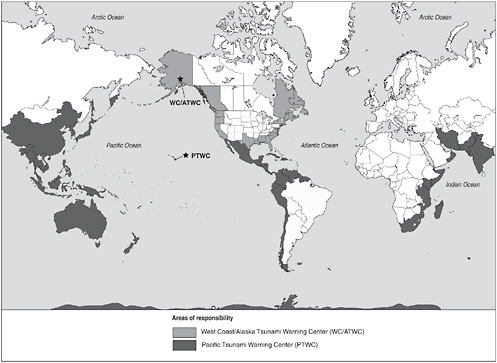
FIGURE 5.1 Areas of responsibility (AORs) for the PTWC (dark gray) and the WC/ATWC (light gray). SOURCE: Government Accountability Office, 2010.
-
many Pacific rim countries (as an operational center of the Pacific Tsunami Warning and Mitigation System [PTWS] of the Intergovernmental Oceanographic Commission [IOC] occasioned by the 1960 Pacific-wide tsunami generated in Chile)
-
Indian Ocean countries (as an interim center for the Indian Ocean Tsunami Warning and Mitigation System [IOTWS] of the IOC since 2005)
-
Caribbean countries except the U.S. commonwealth of Puerto Rico and the U.S. and British Virgin Islands (as interim center for the Intergovernmental Coordination Group for the Tsunami and Other Coastal Hazards Warning System for the Caribbean and Adjacent Regions [ICG/CARIBE EWS] since 2006)
The WC/ATWC has the following areas of responsibility (Figure 5.1):
-
all U.S. states except Hawaii
-
Canadian coastal regions
-
Puerto Rico and the Virgin Islands
TSUNAMI WARNING CENTER FUNCTIONS
The Tsunami Warning Centers have a widespread client base: emergency managers, the scientific community, and the public. They are responsible for gathering information from sensor and observational systems; detecting events of interest (tsunamigenic earthquakes) and determining magnitudes for those events; developing decision support information for operational and scientific decision makers; and providing and disseminating warning and notification products to the public and other entities. The TWCs are not designed for or capable of detecting landslide-induced tsunamis such as those that might occur in Alaska, Puget Sound, or in some of the Hawaiian Islands. Operational components of each TWC (Figure 5.2) include:
-
Earth Data Observations, which allow the detection of earthquakes and tsunami occurrence (described in Chapter 4).
-
Data and Information Collection of seismic and sea-level data, impact reports from agencies and the public, and data and information sharing with other centers (described in Chapter 4).
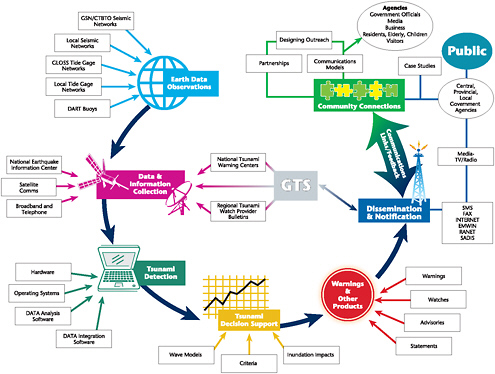
FIGURE 5.2 Key operational components of the tsunami warning centers. SOURCE: U.S. Indian Ocean Tsunami Warning System Program, 2007.
-
Tsunami Detection Systems that rely upon scientific expertise and practical experience to process and analyze the gathered data in support of tsunami detection and impact projections, and hardware and software that support the analysis. Critical to effective detection system performance are appropriate personnel, training, policies, procedures, and an organizational culture that values constant and frequent organizational learning and that reinforces the core goals of excellence and high performance in the warning system.
-
Tsunami Warning Center Decision Support Systems that assist the TWC watchstander2 in determining what type of warning product should be issued. Tools available to support the decision making process include criteria and bulletin thresholds, software support to detect seismic events in real time, and computer models of tsunami wave heights and coastal inundation models for impact assessments. Critical needs for this component include frequent and varied training for operational watchstanders (e.g., simulations, walk throughs, case studies, table-top exercises); organizationally supported interactions between watchstanders in the two warning centers; and ongoing and prioritized research and development to support operations and implement new technology.
-
Warning and Other Products, which are standardized messages issued to the public and other customers. The following four products are described in detail in this chapter:
-
A Tsunami Warning, issued when a potential tsunami with significant widespread inundation is imminent or expected. Initial warnings are normally based only on seismic information.
-
A Tsunami Watch, issued to alert emergency managers and the public of an event that could later impact the watch area. As updated information becomes available (e.g., from sea level networks), the watch may be changed to a warning or advisory.
-
A Tsunami Advisory, issued for the threat of a potential tsunami causing strong currents or waves that would be dangerous to those in or near the water. Significant widespread inundation is not expected for those areas under an advisory.
-
A Tsunami Information Statement, issued to alert emergency managers and the public that an earthquake has occurred. In most cases, information statements are issued to indicate that there is not a threat of a destructive tsunami affecting the TWC’s AOR, and are used to avoid evacuations in coastal areas that may have felt the earthquake. In some cases, the information statement is also used to indicate the need to stay tuned for more information as it becomes available.
-
Dissemination and Notification Plans, which are produced in advance to ensure that TWC customers are able to receive and understand the warning products. It is critical that dissemination systems are tested and that roles and responsibilities for different actors are clearly defined and articulated.
-
-
Community Connections that educate the public about tsunami safety and preparedness and inform the public about the TWC’s role in tsunami warning. Effective community connections include partnerships with media and the community that develop community preparedness and other resilience initiatives (U.S. Indian Ocean Tsunami Warning System Program, 2007) (community preparedness efforts are discussed in detail in Chapter 3).
Tsunami Detection
Tsunami detection requires information gathering, data analysis and assessment, and decision making and communication. Earthquake detection functions required at both the TWCs are similar and comprise the following basic steps (see Weinstein, 2008; Whitmore et al., 2008):
-
Seismic data analysis systems automatically and rapidly evaluate the location, size, and focal mechanism of an earthquake to determine if it has significant potential to trigger a tsunami. Watchstanders reassess the event by analyzing select seismic data and may empirically adjust the moment magnitude determination;
-
Watchstanders determine if the magnitude is above certain thresholds and based on this analysis, generate and disseminate initial messages (with either a watch, warning, or information bulletin);
-
For each significant earthquake, watchstanders estimate corresponding tsunami arrival times and heights for selected critical locations;
-
Once sea level data are acquired, watchstanders reassess the threat, including scaling earlier, computed tsunami forecast scenarios to fit the sea level observations from the Deep-ocean Assessment and Reporting of Tsunamis (DART) systems; if needed (e.g., if sea level data are lacking) watchstanders continue post-processing the seismic data to refine the threat assessment;
-
Watchstanders generate and disseminate follow-up informational messages with the additional detailed information available from sea level and seismic data analysis (National Oceanic and Atmospheric Administration, 2008a, c);
-
Watchstanders iterate steps 5 and 6 until an appropriate time interval (based on the expected tsunami propagation speed and modeled duration of inundation) has passed and all watches or warnings for the AOR shorelines can be lifted.
The TWCs consider “significant” earthquakes as events exceeding certain predetermined magnitude thresholds, which also depend on the distance offshore. These events automatically trigger the audio alarm systems of the two TWCs, prompting on-duty watchstanders to initiate a detailed investigation of the earthquake and its potential to trigger tsunamis. Typically, watchstanders at both TWCs are required to make initial and independent estimates of the earthquake location and magnitudes within 5 to 15 minutes of the earthquake origin time (National Oceanic and Atmospheric Administration, 2008a, c). The location determines which TWC
will be responsible for officially determining earthquake parameters. Based on the committee’s review of the warning messages, magnitude determinations included in the warning messages sometimes differ between the two TWCs. The warning message is communicated to the National Earthquake Information Center (NEIC, see also Box 5.1) but the TWCs typically attempt to determine the seismic location and magnitude more rapidly than NEIC. Subsequent messages from the TWCs may include corrections to the magnitude determination issued in the first message. Given the benefit of consistency in warning message dissemination (discussed in Chapter 3), avoiding such inconsistencies in earthquake parameters between different warning products would be beneficial to the warning process.
Although many of the required functions are similar, the detection procedures followed by each of the TWCs differ and the centers use different operating systems and graphical user interfaces (Table 5.1). The WC/ATWC uses personal computer (PC) workstations running Microsoft Windows and all seismic, sea level, geographic information system (GIS), forecasting, and product-generation software run on a network of 10 operational PCs with complete hardware and communications redundancy. Development, testing, and training operations are performed on three other computers. In contrast, the PTWC utilizes seven redundant Sun/Solaris workstations, and functions are migrating to the open-source Linux operating system. The development of incompatible hardware platforms was based on the availability of local knowledge at each TWC, rather than on a formal information architecture development or planning process.
Each TWC uses different software for its real-time monitoring and analysis systems: the PTWC runs Antelope3 to manage seismic data streams. This software package is currently used at several other earth science programs (e.g., Earthscope Array National Facility, Saudi Arabia National Seismic Network, Alaska Seismic Network, Singapore National Telemetry Network, Dominican Republic Seismic Network, Ocean Observatories Initiative Cyberinfrastructure component). The WC/ATWC and the PTWC use software based on Earthworm (version 7.1), an open source package for regional seismic networks developed by the USGS in 1993. As of 2007, 40 observatories4 in addition to the WC/ATWC and the PTWC were using Earthworm despite the lack of active software development or maintenance.
Because there is no common software architecture, each TWC operates with a different set of standards and procedures. The processes followed by scientists receiving sensor information differ and are supported by different analytical tools in each TWC. The analyses, results, messages, thresholds, and notification processes supported by each TWC’s hardware and software technology are also therefore different, and the customer-facing software interfaces and reports provided to the public and the media from each TWC differ; the result of the differences suggests that the two TWCs are not part of the same organization, with the same mission. The differences introduce another set of operational challenges, as, based on the committee’s observations, it appears that a scientist working at one TWC would have difficulty covering a shift at the other TWC without significant additional training. Despite these differences, how-
|
3 |
|
|
4 |
The list was obtained from http://folkworm.ceri.memphis.edu/ew-doc/. |
|
BOX 5.1 Other Operational Organizations As part of the National Weather Service, the National Centers for Environmental Predictions (NCEP) provides overarching management for several operational prediction and modeling centers (e.g., Aviation Weather Center [AWC], Storm Prediction Center [SPC], or National Hurricane Center [NHC]). These centers provide a range of operational products, such as accurate analyses, guidance, forecasts, and warnings in support of NOAA’s mission to protect life and property. The centers are all managed under NCEP to increase the exchange of lessons learned among operational units and to provide central leadership to capitalize on emerging scientific and technological advances (NOAA/NCEP strategic plan 2009-2013). The NEIC is part of the USGS and its mission is to determine promptly the location and size of destructive earthquakes worldwide. The center disseminates the results of its analysis immediately to the public and to the user-community, including emergency response agencies. |
TABLE 5.1 Comparison of Tsunami Warning Center Technology and Management Products and Processes
|
Technology Product, Process |
West Coast/Alaska Tsunami Warning Center |
Pacific Tsunami Warning Center |
|
Hardware Platforms |
||
|
Hardware Platforms |
10 PC workstations and servers with hardware and communications redundancy |
7 Sun workstations 2 PC workstations from PMEL to run SIFT |
|
Software Platforms |
||
|
Operating System |
Windows XP for EarlyBird |
SUN Solaris and Linux |
|
Applications |
|
|
|
• Seismic processing, analysis |
Data acquisition: Earthworm and Nanometrics for WC/ATWC network data Data processing: standard Earthworm architecture with specialized tsunami analysis modules known as EarlyBird |
Data acquisition: Earthworm, EdgeCWB, and Antelope for PTWC network data Data processing: for non-Hawaii events, standard Earthworm architecture with local developed user interfaces and some use of EarlyBird modules. For Hawaii events, locally developed analysis system |
|
• Sea level, tidal data analysis |
Data ingest through Global Telecommunications System (GTS) and Earthworm using locally developed decode software |
|
|
|
Data analysis using TideView |
Data analysis using TideTool |
|
Technology Product, Process |
West Coast/Alaska Tsunami Warning Center |
Pacific Tsunami Warning Center |
|
• Mapping software |
EarthVu GIS—locally developed based on Geodyssey Limited’s Hipparchus system. Also use Generic Mapping Tool (GMT) and developing with ESRI and Google Maps |
GMT open source software maintained at the University of Hawaii |
|
• Messaging software |
Written internally Aging—software support difficult Watchstander previews are not supported |
|
|
|
Coded in C |
Coded in FORTRAN |
|
• Geographic information system |
EarthVu |
|
|
• Tsunami forecasting systems |
Use Alaska Tsunami Forecast Model (ATFM) through EarthVu GIS interface Use PMEL’s SIFT server software and hardware |
|
|
|
Precomputed model database WC/ATWC developing ATFM version 2, an upgrade to ATFM |
Developing forecast system capable of producing international forecasts known as real-time inundation forecasting of tsunamis Will use ATFM version 2 once available |
|
• Product formats |
Standard NWS, HTML, RSS, CAP/XML, SMS |
Standard NWS, RSS, CAP/XML, SMS |
|
• Configuration management tools |
Subversion Configuration Management System Configuration Management Plan (CMP) in use |
GIT |
|
• Security, quality assurance, file sharing software |
Recently completed a Certificate and Accreditation audit (May 2010). Authority to operate granted with moderate threat level. |
Ready to undergo Certificate and Accreditation audit |
|
Programming Languages |
C Some Java-based code |
Procedural—C, FORTRAN Tcl/TK for scripting |
|
Databases |
MySQL |
|
|
Web Infrastructure |
HTML, PHP, MapTools |
PHP |
|
Web 2.0, 3.0 Planning, Products |
Not described |
Initial explorations |
|
Technology Product, Process |
West Coast/Alaska Tsunami Warning Center |
Pacific Tsunami Warning Center |
|
Technology Life Cycle Processes |
||
|
System Planning Processes |
Not observed |
|
|
System Development Processes |
Software is internally developed, during periods of operational slack, by watchstanding scientists. IT support staff express reservations about stability of hardware, software infrastructure. |
|
|
System Deployment Processes |
Performed by watchstanding scientists, during periods of operational slack |
|
|
|
Release deployment follows CMP’s instructions and requirements |
|
|
System Testing Processes |
Development and test systems provide testbed before systems are operationally deployed. CMP provides testing requirements. |
Not described |
|
System Support |
Watchstanding scientists maintain the pieces of code that they are responsible for developing. |
|
|
|
IT support staff report software is unstable and aging. |
|
|
System Procurement Processes |
Informal Dated Inadequately budgeted |
|
|
System Maintenance |
Regularly performed Informal processes |
|
|
System Configuration Management |
No formal processes described Updates difficult IT support staff performing updates and installing changes impacted by unstable and aging software. |
No formal processes described |
|
Organizational Learning Processes, Process Improvements, Incorporation of Lessons Learned, Dissemination of Best Practices |
Not observed |
|
|
Technology Product, Process |
West Coast/Alaska Tsunami Warning Center |
Pacific Tsunami Warning Center |
|
Technology Management Processes |
||
|
System Back-up andRedundancy |
Regularly scheduled Common processes between TWCs |
|
|
System Security, Information Assurance, Quality Control |
Not observed |
|
|
Personnel, Watchstanding Redundancy, Back-up |
Personnel can perform back-up activities and issue the other center’s messages (federal mandate requirement satisfied). Made difficult due to incompatible operating systems, applications, and processes Training required before back-up and redundancy is operational |
|
|
Code Sharing, Code Integration between TWCs |
Not possible due to incompatible operating systems, applications |
|
|
Documentation |
Limited |
|
|
System Performance Benchmarking, Reporting, Metrics |
System accuracy and response time reported monthly Center uptime (partially dependent on IT system uptime) also reported monthly |
Not available or developed Not part of an articulated IT performance evaluation process |
|
Adherence to/Compliance with International Process, Product Standards |
Not apparent Software risks mitigated by use of legacy personnel performing timely repairs |
|
|
SOURCE: Committee member. |
||
ever, the TWCs are able to perform federally mandated back-up activities for each other and are able to issue each other’s messages.
The TWCs’ technology products and processes can benefit from the experiences and lessons learned from other distributed, safety-critical, large-scale systems with significant data and communication requirements, including aviation, medicine, transportation, chemical processes, offshore oil and gas, and, within NOAA, the NCEP, as well as the NEIC and the NWS’ Hurricane Center and Severe Storm Center (see Box 5.1). The TWCs’ software and hardware technology planning, development, operations, and maintenance processes and products should be aligned with those of other safety-critical systems and NOAA departments in order to (1) enhance compatibility, modeling, and analysis with other large-scale environmental systems; (2) improve data and analysis sharing to enhance lessons learned; (3) increase compliance with international standards; (4) reduce hardware and software vulnerability and dependence; and (5) decrease training and maintenance costs.
Given their shared mission, TWC functions (including but not limited to tsunami detection) could be supported by a common technology suite having common operational requirements, processes, training, policies, and procedures. The committee notes that a number of highly reliable, mission-critical, large-scale systems currently support real-time distributed operations across a broad geographic area, including, within NOAA, the NWS with global telecommunications service (GTS), the NCEP, and the Hurricane and Severe Storm labs; and outside NOAA, the medical (Physicians On-Line/Medscape, 2006), geophysical (Gulbrandsøy et al., 2002; Herring, 2002), financial (Society for Worldwide Interbank Financial Telecommunications, 2009), and energy distribution systems (Andersen and Drejer, 2005). These systems provide examples of how to operate and maintain a distributed, complex operational system. Technology industry best practices adopted by these organizations include (1) adherence to platform-independent hardware and software architectures, applications, and interfaces; (2) the use of international hardware, software planning, development, operations, and maintenance product and process standards, including the Software Engineering Institute’s Capability Maturity Model and the software development life cycle (Carnegie Mellon Software Engineering Institute, 2010); (3) regular and systematic use of continuing process and product improvement models for hardware, software, personnel and organizational planning, development, operations, and maintenance; and (4) evaluation and assessment of technology and organizational processes and products as part of a continuous process improvement and learning organizational culture (Senge, 1990).
Conclusion: The two TWC technology suites differ considerably from each other, with different hardware platforms, software suites, products, processes, and interfaces to the public and their users. Differences in TWC technologies, processes, products, and interfaces lead to technological incompatibilities and limited capabilities for back-up, redundancy, and checks and balances, which are important mission capabilities for the tsunami warning system.
Tsunami Decision Support
Detection of a significant earthquake leads to a series of critical decisions by TWC watch-standers: What type of product needs to be issued? When and how can the initial message be refined, based on real-time observations? Basic tools available in the decision making process include:
-
Threshold criteria for an initial warning, which are based on historical events;
-
Software for monitoring relevant data and visualizing the tsunami event; and
-
Pre-run models that provide scenarios of inundation and impacts, also based on historical events.
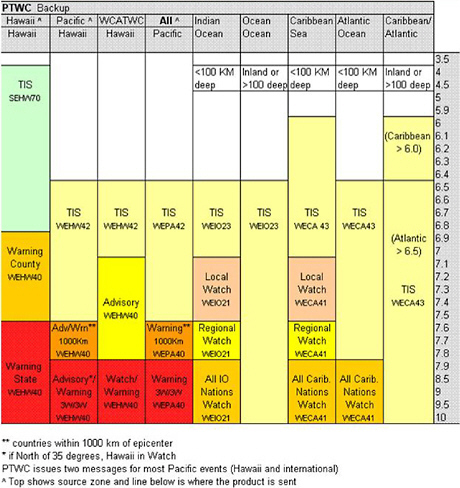
The type of notification product issued from each TWC is based on an earthquake’s location, magnitude, and depth. These “bulletin threshold” criteria differ for different regions of an AOR, as seen in Table 5.2. However, some regional differences in the threshold criteria could result in confusion. For example, in the case of a 6.5 magnitude earthquake in the vicinity of Puerto Rico, the WC/ATWC would issue a warning for Puerto Rico, but based on PTWC backup criteria from the WC/ATWC user’s guide, the PTWC would issue an information statement for the Caribbean Sea (National Oceanic and Atmospheric Administration, 2009). It is not clear what factors have contributed to this difference in threshold criteria between Puerto Rico and rest of the Caribbean Sea. As previously discussed, issuing messages with potentially conflicting or confusing content—as would be the result from issuing a warning for Puerto Rico and an information statement for the remaining Caribbean Sea—is counter to the science of effective warning messaging. Thus, harmonizing threshold criteria to yield consistent warning products for regions in close proximity would reduce a potential source of confusion.
As discussed in Chapter 4, the initial warning is based on seismic information alone and relies on fairly conservative thresholds. Therefore, in the case of most earthquakes—except for “mega-” and “tsunami” earthquakes (see Appendix G and H)—these thresholds result in the tendency to over-warn. Given the potential consequences of failing to warn, that is, the loss of lives, over-warning is the preferred outcome for the initial product, which can be refined based on the subsequent detection of sea level changes. However, as previously noted, tsunami earthquakes (i.e., slow earthquakes—see Appendix H) might not be recognized quickly enough based on the current analysis and might not result in the correct warning decision. Even this early decision process could benefit from refinement as more advanced methods have been developed and are discussed in greater detail in Chapter 4.
Product Generation and Warnings
Once a watchstander decides to issue a message, s/he fills out a pre-generated checklist that is incorporated into a pre-written or “canned” message. After the product is generated, it is carefully reviewed by the watchstander prior to issuance. Checklists and tsunami warn-
TABLE 5.2 Bulletin Thresholds to Provide PTWC Backup
|
|
|
SOURCE: http://wcatwc.arh.noaa.gov/ops/opsmanual.pdf; West Coast/Alaska Tsunami Warning Center, NOAA. |
ing products are generated differently by each TWC’s suite of software, although both are in-house products (Table 5.1; for additional details, see Chapter 3). Messaging software is written in either the formula translation/translator (FORTRAN) or C programming languages, so the watchstander needs to recompile and regenerate the message if an error is detected. This inability to preview and edit a warning product has the potential to introduce delays in the initial warning phase, and the reliance on dated software technology deters easy interfacing with current network and mobile data structures. Addressing these problems is difficult for the
TWCs, as IT software development and maintenance activities are collateral duties for scientific personnel and watchstanders, most of whom have formal training or education in geophysical sciences, not software engineering. Despite this lack of formal education and/or training, IT support, maintenance, and development of operational software consumes a significant portion of a scientific person’s daily tasks.
Given these issues and the increasing prevalence of social networking and mobile technologies in emergency, crisis, and disaster management, messaging software that permits an interface with the social media and compatibility with newer generation software and web products/mobile interfaces (e.g., Extensible Markup Language (XML), Simple Messaging System (SMS) formats) would provide several benefits (Sutton et al., 2008).
The committee reviewed the “canned messages” that are composed and delivered by the TWCs and discovered that many documented principles for effective warning messages (see Chapter 3 for detailed discussion) have not been applied. In addition, the generation of two sets of warning products from the two TWCs can be a major source of confusion among the emergency management community and the public as illustrated by the June 14 case study (Appendix F). On June 14, 2005, after an earthquake within the Gorda Plate west of the northern California and southern Oregon coast, the TWCs issued two different warning messages. While the WC/ATWC issued a warning for its AOR, which included California and Oregon, the PTWC subsequently issued a bulletin for its AOR (including Mexico) stating that there was no tsunami warning in effect (for its AOR). Both messages were correctly stating the threat of their respective AORs, but they led local officials to believe that the PTWC message canceled the previous message from the WC/ATWC; thus, reducing the effectiveness of the message. This is of particular concern in areas where the separation in AOR is not intuitive. For example, if an earthquake with the potential to generate a tsunami occurs in the Caribbean, the WC/ATWC would issue a message for Puerto Rico and the U.S. Virgin Islands, while the PTWC would issue a notification for the rest of the Caribbean. Similarly, after a major earthquake in the Pacific, the WC/ATWC issues a warning message for Alaska, the Canadian Pacific coast, Washington, Oregon, and California, but not Mexico or Hawaii.
Although these messages are not intended to replace messages from local/state officials to the public with instructions about appropriate response actions, products from both the TWCs are distributed to members of the public via the internet, social networking tools, or the media (TV and radio) in addition to the other official channels (see Chapter 3 for details). Consequently, the messages are immediately disseminated to the public via multiple and diverse channels—as was the case during the Samoan tsunami (Appendix I) and the Chilean tsunami (Appendix J). Obtaining messages from multiple channels is positively correlated with protective action taking, if the messages are consistent. Inconsistencies in message content create the potential for confusion and can result in greater uncertainty about protective actions needed. Therefore, it is central to the success of the TWCs that they further improve the consistency and clarity between their messages to prevent any confusion resulting from the distinct AOR. Alternatively, the issuance of a single message after internal consultation between the TWCs ought to be considered.
Conclusion: The TWCs’ warning products could be much more effective if their content and their delivery incorporated the social science on composing effective warning messages and were compatible with current software, hardware, and social media.
Conclusion: Based on the latest science the committee reviewed, the greatest likelihood for achieving appropriate response before and during an impending disaster results from a consistent warning message from multiple sources. However, the current division in AOR between the two centers and the different products issued by the two centers has resulted in confusion in the past (see case study on June 14) and has great potential to cause confusion again in the future. Despite improvements after the June 14 event, there are still inconsistencies in warning products from the two TWCs; and the current division of AORs results in messages that do not clearly communicate who needs to take protective actions and who does not.
Recommendation: NOAA/NWS should harmonize and standardize checklists, tsunami warning products, and decision support tools, and standard TWC software tools and applications should be used in the TWCs, following current software engineering practices and taking advantage of current programming language best practices.
Recommendation: The TWCs should consider alternative warning message composition software (considering software technology and product generation that result in current generation software and web products [e.g., XML, SMS formats]) and should improve protocols by undertaking an external review by IT specialists in the area of communication technology to identify the latest technology in message composition software and formats, and to ensure compatibility with current and next generation information and communication (web and cell-phone) technology for message dissemination.
TECHNOLOGY NEEDS
The TWC technological infrastructure needs to support all of the tsunami warning system functions, including detection, decision support, product and warning message generation, and dissemination and community outreach. As mentioned in previous sections, each TWC has different, non-interoperable hardware platforms and software suites. These choices, made without consultation between the TWCs, are a result of the historical evolution of these centers and appear to be based on skill sets of each center’s available personnel rather than on any systemwide architecture plan. Although IT development, support, and maintenance activities are critical to support the TWCs’ functions, the activities are often ad hoc and informal and are carried out as a collateral duty by geoscientists. Little IT planning has taken place at either TWC, and planning activities are not articulated in a systemwide enterprise or system architecture.
TWC staff maintains and develops software in their spare time or when there are no pressing operational requirements. Staff is not formally trained in technology life cycle processes
or products, leading to nonstandard hardware and software that does not represent current development practices. In addition, some of the TWC software is aging, was developed using inappropriate or aging programming languages, was developed using nonstandard single person coding models, and is difficult to support and maintain. Failure risks have been mitigated by both relatively infrequent significant tsunami events and a small legacy TWC staff who maintain the aging systems as needed.
NOAA has developed an IT Convergence Plan to harmonize software and hardware suites between the TWCs for FY2009-2012. The goal is to create a single, platform-independent technology architecture to be deployed at each TWC and to develop a shared tsunami portal (National Oceanic and Atmospheric Administration, 2009). This plan, which would be funded by telecommunications surplus funds, was cited several times by TWC management and staff as a future source of IT planning and direction. Upon review of the Concept of Operations and Operational Requirements for the IT Convergence Program (National Oceanic and Atmospheric Administration, 2009), the committee believes that although the IT Convergence plan offers the possibility of streamlined and state-of-the-art knowledge transfer for software development, it will not address the need for an enterprise-wide technology architecture and process planning effort. Additionally, plan requirements were developed without consultation of TWC users, emergency managers, academia, the public, or other tsunami program stakeholders.
The current software suites are tightly linked to their hardware platforms; migration to platform-independent architectures could offer the benefit of reduced system maintenance requirements and could enhance information sharing among the TWCs, universities, watch-standers, and the real-time software development community. A long-range technology planning effort for the TWCs that is consistent with international technology process and product standards (U.S. Navy Space and Aviation Warfare Command, 1998; International Standards Organization, 2009; Carnegie Mellon Software Engineering Institute, 2010; Institute of Electrical and Electronic Engineers, 2010) could effectively develop an enterprise-wide technology architecture that supports tsunami warning system missions and its accompanying development, deployment, support, and maintenance operations. The committee learned that no metrics for system up-time or program faults are collected, resulting in a lack of necessary benchmarks for system performance evaluation and improvement. Senior IT leadership and adequate multiyear funding are required to support this long-range effort. It should also entail:
-
Adopting process, documentation, hardware, and software standards;
-
Modernizing the current software system so that a single common extensible core runs at both centers (IEEE Std 610.12-1990);
-
Creating development and planning processes that allow both the TWCs to perform joint planning and execution, including better transparency and communication; and
-
Providing better oversight to ensure that the centers are adhering to standards and minimizing duplication of effort.
Conclusion: The committee believes that the Convergence Plan is well-motivated but also notes that the Plan is a single project effort and is not part of a systematic, comprehensive IT system plan and enterprise architecture, which the tsunami program needs.
Each TWC has different web design processes, resulting in dissimilar websites.5 Although both websites utilize a similar NWS banner, different user interfaces contribute to an impression that the TWCs are separate, unrelated entities.
Dissemination and notification technologies could involve a variety of message dissemination pathways, including satellite-based paths, text messages, faxes, mass media, public announcement systems (e.g., sirens, alarms), telephones, Internet, and syndicated news feeds. In addition, development and use of Web 2.0 and 3.0 technologies (e.g., mashups, blogs, microblogs, social networking sites) offer new opportunities to alert the public and interface with peers and the scientific community. These technologies are only in their infancy at the PTWC and not described in any WC/ATWC planning documents.
As discussed in Chapter 4, these newer technologies proliferate, and the public will increasingly use them for obtaining real-time updates and information, forcing both the TWCs to develop strategies for communication and warning technology. Evaluation and assessment of the utility of traditional websites and Web 2.0 and 3.0 technologies for crisis and disaster management is under development in the information systems, hazard awareness, and crisis and disaster management communities (Boiney et al., 2008; Buscher et al., 2008; Hughes et al., 2008; Shankar, 2008). This literature could provide important direction to the tsunami warning community.
Conclusion: The centers rely on technical infrastructure and human capital, both of which the committee assessed to be insufficiently supported. The TWCs lack sufficient support for the essentials that complex, large-scale, high-reliability systems with mission-critical requirements demand: state-of-the-art technology; IT support, maintenance, assessment and planning processes; IT personnel; and dedicated senior IT leadership.
Conclusion: Despite the importance of technology to fulfilling the TWC mission, technology development, deployment, support, maintenance, back-up, recovery, and configuration management are collateral duties for most TWC staff members. Neither management nor staff members at the TWCs have formal training in technology, software engineering, design, maintenance, or IT support, yet almost all staff members have significant technology responsibilities.
Recommendation: The tsunami warning program should undertake a comprehensive, enterprise-wide,6 long-range technology planning effort, consistent with international technology process and product standards, in order to develop both an enterprise-
|
5 |
http://wcatwc.arh.noaa.gov/ and http://www.prh.noaa.gov/ptwc/. |
|
6 |
Enterprise-wide refers to organization-wide or across a large system or enterprise. |
wide technology architecture for TWC operations and the accompanying enterprise-wide technology support processes.
Recommendation: Given the importance of technology, particularly IT, in the overall process of detecting and warning, and the rapid evolution of IT, NOAA/NWS should provide the TWCs with stronger IT commitment and leadership, and greater resources for software and hardware personnel, planning, development, operations, maintenance, and continuous process and product improvement.
Recommendation: IT staff should be provided to the TWCs so that IT hardware and software design, development, and maintenance are not a collateral duty of a watchstanding scientist, as is the case presently. An external IT Advisory Board, with membership from the USGS, other seismic network operators, human factors, information technology, and other large-scale, safety-critical systems professionals should be established to advise the TWCs. The Board should meet on at least an annual basis and provide TWC management and operational personnel with guidance and expertise in building, developing, maintaining, and nurturing a highly effective, large-scale distributed, tsunami warning system.
Six elements are critical to the enterprise-wide planning effort: highly effective leadership; a common set of functional, operational, and organizational processes; adherence to international standards; assessment processes that lead to continuous improvement; effective and compelling communication; and adequate and consistent funding to ensure that the processes, people, organizational structures, and policies effectively support the tsunami mission. Specifically, the committee recommends the following improvements:
Senior IT leadership to guide the organization and ensure that the TWC technology architecture supports TWC operational requirements for reliability and sustainability;
-
A common set of functional, operational and organizational processes, including
-
Articulated technology development, procurement, deployment, maintenance, support, security, and configuration management processes;
-
Planning processes that are compliant with software engineering and computer science standard processes and lessons learned from other large-scale, mission-critical systems, and which are effectively carried out by TWC IT management and staff personnel, IT support personnel, in regular consultation with TWC customers and emergency management personnel;
-
An enterprise-wide IT requirements development process that transparently identifies all TWC requirements with a single planning process and a single enterprisewide IT architecture; and
-
IT development, deployment, maintenance, support, quality assurance, security, and configuration management processes that are adequately planned and budgeted,
-
-
and undertaken by IT and software engineering professionals following current IT development and deployment practices;
-
Adherence to international standards, including adoption of current international software engineering, process, documentation, hardware, and software standards throughout the tsunami system;
-
Assessment processes that lead to continuous improvement, including
-
Yearly systemwide performance monitoring, management, testing and benchmarking; yearly assessment, evaluation, accountability audits, and reporting of the TWC technology infrastructure’s support for the long-term reliability and sustainability of TWC operations;
-
Common, systemwide performance metrics and benchmarks; and
-
Incentives to ensure compliance with standards and high levels of performance;
-
-
Mechanisms to communicate best practices, lessons learned and to enhance organizational learning; and
-
Adequate, substantial, multi-year, dedicated funding for all elements of the technology plan.
Multi-year funding to support the technology planning, development, deployment, maintenance, support, and security operations will need to be appropriately budgeted over the technology life cycle. As part of this planning and modernization process the committee identifies an additional urgent need:
-
Attention should be paid to the use of traditional, nontraditional, and next generation technology in support of community outreach and dissemination. IT for community outreach and dissemination efforts should be included as part of the long-range technology planning process and should be incorporated as an ongoing component of TWC planning processes.
Recommendation: NOAA/NWS and the TWCs should adopt national, and where applicable, international, standards, best practices, and lessons learned for all functions, technology, processes, and products. Specifically, the TWCs should develop platform-independent hardware and software architectures, applications, and interfaces; and employ international hardware and software planning, development, operations, and maintenance product and process standards, including the Software Engineering Institute’s Capability Maturity Model and the software development life cycle (Carnegie Mellon Software Engineering Institute, 2010).
Recommendation: The TWCs should also regularly and systematically apply continuing process and product improvement models for hardware and software planning, development, operations, and maintenance; organizational processes; and should develop a learning organizational culture.
HUMAN RESOURCES
Each TWC is staffed by a center director, a tsunami warning science officer (who serves as the deputy director), an information technology officer, nine science duty staff (geophysicists and physical oceanographers), a senior electronics technician, an electronics technician, and an administrative assistant (Charles McCreery, presentation to the committee, 2008). The nine science duty staff members perform watchstanding duties in addition to their research and development duties (National Oceanic and Atmospheric Administration, 2008b, c). Because of the watchstander’s critical role in maintaining situational awareness and issuing correct notification and warning products, the committee reviewed this position’s shift schedules, training, support, and responsibilities as part of its assessment of the TWC’ long-term sustainability.
When the TWCs are fully staffed, the nine watchstanders serve on rotating two-person, eight-hour shifts that provide 24/7 coverage. Both TWCs have identical watch schedules (0800-1600, 1600-2400, 2400-0800 local time), although the two watch centers are in different time zones. Watches can be rotated to cover busy periods, vacations, and other TWC needs. Two watchstanders are always present at the WC/ATWC. In contrast, the PTWC has only one on-duty watchstander in the watch station at all times, while the second watchstander is on a 90-second response standby, allowing him/her to sleep or to be outside the watch station. Each watchstander is responsible for checking all workstations every four hours to ensure functionality. Unless they need to respond to an event, watchstanders spend approximately six hours on software development and two for operational activities (Paul Whitmore, West Coast and Alaska Tsunami Warning Center, personal communication). When an alarm is sounded, the watchstanders leave their other duties to respond. Because they are most often attending to other duties, there is an indeterminate period of time required for watchstanders to acclimate themselves to an alarm.
The WC/ATWC rotates watches every two weeks, which can result in sleep disorders (Sack et al., 2007) and work/life balance issues, but provides equitable sharing of night shift watch-standing duties. Resulting sleep disorders, issues with work/life balance, as well as several month-long shortages of two full-time watchstanders at the WC/ATWC in 2008 suggest that staff fatigue may be an issue.
TWC staff have varying levels of engagement with the external research community. The PTWC’s proximity to Honolulu (23 miles away) is conducive to interactions with the civil defense and academic communities at the University of Hawaii at Manoa, while WC/ATWC’s distance from Anchorage (43 miles away) and its location in a small town of 7,000 residents (Palmer, Alaska) does not lend itself as easily to such interactions.
Conclusion: Because of the importance of technical and scientific know-how within the TWC program, opportunities for interactions between TWC staff and the external scientific and professional communities are important, need to be encouraged and institutionalized within the tsunami program, and require adequate resources.
Such interactions might include attendance at professional conferences; participation in seminars, workshops, or other structured learning opportunities; scientific and personnel
exchanges and sabbaticals; study away opportunities at related scientific venues; and grants, fellowships, and stipends to further professional study.
The watchstander has a critical role in tsunami decision support by maintaining situational awareness and issuing the correct products and information. Although visualization software assists by monitoring seismic and sea level data and mapping event locations, it is the watch-standers’ training, experience, and scientific expert judgment that are essential in making the appropriate decisions when creating notification products for emergency managers, local government, and the general public.
Tsunami detection and warning requires frequent, effective, and purposeful communication and interactions between watchstanders, staff, and management in the TWCs, and with operational decision makers and the public. To enhance the effectiveness of TWC decision making and the TWC staff’s ability to inform decision making processes of their customers, frequent, regular, and varied types of training for operational watchstanders (e.g., simulations, walk throughs, case studies, table-top exercises) are needed. In addition, scheduled and organizationally supported interactions between watchstanders and management in distributed watch centers are beneficial to the TWCs’ reliability of operations; these activities could include seminars, personnel and information exchanges, technical meetings, and scheduled joint work sessions.
Conclusion: Given the highly technical and specialized skill sets required for tsunami watchstanding, workforce development and recruiting can be challenging. The success of the TWC mission is critically dependent on human resources for tsunami warning and detection.
Conclusion: Given the importance of technology in the overall process of tsunami detection and warning, and the rapid evolution of IT, stronger IT commitment and leadership and greater human resources devoted to IT are required in the TWCs. The TWCs lack senior IT leadership to support TWC operations, guide the enterprise-wide technology planning efforts, and provide guidance in adopting enterprise-wide technology processes.
Conclusion: The TWCs require frequent, regular, and varied types of training for operational watchstanders (e.g., simulations, walk throughs, case studies, table-top exercises); frequent, regular, and organizationally supported interactions between watchstanders in distributed watch centers; and ongoing, funded, and prioritized research and development to support operations, which requires an explicit process for implementing new technology into operations.
Recommendation: Because of the importance of technical and scientific expertise to the TWCs’ functions, TWC human capital requirements and TWC recruiting, training, retraining, development, mentoring, and professional exchange needs should be included, re-assessed, and updated as part of the NOAA/NWS enterprise-wide technology planning effort, and should be consistent with NOAA- and government-wide standards, so that
technological, human, and organizational requirements can be considered and developed together by Tsunami Program members and their customers.
As part of the process of maintaining and developing expertise in the TWCs, opportunities for interactions between TWC staff and external scientific and professional communities could be funded, encouraged, and institutionalized within the Tsunami Program. Such interactions might include drafting and implementing a formal plan for maintaining and increasing scientific currency; attendance at professional conferences; participation in seminars, workshops, or other structured learning opportunities; scientific and personnel exchanges and sabbaticals; study away opportunities at related scientific venues; and grants, fellowships, and stipends to further professional study.
ORGANIZATIONAL STRUCTURES
Tsunami detection and warning is currently undertaken by multiple, distributed members linked together to achieve a goal: management of and response to a tsunami disaster. As indicated in the first chapter, the tsunami warning system needs to exhibit properties of a high-reliability organization (HRO), sharing common processes that are supported by distributed information technology (Davidow and Malone, 1992; Mowshowitz, 1997; Jarvenpaa and Leidner, 1999; Kock, 2000). In the event of a tsunami, tsunami warning system managers must assemble effective, functioning response organizations in periods of less than 24 hours and then adjust the organizational structure to the needs of the response (Tuler, 1988; Bigley and Roberts, 2001).
A challenge for tsunami warning systems is therefore to develop effective organizational structures that provide reliable and sustainable operations in non-tsunami periods as well as during catastrophic incidents. HROs typically have flexible and redundant organizational structures that permit organizational slack, allow testing of different response modes and techniques, and provide members the opportunity to develop communication, decision making, and organizational culture that are essential to cooperative, interdependent operations (Weick, 1987; Weick et al., 1999). Organizational structures that provide back-up, redundancy, skill overlap, checks and balances, and one-over-one reviews are critical to the development of effective HROs (Grabowski and Roberts, 1997, 1999; Jarvenpaa and Leidner, 1999), and are thus key structures for highly reliable tsunami operations. Both structures and actors need to be tested regularly in rehearsal and simulation of tsunami events because tsunamis are relatively rare. Such regular rehearsals prevent the potential loss of institutional memory about appropriate organizational response.
During this review, the committee found the current organizational structure—two TWCs managed by distinct regional weather service offices—associated with several benefits and risks:
Benefits
-
Having independent research and development efforts at the two centers increases the competition and the potential for innovative approaches developed at either center.
-
If identical IT systems, software, and analytical methods were used, then the two centers would offer redundancy in the system, which is especially important given that each center’s location is vulnerable to natural hazards.
-
If identical IT systems, software, and analytical methods were used, then the two centers could leverage resources for IT development and modernization.
-
Having two centers in regions that are at great risk of tsunamis offers opportunities to engage with and to educate the emergency management community, the public, and media.
Risks
-
Because the two TWCs are managed by two different regional NWS offices, the two centers display different organizational cultures.
-
Two centers with distinct AORs and different message thresholds greatly increase the potential for confusion and hampers effective decision making during an emergency.
-
The current geographic separation in the AOR is not intuitive and can result in difficulties with regard to interpreting who is under a tsunami warning or not.
-
The current physical settings and the organizational structure within the NWS provides minimal integration with the tsunami and earthquake research community or other operational forecast and warning centers within NOAA (e.g., all other centers are managed by NCEP).
-
Because both the TWCs are located in remote locations, and neither is co-located at another NOAA, seismic or mission-critical center, opportunities to leverage lessons learned and best practices and to adopt standard processes and procedures are limited.
-
NOAA’s already limited technical, professional, and economic resources are stretched to support both centers’ infrastructure, IT, and engineering maintenance and upgrades.
-
Maintaining and modernizing software and hardware systems is difficult because of limited staffing support. Because the TWCs are currently not operationally redundant, they lack the benefit from effectively leveraging limited staff resources (e.g., they must hire more highly specialized IT personnel to update both systems simultaneously).
-
Supporting two robust and redundant communication networks incurs additional expenses.
-
The two TWCs are designed to be back-ups for each other, but they do not operate as such, creating an illusion of redundancy that could prove dangerous and costly, because adequate resources may not have been deployed to provide needed back-up and redundancy.
Ideally, the TWC organizational structures allow for distributed groups of scientists to manage their joint processes, work together effectively in support of their shared mission, and avoid unnecessary redundancy. Support for TWC functions can be provided within an HRO framework, which opens several options for organizational structures. As described above, there are many differences between the centers’ operations, technology infrastructure, and human resources. The incompatibilities in the technology infrastructure run counter to the goal of redundancy in operations. In fact, the inconsistencies in outcomes and messages reduce the benefit of having two centers provide redundancy. Although the TWC organizational structures could permit some organizational redundancy, that redundancy can cause difficulties if duplicate tasks are executed in geographically dispersed operational settings by organizational members who follow different procedures, use different warning thresholds, and communicate inconsistent messages to a public within confusing AORs.
Conclusion: The goal of the current geographically distributed organization of the TWCs is to provide the system with back-up in the case of critical failure at the other center. However, based on the June 14, 2005, event analysis, the review of the literature on high-reliability organizations, and the current geographically distinct boundaries in AORs, the committee concludes that this redundancy is currently more likely to cause confusion than provide benefits. In addition, because the centers are under different management, use different analytical software and hardware, and appear to have distinct organizational cultures, the committee concludes that they function as separate rather than redundant systems.
Conclusion: Even if the IT convergence plan is fully executed, the issues arising from producing different products and messages remain and increase the risk of confusing the public and state and local emergency managers.
Conclusion: The current organizational model is problematic and reduces the ability of the TWCs to provide timely, accurate, and consistent warning products.
The committee concludes that significant changes would need to occur in the management, operations, software and hardware architecture, and organizational culture for the two TWCs to become functionally redundant systems. As a result, the committee discussed alternative organizational options, in addition to the TWCs’ current organizational structure:
-
Based on the committee’s assessment of the relatively slow transition and incorporation of research advances into operations at both TWCs (see Chapters 3 and 4), the committee recognizes various benefits from co-locating the two centers (or a center) with other academic or scientific institutions or with other centers responsible for detection and warning (e.g., NCEP, the NEIC, PMEL, etc). For example, NCEP is co-located with the research community to increase the exchange of ideas between the scientific and operational staff. Alternatively, colocating the TWC(s) with the NEIC would give
-
NOAA access to seismological expertise at this operational center run by the USGS and would pair the critical assets of two agencies with complementary missions.
-
Alternatively, because of issues arising from parallel or inconsistent procedures and potential confusion in the public from different warning products from the two centers, the committee suggests that a centrally managed center located in a single geographic location (such as the Hurricane Center) is a potential solution to the inconsistency in methods, architecture, culture, and messages. A single center might also allow limited resources to be pooled and might ease the difficulties in 24/7 staffing of the centers.
There are many current examples of highly reliable, mission-critical, large-scale systems that support real-time distributed operations using various organizational forms across a broad geographical area. In the NOAA/NWS community, these include the NWS Hurricane Center, the Severe Storm Lab, and the Storm Prediction Center at NCEP. There are other examples outside NOAA including the seismic, oceanographic, meteorological, undersea, cyberspace, and space systems communities, for example (National Aeronautics and Space Administration, 2005; National Science Foundation, 2006). Each of these HROs provide opportunities to leverage lessons learned and best practices for distributed tsunami warning operations.
Recommendation: Organizational structures for the two TWCs should be evaluated and fully described as part of the enterprise-wise technology planning effort previously described. Whether there should be a single or multiple TWCs, or whether the TWC operations should be consolidated in a different location, should be addressed in the enterprise-wide, long-range planning effort.
In evaluating the TWC organizational structure and locale(s), consideration should be given to the proximity to the research community, its user community, and the vulnerability to hazards. HROs achieve high levels of performance when their organizational structures support the decision making, communications, organizational culture(s), and trust required for success, and facilitate provision of the requisite information and knowledge sources to system users, participants, and customers (Grabowski and Roberts, 1999; Bigley and Roberts, 2001). Although developing a strong, unified organizational culture in a warning system can be difficult when members are geographically dispersed, (Grabowski et al., 2007), it is crucial in order to avoid dysfunctionality and miscommunication (Porter, 1993; Stephenson, 1995).
CONCLUSIONS
Effective tsunami detection, warning, and preparedness require that multiple, distributed tasks that are linked together to achieve the goal of reducing loss of life and economic assets using common processes are supported by highly reliable, distributed information technology. In a tsunami event, all of the distributed efforts must come together to produce an effective response and function as if it were a single organization (Tuler, 1988; Bigley and Roberts, 2001).
In addition, tsunami warning and preparedness efforts must develop effective organizational structures that provide reliable and sustainable operations in non-tsunami periods, especially given the short time available to respond in a crisis (only minutes in the case of a near-field tsunami). Maintaining awareness in such a rapidly evolving crisis (i.e., situational awareness) poses a major challenge.
The committee found that personnel at the TWCs are highly committed to the TWC functions, from detection through community outreach. TWC management and staff are highly supportive of the organization’s missions and are articulate advocates for the importance of the mission and TWC functions. The TWC mission is well understood by TWC management and staff, is clearly communicated throughout the tsunami warning system, and is well documented. TWC personnel were found to be knowledgeable and effective in providing TWC functions, systems, and operations. However, aside from notable motivation and good communication, the committee found many shortcomings of the TWCs in terms of functions, technology, human capital, organizational structures, and, as a result, many opportunities for significant improvements of the centers’ operations.
The most fundamental changes required are an improved organizational model and an organizational culture that fosters expectations of performance excellence, and consistently measures and rewards that performance across the tsunami warning system. If the organizational structures are adjusted to meet the required characteristics of an HRO, the TWC(s) could provide the function of an incident command center (ICC). Its central role as such an ICC would be to maintain situational awareness during a tsunami event, continuously updating its threat assessment, understanding the time horizon for informing critical decisions of the emergency management community, repeatedly informing critical users (public officials, emergency managers, media, etc.) of the evolving threat assessment, and monitoring the information broadcast in the public arena to correct misinformation.
At the same time that an improved TWC structure could function as the ICC during crisis mode, an improved tsunami program could provide long-term strategic planning and guidance, support for preparedness efforts, and coordination and support for educational efforts to ensure consistent content in the educational materials. If the TWCs become well integrated with other components of the tsunami program, assets at the TWCs could be used to more rapidly transition research at other program units into operational use. As previously discussed, a critical goal of the Tsunami Program should be to ensure that staffing and funding resources are allocated appropriately.
Conclusion: An organizational culture change is needed within the NOAA/NWS Tsunami Program that supports and celebrates operational excellence; adopts national and international standards, processes, best practices, and lessons learned for all functions, technologies, processes, and products; and engages in ongoing, continuous process improvements.
Conclusion: The committee found that the TWCs do not sufficiently engage in ongoing, joint or agency-wide, continuous process improvement activities for their functional,
technological, organizational, or human capital initiatives, such as those followed by other high-reliability, safety-critical distributed systems. Such activities provide critical benchmarks against which to measure performance over time, and could provide opportunities to reward and incentivize desired performance and behavior across the tsunami warning system.
Recommendation: NOAA/NWS and the TWCs should undertake ongoing, joint or NOAA-wide, continuous process improvement activities for their functional, technological, organizational, and human capital initiatives, including the following:
-
developing measures of performance and benchmarking individual, organizational, and technical performance against industry and agency metrics,
-
identifying areas for improvement,
-
setting short- and long-term performance goals,
-
developing reward and incentive systems for such goals, and
-
celebrating TWC and agency accomplishments as performance improves, in order to raise the level of TWC performance to that expected of a high-reliability organization.


