




Below is the uncorrected machine-read text of this chapter, intended to provide our own search engines and external engines with highly rich, chapter-representative searchable text of each book. Because it is UNCORRECTED material, please consider the following text as a useful but insufficient proxy for the authoritative book pages.
APPENDIX A EFFECTIVE TOBACCO-CONTROL PROGRAMS Numerous organizations have summarized how the organizational-capacity issues mentioned in Chapter 4 are realized through effective tobacco-control programs. Those organizations include the federal government, through the National Cancer Institute (NCI) and the Centers for Disease Control and Prevention (CDC); various state governments, such as those of California and Massachusetts; nongovernment organizations, such as the Robert Wood Johnson Foundation and the Institute of Medicine (IOM); and international organizations, such as the World Health Organization (WHO). This appendix provides an overview of some successful tobacco-control programs and highlights the components that contribute to their success. The United States has several decades of experience in implementing comprehensive tobacco-control programs, particularly at the state level, many funded through tobacco-tax initiatives. The programs have resulted in declines in tobacco consumption that greatly exceed the national average decline. In 2000, IOM and the Presidentâs Cancer Panel issued landmark reports that concluded that there is overwhelming evidence that comprehensive state tobacco-control programs substantially reduce tobacco use; they recommended that every state fund such programs at certain specified per capita levels (IOM, 2000; US Surgeon General, 2000). CDC (2007) recommends that each state fund a tobacco-control program with a target expenditure of $15â20 per capita, depending on the stateâs population, demography, and prevalence of tobacco use (CDC, 2007). The Department of Defense and the Department of Veterans Affairs could assess the applicability of the CDC formulas for tobacco-control expenditures for states to their own populations and adjust them accordingly to determine a reasonable tobacco-control budget for each department. The Best Practices for Comprehensive Tobacco Control Programsâ2007, published by CDC, summarizes the status of state programs and supports a multidimensional approach to further public- health goals along the entire tobacco-use continuum from prevention to 327
328 COMBATING TOBACCO USE IN MILITARY AND VETERAN POPULATIONS cessation. It includes a combination of educational, clinical, and social strategies that support the broad goal of denormalization of tobacco use (CDC, 2007). The recommended strategies fall into five categories: (1) policies; (2) health promotion and education, including communication interventions (for example, mass-mediaâbased antitobacco advertising campaigns and innovative approaches, such as text messaging); (3) cessation interventions (for example, cessation counseling based on the health-care system, Food and Drug Administrationâapproved tobacco- cessation medications, and population-based services, such as toll-free quitlines that are able to provide nicotine-replacement therapy); (4) surveillance and evaluation; and (5) capacity-building, including the administration and management procedures. Direct interventions on an individual level, including health promotion and cessation, are important, but the other strategiesâincluding the implementation of evidence-based policies such as price increases, reduced access to tobacco products, tobacco-free environments, advertising bans, decreases in out-of-pocket costs of treatment, and countermarketing campaigns to change social norms around tobacco useâall encourage cessation. Therefore, cessation policies and programs should be considered as essential for creating the supportive environment necessary for quitting (WHO, 2007). STATE TOBACCO-CONTROL PROGRAMS States with the longest history of such programs have served as models, particularly California and Massachusetts. The first such program in California was funded by the 1988 California Tobacco Tax and Health Promotion Act. Its passage led to a $0.25/pack increase in the tax on cigarettes; 20% of the revenues were earmarked for a health- education campaign (Hu et al., 1994a, 1994b). That included pioneering an antismoking multimedia campaign and prevention and cessation initiatives (Hu et al., 1994a, 1994b). Specific messages targeted minority populations, and free tobacco quitlines featured services in multiple languages. Studies documented a reduction in cigarette sales by 232 million packs from the end of 1990 to the end of 1992 (Hu et al., 1994a, 1994b) and a 6% decline in lung-cancer incidence, equating to 11,000 fewer cases (Barnoya and Glantz, 2004). Smoking rates in California adults declined from 22.7% in 1988, when the tobacco control program was implemented, to 14.0% in 2005 (California Department of Health Services, 2006). Massachusetts, the second state to initiate such a program after a successful tobacco-tax ballot initiative in 1992, launched a coordinated effort to denormalize tobacco use. The Massachusetts Tobacco Control Program (MTCP) featured a number of key dimensions with the goals of prevention of smoking by young people, increased cessation
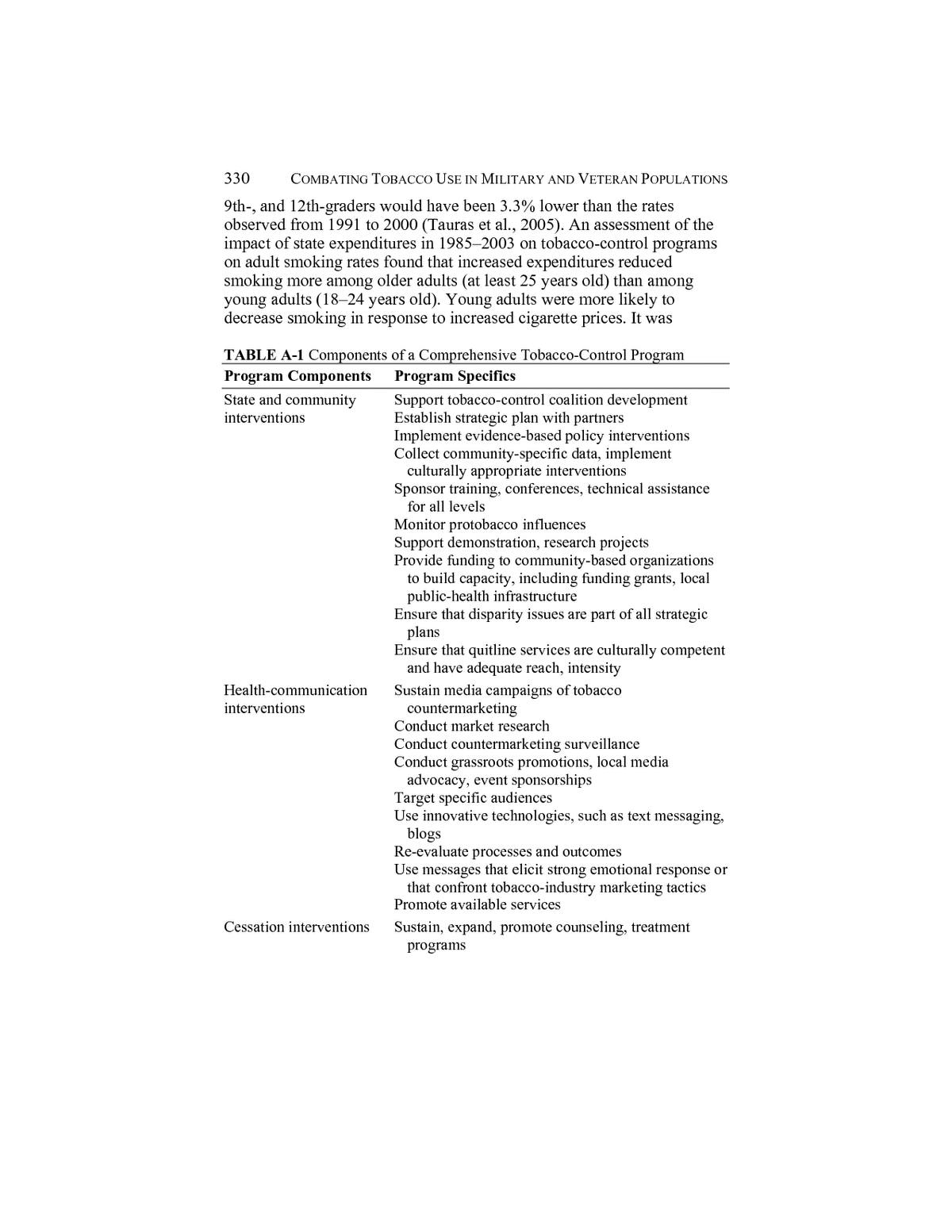
APPENDIX A 329 opportunities for adult smokers, and the establishment of smoke-free public places. A high-profile mass-media advertising campaign with the tagline âItâs time we made smoking historyâ not only served as the statewide umbrella initiative but kept the tobacco-control issue paramount in the minds of the public and policy makers alike (Koh et al., 2005). Furthermore, the campaign promoted a free statewide quitline that linked callers to bolstered cessation services at the local level. In November 2008, the Massachusetts Department of Public Health and the Massachusetts Department of Veterans Services jointly launched a free 8-month program to encourage veterans to quit smoking. Veterans and their families are asked to call the state 1-800-Try-to-Quit line. After a simple medical screening over the telephone, those eligible will receive tailored counseling by telephone, a free 4-week supply of nicotine patches, and a Quit Kit with tips on quitting and informational resources. The goal is to combine nicotine-patch therapy with counseling and support by trained specialists to maximize the chances of quitting in this high-risk population. Because the program is new, outcomes are not yet known. Despite tremendous challenges in maintaining and sustaining funding for the MTCP, the state witnessed a drop in cigarette consumption (statewide number of packs sold) by nearly half from 1992 to 2004 (Koh et al., 2005). However, a cautionary lesson comes from Massachusetts. Despite the considerable success achieved in tobacco control, funding for the MTCP was cut by 95%âfrom a high of about $54 million per year in 2000 to just $2.5 million in fiscal year 2004â although funding for the program has since increased somewhat. The drastic reductions in the stateâs investment to prevent and reduce tobacco use may translate directly into higher smoking rates (especially in children) and more smoking-related disease, death, and ultimately, costs. CDCâs Best Practices for Comprehensive Tobacco Control Programsâ2007 describes capacity-building under administrative and management functions for comprehensive tobacco control by states. The literature uses different terms to discuss capacity-building, but the message is the same. CDC highlights the need for states to build capacity and the associated administrative and management activities; it suggests that at least 5% of total annual program funds be used to support program capacity and infrastructure components (see Table A-1). Increased funding of state tobacco-control programs has a favorable effect on reducing tobacco use by both youth and adults (Farrelly et al., 2003). An evaluation of state-level tobacco-program expenditures on youth smoking, as part of the Monitoring for the Future project, found that if states had spent on tobacco control the minimum amount recommended by CDC, the prevalence of smoking among 8th-,
330 COMBATING TOBACCO USE IN MILITARY AND VETERAN POPULATIONS 9th-, and 12th-graders would have been 3.3% lower than the rates observed from 1991 to 2000 (Tauras et al., 2005). An assessment of the impact of state expenditures in 1985â2003 on tobacco-control programs on adult smoking rates found that increased expenditures reduced smoking more among older adults (at least 25 years old) than among young adults (18â24 years old). Young adults were more likely to decrease smoking in response to increased cigarette prices. It was TABLE A-1 Components of a Comprehensive Tobacco-Control Program Program Components Program Specifics State and community Support tobacco-control coalition development interventions Establish strategic plan with partners Implement evidence-based policy interventions Collect community-specific data, implement culturally appropriate interventions Sponsor training, conferences, technical assistance for all levels Monitor protobacco influences Support demonstration, research projects Provide funding to community-based organizations to build capacity, including funding grants, local public-health infrastructure Ensure that disparity issues are part of all strategic plans Ensure that quitline services are culturally competent and have adequate reach, intensity Health-communication Sustain media campaigns of tobacco interventions countermarketing Conduct market research Conduct countermarketing surveillance Conduct grassroots promotions, local media advocacy, event sponsorships Target specific audiences Use innovative technologies, such as text messaging, blogs Re-evaluate processes and outcomes Use messages that elicit strong emotional response or that confront tobacco-industry marketing tactics Promote available services Cessation interventions Sustain, expand, promote counseling, treatment programs
APPENDIX A 331 Program Components Program Specifics Eliminate cost, other barriers for underserved populations Make health-care system changes recommended by Public Health Service guidelines Provide telephone-based cessation counseling Reduce out-of-pocket expenses for patients Implement health-care provider reminder system Combine counseling with medication for optimal effectiveness Increase prices of tobacco products Use targeted promotion of cessation programs Surveillance Monitor reduction in tobacco-use initiation among youth, young adults Monitor quit rate among adults, youth Monitor reduction in exposure to secondhand smoke Monitor reduction in tobacco-related disparities Participate in national surveillance systems, such as Youth Risk Behavior Surveillance System, modify as appropriate for specific states Collect evaluation data Evaluation Use flexible survey instruments with core, state- specific components Make process and outcome evaluation continuous Measure such indicators as policy changes, changes in social norms, exposure of individuals and communities to state, local program efforts Collect baseline data Administration and Engage in strategic planning management Recruit qualified staff Award and monitor program contracts and grants, coordinate across program areas, assess grantee performance Develop, maintain fiscal-management systems Increase local capacity by training, technical assistance Create effective communication systems internally and with local partners Educate public and policy-makers on health effects of tobacco and evidence-based cessation programs and policy interventions SOURCE: CDC (2007).
332 COMBATING TOBACCO USE IN MILITARY AND VETERAN POPULATIONS estimated that if the states had met the minimum CDC expenditure recommendation for tobacco control, there would have been more than 2 million fewer smokers by 2003 (Farrelly et al., 2008). FEDERAL TOBACCO-CONTROL PROGRAMS American Stop Smoking Intervention Study The American Stop Smoking Intervention Study (ASSIST) was not a randomized trial but a large-scale, natural experiment to change the behavior of entire states (that is, the entire population and environment). The goal was to change social, cultural, economic, and environmental factors in the state that promote smoking behavior. That goal was accomplished primarily through interventions of four kinds: (1) promoting smoke-free environments, (2) countering tobacco advertising and promotion, (3) limiting youthsâ tobacco access and availability, and (4) increasing tobacco prices by raising excise taxes. An important component was building the capacity for tobacco control by recruiting and training a qualified workforce and by developing and implementing strategic plans of action. The statewide tobacco-control plans were carried out in the 17 ASSIST states by a network of state and local coalitions. The ASSIST evaluation was one of the largest evaluation efforts conducted by NCI and compared changes in tobacco-control policies, state per-capita cigarette consumption, and adult smoking prevalence in the 17 ASSIST states with those in the 33 non-ASSIST states and the District of Columbia. The authors also analyzed the effect of program components and tobacco-control policies on smoking prevalence and per-capita cigarette consumption and determined the cost effectiveness of ASSIST (Stillman et al., 1999, 2000, 2001, 2003). ASSIST states had a greater decrease in adult smoking prevalence than non-ASSIST states. States that experienced greater improvement in tobacco-control policies had larger decreases in per- capita cigarette consumption. States (not including the District of Columbia) with higher policy scores also had lower smoking prevalence. The authors found that states with greater âcapacityâ (ability to implement tobacco-control activities)âsuch as states with tobacco- control infrastructure in the health department, staff experience, and strong interagency and statewide relationshipsâhad lower per-capita cigarette consumption. Finally, there was evidence that policy interventions may be more effective in reducing womenâs smoking than other types of interventions. The ASSIST results showed that investing in tobacco-control programs that focus on strong tobacco regulations and policies is an
APPENDIX A 333 effective strategy for reducing tobacco use. The small but statistically significant differences in the reduction of adult smoking prevalence in ASSIST states, when applied on a population basis, could be expected to have a large effect on the public. If all 50 states and the District of Columbia had implemented ASSIST, there would be about 1,213,000 fewer smokers in the country (NCI, 1991, 2005, 2006). The finding that states with a greater change in tobacco-control policies during ASSIST had larger decreases in per-capita cigarette consumption shows that interventions that result in policy change can have a strong and sustained effect on the amount of cigarette smoking. That conclusion adds to the body of similar research and expert reports that document the importance of a comprehensive approach to tobacco control. Although policy efforts take time, they can bring about major changes in social norms, including smoking behavior. The finding that states with stronger infrastructure or capacity (ability to implement tobacco-control activities) had lower per capita cigarette consumption is additional evidence that when tobacco-control programs are strong and well supported, a decrease in the amount of smoking can be achieved. ASSIST was the first study to provide a method for measuring statesâ capacity to implement tobacco-control programs. A 2006 study published in the American Journal of Health Promotion provided further evidence of the effectiveness of comprehensive tobacco-control programs and policies (Hyland et al., 2006). The studyâs findings suggest that well-funded tobacco-control programs combined with strong tobacco-control policies increase cessation rates. Quit rates in communities that experienced both policy and programmatic interventions were higher than quit rates in communities that had experienced only policy interventions (excise-tax increases or secondhand-smoke regulations). The finding supports the claim that comprehensive tobacco-control programs can increase adult cessation rates in the population and have an effect beyond that predicted by tobacco-control policies alone. Other Tobacco-Control Programs The Agency for Healthcare Research and Quality published Tobacco Use: Prevention, Cessation, and Control in June 2006. The document, prepared by RTI International, involved a systematic literature review of human studies conducted in developed countries. The included studies were limited to those with participants at least 13 years old, with a duration of at least 6 months, and with sample sizes of at least 30 for randomized controlled studies and 100 for experimental or observational studies (HHS, 2006).
334 COMBATING TOBACCO USE IN MILITARY AND VETERAN POPULATIONS The literature was synthesized around five research questions concerning the effectiveness of interventions, strategies to increase consumer demand for cessation treatments and implementation of proven cessation strategies, and the effects of smokeless-tobacco marketing. The results supported the effectiveness of population-based interventions targeted to adolescents and young adults that increased the unit price of tobacco as well as the effectiveness of mass-media campaigns run concurrently with other interventions. Strong evidence was also found to support the effectiveness of telephone cessation support to increase tobacco cessation in adults and of strategies based on the health-care system that used provider reminders, provider education, and multicomponent interventions that include client telephone support (HHS, 2006). Analysis suggests that persons who have comorbidities should use the tobacco-cessation treatments recommended for the general population, and that cessation treatment for persons who have chemical and nicotine dependence should also include counseling and pharmacotherapy. There are still critical gaps in the evidence base, and improvement in research methods are necessary to fill data gaps. Fiore (2003) reviewed evidence-based populationwide strategies for a National Action Plan for Tobacco Cessation. The plan would include cessation interventions such as quitlines, supported by a Smokersâ Health Fund created through a proposed $2/pack increase in the federal excise tax on cigarettes. Such new resources could fund a national quitline, a multifaceted counteradvertising media campaign, insurance coverage for tobacco-dependence treatment for 100 million covered people (including all those on Medicare and Medicaid), and a new tobacco research and training infrastructure. The Interagency Committee on Smoking and Health, under the auspices of the Department of Health and Human Services, hoped that such a dramatic new endeavor would also foster strong publicâprivate partnerships involving health insurers, employers, health systems, national quality assurance and accreditation organizations, clinicians, and communities (Fiore, 2003). WHO published Building Blocks for Tobacco Control: A Handbook in 2004 as part of its Tobacco Free Initiative (WHO, 2004). The WHO Framework Convention on Tobacco Control (FCTC) provided global action, but guidance on the development of national capacity for tobacco control was lacking. The handbook was created to address that need. It describes the need to build national capacity for tobacco control. It lists practical tobacco-control approaches for countries, including defining objectives, developing strategies, drawing up action plans, developing and implementing appropriate policies, developing regulatory
APPENDIX A 335 and legal frameworks, building and managing partnerships, fostering an enabling environment for civil society, and implementing action plans. The two major parts of the book describe risk factors associated with tobacco use, tobacco-industry strategies, the scientific basis of interventions, and the FCTC. Interventions that reduce demand (including price and other measures) and that reduce supply are also described. Most of the handbook describes the process of developing a national plan of action, including establishing of effective infrastructure; training and education; communication and public awareness; working with the media; programming selective activities; legislative, regulatory, and economic measures; countering the tobacco industry; effective partnerships; monitoring, surveillance, evaluation, and reporting; and research and exchange of information (WHO, 2004). CDCâs Guide to Community Preventive Services is a series of systematic reviews and evidence-based recommendations developed by the nonfederal Task Force on Community Preventive Services; members are appointed by the director of CDC to provide information relative to âeffectiveness, economic efficiency, and feasibility of interventions to promote community health and prevent diseaseâ (CDC, 2009). The task force reviewed evidence to provide recommendations about public- health interventions, including tobacco control. The summary of findings on tobacco-use prevention and control (CDC, 2002) provides recommendations for interventions of three kinds: (1) strategies to reduce exposure to environmental tobacco smoke; (2) strategies to reduce tobacco-use initiation by children, adolescents, and young adults; and (3) strategies to increase tobacco cessation. Strong evidence was found to support the use of smoking bans and restrictions to reduce exposure to secondhand smoke. Recommended strategies to reduce tobacco-use initiation include tobacco-free policies, increases in the unit prices of tobacco products, and mass-media campaigns combined with other interventions. Those strategies are also recommended to increase tobacco cessation in addition to a number of interventions appropriate for health- care systems, including provider-reminder systems and provider- education programs. Reducing patientsâ out-of-pocket costs for effective treatments for tobacco use and dependence and patient telephone support are also recommended (CDC, 2002). The SmokeLess States Program was developed by the Robert Wood Johnson Foundation to provide support to statewide efforts to reduce tobacco use. The program was initiated in 1993 and provided grants to statewide coalitions through 2004. It was intended to complement government programs (such as ASSIST) by awarding grants to nongovernment organizations with the goal of educating the pubic and policy makers. The grants initially supported comprehensive tobacco-
336 COMBATING TOBACCO USE IN MILITARY AND VETERAN POPULATIONS control programs that included education, treatment, and policy initiatives, but it moved to a policy-only focus in 2000, requiring each grantee to devote matching funds to lobbying activities. More than $99 million dollars was dedicated to the program in the course of its 10-year duration. Key results attributed to the program include increased excise taxes in 35 states, cleanâindoor-air legislation in 10 states, and ordinances to restrict youth access to tobacco in 13 states. Ending the Tobacco Problem: A Blueprint for the Nation is a report from the IOM Committee on Reducing Tobacco Use: Strategies, Barriers, and Consequences (IOM, 2007). Published in 2007, the report aims to set the nation on a course toward âreducing smoking so substantially that it is no longer a significant public health problem.â The report begins with a description of the history and nature of the tobacco problem and eventually provides a blueprint for reducing tobacco use by setting forth a policy framework, describing measures for strengthening traditional tobacco-control measures, and providing strategies for changing the regulatory landscape. REFERENCES Barnoya, J., and S. Glantz. 2004. Association of the California tobacco control program with declines in lung cancer incidence. Cancer Causes and Control 15(7):689-695. California Department of Health Services. 2006. Adult Smoking Prevalence. Sacramento: California Department of Public Health, Department of Health Care Services, Tobacco Control Section. CDC (Centers for Disease Control and Prevention). 2002. Guide to Community Preventive Services: Tobacco Use Prevention and Control. Atlanta, GA: CDC. CDC. 2007. Best Practices for Comprehensive Tobacco Control Programsâ2007. Atlanta, GA: National Center for Chronic Disease Prevention and Health Promotion, Office on Smoking and Health. CDC. 2009. The Community Guide: What Works to Promote Health. www.thecommunityguide.org (accessed May 28, 2009). Farrelly, M. C., T. F. Pechacek, and F. J. Chaloupka. 2003. The impact of tobacco control program expenditures on aggregate cigarette sales: 1981-2000. Journal of Health Economics 22(5):843-859. Farrelly, M. C., T. F. Pechacek, K. Y. Thomas, and D. Nelson. 2008. The impact of tobacco control programs on adult smoking. American Journal of Public Health 98(2):304-309.
APPENDIX A 337 Fiore, M. C. 2003. Preventing 3 million premature deaths and helping 5 million smokers quit: A national action plan for tobacco cessation. American Journal of Public Health 94(2):205-210. HHS (Department of Health and Human Services). 2006. Tobacco Use: Prevention, Cessation, and Control. Rockville, MD: Agency for Healthcare Research and Quality. Hu, T., H. Sung, and T. E. Keeler. 1994a. Tobacco taxes and the anti- smoking media campaign: The California experience. University of California at Berkeley Economics Working Papers 94-225. Hu, T. W., J. Bai, T. E. Keeler, P. G. Barnett, and H. Y. Sung. 1994b. The impact of California Proposition 99, a major anti-smoking law, on cigarette consumption. Journal of Public Health Policy 15(1): 26-36. Hyland, A., Q. Li, J. E. Bauer, G. A. Giovino, U. Bauer, and K. M. Cummings. 2006. State and community tobacco-control programs and smoking-cessation rates among adult smokers: What can we learn from the COMMIT intervention cohort? American Journal of Health Promotion 20(4):272-281. IOM (Institute of Medicine). 2000. State Programs Can Reduce Tobacco Use. Washington, DC: National Academy Press. IOM. 2007. Ending the Tobacco Problem: A Blueprint for the Nation. Washington, DC: The National Academies Press. Koh, H. K., C. M. Judge, H. Robbins, C. C. Celebucki, D. K. Walker, and G. N. Connolly. 2005. The first decade of the Massachusetts tobacco control program. Public Health Reports 120(5):482-495. NCI (National Cancer Institute). 1991. Strategies to Control Tobacco Use in the United States: A Blueprint for Public Health Action in the 1990âs. Monograph 1, NCI Tobacco Control Monograph Series. Bethesda, MD: NCI. NIH Pub. No. 92-3316. NCI. 2005. ASSIST: Shaping the Future of Tobacco Prevention and Control. Monograph 16, NCI Tobacco Control Monograph Series. Bethesda, MD: NCI. NIH Pub. No. 05-5645. NCI. 2006. Evaluating ASSIST: A Blueprint for Understanding State- level Tobacco Control. Monograph No. 17, Tobacco Control Monograph Series. Bethesda, MD: NCI. NIH Pub. No. 06-6058. Stillman, F., A. Hartman, B. Graubard, E. Gilpin, D. Chavis, J. Garcia, L. M. Wun, W. Lynn, and M. Manley. 1999. The American stop smoking intervention study: Conceptual framework and evaluation design. Evaluation Review 23(3):259-280.
338 COMBATING TOBACCO USE IN MILITARY AND VETERAN POPULATIONS Stillman, F., P. Clark, and S. Marcus. 2000. Think Globally but Measure Locally: Strength of Tobacco Control. Paper presented at 128th Annual Meeting of American Public Health Association, Boston, MA. Stillman, F. A., K. A. Cronin, W. D. Evans, and A. Ulasevich. 2001. Can media advocacy influence newspaper coverage of tobacco: Measuring the effectiveness of the American stop smoking intervention study's (ASSIST) media advocacy strategies. Tobacco Control 10(2): 137-144. Stillman, F. A., A. M. Hartman, B. I. Graubard, E. A. Gilpin, D. M. Murray, and J. T. Gibson. 2003. Evaluation of the American Stop Smoking Intervention Study (ASSIST): A report of outcomes. Journal of the National Cancer Institute 95(22):1681-1691. Tauras, J. A., F. J. Chaloupka, M. C. Farrelly, G. A. Giovino, M. Wakefield, L. D. Johnston, P. M. OâMalley, D. D. Kloska, and T. F. Pechacek. 2005. State tobacco control spending and youth smoking. American Journal of Public Health 95(2):338-344. US Surgeon General. 2000. Reducing Tobacco Use: A Report of the Surgeon General. Atlanta, GA: National Center for Chronic Disease Prevention and Health Promotion, Office on Smoking and Health. WHO (World Health Organization). 2004. Building Blocks for Tobacco Control: A Handbook. Geneva, Switzerland: WHO. WHO. 2007. Protection from Exposure to Second-Hand Tobacco Smoke. Policy Recommendations. Geneva, Switzerland: WHO.
