




Below is the uncorrected machine-read text of this chapter, intended to provide our own search engines and external engines with highly rich, chapter-representative searchable text of each book. Because it is UNCORRECTED material, please consider the following text as a useful but insufficient proxy for the authoritative book pages.
2 Application of Nanotechnology to Food Products This chapter summarizes the presentations and discussions of the first session of the workshop. All three presentations revolved around the question: How can nanotechnology be applied in the food industry? The first presenter, José Miguel Aguilera of Universidad Católica de Chile, Santiago, discussed how nanotechnology will provide new ways of controlling and structuring foods with greater functionality and value. But first, he talked about how ânanoâ has, in fact, been part of food processing for centuries, since many food structures naturally exist at the nano-scale. Until very recently, however, most of what has been done with nano-sized food materials has occurred in a largely uncontrolled way, and there is still a lot to be learned about the natural nano-structure of foods (e.g., how foods are constructed and how they break down during digestion). Until and unless these gaps in knowledge are filled, scientists could miss opportunities to apply some of the new nanotechnologies being developed. The second presenter, Frans Kampers of Wageningen UR, Wageningen, The Netherlands, argued that nanotechnology holds forth tremendous promise to provide benefits not just within food products but also around food products. In other words, not only can nanotechnology be used to structure new types of food ingredients, it can also be used to build new types of food packages, food quality detection tools, and other types of measurement and detection systems. He described some of the work that Wageningen UR scientists and others are doing in the areas of volatile sensing, microorganism detection, and food labeling. Kampers stated that these types of applications are arguably noncontroversial, or at least less controversial than some of the food ingredient applications of nanotechnology, and as such could serve as a âstepping stone for the general public to appreciate 21
22 NANOTECHNOLOGY IN FOOD PRODUCTS what nanotechnologies can offer to the food industry and where benefits for consumers can be derived from these technologies.â The third presenter, Jochen Weiss of the University of Massachu- setts, Amherst, provided an overview of how nanotechnologies are being developed to add novel functionalities to food products. He described several different nanomaterials currently being explored for their poten- tial applications in food products, including microemulsions, liposomes, solid lipid nanoparticles (SLNs), and nanofibers. He also described some of the research that he and his colleagues have been conducting with each of these types of materials, emphasizing the variety of ways one can build nanostructured materials with potent, long-lasting antimicrobial capacities. In fact, scientists are beginning to construct all sorts of differ- ent types of microscopic structures with varying functionalities (not just antimicrobial capacities) using nanomaterials as their building blocks. What scientists donât fully understand yet, however, is how these struc- tures will function once inside actual food systems. The session ended with a 20-minute question and answer period, with most of the discussion revolving around the commercial availability of these various applications and products, the definition and history of nanotechnology, and regulatory uncertainty. The last topicâregulatory uncertaintyâwould re-emerge in later sessions as a major overarching theme of the workshop dialogue. There was also some discussion on the issue of palatability and nutrient delivery and whether nanotechnology offers any solutions. APPLICATIONS OF NANOSCIENCES TO NUTRIENTS AND FOODS 1 Presenter: José Miguel Aguilera 2 Aguilera began with some introductory remarks about his work as a food microstructure engineer and how, in the past, the focus of his research was on larger food structures (i.e., âmicron-sizeâ). Now, he is trying to extrapolate what he has learned about the structure of foods at that micro-level to a smaller scale. He provided a brief outline of his presentation, with a reminder that âwe already have a lot of nanotech in 1 This section is a paraphrased summary of Jose Miguel Aguileraâs presentation. 2 José Miguel Aguilera, PhD, is a Professor in the Department of Chemical and Biopro- cess Engineering, Universidad Católica de Chile, Santiago, Chile.
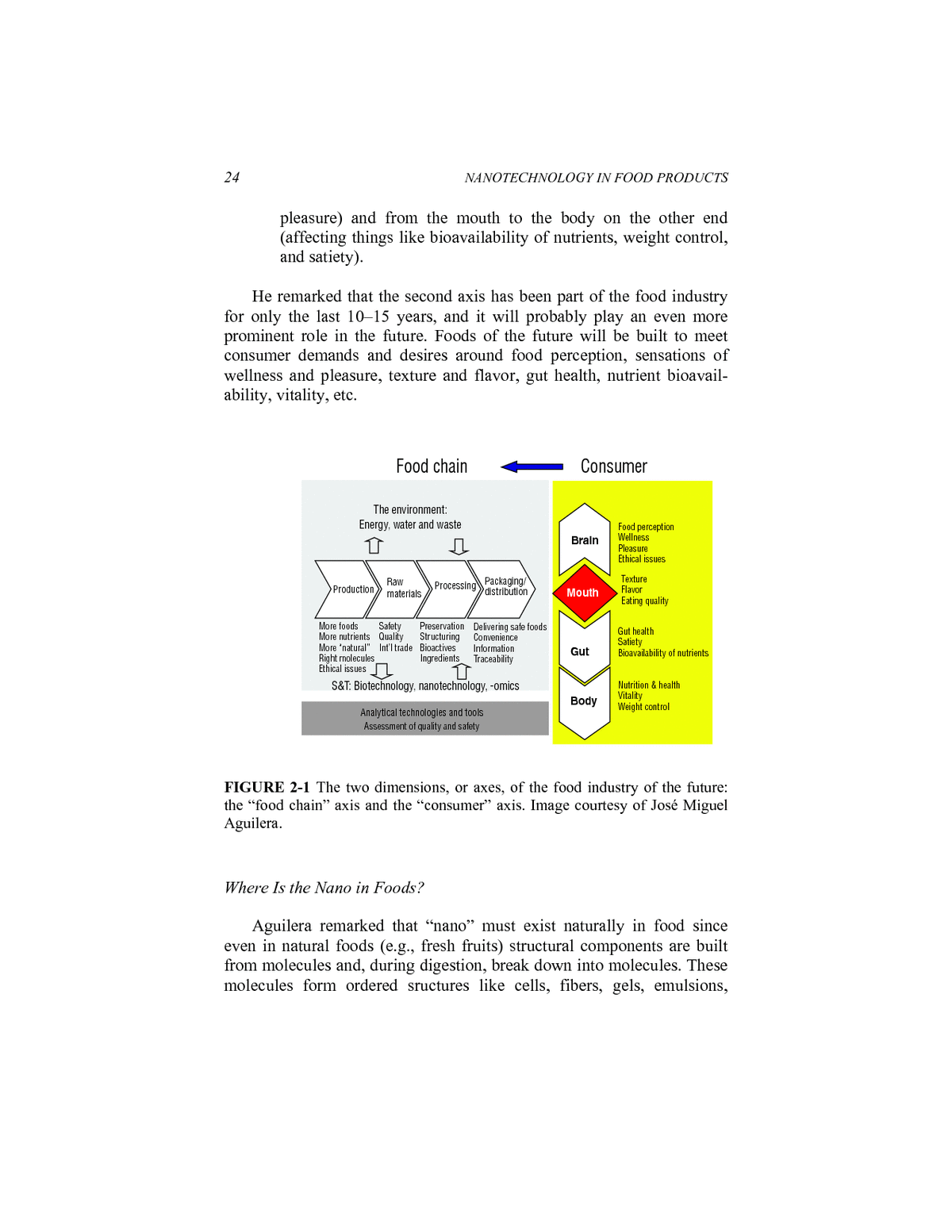
APPLICATION OF NANOTECHNOLOGY TO FOOD PRODUCTS 23 our foods.â The focus of his talk, he said, would be on how foods are structured today, how they could be structured in the future by reducing the scale of intervention, and the implications of the latter for adding unique value to foods with respect to nutrition/health and gastron- omy/pleasure. The smallest food microstructure that can be controlled with current processing technologies is probably only about 5â10 µm, which is about 100 times larger than the upper limit of nanotechnology. So there is a big gap between what current technologies can do and the promise that nanotechnology holds forth. Introduction: The Food Industry and the Role of Nanosciences The food industry is the largest manufacturing sector in the world, with an annual turnover approximating US $4 trillion. But it presents a very different innovation scenario than the chemical and pharma indus- tries do, and introducing new processing technologies (e.g., high hydro- static pressure [HHP] technology, -ohmic heating, irradiation) has been challenging. Globally, a large proportion of foods are consumed after only minimal processing (e.g., fresh fruits, vegetables, nuts, some cereals) and with high post-harvest losses (particularly with fruits and vegetables). In most places worldwide, particularly in urban centers, food is abundant and relatively cheap. Moreover, except for large multination- als, most food companies are relatively low-tech, small/medium enterprises (SMEs) where traditional technologies are geared to local tastes and traditions. The Two Axes of Todayâs Food Industry Aguilera described two axes, or dimensions, of the food industry of today and the food industry of the future (see Figure 2-1): 1. The âfood chainâ axis, which extends from production to pack- aging and distribution (and includes raw materials, processing, and all of the various environmental and technological factors that contribute). 2. The âconsumerâ axis, which extends from the brain to the mouth on one end (and includes things like food perception and
24 NANOTECHNOLOGY IN FOOD PRODUCTS pleasure) and from the mouth to the body on the other end (affecting things like bioavailability of nutrients, weight control, and satiety). He remarked that the second axis has been part of the food industry for only the last 10â15 years, and it will probably play an even more prominent role in the future. Foods of the future will be built to meet consumer demands and desires around food perception, sensations of wellness and pleasure, texture and flavor, gut health, nutrient bioavail- ability, vitality, etc. Food chain Consumer The environment: Energy, water and waste Food perception Brain Wellness Pleasure Ethical issues Texture Production Raw Processing Packaging/ Flavor materials distribution Mouth Eating quality More foods Safety Preservation Delivering safe foods Gut health More nutrients Quality Structuring Convenience Satiety More ânaturalâ Intâl trade Bioactives Information Gut Bioavailability of nutrients Right molecules Ingredients Traceability Ethical issues S&T: Biotechnology, nanotechnology, -omics Nutrition & health Vitality Body Weight control Analytical technologies and tools Assessment of quality and safety FIGURE 2-1 The two dimensions, or axes, of the food industry of the future: the âfood chainâ axis and the âconsumerâ axis. Image courtesy of José Miguel Aguilera. Where Is the Nano in Foods? Aguilera remarked that ânanoâ must exist naturally in food since even in natural foods (e.g., fresh fruits) structural components are built from molecules and, during digestion, break down into molecules. These molecules form ordered sructures like cells, fibers, gels, emulsions,
APPLICATION OF NANOTECHNOLOGY TO FOOD PRODUCTS 25 foams, and liquids, which give foods their various properties (e.g., texture, flavor, shelf-life, nutritional value). Aguilera showed a variation of the âScale of Objectsâ image that Yada showed during his presentation of the micro- vs. nano-scale worlds (see Figure 2-2 and Figure 1-1 for comparison), with pictures and illustrations of âthings naturalâ vs. âthings in foodsâ along a size scale, ranging from 0.1 nm to 1 cm. He agreed with Yada that it is a good visual to present to people as a way of explaining the sizes involved with the âmicroworldâ [âmicrostructureâ] versus the ânanoworldâ [ânanotechnologyâ]. Food microstructures include things like plant cells, starch granules, meat fibers, and chloroplasts. Food nanostructures include things like crystalline blocklets of amylopectin molecules (which serve as building blocks for starch granules) and clusters of chlorophyll molecules embedded in lipid bilayers (which serve as building blocks for chloroplasts). Aguilera identified the cow udder as the most interesting ânaturalâ microdevice (i.e., device for producing micro-sized food ingredients). He explained how a cow udder cell produces casein micelles and fat globules, both key ingredients of milk, with casein micelles ranging in size from 300â400 nm and fat globules ranging in size from 100 nm to 20 µm. Fat globule membranes have a thickness of 4â25 nm. All structured dairy products (e.g., butter, whipped cream, ice cream, milk, cheese, yogurt) are composed of these two ingredients plus an even smaller ingredient, the whey proteins, which ranges in size from 0.001â 0.01 µm. So, in fact, dairy technology is not just a microtechnology but also a nanotechnology, and it has existed for a long time. The dairy industry utilizes these three basic micro- and nano-sized structures to build all sorts of emulsions (butter), foams (ice cream and whipped cream), complex liquids (milk), plastic solids (cheese), and gel networks (yogurt). 3 But much of what has been done in the past with natural micro- and nano-sized structures, not just in the dairy industry but the food industry in general, has been largely uncontrolled. The first comprehensive scientific perspective on a micro-structural view of food was not published until as recently as 1987. 3 See JM Aguilera and DW Stanley. 1999. Microstructural Principles of Food Processing and Engineering, 2nd Edition. Heidelberg, Germany: Springer.
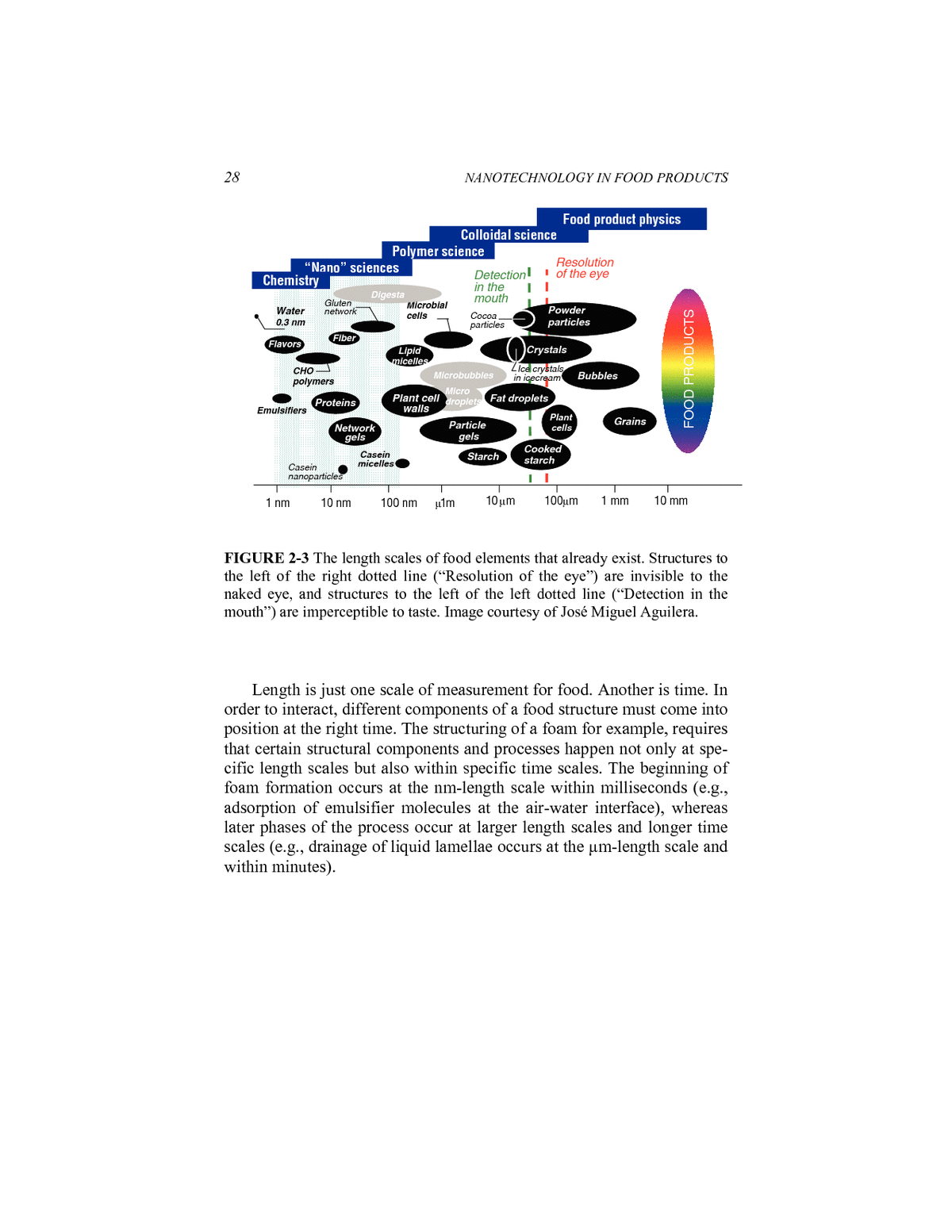
26 NANOTECHNOLOGY IN FOOD PRODUCTS Things natural Things in foods FIGURE 2-2 Similar to the image that Yada showed (see Figure 1-1), this image more clearly represents the difference in scale between nano-sized vs. micro-sized materials and structures in foods. Image courtesy of José Miguel Aguilera and the U.S. Department of Energy. 4 The Scales of Food: Length and Time Aguilera showed a graph illustrating the range of the length scales of food elements that already exist (either in nature or as a result of process- ing), emphasizing again that in fact many elements that play very impor- tant structural roles in foods that we already eat exist on the nano-scale (see Figure 2-3). We donât notice them because not only are they invisi- ble to the naked eye (most things smaller than about 80 µm cannot be seen by the human eye), they are imperceptible by taste as well (most 4 This image is a modification of âThe Scale of Thingsâ chart developed by the Office of Basic Energy Sciences, Office of Science, U.S. Department of Energy. The original can be viewed online at http://www.er.doe/gov/bes/scale_of_things.html.
APPLICATION OF NANOTECHNOLOGY TO FOOD PRODUCTS 27 things smaller than about 40 µm cannot be sensed in the mouth). In fact, some of foodâs most important raw materialsâproteins, starches, and fatsâundergo structural changes at the nanometer and micrometer scales during normal food processing (see Figure 2-4): 1. Proteins: Food proteins (e.g., native beta-lactoglobulin, which is about 3.6 nm in length) can undergo denaturation (via pressure, heat, pH, etc.) and the denatured components reassemble to form larger structures, like fibrils or aggregates, which in turn can be assembled to form even larger gel networks (e.g., yogurt). Protein-polysaccharide mixed solutions can spontaneously sepa- rate into a phase with nano- or micro-sized droplets dispersed in a continuous phase. 2. Starch: Starch granules expand when heated and hydrated releas- ing biopolymers that can be recrystallized into nano-sized struc- tures (e.g., recrystallized amylose regions may be about 10â20 nm); dextrins and other degradation products of extrusion can be used to encapsulate bioactive substances in micro-regions, etc. 3. Fats: While many people think of fats as being homogeneous liquids or solids, in fact some fats have a lot of structure. Monoglycerides, for example, can self-assemble into many mor- phologies at the nanoscale level, and hierarchically structured into tryglicerides can be crystallites (10â100 nm), followed by arrangment into large clusters, then flocs, and finally, fat crystal networks. Fat crystal networks give foods spreadability, texture, and other similar properties. Aguilera emphasized that all foods, at one stage or another, become dispersions of these multiple interacting components not only with each other but also with water and air. For example, proteins interact with polysaccharides to form mixed polysaccharide gels, starches and proteins interact to form starch-protein complexes, and emulsions and food foams have interfaces that are stabilized by small molecules (surfactants), bio- polymers or even small particles.
28 NANOTECHNOLOGY IN FOOD PRODUCTS Food product physics Colloidal science Polymer science âNanoâ sciences Resolution Detection of the eye Chemistry in the Digesta Gluten Microbial mouth Water network Powder FOOD PRODUCTS cells Cocoa 0.3 nm particles particles Fiber Flavors Lipid Crystals micelles CHO Ice crystals Microbubbles in icecream Bubbles polymers Micro Proteins Plant cell droplets Fat droplets Emulsifiers walls Plant Grains Network Particle cells gels gels Cooked Casein Starch micelles starch Casein nanoparticles 1 nm 10 nm 100 nm µ1m 10 µm 100µm 1 mm 10 mm FIGURE 2-3 The length scales of food elements that already exist. Structures to the left of the right dotted line (âResolution of the eyeâ) are invisible to the naked eye, and structures to the left of the left dotted line (âDetection in the mouthâ) are imperceptible to taste. Image courtesy of José Miguel Aguilera. Length is just one scale of measurement for food. Another is time. In order to interact, different components of a food structure must come into position at the right time. The structuring of a foam for example, requires that certain structural components and processes happen not only at spe- cific length scales but also within specific time scales. The beginning of foam formation occurs at the nm-length scale within milliseconds (e.g., adsorption of emulsifier molecules at the air-water interface), whereas later phases of the process occur at larger length scales and longer time scales (e.g., drainage of liquid lamellae occurs at the µm-length scale and within minutes).
APPLICATION OF NANOTECHNOLOGY TO FOOD PRODUCTS 29 PROTEINS STARCH FATS 10 nm 100 nm 1 µm 10 µm FIGURE 2-4 A schematic of the structural changes that proteins, starch, and fats naturally undergo during normal food processing. Many of these changes occur at the nano-size scale. Image courtesy of José Miguel Aguilera. How Are Foods Structured Today, and How Should They Be Structured? Today, foods are structured using a formulation, or recipe, with structure formation (i.e., biopolymer transformation, phase creation, reactions) and stabilization (i.e., vitrification, crystallization, network formation) occurring at the same time. The end result is a metastable structure. In the future, with nanotechnology, foods will be structured from the bottom up. Rather than using a recipe, food structure engineers will use molecules as their starting material, modifying those molecules and building interactions in order to get the desired properties. The process will be more akin to engineering design than recipe-reading, much like how computers and cars are assembled. By building foods from the molecule up, rather than relying on a coupled structure- formation-structure stabilization process, food engineers will utilize an uncoupled âmatrix precursors/structural elementsâ paradigm. That is, microstructural elements will be engineered separately and then
30 NANOTECHNOLOGY IN FOOD PRODUCTS dispersed into a matrix precursor, which will have been developed independently. The end product will be a more functional product. As Aguilera said, âthe beauty that I see in going down[ward] on the size scale is that we can control and really design and assemble new foods.â Also in the future, not only will food structural engineers be follow- ing this architecture-like paradigm, they will be utilizing new tools. Right now, traditional food processing relies on equipment that is capable of intervening at only the microscale (i.e., 10 µmâ1 mm), not nanoscale (with some exceptions). Even then, itâs like âhammering a nail with a bulldozer,â Aguilera said. Emulsification, for example, involves manipu- lating structural elements that are about 10 µm in length, using a device with an opening of 1 mmâthatâs two full orders of magnitude differ- ence. As another example, shaping (molding), involves manipulating structural elements that are about 20â30 µm in lengthsize (e.g., bubbles), using a device with an opening devices of 10 cmâthatâs four orders of magnitude difference. In the future, the scale of intervention will be reduced to the size of the elements being manipulated. Reducing the Scale of Food Design: Four Examples Aguilera gave four examples of reduced scale food design, or âcontrolled structuringâ (in each case, the device/method that enables controlled structuring is italicized). The descriptions below accompany the images in Figure 2-5: 1. Architectures of foams made in a 250 µm coaxial capillary tube by varying the ratio of gas/liquid flow rates. 5 Here, a microflu- idic device (i.e., the capillary tube) is used to vary the gas to liq- uid ratio and thereby build different types of foam architectures inside a capillary. The capillary tube gives the food engineer control over the architecture of the foam. 5 O Skurtys, P Bouchon, and JM Aguilera. 2008. Formation of bubbles and foams in gelatine solutions within a vertical glass tube. Food Hydrocolloids 22:706-714.
APPLICATION OF NANOTECHNOLOGY TO FOOD PRODUCTS 31 Architectures of foams made in a 250 µm coaxial capillary tube by varying the ratio gas/liquid flow rates (from Skurtys, Bouchon and Aguilera, 2007). Oil droplets in an O/W emulsion after passage through a stack of layers of etched channels of a microfluidic device made from a silicon chip (from van der Zwan et al., 2006). Evolution of a 2% potassium kappa- carrageenan particle subjected to capillary shearing flow during gelation (from Walther et al., 2004). Different shapes of ice crystals made in: (A) Tris buffer; (B) Buffer and 400 mM of a polypeptide of an ice nucleating protein and (C) Buffer and 50 mM of an protein, anti- anti-freeze protein (from Kobashigawa et al., 2005). FIGURE 2-5 Four examples of reduced-size controlled structuring. For each example, the method or device that enables the controlled structuring is in bold. SOURCE: Reprinted from Food Hydrocolloids, Volume 22, Issue 4, O Skurtys, P Bouchon, and JM Aguilera, Formation of bubbles and foams in gelatine solutions within a vertical glass tube, pp. 706-714, Copyright (2008), with per- mission from Elsevier. E van der Zwan, K Schroën, K van Dijke, and R Boom, Visualization of droplet break-up in pre-mix membrane emulsification using microfluidic devices, pp. 223-229, Copyright (2006), with permission from Elsevier, Reprinted from Food Hydrocolloids, Volume 17, L Hamberg, M Wohlwend, P Walkenström, and A Hermansson, Shapes and shaping of bio- polymer drops in a hyperbolic flow, pp. 641-652, Copyright (2008), with per- mission from Elsevier, Reprinted from FEBS Letters, Volume 579, Y Kobashigawa, Y Nishimiya, K Miura, S Ohgiya, A Miura, and S Tsuda, A part of ice nucleating protein exhibits the ice-binding ability, pp. 1493-1497, Copy- right (2005), with permission from Elsevier; Reprinted from Colloids and Sur- faces A: Physicochemical and Engineering Aspects. 2. Controlling a uniform size of oil droplets in an oil/water emul- sion after passage through a stack of layers of etched channels of a microfluidic device made from a silicon chip. 6 Again, use of the micro-fluidic device gives the food engineer capacity to 6 E van der Zwan, K Schroën, K van Dijke, and R Boom. 2006. Visualization of droplet break-up in pre-mix membrane emulsification using microfluidic devices. Colloids and Surfaces A: Physicochemical and Engineering Aspects 277:223-229.
32 NANOTECHNOLOGY IN FOOD PRODUCTS manipulate food structure at a smaller size scale than has been possible in the past and at the size scale of the elements being formed. 3. Deforming particles of a 2 percent potassium kappa-carrageenan solution subjected to capillary shearing flow followed by gela- tion. 7 Capillary shearing enables the food engineer to shape soft materials into all sorts of odd shapes. 4. Different shapes of ice crystals made in (A) Tris buffer; (B) Buffer and 400 mM of a polypeptide of an ice nucleating pro- tein; and (C) Buffer and 50 mM of an anti-freeze protein. 8 As Aguilera said, âWhy not shape ice crystals? ⦠We could do that if we wantedâ¦.â Food Microstructure and the Health/Nutrition Interface Epidemiological data and other scientific evidence show an association between diet and the incidence of nutrition-related diseases. Aguilera identified three types of effects that contribute to this association: 1. Some nutrients and bioactive compounds have been shown in vi- tro to have specific beneficial health-related effects. Aguilera calls these isolated in vitro effects âspecific effects.â 2. Scientists have also found, however, that foods with the same basic composition can have different metabolic effects in vivo depending on the structure of the food. In other words, bioactive components perform differently in different structural matricesâ Aguilera calls this the âmatrix effect.â 3. Moreover, because people tend to consume multiple foods at one time, added to this matrix effect are all of the various interaction effects that occur inside the digestive system. In other words, foodsânot nutrientsâare the key to understanding the nutrition- health interface in the body. Aguilera calls these âinteraction effects.â 7 B Walther, L Hamberg, P Walkenström, and A-M Hermansson. 2004. Formation of shaped drops in a fast continuous flow process. Journal of Colloid and Interface Science 270:195-204. 8 Y Kobashigawa, Y Nishimiya, K Miura, S Ohgiya, A Miura, and S. Tsuda. 2005. A part of ice nucleating protein exhibits the ice-binding ability. FEBS Letters 579:1493-1497.
APPLICATION OF NANOTECHNOLOGY TO FOOD PRODUCTS 33 There are plentiful opportunities to design new foods or modify existing ones to accommodate these three different types of effects with the goal of maintaining health and wellbeing. For example, the bioavailability of carotenoid compounds varies, depending on food matrix, with spinach having a very low bioavailability (with its âraw green leafy vegetableâ matrix effect) and formulated natural or synthetic carotenoids have very high bioavailability (with their âwhen extracted and formulated as carotenoids in water-dispersible beadletsâ matrix effect). This variation raises the question, why? Why is the bioavailability of carotenoids from raw spinach, for example, so low? Why donât we get 100 percent of what we eat? There could be many reasons. For example, there may be a matrix effect (e.g., the nutrient may be entrapped in the matrix or complexed with macromolecules), or there may be an interac- tion effect when the food reaches the gut (e.g., the nutrient may get trans- formed into either a more or less active form once inside the gut, or it may interact with other food components once inside the gut). 9 Aguilera pointed to starch as a good example of how a single structural change induced by cooking can alter the health impact of a nutrient (see Figure 2-6). Starch is digested and converted into sugar, but the change in sugar concentration in the blood after eating a starch varies depending on whether and how long that starch has been cooked. Blood glucose levels increase more when the starch is cooked more. 10 So, cooking a starch can lead to very different glycemic responses. Moreover, the glycemic re- sponse varies depending on whether and how a single component inter- acts with other components, as is the case with food. 11 A different glycemic response would be expected for a simple carbohydrate, such as sugar, compared to a complex food such as bread, potatoes or spaghetti where starch, for example, interacts with other components in the mix- ture. Again, food structure affects nutrient impact. 9 J Parada and JM Aguilera. 2007. Food microstructure affects the bioavailability of several nutrients. Journal of Food Science 72:R21-R32. 10 J Parada and JM Aguilera. 2009. In vitro digestibility and glycemic response of potato starch is related to granule size and degree of gelatinization. Journal of Food Science 74:E34-E38. 11 G Ricardi, G Clemente, and R Giacco. 2003. The importance of food structure in influencing postprandial response. Nutrition Reviews 61:S56-S60.
34 NANOTECHNOLOGY IN FOOD PRODUCTS Glycemic response of potato starch samples The importance of food structure having different degrees of gelatinization. in influencing postprandial response Parada and Aguilera, 2008. Ricardi, G., Clemente, G. & Giacco, R. Nutr. Rev. 61(5), S56-S60, 2003. FIGURE 2-6 How food structure impacts glycemic response. The graph on the left illustrates how the blood glucose level is impacted by degree of gelatiniza- tion, with greater gelatinization (i.e., more cooking) causing a longer-lasting and high blood glucose level. The graph on the right illustrates how different foods cause different glycemic responses, depending on the structure of the food. SOURCE: In vitro digestibility and glycemic response of potato starch is related to granule size and degree of gelatinization, J Parada and JM Aguilera. Copy- right © 2009. Reproduced with permission of Blackwell Publishing Ltd.; Gly- cemic index of local foods and diets: the Mediterranean experience, G Ricardi, G Clemente, and R Giacco. Copyright © 2003. Reproduced with permission of Blackwell Publishing Ltd. 12 Food Microstructure and the Gastronomy/Pleasure Interphase Aguilera reminded the workshop audience that about one-third of the total food industry comprises food eaten outside the home; and that expenditures on âfine diningâ are on the rise. He commented on how he has been working with many chefs over the last two years since, as he said, âchefs are the most creative and innovative people in the industry.â Most of the 10 top chefs in the world today have their own molecular gastronomy laboratories. They love to experiment with new food 12 Ibid.
APPLICATION OF NANOTECHNOLOGY TO FOOD PRODUCTS 35 structures and techniques. Also, as a reminder, some of the most famous food structures today are relatively young (e.g., mayonnaise is only about 200 years old). He encouraged food scientists to collaborate with some of these chefs, as there are many opportunities for innovation, including intervening at the micro- and nano-sized scales, and the dissemination of technologies. Conclusion Aguilera showed a graph diagramming the relative impacts and needs of nanoscience applications in foods and food processing and suggested that technologies/applications that create added values that are most needed and that will have the highest impact on consumers will be accepted first (see Figure 2-7). For example, added value with respect to making food processing more eco-friendly or making food safer will probably have the highest consumer impact and acceptability in the short term, would therefore be desirable to pursue. Health and well-being, designed functional foods, food protection, and tools to probe into the food microstructure are also high-need impact values. Applications of nanoscience to food processing by industry will also have a positive impact on consumers. Changes to food processing, on the other hand, are not as important with respect to the impact they would have on consumers. In this relative scale, foreign nanostructures added to foods, although needed in some cases, will have a lesser impact and can arouse negative perceptions on already well-fed consumers. In conclusion, Aguilera emphasized three points: 1. If nanoscience and nanotechnology are defined as manipulating and assembling structures at the 1â100 nm level, then food proc- essing has been doing it for centuries using many different types of molecules and processes although largely in an uncontrolled way. 2. Applications of novel micro- and nanotechnologies to food struc- turing are likely to bring large benefits to the food/health food industry. Examples of where this impact will be highest include the development of novel microprocesses, the creation of new textures and tastes, and the design of less calorie-dense foods with increased nutritional value and targeted nutrition for differ- ent lifestyles and conditions (e.g., obesity).
36 NANOTECHNOLOGY IN FOOD PRODUCTS Eco-friendly Impact High Food safety ⢠Nano-biosensors for processes ⢠Water: self-cleaning surfaces pathogens and contaminants Energy: nanocomposite insulation ⢠⢠Traceability ⢠Waste: biodegradable Tools packaging ⢠Microscopy probes ⢠Advanced sensorial Health & wellbeing ⢠Delivery of bioactives equipment ⢠Improved bioavailability of ⢠Analytical Food nutrients ⢠Hi-resolution design ⢠Weight control imaging ⢠Microdispersions Protection/ of air and water convenience ⢠Novel and new/ ⢠Intelligent packaging old structures ⢠Better barriers ⢠Top gastronomy Food processing ⢠Micro/nanoencapsulation â¢Nanofiltration Added ⢠Membrane emulsification Low nanostructures ⢠Microdevices High Need Low FIGURE 2-7 The impacts and needs of nanotechnology applications in foods and food processing. Shaded shapes are topics that Aguilera touched on during his talk. Image courtesy of José Miguel Aguilera. 3. But in order to do this, we need to increase our understanding of how existing food structures are formed and broken down, digested and absorbed. As we gain this better understanding, specific opportunities for nanosciences and nanotechnologies will become more apparent. If we do not gain this understanding, gaps in knowledge may lead to the delayed adoption of tech- nologies and the inability to deal with risks and uncertainties.
APPLICATION OF NANOTECHNOLOGY TO FOOD PRODUCTS 37 MICRO AND NANOTECHNOLOGIES FOR PROCESS CONTROL AND QUALITY ASSESSMENT 13 Presenter: Frans Kampers 14 Kampers began by remarking that he would be discussing a topic that is not as controversial as some of the other topics being addressed during the course of this workshop: measurement and detection micro- and nanotechnologies. He emphasized that micro- and nanotechnologies will offer tremendous benefits not just within food products (i.e., by pro- viding new types of food structures) but also around food products (e.g., through improved process control and quality assessment). In particular, he would be talking about micro- and nanotechnologies being developed for: (1) sensing volatiles, (2) detecting microorganisms, and (3) improv- ing packaging and product information. Kampers described these nanotechnology applications as âlow-hanging fruits.â He said that focus- ing on these non-controversial, or less controversial, topics could provide a âstepping-stone for the general public to appreciate what nanotech- nologies can offer to the food industry and where benefits for consumers can be derived from these technologies.â Sensing Volatiles: Building an Electronic Nose Technologies that can sense volatiles rely on the use of receptor molecules that can adsorb small molecules that are released in certain monitored processes. Kampers explained how scientists at Wageningen UR are building âelectronic nosesâ that can do just that and which are sensitive to certain volatiles. Basically, the noses are made of silicon crystal (i.e., a silicon chip) covered with an organic monolayer to which the receptors are bound; volatiles dock to the receptors, causing a charge shift that generates a signal in the silicon. At its simplest, the electronic 13 This section is a paraphrased summary of Frans Kampersâs presentation. 14 Frans Kampers, PhD, co-coordinates research on nanotechnology in food, and he serves as Director, BioNT, Wageningen UR, The Netherlands. As Kampers explained during his presentation, Wageningen UR is both a university and contract research or- ganization. It is one of the largest food and nutrition research organizations in the world. Its mission statement is âto explore the potential of nature and to improve the quality of life.â
38 NANOTECHNOLOGY IN FOOD PRODUCTS nose has a single receptor and single signal. Eventually, the Wageningen scientists would like to engineer an electronic nose with as many recap- tors as the human nose contains. When we smell something, about 350 different receptors are activated, generating signals that our brain inter- pretsâfor example, whether a ham is âoffâ or not. Kampersâs colleagues would like to build something that can do the same thing but elec- tronically: a chip, or âelectronic nose,â that can derive information from and interpret the meaning of multiple signals. One of the key challenges and one that nanotechnology can be used to address is making sure that the right receptors are on the right spots on the silicon chip. Using nanotechnology, one can âwrite addressesâ on top of a chip by coating the chip with small single DNA strands, with each strand serving as an âaddress label.â By linking complementary strands of DNA to particular receptor molecules, the receptors can find their own spots on the chip. Select the receptors that you would like the nose to contain, link complementary DNA molecules to them in a simple chemi- cal procedure, wash those receptors over the DNA addresses, and ready is your very specific electronic nose. In a proof of principle experiment, Kampers and his colleagues used green fluorescent protein (GFP) to show that in fact they do bind to the appropriate place(s) on the chip. 15 There are several potential applications of this nanotechnology-based electronic nose: ⢠Early detection of pests (e.g., early localization of pests in the greenhouse environment) which would help agricultural production. ⢠Monitoring and control (e.g., direct measuring of specific stages of a process such as a baking). Measuring volatiles would be more accurate than measuring temperature and time, which is how baking is monitored now and how prod- uct quality is controlled. ⢠Quality assurance (e.g., early warning in a refrigerated envi- ronment about whether a ham is no longer safe to eat). 15 MA Jongsma and RH Litjens. 2006. Self-assembling protein arrays on DNA chips by auto-labeling fusion proteins with a single DNA address. Proteomics 6:2650-2655.
APPLICATION OF NANOTECHNOLOGY TO FOOD PRODUCTS 39 Microorganism Detection and Identification Kampers described the potential applications of nanotechnology in the area of microorganism detection and identification as âvery high impact,â since for example as many as 2â4 million children in developing countries die every year of diarrhea-type diseases, any of which are contracted through food. Being able to detect what can and cannot be eaten is an important issue. In fact, the food industry has been doing a tremendous job at this. In industrialized countries, food has never been as safe as it is now. But obviously there is plentiful room for improvement. In the industrialized world, hospitalizations for and medical treatment of food illnesses exceeds several billion dollars per year. The success achieved to date is due in part to the functioning of food laboratories, where samples are incubated, pathogens detected and measured, and the status of raw materials readily determined. However, it often takes a day or two to get results from these laboratories. The food industry would like to speed up the process and be able to monitor processing much closer to the production line. So, for example, instead of waiting three days to know the status of a lot of precut lettuce, you would know it immediately. More specifically, the food industry is seeking small, handheld devices that can be operated by unskilled workers at the production site and that can derive information about the amount of pathogens or spoilage organisms on the food in a matter of minutes. As one example, Kampers mentioned a nanotechnology-based lateral flow immunoassay device being developed by scientists at Wageningen. It is similar in principle, he said, to the lateral flow immunoassays used for pregnancy testing. It is a way of cheaply introducing that type of test, one that can detect specific DNA and produce results in a just a couple of minutes, into the armamentarium currently available to the food industry. Proof of principle studies have shown that the assay can accurately detect genetically modified soy and separate out genetically modified soy from wild type DNA soy. In addition to GMO detection, the applications of this technology include: ⢠early detection of illness (e.g., in cows, which would be of enormous help to the dairy industry); ⢠traceability;
40 NANOTECHNOLOGY IN FOOD PRODUCTS ⢠food safety (e.g., detecting the number of spoilage organisms and predicting the shelf life of fresh fruit); and ⢠quality control. Packaging and Information Nanotechnology has already led to the availability of devices that detect a combination of temperature and time. For example, there are stickers that change color depending on the period and temperature at which a product has been stored, providing consumers with much more information about the quality of a product than âsell byâ and other dates. Kampers showed a picture of such a sticker on meat packaging, with the color of the sticker indicating if the meat had been stored at a higher- than-acceptable temperature for over a certain period of time. Similar labels could be used to detect pathogens and micro-organisms. Kampers mentioned ToxicGuard⢠and its use in the detection in food of Listeria, Salmonella, E. coli, and Campylobacter. Color-changing labels could also be used to detect ripeness. This is an interesting application, Kampers noted, since it is more about food quality than food safety. Different people prefer different types of apples, for instance people who are younger tend to prefer apples that are hard and a little sour, whereas people who are older tend to prefer soft, sweet apples; Kampers showed an image of a RipeSense label used with pears where a red dot means that the pear is crisp, a yellow dot that the pear is soft and sweet. So consumers could pick their flavors. Radio frequency identification devices (RFID) could be used for similar purposes with the advantage that the information on the product can electronically be transferred from the product to devices in the logistical system, the shop, or even the refrigerator. Kampers said that RFID technology still requires a silicon chip as a substrate for the high frequency electronics and that it will probably be another decade or so before low-cost RFID for use with foods will be achievable. Scientists at Philips (an electronics company headquartered in Amsterdam, The Netherlands) are working on polymer-based RFIDs. When these technologies do become widely available in another 10â15 years, Kampers predicts that many food products will be labeled with RFID chips that can sense some kind of molecule and reveal directly to consumers what the status of the food product is and when (and when not) to consume the product.
APPLICATION OF NANOTECHNOLOGY TO FOOD PRODUCTS 41 USE OF NANOMATERIALS TO IMPROVE FOOD QUALITY AND FOOD SAFETY: NUTRIENT ENCAPSULATION AND FOOD PACKAGING 16 Presenter: Jochen Weiss 17 Weiss began by mentioning that he would be addressing one of the âmore controversialâ aspects of nanotechnology: using nanostructures as food ingredients (i.e., as opposed to using nanotechnology to engineer novel types of sensors and other non-food but food-related products). He said he would, however, briefly address the use of nanostructures in food packaging, noting that in fact one of the earliest applications of nano- structures in the food industry was the use of single-layer, clay-polymer composites in packaging, where single layers of clay are folded into a polymer system to create a new structure. These so-called exfoliated structures, or nanocomposites, prevent the passage of oxygen and water and have proven very stable to degradation. The U.S. Army, for example, is using this type of application to develop new packaging materials for ready-to-eat meals. Today, scientists like Julian McClements of the University of Massachusetts, Amherst, are taking this layering concept one step further and creating multi-layer food (not food packaging) droplets (i.e., microemulsions) and other food objects, where each layer is sequentially deposited onto the object, each layer giving that material a unique functionality (see Figure 2-8). So, for example, one could build a food material with antioxidant functionality in one layer, antimicrobial functionality in another layer, and the reduced passage of oxygen or water in yet another layer. Since the layers are nanometer thin, they would be invisible to the naked eye. 16 This section is a paraphrased summary of Jochen Weissâs presentation. 17 Jochen Weiss, PhD, is a Professor of Food Science and a Canada Research Chair in Food Protein Structure at the University of Guelph, Ontario.
42 NANOTECHNOLOGY IN FOOD PRODUCTS Dip Wash Dip Wash Dip Wash Droplets Coated Particulates Uncoated Object Object Surface Biopolymers Structure McClements, 2008 Association Colloids Single or multiple monolayers can be build up Polar Lipids by sequential addition of adsorbing materials Layers can consist of droplets (e.g. nanoemulsions), particulates (nanoparticles), Lipid Bilayers polymers, association colloids, polar lipids or bilayers FIGURE 2-8 Julian McClements of the University of Massachusetts, Amherst, has been developing a method of adding multiple nanoscopic layers of function- alities to food objects. Starting materials can include droplets (microemulsions), particulates, biopolymers, association colloids, polar lipids or lipid bilayers. SOURCES: IFT Status Summary: Nanotechnology-Applications in Food Proc- essing and Product Development, J Weiss, P Takhistov, and DJ McClements. Copyright © 2006. Journal of Food Science. Reproduced with permission of Blackwell Publishing Ltd. Emulsion-based delivery systems for lipoliphic bioac- tive components, DJ McClements, J Weiss, and EA Decker. Copyright © 2007. Journal of Food Sciences. Reproduced with permission of Blackwell Publishing Ltd. 18 Types of Nanomaterials and Nanostructures There are several different types of functional nanostructures that can be used as building blocks to create novel structures and introduce new functionalities into foods, including: microemusions, liposomes, nano- emulsions, particles, fibers, and monolayers. Weiss described several of these structures, their actual and potential uses in the food industry, and research that he and his colleagues have been conducting with some of these various types of nano-sized materials. 18 J Weiss, P Takhistov, and DJ McClements. 2006. IFT Status Summary: Nanotechnol- ogyâApplications in Food Processing and Product Development. Journal of Food Sci- ence 71(9):R107-R116. DJ McClements, J Weiss, and EA Decker. 2007. Emulsion-based delivery systems for lipoliphic bioactive components. Journal of Food Science 72(8):R109-R124. Reproduced with permission of Blackwell Publishing Ltd.
APPLICATION OF NANOTECHNOLOGY TO FOOD PRODUCTS 43 Microemulsions Microemulsions are very, very small particles with diameters typically within the 5â50 nm range. Unlike emulsions, microemulsions are thermodynamically stable. They are transparent solutions, prepared by dispersing a milky solution and then adding some surfactants to the system; as such, they are actually three-component systems. They have a wide range of interesting applications. In non-food industries, they are used for enhanced oil recovery, in lubricants and coatings, and in cosmetics and agrochemicals. In the food industry AQUANOVA (a German supplier of liquid formulas), for example, makes a range of microemulsion products for solubilizing (i.e., increasing the water solubility of) important nutrients and vitamins. Microemulsions are also being explored for their potential to improve reaction efficiencies (e.g., interesterification, hydrogenation) and for fortification of foods. Weiss and his colleagues are studying microemulsions for their potential to encapsulate and deliver antimicrobials. The researchers have shown that encapsulated concentrations of antimicrobials slow or completely stop E. coli growth in culture. When non-encapsulated anti- microbials are added, the antimicrobials partition into the aqueous phase only and there is not nearly as much bacterial inhibition. Encapsulated anti-microbials have also shown very high activity against bacterial biofilms, which are otherwise very resistant to disinfectants and difficult to remove from surfaces; unlike most disinfectants, which are typically inactivated in the top layer of a biofilm, because of their polymeric properties the microemulsions are able to penetrate down to the lower layers of the biofilm. Weiss said that when he and his colleagues started studying antimicrobial microemulsions, they built relatively simple systems, where they simply encapsulated an antimicrobial with a simple micelle. Since 2006, he and his team have been engineering more sophisticated antimicrobial carriers, by altering the surface properties of the micelle (i.e., by adding a charge and making an either anionic or cationic binary micelle) and then encapsulating the lipid antimicrobial with that altered, binary micelle. The charge gives the structure an electrostatic property that better targets microbial surfaces. Weiss explained how mixed microemulsions (e.g., mixed cationic/anionic micelles) are more stable than binary micelles in certain environments (e.g., cationic micelles are not very stable in refrigerated environments, but mixed cationic/nonionic micelles are).
44 NANOTECHNOLOGY IN FOOD PRODUCTS The next step with microemulsions is to build even more complex structures, for example by combining charged binary microemulsions with charged food polymers, such as pectins, and creating stable microemulsion-polymer clusters with potentially improved function- alities) (see Figure 2-9). Weiss and his colleagues are experimenting with these more complex structures in an effort to make a palatable antimicrobial microemulsion (which would otherwise be too bitter to ingest). + + Charged Binary + + Microemulsion ++ + + Mixing at appropriate + + + + conditions and + + concentrations + + + + + + + Stable Cluster with Potentially Improved Functionalities (Antimicrobial, Sensory) Inappropriate Charged Food conditions Aggregation & Precipitation Polymer (e.g. Pectin) FIGURE 2-9 The next step for microemulsion nanotechnology is the creation of composite microemulsion-polymer clusters with novel functionalities, such as antimicrobial potency or palatability. Image courtesy of Jochen Weiss. Liposomes Liposomes are another type of nanostructure being used to add func- tionality to food. Liposomes are spherical bilayer membrane structures with aqueous cores, so unlike lipophilic-containing microemulsions, they can be used to contain and deliver hydrophilic, or water-soluble, ingredi- ents. Moreover, their internal pH is adjustable, so they can contain ingre- dients that otherwise would not be stable under certain circumstances. As with microemulsions, there is a lot of engineering that can be done and
APPLICATION OF NANOTECHNOLOGY TO FOOD PRODUCTS 45 different materials that can be used, leading to a range of differently shaped and sized final products. For example, depending on how the phospholipids base materials are put together, one could form either mul- tiple vesicular structures or single onion-shaped vesicles. Also as with microemulsions, Weiss and his colleagues have been experimenting with liposomes as a way to encapsulate antibacterials, in this case nisin, and they have shown that encapsulated microemulsions are better than free nisin at inhibiting growth over a longer period of time, partly as a result of a more controlled and long-term sustained release. Liposomes are, however, extremely fragile. A liposome is basically just a shell with water inside, and it leaks over time. In fact, this is why industry hasnât really been that interested in liposomes until now. Weiss and his colleagues have shown that it is possible to engineer leak- resistant liposome surfaces by surrounding the liposomes with polymeric layers and forming double-layered, or two-layer, liposomes. Two-layer liposomes are significantly more stable to long-term storage than single- layer liposomes, and they have greater controlled release possibilities (see Figure 2-10). Nisin, Lysozyme Primary Secondary Liposomes Liposomes Phospholipid & Buffer Microfluidize Ultrafiltration Add Protein or Carbohydrate Isotropic Solution Two Layers Nisin or Lysozyme Decreased Leakage Unilamellar Improved salt stability Liposomes Controlled Release FIGURE 2-10 Next steps for nanoliposomes include forming double-layered liposomes (âsecondary liposomesâ) that are more stable and leak-resistant than single-layer liposomes (âprimary liposomesâ) and that have greater controlled release capabilities. Weiss and colleagues have been studying the capacity of liposomes to encapsulate and deliver antibacterials (i.e., nisin, lysozyme). Image courtesy of Jochen Weiss.
46 NANOTECHNOLOGY IN FOOD PRODUCTS Biopolymeric Nanoparticles Biopolymer nanoparticles are highly bioactive solid particles with diameters of 100 nm or less. They are already heavily used in the drug delivery industry, where they serve as the basis of modern anticancer drug delivery systems. Weiss and his colleagues have demonstrated that the particles can also serve as carriers of antimicrobial components, with nicin-containing biopolymeric nanoparticles exhibiting much more potent activity against E. coli O157:H7 than particles without nicin. The application of biopolymeric nanoparticles in the food industry is precluded however by the fact their manufacture requires the use of organic solvents. While alternative methods of assembly could be pursued, as of yet biopolymeric nanoparticles do not have any direct applications in food systems. Solid Lipid Nanoparticles (SLNs) An alternative to the biopolymer nanoparticle approach is the actual construction of solid particles using lipids as the base material. These so- called solid lipid nanoparticles, or SLNs, are basically crystallized emul- sions composed of a high-melting point lipid and a bioactive lipophilic component. SLNs are typically about 50â500 nm in diameter and can be either sprayed or applied as powder. Smaller SLNs (i.e., 120â130 nm or less in diameter) have crystal structures that exhibit very different behav- iors than those of larger SLNs because of surface-initiated crystallization. Because of these behaviors, smaller SLNs serve as highly effective car- rier systems for susceptible bioactive ingredients. Weiss and his col- leagues have demonstrated this fact by showing that SLN-encapsulated β-carotene lasts much longer than nonencapsulated β-carotene when stored at 20°C. Interfacial engineering is the key to success. When the interfaces of the SLNs are not engineered properly, the emulsions de- grade very rapidly and the β-carotene is lost very quickly over storage time. If, however, the engineering of the SLN interface is done properly (i.e., via surface-initiated crystallization using saturated lecithin as the surfactant), the resultant crystal structure readily entraps the β-carotene and with very little degradation over the time. The next step forward, Weiss said, is the creation of more complex structures. He pointed to the work of David Weitz, Harvard University, who has shown how SLNs can be used to form shells around emulsion
APPLICATION OF NANOTECHNOLOGY TO FOOD PRODUCTS 47 droplets, creating what are known as colloidosomes. As with simpler SLNs, colloidosomes can be loaded with bioactive compounds, which are released upon the application of mechanical or thermal stress. Nanofibers Finally, Weiss described some of the work he and his colleagues have been doing with nanofibers. He explained how the fibers are pro- duced through a process known as electrospinning, whereby an electric voltage is applied to a polymer solution, resulting in deposits of either microparticles or very ultra fine fibers. The fibers range in size from 30â 500 nm in diameter. The advantage to this technique is that a variety of morphologies of particles can be created, with different morphologies having different properties and textural attributes. As they have with other types of nanomaterials, Weiss and his colleagues have demon- strated that nanofiber technology can be used to create potent antimicro- bial systems that maintain their antimicrobial capacity for long periods of time. In collaboration with researchers at the University of Tennessee, Weiss and colleagues have also demonstrated how nanofibers serve as ideal materials for catalysis because of their extremely high surface-to- mass ratio and high reaction kinetics. By modulating the surface, some very unusual reactions can be run that would not be possible with larger structures. Future steps include combining nanofibers with other nano-scale systems, namely microemulsions, and building more complex structures with greater functionalities (see Figure 2-11). Weiss and his colleagues have demonstrated that the technique of co-spinning antimicrobial microemulsions inside the nanofibers can yield another type of highly active antimicrobial nanofiber system.
48 NANOTECHNOLOGY IN FOOD PRODUCTS Electrospinning Apparatus Fiber SEM Eugenol Fiber TEM PVA Surfynol Micelles Microemulsions were incorporated in solutions to produce spun fibers. Fibers were thus rendered antimicrobially active Packaging or ingredient system FIGURE 2-11 One of the next steps with nanofiber technology in food is to combine the nanofibers with others type of nanomaterials, in this case microe- mulsions, to form novel structures with new functionalities. Image courtesy of Jochen Weiss. The Future of Nanoscience: Playing Lego with Molecules In conclusion, Weiss said that it is difficult to predict the future direction of nanoscience, since many of these structures are being built faster than their new properties (and potential functionalities) can be determined. However, what we have learned so far has allowed us to begin experimenting with architectural design and creating new microscopic structures with this wide range of simple building blocks. The building blocks can be combined in various ways (e.g., microemulsions inside of nanofibers), giving us enormous control over how these systems are assembled. In contrast to how food structures have traditionally been constructed (i.e., from recipes), nanoscience enables a bottom-up design approach using molecules as the starting material: We then assemble these mole- cules and engineer their surfaces in ways that lead to new functionalities. We do not fully understand, however, how most of these structures are going to function within the food matrix where they will be applied. Many unanswered questions remain about their lifetime, mobility, and
APPLICATION OF NANOTECHNOLOGY TO FOOD PRODUCTS 49 location inside actual food systems. Understanding this complex interac- tion between the nanostructures and the food products that contain them is critical to discussing safety. OPEN DISCUSSION 19 Following Weissâs presentation, there was a 20-minute open ques- tion and answer period. While most of the questions revolved around the actual science and technology of nanostructured food, workshop partici- pants also asked about regulatory uncertainty around food nanotechnol- ogy. More specifically, questioners asked about when the potential applications of food nanotechnology will be realized and commercially available; whether and how regulatory uncertainty around food nanotechnology is impacting corporate investment and intention to bring these products to market; whether and how the definition and history of nanotechnology (-ies) play into some of the unanswered questions around regulation; whether and how nanotechnology is being used to address the palatability issues typically associated with nutrient delivery; and whether there are limitations to food nanotechnology such that smaller might not always be better. When Will These Opportunities Be Realized? Doyle opened the discussion with a question about the short-term opportunities among all of the various and very exciting applications that were described throughout the morning. Weiss, Kampers, and Aguilera all offered responses. Weiss stated that the applications revolving around the delivery of functional ingredients will be immediate and that, in fact, some of the simpler systems have been available for quite a while. He cited AQUANOVAâs encapsulated bioactive products as one example. However, some composite structures currently being researched and developed, such as those that he described during his presentation, are longer-term prospects. Kampers concurred that some encapsulated food nanotech products are already on the market. However, the food industry does not refer to these products as ânanotechnology,â even though scientists classify them 19 This section is a paraphrased summary of the open discussion that followed Weiss talk.
50 NANOTECHNOLOGY IN FOOD PRODUCTS as nanostructure materials. Also, many of the measurement, sensor, and diagnostic applications currently in development, such as those that he described during his presentation, are very close to being market ready. Aguilera commented that those applications that can satisfy con- sumer needs unmet by traditional or conventional items would reach the market first. Weiss agreed with Aguilera, stating additionally that con- sumer benefit, not the potential to decrease company costs, company cost-cutting, âshould be the main driverâ of nanotechnology. This last comment prompted an unidentified audience member to state that a good business strategy should be able to balance consumer demand with com- pany cost-cutting efforts. Another unidentified audience member then asked Kampers about the time frame of commercialization for a specific application that Kampers described: the early detection of volatiles. Specifically, when will this technology be available for refrigerators and packaging? Kampers said that technologies are already available for the detection of volatiles in air and that nanotechnology is simply increasing the specificity and sensitivity of this type of detection. He predicts that these improvements will probably be achieved within the next five years. Corporate Intent and Regulatory Uncertainty An unidentified workshop attendee remarked that there has been âpull backâ in industry because of high early expectations for nanotechnology that remain unmet. The questioner then asked, what is the current level of corporate investment and intention to bring these various applications to market, and how does regulatory uncertainty affect that? Weiss responded first by saying that the investment and intention still exist but that much of what happens in the food industry happens âbehind closed doors.â There are a lot of intellectual property rights riding on many of these developments. Also, as with any emerging technology, these types of applications take many years of development before products are ready to enter the market. Moreover, also like any new technology, nanotechnology solves existing problems in many cases, but it also creates new challenges and requires optimizing. Kampers agreed with Weiss and added that regulation is definitely an issue since industry views regulation as something that limits the pos- sibilities. On the other hand, regulation is critical to building trust with consumers and ensuring that the public accepts the technology. With
APPLICATION OF NANOTECHNOLOGY TO FOOD PRODUCTS 51 good regulation in place, consumers recognize the presence of an objec- tive body that is maintaining some sort of control over applications of the new technology. Without good regulation, consumers must rely on the industry itself. He said that this lack of regulation and absence of an ob- jective body responsible for maintaining control âmight be the key ele- ment that is missing in the current situation.â Definition and History of Nanotechnology: More Questions About Regulatory Uncertainty Food Forum member Ned Groth commented on Aguileraâs discus- sion of the definition of nanotechnology. He said that food has been en- gineered for a long time in ways âinvolving moleculesâ and that the main difference between what has been done in the past and what is now being done with nanotechnology seems to be that the latter involves doing things on a âsmaller scale.â Nanotechnology allows us to combine the natural components of foods in more useful ways than has been done in the past, but it is still part of a continuum of the engineering of compo- nents. In contrast, genetically modified foods created through recombi- nant DNA technology represented a sharp line between the âold, traditional scienceâ and modern biotechnology. While societies have been cross-breeding and genetically improving animals and plants for a long time, genetically modified organism (GMO) technology enabled the introduction of genetic combinations, like salmon and tomato DNA, that do not naturally exist. Groth asked, âCan you draw such a line [with nanotechnology in food]? Is there a way to separate what would be a novel introduction of technology at a nano-level?â In particular, is there a way to delineate at what point the use of nanotechnology âmight raise some concerns and therefore be subject to more intense regulatory over- sightâ compared to the current standard for products derived from tradi- tional food science? Kampers replied that the definition of nanotechnology (in food) is âvery, very difficult,â and yet a definition is necessary for regulation. Regulation, in turn, is necessary to control risks. Kampers identified persistent, non-dissolvable, non-biodegradable nanoparticles as the predominant source of food nanotechnology risks. He emphasized that most nanotechnology does not involve nanoparticles and that most nanoparticles are naturally existing, not synthetic, materials.
52 NANOTECHNOLOGY IN FOOD PRODUCTS Aguilera reiterated some of the comments he had made during his presentation. He mentioned that he did not recall ever having read anything explaining to consumers that the food industry has been operating within the nano-range for a long time and that it would be interesting for consumers to realize this. He referred to the examples he described during his presentation (e.g., dairy technology revolves around the use of milk proteins, fat globules and casein micelles, all of which can be measured in nanometers). However, until recently, the food industry hasnât actually targeted objects at the nano-scale when working with food structure since it was widely believed that most functionalities and properties of food were determined by objects within the 1â100 µm range (i.e., the micrometer, not nanometer range). Now, food scientists are realizing that the assembly of these smaller objects is important and that there is still a lot of work to be done with respect to understanding how even naturally existing nano-sized objects in conventional foods give foods their properties. Later during the discussion, there was another, related question about what the questioner said was a lack of clear distinction between nano and micro, especially in food, and whether and how the âinfiltrationâ of ânanoâ can be detected. The questioner commented that manipulation at the micro scale is generally accepted (and implied that manipulation at the nano scale is not generally accepted). Kampers responded by saying that he, for one, is ânot very particularâ about the distinction since the goal is to create new functionality; whether that new functionality is created by manipulating below 100 nm (at the nano level) or above 100 nm (at the micro level) is not the issue. Palatability The discussion shifted back toward issues about the technology itself. Van Hubbard from the NIH commented that one of the reasons he and his group 20 were interested in this workshop was to gain a better understanding of how nanotechnology can be used to improve health. He mentioned that one of the issues addressed during the morning session, nutrient delivery, touched on this theme. One of the issues with nutrient delivery, in turn, is palatability. He asked the panel to comment on the 20 Hubbard is the Director of the NIH Division of Nutrition Research Coordination, which is housed within the National Institute of Diabetes and Digestive and Kidney Dis- eases, or NIDDK.
APPLICATION OF NANOTECHNOLOGY TO FOOD PRODUCTS 53 use of nanotechnology to address the issue of palatability. Specifically, how can nanotechnology be used to introduce critical nutrients into the food supply in such a way that those ingredients are bioavailable and the foods still palatable? Weiss agreed that palatability is a major issue with nutrients. When nutrients are added to foods, the flavor or textural attributes of the food are often compromised. Weiss referred to the antimicrobial examples he gave during his presentation (i.e., adding antimicrobial components to various types of nanomaterials), commenting that adding antimicrobials to foods creates the same palatability problem. âWhile itâs a wonderful compound,â he said, âyou canât apply them in a product without the con- sumer rejecting them.â He said that efforts to engineer products with functionalities that change the way the products interact with the taste receptors on the tongue, for example, would have an impact on palat- ability. Kampers agreed with Weiss, stating that one of the new functional- ities that nanotechnology can deliver is the capacity to control where in the human body an encapsulate will fall apart and release its nutrient or other contents. In cases where the nutrient contents of the encapsulate do not taste good, the encapsulate could be engineered not to break apart until it reached the small intestine, for example, where it would have the greatest effect anyway. As a second example, Kampers mentioned that Nestlé has developed an encapsulated product filled with both vitamin A and iron and engineered so that both ingredients donât become available until they reach the wall of the gastrointestinal (GI) tract, where their combined availability is necessary for absorption. He referred to studies in Morocco that have shown how the addition of nanoencapsulated iron to salt can reduce iron deficiency in children. Aguilera added that the issue of palatability is a difficult one, since it involves human biology of the brain as well as mouth, but that there have been reports linking the structure and shape of small particles to tongue sensation. He reiterated that correlating peopleâs responses to food manipulations at the nanoscale is a new area of study which scientists have been investigating for only the last 8â10 years. Is Small Always Better? Food Forum member Eric Decker of the University of Massachu- setts, Amherst, commented on the very exciting applications discussed
54 NANOTECHNOLOGY IN FOOD PRODUCTS throughout the morning. âI didnât hear the other side of it. Are there some limitations?â he asked. âIs smaller always going to be better?â In particular, by manipulating at this very small scale, one dramatically in- creases bioavailabilityâis that a risk? Is there a risk to stability? Where is nanotechnology not going to work? Kampers agreed that, yes, there are risks, not just with the nanoparti- cles themselves but with other components of the system for which nanotechnology serves simply as âthe deliverer.â Consider bioavailabil- ity. What if a consumer eats two or three different products, each with very high bioavailability of a given nutrient? What are the consequences of that? Those consequences would not directly be related to the nanotechnology, but nanotechnology makes them possible and therefore they are risks we must consider. Weiss agreed that Decker raised a very important point. He said, âI do not agree with the statement âsmall is always betterâ; definitely not.â He said that sometimes nanotechnology will improve food products, but other times it will not, and âwe need to critically evaluate in which cases we gain clear benefits and derive clear new functionalities that are good. If we donât see those benefits, we are much better off staying with the systems we have, which are microstructured systems where we have a lot of experience.â He urged everybody involved with food structure devel- opment to critically examine their structures and identify where and how those structures would be useful, recognizing that not all nanostructures will be âgood.â Related to the issue of risk, Doyle asked whether the antimicrobial applications that Weiss and his colleagues were studying would impact the gut microflora once inside the human body. âWhatâs that going to do to the gut flora when you consume a long-lasting antimicrobial compo- nent?â Doyle asked. Weiss responded, âThere is absolutely the possi- bility that you can impact the microflora.â Fortunately, he said, target specificity can be built into these systems, and that will likely be an area of active future research.
