


Below is the uncorrected machine-read text of this chapter, intended to provide our own search engines and external engines with highly rich, chapter-representative searchable text of each book. Because it is UNCORRECTED material, please consider the following text as a useful but insufficient proxy for the authoritative book pages.
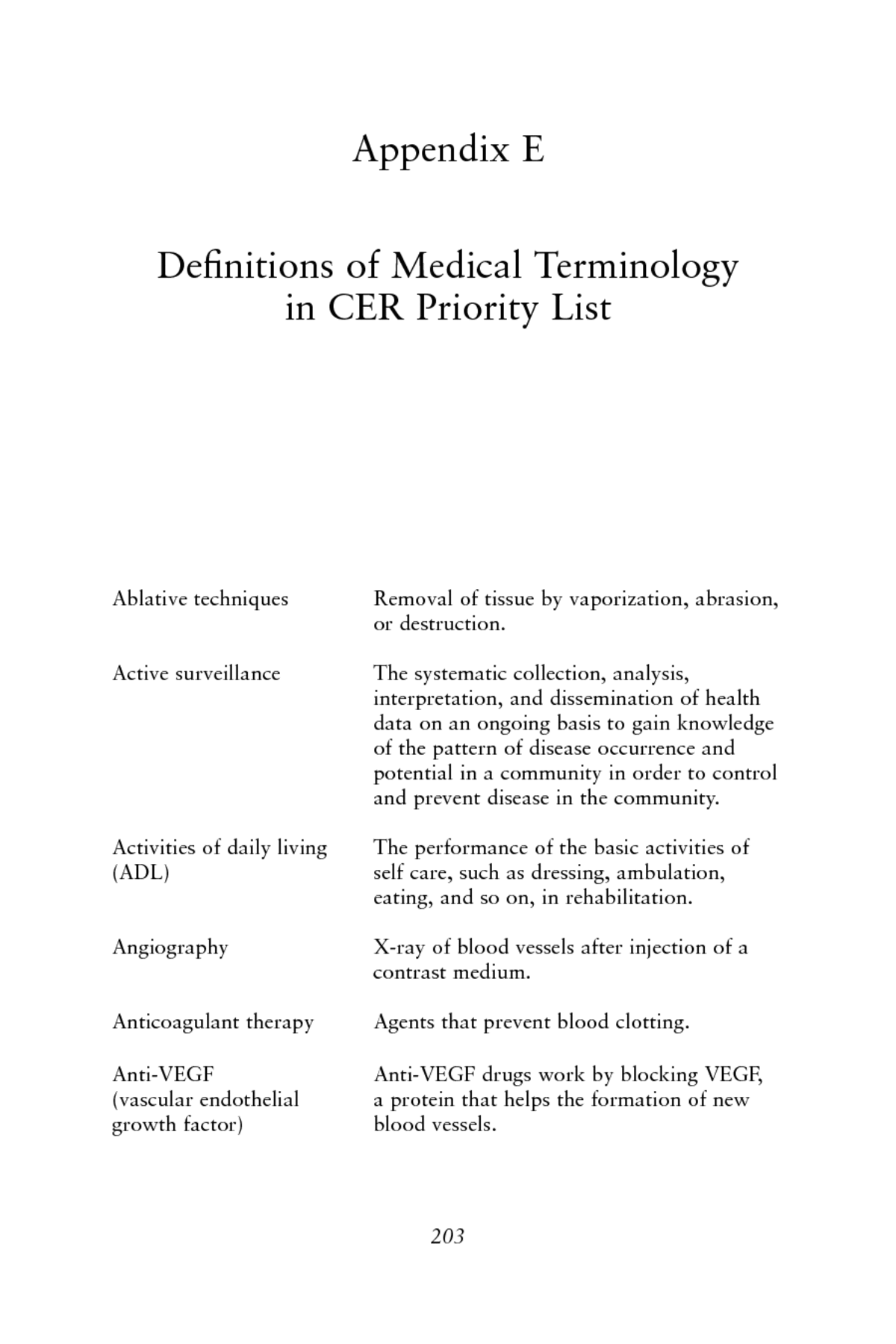
Appendix E Definitions of Medical Terminology in CER Priority List Ablative techniques Removal of tissue by vaporization, abrasion, or destruction. Active surveillance The systematic collection, analysis, interpretation, and dissemination of health data on an ongoing basis to gain knowledge of the pattern of disease occurrence and potential in a community in order to control and prevent disease in the community. Activities of daily living The performance of the basic activities of (ADL) self care, such as dressing, ambulation, eating, and so on, in rehabilitation. Angiography X-ray of blood vessels after injection of a contrast medium. Anticoagulant therapy Agents that prevent blood clotting. Anti-VEGF Anti-VEGF drugs work by blocking VEGF, (vascular endothelial a protein that helps the formation of new growth factor) blood vessels. 203
204 INITIAL NATIONAL PRIORITIES FOR CER Atypical antipsychotics New generation of drugs for treatment of psychosis and schizophrenia. Biologic response Treatment of diseases with biological modifiers materials such as the use of genes, cells, tissues, organs, serum, vaccines, and humoral agents. Biologics Complex pharmaceutical substances, preparations, or agents of organic origin, usually obtained by biological methods or assay (e.g., monoclonal antibodies, recombinant proteins). Biomarkers Measurable and quantifiable biological parameters which serve as indices for health- and physiology-related assessments, such as disease risk, psychiatric disorders, environmental exposure and its effects, disease diagnosis, metabolic processes, substance abuse, pregnancy, cell line development, and epidemiologic studies. Body mass index (BMI) An indicator of body density as determined by the relationship of body weight to body height. For adults, BMI falls into these categories: below 18.5 (underweight); 18.5- 24.9 (normal); 25.0-29.9 (overweight); 30.0 and above (obese). Cardiac A treatment for selected patients with heart resynchronization failure-induced conduction disturbances and ventricular dyssynchrony. Catheter ablation Removal of tissue with electrical current delivered via electrodes positioned at the distal end of a catheter. Central line entry A long, thin, flexible tube inserted into a major central vein used to give medicines, fluids, nutrients, or blood products over a long period of time, usually several weeks or more.
APPENDIX E 205 Cervical spondylotic The most common cause of spinal cord myelopathy dysfunction in older persons. The aging process results in degenerative changes in the cervical spine that, in advanced stages, can cause compression of the spinal cord. Chlorhexidine A disinfectant and topical anti-infective agent also used as mouthwash to prevent oral plaque. Clinical decision support Computer-based information systems used system to integrate clinical and patient information and provide support for decision making in patient care. Cluster randomized trial A trial in which individuals are randomized in groups (i.e., the group is randomized, not the individual). Cochlear implants Electronic hearing devices typically used for patients with normal outer and middle ear function, but defective inner ear function. Colonoscopy Procedure in which a long flexible viewing tube (a colonoscope) is threaded up through the rectum for the purpose of inspecting the entire colon and rectum and, if there is an abnormality, taking a biopsy of it or removing it. Comorbidity The presence of co-existing or additional diseases. Compendia A collection.
206 INITIAL NATIONAL PRIORITIES FOR CER Comprehensive care Primary care is considered comprehensive coordination program when the primary provider takes responsibility for the overall coordination of the care of the patientâs health problems, be they biological, behavioral, or social. The appropriate use of consultants and community resources may be an important part of the comprehensive care program. Such care is generally provided by physicians but is increasingly provided by other personnel such as nurse practitioners or physician assistants. Computed tomography A noninvasive imaging method that uses (CT) angiography computed x-ray data combined with specialized imaging software to examine blood vessels. Continuous ambulatory Portable peritoneal dialysis using the peritoneal dialysis continuous (24 hours a day, 7 days a week) (CAPD) presence of peritoneal dialysis solution in the peritoneal cavity except for periods of drainage and instillation of fresh solution. Coronary stenosis Narrowing or constriction of a coronary artery. CRF2 receptors A receptor subtype from mammalian brain. (Corticotropin-releasing factor) Crohnâs disease A chronic inflammation that may involve any part of the digestive tract from mouth to anus, mostly found in the ileum, the cecum, and the colon. CT colonography A noninvasive imaging method that uses computed x-ray data combined with specialized imaging software to examine the colon.
APPENDIX E 207 Diabetic retinopathy Disease of the retina as a complication of diabetes mellitus. It is characterized by progressive microvascular complications. Diagnostic and Statistical Categorical classification of mental disorders Manual of Mental based on criteria sets with defining features. Disorders (DSM) It is produced by the American Psychiatric Association. Digital mammography Digital (computerized) mammography is similar to standard mammography in that x-rays are used to produce detailed images of the breast. Disease management A mechanism to provide long-term case programs management for individuals with chronic or expensive conditions (e.g., diabetes, asthma, burn recovery). Ductal carcinoma in situ A noninvasive (noninfiltrating) cancer of the breast characterized by a proliferation of malignant cells confined to the mammary ducts or lobules. Electronic health record Electronic recording of pertinent information concerning patientâs illness or illnesses. Esophageal A malignant epithelial tumor with a adenocarcinoma glandular organization of the esophagus. Fecal immunochemical Screen for lower gastrointestinal bleeding tests associated with colorectal cancer, adenomas, polyps, and other lower gastrointestinal conditions. Fecal occult blood test A test to examine evidence of gastrointestinal (FOBT) bleeding. May be done to check for some intestinal conditions or colorectal cancer.
208 INITIAL NATIONAL PRIORITIES FOR CER Gastroesophageal reflux Retrograde flow of gastric juice (gastric disease acid) and/or duodenal contents (bile acids; pancreatic juice) into the distal esophagus, commonly due to incompetence of the lower esophageal sphincter. Hemodialysis Therapy for the insufficient cleansing of the blood by the kidneys. Hyperbaric oxygen The therapeutic intermittent administration of oxygen in a chamber at greater than sea-level atmospheric pressures (three atmospheres). Hyperlipidemia Condition with excess lipids in the blood. Hypertension Persistently high systemic arterial blood pressure. Iatrogenic Due to the action of a physician or a therapy the doctor prescribed. An iatrogenic disease may be inadvertently caused by a physician or surgeon or by a medical or surgical treatment or a diagnostic procedure. Incidence A measure of the frequency with which an event, such as a new case of illness, occurs in a population over a defined period of time. Infant mortality Postnatal deaths from birth to 365 days after birth in a given population. Intractable epilepsy Epilepsy refractive to treatment. Intravitreal steroids Direct injection of glucocorticoids into the gel of the eye. Knee arthroplasty surgery Replacement of the knee joint.
APPENDIX E 209 Low birth weight An infant having a birth weight of 2,500 g (5.5 lb.) or less. Macular degeneration Deterioration in the macula lutea of the retina. Medical home There is no single definition or medical home model, but is generally described as a model of delivering primary care that is accessible, continuous, comprehensive, family-centered, coordinated, compassionate, and culturally effective care. Methicillin resistant A strain of Staphylococcus aureus that is Staphylococcus aureus non-susceptible to the action of methicillin. (MRSA) Methotrexate An anitmetabolite drug used in the treatment of cancer and autoimmune diseases. Migraine prophylaxis Prevention of severe headaches. Negative pressure wound The application of a vacuum across the therapy surface of a wound through a foam dressing cut to fit the wound. This removes wound exudates, reduces build-up of inflammatory mediators, and increases the flow of nutrients to the wound thus promoting healing. Off-label use The practice of using medicines for non- Food and Drug Administration approved reasons. Open-angle glaucoma Increased pressures within the eye in which the angle of the anterior chamber is open and the trabecular meshwork does not encroach on the base of the iris. Osteopenia Metabolic bone disease with mild decrease in bone density.
210 INITIAL NATIONAL PRIORITIES FOR CER Osteoporosis Reduction of bone mass without alteration in the composition of bone, leading to fractures. PCI/PTCA (Percutaneous A variety of procedures used to treat patients coronary intervention/ with diseased arteries of the heart. Percutaneous transluminal coronary angioplasty) Pervasive developmental A âsubthresholdâ condition in which someâ disorder, not otherwise but not allâfeatures of autism or another specified (PDD-NOS) explicitly identified developmental disorder are identified. Pharmacological Drug metabolism and drug interactions. Preterm births Childbirth before 37 weeks of pregnancy. Prophylaxis Use of therapy to prevent the occurrence of symptoms or disease. Prospective registry A place where data, records, or laboratory samples are kept and usually made available for research or comparative study. Radical prostatectomy Complete or partial surgical removal of the prostate. Radiotherapy The use of ionizing radiation to treat cancers and some benign conditions. Remote physiologic Tracking patientsâ vital signs and health monitoring/remote status without physical presence. sensing Retinal vein occlusion Blockage of the central vein of the eye. Those at high risk for this condition include patients with hypertension, diabetes mellitus, atherosclerosis, and other cardiovascular diseases.
APPENDIX E 211 Risk assessment The measure of the association between exposure to something and the outcome. Risk factors A characteristic of a person that affects that personâs chance of having a disease. Screening outcomes Using tests or other methods of diagnosis to find out whether or not a person has a specific disease or condition before it causes any symptoms. Surgical bypass Surgical repair of an obstructive lesion. Surgical resection Surgical removal of part of an organ or a structure. Symptomatic cervical disc Symptoms stemming from pressure on the herniation spinal cord due to protrusion of a disc between the spinal vertebrae in the neck. Telemedicine Delivery of health services via telecommunications. This includes interactive consultative and diagnostic services. Thromboembolic disease Obstruction of a blood vessel by a blood clot in the bloodstream either originating at the site or migrating from a separate site of origin. Ulcerative colitis Inflammation of the colon that is predominantly confined to the inner lining. Its major symptoms include diarrhea, rectal bleeding, the passage of mucus, and abdominal pain. Upper endoscopy Examination involving passing an optical instrument along natural body pathways such as the digestive tract for disease diagnosis and treatment.
212 INITIAL NATIONAL PRIORITIES FOR CER Vascular claudication Pain resulting from limited blood flow to the lower extremities usually due to arthrosclerosis. Viral genomic profile Determination of the specific genes (genetic material) in a given virus in order to characterize behavior. NOTE: Definitions adapted from the National Library of Medicineâs Medical Subject Head- ings (MeSH), WebMD, MedicineNet, National Center for Health Statistics, National Institute of Health Policy, Imaginis, Quest Diagnostics, the Centers for Disease Control and Prevention Reproductive Health Glossary, The National Center for Medical Home Implementation, Yale School of Medicine Child Study Center, Merriam-Webster Online, The American Heart As- sociation, and The Free Dictionary by Farlex.
