
1
Introduction
The topic of this report was recommended by the Institute of Medicine’s (IOM’s) Standing Committee on Childhood Obesity Prevention. The report grew out of an experience of one of the committee members who was approached by a local city council member with this request: “I want to do something about the increasing problem of childhood obesity in our city. What are the top prevention strategies I should pursue?” Although a well-versed obesity researcher, this committee member was struck by the challenges involved in answering the council member’s question. This report is designed to respond to those challenges and provide information to local government officials who are choosing childhood obesity prevention strategies for their communities.
To that end, the IOM convened a committee charged with examining the range of childhood obesity prevention efforts that have been considered or implemented by local governments, with a focus on identifying promising practices that could serve as the basis for a set of recommendations for dissemination to local government officials and entities. The audience for the report was to include mayors; county, city, or township commissioners or other officials; local health departments; local boards of health; city and transportation planners; and other relevant local commissions and public entities. The committee was asked to draw from and build on relevant IOM reports, as well as secondary sources and seminal primary sources. The committee was to note promising strategies for addressing disparities and disproportionately affected children and youth, identify other public health benefits of obesity prevention initiatives, and summarize successful strategies for sustained funding and financing of such initiatives. Thus the committee
was charged with developing a succinct report that would summarize the range of local government efforts, identify and describe the rationale for selected promising practices, discuss other relevant public health benefits of these practices, and present a set of recommendations for actions for local governments to consider in addressing childhood obesity. (See Appendix E for the official Statement of Task for the committee.)
PURPOSE OF THE REPORT
Trends in Childhood Obesity
The city council member who approached the committee member with his urgent request for advice was right to be concerned. The health and well-being of children in the United States are threatened by the ever-increasing number and percentage who are overweight and obese—now at one in four children. Childhood and adolescent obesity has increased dramatically in just three decades. Among children aged 2–5, the prevalence of obesity has increased from 5 percent to 12.4 percent; among children aged 6–11, it has increased from 6.5 percent to 17 percent; and among adolescents (aged 12–19), it has more than tripled, from 5 percent to 17.6 percent (CDC, NHANES) (Figure 1-1). Overall, more than 16.3 percent of children and adolescents aged 2–19 are obese (Ogden et al., 2008). And while children in all race/ethnicity and socioeconomic groups are increasingly obese, those in some groups (the poor, African Americans, Latinos, American Indians, and Pacific Islanders) are disproportionately more overweight and obese.
Obesity is so prevalent that it may reduce the life expectancy of today’s generation of children and diminish the overall quality of their lives (Olshansky and Ludwig, 2005). This is because obese children and adolescents are more likely to have hypertension, high cholesterol, and type 2 diabetes when they are young (Daniels, 2009; Gunturu and Ten, 2007), and they also are more likely to be obese when they are adults (Freedman et al., 2009).
A Tool for Local Governments
Much has been written about the epidemic of childhood obesity and strategies for reversing current trends. Two previous IOM reports, Preventing Childhood Obesity: Health in the Balance and Progress in Preventing Childhood Obesity: How Do We Measure Up?, consider the issue of childhood obesity and present recommendations for consideration both generally and by specific groups or audiences (IOM, 2005,
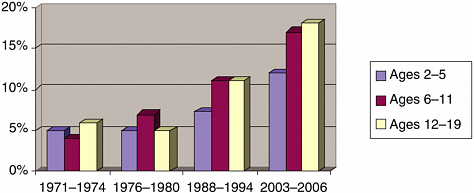
FIGURE 1-1 Prevalence of obesity among children, 1971–2006.
SOURCE: CDC, NHANES.
2007). Those recommendations call for governmental leadership, at all levels, on better measurement of childhood obesity; consideration of the unique characteristics and contexts of people in communities when obesity prevention initiatives are being developed; evaluation of programs to see what works; and dissemination of information about what does and does not work. This report is meant to serve as a tool for local government officials, mayors, managers, commissioners, council members, or administrators; elected, appointed, or hired; at the city, town, township, or county level—and those who work in partnership with them to help in tackling the prevention of childhood obesity in their jurisdictions.
Tip O’Neill, former Speaker of the U.S. House of Representatives, is credited with having said that “all politics is local.” All health is local as well. Health is, first of all, a personal matter. It is very “local” and extends outward from the individual to include the family, close relationships, and the community. Second, although health is strongly influenced by state, regional, national, and international trends and actions, many strategies for addressing childhood obesity must be carried out at the local level to make a difference.
An old adage says that a healthy child is a happy child. Likewise, a fit student is a better-performing student (Chomitz et al., 2009; Mahar et al., 2006). Whether by casual observation or more scientific study, it is clear that the overall well-being of a child affects his or her behavior and academic performance. While much has been done by the nation and at the community level to improve the health prospects of children through public health and medical interventions such
as prenatal care, immunizations, and provision of antibiotics, the growing prevalence of childhood overweight and obesity is threatening the gains made in child health over the past decades.
The causes of childhood obesity are complex. Although the simple explanation is that too many calories are ingested (through consumption of food and beverages) and too few calories are expended (through physical activity), the physiological solution (a balance of the amount of calories consumed and used) is more than a matter of individual willpower or personal responsibility. Living in an environment that lacks healthy food choices and encourages unhealthy ones is a challenge to overcome. An environment that offers no place to play and nowhere safe to walk is likely to discourage optimum physical activity. Even the most motivated adult or parent, or the best-trained child, can find it difficult to act in healthy ways if the surrounding environment does not support or even allow such activity. Thus the real solutions to obesity must take into consideration the environments in which children live, learn, and play. The characteristics of these environments, such as the availability of healthy foods and beverages, the safety of streets, and the accessibility of recreation opportunities, can have a strong impact on whether children become obese. By helping to change these environments in positive ways, local governments can enable families and children to act to maintain and improve their health and prevent the development of obesity.
Childhood obesity prevention in the school setting, during the school day, has received a great deal of attention in particular. Students spend much of their time at school, which thus provides many opportunities for improving food and beverage consumption and levels of physical activity. Many other crucial aspects of children’s environments have not been talked about and publicized to the same extent. Thus, the focus of this report is on actions that local governments can take outside of the school setting, and outside of school hours, to prevent childhood obesity. Local governments can do a great deal to bring positive changes to these other environments. These changes can influence how healthy the food and beverages consumed outside of school are (e.g., in after-school programs) and the extent to which children engage in physical activity, which can depend on the accessibility and maintenance of neighborhood playgrounds. By focusing on such broader environmental factors as well as on what happens during the school day, local governments are likely to increase their chances of success in preventing childhood obesity. This focus does not imply that schools are unimportant in the prevention of childhood obesity. In fact, the involvement of schools in obesity prevention is vital: Obesity prevention initiatives undertaken outside of schools will be stronger
and have a greater impact if they are coordinated with and complement those within schools.
Evidence points to multisectoral initiatives as being effective in achieving and sustaining prevention of childhood obesity (Economos et al., 2007; Sacks et al., 2008; Samuels and Associates, 2009). However, some local government officials may start by implementing one or several programs and/or policies that they believe will help prevent obesity, are easily doable, and will receive community support. At a future date, communities may develop a more comprehensive childhood obesity prevention plan that involves every department and program within local government, businesses, community organizations, schools, families, and individuals. A multisectoral plan can include clear roles, responsibilities, and policies that make the healthy choices the easy choices by giving communities, schools, businesses, and families the tools they need to make it easier to follow national recommendations for healthy eating and physical activity.
APPROACH TO IDENTIFYING PROMISING ACTIONS
Guiding Principles
The committee developed a set of principles to guide its deliberations on promising actions. These principles are summarized in Box 1-1 and detailed below.
1.
Childhood obesity prevention is crucial to the future health of the nation.
Childhood obesity poses a serious threat to health in the United States. Obesity is associated with increased disability, disease, and death and has substantial health, economic, and social costs (IOM, 2007). Therefore, addressing childhood obesity could be one of the most powerful means to improve the health of the nation. A review of health trends suggests that illness, disability, early death, and medical costs will increase if nothing is done now to prevent and reverse childhood obesity (HHS, 2001). In addition, the present realities for obese children and their families are difficult because of the early onset of chronic diseases such as diabetes and the stigma associated with being a heavy child. At the same time, many children and youth have limited access to healthy foods and beverages and to places and opportunities to be physically active, along with too much access to energy-dense, low-nutrition foods and sedentary activities. Because of these concerns, local governments and policy makers bear a responsibility to children and families in their jurisdictions to enact policies that promote healthy eating and safe physical
|
Box 1-1 Guiding Principles
|
activity while discouraging unhealthy behaviors, much as they do with tobacco use and consumption of alcoholic beverages.
2.
The creation of environments that support health is essential to preventing childhood obesity.
Parents and caregivers play a fundamental role in teaching children about healthy choices and behaviors, in modeling those behaviors, and in making decisions for children. However, the positive efforts of adults can be undermined by the environments in which children spend the rest of their time if these environments do not support engaging in healthy behaviors (IOM, 2005, 2007). For parents to succeed in raising healthy children and enable healthy choices to be made more easily, the surrounding environments must make such choices possible and easy.
3.
Local government efforts are critical in childhood obesity prevention.
Local governments have a substantial influence in shaping policies and practices that influence the environments where children live, play, and learn and thereby affect their health. Federal and state policies addressing childhood obesity will, in most instances, be implemented at the local level; in addition, local policy makers
and leaders will respond to the needs and priorities of their communities. Each community is different in its geography; demographics; and assets, such as fiscal capacity, nonprofit agency support, existence of willing partners in academia, and interest by the business community. A primary responsibility of local governments is to address health, safety, and education through policy and environmental changes. Historically, local governments have promoted children’s health through public health initiatives, from ensuring that children are immunized to mandating bicycle helmets. In the same way, local governments can promote children’s health by taking action to prevent childhood obesity.
4.
Eliminating health disparities and achieving health equity should be priorities in any childhood obesity prevention effort.
Many local policies and environments fail to ensure equal access to places, resources, services, or support for all populations. The result is disparities in the prevalence of childhood obesity and in related health, social, and behavioral concerns. Given that the rates of childhood obesity are highest among lower-income and some racial/ethnic populations, local governments should consider giving priority to policy and environment strategies that minimize health inequities.
5.
Collaboration and strong partnerships are key to childhood obesity prevention efforts at the local level.
To address childhood obesity effectively, strong partnerships and collaborations among a diverse set of community members are needed, both within and outside of government. Local governments are in a unique position to catalyze, support, or lead collaborations in the community and engage multiple constituents. Examples include health department staff working collaboratively with elected officials, city planners, school boards, traffic engineers, smart-growth representatives, community health and land use advocates, academia, local businesses, and other community organizations.
6.
Evaluation at the local level is vital to understanding what works.
The evidence for local government policies that prevent childhood obesity is still accumulating. At the same time, communities need to identify and implement initiatives that can have a positive effect on nutrition and physical activity, and not wait to act until all the evidence is collected and published. There is a great need for communities to pursue evaluation activities in order to improve and expand the evidence base.
7.
It is important to consider potential negative and positive consequences of local government policies.
Policy and environmental strategies that are not specifically focused on childhood obesity may nonetheless influence behaviors related to childhood obesity. Therefore, attention needs to be paid to potential impacts on healthy eating and physical activity before deciding whether to implement any policy or environmental strategy or to change past policies. Likewise, obesity prevention policies may have other effects unrelated to obesity. For example, a cooking program or recreation program after school may be initiated to prevent obesity, but these same programs also may help prevent crime during after-school hours by keeping youth engaged and safe. These additional positive effects may bring broader support to the obesity prevention efforts of local government, such as enthusiastic support for after-school programs among local police departments working to prevent crime among youth.
8.
Long-term benefits of childhood obesity prevention actions should be recognized and valued.
Implementing policy and environmental strategies with long-term benefits, such as zoning restrictions, pedestrian master plans, or tax incentives to attract grocery stores to lower-income neighborhoods, can be complex or require considerable investments. These strategies have the potential to impact population changes in eating and activity behaviors, but implementation and positive outcomes may take time.
How the Action Steps Were Selected
Local governments are looking for the most effective actions they can take to prevent childhood obesity in their communities. As noted above, while the evidence base for local government actions is growing, limitations of current research should not discourage action. As highlighted in a 2005 IOM report, childhood obesity prevention actions “should be based on the best available evidence—as opposed to waiting for the best possible evidence” (IOM, 2005, p. 3). Local government officials need the benefit of the best available information to make the wisest possible decisions on action.
To assist in determining the most promising actions for local governments to take to prevent childhood obesity, the committee reviewed numerous articles from peer-reviewed journals, as well as reports from organizations that work with
local governments on childhood obesity prevention. A broad spectrum of potential actions was identified, and the research results were compiled. In addition, several sets of criteria and tools developed by others to evaluate local childhood obesity prevention actions were examined. Informed by these efforts, the committee developed criteria for consideration as it made determinations about the most promising actions. See Appendixes B and C and the references in Chapters 4 and 5 for more details on the methodology used and the evidence identified.
The committee selected actions to recommend that local governments generally have the authority to carry out. In addition, actions had to have a direct impact on childhood obesity. This is somewhat of a gray area, since children live in families and are directly influenced by adults, but the committee attempted to focus its recommendations on those that can have the most direct effects on children. Also, as mentioned earlier, the committee focused on changes outside of the school setting and school day. (For example, the committee recommends Safe Routes to School programs, but did not examine physical education requirements during the school day.) In addition, actions had to have been implemented by local governments or recommended by knowledgeable sources as actions for local governments. Finally, the recommended actions had to be likely to make positive contributions to the achievement of healthy eating and/or optimal physical activity based on research evidence or, where that was lacking or limited, have a logical connection with the achievement of healthier eating or increased physical activity.
Once the committee determined the recommended action steps based on the methodology described above, it considered whether to rank the action steps according to the strength of research evidence (i.e., types and amount of evidence, and effect sizes) and/or by some other criterion. As mentioned earlier in this report, the evidence about childhood obesity prevention is still accumulating, and is limited in a number of areas. Yet, as this report highlights, there are many promising actions that can be pursued by local governments. Actions that are promising should not be automatically dismissed because of limited research. Moreover, priorities for action on childhood obesity prevention may vary from community to community depending on the local context. Local governments will take many things into account as they decide which action steps to take. Even the cost of an action will vary depending on community assets, and sometimes relative costs will be of secondary importance to the potential reach of an action step or the community support for it. Therefore, the committee did not rank its recommended action steps by the strength of evidence, effect sizes, or other criteria.
However, the report does include Appendix D, which focuses on the nature of the evidence supporting the action steps under each of the strategies. This appendix is included for those readers who are particularly interested in the evidence behind the action steps.
Finally, the committee did decide to highlight 12 of the action steps for special consideration. Although all of the recommended actions have a potential to make a difference, these 12 are the actions that were rated as most promising based on the criteria described in this chapter and in Appendix C.
First Steps
Before any efforts are undertaken to develop new programs or policies on obesity prevention, a survey should be conducted to understand local obesity prevention efforts already under way. It is important to talk with people in the community, organizations, or current government programs that have efforts in progress. These partners can help local officials identify what is needed for obesity prevention and how local government can help build on existing efforts. A partnership between local officials and those involved in obesity prevention efforts is critical for sustainability.
After surveying existing efforts, local governments will need to decide how to take the first step. While many actions are recommended in this report, there are also many simple first steps that local government officials can take to get started on preventing childhood obesity in their communities. The committee compiled a list of 10 simple first steps, each of which could serve as a starting point for local officials (Box 1-2).
ORGANIZATION OF THE REPORT
This report is organized to support decision making by local government officials, staff, and collaborators on childhood obesity prevention actions. Recognizing that each community is unique, the second chapter reviews local issues that should be considered in making decisions about childhood obesity prevention strategies. The third chapter addresses the importance of recognizing, understanding, and resolving disparities in the prevalence of obesity and its causes. Chapters 4 and 5 are the core of the report: a discussion and listing of promising childhood obesity prevention strategies and actions to promote healthy eating and increased physical activity. Those actions that the committee deems most promising are highlighted.
|
Box 1-2 10 Simple First Steps
|
REFERENCES
CDC (Centers for Disease Control and Prevention). National Health and Nutrition Examination Survey (NHANES). http://www.cdc.gov/nchs/about/major/nhanes/datalink.htm (accessed May 20, 2009).
Chomitz, V. R., M. M. Slining, R. J. McGowan, S. E. Mitchell, G. F. Dawson, and K. A. Hacker. 2009. Is there a relationship between physical fitness and academic achievement? Positive results from public school children in the northeastern United States. Journal of School Health 79(1):30–37.
Daniels, S. R. 2009. Complications of obesity in children and adolescents. International Journal of Obesity 33(Suppl. 1):S60–S65.
Economos, C. D., R. R. Hyatt, J. P. Goldberg, A. Must, E. N. Naumova, J. J. Collins, and M. E. Nelson. 2007. A community intervention reduces BMI z-score in children: Shape Up Somerville first year results. Obesity 15(5):1325–1336.
Freedman, D. S., W. H. Dietz, S. R. Srinivasan, and G. S. Berenson. 2009. Risk factors and adult body mass index among overweight children: The Bogalusa heart study. Pediatrics 123(3):750–757.
Gunturu, S. D., and S. Ten. 2007. Complications of obesity in childhood. Pediatric Annals 36(2):96–101.
HHS (U.S. Department of Health and Human Services). 2001. The Surgeon General’s Call to Action to Prevent and Decrease Overweight and Obesity. http://www.surgeongeneral.gov/topics/obesity/calltoaction/CalltoAction.pdf (accessed May 12, 2009).
IOM (Institute of Medicine). 2005. Preventing Childhood Obesity: Health in the Balance. Washington, DC: The National Academies Press.
IOM. 2007. Progress in Preventing Childhood Obesity: How Do We Measure Up? Washington, DC: The National Academies Press.
Mahar, M. T., S. K. Murphy, D. A. Rowe, J. Golden, A. T. Shields, and T. D. Raedeke. 2006. Effects of a classroom-based program on physical activity and on-task behavior. Medicine and Science in Sports and Exercise 38(12):2086–2094.
Ogden, C. L., M. D. Carroll, and K. M. Flegal. 2008. High body mass index for age among U.S. children and adolescents, 2003–2006. Journal of the American Medical Association 299(20):2401–2405.
Olshansky, S. J., and D. S. Ludwig. 2005. Effect of obesity on life expectancy in the U.S. Food Technology 59(7):112.
Sacks, G., B. A. Swinburn, and M. A. Lawrence. 2008. A systematic policy approach to changing the food system and physical activity environments to prevent obesity. Australia and New Zealand Health Policy 5.
Samuels and Associates. 2009. Healthy Eating, Active Communities (HEAC) Phase 1 Evaluation Findings, 2005–2008. Executive Summary. http://samuelsandassociates.com/samuels/index.php?option=com_content&view=article&id=27&Itemid=11 (accessed July 13, 2009).


