
13
Darwin and the Scientific Method
FRANCISCO J. AYALA
There is a contradiction between Darwin’s methodology and how he described it for public consumption. Darwin claimed that he proceeded “on true Baconian [inductive] principles and without any theory collected facts on a wholesale scale.” He also wrote, “How odd it is that anyone should not see that all observation must be for or against some view if it is to be of any service!” The scientific method includes 2 episodes. The first consists of formulating hypotheses; the second consists of experimentally testing them. What differentiates science from other knowledge is the second episode: subjecting hypotheses to empirical testing by observing whether or not predictions derived from a hypothesis are the case in relevant observations and experiments. A hypothesis is scientific only if it is consistent with some but not other possible states of affairs not yet observed, so that it is subject to the possibility of falsification by reference to experience. Darwin occupies an exalted place in the history of Western thought, deservedly receiving credit for the theory of evolution. In The Origin of Species, he laid out the evidence demonstrating the evolution of organisms. More important yet is that he discovered natural selection, the process that accounts for the adaptations of organisms and their complexity and diversification. Natural selection and other causal processes of evolution are investigated by formulating and testing hypotheses. Darwin advanced hypotheses in multiple fields,
Department of Ecology and Evolutionary Biology, University of California, Irvine, CA 92697.
including geology, plant morphology and physiology, psychology, and evolution, and subjected them to severe empirical tests.
DARWIN AND THE PHILOSOPHERS
There is an apparent contradiction between how Darwin (Fig. 13.1) proceeded in his scientific research and how he described it for public consumption, between what he said in his published writings about his scientific methodology and what he wrote in his notebooks, correspondence, and autobiography.
The opening paragraph of The Origin of Species (Fig. 13.2) reads as follows:
When on board H.M.S. Beagle, as naturalist, I was much struck with certain facts in the distribution of the inhabitants of South America, and in the geological relations of the present to the past inhabitants of that continent. These facts seemed to me to throw some light on the origin of species—that mystery of mysteries, as it has been called by one of our greatest philosophers. On my return home, it occurred to me, in 1837, that something might perhaps be made out on this question by patiently accumulating and reflecting on all sorts of facts which could possibly have any bearing on it. After 5 years’ work I allowed myself to speculate on the subject, and drew up some short notes; these I enlarged in 1844 into a sketch of the conclusions, which then seemed to me probable: from that period to the present day I have steadily pursued the same object.
Darwin claims to have followed the inductionist canon prevalent among British contemporary philosophers and economists, such as John Stuart Mill (1843), and earlier authorities, notably the statesman and philosopher, Francis Bacon in his Novum Organum (Anderson, 1960). The inductionist canon called for making observations without prejudice as to what they might mean and accumulating observations related to a particular subject so that a universal statement or conclusion could eventually emerge from them. Indeed, in one place in his Autobiography, Darwin affirms that he proceeded “on true Baconian principles and without any theory collected facts on a wholesale scale” (Barlow, 1958, p. 119).
The facts are very different from these claims, however. Darwin’s notebooks and private correspondence show that he entertained the hypothesis of the evolutionary transmutation of species shortly after returning from the voyage of the Beagle and, all important, that the hypothesis of natural selection occurred to him in 1838; several years before he claims to have allowed himself for the first time “to speculate on the subject.” Between the return of the Beagle on October 2, 1836, and publication of
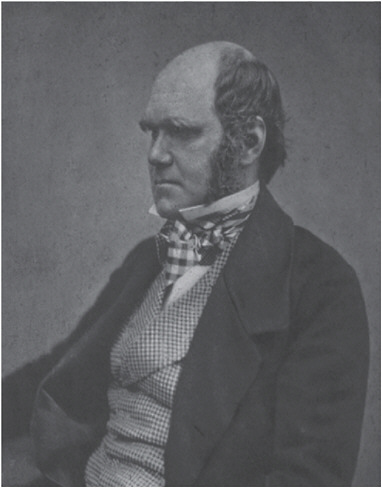
FIGURE 13.1 Charles Darwin, circa 1854 (courtesy of Professor G. Evelyn Hutchison).
Origin of Species in 1859 (Darwin, 1859, 6th ed.) (and, indeed, until the end of his life), Darwin relentlessly pursued empirical evidence to corroborate the evolutionary origin of organisms and to test his theory of natural selection, which he saw as the explanatory process accounting for the adaptive organization of living beings and their diversification and change through time.
Why this disparity between what Darwin was doing and what he claimed? There are at least 2 reasons. First, in the temper of the times, “hypothesis” was a term often reserved for metaphysical speculations without empirical substance. This is the reason Newton, the greatest-ever theorist among scientists, had also claimed, hypotheses non fingo (“I fabricate no hypotheses”). Darwin expressed distaste and even contempt
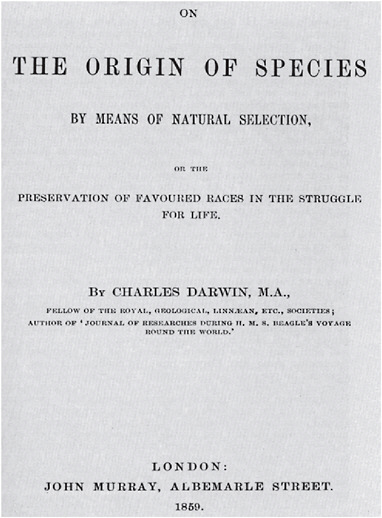
FIGURE 13.2 Title page of The Origin of Species.
for empirically untestable hypotheses. He wrote of Herbert Spencer: “His deductive manner of treating any subject is wholly opposed to my frame of mind. His conclusions never convince me. His fundamental generalizations (which have been compared in importance by some persons with Newton’s Laws!), which I daresay may be very valuable under a philosophical point of view, are of such a nature that they do not seem to me to be of any strictly scientific use. They partake more of the nature of definitions than of laws of nature. They do not aid me in predicting what will happen in any particular case” (Barlow, 1958, p. 109).
There is another reason, a tactical one, Darwin claimed to proceed according to inductive canons: he did not want to be accused of subjective
bias in the evaluation of empirical evidence. Darwin’s true colors are shown in a letter to a young scientist written in 1863: “I would suggest to you the advantage, at present, of being very sparing in introducing theory in your papers (I formerly erred much in Geology in that way); let theory guide your observations, but till your reputation is well established, be sparing of publishing theory. It makes persons doubt your observations” (Darwin, 1903, Vol. 2, p. 323). Nowadays also, scientists, young or old, often report their work so as to make their hypothesis appear as afterthoughts, conclusions derived from the observations or experiments made, rather than as preconceptions tested by empirical observations designed precisely, as it is most often the case in many scientific disciplines, for the purpose of testing a particular “preconception,” a hypothesis. Nevertheless, it is becoming more and more the case that experiments and observations are planned and reported as specific tests of a particular hypothesis.
“Let theory guide your observations.” Indeed, Darwin had no use for the empiricist claim that a scientist should not have a preconception or hypothesis that would guide his work. Otherwise, as he wrote, one “might as well go into a gravel pit and count the pebbles and describe the colors. How odd it is that anyone should not see that observation must be for or against some view if it is to be of any service” (Darwin, 1903, Vol. 1, p. 195). He acknowledged the heuristic role of hypotheses, which guide empirical research by suggesting what is worth observing, what evidence to seek. In his Autobiography, he acknowledges that “I cannot avoid forming one [hypothesis] on every subject” (Barlow, 1958, p. 141).
Darwin advanced hypotheses in multiple fields, including geology, plant morphology and physiology, psychology, and evolution, and subjected his hypotheses to severe empirical tests. Herein lies the solution to the historical conundrum, often noted by historians and philosophers, that he delayed for 2 decades publication of his theory of natural selection as an explanation for the adaptations and diversification of organisms, which he had discovered in 1838, but did not publish until 1859, in Origin. (The delay might have been longer were it not for Wallace’s letter of 1858 announcing his independent discovery of natural selection.) Darwin was aware of the major implications of his theory, namely, bringing the adaptations and diversity of organisms into the realm of science rather than being accounted for by direct creation, as was generally accepted at the time (Ayala, 2007). He spent many years testing his theory of natural selection with observations and experiments that seemed likely to contradict his theory, if it were not correct. Historians have often thought that his 4 volumes on barnacles, living and fossils (Darwin, 1851a,b, 1854a,b) and his studies on the fertilization of orchids (Darwin, 1862), and others, were distractions. They were not distractions, but rather severe tests of his theory of natural selection.
INDUCTION AND EMPIRICISM
It is a common misconception, shared by many scientists, that science proceeds by “accumulating experimental facts and drawing up a theory from them,” as François Jacob (1988, pp. 224–225) had believed when he started the research on bacteriophage replication that would lead to his receiving, in 1965, the Nobel Prize for physiology or medicine. This misconception is encased in the much repeated assertion that science is inductive, a notion that can be traced to the English statesman and essayist Francis Bacon (1561–1626). Bacon had an influential role in shaping modern science by his criticism of the prevailing metaphysical speculations of medieval scholastic philosophers. In the 19th century the most articulate proponent of inductivism was John Stuart Mill (1806–1873).
Induction was proposed by Bacon and Mill as a method of achieving objectivity while avoiding subjective preconceptions and obtaining empirical rather than abstract or metaphysical knowledge. In its extreme form the inductivist canon would hold that a scientist should observe any phenomena that he encounters in his experience and record them without any preconceptions as to what to observe or what the truth about his observations might be. Truths of universal validity would be expected eventually to emerge, as a result of the relentless accumulation of unprejudged observations. The methodology proposed may be trivially exemplified as follows. A scientist measuring and recording everything that confronts him observes a tree with leaves. A second tree, and a third, and many others, are all observed to have leaves. Eventually, he formulates a universal statement, “all trees have leaves.”
This inductive process fails to account for the actual methodology of science. First of all, no scientist works without any preconceived plan as to what kind of phenomena to observe. Scientists choose for study objects or events that, in their opinion, are likely to provide answers to questions that interest them. Otherwise, as Darwin wrote, “one might as well go into a gravel pit and count the pebbles and describe the colors.” A scientist whose goal was to record carefully every event observed in all waking moments of his life would not contribute much to the advance of science; more likely than not, he might be considered mad by his colleagues.
Moreover, induction fails to arrive at universal truths. No matter how many singular statements may be accumulated, no universal statement can be logically justified by such an accumulation of observations. Even if all trees so far observed have leaves, or all swans observed are white, it remains a logical possibility that the next tree will not have leaves, or the next swan will not be white. The step from numerous singular statements to a universal one involves logical amplification. The universal statement has greater logical content (it says more) than the sum of all singular statements.
Another serious logical difficulty with the proposal that induction is the method of science, is that scientific hypotheses and theories are formulated in abstract terms that do not occur at all in the description of empirical events. Mendel, the founder of genetics, observed in the progeny of hybrid plants that alternative traits segregated according to certain proportions. Repeated observations of these proportions could never have led inductively to the formulation of his hypothesis that “factors” (genes) exist in the sex cells and are rearranged in the progeny according to certain rules. The genes were not observed and thus could not be included in statements reflecting what Mendel observed. Natural selection, like gravity or electricity, is not directly observed by a simple examination of nature at a particular time or place. The most interesting and fruitful scientific hypotheses are not simple generalizations. Instead, scientific hypotheses are creations of the mind, imaginative suggestions as to what might be true.
Induction fails in all 3 counts pointed out. It is not a method that ensures objectivity and avoids preconceptions, it is not a method to reach universal truths, and it is not a good description of the process by which scientists formulate hypotheses and other forms of scientific knowledge. It is a different matter that a scientist may come upon a new idea or develop a hypothesis as a consequence of repeated observation of phenomena that might be similar or share certain traits. But how we come upon a new idea is quite a different matter from how is it that we come to accept something as established scientific knowledge.
THE HYPOTHETICO-DEDUCTIVE METHOD
New ideas in science are advanced in the form of conjectures or hypotheses, which may be more or less precisely formulated and be of lesser or greater generality. However, it is essential to the scientific process that any hypothesis be “tested” by reference to the natural world that we experience with our senses. The tests to which scientific ideas are subjected include contrasting any hypothesis with the world of experience in a manner that must leave open the possibility that one might reject a particular hypothesis if it leads to wrong predictions about the world of experience. The possibility of empirical falsification of a hypothesis is carried out by ascertaining whether or not precise predictions derived as logical consequences from the hypothesis agree with the state of affairs found in the empirical world. A hypothesis that cannot be subject to the possibility of rejection by observation and experiment cannot be regarded as scientific.
There are 2 basic components in the process by which scientific knowledge advances. The first component consists of the formulation of a con-
jecture or hypothesis about the natural world. The second component consists of testing the hypothesis by ascertaining whether deductions derived from the hypothesis are indeed the case in the real world. This procedural practice has become known as the hypothetico-deductive method, often characterized as “the” scientific method. It is of the essence of the testing process that the predictions derived from the hypothesis to be tested not be already known, if the observations to be made are to serve as a genuine test of the hypothesis. If a hypothesis is formulated to account for some known phenomena, these phenomena may provide credibility to the hypothesis, but by themselves do not amount to a genuine empirical test of it for the purpose of validating it. The value of a test increases to the extent that the predicted consequences appear to be more and more unlikely before the observations are made.
The analysis of the hypothetico-deductive method may be traced to William Whewell (1794–1866) and William Stanley Jevons (1835–1882) in England and Charles S. Peirce (1838–1914) in the United States. In the 20th century, 2 philosophers who greatly contributed to identify the key features of the hypothetico-deductive method, and are broadly credited for this work, are Karl Popper (1902–1994) (Popper, 1959, 1963) and C. G. Hempel (1905–1997) (Hempel, 1965). But there is no better way of understanding the basic components of the scientific method, and its variations in different disciplines and peculiarities in different practitioners, than examining the work of great scientists, whose enormous accomplishments were made possible by their appropriate methodology. Early eminent practitioners of the hypothetico-deductive methodology include Blaise Pascal (1623–1662) and Isaac Newton (1624–1727). Among biologist contemporaries of Darwin, one might mention Claude Bernard (1813–1878), Louis Pasteur (1822–1895), and Gregor Mendel (1822–1884).
IMAGINATION AND CORROBORATION
Some of these scientists explicitly described the methodology they followed in their research. Notable is the case of Claude Bernard (1865), who clearly describes the 2 stages of the scientific method: formulation of a testable hypothesis and testing it. Moreover, Bernard explicitly asserts that scientific theories of necessity are only partial and provisional.
A hypothesis is … the obligatory starting point of all experimental reasoning. Without it no investigation would be possible, and one would learn nothing: one could only pile up barren observations. To experiment without a preconceived idea is to wander aimlessly…. Those who have condemned the use of hypotheses and preconceived ideas in the experimental method have made the mistake of confusing the contriving of the experiment with the verification of its results…. When propounding a
general theory in science, the one thing one can be sure of is that, in the strict sense, such theories are mistaken. They are only partial and provisional truths which are necessary… to carry the investigation forward; they represent only the current state of our understanding and are bound to be modified by the growth of science.
A contemporary scientist, the Nobel Prize recipient François Jacob, has described research in the lab as an interplay between imagination (hypothesis formulation) and experiment:
What had made possible analysis of bacteriophage multiplication, and understanding of its different stages, was above all of the play of hypotheses and experiments, constructs of the imagination and inferences that could be drawn from them. Starting with a certain conception of the system, one designed an experiment to test one or another aspect of this conception. Depending on the results, one modified the conception to design another experiment. And so on and so forth. That is how research in biology worked. Contrary to what once I thought, scientific progress did not consist simply in observing, in accumulating experimental facts and drawing up a theory from them. It began with the invention of a possible world, or a fragment thereof, which was then compared by experimentation with the real world. And it was this constant dialogue between imagination and experiment that allowed one to form an increasingly fine-grained conception of what is called reality.
Jacob (1988, pp. 224–225)
As pointed out above, science is a complex enterprise that essentially consists of 2 interdependent episodes, one imaginative or creative, the other critical. To have an idea, advance a hypothesis, or suggest what might be true is a creative exercise. However, scientific conjectures or hypotheses must also be subject to critical examination and empirical testing. Scientific thinking may be characterized as a process of invention or discovery followed by validation or confirmation. One process concerns the formulation of new ideas (“acquisition of knowledge”), the other concerns their validation (“justification of knowledge”).
Scientists like other people come upon new ideas in all sorts of ways: from conversation with other people, reading books and newspapers, inductive generalizations, and even dreams and mistaken observations. Newton is said to have been inspired by a falling apple. Kekulé had been unsuccessfully attempting to devise a model for the molecular structure of benzene. One evening he was dozing in front of the fire. The flames appeared to Kekulé as snake-like arrays of atoms. Suddenly one snake appeared to bite its own tail and then whirled mockingly in front of him. The circular appearance of the image inspired in him the model of benzene as a hexagonal ring. The model to explain the evolutionary diversification
of species came to Darwin while riding in his coach and observing the countryside. “I can remember the very spot in the road … when to my joy the solution came to me…. The solution, as I believe, is that the modified offspring … tend to become adapted to many and highly diversified places in the economy of nature” (Barlow, 1958, pp. 120–121).
Hypotheses and other imaginative conjectures are the initial stage of scientific inquiry. It is the imaginative conjecture of what might be true that provides the incentive to seek the truth and a clue as to where we might find it. Hypotheses guide observation and experiment because they suggest what to observe. The empirical work of scientists is guided by hypotheses, whether explicitly formulated or simply in the form of vague conjectures or hunches about what the truth might be. However, imaginative conjecture and empirical observation are mutually interdependent episodes. Observations made to test a hypothesis are often the inspiring source of new conjectures or hypotheses. As described by Jacob, the results of an experiment often inspire the modification of a hypothesis and the design of new experiments to test it.
The starting point of scientific inquiry is the conception of an idea, a process that is, however, not a subject of investigation for logic or epistemology. The complex conscious and unconscious events underlying the creative mind are properly the interest of empirical psychology. The creative process is not unique to scientists. Philosophers and novelists, poets, and painters are also creative; they, too, advance models of experience and also generalize by induction. What distinguishes science from other forms of knowledge is the process by which this knowledge is justified or corroborated, at least provisionally, by observation and experimentation.
THE CRITERION OF DEMARCATION
Testing a hypothesis involves at least 4 different activities (Ayala, 1994). First, the hypothesis must be examined for internal consistency. A hypothesis that is self-contradictory or not logically well formed in some other way should be rejected.
Second, the logical structure of the hypothesis must be examined to ascertain whether it has explanatory value, i.e., whether it makes the observed phenomena intelligible in some sense, whether it provides an understanding of why the phenomena do in fact occur as observed. A hypothesis that is purely tautological should be rejected because it has no explanatory value. A scientific hypothesis identifies the conditions, processes, or mechanisms that account for the phenomena it purports to explain. Thus, hypotheses establish general relationships between certain conditions and their consequences or between certain causes and their effects. For example, the motions of the planets around the Sun
are explained as a consequence of gravity, and respiration as an effect of red blood cells that carry oxygen from the lungs to various parts of the body.
Third, a hypothesis must be examined for its consistency with hypotheses and theories commonly accepted in the particular field of science and to see whether it represents any advance with respect to well-established alternative hypotheses. Lack of consistency with other theories is not always ground for rejection of a hypothesis, although it will often be. Some of the greatest scientific advances occur precisely when it is shown that a widely held and well-supported hypothesis is replaced by a new one that accounts for the same phenomena that were explained by the preexisting hypothesis, and other phenomena it could not account for. One example is the replacement of Newtonian mechanics by the theory of relativity, which rejects the conservation of matter and the simultaneity of events that occur at a distance, 2 fundamental tenets of Newton’s theory.
Examples of this kind are pervasive in rapidly advancing disciplines, such as molecular biology at present. The so-called “central dogma” holds that molecular information flows only in one direction, from DNA to RNA to protein. The DNA contains the genetic information that determines what the organism is, but that information has to be expressed in the enzymes (and other proteins) that guide all chemical processes in cells. The information contained in the DNA molecules is conveyed to proteins by means of intermediate molecules, called messenger RNA. David Baltimore (1970) and Howard Temin (Temin and Mizutani, 1970) were awarded the Nobel Prize for discovering independently that information could flow in the opposite direction, from RNA to DNA, by means of the enzyme reverse transcriptase. They showed that some viruses, as they infect cells, are able to copy their RNA into DNA, which then becomes integrated into the DNA of the infected cell, where it is used as if it were the cell’s own DNA.
Other examples are the following. Biochemists assumed that only the proteins known as enzymes could catalyze the chemical reactions in cells. However, Thomas Cech (1985) and Sidney Altman received in 1989 the Nobel Prize for independently showing that certain RNA molecules act as enzymes and catalyze their own reactions. One more example concerns the so-called “colinearity” between DNA and protein. Molecular biologists thought that the sequence of nucleotides in the DNA of a gene is expressed consecutively in the sequence of amino acids in the protein. This conception was shaken by the discovery that genes come in pieces, separated by intervening DNA segments that do not code for protein; Richard Roberts and Philip Sharp received the 1993 Nobel Prize for this discovery (Crick, 1979; Chambon, 1981).
These revolutionary hypotheses were published after their authors had subjected them to severe empirical tests. Theories that are inconsistent
with well-accepted hypotheses in the relevant discipline are likely to be ignored when they are not availed by convincing empirical evidence. The microhistory of science is littered with farfetched or ad hoc hypotheses, often proposed by individuals with no previous or posterior scientific achievements. Theories of this sort usually fade away because they are ignored by most of the scientific community, although on occasion they engage their interest because the theory may have received attention from the media or even from political or religious bodies. The fiasco 2 decades ago over “cold fusion” was an example of an unlikely and poorly tested hypothesis that received some attention from the scientific community because its proponents were well-established scientists (Taubes, 1993).
The fourth and most distinctive step in testing a scientific hypothesis consists of putting the hypothesis on trial by ascertaining whether or not predictions about the world of experience derived as logical consequences from the hypothesis agree with what is actually observed. This is the critical element that distinguishes the empirical sciences from other forms of knowledge: the requirement that scientific hypotheses be empirically falsifiable. Scientific hypotheses cannot be consistent with all possible states of affairs in the empirical world. A hypothesis is scientific only if it is consistent with some but not with other possible states of affairs not yet observed in the world, so that it may be subject to the possibility of falsification by observation. The predictions derived from a scientific hypothesis must be sufficiently precise that they limit the range of possible observations with which they are compatible. If the results of an empirical test agree with the predictions derived from a hypothesis, the hypothesis is said to be provisionally corroborated; otherwise it is falsified.
The requirement that a scientific hypothesis be falsifiable has been appropriately called the criterion of demarcation of the empirical sciences because it sets apart the empirical sciences from other forms of knowledge (Popper, 1959, 1963). A hypothesis that is not subject to the possibility of empirical falsification does not belong in the realm of science.
The requirement that scientific hypotheses be falsifiable rather than simply verifiable seems surprising at first. It might seem that the goal of science is to establish the “truth” of hypotheses rather than attempt to falsify them, but it is not so. There is an asymmetry between the falsifiability and the verifiability of universal statements that derives from the logical nature of such statements. A universal statement can be shown to be false if it is found to be inconsistent with even 1 singular statement, i.e., a statement about a particular event. But, a universal statement can never be proven true by virtue of the truth of particular statements, no matter how numerous these may be.
Consider a particular hypothesis from which a certain consequence is logically derived. Consider now the following argument: If the hypothesis
is true, then the specific consequence must also be true; it is the case that the consequence is true; therefore the hypothesis is true. This is an erroneous kind of inference called by logicians the “fallacy of affirming the consequent.” The error of this kind of inference may be illustrated with the following trivial example: If apples are made of iron, they should fall on the ground when they are cut off a tree; apples fall when they are cut off; therefore, apples are made of iron. The conclusion is invalid even if both premises are true. The reason is that there may be some other explanation or hypothesis from which the same consequences or predictions are derived. The observed phenomena are true because they are consequences from this different hypothesis, rather than from the one used in the deduction.
The proper form of logical inference for conditional statements is what logicians call the modus tollens (manner of taking away). It may be represented by the following argument. If a particular hypothesis is true, then a certain consequence must also be true; but evidence shows that the consequence is not true; therefore the hypothesis is false. The modus tollens is a logically conclusive form of inference. If both premises are true, the conclusion falsifying the hypothesis necessarily follows.
It follows from this reasoning that it is possible to show the falsity of a universal statement concerning the empirical world; but it is never possible to demonstrate conclusively its truth. This asymmetry between verification and falsification is recognized in the statistical methodology of testing hypotheses. The hypothesis subject to test, the null hypothesis, may be rejected if the observations are inconsistent with it. If the observations are consistent with the predictions derived from the hypothesis, the proper conclusion is that the test has failed to falsify the null hypothesis, not that its truth has been established. Accordingly, scientific theories are never established as definitive truths. As Claude Bernard stated, theories “represent only the current state of our understanding and are bound to be modified by the growth of science” (Bernard, 1865).
DARWIN
Charles Robert Darwin (1809–1882) was the son and grandson of physicians. In 1825 he enrolled as a medical student at the University of Edinburgh. After 2 years, however, he left Edinburgh to study at the University of Cambridge and prepare to become a clergyman. He was not an exceptional student, but he was deeply interested in natural history. On Dec. 27, 1831, a few months after his graduation from Cambridge, he sailed as a naturalist aboard the HMS Beagle on a round-the-world trip that lasted until October 1836. Darwin was often able to disembark for extended trips ashore to collect natural specimens. The discovery of fossil bones from
large extinct mammals in Argentina and the observation of numerous species of finches in the Galápagos Islands were among the events credited with stimulating Darwin’s interest in how species originate. In 1859 he published On the Origin of Species by Means of Natural Selection (Darwin, 1859), a treatise establishing the theory of evolution and, most important, the role of natural selection in determining its course. He published many other books as well, notably The Descent of Man and Selection in Relation to Sex (Darwin, 1871, 2nd ed.), which extends the theory of natural selection to human evolution.
Darwin occupies an exalted place in the history of Western thought, deservedly receiving credit for the theory of evolution. In The Origin of Species, he laid out the evidence demonstrating the evolution of organisms: 2 chapters dedicated to the geological record, 2 chapters dedicated to biogeography, and 1 chapter dedicated to comparative anatomy and embryology (Darwin, 1859, chapters IX–XIII). However, Darwin accomplished something much more important than demonstrating evolution. Indeed, accumulating evidence for common descent with diversification may very well have been a subsidiary objective of Darwin’s masterpiece. Darwin’s Origin of Species is, first and foremost, a sustained argument to solve the problem of how to account scientifically for the “design” of organisms. Darwin seeks to explain the adaptations of organisms, their complexity, diversity, and marvelous contrivances as the result of natural processes. Darwin brings about the evidence for evolution because evolution is a necessary consequence of his theory of natural selection. Nine chapters (I–VIII and XIV) of Origin (Darwin, 1859) are dedicated to natural selection. He explains how natural selection works and the role of hereditary variation (the mechanics of which were not well understood in Darwin’s time), and he considers possible objections to his theory.
The evolution of organisms was commonly accepted by naturalists in the middle decades of the 19th century. The distribution of exotic species in South America, in the Galápagos Islands and elsewhere, and the observation of fossil remains of long-extinguished animals during his voyage on the Beagle, would contribute to confirm the reality of evolution in Darwin’s mind. The intellectual challenge after his return to Britain was not simply to accumulate evidence showing that species evolve. Rather, the fundamental challenge was to explain the origin of distinct species of organisms and how they adapted to their environments, that “mystery of mysteries,” as it had been labeled by Darwin’s older contemporary, the prominent scientist and philosopher Sir John Herschel (1792–1871). As Darwin wrote in his Autobiography (Barlow, 1958), “I had always been much struck by such adaptations, and until these could be explained it seemed to me almost useless to endeavor to prove by indirect evidence that species have been modified.”
Darwin had come to accept the evolution of organisms by the time he returned from the voyage of the Beagle in October 1836 or shortly thereafter. This is apparent from the notebooks he wrote during the voyage, and those known as the “Transmutation Notebooks,” which he wrote in the ensuing 2 years, after his return (Darwin, 1960). Important as it was to obtain evidence of the origin of species by evolution, this seemed to him to pale compared with the need for demonstrating how the complex adaptations of organisms, their design, came about, namely, by natural selection.
The advances of physical science accomplished by the “Copernican Revolution” of the 16th and 17th centuries had brought the workings of the universe under the domain of science: explanation by natural laws that can be tested by observation and experiment. The fundamental commitment was to the postulate that the universe consists of matter in motion governed by natural laws. All physical phenomena could be accounted for as long as the causes became adequately known. However, the origin and configuration of living creatures had been left out, because it seemed that the complex design of organisms could not have come about by chance or by the mechanical laws of physics, chemistry, and astronomy.
The notion that the design of organisms could not be accounted for by the laws of nature had been argued at length by philosophers and theologians. William Paley, for example, made the case with considerable biological detail and thoughtful argumentation in his Natural Theology (Paley, 1802), a book that Darwin read as part of his studies at Cambridge University. Paley argued that in the same way that the harmony of the parts making a watch manifest that it had been designed by a skilled watchmaker, so the design of the human eye, with its transparent lens, its retina placed at the precise distance for forming a distinct image, and its large nerve transmitting signals to the brain, manifested to have been designed by the Creator.
Darwin’s theory of natural selection brought the adaptations of organisms within the realm of explanation by natural laws. Darwin completed the Copernican Revolution by drawing out for biology the notion of nature as a lawful system of matter in motion that human reason can explain without recourse to supernatural or extranatural agencies. The origin and adaptations of organisms in their profusion and wondrous variations were thus brought into the realm of science.
NATURAL SELECTION
Darwin considered natural selection, rather than his demonstration of evolution, his most important discovery and designated it as “my theory,” a designation he never used when referring to the evolution of organ-
isms. The discovery of natural selection, Darwin’s awareness that it was a greatly significant discovery because it was science’s answer to Paley’s argument-from-design, and Darwin’s designation of natural selection as “my theory” can be traced in Darwin’s “Red Notebook” and “‘Transmutation Notebooks B to E,” which he started in March 1837, not long after returning (on October 2, 1836) from his 5-year voyage on the Beagle, and completed in late 1839 [Darwin (1960) and see Eldredge (2004)].
Early in the notebooks of 1837–1839, Darwin registers his discovery of natural selection and repeatedly refers to it as “my theory.” From then until his death in 1882, Darwin’s life would be dedicated to substantiating natural selection and its companion postulates, mainly the pervasiveness of hereditary variation and the enormous fertility of organisms, which much surpassed the capacity of available resources. Natural selection became for Darwin “a theory by which to work.” He relentlessly pursued observations and performed experiments to test the theory and resolve presumptive objections. These studies were reported in numerous papers and volumes dedicated to barnacles (fossil and living), orchids and their fertilization by insects, insectivorous and climbing plants, earthworms, and much more.
This is how Darwin describes his discovery of natural selection in the Autobiography: “In October, 1838, that is, 15 months after I had begun my systematic enquiry, … it at once struck me that under these circumstances [struggle for existence, as in Malthus] favorable variations would tend to be preserved, and unfavorable ones to be destroyed…. Here then I had at last got a theory by which to work; but I was so anxious to avoid prejudice, that I determined not for some time to write even the briefest sketch of it” (Barlow, 1958).
Darwin had in natural selection an explanatory hypothesis to account for the adaptations of organisms that would allow him to design observations and experiments for testing the hypothesis’ validity. “What Darwin meant by ‘a theory by which to work’ was no less than natural selection and trying to derive—as ‘predictions’—the expected consequences of natural selection in action over long periods of time. From natural selection, Darwin tried to derive those very same basic patterns that he had seen in the natural world” (Eldredge, 2004).
Despite occasional claims by Darwin himself that he proceeded according to Baconian principles or that he accumulated wholesale facts without any preconceived idea as to what they might imply, Darwin was an excellent practitioner of the hypothetico-deductive method of science. Such claims are little more than “window dressing,” seeking to allay the concerns of his contemporaries, whether philosophers or other possible critics, who would surely find his theory of natural selection hard to take and would be prompt to denounce it as a prejudicial abstraction without
empirical foundation. In his correspondence and Autobiography, Darwin recognized the primary role played by theory. When he came upon the hypothesis of natural selection in 1838, he became aware of its enormous explanatory power to account for the adaptations of organisms and their diversification. He would dedicate much of his scientific activity for the rest of his life to developing the theory of natural selection by considering possible objections and by subjecting it to severe tests, investigating precisely those adaptations (behavioral, sexual, anatomical) that would seem contrived more by preconceived design than as adaptations by natural selection.
Modern students of Darwin have convincingly shown Darwin’s exemplary scientific methodology [e.g., De Beer (1964), Mayr (1964, 1982, 1988), Ghiselin (1969), Hull (1973), Ruse (1979), Eldredge (2004)]. Darwin’s 4 monographs on barnacles (Darwin, 1851a,b, 1854a,b) and his books on the fertilization of orchids (Darwin, 1862), human evolution and sexual selection (Darwin, 1871), climbing plants (Darwin, 1875b), insectivorous plants (Darwin, 1875a), the formation of vegetable mold by worms (Darwin, 1881), and others must be seen as severe tests of natural selection, carried out precisely by investigating biological phenomena, including some seemingly quite peculiar, that would seem, at least at first sight, incompatible with his theory of natural selection.
Michael Ghiselin (1969) has perceptively shown in The Triumph of the Darwinian Method that the lion’s share of Darwin’s research and publications were a sustained effort to subject the hypothesis of natural selection to severe tests. “Unless one understands this—that Darwin applied, rigorously and consistently, the modern, hypothetico-deductive scientific method—his accomplishments cannot be appreciated. His entire scientific accomplishment must be attributed not to the collection of facts, but to the development of theory…. That Darwin realized the great importance of hypothesis in his work can be documented by his numerous remarks on that subject. In a letter to a colleague, he explicitly compares his hypothesis of natural selection to the undulatory theory of light with its ether, and to the attractive power in Newton’s theory of gravitation” (p. 4).
Darwin advanced hypotheses in multiple fields, including geology, plant morphology and physiology, psychology, and evolution, and subjected his hypotheses to empirical test. “The line of argument often pursued throughout my theory is to establish a point as a probability by induction and to apply it as a hypothesis to other parts and see whether it will solve them” [cited in De Beer (1964, p. 94)]. Popper (1959, 1963) has made clear that falsifiability is the criterion of demarcation of the empirical sciences from other forms of knowledge, but also that falsification of seemingly true hypotheses contributes to the advance of science. Darwin recognized the same: “False facts are highly injurious to the progress of
science, for they often endure long; but false views, if supported by some evidence, do little harm, for every one takes a salutary pleasure in proving their falseness; and when this is done, one path toward error is closed and the road to truth is often at the same time opened” (Darwin, 1960).
Darwin saw natural selection as an overarching explanatory hypothesis that gave a causal explanation of evolutionary change, was consistent with the experience of plant and animal breeders, and made sense of a host of facts, such as he had uncovered in his research on barnacles, orchids, climbing plants, and many others. The evidence for natural selection, he asserts in a letter is “(i) On its being a vera causa, from the struggle for existence; and the certain geological fact that species do somehow change. (ii) From the analogy of change under domestication by man’s selection. (iii) And chiefly from this view connecting under an intelligible point of view a host of facts” (Darwin F, 1887c, Vol. III, p. 25).
PHYLOGENY AND CLASSIFICATION
Some philosophers of science have claimed that evolutionary biology is a historical science that does not need to satisfy the requirements of the hypothetico-deductive method. The evolution of organisms, it is argued, is a historical process that depends on unique and unpredictable events, and thus is not subject to the formulation of testable hypotheses and theories. Such claims emanate from a monumental misunderstanding. There are 2 kinds of questions in the study of biological evolution. One concerns history: the study of phylogeny, the unraveling and description of the actual course of evolution on Earth that has led to the present state of the biological world. The scientific disciplines contributing to the study of phylogeny include taxonomy, systematics, paleontology, biogeography, comparative anatomy, comparative embryology, and comparative molecular biology. The second kind of question concerns the elucidation of the mechanisms or processes that bring about evolutionary change. These questions deal with causal, rather than historical, relationships. Population genetics, population ecology, paleobiology, molecular biology, and many other branches of biology are the relevant disciplines.
There can be little doubt that the causal study of evolution proceeds by the formulation and empirical testing of hypotheses, according to the hypothetico-deductive methodology that is also characteristic of the physicochemical sciences and other empirical disciplines concerned with causal processes. But the study of evolutionary history is also based on the formulation of empirically testable hypotheses. Consider a simple example. For many years specialists proposed that the evolutionary lineage leading to humans separated from the lineage leading to the great apes (chimpanzee, gorilla, orangutan) before the lineages of the great apes
separated from each other. Some recent authors have suggested instead that humans, chimpanzees, and gorillas are more closely related to each other than the chimpanzee and the gorilla are to the orangutan and other Asian apes. A wealth of empirical predictions can be derived logically from these competing hypotheses. One prediction concerns the degree of similarity between enzymes and other proteins. It is known that the rate of amino acid substitutions is approximately constant when averaged over many proteins and long periods of time. If the older hypothesis is correct, the average amount of protein differentiation should be greater between humans and the African apes than among these and orangutans. However, if the newer hypothesis is correct, humans, gorillas, and chimpanzees should have greater protein similarity than any of the 3 has with orangutans. These alternative predictions provide a critical empirical test of the hypotheses. The available data favor the second hypothesis. Humans, chimpanzees, and gorillas appear to be phylogenetically more closely related to each other than any one of them is related to orangutans, and chimpanzees are more closely related to humans than they are to gorillas.
Certain biological disciplines relevant to the study of evolution are largely descriptive and classificatory. Description and classification are necessary activities in all branches of science, but play a greater role in certain biological disciplines, such as systematics and biogeography, than in other disciplines, such as population genetics. Nevertheless, taxonomy, systematics, and biogeography also use the hypothetico-deductive method and formulate empirically testable hypotheses (Brooks and McLennan, 1991; Hillis et al., 1996).


