
In the Light of Evolution
Volume III: Two Centuries of Darwin
JOHN C. AVISE and FRANCISCO J. AYALA, Editors
THE NATIONAL ACADEMIES PRESS
Washington, D.C.
www.nap.edu
THE NATIONAL ACADEMIES PRESS
500 Fifth Street., N.W. Washington, DC 20001
This volume is based on the Arthur M. Sackler Colloquium of the National Academy of Sciences, “In the Light of Evolution III: Two Centuries of Darwin,” held January 16–17, 2009, at the Arnold and Mabel Beckman Center of the National Academies of Sciences and Engineering in Irvine, California. The articles appearing in these pages were contributed by speakers at the colloquium and have been anonymously reviewed. Any opinions, findings, conclusions, or recommendations expressed in this volume are those of the authors and do not necessarily reflect the view of the National Academy of Sciences.
In the light of evolution / John C. Avise and Francisco J. Ayala, editors.
p. cm.
Vol. I based on a colloquium of the National Academy of Sciences, held December 1–2, 2006, in Irvine, California.
Includes bibliographical references.
ISBN-13: 978-0-309-10405-0 (hardcover)
ISBN-10: 0-309-10405-X (hardcover)
ISBN-13: 978-0-309-66786-9 (pdf)
ISBN-10: 0-309-66786-0 (pdf)
1. Evolution (Biology)—Congresses. I. Avise, John C, 1948–. II. Ayala, Francisco José, 1934–III. National Academy of Sciences (U.S.)
QH359.I55 2007
576.8—dc22
2007032455
Additional copies of this book are available from the
National Academies Press,
500 Fifth St., N.W., Lockbox 285, Washington, DC 10055; (800) 624-6242 or (202) 334-3313 (in the Washington metropolitan area); Internet, http://www.nap.edu.
Cover image: Three species of Chaetodon butterflyfish [from Cuvier B, Latrielle M (1837) The Animal Kingdom, Vol. II (Henderson, London)]. Charles Darwin preserved (“in spirits of wine”) many fish that he collected during the voyage of the Beagle [Pauly, D (2004) Darwin’s Fishes (Cambridge University Press, Cambridge, UK)], including a species of butterflyfish from the Cocos Islands.
Copyright 2009 by the National Academy of Sciences. All rights reserved.
Printed in the United States of America
THE NATIONAL ACADEMIES
Advisers to the Nation on Science, Engineering, and Medicine
The National Academy of Sciences is a private, nonprofit, self-perpetuating society of distinguished scholars engaged in scientific and engineering research, dedicated to the furtherance of science and technology and to their use for the general welfare. Upon the authority of the charter granted to it by the Congress in 1863, the Academy has a mandate that requires it to advise the federal government on scientific and technical matters. Dr. Ralph J. Cicerone is president of the National Academy of Sciences.
The National Academy of Engineering was established in 1964, under the charter of the National Academy of Sciences, as a parallel organization of outstanding engineers. It is autonomous in its administration and in the selection of its members, sharing with the National Academy of Sciences the responsibility for advising the federal government. The National Academy of Engineering also sponsors engineering programs aimed at meeting national needs, encourages education and research, and recognizes the superior achievements of engineers. Dr. Charles M. Vest is president of the National Academy of Engineering.
The Institute of Medicine was established in 1970 by the National Academy of Sciences to secure the services of eminent members of appropriate professions in the examination of policy matters pertaining to the health of the public. The Institute acts under the responsibility given to the National Academy of Sciences by its congressional charter to be an adviser to the federal government and, upon its own initiative, to identify issues of medical care, research, and education. Dr. Harvey V. Fineberg is president of the Institute of Medicine.
The National Research Council was organized by the National Academy of Sciences in 1916 to associate the broad community of science and technology with the Academy’s purposes of furthering knowledge and advising the federal government. Functioning in accordance with general policies determined by the Academy, the Council has become the principal operating agency of both the National Academy of Sciences and the National Academy of Engineering in providing services to the government, the public, and the scientific and engineering communities. The Council is administered jointly by both Academies and the Institute of Medicine. Dr. Ralph J. Cicerone and Dr. Charles M. Vest are chair and vice chair, respectively, of the National Research Council.
Arthur M. Sackler, M.D.
1913–1987
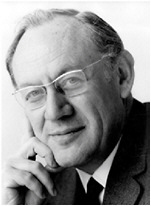
Born in Brooklyn, New York, Arthur M. Sackler was educated in the arts, sciences, and humanities at New York University. These interests remained the focus of his life, as he became widely known as a scientist, art collector, and philanthropist, endowing institutions of learning and culture throughout the world.
He felt that his fundamental role was as a doctor, a vocation he decided upon at the age of four. After completing his internship and service as house physician at Lincoln Hospital in New York City, he became a resident in psychiatry at Creedmoor State Hospital. There, in the 1940s, he started research that resulted in more than 150 papers in neuroendocrinology, psychiatry, and experimental medicine. He considered his scientific research in the metabolic basis of schizophrenia his most significant contribution to science and served as editor of the Journal of Clinical and Experimental Psychobiology from 1950 to 1962. In 1960 he started publication of Medical Tribune, a weekly medical newspaper that reached over one million readers in 20 countries. He established the Laboratories for Therapeutic Research in 1938, a facility in New York for basic research that he directed until 1983.
As a generous benefactor to the causes of medicine and basic science, Arthur Sackler built and contributed to a wide range of scientific institutions: the Sackler School of Medicine established in 1972 at Tel Aviv University, Tel Aviv, Israel; the Sackler Institute of Graduate Biomedical Science at New York University, founded in 1980; the Arthur M. Sackler Science Center dedicated in 1985 at Clark University, Worcester, Massachusetts; and the Sackler School of Graduate Biomedical Sciences, established in 1980, and the Arthur M. Sackler Center for Health Communications, established in 1986, both at Tufts University, Boston, Massachusetts.
His pre-eminence in the art world is already legendary. According to his wife Jillian, one of his favorite relaxations was to visit museums and art galleries and pick out great pieces others had overlooked. His interest in art is reflected in his philanthropy; he endowed galleries at the Metropolitan Museum of Art and Princeton University, a museum at Harvard
University, and the Arthur M. Sackler Gallery of Asian Art in Washington, D.C. True to his oft-stated determination to create bridges between peoples, he offered to build a teaching museum in China, which Jillian made possible after his death, and in 1993 opened the Arthur M. Sackler Museum of Art and Archaeology at Peking University in Beijing.
In a world that often sees science and art as two separate cultures, Arthur Sackler saw them as inextricably related. In a speech given at the State University of New York at Stony Brook, Some reflections on the arts, sciences and humanities, a year before his death, he observed: “Communication is, for me, the primum movens of all culture. In the arts … I find the emotional component most moving. In science, it is the intellectual content. Both are deeply interlinked in the humanities.” The Arthur M. Sackler Colloquia at the National Academy of Sciences pay tribute to this faith in communication as the prime mover of knowledge and culture.
Contents
|
Preface to In the Light of Evolution, Volume III: Two Centuries of Darwin |
||||
|
Adaptive Radiations: From Field to Genomic Studies |
||||
|
Genetics and Ecological Speciation |
||||
|
Cascades of Convergent Evolution: The Corresponding Evolutionary Histories of Euglenozoans and Dinoflagellates |
||||
|
The Darwinian Revolution: Rethinking Its Meaning and Significance |
||||
|
Did Darwin Write the Origin Backwards? |
||||
|
Darwin’s Place in the History of Thought: A Reevaluation |
||||
|
Darwin’s “Strange Inversion of Reasoning” |
||||
|
|
||||
Preface to the In the Light of Evolution Series
Biodiversity—the genetic variety of life—is an exuberant product of the evolutionary past, a vast human-supportive resource (aesthetic, intellectual, and material) of the present, and a rich legacy to cherish and preserve for the future. Two urgent challenges, and opportunities, for 21st-century science are to gain deeper insights into the evolutionary processes that foster biotic diversity, and to translate that understanding into workable solutions for the regional and global crises that biodiversity currently faces. A grasp of evolutionary principles and processes is important in other societal arenas as well, such as education, medicine, sociology, and other applied fields including agriculture, pharmacology, and biotechnology. The ramifications of evolutionary thought also extend into learned realms traditionally reserved for philosophy and religion.
In 1973, Theodosius Dobzhansky penned a short commentary entitled “Nothing in biology makes sense except in the light of evolution.” Most scientists agree that evolution provides the unifying framework for interpreting biological phenomena that otherwise can often seem unrelated and perhaps unintelligible. Given the central position of evolutionary thought in biology, it is sadly ironic that evolutionary perspectives outside the sciences have often been neglected, misunderstood, or purposefully misrepresented.
The central goal of the In the Light of Evolution (ILE) series is to promote the evolutionary sciences through state-of-the-art colloquia—in the series of Arthur M. Sackler colloquia sponsored by the National Academy of Sciences—and their published proceedings. Each installment explores
evolutionary perspectives on a particular biological topic that is scientifically intriguing but also has special relevance to contemporary societal issues or challenges. Individually and collectively, the ILE series aims to interpret phenomena in various areas of biology through the lens of evolution, address some of the most intellectually engaging as well as pragmatically important societal issues of our times, and foster a greater appreciation of evolutionary biology as a consolidating foundation for the life sciences.
The organizers and founding editors of this effort (Avise and Ayala) are the academic grandson and son, respectively, of Theodosius Dobzhansky, to whose fond memory this ILE series is dedicated. May Dobzhansky’s words and insights continue to inspire rational scientific inquiry into nature’s marvelous operations.
John C. Avise and Francisco J. Ayala
Department of Ecology and Evolutionary Biology, University of California, Irvine (January 2007)
Preface to In the Light of Evolution, Volume III: Two Centuries of Darwin
Charles Darwin’s enthusiasm and expertise in natural history contributed hugely to his elucidation of evolution by natural selection, which stands as one of the grandest intellectual achievements in the history of science. Darwin was a lifelong observer of nature, stating in correspondence that some of his happiest times in youth were spent fishing on rainy days and “entomologizing” when England’s weather was nice. At the age of 22, he boarded the HSM Beagle for a 5-year stint as Captain Fitzroy’s traveling companion and the ship’s naturalist, an appointment that introduced him to biodiversity on a global geographic scale. Darwin’s breadth and depth of natural-history experience would later be on full display in his most defining scientific works (Darwin, 1859, 1868a, 1871/1959) and also in his detailed treatises on coral reefs (Darwin, 1842), barnacles (Darwin, 1851b), insectivorous plants (Darwin, 1875a), orchids (Darwin, 1877b), and earthworms (Darwin, 1881).
The year 2009 marks the 200th anniversary of Charles Darwin’s birth and the 150th anniversary of his most influential publication (Darwin, 1859). Darwin transformed the biological sciences in much the same way that Nicolaus Copernicus, Galileo Galilei, and Isaac Newton, centuries earlier, transformed the physical sciences—by demonstrating that the universe operates according to natural laws that fall within the purview of rational scientific inquiry. In 1543, Copernicus published De revolutionibus orbium celestium (“On the Revolutions of the Celestial Spheres”) which challenged conventional wisdom that the Earth was the center of Creation, and instead promoted the idea that natural laws govern the
motion of physical objects in the universe. In 1859, in On the Origin of Species, Darwin developed the equally revolutionary concept that a natural but nonrandom process—natural selection—yields biological adaptations that otherwise can give the superficial impression of direct intelligent craftsmanship.
Darwin’s impacts have been felt far beyond science. Prior to Darwin, most scientists as well as theologians accepted what seemed obvious: that divine intervention must have underlain nature’s design. The traditional “argument from design” traces back at least to the classical Greek philosopher Socrates more than 400 B.C. [see Sedley (2008)], and it was expressed again in a thoughtful and elegant treatise (Natural Theology) published by the Reverend William Paley (1802). Darwin later recalls in his autobiography [see Barlow (1958)] that Paley’s logic “gave me as much delight as did Euclid” and that it was the “part of the Academical Course [at the University of Cambridge] which … was the most use to me in the education of my mind.” Darwin was still a natural theologian when he boarded the Beagle in 1831 on what would become a fateful voyage, for Darwin and for humanity, into uncharted philosophical (as well as scientific) waters.
This book is the outgrowth of the Arthur M. Sackler Colloquium “Two Centuries of Darwin,” which was sponsored by the National Academy of Sciences on January 16–17, 2009, at the Academy’s Arnold and Mabel Beckman Center in Irvine, California. It is the third in a series of colloquia under the umbrella title “In the Light of Evolution.” The first book in this series was titled In the Light of Evolution, Volume I: Adaptation and Complex Design (Avise and Ayala, 2007). The second was In the Light of Evolution, Volume II: Biodiversity and Extinction (Avise et al., 2008).
In the chapters of this book, leading evolutionary biologists and science historians reflect upon and commemorate the Darwinian Revolution. They canvass modern research approaches and current scientific thought on each of the three main categories of selection (natural, artificial, and sexual) that Darwin addressed during his career. Although Darwin’s legacy is associated primarily with the illumination of natural selection in The Origin, he also contemplated and wrote extensively about what we now term artificial selection and sexual selection, as reflected for example in two books titled, respectively, The Variation of Animals and Plants Under Domestication (1868) and The Descent of Man and Selection in Relation to Sex (1871/1959). In a concluding section of this book, several science historians comment on Darwin’s seminal contributions. Thus, this book is organized in four parts: Natural Selection, or Adaptation to Nature; Artificial Selection, or Adaptation to Human Demands; Sexual Selection, or Adaptation to Mating Demands; and The Darwinian Legacy, 150 Years Later.


