
6
Intangibles and Government Policy
In the workshop’s final session presenters were asked to shift the focus from the measurement topic to government policy issues. Among the questions considered were as follows: What are the size and composition of the public investment in intangibles? How can government encourage company creation of intangibles? And what should be the government’s role in creating or supporting more robust markets in intangibles? To these, moderator Michael Mandel (Business Week) added one more question that relates to the previous session: If people knew more about intangibles, if they were measured differently, would policy makers be making different decisions? We now turn to these questions, beginning with an overview of several international developments.
6.1.
INTANGIBLES AND INTELLECTUAL CAPITAL FROM A COMMUNITY PERSPECTIVE
Ahmed Bounfour provided information that is the basis of an ongoing World Bank Conference on Intellectual Capital for Communities. His coauthor for the presentation was Jean-Eric Aubert of the World Bank. Bounfour’s presentation highlighted several points or developments:
-
Why the conference, held annually since 2005, embodies an important concept.
-
The nature of intellectual capital management activities occurring elsewhere in the world—in Europe, Asia, South America, the Middle East, and North Africa.
-
The idea behind the network created in 2006, which is called the New Club of Paris, to deal with the debt of emerging countries.
-
How a network of people who are interested in knowledge and intellectual capital on a global scale can be created.
-
To outline some common issues across the international landscape.
In addressing the question, “Why communities and intangibles now?” Bounfour discussed how communities are affected by the transformation of economic systems, particularly by the increase in networking and outsourcing. From his perspective, there is a close link between the dynamic changes occurring in the knowledge economy and the way people live. Large vertical corporations are less relevant, as many people are now working outside large enterprises, where they attempt to find a space for recognition. The conference on intellectual capital for communities deals with various natural communities—nations, regions, resident cities—and new forms of organizing in the knowledge economy. Aspects of intangibles and intellectual capital provide levers for reviving communities’ policies and strategies. Bounfour provided responses to the question: What makes people really want to invest in the intellectual capital of a nation or a city, and what makes a community different from companies?
The European Perspective
Bounfour first summarized reports from the European countries participating in the World Conference on Intellectual Capital for Communities. The Nordic countries, particularly Denmark, have done extensive work on intangibles, especially from what they call the “narrative perspective,” which is oriented less toward the financial aspect of the market and more toward the qualitative. This approach involves at least 200 companies reporting internally, in a narrative fashion, on knowledge as an asset.
Bounfour also cited Austria as an interesting case. It was the first country to enact guidelines—the 2001 Law on Universities and Research Centres—asking entities to report on intangibles. The law provides guidelines for reporting on inputs, processes, outputs, and outcomes associated with activities related to intellectual capital and intangibles. Companies may be asked, “How much money do you receive from the government, how is it spent, what publications have been produced, etc.?” In this way, it is similar to what Baruch Lev was asking for with the template idea. There is also a Supreme Court of Audit that produces a report on intangibles. It involves a project called Knowledge Politics, which takes account of knowledge in cities by asking: What does intellectual capital mean for citizens? What does intellectual capital mean to policy makers? It is an issue not only for statisticians, but also for people, communities, and cities. Germany is similarly focused, not on the big corporations, but what it views as the core of the socioeconomic system in Germany—medium-sized
enterprises. In its transformation of the economy, Germany would like to focus on small and medium-sized enterprises and to revive its intellectual capital and to focus on regional aspects.
In France, a report for the Organisation for Economic Co-operation and Development (OECD) was one of the first to publicly report measures of intangible investment (Kaplan, 1987). More recently, the Levy-Jouyet report was issued in December 2006. Morris Levy is the chief executive officer (CEO) of one of the largest public relations firms in France, and Jean-Pierre Jouyet is the secretary of foreign affairs for France. The report, which was well publicized in the media, concludes that, if growth in intangibles is emphasized, then there will be an additional 1 percent measured growth of gross domestic product (GDP). Bounfour noted that, although the report does not carefully document this projection, the idea has had a big impact orienting research and development (R&D) expenditures toward small- and medium-sized enterprises (SMEs). Another outcome of the report was a call for the creation of an agency called APIE, the Agency for Public Intangibles of France. This agency, which began its work last year, is now charged with creating value from public-sector assets. In France, the public sector is central to the life of citizens, and the aim is to change the mind set of people about it and also to generate revenues.
One concrete outcome from the Levy-Jouyet report is the Louvre Abu Dhabi Agreement. The Louvre Museum is one of the landmark cultural institutions in the world, with more than 8 million visitors annually, a large percentage of whom are foreigners. The question posed was “How should the country brand the Louvre? Should the brand be licensed? And, if yes, what is the price?” A very large national debate ensued. It was not only a technical debate, but also one about culture. At the beginning, nobody knew how much money they should ask from Abu Dhabi for the licensing agreement; the outcome was a 30-year partnership with the United Arab Emirates valued at 1 billion to be paid to the Louvre and to other museums in France. This included a brand licensing contract of €400 million (the new museum will be called the Louvre Abu Dhabi); art loans with other French museums, €195 million; exhibitions, €190 million; sponsorship, €25 million; and specialized services and management advice to help building the new museum, €160 million (Anfruns, 2008).
The underlying notion of something like the Louvre Abu Dhabi Agreement is that the public sector owns intangible assets that should be valued. There are few precedents for reporting on and measuring these assets, or for protecting them if needed. To deal with these issues, France’s leading business association (which includes CEOs of companies in France) has created working groups to advance reporting on intangibles in service activities. Subgroups have been created to deal with R&D, information technology (IT) and organizational processes, tax issues, business models, and marketing and branding. The group will provide recommendations to policy makers on the question of intangibles, performance, and value creation.
European institutions are also investing in intangible assets. The European Investment Bank has historically invested mainly in tangibles—providing hard facilities has been its core business. Now, it is moving toward intangibles as a line of business, but it does not know exactly how to tackle it. Nonetheless, it is investing €10 billion in these assets, with another €1 billion coming from the European Investment Bank 2010 7th Framework Program. Bounfour noted that research projects are underway throughout Eurpoe that aim to promote a better understanding of the impact of intangibles on economic growth at national, regional, and corporate levels; or that are designed to introduce standards for the management of intellectual capital as a means of achieving business success.
The Japanese Experience
Turning to activities in Asia, Bounfour expressed the view that Japan has the most structured program for dealing with intangibles—particularly intellectual asset–based management—with actions at the corporate, regional, and city levels. One aim of the program, which is led by the Ministry of Economy Trade and Industry, is to provide guidelines for intellectual property rights reporting, then for intangible reporting at all corporate levels. The ministry now has roughly 30 companies reporting according to these guidelines. They are also creating incentives for companies to recognize and use local intangibles (intellectual assets), especially in agriculture, manufacturing, and tourism (the regional policy is articulated in the Agglomeration Act of May 2007).
In addition, JASDAC, which is the equivalent of NASDAQ in the United States, is developing software for SMEs to report on intangibles. It has created a branch of the New Club of Paris in Tokyo, with 100 professionals meeting every year to discuss how to report intangibles and their performance. Japan has also created a process of benchmarking with Germany to take advantage of the idea that they have similar industrial structures, moving toward an economy based on information intellectual capital and intangibles.
Perspectives from Other Regions
Bounfour reported that a number of initiatives are under way in the Middle East and North Africa. He stressed that one thing that characterizes many of these countries is that they have very young populations, and one question is how best to use their energy. Intellectual capital seems to be one way of leveraging this energy and, in the region, there is lots of investment in creating new universities, which should produce economic returns. Saudi Arabia has recently made huge investments in higher education designed to accelerate the process of moving toward a knowledge economy. Israel has produced a national report on intellectual capital for several years now.
In Latin America, Brazil’s BNDES Program, designed to achieve national goals with regard to the intensity of knowledge investment, has reoriented financial resources toward it. BNDES is one of a number of large national banks in the world interested in developing an agenda for intellectual assets and management. The idea is to strategically change the way people invest in Brazil from manufacturing to intangibles and to creatively use people inside as well as outside Brazil. BNDES is cooperating with the Federal University of Rio de Janeiro, and one idea for its portfolio is to develop some metrics regarding intangibles that can be used for investment decisions. The program looks at the question not purely from a financial investment perspective, but from one focused on national interests. Bounfour noted that one sector of particular interest for Brazil is biotechnology. Mexico has also developed a specific program oriented toward knowledge city building, mostly organized at the local level (e.g., the Monterrey international knowledge city program).
Bounfour also raised the issue of brain drain or diaspora as a way of circulating intellectual assets among nations. The Chinese and Indian diasporas are examples. Bounfour suggested that the Indian government has a very structured program for leveraging this hidden intellectual asset, which operates for them in different parts of the world. Tracking diaspora is interesting from a statistical point of view as well. Very little evidence exists about the level of intangible assets being created by diasporas in the world, or even of the flow of knowledge between specific countries, such as the United States and China or India. Bounfour suggested that this kind of measurement could be an important point on the agenda for the Conference on Intellectual Capital for Communities.
Bounfour next turned to the research and policy agenda for various nations participating in the New Club of Paris. The central question posed at the first meeting, which took place in the Parliament of Finland in November 2006, was: What can Finland do in the future to leverage its intellectual capital? Finland has one of the most innovative economic systems; what can be done to advance a society that already works very well and has a large population of highly qualified people? Also, what can the rest of the world learn about intellectual capital management and structure from Finland? The final report (Ståhle, 2007), published by Tekes, a scientific organization in Finland, shows that, for all the strengths of its systems, weaknesses are still present. For example, Finland has difficulty attracting talented foreigners. They have problem with brand recognition in the country, in part because they mainly produce intermediate goods. So they have to work along several levels, especially regarding the environment and the water supply, to project the image of Finland to the rest of the world.
Bounfour’s group observes similar trends in such places as Morocco, a country with a lot of creativity and history that can be used as the root for the production of content. Although it is a different context, people understand intangibles and intellectual property rights clearly, as well as marketing and branding. The real problem is how to leverage the energy of countries and how to make
this emotion creative. Figuring out how to use this energy to mobilize intangible assets and advance economies at various levels, stated Bounfour, is the key challenge for his group.
To conclude, Bounfour drew some common policy issues from the diverse settings with which the Conference on Intellectual Capital for Communities deals. First are some demographic issues. Aging populations characterize some parts of the world, like Europe, a fact that leads to emphasis of specific topics on innovation and intangibles and demography and intangibles. An aging population does not necessarily have the same energy or the same view of the world as other countries; therefore, an older population may innovate in one manner, whereas innovation and job creation in a comparatively young population may follow a different path. Other issues on the agenda include improving measurement of intangibles and developing simple standards for disclosing information; the intellectual property rights issue; the interaction between global knowledge and local knowledge (e.g., when a pharmaceutical company goes to an African country and develops a brand or patent using some local knowledge); the qualitative dimension—how nations, regions, and cities position themselves in space and time; tax issues; and ad hoc sectoral issues—documenting global perspectives on issues ranging from knowledge on water, to knowledge on agriculture, to knowledge on smart energy.
6.2.
INTELLECTUAL ASSETS AND VALUE CREATION
Douglas Lippoldt explained why developed countries are addressing intellectual assets through the work of the OECD secretariat.1 There are a number of reasons: first, there is growing recognition that intellectual assets are central to value creation, economic growth, competitiveness, and a modern economy. Also, as was noted by nearly all of the workshop’s presenters, there are continued shortfalls in measurement and understanding of these processes, which ultimately hamper decision making. There is also an interest at OECD in exploring the relationship between intellectual assets and innovation, on both the input and the output sides. Software, for example, is an innovative sector in its own right, but it also interacts critically to create innovation in other sectors. Another reason for the keen interest in intellectual assets in the OECD is that the organization is preparing to launch a multiyear initiative called the innovation strategy. The idea of the initiative is to go beyond the traditional OECD sector by sector consideration of the economy and to look at it from a perspective that recognizes connectivity between sectors. A working group will investigate cross-cutting pillars, such as the interaction between globalization and innovation, and will look at new issues
|
1 |
He provided the disclaimer that his views expressed do not necessarily reflect those of the OECD, a point worth underscoring because his work, which involves policy conclusions, is still in process. For a summary of the recent OECD work on intellectual assets and value creation, go to http://www. oecd.org/sti/ipr/iavc. |
for the OECD, such as entrepreneurship and innovation from the perspective of businesses cultures. Questions about what drives innovation and what are the possibilities to leverage intangible assets for acceleration of development in leading businesses will also be addressed.
At this point, the OECD group is taking stock of what is known and assessing measurement gaps. A particular strength of OECD is international comparisons. OECD will continue to look at aggregate data (as in Figure 6-1) on intangibles, but it will also be getting more into measurement of the underlying components. Lippoldt stated that this will be an area of continued interest to be developed more fully.
Much of Lippoldt’s presentation focused on a recent interim OECD synthesis report, Intellectual Assets and Value Creation (Bismuth, 2006), which takes stock of current work by the organization on macroeconomic, regional, and firm-level issues. At the macro level, the report reflects the concern in member countries about the importance of having a system of national accounts that corresponds to the real economy. It recognizes that, although there has been progress in including certain types of software and R&D investment, estimation and tracking of
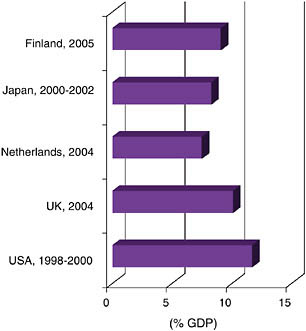
FIGURE 6-1 Total investment in intangibles.
NOTE: Data derived from Corrado et al. (2005, 2006), Marrano and Haskel (2006), Fukao et al. (2007), van Rooijen-Horsten et al. (2008), and Jalva et al. (2007).
SOURCE: Workshop presentation by Douglas Lippoldt. Reprinted with permission.
intangible assets are incomplete. Lippoldt noted that, in light of the conceptual challenges, it is understood that an incremental approach to system revisions will be required. The 1993 revisions are just recently being implemented; nevertheless, Lippoldt predicted that OECD will remain engaged in following up on improvements to this dimension of macroeconomic measurement.
Lippoldt reported that his directorate has been actively engaged in studying the regional dimensions of innovation involving firm location and linkages. Dominique Guellec has been building a regionalized patent database, which reveals some interesting patterns. A preliminary assessment shows that highly innovative or inventive regions tend to cluster together, and that this tendency has increased over time. This may support the well-known idea that agglomeration leads to decreased transport and communication costs, or perhaps provides opportunities for spillovers for tacit knowledge, which often depends on interpersonal interaction. Another conclusion is that the most inventive regions tend to have more multinational enterprises among their inventive firms. Firms boost linkages across regions, as evidenced by the fairly high frequency of cross-regional co-invention within firms. Data for the names and addresses of inventors and the patent documentation reveal that there is a lot of knowledge sharing and collaboration across regions but within firms. This is in line with what one might expect from multinational enterprises, given their ability to select, foster, and coordinate research and development.
The regional variation in geographic patterns of patenting and inventiveness underscores the importance of national innovation systems and framework conditions, such as the competitive environment that might propel and motivate R&D. It also points to such factors as the availability of skilled labor and public investment in research, infrastructure, and regional governance. Hot spots or clusters of innovative activities include the West Coast and Northeast of the United States, southern Germany, and Finland (Usai et al., 2008). Where an inventive region exists, there is a comparatively high probability of seeing another next door.
Policy plays a role in shaping the factors that spur innovation, so developing a better understanding of these processes will be important to improving the efficacy of policy. Although these associations do not imply causality, Lippoldt noted that some of the environmental factors at work imply that a policy dimension should be considered. Lippoldt cited a quote from the OECD growth project that took place a few years ago, which reads “something new is taking place in the structure of OECD economies … and this transformation might account for the high growth…. Policies that engage ICT, human capital, innovation and entrepreneurship in the growth process, alongside fundamental policies to control inflation and instill competition while controlling public finances are likely to bear the most fruit over the longer term” (February 2007 OECD Policy Brief, “Creating Value from Intellectual Assets,” p. 7).
OECD researchers have developed a particular interest in intellectual assets with respect to small- and medium-sized enterprises. These firms pose a unique
challenge for government policy because they often use informal means to protect their intellectual property, making it more difficult for them to enter technology markets and to monetize intellectual property.2 This is a potential area for policy intervention in the form of extension services or administrative easing, which might make it possible for these firms to engage more deeply. In France, for example, there was discussion at the World Bank IC4 Conference of the possibility of restructuring the patent fee schedule by taking into account the size of business, with just this objective in mind.
Lippoldt turned next to the topic of corporate reporting and inadequate disclosure of intellectual assets. Examination by the OECD fiscal affairs department has led to the conclusion that current practices are often backward-looking and provide inadequate information about capacity to generate future revenue from intellectual assets. However, some initiatives are afoot aimed to enhance narrative reporting and promote disclosure by companies of material, qualitative, and forward-looking information about value drivers, trends, risks, and uncertainties. OECD has been informally engaged in the World Intellectual Capital Initiative, which is working toward standardizing at least a high level taxonomy of terms in an effort to move toward international comparability. Echoing a common theme of the workshop, Lippoldt noted that OECD is quite firm about pursuing voluntary approaches here, hoping to inspire business by demonstrating that this can be in their self-interest if properly structured.
The importance of corporate reporting was stressed throughout the workshop. Lippoldt, too, noted that disclosure can enable investors to better assess future earnings and risks. This information can help improve transparency in financial markets, which is associated with the possibility to allocate resources efficiently. It also promotes management of assets and accountability; this openness can potentially reduce the cost of capital. Here, as noted above, government policy can promote identification and dissemination of best practices in voluntary reporting. Baruch Lev and others called for templates and the idea of using peer pressure to promote the usage of such templates. In Japan, 30 firms are engaged in such a program.
Lippoldt concluded by identifying next steps to be undertaken at OECD and providing general recommendations for governments. Member countries are pushing OECD to consider closely for further work particularly promising areas:
-
Intellectual assets and new business models, including examination of the influence of intellectual assets on the emergence of new business models.
-
Value creation and globalization, including exploration of the relationship between intellectual assets and organizational change and how firms
-
create value through boosting equity, but also decreasing cost or increasing the value of output.
-
Support for improved measurement approaches, for example, for definition of asset boundaries and determination of appropriate depreciation rates and deflators.
Lippoldt reiterated the point made by other presenters that government policy can be used to support better measurement. It can influence some of the drivers of intellectual assets and value creation. Participants pointed out the importance of human capital and public research investment and of a balanced intellectual property rights system. In Lippoldt’s view, the government can promote improved transparency, in terms of disclosure of intellectual assets “using a soft approach.” The objective of government engagement is improved management of resources in the economy and improved accountability to create the potential to evaluate not only the business sector but also government policies. Lippoldt’s final remark was that care is required and that government should be aggressively monitoring the risk of failing to address barriers that are created by policy or of imposing undue burdens on the economy.
6.3.
U.S. POLICIES FOR FOSTERING INTANGIBLES
Kenan Jarboe outlined possible directions for U.S. policy, the end goal of which should be, in his view, not only to measure intangible assets, but also to improve management and utilization of them. Appropriate policy dealing with intangibles must consider both the micro and macro economic implications. Beyond initiatives to create, use, and invest in these assets, Jarboe pointed out that intangibles are also integral to broader social policies. Intangibles are embedded in health care issues and in many other social policies. Finally, there is the need to better manage public assets, some of which are intangibles (along the lines of the Louvre Abu Dhabi example).
By Jarboe’s admittedly rough estimation, in fiscal year 2006, the federal government spent about $200 billion (outlays, not budgetary authority) investing in intangibles—about 8 percent of the $2.5 trillion budget for the year, or about 20 percent of discretionary spending. As shown in Table 6-1, most of this spending was in public R&D funding and in training and education. It is difficult to estimate the education and training and federal R&D numbers as reported by the Office of Management and Budget (OMB), because they get distorted by the fact that they include both the civilian and military spending. Although the vast majority of the total goes to education and R&D, there is a series of other valuable entities, such as the statistical agencies and the weather service, that may have a large social impact even though they do not involve large dollar-volume outlays.
Some of the data, such as those covering R&D and the funding for statistical agencies, are quite reliable, as they are generated by OMB. The $61 billion
TABLE 6-1 Federal Investment in Intangibles, FY 2006 Outlays (rough estimates) in Billions of Dollars
figure for education and training is also a fairly hard number. The $9 billion figure for government training includes the military only and would be higher if the civilian agencies were included. The $3 billion spent for food and product safety—discussed by Kossovsky—is about protecting citizens. Historically, part of the reason these measures came about was to protect the brand reputation of companies. All in all, investment in intangibles is a huge management issue that the federal government must take on.
Jarboe sorted the policy areas into three overlapping categories: (1) those to encourage understanding of intangibles, (2) those to encourage financial investment in intangibles, and (3) those to foster use of intangibles. Much of the first category, in the context of increasing corporate disclosure of intangibles, was
covered throughout the day. Bossio discussed the prospects for reinstating the joint Financial Accounting Standards Boards (FASB) and International Accounting Standards Board (IASB) research project on expanded disclosure guidelines for intangibles. Lev discussed the importance of clearly designating nonfinancial measures for evaluating intangibles in the management discussion and analysis portion of financial statements—his templates concept.
Another policy option is to create a safe harbor in financial statements for the reporting of intangible assets. This, Jarboe argued, is something that the Securities and Exchange Commission (SEC) could do very quickly. In fact, the American Institute of Certified Public Accountants recently produced a report recommending that this should be done. The safe harbor idea allows respondents to feel that they are not violating SEC regulations by disclosing this information. Jarboe observed that the idea of a safe harbor has been around for at least 20 years for intangibles.
Next, Jarboe raised the idea of modifying the Sarbanes-Oxley Act—also known as the Public Company Accounting Reform and Investor Protection Act of 2002, passed in response to a number of major corporate accounting scandals—so that a clear directive is created for assessing material intangible assets. One of the issues that Malackowski raised is what happens the first time there is a lawsuit involving a corporate CEO facing criminal penalty for not disclosing the company’s intangible assets because they were deemed material. An overnight change in mind set would be likely. The problem right now with Sarbanes-Oxley is that it is not that clear on intangible assets, as is the case with most security regulations.
Another policy lever for encouraging understanding of intangibles involves better use of the stock exchange as an initial testing ground by requiring listed members to make additional disclosures that capture metrics for intangibles. The tension here is that companies have historically resisted giving sales and revenue information; these data were considered proprietary, and they were not made available until the SEC required it. However, almost every industry has some sort of benchmarking activity, because they understand its value. Somehow, Jarboe asserted, a balance must be found between voluntary benchmarking and use of industry associations and the mandatory SEC requirements. He quoted a line from a February 2007 report by PricewaterhouseCoopers, which surveyed a large sample of investment professionals and concluded: “There is clear evidence that respondents are more interested in the nature of and expenditure on intangible assets than in the treatments of intangible assets in the primary statements” (Measuring Assets and Liabilities: Investment Professionals’ Views, http://www.pwc.co.uk/pdf/measuring_assets_liabilities.pdf). In other words, investors care less about whether the information is booked and more about what the company is doing with it. Again, disclosure is what is most important for policy.
Another idea is to include innovation and intangibles in the Malcolm Baldrige National Quality Award, given by the National Institute of Standards and Tech-
nology to recognize quality service in the business, health care, education, and nonprofit sectors; it was inspired by the concept of total quality management. Looking at the criteria for the award, there are actually more references to innovation than to quality. Jarboe suggests turning the award into an intellectual asset management one that encourages efforts like improvements in business models. Back to the iPod example, it is innovation that made it a great product—and not just the quality of the player. Jarboe expressed the view that the big innovation was the iTunes part of the model, which allowed parents to give their teenager a way to download music in a way that is not illegal.
Jarboe would also like to see a cross-cutting analysis of the federal budget along the lines of the one done for capital accounts (which is where education and the R&D measures are found). It would be possible for OMB, the Government Accountability Office, or the Congressional Budget Office to apply a similar treatment to intangibles. Jarboe also endorsed the idea of including intangibles in the GDP account, as discussed by Landefeld and Moulton. However, he cautioned, the idea will not gain traction unless policy makers rally behind it.
Next, Jarboe moved on to his list of policy measures to encourage financial investment in intangibles. For starters, he suggested creating a central national registry of intellectual property security interests. If a person would like to borrow a patent, or to find out if there is a lien on a particular patent, there is currently no easy way to do it. It is hard to create a secondary market for these assets when investors “don’t know what they don’t know.” Proposals exist to create a centralized registry of intellectual property security interests.
Another helpful action would be to convene a special FASB/SEC task force on valuation methodologies and to support increased research on valuation standards. Intangibles are not always reflected in a company’s book value, and it would be useful to develop some rigor to valuation so that, for example, banks have an idea what various assets are actually worth. Jarboe noted that companies do consult evaluation experts, asking, “What part of the company’s value is intangibles? What is their patent portfolio worth?” It can be done now, but the problem is that it can be done within a range of plus or minus 20 percent. For companies considering a large merger or acquisition, this is not accurate enough. The good news according to Jarboe is that both FASB and the SEC are beginning to set up processes to value things that people have been saying for years cannot be valued.
Other ideas raised by Jarboe for encouraging investment in intangibles include exploring the creation of an Intangibles Mortgage Corporation (Ida Mae) to regularize the intangibles-backed securities market; undertaking a review of the Basel II Accords to better understand their implications for intangible-backed lending; and coordinating ongoing efforts at market reform, such as the President’s Working Group on Financial Markets, to ensure that intangible-backed assets are properly included.
Jarboe concluded with a discussion of policies that could be implemented
to foster the use of intangibles. The first would be to expand or reorient the Manufacturing Extension Partnership (MEP) Program to include intangible asset management. Given that the economy has moved from a manufacturing or industrial age to an information age, it is time to reformulate MEP so that, rather than simply helping small machine tool shops understand how many turns they can get off a lathe, they can actually understand what their intangible assets are. In addition, federal and state insurance laws and regulations need to be reviewed and restructured to promote the development of financially sound insurance coverage of intangibles (as discussed by Kossovsky). If people know that these assets are worth something, greater attention will be given to their management.
Also, a permanent knowledge tax credit could be created that would increase investments in intangibles—not only R&D, but also things like worker training. In the past, stimulus packages have included investment in machines; such initiatives should include investment tax credits for people. Jarboe argued that “if we really believe that people are our most important asset, why in the world is our basic public policy still built around a machine, and not people?” Lippoldt responded to the suggestion for this kind of investment in human capital and the mobility of people, noting that firms need extra incentives to invest in training given that there is leakage of the returns due to worker turnover and other factors leading to rapid depreciation. The idea of this tax credit is intriguing in that it could internalize some of the external social benefit created by worker training. The tax credit would be used because training is, in part, a public investment that will provide returns to society. And, theoretically, if the investment in human capital has a stimulus effect on the economy, there could be a neutralizing effect on the cost to the budget over time. Jarboe noted that the problem to date, politically, has simply been up-front cost. He referred to Senator Bingaman’s comment that Congress has been fighting since 1981 with the temporary R&D tax credit. It is a lot cheaper in the short run to increase the depreciation on machinery for a year, than it is to do something on a human capital investment credit.
Another policy lever for increasing the use of intangible assets is to explore lowering the tax rate on royalties derived from them; this should be done in conjunction with stricter regulations on international transfer pricing mechanisms and cost-sharing arrangements and on passive investment companies that can be used as tax havens. Landefeld raised this issue, in the measurement context, of how location of intangibles can be attributed to tax havens. This is a major political issue for two reasons. One is to improve the extent to which companies play it straight in their valuations for tax purposes; the second is that misattribution distorts international trade figures. It is possible that royalties are being paid to people in low-tax countries for inventions developed elsewhere, simply because they were transferred. Ultimately, Jarboe suggested, it is worth looking to see whether the taxes on royalties can be reduced in exchange for closing the loophole on intangible asset transfer prices.
He also suggested that more could be done to foster use of intangibles in the
area of patent reform legislation. This might include a review of patent litigation and patent liability insurance and a review of federal and state technology policies to encourage promotion of patent pools. Also, a review of how the federal technology transfer system, including the Bayh-Dole Act, does or does not facilitate the creation of intangible assets may be in order. Finally, there is a whole series of federal government business loan programs to review, especially in the small business arena, to ensure that intangible assets can be used as collateral. This would include requiring the Small Business Administration to work with its commercial lenders to develop standards for the use of intangible assets as collateral, similar to its existing underwriting standards.
Jarboe concluded with the point that measuring, encouraging development, and using intangibles is all about changing people’s mind set—changing the fact that, right now, intangibles are largely invisible. Echoing a major theme of the day, he stated that what is not measured does not get managed, and there are “a thousand places in the public policy area where we can begin to get a handle on that.”


